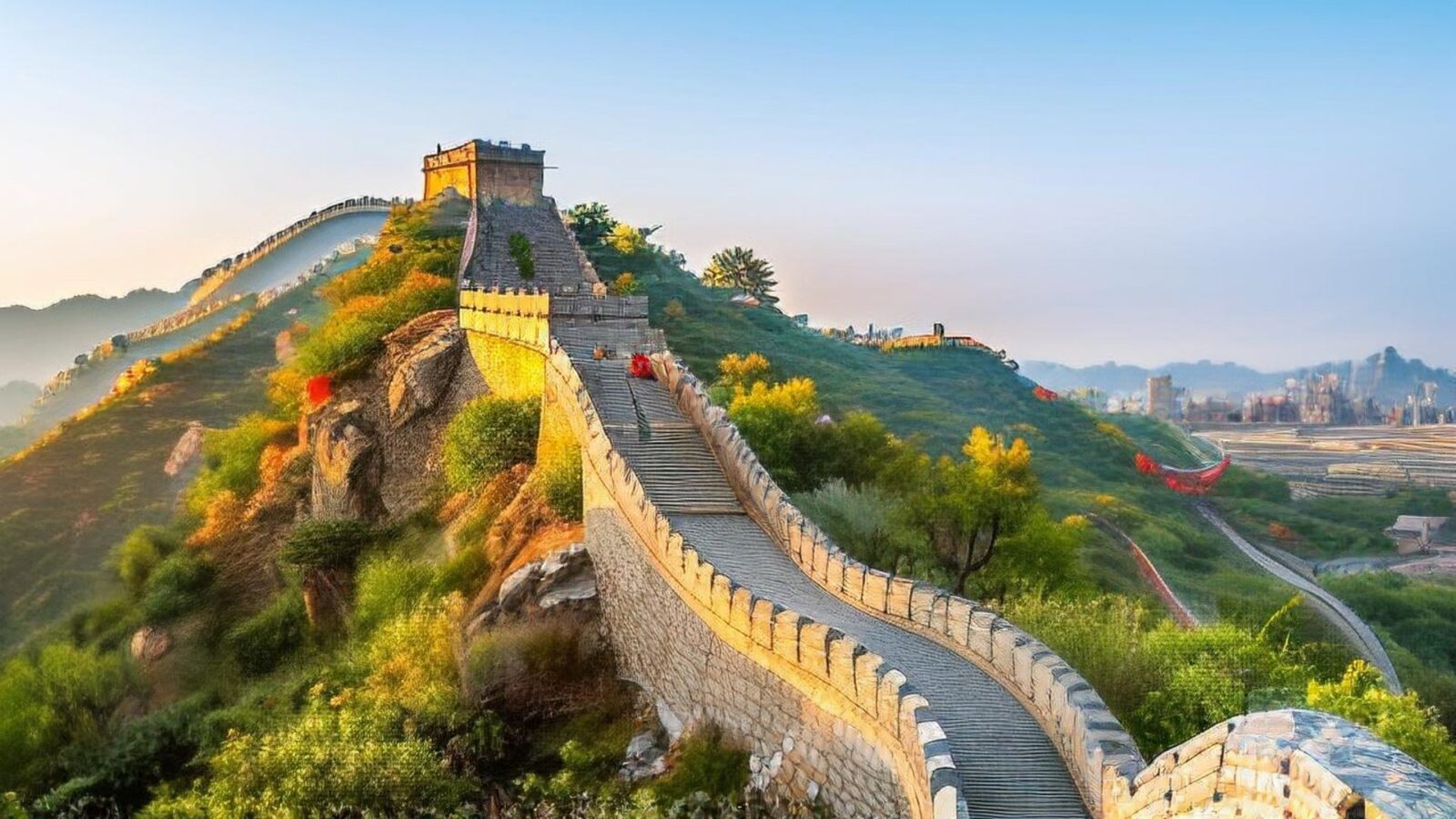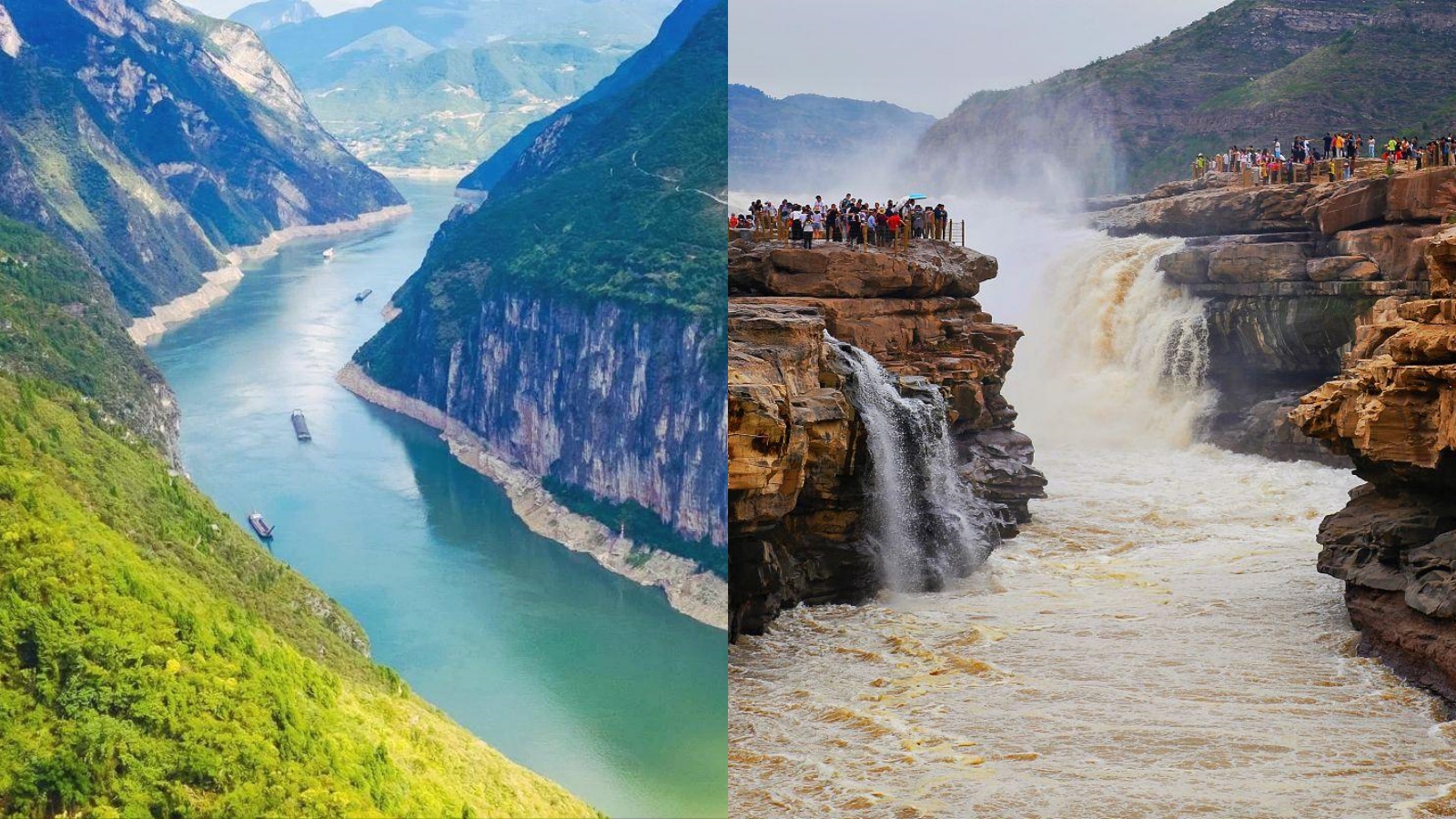
Ancient Town in China:Ornate Paifang Gate, Central Multi-story Pagoda, Decorative Incense Burner, Traditional Waterways, Classical Pavilions.
These China ancient towns aren’t historical dioramas. Ming dynasty cobblestones still echo with the sounds of everyday life and trade. Stilt houses dangle over rivers that have run for a millennium. Street food recipes have hardly changed over the dynasties. Most importantly, not built as attractions, they offer glimpses of something too rare to be found elsewhere — real human loam, marked for walking.
Sixteen of them are mapped out below, arranged by region. For each we provide frank transport details, a trusted accommodation pick, and one piece of commonly-eluded advice. Whether you’re planning a grand two-week circuit, or a single excellent side trip from Shanghai, this guide lays out a route, helping you choose wisely and arrive prepared. Thus, we meet each china ancient town in its authentic best, not its most congested.
Complete Guide to China's Ancient Towns & Villages
| Region | Ancient Town | City / Province | Key Characteristics | Rating |
|---|---|---|---|---|
SouthwestChina | 1. Lijiang Old Town | Lijiang, Yunnan | UNESCO Heritage · Naxi capital · canal network · Jade Dragon Snow Mountain backdrop | ⭐⭐⭐⭐⭐ |
| 2. Guandu Ancient Town | Kunming, Yunnan | Dianchi Lake setting · dense protected monuments · uncommercialized local life | ⭐⭐⭐⭐⭐ | |
| 3. Huanglongxi Ancient Town | Chengdu, Sichuan | River wharf · three temple street · canal teahouses · stream-wading culture | ⭐⭐⭐⭐🌟 | |
| 4. Ciqikou Ancient Town | Chongqing | Jialing River dock culture · riverside stilt houses · mountain-city street energy | ⭐⭐⭐⭐🌟 | |
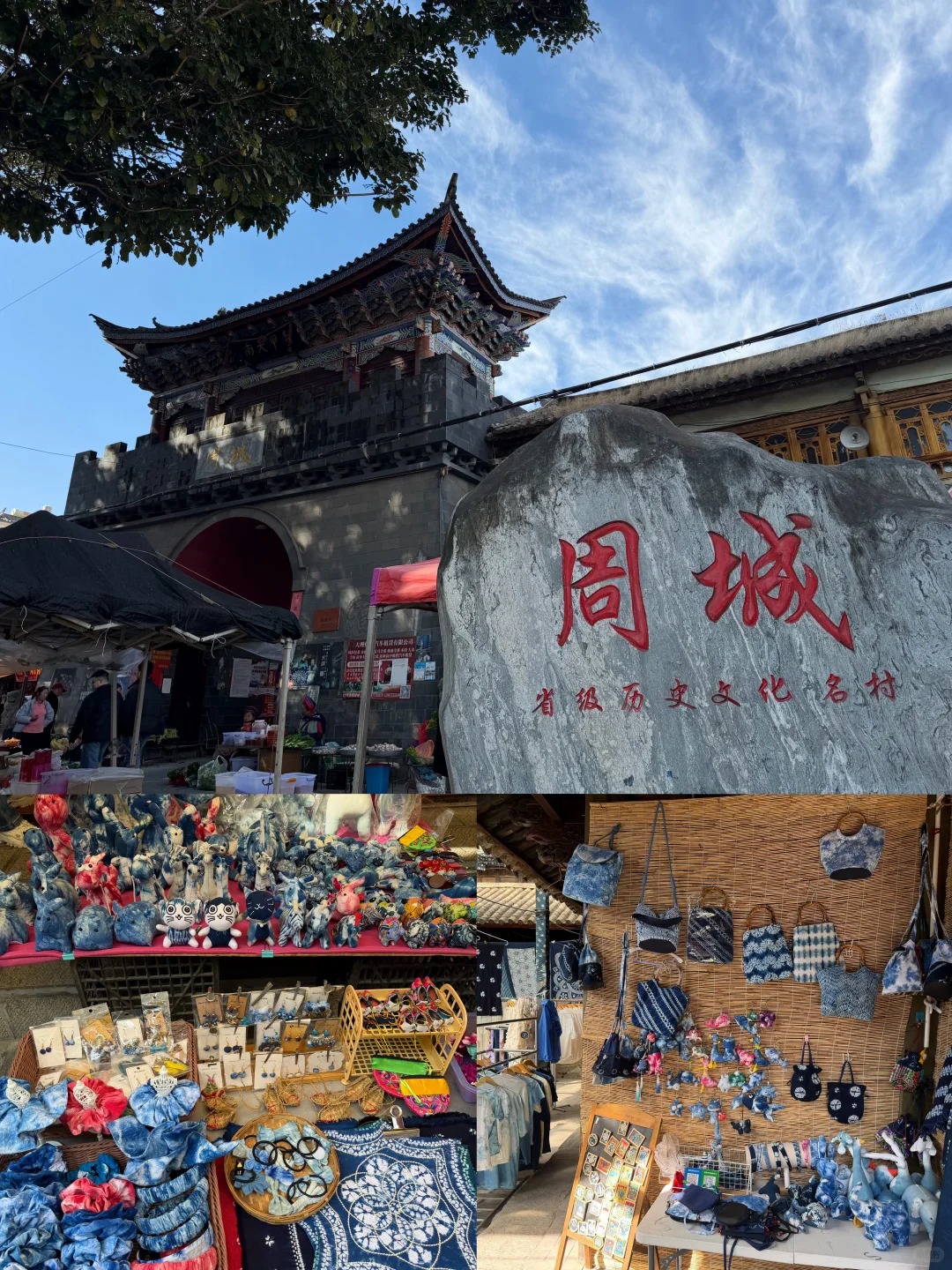
| 5. Zhoucheng Village | Dali, Yunnan | Largest Bai ethnic village · millennium indigo batik tradition · authentic village life | ⭐⭐⭐⭐🌟 | |
EastChina | 6. Zhujiajiao Ancient Town | Shanghai | Ming-Qing canal town · metro-accessible · five-arch Fangsheng Bridge · gondola rides | ⭐⭐⭐⭐ |
| 7. Tongli Ancient Town | Suzhou, Jiangsu | Island town · UNESCO Tuisi Garden · Three Bridges ritual · residential atmosphere | ⭐⭐⭐⭐ | |
| 8. Hongcun Village | Huangshan, Anhui | UNESCO village · buffalo layout · 600-year hydraulic canal · Huizhou Three Carvings | ⭐⭐⭐⭐ | |
| 9. Xitang Ancient Town | Jiaxing, Zhejiang | Kilometre-long covered arcade · Stone-Skin Lane · lantern-lit night canal bars | ⭐⭐⭐⭐ | |
| 10. Chengkan Ancient Village | Huangshan, Anhui | 1,800-year habitation · I Ching village layout · finest Ming caisson ceiling | ⭐⭐⭐🌟 | |
NorthChina | 11. Pingyao Ancient City | Pingyao, Shanxi | UNESCO walled city · birthplace of Chinese banking · intact temples & courtyards | ⭐⭐⭐🌟 |
| 12. Datong Ancient City | Datong, Shanxi | Northern Wei capital · layered Liao–Jin–Ming architecture · Yungang Grottoes gateway | ⭐⭐⭐🌟 | |
| 13. Zhengding Ancient City | Shijiazhuang, Hebei | Tang bell towers · four Song pagoda types · 22-metre bronze Guanyin · minimal crowds | ⭐⭐⭐🌟 | |
CentralChina | 14. Fenghuang Ancient Town | Xiangxi, Hunan | Tuo River stilt houses · Shen Congwen's literary hometown · Miao & Tujia culture | ⭐⭐⭐ |
| 15. Jingzhou Ancient City | Jingzhou, Hubei | Best-preserved Ming city wall in Central China · Three Kingdoms stronghold · Han lacquerware | ⭐⭐⭐ | |
| 16. Furong Ancient Town | Xiangxi, Hunan | Gorge-edge stilt houses · waterfall through town centre · Water Curtain Cave | ⭐⭐⭐ |
⭐⭐⭐⭐⭐ Unmissable | ⭐⭐⭐⭐🌟 Highly Recommended | ⭐⭐⭐⭐ Strongly Recommended | ⭐⭐⭐🌟 Well Worth Visiting | ⭐⭐⭐ Recommended
Southwest China: Historic Heritage Destinations
1. Lijiang Old Town

Lijiang Old Town
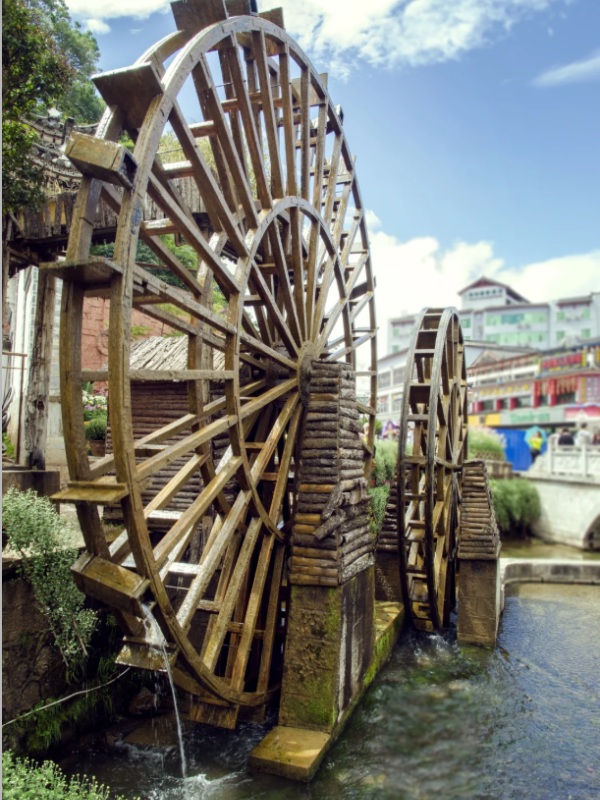
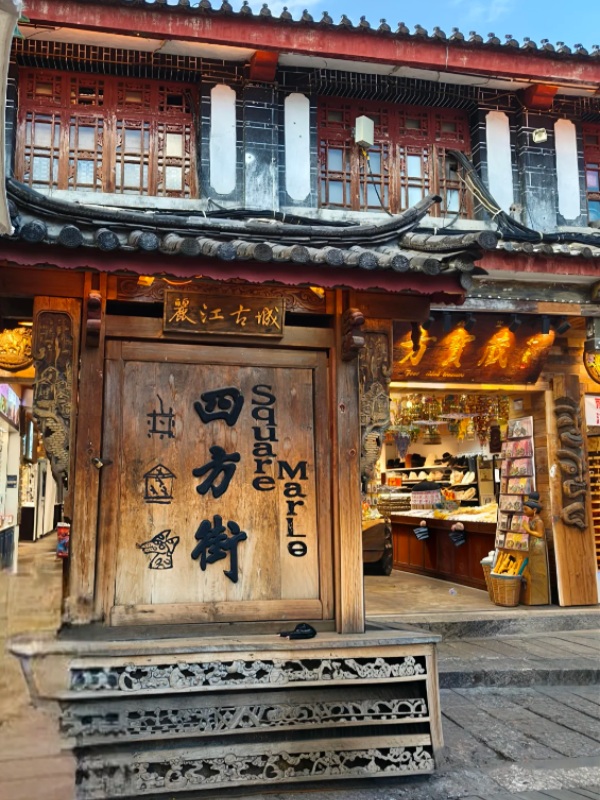
One place that will define ‘soft time’ beyond argument is Lijiang, an Naxi imperial capital at the foot of Jade Dragon Snow Mountain. The city, now a UNESCO World Heritage site, has no city walls; instead, protection was provided by a network of canals that meander through every alley of Lijiang. Strolling along its Five-Flower Stone lanes is less akin to sightseeing than crossing into a still-ticking clock from another century.

🏯 Core Experiences
- Five-Flower Stone Alleys: Get deliberately lost in the labyrinthine lanes. Let the sound of running water be your only guide through the old town.
- Wangu Tower at Dawn: Climb Lion Hill for a panoramic sweep of rooftops against snow peaks. Arrive before the crowds — dawn is when the view belongs entirely to you.
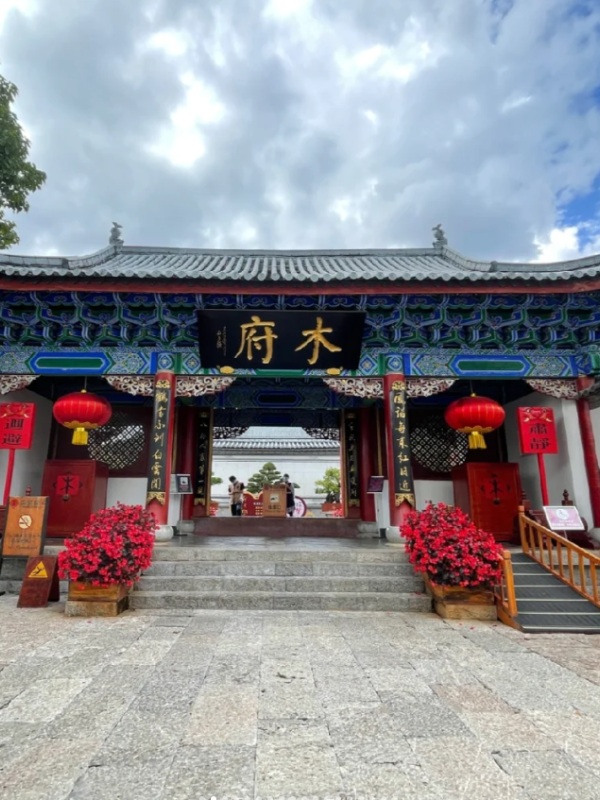
- Mu Fu (Wood Mansion): Visit the "Yunnan Palace" of the Naxi chieftains. Consequently, you grasp the full scale of political power once wielded here.
- Shuhe Ancient Town: Slip away to this nearby settlement just 4 km north. It offers a noticeably quieter taste of Naxi village life without the main crowds.
🗺️ Travel Guide
- Getting there: Fly into Lijiang Sanyi Airport, or take the high-speed rail. The journey takes approximately 3.5 hours from Kunming and 1.5 hours from Dali.
- Where to stay: Book a Naxi-style courtyard inn inside the old town. Rooftop views of snow peaks and ancient rooflines define the experience. Yuegu Lou is a well-regarded option.
2. Guandu Ancient Town
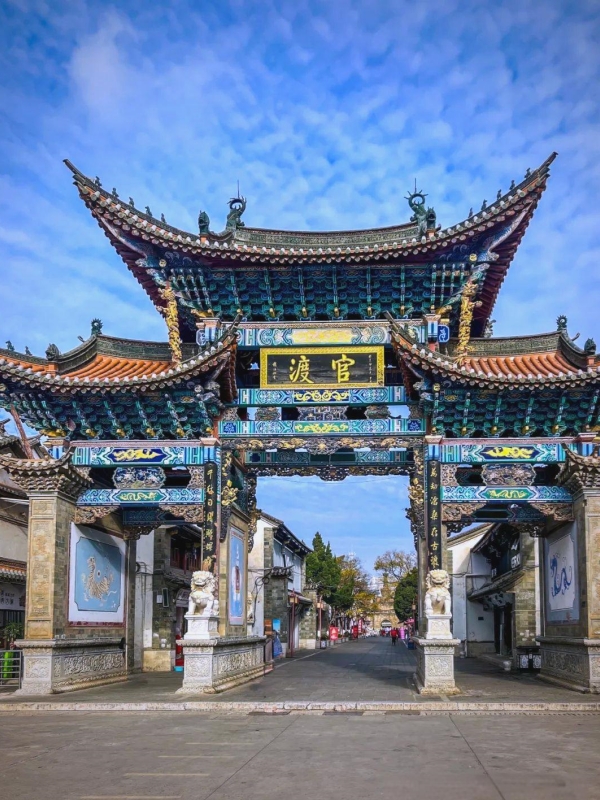
Guandu Ancient Town
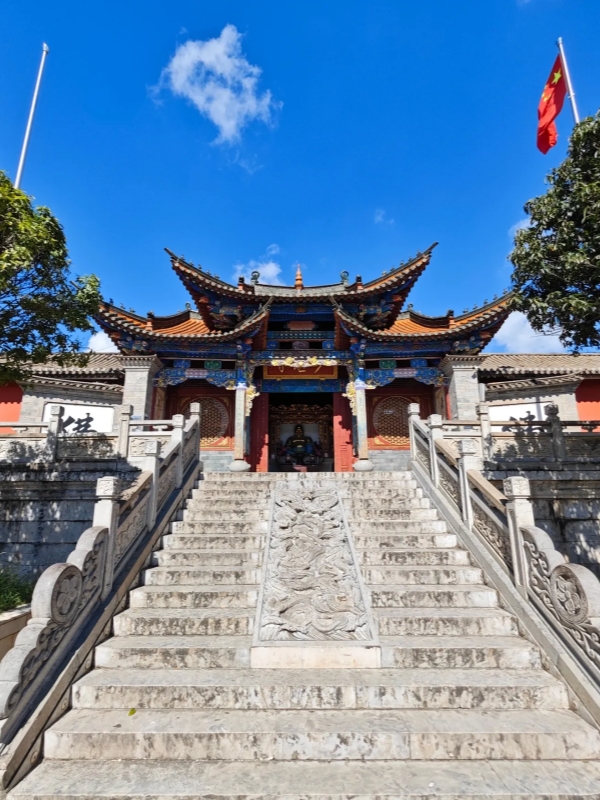
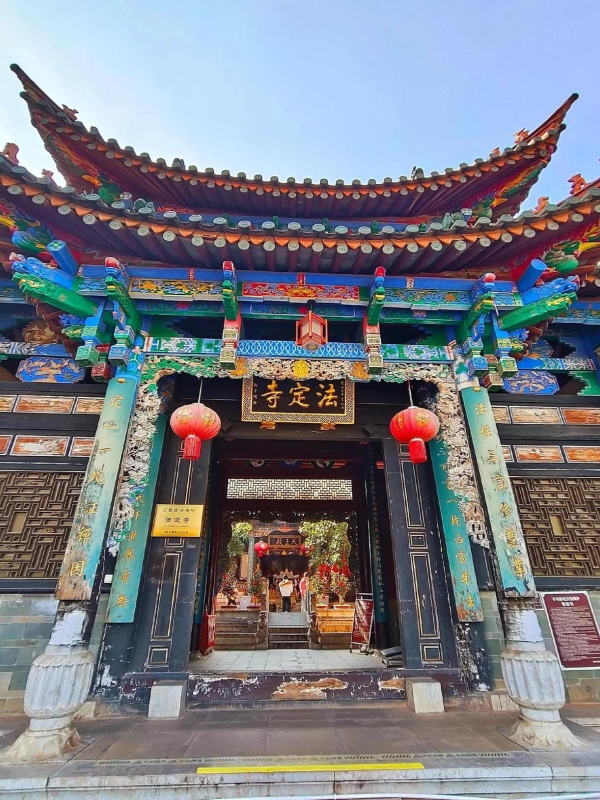
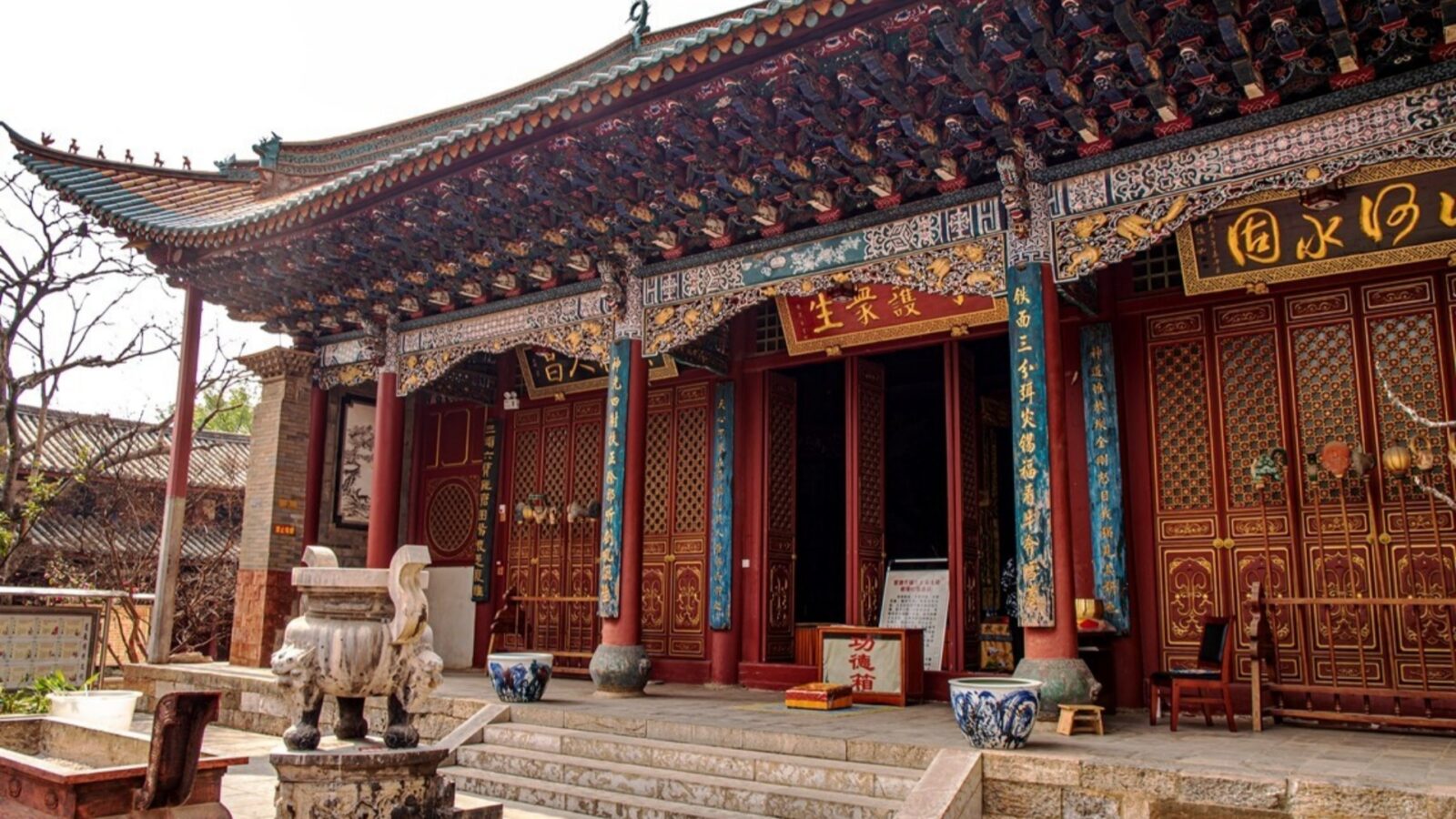
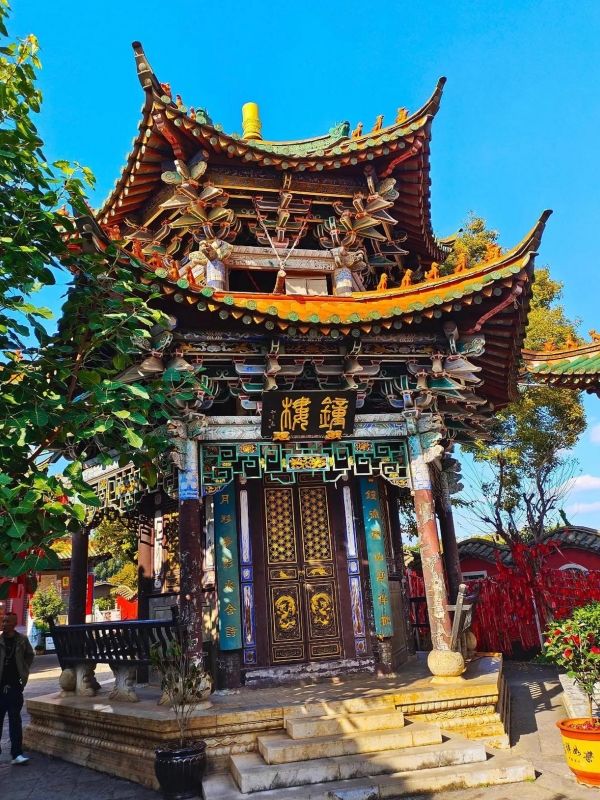
Guandu is where Kunming first rose. Once a busy ferry stopping point on Dianchi Lake (滇池), this often underappreciated district has an extraordinary concentration of nationally-protected relics — almost the most in Yunnan per square block. Without the thick coat of toustified commercialism applied to so much of urban Kunming, Guandu also retains a relaxed, authentically lived in ambience.
🏯 Core Experiences
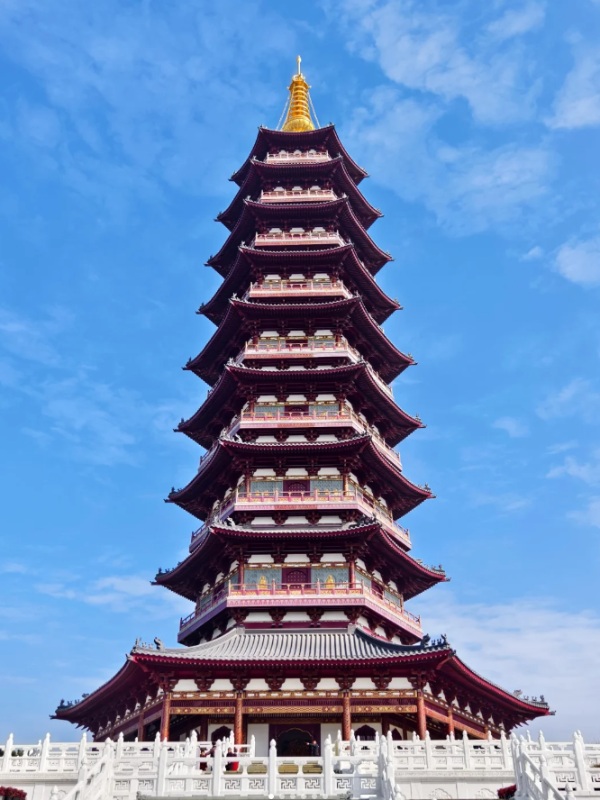
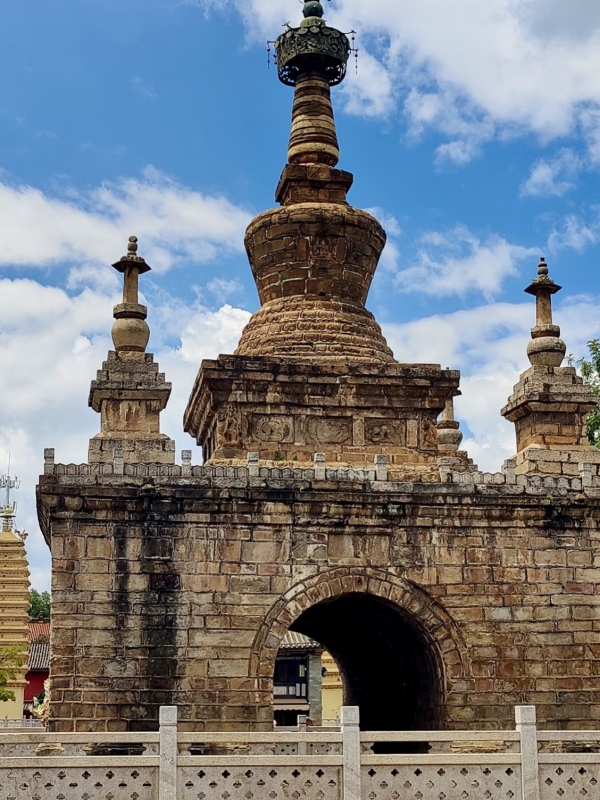
- Twin Pagodas & Vajra Throne Pagoda: Seek out the twin pagodas of Miaozhan Temple (妙湛寺). Additionally, the rare Vajra Throne Pagoda (金刚宝座塔) — a 600-year-old Buddhist monument — merits slow, careful examination.
- Back Lane Street Food: Wander the back lanes for Guandu Baba (官渡粑粑, local flatbread) and yellow-pea powder snacks (黄豆面). The food here is resolutely local, not tourist-adjusted.
- Neighbourhood Tempo: Settle into the rhythm of daily life here. This is a place for observation, not rushing. Consequently, it rewards patience more than speed.
🗺️ Travel Guide
- Getting there: Take Metro Line 1 to Xingyao Road or New Asia Sports City station, then a short walk or ride. It is extremely convenient from central Kunming.
- Where to stay: Use central Kunming as your base. Treat Guandu as a relaxed half-day excursion from there.
3. Huanglongxi Ancient Town

Huanglongxi Ancient Town
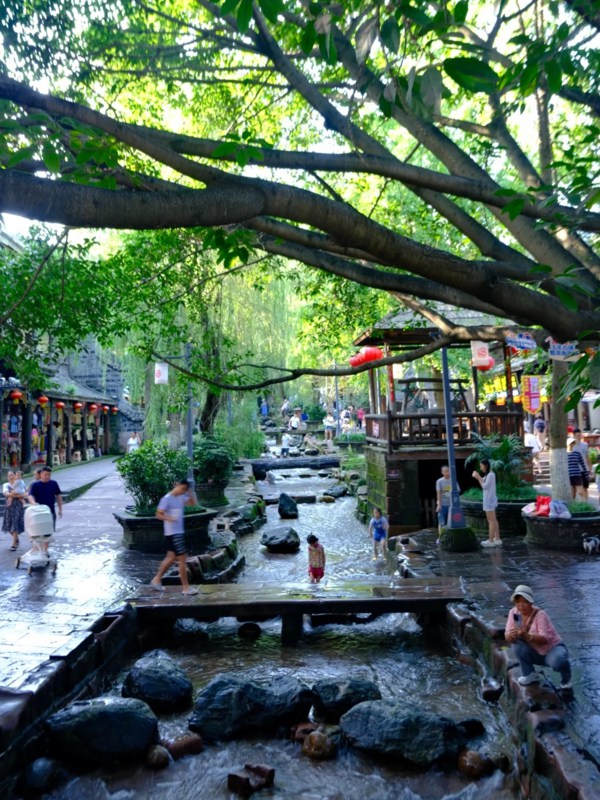
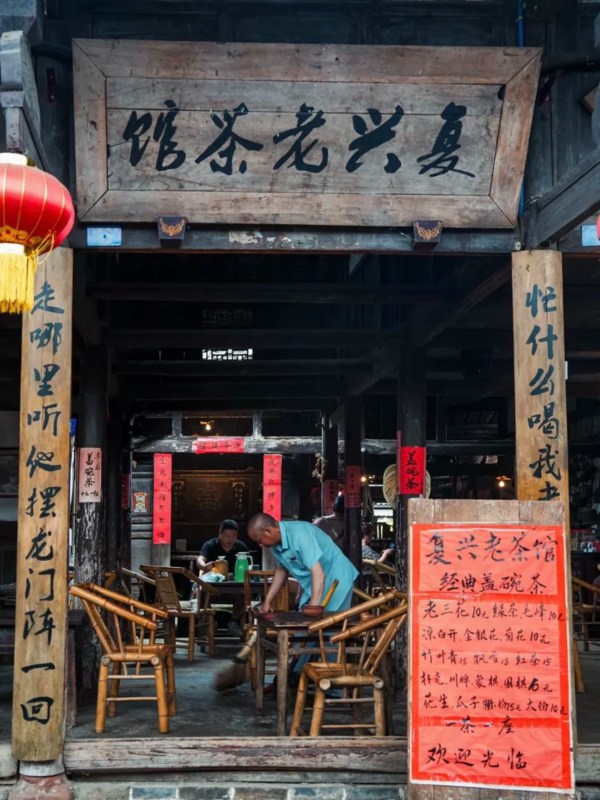
Huanglongxi, Chengdu's back garden, its most leisurely place of antiquity. Three temples to share one main street; hundred-years-old banyan trees to give wide shade to every canal旁teahouse the whole year round; in summer all the town to wade to the stream that runs through its midst. The most leisurely place on our list, and the least unwilling to be so.
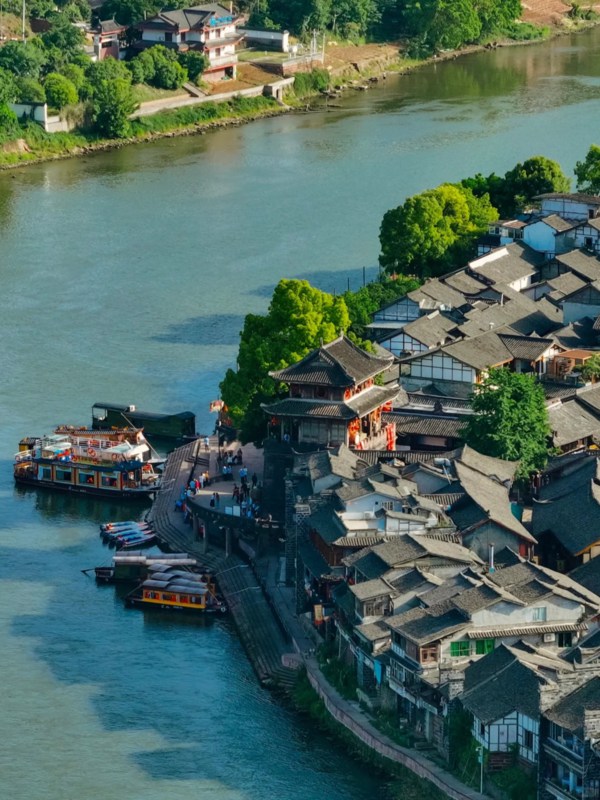
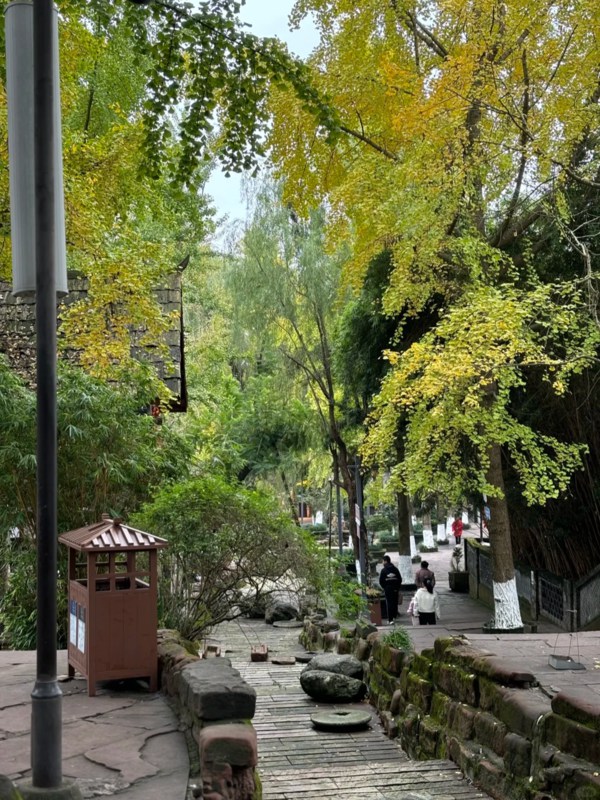
🏯 Core Experiences
- One Street, Three Temples: Walk the main street to experience this rare architectural layout. Zhenjiang Temple (镇江寺), Chao Tian Temple (朝天寺), and Gu Long Temple (古龙寺) sit almost side by side along a single stretch.
- Summer Stream Wading: In summer, join locals in the stream that bisects the town. Water fights, cold tea, and floating rubber rings are all entirely normal here.
- Banyan Tree Teahouse: Find a bamboo chair beneath the ancient banyan tree. Order a covered gaiwan tea and commit to doing absolutely nothing for at least an hour.
🗺️ Travel Guide
- Getting there: Drive approximately 1 hour from central Chengdu. Alternatively, take the tourist bus from Xinnanmen station. Parking is easy for self-drivers.
- Where to stay: Jingdeli Hotel inside the old town suits visitors who want to catch the early morning calm before day-trippers arrive.
4. Ciqikou Ancient Town
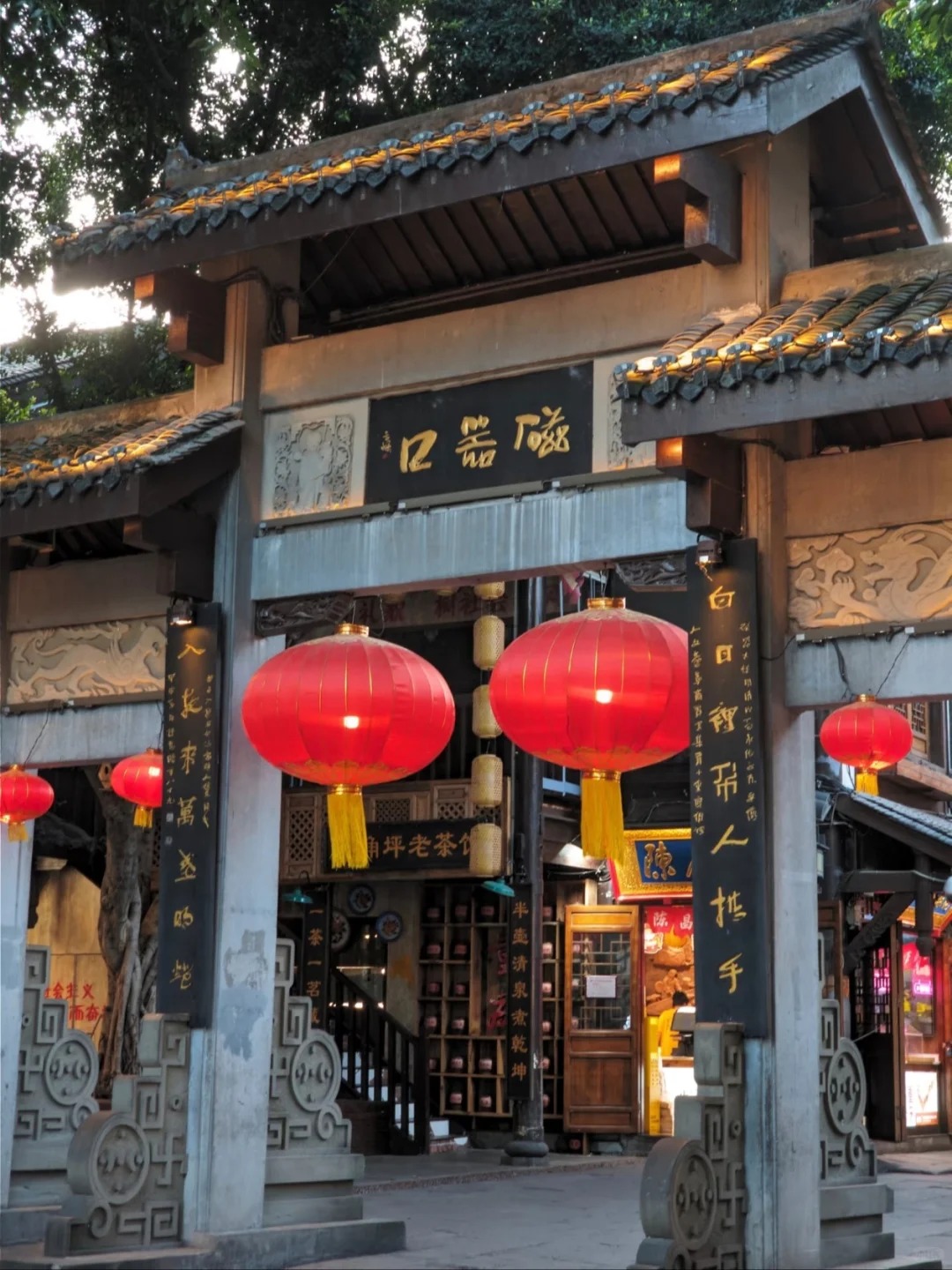
Ciqikou
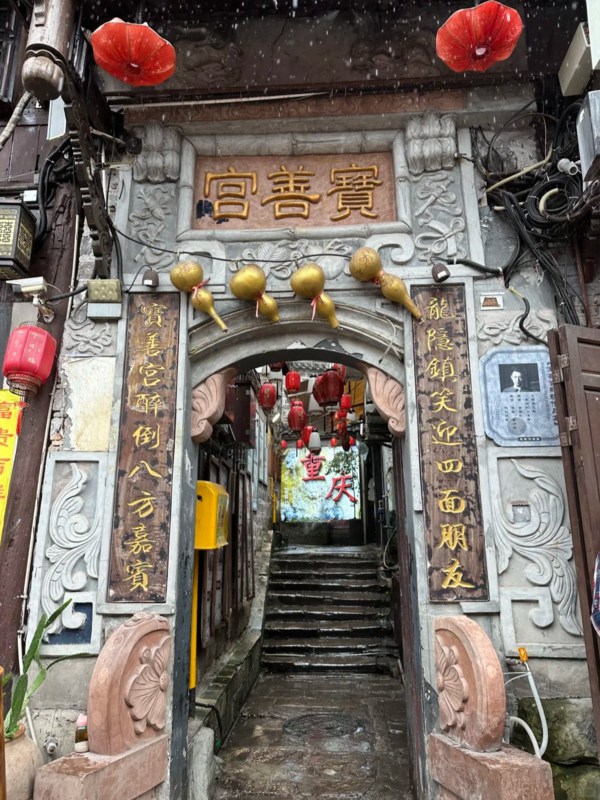
Ciqikou, the textbook of Chongqing dock culture, unfiltered street life in this mountain city. Built on the Jialing River (嘉陵江), lanes reeking of chilli oil and old wood. The real treasure is behind the main street: the soul of this place lurks in the shadows.
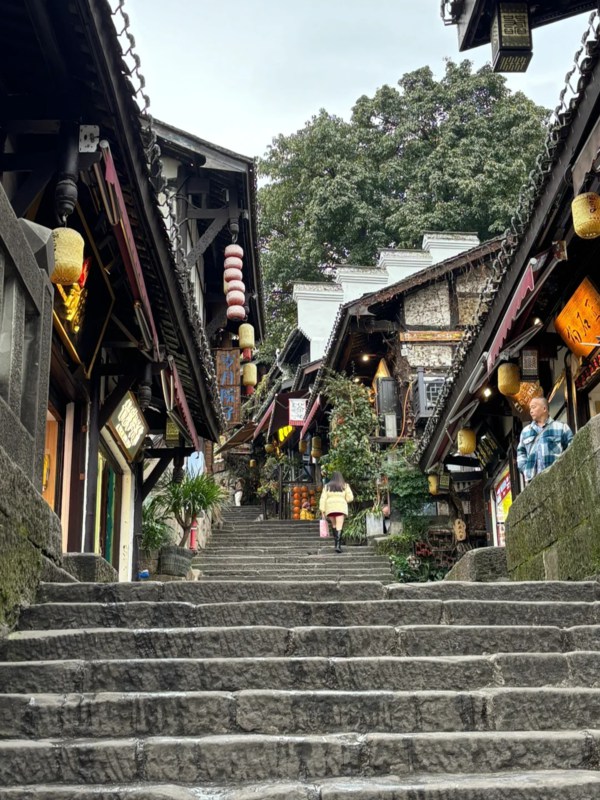
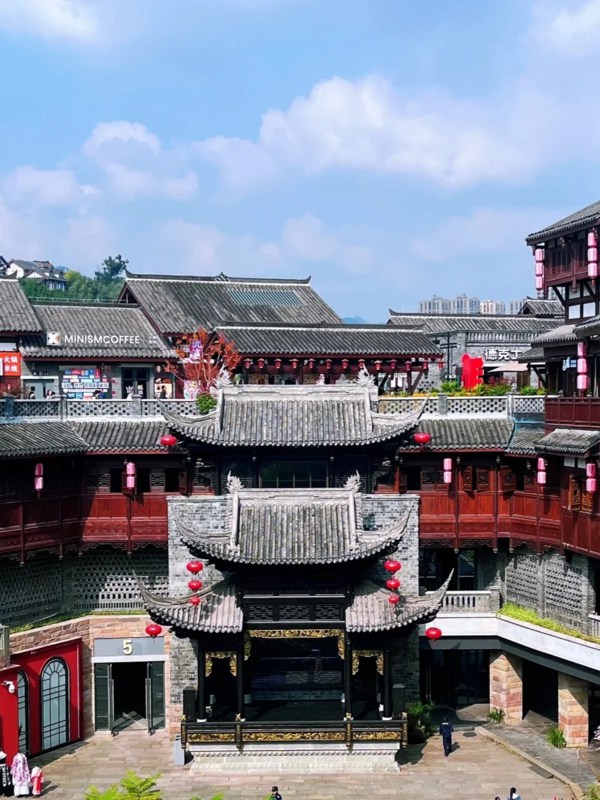
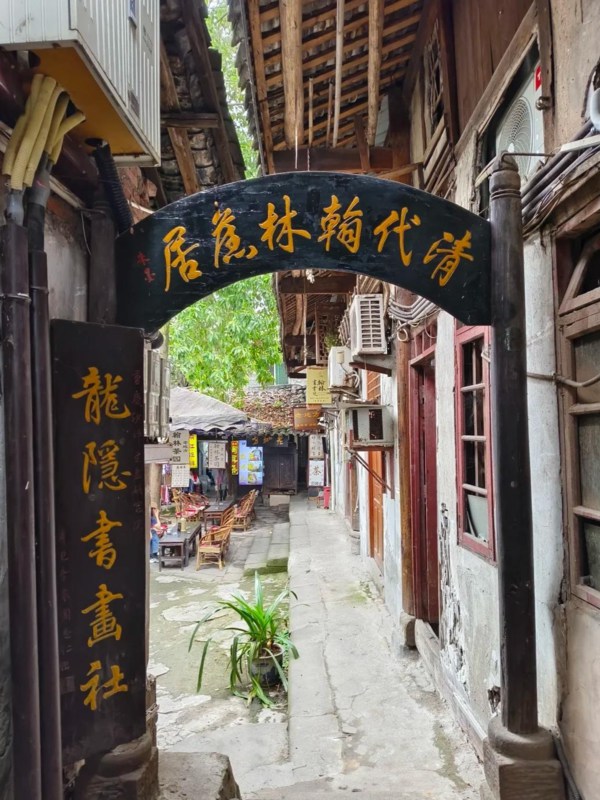
🏯 Core Experiences
- Zheng Street Food Crawl: Work through the main "Zheng Street" (正街) for Chen's Twisted Rolls (陈麻花) and pork blood soup. Authentic Chongqing street bites line the entire stretch.
- Hidden Side Lane Teahouses: Dive into the side lanes — notably the alley near Hanlin Academy (翰林院). Old teahouses and craft workshops survive here, far from the souvenir-saturated main drag.
- Riverside Stilt House Views: Climb the riverside steps for an elevated view of the stilted buildings (吊脚楼, diaojiaolou). The angle from above reveals how the structures meet the river edge below.
🗺️ Travel Guide
- Getting there: Chongqing Rail Transit Line 1 runs directly to Ciqikou Station (磁器口站). It does not get more convenient than this.
- Where to stay: Base yourself in Yuzhong Peninsula or Nan'an District. Ciqikou works best as a half-day stop rather than an overnight stay.
5. Zhoucheng Village
Zhoucheng
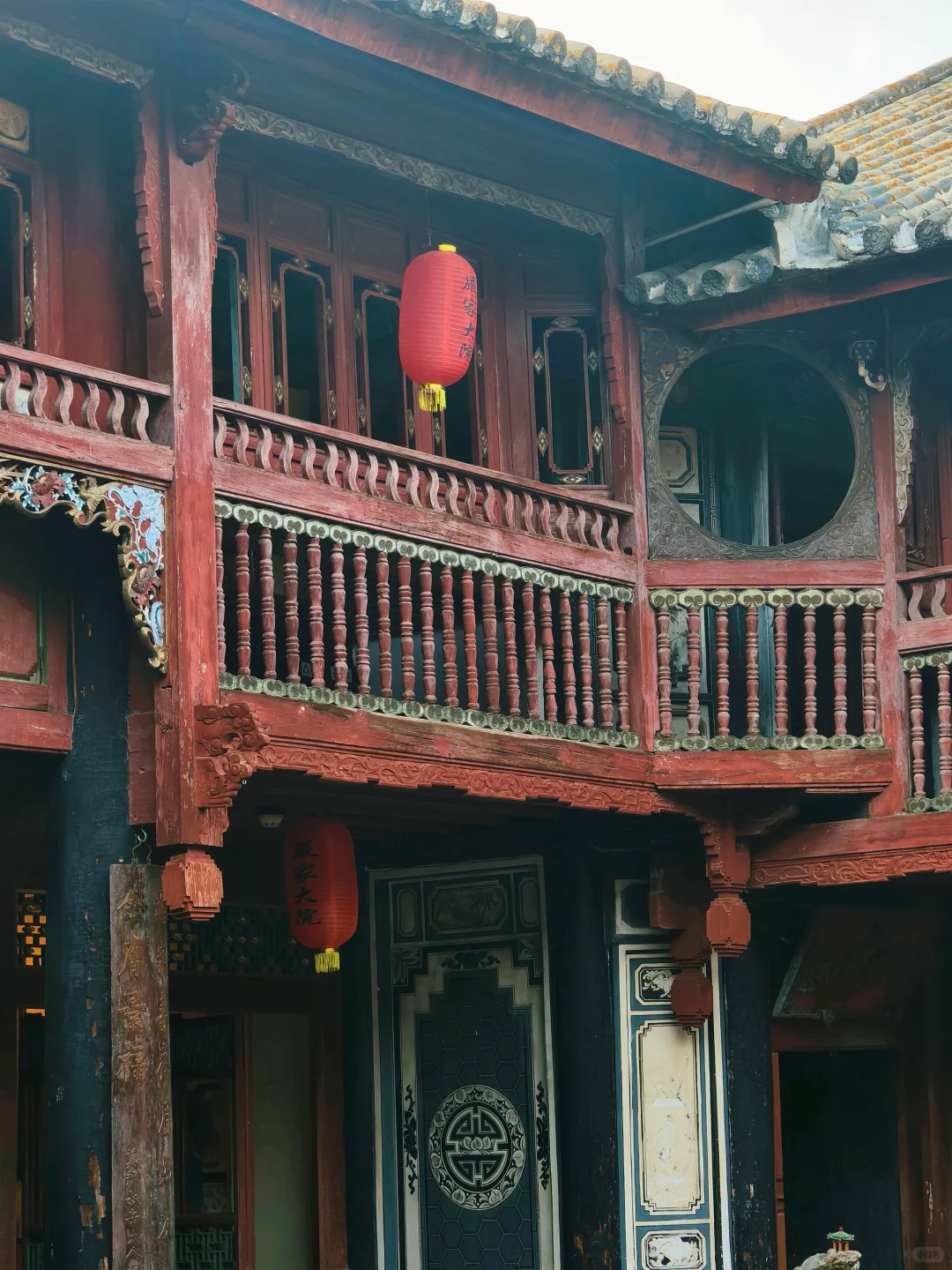
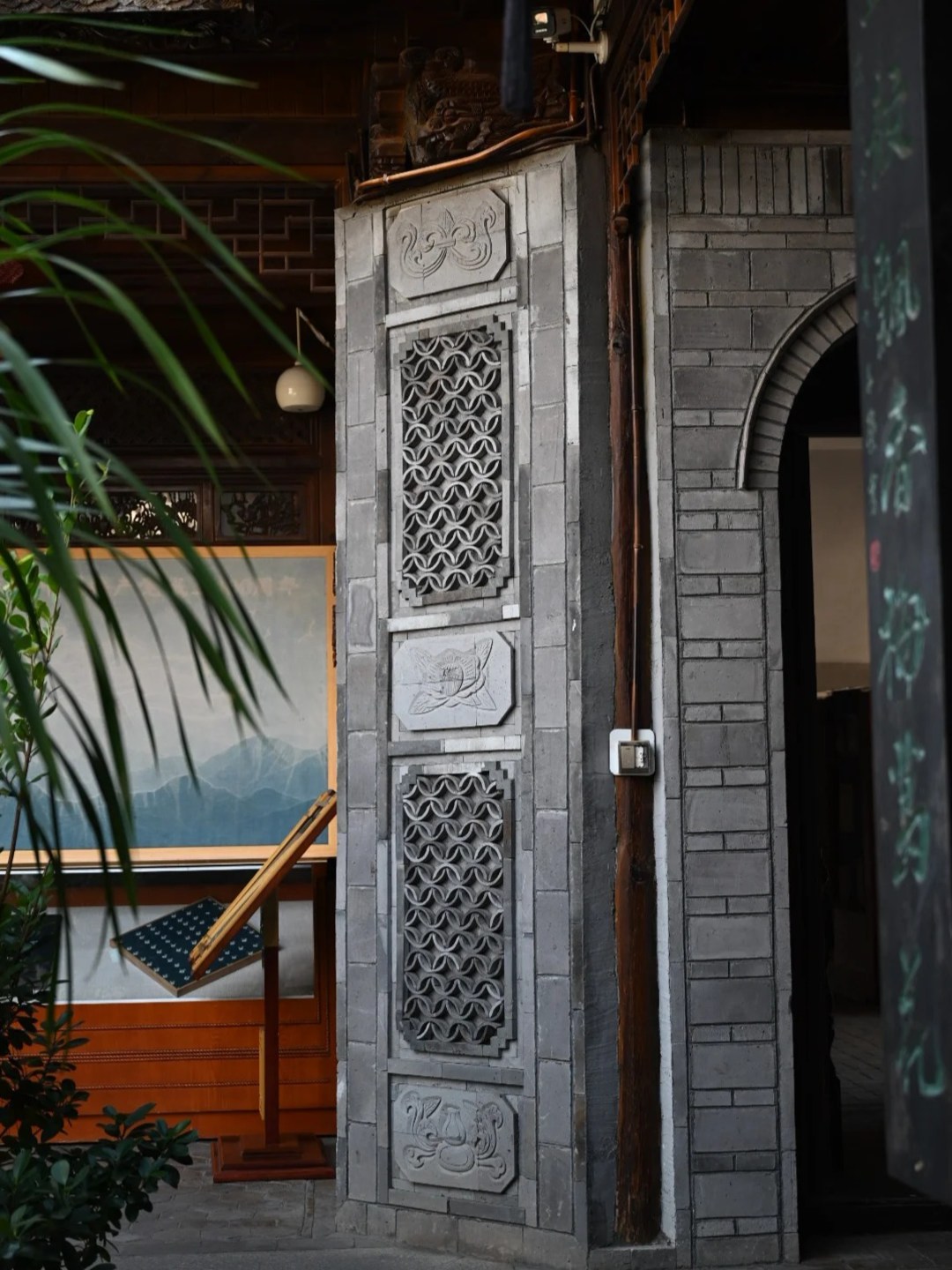
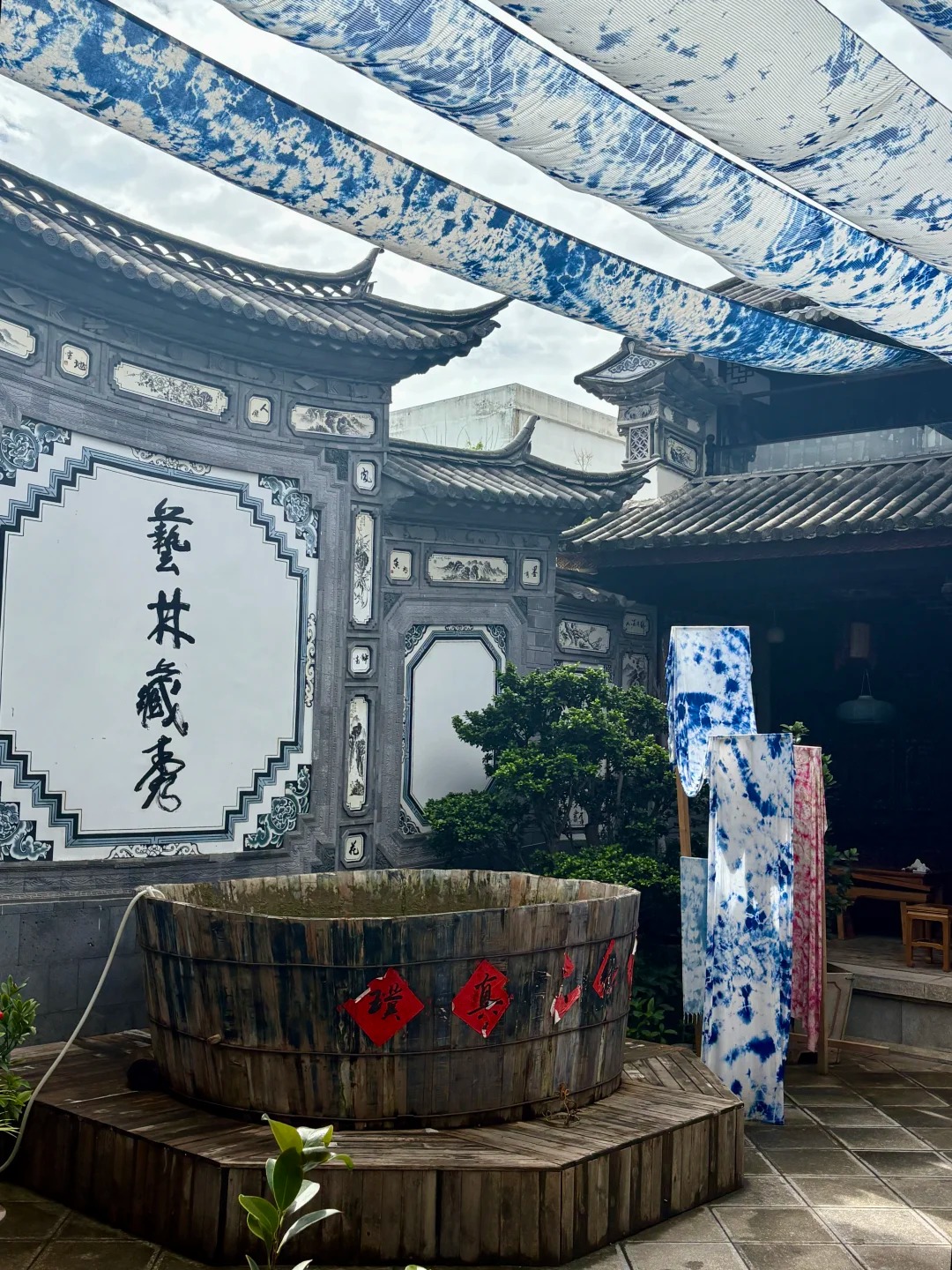
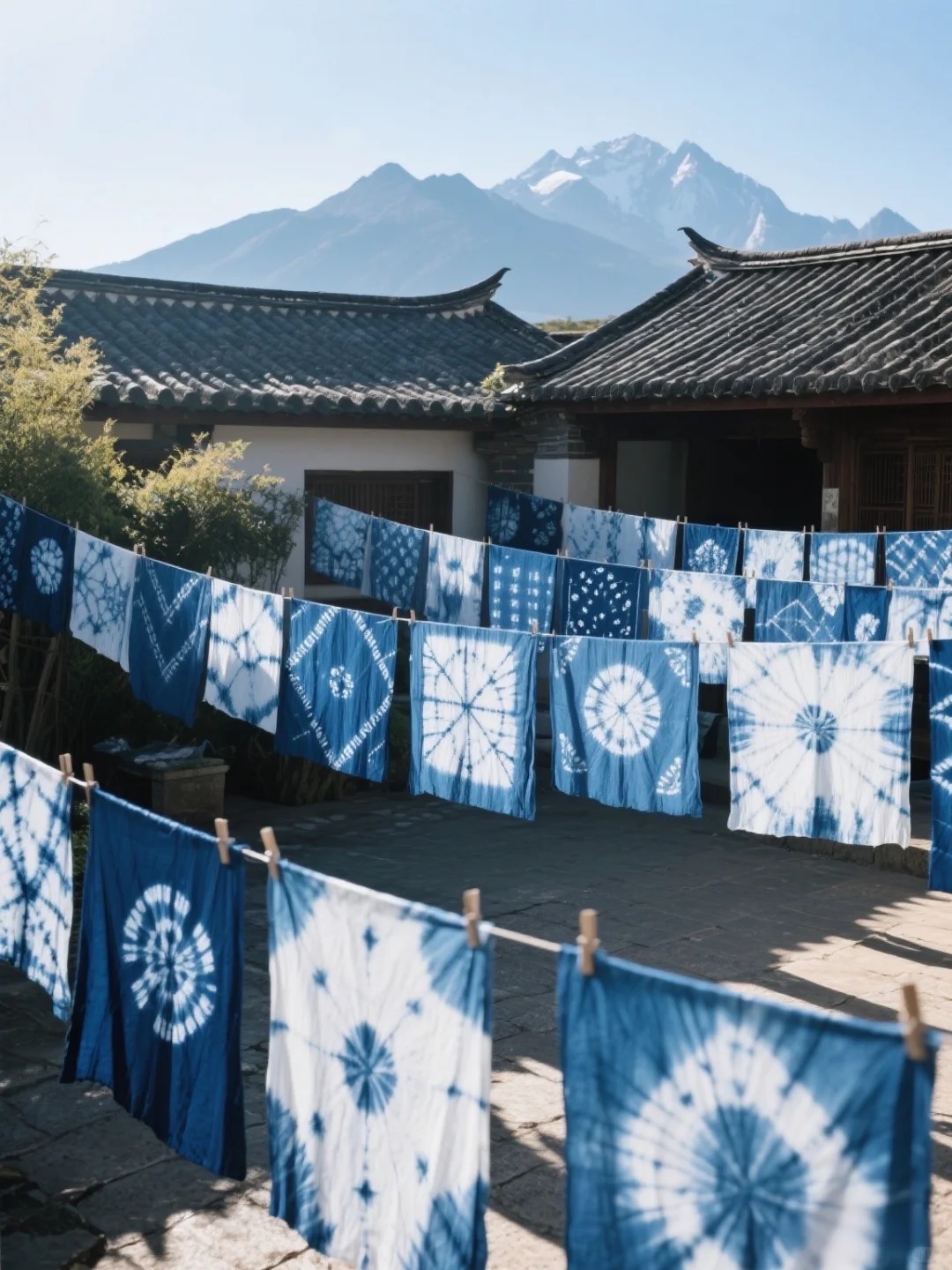
Famously, Dali. Necessarily, Zhoucheng. Home to China’s largest Bai ethnic community, it’s located 23 km north of Dali’s ancient city. And Zhoucheng offers something the tourist trail hardly ever presents—an unsanitized daily life waiting to be witnessed. Indigo-dyed fabric hung from every gate; almost every home pursues the same tie-dye craft that has been developed for more than a millennia.

🏯 Core Experiences
- Bai Batik Museum: Visit to understand the history of this nationally protected intangible cultural heritage. The collection provides essential context before you explore the living village around it.
- Hands-On Dyeing Workshop: Book a session at Puzhen Batik Museum (扑真扎染). The full process of drawing, binding, dyeing, and rinsing takes several hours. Consequently, you leave with a cloth you actually made yourself.
- Residential Lane Walk: Wander the residential lanes — almost every family keeps a dye vat. Spotting the different household styles and patterns is an exercise in living folk art.
🗺️ Travel Guide
- Getting there: From Dali Old Town, take the bus toward Butterfly Spring and get off at the Zhoucheng junction — about 40 minutes. Alternatively, cycle or taxi from nearby Xizhou Ancient Town (喜洲古镇).
- Where to stay: Stay in Dali Old Town or Xizhou and treat Zhoucheng as a day trip. Simple village guesthouses are also available for a more immersive overnight stay.
East China: Traditional Water Villages
6. Zhujiajiao Ancient Town
Zhujiajiao Ancient Town
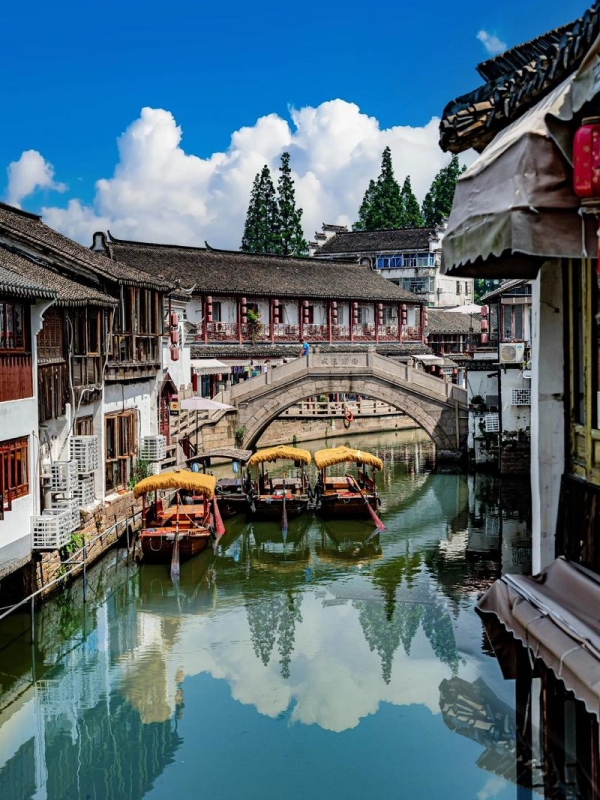
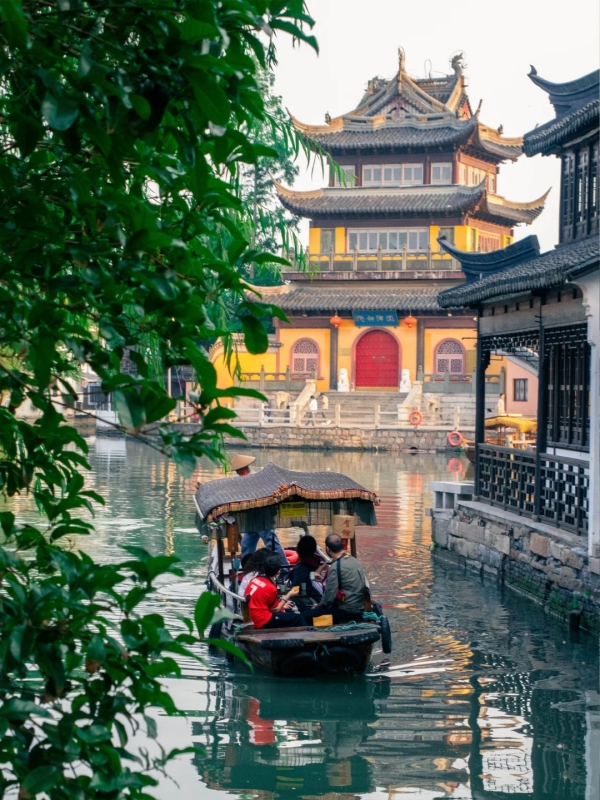
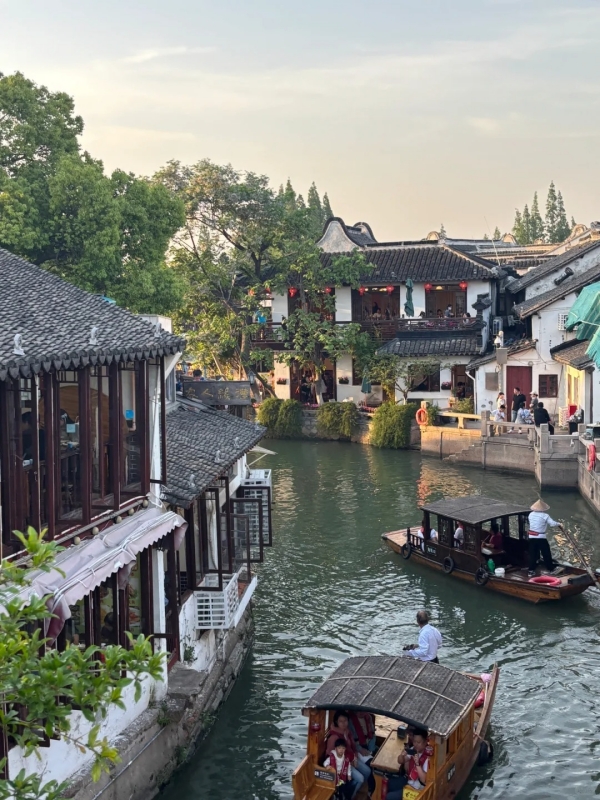
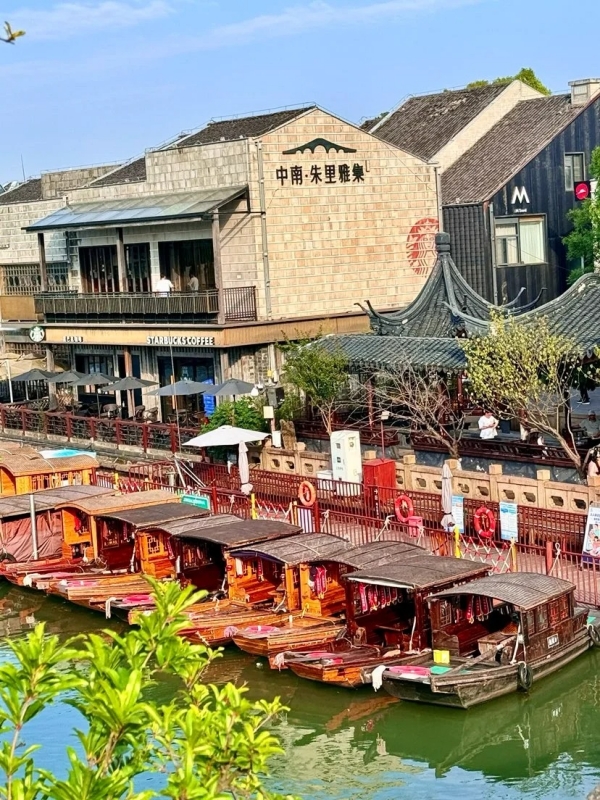
Zhujiajiao is Shanghai in slow motion. At only 40 minutes by metro from the city centre, this Ming and Qing dynasty canal town feels worlds away from urban Shanghai. The largest and most conveniently accessible of Shanghai’s water villages, it provides the answer to the first-time visitor’s burning question: ‘Can I see a real water town without travelling far from Shanghai?’ The answer: yes — and this is it.
-

- Zhujiajiao Ancient Town
-
- Zhujiajiao Ancient Town
-
- Zhujiajiao Ancient Town
🏯 Core Experiences
- Fangsheng Bridge (放生桥): Stand on Shanghai's largest five-arch stone bridge. Watch gondola-style wooden boats pass beneath the Ming-era arches — an image that belongs to another century.
- North Avenue Street Food: Walk North Avenue (北大街) for braised pork belly (扎肉) and sticky rice dumplings (阿婆粽). Two foods this town does better than anyone else.
- Back Waterway Punt Ride: Take a hand-rowed punt through the narrow back waterways. The angle from the water reveals architectural details completely invisible from the banks above.
- Sunset Canal Views: Stay for sunset — the light on the canal after 5 PM, when day-trippers depart, reveals the best and most honest version of this town.
🗺️ Travel Guide
- Getting there: Shanghai Metro Line 17 runs directly to Zhujiajiao Station (朱家角站). It is the most metro-connected water town in the entire country.
- Where to stay: Zhujiajiao Amanyangyun suits high-end travellers. Alternatively, numerous boutique canal-side inns offer genuine overnight experiences for those who want the town to themselves after dark.
7. Tongli Ancient Town
Tongli Ancient Town
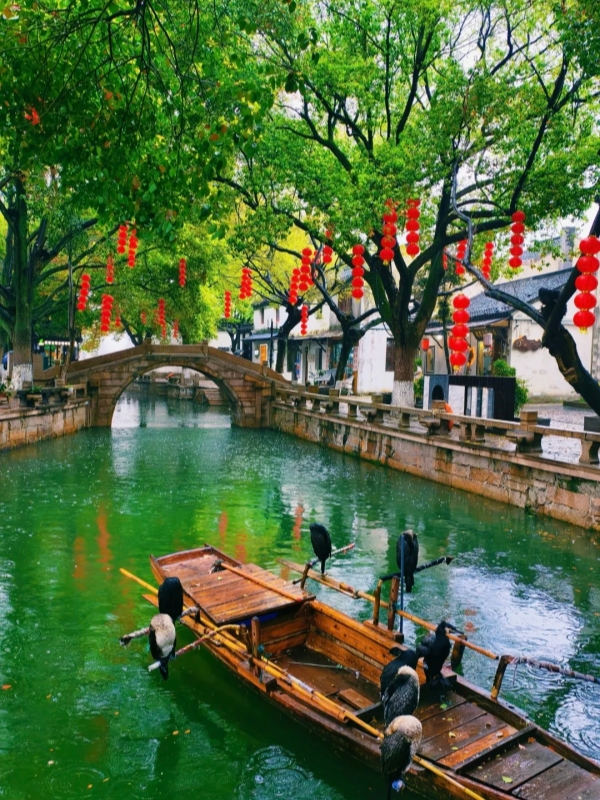
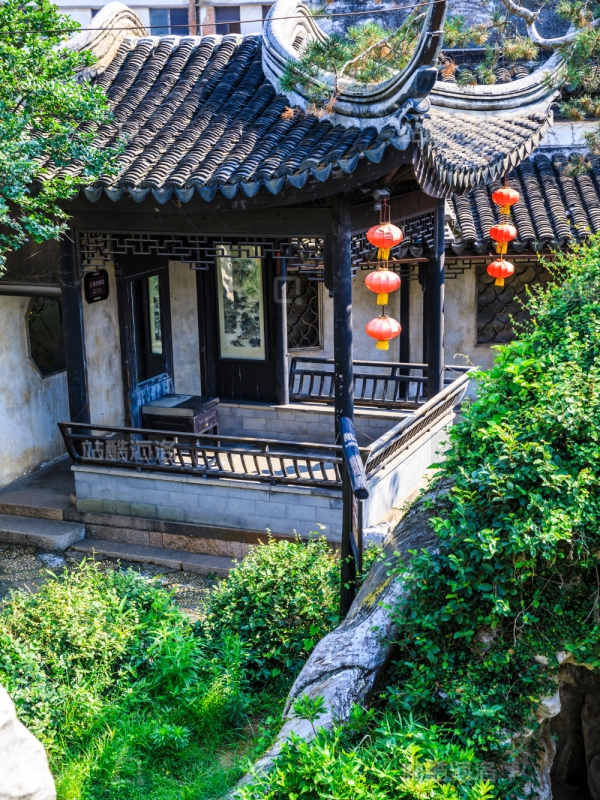
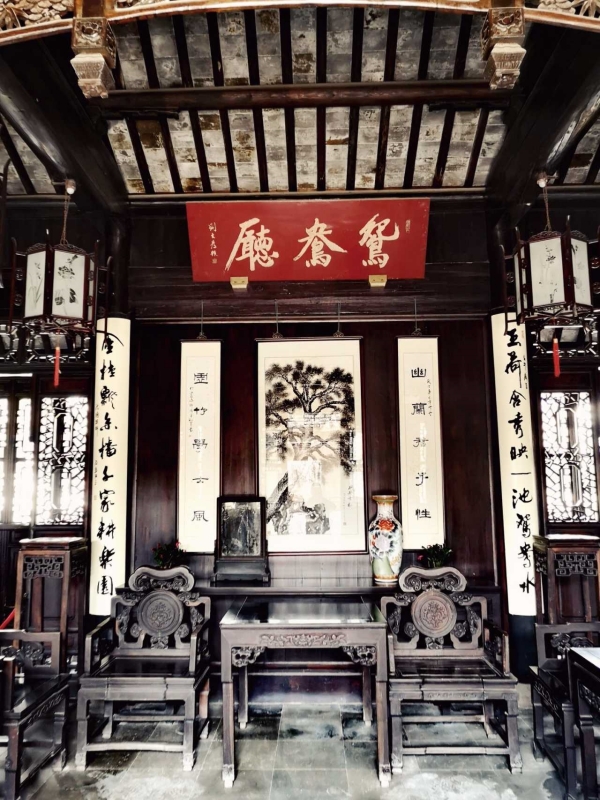
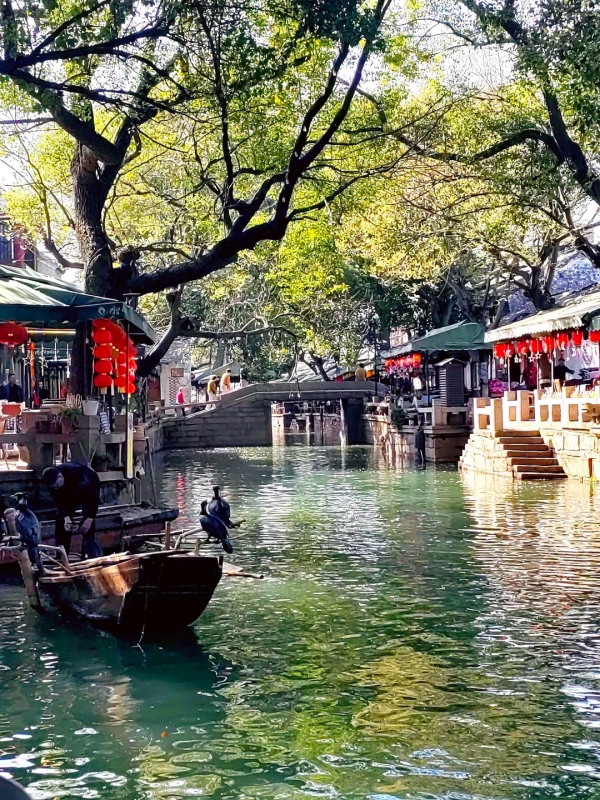
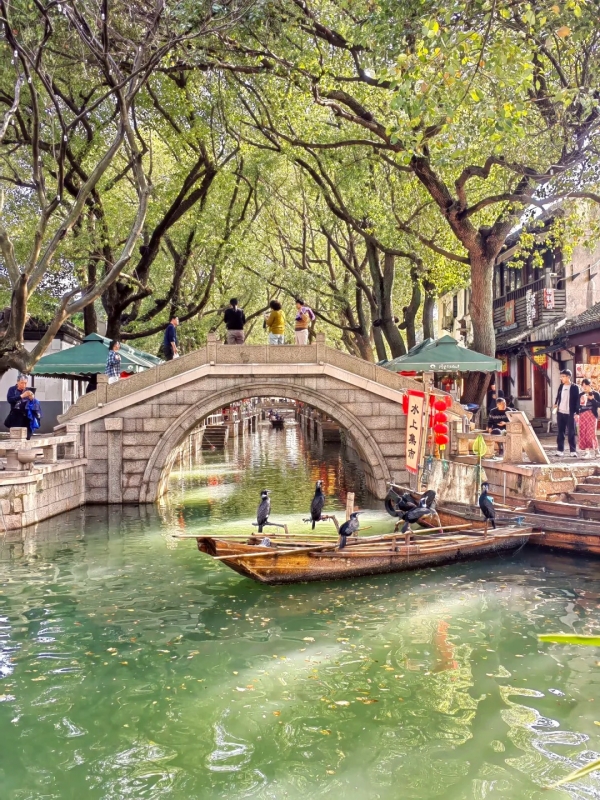
All the hu-t’ung water towns of the Yangtze Delta have their charms but Tong-li is unique. The essential structural fact about Tong-li is this: it is wholly surrounded by five linked lakes. With some justice, therefore, it can be called an island town approached only by bridge. This natural moat has preserved not only its buildings, but its whole atmosphere. Tong-li is still definitely quieter and less populous than the competing centres.
🏯 Core Experiences
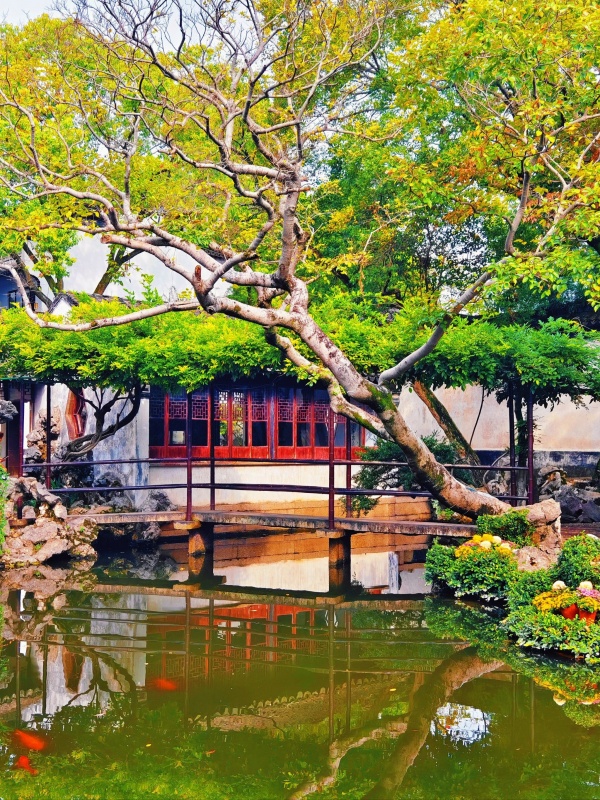
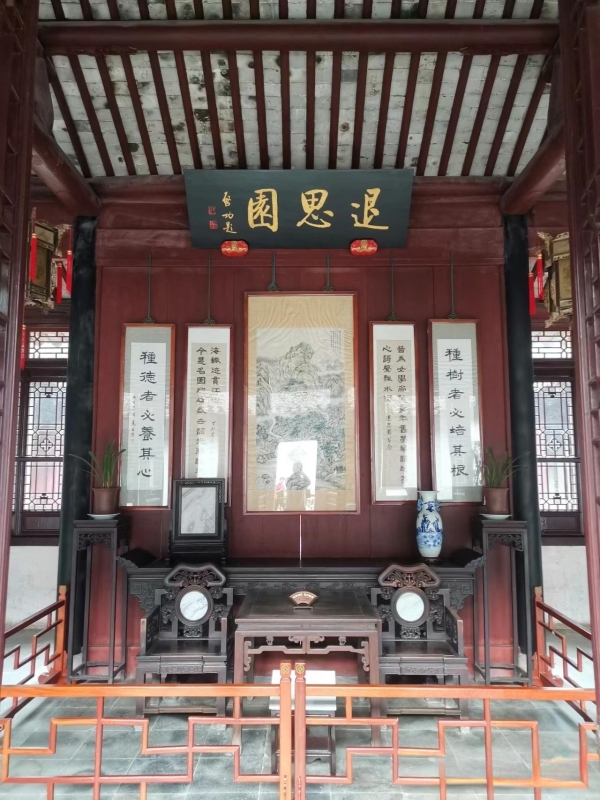
- Tuisi Garden (退思园, UNESCO): Tour this Suzhou-style garden that achieves extraordinary spatial complexity within a compact footprint. It is one of the few UNESCO-listed private gardens in China.
- Three Bridges Ritual Walk: Follow the "Three Bridges" (三桥) route — Taiping, Jili, and Changqing bridges in sequence. Local tradition holds they bring peace, luck, and longevity respectively.
- Dawn Canal Life: Come early — the best Tongli experience is watching residents wash vegetables and light stoves at canal-side. This happens in the pre-tour-group morning hours, before the crowds arrive.
🗺️ Travel Guide
- Getting there: From Suzhou, take Metro Line 4 to Tongli Station, then a shuttle bus. From Shanghai, the journey takes approximately 1.5 hours by car.
- Where to stay: Staying inside the old town is strongly recommended. Huajiantang Lizhi Girls' School Inn or other canal-facing inns make the early morning and late evening genuinely special.
8. Hongcun Village
Hongcun Village
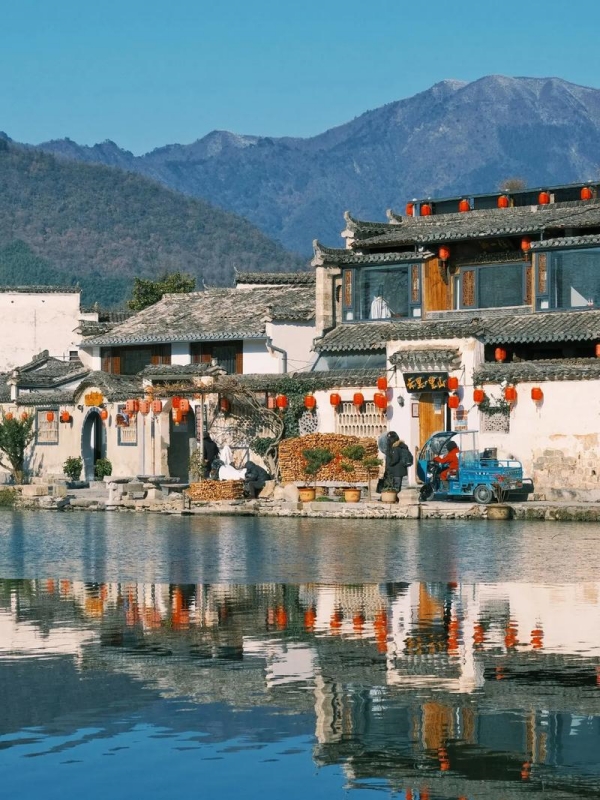
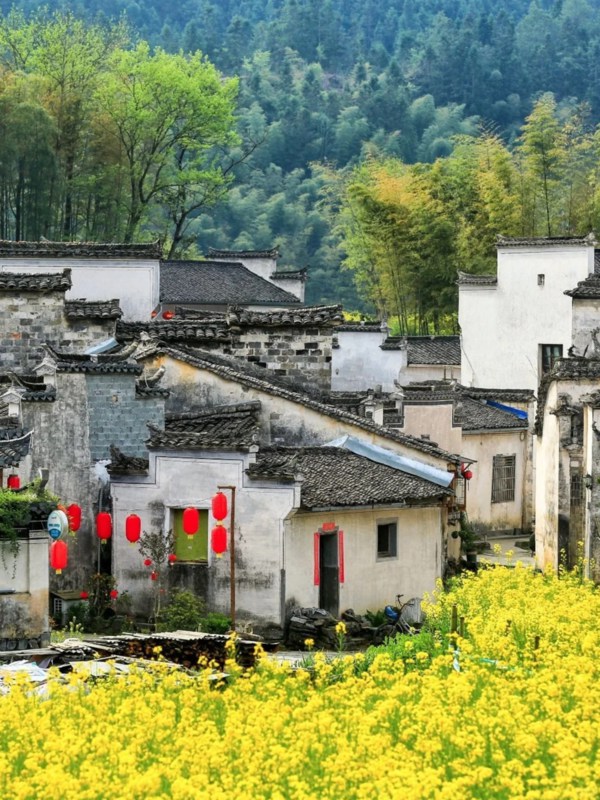
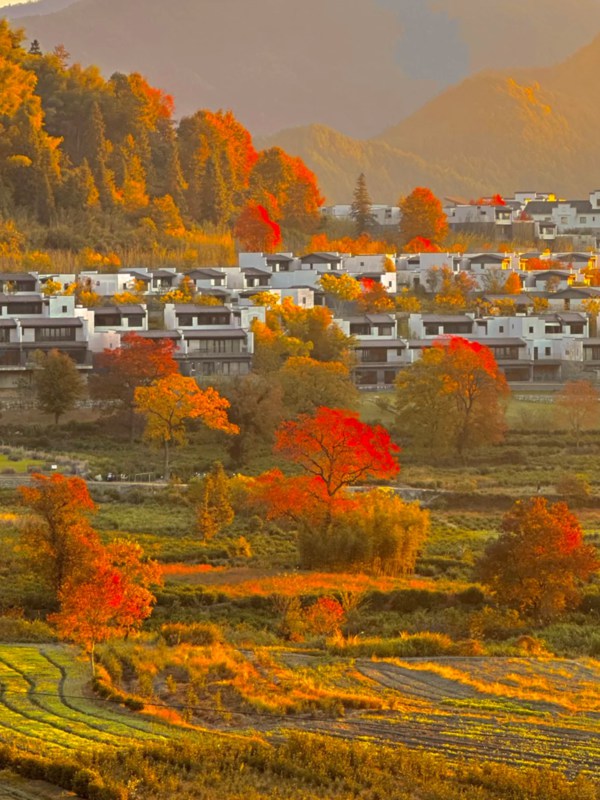
Hongcun is not a metaphor, but rather a village literally designed to look like a water buffalo if squinted at from above. The pond at its centre is heart-shaped, and represents the stomach. The lake to the south is plainly the belly. Genius hydraulic engineering, over 600 years ago, still pours through the veins today. This is china ancient town you show up at with easel and brush in tow. This is the one that comes closest to its photographs, which is either its strong suit or its weakest link, depending entirely on timing your visit.
-
- Spring of Hongcun
-
- Autumn of Hongcun
-
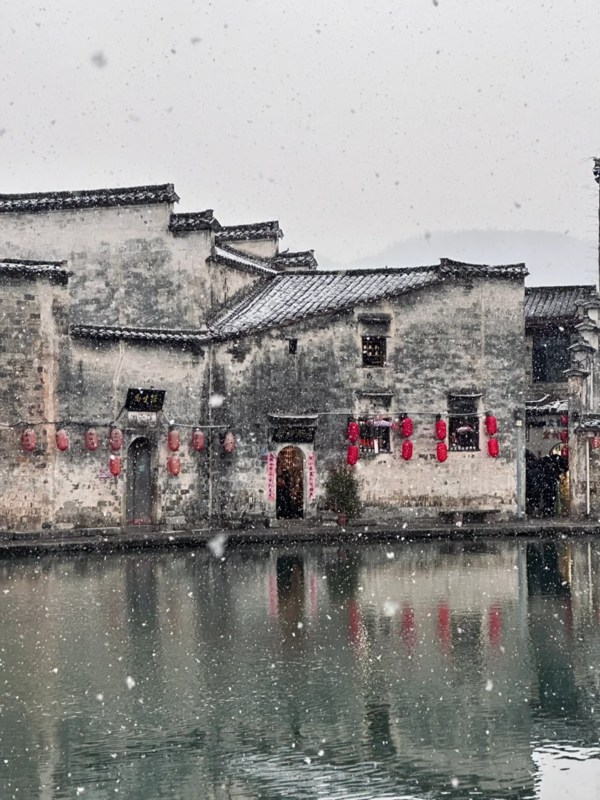
- Winter of Hongcun
🏯 Core Experiences
- Buffalo Layout Canal Walk: Trace the canal from Moonlit Pond (月沼) to South Lake (南湖). The full hydraulic system becomes intelligible as a walk rather than a diagram on paper.
- Three Carvings Interior Halls: Enter Chengzhi Hall (承志堂) and Jingxiu Hall (敬修堂) to study the wood, stone, and brick decorations. The quality of this craftsmanship is rarely matched anywhere in rural China.
- South Lake Bridge at Dawn: Be here at dawn — the reflection of whitewashed gable walls in still water, with student painters setting up easels, earns this village its lasting reputation.
🗺️ Travel Guide
- Getting there: Fly or take high-speed rail to Huangshan City (黄山市). Tourist buses run directly to Hongcun from Huangshan North Station (黄山北站) — approximately 1.5 hours.
- Where to stay: Old-mansion guesthouses inside the village are the only correct choice. Shilili Qingmei Study is well regarded. Overnighting here is the difference between seeing Hongcun and truly experiencing it.
9. Xitang Ancient Town
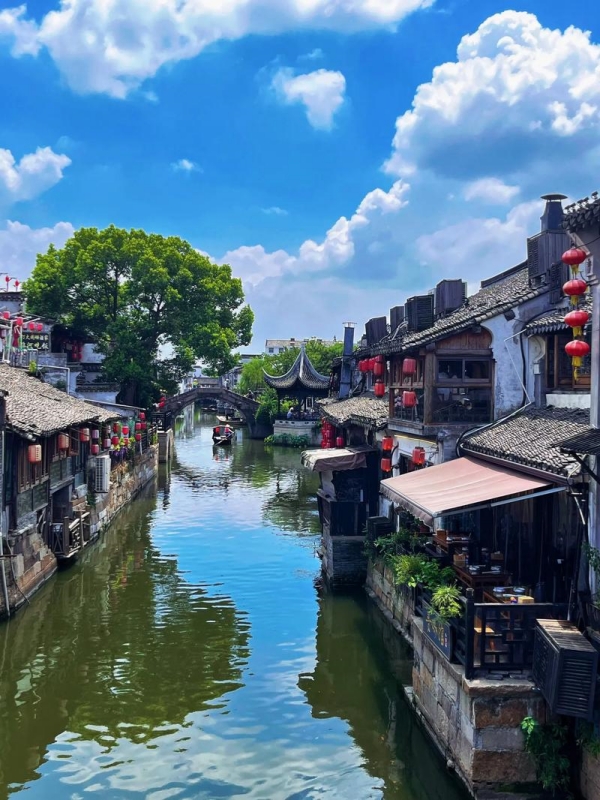
Xitang Ancient Town
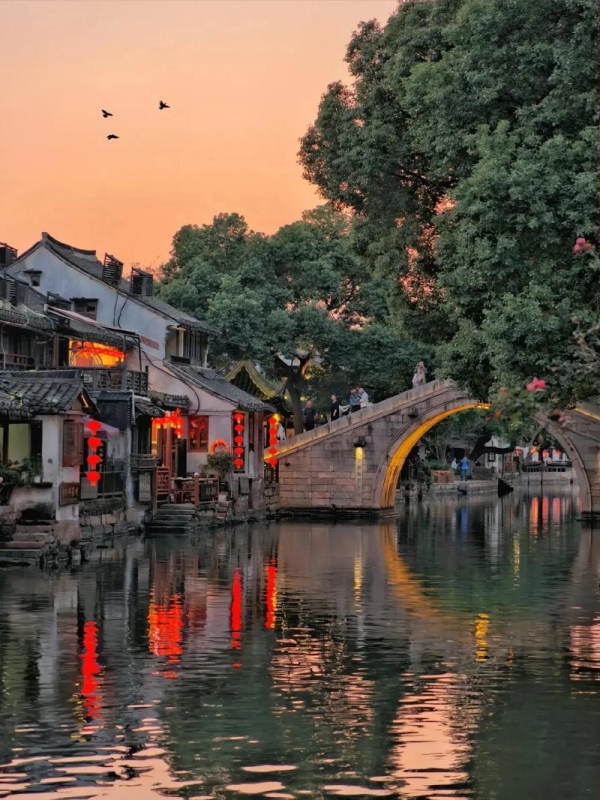
The most distinctive element of Xitang is the covered walkway: a kilometre of unbroken roofed corridor coursing beside the water. For centuries, life has gone on beneath this arcade, rain or shine. People fish and dry laundry, and play mahjong, in the very space that tourists photograph. The distance between looking and doing is small here; this is the “living ancient town” that most fully lives up to the call.
-
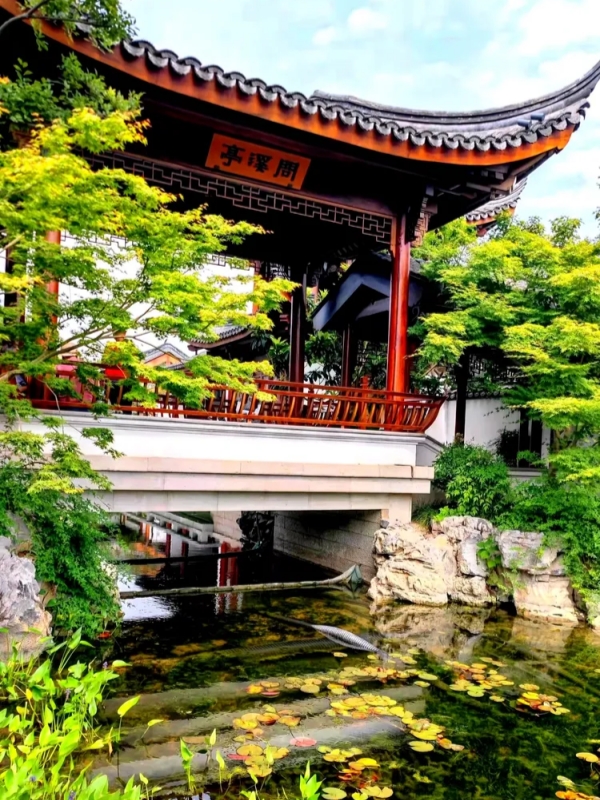
- Xitang Ancient Town
-
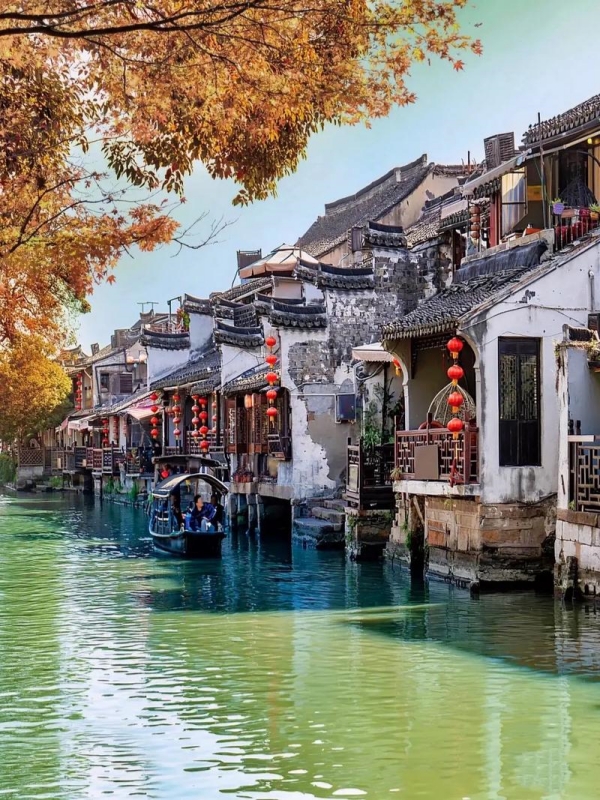
- Xitang Ancient Town
-
- Xitang Ancient Town
🏯 Core Experiences
- Covered Arcade (廊棚) in Rain: Walk the kilometre-long roofed corridor on a rainy afternoon. Staying dry while watching rain strike the canal surface is an experience unique to Xitang.
- Shi Pi Lane (石皮弄): Find this passageway so narrow that two people cannot pass side-by-side. It is the most photographed alley in Xitang for very good reason.
- Night Lantern Canal: At night, take a riverside table at one of the canal-front bars and watch paper lanterns drift on the water. It is an entirely different town from the daytime version.
- Dawn Mist & Fishermen: Rise early — Xitang in morning mist, with fishermen already on the water, is the image that endures longest after the visit.
🗺️ Travel Guide
- Getting there: Take high-speed rail to Jiashan South Station (嘉善南站) from Shanghai or Hangzhou, then a bus or taxi — approximately 30 minutes to the old town.
- Where to stay: Canal-facing rooms inside the scenic area are essential. Fusheng Yisu Boutique Inn is a well-reviewed option. A water-side window at night justifies the overnight stay entirely.
10. Chengkan Ancient Village
Chengkan Town
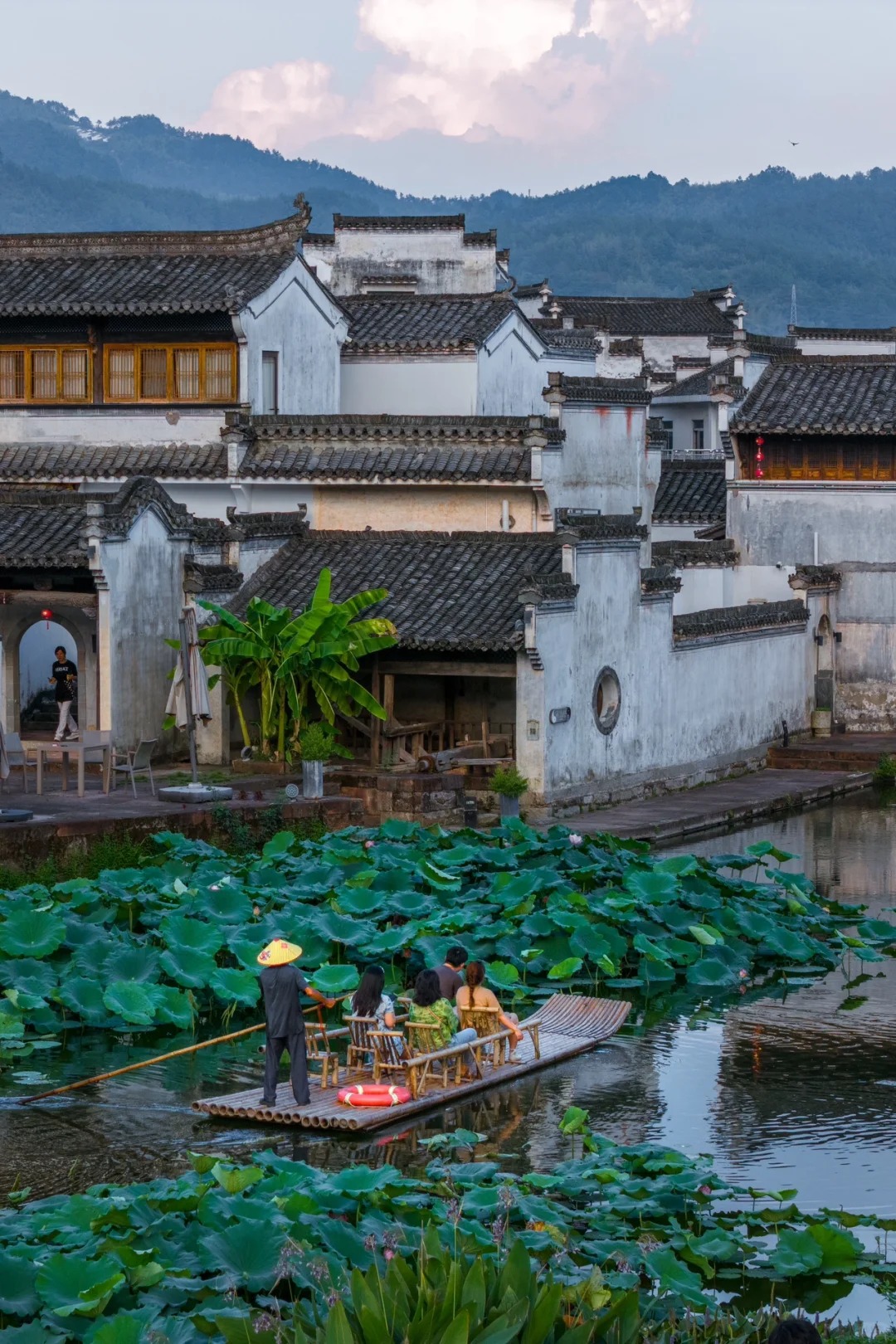
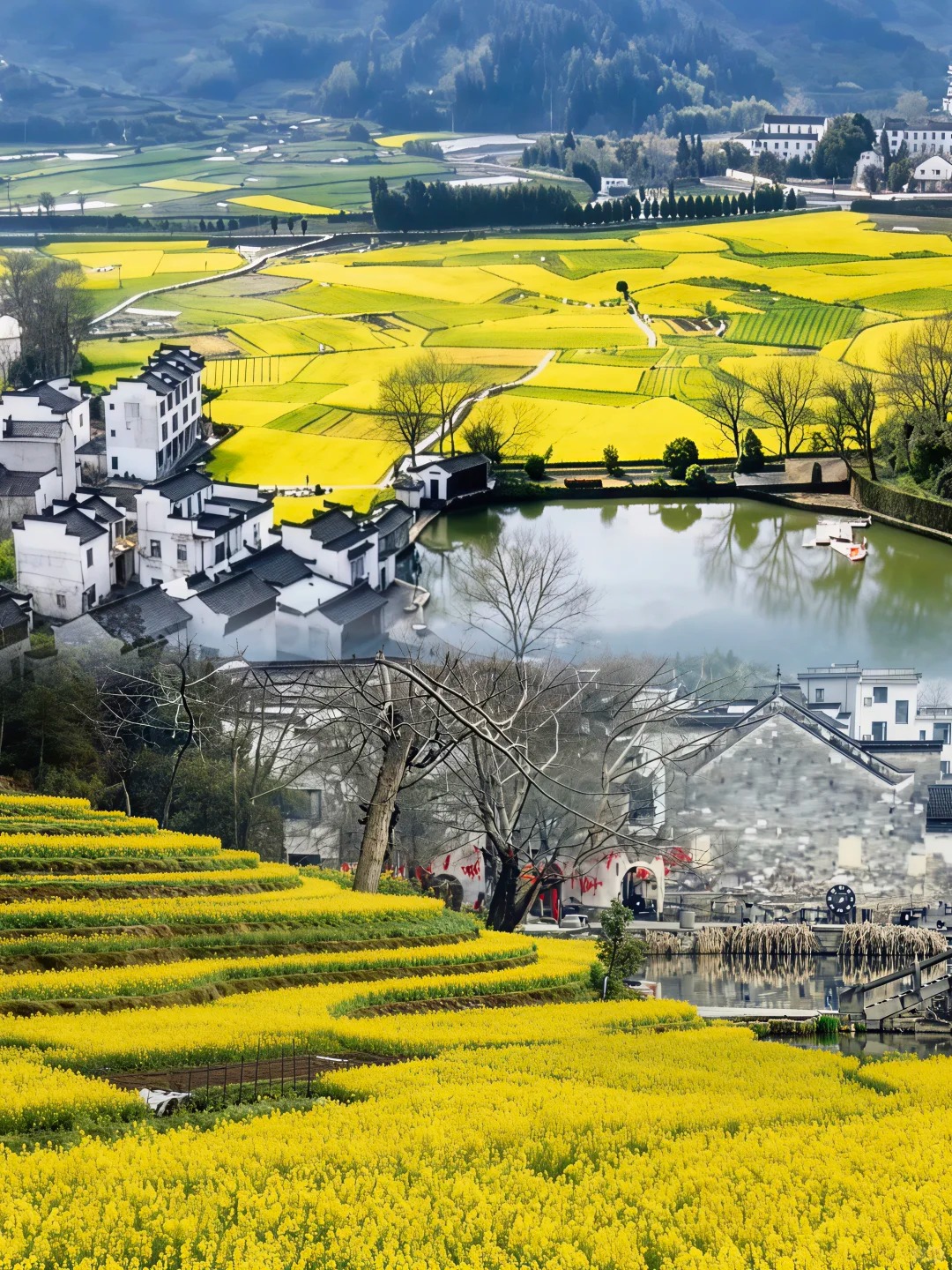
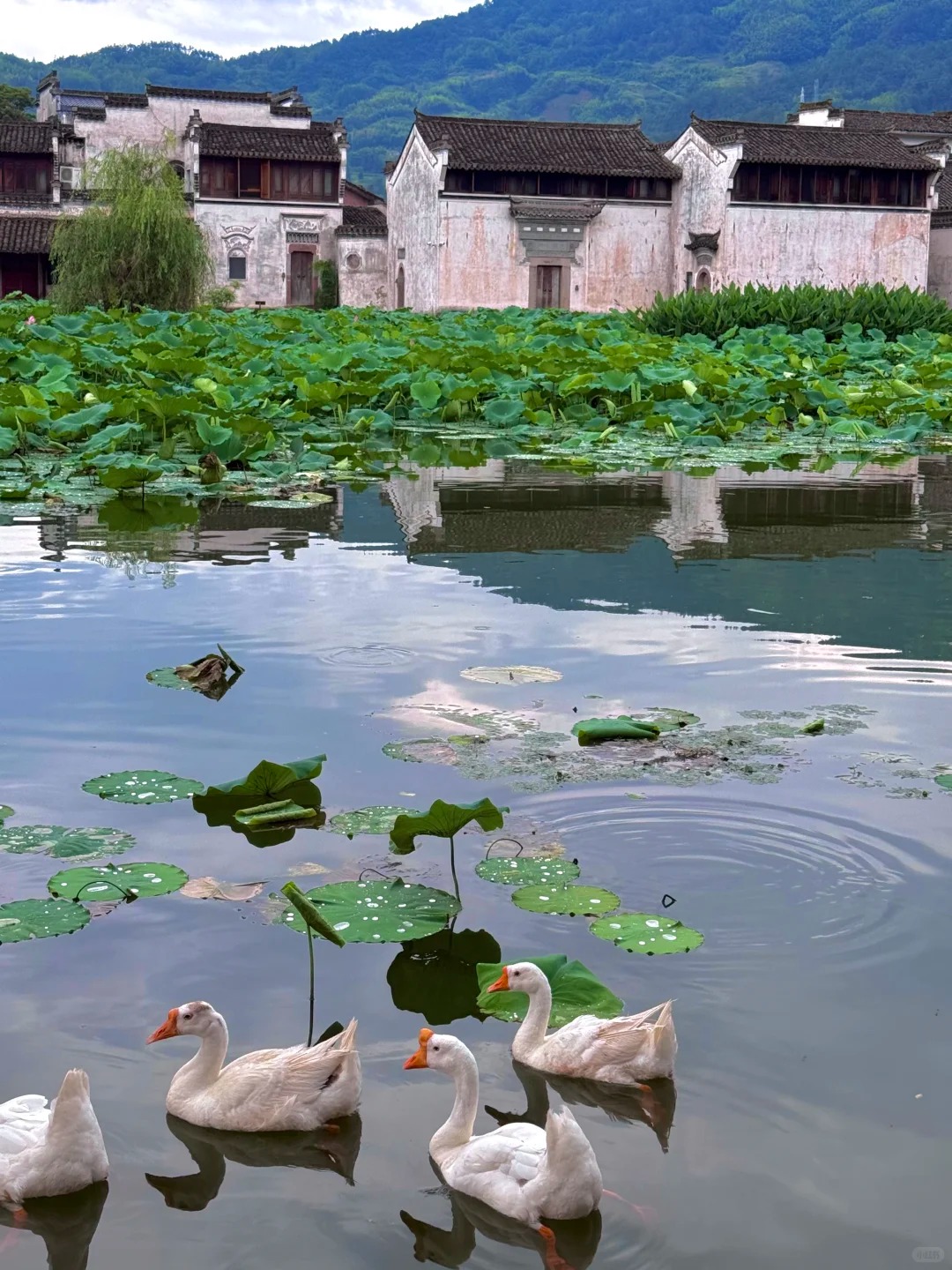
If Hongcun is a lyrical ink-wash painting, Chengkan is a philosophical treatise, carved in stone and wood, boasting over 1,800 years of continuous habitation. The Song dynasty Neo-Confucian philosopher Zhu Xi once praised it as "Jiangnan’s First Village", and it can today be called "China’s First Fengshui Village", whose entire layout is based on the Eight Trigrams of I Ching(易经). Here, architecture is no art; it is nothing less than the living embodiment of ancient Chinese ideals of harmony between humanity and heaven.
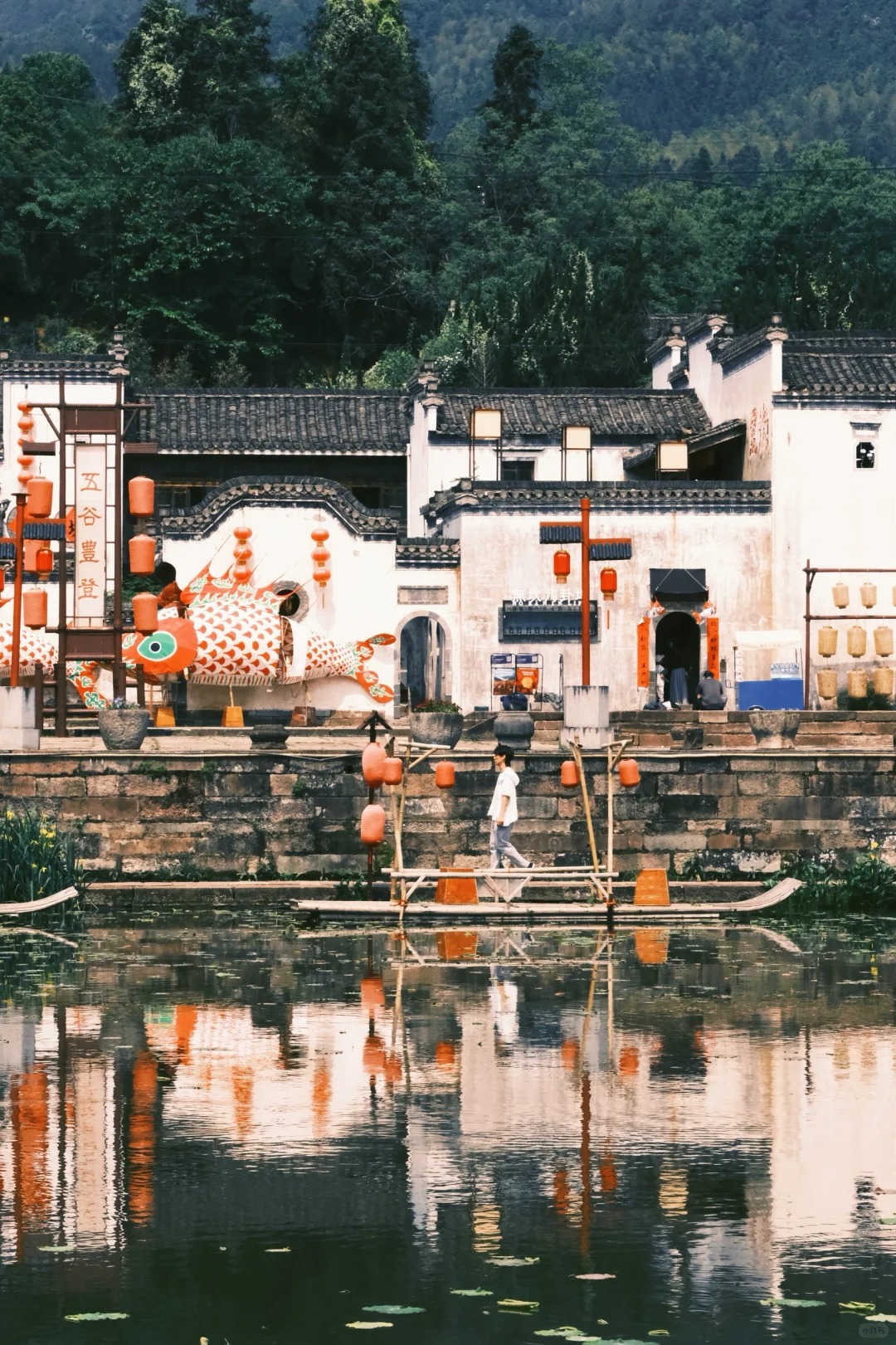
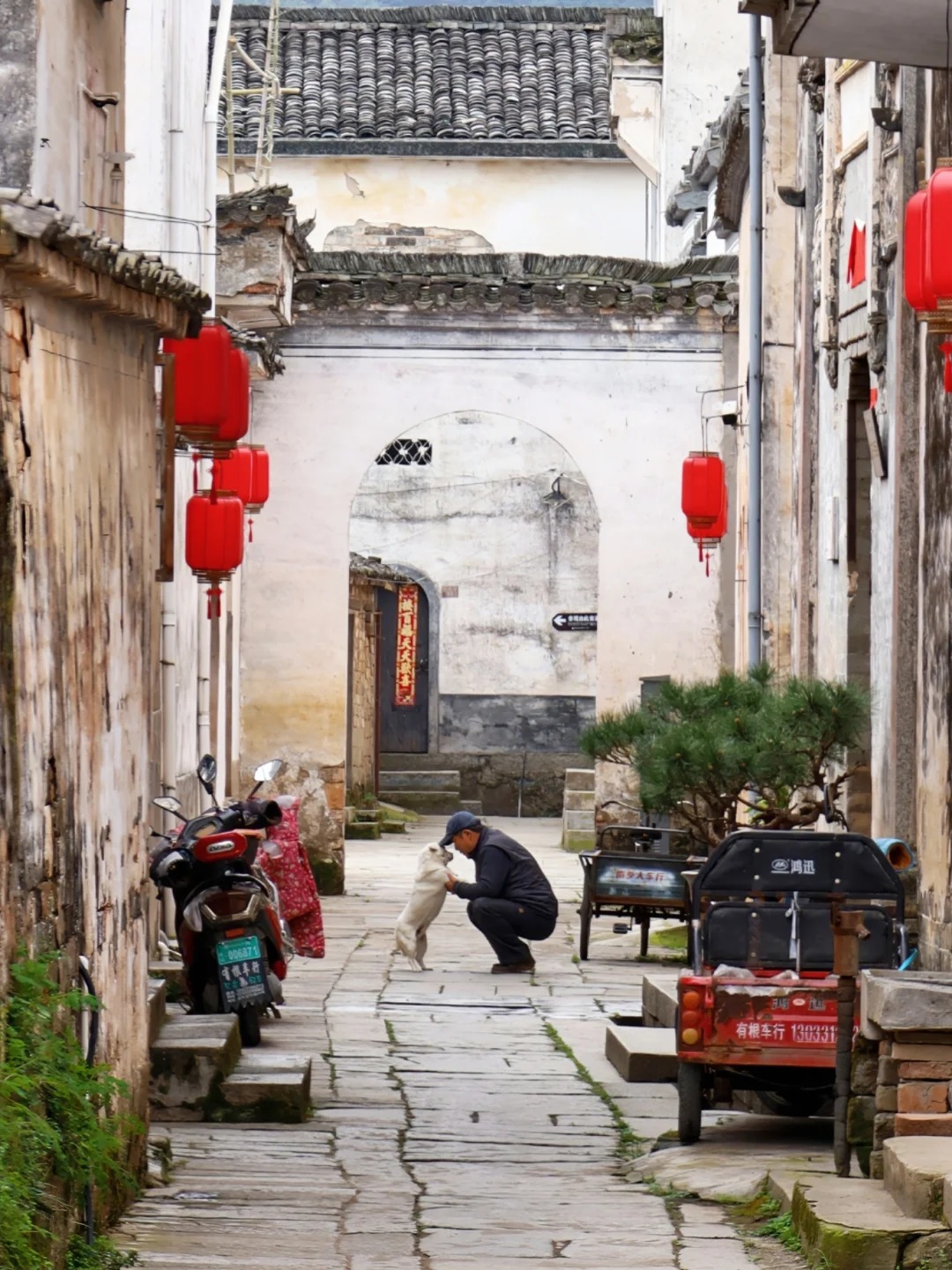
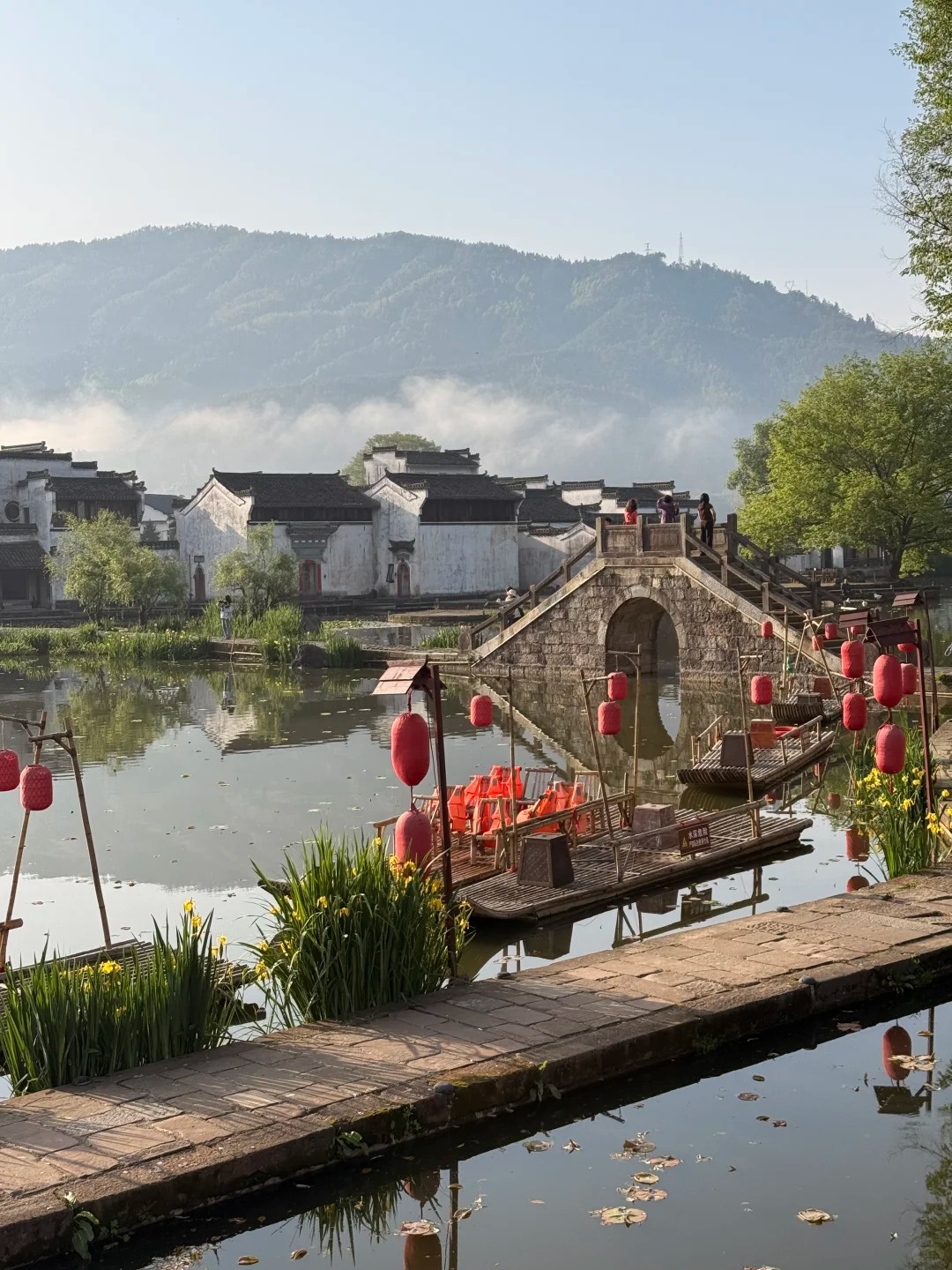
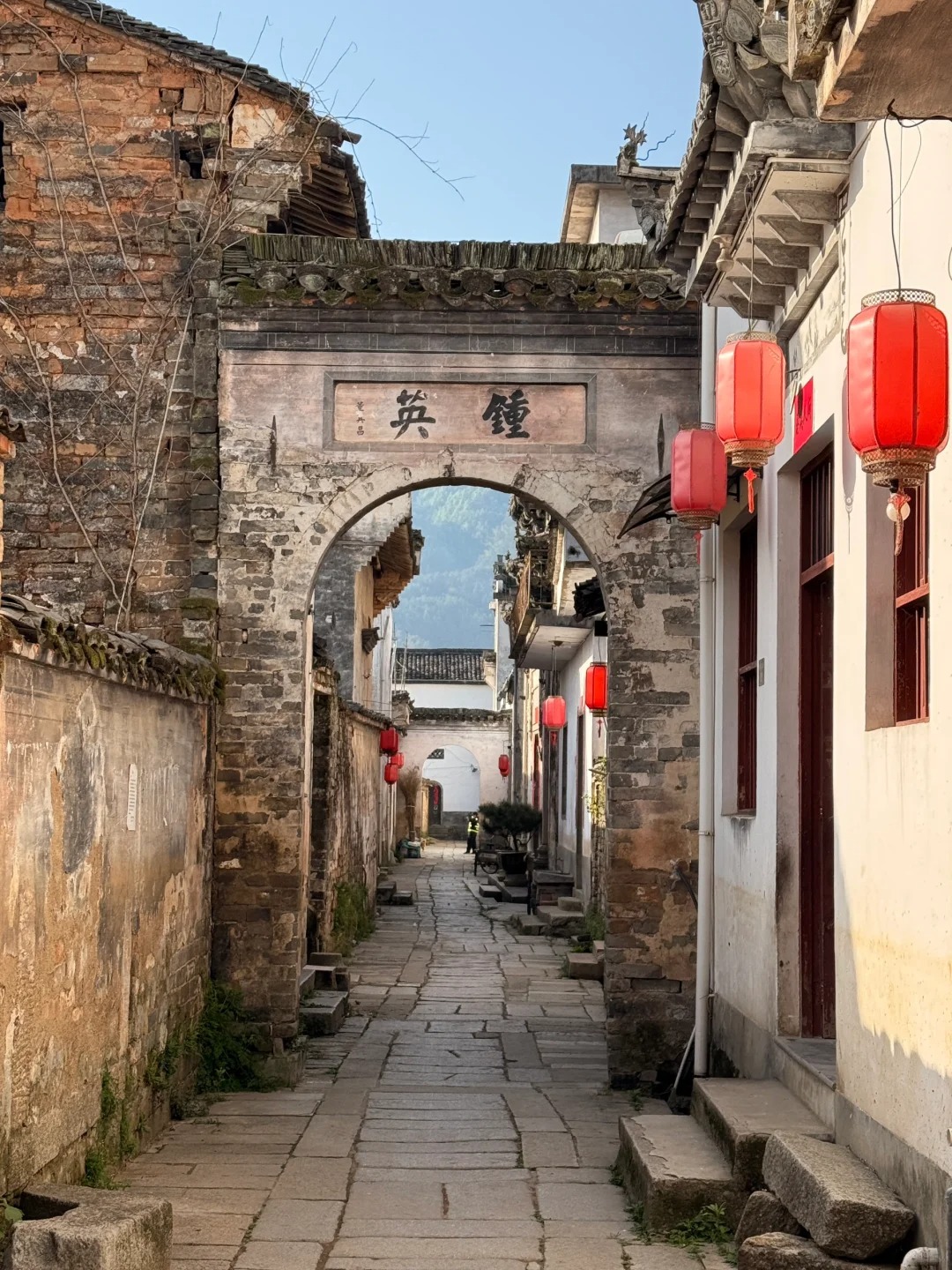
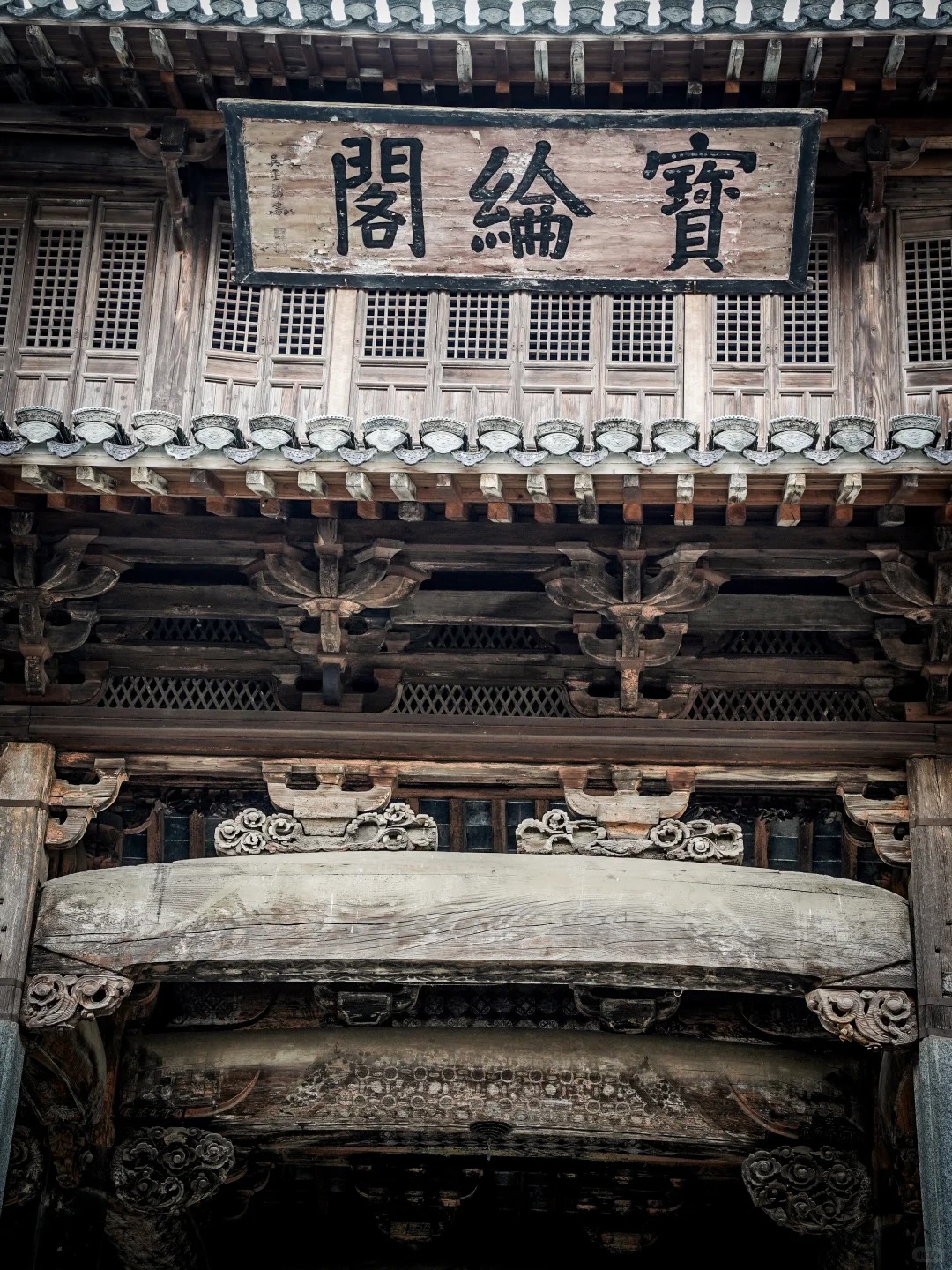
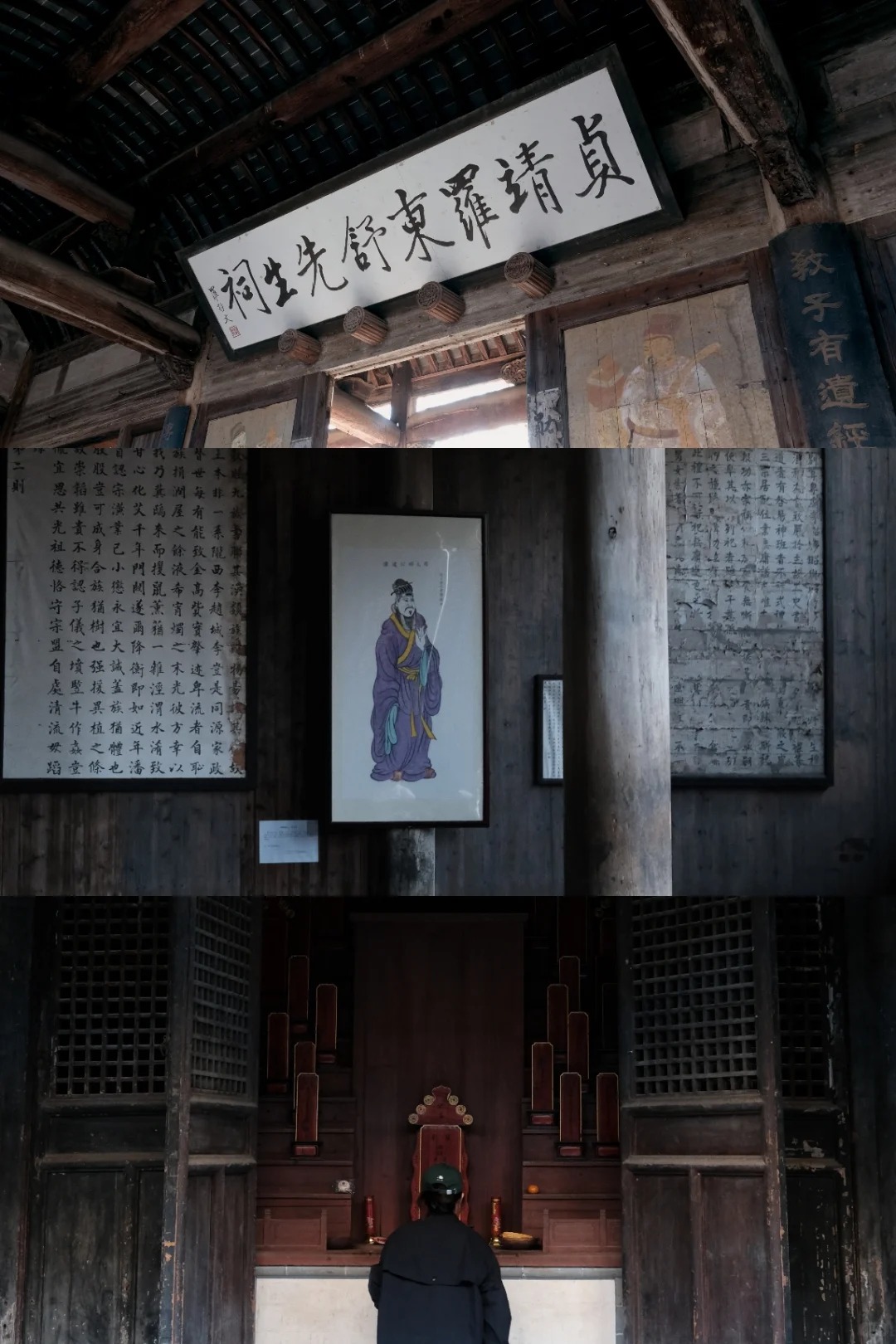
🏯 Core Experiences
- Three Streets and Ninety-Nine Lanes: Navigate the maze-like alley network that constitutes Chengkan's street grid. This precision spatial planning from an era without computers is best experienced when you deliberately abandon your map.
- Luo Dongshugong Temple (罗东舒祠): The undisputed centrepiece and "First Ancestral Hall of Jiangnan" — the scale of its timber construction is extraordinary. Furthermore, the caisson ceiling of the Baolung Pavilion (宝纶阁) ranks among the finest examples of Ming woodcraft surviving anywhere in China.
- Yongxing Lake (永兴湖) Reflections: Stand at the lake edge for the classic Chengkan image. Whitewashed gable walls and dark roof tiles mirror in still water, framed by the surrounding hills that complete the Eight Trigrams geography.
- Ping'an Kan (平安坎) Wish: Pause at the "Safe Path Stone Step" to make a traditional wish for a life without obstacles. It is one of the more quietly meaningful rituals of any ancient village visit in China.
🗺️ Travel Guide
- Getting there: Take high-speed rail to Huangshan North Station (黄山北站), then a 25–30 minute taxi directly to the scenic area entrance — approximately ¥45. Tourist buses also serve the route but run infrequently.
- Where to stay: An overnight stay is strongly recommended — the village at dawn and dusk, when day-trippers have gone, is a completely different experience. Boutique guesthouses converted from Ming and Qing dynasty mansions, such as An Xia Shanyu (安下山嶼), offer window-framed heritage views. Budget options outside the village are reachable on foot.
North China: Historic Walled Cities
11. Pingyao Ancient City
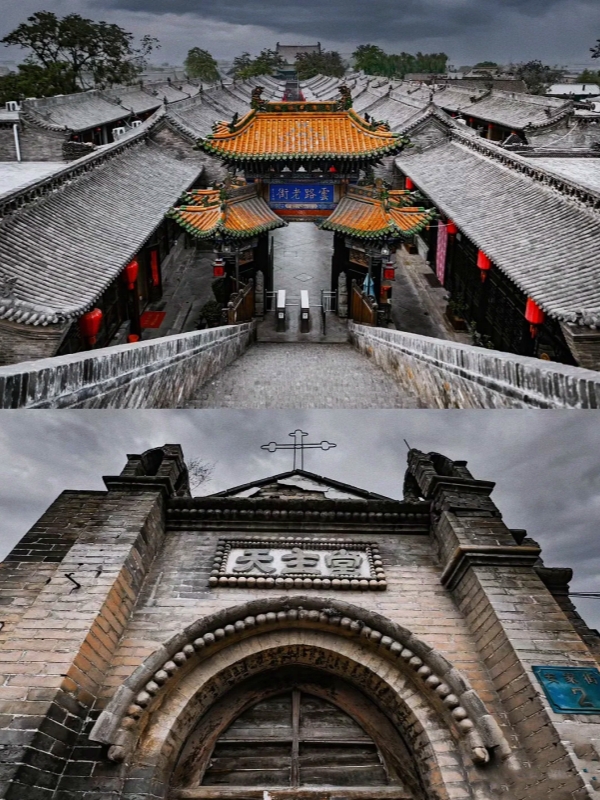
Pingyao Ancient City
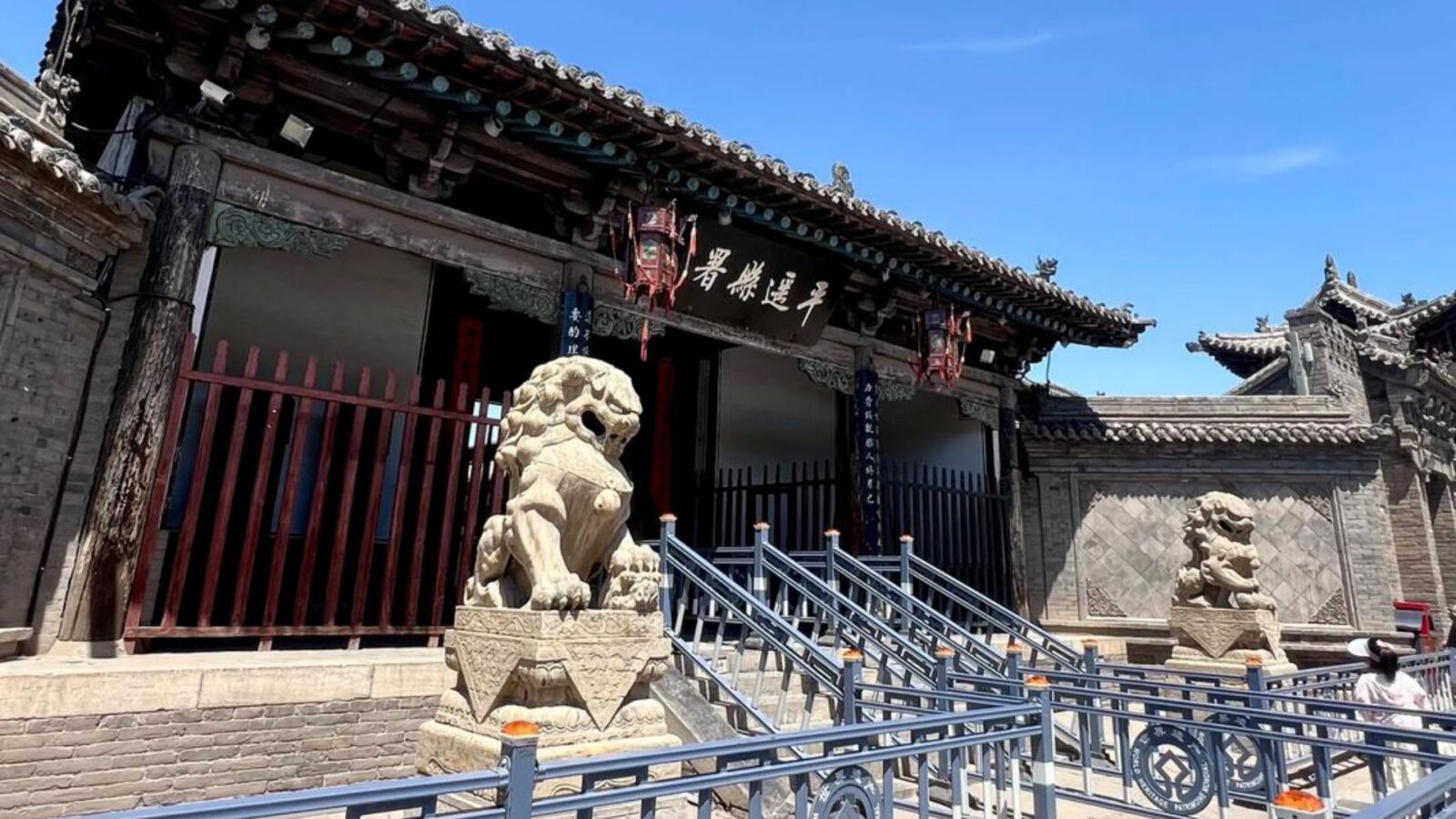
Pingyao is not merely well-preserved — it is the benchmark against which all other preserved Chinese cities are measured. Founded over 2,800 years ago and rebuilt in its current form in 1370, it holds UNESCO World Heritage status. For instance, its city wall, central axis, courtyard residences, and temples all survive in original condition. Moreover, the exchange houses that once made it the financial capital of China still stand. Walking its gridded streets is the closest thing available to time travel in this country.
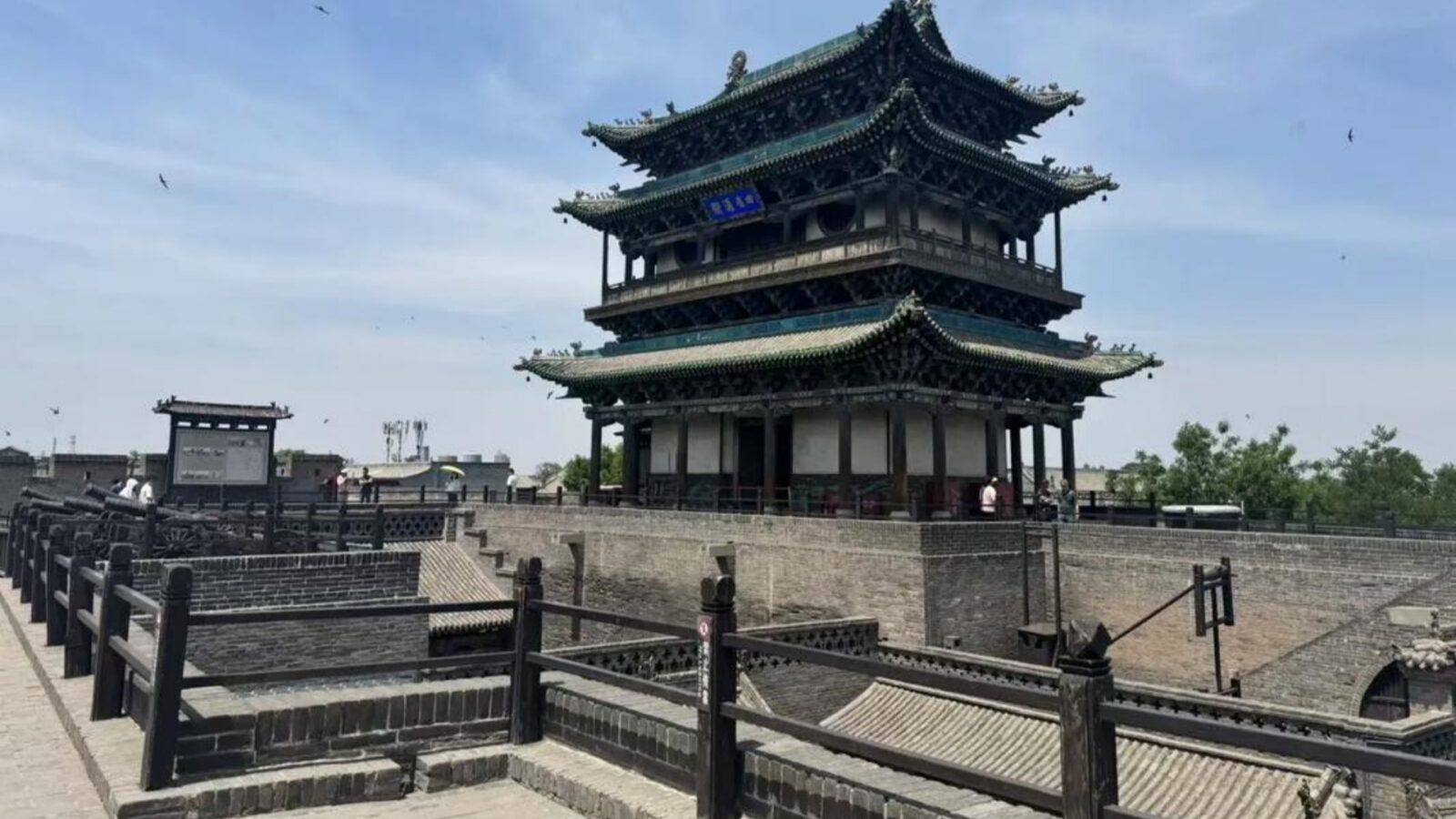
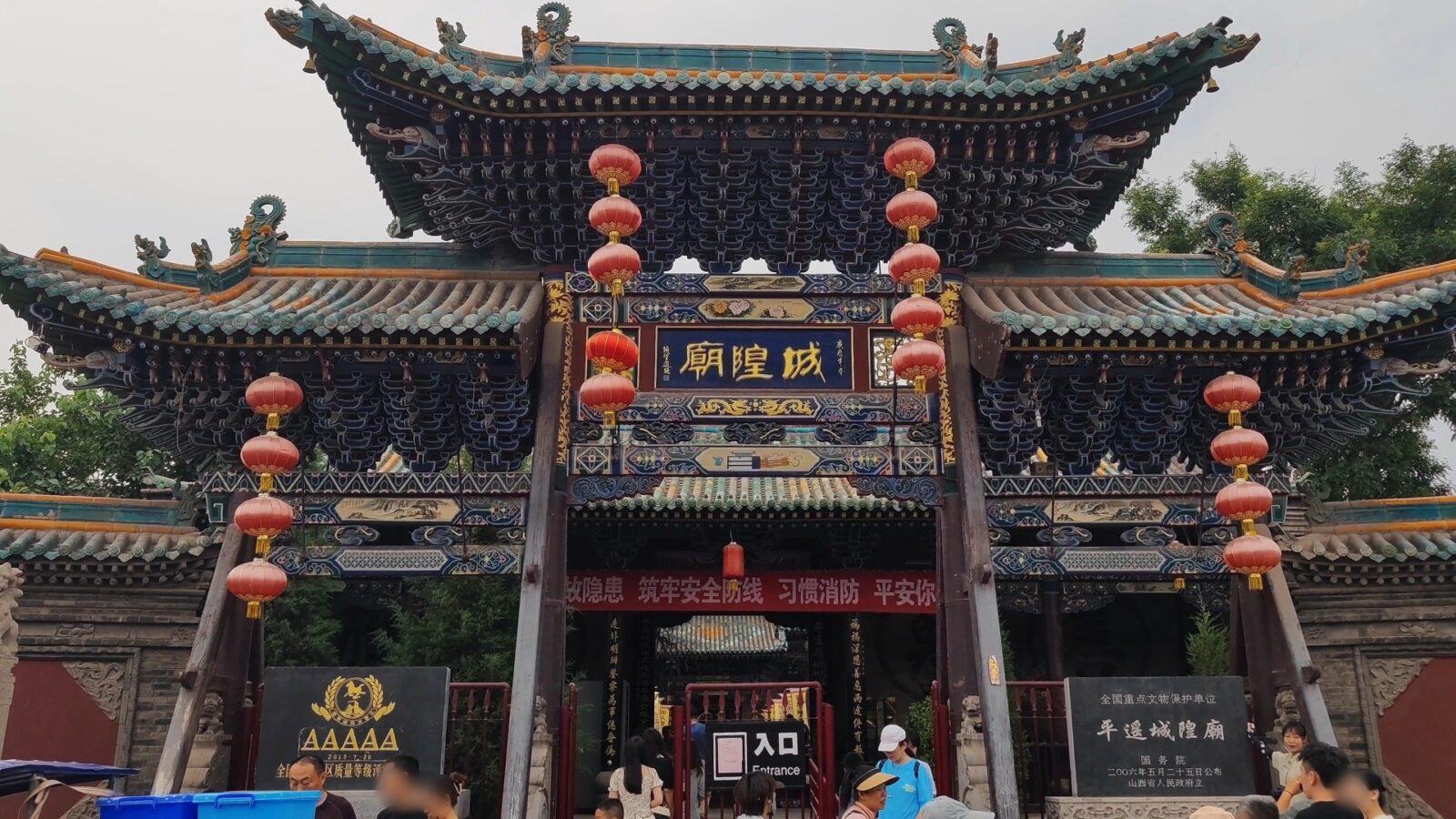
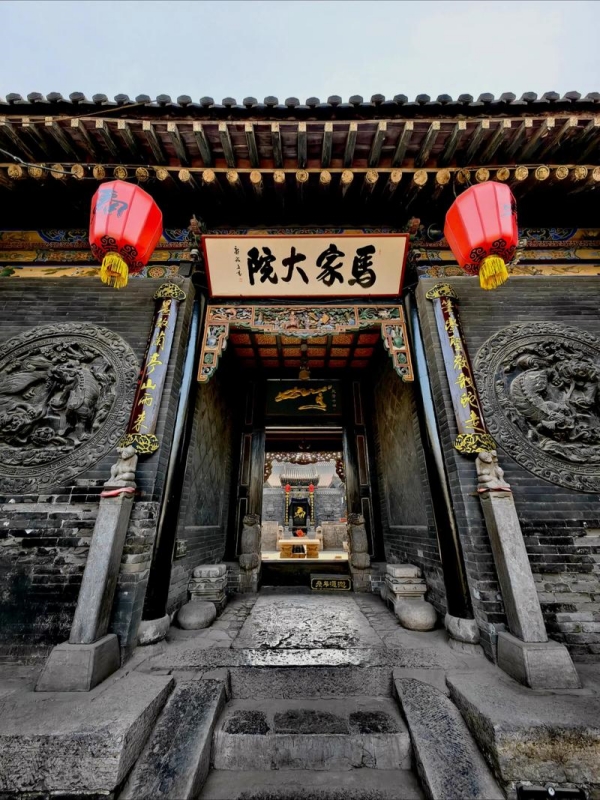
🏯 Core Experiences
- Ming City Wall Circuit: Walk the complete perimeter for a bird's-eye view of the chessboard street grid below. This is one of the best-preserved city walls in all of China.
- Rishengchang Exchange House (日升昌票号): Visit the world's first draft bank, established in 1823. It single-handedly created China's modern banking system and shaped the commercial history of an entire era.
- County Magistrate's Court Performance: Watch the mock court hearing at the County Magistrate's Office (县衙). It is theatrical, yet genuinely educational about Qing dynasty legal culture.
- Ming-Qing Street After Dark: Walk under red lanterns along the ancient commercial street. The visual contrast with daylight is striking and worth staying for.
🗺️ Travel Guide
- Getting there: Take high-speed rail to Pingyao Gucheng Station (平遥古城站) — approximately 4 hours from Beijing and 30 minutes from Taiyuan. A taxi to the old city takes 20 minutes from the station.
- Where to stay: Former ticket-house or guild-hall inns inside the walls are the only appropriate choice. Pingyao Jinzhai is reliably good. The old city lives differently after the day-trippers leave.
12. Datong Ancient City
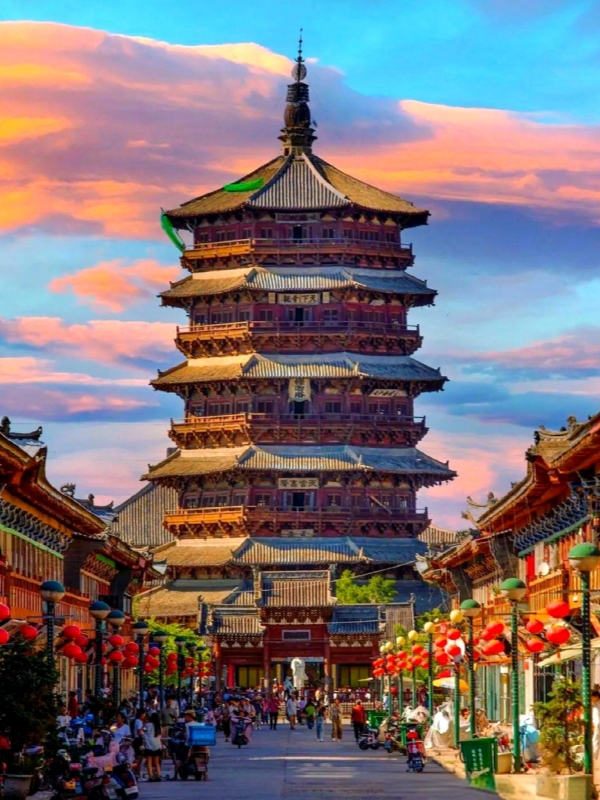
Datong Ancient City
Datong demands more intellectual engagement than most destinations on this list — and rewards that engagement proportionally. As a former Northern Wei dynasty capital and later a key Ming military garrison, it contains architectural layers that most visitors to China never encounter. Specifically, it holds Liao, Jin, and Ming dynasty structures in concentrated form. Its restored city walls and inner temple complex are architecturally distinct from anything found in southern China.
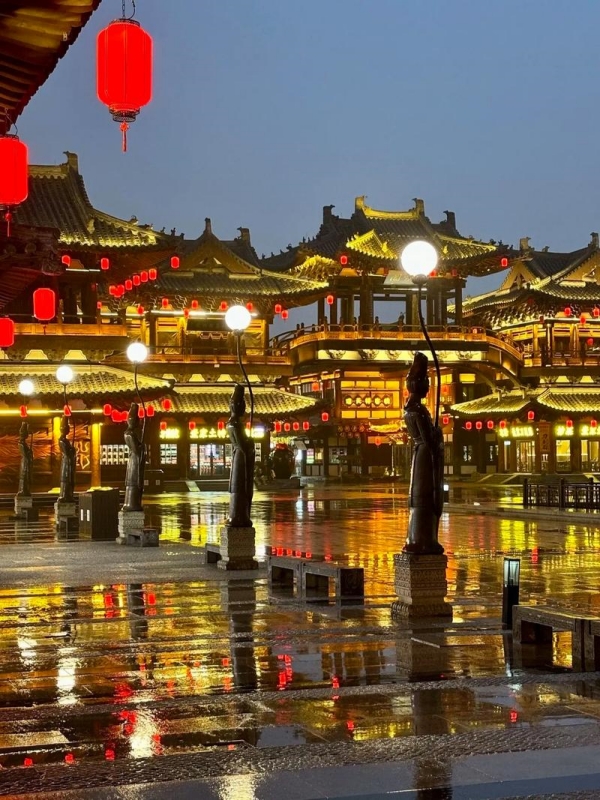
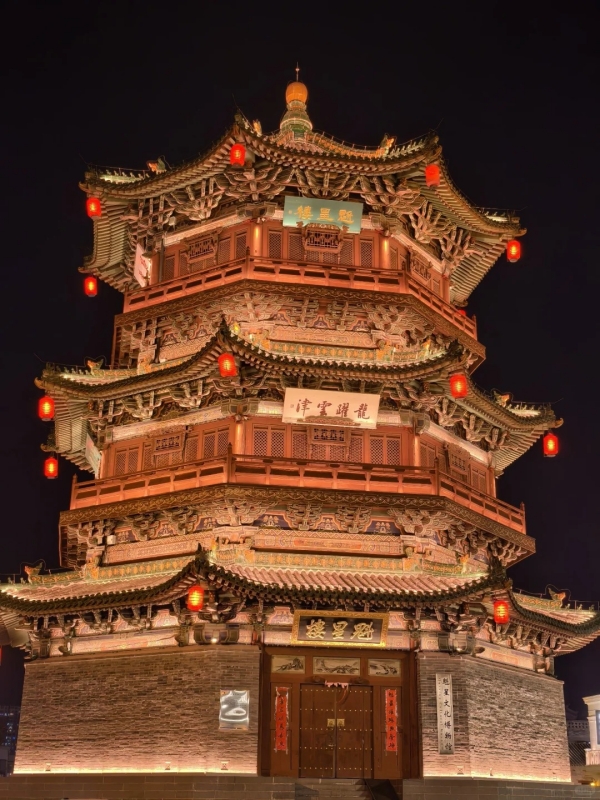
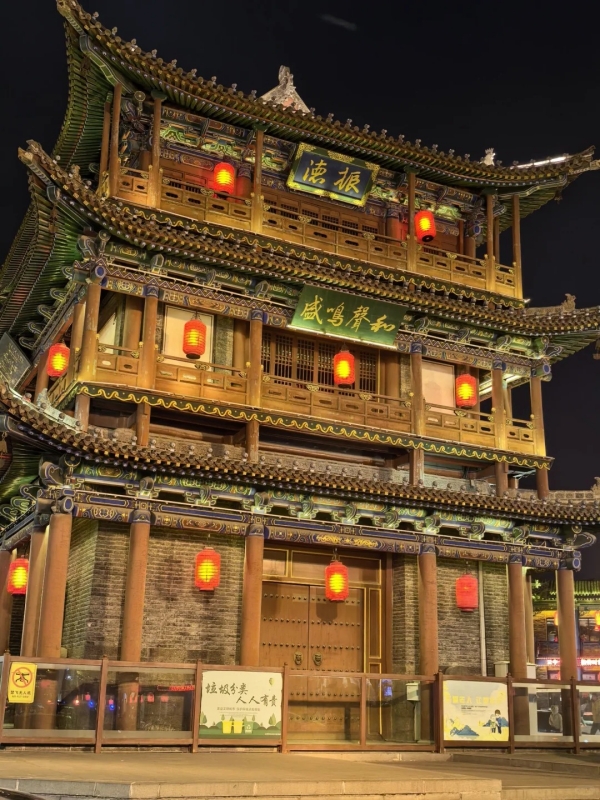
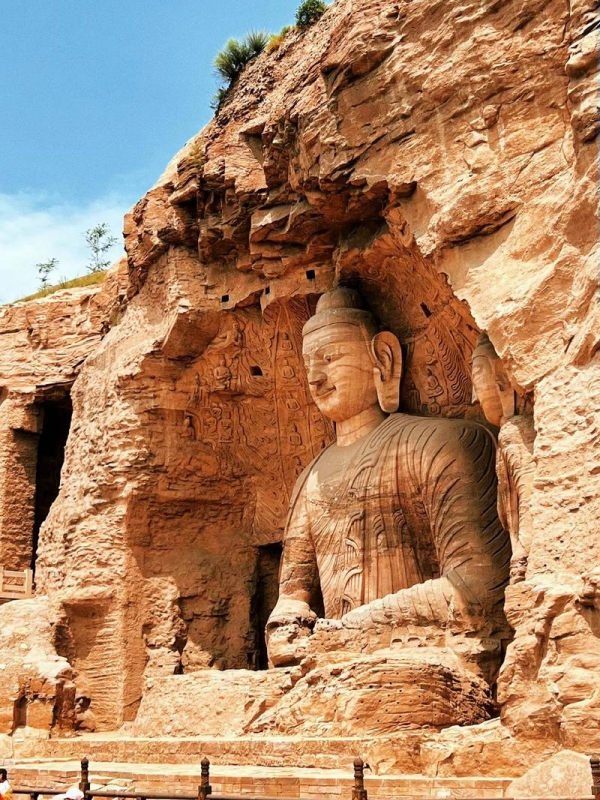
🏯 Core Experiences
- Huayan Temple (华严寺): This is the essential old-city stop. Descend into the copper-lined underground hall. Furthermore, spend time with the Liao dynasty clay sculptures in the main hall — they are national treasures of the highest order.
- Shanhua Temple (善化寺) Architecture: This temple contains Liao and Jin dynasty main halls and courtyard statuary that architectural historians travel specifically to study.
- City Wall Sunset Walk: At dusk, walk or cycle the broad restored city walls. Watch the light fade over the entire old city — one of the most satisfying wall-walking experiences in northern China.
- Yungang Grottoes (云冈石窟) Half-Day: Located 16 km west of the city centre, this UNESCO World Heritage Site requires a separate half-day. Budget this time carefully and do not skip it.
🗺️ Travel Guide
- Getting there: Take high-speed rail to Datong South Station (大同南站). Yungang Airport connects to major domestic cities. Old city sights are walkable or accessible by short taxi rides.
- Where to stay: Datong Yungang Jianguo Hotel or character inns inside the old city wall area keep logistics simple and efficient.
⛩️ Explore Cliffside Historic Gems: If you are seeking architectural marvels and sacred historical sites off the typical tourist trail during your travels, check out our guide to the China Upside Down Temple.
13. Zhengding Ancient City
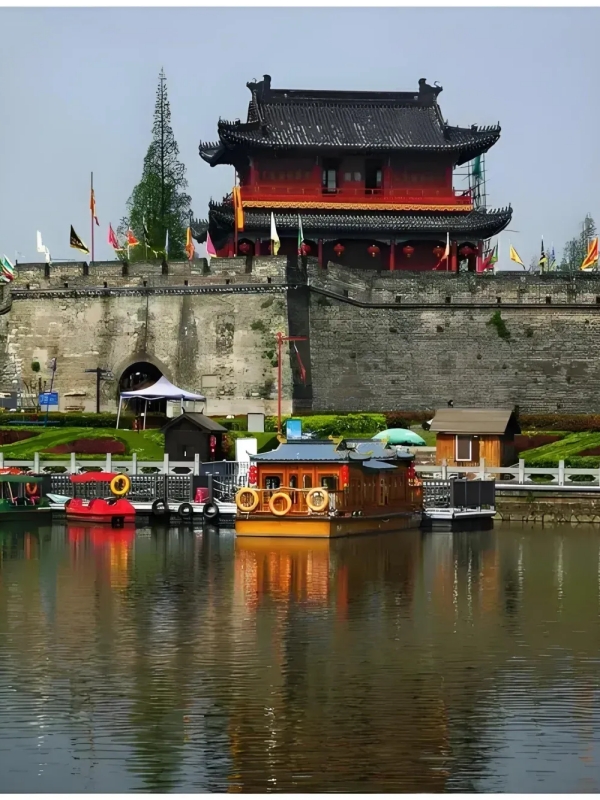
Jingzhou Ancient City
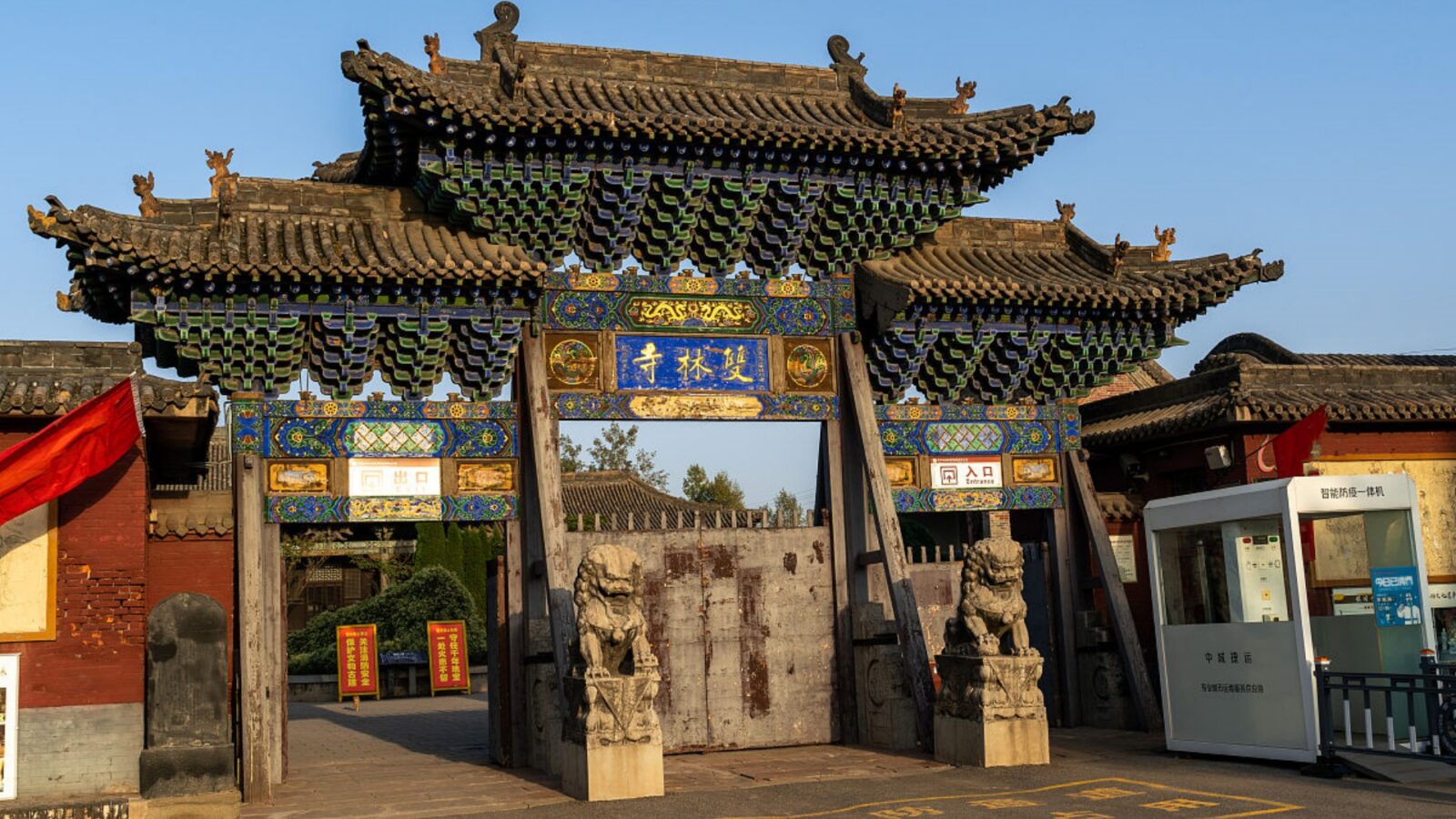
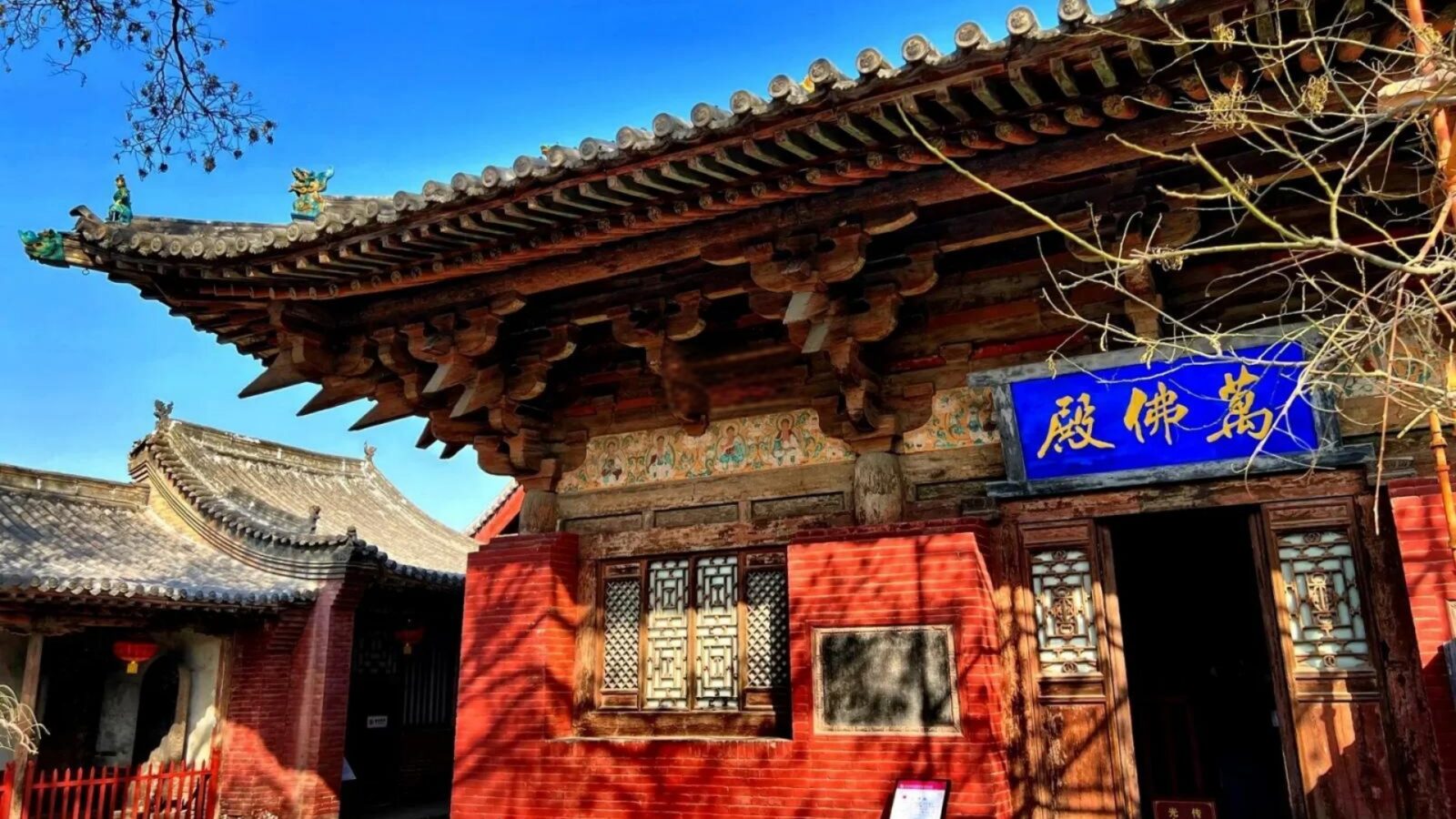
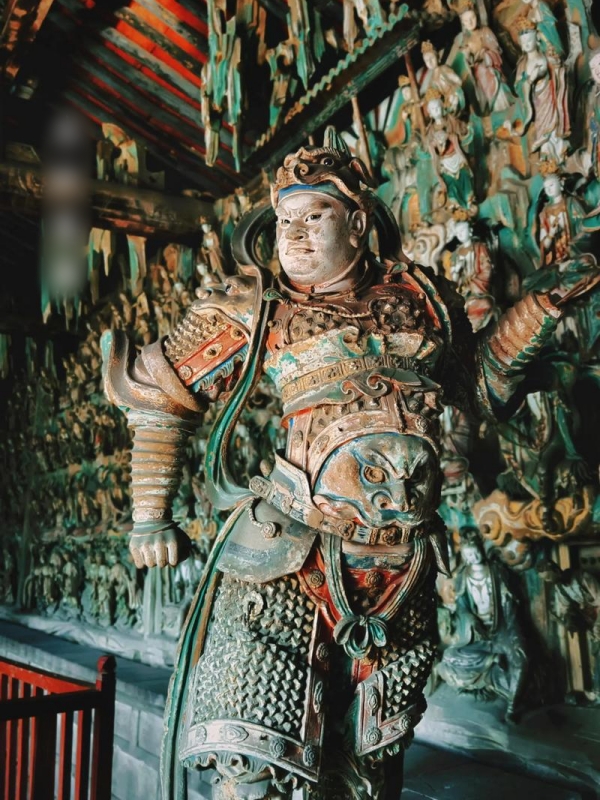
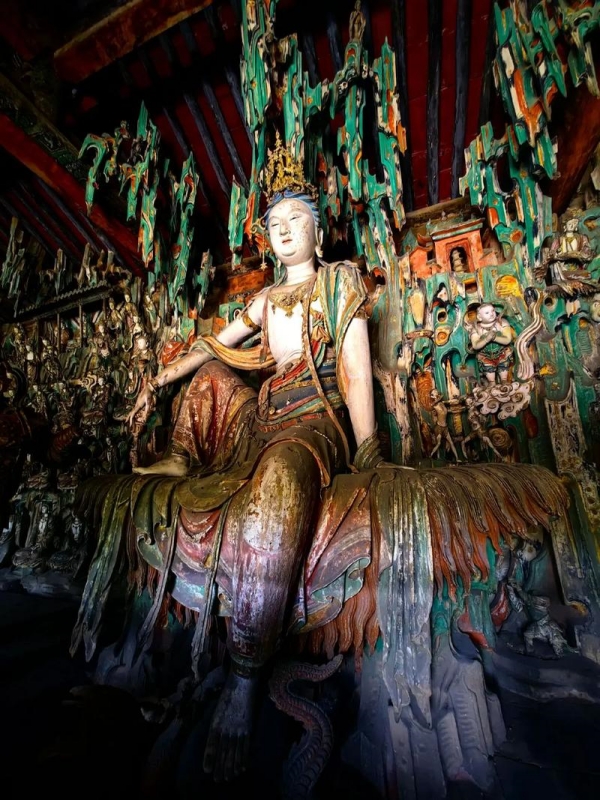
Zhengding is the most under-visited significant destination on this entire list. The architectural historian Liang Sicheng visited it repeatedly and described it as containing a denser concentration of elite ancient buildings than almost anywhere in northern China. Indeed, within a very small area you find Tang dynasty bell towers, Song dynasty pagodas of four completely different structural types, and the Song-period Longxing Temple complex. The latter houses a 22-metre bronze Guanyin figure cast in 971 AD.
🏯 Core Experiences
- Longxing Temple (隆兴寺): The centrepiece of the entire town. The Song dynasty bronze Guanyin — described by Lu Xun as the most beautiful Buddhist image in China — is housed here.
- Kaiyuan Temple (开元寺) & Tang Bell Tower: The Tang dynasty bell tower stands as one of the oldest surviving examples in northern China. Additionally, the extraordinary carved giant tortoise pedestal (赑屃碑座) in the courtyard is unlike anything else in China.
- Four Pagodas Architectural Tour: Lingjiao Pagoda (凌霄塔), Hua Pagoda (花塔), Chengling Pagoda (澄灵塔), and Xiao Pagoda (小塔) each represent a completely different structural tradition. Consequently, they form a remarkable architectural sample set in a single town.
- Old City Gate Complex at Night: The tower gate complex, lit from below after dark, is genuinely photogenic. Moreover, it is almost always quiet — even on weekends.
🗺️ Travel Guide
- Getting there: From Shijiazhuang (石家庄), take high-speed rail or Metro Line 1 to Fuze Station, then a bus or taxi — approximately 40 minutes total. It is very straightforward as a day trip from Shijiazhuang.
- Where to stay: Overnight options exist in Zhengding town. Alternatively, use Shijiazhuang as a base for a comfortable day trip.
Central China: Riverside Heritage Settlements
14. Fenghuang Ancient Town
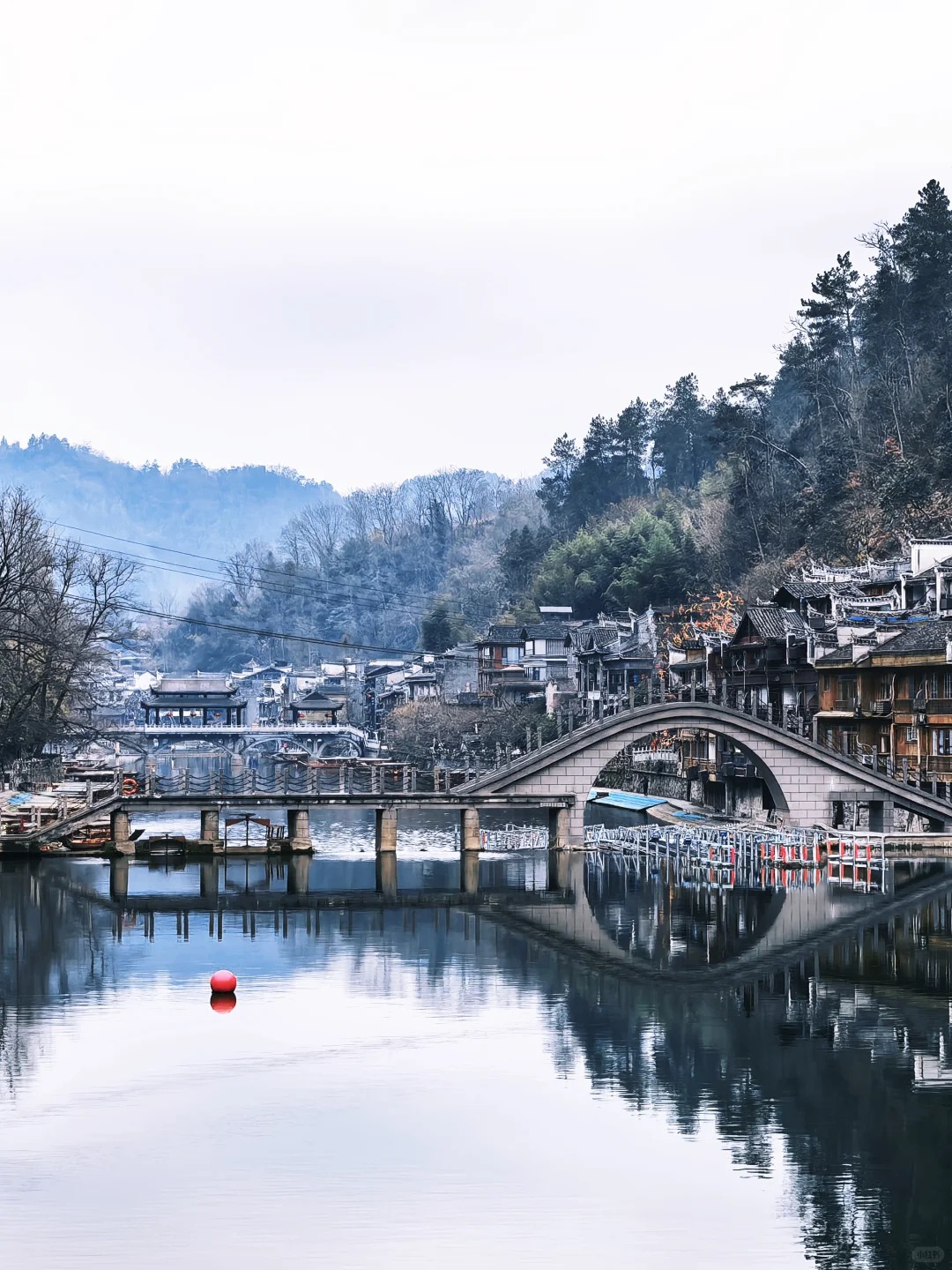
Fenghuang Ancient Town
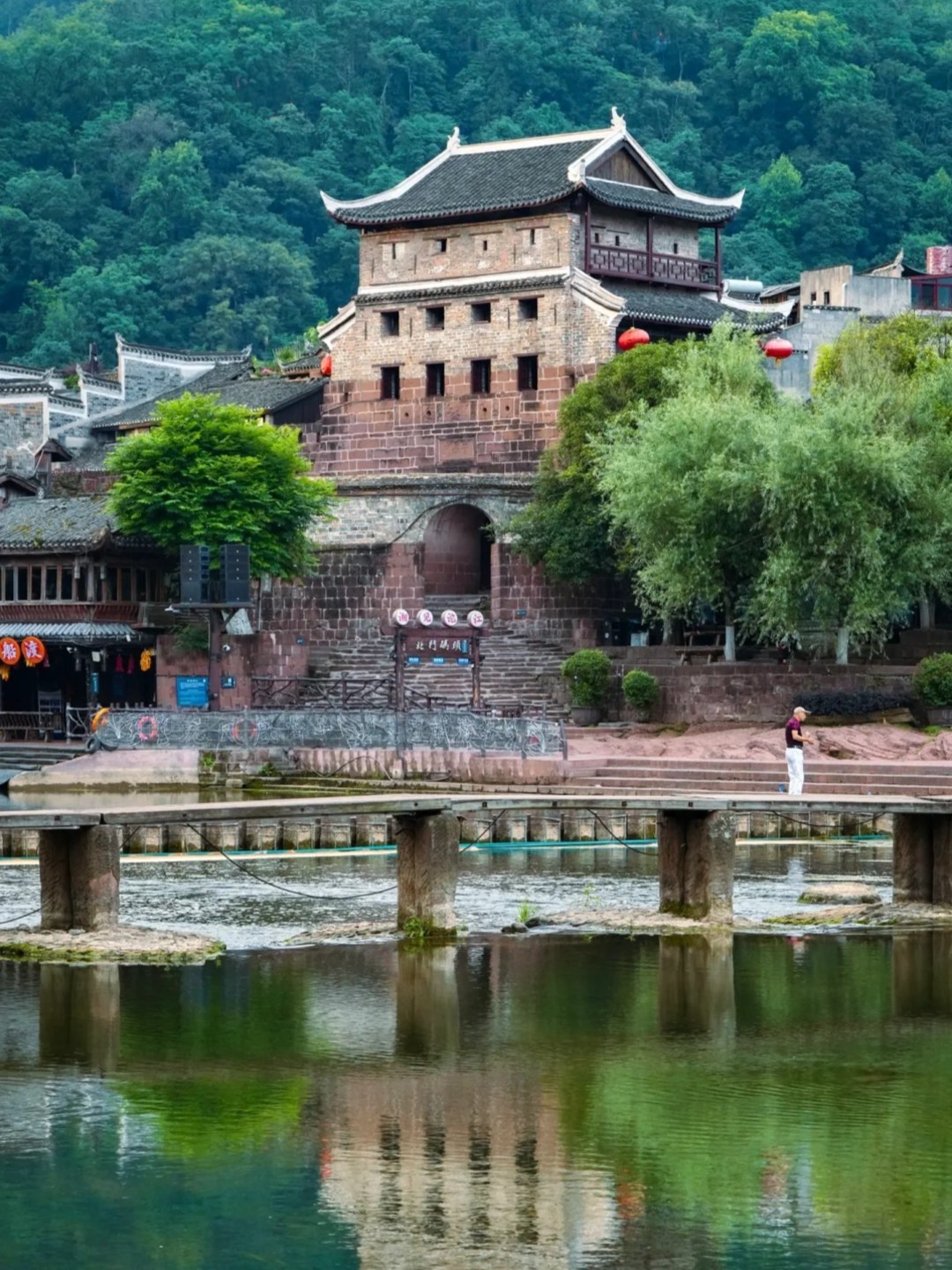
Fenghuang is the novel made physical. The writer Shen Congwen set his most famous work here. His description — a town beautiful enough to cause actual pain — holds up on first sight. The Tuo River (沱江) carries stilt houses (吊脚楼, diaojiaolou) on its banks. Moreover, stone bridge steps descend directly into the water. The Miao and Tujia cultural presence in dress, food, and ceremony is not performance here — it is genuine inheritance.
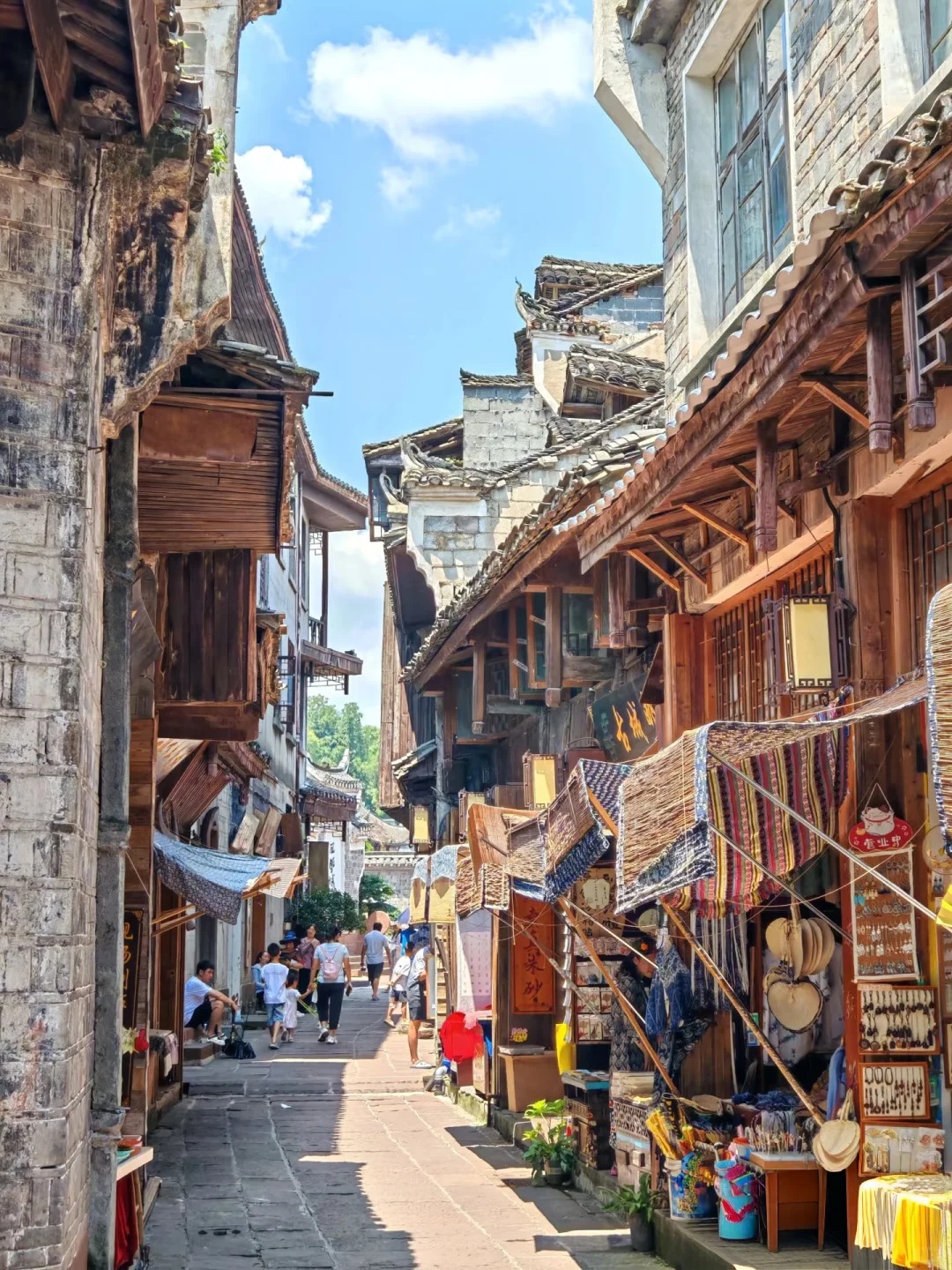
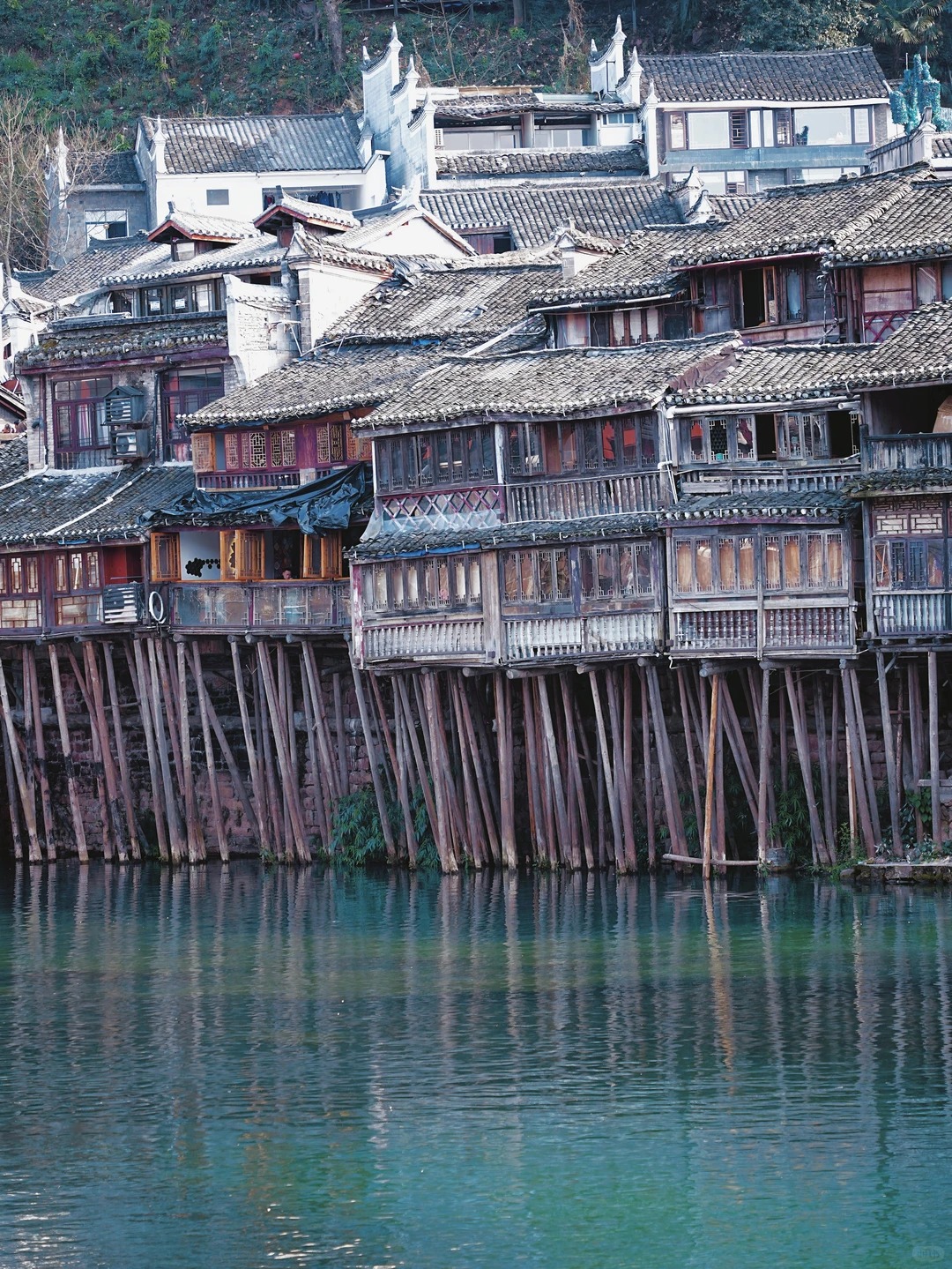
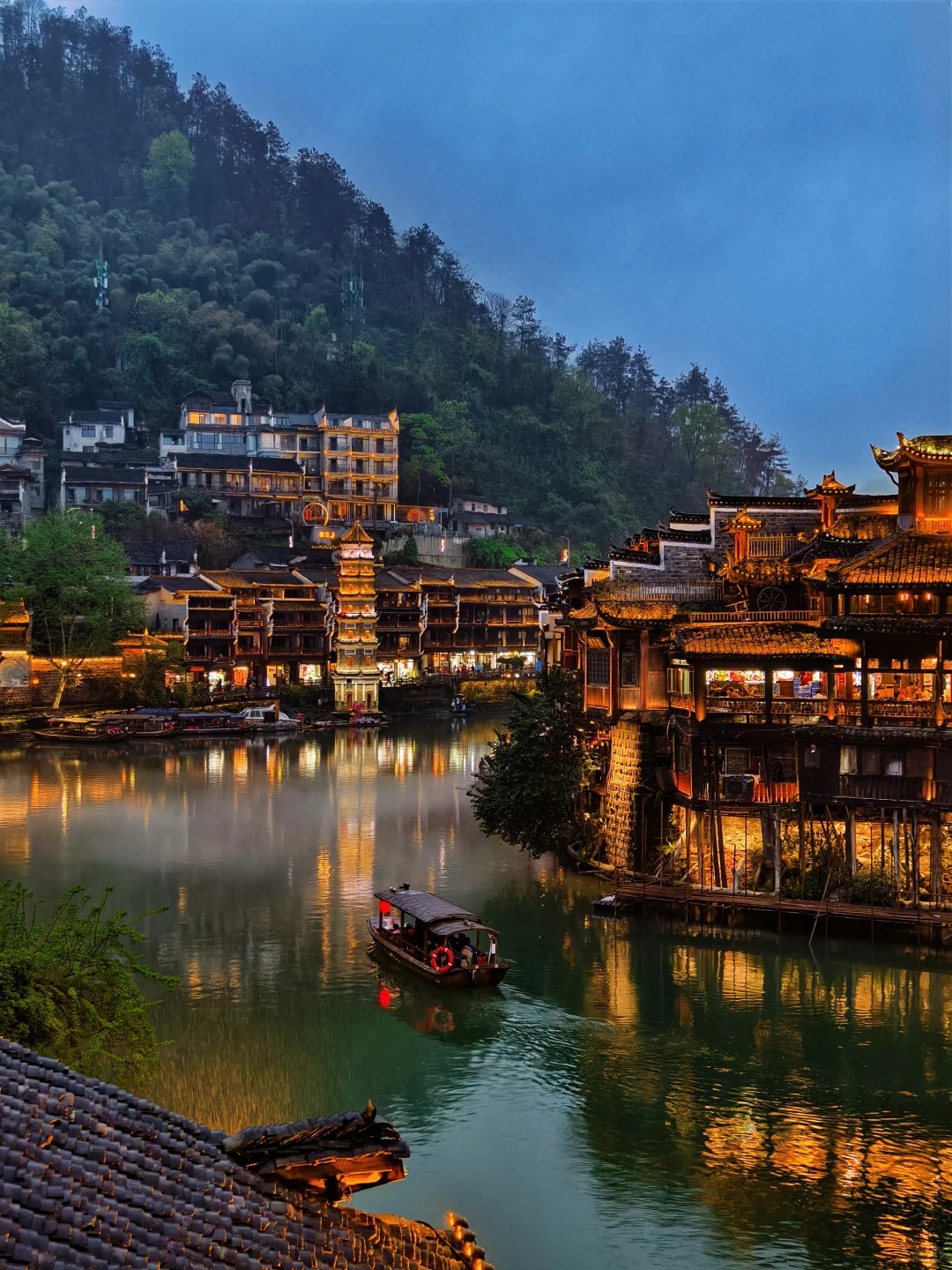
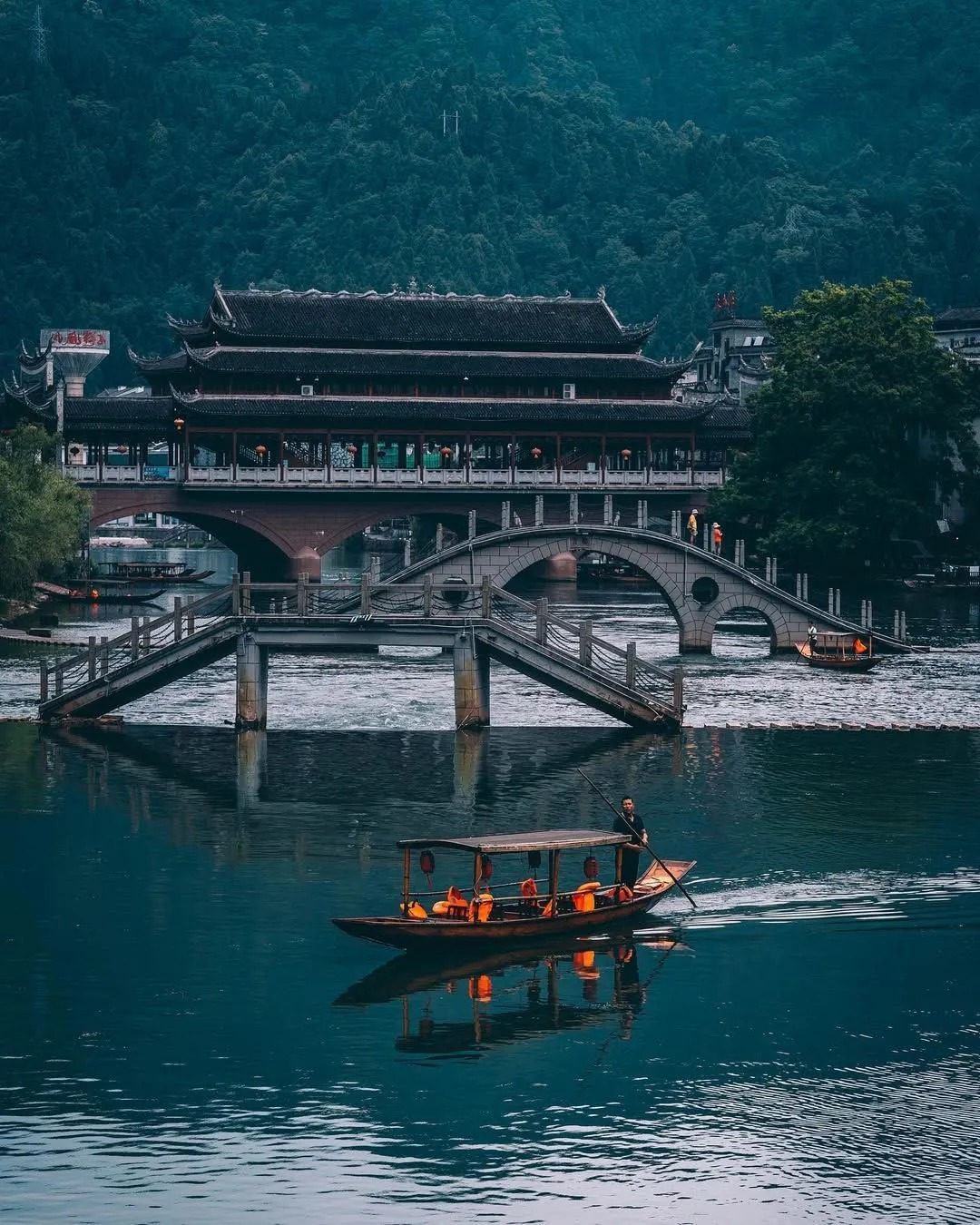
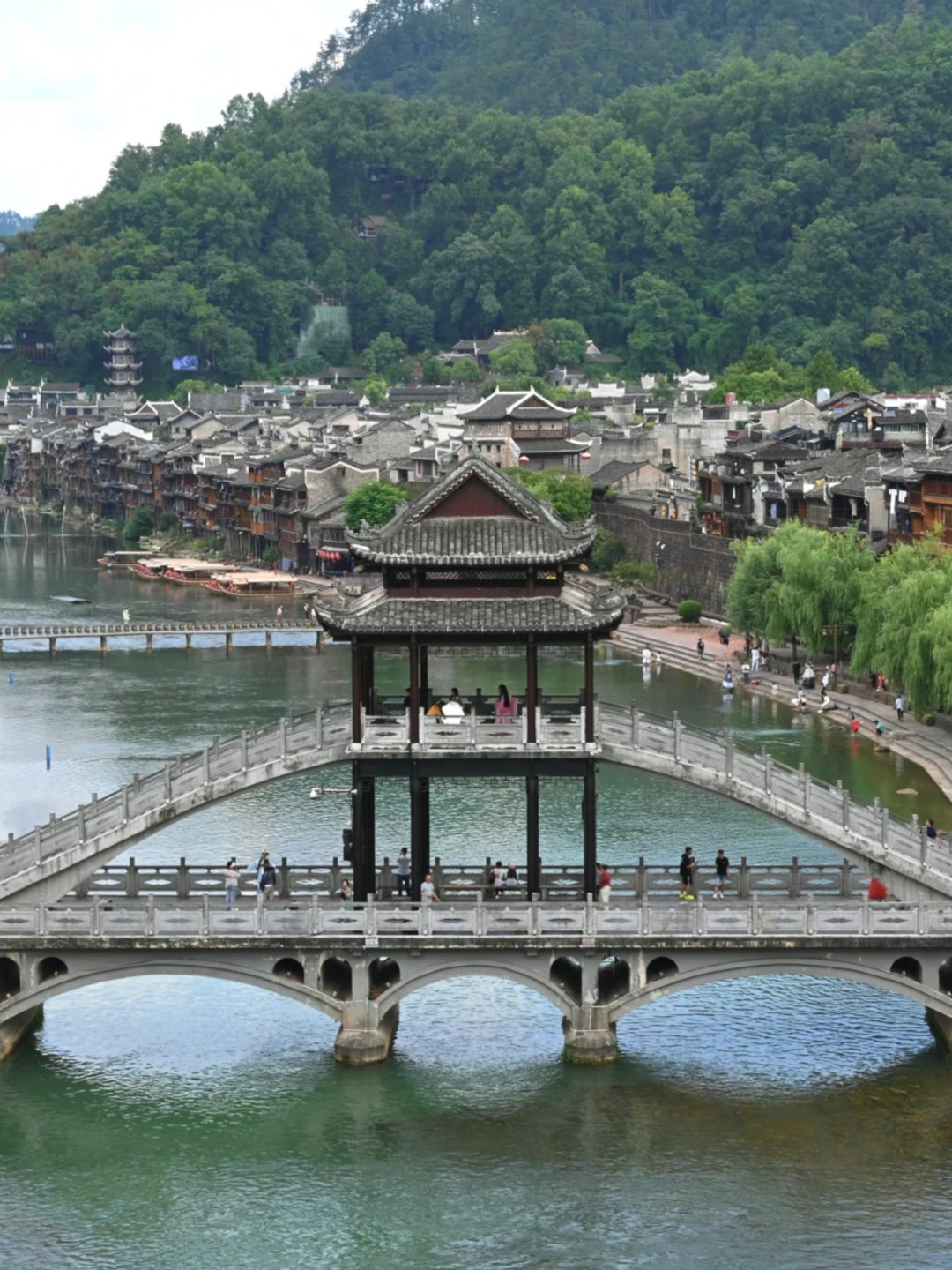
🏯 Core Experiences
- Tuo River Bank Walk: Walk from Rainbow Bridge (虹桥) to the stepping-stone crossing. The town's entire visual identity is concentrated in this single stretch of riverbank.
- Dawn Mist Riverside: Be here at dawn — mist on the river, lanterns still lit from the previous night, and near-silence before the tour groups arrive. This is Fenghuang at its most truthful and unguarded.
- Evening Punt Boat Ride: Take an evening boat downstream past the illuminated stilt houses. It is a completely different register from the daytime experience and equally essential.
- Miao Village Cultural Excursion: Consider visiting a Miao village outside the town proper. Cultural experience there is not mediated by the tourist economy.
🗺️ Travel Guide
- Getting there: Take high-speed rail to Fenghuang Gucheng Station (凤凰古城站), approximately 2 hours from Changsha. A shuttle connects the station to the old town. Tongren Fenghuang Airport (铜仁凤凰机场) also serves the region.
- Where to stay: A stilt-house inn on the Tuo River bank is non-negotiable. The river sound and window light justify the stay entirely. Fenghuang Wumeng Hotel is a reliable choice. However, note that riverside rooms can be loud late at night.
15. Jingzhou Ancient City
Jingzhou Ancient City
Jingzhou is the city that Guan Yu — the deified military general of the Three Kingdoms — held for a decade. His loss of Jingzhou cost Liu Bei's kingdom its strategic future. That historical weight hangs over a remarkably complete Ming dynasty brick city wall. Indeed, it still fully encircles the old town. Over 10 km of intact battlements, towers, and gates remain. Consequently, visitors can walk, cycle, or traverse by electric cart in a single absorbing afternoon.
-
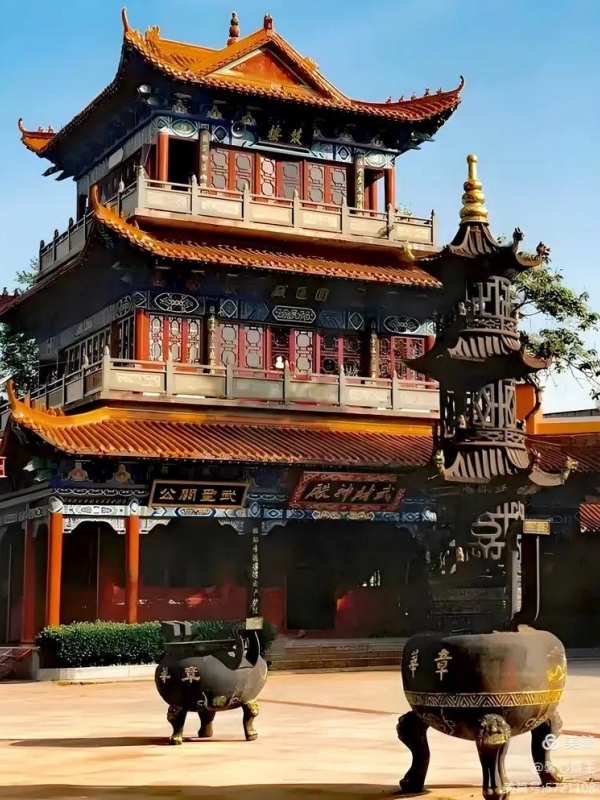
- Jingzhou Ancient City
-
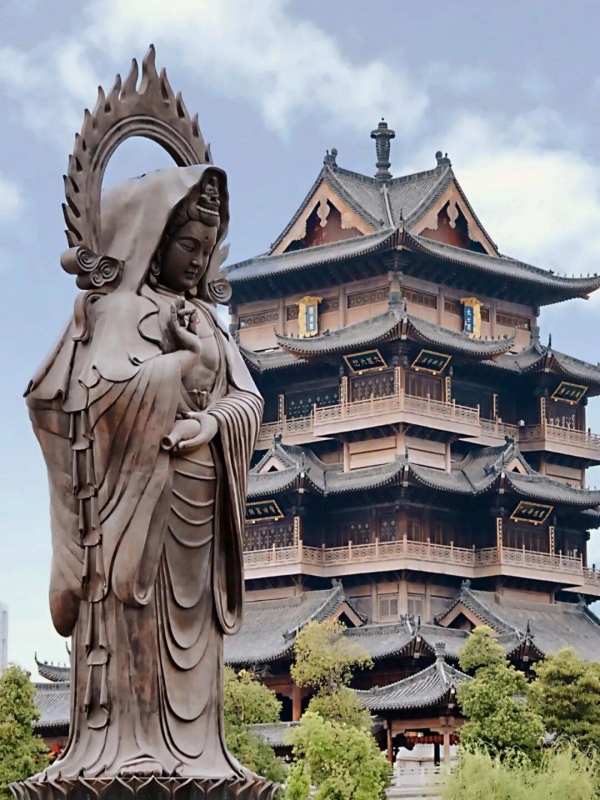
- Jingzhou Ancient City
-
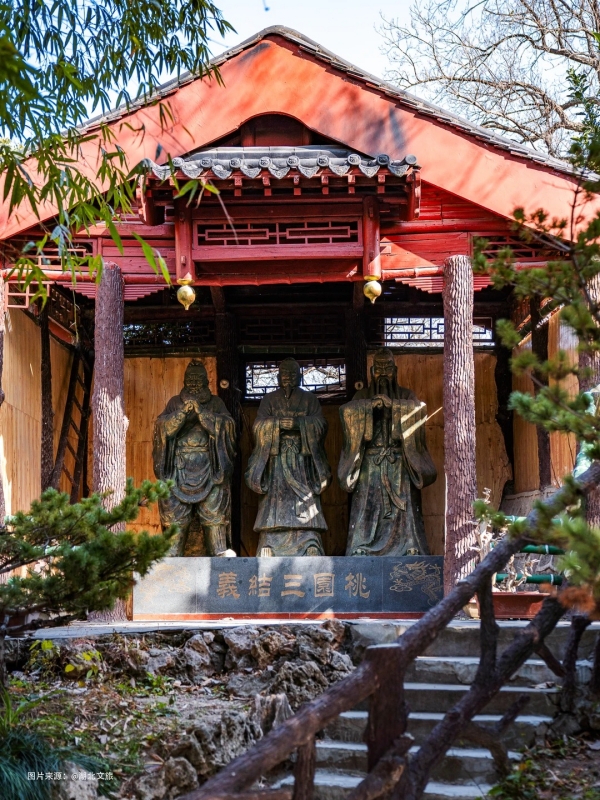
- Jingzhou Ancient City
🏯 Core Experiences
- Ming City Wall Circuit: Circumnavigate the complete wall on foot, by bicycle, or by electric cart. At approximately 10 km, it is one of the longest walkable intact city walls in China.
- Binyang Tower (宾阳楼) Panorama: Climb for the best view across the old city and surrounding moat. The full scale of the fortification becomes comprehensible from this vantage.
- Jingzhou Museum (荆州博物馆) Collections: Two exceptional collections await here. The first is a 2,000-year-old Western Han mummified body preserved in extraordinary condition. The second is one of China's finest assemblages of Han dynasty lacquerware.
- Historical Figure Residences: Zhang Juzheng Former Residence (张居正故居) and the Guan Yu Temple (关帝庙) fill in the more personal, biographical dimensions of the city's long history.
🗺️ Travel Guide
- Getting there: Take high-speed rail to Jingzhou Station (荆州站), then approximately 15 minutes by taxi to the old city. From Wuhan by car, the journey takes approximately 3.5 hours.
- Where to stay: Hotels inside or immediately adjacent to the old city wall — such as Jingzhou Nanguo Wyndham Hotel — keep all sights within easy walking reach.
16. Furong Ancient Town
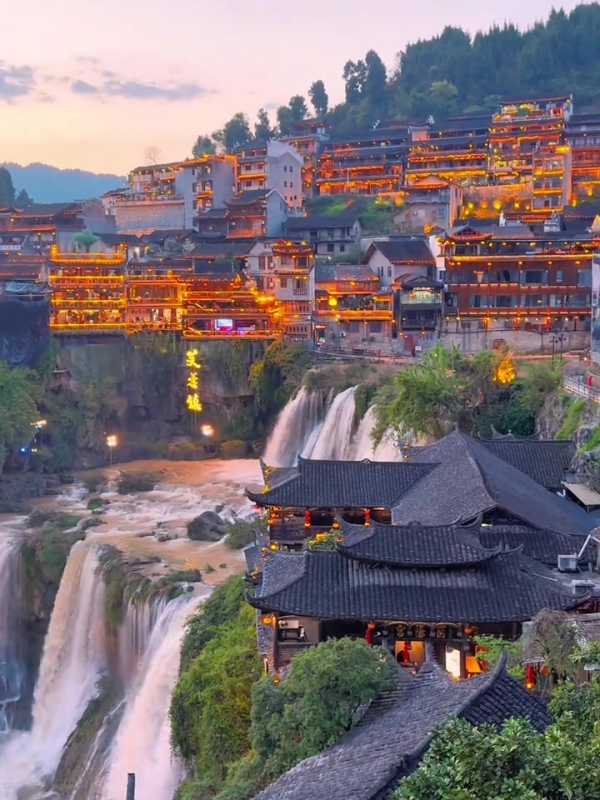
Furong Ancient Town
Furong earns its description — "an ancient town hung on a waterfall" — without exaggeration. The central waterfall drops through the middle of the town itself. Moreover, the Tujia stilt houses of the old quarter are built directly above the gorge edge. When the water runs high in spring or after rain, this is genuinely one of the most dramatic physical settings of any inhabited historic settlement in China.
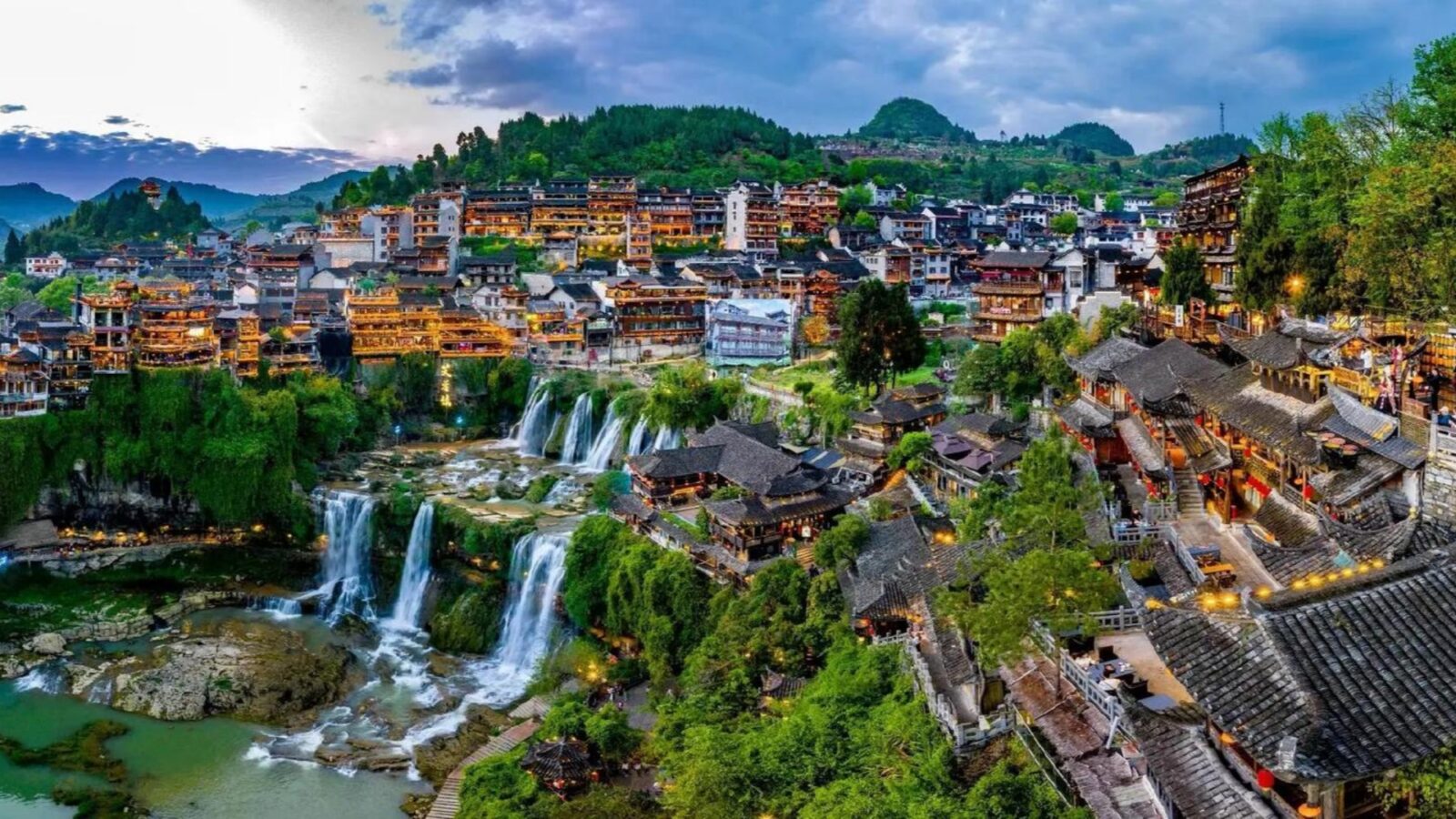
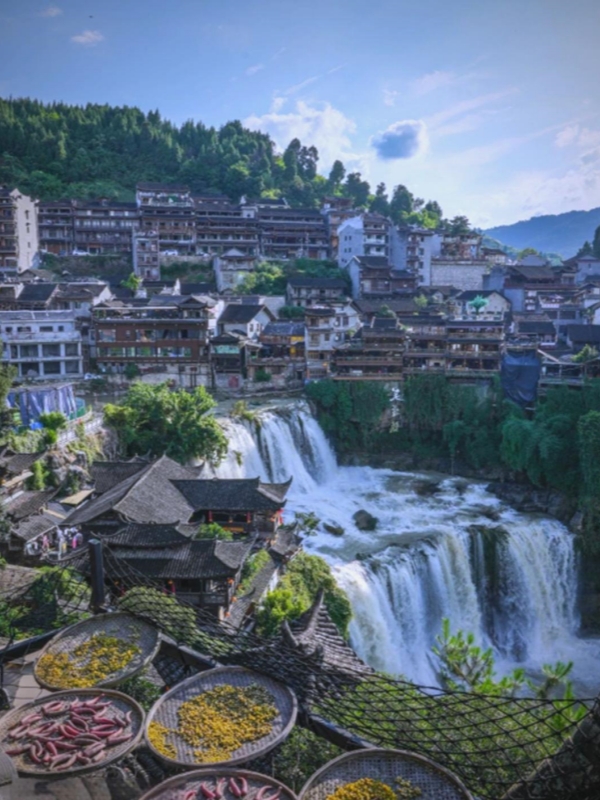
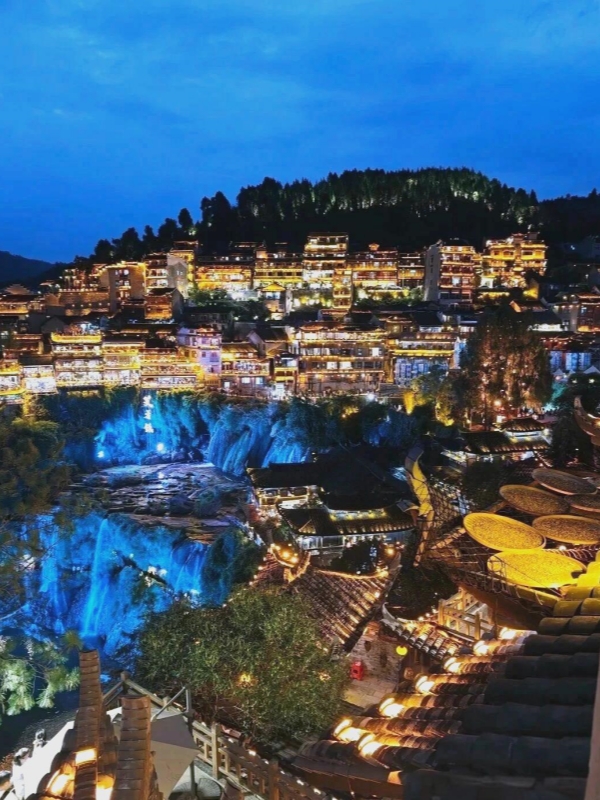
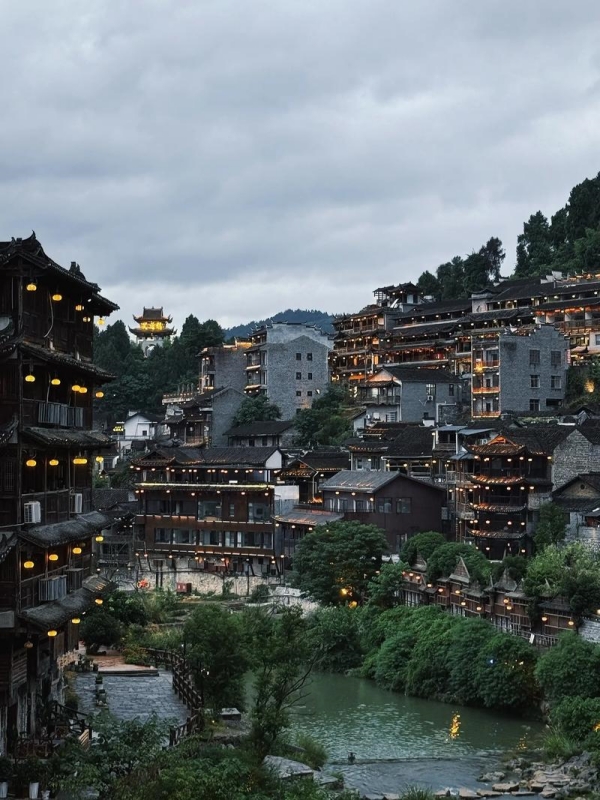
🏯 Core Experiences
- Main Waterfall Boardwalk: Walk the riverside boardwalk past the waterfall. Multiple viewing angles are available. Moreover, the spray zone requires rain gear — or at minimum, accepting that you will get wet.
- Water Curtain Cave (水帘洞): Enter behind the main falls. The perspective looking outward through falling water is the defining sensory experience of this town. No photograph fully prepares you for it.
- Day vs. Night Town: Day and night here are two completely different towns. The lit cascade after dark and the quiet residential lanes once day-trippers depart are the essential reasons to stay overnight.
🗺️ Travel Guide
- Getting there: Transfer via Zhangjiajie or Jishou (near Fenghuang Ancient Town) — approximately 1.5 to 2 hours by bus from either. Limited direct train service to Furong Town Station (芙蓉镇站) exists. However, schedules are infrequent.
- Where to stay: Staying inside the old town is essential. Choose a guesthouse with a waterfall-facing room, such as Furong Town Tusi Bieyuan (土司别苑). Fall asleep to the sound of the cascade.
🔗 Heading to this dramatic waterfall village? For complete details on transit options, lighting schedules, and the best cliffside viewing platforms, check out our comprehensive Furong Town travel guide.
Faqs: Essential Travel Questions
Q: What is the best China ancient town to visit for a first-time traveller?
Pingyao Ancient City stands as the most rewarding first choice for any visitor. This china ancient town is UNESCO-listed, fully intact, and easily reached by high-speed rail from Beijing or Xi'an. For Shanghai-based travellers, however, Zhujiajiao or Tongli offer the classic water-town experience with minimal travel time. Both deliver remarkable historical depth and sensory richness in a compact, walkable setting.
Q: When is the best time of year to visit China ancient towns?
Spring (March–May) and autumn (September–November) consistently provide the best conditions for visiting any china ancient town. Temperatures are mild, and crowds are noticeably thinner than during national holidays. Therefore, avoid Golden Week in early October and the Spring Festival period. For Furong and Huanglongxi, however, summer brings unique waterfall and stream experiences that justify braving the extra heat.
Q: Are China ancient towns free to enter?
Entry policies vary significantly across every china ancient town on this list. Some towns, such as Fenghuang, have dropped general entrance tickets but still charge for individual interior attractions. Others, including Pingyao, sell combo passes covering multiple sites. Hongcun and Xitang charge at the scenic area gate. Therefore, always verify current ticket policies before arrival, as these change regularly.
Q: Is it worth staying overnight in a China ancient town rather than day-tripping?
In almost every china ancient town: yes, and sometimes decisively so. Most tourists arrive mid-morning and leave by 4 PM. Towns like Hongcun, Fenghuang, and Xitang transform entirely after tour groups depart. Lanes empty, light changes, and residents reclaim their daily routines. Consequently, the authentic character of the place becomes fully visible only to those who choose to stay.
Q: How do I get to China ancient towns from major cities?
China's high-speed rail network has dramatically improved access to formerly remote china ancient town destinations. Pingyao, Fenghuang, Datong, Jingzhou, and Zhengding are all directly reachable by high-speed rail. Water towns near Shanghai — Zhujiajiao, Tongli, and Xitang — connect via metro or short rail plus local bus. However, Furong and Zhoucheng still require bus connections from intermediate hubs.
Q: What should I expect from the crowds at popular China ancient towns?
The most famous china ancient town destinations — Lijiang, Fenghuang, Hongcun, and Zhujiajiao — attract very large crowds during holidays and weekends. However, practical strategies exist. Arrive before 8 AM or after 4 PM. Additionally, visit on weekdays and avoid Golden Week entirely. Lesser-known options such as Guandu, Zhengding, and Jingzhou offer exceptional quality with substantially lower visitor volumes.
Q: Which China ancient town is best for photography?
Hongcun at dawn offers the most iconic single image in Chinese rural photography — the South Lake bridge reflection in still water. Fenghuang in morning mist provides the most atmospheric river-town scene. Moreover, Lijiang from Lion Hill at golden hour delivers a dramatic townscape-with-snow-mountain composition. Each china ancient town on this list carries its own signature photographic moment. Arrive early to find yours.
Q: Do China ancient towns have authentic local food, or is everything tourist-oriented?
Both authentic and tourist-oriented food coexist in every china ancient town, often on the same street. The practical approach is consistent: move one lane back from the main pedestrian strip. Guandu and Ciqikou retain genuinely local food cultures. Furthermore, Pingyao's aged beef, Fenghuang's river fish, Tongli's freshwater shrimp, and Lijiang's Naxi-style hotpot are all worth seeking from smaller, family-run operations.
Q: Which China ancient town is least crowded but still high quality?
Zhengding in Hebei is the most compelling answer — quality ancient architecture alongside remarkably low visitor numbers. Moreover, architectural historian Liang Sicheng documented it as one of the most significant historic towns in northern China. Nevertheless, it receives a fraction of the attention it deserves. Guandu in Kunming also delivers strong china ancient town value with a relaxed, genuinely local-oriented atmosphere.
Q: Can I visit multiple China ancient town in one trip?
Yes — and several natural pairings make this highly efficient. Hongcun and Xidi sit just 20 minutes apart and are almost always visited together. Moreover, Chengkan Ancient Village pairs naturally with both in a single Anhui circuit. Fenghuang pairs well with Zhangjiajie or Furong in a Hunan loop. Tongli and Zhujiajiao form a perfect two-day china ancient town loop from Shanghai.