Names of Famous Panda Bears
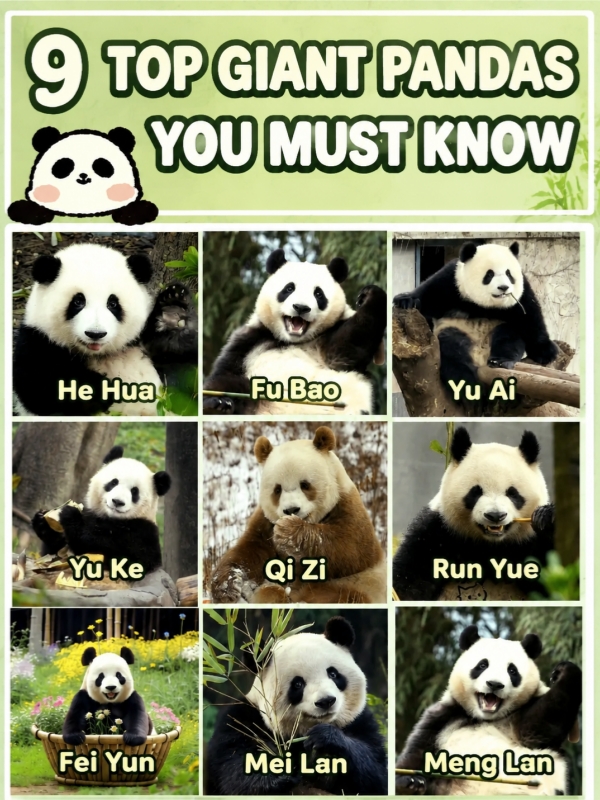
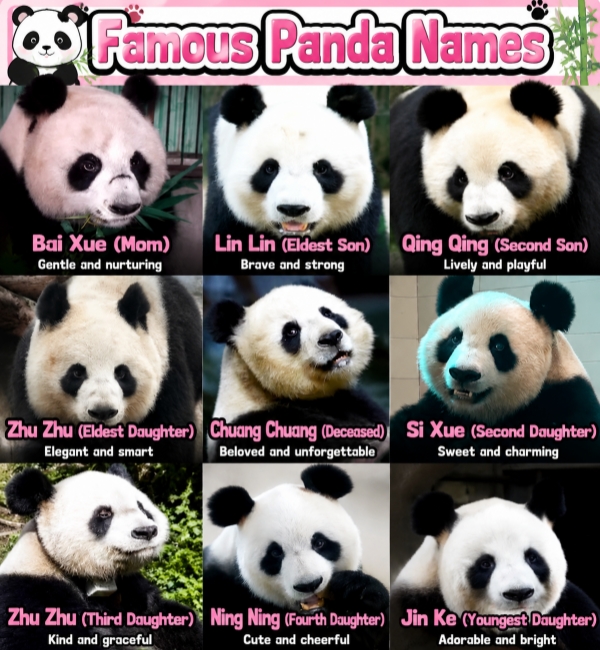
Giant pandas draw visitors to China from every corner of the globe. The names of famous panda bears populate newspaper headlines and zoo websites — Xiang Xiang in Tokyo, Fu Bao in South Korea, Tian Tian in Washington DC. Yet the majority of the world's most famous pandas live in Sichuan, at four breeding and research facilities run by the China Conservation and Research Center for the Giant Panda (CCRCGP) and the Chengdu Research Base of Giant Panda Breeding. This guide names every panda worth knowing, tells you which base each one calls home, and explains exactly how to book a visit in 2025 and 2026.
Quick Facts
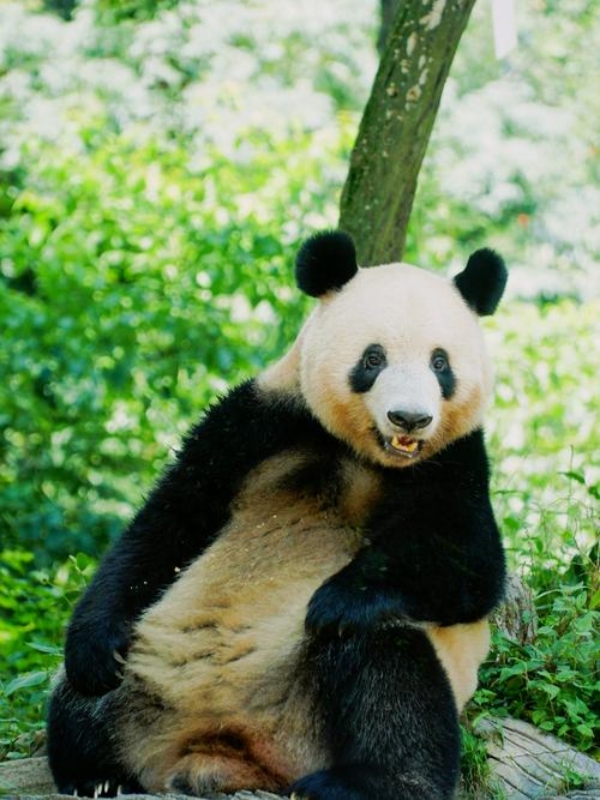
Famous Pandas in China's Sichuan Bases
Names of Famous Panda Bears
Every famous panda outside China traces back to one of two breeding programs. The China Conservation and Research Center for the Giant Panda (CCRCGP) runs Bifengxia, Wolong Shenshuping, and Dujiangyan. The Chengdu Research Base of Giant Panda Breeding operates its own Chenghua District facility. These four sites house more than 200 giant pandas. Many of the named pandas in this article are retired overseas residents who came home to Bifengxia or Wolong.
Chengdu Research Base of Giant Panda Breeding
The Chengdu base opened in 1987 in Chenghua District, roughly 10 kilometers from Tianfu Square. It holds more than 60 resident pandas. The base is the world's most-visited panda facility. It is the original source program for many overseas loan animals.
- Cheng Da: Male, born 2014 at the Chengdu base, lived at Adventure World in Japan from 2017 to 2025, returned to Chengdu in 2025.
- Senior resident sires and dams: The base's long-term breeding stock includes males and females who have produced cubs for the international loan program since the 1990s.
- Apple-eating resident: A senior female panda at the base has appeared in widely shared online clips eating apples with a distinctive technique.
- Current juvenile generation: Newborn and juvenile pandas born at the base occupy the indoor nursery enclosures in autumn and winter months.
Bifengxia Panda Base and Shaanxi's Rare Brown Panda Qi Zai
Bifengxia sits in Ya'an roughly 150 kilometers from Chengdu. The CCRCGP headquarters moved here after the 2008 Wenchuan earthquake damaged Wolong. This is the main retirement home for overseas pandas. The base also manages Foping National Nature Reserve in Shaanxi, where a rare brown panda named Qi Zai lives.
- Hua Mei: Female, born 21 August 1999 at San Diego Zoo, the first artificially conceived giant panda cub to survive to adulthood in the United States, returned to Bifengxia in 2004, became a prolific mother.
- Su Lin: Female, born 2 August 2005 at San Diego Zoo, returned to Bifengxia in 2010, later transferred to Japan.
- Zhen Zhen: Female, born 9 August 2007 at San Diego Zoo, returned to Bifengxia in 2010.
- Xiao Liwu: Male, born 29 July 2012 at San Diego Zoo, returned to Bifengxia in 2019.
- Qi Zai: Male, born 2009, the only brown-and-white giant panda in captivity, rescued as a cub in Shaanxi's Qinling Mountains, now at Foping National Nature Reserve — one of the rarest pandas on Earth.
Famous Pandas Overseas — Asia
Names of Famous Panda Bears
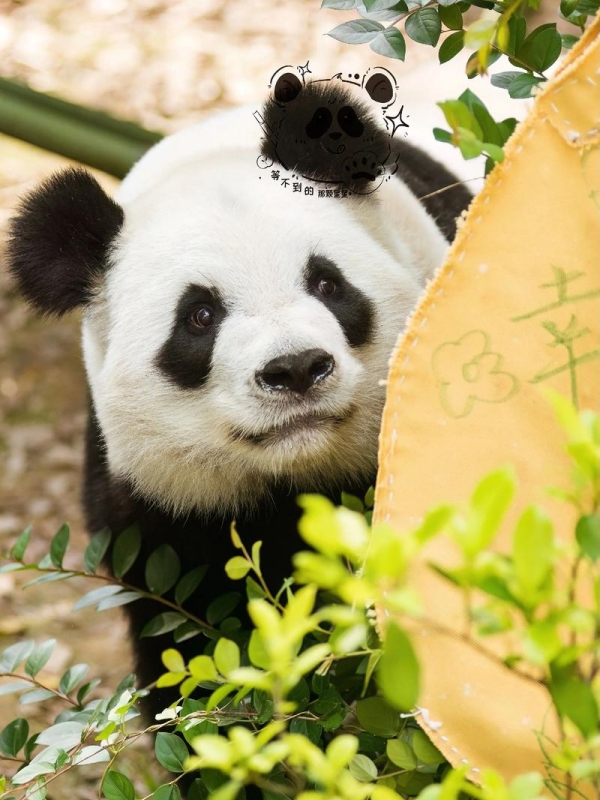
Japan, South Korea, and Southeast Asia each hosted celebrated panda families. Several of these animals have already returned to China, so visitors planning trips in 2025 and 2026 should check whether their target zoo still has pandas on site.
Japan — Xiang Xiang, Ri Ri, Shin Shin, and Cheng Da
Ueno Zoo in Tokyo has hosted giant pandas since the 1970s. Adventure World in Wakayama housed a separate panda program. The most recent returnee from Japan arrived back in China in early 2025.
- Xiang Xiang: Female, born 12 June 2017 at Ueno Zoo, returned to China on 21 February 2023.
- Ri Ri: Male, born 2005 at Wolong, in Japan since 2011, currently at Ueno Zoo.
- Shin Shin: Female, born 2005 at Bifengxia, in Japan since 2011, currently at Ueno Zoo.
- Cheng Da: Male, born 2014 at Chengdu base, lived at Adventure World from 2017 to 2025, returned to China in 2025.
South Korea — Fu Bao and the Everland Cubs
Everland Resort in Yongin became South Korea's panda destination. The park housed a multigenerational panda family. The most famous of them, Fu Bao, returned to China in 2024.
- Fu Bao: Female, born 20 July 2020 at Everland, parents Le Bao and Ai Bao, returned to China on 3 April 2024.
- Le Bao: Male, born 2012, father of Fu Bao, still at Everland.
- Ai Bao: Female, born 2013, mother of Fu Bao, still at Everland.
- Hui Bao and Rui Bao: Twin cubs born at Everland in 2023, returned to China in 2024.
Southeast Asia — Singapore, Thailand, Malaysia
Singapore, Thailand, and Malaysia each hosted or continue to host panda pairs under long-term loan agreements. The Singapore pair has the longest current contract extension.
- Kai Kai and Jia Jia: On loan to Singapore River Wonders since 2012, contract extended through 2030.
- Chuang Chuang and Lin Hui: Chiang Mai Zoo pair; Chuang Chuang died in 2019; Lin Hui and cub Lin Ping returned to China.
- Xing Xing and Liang Liang: Malaysia National Zoo, Kuala Lumpur pair since 2014; cubs include Niu Niu and Yu Yi.
Famous Pandas Overseas — North America and Europe
Names of Famous Panda Bears
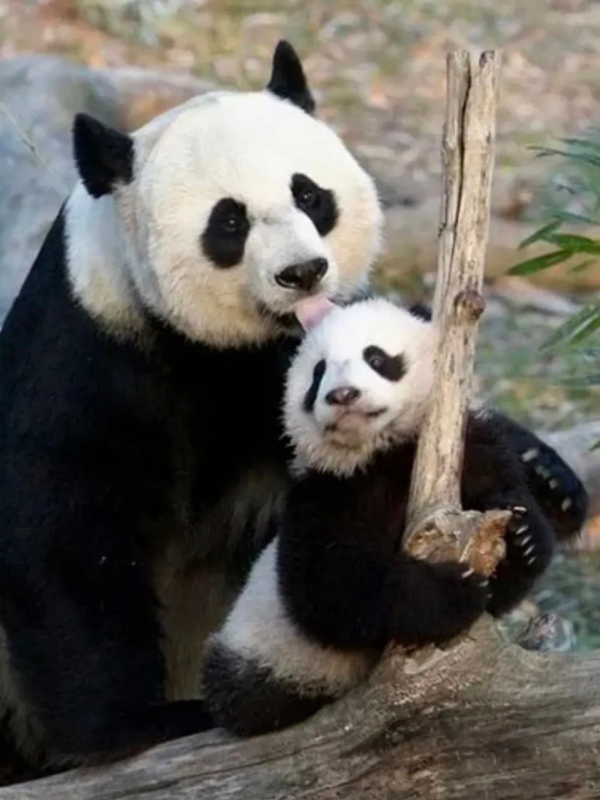
American and European zoos have produced some of the most widely reported pandas in recent years. Tian Tian and Mei Xiang in Washington DC generated daily coverage. San Diego Zoo pioneered panda breeding in North America. In Europe, Madrid Zoo holds the longest-running panda residency on the continent.
The Washington Dynasty — Tian Tian, Mei Xiang, Bao Bao
Smithsonian's National Zoo in Washington DC housed a panda family from 2000 until 2023. The return of Tian Tian and Mei Xiang to China marked the end of a 23-year loan program. Bao Bao, born at the zoo in 2013, went to Wolong in 2017.
- Tian Tian: Male, on loan from 2000 to 2023, returned to China in July 2023.
- Mei Xiang: Female, on loan from 2000 to 2023, returned to China in November 2023.
- Bao Bao: Female, born 23 August 2013 at the zoo, sent to China in November 2017, now at Wolong.
- Tai Shan: Male, born at the zoo in 2005, returned to China in 2010, now at Wolong.
San Diego and Atlanta — Hua Mei, Bai Yun, Xiao Liwu
San Diego Zoo was the first North American zoo to breed a giant panda cub to adulthood through artificial insemination. Zoo Atlanta has hosted a panda pair since 1999. All of these animals have returned to China.
- Hua Mei: Female, born 21 August 1999 at San Diego Zoo, first AI-conceived US panda cub to survive to adulthood, returned to Bifengxia in 2004, became a prolific mother.
- Bai Yun: Female, at San Diego Zoo from 1996 to 2019, returned to China.
- Xiao Liwu: Male, born 29 July 2012 at San Diego Zoo, returned to Bifengxia in 2019.
- Lun Lun and Yang Yang: Zoo Atlanta pair, on loan since 1999.
- Atlanta cubs: Mei Lan, Xi Lan, Po, Ya Lun, and Xi Lun — all born at Zoo Atlanta, all returned to China.
Europe — Pan Pan's Legacy and the Nordic Pair
Europe's longest-lived panda was Pan Pan at Madrid Zoo. The current Spanish pair has resided there since 2007. In Finland, a panda family born at Ähtäri Zoo returned to China in 2024.
- Pan Pan: Male, lived at Madrid Zoo from 1978 to 2016, died at age 30 — one of the longest-lived giant pandas on record.
- Bing Xing and Hua Zui Ba: Current panda pair at Madrid Zoo, on loan since 2007.
- Lumi and Pyry: Born in 2017 at Ähtäri Zoo, Finland, to parents Hua Bao and Jin Bao; the family returned to China in 2024.
How to Visit a Panda Base in China
All four major panda facilities require real-name advance reservations. Foreign visitors book through Trip.com or Klook using a foreign passport. The booking confirmation exchanges for a physical entry ticket at the gate. Same-day walk-ins are not available during peak season.
- Morning window: Arrive between 7:30 and 10:00. Pandas feed and move during this time. By early afternoon, most animals are sleeping.
- Booking channels: Trip.com and Klook accept foreign passports for real-name registration. These are the only channels confirmed to work for non-Chinese-phone-number users.
- Official mini-program: The CCRCGP WeChat mini-program offers English-language switching. You need a WeChat account linked to an international phone number. Download the mini-program before arriving.
- What to wear: Comfortable walking shoes. Layers — pandas move indoors in cold weather, so indoor enclosures can be cool. Avoid bright red, which staff report can excite the animals.
- What not to do: No flash photography. No drones (banned at all bases). No tapping on glass. No feeding pandas from your hand.
Photography and Viewing Tips at Panda Bases
Pandas are most active in the early morning. The outdoor bamboo yards at Chengdu and Bifengxia offer the best natural-light photography. Indoor nursery enclosures in autumn and winter hold newborn and juvenile pandas that do not go outside. Qi Zai at Foping offers a rare winter photography opportunity — the brown-and-white coat contrasts sharply against snow.
- Morning 7:30–10:00: Pandas eat and move during this window. Afternoon visits yield mostly sleeping animals.
- Indoor nursery in autumn and winter: Cubs and juveniles stay indoors when outdoor temperatures drop. This is your best chance to photograph very young pandas up close through glass.
- Neutral clothing: Staff ask visitors to avoid bright red. Pandas can become agitated by the color.
- No flash: Enclosures are deliberately dim to reduce stress. Flash photography is prohibited and will draw a staff warning.
- Ethics and rules: No shouting, no tapping on glass, no drone flights. All four bases enforce these rules with security staff.
Conservation, Volunteering, and Panda Adoption
Wild giant panda numbers have grown from around 1,100 in the 1980s to more than 1,800 today, largely due to China's breeding programs and habitat protection. Several pathways allow foreign visitors to support these efforts directly.
WWF runs a symbolic panda adoption program that funds habitat protection and research. Donations go toward the Panda Loans for Conservation framework, which channels a portion of zoo loan fees back into field work.
At Bifengxia and Dujiangyan, the keeper volunteer programs accept international applicants. The fee is roughly $255 (¥1,800) per session. Tasks include enclosure cleaning, bamboo preparation, and behavioral observation. Volunteers do not handle adult pandas — only registered keepers and researchers may do that. Applications open 60 or more days in advance through Trip.com or Klook, with English-language support available.
For remote viewing, the official CCRCGP iPanda livestream channel runs 24-hour feeds from enclosures at Bifengxia and Wolong. The channel is free and accessible worldwide.
FAQs About Names of Famous Panda Bears
Q: Where can foreign visitors see giant pandas in China?
The Chengdu Research Base of Giant Panda Breeding is the most accessible from central Chengdu. Bifengxia in Ya'an is the CCRCGP headquarters and the main retirement home for overseas pandas. Dujiangyan is closer to Chengdu and less crowded. Wolong Shenshuping is scenic but smaller. Pandas born overseas and returned to China typically live at Bifengxia or Wolong.
Q: How much does it cost to visit a panda base?
Chengdu base costs about $7–8 (¥55). Dujiangyan costs about $8 (¥58). Bifengxia costs about $14 (¥100). Wolong Shenshuping costs about $9 (¥65). Children and seniors pay reduced rates. Book on Trip.com or Klook — both accept foreign passports for real-name registration. Panda keeper volunteer sessions at Bifengxia and Dujiangyan cost roughly $255 (¥1,800) per session, plus transport.
Q: When is the best time of year to see pandas active?
October through April is the best window. March to May and September to November offer the most comfortable temperatures and highest panda activity levels. Within any day, the morning window from 7:30 to 10:00 is best — pandas feed and move early. By afternoon most pandas sleep.
Q: Can visitors volunteer or work with pandas?
Yes — Bifengxia and Dujiangyan run keeper volunteer programs for international applicants. Apply 60 or more days in advance through Trip.com or Klook. English-language support is available. The fee is roughly $255 (¥1,800) per session. Tasks include enclosure cleaning, bamboo preparation, and behavioral observation. Only registered keepers and researchers may handle adult pandas.
Q: What happened to famous pandas like Tuan Tuan and Jia Jia?
Tuan Tuan at Taipei Zoo was euthanized on 19 November 2022 after a brain tumor. Jia Jia at Hong Kong Ocean Park died on 16 October 2016 at age 38 — the oldest verified giant panda on record. An An at Hong Kong Ocean Park died on 21 July 2022 at age 35. Ya Ya at Memphis Zoo died on 30 September 2023 shortly after returning to China. All have memorial pages at their former zoos.
Q: Why do overseas zoos return their pandas to China?
Every giant panda outside mainland China is on loan from CCRCGP or the Chengdu Research Base under the cooperative breeding program. Cubs typically return to China by age 3 to 4. Older animals come back at contract renewal as their care needs rise. Returnees are housed at Bifengxia or Wolong for the rest of their lives.
Q: How do giant pandas get their names?
Names of Famous Panda Bears are chosen by the breeding base or hosting zoo shortly after birth. In China, a panda's name usually contains a character linked to its mother, birthplace, or the birth year. Overseas zoos often hold public naming contests or invite a dignitary to suggest a name. Names of more than 100 cubs are registered in the official International Studbook for the Giant Panda.
Q: Can visitors touch or hold a panda?
No public holding programs exist at Chengdu, Bifengxia, Wolong, or Dujiangyan. Only registered keepers and researchers handle the animals. Visitors observe through glass and from designated outdoor viewing areas.