Pingyao Ancient City:Living History Of Jin Merchant Culture, Exquisite Woodcarvings And Tasty Traditional Food
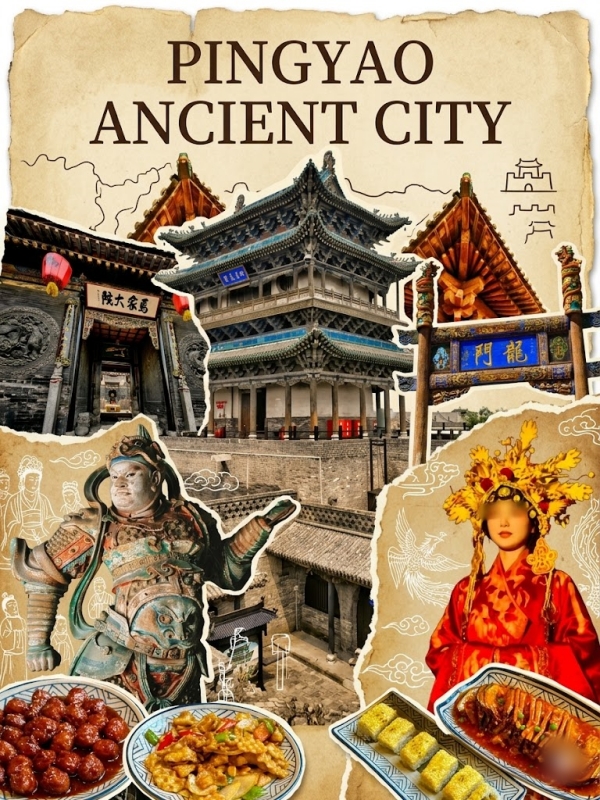
Pingyao is a walled city in Jinzhong, Shanxi Province, central China. Founded in the Western Zhou Dynasty, rebuilt in 1370—it’s over 2,800 years old. Locals call it the “Turtle City”—the streets inside run in four main avenues, eight smaller lanes, and seventy-two meandering alleys. UNESCO inscribed it as a World Cultural Heritage Site in 1997. For two full days I explored the ancient exchange houses, temple courtyards and merchant mansions within those walls. Yet what stayed with me most were simple things: Pingyao does not freeze its history behind glass. It breathes—it throbs—through cracked brickwork, plummy dialect, and slow-cooked local delicacies.
Quick Facts at a Glance
| 🏛️ Name | Pingyao Ancient City (平遥古城) |
| 📍 Address | Kanning Road, Pingyao County, Jinzhong City, Shanxi Province, China |
| 🕗 Opening Hours | Ancient city: open all day (free entry). Interior attractions: 8:00 AM – 5:30 PM; last entry at 5:00 PM |
| 🎟️ Ticket Price | 125 RMB (≈17.5 USD) combo pass — 22 attractions, valid for 3 days. Entry to the ancient city itself is free. |
| 🌍 Heritage Status | UNESCO World Cultural Heritage Site (1997) · National 5A Tourist Area · National Historic and Cultural City |
| 🏗️ Architectural Character | Best-preserved Ming-Qing walled county city in China. Traditional grid layout. Nearly 4,000 surviving courtyard residences. |
| 🗺️ Key Attractions | City Wall, County Yamen, Rishengchang Exchange House, Confucian Temple, City God Temple, Xiétongqing Qiánzhuāng, Market Tower |
| 🎭 Special Activities | 3D City Wall Light Show (nightly, 8:00 PM) · Magistrate's Court Performance (daily, multiple shows) |
| 🍜 Local Food | Pingyao beef, yellow rice cake, oat flour rolls, Shanxi copper hot pot, aged-vinegar braised beef |
| 👥 Best Suited For | History lovers, photographers, families, cultural immersion travelers |
Majestic Ancient Temples Beyond the Walls
Pingyao holds some of the most significant Buddhist architecture in northern China. However, two sites just outside the city walls are equally worth the time.
Shuanglin Temple: Exquisite Clay Sculpture Masterpieces
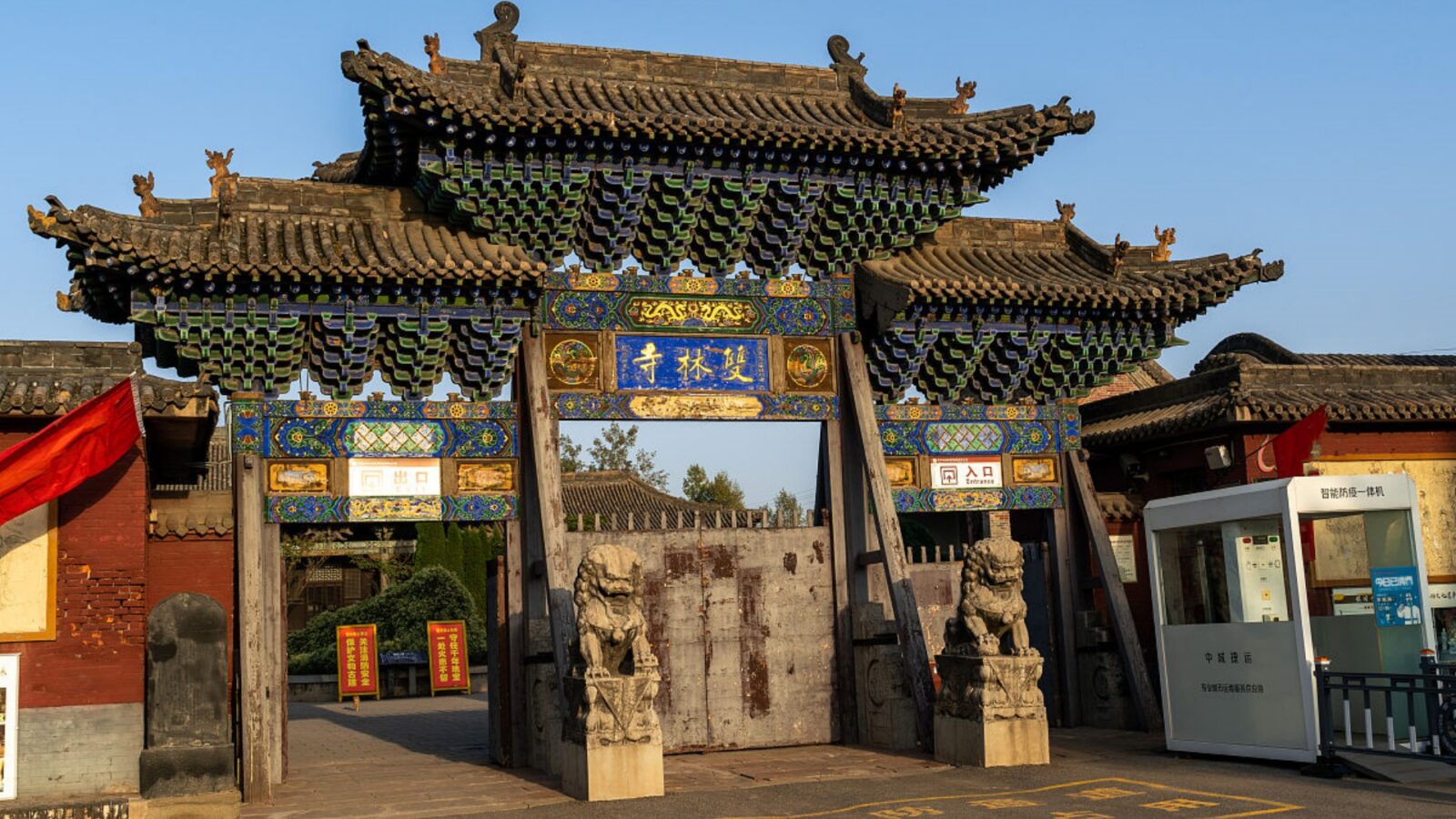
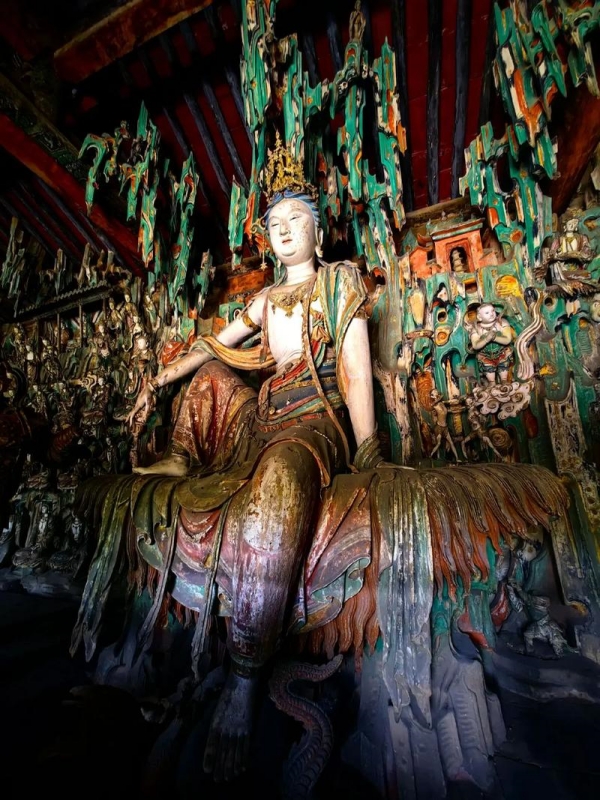
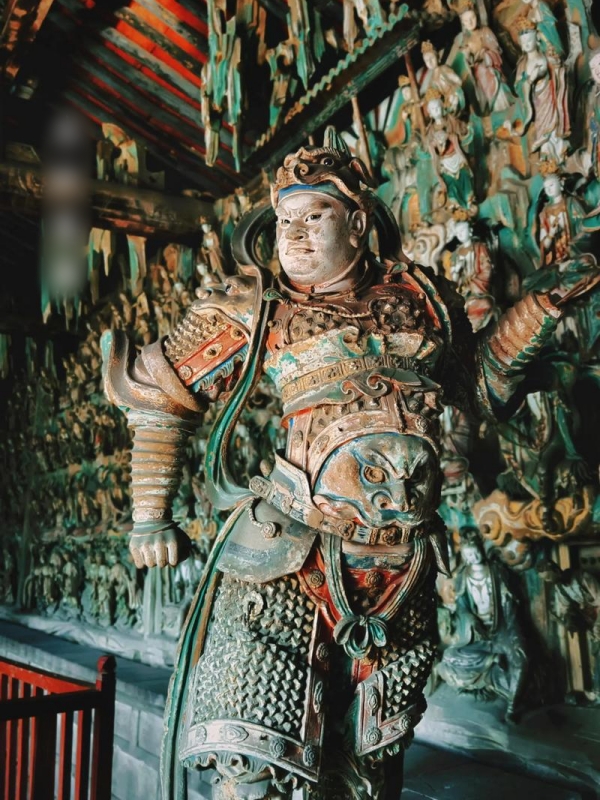
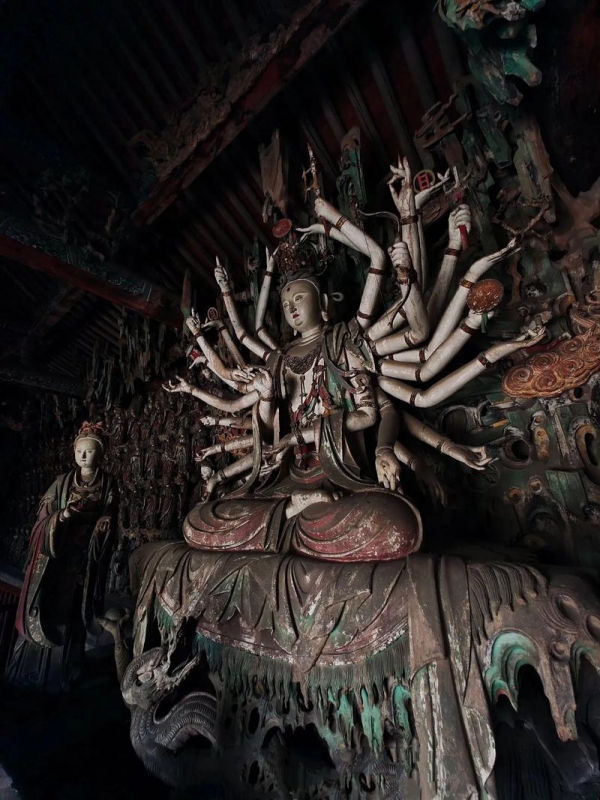
As soon as I crossed the gate, the noise of the old town disappeared. Shuanglin Temple lies about 6 km southwest of Pingyao’s walls. It’s quiet, shady, nowhere like where else I’d been. Inside the hall of a thousand Buddhas, the Weituo statue stopped me cold, it whispered in rich armour beneath latticed light.
That S-shape posture purred coiled power. Some scholars consider it the best Weituo in all of China. The temple has more than 2000 clay figures from the Song to the Ming. An archive of a thousand years of Buddhist sculpture.
Shuanglin Temple is not included in the 125 RMB combo pass. Tickets cost approximately 33–40 RMB separately. Plan at least half a day for this visit. The temple is best reached by taxi.
🏯 The charm of Pingyao extends far beyond a single temple; if you are drawn to the diverse landscapes of Chinese historical sites, explore this Complete Guide to China’s Ancient Towns to feel the unique historical pulse behind each town from a broader perspective.
Zhenguo Temple: Ancient Nailless Wood Architecture
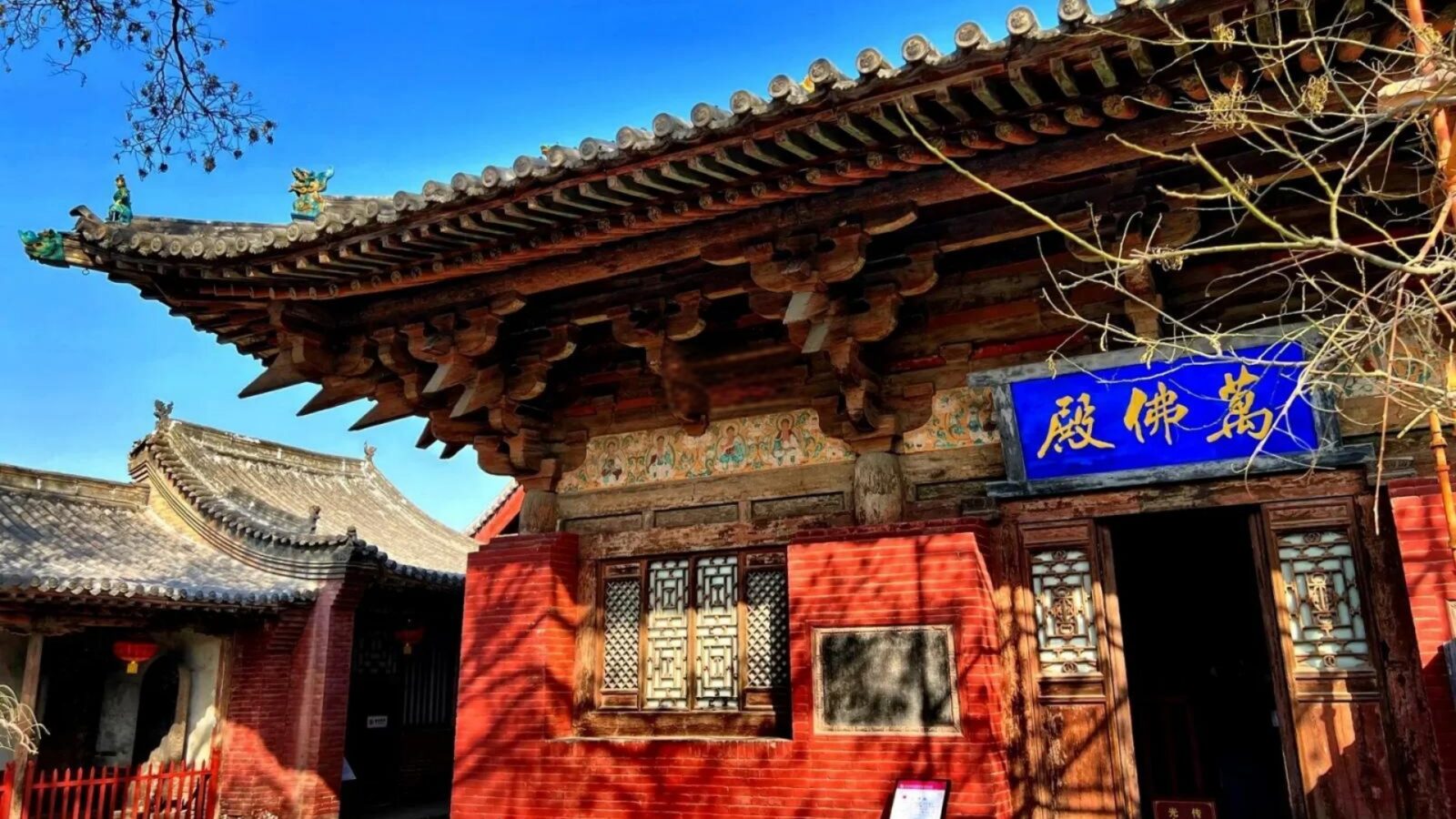
Zhenguo Temple, Pingyao
If Shuanglin is about sculpture, Zhenguo Temple is about structure. Built in 963 AD in the Northern Han, the main hall stands with hardly a nail in it. Every beam, every bracket is locked together without fasteners, by wood-on-wood joinery only. I stood beneath those huge bracket sets and was awed. Inside its walls, you’ll see eleven Five Dynasties clay figures -their full faces, flowing robes, are filled with the aglow of Tang.
And this temple sees far fewer visitors than Shuanglin: you can stand in the silence and drink in the space. Take Bus 209 from the city — it takes about 30–50 mins.
Confucian Temple: Imperial Examination History
-
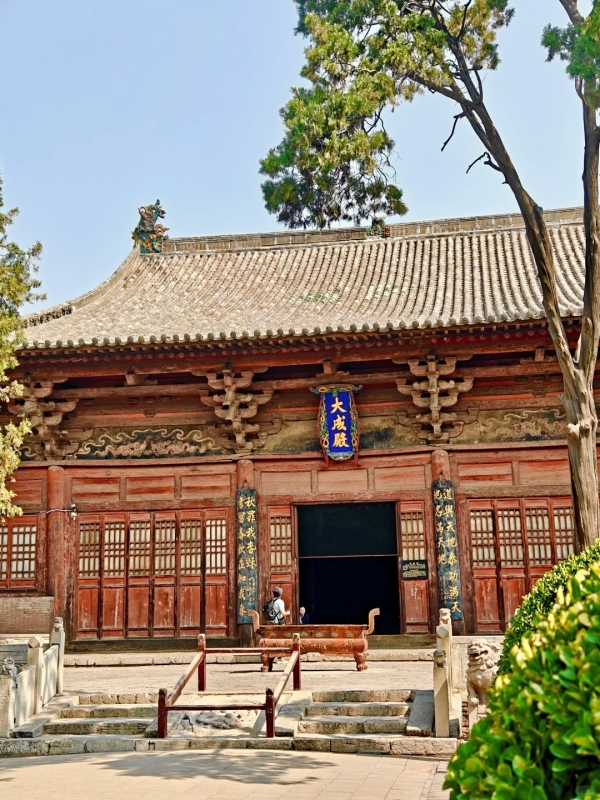

- Dacheng Hall of Confucian Temple, Pingyao
-
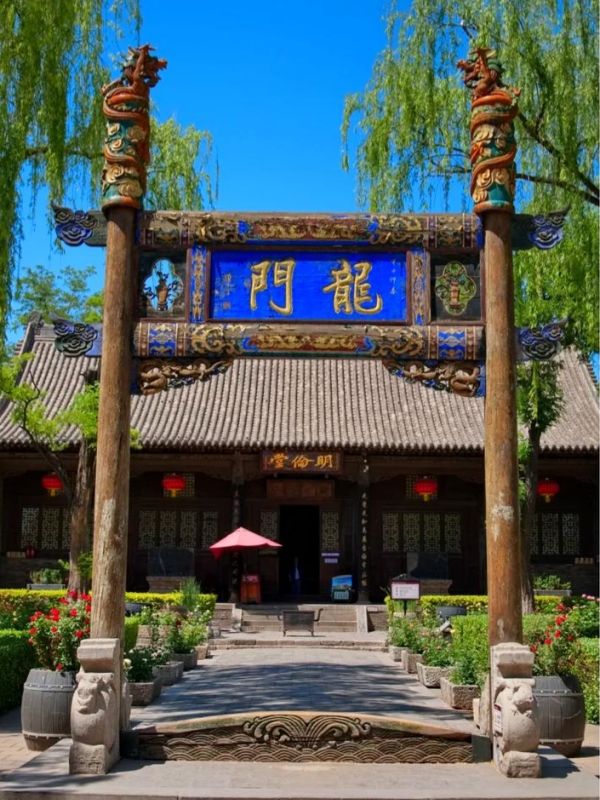
- Dragon Gate of Confucian Temple
Once through the Lingxing Gate, I crossed the Panchi Pool and walked the Zhuangyuan Bridge, being pulled immediately into the breath of the imperial examinations. The main Dacheng Hall is a rebuild in the Jin style (more ruggedly bold than the usual Ming-Qing bracket sets).
However, what I adored most was an under-the-radar detail, written in giant characters on the back wall. A single stroke required in “Kui” is missing. It is here in Pingyao that a future top exam scholar of the county should make the final brush smack! Such a tiny detail made all the difference giving it the feeling of life rather than just history.
City God Temple: Three Deities Shared Shrine
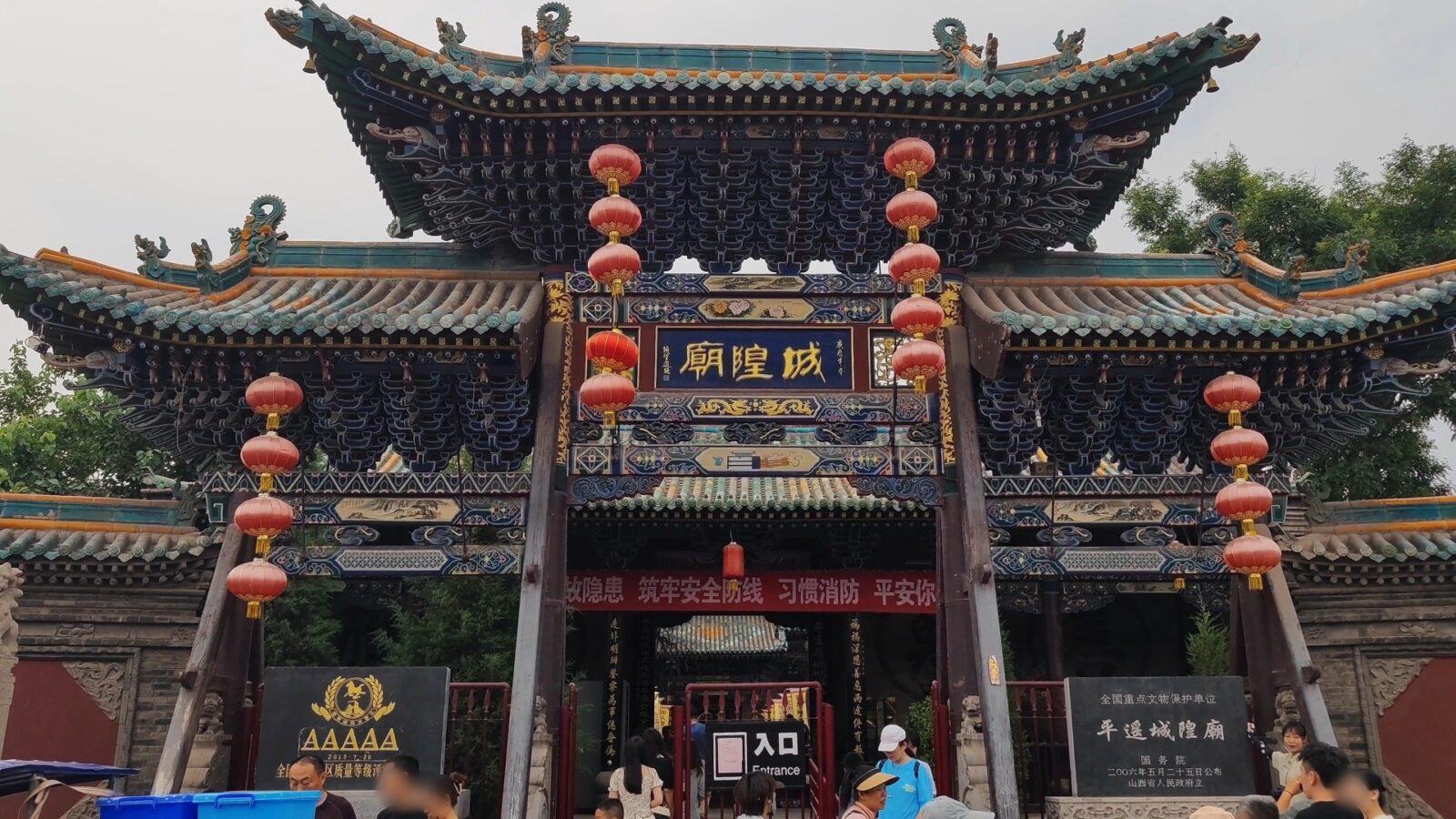
City God Temple at Pingyao
My favourite of the combo ticket sites is the City God Temple, a riot of ornamentation consisting of glazed tile overlayers in blue and green over the rooftops, the effect in sunshine nearly dizzying. Anyway, what a bizarre place! Where else do you pay homage to the City God, God of Wealth, and Kitchen God all in one site? Talk about efficiency!
So here’s how you do it: one visit, three prayers said. A lovely opera stage sits opposite the main shrine and I could easily imagine festival crowds here, promenading and watching performances for the divine while getting in their own good works. Pick the County Yamen next door to visit together; they show the different sides of how the city was ruled to good effect.
Wealthy Shanxi Merchant History and Architecture
The city's streets were once lined with exchange houses, escort companies, and merchant mansions. Several of these buildings remain open to visitors today.
Pingyao City Wall: Ancient Defense Layout
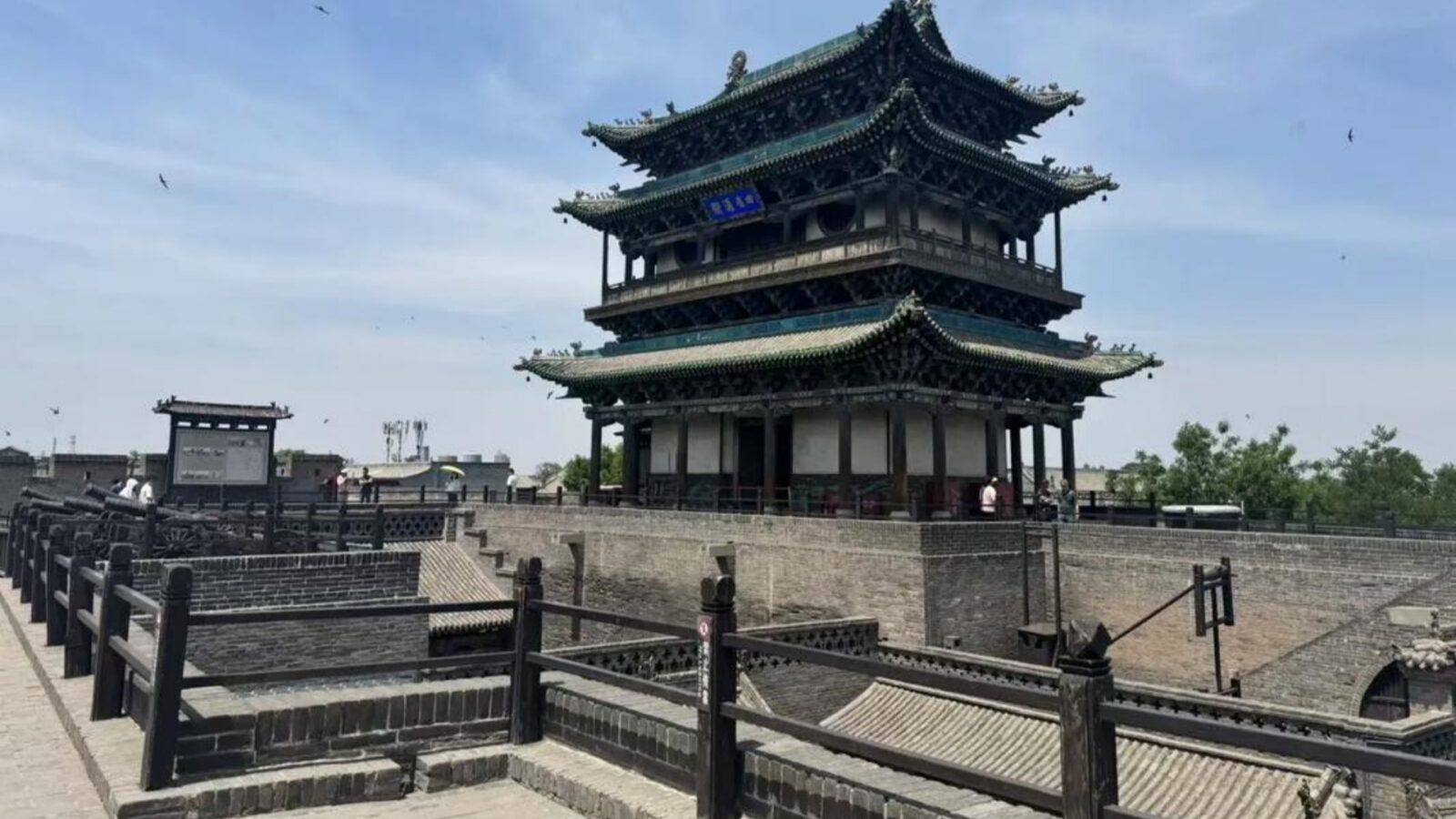
Yingxun Gate, Pingyao
I entered through the Yingxun Gate — the south gate — on my first morning. Climbing to the top of the wall is the most ceremonial way to start your visit, and from the battlements the entire city unfurls like a grey-tiled chessboard below. In total the wall runs 6.4 kilometers. I walked from the south gate toward the Cloud Road scenic section and dropped down, a manageable distance, not tiring. You get very close to a sense of the city’s age running your fingers along the pitted and worn brickwork.
The nightly 3D light show takes place at Yingxun Gate Square, outside the city wall, starting at 8:00 PM. However, the south gate closes at 7:30 PM. Therefore, if you plan to watch the show, you must exit the city before the gate locks. Do not leave this to the last minute.
County Yamen: Complete Governmental Complex
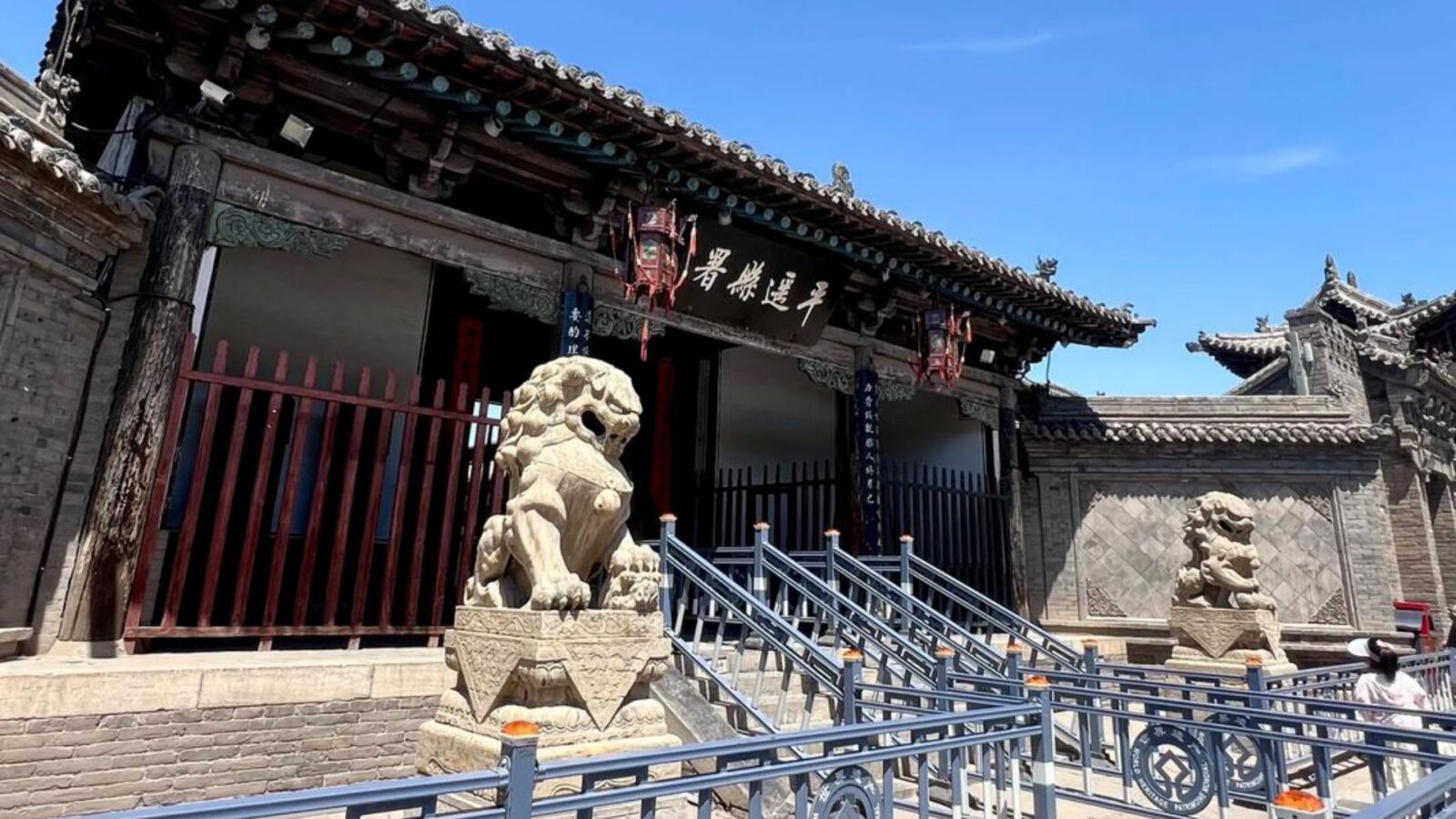
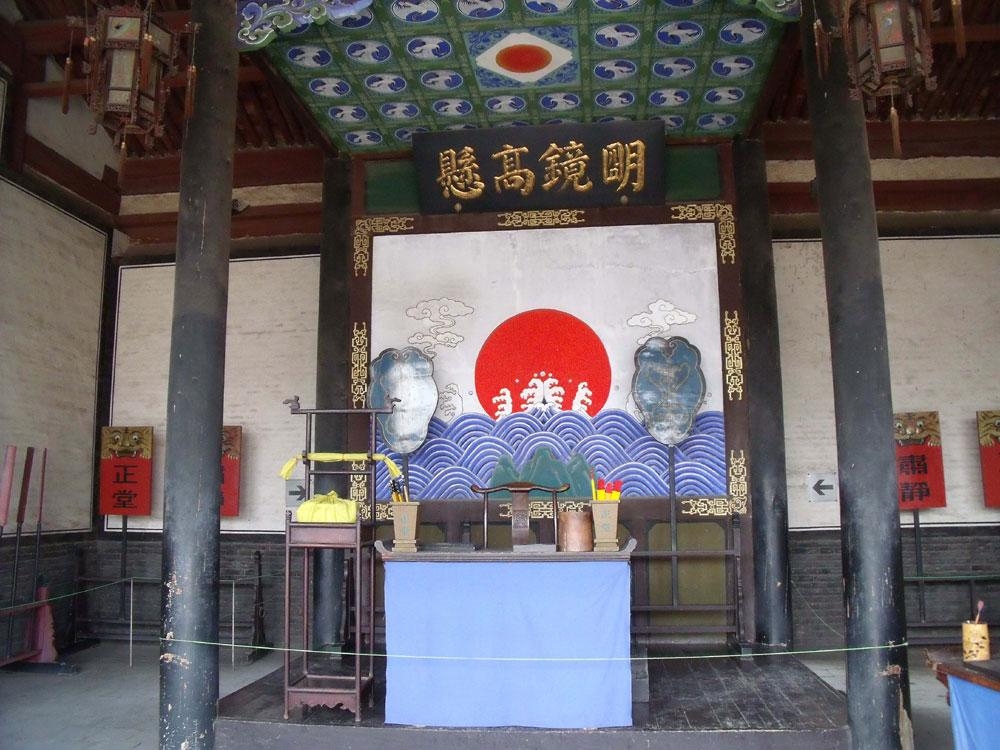
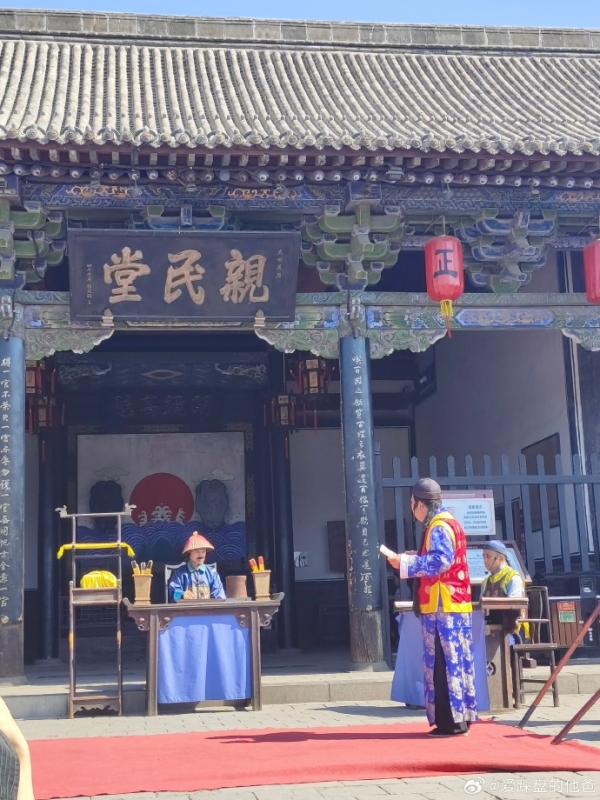
The County Yamen. Almost the only surviving county government complex in China, walking the series of halls, from public courtroom, to inner deliberation room, to the magistrate’s own quarters, is an insight into the workings of Ming-Qing county governance. The Magistrate’s Court Performance is the main event.
Shows are daily at around 9:30 AM, 11:00 AM, and 3:30 PM. Actors take on the roles of the magistrate, clerk, and officers with gusto. When the drums sound and officers shout, you are swept into immediate action. I arrived late to one performance and could only see people’s backs. My advice? Arrive early. Bring flat comfortable shoes, the long Yamen makes walking worthwhile, but no vehicles can get to the entrance.
Rishengchang Exchange House: First Chinese Draft Bank
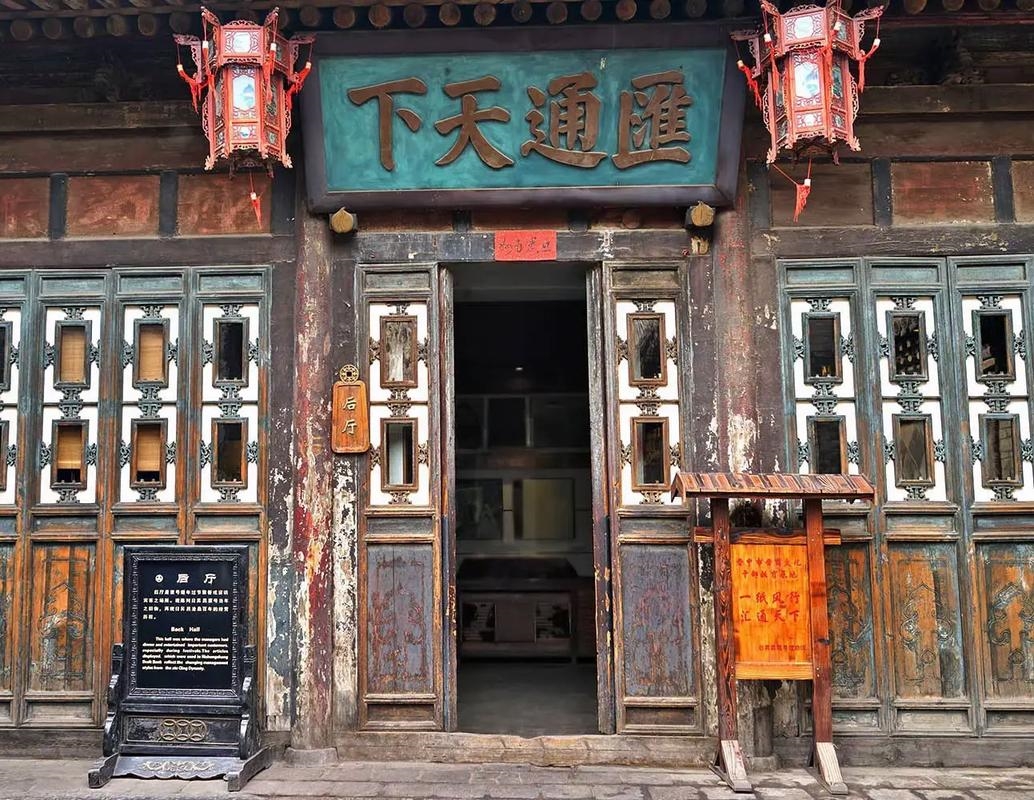
Rishengchang Exchange House
Rishengchang looked unremarkable from the street. But stepping into the entrance to this modest three-sided courtyard was stepping into the birthplace of modern Chinese banking. Designed in the early 19th century, Ri Sheng Chang was China's first national exchange for bills. “Remittance throughout China,” was no hollow claim—the network connected more than 30 cities.
I pressed my hand against the cold wall of the underground vault. The weight of “trust is currency” suddenly became real. The next vault I visited, Xiétongqing Qiánzhuāng, was impressive too, but one will do for most. The core messages are the same.
Ma Family Compound: Wealthy Merchant Residence
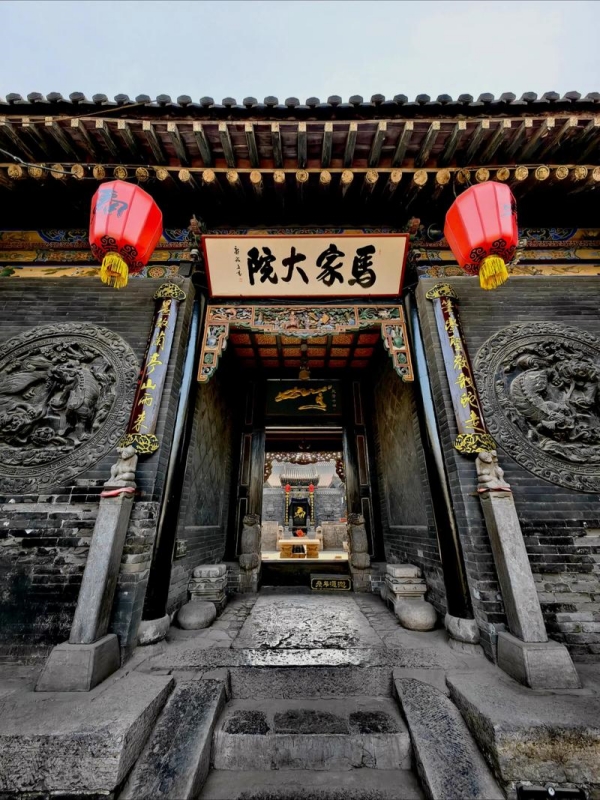
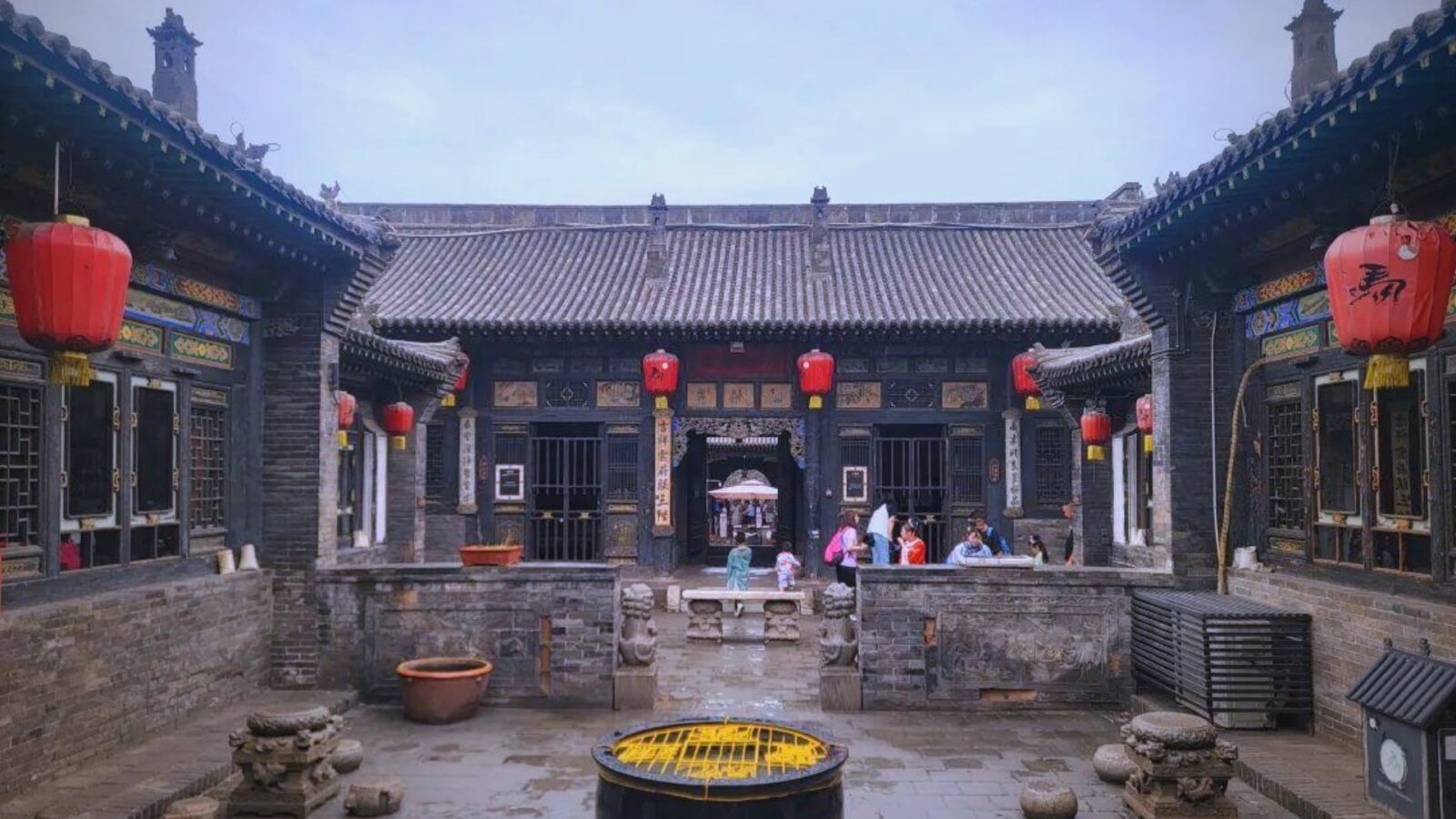
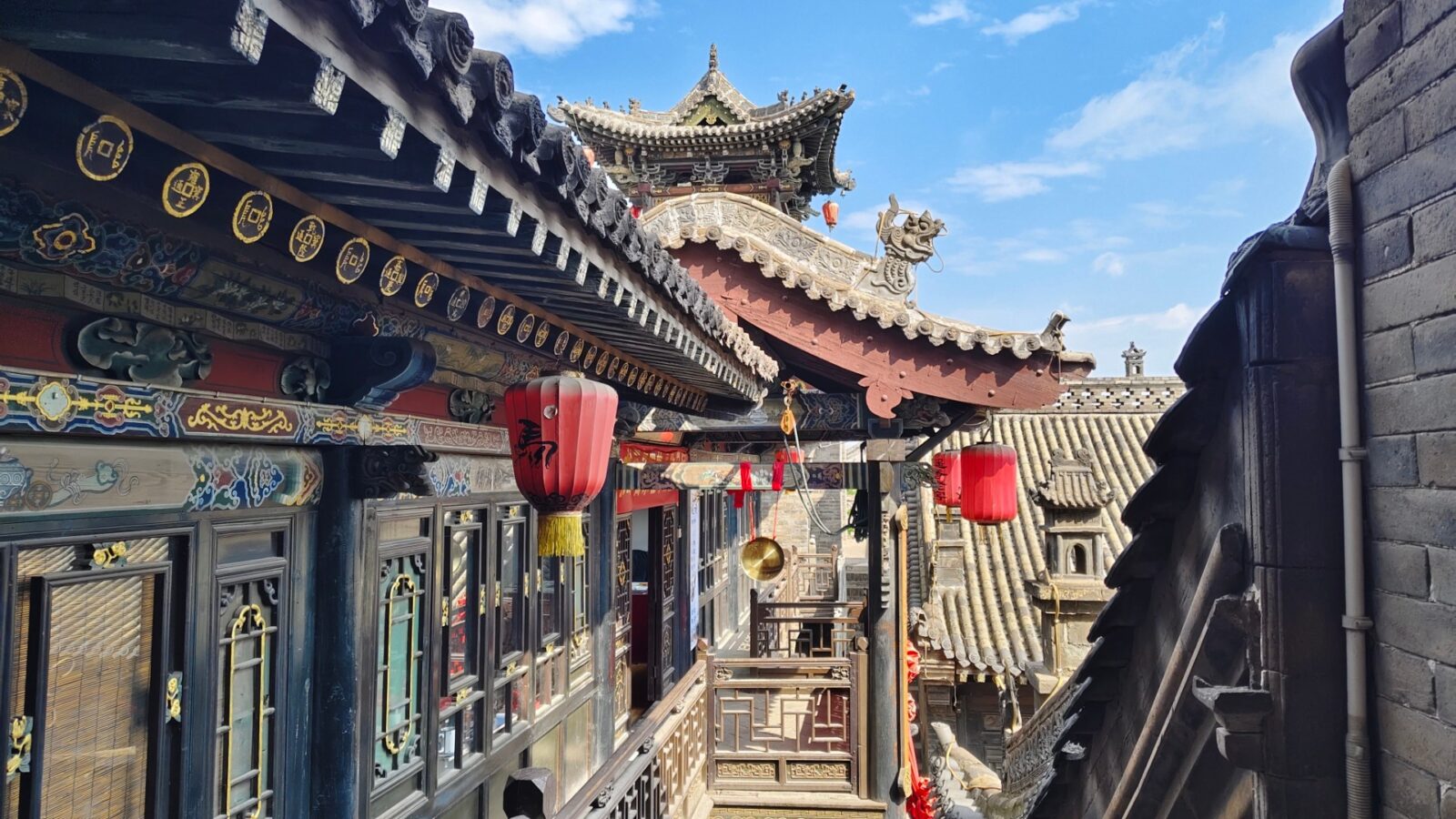
The Ma Family Compound stands in the northeast of the old town, and fewer tourists visit it. This is why I loved it. The home of Ma Zhongxuan, the richest of Pingyao’s four great merchant families, the compound is vast, filled with carved bricks, wood, and stone on every surface of the courtyards. Each courtyards of the wives is of a different style, revealing a life of refinement like no other. But the best moment is climbing to the three-storey viewing pavilion and seeing the whole ancient city spread out below, one rooftop after the other to the city walls. That view alone is worth the walk.
🏛️ Commercial History & Shanxi Traders: Learn about the historic draft banks, financial innovation, and legacy of Shanxi trade dynasties in our guide to Chinese Merchants.
Unforgettable Cultural Performances and Light Shows
-
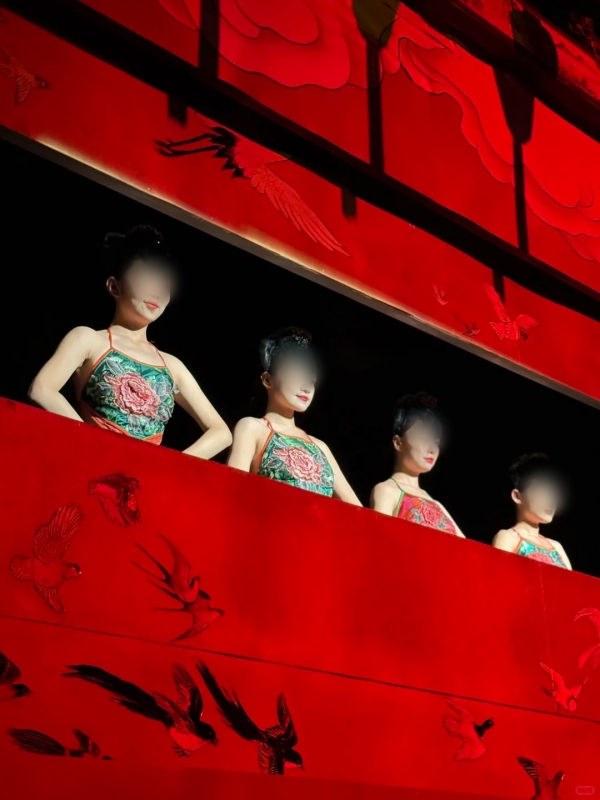
- Again Pingyao Performance
-
- Again Pingyao Performance
-
- Again Pingyao Performance
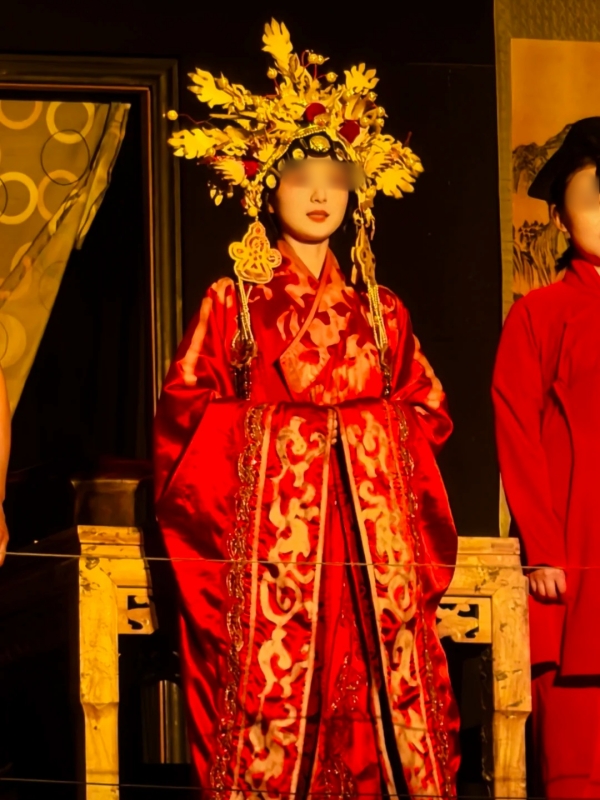
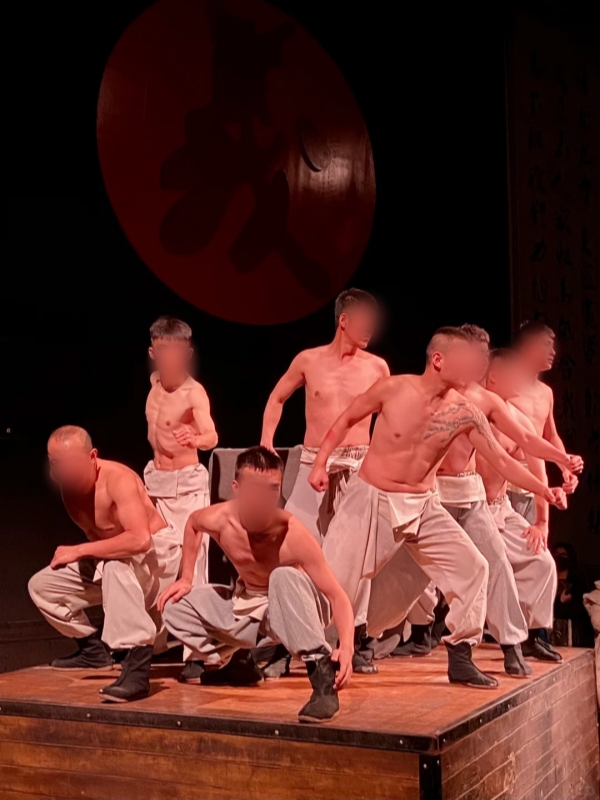
For most visitors to Pingyao, the evening cultural shows are optional extras. For me, they were two of the most memorable hours of the entire trip.
Again Pingyao (又见平遥)
Again Pingyao is a 90-minute immersive theatre experience. You do not sit down. Instead, you move with the crowd through a sequence of scenes — a militia escort house, a street market, a merchant family courtyard. Actors perform within arm's reach.
The central story follows merchant Zhao Dongjia, who sacrifices his entire fortune to protect the bloodline of a trusted employee. Several scenes moved me to genuine tears, especially the final homecoming sequence. This was not passive watching. It was participation in someone else's memory.
The show runs at 2:00 PM and 7:00 PM daily. It is closed on Mondays. Advance booking is essential. The show operates under a real-name registration system — bring your ID to the entrance.
3D City Wall Light Show
Every evening at 8:00 PM, the south gate of Pingyao transforms. The ancient walls become the canvas for a sound-and-light projection show. Market towers, exchange houses, and escort company flags light up in sequence along the battlements. The effect is genuinely spectacular — history made visible through light and music.
However, this experience requires planning. The show takes place outside the city walls, in Yingxun Gate Square. You must exit through the south gate before 7:30 PM. Furthermore, the show is cancelled during rain or snow. Check the forecast before committing to an evening outside.
Authentic Local Food and Culinary Delights
-
- Xi Lai Yao Jin Cai Restaurant
-
- Jin Cai Feast
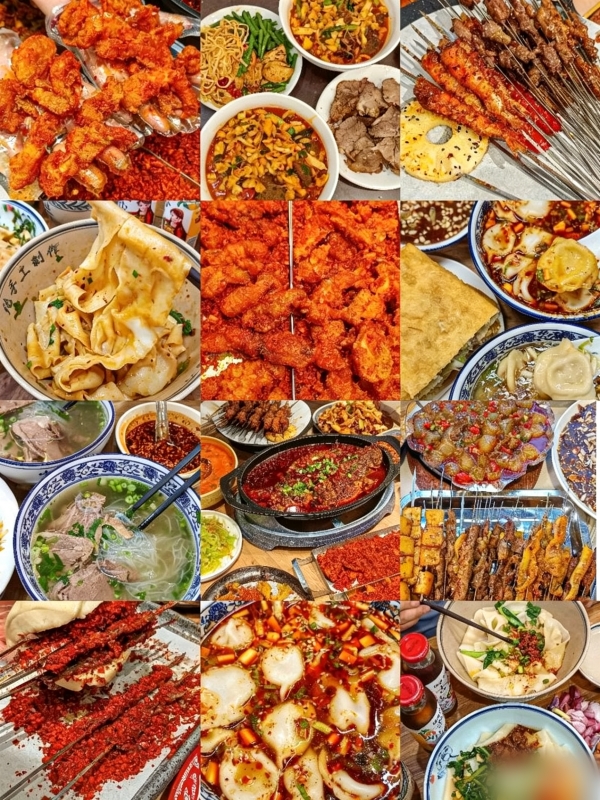
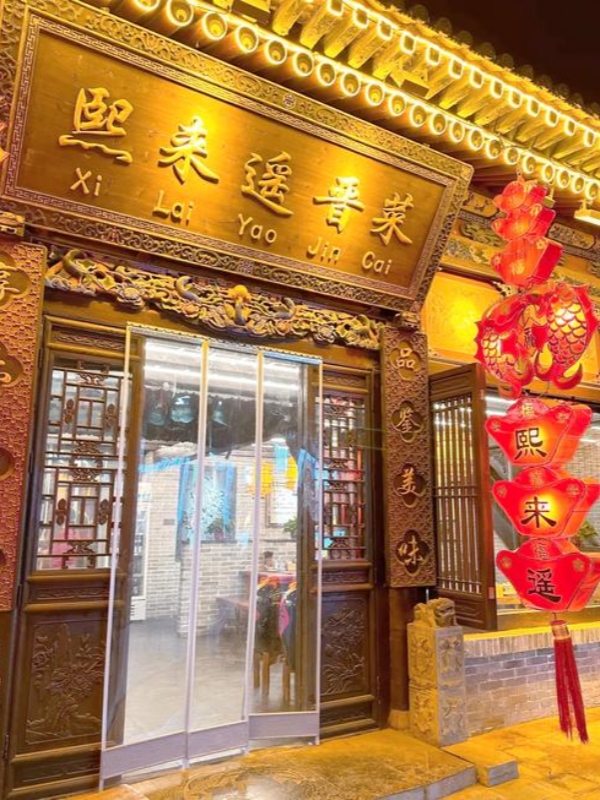
Pingyao's food runs on aged vinegar, slow-braised meats, and hand-worked noodles. After a full day of walking, I settled into Xilai Yao — a Shanxi-style restaurant set inside a traditional courtyard. Eating in that open courtyard, surrounded by grey brick and potted plants, made the meal feel like part of the experience itself.
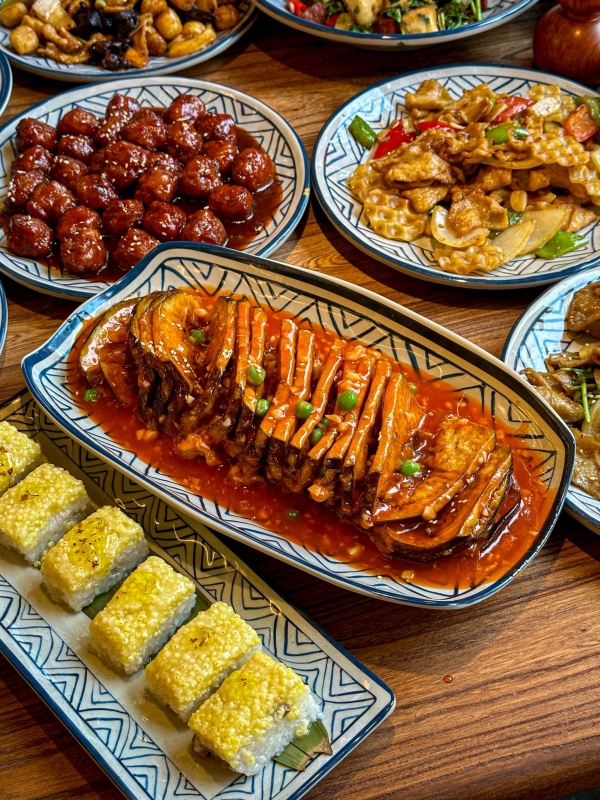
I started with the yellow glutinous rice cake (huáng mǐ liáng gāo). It arrived cool, slightly sweet, and soft. Next came the aged-vinegar braised beef. The meat fell apart at the touch of chopsticks. The vinegar, surprisingly, was mellow — fragrant rather than sharp.
Over rice, it was outstanding. The vinegar-dressed eggs were my unexpected favorite: silky, light, and faintly sour in the best way. The average spend here runs 40–60 RMB per person. However, portions are generous. The copper hot pot and oat flour rolls (kǎo láo láo) are also worth ordering if you visit with company.
Dishes to try: Pingyao beef (平遥牛肉) · yellow rice cake · oat flour rolls · aged-vinegar braised beef · Shanxi copper hot pot · vinegar-dressed eggs
Immersive Traditional Costume Photography Experience
-
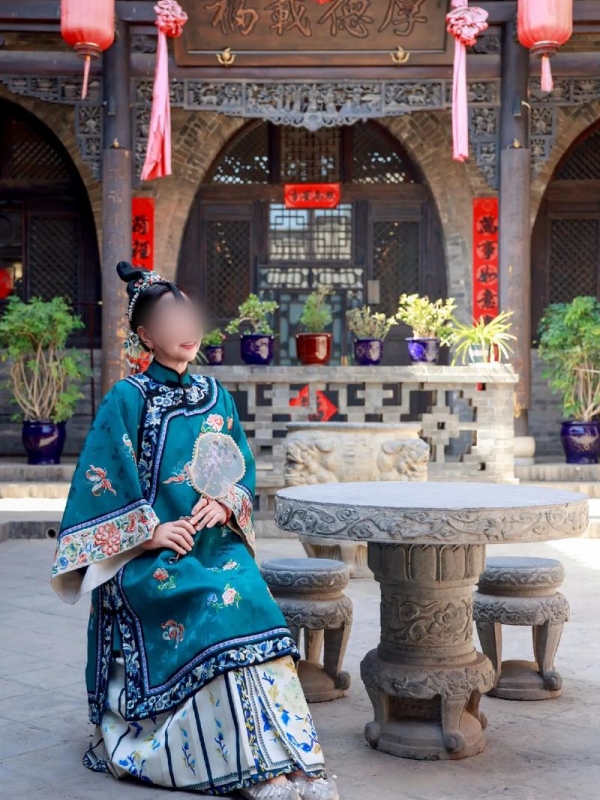
- Pingyao Traditional Photoshoot
-
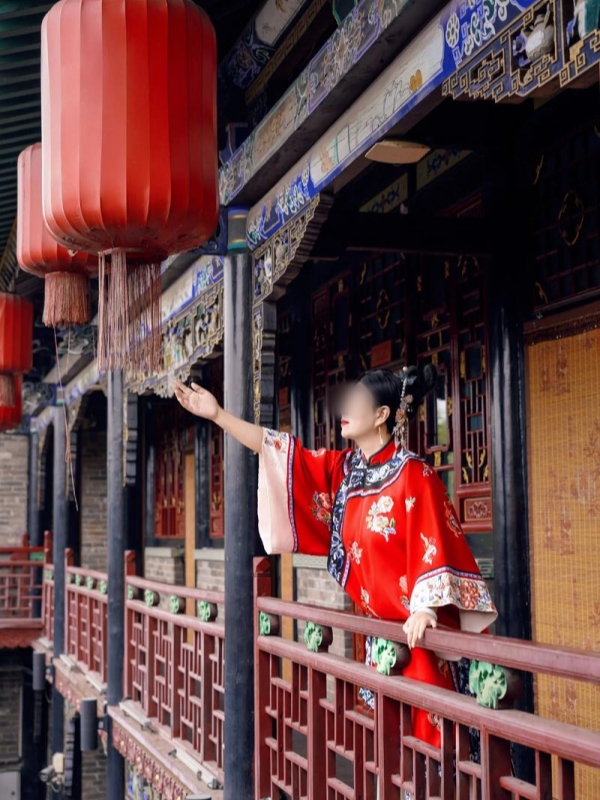
- Pingyao Traditional Photoshoot
I am not usually someone who does tourist costume shoots. However, in Pingyao, the old streets and Ming-Qing architecture made the idea feel genuinely fitting. I chose Amanduo, a national chain with multiple locations inside the old town. The process was professional from start to finish.
The makeup artist adjusted the hairstyle to suit my face shape. The photographer guided each pose with patience, which helped me relax quickly. Most importantly, the pricing was all-inclusive: costumes, styling, photography, and all digital files were covered upfront. No hidden charges appeared at the editing stage. The finished photos captured both the historical setting and the real mood of the day.
However, if you choose a different studio, verify everything upfront — costume quality, makeup standard, full digital file delivery, retouching count, and whether there are selection-stage upsells. Standards vary significantly across the old town.
Practical Travel Information
🎟️ Tickets & Entry
| Combo Pass Price | 125 RMB per person |
| Validity | 3 consecutive days · 22 attractions · one entry per site |
| City Entry | Free — no pass needed to enter the ancient city itself |
| Not Included | Shuanglin Temple · Zhenguo Temple (each approx. 33–40 RMB separately) |
| Opening Hours | 8:00 AM – 5:30 PM · last ticket scan 5:00 PM |
🚄 Getting There
| HSR Station | Pingyao Ancient City Station (平遥古城站) |
| Station → Old Town | Taxi: approx. 20 RMB · Bus 108: 1 RMB |
| Rail Connections | Beijing (3–4 hrs) · Xi'an (2.5–3 hrs) · Taiyuan (approx. 30 min) |
| Old Station (平遥站) | Closer to city walls · 10–15 min walk to West Gate |
| Taxi Tip | Avoid unmarked taxis outside HSR station — use a ride-hailing app or official queue |
🚶 Getting Around
| Inside the City | Walking recommended · main streets and attraction lanes are pedestrianized |
| Sightseeing Vehicles | 10 RMB per trip · cannot reach most attraction entrances directly |
| Footwear | Flat, comfortable shoes essential — cobblestones are uneven throughout |
| Outside the Walls | Taxi or bus recommended for Shuanglin / Zhenguo Temple |
🏨 Accommodation Zones
| South Street & Ming-Qing Street | Most central and lively · best for convenience · expect evening noise |
| Yamen Street | Balance of accessibility and quiet · near County Government Office |
| West Gate & Lower West Gate | Lower prices · good value · quieter atmosphere |
| Outside the City Walls | Practical for self-drive visitors · no vehicles permitted inside the ancient city · confirm parking before booking |
| Booking Tip | Book early during peak seasons (May & October holidays) |
Frequently Asked Questions for Smooth Travel
Q: How many days do I need in Pingyao?
Two days is the ideal minimum for pingyao. One full day covers the main highlights inside the walls — the city wall, county yamen, Rishengchang, and the evening shows. A second day allows for a relaxed trip to Shuanglin Temple or Zhenguo Temple. However, one day is entirely possible if your schedule is tight. In that case, focus on the core sites inside the walls and catch the light show in the evening.
Q: Is the 125 RMB ticket worth buying?
For most visitors to pingyao who plan to explore more than two or three ticketed attractions, the 125 RMB combo pass is clearly worthwhile. It covers 22 sites over three days and saves significant time compared to buying individual tickets at each location. However, if you only want to stroll the streets and skip the ticketed interiors, entering the ancient city is free — no pass required.
Q: How do I get to Pingyao from Beijing or Xi'an?
The fastest route to pingyao from both cities is by high-speed train to Pingyao Ancient City Station (平遥古城站). From Beijing, the journey takes approximately 3–4 hours. From Xi'an, it takes roughly 2.5–3 hours. After arrival, take a taxi (around 20 RMB) or Bus 108 (1 RMB) to the old town gates. Book train tickets in advance through the official 12306 platform, particularly during national holidays.
Q: What is the "Again Pingyao" show and is it worth seeing?
Again Pingyao (又见平遥) is a 90-minute immersive walking theatre performance set inside a purpose-built venue near the city walls. The show tells the story of a pingyao merchant who sacrifices everything to protect a trusted employee's family line. It runs at 2:00 PM and 7:00 PM daily, except Mondays. Advance booking is required and real-name registration applies — bring your ID. It is genuinely moving and worth the ticket price.
Q: What time does the Pingyao light show start and how do I watch it?
The pingyao light show begins at 8:00 PM every evening at Yingxun Gate Square, outside the south city wall gate. The show lasts approximately 18 minutes. You must exit the ancient city before the south gate closes at 7:30 PM — a late exit means missing the show entirely. The performance is also cancelled during rain or snow, so check the forecast before planning your evening around it.
Q: Is Shuanglin Temple included in the combo ticket?
No. Shuanglin Temple requires a separate ticket, priced at approximately 33–40 RMB. It sits about 6 kilometers southwest of pingyao's old town and is not within walking distance. Plan to visit it as a dedicated half-day trip, ideally by taxi. Zhenguo Temple also requires a separate ticket and sits to the northeast of the city. Both sites are well worth the additional cost and effort.
Q: What is the must-try food in Pingyao?
Pingyao's food is built around aged vinegar, slow-cooked beef, and hand-rolled noodles. The top dishes to try are pingyao beef (平遥牛肉), yellow rice cake (黄米凉糕), oat flour rolls (莜面栲栳栳), and aged-vinegar braised beef. Shanxi copper hot pot is a strong choice for group meals. The local vinegar is milder and more aromatic than you might expect — it enhances rather than overwhelms each dish.
Q: Can I visit Pingyao in one day? What's the best itinerary?
A one-day pingyao visit is possible but requires focus. Start by climbing the City Wall at Yingxun Gate in the morning. Next, visit Rishengchang Exchange House and the County Yamen — catch the 11:00 AM magistrate performance. After lunch on Ming-Qing Street, explore the City God Temple. In the evening, watch the Again Pingyao show at 7:00 PM or the 8:00 PM light show at the south gate. You will not see everything, but the core experience is complete.
Q: Is Pingyao safe for solo travelers?
Yes, pingyao is generally safe and straightforward for solo travelers. However, three situations deserve attention. First, avoid unmarked taxis outside the high-speed rail station — use a ride-hailing app instead. Second, confirm all pricing upfront at costume photography studios to avoid unexpected charges at checkout. Third, avoid booking accommodation in very remote alley locations. After dark, some lanes inside the old town are poorly lit and easy to get lost in.
Q: What is the best time of year to visit Pingyao?
The best seasons for pingyao are spring (April–May) and autumn (September–October). Spring brings mild temperatures and clear skies. Autumn offers cooler air and richer light, which is ideal for photography. Both seasons coincide with the Pingyao International Photography Festival in September–October. Avoid national holidays in May and October, when crowds are at their peak. Winter visits are quieter and the light show can gain a dramatic snow backdrop, but temperatures drop significantly.