Shaanxi Food in China
Shaanxi food is China's wheat-belt cuisine — a Silk Road kitchen built on hand-pulled noodles, vinegar-led sourness, chili-oil heat, and slow-stewed mutton. Xi'an (ancient Chang'an) was the eastern terminus of the Silk Road for over a thousand years, and that history still shapes what travelers eat: cumin, Sichuan pepper, flatbread, lamb. Beyond the Muslim Quarter, the cuisine splits geographically. Southern Hanzhong grows rice and leans toward Sichuan spice; northern Yan'an sits on the cool loess plateau, where oats, millet, and lamb dominate. A food trip usually starts in Xi'an, but the regional spread is what makes it a cuisine, not just a city.
Most first-time visitors taste Shaanxi in three or four meals and call it done. That misses the point. The province rewards a slow reading of its staples, its regional corners, and the few dishes that show up on every local table. This guide covers the dishes, the prices, and the streets where the cooking still feels like itself.
Quick Facts
The Most Famous Shaanxi Dishes
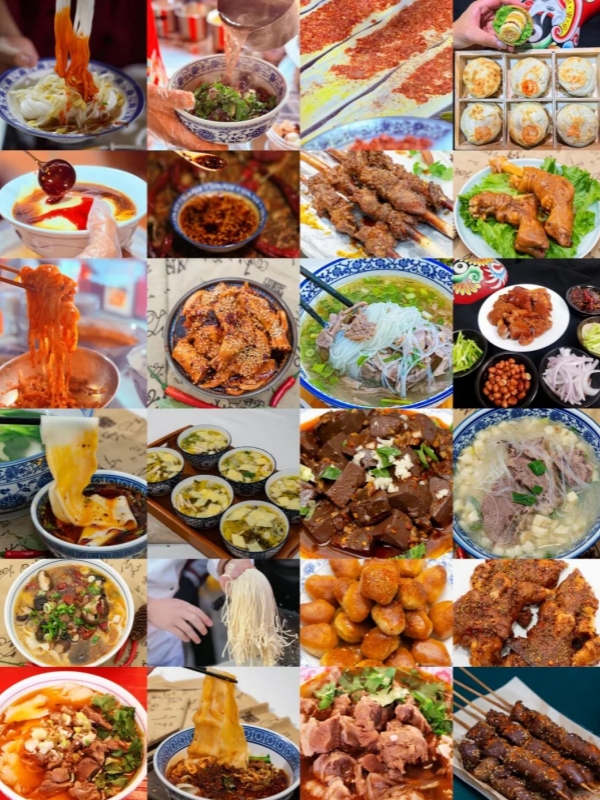
Shaanxi Food Map
Five dishes anchor the Shaanxi food map for most first-time visitors. Rou jia mo is the everyday street staple — slow-stewed meat tucked into a small, crisp flatbread. Yang rou pao mo is the city's signature hot dish, a milky mutton stew in which diners tear unleavened bread into the bowl themselves. Biang biang mian, the wide hand-pulled noodle, is the visual icon — its name mimics the slap of dough against the counter. Liang pi, cold sheets dressed with sesame paste and chili oil, is the refresher eaten between heavier dishes. Qishan saozi mian rounds out the set with thin noodles in a sour-spicy broth.
What ties them together is a wheat-belt foundation. Noodles and flatbreads stand in for rice, Baoning black vinegar carries the sourness, chili oil brings the heat, and cumin alongside Sichuan pepper supplies the Silk Road aroma layer. A long Hui Muslim presence in Xi'an explains the heavy lamb and beef rotation, especially inside the Muslim Quarter. For travelers, the practical takeaway is simple — eat rou jia mo as a snack, liang pi as a starter, biang biang or saozi mian as a main, and paomo when you want something hot and unhurried.
🍢 Explore the Muslim Quarter: Since Silk Road history deeply influenced this region's spice and mutton traditions, the best place to experience this culinary fusion is in the city's historic food streets. Find the top local dishes and stalls in our guide to Xi'an Halal Food.
Rou Jia Mo and Yang Rou Pao Mo
Rou Jia Mo (Ròu Jiā Mó)
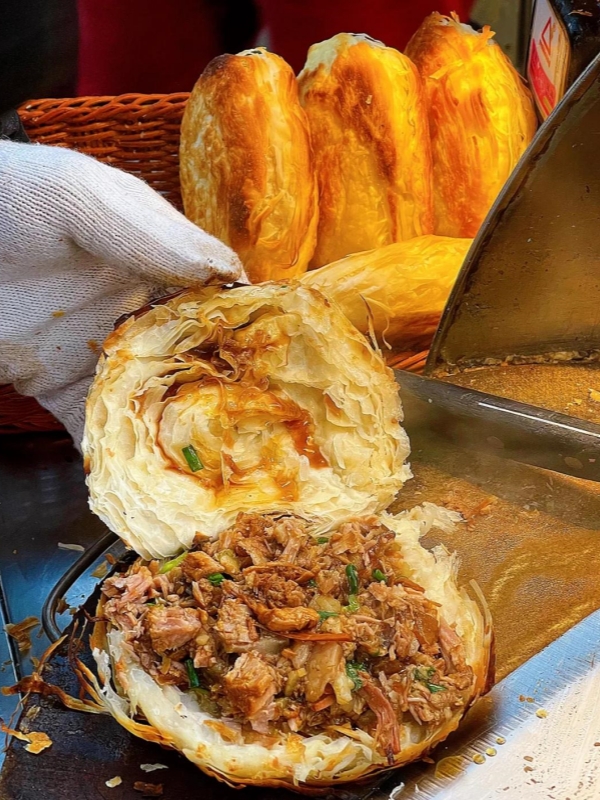
Roujiamo
Rou jia mo — sometimes called the Chinese hamburger — is the dish Shaanxi travelers meet first, and most often. A fist-sized round of flatbread (baijimo), baked until the outside is crisp and the inside still soft, is sliced open and stuffed with meat that has been stewed for hours in a broth of soy, star anise, Sichuan pepper, and cumin. The meat arrives finely chopped rather than sliced, which lets the seasoning coat every bite. Outside the Muslim Quarter, the standard filling is pork; inside it, beef or mutton dominates.
Rou jia mo sells for about $1.50–$2.50 (¥10–18) at street stalls and is available from morning through late night across the city. Vendors press the bread, simmer the broth, and assemble each sandwich on the spot, so freshness is built into the format. As a snack between sights, it pairs naturally with a cold liang pi or a bottle of Bingfeng soda, the orange-flavored local soft drink.
Yang Rou Pao Mo (Yáng Ròu Pào Mó)
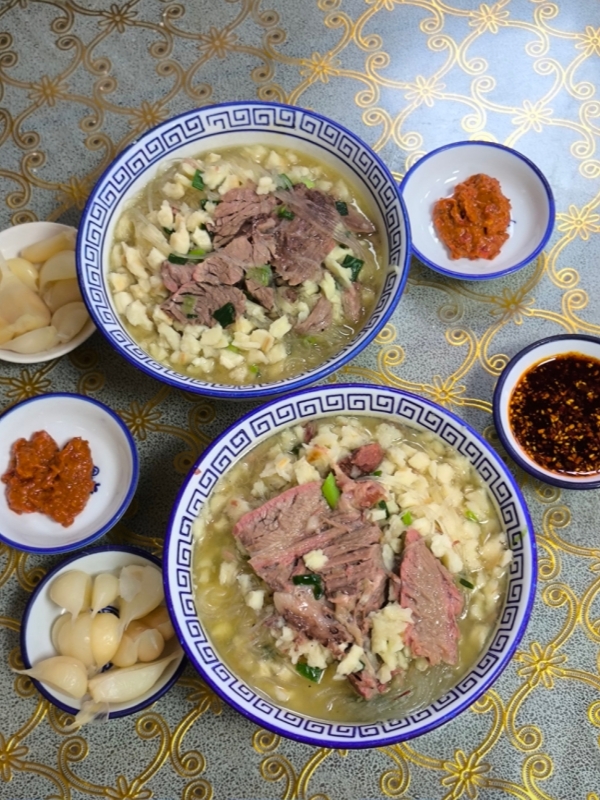
Yang Rou Pao Mo
Yang rou pao mo is the dish most associated with Xi'an identity, and it demands a little participation from the diner. The kitchen brings a bowl of milky lamb-bone broth, a plate of sliced lamb or beef, and one or two rounds of unleavened flatbread. You tear the bread into rough, bite-sized pieces by hand — the smaller and more even, the better the final texture — then return it to the kitchen. A few minutes later the bowl comes back, the bread now soft, saturated, and swollen with broth.
The flavor is rich, savory, and faintly sour from the long-simmered bone stock. Prices sit around $4–$7 (¥30–50) per bowl at the better-known Muslim Quarter restaurants. Because the bread must be torn by hand, paomo is a sit-down meal rather than street food; budget an unhurried hour.
Signature Noodles of Shaanxi
Biang Biang Mian
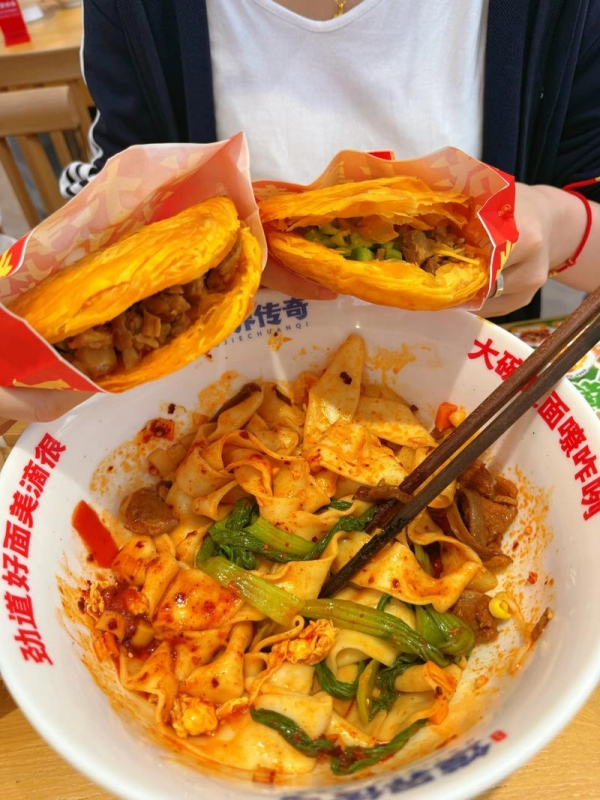
Biangbiang Noodles
Biang biang mian is the most photographed noodle in the province. The name — onomatopoeic — mimics the slap of hand-pulled dough against the wooden counter, a sound noodle masters in Shaanxi still produce in open kitchens. The noodles themselves are wide, flat, and irregular, often as long as a forearm, served folded over each other in a shallow bowl. The dressing defines the dish: a slick of chili oil, a pour of dark Baoning black vinegar, soy, and usually a single fried or poached egg, or a tomato-and-egg topping.
The flavor sits in a sour-spicy register — the vinegar carries the brightness, the chili oil carries the heat, the noodles carry everything else. Biang biang mian typically runs $2.50–$4 (¥18–28) per bowl. The character biáng is one of the most complex in Chinese writing; restaurant walls often display it as decoration.
Liang Pi
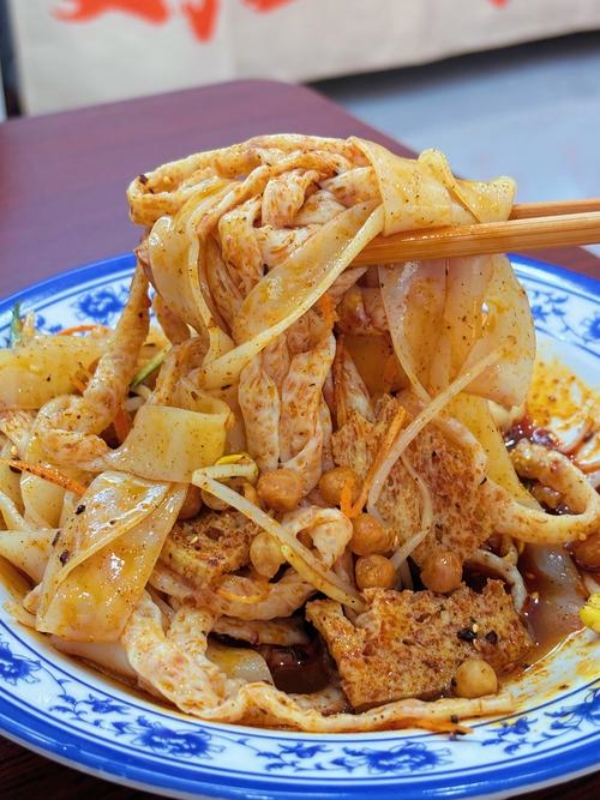
The Liang Pi
Liang pi is the cold dish Shaanxi eaters reach for in summer, and the default palate-cleanser between heavier plates. The noodles are not noodles in the usual sense — they are thin, translucent sheets pressed from wheat or rice flour, sliced into strips and served cool, not chilled. The dressing mixes sesame paste, Baoning black vinegar, garlic, chili oil, cucumber shreds, and bean sprouts.
A standard portion costs $1.50–$3 (¥10–20). The base dish is vegetarian-friendly, and most vendors will adjust the chili level on request. Liang pi is the easiest Shaanxi dish to eat on the move, and it works well as a starter alongside rou jia mo or as a quick lunch.
Qishan Saozi Mian
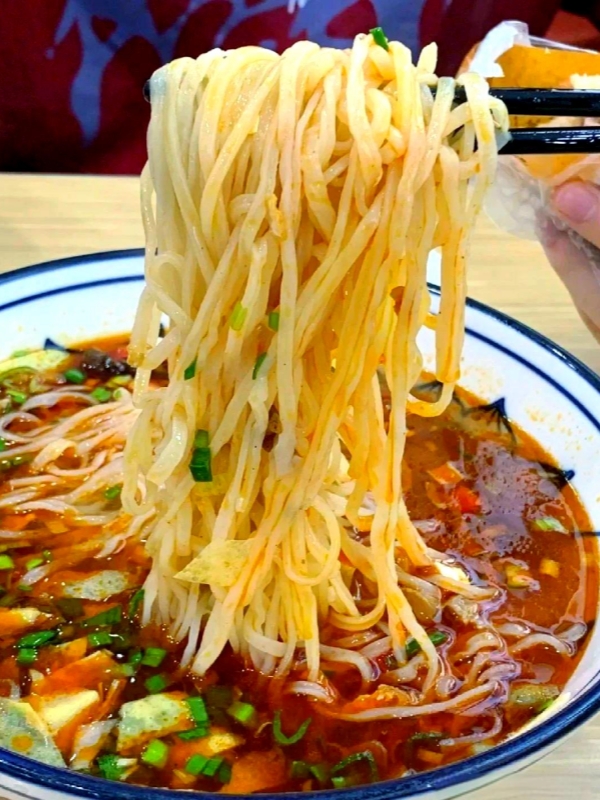
The Qishan Saozi Mian
Qishan saozi mian comes from Qishan County, about 150 km west of Xi'an, and is the third leg of the local noodle trinity. The noodles are thin and wheat-based, served in a clear, light-colored broth rather than a chili-oil slick. The broth is the signature — sour from aged vinegar, faintly hot from Sichuan pepper, savory from minced pork (the saozi), and layered with chopped pickled long beans, wood-ear mushroom, and often a thin egg ribbon.
The flavor profile is sour-forward rather than chili-forward. Prices sit around $2–$3.50 (¥15–25) per bowl. In Xi'an, saozi mian shops are common but less ubiquitous than biang biang or liang pi — worth seeking out for a meal that is lighter and more brothy than its siblings.
Regional Variations Beyond Xi'an
Baoji Jiaotuan
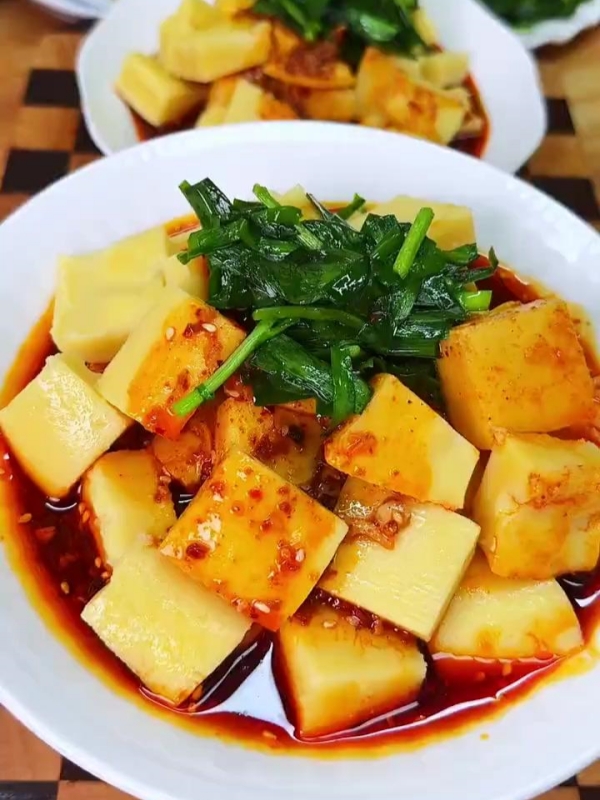
The Baoji Jiaotuan
Baoji jiaotuan is the wheat-belt's answer to polenta — a stiff, slightly sticky mash pounded from wheat flour or steamed potatoes and served in bowls dressed with chili oil, garlic, and vinegar. It is rural western Shaanxi food at its most elemental, the kind of dish city dwellers drive out for on weekends. The texture is somewhere between thick porridge and soft dough, eaten by the spoonful rather than chopsticks.
The destination most often recommended is the Longfeng Mountain Mashed Potato Society (龙凤山搅团社), set in the mountains outside Baoji. A flat-rate banquet runs about $4 (¥26) per person and comes with a smorgasbord of traditional Shaanxi plates alongside the jiaotuan itself — bring more people, and the table fills with more dishes. The format is family-style, communal, and built for unhurried eating. For travelers based in Xi'an, it makes a doable day trip with a car, and the only menu planning required is deciding how many to invite.
Hanzhong and Yan'an Specialties
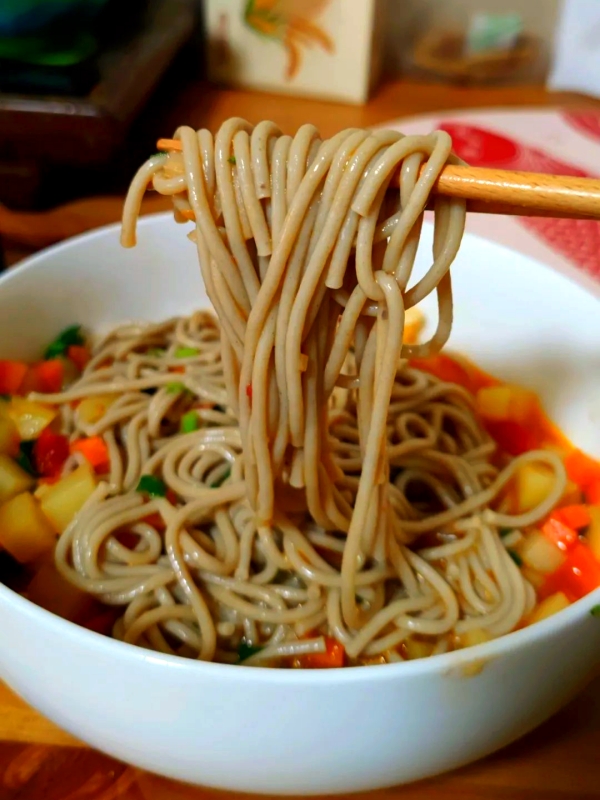
Youmian
Shaanxi stretches over 800 km north to south, and the dishes change with the climate. Hanzhong, in the warm, wet south near the Sichuan border, grows rice and leans toward Sichuan-leaning spice; hot rice noodles, walnut bread, and braised vegetable plates show up here. Yan'an, on the cool, dry loess plateau in the north, sits closer to Shanxi and Inner Mongolia in flavor — oats, millet, and lamb dominate.
Dishes to look for across the two regions:
- Hot rice noodles (热米皮, rè mǐ pí): rice-flour sheets, warm, slicked with chili oil — the Hanzhong version of liang pi.
- Walnut bread (核桃馍): round flatbread stuffed with crushed walnuts, slightly sweet, common in Hanzhong bakeries.
- Youmian (莜面): oat noodles rolled and steamed, served cold with vinegar or in hot broth — a Yan'an staple.
- Lamb skewers (羊肉串, yángròu chuàn): cumin-and-chili grilled mutton, sold at night markets across northern Shaanxi.
- Donkey-meat sandwich (驴肉夹馍, lǘròu jiá mó): the northern cousin of rou jia mo, particularly associated with Yan'an and parts of Shanxi.
- Millet cakes (黄米馍): steamed or fried millet-and-date cakes, slightly sweet, eaten as snacks or with tea.
Where to Eat in Xi'an's Muslim Quarter
Muslim Quarter Essentials
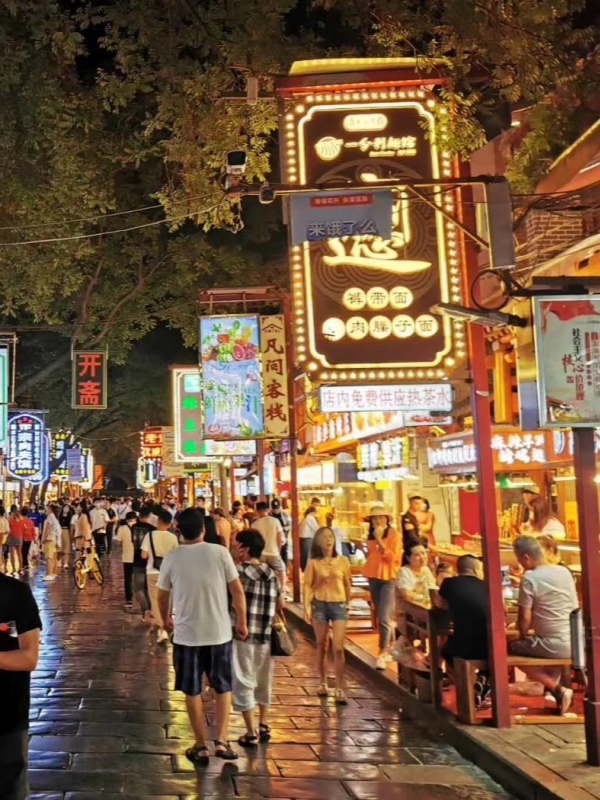
Xi'an Muslim Quarter Night Market
Beiyuanmen Street runs just south of the Drum Tower in central Xi'an, and it is the busiest food street in the province. The vendors are predominantly Hui Muslim, so the default proteins are beef and mutton, and most stalls display the green halal sign or the characters 清真 (qīngzhēn). Prices run about $0.50–$3 (¥5–20) per item, and the street operates roughly 10:00 to 22:00, peaking between 17:00 and 21:00.
Practical notes for a first visit:
- Eat the lamb or beef rou jia mo: this is the version sold inside the quarter — pork stalls sit outside.
- Try yangrou chuanr (lamb skewers): about $1–$2 (¥5–15) each, dusted with cumin and chili.
- Drink pomegranate juice: freshly squeezed at street stalls, about $1.50–$2.50 (¥10–18) per cup.
- Pair with Drum Tower and Bell Tower: the quarter sits a short walk from both, easy to combine in one evening.
Beyond the Tourist Trail
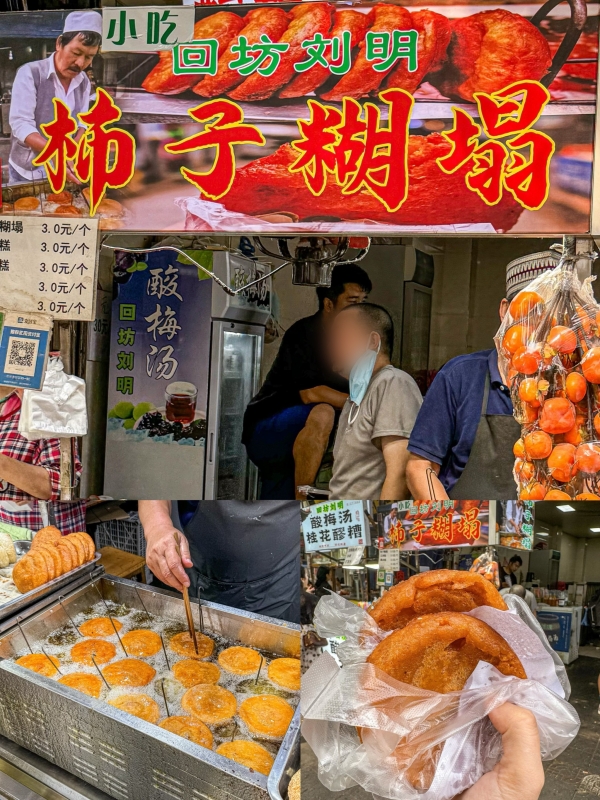
Sajinqiao Morning Market
The street-facing stalls on Beiyuanmen are only the front layer of Xi'an's food scene. For a quieter meal, four alternatives stand out.
- Sajinqiao morning market: the place for breakfast paomo and steaming flatbreads, before the day-trip crowds arrive.
- Defachang and Tongshengxiang: the two better-known paomo chains, with sit-down rooms and consistent broth.
- Dacha Yuan area and the university district: cheaper, less-touristy noodle shops frequented by locals.
- Back-street paomo rooms: sit-down Muslim Quarter restaurants a lane or two off Beiyuanmen, with shorter queues and the same menu.
🏛️ Beyond the Dining Table: While tasting these iconic wheat-belt flavors is essential, the city’s ancient streets also hold millennia of history, from the Terracotta Warriors to the giant city walls. Plan your full itinerary with our guide to the best Things to Do in Xi'an.
Frequently Asked Questions
Q: What makes Shaanxi food different from Sichuan or northern Chinese cuisines?
Three differences stand out. Shaanxi sits in China's wheat belt, so noodles and flatbreads replace rice. The signature sourness comes from Baoning black vinegar, not the sugar-sweet balance of eastern cuisines or the heavy chili burn of Sichuan. A long Hui Muslim presence along the Silk Road added cumin, Sichuan pepper, and lamb to everyday cooking, especially inside the Muslim Quarter.
Q: How much does street food cost in Xi'an?
Street items run about $0.50–$3 (¥5–20) each. Typical prices: rou jia mo $1.50–$2.50 (¥10–18), liang pi $1.50–$3 (¥10–20), biang biang mian $2.50–$4 (¥18–28), lamb skewers $1–$2 (¥5–15) each, and yang rou pao mo $4–$7 (¥30–50) per bowl. A full dinner with drink usually lands between $7–$15 (¥50–100).
Q: Is Xi'an Muslim Quarter food halal?
Yes. Beiyuanmen Muslim Quarter is dominated by Hui Muslim vendors, and mutton and beef are the default proteins — pork rou jia mo exists but is concentrated outside the quarter. Look for the green halal sign or the characters 清真 (qīngzhēn) displayed on stalls and restaurants. Cross-contamination is rare but possible on shared grills, so strict observers should ask.
Q: What is the most famous Shaanxi dish?
Rou jia mo — the Chinese hamburger — is the most internationally recognized and has spread as street food across China. Yang rou pao mo is equally famous domestically and is the dish most closely tied to Xi'an identity. Biang biang mian is the visual icon and the most photographed, thanks to its extra-wide noodles and the famously complex character biáng.
Q: Are there vegetarian options in Shaanxi cuisine?
Yes. Vegetarian-friendly options include biang biang mian with a tomato-egg topping, vegetarian liang pi, qishan saozi mian ordered without the minced pork, jiaotuan, vegetable dumplings, and persimmon cakes. The Muslim Quarter skews heavily meat-based, so travelers avoiding all meat should look for dedicated vegetable noodle shops in the university district or the south of the city.
Q: When is the best time to visit Xi'an for food?
Year-round works, since the Muslim Quarter and night markets run daily. April–May and September–October offer the most comfortable weather for walking between stalls. Winter (December–February) is the right season for hot paomo and lamb-heavy stews. Summer evenings are lively but hot, often above 30°C, so plan around early dinners and shaded back-street rooms.
Q: Where can I find Shaanxi food outside China?
Diaspora Xi'an and Shaanxi restaurants exist in Flushing (NYC), the San Gabriel Valley (LA), parts of the Bay Area, Toronto, Melbourne, Singapore, London, and Austin. Search for "Xi'an noodles", "Shaanxi noodles", or "rou jia mo" to find them. Rou jia mo and biang biang mian are the two dishes most often carried abroad; liang pi appears on some menus too.
Q: What food souvenirs should I bring from Shaanxi?
Good options include small bottles of Baoning black vinegar, dried Qishan saozi noodles or xiaguan pressed noodles (rehydrate at home), persimmon cakes (shibing) from northern Shaanxi, and dried goji berries from the Yan'an area. Frozen paomo kits exist but require a cooler. Pack liquids and glass bottles in checked luggage and declare them at customs if required.
Q: Is Jinli Street in Xi'an or Chengdu?
Jinli (锦里) is a famous food street in Chengdu, Sichuan Province — not Xi'an. Travelers sometimes confuse the two cities because both are major western-Chinese food destinations. For Xi'an street food, head to the Beiyuanmen Muslim Quarter or the Sajinqiao morning market. For Chengdu street food, Jinli and the surrounding Kuanzhai Alley area are the main stops.
Q: Where can I find Shaanxi food recipes to make at home?
Rou jia mo, biang biang mian, and liang pi are the three most commonly published Shaanxi recipes in English. Two non-obvious ingredients carry the flavor: Baoning black vinegar and Shaanxi-style chili oil made with crushed dried chilies and sesame. Substitute Chinkiang vinegar plus rice vinegar if Baoning is unavailable. For biang biang, pappardelle is an acceptable substitute for the wide noodles.