Exotic Chinese Cuisine
Most foreign visitors first meet Chinese food through the Cantonese-rooted canon that anchors overseas menus — kung pao chicken, fried rice, sweet-and-sour pork. Exotic Chinese cuisine covers everything that lives beyond that canon: at least eight regional traditions, dozens of unfamiliar ingredients, and centuries-old street food still served from carts, market stalls, and small restaurants. Sichuan peppercorn numbs tongues in Chengdu, Yunnan foragers chase wild matsutake after the July rains, and Uyghur chefs in Urumqi slow-grill cumin-rubbed lamb over charcoal. This guide maps the regional cuisines most foreigners under-sample, the unusual ingredients worth trying at least once, and the night markets and overseas restaurants where these flavors remain findable today.
Quick Facts
What Counts as Exotic in Chinese Cuisine
Exotic Cuisine in China
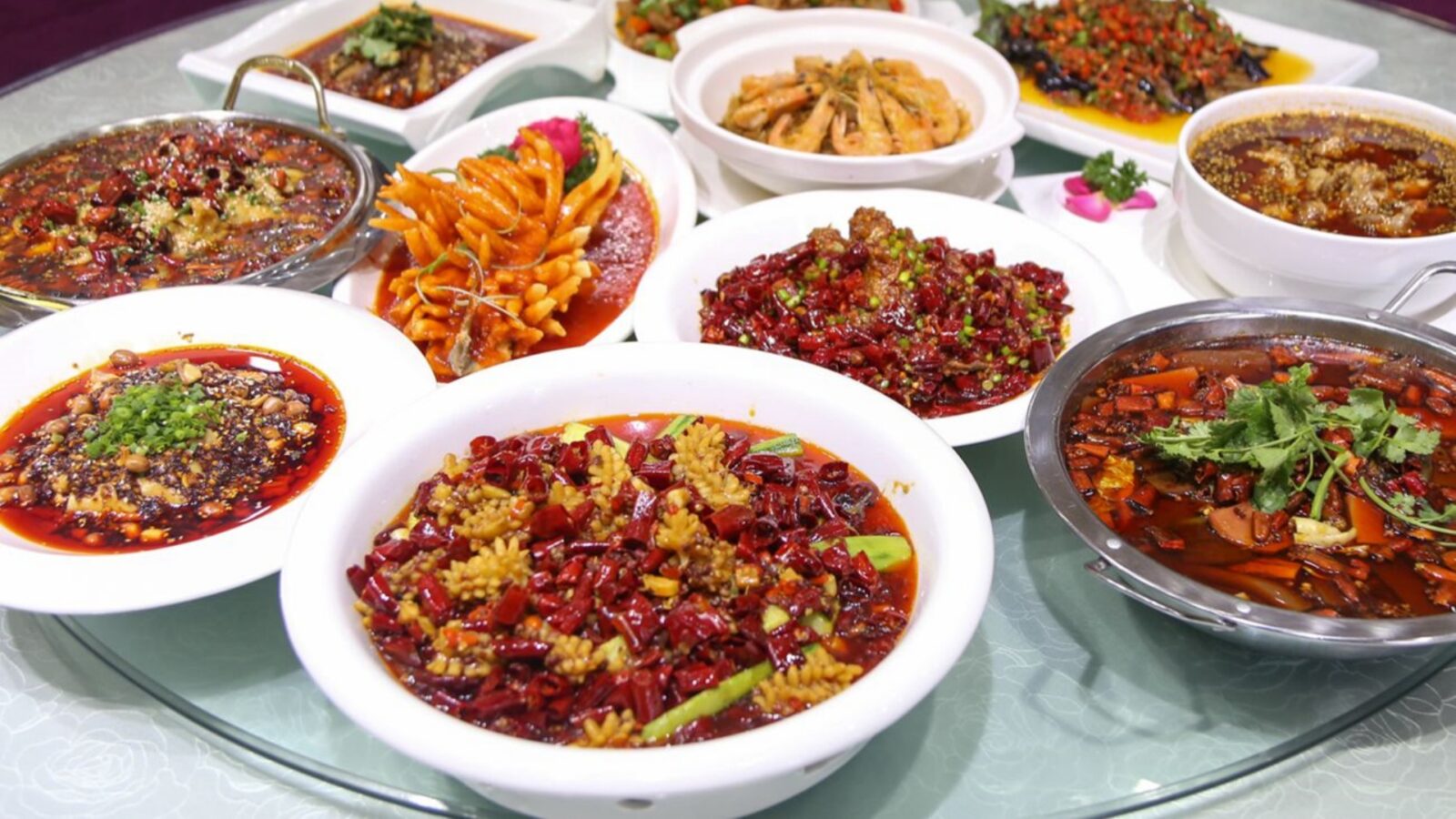
Exotic Chinese cuisine describes dishes, ingredients, or preparations that fall outside the Cantonese-rooted American-Chinese canon most foreigners already know. The label works on three axes: regional depth (a dish tied to one province), ingredient unfamiliarity (century egg, fish maw, sea cucumber), and preparation method (mala numbing heat, weeks of fermentation, whole-animal serving). From a Chinese-domestic view, snake soup or chicken feet are ordinary meals, not novelties. So "exotic" here is a foreign-visitor lens, applied to food that locals eat every week.
Four vectors drive that lens outward. Diaspora restaurants introduce regional menus to cities outside mainland China. Regional specialists abroad — Szechuan, Yunnan, Dongbei — narrow the gap further. Food-tourism content and cookbook exposure normalize dishes that once seemed extreme. A foreign visitor today can try mapo tofu in London, fermented stinky tofu in Vancouver, or hand-pulled laghman noodles in Flushing.
Exotic Chinese cuisine rewards travelers who arrive curious rather than cautious, and who treat unfamiliar textures — slippery fish maw, ammonia-tinged stinky tofu, rubbery sea cucumber — as data points rather than dares. The sections ahead walk through regional cuisines, unusual ingredients, street food, and where to find these dishes abroad.
Regional Cuisines Off the Familiar Map
Sichuan and Hunan Spice Traditions
Doubanjiang
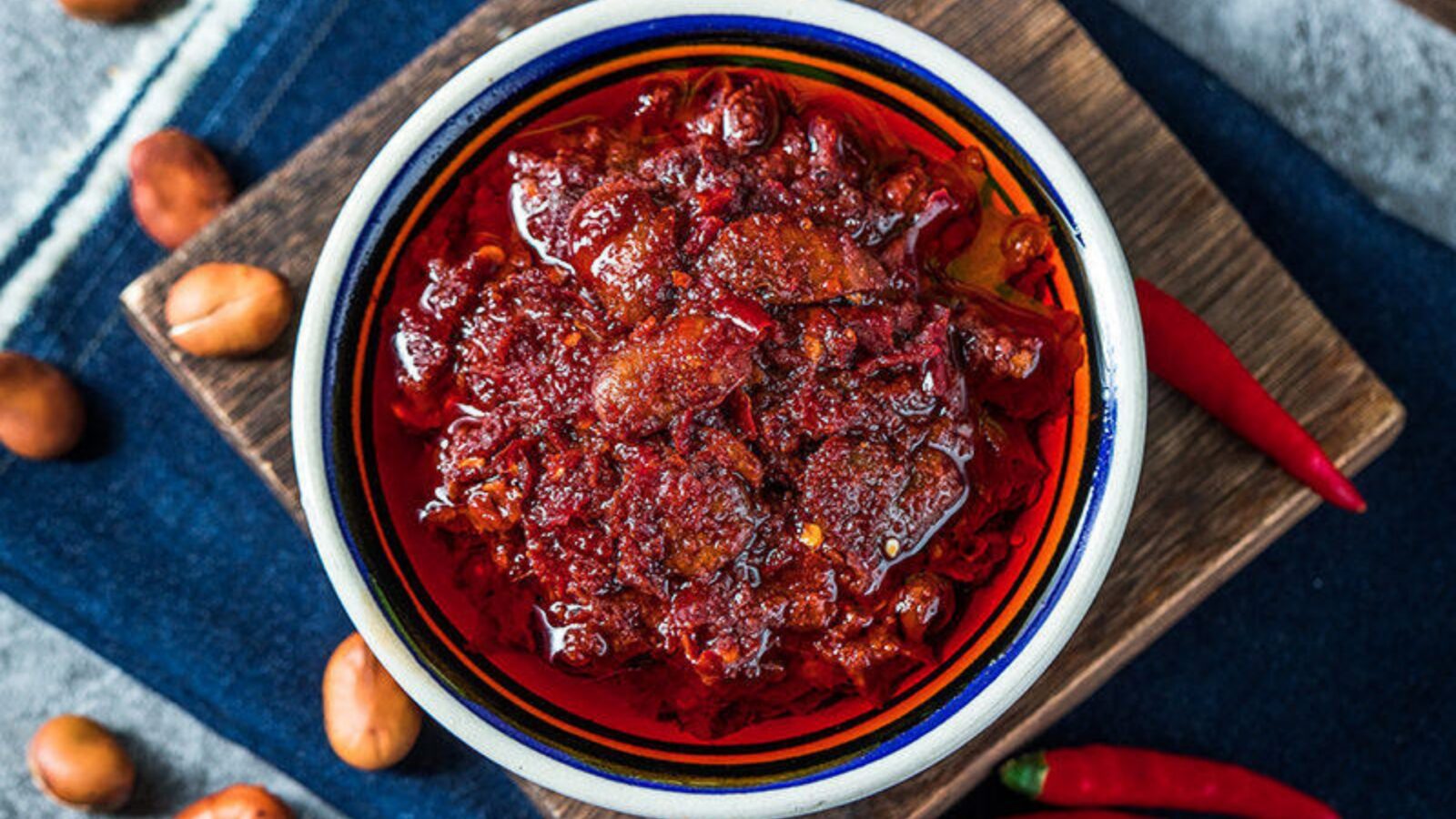
Sichuan cuisine leans on mala, the numbing-spicy sensation from huajiao (a Citrus-family plant, not a true pepper). Doubanjiang, fermented broad-bean paste from Pixian, anchors mapo tofu, twice-cooked pork, and shuizhu yu boiled fish. Hunan takes a sharper fresh-chili path: duojiao yutou (chopped chili fish head) is a Changsha classic, and Changsha-style stinky tofu sets the hometown benchmark for the dish.
🌶️ Deep Dive into the Numbing Heat: To fully explore the history, regional variations, and master techniques behind the tongue-numbing flavors mentioned above, check out our ultimate guide to Sichuan Cuisine.
Yunnan Wild Mushrooms and Dai Flavors
Wild Mushrooms
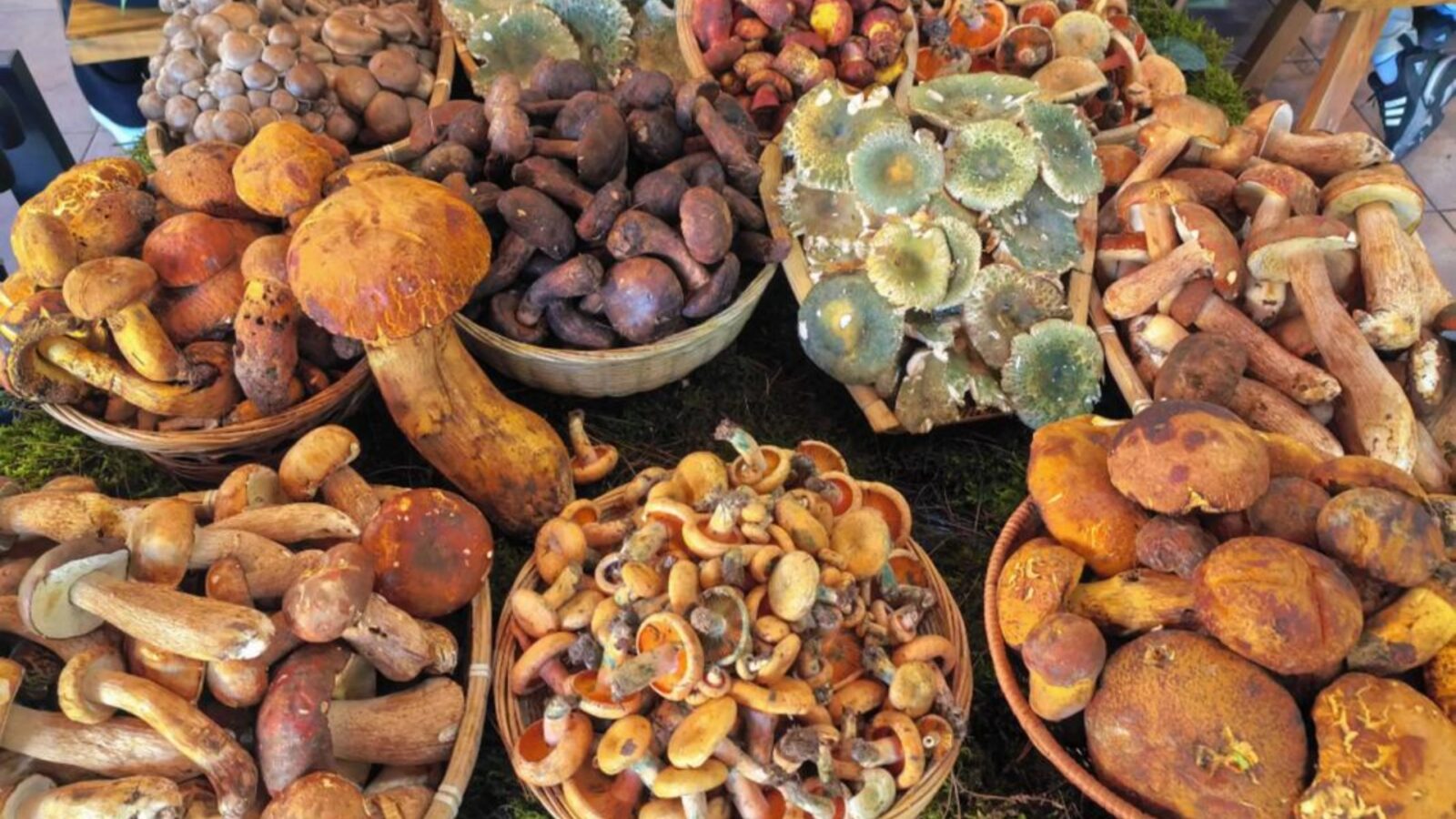
Yunnan is China's mushroom capital. Summer matsutake, boletus, and termitomyces (harvested from termite mounds) reach menus from July through September. Dai cuisine in the tropical south adds pineapple rice, grilled river fish wrapped in banana leaves, and lemongrass chicken. The signature guoqiao mixian (crossing-the-bridge noodles) arrives with broth scalding-hot enough to cook raw toppings at the table. Rushan is a dairy-based cheese fan dusted with sugar.
🍄 A Complete Gastronomic Journey: To discover more about the unique minority food cultures, cross-border influences, and essential dishes that define this southwestern culinary paradise, explore our full guide to Yunnan Cuisine.
Xinjiang and the Silk Road Pantry
Cumin-rubbed Skewers
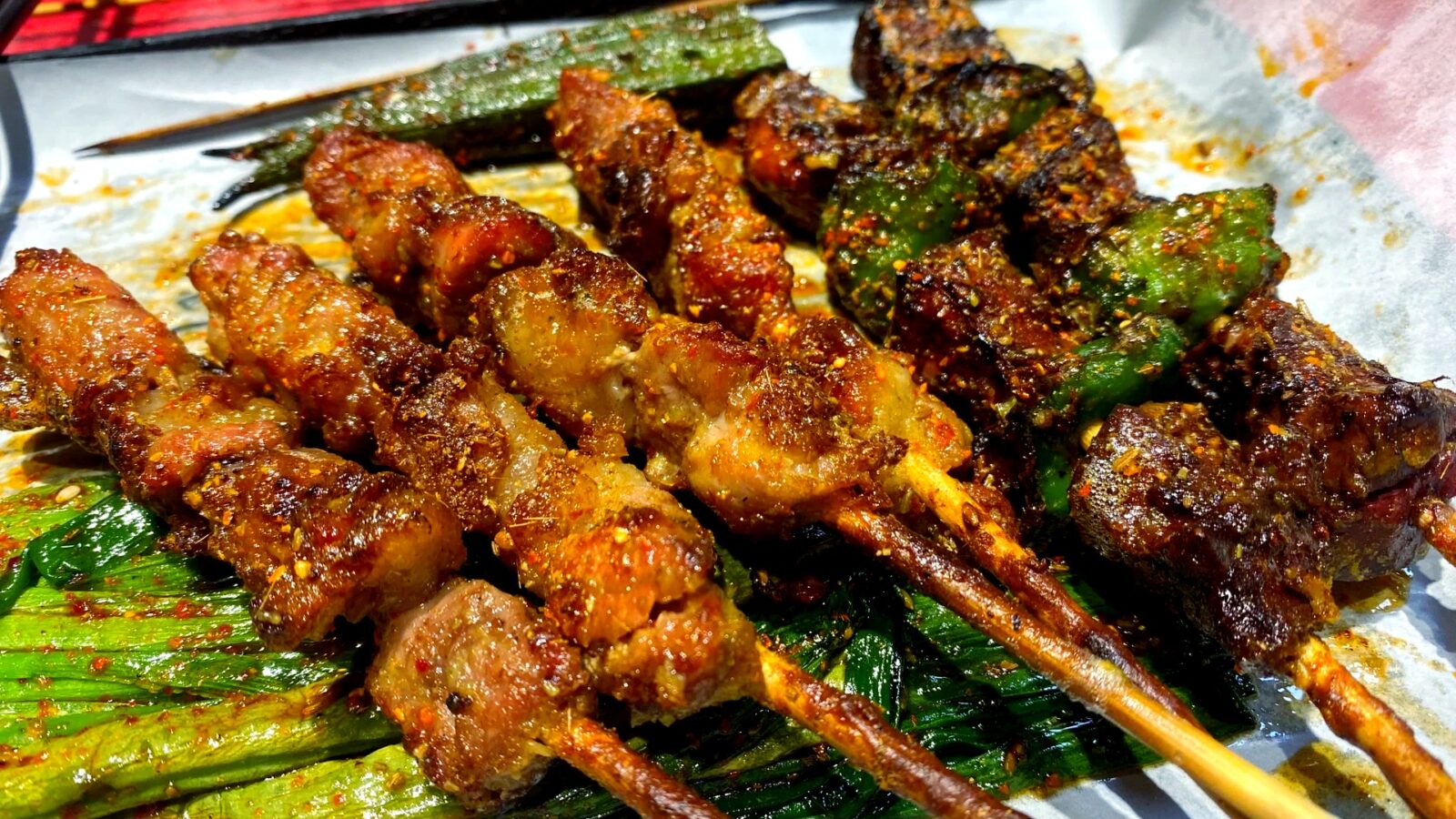
Xinjiang's cuisine reflects its Silk Road position. Uyghur chefs built a lamb-forward kitchen: chuànr (cumin-rubbed skewers), dapanji (big plate chicken served on a metal platter with wide belt noodles), laghman (hand-pulled noodles in tomato-lamb broth), and polo (rice pilaf with carrots and raisins). Samsa, baked lamb pastries, and sesame-sprinkled naan complete the table. Cumin, star anise, and Sichuan peppercorn all moved along this corridor.
🍢 A Culinary Caravan: To take a closer look at the rich culinary traditions, vibrant street markets, and must-try specialties born from this historic trading corridor, check out our ultimate guide to Xinjiang Food.
Wild Southern Chinese Dishes Worth a Try
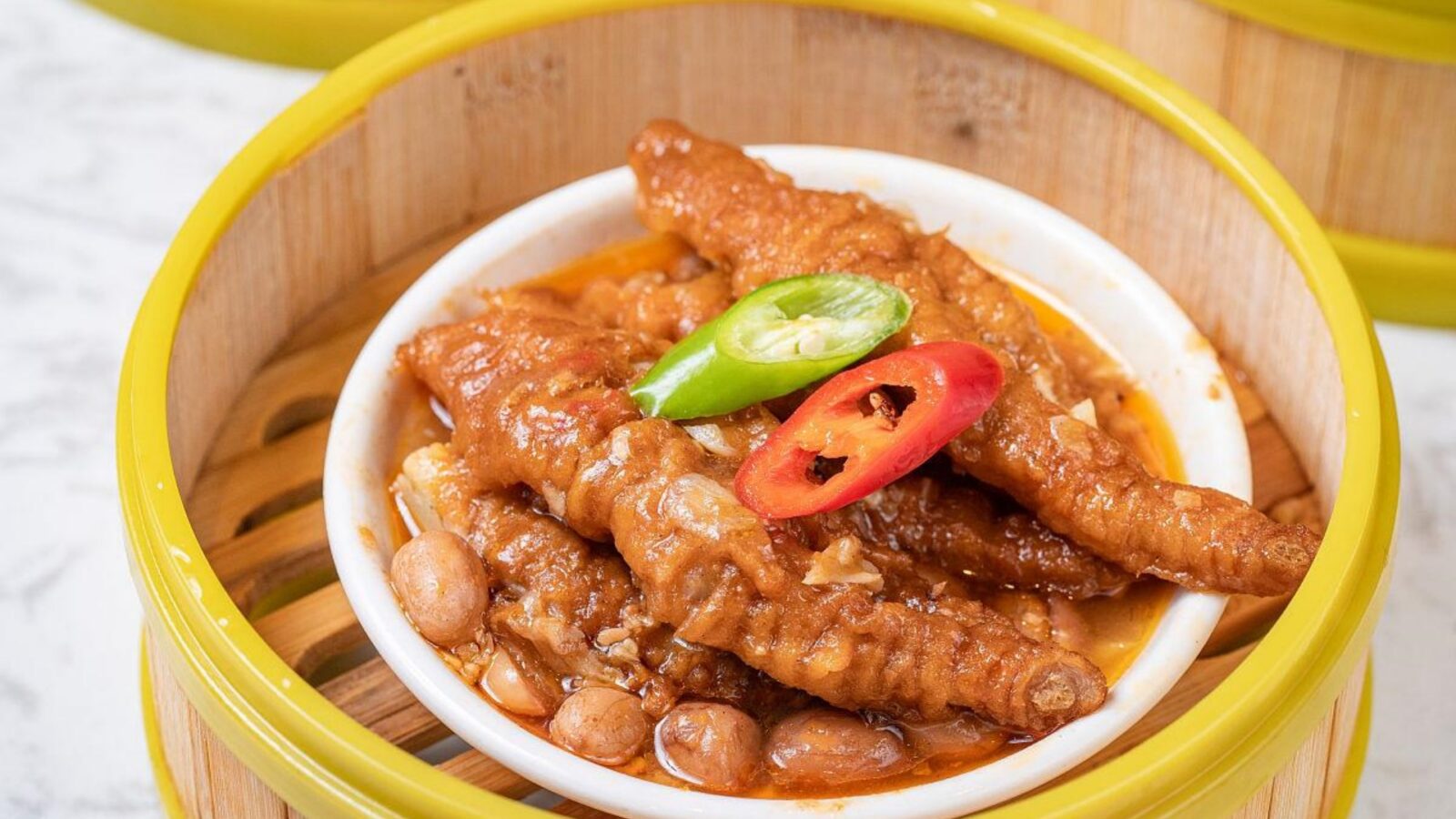
Cantonese Phoenix Claws
The Cantonese south's wild edge is often texture-led rather than ingredient-led. Snake soup (she tang) — a Cantonese autumn tradition — survives in Hong Kong and parts of Shenzhen. Phoenix claws (chicken feet) open dim sum service: deep-fried, then braised in black bean sauce until the skin collapses. Jellyfish salad arrives cold, dressed with sesame oil, soy, and cucumber. These dishes travel well into overseas dim sum because preparation, not rarity, drives the appeal.
Unusual Ingredients Worth Trying Once
Exotic Chinese cuisine often lives in its ingredients as much as its dishes. The items below sit in three broad families: aged and fermented classics, marine and banquet delicacies, and whole-beast or offal cuts.
Aged and Fermented Classics
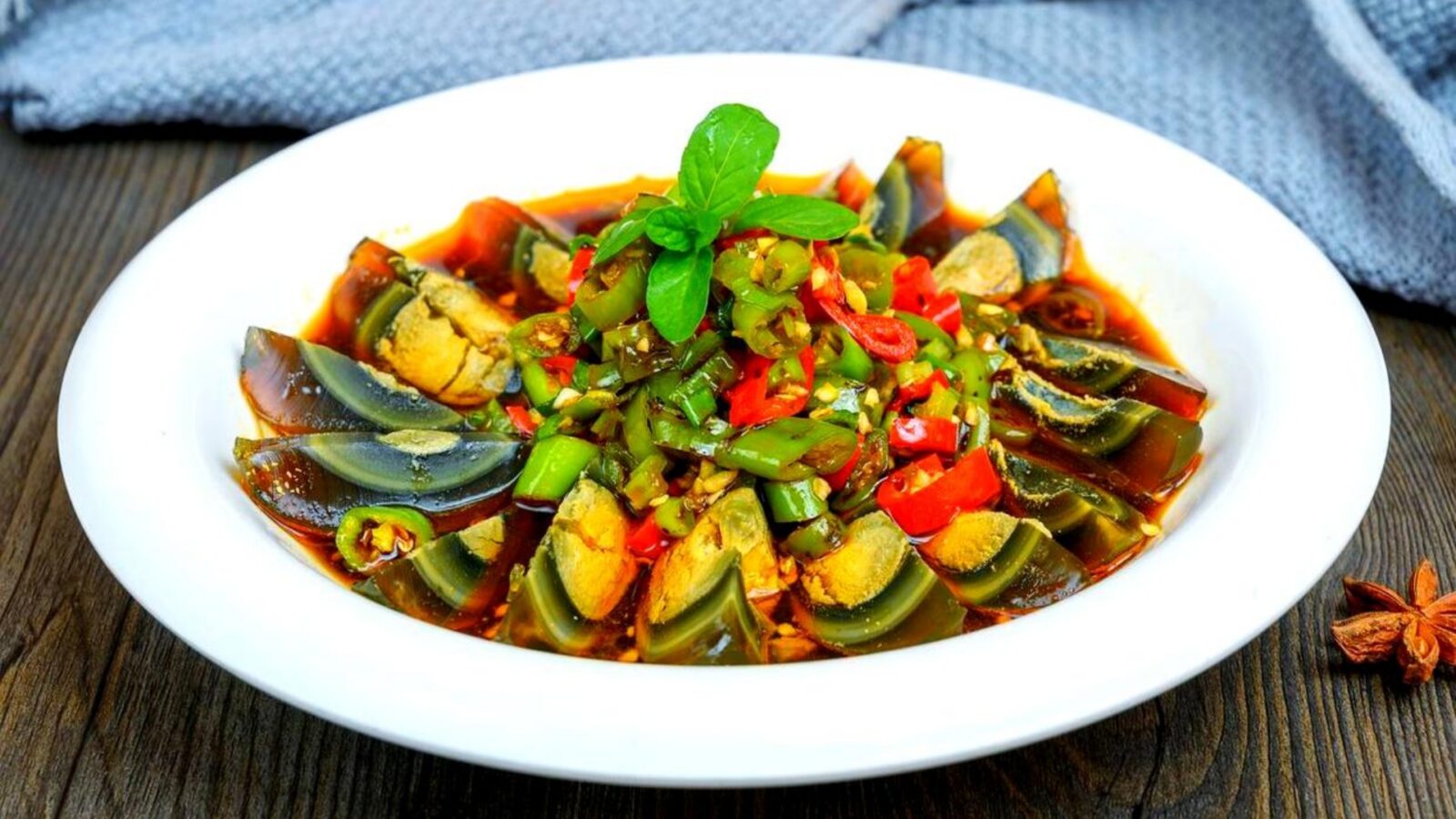
Century Egg
Fermentation drives much of what foreigners call exotic. Three named examples carry most of the weight.
- Century egg (pidan): duck or quail egg cured in alkaline clay for weeks; dark yolk and jelly-clear white are chemistry, not rot. Taste is mild and savory with faint sulfur.
- Stinky tofu: fermented in brine with amaranth greens or fermented milk. Smell is ammonia-class, inside soft beneath a crisp fried crust.
- Doubanjiang: fermented broad-bean paste from Pixian. Anchors mapo tofu, twice-cooked pork, and many Sichuan stir-fries.
Sea Cucumber, Fish Maw, Bird's Nest
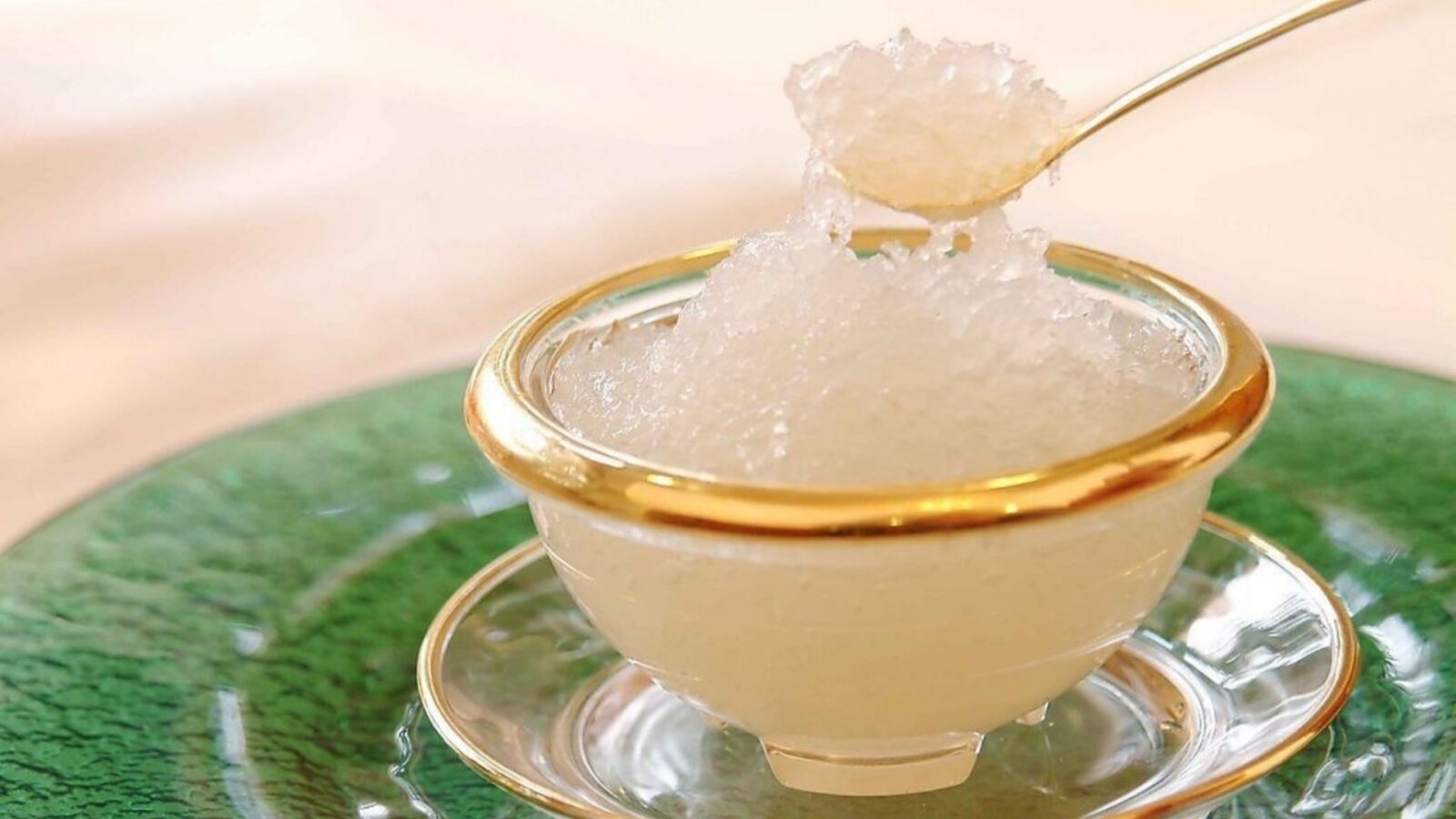
Bird's Nest
Banquet menus prize three marine or rare-ingredient items that often surprise first-timers.
- Sea cucumber (haishen): dried sea creature, rehydrated and braised in oyster sauce. Texture is rubbery, flavor neutral.
- Fish maw (yubao): dried swim bladder of large fish, reconstituted and braised for gelatinous mouthfeel. A banquet staple.
- Bird's nest (yanwo): swiftlet saliva nests, double-boiled into a clear sweet soup. About $28–55 (¥200–400) per bowl — among the most expensive Chinese ingredients.
Whole-Beast Dishes and Offal
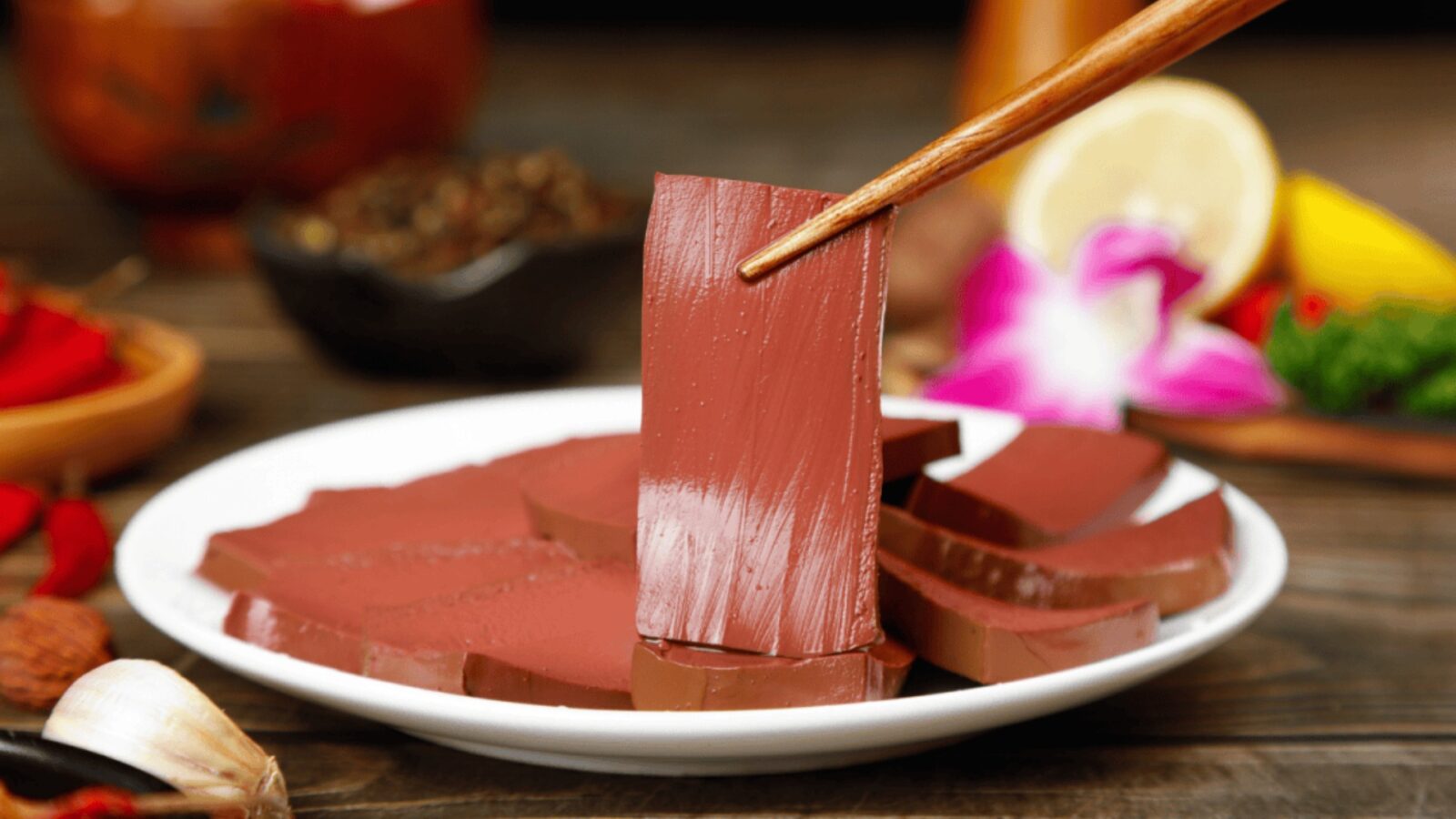
Duck Blood
Whole-beast eating in China is more texture-driven than headline-driven. Five common items appear on hot pot and dim sum menus.
- Phoenix claws (chicken feet): deep-fried, then braised in black bean sauce. A dim sum standard.
- Duck blood: appears in Chongqing-style xueya hot pot and duck-blood chili soup.
- Hot pot offal: pork blood, tripe, intestine, and lung are standard mala-broth additions.
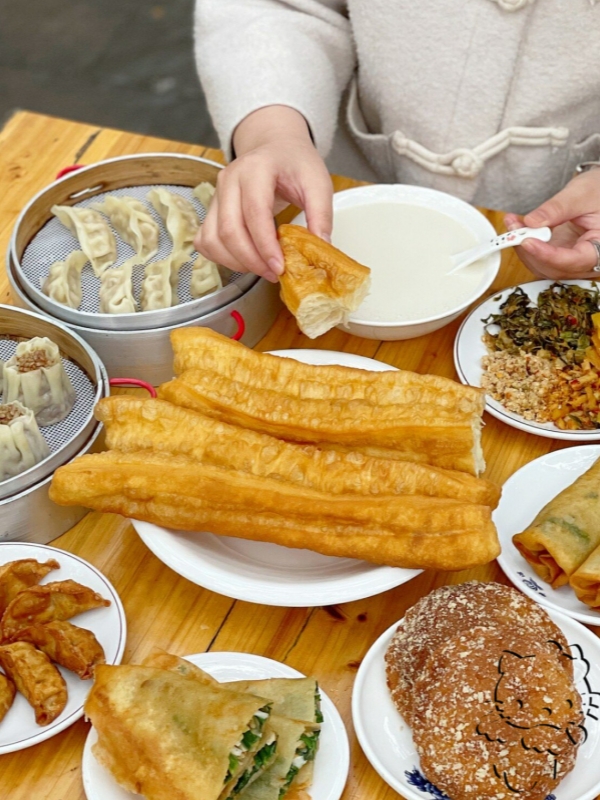
- Pork offal congee (zhou): rice porridge with pork kidney or liver, a breakfast-stall staple.
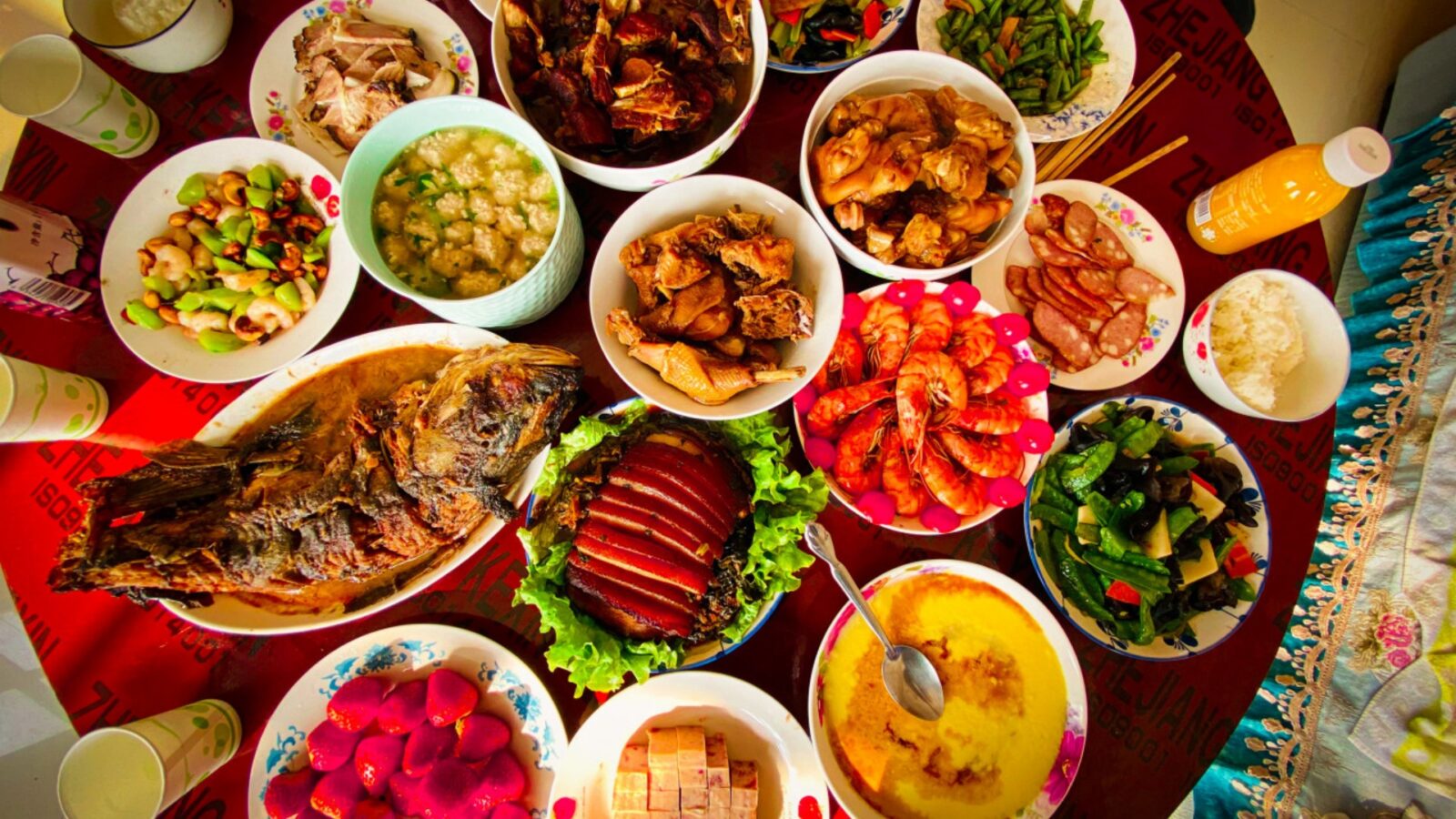
- Whole steamed fish: served head-and-tail intact as a banquet norm — often the surprise for first-time visitors.
Exotic Street Foods to Hunt Down
Night markets across China compress entire regional cuisines into single streets. The most reliable clusters sit in Beijing, Chengdu, Xi'an, and Kunming — each with its own signature snacks.
Night-Market Staples and Silk Road Snacks
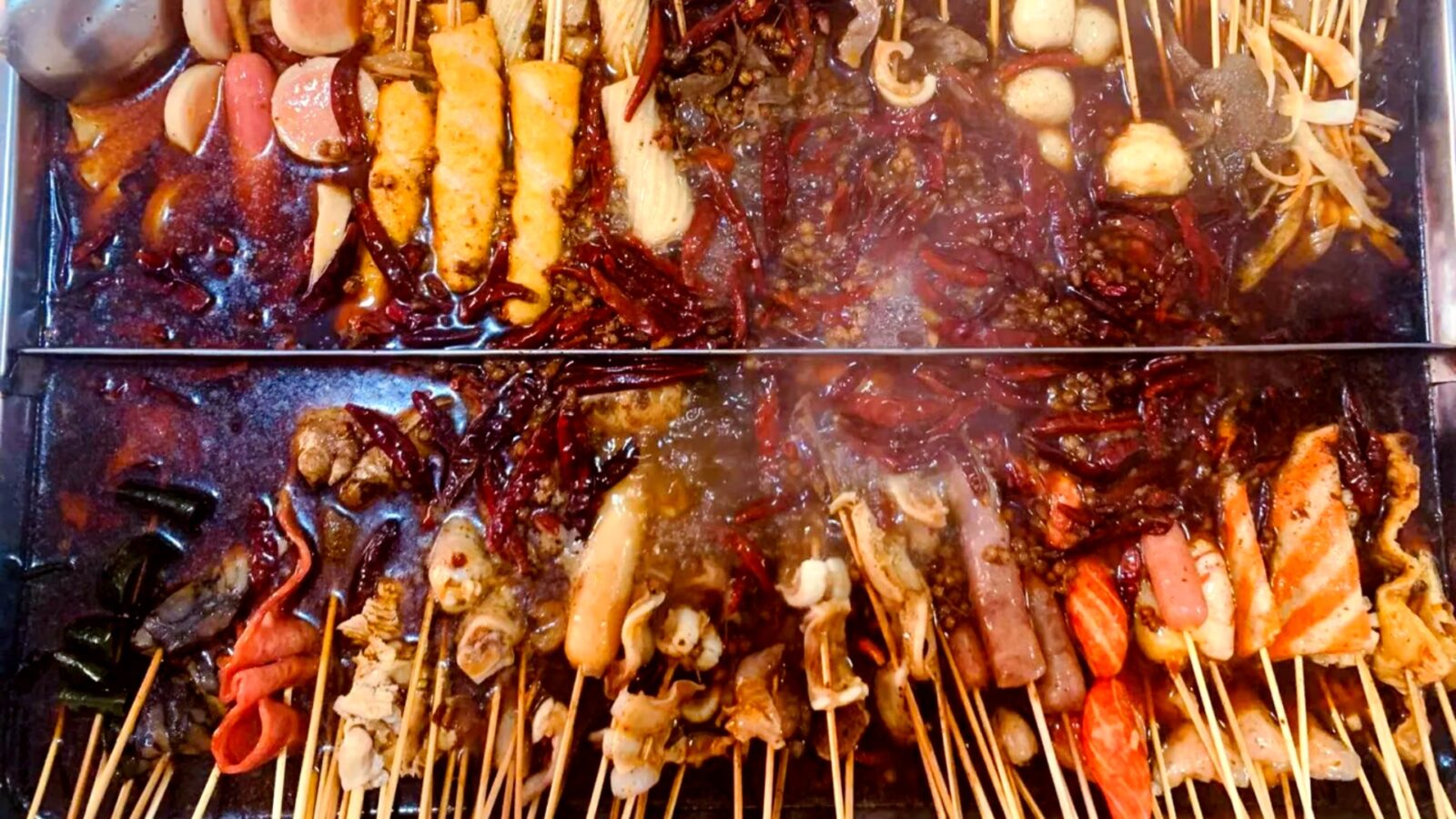
Chuan'chuan'xiang
Jianbing, roujiamo, and chuan'chuan'xiang cover most of what a foreign visitor will eat on their feet.
- Jianbing: mung-bean crepe brushed with egg, scallion, cilantro, fermented bean sauce, and chili, wrapped around a crispy wonton cracker.
- Roujiamo: Shaanxi "Chinese hamburger" of slow-braised pork or beef in flatbread, about $2–5 (¥15–35) per sandwich.
- Chuan'chuan'xiang: Sichuan skewer hot pot, bamboo sticks of vegetables or meat simmering in mala broth, typically ¥1–3 (~$0.15–0.45) per skewer.
Snacks That Push the Limit
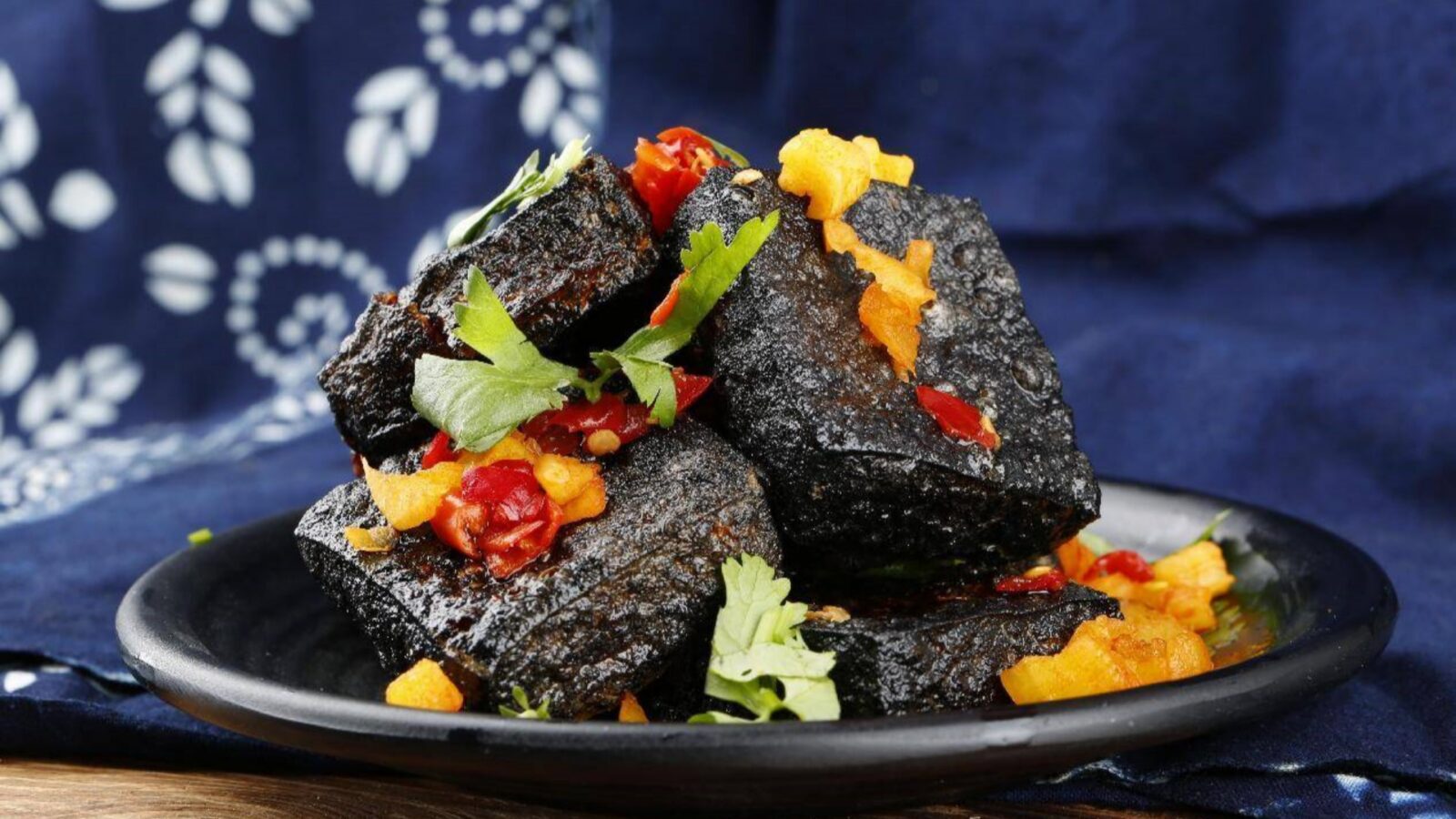
Stinky Tofu
Some snacks test boundaries more than palates. Stinky tofu arrives deep-fried black, topped with chili sauce and pickled cabbage. Balut — an incubated duck embryo — shows up in southern Chinese markets, more common in Southeast Asia. Tanghulu (hawthorn or strawberry on a sugar-hardened skewer) gives a sweet counterpoint. Dragon's beard candy wraps peanut-sesame filling in long hand-pulled sugar threads. Wangfujing in Beijing sells scorpion, starfish, and silkworm pupae — deep-fried novelty items sold mostly as photo food for tourists.
Xi'an Muslim Market Today
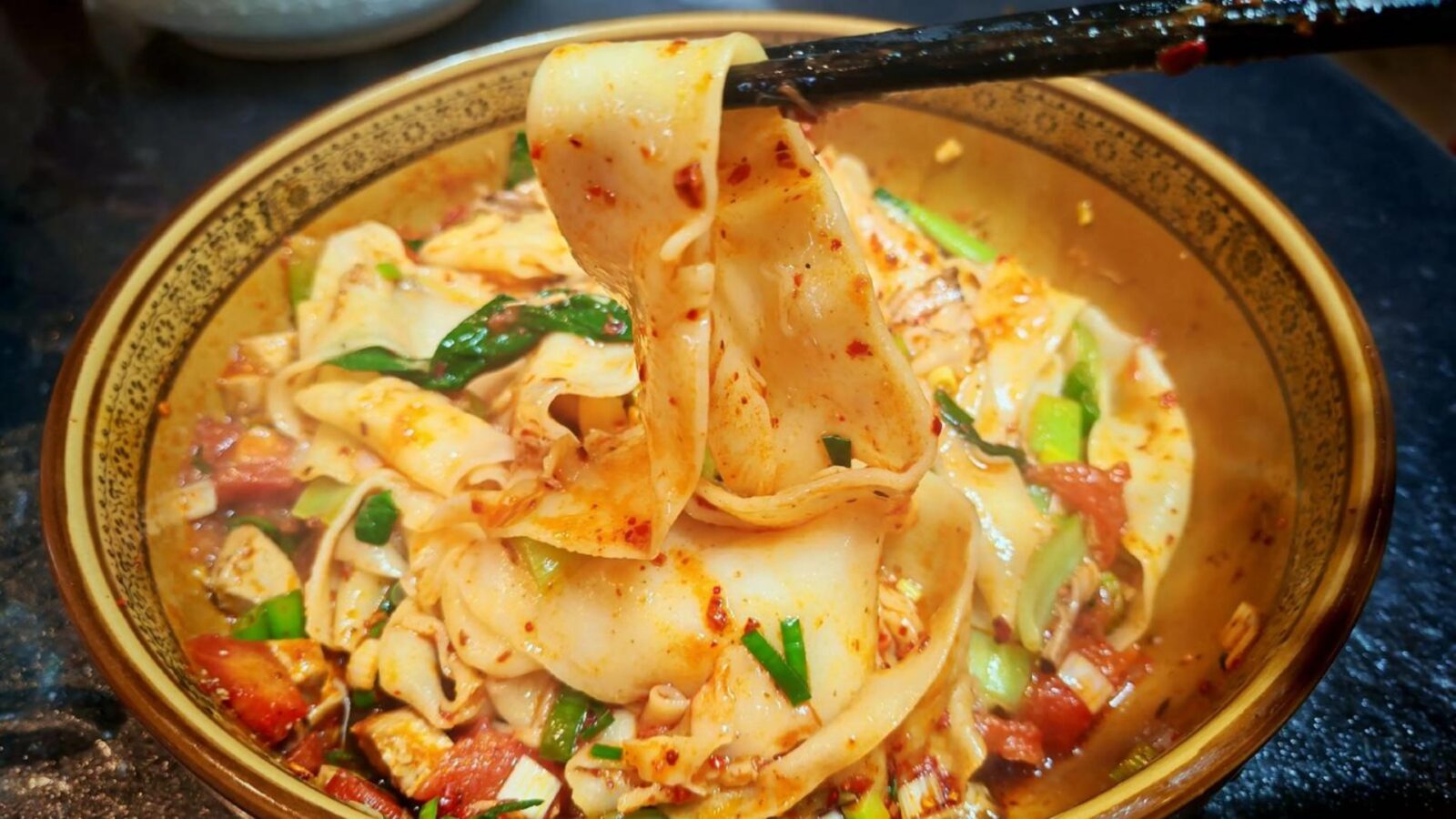
Biangbiang Noodles
Xi'an's Muslim Quarter (Huimin Jie) sits inside the old walled city and has functioned as a Silk Road food corridor for centuries, still active as a tourist destination. Signature dishes include biangbiang noodles (long belt noodles with chili-oil vinegar), liangpi (cold rice noodles), persimmon cakes, roujiamo, and lamb skewers. Hui residents run most of the market's restaurants. The market stays open into the evening, and cash and mobile pay both work at most stalls.
Finding Exotic Chinese Cuisine Outside China
Six destinations concentrate regional Chinese cooking outside mainland China. The table compares their specialties and per-person price band; the sections that follow add context.
North American Chinatowns Beyond Cantonese
Flushing in Queens and the San Gabriel Valley east of Los Angeles anchor non-Cantonese regional Chinese dining in the United States. Flushing clusters Szechuan, Xinjiang, and Dongbei restaurants within a few blocks. The San Gabriel Valley mixes Szechuan, hot pot, and Cantonese dim sum houses. Richmond, BC — just south of Vancouver — adds another strong hub for Szechuan and mala hot pot. Mid-range specialist meals run $18–35 per person.
Victoria and Vancouver's Szechuan Scene
Victoria has dedicated Szechuan specialists around Chinatown and Government Street — mapo tofu, gan guo (dry-pot), dan dan noodles, Chongqing-style hot pot, and shuizhu yu (boiled fish) lead the menu. Mid-range Szechuan runs about $20–35 CAD (~$15–26 USD) per person, with hot pot for one at $25–40 CAD (~$18–30 USD). Vancouver's Kingsway corridor and Richmond extend the map further, adding Yunnan crossing-the-bridge noodles, Dongbei stews, and Xinjiang lamb skewers. Most menus include English and picture options.
London, Paris, and Europe's Regional Specialists
London's Chinatown has shifted regional over the past decade, with Szechuan specialists clustered around Gerrard Street and Gerrard Place. Paris's Belleville neighborhood and the 13th arrondissement carry long-standing regional options, including hot pot and northeastern (Dongbei) cooking. Mid-range runs about £15–30 (~$19–38) in London and €15–25 (~$16–27) in Paris. Berlin and Amsterdam have smaller but growing Szechuan scenes worth checking.
Frequently Asked Questions
Q: What qualifies as "exotic" in Chinese cuisine?
Exotic Chinese cuisine covers dishes, ingredients, and preparations that sit outside the Cantonese-rooted American-Chinese canon foreigners usually know. The label works on three axes: regional depth (Sichuan, Yunnan, Xinjiang, Hunan), unusual ingredients (century egg, sea cucumber, fish maw, bird's nest), and preparation methods such as mala numbing heat, fermentation, and whole-animal serving. Inside China, these dishes are everyday meals.
Q: Which Chinese region has the most unusual food?
Yunnan and Xinjiang earn the most "unusual" labels from foreign visitors — Yunnan's wild mushrooms, Dai tropical flavors, and crossing-the-bridge noodles, plus Xinjiang's lamb-forward Uyghur dishes and hand-pulled laghman. Sichuan draws attention for spice rather than ingredient rarity. Southern China carries snake soup and texture-led dim sum, often surprising first-timers more than ingredient lists would suggest.
Q: Is exotic Chinese food safe for first-timers?
Yes. Century egg, stinky tofu, sea cucumber, fish maw, and bird's nest are widely consumed in China and use standard kitchen preparation. Street food stays safe at busy stalls with high turnover. Novelty skewers like scorpion and starfish are deep-fried for tourists. Visitors with shellfish or histamine sensitivities should ask about broth ingredients, since dried shrimp and fermented bean pastes appear in many dim sum and hot pot bases.
Q: What is the strangest Chinese dish tourists actually try?
From foreign-visitor accounts, century egg, stinky tofu, chicken feet, sea cucumber, and bird's nest soup are the most-tried "exotic" items abroad. In mainland China, duck-blood hot pot, Changsha-style stinky tofu from a street vendor, and biangbiang noodles are common first-bites. Novelty skewers like scorpion and starfish get photographed more than eaten as serious food.
Q: Where can I find Szechuan exotic Chinese cuisine in Victoria?
Victoria has dedicated Szechuan specialists around Chinatown and Government Street. Signature dishes include mapo tofu, gan guo dry-pot, dan dan noodles, Chongqing-style hot pot, and shuizhu yu boiled fish. Mid-range Szechuan runs about $20–35 CAD (~$15–26 USD) per person; hot pot for one runs $25–40 CAD (~$18–30 USD). Most menus include English and pictures.
Q: How spicy is real Sichuan food compared to Western Sichuan restaurants?
Western Szechuan restaurants typically tone down mala to suit foreign palates. In Sichuan province, mala is the baseline, and many tourist menus mark a "foreign-friendly" spice level with chili icons. Mapo tofu abroad usually arrives in milder sauce. A typical Chengdu dish carries noticeably more Sichuan peppercorn and chili oil than its North American restaurant equivalent.
Q: Do I need chopsticks for exotic Chinese dishes?
Chopsticks handle most Chinese dishes, but soups and rice porridges use ceramic spoons. For street food like jianbing or roujiamo, hands are normal. Many Szechuan and dim sum restaurants abroad supply forks on request. The only dishes that typically need both chopsticks and spoon are whole steamed fish — chopsticks lift the flesh, spoon catches the sauce.
Q: Is exotic Chinese food expensive compared to typical Chinese restaurants?
At mid-range restaurants in North America, regional Chinese meals run $18–35 per person, comparable to mid-range Cantonese restaurants. Banquet dishes using sea cucumber, fish maw, or bird's nest raise the bill — a bird's nest dessert runs $28–55 per bowl (¥200–400). Street food stays cheap at $2–8 per item. The same dishes run 30–50% cheaper in mainland China than abroad.