Food in Chaozhou
Chaozhou sits on the Han River in eastern Guangdong, paired with Shantou as the Teochew cultural heartland. It earned UNESCO Creative City of Gastronomy status in 2014, one of only a handful of Chinese cities on that list. The cooking is a branch of Cantonese cuisine, but quieter on the palate and heavier on the sea. This guide covers the defining tastes of Chaozhou food: the classic dishes like braised goose and oyster omelette, the street stalls crowded along Paifang Street, and how a non-Chinese traveler handles menus, payment, and a Gongfu tea service without the guesswork.
Quick Facts
What Defines Chaozhou Food
Chaozhou food is a branch of Cantonese cuisine and one of China's four culinary traditions. It sits on the Han River in eastern Guangdong, and Teochew emigrants carried the cooking across Southeast Asia and into Chinatowns worldwide. UNESCO notes the cuisine's emphasis on seasonality and technique.
The flavor rule is "eat the original flavor." Heavy chili is uncommon and thickeners are rare. Steaming, gentle braising, clear simmering, light stir-fry, and pouring hot oil over a finished dish are the main methods. Knife work shapes texture; ingredients are cut to exact shapes so cooking stays even, which shows up in the thin fish slices at every table.
Lightness, Freshness, and the Sea
Chaozhou Food
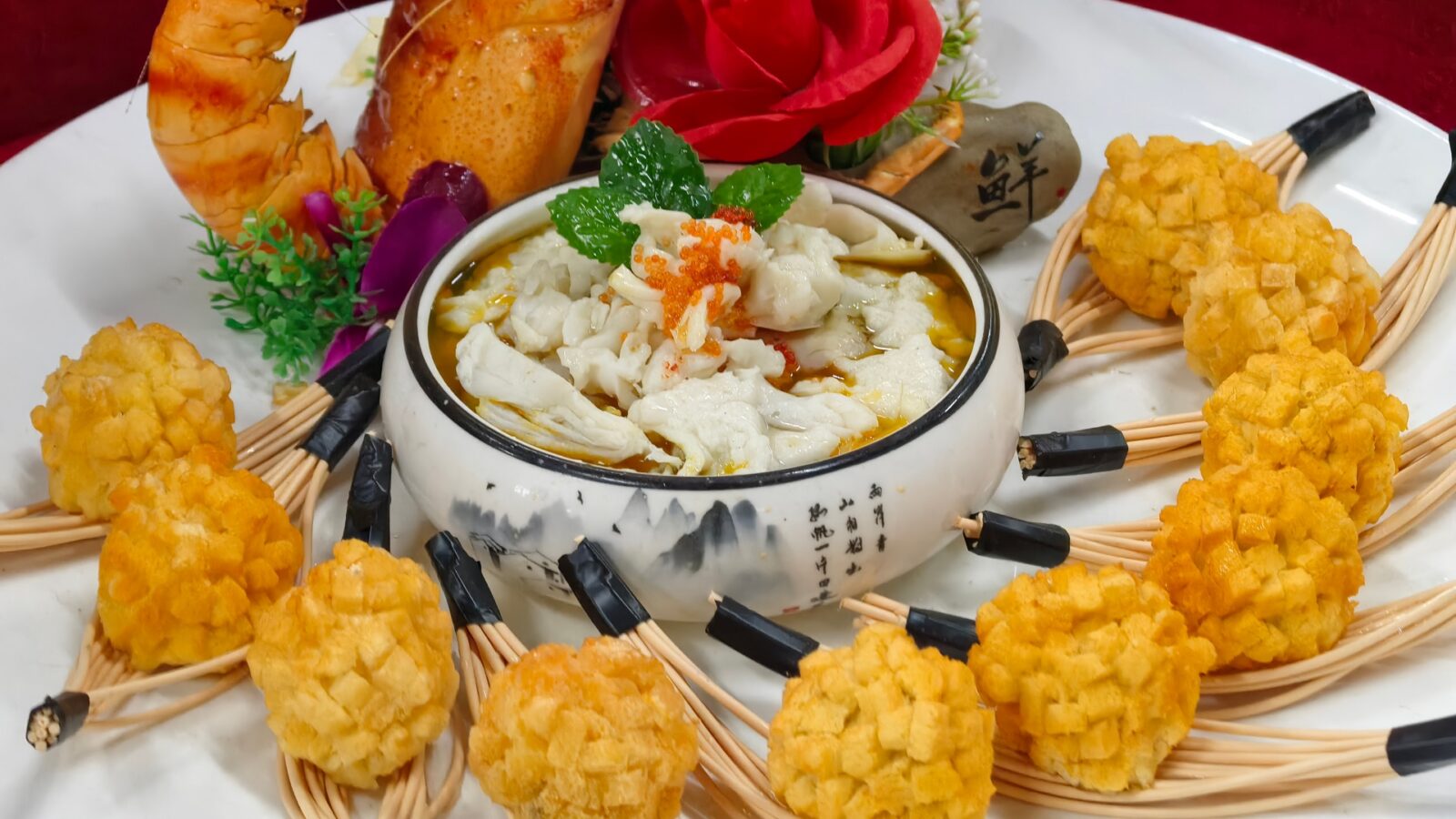
Seafood leads most menus: fish, prawns, oysters, shellfish, clams, eel, and seasonal river fish. Many restaurants keep live tanks near the entrance so diners can pick. Clear, slow-simmered soups anchor every meal alongside rice or congee.
Plates balance contrasts: hot against cold, soft against crisp, light against rich. Expect multiple small dishes rather than one centerpiece. The structure keeps every portion manageable.
Sauces, Dips, and the Plate Layout
Shacha Sauce
The sauce-on-the-side rule is firm. Diners season each bite themselves; condiments sit on the table, not cooked in. Core options appear at most meals:
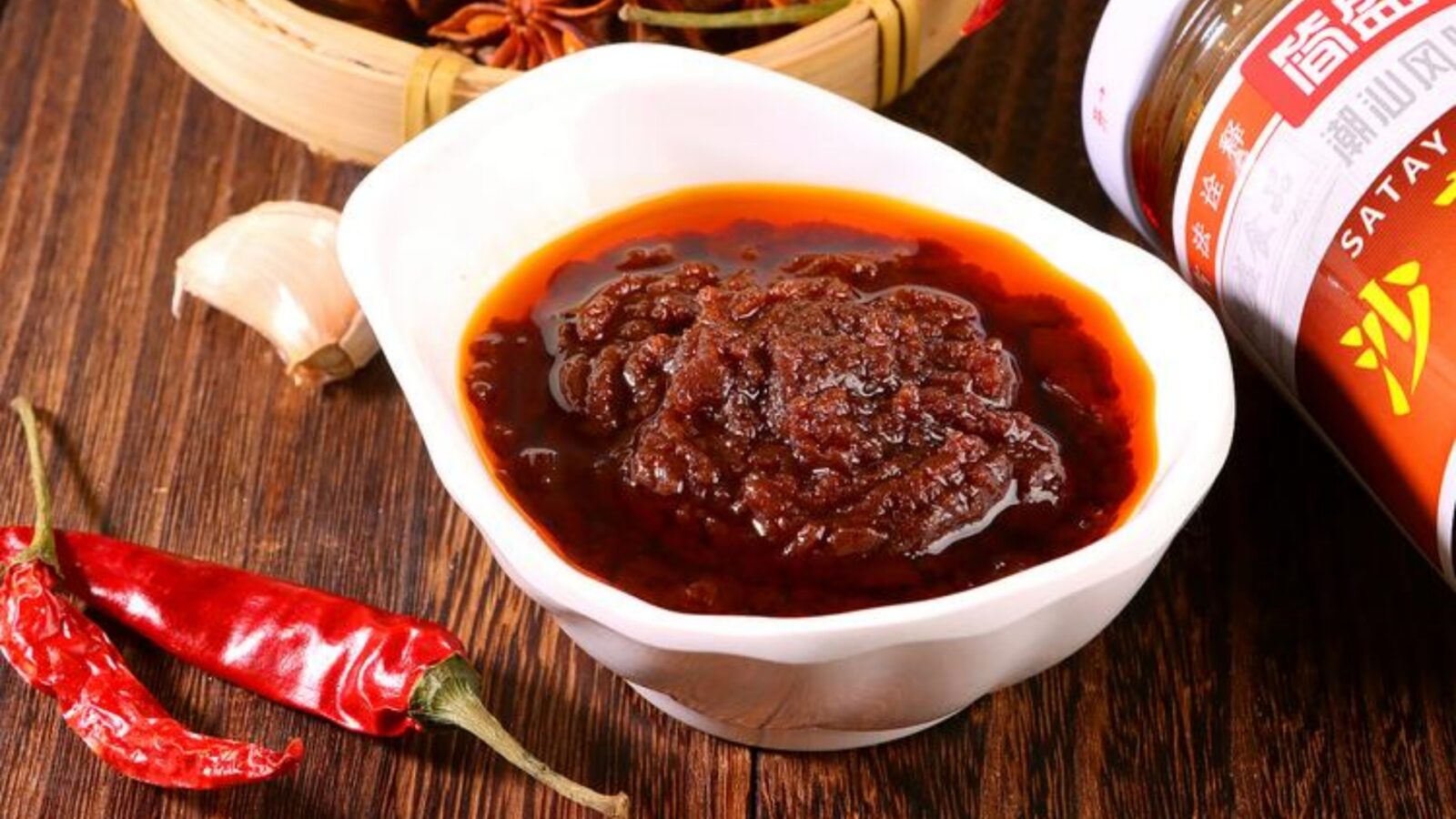
- Shacha sauce: peanut and dried shrimp blended into a savory, lightly spiced dip; used for hotpot, satay, and table dipping.
- Kumquat oil: salted kumquat in oil, sweet-sour-salty; the classic goose dip.
- Plum sauce: sweet-savory; pairs with goose and goose liver.
- Fermented bean or garlic-chili soy: for cold crab and raw-marinade dishes.
Each diner gets a small sauce plate, and a shared dipping tray sits in the middle. A bowl of clear broth often rounds out the setup.
🦀 Iconic Culinary Highlights: To dive deeper into the exact masterworks of this region’s gastronomy—including the legendary marinated raw crabs and slow-braised goose—be sure to read our detailed flavor guide to Chaoshan Cuisine in 8 Dishes.
Classic Dishes Worth a Trip
Four dishes define a first Chaozhou trip: braised goose, oyster omelette, steamed fish, and cold crab in marinade. Each earns its place at the table for a different reason.
Braised Goose
Braised Goose
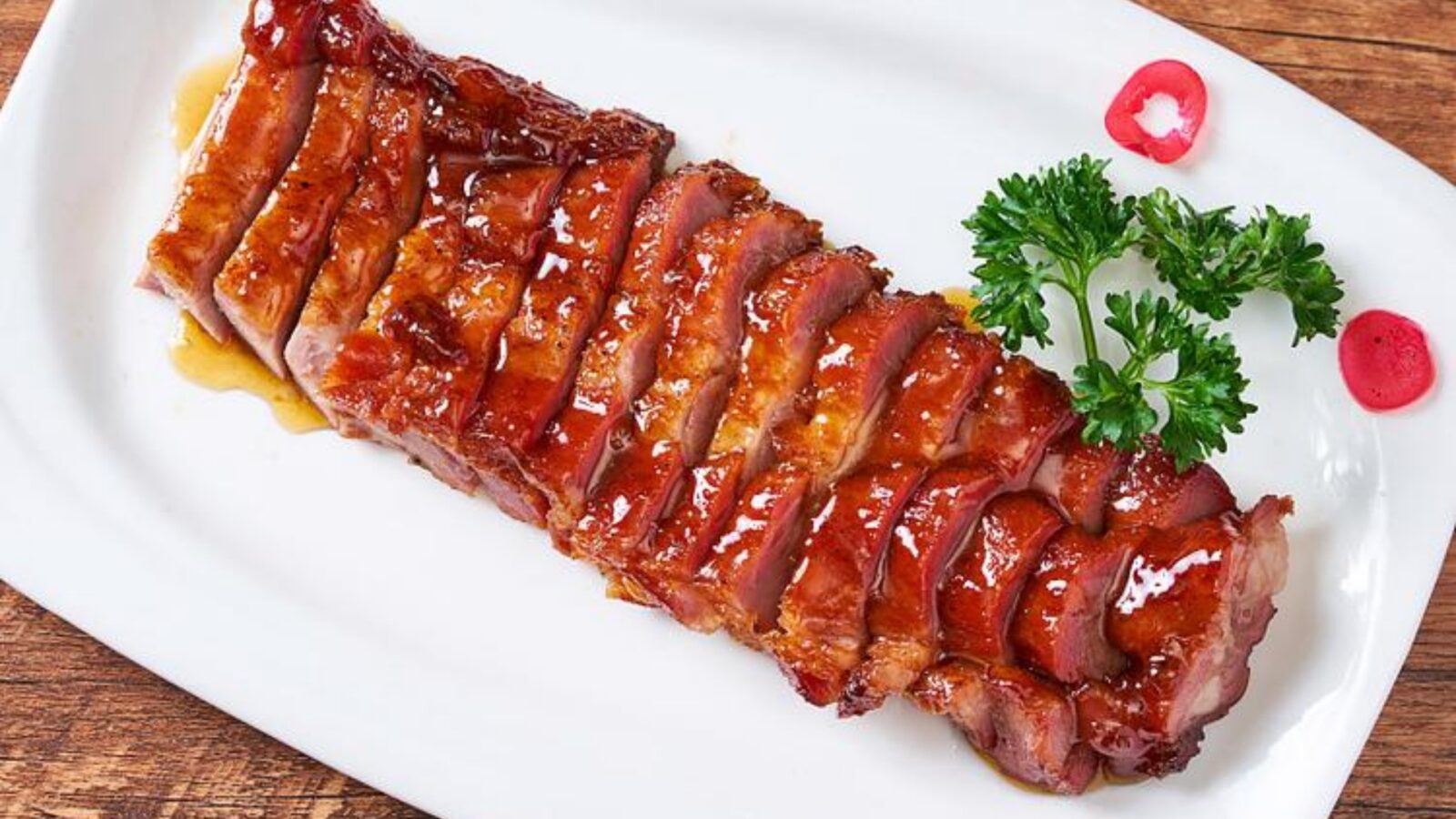
Whole goose braises in spiced soy broth with star anise, Sichuan pepper, ginger, and rock sugar for hours. The cooked bird is sliced thin and served with rice or noodles, often as the banquet centerpiece. Kumquat oil is the standard dip.
Portions run about $11–18 (¥78–128) at a goose shop; a whole goose shared three to four ways runs $25–40 (¥180–290).
Oyster Omelette
oysters fried in egg batter on dish
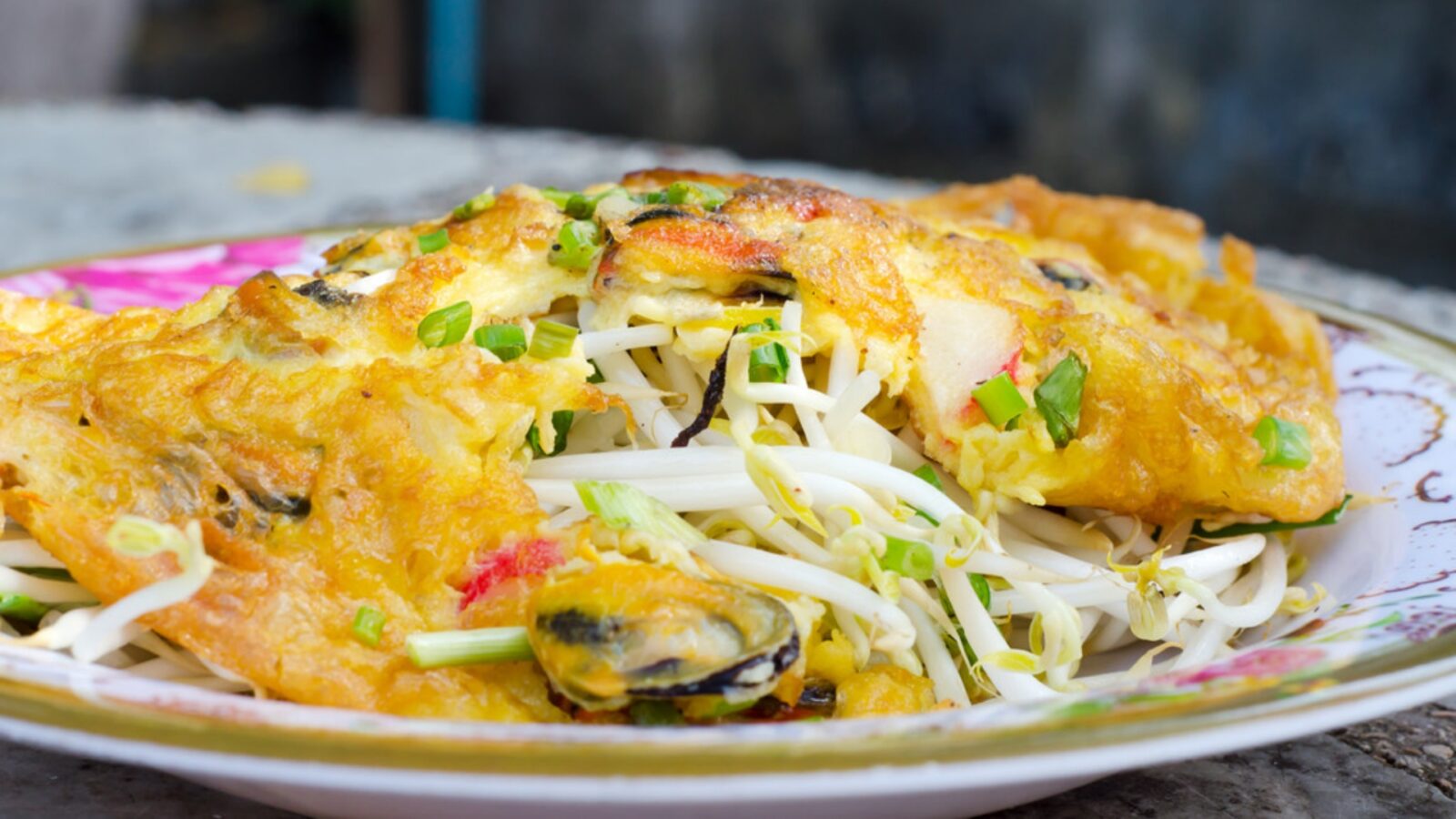
Fresh oysters, egg, and sweet-potato starch pan-fry together until the edges crisp and the center stays soft. The dish is drier and crisper than the saucier Taiwanese version, and locals call it oyster pancake (sometimes "o lua" in Teochew dialect).
Stall plates run about $3–5 (¥20–35), especially around Paifang Street.
Steamed Fish, Teochew Style
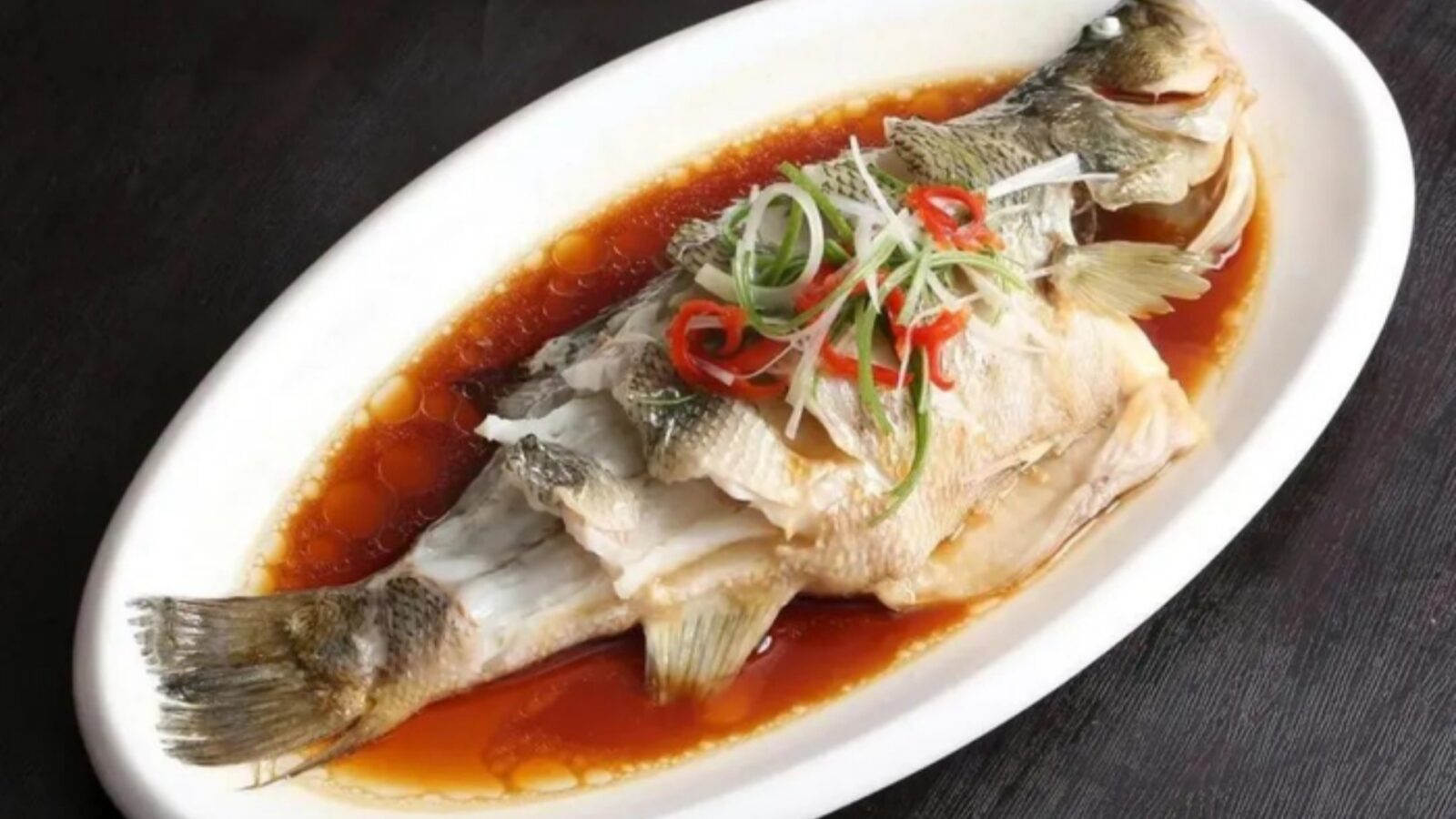
Steamed Fish
Live pomfret, grouper, or seasonal river fish steams with minimal ginger, scallion, soy, and sometimes preserved vegetables. The dish is judged on freshness, not seasoning, which makes it the cleanest expression of "eat the original flavor."
Ask which fish came in that morning; the kitchen picks by weight at a per-jin price. Expect about $8–15 (¥58–108) per fish at mid-range restaurants, or $15–25 (¥108–180) for a whole fish for two.
Cold Crab in Marinade
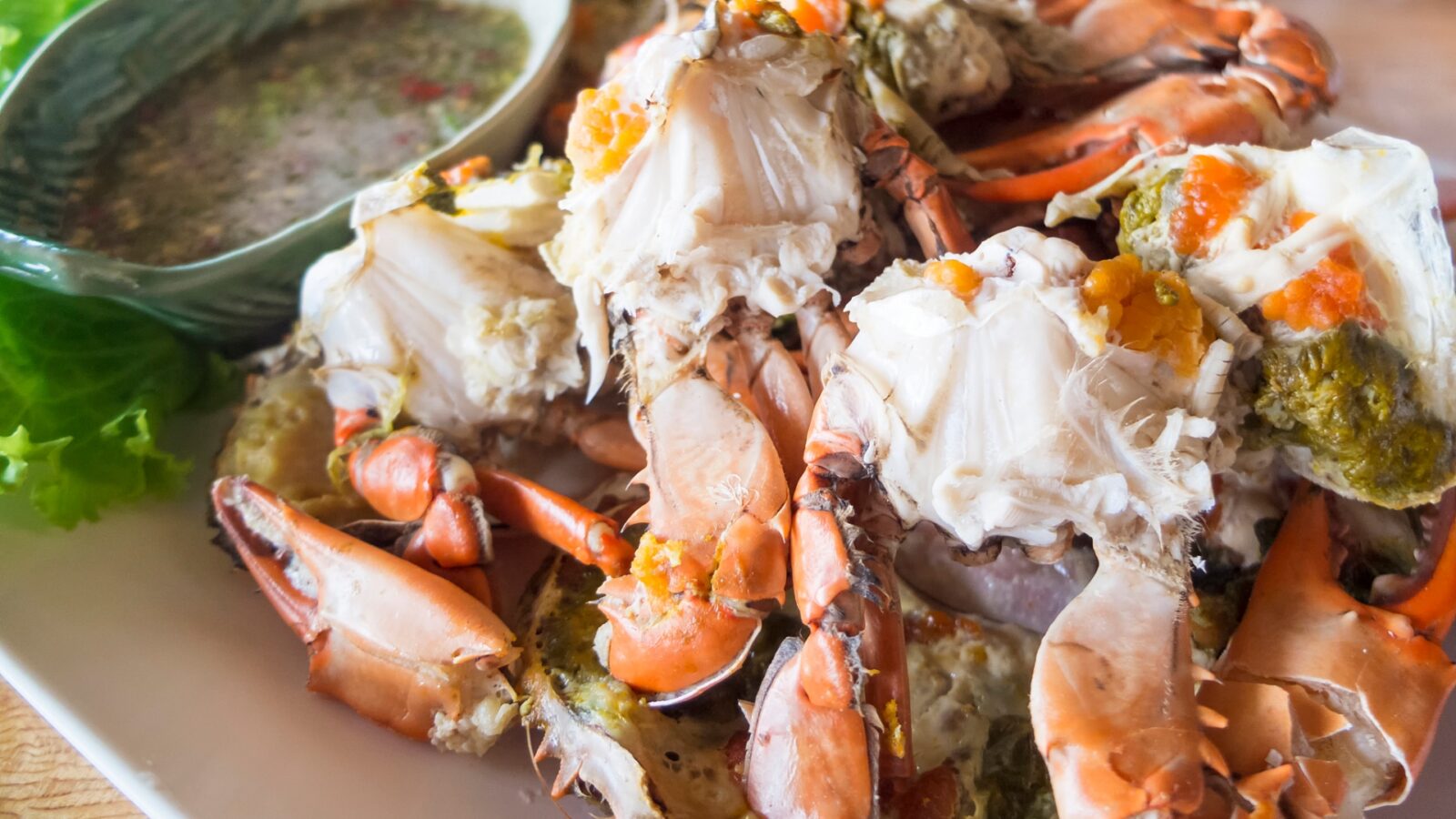
Cold Crab in Marinade
Raw mud crab or three-spot crab marinates briefly in soy, garlic, chili, and sometimes Shaoxing wine. The shell comes cracked for easy access; the marinade doubles as a dipping liquid.
Travelers with shellfish sensitivities should skip this raw or lightly cured dish and confirm prep at the restaurant before ordering.
Street Food and Snacks
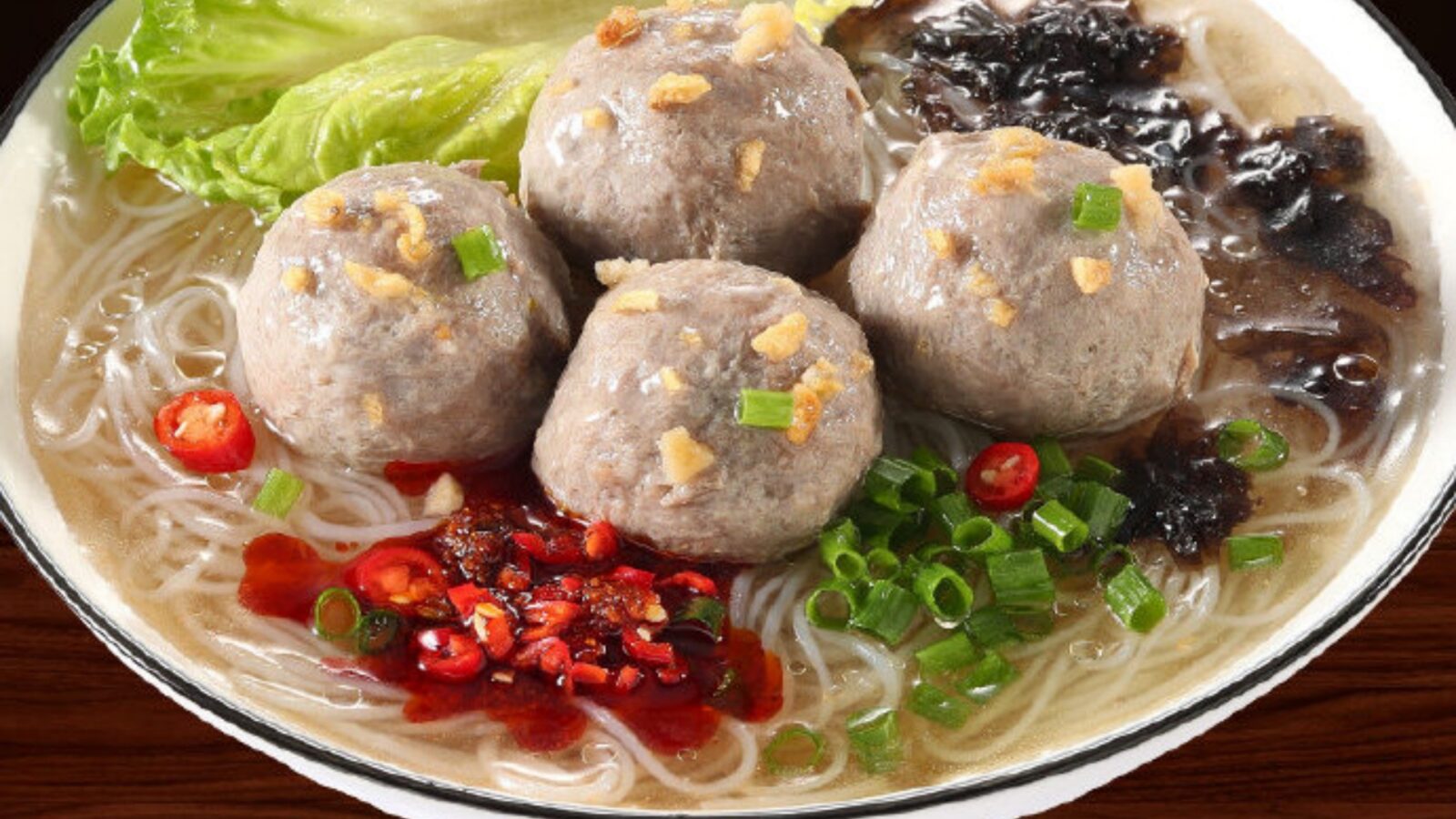
The Beef Offal Broth and Beef Balls
Most stalls cluster along Paifang Street, around the West Lake park edge, and near the Guangji Bridge entrance. Breakfast service runs roughly 06:00–11:00, evening service 14:00–22:00. Menus are Chinese-only at most stalls; pointing at the next counter's dish is the universal ordering method. A full crawl runs about $5–10 (¥35–70) per person.
Rice Noodle Roll
The local form is a thin steamed rice sheet wrapped around peanut, dried shrimp, pickled radish, or oyster, sliced short and served with sweet sauce or shacha. It is softer and smaller than Cantonese cheung fun, more a snack than a breakfast plate. Portions run about $1–2 (¥7–15).
Rice Cake
Pan-fried rice-flour cakes often come with chive, peanut, or shrimp. The outside crisps and the inside stays chewy. Dedicated stalls in the old town and along Paifang Street serve them from mid-morning to late evening. Portions run about $1–2 (¥7–15).
Beef Offal Broth and Beef Balls
Beef balls are hand-pounded, springy, and served in clear broth, often cited as the benchmark for Teochew handcraft.The Beef offal broth is a thicker, peppery morning soup with honeycomb tripe, tendon, and liver. Dedicated shops cluster near West Lake park and along Paifang Street; breakfast stalls open around 06:00. Offal broth runs about $1.50–3 (¥10–20) per bowl; beef-ball bowls run $3–6 (¥20–45).
Where to Eat in Chaozhou
Most of Chaozhou's food sits inside a walkable loop: Paifang Street, the West Lake park edge, and the old town. English menus are rare outside the larger restaurants; a translation app is the realistic tool. Pick a neighborhood by time of day: breakfast stalls ring the park, street-food peaks along Paifang Street, and slow Gongfu tea belongs in a courtyard teahouse.
Paifang Street
Paifang Street is the main walking street of Chaozhou's old town. Arcaded shop-houses line both sides, with food stalls underneath and small restaurants behind. Oyster omelette, rice cake, and beef-ball vendors cluster here, and the longest queue in the old town usually belongs to a single goose shop.
Peak crowding hits Friday evening, Saturday, and Chinese-holiday afternoons. From HSR Chaoshan Railway Station, a taxi runs 10–15 minutes and costs about $4–7 (¥25–50). From the city center, the street is walkable from the West Lake park edge.
Old Town Teahouses
Traditional Chaozhou teahouses sit inside restored courtyard houses within walking distance of Paifang Street. Diners order light bites (rice rolls, congee, braised snacks) and brew Gongfu tea at the table. It is the slow, sit-down version of the street crawl.
Hours run roughly 08:00–22:00, sometimes earlier for morning tea. Expect about $15–30 (¥110–220) per person including tea. Look for any old-town courtyard teahouse advertising Gongfu tea service.
Chaozhou Food Tour: How Foreigners Actually Eat
Neither a half-day walk nor a guided tasting comes with guaranteed English in every group. Self-guided crawls work well with a translation app. Guided tours concentrate the food into fewer stops but require booking ahead, especially in peak season.
Half-Day Old Town Walk
A workable route starts near West Lake park: breakfast beef-ball or offal bowl, then a Paifang Street crawl covering oyster omelette, rice cake, and rice roll, then a sit-down goose or steamed-fish lunch, then Gongfu tea in a courtyard teahouse, finally a dessert stop (chestnut mashed taro or mung bean cake).
- Distance: about 2–3 km on flat paved streets.
- Total time: roughly 3 hours including stops.
- Best start: 09:00; breakfast stalls open by 08:30, lunch service around 11:00.
Booking a Local Guide
Trip.com Experiences and Klook list Chaoshan food walks covering Chaozhou and Shantou. TripAdvisor's GetYourGuide partner lists a smaller selection. Book 5–10 days ahead off-season; 2–3 weeks ahead for October through December.
- Pricing: self-guided walk runs free with food spend about $10–18 (¥70–130) per person; guided half-day $45–80 (¥320–580) per person for 3–4 hours with 2–3 stops plus street tasting; full-day tour with kitchen visit $90–140 (¥650–1000) per person for 6 hours.
- What to confirm before booking: whether the guide speaks English (some list "English audio guide," meaning an app rather than a human guide); group size cap; and whether dietary restrictions can be handled, which matters for raw-crab and shellfish dishes.
- DIY alternative: most stalls and small restaurants need no guide; a translation app plus the route above works well for independent travelers.
Tea, Seasons, and Practical Tips
Gongfu tea anchors every sit-down meal. Diners rinse small clay cups, brew oolong in a covered pot, and pour in a low arc. The first pour is a rinse and is not drunk.
Payment is the main practical catch. Most stalls take cash or WeChat/Alipay only; foreign cards work at hotels and a handful of larger restaurants. About ¥200–500 of cash covers a day's worth of street food. Trip.com and Klook bookings bypass the issue for tours.
Pairing Dishes With Gongfu Tea
Phoenix Dancong (Chaozhou's regional oolong) is the headline tea; Tieguanyin and narcissus oolong also appear regularly. Cheaper catering-grade tea fills the cups at banquet restaurants. Every sit-down meal sets a tea service on the table.
The host pours for elders first, and visitors pour for the table to reciprocate. One cup of tea tends to pair with each small dish. A teahouse sitting with light snacks runs about $8–15 (¥55–100) per person.
When to Go and How to Pay
October and November are the best months: cool, dry, peak seafood, pre-holiday buzz. Avoid the week of Chinese New Year, when most restaurants close or run reduced hours, and August through September for typhoon risk.
Bring ¥200–500 cash per day for stalls. Download Alipay (foreign-card top-up supported via Alipay+) or WeChat Pay where foreign cards are accepted, as backup. Foreign cards work at hotels and a small number of larger restaurants, rarely at stalls. Menus stay Chinese-only outside the larger restaurants; a translation app with an offline Chinese pack is the realistic tool.
Frequently Asked Questions
Q: Is Chaozhou food the same as Cantonese food?
Chaozhou (Teochew) cuisine is a branch of Cantonese (Yue) cuisine, distinct in tone rather than origin. The flavor rule is "eat the original flavor": lighter seasoning, broth focus, less banquet richness than Guangzhou-style cooking. Techniques overlap, but Chaozhou holds back where Cantonese often adds depth.
Q: What is the most famous Chaozhou dish?
Braised goose is the most cited signature dish, appearing at banquets and family meals across the region. Steamed fish and oyster omelette are equally iconic in everyday eating. Cold crab in marinade rounds out the four-dish classic list most travelers encounter first.
Q: Can you eat Chaozhou food without speaking Chinese?
Yes, but menus outside large restaurants are Chinese-only. A translation app covers most stalls and small restaurants. Guided food tours are the easiest entry for non-Chinese speakers; some are English-led, while others use an app-based English audio guide. Pointing at the next counter's dish works at street stalls.
Q: How spicy is Chaozhou food?
Mild overall. Most dishes are savory or sweet-savory; chili appears as an optional dip element rather than cooked into dishes. The cold-crab marinade and one or two snacks are the spiciest items you'll find. Standard table dips like plum sauce and kumquat oil are not hot.
Q: Where do locals eat breakfast in Chaozhou?
Beef offal broth and beef-ball stalls dominate local breakfasts, alongside congee shops and rice noodle roll vendors. They cluster around West Lake park and the Paifang Street edge. Most open 06:00–10:00 and clear out before lunch service starts. Stalls outdraw sit-down restaurants in the morning.
Q: Is Chaozhou food expensive?
Street food runs about $5–10 (¥35–70) per person. Casual sit-down meals sit around $15–30 (¥110–220). Banquet meals run $30–60+ (¥220–440+). The cuisine ranks among the more affordable regional options in eastern Guangdong, especially at breakfast stalls and street vendors.
Q: What is shacha sauce?
A peanut-and-dried-shrimp-based savory dip with light chili heat, and the signature Chaozhou and Fujianese condiment. Use it for hotpot, satay skewers, and as a table dip with rice rolls, beef balls, or oyster omelette. Bottled versions travel well and are sold at most food shops.
Q: Are there Chaozhou food tours in English?
Limited supply. Trip.com and Klook list a handful of half-day old-town food walks; some are English-led, others use English audio via app only. Book 5–10 days ahead off-season, 2–3 weeks ahead for October through December. Self-guided crawls are realistic with a translation app and the route outlined above.