Yangmei
Small dark-red berries are found in the wet markets in southern China, and are purchased by the volume by the local residents every June. One fruit that most foreign visitors don't even notice or even try is the Yangmei, also known as Chinese bayberry. Unfortunately the former, as it really is one of the best foods to eat here. The season is brief, typically only 3 weeks and fresh yangmei is not available outside Asia because of import restrictions. Gather all the information you need before it's too late.
What Is Yangmei
What Is Yangmei
The Names
Yangmei has accumulated a surprising number of English names, which makes it harder to look up than it should be. The scientific name is Myrica rubra, but depending on where you read about it, you might also see:
- Chinese bayberry — the most common English translation
- Red bayberry / waxberry — names based on color and texture
- Japanese bayberry / yamamomo — the Japanese term for the same species
- Chinese strawberry — occasionally used, based on appearance
- Yumberry — a marketing name invented around 2010 by American food companies trying to repackage it as a superfood juice; not a scientific term, just branding that never quite took off
None of these names are used in China. When you're at a market, just say 杨梅 (Yángméi) or point at the fruit. That's all you need.
What Yangmei Looks Like
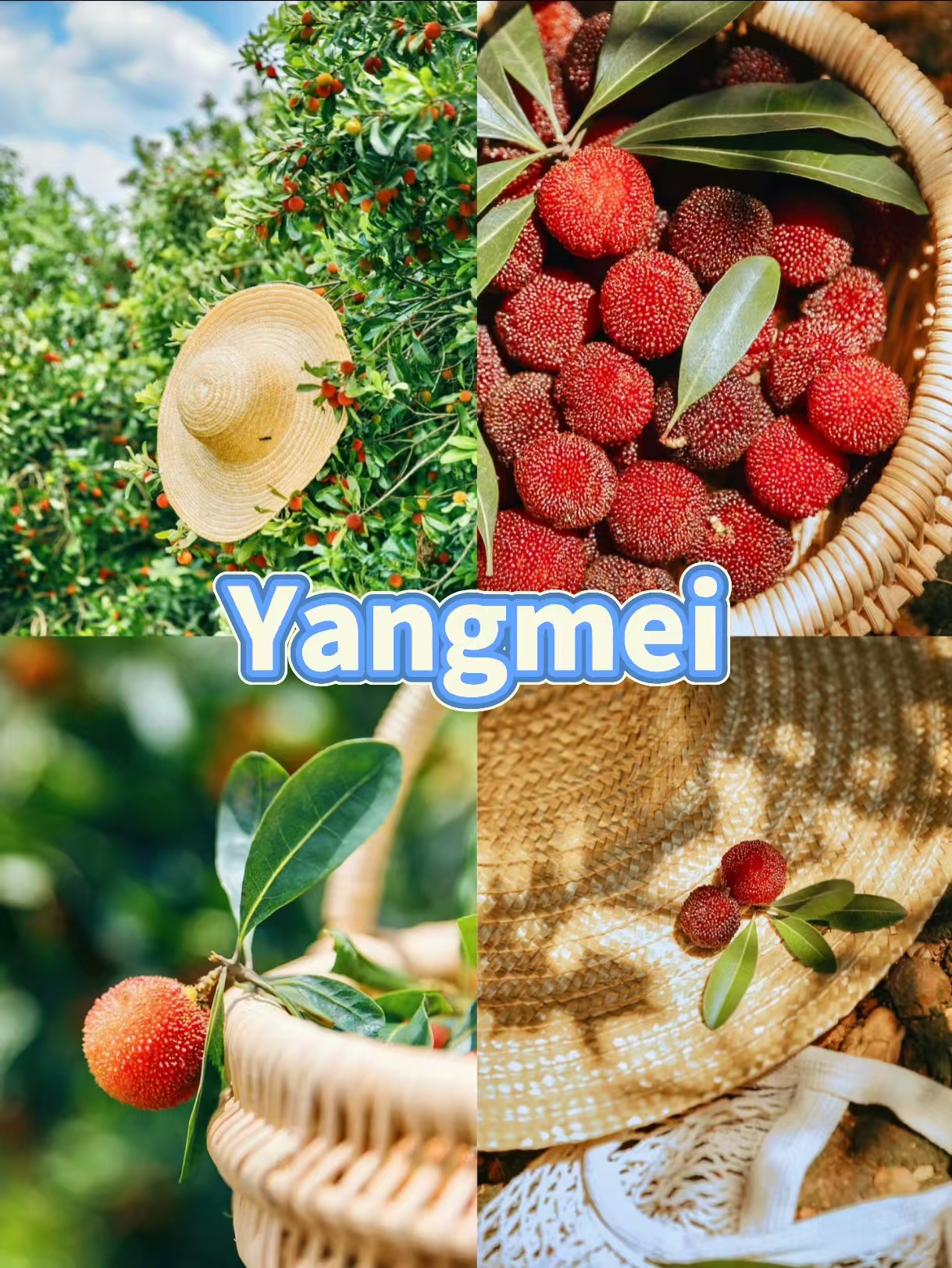
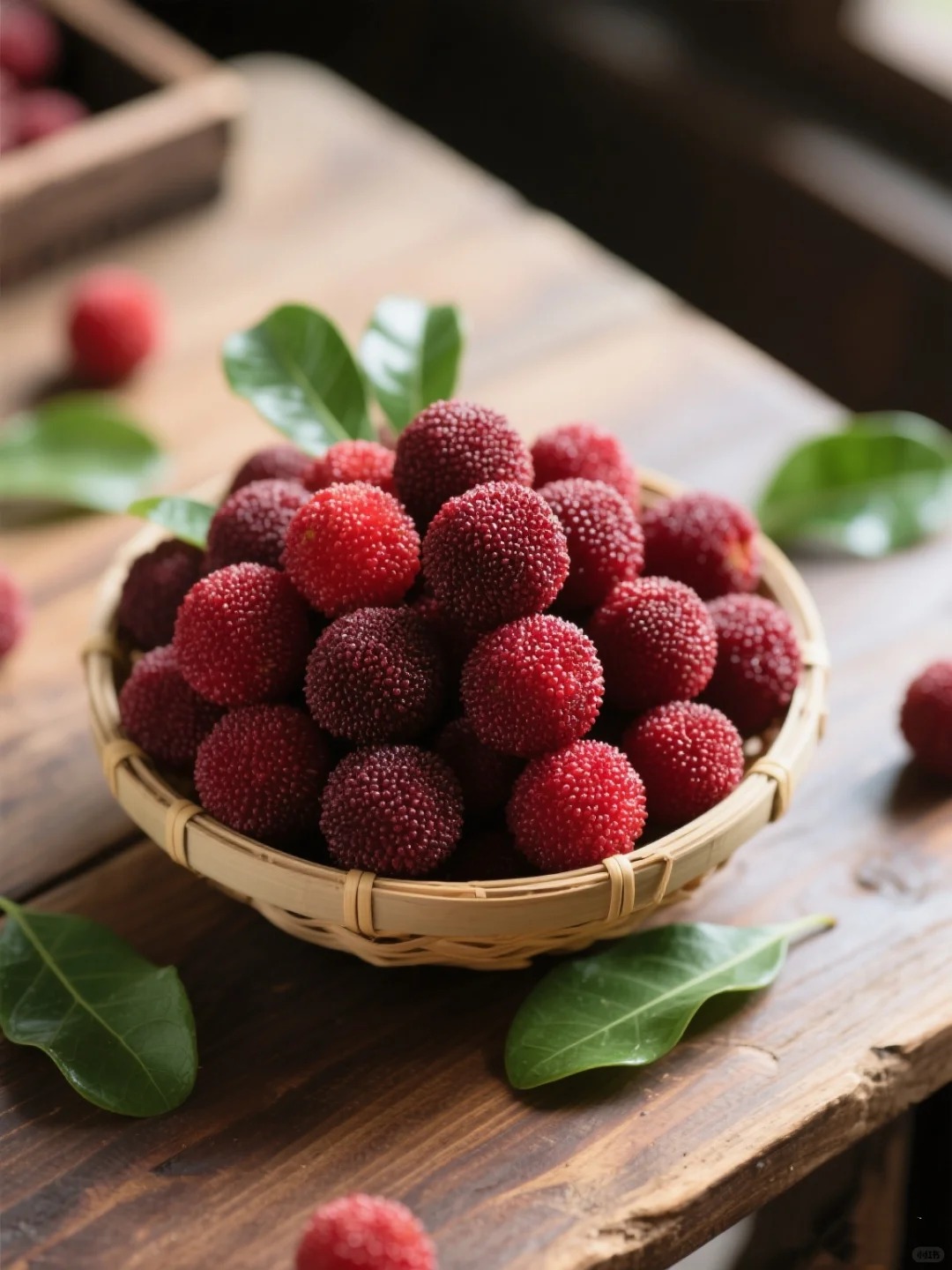
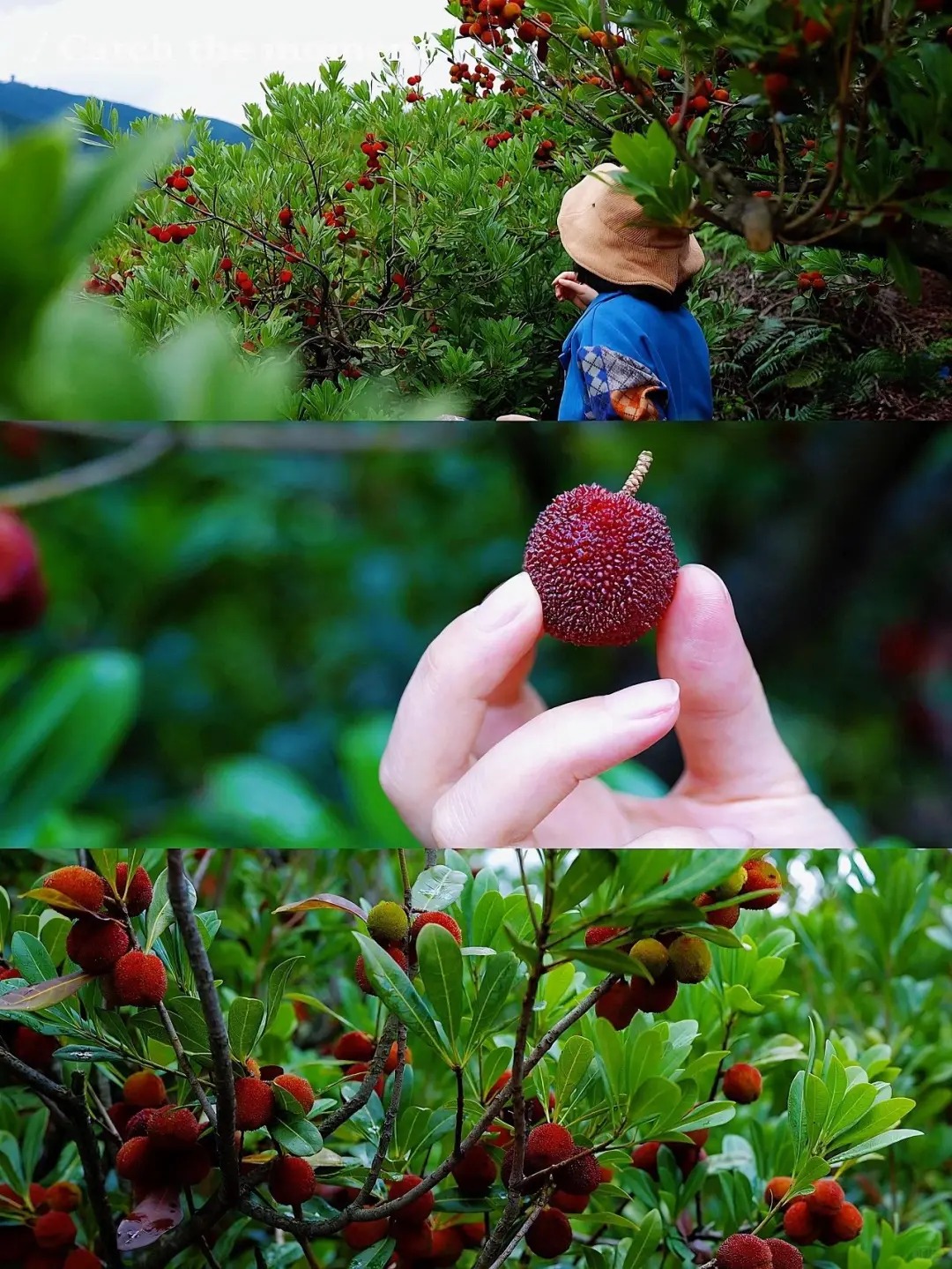
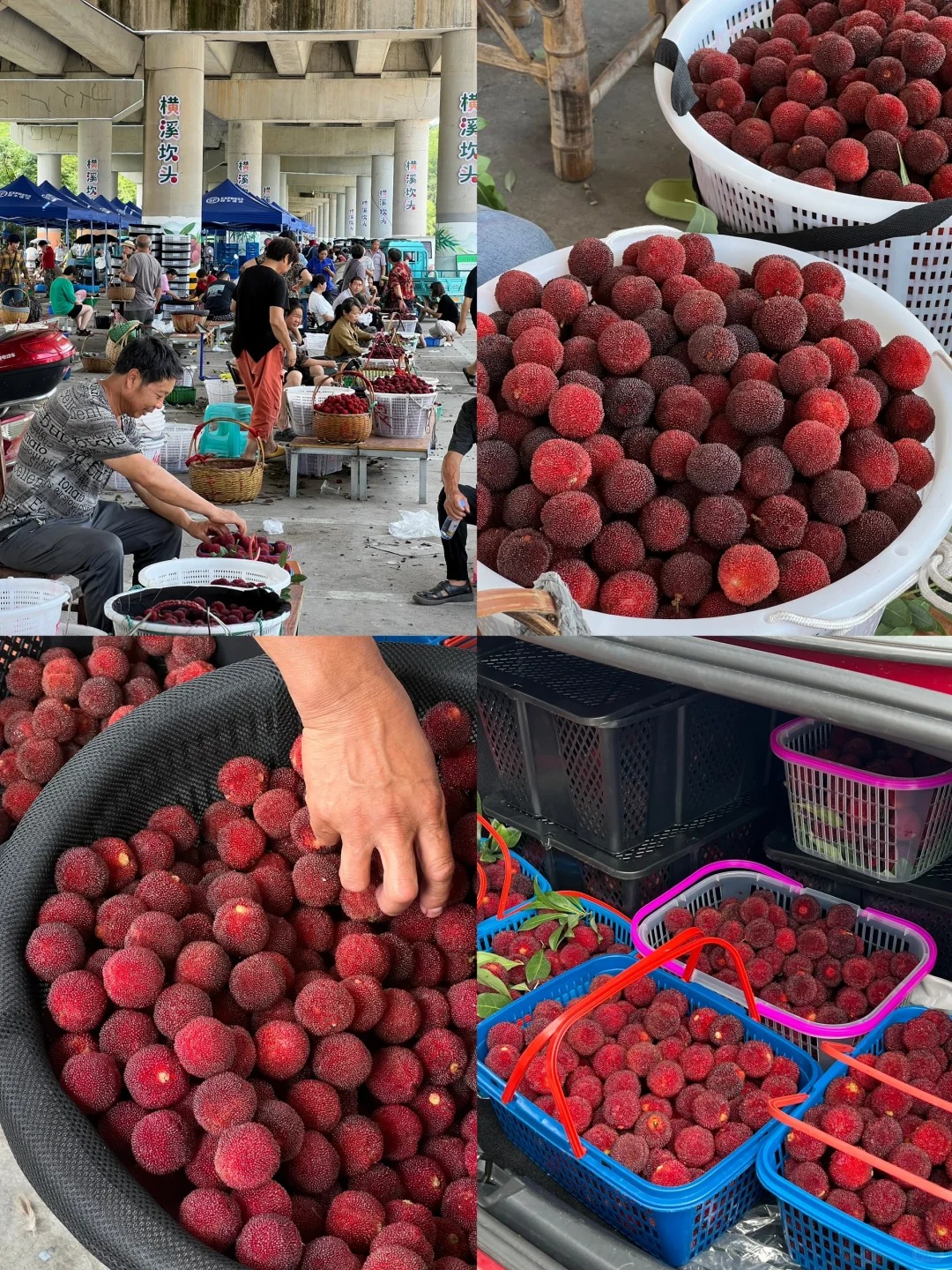
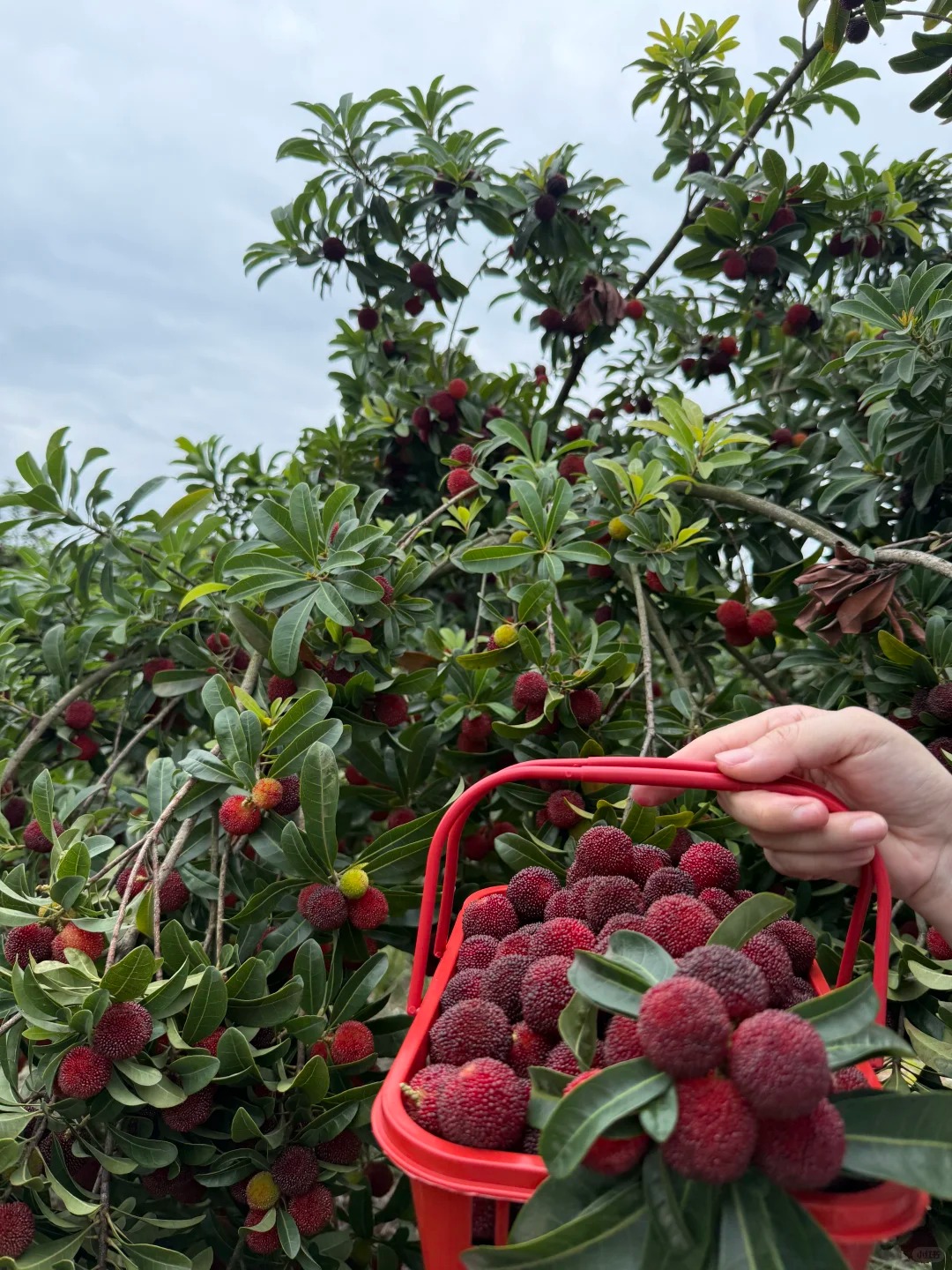
Yangmei is roughly the size of a large cherry. The color shifts as it ripens — starting out green, turning bright red at mid-ripeness, then deepening into a dark purple-red that's almost black at peak. Color is your single best indicator of how good it'll taste, which is why picking the darkest ones matters.
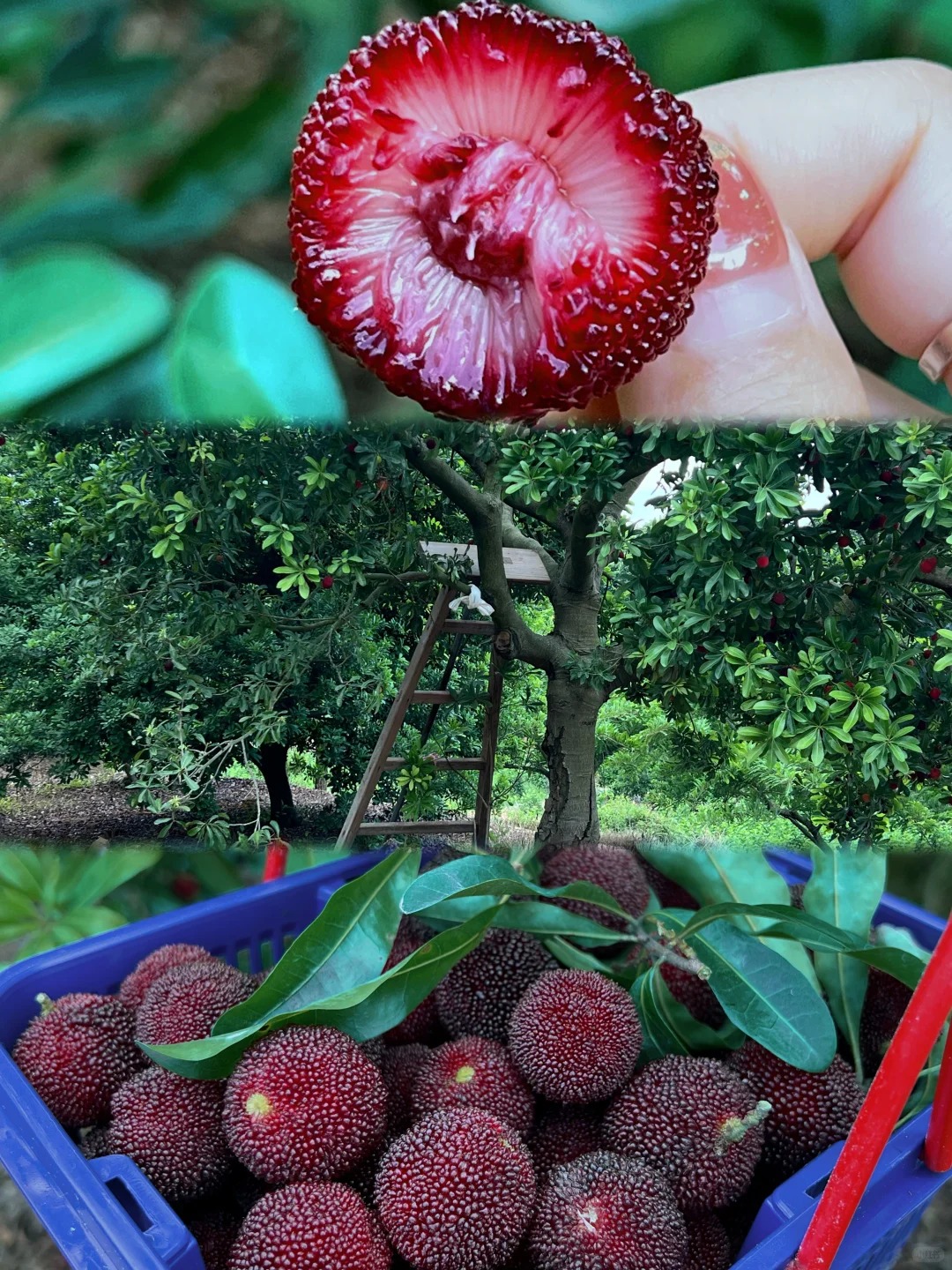
The surface looks spiky at first glance, but those bumps aren't thorns. They're actually the fruit itself — hundreds of tiny fleshy nodules packed with juice. There's nothing to peel; what you see is what you eat.
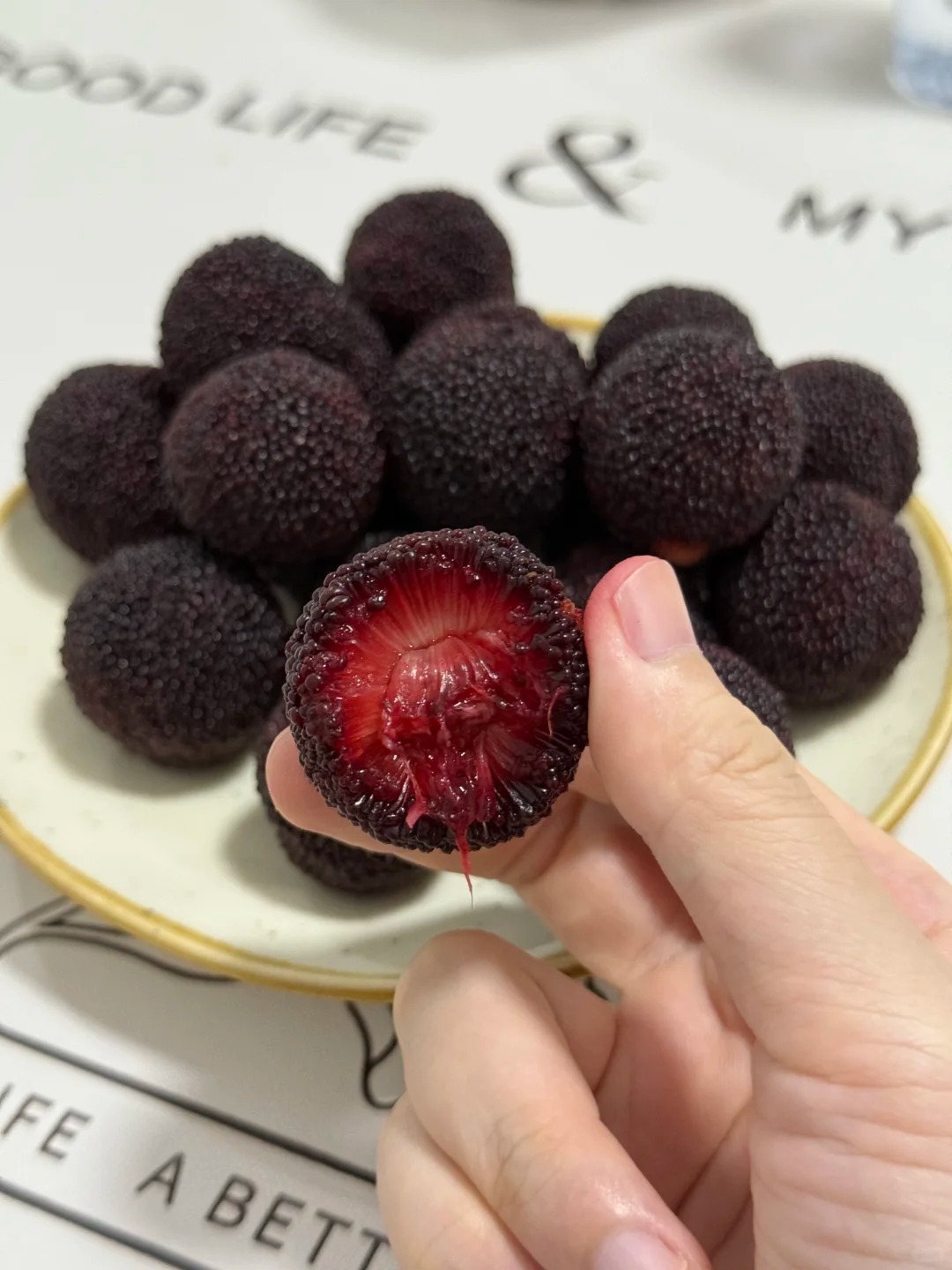
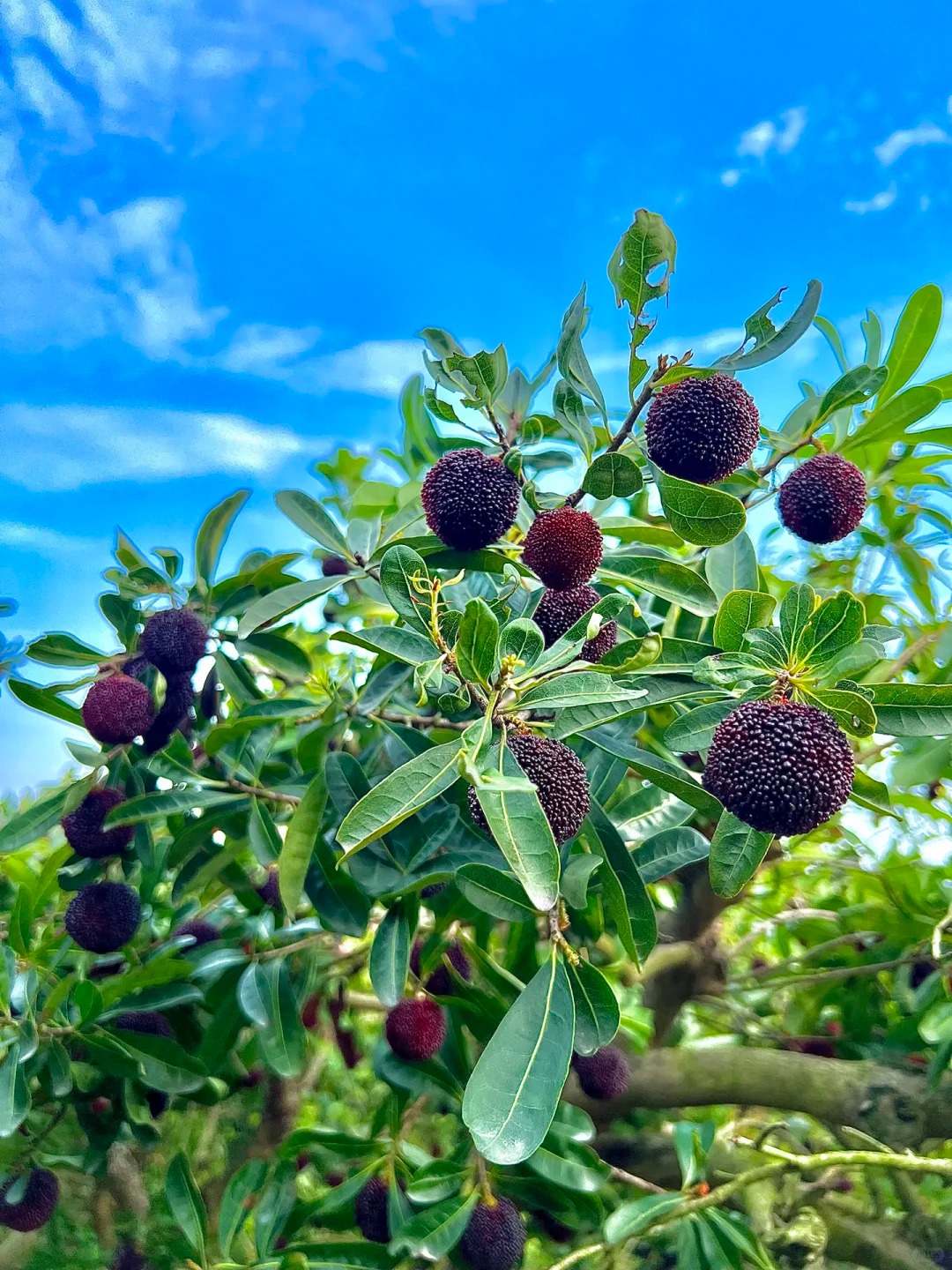
Bite in and you'll hit a single hard stone in the center, similar to a cherry pit. Technically this makes yangmei a drupe rather than a true berry — same category as cherries, olives, and peaches. The tree itself is an evergreen growing 5–10 meters tall, and it's dioecious, meaning male and female flowers grow on separate trees. Only the females produce fruit.
Health Benefits Worth Knowing
Yangmei is genuinely nutritious, which is part of why American food companies tried to market it as a superfood juice under the name "yumberry" around 2010. The pitch wasn't entirely wrong.
Key nutrients and properties:
- Vitamin C: high content, supports immune function and skin health
- Antioxidants (OPCs): oligomeric proanthocyanidins — the same compounds in grape seed extract; some studies suggest higher antioxidant activity than blueberries
- Organic acids: aid digestion and stimulate appetite; recognized in traditional Chinese medicine as beneficial for the stomach
- Pectin: supports gut health
- Calorie count: approximately 57 calories per 100g — relatively low for a sweet fruit
- Sugar content: 12–13% brix, moderate and not excessive
- Low pesticide residue: the tree's natural pest resistance means farmers use significantly fewer chemicals than with most commercial fruit
None of this means you should eat yangmei for health reasons specifically — but it's a useful reminder that something this enjoyable isn't doing you any harm either.
What Yangmei Actually Tastes Like
The Flavor Nobody Can Agree On
The Flavor Nobody Can Agree On
Ask ten people what yangmei tastes like and you'll get ten different answers. The most commonly used comparisons are plum, strawberry, and pomegranate all at once — which sounds like a lot, but somehow works. Some describe it closer to blackberry, though a bit more sour. There's also a faint cranberry-like tartness that lingers at the back, and occasionally a mild herbal note at the finish that's genuinely hard to place.
What most people do agree on: it's sweet without being cloying, and tart without making you wince. The texture sits somewhere between an orange segment and a raspberry — very juicy, soft, but with a slight chewiness from those tiny surface nodules. It's also one of the more fragrant fruits you'll come across in a Chinese market; ripe yangmei has a faint floral-sweet smell that carries. If you generally like fruit with some sharpness and complexity to it, yangmei will probably be your thing.
Ripe vs Underripe — The Difference Is Huge
Ripe vs Underripe — The Difference Is Huge
This matters more with yangmei than with most fruit. Color is your main signal:
- Bright red: still underripe — noticeably sour, not much sweetness yet
- Deep purple-red: close to ready, decent balance of sweet and tart
- Dark purple, almost black: peak ripeness — this is what you're looking for
A perfectly ripe yangmei basically floods your mouth with juice the moment you bite in. An underripe one just tastes sharp and one-dimensional, which is why so many first-timers are underwhelmed — they just grabbed the wrong ones.
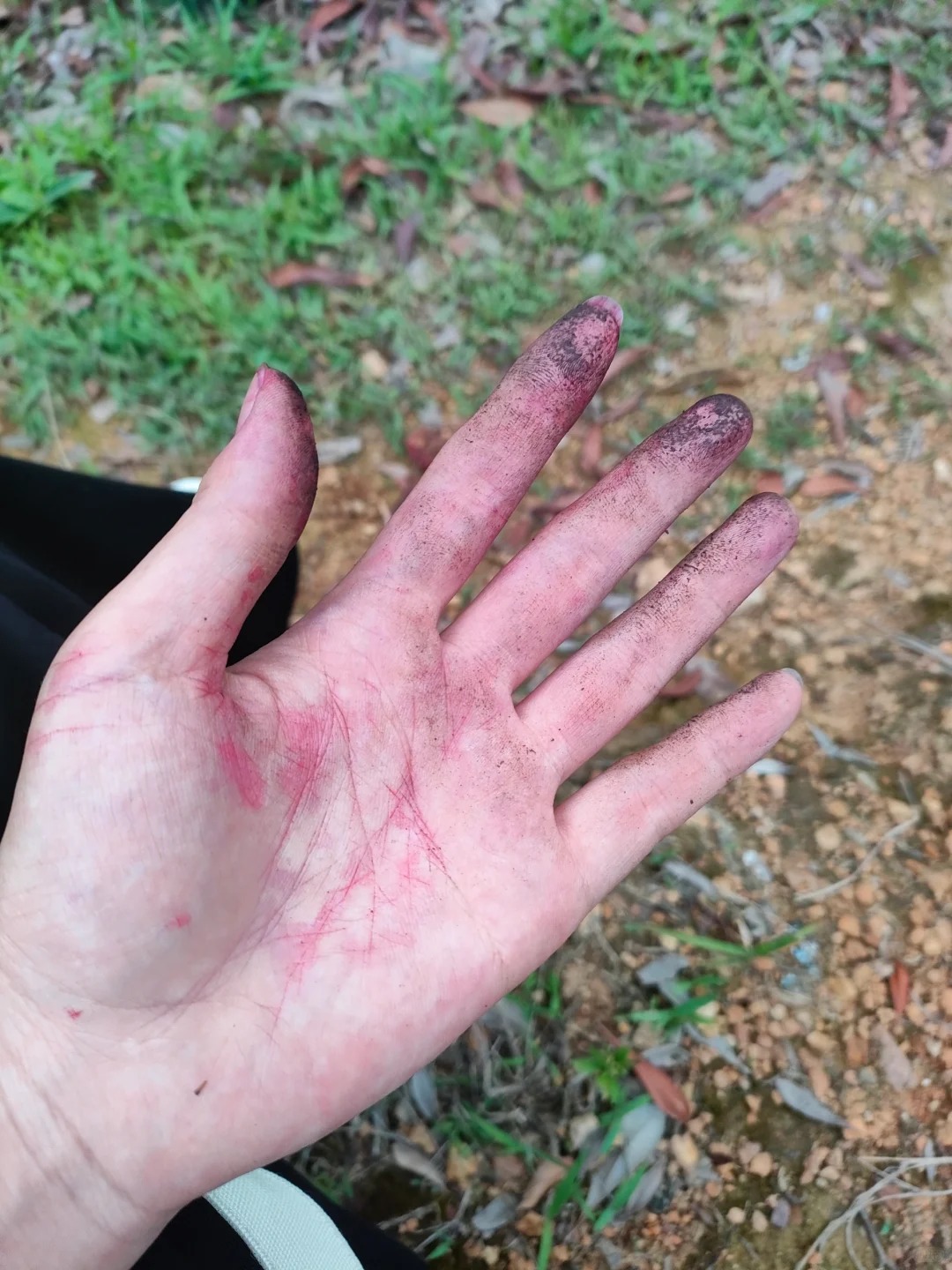
One side effect worth knowing upfront: the juice stains. Fingers, lips, white shirts — everything in range. Locals refer to the telltale purple hands as yangmei fingers, usually said with some pride. It means you found good ones.
Fresh yangmei is also brutally perishable. Give it 1–2 days at room temperature, maybe 3–4 days in the fridge. It bruises easily and goes fast, similar to raspberries. The general rule is to buy only what you'll eat that same day.
When and Where to Find Fresh Yangmei
The Season Window You Need to Know
The Season Window You Need to Know
Yangmei season is short — genuinely short. The general timeline runs like this:
- Late May: first fruit appears in markets, still mostly red and on the sour side; worth trying but not at its best
- June: peak season, fruit at its darkest and sweetest — this is the window to aim for, particularly around Dragon Boat Festival
- Early July: season winds down fast; by mid-July it's largely over in most regions
The whole thing lasts roughly 2–3 weeks in any given area. That said, if the plum rains (méiyǔ season) run late that year, the harvest can shift or extend slightly — so it's worth checking locally rather than assuming fixed dates. If you're traveling through Zhejiang, Fujian, Shanghai, or Hangzhou in June, you'll almost certainly find yangmei piled up in wet markets without even looking for it. Outside that window, fresh fruit basically disappears overnight.
The Provinces and Cities Where Yangmei Grows
The Provinces and Cities Where Yangmei Grows
Yangmei grows across southern China, but quality and availability vary quite a bit depending on where you are:
- Zhejiang: the undisputed core production area — Yuyao and the Dongkui variety from Zhoushan are considered the benchmark for quality; widest availability, most competitive prices, and where most of the better farms are based
- Fujian: Longhai is nicknamed the "Bayberry Capital of Fujian"; fruit here tends to be large with small pits and plenty of juice, in season from May through June
- Jiangsu: smaller-scale production, mainly found around Suzhou and the surrounding countryside
- Guangdong: Liangkou Town in Conghua district, Guangzhou has a well-known organic farm covering around 267 hectares; fruit ripens from mid-May
- Yunnan: Yangmei Mountain in Luxi County runs June through August, slightly later than coastal regions — useful if Yunnan is already on your itinerary
For most travelers, the most practical cities to find fresh yangmei without any planning are Shanghai, Hangzhou, Ningbo, and Suzhou. Head to any wet market or street fruit stall in June and they'll be there.
Yangmei Picking Experiences Worth Planning Around
Yangmei Picking Experiences Worth Planning Around
If you want to go straight to the source, many farms across southern China open for U-pick during harvest season. Entry fees are typically around 30–80 RMB per person, which covers eating on-site; any fruit you take home is weighed and priced separately. It's a pretty common weekend activity for local families in June, and the atmosphere at a busy orchard — farmers hauling baskets, juice-stained hands everywhere — is genuinely worth experiencing once.
A few specific spots worth knowing about:
🌿 Yuyao Yangmei Ancient Trail · Zhejiang
- Location: Yuyao, Ningbo, Zhejiang Province
- Season: June
- Festival: Annual yangmei festival held during peak harvest; includes picking competitions, local food stalls, and guided orchard walks
- Highlights: Thousands of ancient trees, some over 120 years old; hikeable trail through working orchards; one of the most historically significant yangmei-growing areas in China
🌿 Yangmei Mountain · Luxi County, Yunnan
- Location: Baishui Town, Luxi County, Honghe Prefecture, Yunnan
- Season: June–August (later than most other regions)
- Scale: Close to 100-acre orchard; draws nearly 1,000 visitors per day at peak season
- Highlights: Good option if you're already in Yunnan; combines well with other Honghe Prefecture attractions
🌿 Liangkou Organic Farm · Conghua, Guangzhou
- Location: Liangkou Town, Conghua District, Guangzhou
- Season: Mid-May onward
- Farm size: Approximately 267 hectares; certified pesticide-free
- Highlights: Three varieties available including the popular "Black Pearl"; annual yangmei festival runs through early June with tastings and cultural activities
🌿 Moganshan Resort Area · Zhejiang
- Location: Moganshan, Deqing County, Zhejiang Province
- Season: June
- Best for: Visitors coming from Shanghai or Hangzhou for a weekend trip; most guesthouses in the area sit near working orchards
- Highlights: Easy to combine yangmei picking with a countryside stay; cooler temperatures than the city make the whole experience more comfortable
How to Buy, Clean, and Eat Yangmei
Picking the Best Ones at the Market
Picking the Best Ones at the Market
The quality gap between a good yangmei and a mediocre one is significant enough that it's worth taking a few seconds to check before you buy. Here's what to look for:
- Color: deep purple to near-black means peak ripeness; bright red means it's still sour and underdeveloped
- Smell: ripe yangmei has a faint sweet fragrance — if it smells like nothing, it's probably been sitting out too long
- Stem scar: the small indentation at the base should look dry and clean; if it's weeping juice or darkening, the fruit is already past its best
- Surface: nodules should be intact and firm, no visible soft spots or collapsed areas
Buy only what you'll eat that day. Fresh yangmei lasts 1–2 days at room temperature and maybe 3–4 days refrigerated — it's as fragile as raspberries. Buying a large bag and hoping for the best usually ends badly.
For pricing, expect to pay roughly:
| Location | Price per jin (500g) |
|---|---|
| Zhejiang / Fujian local markets | ¥10–25 |
| Shanghai / Hangzhou wet markets | ¥20–35 |
| Cities further from source (Beijing etc.) | ¥50+ |
| Premium Dongkui gift boxes (Zhoushan) | ¥100–300/box |
The Salt Water Soak You Shouldn't Skip
The Salt Water Soak You Shouldn't Skip
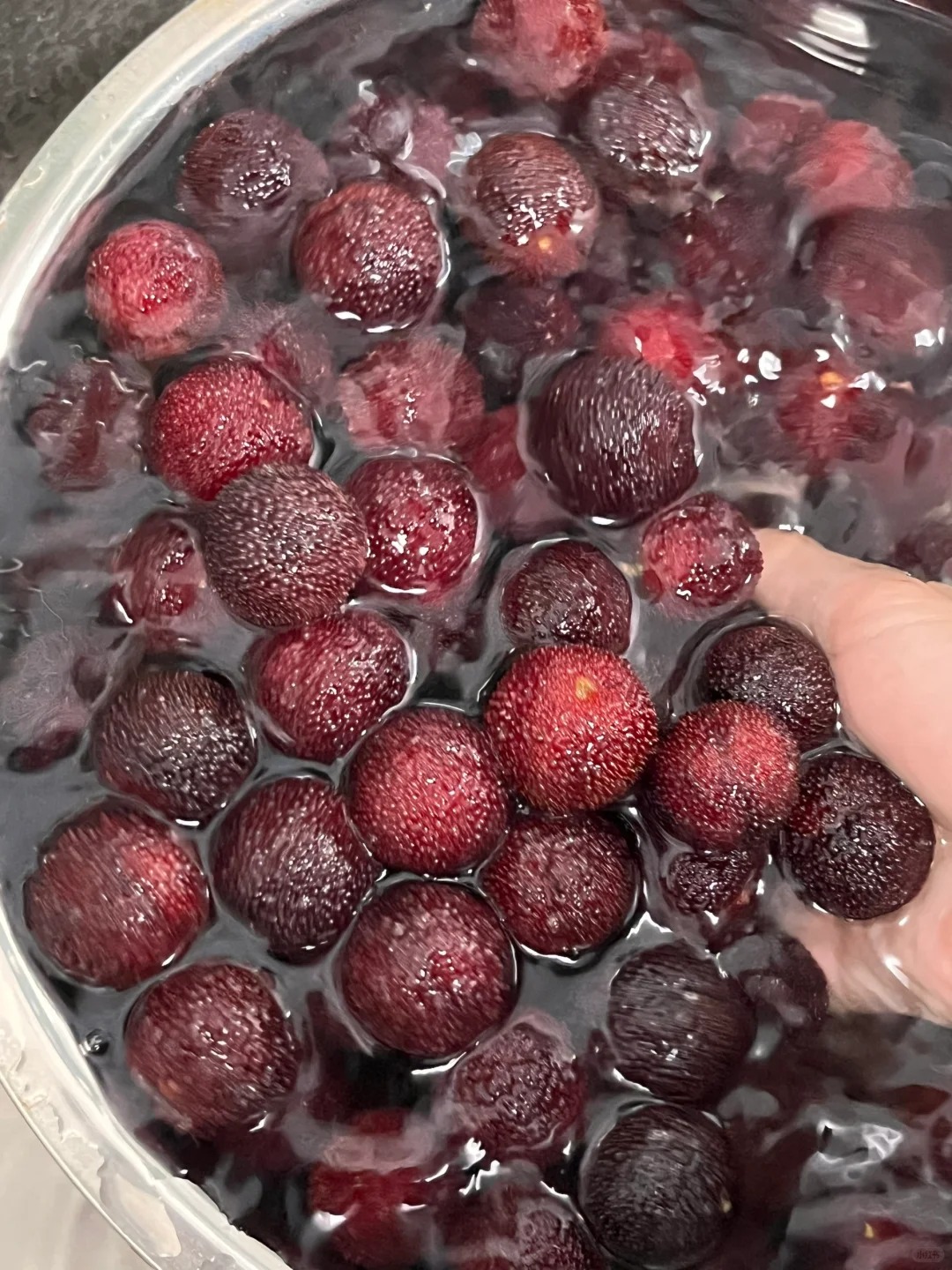
Yangmei trees are naturally pest-resistant, which means farmers use very few pesticides. That's good news for your health, but it also means small insects occasionally hide in the gaps between the surface nodules. Finding one after eating is unpleasant. A salt water soak takes care of this completely and only takes about 30 minutes.
Steps:
- Rinse: give the fruit a gentle rinse under cold running water first
- Make the soak: dissolve 1 teaspoon of salt per 500ml of water — baking soda works as a substitute if that's what you have
- Soak: submerge the yangmei and leave for 20–30 minutes; stir gently in one direction every few minutes
- Rinse again: drain and rinse once more with fresh cold water
- Dry: pat dry with a paper towel or a dark-colored cloth — yangmei juice stains badly, so don't use anything white
After soaking you may see tiny worms floating out. This is normal and doesn't mean the fruit is bad. Eat freely after this step.
How Locals Actually Eat Yangmei
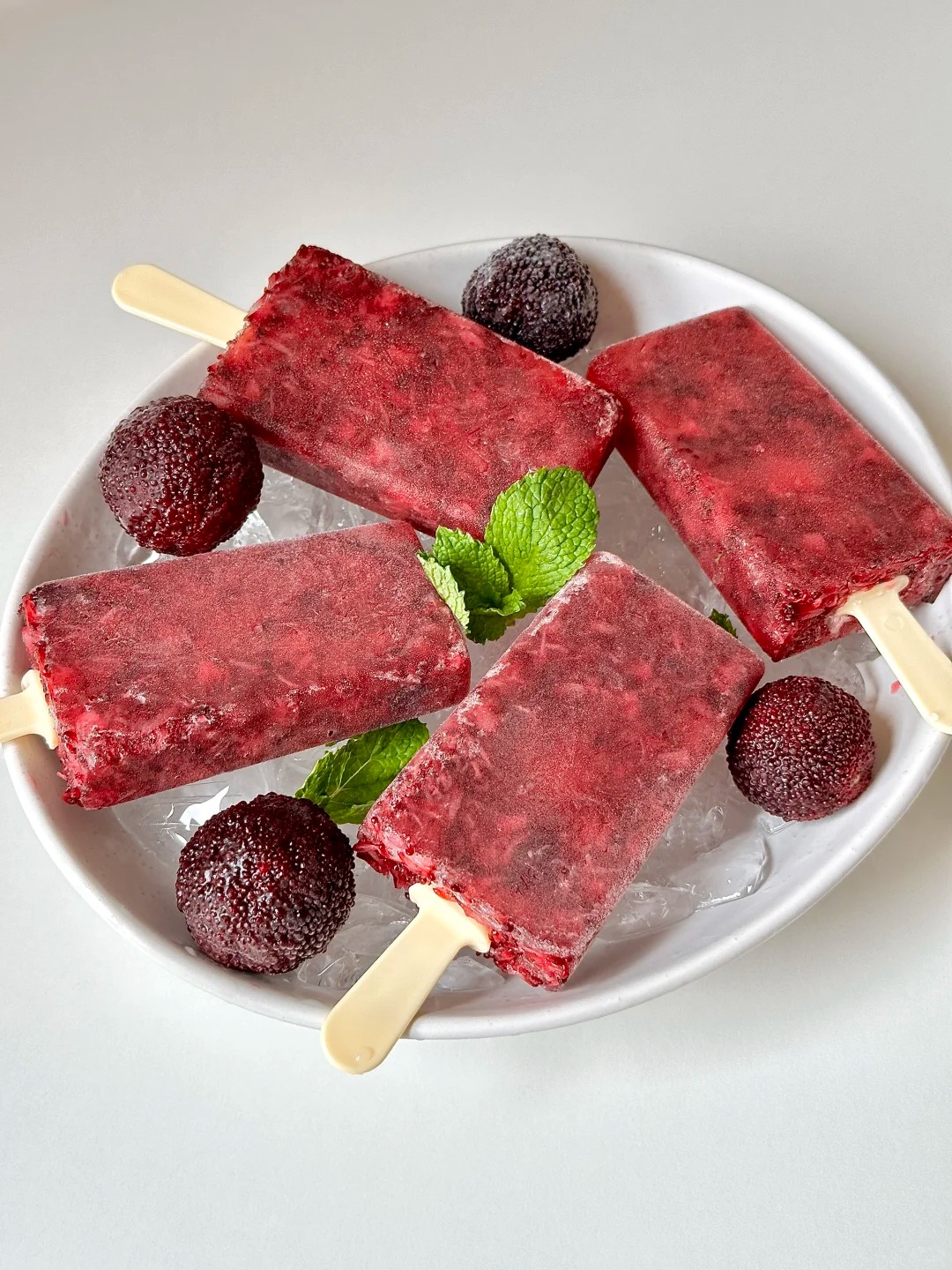
How Locals Actually Eat Yangmei
The standard approach is straightforward: put the whole fruit in your mouth, roll it around briefly with your tongue, then bite gently. The juice comes out all at once. There's a hard stone in the center — work the flesh off around it rather than biting straight through.
A few variations worth trying:
- With a pinch of salt: a traditional Zhejiang method — sprinkle a small amount of salt directly on the fruit before eating; it pulls out more sweetness and intensifies the flavor noticeably
- Chilled: refrigerate for an hour before eating, especially in summer heat; the cold makes the juice hit harder and the whole experience more refreshing
- Plain, immediately after washing: honestly the most common way — locals just eat them standing in the kitchen straight from the colander
One thing that doesn't work well: cutting or crushing yangmei. The flesh is too soft and juicy to handle that way — you'll end up with purple liquid everywhere and not much to eat. Just eat them whole.
Beyond the Fresh Fruit
Yangmei Wine — the Jar Every Zhejiang Household Keeps
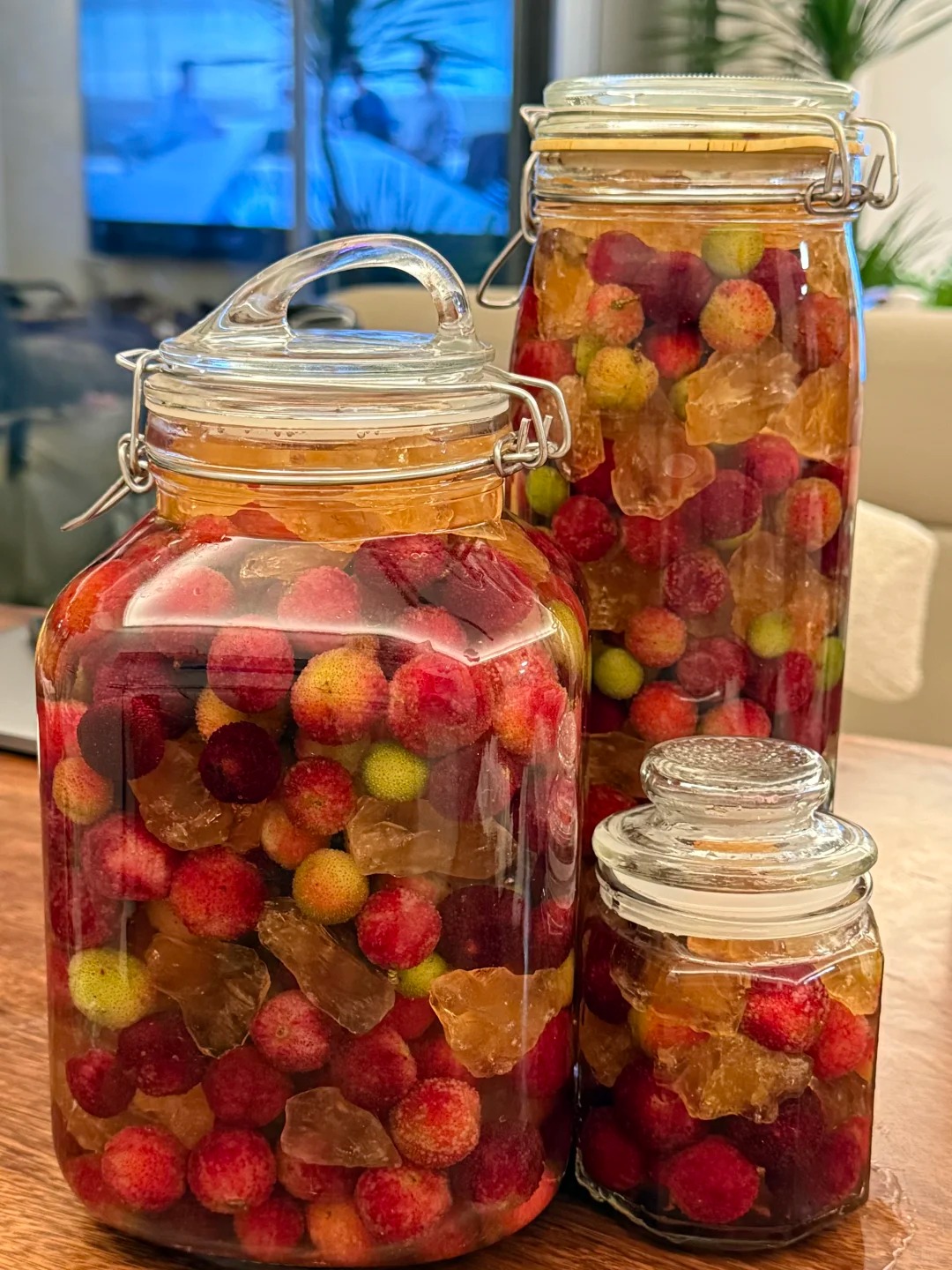
Yangmei Wine
Fresh yangmei only lasts a few days, which is exactly why locals have been preserving it in alcohol for centuries. The basic recipe hasn't changed much: layer yangmei and rock sugar alternately into a glass jar, pour in baijiu (Chinese sorghum liquor) until everything is submerged, seal it tight, and wait about 10 days. The result is a deep garnet-red liqueur that's sweet, sour, and surprisingly aromatic.
In traditional Chinese medicine, yangmei wine is considered a summer household staple — believed to relieve heatstroke, settle the stomach, and improve appetite during the hottest months. Whether or not you buy into that, it does taste good served cold on a summer evening.
You don't have to make it yourself. Commercial bottled versions are available in supermarkets and liquor shops across Zhejiang — look for it near the fruit wines or local specialties section. Zhejiang-produced versions tend to be more authentic than generic brands.
What to Bring Home as a Souvenir
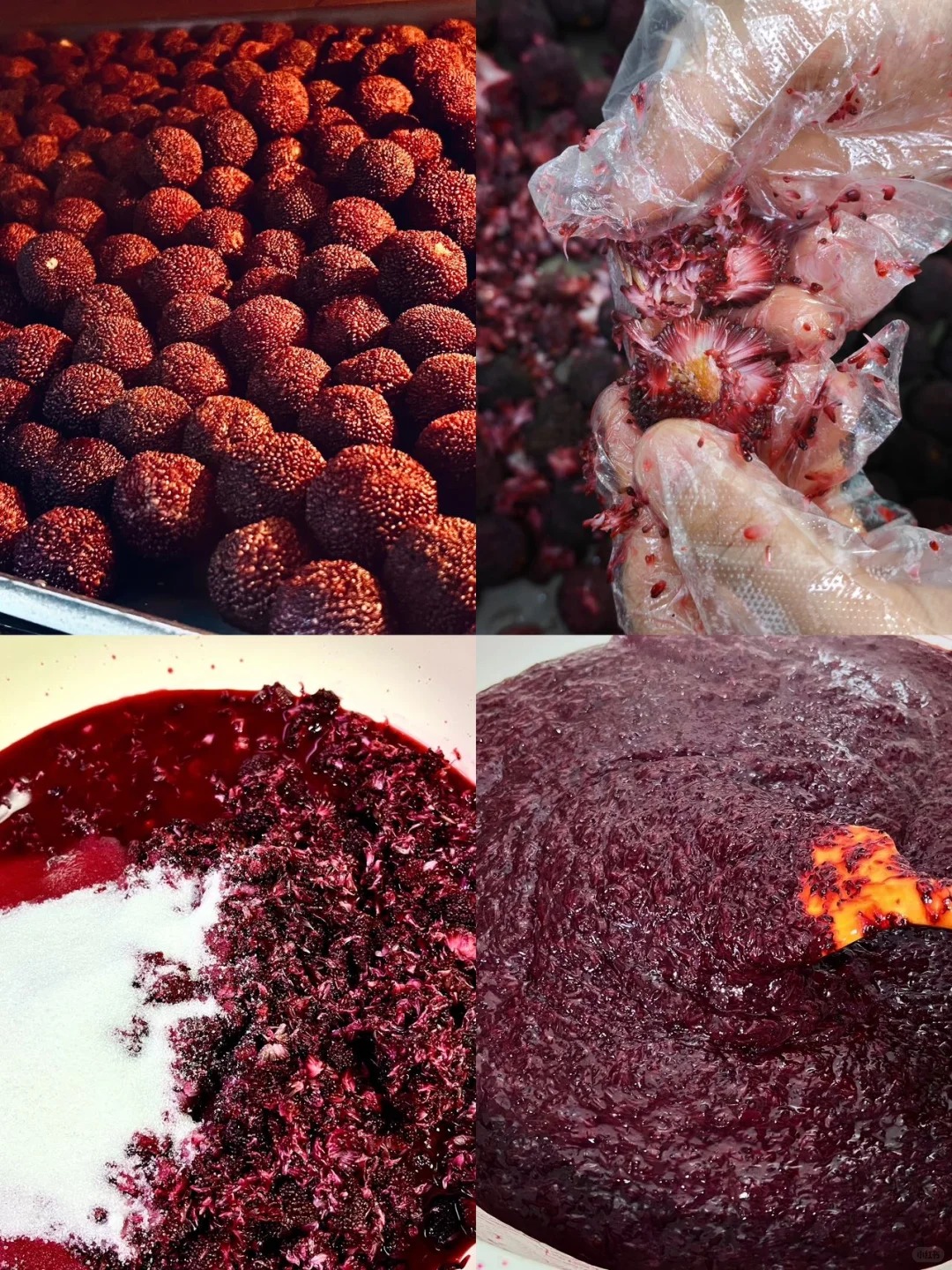
What to Bring Home as a Souvenir
Fresh fruit won't survive the journey home, but several yangmei products travel well:
- Dried yangmei (杨梅干): concentrated sweet-sour flavor, lightweight, available year-round at snack shops and supermarkets; go for the low-sugar versions if possible — some brands oversweeten and lose the point
- Yangmei juice / sparkling yangmei water: cold-pressed fresh juice available at specialty juice bars in Shanghai and Hangzhou; sparkling versions (look for 杨梅气泡水) are sold in most supermarkets
- Yangmei jam: pairs well with plain yogurt or toast; widely available in supermarkets year-round and easy to pack
All of these are reasonable souvenirs and widely available during season. The dried yangmei in particular is worth picking up — a small bag costs almost nothing and the flavor holds up well compared to most dried fruit.
Why You Can't Buy Fresh Yangmei Outside China
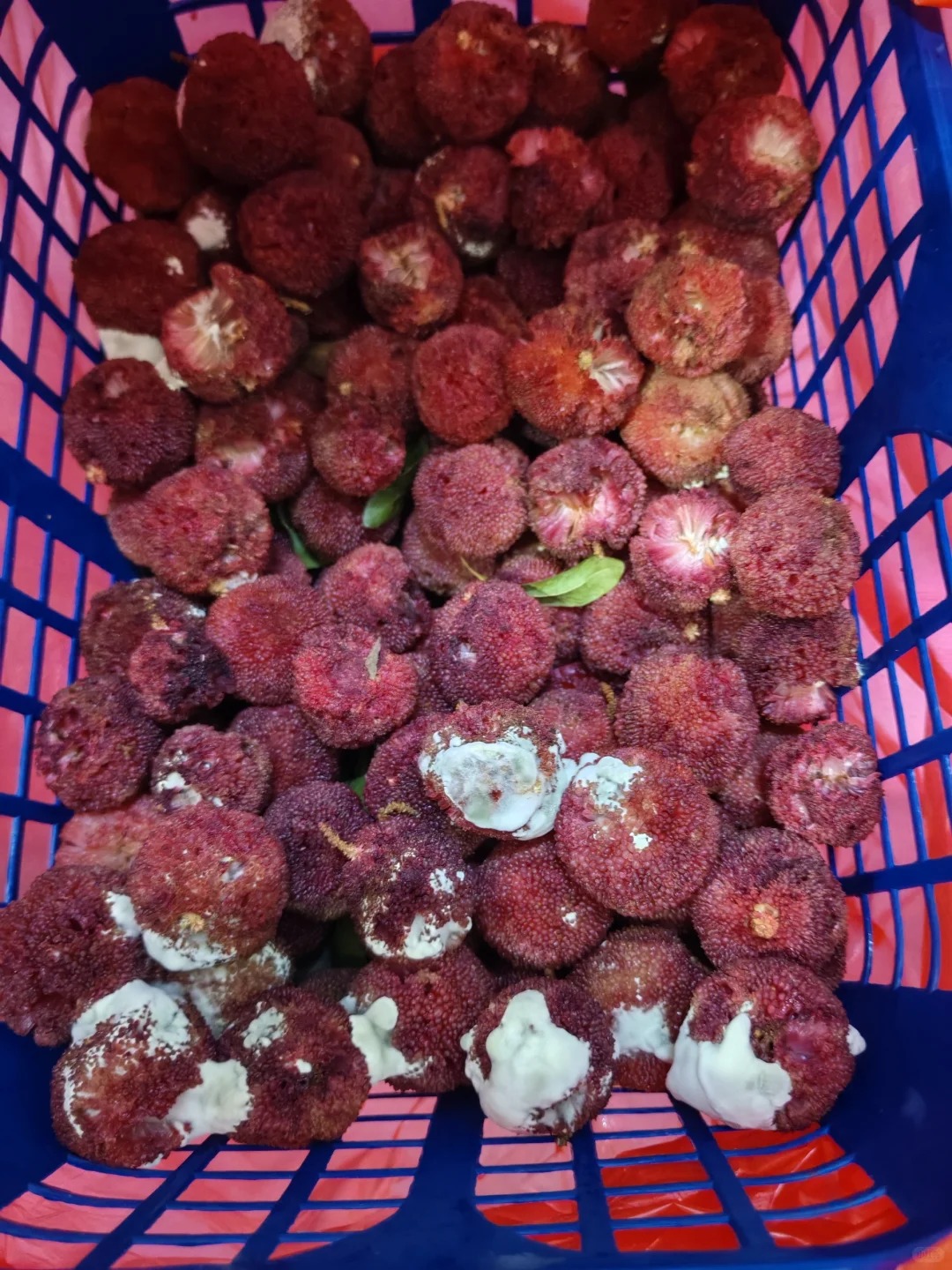
Why You Can't Buy Fresh Yangmei Outside China
This comes up often enough that it's worth addressing directly. Fresh yangmei is essentially unavailable in Western markets, and there are two reasons for that.
First, the fruit starts deteriorating within hours of being picked. It bruises easily, doesn't handle cold chain transport well, and has no realistic shelf life for international shipping. Second, there are active import restrictions — the US has a ban on importing the live fruit due to agricultural quarantine regulations.
What you can find outside China: yumberry juice, dried yangmei, and powdered extracts — mostly marketed as superfoods. They exist, but they're a pale substitute for the real thing.
If you're reading this while already in China during June, that's the point. This is genuinely one of those foods you can only experience properly here. It's cheap, it's everywhere during season, and there's no version of it waiting for you when you get home.
Can You Grow a Yangmei Tree?
Yangmei Trees
Yangmei trees are increasingly available outside China, but they come with some real limitations worth understanding before you commit.
The tree itself is attractive — evergreen, 5–10 meters tall at maturity, with a dense rounded canopy and smooth grey bark. It looks good in a garden independent of the fruit. The problem is climate. Yangmei is hardy to approximately USDA Zone 7–10, meaning it needs a subtropical or mild temperate environment with no hard freezes. Parts of California, the Gulf Coast, and Florida can work. Most of Europe and northern US states cannot.
A few other practical points:
- Soil: prefers slightly acidic, well-drained sandy or loamy soil; tolerates clay better than most fruit trees
- Sun: full sun to partial shade
- Water: moderate; the tree handles wet conditions reasonably well and is sometimes used in rain gardens
- Dioecious: you need both a male and female tree to get fruit — one male can pollinate several females, but you can't grow fruit from a single tree
- Time to fruit: typically 3–5 years from a grafted specimen; longer from seed
- Propagation: grafting and cuttings are standard for commercial production; seed-grown trees take longer and fruit quality is less predictable
Fresh yangmei is banned from import in the US as live plant material, so sourcing trees outside Asia can be tricky. Specialist nurseries in California occasionally carry Myrica rubra stock, including named cultivars like 'Wuzi' (dark purple) and 'Dongkui' (large-fruited). Availability varies year to year.
If you're in China and serious about the tree, nurseries in Zhejiang sell young grafted specimens during the off-season — though getting one home is a separate problem entirely.
FAQ about Yangmei
Q: What does yangmei taste like?
The closest comparisons most people reach for are plum, strawberry, and pomegranate — all at once. There's a sweet-tart balance that's hard to pin down exactly; some describe a faint cranberry-like tartness, others notice a mild herbal note at the finish. It's juicy, fragrant, and more complex than it looks. The flavor varies significantly depending on ripeness — dark purple ones are considerably sweeter and more interesting than the bright red, underripe ones.
Q: When is yangmei season in China?
Fresh yangmei is available from roughly late May through early July, with June being the peak window. The harvest in any given region only lasts about two to three weeks, so timing matters. If you're visiting Zhejiang, Fujian, Shanghai, or Hangzhou in June, you'll find them easily in wet markets and street stalls. The exact timing can shift slightly depending on annual rainfall, so it's worth checking locally when you arrive.
Q: Where can I buy yangmei in China?
During season, fresh yangmei is sold at wet markets, street fruit stalls, and most supermarkets across southern China. Cities like Hangzhou, Ningbo, Shanghai, and Suzhou have particularly good availability in June. Look for vendors with baskets of dark purple fruit — the deeper the color, the better. Outside the main producing regions like Zhejiang and Fujian, prices go up and quality can be more variable, but they're still findable in most major cities.
Q: How do I clean yangmei before eating?
Rinse under cold water first, then soak in salted water — about one teaspoon of salt per 500ml — for 20 to 30 minutes, stirring occasionally. Drain, rinse once more with fresh water, and dry with a dark-colored cloth or paper towel. The salt soak draws out any small insects hiding in the surface nodules, which is normal given how few pesticides are used on yangmei trees. Don't skip this step, even if the fruit looks clean.
Q: How long does fresh yangmei last?
Not long. At room temperature, expect one to two days before quality drops noticeably. Refrigerated, you might get three to four days, but the texture starts to suffer. Fresh yangmei bruises easily and deteriorates quickly once picked — similar to raspberries. The practical advice is to buy only what you'll eat that day, or at most the next morning. Don't stock up hoping they'll keep; they won't, and it's a waste of good fruit.
Q: Can I bring yangmei home from China?
Fresh yangmei cannot be brought back to most Western countries. The US has an import ban on the live fruit due to agricultural quarantine restrictions, and the fruit's extremely short shelf life makes international transport impractical regardless. What you can bring home are dried yangmei, yangmei wine, jam, or packaged juice — all available in supermarkets and snack shops. Dried yangmei in particular travels well and is a reasonable substitute for the real thing.
Q: What is yangmei wine and where can I find it?
Yangmei wine is made by layering fresh yangmei and rock sugar in a jar, covering with baijiu, and leaving it to steep for around ten days. The result is a deep red, sweet-sour liqueur that locals in Zhejiang consider a summer staple — traditionally used to aid digestion and relieve heatstroke. You don't need to make it yourself; commercially bottled versions are sold in supermarkets and liquor shops across Zhejiang province, usually near the local specialty drinks section.
Q: Is yangmei the same as yumberry?
Yes, they're the same fruit. "Yumberry" was a marketing name created around 2010 by American food companies trying to sell yangmei as a superfood juice in Western markets. The name played on the similarity to the Chinese pronunciation and the fruit's flavor. It never became widely used and doesn't appear anywhere in China. The correct names are yangmei (杨梅) in Chinese, or Chinese bayberry / red bayberry in English. The scientific name is Myrica rubra, which is the most unambiguous way to identify it.