Old Jesse Restaurant in Shanghai
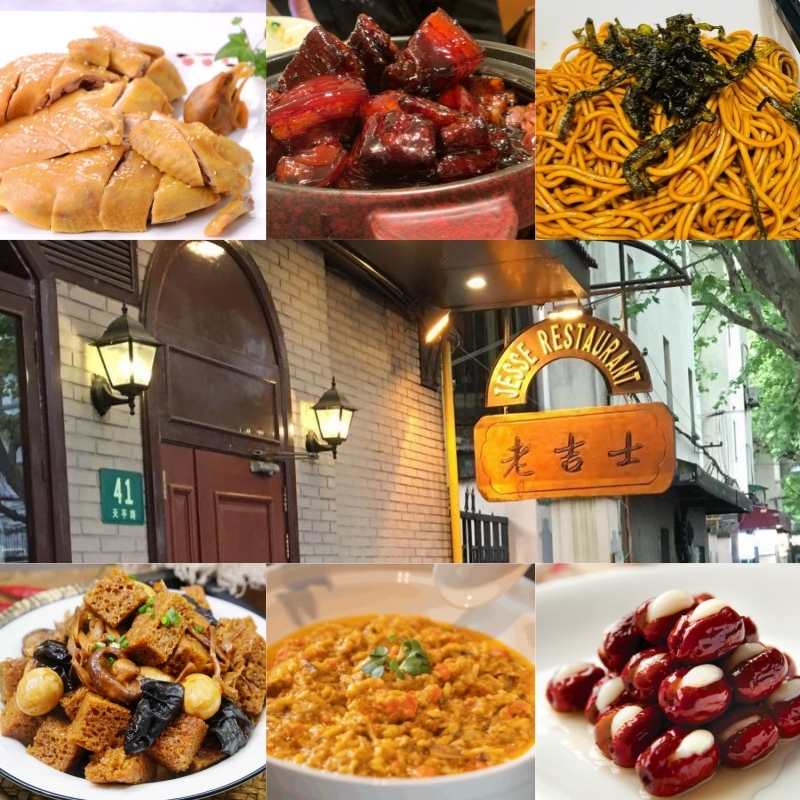
It was easy to miss; there were no illuminated signs, line ropes or hosts with a tablet greeting you at the entryway. The only thing marking the location was a mere lane-house entrance off Tianping Road, a modestly painted wooden sign hanging slightly above head height and an aroma of cooked soy, caramelized sugar and rendered scallion fat that made you stop dead in your tracks. A traditional ben bang cai restaurant, Old Jesse, locally known as 老吉士 (lǎo jì shì), has fed this city since 1998. There is no fancy dining room, no ambient lighting or tasting menus — just good food that will have people coming back to tell everyone they know about their experience!
The quiet, gradual formation of this establishment’s name is a product of its patrons, including Leslie Cheung, who came across it while filming in 1998; Faye Wong, Tony Leung and Shu Qi, who also dined here at some point; and French President Chirac, who did so after asking where he could find an authentic local meal. It became clear that Michelin's Bib Gourmand inspectors frequented this site. None of this publicity was a result of marketing; all of this remains due to the quality of the food that is consistently offered through many years.
Squeezed between two other tables on my first visit, menus open, a pot of jasmine tea already half-empty, I understood immediately why it had lasted. What follows is exactly what I ate, what I'd skip, and what I'd order first if I walked in tomorrow. 🍜
Old Jesse at a Glance
| Item | Details |
|---|---|
| 📌 Cuisine Type | Traditional Shanghainese (ben bang cai), mid-to-upscale home-style |
| 🏬 Total Branches | ~6 locations in Shanghai (Tianping Road is the original) |
| 📍 Original Address | 41 Tianping Road, Xuhui District, Shanghai |
| 💰 Average Spend | RMB 160–220 per person (approx. USD 22–30) |
| 🏮 Atmosphere | Lane-house interior, vintage décor, two floors, cozy and packed |
| ⏰ Opening Hours | ~11:00–14:30 / 17:00–22:30 (verify before visiting — hours vary) |
| 📞 Reservation Line | 021-62821690 (Tianping Road; book 3–7 days ahead) |
| ⭐ Awards | Michelin Bib Gourmand · Dianping Must-Eat (multiple consecutive years) |
| ⚠️ Important Note | Information may change — always confirm before your visit |
The Michelin recognition here is Bib Gourmand, not a star rating. That distinction matters. Bib Gourmand specifically flags restaurants that deliver exceptional quality at a reasonable price. For Old Jesse, that means you're getting food that impressed the world's most demanding critics — for roughly the price of a casual dinner back home.
Cold Starters Mapping The Sweet Savory Palate
Here's something most visitors don't realize. In Shanghai, cold starters aren't an afterthought. They're a flavor map. They tell you exactly what the kitchen believes cooking should taste like — before the heat even starts.
At Old Jesse, the cold platter is where the meal begins to make sense.
| Dish | Flavor Profile | Rating | Best For |
|---|---|---|---|
| Salted Chicken 咸鸡 | Savory, clean | ★★★★★ | Everyone, especially first-timers |
| Four Happiness Wheat Gluten 四喜烤麸 | Sweet-savory, soy-rich | ★★★★☆ | Vegetarians, sauce lovers |
| Shanghai Smoked Fish 熏鱼 | Sweet-sour, caramelized | ★★★★☆ | Drinkers, bold-flavor fans |
| Sweet Lotus Root with Osmanthus 桂花糖藕 | Floral sweet | ★★★★☆ | Palate transition, dessert lovers |
1. Salted Chicken
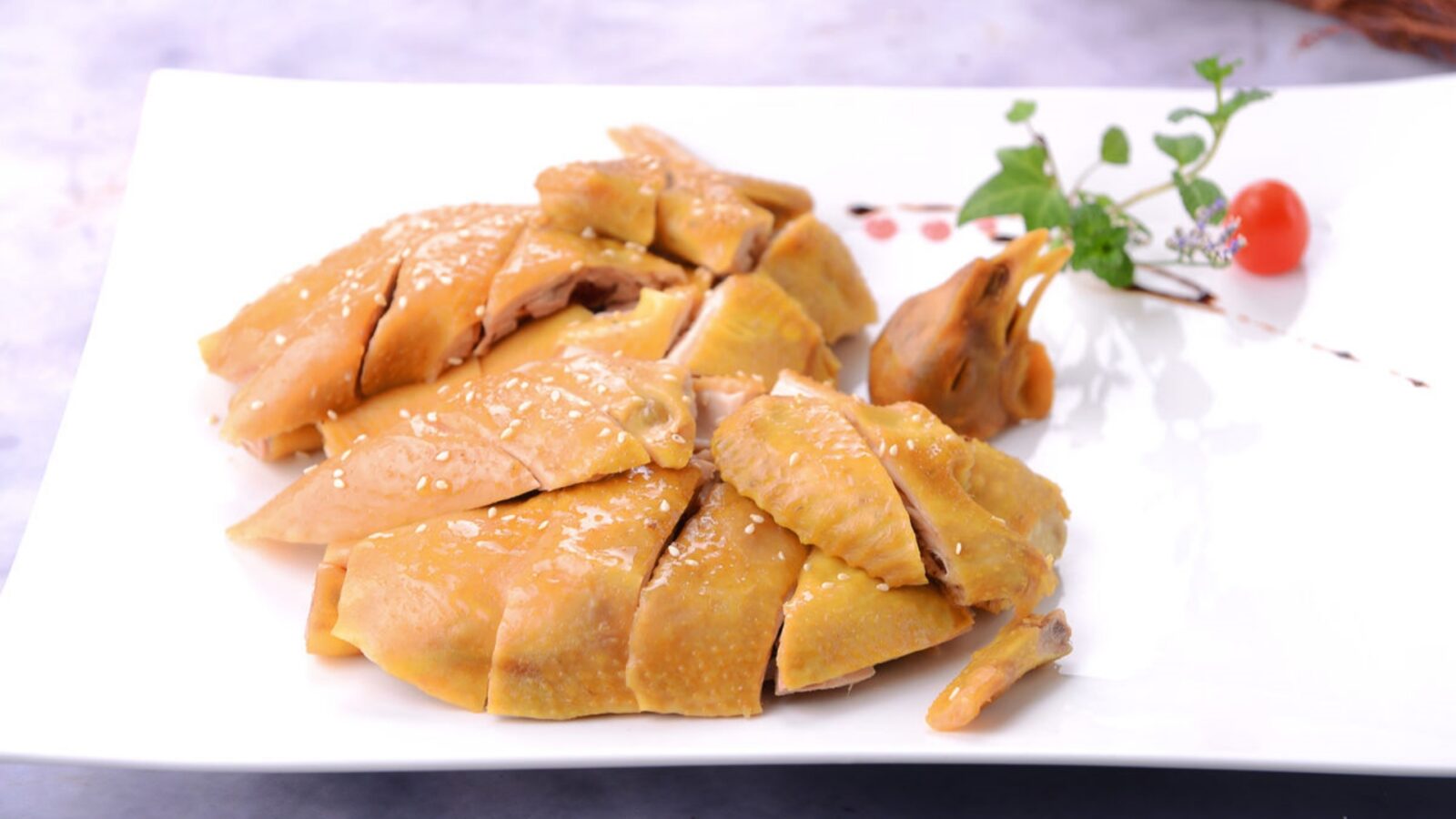
Salted Chicken
The first time I ordered salted chicken at Old Jesse, I didn't expect much. Cold chicken. How exciting can that be? Then I tasted it.
- Appearance: Golden-pale skin, neat slices, a drizzle of fragrant sesame oil
- Aroma: Clean and herbal — light ginger, Shaoxing wine, just enough scallion
- Texture: Skin that snaps slightly on the bite, meat that's firm without being dry
- Taste: Gently salty, pure — you taste chicken, not a sauce
- How to eat it: Add a small spoonful of black vinegar and minced ginger from the condiment tray. It changes everything
- Rating: ★★★★★ — Order this first, always
One honest note: the meat can occasionally run lean, which makes it slightly firmer than ideal. That's normal batch variation, not a quality lapse. On the two visits where this happened, a touch more vinegar fixed it entirely.
For context on why cold dishes hold such a central place in Shanghai food culture, this guide to eating like a local in Shanghai breaks it down beautifully.
2. Four Happiness Wheat Gluten
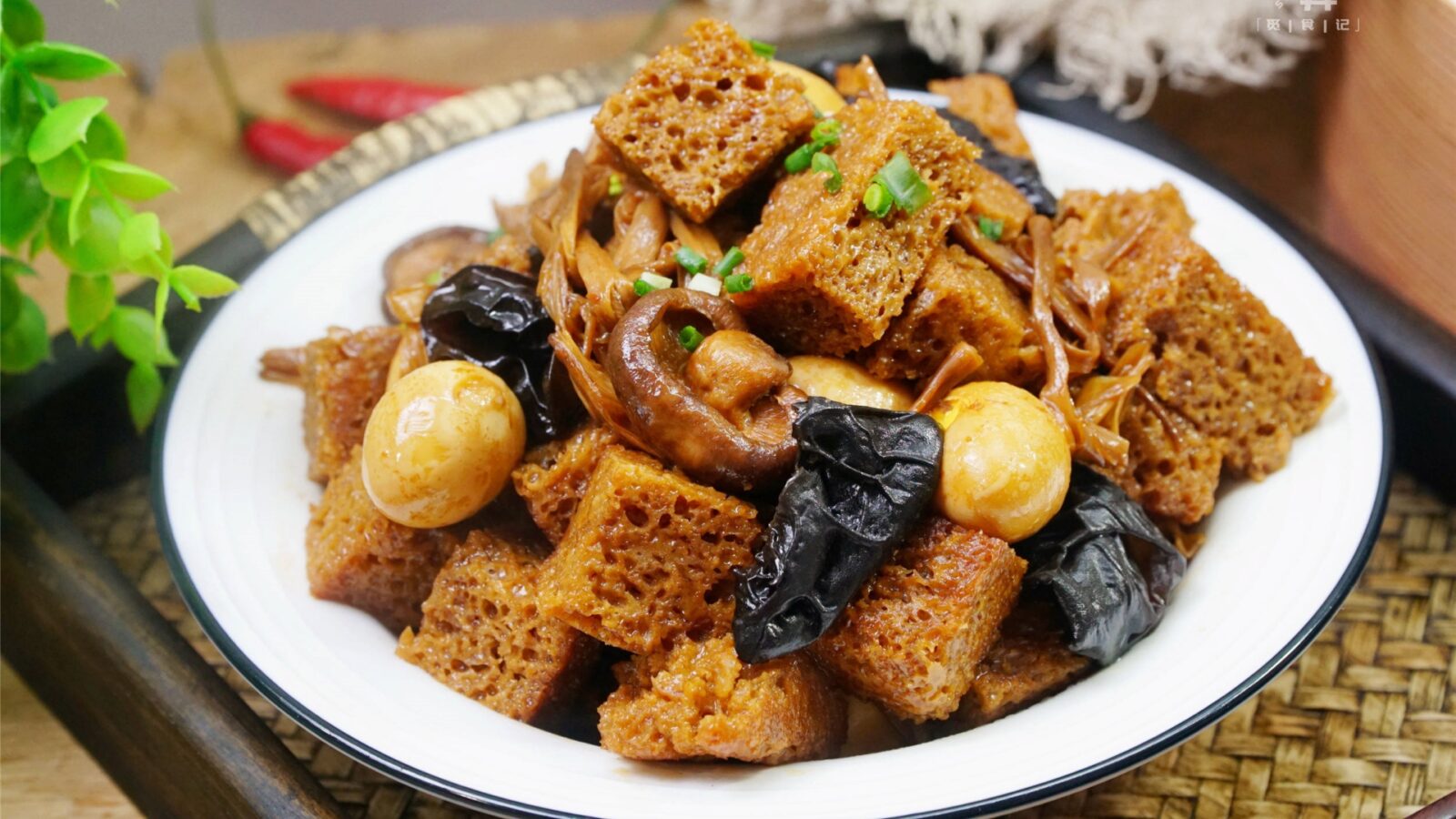
Four Happiness Wheat Gluten
This dish is one of the great pleasures of ben bang cai. It's vegetarian, but nobody at the table ever feels like they're missing out.
- Appearance: Deep mahogany-colored wheat gluten, studded with black wood ear mushrooms, orange carrot slivers, and roasted peanuts
- Aroma: Thick, warming soy-sugar glaze with a faint caramel edge
- Texture: The gluten is spongy and porous — it absorbs the braising liquid like a sponge, then releases it with every bite. Mushrooms give you the crunch
- Taste: Classic Shanghai sweet-savory. The sweetness is pronounced but balanced
- How to eat it: Works as a standalone cold dish, or alongside plain rice
- Rating: ★★★★☆
3. Shanghai Smoked Fish
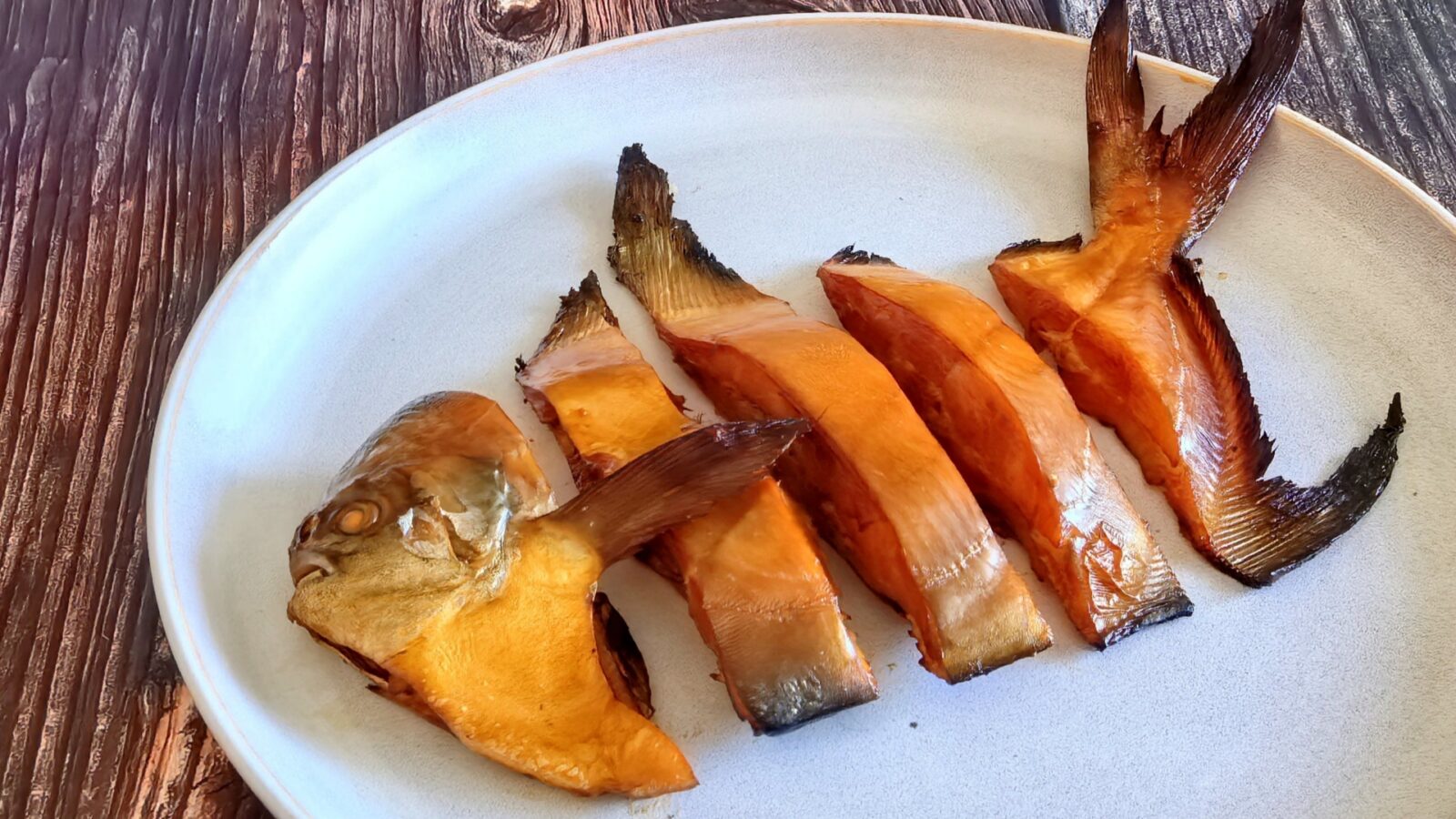
Shanghai Smoked Fish
Don't be misled by the name. There's no smoking involved in the traditional sense. The "smoking" here refers to the deep caramelization that happens when fried fish is plunged into a hot sweet-savory marinade.
- Appearance: Dark amber fish pieces, glossy and lacquered, almost jewel-like
- Aroma: A complex hit of caramel, five-spice, star anise, and soy — deeply savory underneath the sweetness
- Texture: Crisp exterior giving way to soft, flaky white fish within
- Taste: Sweet-forward and boldly sauced — classic Shanghai. If you find it too sweet alone, pair it with a bite of plain rice
- How to eat it: Best as the first cold dish — the bold flavors wake up the palate
- Rating: ★★★★☆
4. Sweet Lotus Root with Osmanthus
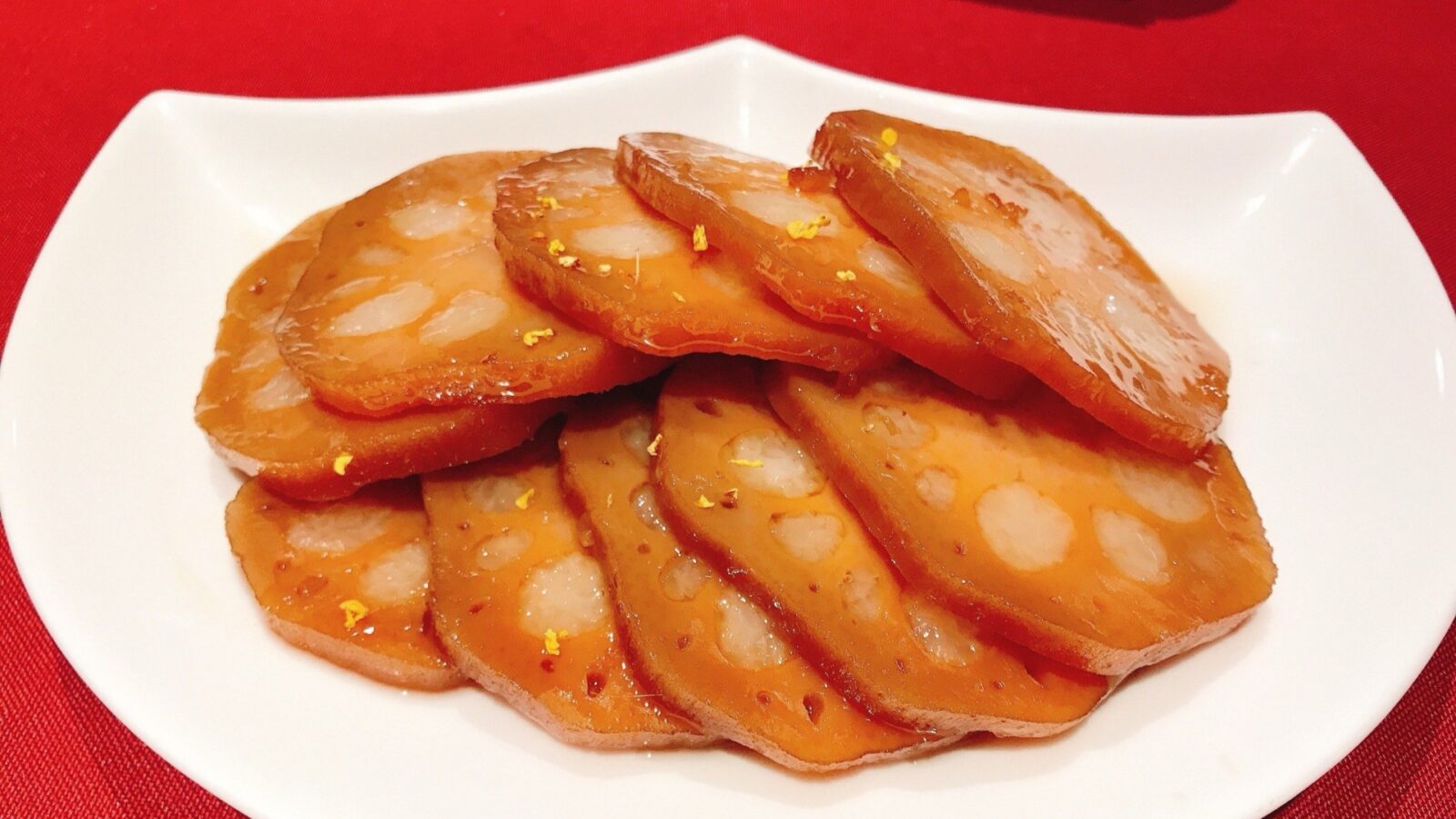
Sweet Lotus Root with Osmanthus
This one sits at the intersection of cold starter and dessert. Glutinous rice stuffed inside lotus root cavities, simmered until tender, then crowned with osmanthus honey syrup.
- Appearance: Cross-cut lotus slices revealing white glutinous rice in each chamber, golden syrup pooling beneath
- Aroma: Delicate osmanthus blossom fragrance — distinctly floral and very Shanghai
- Texture: The lotus has gentle resistance; the rice inside is softly yielding
- Taste: Sweet, but softly so — the flower dominates over raw sweetness
- How to eat it: Order it after the other cold dishes, just before the mains arrive. It acts as a flavor bridge
- Rating: ★★★★☆
Six Signature Dishes Defining Traditional Braised Perfection
When the hot dishes start arriving at Old Jesse, the full statement of Shanghainese cooking reveals itself. This is nong you chi jiang territory — the rich, lacquered, slow-built flavors that define ben bang cuisine. 🔥
| Dish | Key Flavors | Priority | Rating |
|---|---|---|---|
| Red-Braised Pork 红烧肉 | Soy-sugar-wine, deeply sweet-savory | First choice | ★★★★★ |
| Scallion-Roasted Fish Head 葱烤鸦片鱼头 | Scallion oil, umami-rich | First choice | ★★★★★ |
| Crab Roe with Sheet Jelly 蟹粉炒粉皮 | Fresh crab, silky, clean | First choice | ★★★★★ |
| Sizzling Eel 响油鳝糊 | Garlic, pepper, gelatin-rich | Advanced pick | ★★★★☆ |
| Crispy River Shrimp 梅干菜油爆虾 | Sweet-sour, crunchy | Advanced pick | ★★★★☆ |
| Crystal Shrimp 清炒河虾仁 | Pure shrimp sweetness | Essential balance | ★★★★★ |
5. Red-Braised Pork
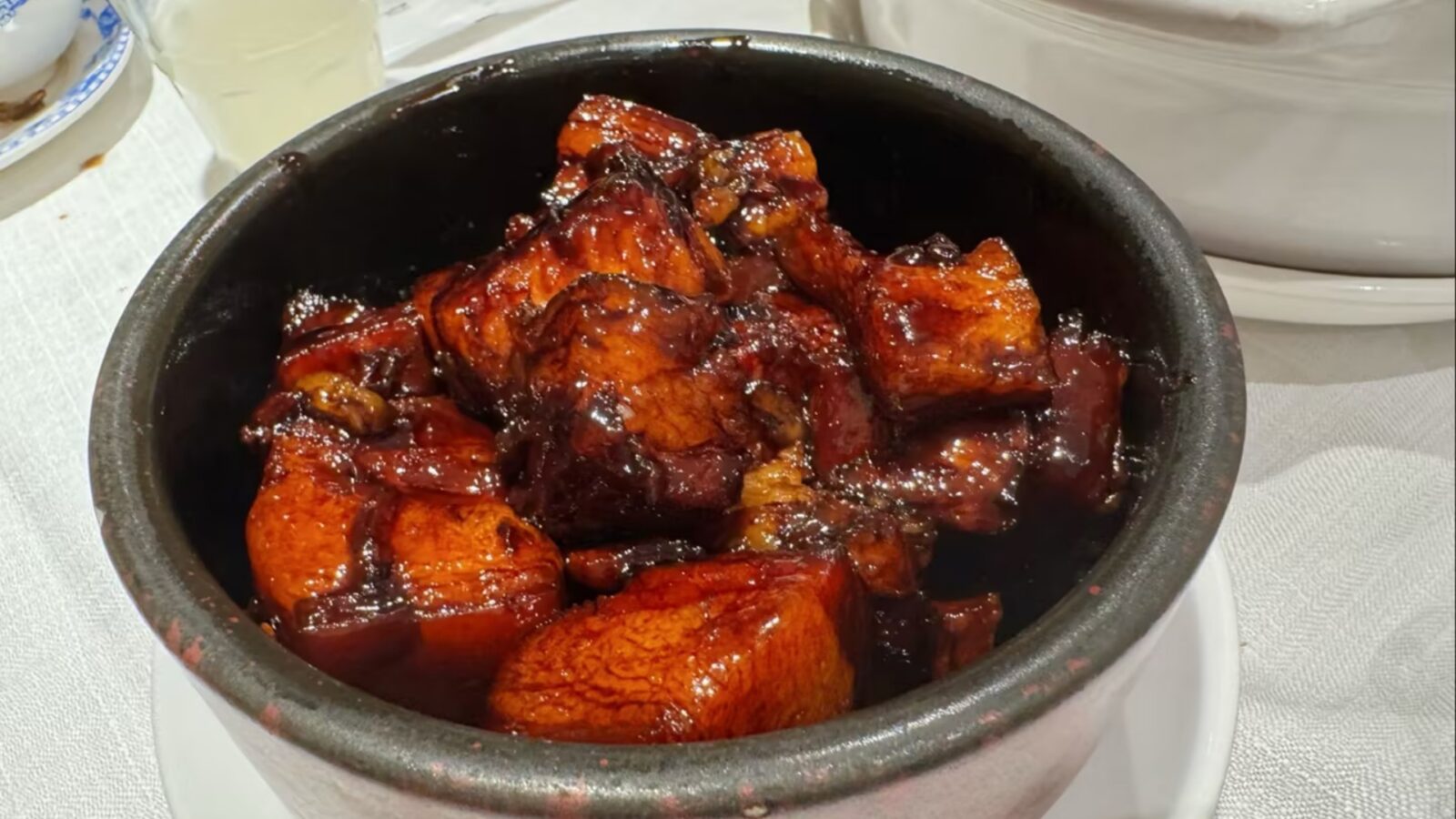
Red-Braised Pork
I've eaten red-braised pork across Shanghai more times than I can count. The version at Old Jesse sits in a category by itself.
- Appearance: Gleaming mahogany blocks of pork belly, arranged with quiet precision. A thick, syrupy sauce pools around them. Braised egg and sheets of knotted tofu skin are optional — order them
- Aroma: Layers of Shaoxing wine, caramelized sugar, star anise, and pork fat — dark and deeply complex
- Texture: The fat layer collapses instantly on the tongue. Lean layers stay tender without falling apart. The skin beneath has a QQ gelatin bounce that's almost uncanny
- Taste: Sweet first, then savory, then a long wine-and-soy finish. The sweetness is bold but never cloying
- How to eat it: Pour the sauce directly over white rice. This is non-negotiable. If your rice hasn't arrived yet, ask for it before the pork comes — the kitchen can be slow on rice during peak hours
- Rating: ★★★★★ The dish that defines the restaurant
One TripAdvisor reviewer who'd eaten braised pork across Hangzhou and Shanghai called Old Jesse's version the best they'd encountered. That matches my experience exactly.
To understand why braised pork holds such cultural weight in Shanghai cooking, this overview of Shanghai food culture gives you the full picture.
6. Scallion-Roasted Fish Head
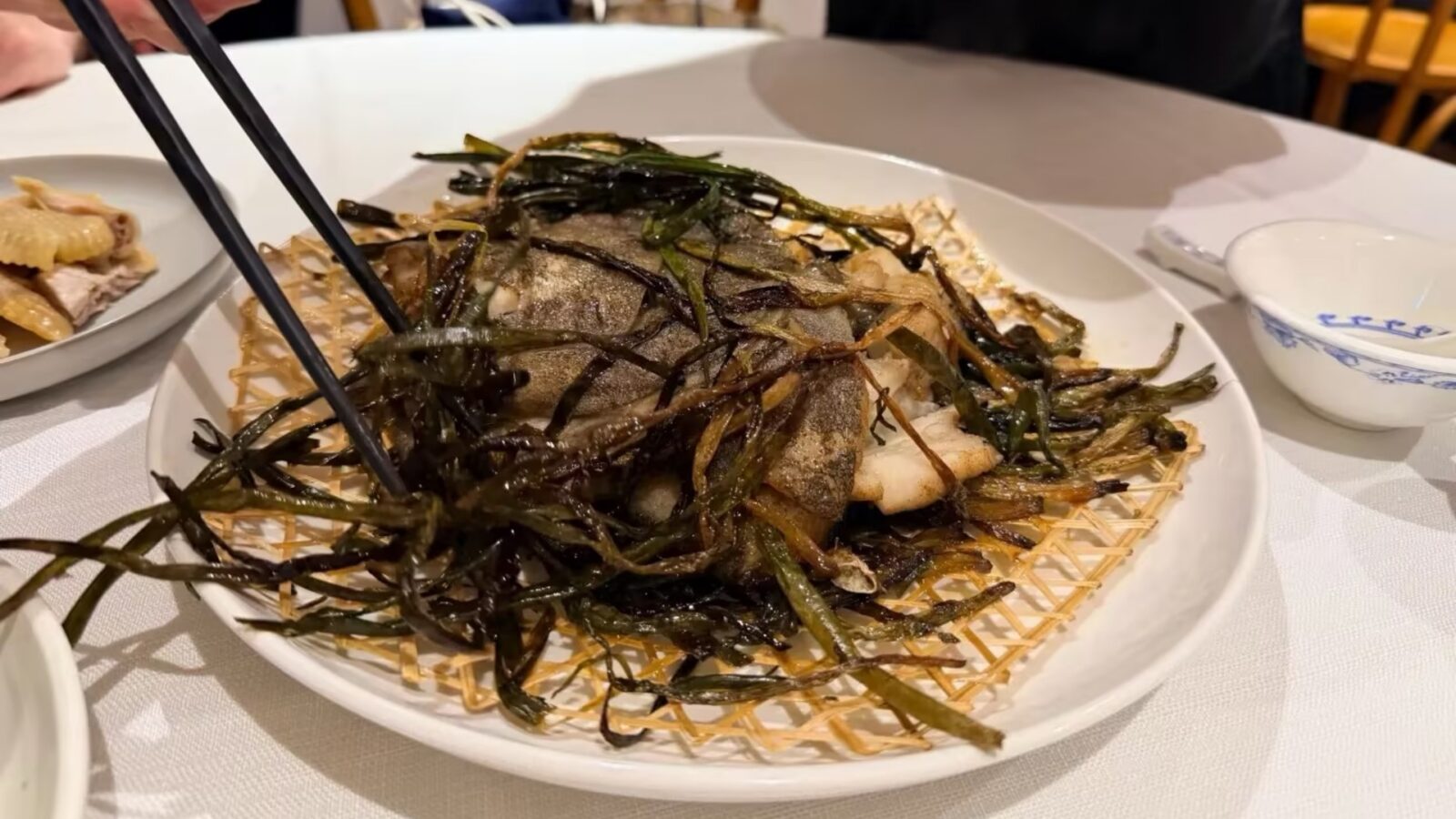
Scallion Oil Noodles
The dish arrives and you cannot see the fish. A dense layer of caramelized scallions blankets the entire plate. That is not decoration. That is the point.
- Appearance: Dramatic — a whole fish head almost invisible beneath a mountain of charred, deeply fragrant spring onions
- Aroma: Scallion oil, intense and penetrating. One reviewer's notes describe the kitchen using scallions "by the kilogram" for this dish. You believe it
- Texture: Push the scallions aside to find fish skin that's lightly crisped at the edges. The collar meat beneath is impossibly tender, rich with natural gelatin
- Taste: Savory and scallion-forward, with a subtle sweetness from the fish itself. Dip each piece into the sauce pooled at the bottom of the plate
- How to eat it: Work from the collar outward. That's where the best meat hides. Serve the scallions alongside on rice — they're half the flavor
- Rating: ★★★★★
Don't let the word "head" put you off. The fish used here — a deep-sea flatfish (yāpiàn yú, flounder) — has some of the most delicate, buttery flesh available. House of Haos described the meat as having "crisped skin and scallions contrasted with the salted fattiness of the collar flesh and collagen." That's exactly right.
7. Crab Roe with Sheet Jelly
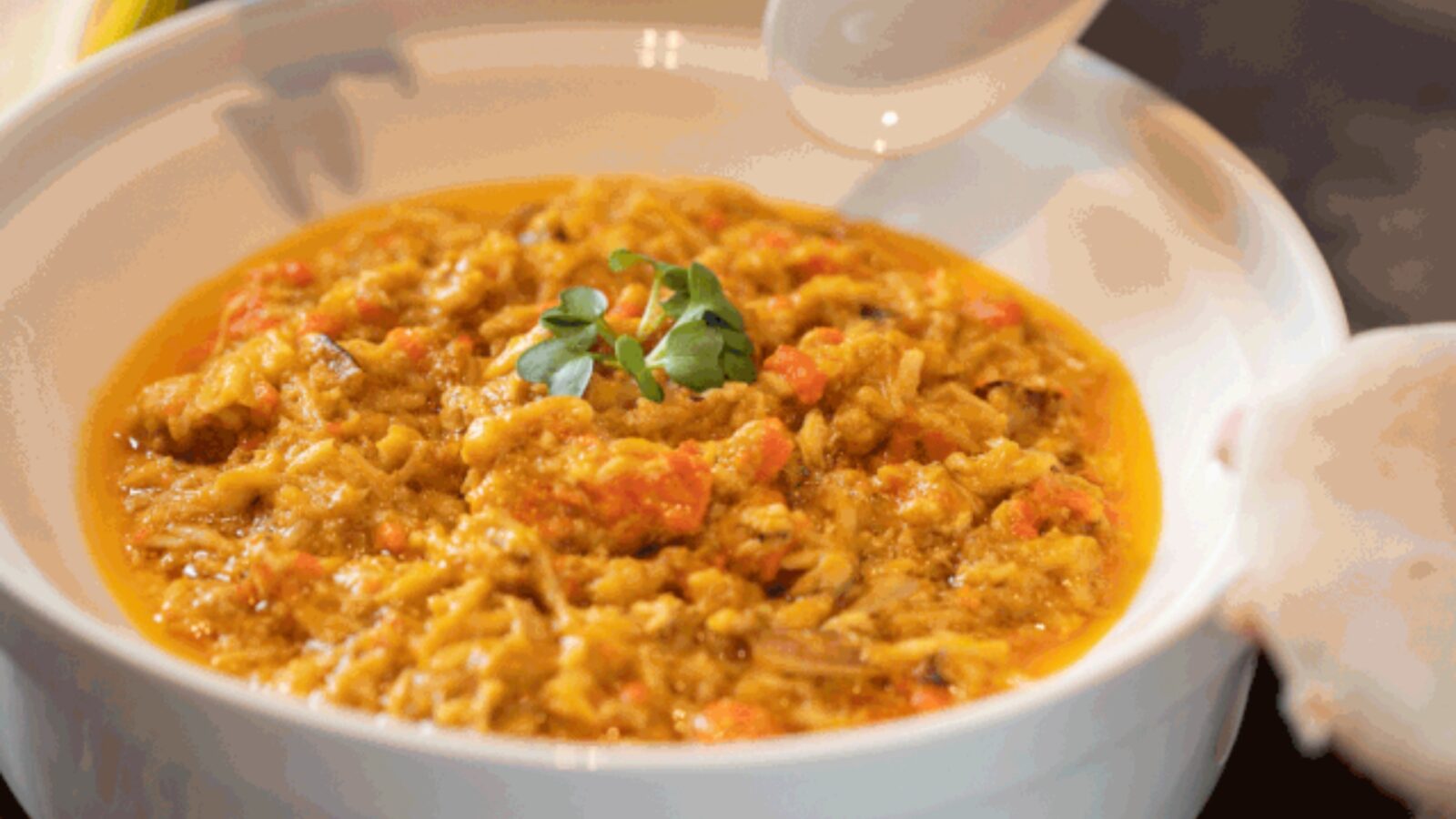
Crab Roe with Sheet Jelly
Hairy crab season or not, this dish earns its place at the table year-round. The sheet jelly (fen pi) is the vehicle. The crab roe is the destination.
- Appearance: Translucent, silky sheets of jelly coated in golden-orange crab roe. A scattering of ginger threads. A small dish of ginger vinegar alongside
- Aroma: Clean, briny crab without any fishiness — the mark of quality sourcing
- Texture: The jelly is thick enough to hold shape but yields softly. It clings to the roe rather than sliding off
- Taste: Oceanic and savory, with a gentle sweetness from the crab fat. The ginger vinegar cuts through perfectly
- Hidden move: Spoon leftover crab roe over plain rice. One of the best bites in the restaurant
- Rating: ★★★★★ — If you visit during autumn crab season, this dish reaches another level entirely
8. Sizzling Eel
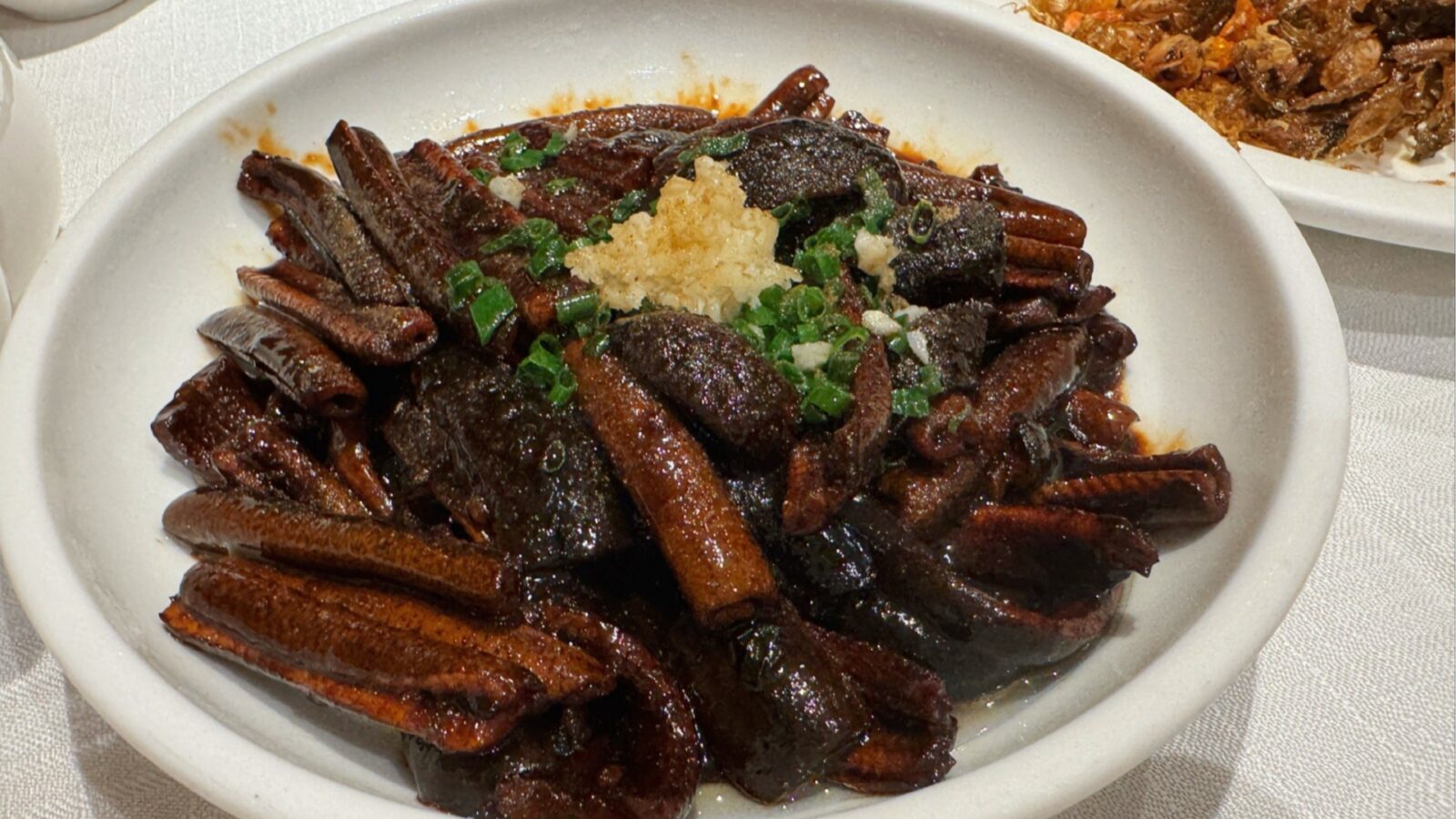
Sizzling Eel
This dish arrives with theatre. A ladle of hot oil hits the garlic and pepper at the table, sending up a cloud of fragrance that turns heads across the dining room.
- Appearance: Glistening eel shreds in a deep red-brown sauce, blanketed with minced garlic and white pepper, with scallions scattered on top
- Aroma: Garlic, pepper, and a hit of soy-sugar-wine — three-layer fragrance
- Texture: Eel is boneless here and expertly prepared. Each shred is tender with a satisfying chew and a collagen-rich finish
- Taste: Savory-sweet with a pronounced white pepper punch — old-school Shanghai kitchen style
- How to eat it: Eat it over rice. If you're sensitive to pepper, mention "少胡椒" (shǎo hújiāo — less pepper) when ordering
- Rating: ★★★★☆
9. Crispy River Shrimp
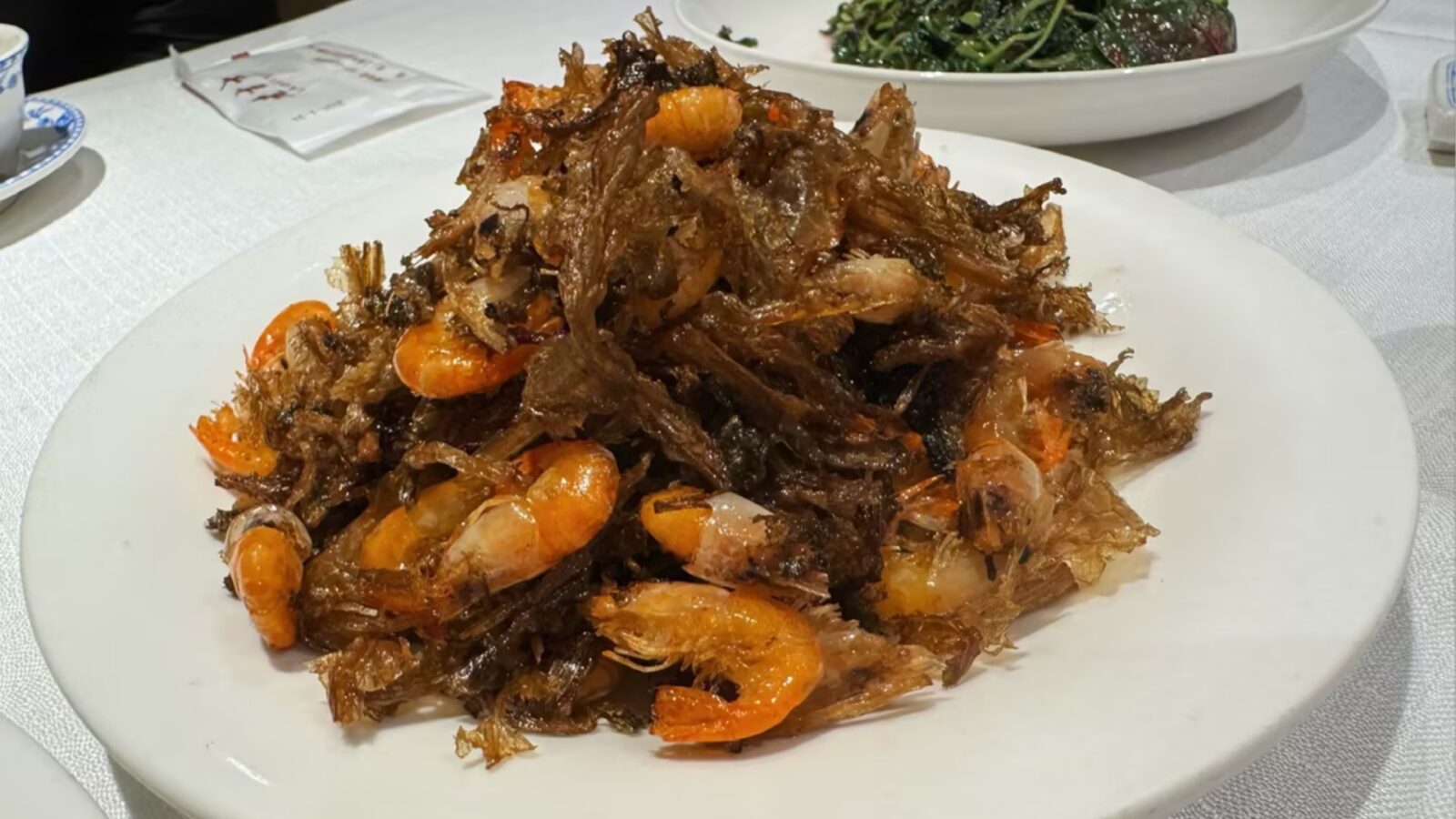
Crispy River Shrimp
This one surprised me. The combination sounds strange on paper. Tiny river shrimp, fried hard, tossed with dried mustard greens in a caramelized sauce. What arrives is compulsively snackable.
- Appearance: Clusters of shrimp — shells on, still whole — lacquered in a dark amber sauce. Dried mustard greens add texture and color
- Aroma: Shrimp, charred caramel, and the distinctive funk of méi gān cài — fermented and earthy
- Texture: The shells fry thin enough to eat whole. The shrimp meat inside stays springy
- Taste: Sweet-sour with a savory mustard-green backbone. The flavor builds through the dish — toward the end it skews sweet, so alternate bites with something cleaner
- How to eat it: Pair with crystal shrimp to balance the richness. Works brilliantly with cold beer
- Rating: ★★★★☆
10. Crystal Shrimp
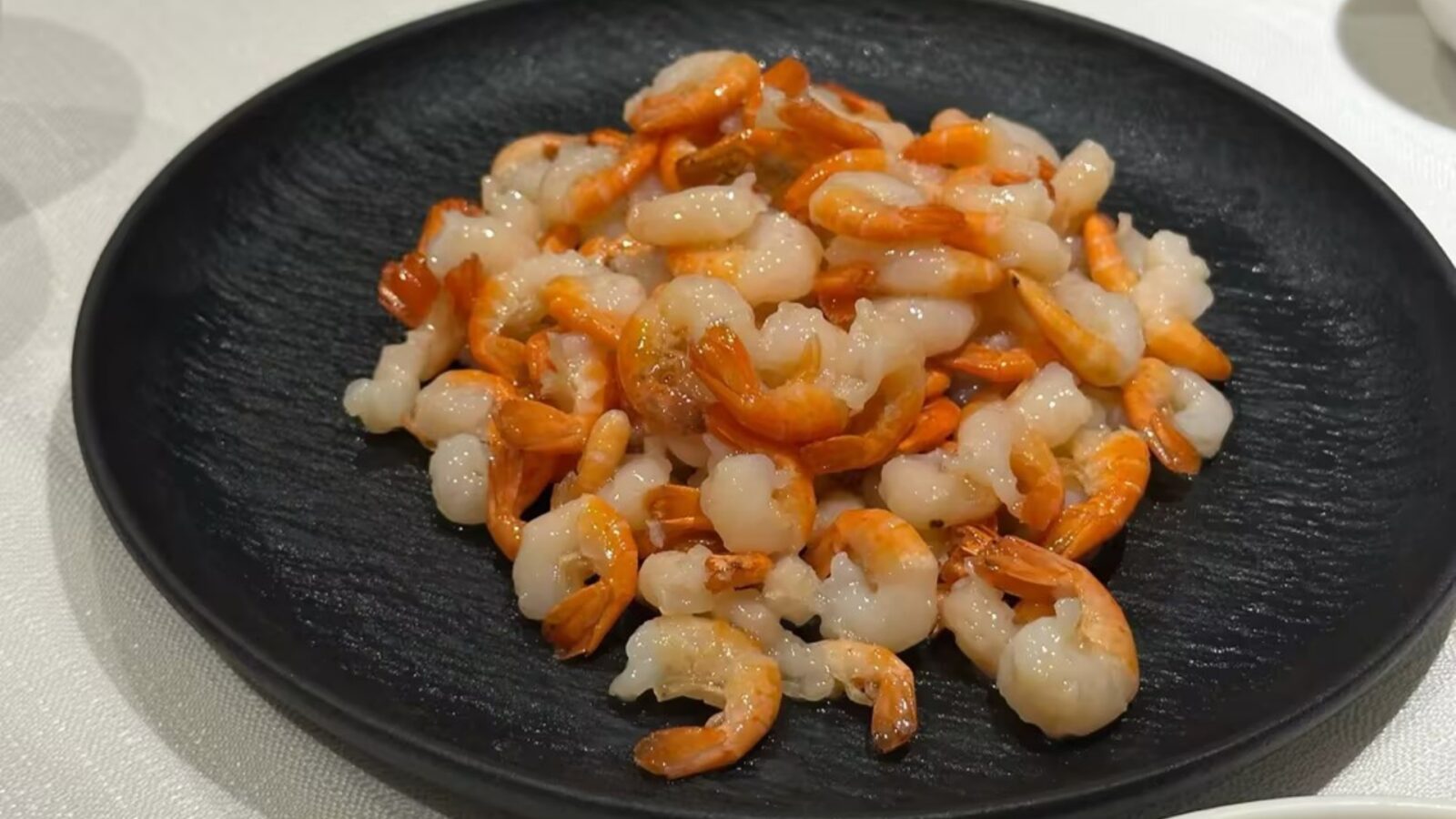
Crystal Shrimp
By the time the crystal shrimp arrives, the table is deep in braised meat, soy sauces, and caramelized crusts. This dish is the reset button. Order it — even if you feel like you've already ordered enough.
- Appearance: Pearlescent white shrimp, plump and uniform, barely dressed. A small dish of Chinkiang vinegar alongside
- Aroma: Barely there — which is entirely the point. Clean shrimp sweetness and a faint whisper of lard or egg white
- Texture: Firm, snappy, almost hand-peeled in feel. No starch coating, no filler
- Taste: Pure shrimp. Sweet, oceanic, faintly briny. The vinegar amplifies the sweetness rather than fighting it
- How to eat it: Alternate bites with the braised pork and the eel. Let this dish reset your tongue between each heavy course
- Rating: ★★★★★ — The most important dish on the table that nobody talks about enough
Comforting Rice And Noodles Absorbing Rich Sauces
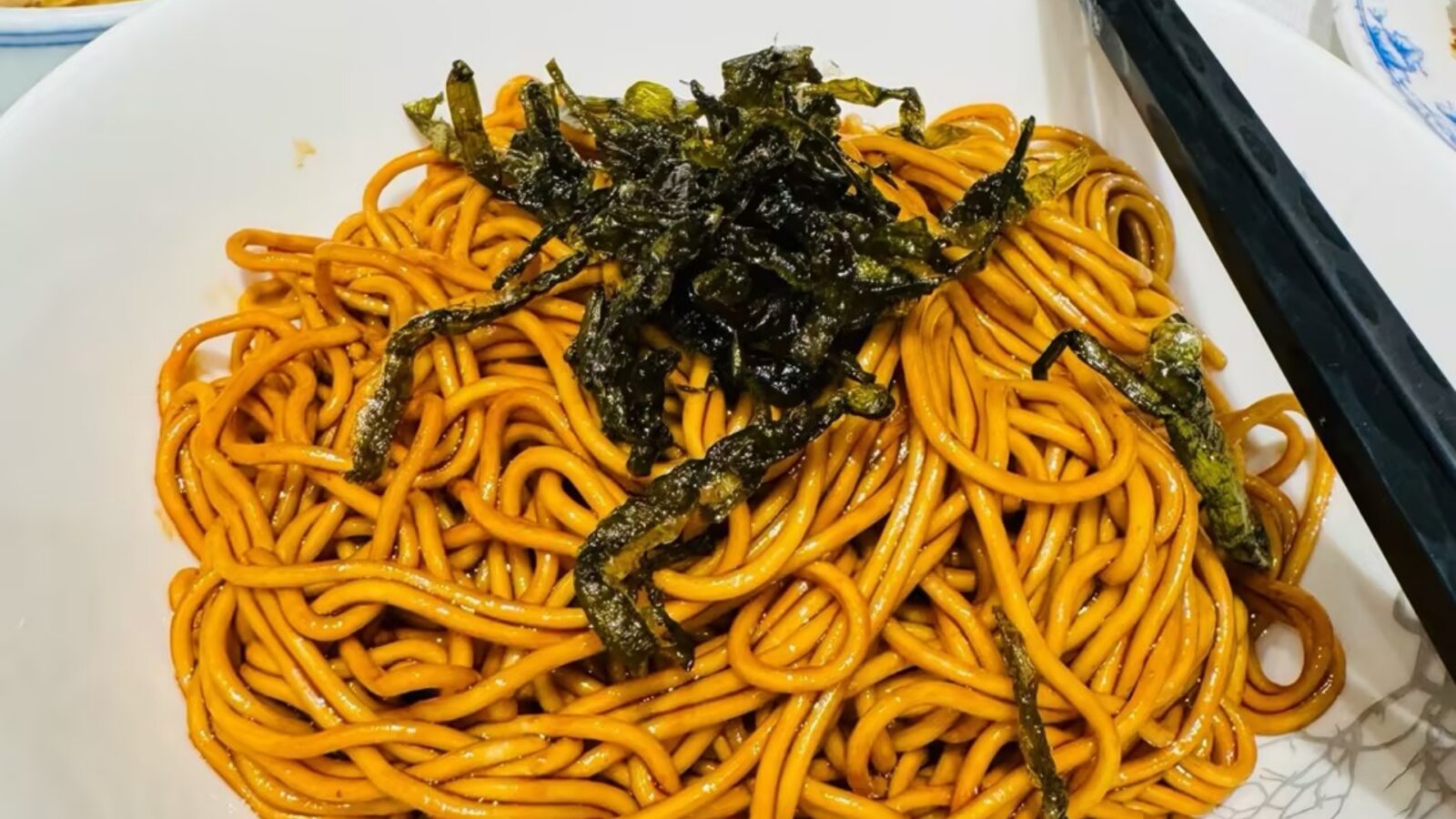
Scallion Oil Noodles
At Old Jesse, the rice and noodles are not side orders. They are the final act. The red-braised pork produces a sauce so good that letting it sit untouched on the plate would be a genuine waste.
| Staple Dish | Why It Matters | Best For |
|---|---|---|
| Salted Pork & Vegetable Rice 咸肉菜饭 | Rice cooked with pork fat and greens — simple, almost meditative | Anyone wanting a pure Shanghai experience |
| Crab Roe Stone Pot Rice 蟹粉石锅拌饭 (limited) | Lard-seasoned stone pot, topped with fresh crab roe and ginger vinegar | Crab lovers, groups — ask if available that day |
| Scallion Oil Noodles 葱油拌面 | Springy hand-pulled noodles tossed in rendered scallion oil | Best alongside salted chicken or braised pork |
| Pan-Fried Buns 生煎馒头 | Crisp-bottomed, soup-filled — classic Shanghai street food at the table | Large groups adding variety |
| Pork Wonton Soup 菜肉大馄饨 | Clear pork-oil broth, fat wontons — clean and restorative | Anyone avoiding fried rice or noodles |
A quick note on scallion oil noodles specifically. This dish has its fans — the noodles are well-made and the scallion fragrance is genuine. Some reviewers feel the scallion punch isn't quite as intense as dedicated noodle shops. That's fair. Here, it's best used as a supporting player: a clean, starchy base for the remaining braised sauce on the table.
For a deeper look at how Shanghai's noodle and rice culture connects to its neighbourhood identity, that's worth reading before your trip.
Gentle Traditional Sweets Rounding Off Heavy Meals
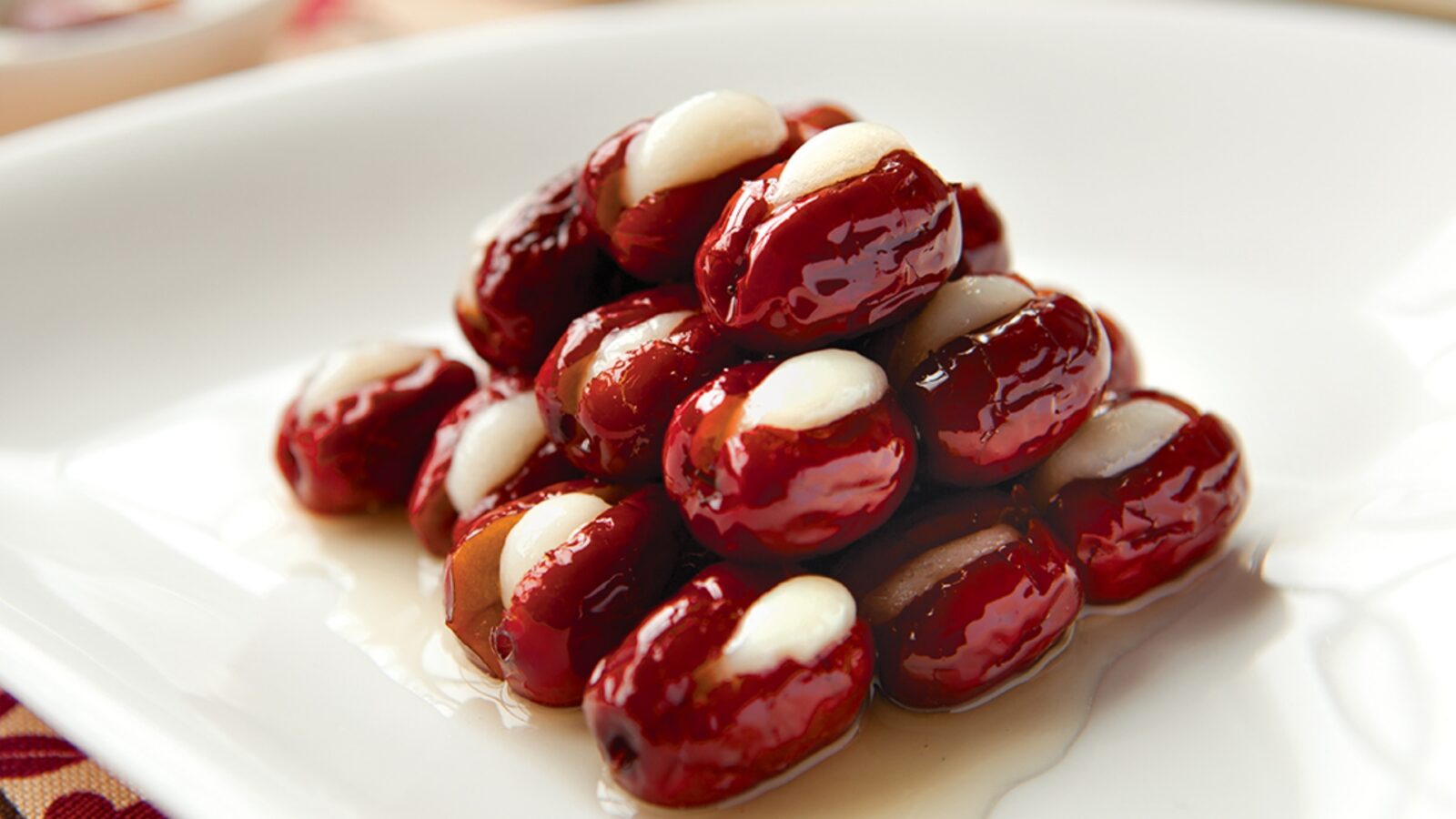
Sticky Date Cake
A Shanghainese meal without dessert is technically complete. But it doesn't feel finished. These four options take the meal from satisfying to memorable.
| Dessert | Texture | Rating | Note |
|---|---|---|---|
| Sticky Date Cake 心太软 | Soft, chewy, warm | ★★★★☆ | Classic closer, share between two |
| Fermented Rice Balls 酒酿圆子 | Silky soup, pillowy balls | ★★★★★ | Check availability — not all branches carry it |
| Walnut Cake 吉士核桃糕 | Dense, crumbly, nutty | ★★★★☆ | Best with tea |
| Fried Sticky Rice Cake 粢饭糕 | Crisp outside, chewy inside | ★★★☆☆ | Savory finish for those avoiding sweetness |
The fermented rice balls (jiǔ niàng yuán zǐ) are worth asking about specifically. When available, they're a light, fragrant way to close a meal that's been heavy with soy and braised fat. Rachel Gouk at Nomfluence singles out the red date dessert as a "firm favourite" across multiple visits — and the similar logic applies here. The sweetness at Old Jesse doesn't overpower. It rounds off.
Authentic Beverage Pairings Complementing Rich Braised Meats
Old Jesse isn't a cocktail bar. The drinks list is practical, traditional, and well-matched to the food. Here's how to navigate it.
| Drink | Character | Best Paired With | Who Should Order |
|---|---|---|---|
| Shaoxing Yellow Wine 绍兴花雕 | Warm, mellow, slightly sweet | Braised pork, salted chicken | Drinkers — the classic choice |
| Light Lager (cold) | Crisp, refreshing | Sizzling eel, crispy shrimp | Anyone wanting to cut through richness |
| Hot Soy Milk 热豆浆 | Mild, nutty, clean | Full menu — all dishes | Non-drinkers, morning visitors |
| Sour Plum Drink 酸梅汤 | Sweet-sour, cool | Fried dishes, summer visits | Perfect for hot weather |
| Fresh Ground Soy Milk 现磨豆浆 | Fuller body than packaged | Full menu | Health-conscious diners |
Shaoxing wine has been paired with Shanghainese cooking for hundreds of years. The wine's natural sweetness and herbal depth amplify the braising notes in the pork and eel without fighting them. Serve it warm if the restaurant offers that option. It makes a difference.
Practical Planning For The Bustling Dining Room
I arrived at Old Jesse on my first visit without a reservation. The wait was 45 minutes — and that was on a Tuesday. Learn from that mistake.
Mandatory Advance Phone Calls Securing Limited Tables
There's no English-language booking platform for the Tianping Road original. The only reliable method is a phone call. If you want to try reserving through China's top lifestyle platform instead, check out our guide on Using the Dianping App.
Here's the full process:
- Call: 021-62821690 (Tianping Road branch)
- When: At least 3 days ahead for weekdays; 7 days for weekends
- What to say: If you don't speak Mandarin, use this phrase — read it slowly or show the screen to a hotel concierge: "你好,我想预订 [日期] [时间] [人数] 人的座位" (Nǐ hǎo, wǒ xiǎng yùdìng [date] [time] [number of people] rén de zuòwèi)
- On arrival: Even with a reservation, expect a short wait outside during peak hours. Rachel Gouk notes this specifically — it's normal, not a failure of the booking
Arriving 5–10 minutes early is always worthwhile. The street outside is pleasant, and the neighbourhood is worth a slow look.
Mobile Payment Apps Expediting The Final Bill
The staff at Old Jesse are efficient. Warm isn't quite the word — Black Buddha's guide describes them as "not the warmest, but they'll point you in the right direction." That's accurate. They're professionals focused on a busy service, not hospitality performers.
For a smooth experience:
- Payments: WeChat Pay and Alipay are the most reliable options. Set one up before arriving if you can. Cash works as a backup. Credit cards — confirm when you call
- Menu navigation: The first page lists the chef's specials in priority order. Point at items. It works. Save screenshots of this guide's recommendations on your phone
- Language: Some staff speak limited English. Showing dish names in Chinese characters (included throughout this guide) resolves most ordering situations quickly
Strategic Early Arrivals Beating The Lunch Rush
Timing makes a real difference at a restaurant this popular. The House of Haos blog, which documented two separate visits, noted that by noon on a Monday, the dining room was already mid-service. That tells you everything.
- Optimal window: Weekday lunch, arriving at 11:00 when doors open
- Second-best: Book the first dinner slot at 17:00 on any day
- Avoid: Weekend lunch 12:00–13:30 and weekend dinner 18:30–20:00 — these are the longest waits
- Bonus tip: If you're walking Wukang Road or the Hengfu heritage area in the morning, timing your Old Jesse lunch at 11:00 makes a natural itinerary with no wasted time
Realistic Spending Expectations For Michelin Quality Feasts
Old Jesse restaurant in shanghai is not a budget canteen. It's not an expensive special-occasion restaurant either. It sits in a comfortable middle ground that delivers real value.
| Category | Price Range (RMB) |
|---|---|
| Cold starters | 38–68 per dish |
| Hot mains | 68–168 per dish |
| Rice and noodles | 22–58 per portion |
| Desserts | 28–48 per dish |
| Drinks | 18–38 per item |
| Two-person meal (recommended dishes) | ~RMB 350–450 |
| Four-person meal (full spread) | ~RMB 600–800 |
For context: the Bund's high-end Chinese restaurants regularly run RMB 400–1,000 per person. A TripAdvisor reviewer who had just come from several such restaurants wrote that Old Jesse's food "shocked my taste buds" at a fraction of the cost. The math is compelling.
FAQs: First-Time Visitor Essential Answers
Q: Does Old Jesse Shanghai require a reservation in advance?
Yes — strongly. Old Jesse restaurant Shanghai operates at full capacity nearly every service. Weekends without a booking mean waits exceeding an hour. Call 021-62821690 at least three to seven days ahead. Weekdays are slightly more forgiving, but walking in cold is a gamble you'll probably lose. Even with a reservation, arrive a few minutes early.
Q: Is Old Jesse Shanghai a Michelin-starred restaurant?
Old Jesse restaurant Shanghai holds a Michelin Bib Gourmand designation — not a star rating. Bib Gourmand is Michelin's recognition for restaurants delivering exceptional quality at moderate prices. Think of it as the guide's way of saying: this is world-class cooking without the fine-dining price tag. For most travellers, that's the more useful recommendation.
Q: Which Old Jesse location in Shanghai is actually worth visiting?
Go to 41 Tianping Road, Xuhui District. This is the original Old Jesse restaurant Shanghai, open since 1998. The other branches — including those in shopping centres and hotel lobbies — are commercial expansions of varying quality. The original lane-house location has the atmosphere, the consistency, and the history. Every serious food writer in Shanghai agrees on this.
Q: What should I absolutely order at Old Jesse Shanghai?
Start with salted chicken and one other cold dish. For mains, order the red-braised pork, the scallion-roasted fish head, and the crab roe with sheet jelly. Always add crystal shrimp — it balances the heavier dishes perfectly. Finish with fermented rice balls if available. At Old Jesse restaurant Shanghai, this combination covers the full range of Shanghainese cooking in one sitting.
Q: How much does a meal at Old Jesse Shanghai typically cost?
Expect to spend RMB 160–220 per person, or roughly USD 22–30. A recommended two-person meal runs RMB 350–450 in total. Old Jesse restaurant Shanghai is significantly more affordable than the Bund's high-end Chinese restaurants, which often charge RMB 400–1,000 per person. The Michelin Bib Gourmand designation exists precisely because of this value equation.
Q: Can I pay with a credit card at Old Jesse Shanghai?
WeChat Pay and Alipay are the most reliable payment options at Old Jesse restaurant Shanghai. If you haven't set up a Chinese mobile payment app, bring cash (RMB) as a dependable backup. Credit card acceptance varies and should be confirmed when you call to make your reservation. Setting up Alipay or WeChat Pay before your trip is genuinely worth the effort — you'll use it everywhere in Shanghai.
Q: What is Shanghainese food and how is it different from other Chinese cuisines?
Shanghainese cooking — ben bang cai — is defined by its bold use of soy sauce, sugar, and Shaoxing wine. Dishes are braised slow and served rich. It's sweeter and saucier than Beijing-style cuisine, far milder than Sichuan, and heavier than Cantonese. Old Jesse restaurant Shanghai represents this tradition at its most authentic — the kind of cooking that Shanghainese people associate with grandmothers' kitchens, not restaurant menus.
Q: Is Old Jesse Shanghai located in the French Concession?
Technically, Old Jesse restaurant Shanghai sits in Xuhui District, which overlaps with what locals and visitors call the French Concession — the historic area that retains its tree-lined boulevards, lane-house architecture, and international energy from the early 20th century. The Tianping Road location is walkable from Wukang Road, Anfu Road, and the broader Hengfu heritage area. Planning a French Concession afternoon that ends with dinner at Old Jesse is one of the better ways to spend a day in Shanghai.
Q: Is Old Jesse Shanghai suitable for visitors who are new to Chinese food?
Mostly yes — with a few honest caveats. Old Jesse restaurant Shanghai serves several dishes that new visitors take to immediately: the braised pork, the crystal shrimp, and the scallion oil noodles are all approachable entry points. Some dishes — the cold preparations, the fish head, the eel — require more openness. As one food blogger put it after her own visit: "not all dishes are palatable to me — but that's authenticity." The sweet-heavy flavour profile of Shanghai cooking surprises some first-timers, but it's rarely off-putting.
Q: What time should I arrive at Old Jesse Shanghai to avoid the longest wait?
Arrive at 11:00 on a weekday — right when the kitchen opens for lunch — and you'll almost certainly be seated immediately. Old Jesse restaurant Shanghai fills up fast. By 12:30 on a Saturday, the wait can exceed 90 minutes even with a reservation confirmed. The dinner equivalent: book the 17:00 first sitting. Avoid the 12:00–13:30 and 18:30–20:00 windows on weekends unless you're happy to wait outside with the rest of Shanghai.