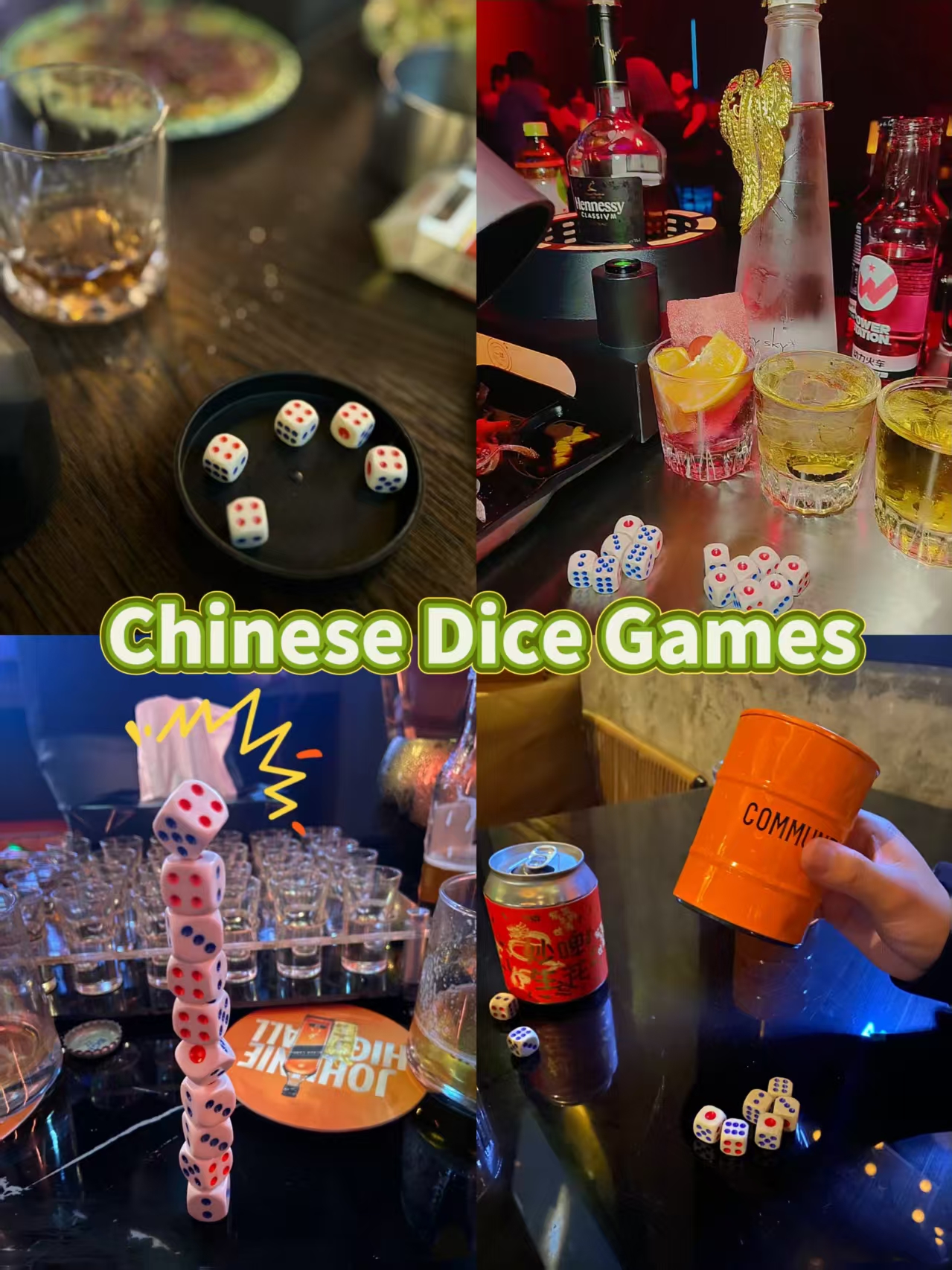
Chinese Dice Games
In China, if you enter any KTV booth or late-night bar, within ten minutes, you will see someone remove a cup of dice. Chinese dice games can be found all around — hotpot dinners, company banquets, college dorms at 2am. The vast majority of foreigners sit there, making awkward nods. But the games aren't difficult, and after learning the fundamentals, you would actually have something to do other than gaze at your baijiu. If you're planning a trip around Chinese festivals, check out our guide to Chinese New Year games and traditions. From the biggest bluffing game that's played in every bar in the country to one of the oldest mooncakes traditions, mostly unknown even among tourists.
Quick Chinese Phrases Cheat Sheet for All These Dice Games
| Phrase | Pinyin | Meaning | Used In |
|---|---|---|---|
| 开! | kāi | Open! / Call the bluff | 吹牛 |
| 吹牛三个四 | sān gè sì | Three 4s | 吹牛 |
| 顺子 | shùn zi | All different numbers — reroll | 吹牛 |
| 明 / 暗 | míng / àn | Natural / Wild | 吹牛 advanced |
| 干杯! | gānbēi | Cheers / Bottoms up | All games |
| 状元 | zhuàngyuán | Top prize / Champion | 博饼 |
| 大 / 小 | dà / xiǎo | Big / Small | 骰宝 |
| 骰子 | shǎizi | Dice | Asking for equipment |
The Sound of Dice Is the Soundtrack of Chinese Nightlife
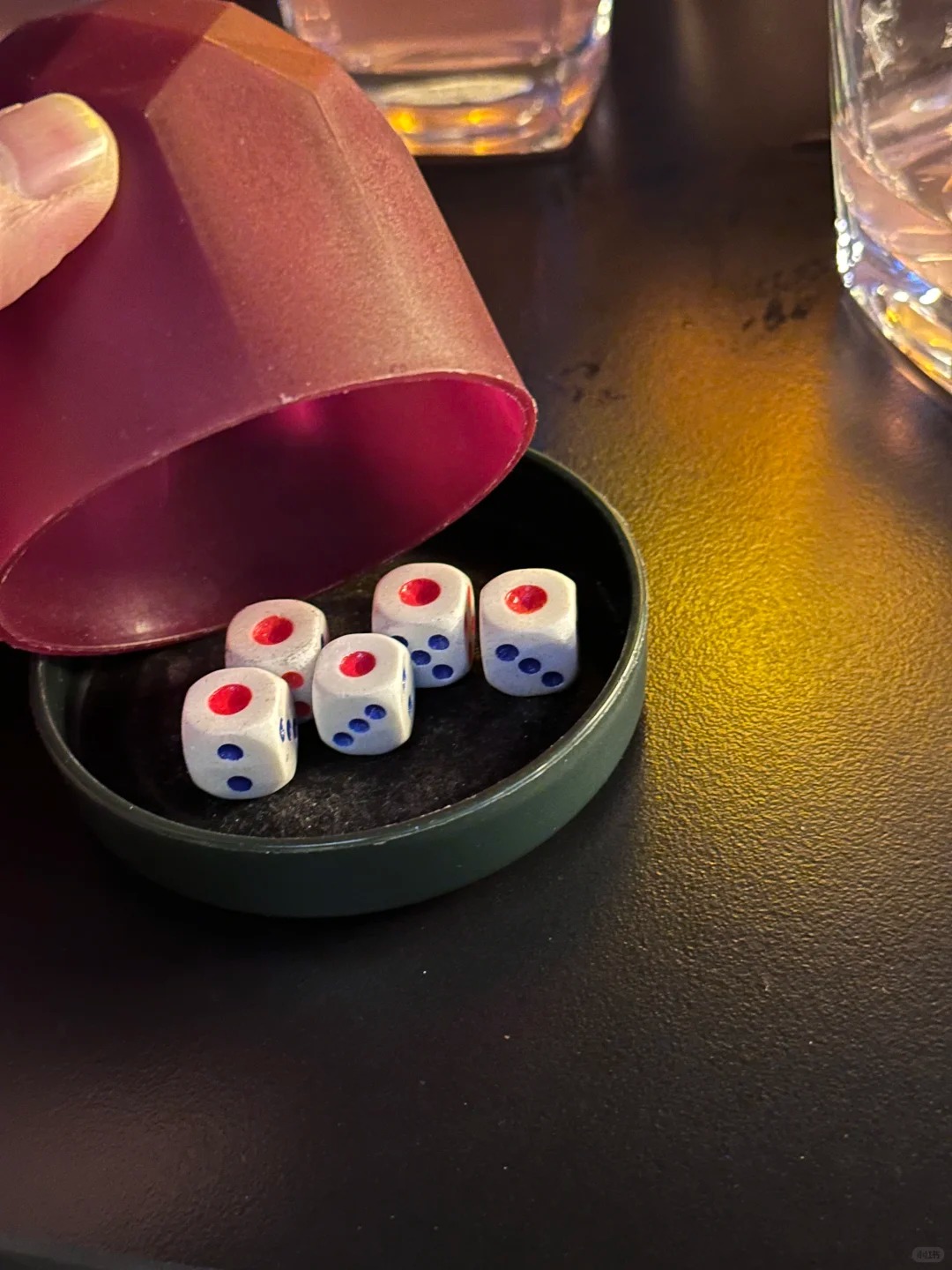
The Sound of Dice Is the Soundtrack of Chinese Nightlife
There's a concept in Chinese drinking culture called 酒令 (jiǔlìng) — drinking games. The idea is simple: you don't just drink, you earn it. Sitting quietly with a glass is almost antisocial. Whether it's a KTV booth in Chengdu, a hotpot table in Chongqing, or a plastic-stool barbecue stall at midnight, games are how the night moves forward.
Dice show up in all of these places. A staff member at any decent KTV will hand you a set without blinking. Hotpot spots sometimes have them sitting right on the table next to the napkins. It sounds niche, but once you've been to a few of these settings, you realize dice are less of a "game" and more of a social ritual — the thing that gets strangers talking and keeps the table alive for another hour.
The good news for travelers: Chinese dice games run almost entirely on numbers. You don't need fluent Mandarin. You need to count to ten, read a room, and keep a straight face. That's it. Honestly more useful than any translation app when someone's sliding a cup across the table at you.
Chui Niu (吹牛) — The One Chinese Dice Game That Runs Every Bar in the Country
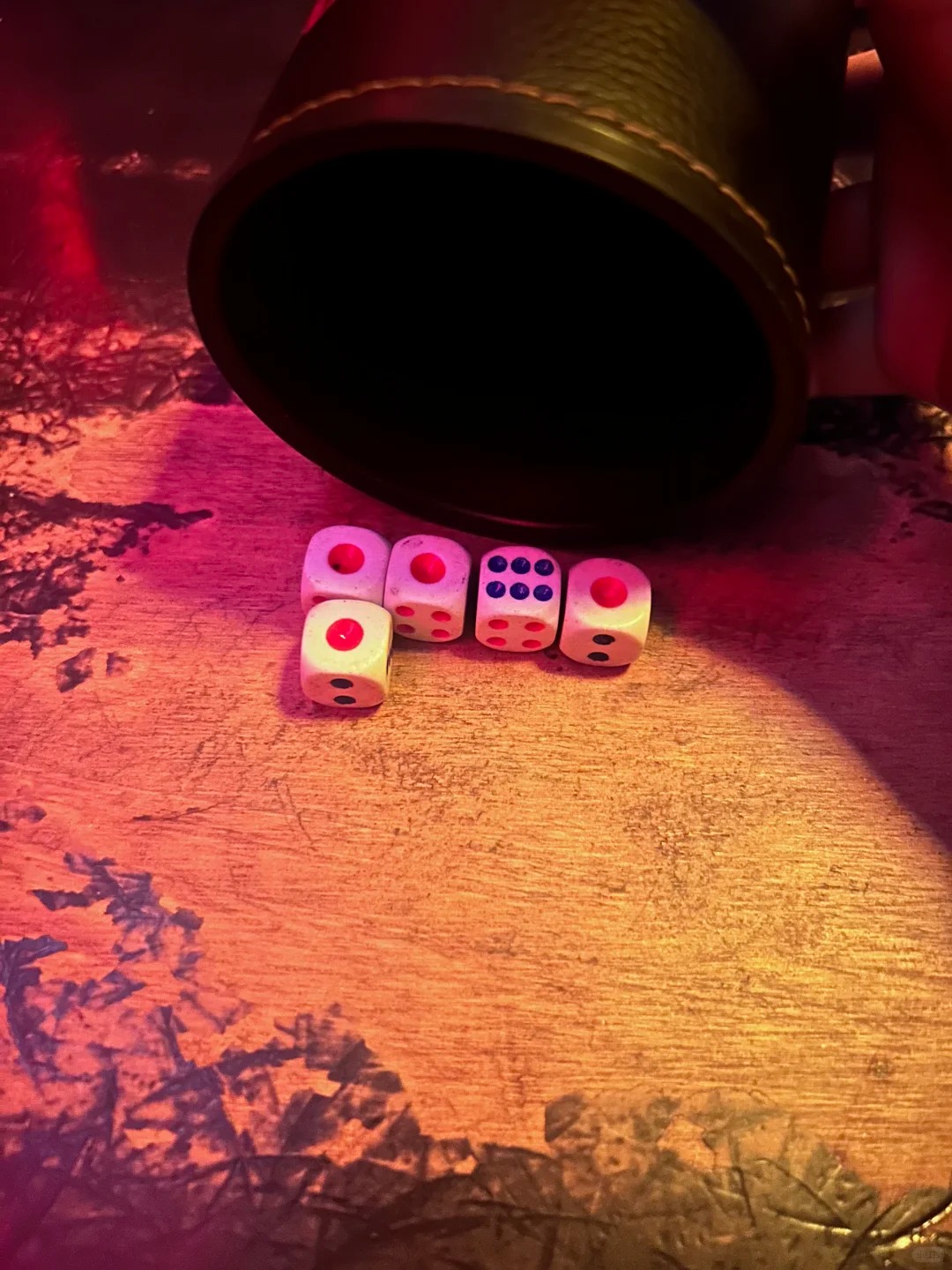
Chui Niu
What You Need to Play
Chui Niu (literally "blowing bull" — as in, talking big) is the default dice game across Chinese bars, KTVs, and late-night restaurants. You'll hear it before you see it — that sharp crack of a cup hitting the table, followed by someone groaning. The setup is minimal:
- Players: 2 or more — works best with 3 to 6. With more people, the bluffing gets genuinely difficult.
- Dice: 5 six-sided dice per player. The more players, the bigger the total pool to calculate from.
- Equipment: One opaque cup per player. Plastic cups, leather cups, whatever's available — just nothing see-through.
- Space: Any flat table works. Noise level doesn't matter because the whole game runs on hand signals and numbers anyway.
Traveler tip: At most KTVs and bars, just ask staff for 骰子 (shǎizi) — dice. They'll hand over a set without charging extra. Some hotpot restaurants in Chongqing and Chengdu keep cups sitting on the table already, right next to the napkin holder. If you're not sure how to ask, just mime shaking a cup — it works every time.
Step-by-Step Rules for Beginners
The rules sound complicated written down. In practice, after one full round of watching, most people get it. Here's the sequence — this is the standard version of one of the most-played Chinese dice games in the country:
- Roll: Everyone shakes their cup and flips it upside down on the table at roughly the same time.
- Peek: Lift the edge just enough to see your own dice. Don't flash them. Don't make a face.
- First call: The loser of the last round goes first. They announce how many dice of a certain number they believe exist across all cups combined — including dice they can't see. For example, "three 4s" (三个四, sān gè sì).
- Next players: Moving clockwise, each player must either raise the quantity, raise the face value, or both. You cannot lower either number unless you're playing the advanced Natural/Wild rule (more on that below).
- Calling the bluff: Any player can say 开 (kāi — "open") to challenge the last call. Everyone reveals. If the actual count meets or exceeds what was called, the challenger loses. If the real number falls short, the caller loses.
The single most important rule: 1s are wild. Every die showing 1 counts as whatever number is being called. If someone says "four 5s," every 1 on the entire table counts as a 5. New players forget this constantly — and it costs them. Keep it in the back of your head every single round.
| Phrase | Chinese | Pronunciation | When to use |
|---|---|---|---|
| Three 4s | 三个四 | sān gè sì | Making a call |
| Open / Call the bluff | 开 | kāi | Challenging |
| All different numbers | 顺子 | shùn zi | Announcing a reroll |
| Two of something | 两个 | liǎng gè | Calling quantity of 2 |
One small grammar note worth knowing: when calling a quantity of two, you say 两个 (liǎng gè), not 二个. Everything else just follows the pattern: number + 个 (gè) + face value.
The Natural vs. Wild Rule (Advanced Version)
Once you've got the basics down, most regular players introduce a 明/暗 (míng/àn) layer — Natural vs. Wild. This is the version DrinkingFolk documented, and it genuinely changes how tense the game gets.
Here's the core of it:
- Wild (暗, àn): Standard play. Your call includes 1s as wild cards. Most calls default to this.
- Natural (明, míng): Your call explicitly excludes 1s. You're claiming that many dice of that face value exist with no help from 1s at all.
The rule that makes this interesting: switching from Wild to Natural lets you drop the quantity by 1. Switching from Natural to Wild requires you to increase the quantity by 2. This creates moments where a player can suddenly reduce the stakes — or force a big jump.
A quick example to make it concrete:
- Player A: "Four 4s, Wild" (includes any 1s)
- Player B: "Three 4s, Natural" (drops by 1, but now claiming 3 actual 4s with no 1s)
- Player A: "Five 4s, Wild" (jumping up by 2 to switch back to Wild)
- Player B: Opens — and Player A wins because there are five 4s and 1s combined.
Don't worry about this version on your first night out. Watch how locals play a few rounds and you'll pick up the rhythm. Most groups are happy to explain mid-game, especially if you're visibly trying to keep up.
Drinking Game Version and Strategy Tips
The drinking version is the one you'll actually encounter most often. The rule change is simple: instead of losing a die when you lose a round, you take a drink. Nobody gets eliminated. The game keeps going until the bar closes or someone taps out. The longer it runs, the worse people's bluffing gets — which somehow makes it more fun.
A few things worth knowing once you're actually sitting at the table:
- Count the pool: Total dice on the table matters. Four players with 5 dice each means 20 dice in play. A call of "seven 3s" is statistically fine. "Fifteen 3s" is almost certainly a bluff — call it.
- Lean on your 1s: Two 1s and two 5s means you effectively hold four 5s. Build your calls around what you actually have before you start guessing at what others might have.
- Force the pressure onto others: Make a call just high enough that the next player faces a tough choice — raise into uncomfortable territory or call you out. The later in a round you have to make a call, the worse your odds get.
- Kill the giveaways: Slamming the cup down with a grin, glancing at a specific player, or hesitating before calling — people notice. Chui Niu isn't just about math. It rewards a flat expression and consistent body language across both good and bad rolls.
Put It Into Practice: A Real-World Scenario
To really understand how the math, the bluffing, and the wild cards blend together, let’s look at a quick 3-player game.
The Setup:
You are playing with two friends: Chen and Wei.
Total dice in play: 15 (3 players × 5 dice).
Statistically, there should be about two or three of any specific number on the table, plus roughly two or three 1s (which are wild). So, a total pool of 5 or 6 for any number is a very safe assumption.
The Secret Rolls (Do not show these to anyone!):
You rolled: 1, 1, 4, 4, 5 (An amazing hand. Thanks to the wild 1s, you essentially hold four 4s all by yourself).
Chen rolled: 2, 3, 3, 5, 6 (A terrible hand. No 1s, no strong multiples).
Wei rolled: 1, 2, 4, 6, 6 (A decent hand with one wild).
The Play-by-Play:
Round 1 (Chen): Chen goes first. He has a weak hand and wants to play it safe. He looks at his two 3s and calls: "Four 3s" (sì gè sān). He is hoping the rest of the table has at least two 3s or 1s to back him up.
Round 2 (Wei): Wei has zero 3s, but he has a wild 1. He doesn't want to call Chen a liar this early, so he must raise the quantity or the face value. He looks at his two 6s and raises the face value: "Four 6s" (sì gè liù).
Round 3 (You): You are holding a powerhouse hand of 4s. You want to trap them. You confidently raise the quantity and change the face value to match your hand: "Five 4s" (wǔ gè sì).
Round 4 (Chen): Chen is sweating. He has zero 4s and zero 1s. Five is getting high, but he’s afraid to challenge you. To survive, he simply bumps the quantity by one and prays: "Six 4s" (liù gè sì).
Round 5 (Wei): Wei only has one 4 and one wild 1. He thinks, "Six 4s out of fifteen total dice? Chen is definitely lying." Wei slams his cup down and shouts: "开!" (Kāi! / Open!)
The Reveal & The Math:
Everyone lifts their cups. It's time to count all the 4s and all the wild 1s.
You: Two 4s + Two 1s = 4
Chen: Zero
Wei: One 4 + One 1 = 2
The Result:
There are exactly six 4s on the table! Chen called "Six 4s," meaning his claim was completely true—even though he didn't hold a single one himself! Because the actual count met his call, Wei (the challenger) loses the round and takes a drink.
The Lesson: Chui Niu is a team effort where nobody is actually on a team. Your strong hand saved Chen's bluff, and Wei's lack of faith cost him the game.
Yi Liu (一六) — The Chaotic No-Brain Chinese Dice Game Perfect for Loud Nights
Yi Liu
How to Play Yi Liu
Yi Liu (一六, yī liù) translates directly as "One and Six." This Chinese dice game requires zero strategy — which is either its best or worst quality depending on how seriously you take things. It's the one you pull out when the table is already loud and nobody wants to think.
Each player starts with 5 dice in a cup. Every round follows the same simple logic:
- Roll: Shake and flip your cup to reveal your dice.
- If you roll a 1: Remove that die from your cup permanently. It's out of the game.
- If you roll a 6: Remove that die and pass it to the player on your right. They now have an extra die to deal with.
- Any other number: Nothing happens. Wait for the next round.
- Winning: First player to empty their cup completely wins.
The 6 rule is what makes it chaotic — you can be one die away from winning and suddenly inherit three dice from the person next to you.
Drinking Penalty Version
The loser drinks for as many seconds as they have dice remaining in their cup when someone else wins. Four dice left? Four seconds of drinking. It scales naturally and needs zero explanation, which is why it works so well when the table is already three drinks in.
Bo Bing (博饼) — The 400-Year-Old Chinese Dice Game You Can Only Play During Mid-Autumn Festival
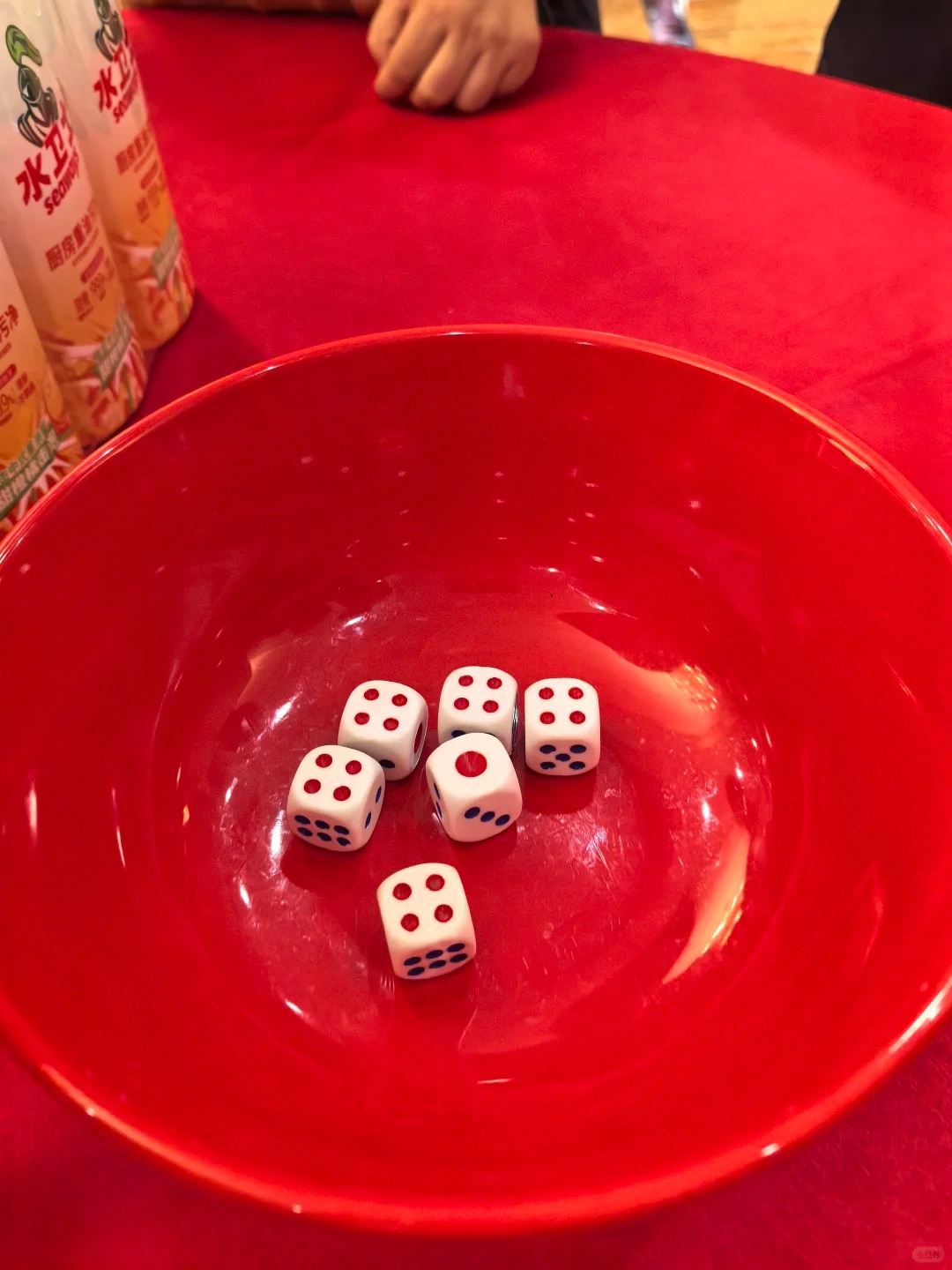
Bo Bing
Where It Comes From
Bo Bing is one of the most unique chinese dice games you'll come across — and almost no tourist knows it exists. The origin story is unusually specific: in the 1650s, a Ming dynasty general named Hong Xu invented it at a military garrison in Kinmen to keep troops entertained during the Mid-Autumn Festival while they waited to launch a campaign against Nanjing. Six dice, a porcelain bowl, and mooncakes as prizes — that was the whole concept. It spread from the garrison to Xiamen, then across Fujian province, and stuck.
In 2008, Bo Bing was officially listed as a national-level intangible cultural heritage of China. The prize structure was deliberately designed to mirror the ancient imperial examination system — six ranks of winners, from the lowest-level county scholar all the way up to the top imperial candidate. That framing gave the game a sense of occasion that pure luck games usually don't have. Today it's still played most seriously in Xiamen, where during the festival period you can hear dice rattling in porcelain bowls in restaurants, offices, supermarkets, and family living rooms simultaneously. Locals say that rolling the top prize — 状元 (Zhuàngyuán) — brings good luck for the entire year ahead. Whether or not you believe that, the room reacts like it's true every time it happens.
How to Play Bo Bing
The equipment is minimal: 6 dice and a red porcelain bowl. Players sit in a circle and take turns tossing all six dice into the bowl. Whatever combination lands determines which prize tier you win, if any. There's no bidding, no bluffing — just roll and see.
A few rules to know before sitting down:
- Valid roll: All six dice must land and stay inside the bowl. If one bounces out, that turn is void and passes to the next player. Don't throw hard.
- Turn order: Clockwise, one roll per person per turn. The game moves quickly once everyone knows the prize tiers.
- Prize availability: Each tier has a fixed number of prizes. Once a tier is depleted, rolling that combination wins nothing. The game ends when all prizes are claimed.
- Special dice: Traditional Bo Bing uses dice with the 1 and 4 faces marked in red rather than black. If you see a set like this in a Xiamen shop, that's what they're for.
The game itself takes maybe 20–30 minutes for a group of 6–8 people. Most of the time is spent watching other people roll and reacting to the results.
The Six Prize Tiers (From Scholar to Champion)
The six ranks run from a single 4 on the low end to an almost impossible six-of-a-kind at the top. The 4 face is the key number throughout — most of the named combinations are built around it.
| Prize Tier | Chinese Title | Dice Combination | Prize |
|---|---|---|---|
| 6th (lowest) | 秀才 Xiùcai | Any single 4 | Smallest mooncake |
| 5th | 举人 Jǔrén | Two 4s | Small mooncake |
| 4th | 进士 Jìnshì | Four of the same number | Medium mooncake |
| 3rd | 探花 Tànhuā | Four 4s | Large mooncake |
| 2nd | 榜眼 Bǎngyǎn | Five 4s | Larger mooncake |
| 1st | 状元 Zhuàngyuán | Six 4s or six of any one number | Giant mooncake |
The lowest tier — 秀才 — is common enough that most players win something at least once per game. The 状元 combination is rare enough that when it lands, the table stops. Some versions of the game also recognize a "four 1s" combination as a special high-value roll, though this varies by household. In total, a standard Bo Bing set has 63 mooncakes distributed across all six tiers — 32 at the bottom, halving roughly at each level up to the single giant prize at the top.
Where to Experience Bo Bing as a Traveler
Bo Bing is time- and place-specific in a way that most travel experiences aren't. You can't recreate it outside of its window.
- When: The 13th to 18th day of the 8th lunar month — the days surrounding Mid-Autumn Festival, which typically falls in September or early October. Outside this window, the game is almost impossible to find in practice.
- Where: Xiamen is the only city where this is a full-scale public tradition. Restaurants, community centers, hotel lobbies, and even department stores run Bo Bing events during this period. Other parts of Fujian province play it too, but with less intensity.
- What to look for: Mooncake boxes sold in Fujian during festival season often come with a set of six dice and a printed rules card tucked inside. It's an oddly practical thing to find in a gift box — and makes a good souvenir.
- Getting invited: Walk into almost any local restaurant in Xiamen during festival week and there's a decent chance someone waves you over to join a round. The game is communal by design and locals are generally happy to have an extra player, especially a foreign one.
If your trip to China overlaps with Mid-Autumn Festival at all, Xiamen is worth seriously considering — not just for Bo Bing, but this is the one experience you genuinely cannot replicate anywhere else or at any other time of year.
Two More Chinese Dice Games Worth Knowing — Sic Bo and Cee-lo
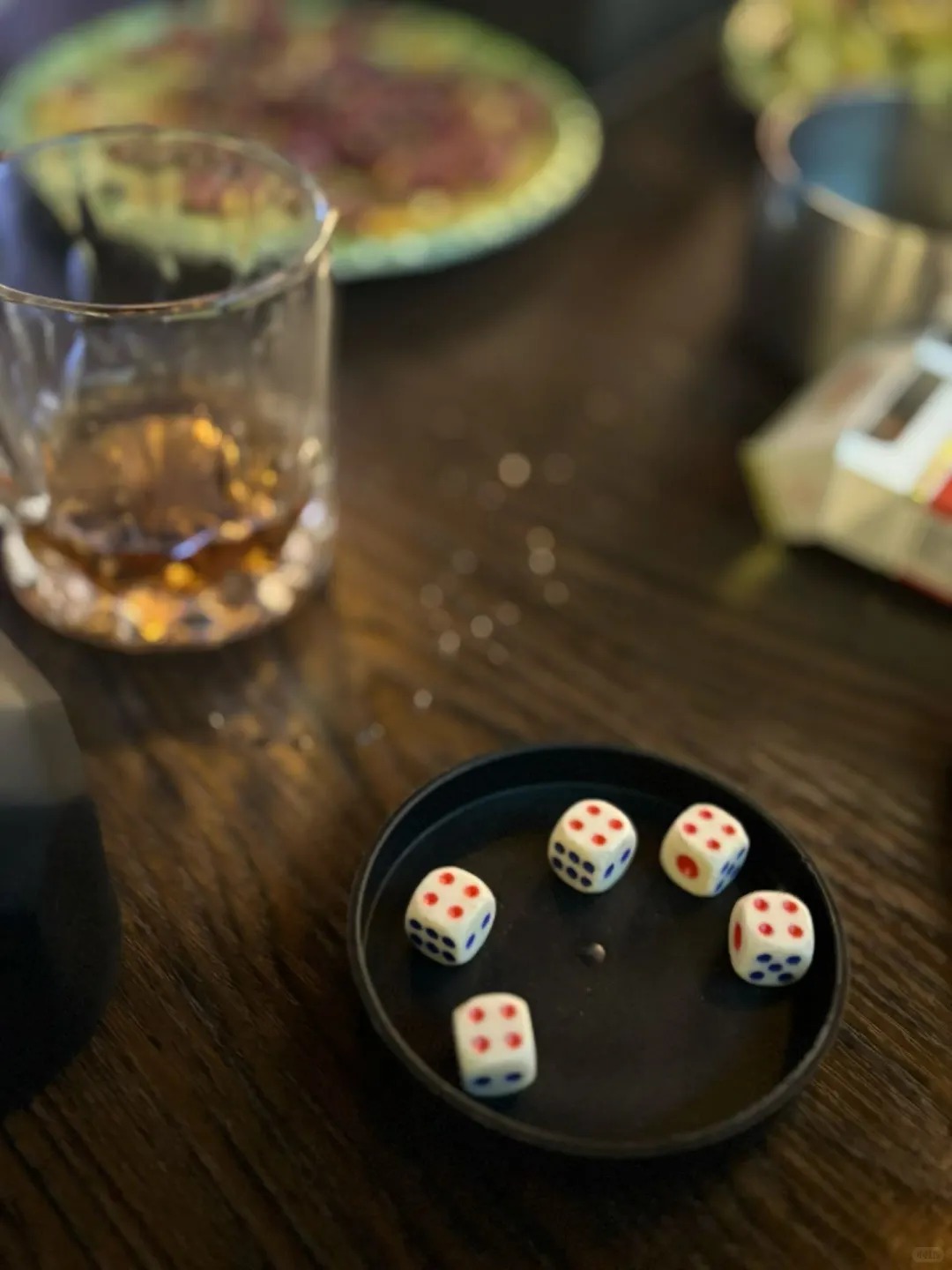
More Chinese Dice Games
These two chinese dice games have made it far beyond China's borders — one ended up in Las Vegas casinos, the other in hip-hop lyrics. Neither requires a KTV booth or a Mid-Autumn Festival. But knowing where they came from adds context to the broader picture of how deeply dice are woven into Chinese culture.
Sic Bo (骰宝) — The Ancient Chinese Dice Game Now in Every Macau Casino
Sic Bo translates literally as "precious dice." It's a betting game played with three dice, and the table layout looks intimidating until you realize most people just stick to two bets.
- Origin: Likely over 3,000 years old in some form — early versions were played with painted bricks before cubic dice took over. It entered Western casinos via Chinese immigrants in the early 20th century.
- How it works: Players bet on outcomes before the dice are rolled. The main options are Big (total 11–17), Small (total 4–10), specific triples, or exact totals. Big and Small pay 1:1 and are where most beginners start.
- Traveler tip: Every casino in Macau has at least one Sic Bo table running. It's also available in many Las Vegas and Atlantic City casinos if you want to practice before your trip.
Cee-lo (四五六) — The Street Dice Game That Crossed the Pacific
Cee-lo takes its name directly from the Chinese 四五六 (sì wǔ liù) — literally "four-five-six," which is the best roll in the game. Three dice, straightforward outcomes, no cups needed.
- Winning roll: 4-5-6 in any order is an instant win. No argument, no calculation.
- Losing roll: 1-2-3 is an instant loss. Same logic.
- Everything else: Any pair plus a single die — that single die becomes your "point" to compare against opponents.
Chinese immigrants brought Cee-lo to the United States in the late 19th century, where it took root in urban street culture, particularly in New York. By the 1990s it had been name-dropped by Nas, Notorious B.I.G., and Kool G Rap — an unusual trajectory for a game that probably started in a Chinese alleyway. You're unlikely to encounter it as a structured game inside China today, but its origins are unmistakably Chinese, and the name still says exactly what it is.
Where and When to Play Dice Games as a Traveler in China
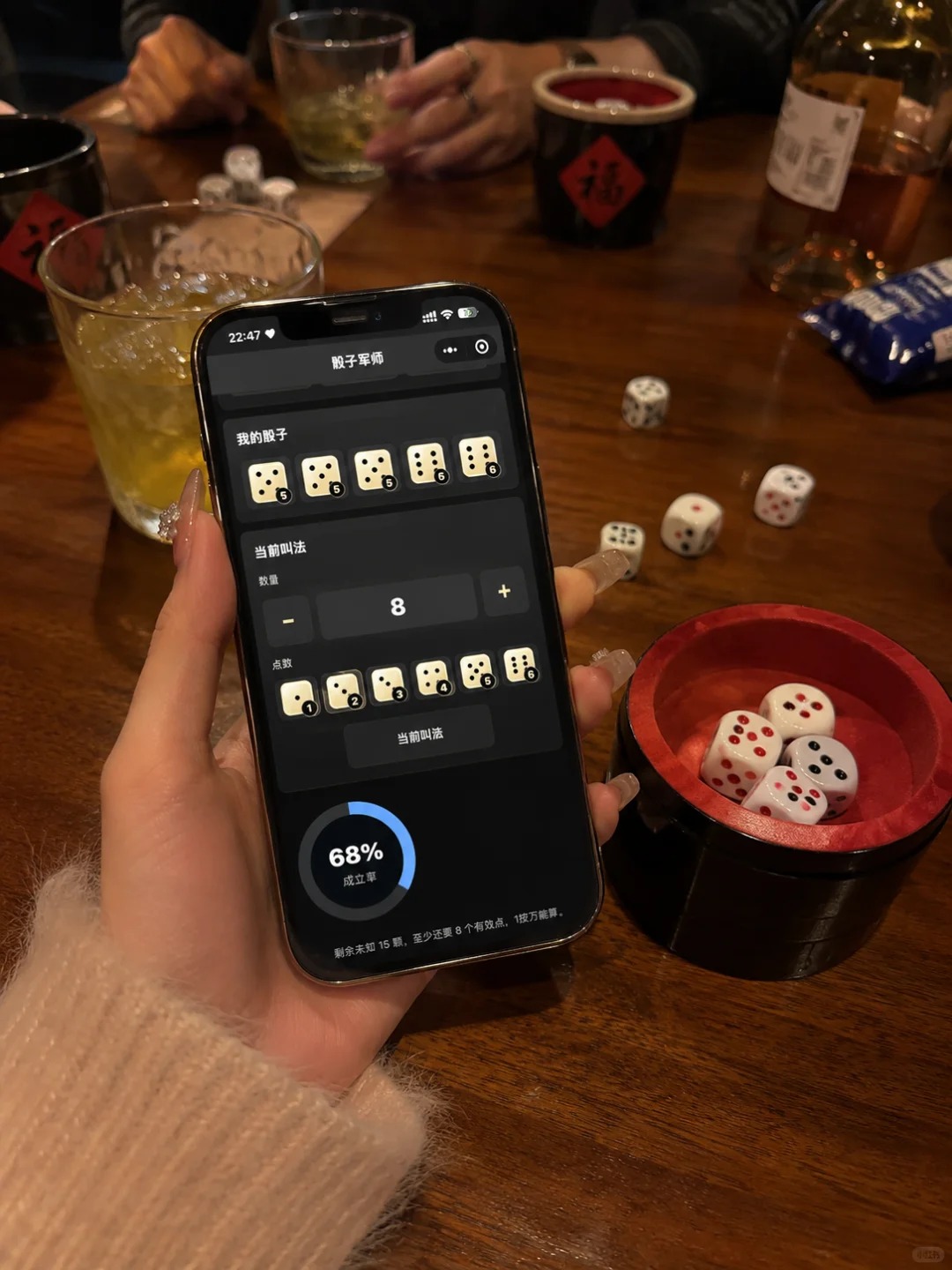
Where and When to Play Dice Games as a Traveler in China
Wherever you encounter chinese dice games in China, the context is usually social rather than competitive. Nobody's keeping a serious score. The point is to keep the table going. Here's where you're most likely to actually run into them:
- KTV (卡拉OK): The most reliable place to play. Most KTV venues keep dice cups at the front desk — just ask when you're shown to your room. Chui Niu is essentially the default game here. If you're going to learn one game before a KTV night, make it that one.
- Hotpot restaurants: Particularly common in Chongqing and Chengdu. Dice sometimes appear on the table unprompted, sitting next to the condiment tray. The logic is practical — hotpot takes time, and there's a lot of waiting between rounds of cooking.
- Bars: Less guaranteed than KTV, but still worth asking. Say wǒ xiǎng wán shǎizi (我想玩骰子) — "I want to play dice" — and most bar staff will either hand you a set or point you toward one.
- Xiamen during Mid-Autumn Festival: The only place to experience Bo Bing properly. Community events, restaurant tables, even supermarket promotions — the whole city runs on dice for about a week.
- Macau casinos: For Sic Bo specifically, any casino floor will have tables running around the clock. It's a different atmosphere from a KTV booth but technically the same cultural lineage.
One practical note: rules vary slightly by city and by group. Chui Niu in Shanghai might have a small local variation that nobody in Beijing plays. Follow the locals at the table rather than correcting them based on what you read here — they know their version better than any rulebook does.
FAQ About Chinese Dice Games
Q: What is the most popular Chinese dice game?
Chui Niu (吹牛) is by far the most widely played. Walk into any bar or KTV in any major Chinese city and there's a good chance someone at a nearby table is already playing it. It runs on bluffing and simple number calls, which makes it easy to pick up mid-session. Yi Liu is a close second for casual settings — mainly because it requires no thinking at all and works well when the table is already rowdy.
Q: How do you say "dice game" in Chinese?
The general term is 骰子游戏 (shǎizi yóuxì). In practice, most people just say 玩骰子 (wán shǎizi) — literally "play dice" — which covers it in most situations. If you're at a KTV or bar and want to ask for a set, saying shǎizi on its own is usually enough. Staff will understand what you're after. Tones don't have to be perfect — context does most of the work in a noisy venue.
Q: Are Chinese dice games only for drinking?
No, though the drinking versions are the most common in bar and KTV settings. Most games have a non-drinking variant — in Chui Niu, for example, the loser removes a die instead of taking a drink, which actually changes the strategy since the dice pool shrinks. Bo Bing has no drinking component at all — it's a family game played at Mid-Autumn Festival where the prizes are mooncakes. If you're ever unsure about drinking etiquette at a Chinese social gathering, our guide to Chinese etiquette covers exactly what to expect. Plenty of people play these games completely sober.
Q: What is the dice game played during Mid-Autumn Festival in China?
That's Bo Bing (博饼). It uses six dice and a red porcelain bowl, and the combinations you roll correspond to prize tiers named after ancient imperial examination ranks — from 秀才 at the bottom to 状元 at the top. The prizes are traditionally mooncakes. It originated in 17th-century Kinmen and is most seriously observed in Xiamen, Fujian province, during the five or six days surrounding the festival each year.
Q: Can I play Chinese dice games if I don't speak Mandarin?
Mostly yes. Chui Niu runs on numbers and hand signals — you can get through an entire game knowing maybe five words of Mandarin. The hand signal system for counting 1–10 on one hand is genuinely useful here and takes about ten minutes to learn. Yi Liu needs almost no communication at all. Bo Bing is the most rule-heavy, but in a group setting someone will usually guide you through your roll. Don't let the language barrier be the reason you sit it out.
Q: What's the difference between Chui Niu and Liar's Dice?
They're essentially the same game with some local variations. The core mechanic — hidden dice, progressive bids, calling bluffs — is identical. The Chinese version (Chui Niu) is typically played with the 1-as-wild rule as standard, and many regular players add the Natural vs. Wild (明/暗) layer on top. The losing condition also sometimes differs: Western Liar's Dice often eliminates players by removing dice, while the Chinese bar version usually skips that and just makes the loser drink instead.
Q: How do you win at Chui Niu?
There's no single trick, but a few things help consistently. First, always track the total number of dice on the table — your calls should be calibrated against that pool, not just your own hand. Second, don't underestimate your 1s; two wild dice can make a weak hand look strong. Third, try to make calls that force the next player into a difficult position before it circles back to you. And keep your expression flat regardless of what you rolled — the tell is usually what gives people away, not the math.
Q: Where can I buy dice cups to bring home from China?
Most convenience stores, small household goods shops, and street market stalls in larger cities sell basic dice cup sets for somewhere around ¥5–15. Night markets are a reliable spot. If you want a nicer set — leather cups, weighted dice — check larger supermarkets or Taobao if you have a Chinese account. Airport gift shops occasionally stock them too, though prices there will be higher. The basic plastic cup-and-dice set is perfectly functional and takes up almost no luggage space.