Cantonese Food Dishes
Most travelers have already eaten Cantonese food, often without realizing it. Across San Francisco, Vancouver, London, and Sydney, the earliest "Chinese restaurants" were opened by Guangdong emigrants from the mid-1800s onward, and the menus they settled on — roasted meats, dim sum, fried noodles — became the template the rest of the world now calls Chinese food. The cuisine carries its own Chinese name, Yue cuisine (yue cai), and a distinct identity built around mild, fresh flavors.
This guide covers the dishes foreign visitors recognize first — White Cut Chicken, Char Siu, Roast Goose, dim sum, wonton noodles, clay pot rice — then the techniques that define a Cantonese kitchen (stir-fry, steam, roast, slow-simmered soup, wok hei), the three regional sub-styles within Guangdong, and the practical mechanics of ordering at a dim sum hall or dai pai dong stall.
Quick Facts
What Is Cantonese Cuisine?
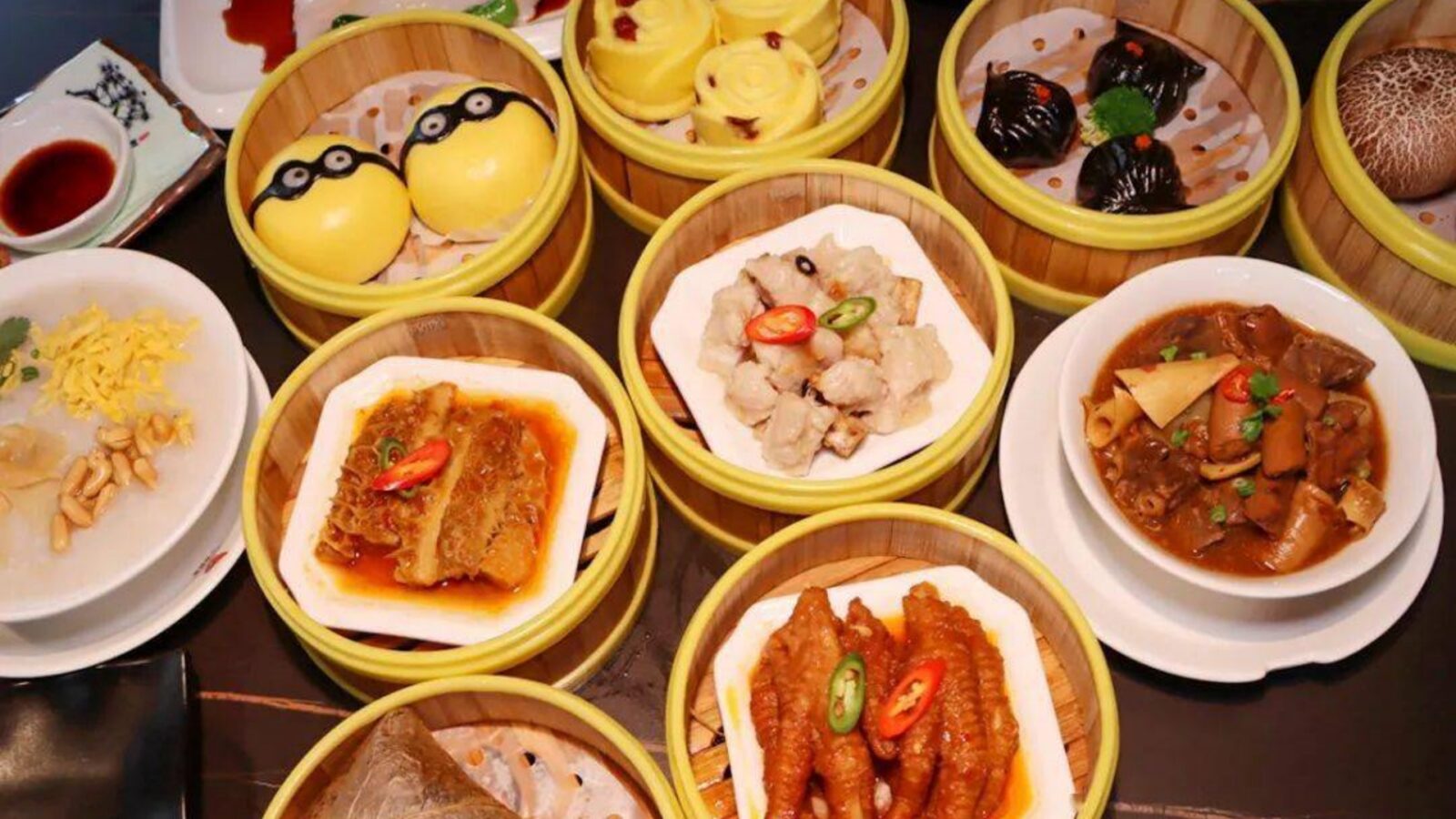
Cantonese Cuisine
Coastal Guangdong, roughly 2,000 years ago, gave rise to Cantonese cooking — one of China's eight great cuisines. The kitchen matured in the Southern Song Dynasty (1127–1279 AD) when imperial cooks migrated south to Guangzhou, and it took its modern shape during the Ming and Qing dynasties.
Emigrant communities from Guangdong opened the earliest "Chinese" restaurants in San Francisco, Vancouver, London, and Sydney from the mid-1800s — which is why much of what the world calls Chinese food is Cantonese by another route.
Origins and Regional Identity
The Pearl River Delta around Guangzhou is the cradle. Guangzhou's role as a southern trading port — briefly a Southern Song imperial capital — pushed the kitchen into prominence by the 13th century. Merchants then carried dishes east and north as they moved. Chaozhou in eastern Guangdong and Hakka settlements in the northeast layered their own traditions into the broader Cantonese canon. Today's three sub-styles — Guangzhou, Chaoshan (Teochew), and Dongjiang — trace that historical spread.
🐾 Family-Friendly Guangdong: While exploring the historical roots and culinary heritage of the Pearl River Delta, if you are traveling with family and want to take a break from dining to experience one of the region's most massive modern entertainment landmarks, check out our first-timer guide to the Guangzhou Safari Park.
Flavor Profile and Ingredient Philosophy
The Cantonese philosophy is to bring out the ingredient rather than mask it. That means a mild, fresh, slightly sweet palate, with less chili, garlic, and ginger than Sichuan or Hunan. Live seafood, kept in restaurant tanks until cooking, and seasonal vegetables anchor the kitchen. Meanwhile, the pantry is small and specific: soy sauce, oyster sauce, sesame oil, rice vinegar, hoisin, honey, and rock sugar. In short, sauces enhance the ingredient; they don't replace it.
Essential Cantonese Dishes to Know
Cantonese cooking produces many dish families, but a small set is what foreign visitors actually order. The cards below cover the dishes that show up most in Guangzhou, Hong Kong, and the overseas diaspora.
For more, see our guide to Gulong Gorge.
White Cut Chicken (bai qie ji)
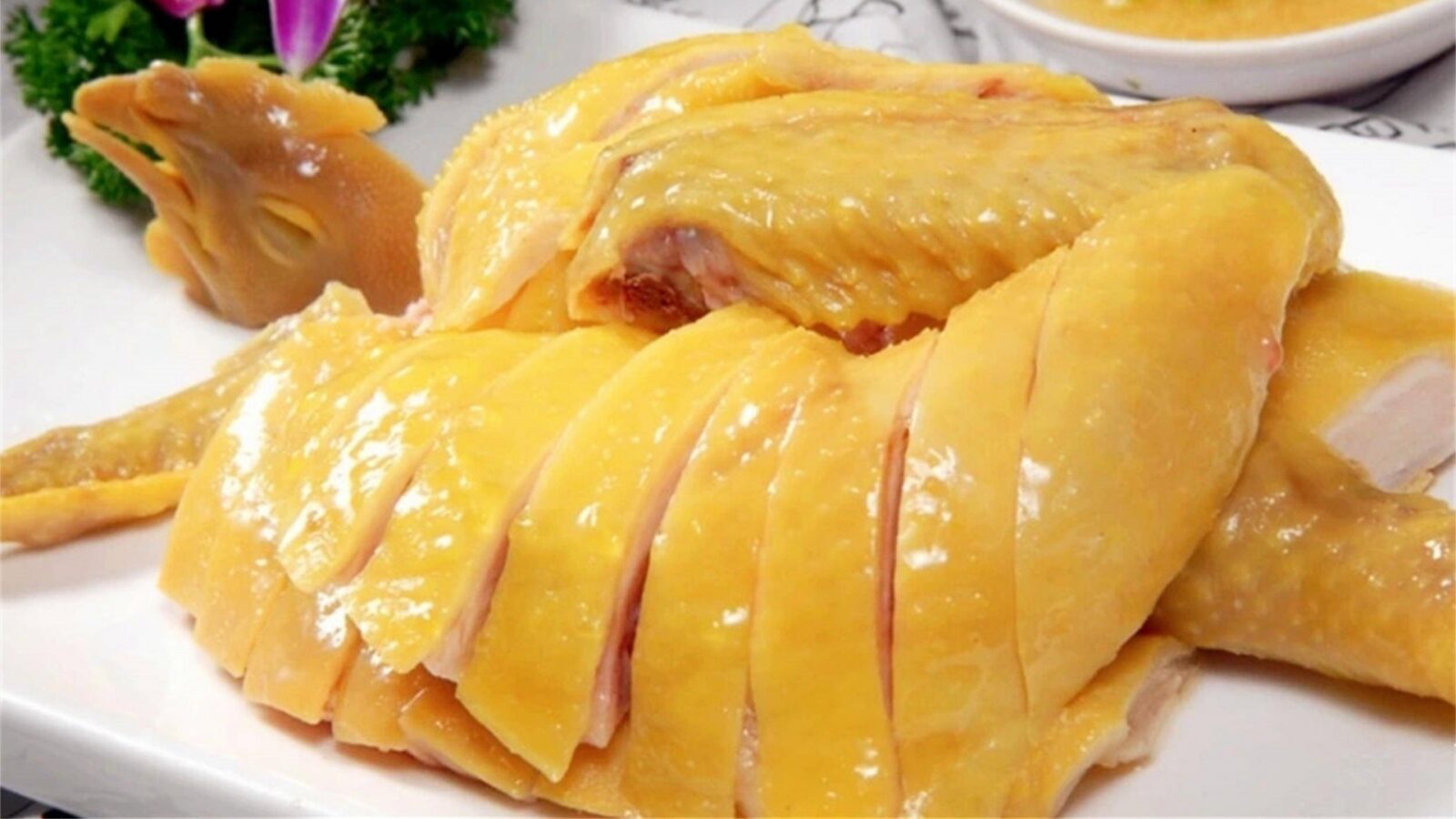
White Cut Chicken (bai qie ji)
A whole chicken is lowered into water held just below a simmer and cooks gently until just done, then plunges into cold water to tighten the skin. The breast comes out smooth and almost translucent. Served chilled or at room temperature, jointed, with a ginger-salt dipping sauce on the side — the Cantonese test of a good kitchen.
Char Siu (Cantonese BBQ Pork)
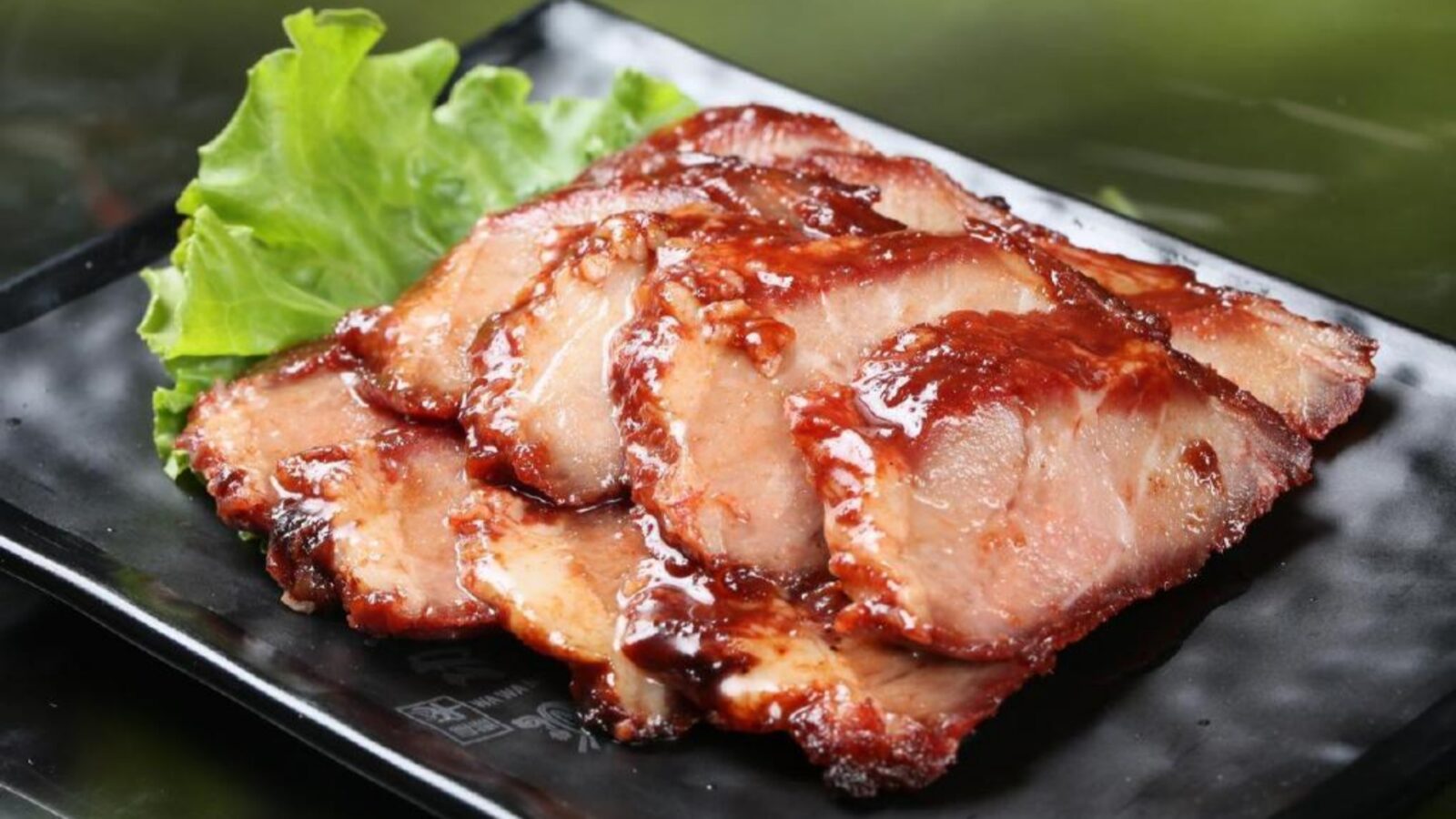
Char Siu (Cantonese BBQ Pork)
Pork shoulder or belly marinates in honey or maltose, soy sauce, hoisin, five-spice, and red fermented tofu, then roasts on hanging hooks or in a turning oven. The glaze lacquers dark and reddish at the edges; the interior stays moist and pale pink in good versions. Slightly sweet, slightly charred, with a fatty edge where the fat renders during cooking.
Cantonese Roast Goose and Roast Duck
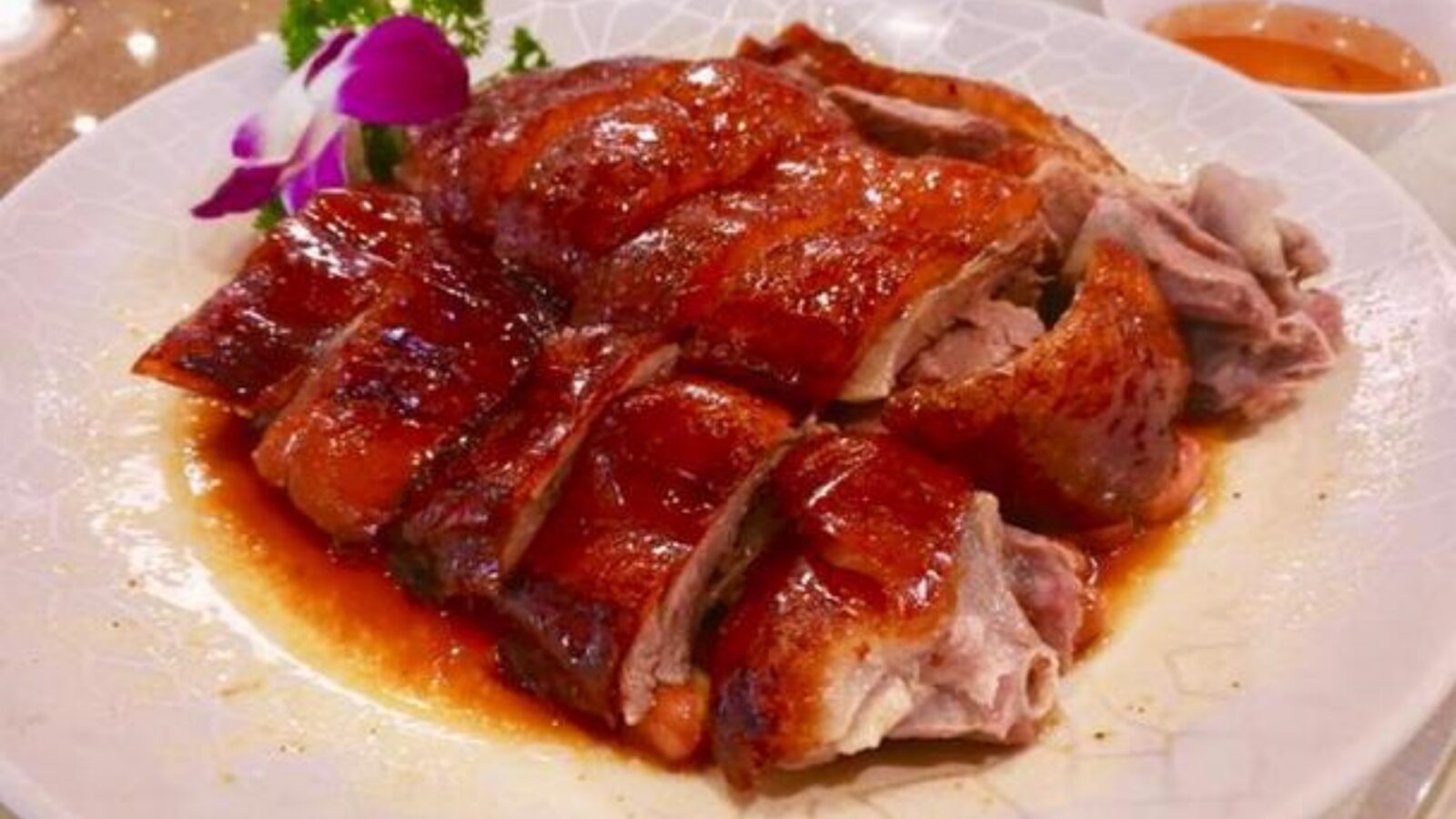
Cantonese Roast Goose
Whole geese and ducks hang in red-lit windows of Cantonese restaurants — the visual signal that roast meats are made in-house. The bird is inflated with air between skin and meat, scalded, glazed, and roasted to a mahogany finish. Skin should crackle; the meat underneath stays tender. Goose carries more fat and richer flavor; duck is leaner and slightly gamier.
Dim Sum: Har Gow, Siu Mai, and Cheung Fun
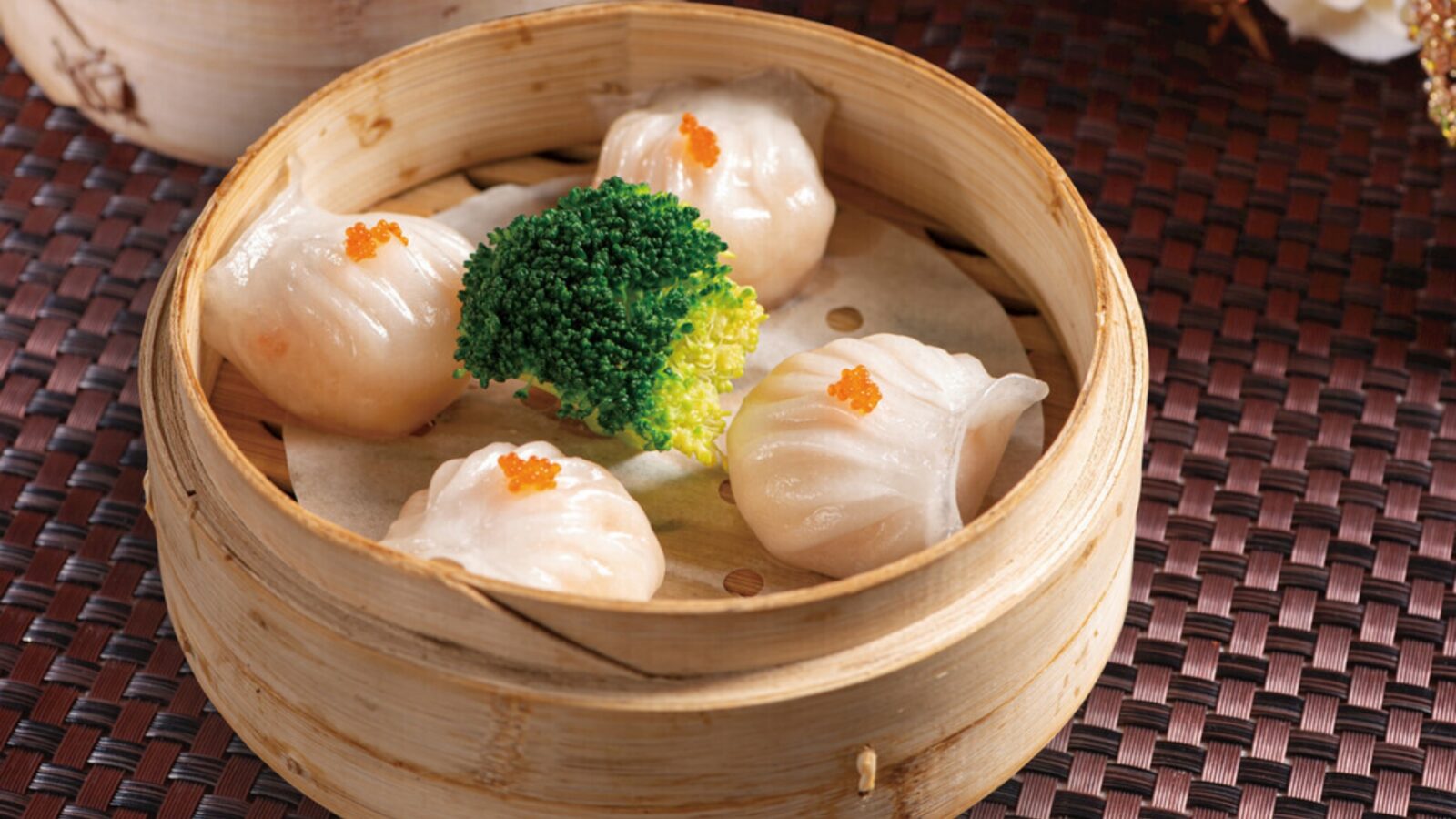
Har Gow
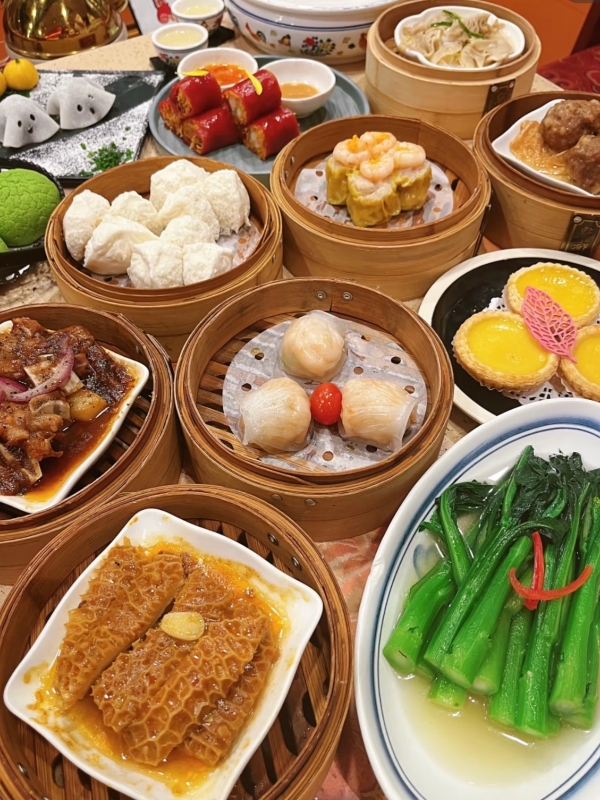
Dim sum is a brunch tradition of small steamed, fried, and baked dishes, eaten with tea (yum cha). Hallmarks: har gow (shrimp dumplings in translucent wrappers, holding 3–4 whole shrimp inside), siu mai (open-top pork-and-shrimp dumplings with a dot of crab roe or carrot on top), and cheung fun (wide rice-noodle sheets rolled around shrimp, beef, or Char Siu, drizzled with sweet soy). Egg custard tarts and lotus-paste buns close the meal. In Hong Kong and Guangzhou, dim sum runs roughly 7 a.m. to noon on weekends; overseas restaurants serve it throughout the day.
Wonton Noodles, Beef Chow Fun, and Clay Pot Rice
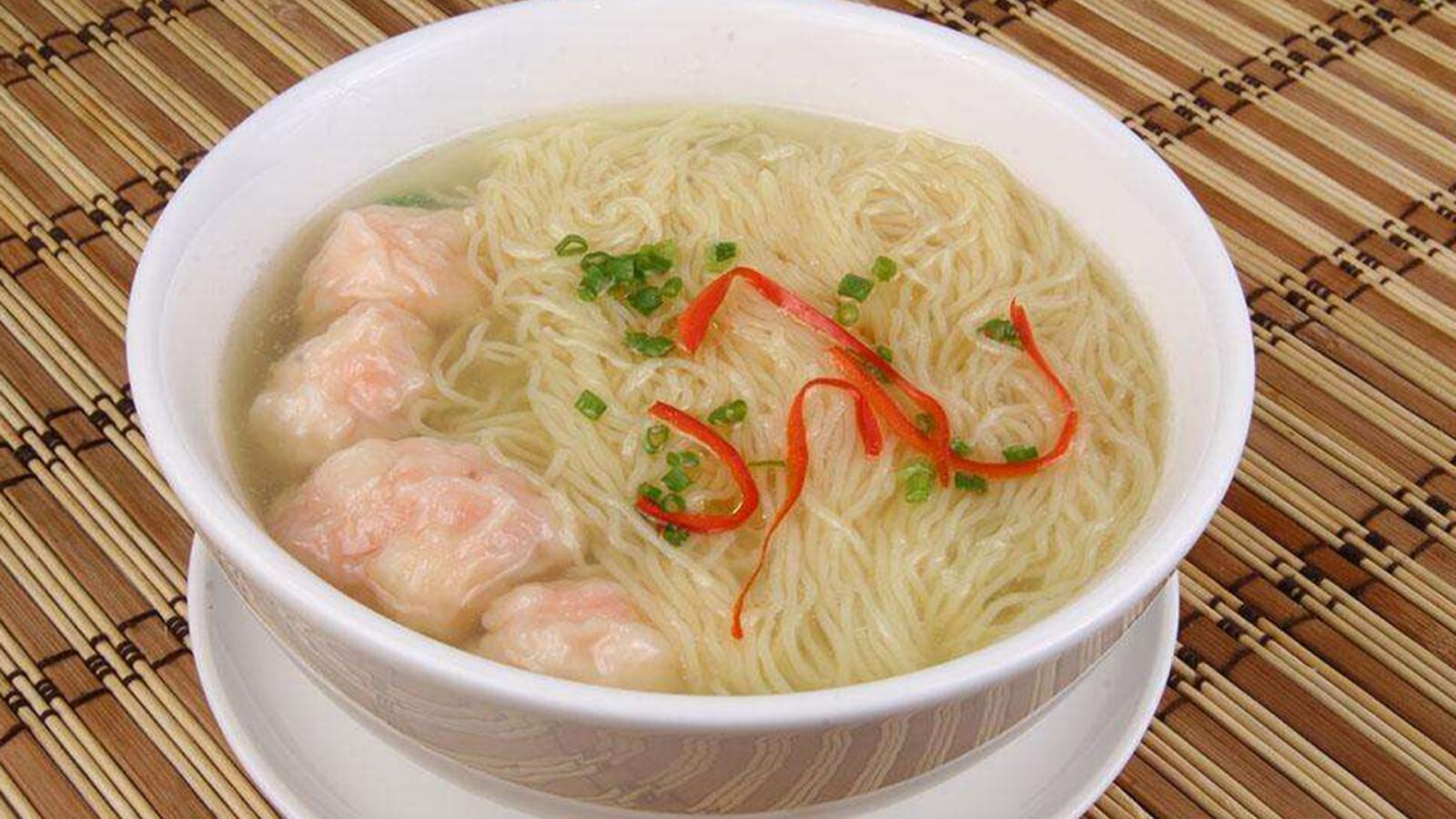
Wonton Noodles
Three staples of the Cantonese noodle-and-rice canon. Wonton Noodles pair thin springy egg noodles in a clear broth of dried flounder and pork bones with shrimp-and-pork wontons folded into ruffled "goldfish tails." Beef Chow Fun tosses wide rice noodles over high heat with beef and scallion — the discipline is heat control, so the noodles char slightly without sticking. Clay Pot Rice cooks rice in a clay pot with toppings (Chinese sausage, chicken, or eel), finishing with dark soy and a crispy rice crust at the bottom.
Cooking Techniques and Seasonings
Cantonese cooking runs on a tight toolkit. Wok hei — the breath of the wok — is the lightly smoky edge a Cantonese stir-fry carries when the wok is hot enough and the cook time short. Heat, technique, and a small pantry of sauces define everything.
Heat, Technique, and Texture
Hot-wok cooking with short cook times defines the vegetable and noodle repertoire. Long, low heat pulls collagen from bones for hours-long soups. Steaming preserves moisture; roasting concentrates flavor and dries the skin into the lacquered finish that defines Char Siu and roast goose. Texture is layered within a single dish — crispy skin against tender meat, smooth chicken next to a sharp ginger-salt dip, springy noodles around a soft wonton center.
Sauces and Aromatics in the Cantonese Pantry
Three Styles Within Cantonese Cooking
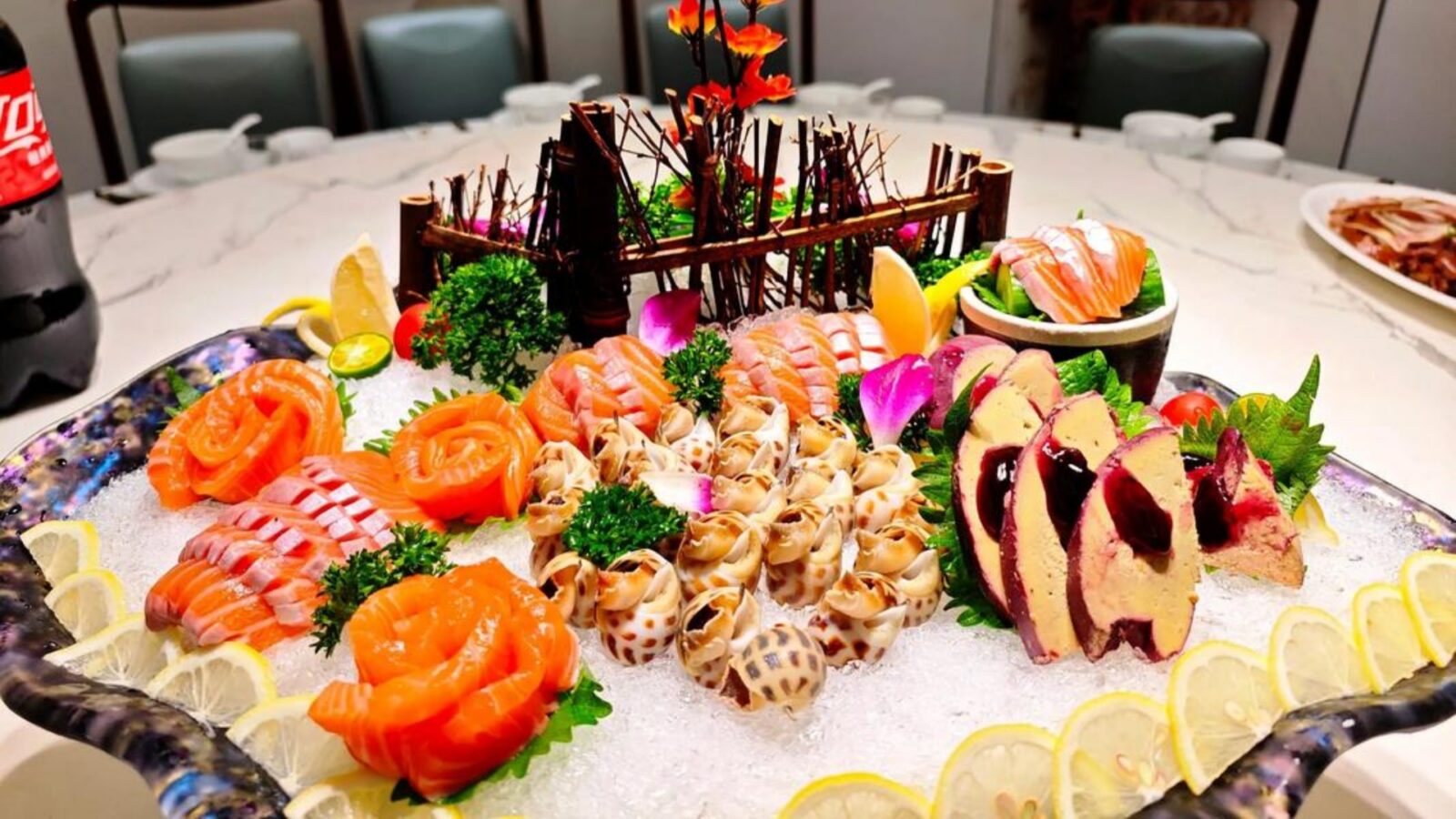
Food in Chaozhou
Guangzhou, Chaoshan, and Dongjiang are the three named sub-styles under the Cantonese umbrella. They mirror the geographic spread of Guangdong province and the layers of migration that built the broader canon.
Guangzhou Style
Anchored on Guangzhou and Foshan in the central Pearl River Delta, Guangzhou style is the dominant Cantonese canon. Stir-fries, roast meats, dim sum, slow-cooked soup, and live-seafood tanks define the kitchen. Most of the dishes foreigners recognize as "Cantonese food" come from this stream.
Chaoshan (Teochew) Style
Coastal eastern Guangdong — Shantou, Chaozhou, Jieyang — runs lighter, saltier, and more seafood-heavy than Guangzhou. Signature dishes: hand-pounded beef balls for springy texture, oxtail stew, oyster omelet, and marinated goose slices. The region also carries a strong tea ceremony tradition served in small clay cups. Some writers argue Chaoshan deserves standalone cuisine status; we treat it as a regional branch here.
🐮 Explore the Culinary Capital: Since this coastal sub-style is deeply rooted in the historical and cultural traditions of the region, you can dive much deeper into the iconic street markets, local snacks, and authentic tea culture by exploring our specialized guide to Chaozhou Food.
Dongjiang (Hakka-Influenced) Style
Northeastern Guangdong — Meizhou, Heyuan, Huizhou — overlaps heavily with Hakka cuisine. Stuffed tofu, salt-baked chicken, and pork belly with preserved vegetables sit at the center. The flavor profile is earthier than Guangzhou and the braises run longer. Hakka diaspora communities in Hong Kong, Taiwan, and Southeast Asia carry this tradition outward.
How to Order Cantonese Food Like a Regular
First time at a Cantonese restaurant or dim sum hall? Here is how to handle the carts, the teas, and the bill without second-guessing yourself.
Dim Sum and Yum Cha Etiquette
Yum cha means "drink tea" — the act of going out for dim sum with a pot of tea. In modern halls, you tick small paper sheets handed out at each seat; in traditional Hong Kong and older Guangzhou parlors, you flag the push cart as it rolls past.
The server asks which tea you want when you sit down — Tieguanyin oolong, pu'er, or jasmine — and a pot runs about $3–7 (¥20–50). Tap two fingers on the table as a quiet thank-you when someone pours for you; refill others' cups before your own.
At the end, the server counts your bamboo baskets and charges by size — small about $1–2 (¥7–14), medium $2–3 (¥14–21), large $3–5 (¥21–35) each.
Per-Person Spending Tiers at Cantonese Restaurants
Where Cantonese Food Is Eaten Beyond Guangdong
Hong Kong and Macau are the densest secondary markets — English menus are routine, and dim sum is a weekend institution. Mainland tourist cities like Beijing, Shanghai, and Chengdu all host branches of well-known Guangzhou Cantonese restaurants.
Reliable Cantonese kitchens can also be found in San Francisco Chinatown, Los Angeles Monterey Park, Vancouver Richmond, Toronto Scarborough, London Chinatown and Bayswater, Sydney Ashfield, Melbourne Box Hill, Singapore, and Kuala Lumpur. Hong Kong and Macau are the only places where the full dim sum + roast + seafood + slow-soup experience is the local default; elsewhere, it is one tradition among several.
Frequently Asked Questions
Q: What makes Cantonese food different from Szechuan or Hunan food?
Cantonese uses mild, fresh, lightly sweet seasoning to highlight the ingredient itself. Szechuan and Hunan both lean on chili, garlic, and numbing peppercorn heat to drive the flavor profile; the seasoning announces itself before the main ingredient does. Cantonese reads as subtle on first taste, but that subtlety is the point — the seasoning lifts the protein or vegetable without dominating it.
Q: Is Cantonese food spicy?
Not by default. Chili and Sichuan pepper are used sparingly in traditional Guangzhou-style cooking, and Chaoshan style stays mild as well. Modern restaurants in Hong Kong and overseas sometimes keep chili-oil condiments on the table for diners who want heat, but the dish itself is built around fresh, savory, and slightly sweet flavors.
Q: What is dim sum and when is it eaten?
Dim sum is a tradition of small steamed, fried, and baked dishes — dumplings, buns, rice rolls, tarts, spare ribs, and congee — served with tea. In Guangzhou and Hong Kong it is most often eaten from roughly 7 a.m. to noon on weekends; restaurant-style dim sum in mainland tourist cities and overseas is served throughout the day.
Q: What is the most famous Cantonese dish?
Char Siu and White Cut Chicken are the two dishes most often named when Cantonese chefs are asked for a signature plate. Roast goose and dim sum staples such as har gow and siu mai sit in the next tier of global recognition; wonton noodles and congee with lean pork round out the list.
Q: Is Cantonese food healthy?
Generally yes. Steaming, light stir-fry, fresh seafood, and long-simmered soups give the cuisine a light nutritional profile. The exceptions are roasted meats — high in fat and sugar glaze — and dishes served in heavy sweet-and-sour sauce. Congee, steamed fish with ginger-scallion, and Buddha's Delight (a mixed vegetable-and-tofu dish) sit at the lighter end.
Q: Can vegetarians eat Cantonese food?
Yes, with a little menu planning. Buddha's Delight is the clearest vegetarian main; steamed vegetable dumplings and plain cheung fun work at dim sum. Stir-fried greens with garlic are widely available, and many restaurants also offer a tofu-and-vegetable clay pot. Gelatin and shrimp paste sometimes appear in dishes that look vegetarian, so ask before ordering.
Q: What is the difference between Cantonese roast goose and Cantonese roast duck?
Roast goose is larger, fattier, with richer meat and thicker skin; roast duck is leaner and slightly gamier, with thinner skin and a more concentrated flavor. Roast goose is the prestige dish in most Cantonese restaurants; duck is the everyday version. Both are served with plum sauce and rice, often by the quarter or half bird.
Q: What is Char Siu and what does it taste like?
Char Siu is pork marinated in honey or maltose, soy sauce, hoisin, five-spice, and red fermented tofu, then roasted on hanging hooks. The flavor is sweet and savory at the same time — the glaze at the edges carries most of the sweetness, while the interior stays moist and savory. Best with a bowl of rice to catch the glaze.
Q: Do I need to know Cantonese to order at a Cantonese restaurant?
Not really. In Hong Kong and Macau, English menus and English-speaking staff are routine. Picture menus work almost everywhere else. In Guangzhou and most mainland restaurants, English is patchier outside major tourist districts — a translation app helps for live-seafood markets where the price is set by the pound in Chinese characters.