Odd Chinese Food
China's street-food scene pushes past what most travelers expect. Walk through a Changsha night market or a Taipei alley and you'll spot tofu that smells like gym socks, eggs cured to a dark jelly, and chicken feet braised until they look like tiny skeletons. Locals line up for these. Most foreigners hold their nose on the first bite — and then go back for a second.
The nine dishes below look strange on the plate. They are part of the everyday food culture, though, and most cost less than a coffee. This guide covers what each one actually is, why it tastes better than it looks, and where to try it without a misstep.
Quick Facts
Stinky Tofu, the Smell That Converts
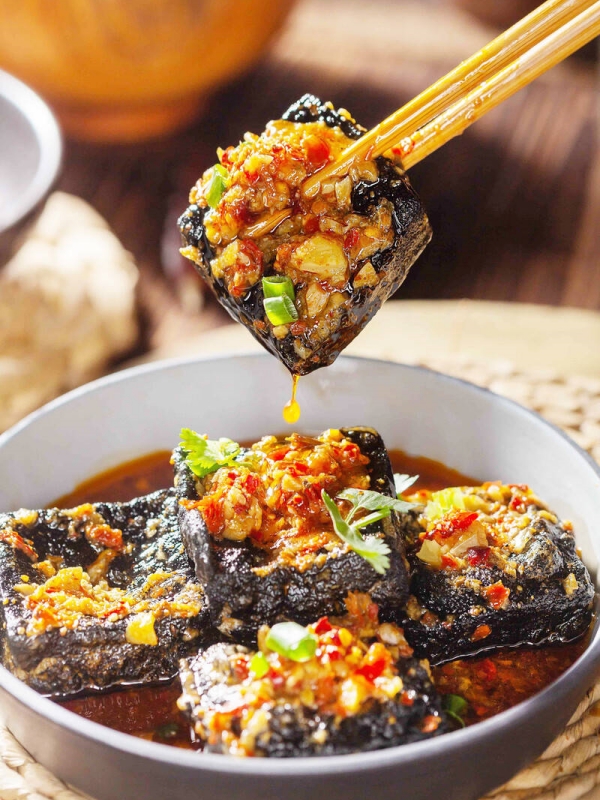
The Stinky Tofu
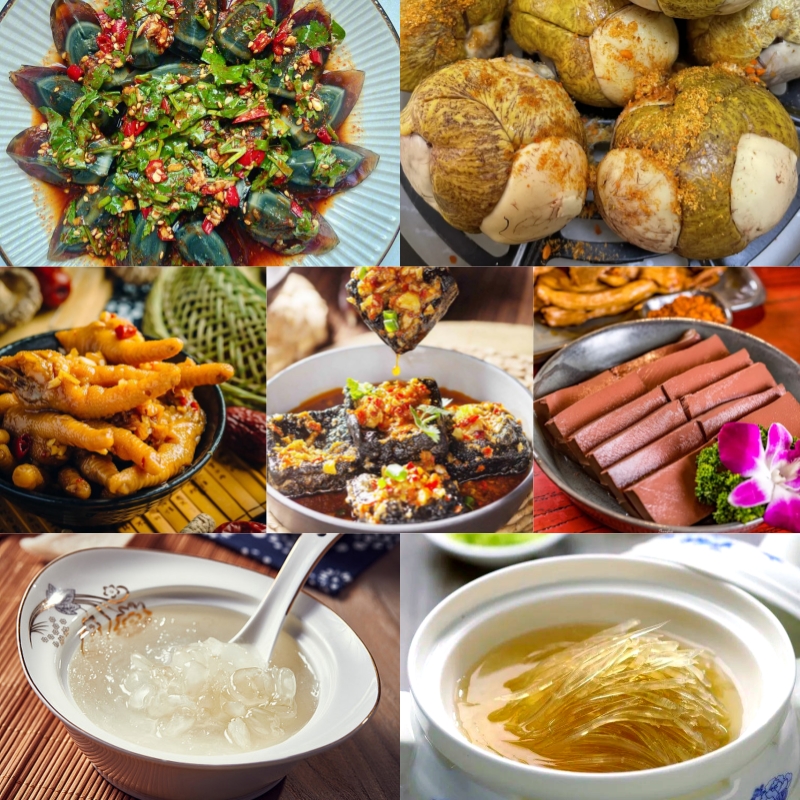
Stinky tofu (臭豆腐) is fermented tofu, brined for weeks or months in a mix of milk, vegetables, fish or meat. The brine develops sulfur compounds similar to those in aged cheese — that is the "old socks" smell most visitors report. The stinkier the tofu, the more prized it usually is, and the more locals swear by it.
The classic serving is deep-fried (油炸臭豆腐). The outside turns crisp and golden, the inside stays custardy, and the plate is topped with chili, garlic, pickled cabbage and a salty-sweet sauce. The smell is heaviest at the stall, but it softens a lot once the tofu is fried and sauced — and most first-timers are surprised by how mild the bite actually is.
Street price runs about $1–2 (¥8–15) per plate. Changsha in Hunan is the spiritual home — the local version is black and fried in fermented black-bean brine. Nanjing does a crispier golden version with a thinner sauce. Shenzhen and Taipei each have their own strong-flavoured takes, and most night markets in those cities have at least three or four stinky-tofu stalls competing side by side.
For more, see our guide to Furong Town.
Century Egg, Not 100 Years Old
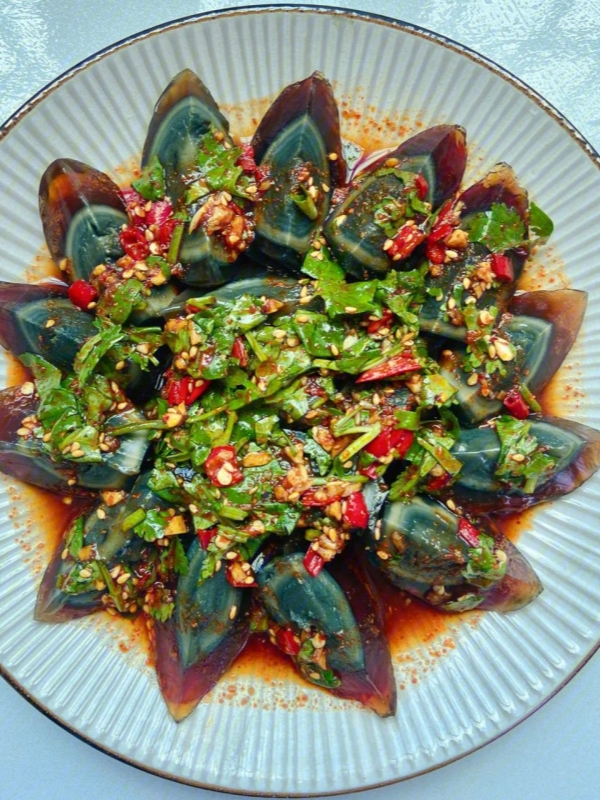
The Century Egg
Century egg (皮蛋, also called thousand-year egg or pidan) is a duck, chicken or quail egg cured in an alkaline paste of clay, ash, salt, lime and strong black tea. Curing takes 7 weeks to 5 months, not 100 years — the name is a poetic exaggeration. The yolk turns dark green and creamy, the white turns dark brown and jelly-like, and the smell is faintly ammoniac.
The dish dates back to the Ming Dynasty, around 600 years ago, long before refrigeration existed. Two everyday ways to eat it: cold with silken tofu, soy sauce and scallion (凉拌皮蛋), or in pork-and-ginger congee (皮蛋瘦肉粥). Both are standard dim-sum and home-cooking items across the country.
Price runs about $0.50–1 (¥3–6) per egg from a convenience store, or $3–5 (¥20–35) for a 6-pack. You will find it in supermarkets, dim-sum restaurants, roadside stalls and most Chinatown markets abroad. First-timers are often put off by the colour, then surprised by how gentle the flavour is.
Chicken Feet, the Skeleton Street Snack
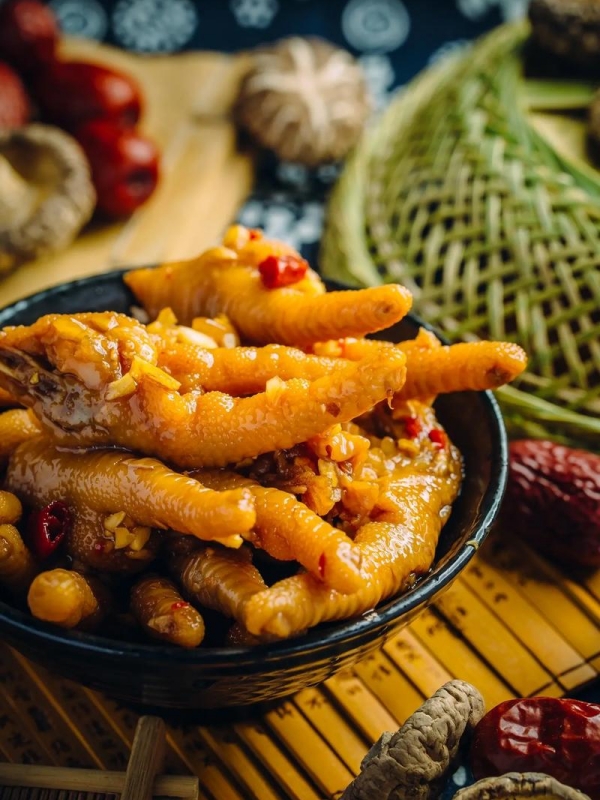
The Chicken Feet
Chicken feet (鸡爪, jīzhuǎ) are also called phoenix claws (凤爪, fèng zhuǎ) — a name that makes the dish easier to sell. There is not much meat on them; the texture is soft skin, small cartilage, tiny bones and the chew of tendon. Locals joke that spicy vacuum-packed chicken feet are "China's chips" for young people, eaten cold from the bag.
Two main street styles: tiger-skin chicken feet (虎皮凤爪), which are blistered in hot oil, then braised in soy and sugar; and pickled-chili chicken feet (泡椒凤爪), sold in vacuum packs as a fridge snack. The classic dim-sum version is steamed and soy-glazed, served in a small bamboo steamer with a chili dipping sauce on the side.
Typical dim-sum price is $3–5 (¥20–35) per basket. Look for them at dim-sum restaurants in Hong Kong and Guangdong, night-market stalls across southern China, and in vacuum packs at any convenience store. We recommend starting with the dim-sum version — the texture is the gentlest of the three.
Blood Curd, the Quiet Hot-Pot Cube
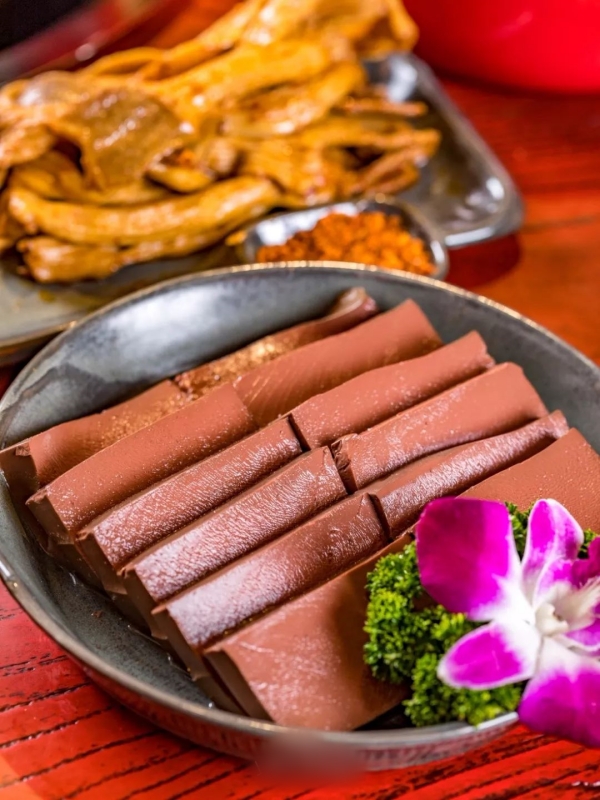
The Blood Curd
Blood curd (血旺 or 血豆腐) is coagulated duck or pig blood, cut into tofu-sized cubes. It has almost no taste on its own — every drop of flavour comes from the broth it is cooked in. The texture is soft, slightly bouncy and a lot like soft tofu, and most hot-pot regulars treat it as a default add-on rather than a dare.
It shows up in two main ways: simmered in spicy Sichuan-style hot pot, or dropped into a clear noodle soup. A southern-China and Taiwan variant, pig-blood soup, is a breakfast and night-market staple on its own. We find the noodle-soup version the easiest entry point — the broth softens the visual shock.
A plate in a hot-pot order runs about $4–6 (¥28–42), in line with other hot-pot add-ons like tripe or beef tendon. Foreign visitors' resistance is mostly psychological: the dish itself is mild, and it soaks up whatever broth you are eating. For most Chinese diners, it is comfort food rather than a curiosity.
See also our Chengdu Nightlife 2026 guide.
Other Famous Odd Chinese Foods
Several other items round out the odd-Chinese-food list. The table below covers five more dishes that show up in markets, banquet halls and street stalls across the country. Three of them — balut, bird's nest soup and shark fin soup — have enough cultural or environmental weight to deserve their own notes below.
Balut, the Fertilized Duck Egg
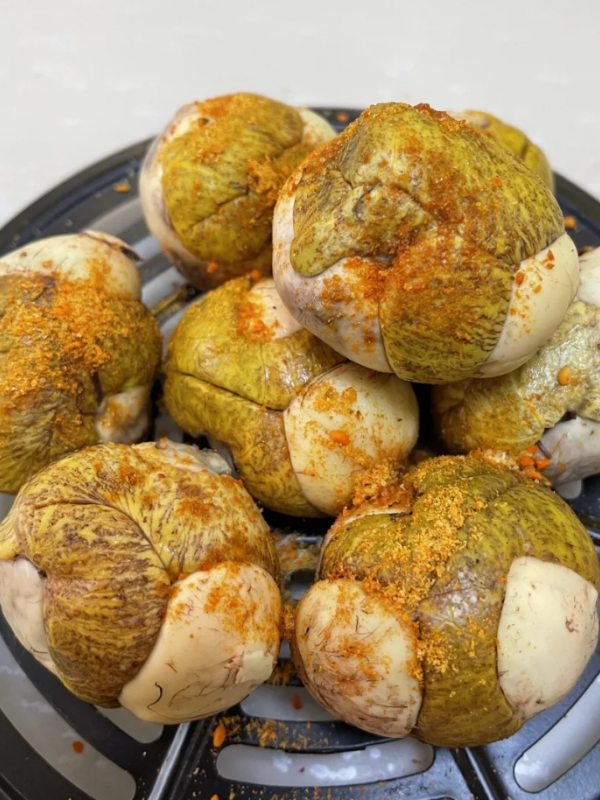
The Balut
Balut is a fertilized duck egg that has been incubated for 14 to 21 days, then boiled and eaten from the shell. The broth and yolk go first; the embryo — anywhere from a small crunchy dot to something close to a duckling — is eaten after. The flavour is very salty, and the texture shifts as you go deeper into the egg.
It is a street classic in the Philippines, Vietnam, Cambodia and Laos, and you will also find it in parts of southern China. The version sold in China is usually less developed than the Filipino 18-day style, which most locals find easier on the eye. Street price runs about $1–2 (¥8–15) per egg from a vendor.
It is the most polarizing item on this list — most travellers either love it on the first try or refuse a second. We suggest starting with the broth and yolk, then stopping where the texture starts to feel strange.
Bird's Nest Soup, an Expensive Southern Dish
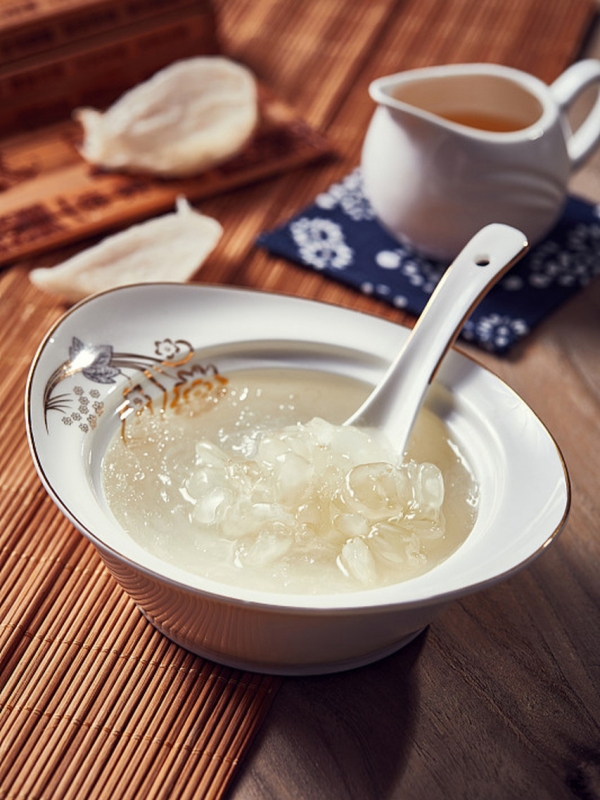
The Bird's Nest Soup
Bird's nest soup (燕窝) is made from the saliva nest of the swiftlet, a small cave-nesting bird. The nest is dissolved into a clear, slightly sweet gelatinous broth, with rock sugar or red dates added for flavour. The taste is mild; the prestige value is the main draw, and the dish has been a status symbol at Chinese banquets for centuries.
It is a luxury dish with deep roots in Guangdong and Hong Kong banquet culture. A bowl at a Cantonese restaurant runs $30–80 (¥200–580), and premium edible-nest grades climb into the hundreds. Cheaper mock versions using white fungus (雪燕, 银耳) are widely sold as a substitute and taste very similar to most diners.
If you want the bird's-nest experience without the bill, the white-fungus version is a fair second. It is sold in sweet-soup shops across southern China for a fraction of the price.
Shark Fin Soup, a Dish Most Travelers Skip
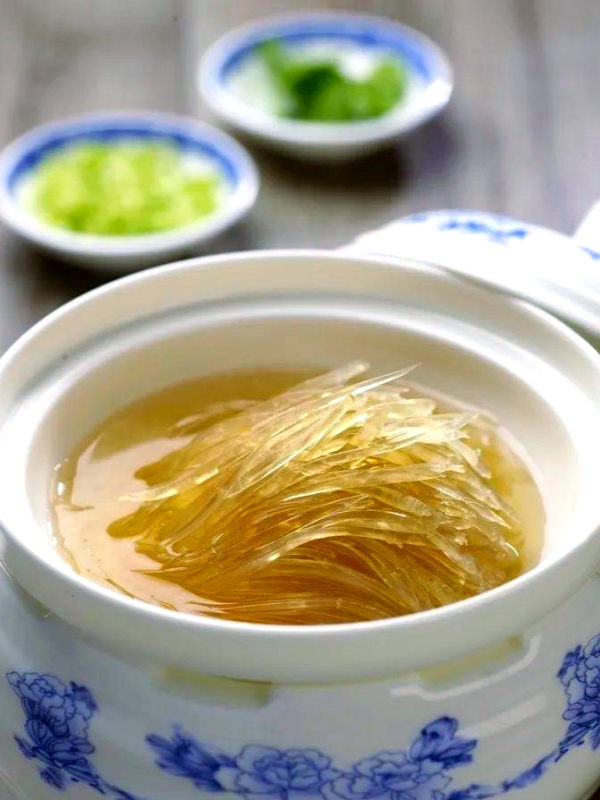
The Shark Fin Soup
Shark fin soup is a clear broth with strands of suspended shark-fin cartilage. The fin itself has almost no nutritional value and may carry heavy metals. It used to anchor official banquets and wedding feasts across China, but environmental concern has hit the dish hard: millions of sharks are killed each year for the trade, and most of the carcass is discarded.
A growing number of Chinese consumers now skip it, and most travel guides treat it as an item to avoid rather than try. Substitutes labelled "shark-fin-style" use cellophane noodles or shark-cartilage alternatives, and they deliver a similar slippery texture without the cost to shark populations.
If shark fin shows up at a banquet you are attending, eat it or pass on it as you choose. For everyday travel, the substitute versions are the easier recommendation.
Where to Find These Foods in China
Most of these dishes cluster in predictable settings. Night markets and street stalls are the natural home for stinky tofu, tea eggs, chicken feet snacks, durian in the south, and balut in southern China. Dim-sum restaurants in Hong Kong and Guangdong serve chicken feet and century egg. Hot-pot chains in almost every city carry blood curd. Cantonese banquet restaurants and herbal-soup shops serve bird's nest. Supermarkets and convenience stores stock vacuum-pack chicken feet, century eggs and tea eggs.
Our rule for street food anywhere: the busier the stall and the faster the turnover, the safer the food. Most night-market vendors have an English-translated picture menu, but you should still expect to point. Carry small cash. Spicy heat can be dialled down with the phrase 少辣 (shǎo là, "less spicy"). English signage is rare at stalls, common at chain restaurants.
Nothing here is dangerous to try for most travellers, but anyone with allergies or religious dietary restrictions should ask before ordering.
For more, see our guide to Chongqing Mountains.
Frequently Asked Questions
Q: What counts as "odd" Chinese food?
Any dish whose main ingredient, texture or appearance is unfamiliar to most Western diners. The category usually covers fermented foods (stinky tofu, century egg), offal and unusual cuts (chicken feet, duck tongue, blood curd), whole-animal presentations (balut, chicken testicles), and strong-smelling items like durian. The "oddness" is cultural, not culinary.
Q: Why does stinky tofu smell so strong?
Fermentation in a brine of milk, vegetables, fish or meat produces sulfur compounds similar to those in aged blue cheese. The smell is heaviest at the stall and softens after frying and saucing. Locals have a common saying: the smellier the tofu, the better it tastes.
Q: Is century egg actually 100 years old?
No. The name is a poetic exaggeration. The egg is typically cured for 7 weeks to 5 months in an alkaline paste of clay, ash, salt, lime and strong black tea. That process turns the yolk dark green and creamy, and the white translucent and jelly-like.
Q: Is it safe for foreigners to eat these dishes?
Yes. These are everyday foods sold at busy stalls and chain restaurants across China. Apply the same street-food judgment as anywhere: pick a stall with high turnover and freshly cooked food, keep hot broths hot, and ask about allergies or religious restrictions at sit-down restaurants.
Q: Where can travelers actually try stinky tofu or century egg?
For stinky tofu, head to night markets in Changsha, Nanjing, Shenzhen, Taipei or Hong Kong. Century egg is widely sold in supermarkets, convenience stores and dim-sum restaurants across China, and most Chinatown districts in Western cities stock it as well, often already peeled and ready to eat.
Q: Do Chinese people themselves actually eat these foods?
Yes, regularly. Stinky tofu, century egg, chicken feet and blood curd are everyday comfort foods across the country. Durian is widely eaten in the south. Balut is more common in southern China, and bird's nest soup is a Cantonese banquet specialty rather than a daily dish.
Q: How much do these street foods typically cost?
Most everyday items fall in the $0.50–6 (¥3–42) per serving range. A plate of stinky tofu runs $1–2 (¥8–15), a century egg about $0.50–1 (¥3–6), a basket of chicken feet $3–5 (¥20–35). The luxury items sit much higher — bird's nest soup runs $30–80 (¥200–580) per bowl at Cantonese restaurants.
Q: Are there any "odd" Chinese foods that are vegetarian?
Yes. Stinky tofu, century egg (mostly egg), tea egg and durian are non-meat. Fermented bean curd and preserved duck eggs are also vegetarian. Balut, blood curd, chicken feet, bird's nest and shark fin are not. If you keep to fried, fermented and egg-based snacks, the list of options is wide.