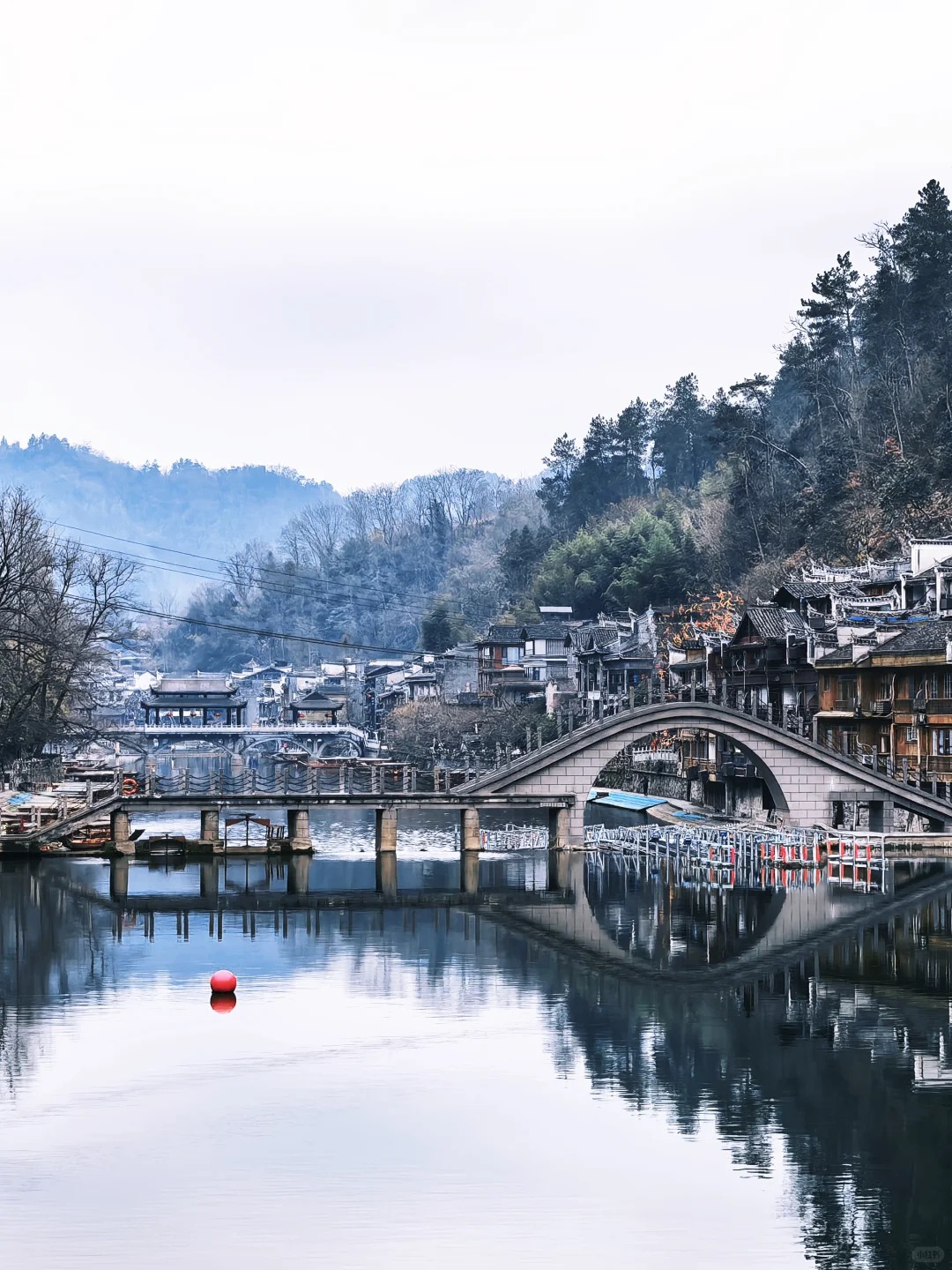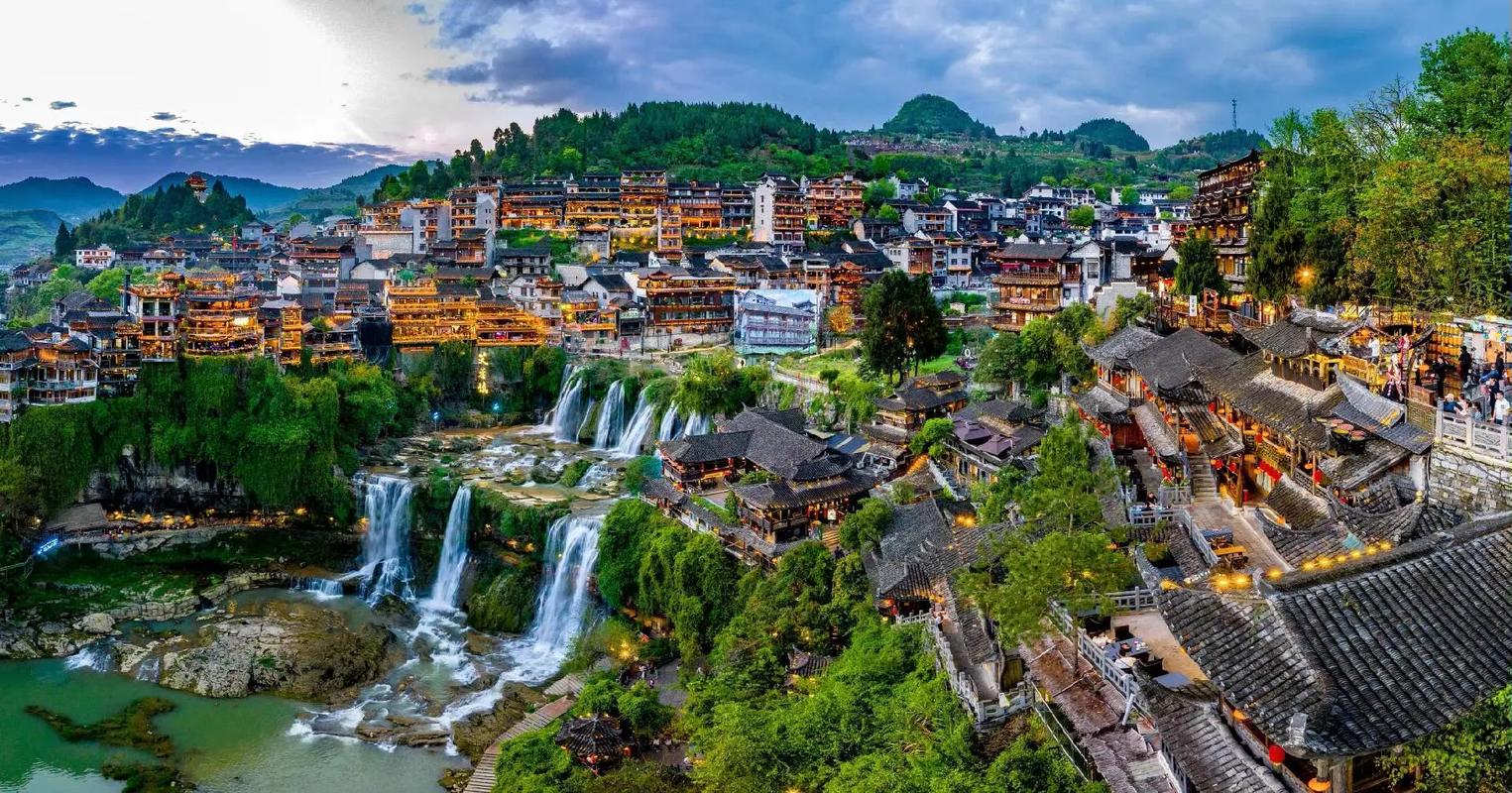
Furong Town in Hunan:Ancient Stilt Houses, A Thundering Waterfall, And China's Most Magical Night View
In 1987, a Chinese film called Hibiscus Town swept the country's major film awards. Directed by Xie Jin and starring Liu Xiaoqing, the movie told a story of resilience set against the backdrop of a small, waterfall-side village in rural Hunan. Few viewers realized that the village was real — and that its ancient name, Wangcun, had just been officially changed to Furong Town, after the film's Chinese title. Today, that same town remains one of China's most visually stunning and surprisingly under-visited ancient settlements. Nestled in the mountains of Xiangxi Prefecture, between the towering peaks of Zhangjiajie and the canalside streets of Fenghuang, Furong Town is not your average Chinese ancient town. A waterfall runs directly through its center. Two-thousand-year-old stone streets climb the hillside. And at night, the entire village glows like something from a dream.
This guide is built from firsthand visits in both 2025 and early 2026, cross-checked with local hotel owners, restaurant staff, and train station officials. Whether you are planning a day trip from Zhangjiajie or an overnight stay to catch the famous waterfall lights, here is everything you need to know about getting there, where to stay, what to eat, and how to experience Furong Town at its best.
Location and Key Facts of Furong Town
Sightseeing Highlights in Furong Town
Furong Town is small enough to explore on foot in two to three hours, yet the experience feels much larger than its size. The entire settlement climbs a steep hillside above the You River, and the waterfall that runs through its core is the anchor for almost everything else. During our 2025 visit, we circled the waterfall from every possible angle — and each perspective revealed a completely different character. Below are the must-see highlights, each with practical tips for making the most of your time.
Walking Behind the Wangcun Waterfall
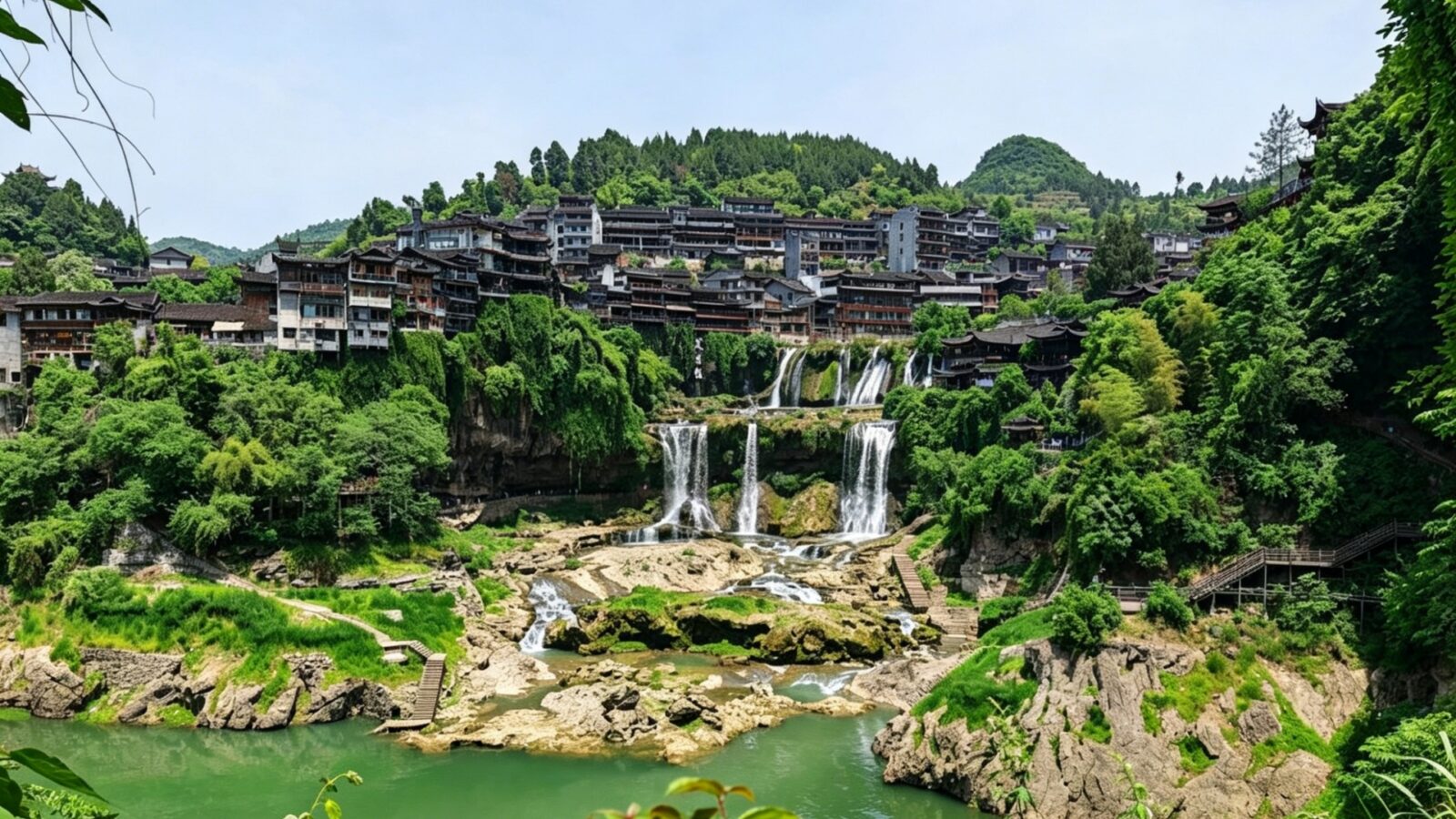
Panoramic View of Furong Town
-
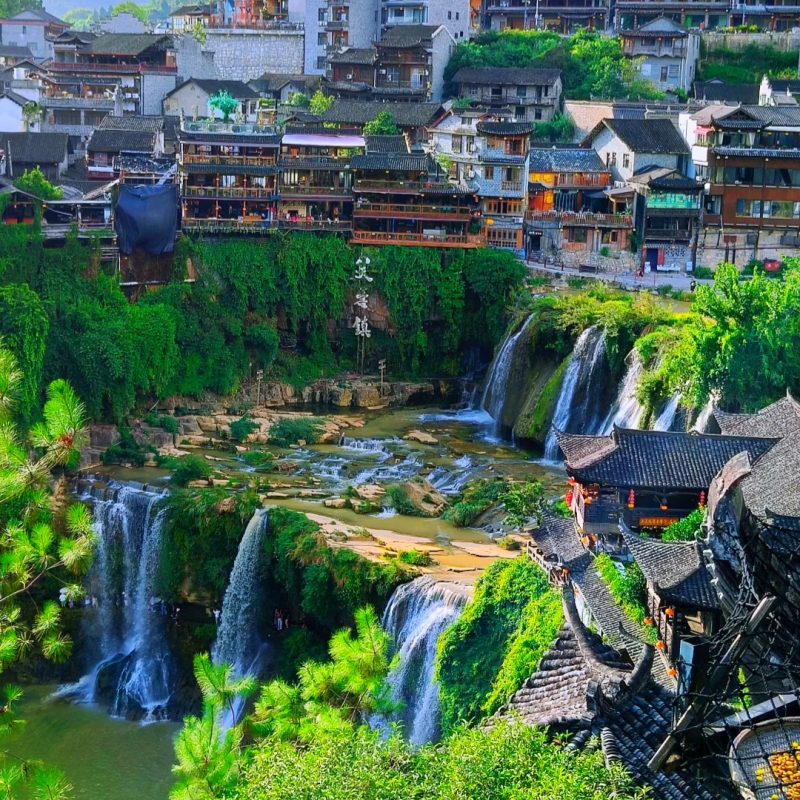

- In-town Waterfall Trail
-
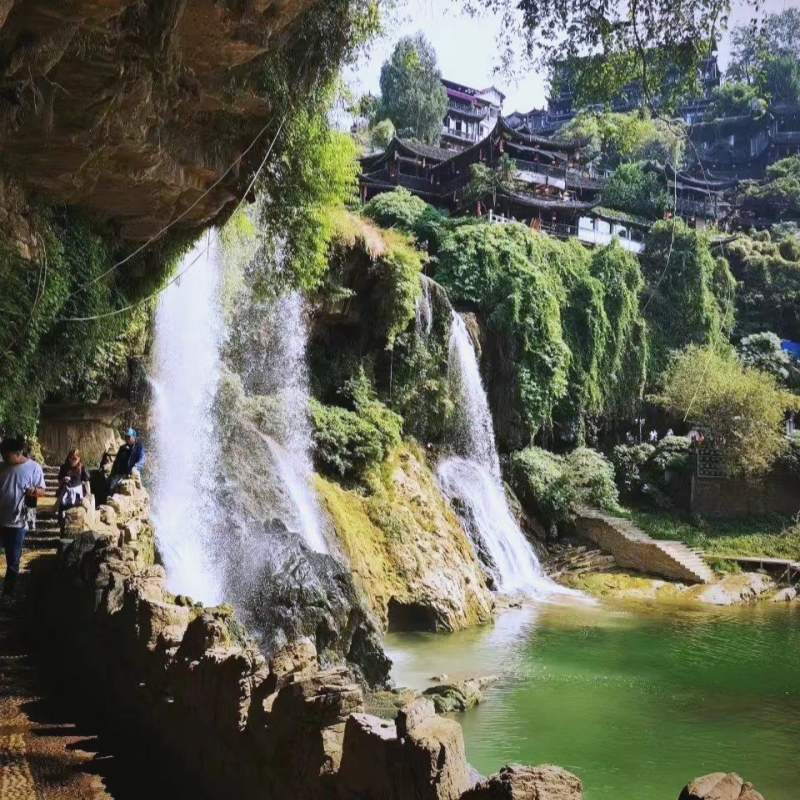
- Behind the Waterfall Curtain
The Wangcun Waterfall, also called Furong Waterfall, drops roughly 60 meters directly through the town center and into the You River below. A stone walkway loops behind the falling water, allowing visitors to walk through the curtain itself. We found this experience particularly striking in the late afternoon: sunlight filtered through the spray, and the wooden stilt houses perched on the cliffs above seemed to float in midair. In the rainy season, the water volume increases dramatically, making the roar almost thunderous — though the path can become slippery, so proper footwear is essential.
- Best approach: Start from the left side of the waterfall (facing downstream) for the most expansive views, then cross to the right via the stone bridge.
- Time of day: Late afternoon (4:00–6:00 PM) offers the best natural light before the night lights come on.
- Safety note: The walkway can be wet and uneven; wear sturdy, non-slip shoes.
- Photo tip: Bring a wide-angle lens to capture the full curtain of water and the stilt houses above.
Wuli Stone Slab Street and Tusi Palace
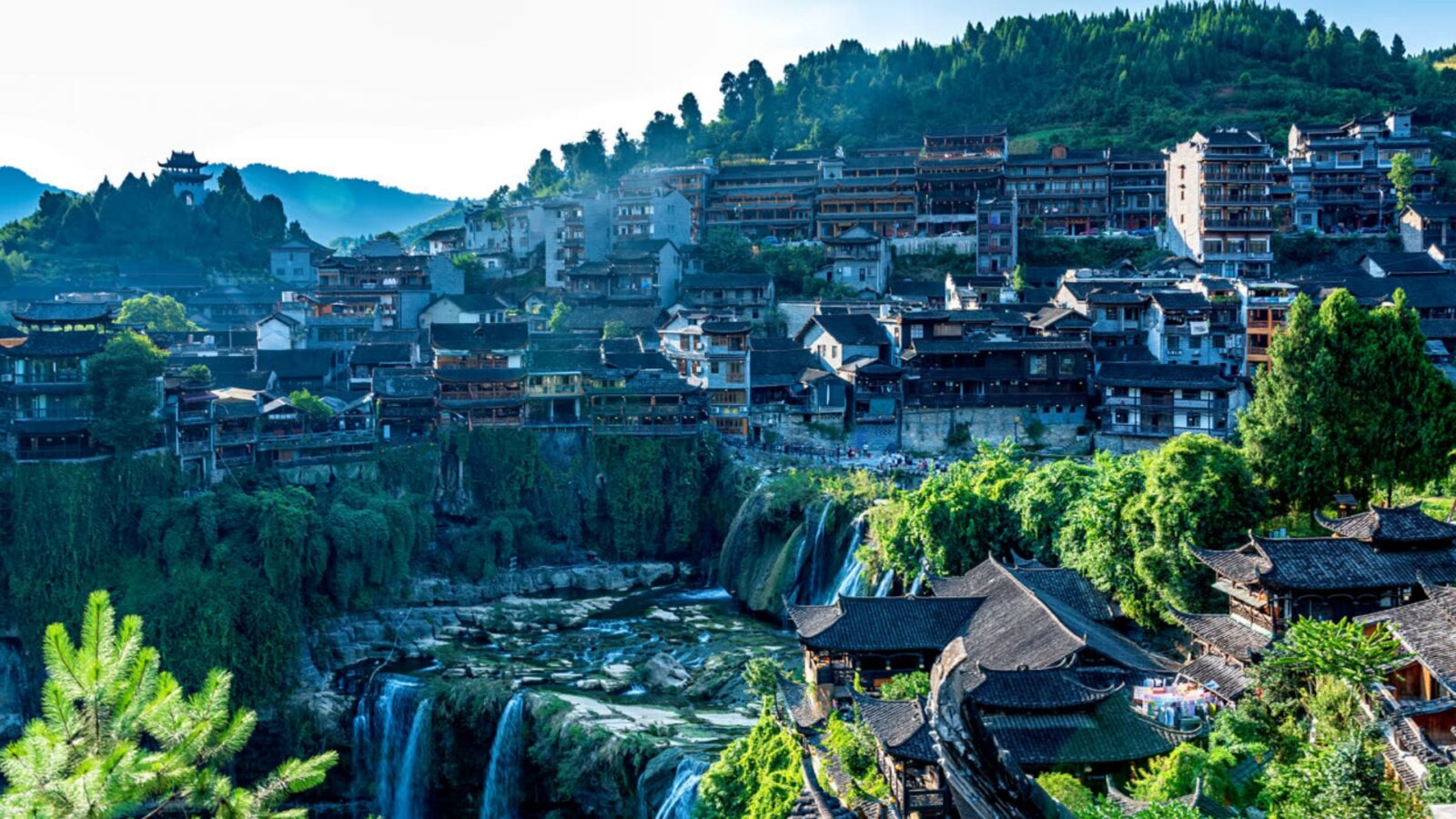
Tujia Stilt Houses Along Stone Street
-
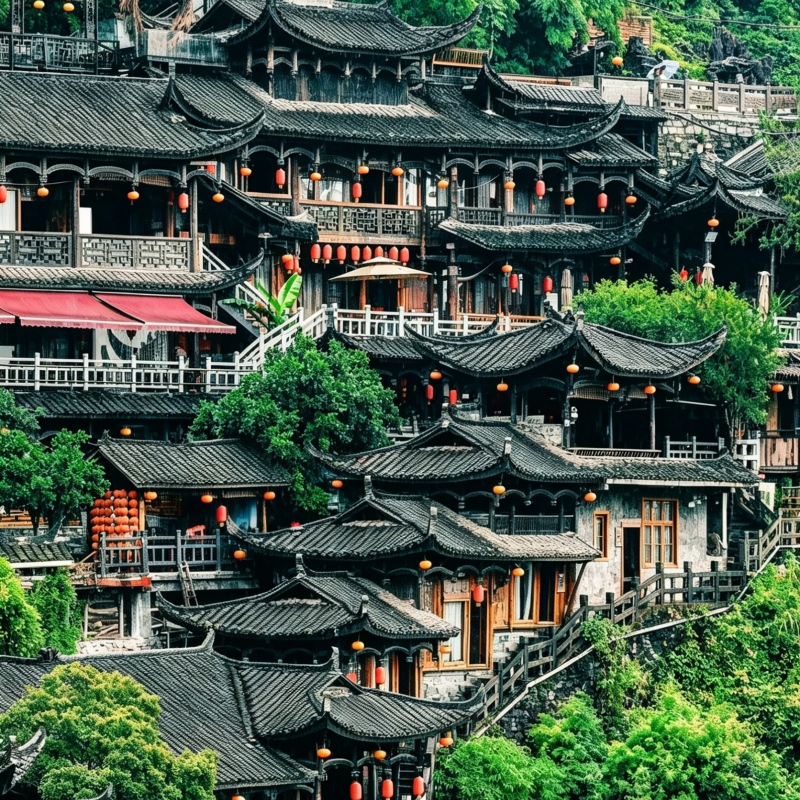
- Tujia Stilt Houses
-
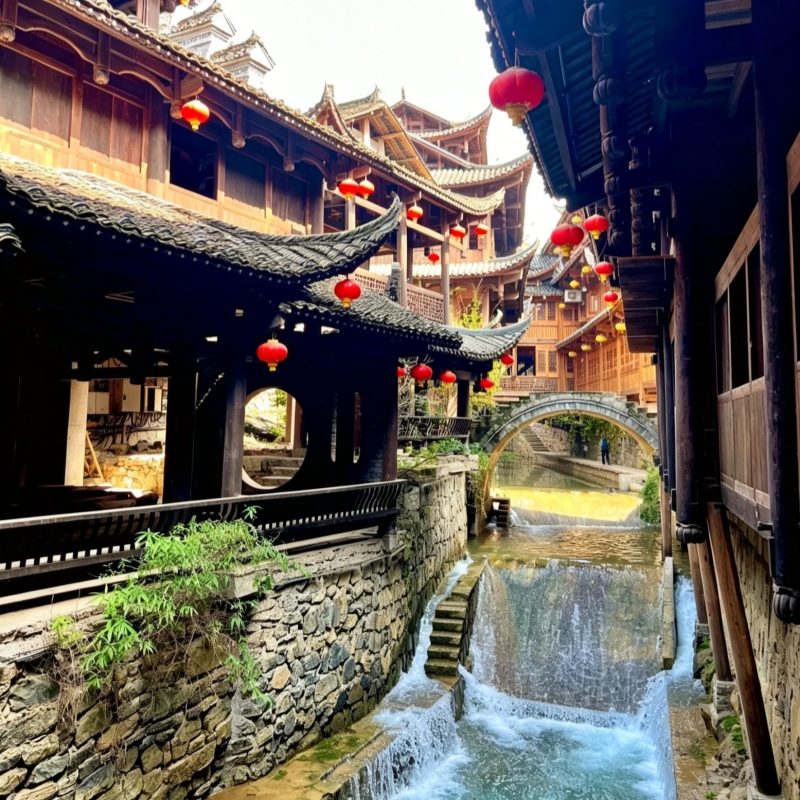
- Ancient Stone Lane
The main artery of Furong Town is Wuli Stone Slab Street, a 2,000-year-old lane paved with dark, polished stones that have been worn smooth by centuries of footsteps. Traditional Tujia stilt houses line both sides, their wooden facades housing everything from tea shops to small museums. Near the waterfall, the Tusi Palace stands as a reminder of the region's feudal past — the Tusi system governed this part of Hunan for centuries, and the palace offers a glimpse into that era, even if you only view it from the exterior. We skipped the interior during our visit but found the exterior architecture and the courtyard views well worth the short detour.
- Street length: About 800 meters, winding uphill from the river to the upper part of town.
- Notable stops: Look for the old oil-pressing workshop and the small museum of Tujia embroidery.
- Palace exterior: The wooden carvings and upturned eaves are particularly photogenic in the late morning light.
- Local interaction: Many elderly residents sit outside their homes weaving bamboo baskets — a great opportunity for a respectful photo.
Night Views from Tuwang Bridge and Huashao Platform
Wangcun Waterfall Walkway
-
- Nightscape of Waterfall & Stilt Houses
-
- Furong Town Night Waterfall View
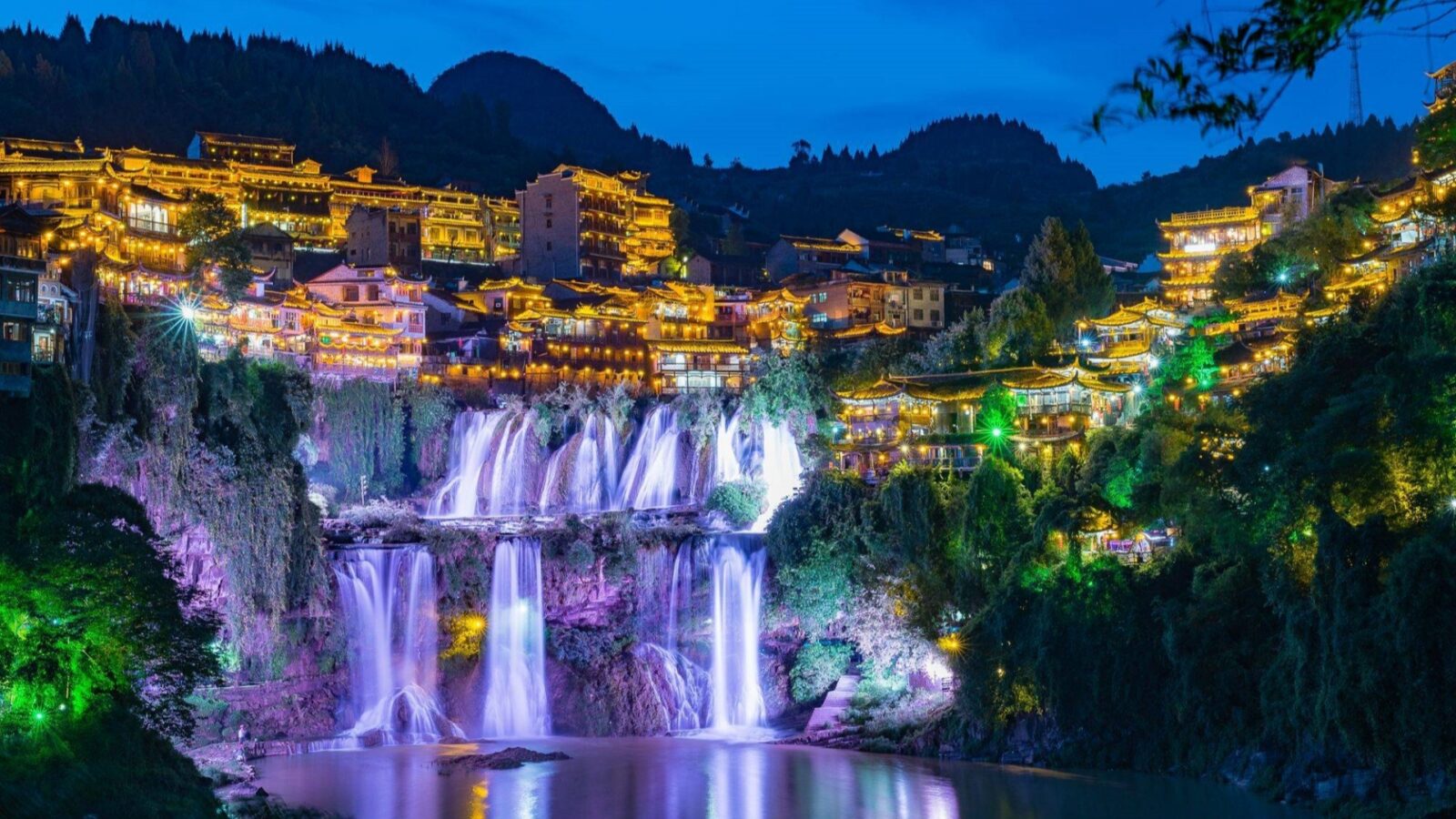
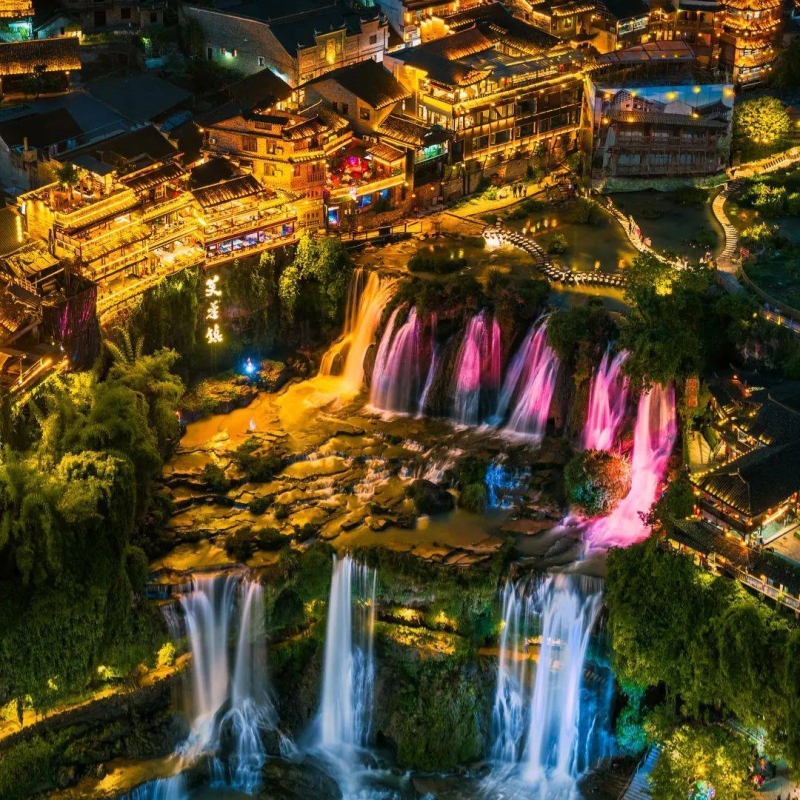
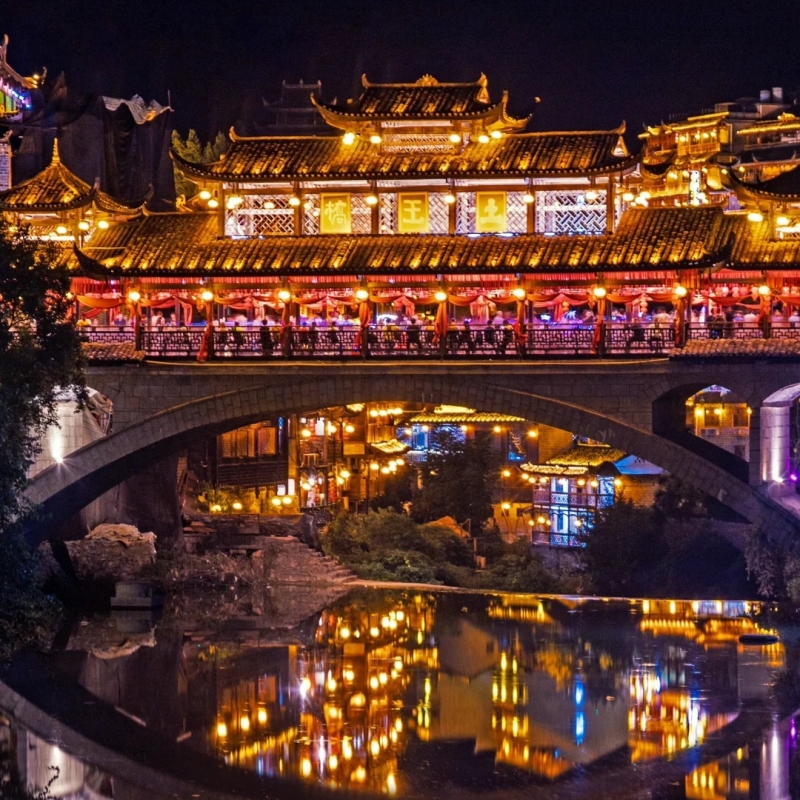
Daytime in Furong Town is charming. Nighttime is transformative. Around 7:30 PM, the waterfall and the riverside buildings begin to glow with warm golden lights. The effect is cinematic: the waterfall becomes a luminous curtain, the stilt houses reflect across the river, and the entire valley feels like a stage. We spent nearly two hours just moving between viewpoints to capture the evolving scene. The best photo spots are listed below, and we highly recommend arriving at least 30 minutes before the lights fully turn on to secure your position.
- Viewing platform opposite the waterfall: The classic postcard shot, best taken about 15 minutes after the lights are fully on.
- Tujia Bridge (土家桥): Offers a slightly elevated perspective with the waterfall centered in the frame and the river stretching out below.
- Huashao Viewing Platform (花少观景台): A hidden gem located near the upper end of the town, giving a panoramic view of the entire valley.
- Costume rental: Traditional Tujia outfits are available for about ¥50 per hour — they add a striking foreground element to any night shot.
- Timing: The golden half-hour (6:00–6:30 PM) when the sky is still blue and the artificial lights just begin to glow produces the most dramatic contrasts.
🏔️ Discover More Cliffside Wonders: If you are drawn to dramatic mountain towns built against steep cliffs and rocky gorges, explore another spectacular cliffside destination in our guide to Wangxian Valley Town.
Local Food and Dining in Furong Town
Hunan cuisine is famous for its bold, spicy flavors, and Furong Town delivers plenty of local variations. During our 2025 stay, we made a point of eating at different riverside restaurants each meal, and the food was consistently good — though not always what we expected. The town's dining scene is still relatively unpolished compared to major tourist hubs, but that is part of its charm. Below we break down the must-try dishes and the best practical tips for a satisfying meal.
Liu Xiaoqing Rice Tofu and Xiangxi Cured Meat
-
- Liu Xiaoqing Rice Tofu
-

- Smoked Tujia Cured Meat
-

- Blood Sausage Duck
-

- Artemisia Glutinous Rice Cakes
Several dishes are uniquely tied to Furong Town. We recommend ordering them at least once during your visit, and pairing them with a cold beer or local rice wine for the full experience.
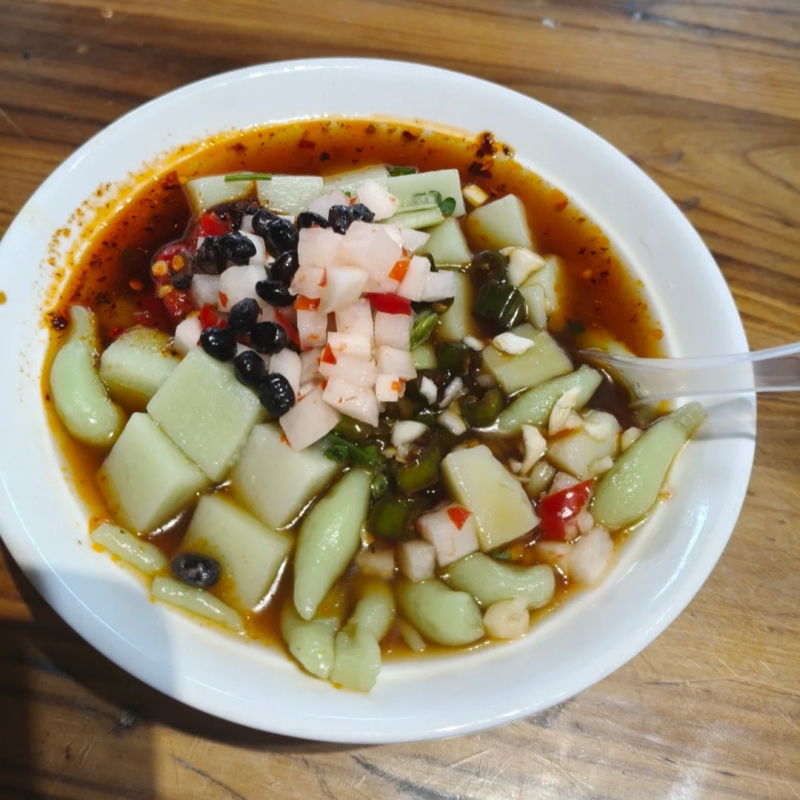
- Liu Xiaoqing Rice Tofu (刘晓庆米豆腐): The most iconic local snack — soft rice noodles served in a savory broth with pickled vegetables and a sprinkle of chili oil. Named after the film's star, it’s sold at multiple stalls along Wuli Street for about ¥10–15 per bowl.
- Smoked Tujia Cured Meat (湘西腊肉): Pork belly smoked over pine wood for weeks, giving it an earthy, slightly sweet aroma. It's usually stir-fried with fresh chili peppers and garlic shoots — the fat melts in your mouth.
- Blood Sausage Duck (血粑鸭): A traditional dish made with duck meat, duck blood, and sticky rice, stuffed into natural casings and steamed. The texture is dense and chewy, and the flavor is deeply savory. It’s an acquired taste, but locals consider it a festive essential.
- Artemisia Glutinous Rice Cakes (蒿子粑粑): Green, chewy cakes made with wormwood and glutinous rice, often pan-fried and dusted with sugar. They are a spring seasonal treat but available year-round in some shops.
- Spicy Fish Head (剁椒鱼头): A Hunan classic — fresh fish head steamed with a mountain of chopped red chilies and ginger. The meat is tender and absorbs all the spicy, tangy flavor.
Riverside Restaurants with Waterfall Views
For the best experience, choose a restaurant along the main road that runs parallel to the river. These spots almost always have outdoor seating with waterfall views. We found that prices were slightly higher near the waterfall but still reasonable — a full meal for two cost about ¥120–160. Use Amap or Dianping to check reviews; many locals rely on these apps, and the ratings are generally reliable. One warning: not every dish is as it appears. We once ordered a spicy chicken stir-fry, only to receive a plate of chicken intestines. The flavor was actually quite good, but the texture took some getting used to. Also, chicken feet are ubiquitous here — a detail that my grandmother, a devoted fan, would have adored.
- Best time to eat: Arrive at the restaurant at least one hour before sunset if you want a prime river-view table — they fill up quickly, especially during weekends.
- Must-try beverage: Local rice wine (米酒) — sweet, low-alcohol, and served warm in winter. It pairs beautifully with the cured meat.
- Budget tip: Street snacks like rice tofu and grilled skewers are much cheaper than restaurant meals and just as tasty for a quick lunch.
- Language help: Most menus have pictures, and translation apps work well — we successfully ordered by pointing and smiling.
- Allergy alert: Many dishes contain peanuts, sesame oil, and shellfish; ask the staff or show a translated card if you have dietary restrictions.
Best Seasons for Visiting Furong Town
Timing your visit to Furong Town makes a significant difference in both the experience and the photos you will bring home. We visited in early autumn 2025 and again in spring 2026, and the contrast was striking. The waterfall's volume, the crowd levels, and the overall atmosphere shift noticeably across the seasons.
Summer (Jun–Sep) for Maximum Waterfall Flow
Here is a breakdown of what each season offers, based on our visits and conversations with local hotel staff:
Autumn, especially September to October, is the sweet spot. The weather is comfortable, the waterfall still carries decent volume from summer rains, and the crowds are thinner outside the National Day holiday window (October 1–7). Spring brings flowers but lower water levels, while summer offers the most dramatic waterfall views at the cost of heat and humidity. Winter is quiet and occasionally snowy, but heating in hotels is unreliable — we learned this the hard way when our host offered us an extra blanket instead of turning on a heater.
Autumn (Oct–Nov) for Mild Weather and Fewer Tourists
The famous night lights in Furong Town begin around 7:30 PM and run until roughly 11:00 PM. The golden hour for photography is between 6:00 PM and 7:00 PM, when the fading natural light combines with the newly activated artificial lights. We found that the best shots came about 15 minutes after the lights fully turned on — the sky was still slightly blue, creating a beautiful contrast with the warm glow of the town.
Transportation and Accommodation
How to Reach Furong Town
Getting to Furong Town is simpler than it looks, thanks to the high-speed rail network that opened in late 2021. The nearest station is simply called Furong Town Railway Station, and it connects directly to both Zhangjiajie and Changsha. Here is a comparison of the main transport options:
We took the high-speed train from Zhangjiajie West to Furong Town Railway Station, and the journey was smooth and surprisingly cheap — about ¥30 for a second-class seat. There are roughly 13 direct trains per day, with the first departing around 12:05 PM and the last at 10:00 PM. From the station, it is a 10-to-15-minute drive to the town gate. Didi drivers are scarce, so we arranged a pickup through our hotel; the owner met us at the station with a sign and drove us in for free. Several other hotels offer the same service — just ask when you book.
Where to Stay: Inside or Outside the Town
The entrance ticket to Furong Town costs ¥108 and is valid for three days with unlimited re-entry. Whether you stay inside or outside the ticketed area changes both your experience and your budget. Here is a quick comparison:
We stayed at Baihe Wharf Inn, which we booked via Trip.com. The balcony overlooked the waterfall directly, and the room included a traditional tea set — we spent both evenings sipping local tea while watching the lights shift across the falls. The owner was exceptionally warm: upon arrival, she served us tea with puffed rice snacks and fruit, and when we left, she gave us small souvenirs. Other solid options include Floral Hotel Furong Town Galaxy Heights Hotel ($), Baihe River Valley ($$), 12C Waterfall View Prime Location, and Flower Waterfall Bay Homestay. For Fenghuang Ancient Town, the stay options are quite different, so Furong is a good comparison if you are deciding between the two.
Frequently Asked Questions About Furong Town
Q: Is Furong Ancient Town real?
Yes, Furong Ancient Town is absolutely real. It was originally called Wangcun and has existed for over 2,000 years in Yongshun County, Xiangxi Prefecture, Hunan. The town was renamed after the 1987 film Hibiscus Town, but the ancient streets, stilt houses, and waterfall are original features that have been preserved for centuries. Visiting Furong Town gives you direct access to living Chinese history.
Q: Can you visit Furong Ancient Town?
Yes, you can visit Furong Ancient Town easily. The nearest high-speed rail station is called Furong Town Railway Station, and it connects directly to Zhangjiajie in about 20 minutes. The entrance fee is ¥108, and the town is open year-round. Our visit in early 2026 confirmed that the site is fully accessible to foreign travelers, with English signage at the main ticketing office and major viewpoints.
Q: Is Furong Town, China worth visiting?
Yes, Furong Town is absolutely worth visiting. It is one of the few ancient towns in China built directly around a waterfall that runs through its center. The night views are spectacular, and the town feels far less commercialized than nearby Fenghuang. During our stay, we met only a handful of Western travelers, which added to the sense of discovery. If you are traveling between Zhangjiajie and Fenghuang, Furong Town makes an ideal one-night stop.
Q: Which is better, Fenghuang or Furong?
That depends on what you are looking for. Fenghuang is larger, more lively, and famous for its canalside stilt houses. Furong Town is smaller, quieter, and defined by its waterfall. If you have limited time, we recommend Furong Town because it is more compact and offers a more concentrated experience. If you have extra days, you can easily visit both — they are connected by a 28-minute high-speed train, and each offers a distinctly different side of Hunan's ancient town culture.
Q: How long do you need in Furong Town?
One night and one full day is enough to see everything in Furong Town at a relaxed pace. You can walk the waterfall path, explore Wuli Stone Slab Street, have dinner with a river view, and watch the night lights — all within about 24 hours. If you are short on time, you could even visit Furong Town as a long day trip from Zhangjiajie, but we strongly recommend staying overnight to experience the illuminated waterfall.
Q: Is Furong Town accessible in winter?
Yes, Furong Town is accessible in winter, but you should prepare for cold weather and occasional snow. The biggest issue we encountered was that most hotels lack central heating — our room was cold, and the owner offered extra blankets instead of a heater. Temperatures can drop to 0°C at night. If you visit Furong Town in winter, pack thermal layers and confirm with your hotel in advance whether they provide heating.
Q: Do I need to speak Chinese to visit Furong Town?
You do not need to speak Chinese to visit Furong Town. Hotel owners are accustomed to foreign guests, and translation apps work well for ordering food or asking directions. English signage is present at the main tourist spots. That said, Western visitors are still relatively rare in Furong Town, so locals are particularly friendly and helpful when they see foreign travelers — we experienced this firsthand when a restaurant owner used a translator app to recommend dishes to us.
Q: Can I do a day trip to Furong Town from Zhangjiajie?
Yes, you can absolutely do a day trip to Furong Town from Zhangjiajie. The high-speed train from Zhangjiajie West takes only 20 minutes, with about 13 departures daily. You could leave at 8:00 AM, explore the town and waterfall, have lunch, and return by evening. However, we recommend staying overnight to catch the night lights — the experience of seeing Furong Town illuminated after dark is worth the extra night.