Wangxian Valley Town
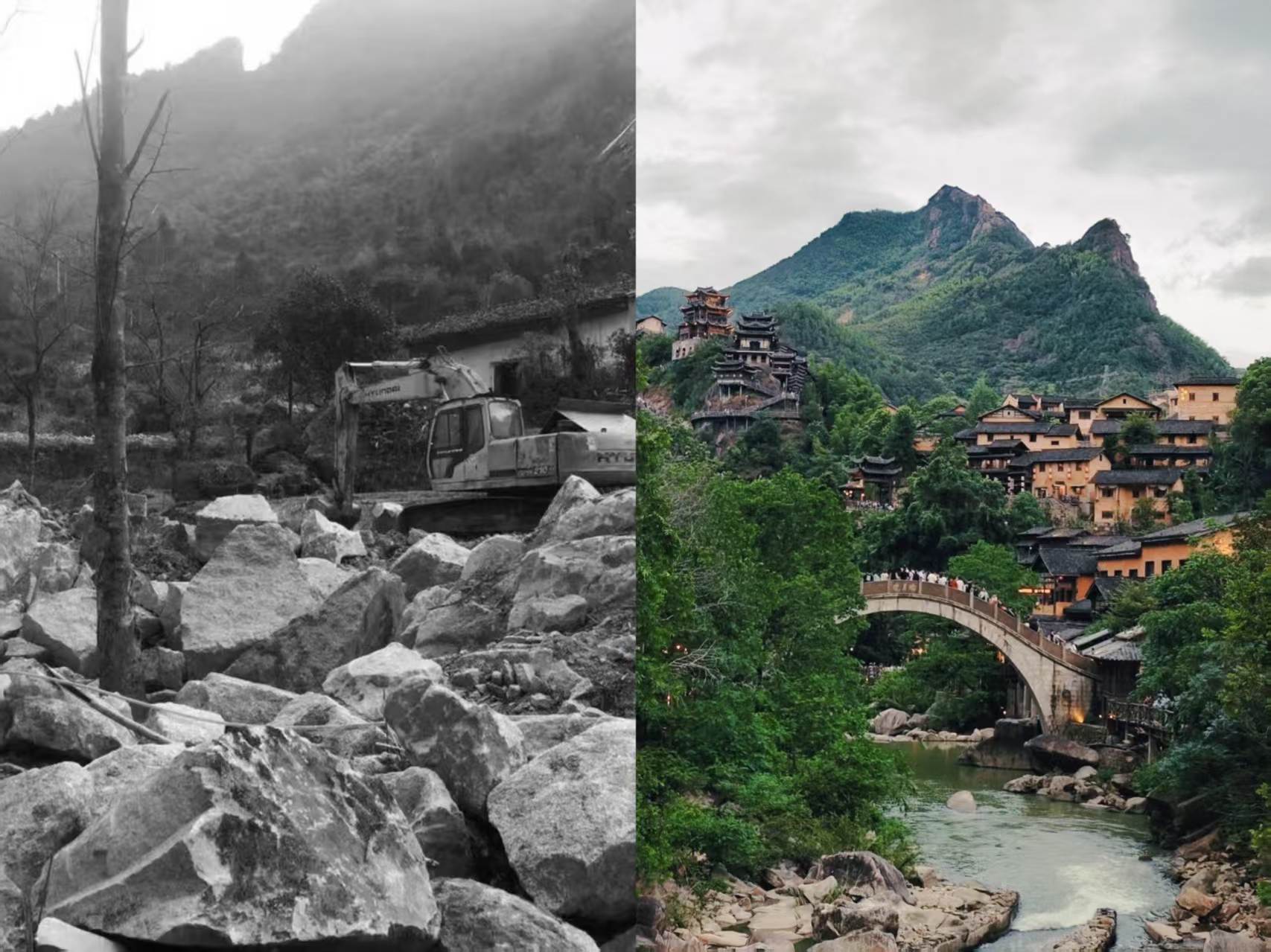
Wangxian Valley Town rises along a narrow canyon in Shangrao, Jiangxi Province, where traditional Chinese architecture clings to cliff faces in a setting that looks borrowed from a wuxia fantasy. The valley takes its name from the xianxia novel genre — buildings stack across Baihe Cliff and Yunhai Cliff, connected by bridges over a mist-filled gorge. At dusk, tens of thousands of lanterns ignite the cliff villages from within, turning the canyon into one of China's most photographed night landscapes. The article below covers day and night ticket prices in USD and RMB, when to enter for the best night-show experience, how to reach the valley from Shanghai and other major cities, and where to stay inside the canyon or nearby.
The valley sits roughly 50 kilometres — about an hour's drive — from Shangrao Railway Station. Most visitors travel to Shangrao by high-speed rail, then continue by private car or shuttle to the scenic-area entrance. The night tour is the core draw, so timing your arrival around sunset is the single most important planning decision. Accommodation inside the canyon ranges from boutique cliffside hotels at a premium tier to guesthouses near the entrance, with Shangrao city as a practical day-trip base.
Quick Facts
Things to See and Do
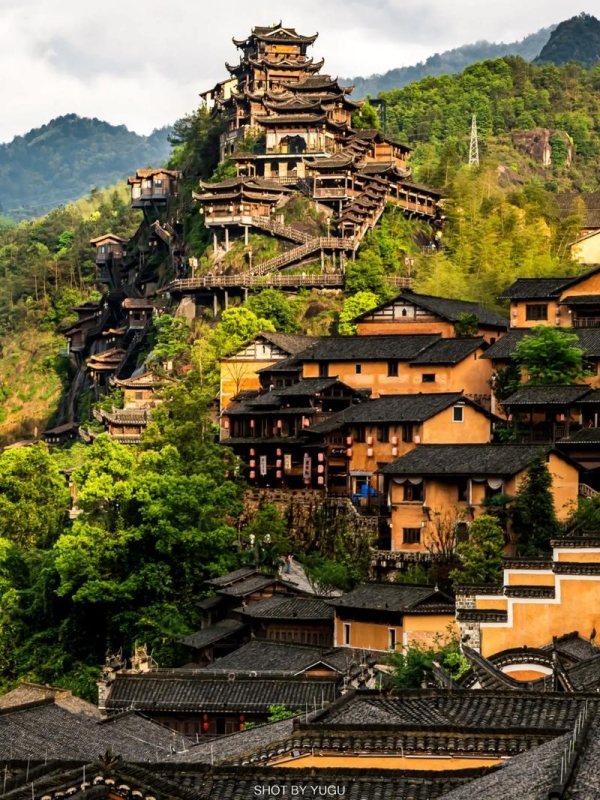
The valley divides into a south bank and a north bank across the river. The south bank carries the Baihe Cliff boutique-hotel cluster, the Ancient Street and the entrance facilities. The north bank holds the Yunhai Cliff / Cloud Palace area, which is the dominant night-photography subject. Between the two banks, seven bridges span the gorge from east to west.
Cliffside Villages and Cloud Palaces
Wangxian Valley Town
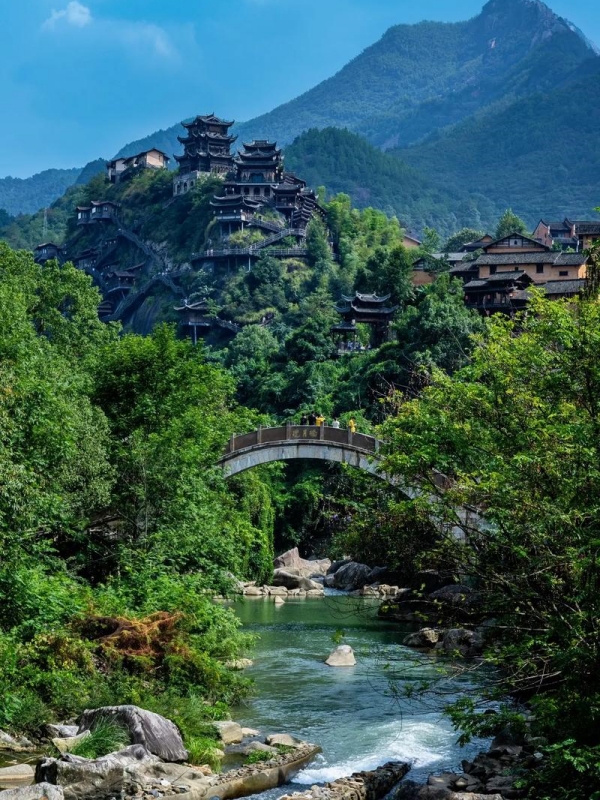
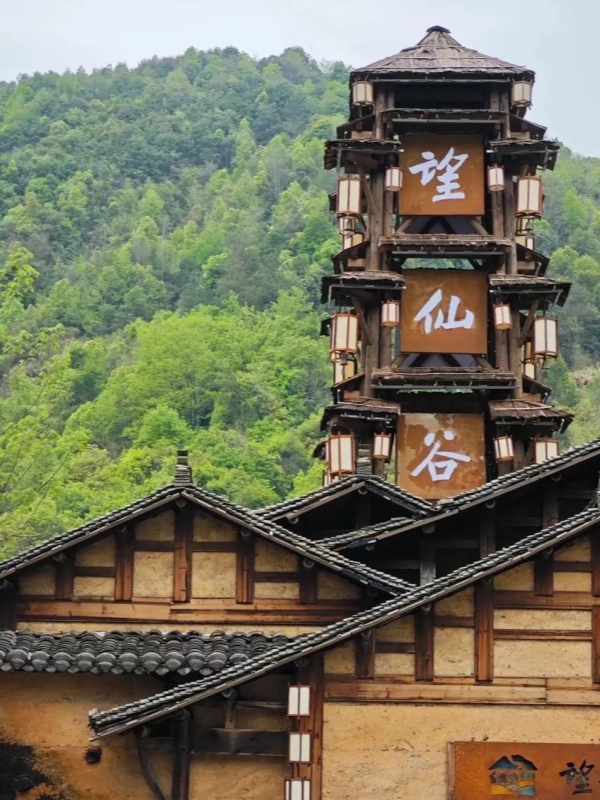
Baihe Cliff dominates the south bank. A tiered boutique-hotel district climbs the cliff face here, with guest rooms stacked above the main street level. Beneath the hotel zone, a glass walkway clings to the cliff wall, giving visitors a transparent floor section over the gorge. The north bank belongs to Yunhai Cliff — the Cloud Palace — where buildings occupy multiple stacked platforms on the canyon wall. This is the most photographed cliffside in the valley and the primary target of the night lighting system. The contrast between the intimate, lantern-warmed south bank and the dramatic tiered north bank defines the valley's two-part character.
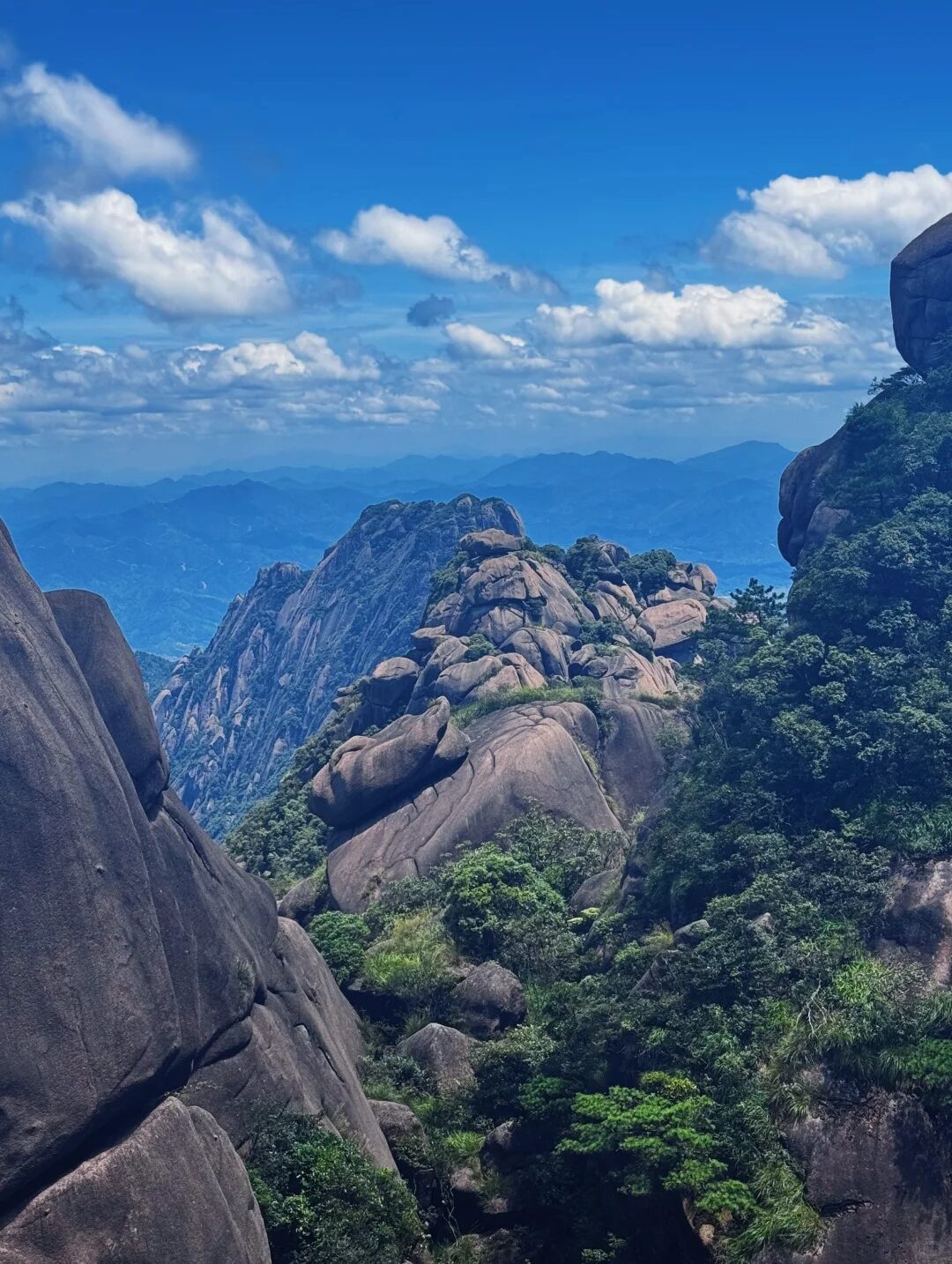
⛰️ Discover Nearby Scenic Peaks: Located in the same region of Jiangxi Province, you can pair your visit to Wangxian Valley with a trip to scenic granitic peaks, high-altitude glass skywalks, and mystical rock formations. Plan your itinerary with our guide to Shangrao Lingshan.
Bridges, Glass Walkway and Waterfalls
Wangxian Valley Town
All seven bridges span the gorge from east to west: Qingyun, Caihong, Zuixian, Wuyang, Lanyue, Baige and Changkong. Three stand out for photography: Lanyue Bridge has a curved silhouette that catches light at an angle; Zuixian — the Drunken Immortal Bridge — is best at dusk when its reflection pools below; Changkong Bridge is the highest and westernmost, offering a thrilling canyon view from the deck. The glass walkway beneath Baihe Cliff runs along the cliff wall and is included in the main admission ticket — no extra fee applies. Near the entrance, the Cliffside Waterfall Walkway runs along the gorge wall and delivers wide canyon views in daylight before the evening crowds build.
🏡 Explore Jiangxi's Historic Countryside: If you are traveling through Shangrao, extend your journey north to experience classic Hui-style architecture, ancient stone-paved villages, and famous golden rapeseed fields. Explore our visitor's guide to Wuyuan.
Canyon Rafting
Wangxian Valley Town
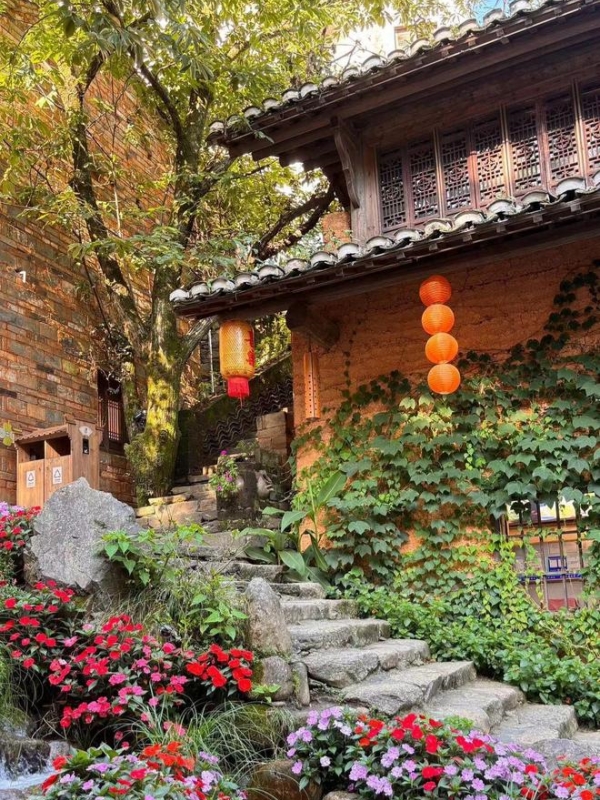
The 3-kilometre river run passes from the Changkong Bridge area downstream to Qingyun Bridge, taking roughly 20–30 minutes on calm water. It is a gentle experience compared with whitewater rapids — the river through the canyon moves steadily rather than fast. Several practical details apply:
- Route: downstream from Changkong Bridge area to Qingyun Bridge area, ~3 km
- Duration: 20–30 minutes on the water
- Season: warmer months only; confirm on site before boarding
- Restrictions: height and age limits apply; life jackets are provided and required
The Lantern-Lit Night Tour
The night show is the reason most visitors time their trip for evening. Lanterns and architectural lighting on the cliff villages begin switching on approximately 30 minutes before sunset and intensify after dark, when the canyon walls and bridge undersides glow from below. The south-bank Ancient Street becomes the main viewing corridor, with crowds gathering to look north across the river toward Yunhai Cliff, locally called the Cloud Palace. Mist machines add atmosphere over the water, and folk performances animate the courtyard spaces along the street. Entering the park 1–2 hours before sunset is the single most useful timing tip — the cliffside walkways narrow near the entrance, and arriving after dark means joining a bottleneck rather than walking through it.
- Cliffside lantern lighting: Baihe Cliff and Yunhai Cliff illuminated from within; the effect transforms the canyon walls into layered, glowing villages
- Illuminated performance stages: Yang's Mansion courtyard and Juxian Stage host folk music and dance after dark
- Seven bridges lit from below: each bridge is individually lit, creating a sequence of reflections in the river below
- Mist effects over the river: fog machines create the misty atmosphere that defines the valley's xianxia aesthetic
- Folk dance and music on the Ancient Street: scheduled performances at multiple courtyard stages along the pedestrian street
What the Night Show Includes
Wangxian Valley Town
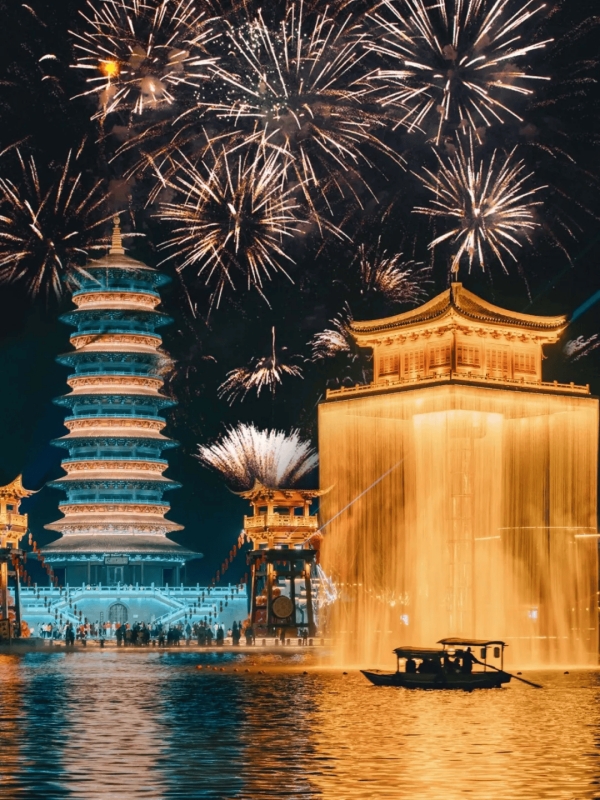
The visual centrepiece is Yunhai Cliff on the north bank, where building upon building is lit in warm amber and red from within, creating the layered lantern-on-cliff effect that appears in most published photographs. Baihe Cliff on the south bank carries the boutique-hotel cluster, also fully lit at night. The seven bridges — Qingyun, Caihong, Zuixian, Wuyang, Lanyue, Baige and Changkong — are each lit from below, so their undersides reflect in the river. On the Ancient Street, the Yang's Mansion courtyard and Juxian Stage run scheduled folk performances, while the mist drifting over the river reinforces the canyon atmosphere that the daytime visit alone cannot provide.
Timing, Crowds and Photography
Wangxian Valley Town
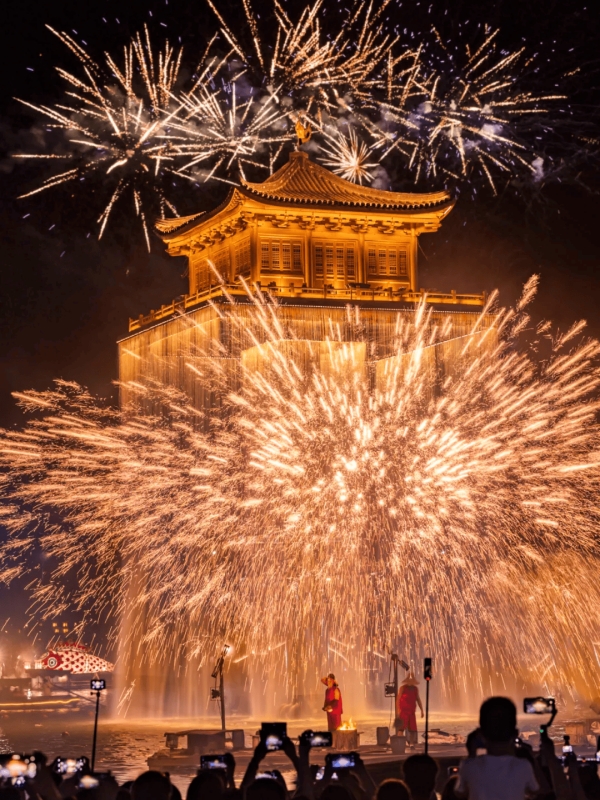
Arrive by 16:00–16:30 at the latest during summer to settle before the peak-evening crowd arrives. Lights begin activating around sunset — approximately 30 minutes before the sun drops — and reach full intensity within 20–30 minutes of dusk. Weekends and national holiday periods draw significantly larger crowds to the narrow cliffside walkways; the bottleneck near the entrance is worst after 19:00. For photography, a modern smartphone captures the lantern-lit canyon effectively; tripods are restricted on some of the bridges, so a small portable tripod or handheld technique works better than a full setup.
Tickets, Opening Hours and What to Book
The park operates roughly 09:00–22:00 during peak season, with last entry usually closing 1–1.5 hours before the 22:00 shut. Night entry begins from about 16:30–17:00 depending on the time of year. Date-specific tickets apply during busy periods, so booking ahead is strongly recommended for weekends and public holidays.
- Day ticket: adult $28–34 (¥198–238); child / student / elderly $17–23 (¥120–160)
- Night-only ticket: $14–21 (¥98–148)
- Day+night combo: about $35–42 (¥248–298)
- Glass walkway: included with all main ticket types
- Canyon rafting: paid add-on on site, approximately $14 (¥99)

Wangxian Valley Town
Foreign visitors should book through Trip.com or Klook — both accept international credit cards and send a QR-code confirmation. The scenic area's own WeChat mini-program requires a mainland phone number and WeChat Pay or Alipay, which most visitors from outside China do not have. Walk-up tickets are unreliable during Golden Week and peak weekends; date-specific slots can sell out hours in advance.
Ticket Types and Prices
The day ticket covers full canyon access, all seven bridges, the Ancient Street, the cliffside walkway and the Cliffside Waterfall Walkway. The night-only ticket grants entry from the mid-afternoon window through to park close — sufficient for the lantern show, but it misses the late-morning and afternoon canyon atmosphere. The day+night combo is the most practical choice for travellers arriving from Shanghai or Hangzhou who plan to spend a full evening but do not need an overnight stay. Children, students with a valid ID, and adults over 60 qualify for the discounted tier. The glass walkway suspended beneath Baihe Cliff is built into every main ticket; there is no extra charge. Canyon rafting operates as a separate on-site purchase and is not included in any ticket tier.
Where to Buy Tickets Online
Trip.com and Klook both list Wangxian Valley Town tickets with real-time availability and immediate confirmation. Once purchased, a QR code is sent by email and can be scanned at the entrance gate — no voucher exchange is required on arrival. During peak season, date-specific caps are in place, and sold-out days do occur. Booking at least 2–3 days ahead for weekend visits, and at least a week ahead for Golden Week or Lunar New Year, is the safe approach. The scenic area's official WeChat mini-program and domestic platforms such as Meituan and Dianping require a mainland phone number and are not accessible to most foreign visitors.
How to Get to Wangxian Valley Town
The standard approach is to reach Shangrao by air or high-speed rail, then transfer to a private car or shuttle for the final 50-kilometre drive to the valley entrance. Shangrao Railway Station is the main hub and is well-connected by G-class high-speed trains from most major cities.
By High-Speed Train to Shangrao
Shangrao Railway Station is the primary gateway for high-speed rail travellers. All G-class trains arriving here serve the same station where local transport to the valley begins. The station is a transfer hub rather than a destination — once you arrive, the 50-kilometre onward journey by car takes roughly one hour. From there, the HSR network connects Shangrao directly to Shanghai, Hangzhou, Suzhou, Huangshan, Wuyuan, Jingdezhen, Wuyishan, Xiamen, Quanzhou, Changsha, Guangzhou and Zhangjiajie. Domestic flights to Shangrao Sanqingshan Airport (SQD) are an alternative for visitors coming from further afield, though the airport has limited international connections.
From Shanghai Specifically
Shanghai Hongqiao Railway Station is the most common departure point. The G-train takes roughly 2.5–3 hours to reach Shangrao Railway Station, with 8–12 daily services. Second-class fares come to about $42–46 (¥297). Once you arrive in Shangrao, the private-car transfer to the valley entrance is approximately one hour. Several details shape the journey from Shanghai:
- Departure station: Shanghai Hongqiao Railway Station (high-speed rail hub, connected to Metro Lines 2 and 17)
- Journey time: 2.5–3 hours by G-class train
- Second-class fare: about $42–46 (¥297)
- Frequency: 8–12 daily services; advance booking recommended during holiday periods
From Shangrao to the Valley Entrance
The drive from Shangrao Railway Station to the valley entrance covers approximately 50 kilometres and takes about one hour by car under normal road conditions. Several transfer options are available: a private car or DiDi ride costs roughly $25–35 (¥180–250); an official scenic-area shuttle operates during peak season on a limited timetable; a taxi runs about ¥200; and private transfers can be booked in advance through Trip.com. Foreign visitors without a Chinese driving licence should not plan to self-drive — rentals issued to foreign licences are not straightforward in China. Pre-booking a private transfer via Trip.com or arranging one through a Shangrao hotel is the most reliable option for international travellers.
Where to Stay Inside and Near the Valley
Staying inside the canyon is the only way to experience the valley in both late evening and early morning without arranging transport back to Shangrao. Three accommodation tiers offer different trade-offs between immersion and cost.
- Cliffside boutique hotels: premium tier on Baihe Cliff; the most immersive option with direct canyon access; some properties run ¥8,000+ per night
- Village guesthouses near the entrance: more affordable, around $70–140 (¥500–1,000) per night; convenient for a one-night stop
- Shangrao city hotels: $35–85 (¥250–600) per night; best used as a day-trip base if you prefer a wider range of hotel options
Cliffside Boutique Hotels
The boutique hotels on Baihe Cliff occupy the cliff face itself, with rooms and corridors stacked above the canyon. Stepping out in the early morning before the day-visitor crowds arrive, or stepping back from the lantern-lit walkways at midnight, delivers an experience the day ticket alone cannot. These properties sit at the premium end of the market — the highest-tier rooms are listed at ¥8,000 or more per night on travel platforms, and the premium rates reflect the location rather than standard luxury services across all room categories. Most are bookable through Trip.com with international credit cards.
Village Guesthouses and Shangrao City Options
Guesthouses clustered near the scenic-area entrance offer a practical mid-range choice at roughly $70–140 (¥500–1,000) per night. These properties are less dramatic in setting but provide a comfortable base for an early-evening entry and a morning exit without the premium canyon premium. Shangrao city hotels run $35–85 (¥250–600) per night for a standard room, making the city a sensible base for visitors who want to pair a day at the valley with a broader Shangrao-area itinerary, or who prefer not to pay the cliff-hotel premium for a single night's sleep.
Frequently Asked Questions
Q: How do I get to Wangxian Valley Town from Shanghai?
Take a G-class high-speed train from Shanghai Hongqiao Railway Station to Shangrao Railway Station — roughly 2.5–3 hours, second class about $42–46 (¥297), with 8–12 daily services. From Shangrao Railway Station, the valley entrance is about 50 kilometres and one hour by private car, DiDi or taxi ($25–35 / ¥180–250). There is no direct airport-to-valley service; the high-speed rail route is the most convenient option.
Q: How much does a Wangxian Valley Town ticket cost?
Day adult ticket: $28–34 (¥198–238); child / student / elderly: $17–23 (¥120–160); night-only ticket: $14–21 (¥98–148); day+night combo: $35–42 (¥248–298). The glass walkway is included in all main tickets. Canyon rafting is a separate add-on at about $14 (¥99). Tickets are bookable on Trip.com and Klook.
Q: Is the night tour worth the extra ticket of Wangxian Valley Town?
The cliffside lantern lighting on Yunhai Cliff and Baihe Cliff, the seven bridges lit from below, and the folk performances along the Ancient Street are the primary reasons most visitors time their trip for evening. The daytime canyon is scenic, but the lantern-lit night version is the experience that defines the valley — the night-only or day+night combo ticket is generally the better value.
Q: Can I visit Wangxian Valley Town in one day?
Yes — enter 1–2 hours before sunset, stay through the night lighting until roughly 22:00, and exit the same day. The one-night overnight stay inside the canyon is worthwhile only if you want to experience the valley again in the early morning before day visitors arrive, without arranging transport back to Shangrao the same evening.
Q: Do I need to speak Chinese to visit the Wangxian Valley Town?
Not strictly — booking through Trip.com or Klook removes most language friction at the ticket stage, and your QR code works at the gate without verbal interaction. On-site signage is predominantly Chinese, and English-speaking staff at the entrance are uncommon. A translation app and pre-saved screenshots of your booking confirmation and transfer details are strongly recommended.
Q: What is the best time of year to visit the Wangxian Valley Town?
April–May and September–October offer mild weather and clearer canyon views. Avoid the first week of October (Golden Week) and the Lunar New Year holiday week, when domestic tourism volumes overwhelm the narrow cliffside walkways and date-specific tickets sell out well in advance.
Q: Are there English signs, audio guides or English-speaking staff?
Basic English signage appears on some major landmarks, but no formal English audio guide is available on site. English-speaking staff are uncommon, particularly at the entrance and in smaller guesthouses. A translation app and pre-saved screenshots of your booking, hotel address and transfer details are the most practical language tools for a visit.
Q: Is the canyon rafting suitable for kids?
The river run is a calm 3-kilometre, 20–30 minute float rather than a rapids experience, and life jackets are provided and required. However, height and age restrictions apply and change depending on daily conditions — confirm the current rules on site before boarding. Rafting operates only in warmer months and closes during the colder season.