Wuyuan in Jiangxi:Ancient Huizhou Architecture, Golden Rapeseed Terraces, and a Poetic Sanctuary of Rural Tranquility
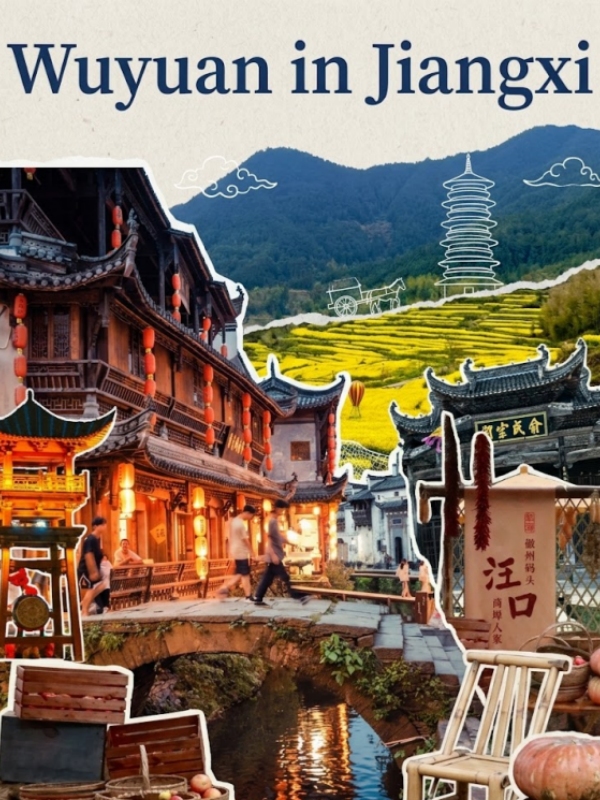
Wuyuan lures you in with its magnificent rapeseed terraces and ancient Huizhou whitewashed villages. Folk culture runs deep in this little-known area of northeast Jiangxi Province, one of the most incredible places to visit in China. “China’s most beautiful countryside,” raved National Geographic; and honestly, the title still fits. History runs through every lane: merchants, scholars, craftsmen, all spent 800 years creating a culture that feels intact, not staged. Furthermore, nearby Wangxian Valley — a breathtaking gorge just outside Wuyuan — is worth adding to your route. Between Wuyuan and Jingdezhen, this National Geographic-recommended county wins every time. This guide shares everything I genuinely want you to know before you go.
Wuyuan At a Glance
| Category | Detail |
|---|---|
| 📍 Location | Jiangxi Province, eastern China |
| 🌸 Best Season | March–April (rapeseed bloom) · September–November (autumn harvest + foliage) |
| 🗓️ Trip Length | 3–5 days recommended |
| 🚆 Transport Hub | Wuyuan Railway Station · Jingdezhen Airport · Huangshan Airport |
| 💰 Daily Budget | Budget ¥200–350 · Mid ¥500–800 · Comfort ¥1,000+ |
| 🎫 Book in Advance | Huangling cable car · Wuyuanzhou night show · Star River Cruise |
| 👥 Suitable For | Photographers · Culture seekers · Couples · Families · Solo travellers |
Explore Natural Wonders and Scenic Landscapes
Wuyuan's natural scenery isn't just backdrop — it is the experience. From misty rapeseed valleys to underground caves, each landscape here carries its own completely different mood.
Jiangling (江岭)
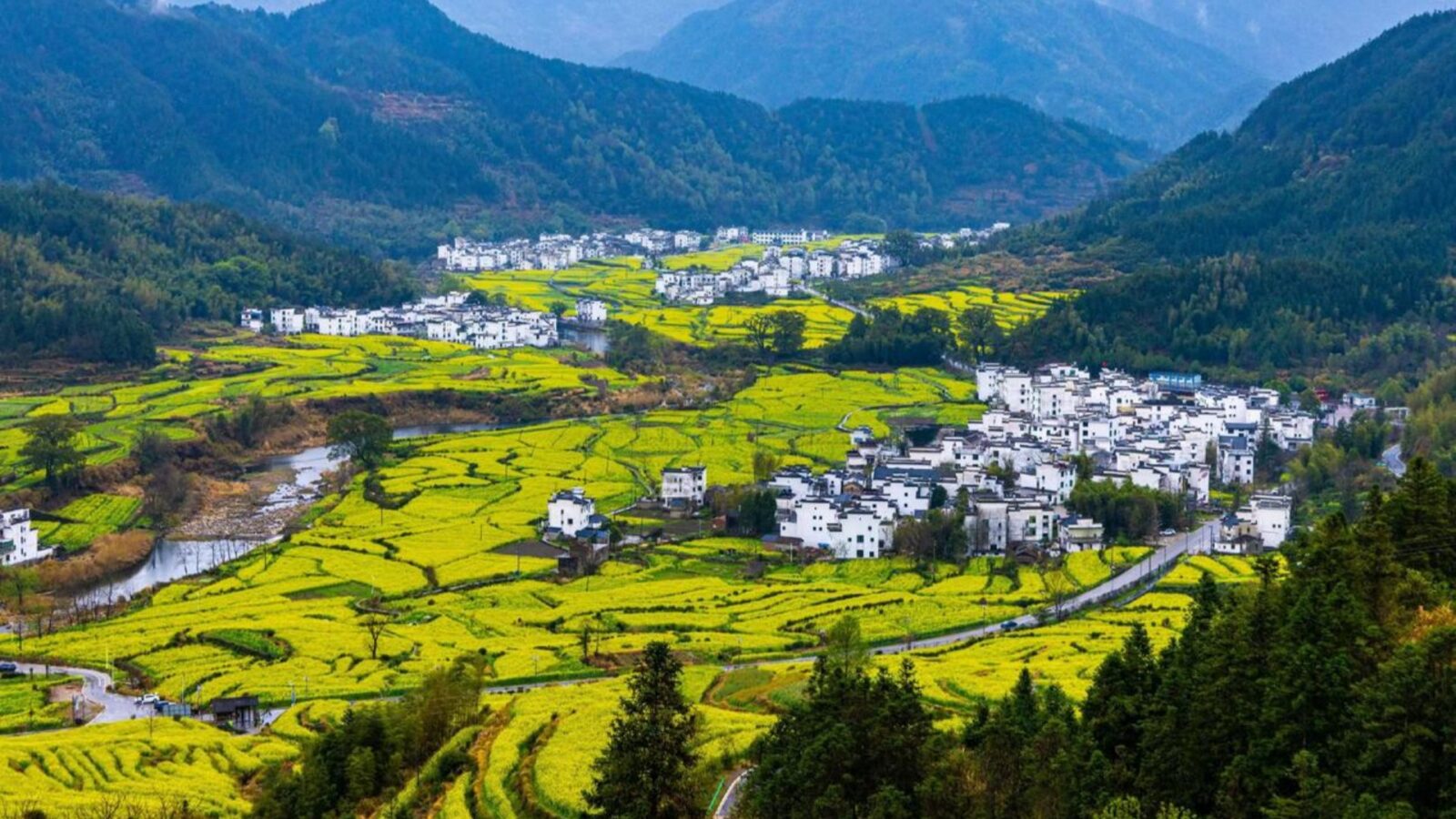
Jiangling Terraced Rapeseed Fields, Wuyuan
Standing at the Jiangling overlook, the scale hits you physically. Valley-wide rapeseed terraces stacking up to the mist-shrouded ridgeline — gold all the way to our horizon. I ceased thinking in terms of shots once morning light started breaking in. Peak season from mid-march through early April.
-
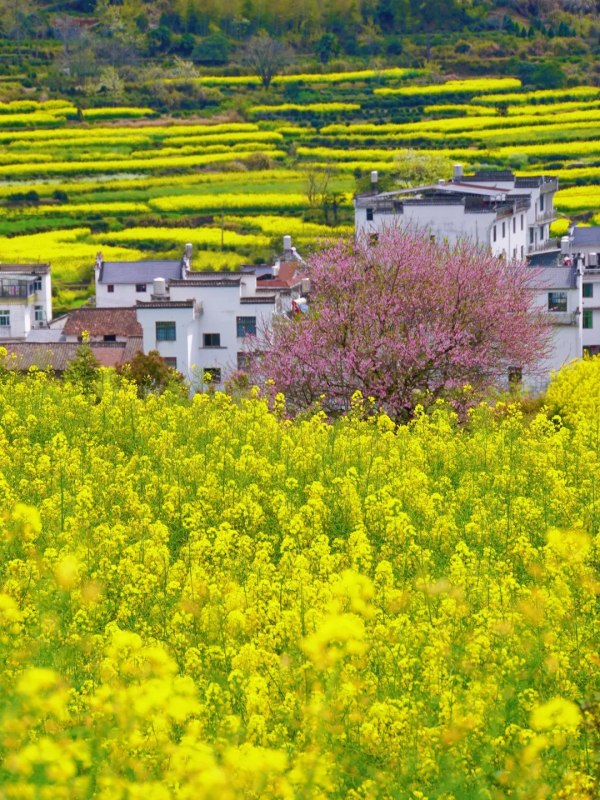

- Spring Symphony in Jiangling Terraces
-
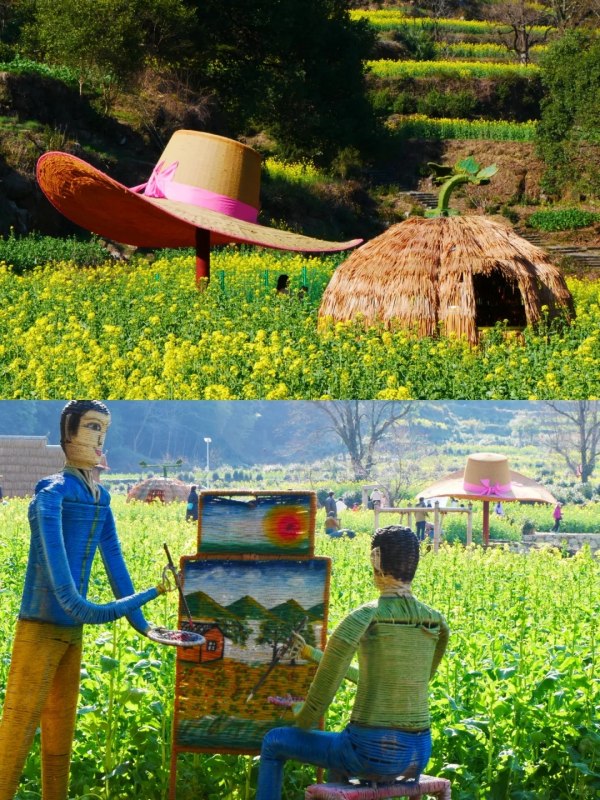
- Spring Symphony in Jiangling Terraces
-
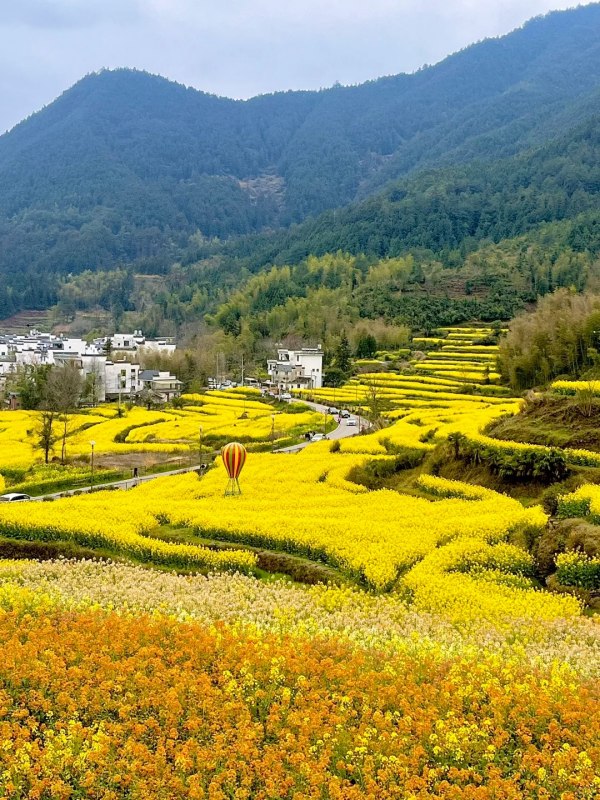
- Spring Symphony in Jiangling Terraces
- 🎫 Admission: ~¥80 (flower season) / ~¥20 (off-season)
- ⏰ Insider tip: Arrive at the viewpoint before 8am — crowds triple by 9:30.
Wòlóng Valley, Dàzhāng Mountain (大鄣山卧龙谷)
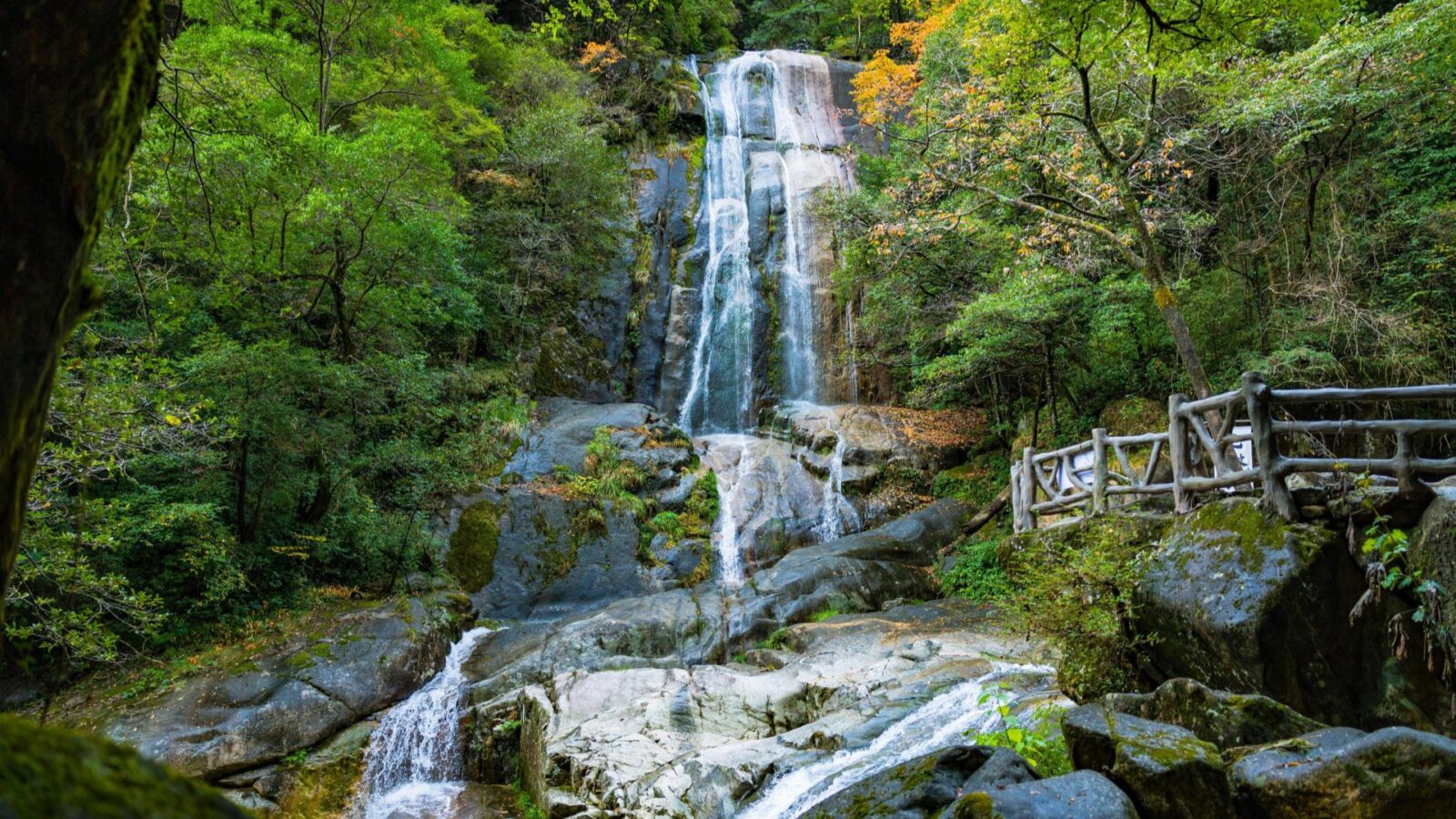
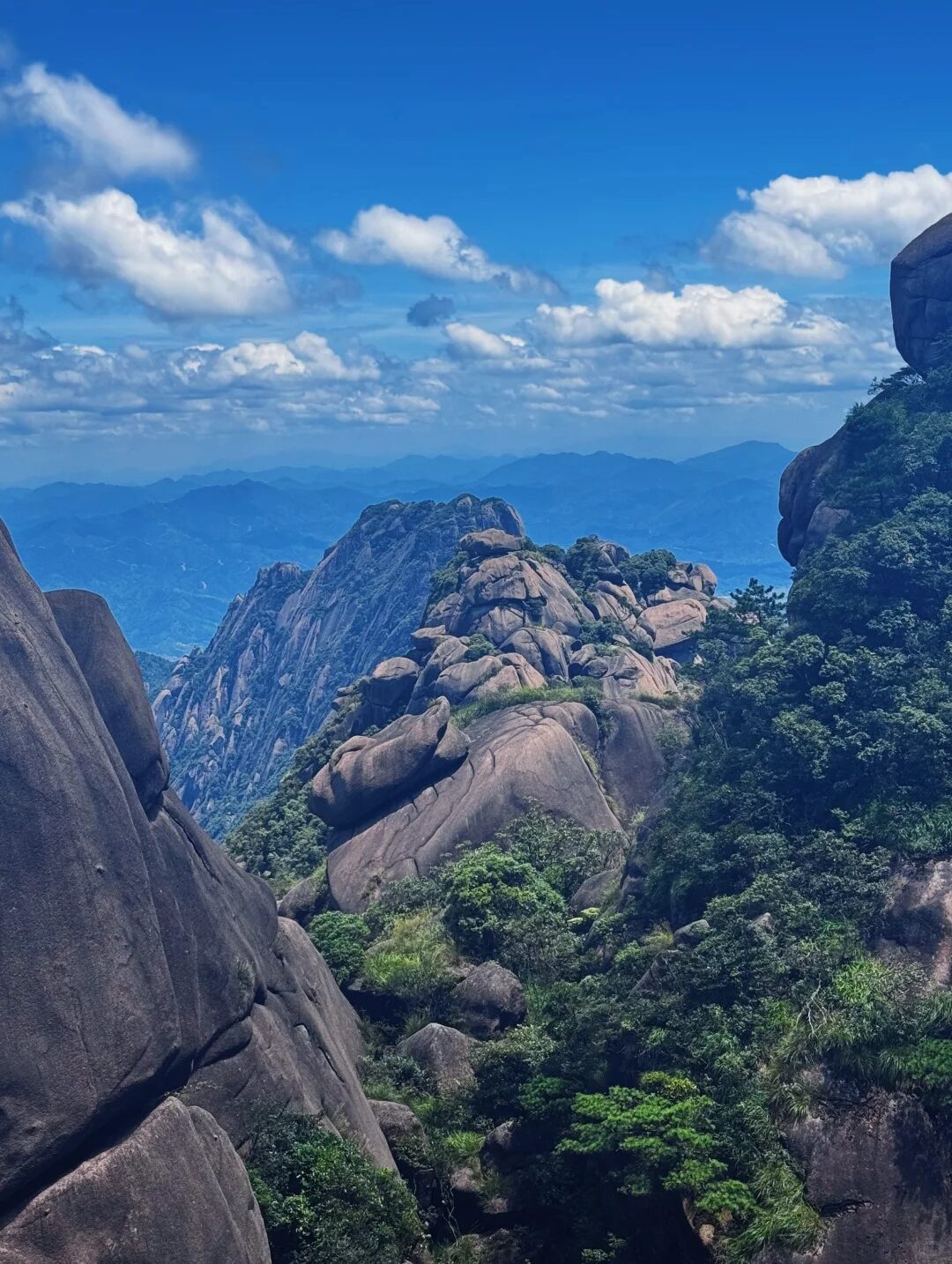
Wuyuan’s Wolong Valley Waterfall
Thunderous waterfalls, an emerald gorge, a cool spray from the water: it’s a complete reset of the senses. The moment I stepped onto the gorge on a summer afternoon, I just forgot about the heat of the day for. Best in summer for cooling, and again in autumn for fiery red leaves.
-
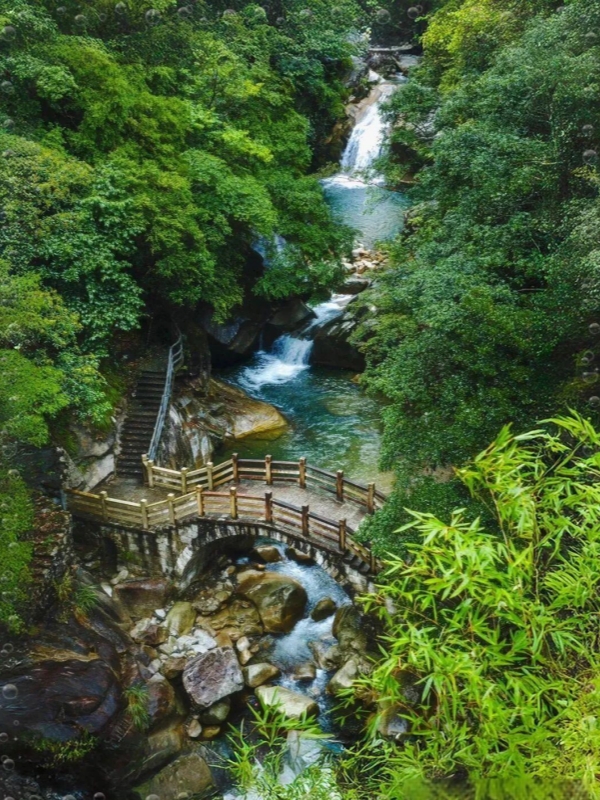
- Dazhangshan Wolong Valley
-
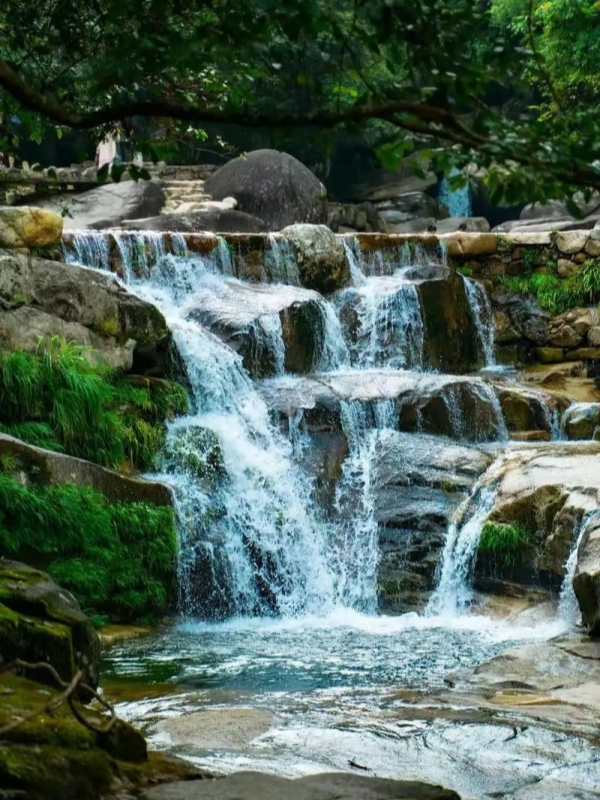
- Dazhangshan Wolong Valley
-
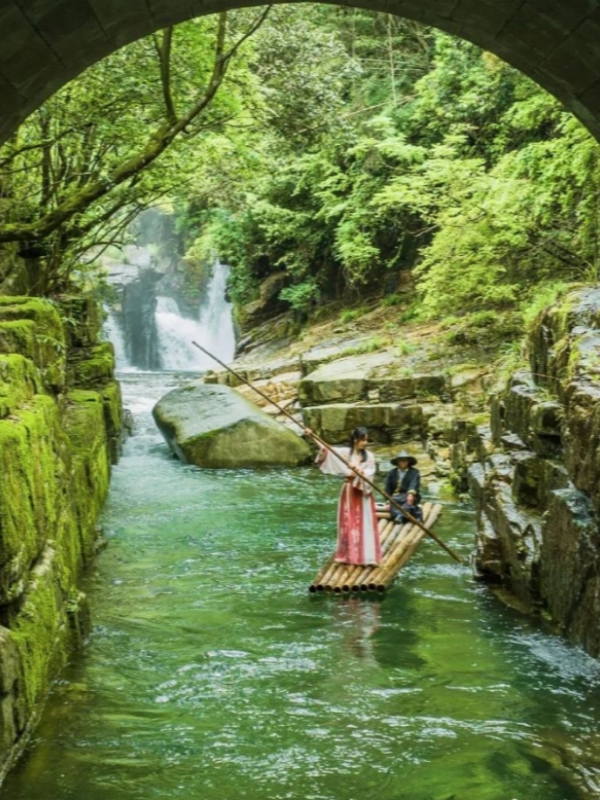
- Dazhangshan Wolong Valley
- 🎫 Admission: ~¥55 · Best season: summer and autumn
- 👟 Trail note: Wear shoes you don't mind getting wet — the trail hugs the stream the whole way.
Moon Bay (月亮湾)
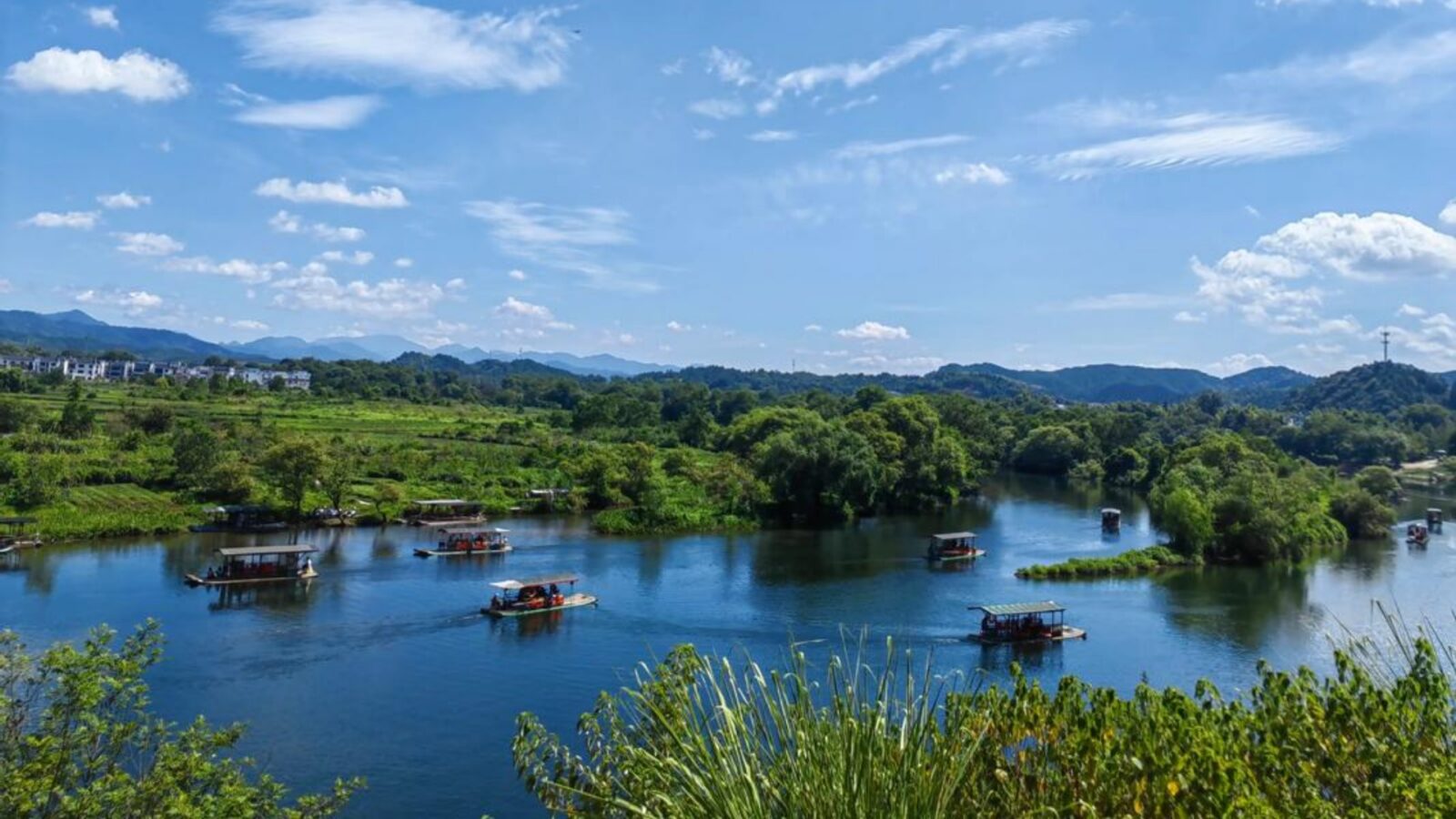
Moon Bay in Wuyuan
A crescent sandbar in a misty river, a lone boat, a Huizhou village drenched in morning fog. I had no clue what I was walking towards, until I came around the bend, and then I just stood there. Timing is critical - the scene only holds together during that ephemeral moment just after sun rise.
-
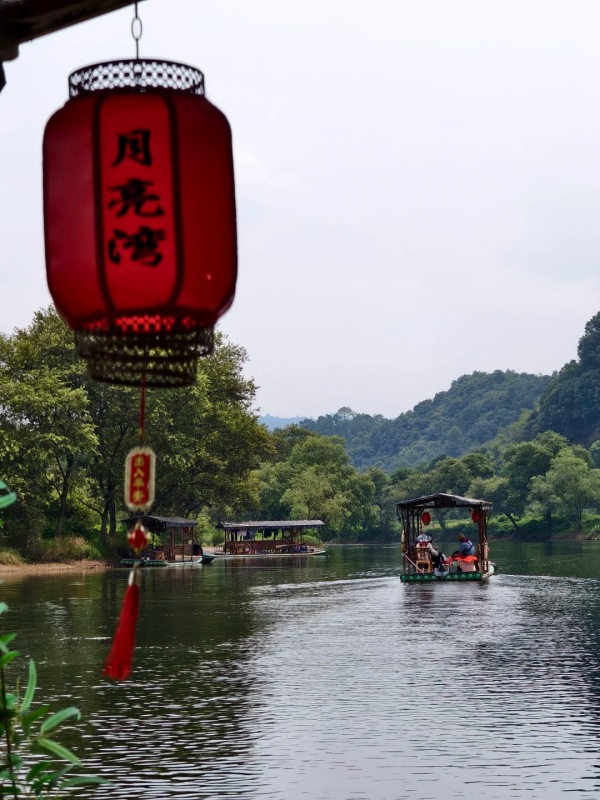
- Moon Bay River
-
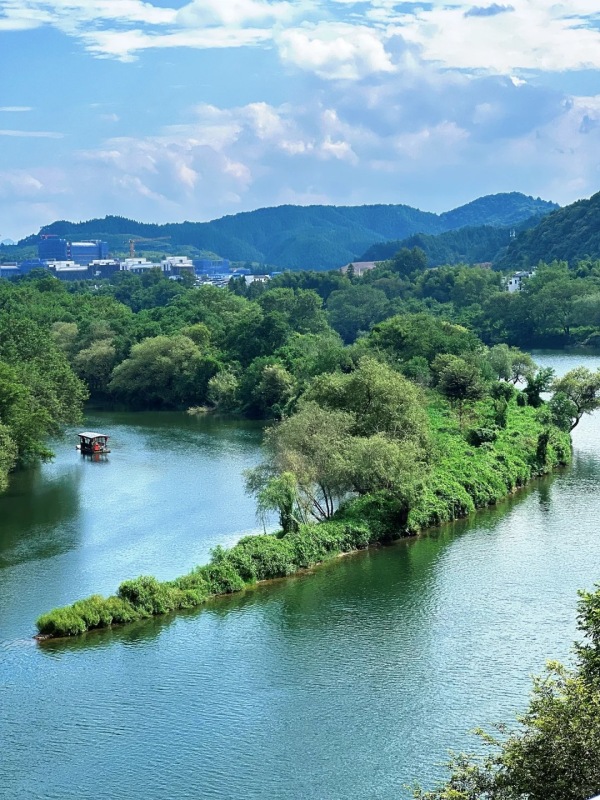
- Moon Bay River
-
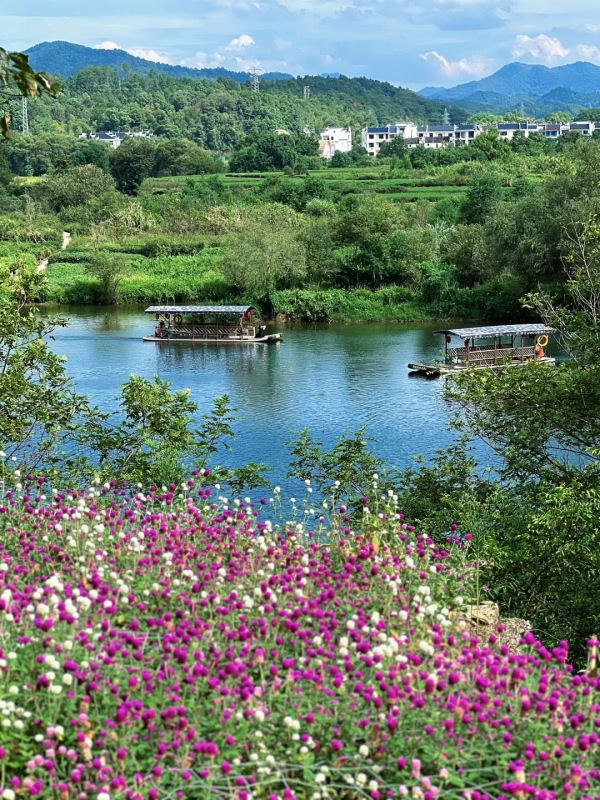
- Moon Bay River
- 🎫 Admission: Free · Best at dawn or after rain
- ⏰ Insider tip: Set an alarm — this scene only exists in full for about 40 minutes after sunrise.
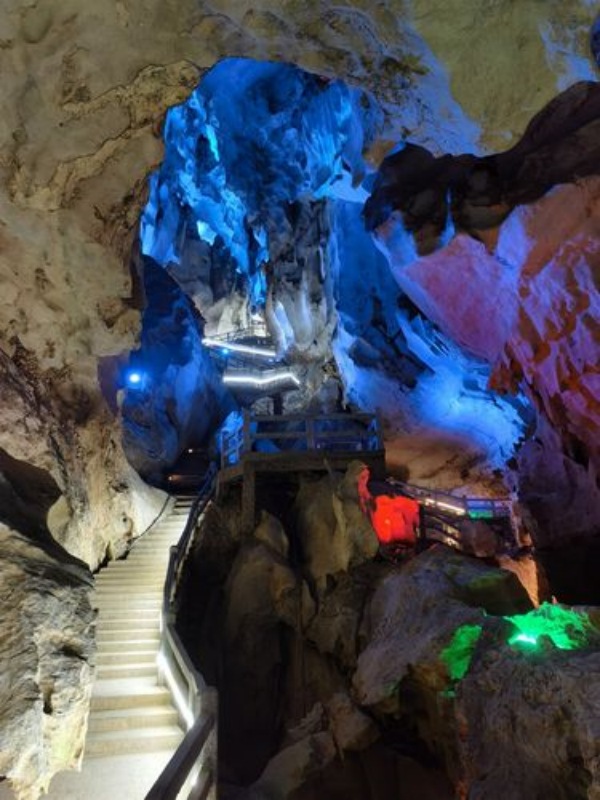
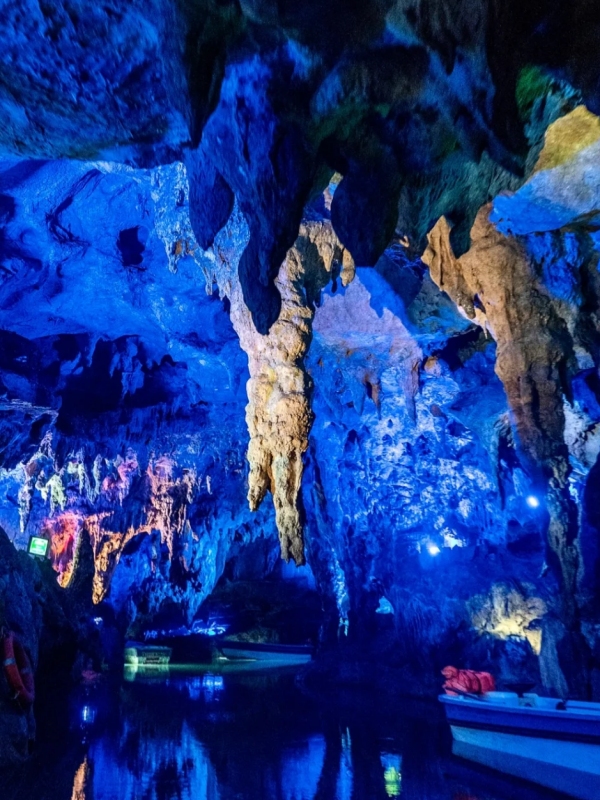
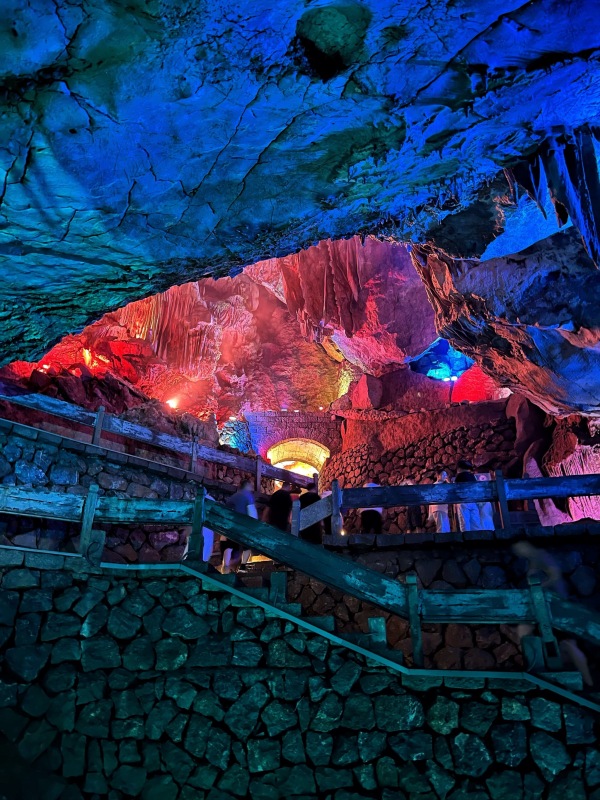
Lingyan Cave National Forest Park (灵岩洞)
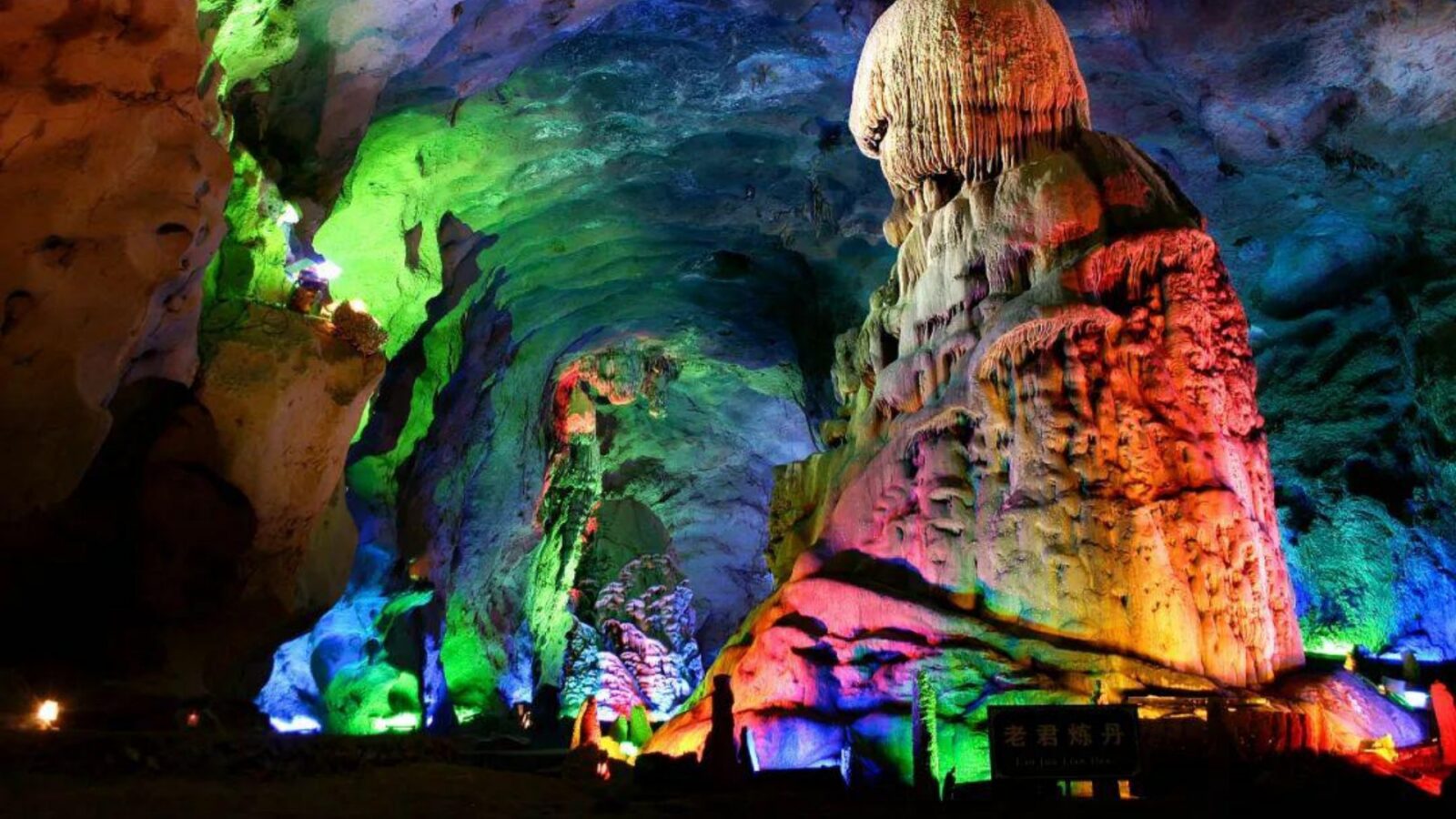
Wuyuan Lingyan Cave National Forest Park
Stalactite caverns of colour, age-old inscriptions carved by hands almost forgotten, instantaneous chillness on entering. What a commendation for all the hot hours enliven, the caves of coolness. Those inscriptions!
-
- Lingyan Cave
-
- Lingyan Cave
-
- Lingyan Cave
- 🎫 Admission: ~¥80 · Accessible year-round
- ✋ Sensory tip: Touch the walls — cool, wet stone makes it real in a way lights alone can't.
Yuanyang Lake (鸳鸯湖)
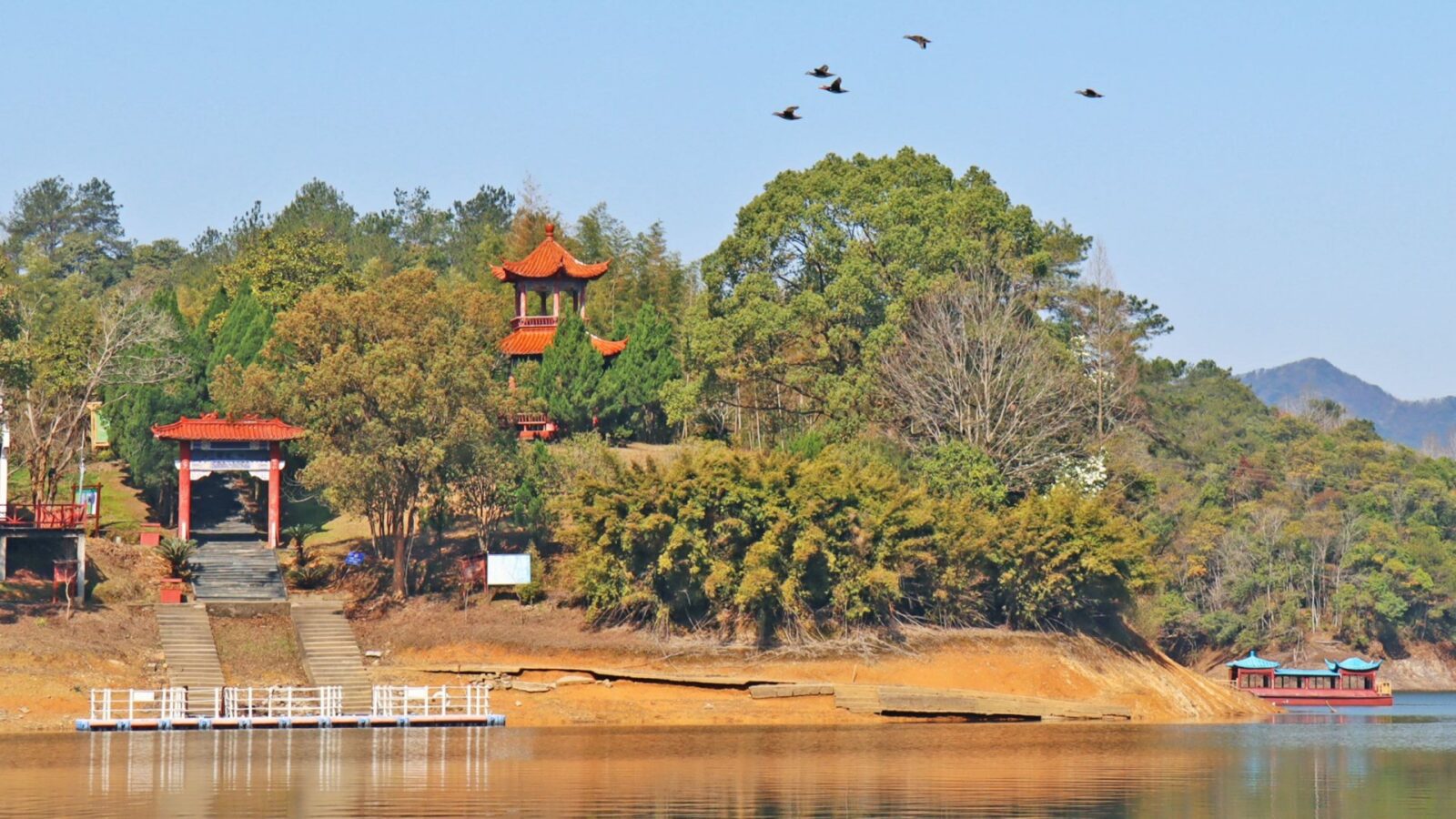
Yuanyang Lake, Wuyuan
Hundreds of mandarin ducks in breeding plumage blanket the lake from November to March. The lakeside moved at another tempo entirely than the village tracks. A sauntering afternoon here reset everything — a quality I hadn’t expected to need as much as I did.
- 🎫 Admission: ~¥60 · Birdwatching season: November–March
- 🔭 Photography tip: Bring a long lens or rent binoculars on-site — ducks stay mid-lake in the morning.
Discover Ancient Huizhou Villages and Heritage
Each village here has a distinct personality — think Sky-Art, Romantic, Quiet, Craft, Scholarly. I kept assuming the next one would feel like a repeat, and every time I was wrong. Seen one, you have absolutely not seen them all.
Huangling (篁岭)
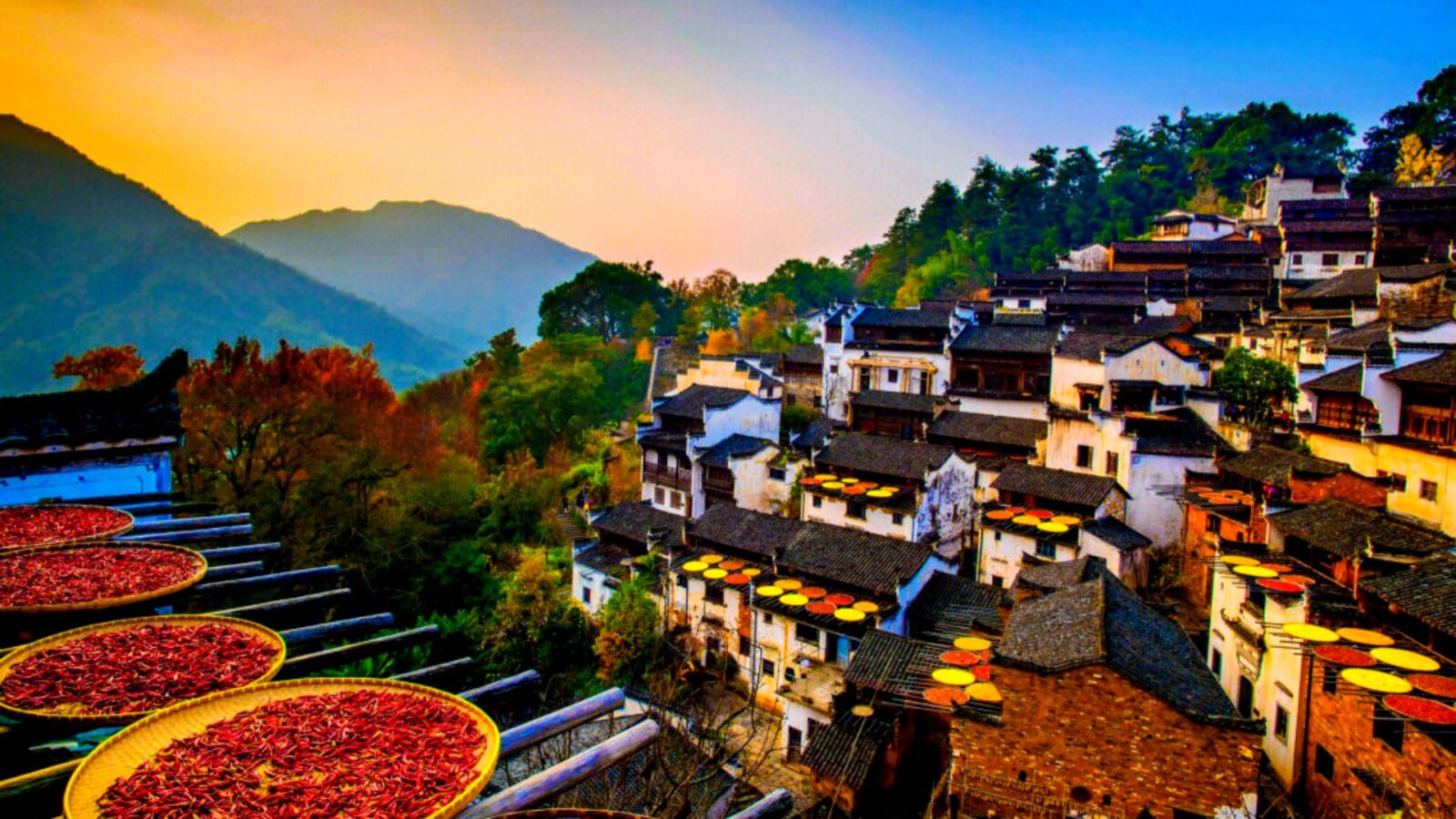
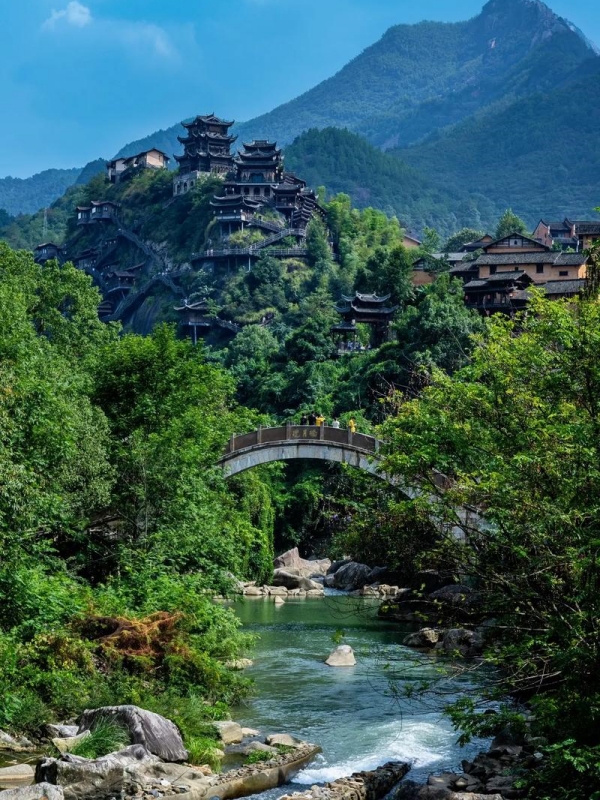
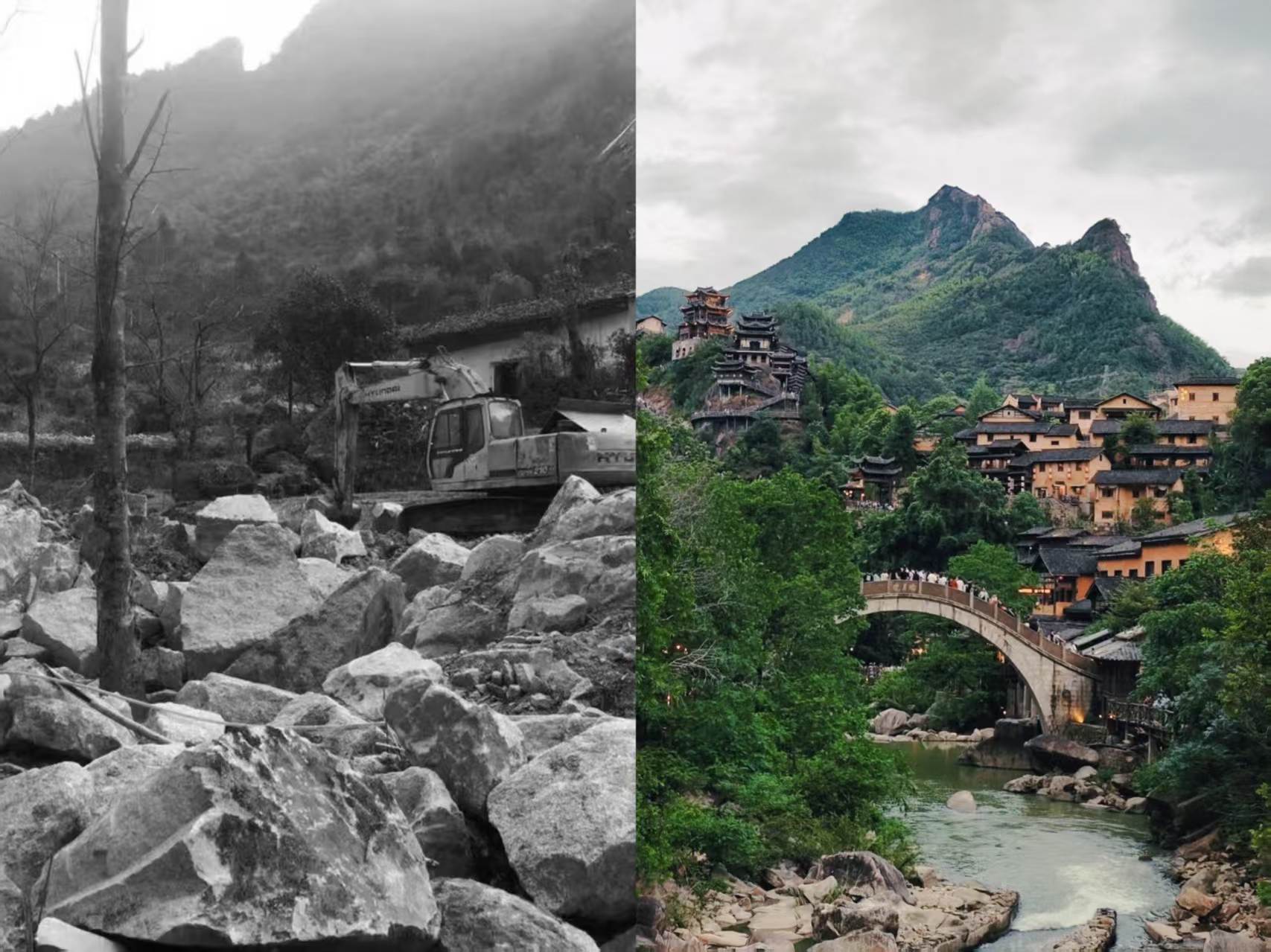
Wuyuan Huangling Ancient Village
A cable car takes you up to a hilltop village, and then stretches out of your view Sky Street (天街) — red chillies drying on wooden trays, gold corn, orange pumpkins against white Huizhou walls. I was standing there in the morning glow, struggling to capture it in a frame, and failing. The scale doesn’t do a single shot justice, it feels less like a village and more like an artist’s living canvas waiting for the next brushstroke. The autumn harvest, and spring, is the best time to visit.
-
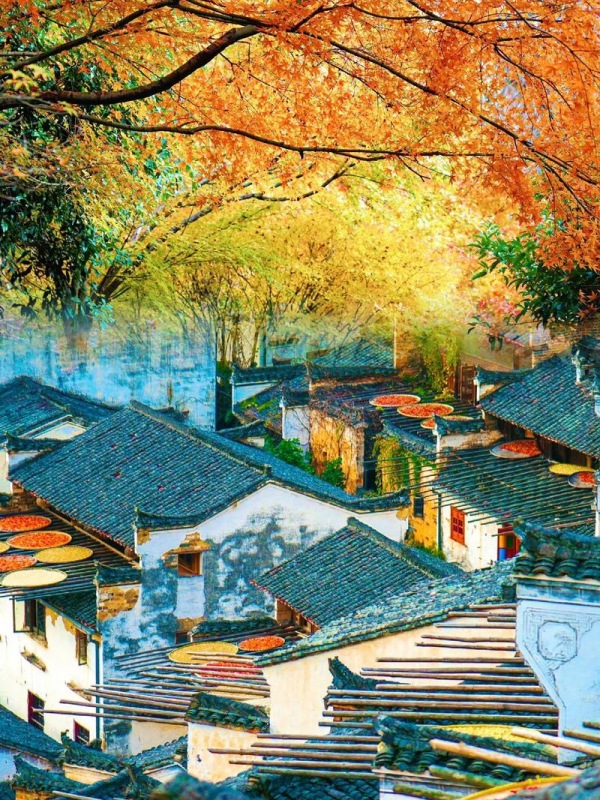
- Huangling Ancient Village
-
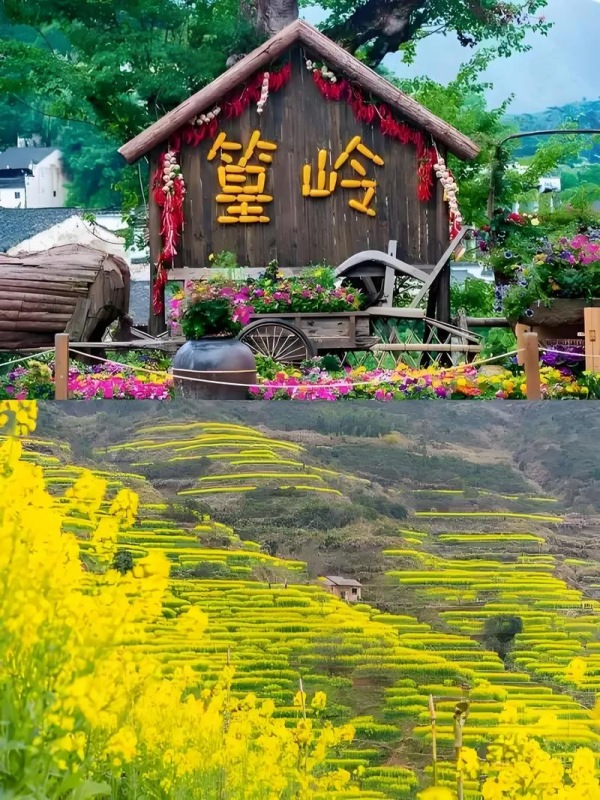
- Huangling Ancient Village
-
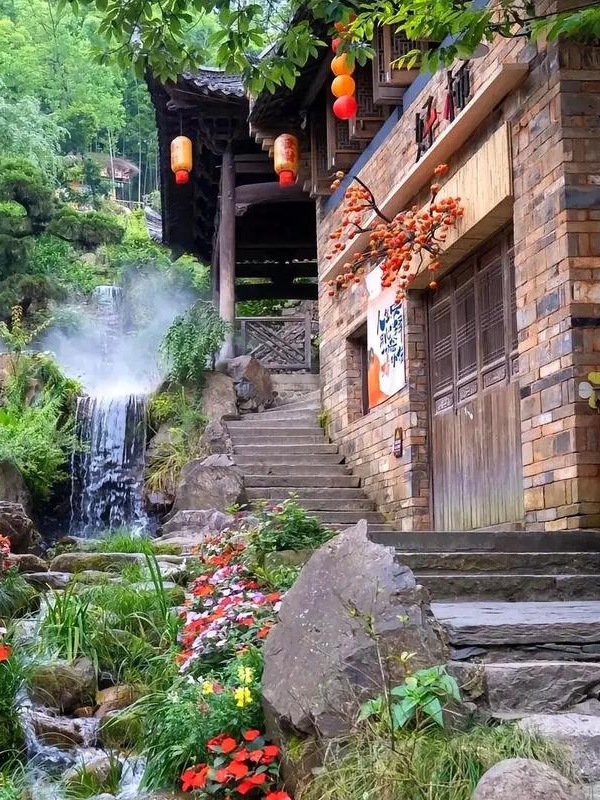
- Huangling Ancient Village
- 🎫 Admission: ~¥145 incl. cable car · Best in autumn and spring
- 🚶 Descent tip: Take the walking path down — the terraced descent is far better than the cable car return.
Likeng (李坑)
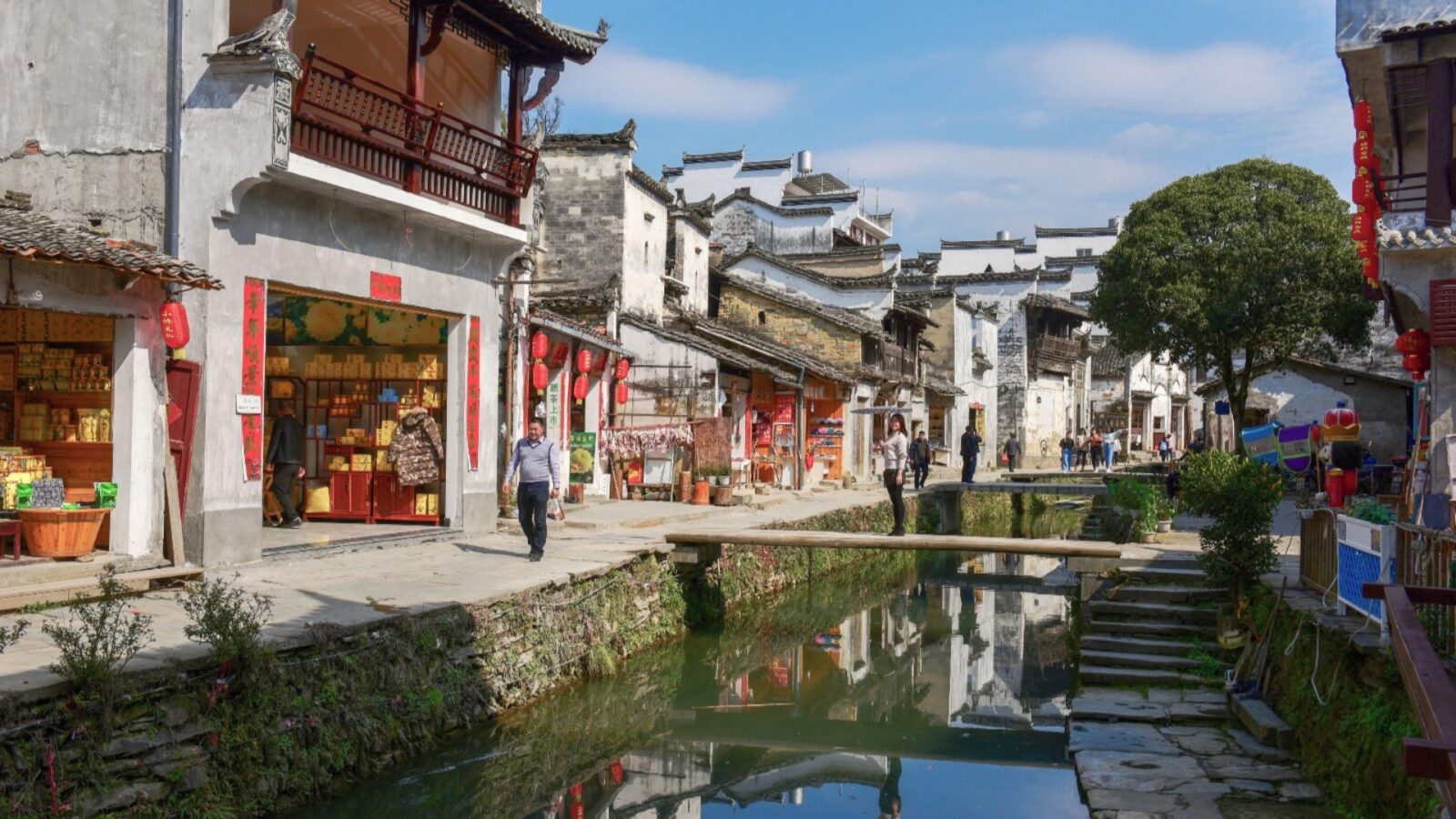
Likeng (Li Keng) in Wuyuan
Cobblestone lanes, creek-side laundry, the red of lantern reflected in dark water — glimpsed from a slow bamboo raft. Sitting low to the water, watching the village drift past at the pace of the current, I feel a day actually slow down. Gains without much toiling year round.
-
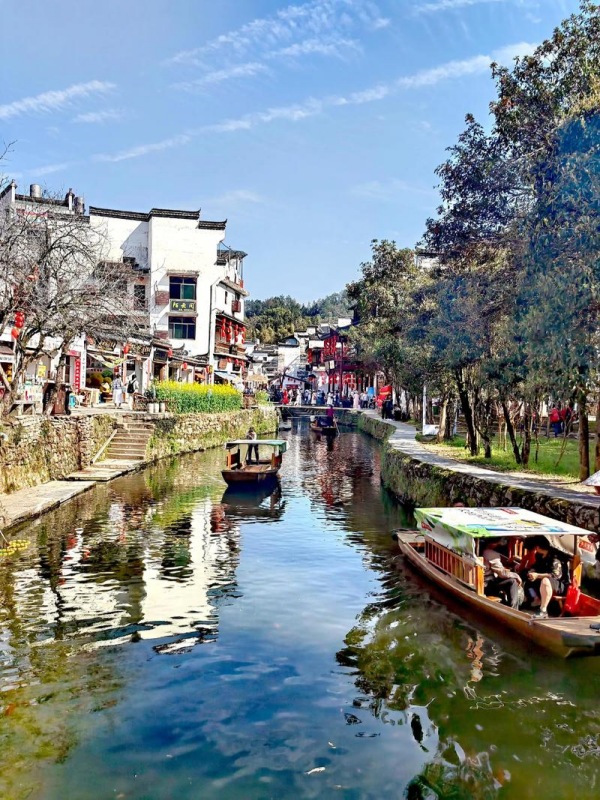
- Likeng Ancient Village
-
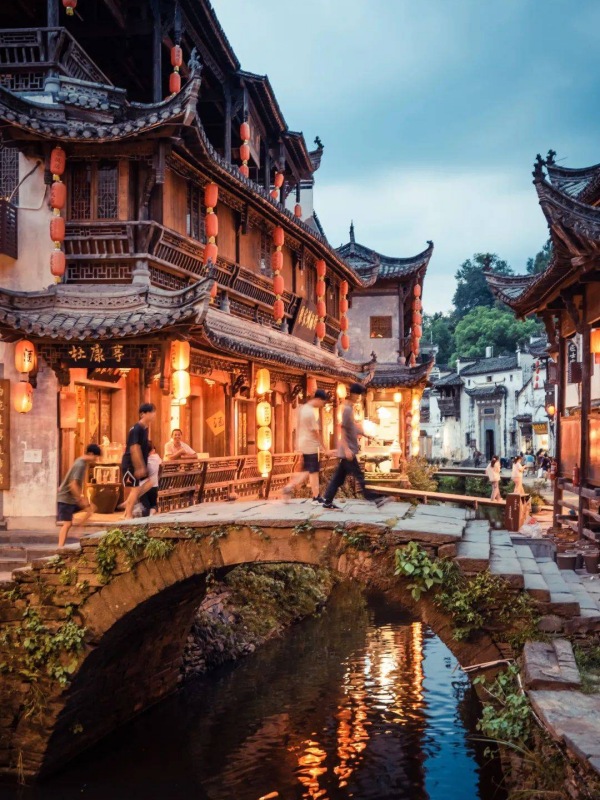
- Likeng Ancient Village
-
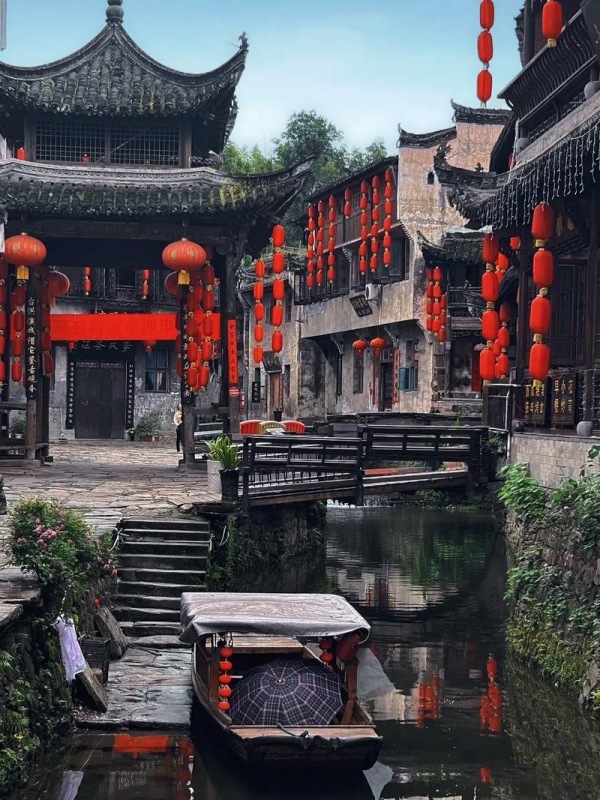
- Likeng Ancient Village
- 🎫 Admission: ~¥60 · Open year-round
- 📸 Photo tip: Ask the raft operator to slow down — the reflection shots need that extra minute.
Sixī Yancun (思溪延村)
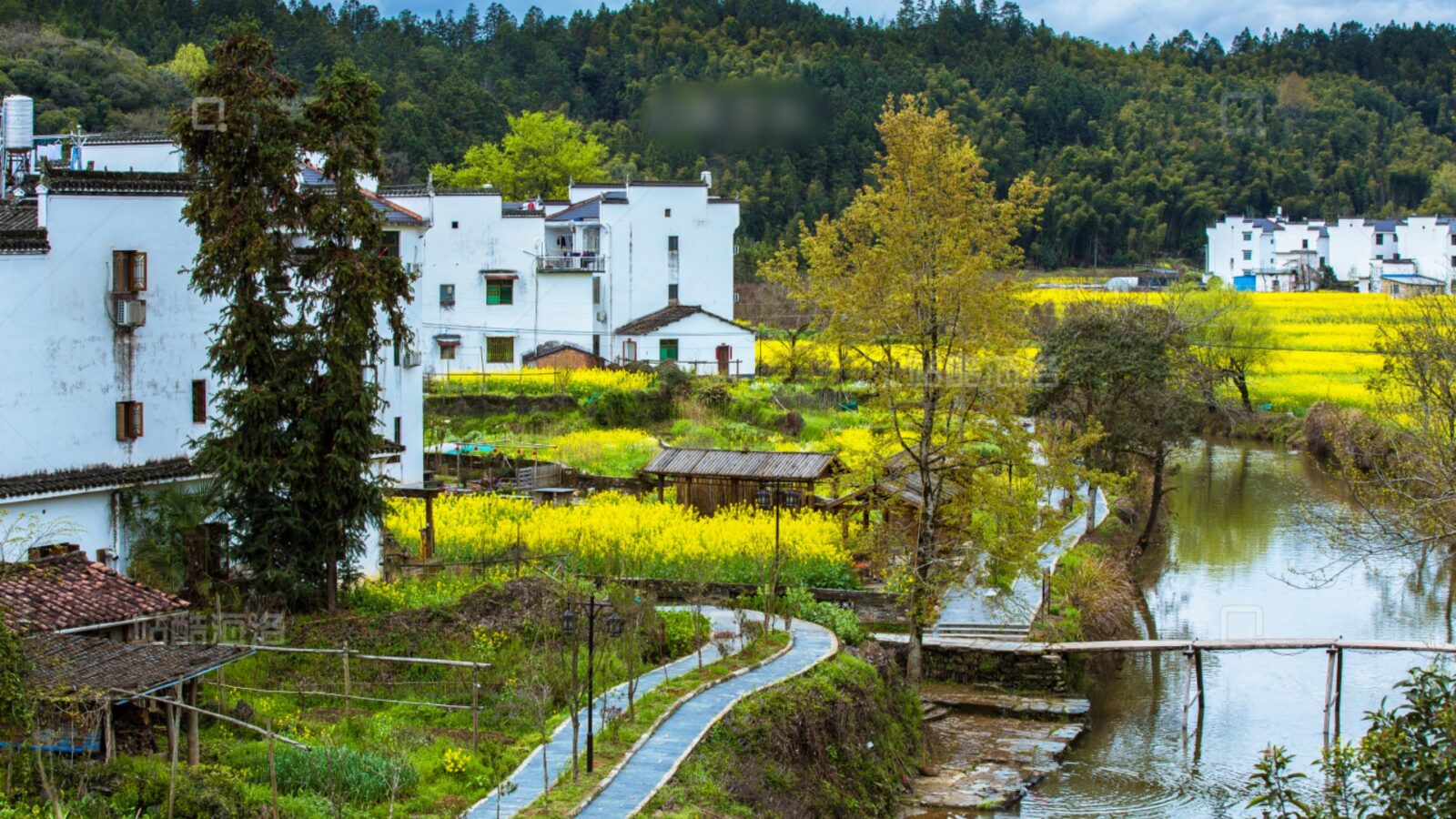
Sixi Yancun Ancient Village, Wuyuan
Fewer commercial distractions here. Instead, intricately carved brick-and-wood adorns every doorway, sunlight spilling through open-roof courtyards (天井) at a perfect angle that is utterly worth standing inside for a long while. A space I found myself back in thrice — there’s something about the quality of silence within.
-
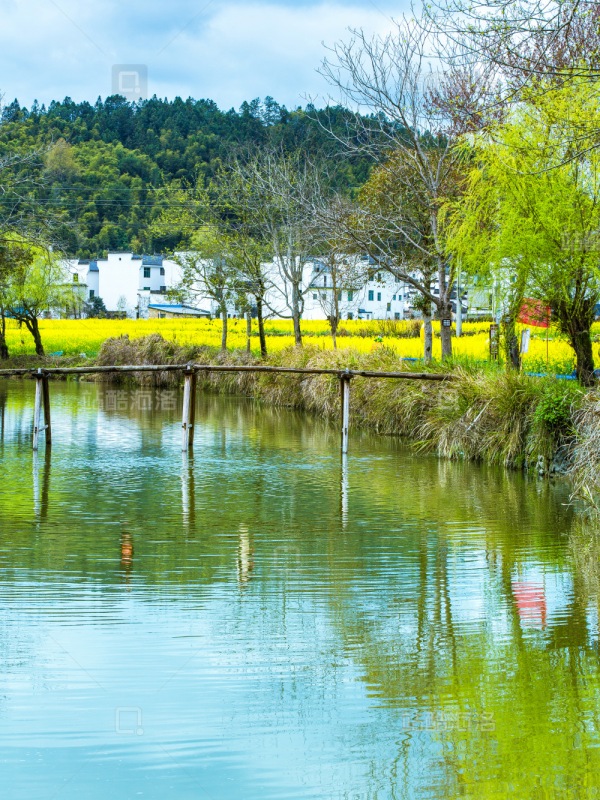
- Sixi Yancun Ancient Village
-
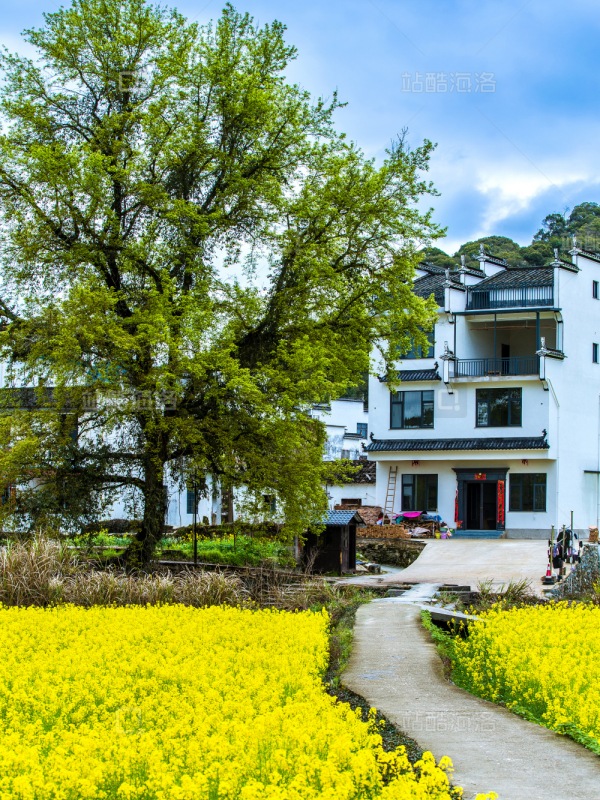
- Sixi Yancun Ancient Village
-
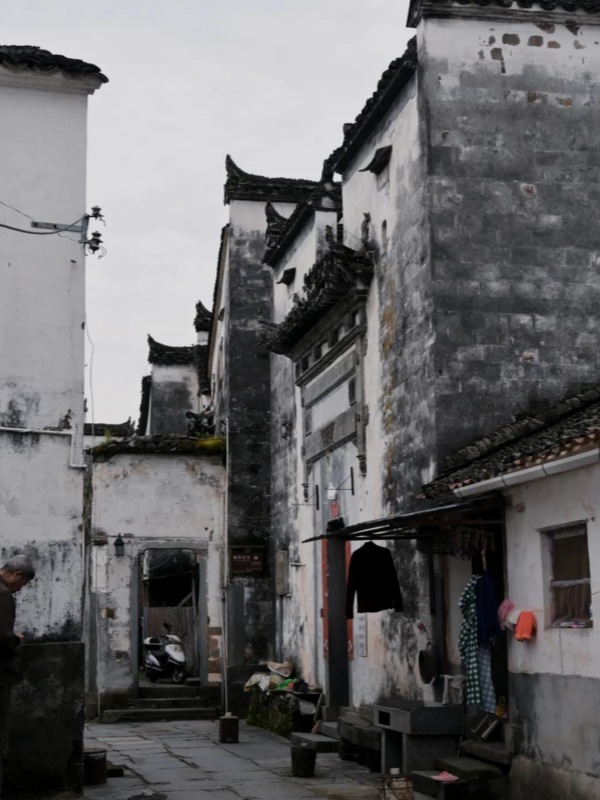
- Sixi Yancun Ancient Village
- 🎫 Admission: ~¥60 · Year-round
- 🚪 Explorer tip: Push open an unlocked gate — interior courtyards reward a few quiet minutes of stillness.
Wangkou (汪口)
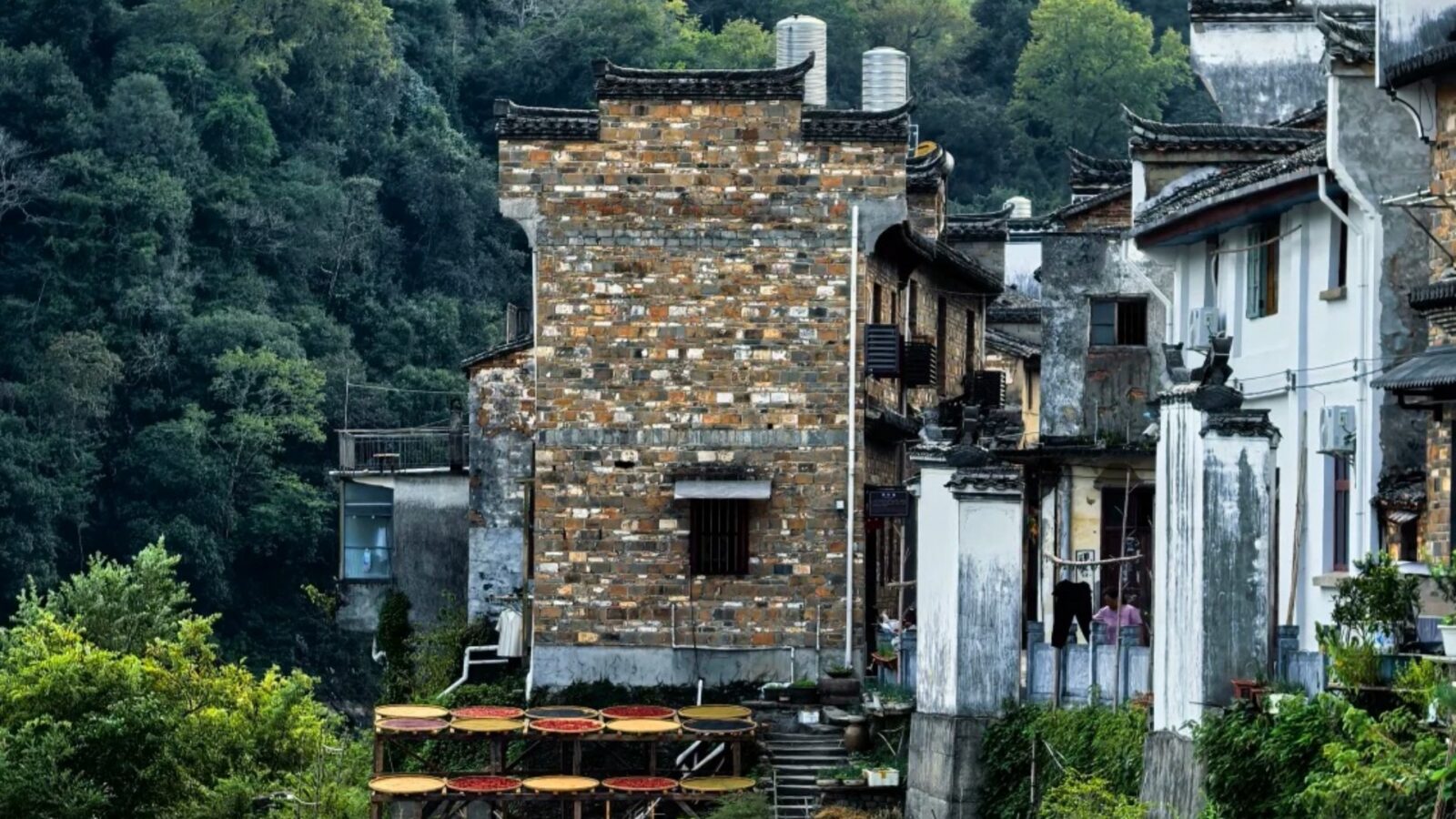
Wangkou Ancient Village, Wuyuan
Yushi Ancestral Hall, in the middle of town, with floor-to-ceiling wood carving covering every beam. There’s an ancient dock on a quiet river outside, and the feel is heavy and dignified in a good way, the sort of thing that sticks with you longer than all the scarfie photogenic spots.
-
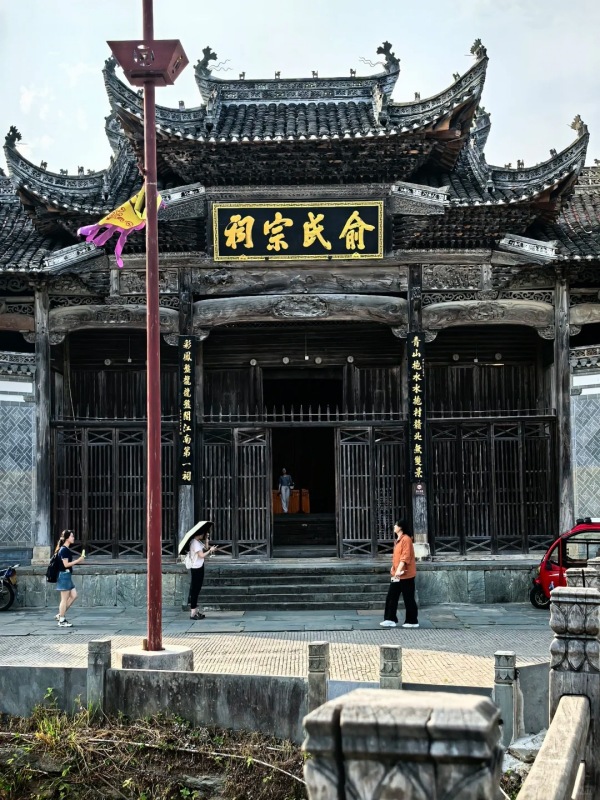
- Yushi Ancestral Hall in Wangkou Ancient Village
-
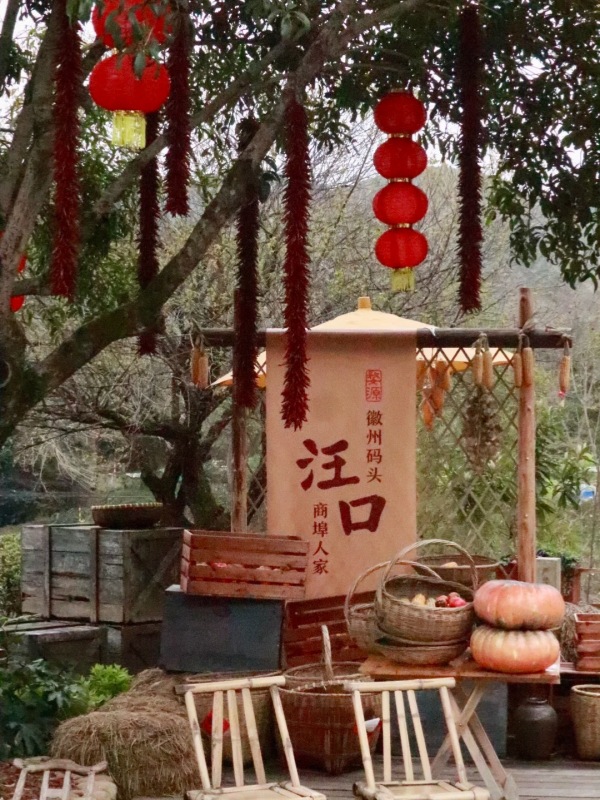
- Wangkou Ancient Village
-
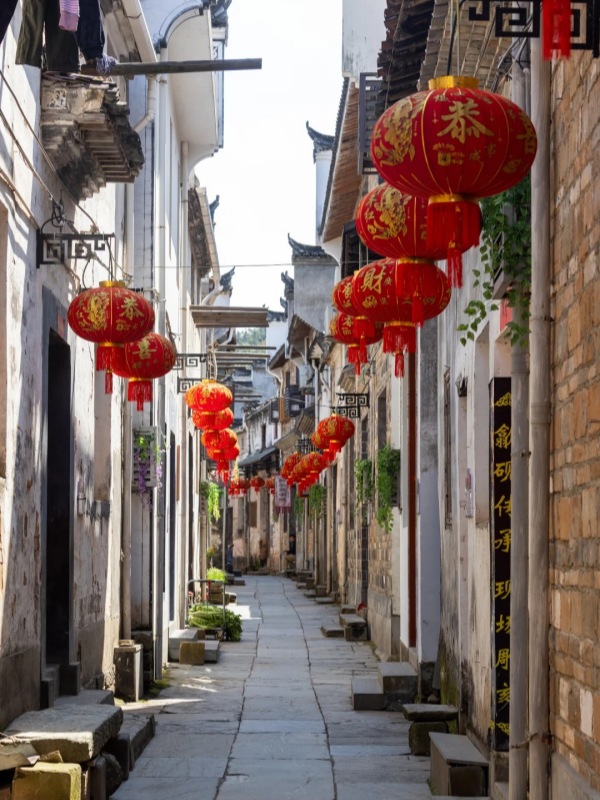
- Wangkou Ancient Village
- 🎫 Admission: ~¥55 · Year-round
- 👁️ Viewing tip: Look up at the beams from below, at an angle — the carving density only reveals itself that way.
Capture Professional Landscapes and Village Scenes
This chapter is for anyone who has ever set a 4am alarm for a landscape shot. I've done it more times than I care to admit, and Wuyuan rewards that commitment more than almost anywhere in China.
Shicheng / Cheng Village (石城)
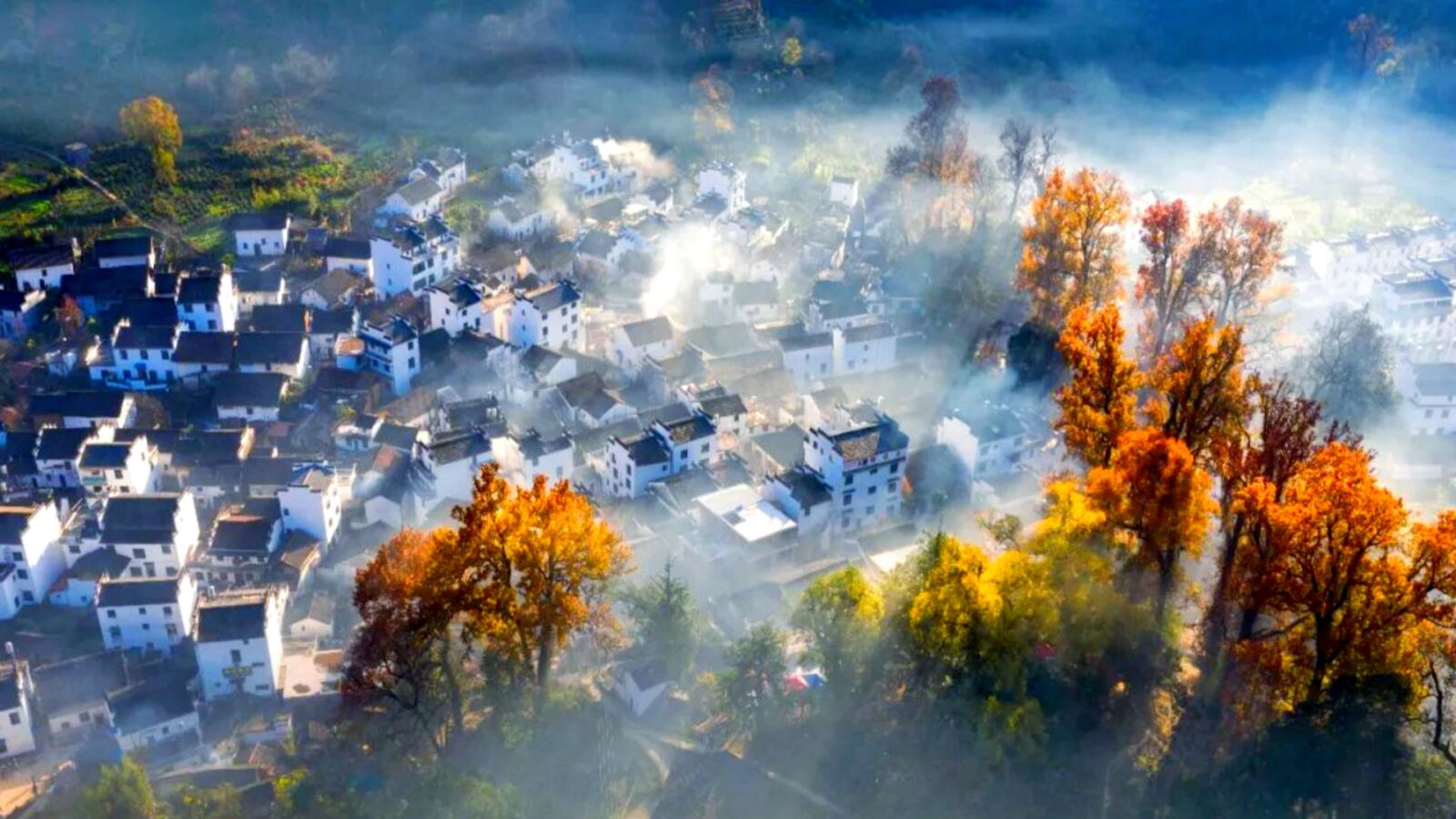
Shicheng(Cheng Village)
Dawn light breaking through autumn fog, maple leaves glowing, chimneys spilling smoke — it might as well be an oil painting that comes alive. I set three alarms and still almost didn’t make it out of bed, but by the time I was standing on the ridge at 5:40am, shivering as I waited for the village to blossom out of the mist, I was no longer tired. This is the most-photographed morning view in the county. Mid to late November is best, and you must arrive by 5:30am in order to secure a prime vantage point.
- 📅 Best timing: mid–late November · Arrive by 5:30am
- 🧤 Comfort tip: Bring handwarmers — you'll stand still in cold air for 30–40 minutes, and frozen fingers are the price of the shot.
Jiangling Terraces at Sunrise (江岭梯田)
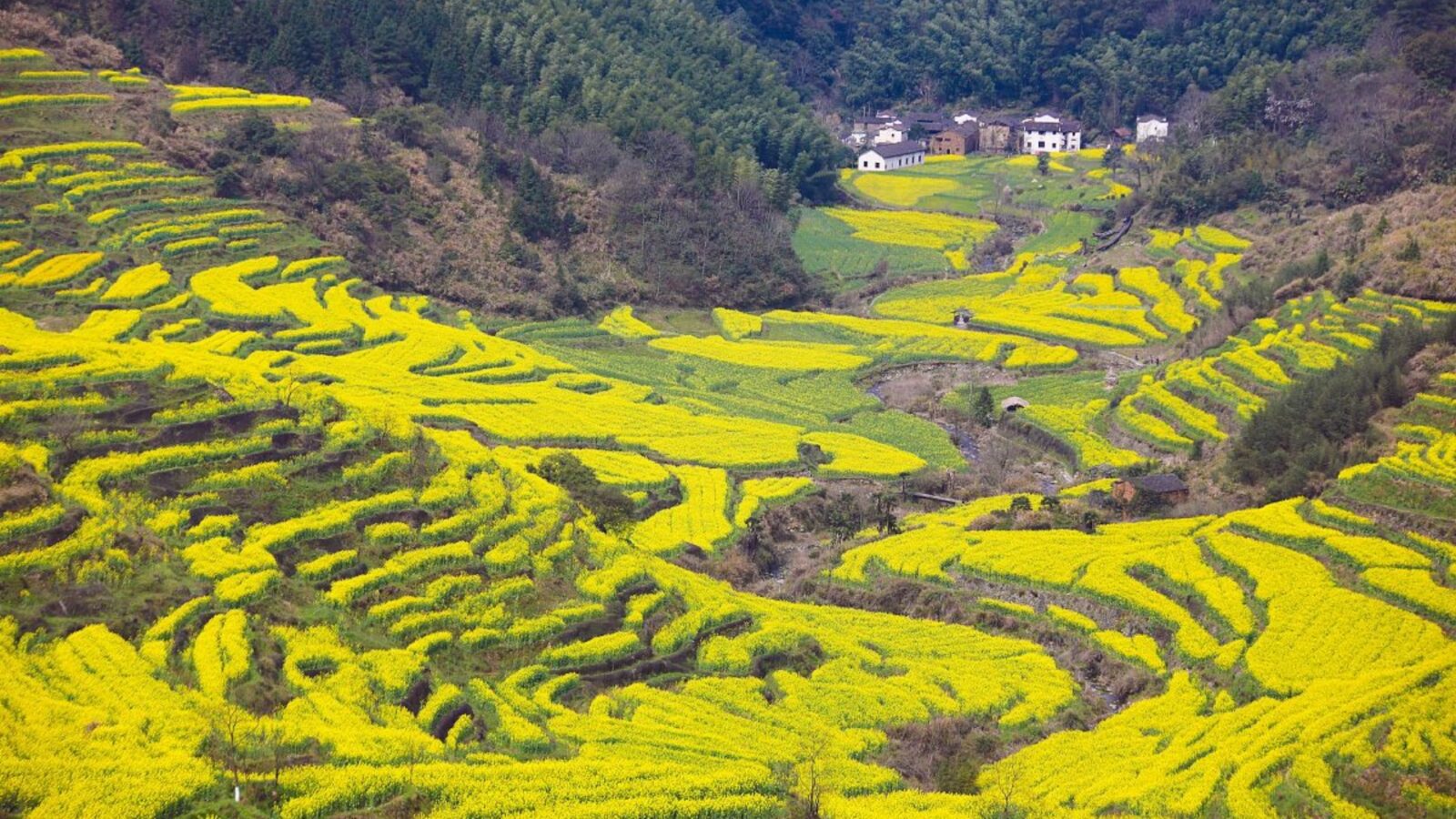
Jiangling Terraces at Sunrise
The sun spills over the ridge and ignites the entire terraced valley in warm side light, it’s staggering in its breadth. I’d looked at photos of the place for years, and none prepared me for how vast it all is in person. Best in March-April, during the morning sunrise hour when the drama is at its most intense.
- 📅 Best timing: March–April, sunrise hour
- 🎯 Creative tip: Put the camera down for one full minute and just look — your memory holds more than the sensor.
Huangling Drying Festival (篁岭晒秋)
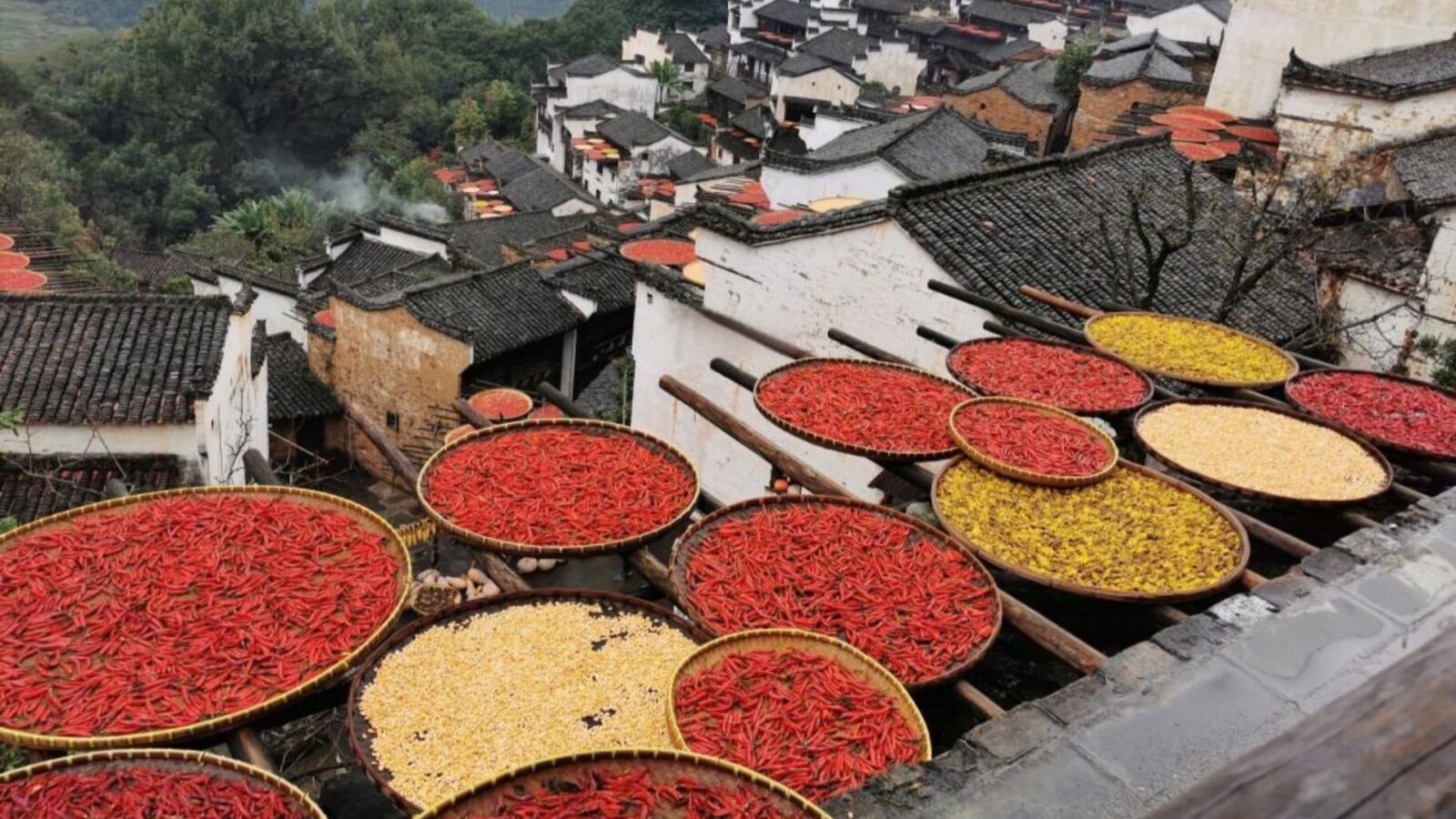
Huangling Drying Festival
Riding up on an elevated viewing platform is seeing drying trays in the foreground, that classic Huizhou wall system in the background. It shoots like natural graphic design — colours and geometry do most of the work for you, and the ease is a gift after the 4am wake-ups. Afternoon light in September–November also makes for richer colour saturation.
- 📅 Best timing: September–November, afternoon light
- 👤 Composition tip: Include a villager doing the turning — a human figure anchors the composition and tells the real story.
Jujing Village (菊径村)
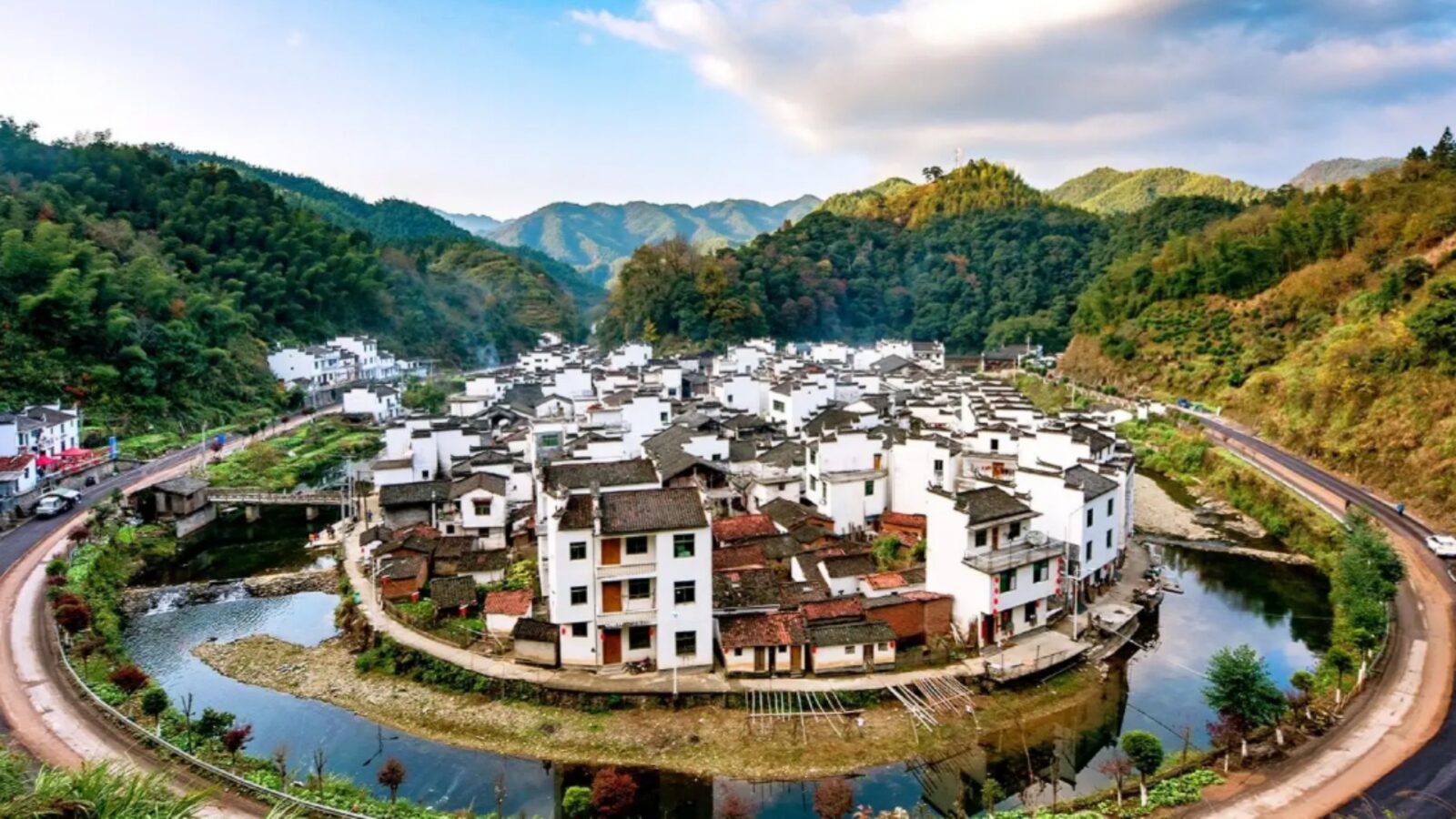
Jujing Village
A perfect circular river meander encircling the whole village, but one which only makes sense viewed from the opposite hillside, a place few visitors care to climb. But once on the top, with the lines of symmetry below me, it all made sense and, yes, that was why they take this shot. This is one of the most satisfying compositions to be seen anywhere in China. Throughout the year; the evening with house lamps on is warmer.
- 📅 Best timing: Year-round · Best at evening
- 🥾 Effort note: The hike up the opposite hill takes 10 minutes and is easy — almost no one makes the effort.
Experience Traditional Culture and Night Shows
Wuyuan after dark is a different place entirely. I almost skipped the evening programme on my first night — tired, full, ready for bed. I'm glad I didn't. Here's where to be when the sun goes down.
Wuyuanzhou Resort (婺女洲)
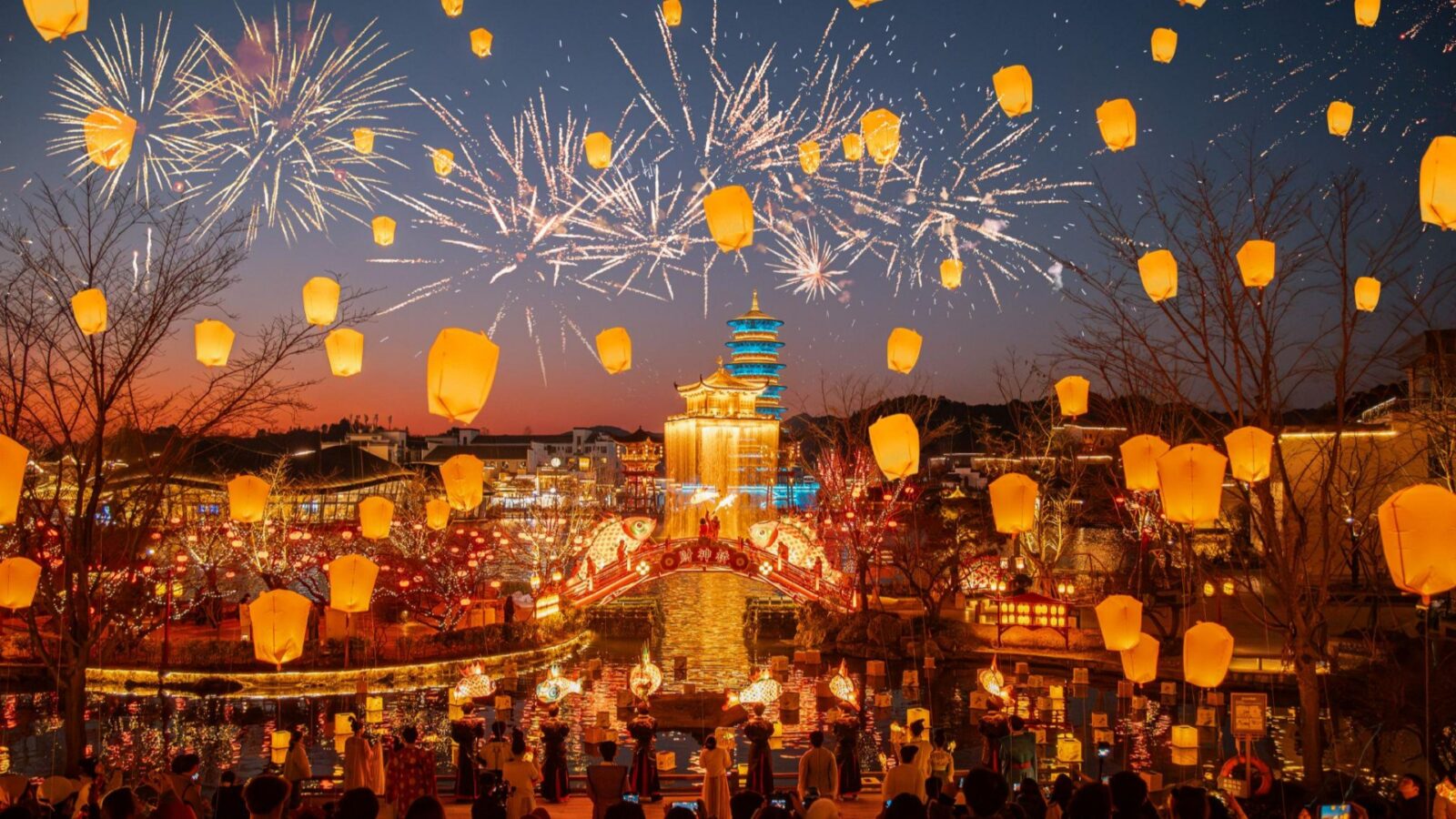
Wuyuanzhou Resort
Molten iron at 1,000°C thrown into the night sky — a thousand gold sparks burst overhead. The crowd gasps. Something ancient and visceral registers in your chest. I felt the heat before I understood what I was watching. This isn't a performance; it's a 非遗 (intangible cultural heritage) ritual about fire and courage.
- 🕗 Show times: 20:00 / 21:10 · Fireworks: Fri–Sat
- 📍 Position tip: Stand front-left — sparks drift right, so the best shot always comes from the left side.
Xiyuan Garden (熹园)
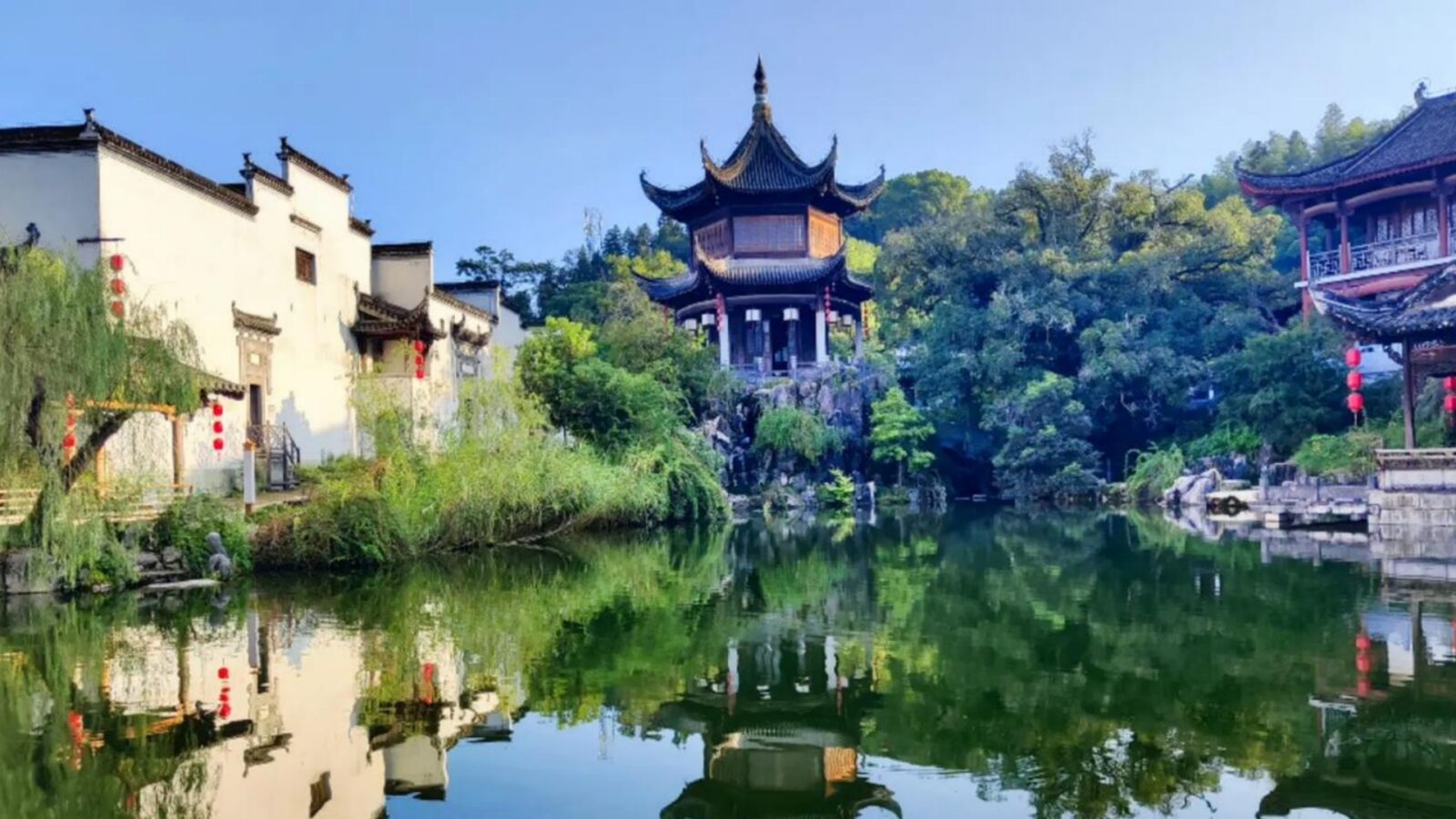
Xiyuan Garden
Rent a hanfu at the gate and wander covered walkways, rockeries, and koi ponds. Huizhou architecture meets classical garden design here. The combination is quieter and more contemplative than it sounds — I expected it to feel like a costume booth, and instead found myself genuinely unhurried for the first time all day. Similarly, the pace here feels genuinely restorative.
- 🎫 Admission: ~¥60 · Hanfu rental available on-site
- 📸 Photo spot: The long covered corridor in late afternoon hits golden light — best in the whole garden.
"Wuli Kan Hua" Star River Night Cruise (婺里看花夜游)
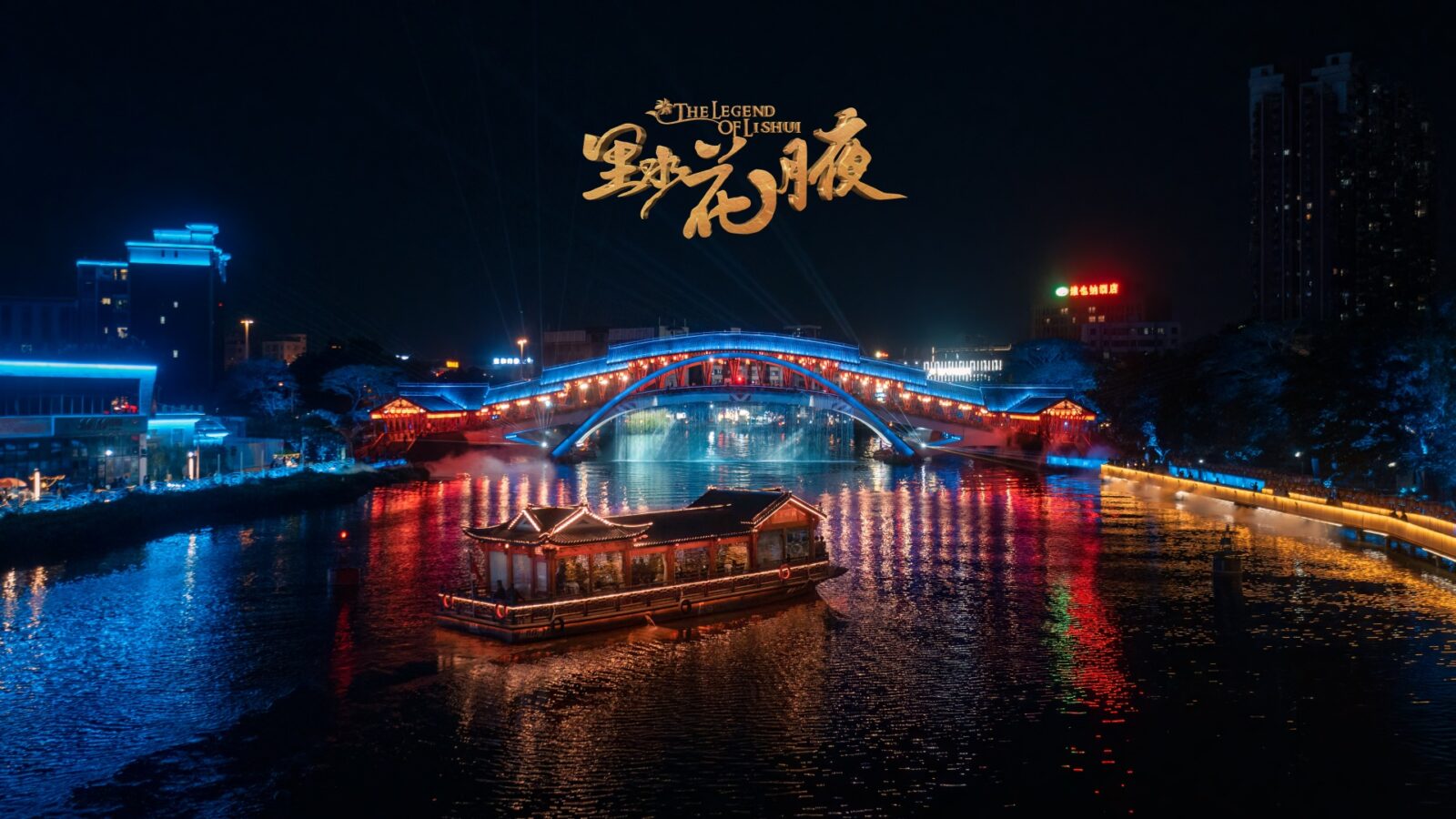
“Wuli Kan Hua”Star River Night Cruise
Cruising along illuminated Huizhou rooflines, performers on bridges, lanterns drifting on water — it's a fairytale version of the town I'd walked through that afternoon. The same street I'd photographed in daylight looked completely different from the water at night, and I kept second-guessing whether I was in the same place. Confirm the schedule locally before booking.
- 🕖 Hours: Open ~19:00–22:00 · Confirm schedule locally
- 🚤 Seating tip: Sit on the right side facing upstream — the gate arch reflection is strongest there.
Enjoy Outdoor Adventures and Scenic Trails
For the traveller who needs to feel something, not just look at it — three experiences that use your whole body.
Wulongyuan Extreme Rafting (五龙源极限漂流)
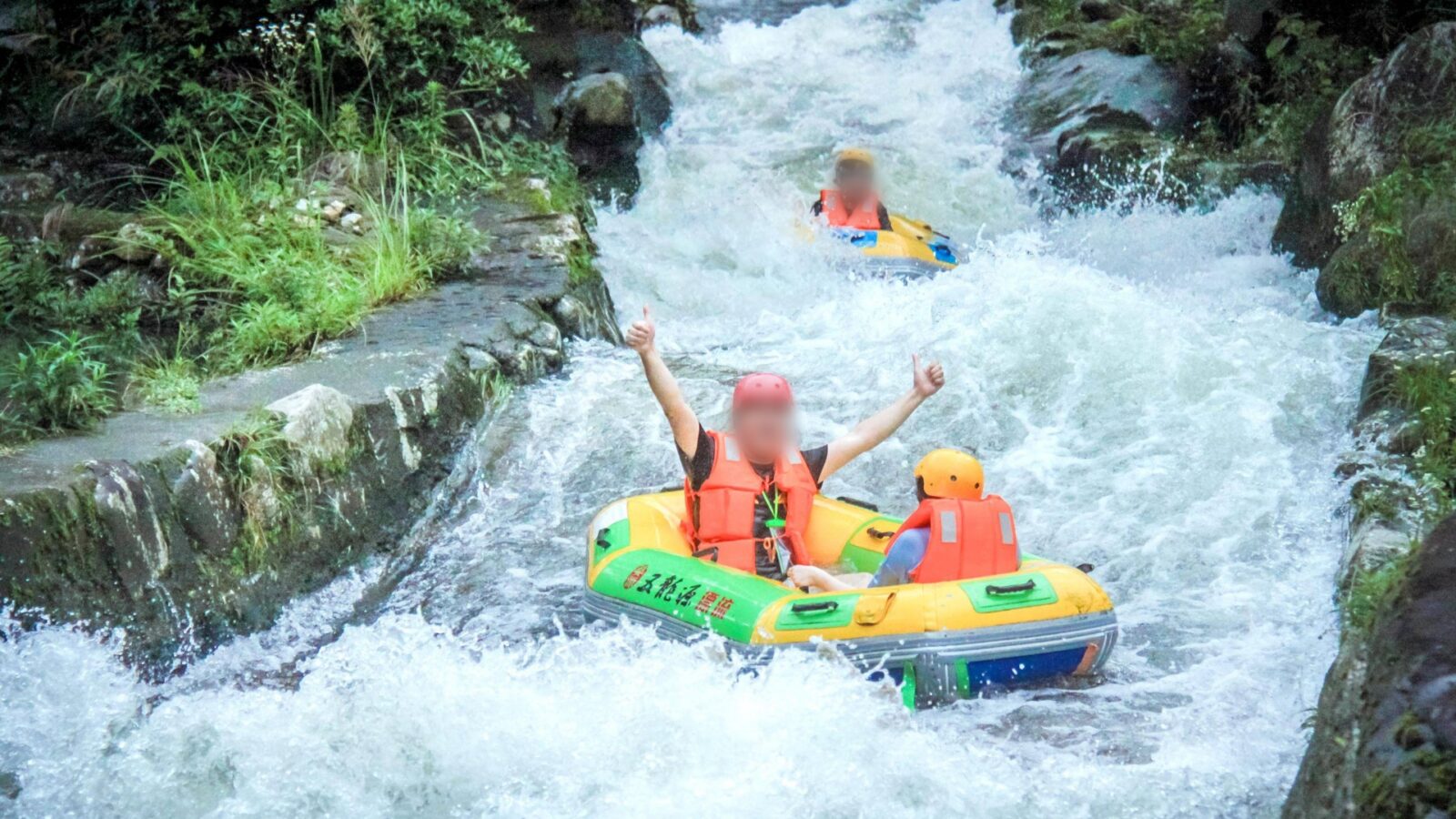
Wulongyuan Extreme Rafting
High-chute launch, whitewater rapids, full-body soaking — pure adrenaline with a mountain backdrop. I couldn't help but scream out loud, and no one around me seemed to mind because they were doing exactly the same. Opens around mid-May. Choose between the full Mengshi run and the shorter Yongshi option.
- 📅 Season: Opens ~mid-May · Full (Mengshi) or half (Yongshi) run
- 💡 Route advice: Take the full run — the half ends just before the best section.
Rainbow Bridge (彩虹桥)
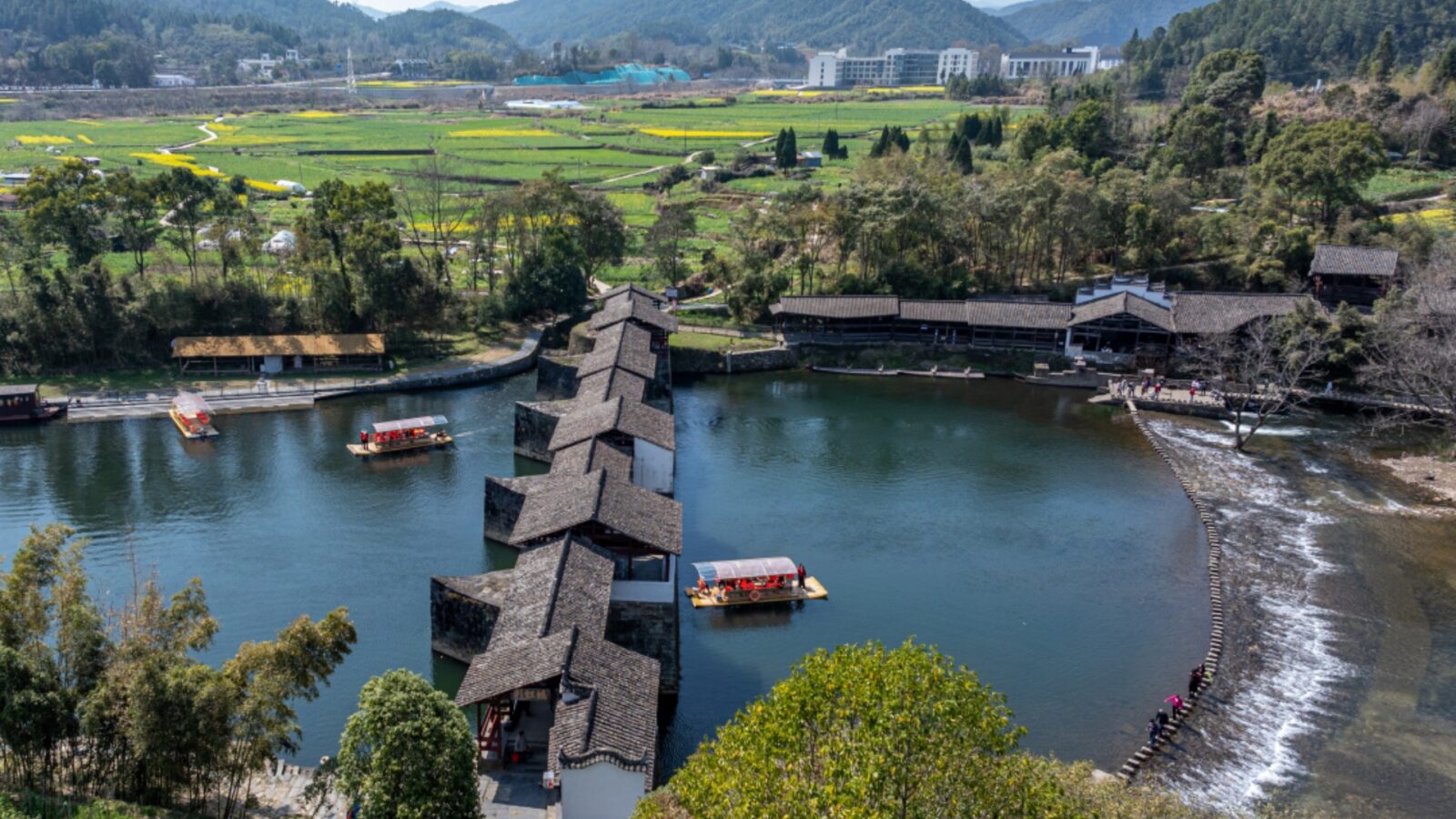
Rainbow Bridge
Creaking wooden planks of a Song-dynasty covered bridge. A railing bench (美人靠) runs one side. The river flows unchanged through stone piers as it has for eight centuries. I sat on the bench for longer than I intended, just listening to the water and the wood. Moreover, entry is completely free.
- 🎫 Admission: Free
- ⏰ Timing tip: Go mid-morning — the mist has cleared, but tour groups haven't arrived yet.
Yantian Ancient Camphor Tree (严田古樟)
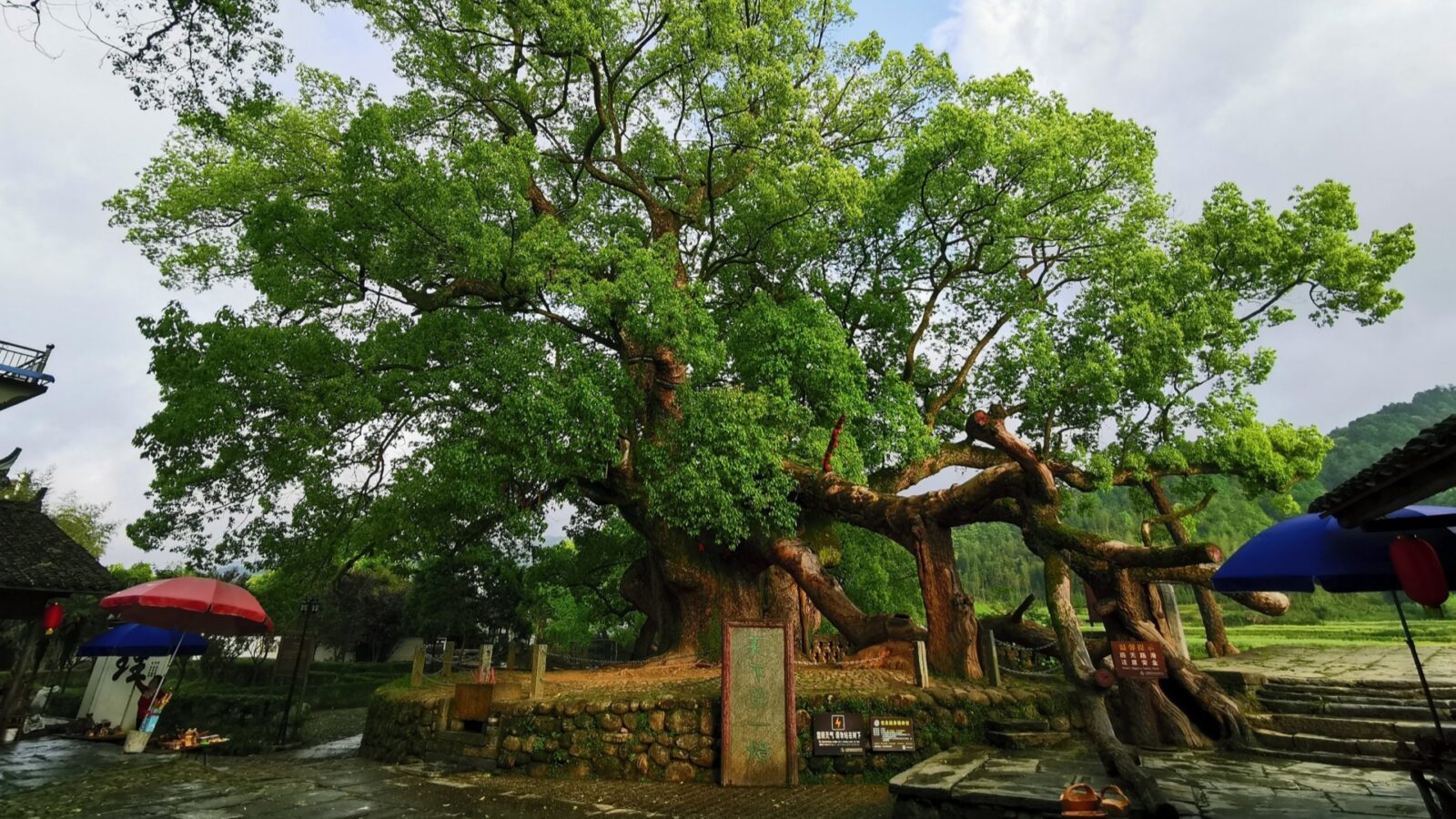
Yantian Ancient Camphor Tree
A canopy the size of half a football pitch. A single tree creating its own ecosystem. Tying a prayer ribbon at the root feels oddly meaningful — not theatrical, just honest. I circled it once before even thinking to take a photo, and that walk alone changed how I saw the place. Circumference runs approximately 12 metres.
- 🎫 Admission: ~¥60 · Circumference ~12 metres
- 🚶 Approach tip: Walk the full perimeter before photographing — scale only registers after you've circled it once.
FAQs: Essential Travel Tips and Visitor Guide
Q: When is the best time to visit Wuyuan?
Two seasons define Wuyuan at its most spectacular. Spring (March–April) brings the famous rapeseed bloom. Autumn (September–November) delivers harvest scenes and rich foliage. However, Wuyuan rewards year-round visits: winter draws birdwatchers to Yuanyang Lake, while summer opens the gorge trails and whitewater rafting. Each season gives a different Wuyuan entirely.
Q: How many days do I need in Wuyuan?
Plan at least three full days in Wuyuan. Four to five days, however, is the smarter choice. That timeframe lets you cover natural scenery, ancient villages, photography spots, cultural experiences, and outdoor adventures without rushing. For photographers specifically, the extra days make a significant difference — especially during peak seasons.
Q: Is Wuyuan easy to get to from Shanghai or Hangzhou?
Reaching Wuyuan is straightforward. High-speed rail connects Shanghai to Wuyuan Station in roughly three to four hours. Alternatively, the nearest airports are Jingdezhen and Huangshan. However, once you arrive, outlying villages like Shicheng and Jiangling require local buses or a hired driver. Budget for that additional transport cost.
Q: Do I need a guide, or can I explore Wuyuan independently?
Wuyuan is fully independent-friendly. Most sites carry bilingual signage, so navigation rarely becomes an issue. However, for outlying spots like Shicheng and Jiangling, hiring a local driver saves significant time. That investment is especially worthwhile on photography trips. Overall, a guide is optional — a local driver is strongly recommended.
Q: What is Wuyuan most famous for?
Three things define Wuyuan's identity worldwide. First, the rapeseed terraces in spring — specifically the Jiangling valley — produce the most-searched landscape images in China. Second, the Huizhou white-wall-black-roof ancient villages. Third, the Huangling "drying harvest" (晒秋) in autumn, when colourful produce covers every rooftop. All three deserve a visit.
Q: How much does it cost to visit all the main sites in Wuyuan?
Entry fees in Wuyuan add up faster than expected. Huangling costs ¥145, Jiangling ¥80, Lingyan Cave ¥80, Yuanyang Lake ¥60, and most ancient villages charge ¥55–60 each. Rainbow Bridge, however, remains free. Across three days, expect to spend ¥600–800 on site entries alone, before accounting for accommodation, food, and transport.
Q: Is Wuyuan worth visiting outside of rapeseed season?
Absolutely. Wuyuan rewards visitors year-round. Four of the five experience categories — ancient villages, cultural experiences, outdoor adventures, and photography — each run on their own distinct schedules. Autumn delivers stunning harvest scenes. Winter draws birdwatchers. Summer opens the rafting routes. Rapeseed season is one compelling reason to visit Wuyuan, but certainly not the only one.
Q: Are the ancient villages in Wuyuan overcrowded?
Some Wuyuan villages get busy, especially on weekends and public holidays. Huangling and Likeng (李坑) see the largest crowds. However, Sixī Yancun, Likeng (理坑), and Wangkou remain noticeably quieter year-round. The smartest tactic: visit popular sites early morning, then move to quieter villages at midday when tour groups thin out.
Q: What should I not miss on a first visit to Wuyuan?
Three experiences stand above everything else in Wuyuan. First, catch Jiangling at sunrise — the terraces in morning light are genuinely unlike anywhere else. Second, walk Rainbow Bridge for free. Third, attend one evening cultural show: either the iron-flower performance or the Star River night cruise. These three define what Wuyuan actually is.
Q: Is there anything unique to do in Wuyuan beyond sightseeing?
Wuyuan goes well beyond standard sightseeing. The iron-flower show at Wuyuanzhou is an intangible cultural heritage performance — ancient, visceral, and completely unlike any modern spectacle. Additionally, extreme whitewater rafting, hanfu dress experiences, and the illuminated night river cruise each offer something genuinely distinct. Chapters 4 and 5 of this Wuyuan guide cover all four in detail.