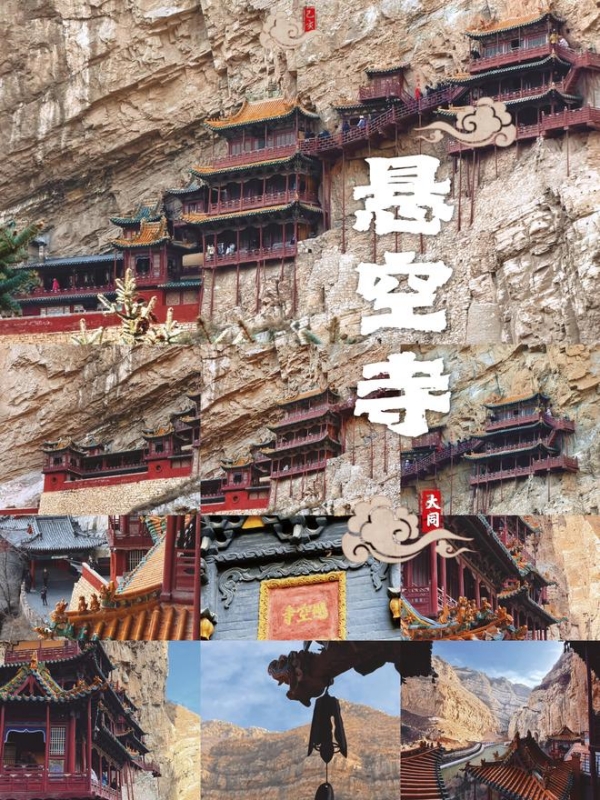
China Upside Down Temple
Deep in Jinlong Canyon at the foot of Mount Heng, a row of wooden pavilions appears to dangle from a sheer cliff face, defying every expectation of how a building should stand. The Hanging Temple—Xuankong Si, 悬空寺—has hung in this improbable position for over 1,500 years, inspiring the informal English nickname "China upside down temple" for the way its cantilevered halls seem to float against the rock. From the valley floor, the structure looks impossible; climb the narrow wooden walkways inside, and the illusion only deepens. The temple sits roughly 70 kilometers south of Datong, making it a half-day destination from one of Shanxi Province's most historically rich cities. Few structures on earth combine this degree of architectural audacity with this much surviving history.
The engineering behind Xuankong Si reveals why it has outlasted empires. Rather than hanging from the cliff, the temple's weight rests on a skeleton of horizontal hardwood beams driven into hourglass-shaped chiseled holes in the rock. The visible vertical pillars beneath the structure were added later, primarily for visitor reassurance rather than structural support. Pavilions, corridors, and walkways were assembled on top of these beams, and the overhanging cliff above shields the entire wooden complex from rain, snow, and direct sunlight—factors that explain the temple's remarkable 1,500-year survival. The "upside down" impression stems entirely from the cantilever design, not from any actual inversion.
Quick Facts
Why "Upside Down": The Engineering That Defies Gravity
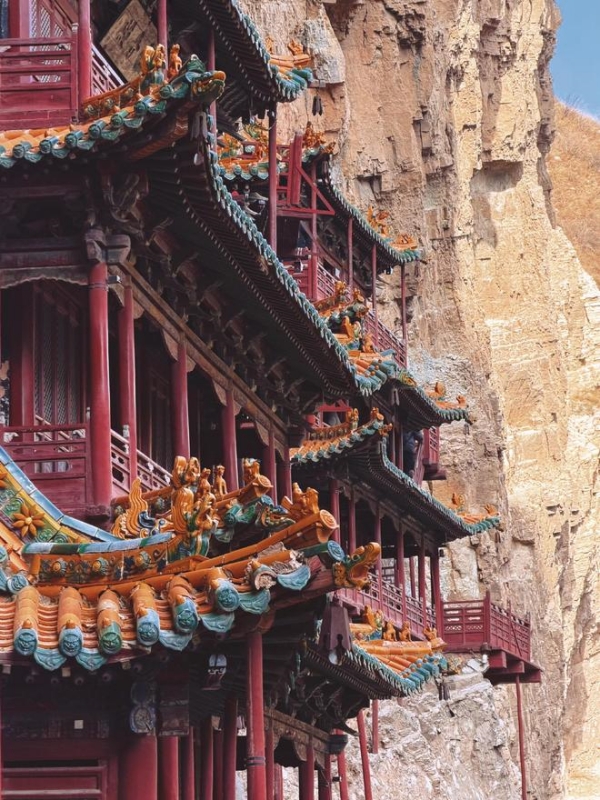
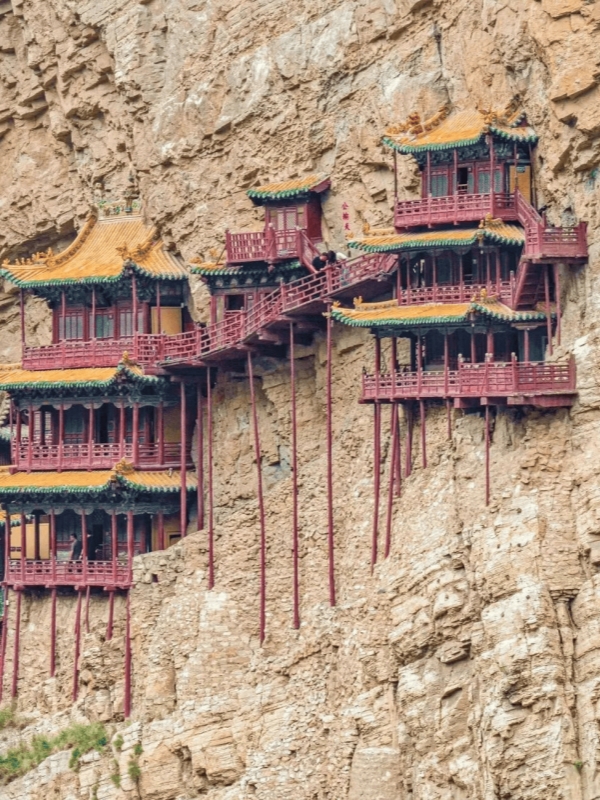
The temple's appearance misleads most first-time observers. Those wooden pavilions pressed against the cliff face do not hang from it; they cantilever off it. The load-bearing skeleton consists of horizontal beams of treated Chinese hemlock, driven deep into hourglass-shaped holes chiseled into the rock. When the beams were driven home, their wedges swelled inside the holes, locking them in place much like oversized wooden expansion bolts. The rooms, corridors, halls, and walkways were assembled on top of this beam skeleton, which is why the temple can remain suspended 75 meters above the canyon floor after more than 1,500 years. The slim vertical posts visible beneath the structure from the valley were added in later centuries as visitor comfort features, not as original load-bearing elements. Most visitors assume the pillars hold everything up; in fact, the original structural work is done entirely by the horizontal beams embedded in the cliff above.
The overhanging rock above the temple provides a natural shelter that has proven as important as the beam engineering. By shielding the wooden structure from rain runoff, direct sunlight, and snow accumulation, the cliff creates conditions that slow rot and decay significantly. This passive protection is a major reason why a wooden complex of this age and exposure remains intact. The temple was built during the late Northern Wei dynasty, around 491 CE, and has survived wars, earthquakes, and centuries of weather—testament to both the cleverness of its design and the protective power of its cliff overhang.
The Cliffside Trick: How It Actually Stays Up
China Upside Down Temple
The construction sequence explains the temple's survival and its seemingly impossible appearance. Here is how the builders worked:
- Hole carving: Workers chiseled deep hourglass-shaped cavities into the cliff face at precise intervals, narrowing in the middle like a sand timer.
- Beam insertion: Hardwood beams—historically identified as Chinese hemlock—were hammered into these holes horizontally, extending outward from the cliff face.
- Wedge locking: The beams swelled as they absorbed moisture, expanding against the narrowed middle of each hole and creating a friction-locked anchor that could not be pulled free.
- Platform assembly: Planks, floorboards, and support frames were layered on top of the exposed beam ends, creating a flat working surface for construction above.
- Structure build-out: Walls, corridors, halls, and pavilions were erected on this beam framework, with the vertical posts added later as a reassuring—but largely decorative—feature for visitors.
The result is a structure that transfers its weight into the cliff via horizontal cantilever action, not vertical suspension. This is why the temple does not actually hang upside down; it simply extends outward from a stable rock face, giving the impression of defy gravity.
Three Religions Under One Roof
China Upside Down Temple
Xuankong Si holds an unusual distinction in Chinese religious history: it is the only standing temple in China that venerates Buddhism, Taoism, and Confucianism within a single complex. The upper-level main hall contains side-by-side statues of Sakyamuni (the historical Buddha), Laozi (the founder of Taoism), and Confucius—the three figures representing China's three major philosophical and religious traditions. This tri-religious design dates to the temple's original Northern Wei construction and was expanded during subsequent Tang and Ming dynasty renovations.
The coexistence of three traditions in one site reflects a spirit of religious tolerance that stands out in a region known primarily for Buddhist cave art such as the Yungang Grottoes nearby. For visitors, the interior shrines offer a compact lesson in Chinese spiritual culture within a structure that itself feels spiritually elevated by its cliffside position.
⛩️ Explore Sacred Architecture: As an architectural masterpiece blending Buddhism, Taoism, and Confucianism, Xuankong Si is one of China's most iconic religious sites. Discover more remarkable sanctuaries in our guide to Famous Chinese Temples.
Where in China: Finding the Upside Down Temple
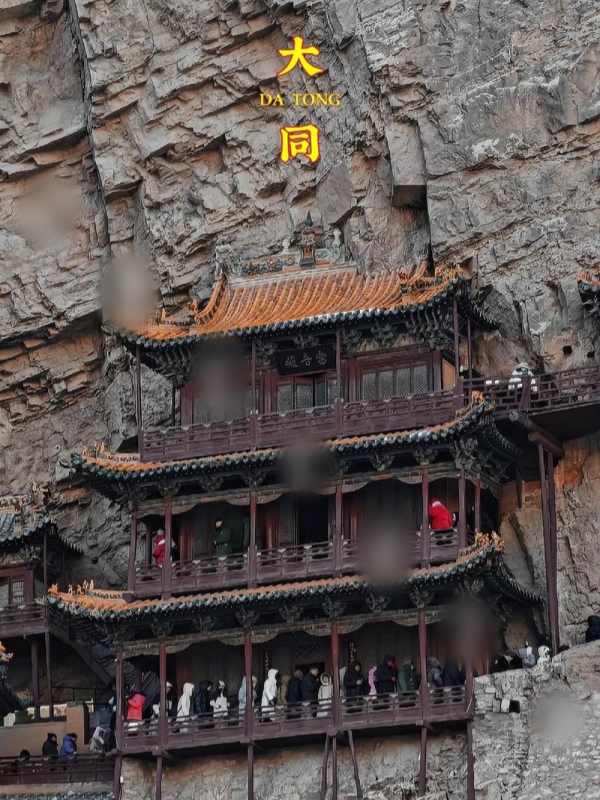
The temple occupies Jinlong Canyon at the northern base of Mount Heng, roughly 5 kilometers south of Hunyuan town center in Datong, Shanxi Province. The site sits inside the Mount Heng scenic area boundary but requires a separate entrance ticket from the main mountain park. The canyon approach offers a dramatic first view of the temple pressed against the cliff face before visitors reach the visitor center below.
Location Details
China Upside Down Temple
The full address chain reads: Shanxi Province → Datong City → Hunyuan County → Jinlong Canyon. The temple entrance lies at the south end of the canyon, accessible after passing through the visitor center and a shuttle zone that prohibits private vehicles beyond that point. The GPS coordinates are approximately 39.67°N, 113.72°E. From Datong city center, the drive south along the S30 expressway covers roughly 70 kilometers and takes about 1.5 hours under normal traffic conditions. The journey from central Beijing involves approximately 350 kilometers of ground distance—about 5 to 6 hours by car or a 1.5-hour flight followed by 1.5 hours of ground transport to the temple.
Why Hengshan Mountain
China Upside Down Temple
Mount Heng (恒山) is one of China's Five Great Northern Sacred Mountains, a designation that has drawn pilgrims and scholars for centuries. The temple's position at the foot of this peak was not accidental: classical Chinese geomantic thinking placed structures of spiritual importance on slopes that were secluded from village noise and physically closer to heaven. Beyond symbolism, the cliff wall offered practical advantages. The overhanging rock provided natural shelter from rain, direct sun, and snow—conditions that would otherwise accelerate decay in an exposed wooden structure. The same geological stability that made the cliff a safe anchor point for beam holes also made it a durable platform for 1,500 years of continued existence.
🏯 Continue Through Shanxi Province: If you are exploring the historical landmarks around Datong, extend your journey south to walk through one of China's best-preserved walled ancient cities. Plan your itinerary with our guide to Pingyao.
How to Visit: Climb Inside or View from Below
China Upside Down Temple
The temple offers two distinct ways to experience it, each requiring a separate ticket. The choice shapes the entire visit, so it is worth understanding both options before arriving. Those who climb inside gain access to the suspended wooden walkways and interior halls that most visitors come to see; those who view from the valley floor get the classic wide-angle photograph and a more accessible experience overall.
Option 1: Climbing Inside
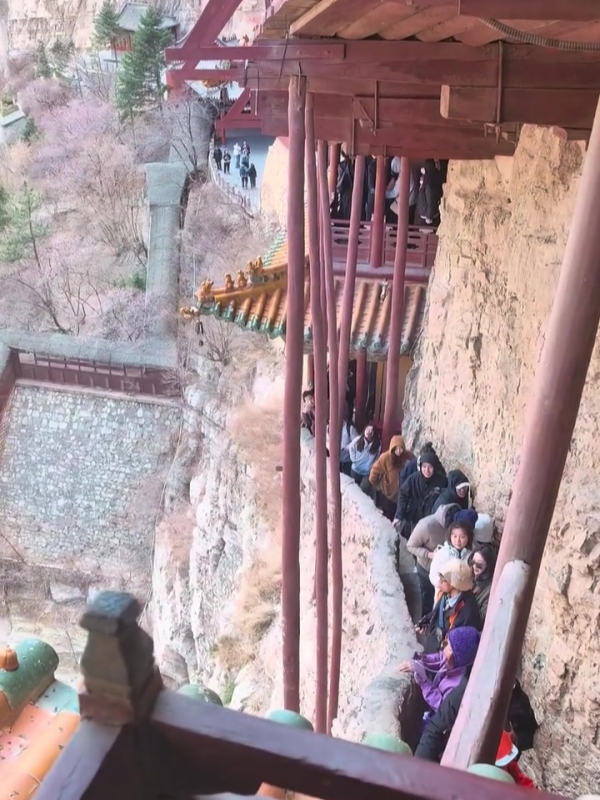
The climb-inside ticket costs about $14 (¥100) and opens access to the suspended walkways, corridors, and interior shrines of the temple complex. After entering through the lower pedestrian gate, visitors ascend narrow wooden stairs to the suspended platform level. The actual walking time on the route is 10 to 20 minutes, though queue time can add significantly to the total visit. The route is one-way only—once you enter, you proceed forward with no opportunity to retrace your steps for a missed photo. Handrails reach approximately 1 meter in height, which may feel low for visitors accustomed to taller safety barriers. There are no restroom facilities on the climb route, so using the restrooms before entering is strongly advised. A small camera or phone carried in a pocket works better than a large bag on these narrow, crowded walkways.
Option 2: Viewing from Below
The viewing-only ticket costs about $2 (¥15) and grants access to the canyon-floor viewing platform across the valley from the temple. This vantage point delivers the most photographed angle of the site—the full cantilever effect of the temple pressed against the overhanging cliff, framed by the surrounding mountain peaks. From the platform, visitors can capture both landscape shots of the temple against the valley and upward shots that show the eave structure beneath the temple at its most dramatic. A total visit from the viewing platform takes 20 to 30 minutes and is the recommended option for visitors with mobility concerns, young children, or anyone uncomfortable with heights and narrow walkways. The viewing platform is wheelchair-accessible.
Beyond the Temple: Other Datong Highlights
The temple deserves a full visit, but Datong and its surrounding region hold enough cultural heritage to justify extending the trip. Three nearby sites in particular are worth considering for visitors with an extra half-day or full day.
Yungang Grottoes
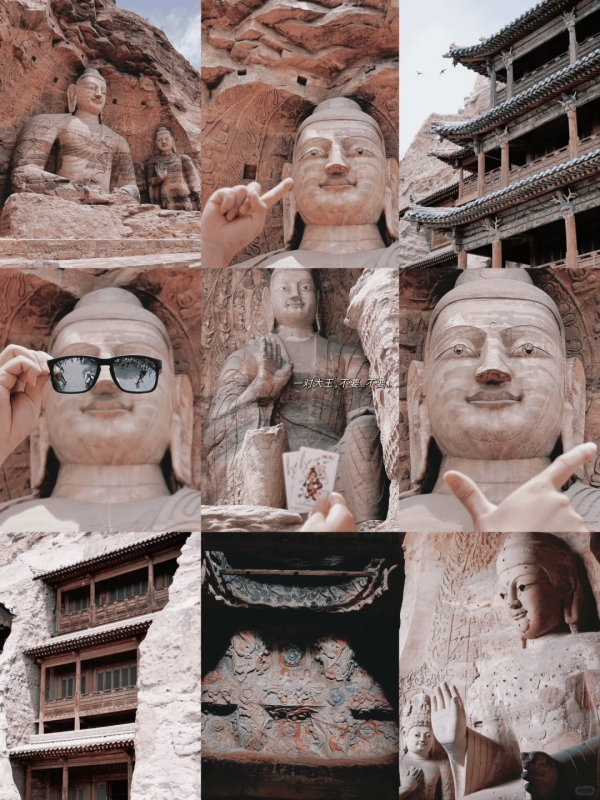
Located approximately 45 minutes west of Datong city, the Yungang Grottoes contain 252 caves housing some 51,000 carved Buddhist statues dating from the 5th century. The grottoes are designated a UNESCO World Heritage Site and represent one of China's most significant examples of early Buddhist cave art. Most visitors allow 2 to 4 hours for a thorough visit, making it a natural pairing with the hanging temple for a classic one-day cultural loop departing from Datong.
Yingxian Wooden Pagoda
Built in 1056, the Yingxian Wooden Pagoda stands approximately 67.5 meters tall and is the oldest and tallest surviving wooden pagoda in China. The main structure contains no nails—joinery techniques alone hold it together. It is located roughly 1 hour south of the hanging temple by road, making it an effective afternoon pairing that follows the temple visit without doubling back toward Datong city first.
Mount Heng
The sacred peak at whose foot the temple sits is one of China's Five Great North Mountains. Cable cars serve the main summit for visitors who want to hike or sightsee above the temple level, and several trails of varying difficulty crisscross the mountainside. For visitors with an extra half-day and an interest in Chinese sacred geography, Mount Heng offers a logical extension from the temple visit.
🏮 Contrast Traditional Sanctuaries: While Shanxi's Hanging Temple clings to remote cliff faces, urban temples offer a very different view of historic worship in the heart of bustling metropolises. Learn more in our guide to the City God Temple of Shanghai.
Getting There from Datong or Beijing
Two main transport options serve the temple, with the choice depending on your starting point and schedule. The following table compares the practical choices.
From Datong City
The most straightforward approach is by road from Datong city center. The S30 expressway runs south from Datong to Hunyuan County, covering roughly 70 kilometers in about 1.5 hours by car. Visitors can arrange a taxi for a round trip, hire a half-day private car through most Datong hotels, or use the public tourist shuttle that departs from near Datong Ancient City. A half-day private car arranged through a hotel typically costs about $45–60 (¥320–430) total, covering waiting time at the temple. The temple car park is located at the visitor center; no private vehicles are permitted beyond that point.
From Beijing
Beijing-based visitors have two main options: a high-speed train or a flight. The HSR route departs from Beijing North or Qinghe stations and reaches Datong South Railway Station (opened 2019, on the Beijing–Datong intercity line) in approximately 1.5 to 2 hours. Second-class seats cost roughly $20–25 (¥140–180). From Datong South, a taxi or arranged car adds another 1.5 hours to the temple. Flights to Datong Yungang Airport (DAT) take about 1 hour and cost approximately $55–90 (¥400–650), but the ground transfer at the Datong end means the total door-to-door time is not dramatically shorter than the train option. Most travelers who come from Beijing for the temple pair it with an overnight stay in Datong, which also allows time to visit the Yungang Grottoes or the Yingxian Wooden Pagoda.
When to Go and How to Beat the Crowds
The temple's popularity means that timing your visit can make a significant difference to the experience. The climbing route has a hard daily cap of 3,200 tickets, and these sell out regularly during peak season. Even the viewing platform benefits from strategic timing, as the canyon approach can become congested during busy periods.
Best Season to Visit
Late autumn through early spring—December through April—offers the lowest visitor numbers and the most dramatic atmospheric conditions. Winter visits can bring snow that makes the cliff temple especially striking in photographs. Summer months (June through August) and Golden Week (early October) see the longest queues and the highest chance of sold-out climbing tickets. The climb route itself has no weather protection, so heavy rain and icy winter conditions make the wooden stairs slippery and potentially hazardous; check conditions before committing to the climb if visiting in deep winter or during storms.
Booking and Queue Strategy
Advance booking is essential during peak season. Climbing tickets should be reserved at least one week ahead from May through September and during any holiday period. If arriving without a pre-booked climbing ticket, the best strategy is to reach the temple by 07:30 and join the queue for first-batch entry. Late afternoon, after 15:00, represents a secondary quiet window when some same-day tickets may become available as earlier visitors complete their visits. Weekday visits are noticeably less crowded than weekend visits throughout the year. For visitors combining the temple with Yungang Grottoes or Yingxian Wooden Pagoda, allocating a full day in Datong is the most comfortable approach.
Frequently Asked Questions
Q: Why is it called the "upside down" temple?
The informal English nickname refers to the visual impression of wooden halls and corridors appearing to hang from an overhanging cliff face. The Chinese name is 悬空寺, pronounced Xuankong Si, which translates as "Hanging Temple." The impression of inversion comes from the cantilever design—the temple extends outward from the cliff rather than upward from the ground—but the structure itself is not literally upside down.
Q: How was the Hanging Temple actually built into the cliff?
Builders carved hourglass-shaped holes into the cliff face, then drove horizontal beams of treated Chinese hemlock into those holes. The beams swelled as they settled, locking into the narrowed middle of each hole like wedges. Rooms and walkways were assembled on top of this beam skeleton. The thin vertical posts visible beneath the temple today were mostly added in later centuries for visitor reassurance and are not the original load-bearing elements.
Q: Is it safe to climb the China Upside Down Temple?
The temple is structurally sound and open to visitors, but the climb involves narrow wooden stairs, low handrails of approximately 1 meter, and one-way traffic on the walkway route. The daily cap of 3,200 climbing tickets limits overcrowding. The climb is not recommended for very young children, visitors with significant mobility issues, or anyone who feels uncomfortable with heights and tight spaces.
Q: Do I need a separate ticket to climb versus view of China Upside Down Temple?
Yes. The viewing-only ticket costs about $2 (¥15) and covers the canyon-floor viewing platform. The climb-inside ticket costs about $14 (¥100) and grants access to the suspended walkways and interior halls. These are separate products; the viewing ticket does not include access to the climb route.
Q: Can I visit the China upside down temple from Beijing in one day?
Technically yes by high-speed train—Beijing North or Qinghe to Datong South takes approximately 1.5 to 2 hours each way—but the timing is tight when factoring in ground transport to and from the temple. An overnight stay in Datong is more comfortable and allows you to pair the temple visit with Yungang Grottoes or the Yingxian Wooden Pagoda on the same trip.
Q: What is the best time of year to visit the China Upside Down Temple?
December through April offers the fewest crowds and the most dramatic light, with winter snow adding atmosphere. Golden Week (early October) and the July–August summer peak should be avoided due to long queues and a high risk of sold-out climbing tickets. The climb route has no weather protection, so check conditions before visiting during heavy rain or icy winter weather.
Q: Is the China Upside Down Temple accessible for wheelchair users?
The canyon-floor viewing platform is wheelchair-accessible and offers an unobstructed view of the temple from across the valley. The climb route is not accessible for wheelchair users due to narrow wooden stairs, low handrails, and one-way traffic that does not accommodate mobility aids.
Q: What should I wear when climbing?
Flat, non-slip shoes are essential. The wooden stairs and walkways can become slippery after rain or during winter frost. Large backpacks should be left behind or stored—narrow corridors and one-way traffic make bulky bags difficult to manage on the climb route.