Famous Chinese temples help define China, and you’ll never escape them when you travel here. But they’re more than worship sites. They’re also time capsules, art halls, and living philosophy. You’ll find many of them near the cities where you’re exploring medical tourism in china. From gilded Tibetan rooftops to Jiangnan eaves, each has its own local memory. We help you locate the ones that match yours.
First up, we begin with six temples – the heart of China’s spirituality. Next, we travel through five cities: Beijing, Shanghai, Chengdu, Chongqing and Yunnan to see how cities speak of faith. Finally, we return to some lesser-known local gems found along the road less travelled – and by few tour groups.
What makes this guide different: Instead of simple rankings, this handbook maps China’s famous temples by significance, city, and theme. Build a trip that fits your time and curiosity.
The Iconic Six: China’s Pinnacle Famous Temples
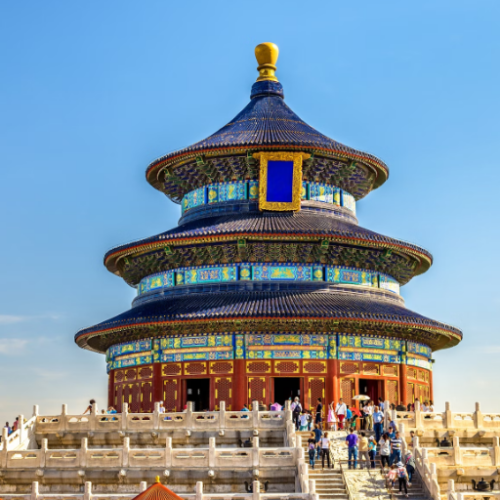
Core identity: Ming and Qing emperors performed heaven-worship and harvest-prayer rituals here. Therefore, it ranks as China’s largest surviving ancient ceremonial complex.
Founded: Construction started in 1420. UNESCO added it as a World Heritage Site in 1998.
Three defining features:
- Cosmology built in stone: Every layout choice encodes the ancient Heaven-Earth relationship.
- Acoustic miracles: The Echo Wall, Three-Echo Stone, and Circular Mound show extraordinary engineering.
- Sacred park space: Ancient cypress groves wrap the ceremonial halls in living calm.
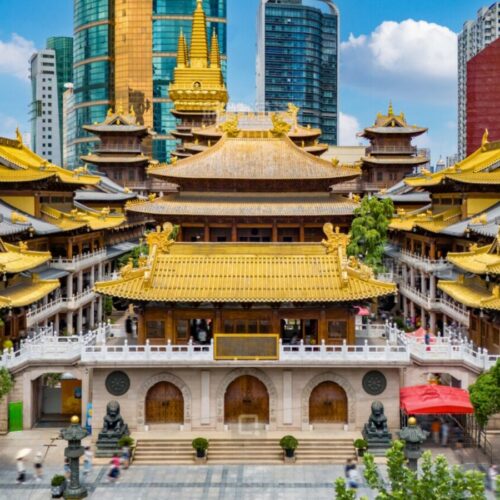
Core identity: A millennium-old Buddhist temple sits on Nanjing West Road. Furthermore, its rare gold-tiled roof catches every eye.
Founded: Tradition dates it to 247 AD during the Three Kingdoms era. Therefore, it predates Shanghai itself.
Three defining features:
- Visual contrast: Gold tiles and a Ming bronze bell sit beside skyscrapers — pure Shanghai.
- Rare treasures: The main hall houses a 15-ton silver Shakyamuni statue plus a Burmese jade Buddha.
- Urban Buddhism: A music ensemble and vegetarian restaurant show how Buddhism fits modern life.
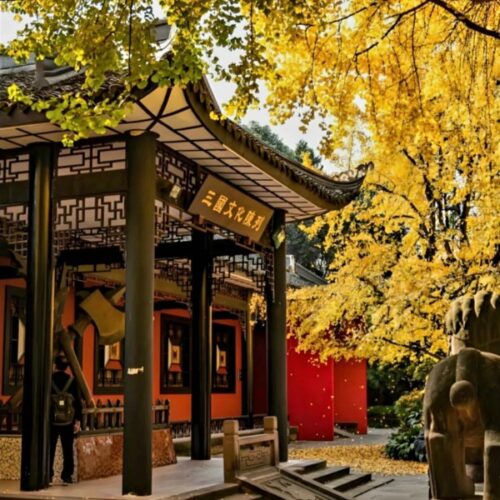
Core identity: This site honors Chancellor Zhuge Liang and Emperor Liu Bei together. Therefore, it stands as the most influential Three Kingdoms museum in China.
Founded: Origins trace to 223 AD with Liu Bei’s mausoleum. However, the current layout dates to 1672 under Emperor Kangxi.
Three defining features:
- Ruler-minister hierarchy: The “ruler in front, minister behind” layout encodes political ethics.
- Artifacts meet literature: Tang steles and Yue Fei’s calligraphy bring Romance of the Three Kingdoms to life.
- Sichuan garden calm: Red walls, bamboo, and lotus ponds frame the experience.
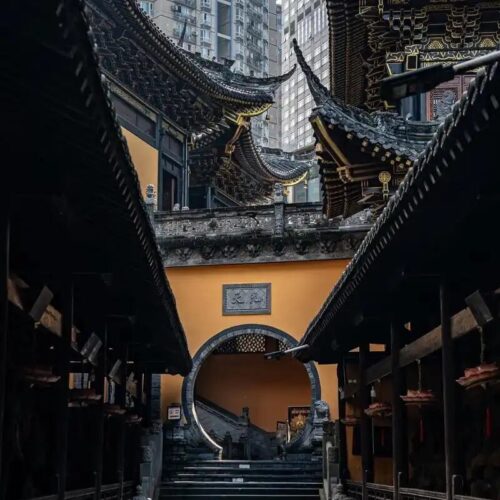
Core identity: This temple hides among Jiefangbei skyscrapers. Furthermore, it features Song dynasty cliff carvings and a famous Hall of 500 Arhats.
Founded: Northern Song Zhiping era (1064–1067), originally named Zhiping Temple. Later, it was renamed in the late Qing dynasty.
Three defining features:
- Spatial contrast: Glass towers outside, tranquil ancient temple inside — pure Chongqing magic.
- Arhat Hall treasure: 523 lacquered figures sit in a nine-palace eight-trigram layout.
- Pop culture link: The cult film “Crazy Stone” filmed here.
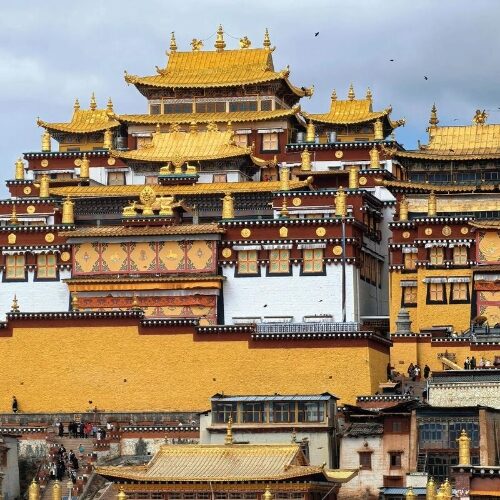
Songzanlin Monastery
Core identity: This is Yunnan’s biggest Gelug-sect Tibetan Buddhist monastery. Therefore, locals call it the “Little Potala Palace.”
Founded: Built in 1679 at the 5th Dalai Lama’s request. Furthermore, Emperor Kangxi sponsored the design, modeled on Lhasa’s Potala.
Three defining features:
- Tibetan architecture: Two main halls dominate while monks’ quarters terrace up the hillside.
- Art treasury: Exquisite murals, thangkas, gold-clad Shakyamuni statues, and palm-leaf scriptures fill the halls.
- Shangri-La’s soul: Morning mist turns the monastery into a fairyland.
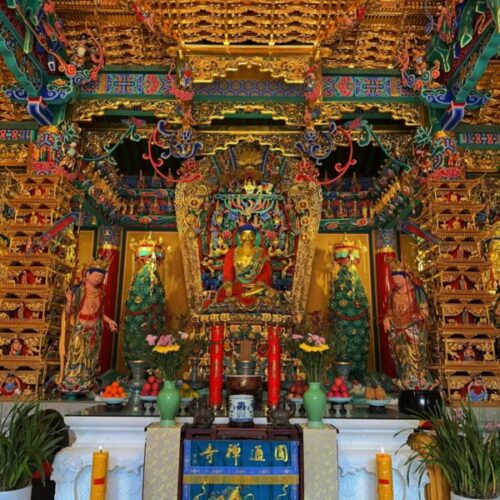
Core identity: Kunming’s oldest and largest Buddhist temple uniquely hosts three Buddhist traditions. Therefore, it has no equal nationwide.
Founded: Tang dynasty Nanzhao period (8th century). Later, the Yuan dynasty rebuilt and renamed it in 1301.
Three defining features:
- Reverse-slope layout: Unlike most temples, this one descends toward the main hall.
- Three traditions in one: Chinese Mahayana, Tibetan bronze Buddha, and Thai-style halls coexist peacefully.
- Water garden Zen: A central lotus pond and pavilions evoke Jiangnan elegance.
Beijing: Sacred Sites in the Imperial Capital
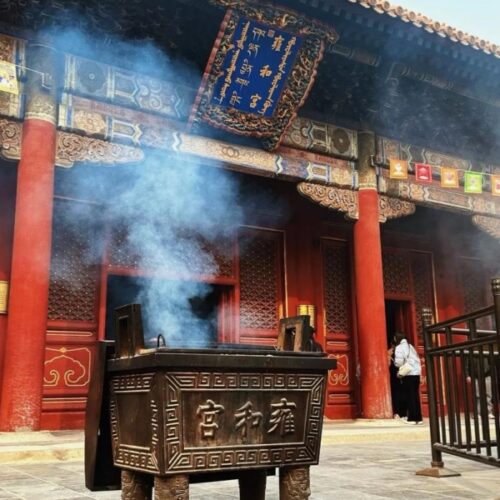
Yonghe Temple
Core identity: This is Beijing’s largest Tibetan Buddhist royal monastery. Therefore, it stands as the city’s top example of Han-Tibetan architectural fusion.
Historical highlights: Originally Emperor Yongzheng’s princely residence. However, Qianlong converted it to a Gelug-sect Tibetan monastery in 1744. Two emperors lived here, so it earned the title “Dragon’s Hidden Blessed Land.”
Three defining features:
- Mansion-to-temple conversion preserves both residential grandeur and religious solemnity.
- “Three Wood Carvings” — the sandalwood 500-arhat mountain, golden nanmu Buddha niche, and 18-meter Maitreya — all priceless.
- Han-Tibetan cultural treasury bearing witness to Qing-dynasty governance of Mongolia and Tibet.
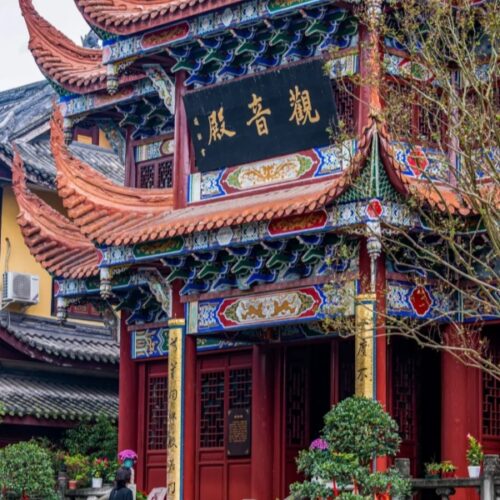
Baiyun Temple
Core identity: One of three ancestral temples of the Quanzhen Taoist sect. Therefore, it remains Beijing’s largest Taoist complex.
Historical highlights: Tang emperor Xuanzong founded the predecessor temple. However, war damaged it in the Jin dynasty. Yin Zhiping rebuilt it under the Yuan and renamed it Baiyun.
Three defining features:
- A model Quanzhen “ten-direction” monastic complex with three axes and a rear garden.
- Houses a Ming Taoist Canon, a Tang stone Laozi, and the famous “stone monkey” and coin-ring traditions.
- The Yanjiu Festival temple fair each Spring Festival ranks among Beijing’s top folk events.
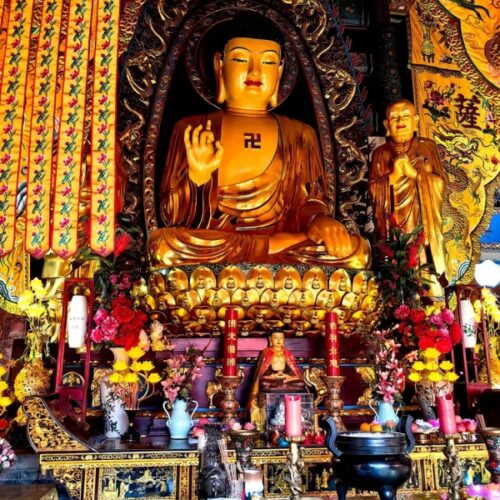
Tanzhe Temple
Core identity: Beijing’s oldest Buddhist temple. Therefore, the saying runs: “Before Beijing existed, Tanzhe Temple did.”
Founded: 307 AD in the Western Jin dynasty. Furthermore, Kangxi granted the honorific name “Xiyun Chan Monastery.”
Three defining features:
- A kingdom of ancient trees, led by the 1,400-year “Emperor Tree” ginkgo and 400-year Erqiao magnolia.
- Royal temple stature with the largest roof-ridge ornaments in Beijing’s historic architecture.
- The “Four Treasures” — stone fish, bronze cauldron, millennium ginkgo, and blessing cauldron — each with vivid legends.
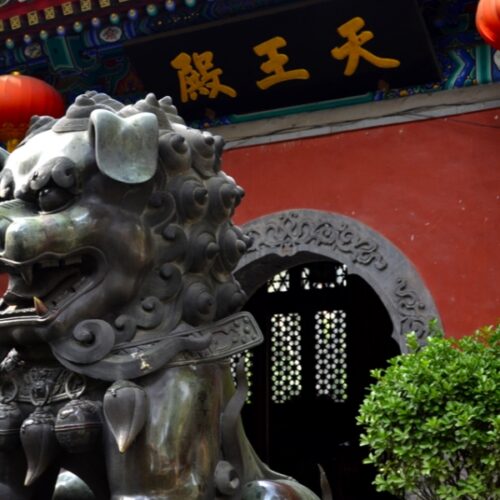
Fayuan Temple
Core identity: Beijing’s oldest surviving temple within the city walls. Furthermore, it serves as headquarters of the Chinese Buddhist College.
Founded: 645 AD by Emperor Taizong of Tang to honor fallen soldiers. Originally named Minsong Temple, it gained the name Fayuan in the Yongzheng reign.
Three defining features:
- Famous lilac groves. Therefore, April draws scholars and poets to the purple-and-white blossoms.
- Tang and Liao steles offer rare primary evidence of Beijing’s early history.
- Active Buddhist academy since 1956, anchoring contemporary Chinese Buddhist study.
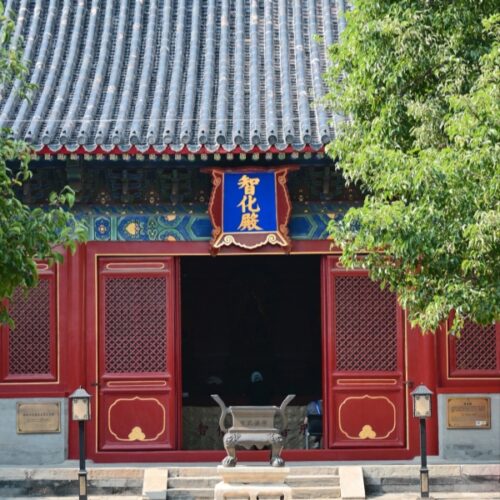
Zhihua Temple
Core identity: Beijing’s largest surviving Ming wooden complex. Therefore, it serves today as the Beijing Cultural Exchange Museum.
Founded: 1444 as the family temple of eunuch Wang Zhen. However, its architecture matches imperial standards by blending Song-Yuan and Ming styles.
Three defining features:
- A living fossil of Ming architecture, preserving original beams, brackets, and polychrome painting.
- Three singular treasures: Ming rotating scripture cabinet, 570-year Jingyin Music (national intangible heritage), and renowned coffered ceilings.
- Spring pear blossoms create a snow-white spectacle against black tiles each April.
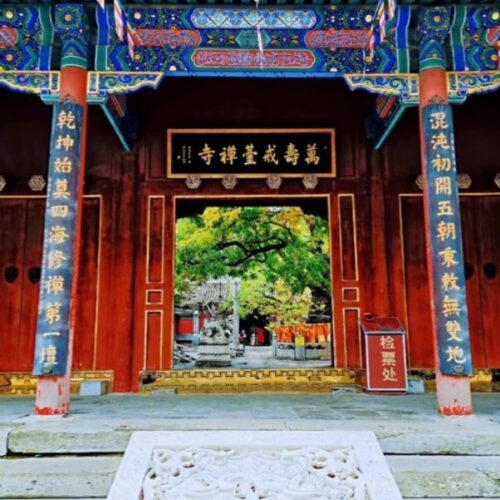
Jietai Temple
Core identity: Home of China’s largest Buddhist ordination platform — the “Number One Ordination Platform in the World.”
Founded: Sui dynasty Kaihuang period, over 1,400 years ago. Liao-dynasty monk Fajun built the ordination platform here.
Three defining features:
- The white marble ordination platform stands 3.5 meters in three exquisitely carved tiers.
- Five famous pines — Living, Nine Dragon, Pagoda-Embracing, Reclining Dragon, and Carefree — each have legends.
- The royal peony garden was once Prince Gong’s villa, blending Jiangnan elegance with mountain calm.
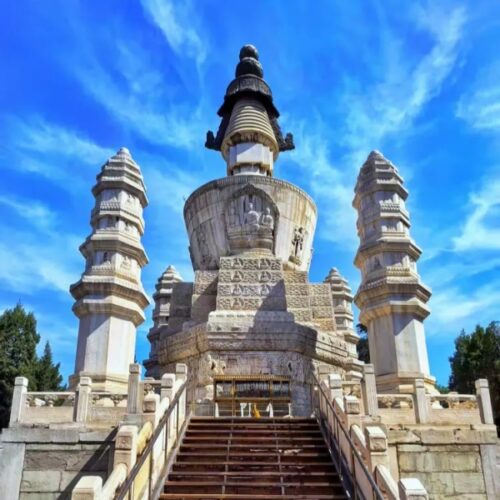
Xihuang Temple
Core identity: Beijing’s only authentic Tibetan Buddhist cultural museum. Furthermore, the Dalai and Panchen Lamas historically stayed here. Today it houses an advanced Buddhist institute.
Founded: 1652 to receive the 5th Dalai Lama. In 1780, the 6th Panchen Lama died here. Therefore, Qianlong built the Qingjinghuacheng Stupa in his memory.
Three defining features:
- A “sealed boundary” temple opening only on weekends. Therefore, it’s one of Beijing’s hardest-to-book museums.
- The stupa fuses Chinese octagonal, Tibetan crown, and Indian-style base — uniquely beautiful.
- Major witness to Qing-Tibet relations and national unity.
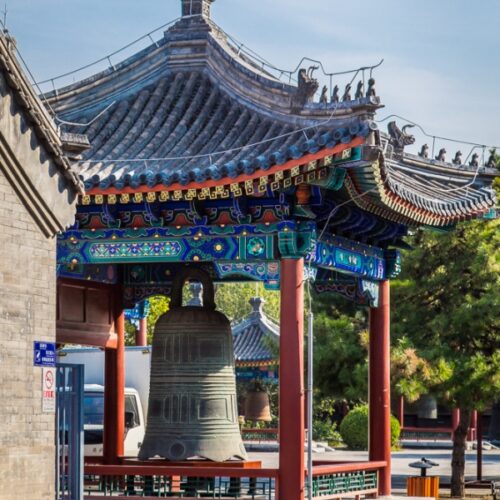
Great Bell Temple
Core identity: Originally Juesheng Temple, now the Ancient Bell Museum. Furthermore, it houses the Yongle Great Bell — the world’s largest Buddhist bell.
Founded: Qing Yongzheng 11th year (1733). Qianlong later moved the Yongle Great Bell here. Therefore, the Ancient Bell Museum opened in 1985.
Three defining features:
- The Yongle Great Bell stands 6.75 m tall and weighs 46 tonnes. Furthermore, it carries 230,000+ Chinese and Sanskrit Buddhist scriptures.
- A 400-piece collection spans Chinese bell-and-chime history from ceramic origins to Ming-Qing bronze.
- The bell rings on New Year and major festivals.
Shanghai: Sanctuaries in the Modern Metropolis
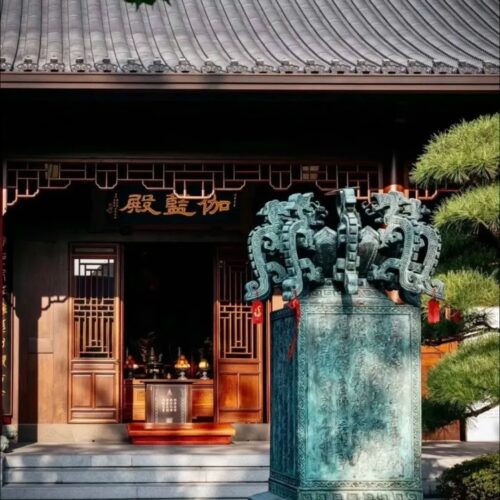
Core identity: Shanghai’s most famous Buddhist temple. Furthermore, it shelters two priceless Burmese jade Buddhas.
Founded: 1882. Master Huigen brought the jade Buddhas back from Myanmar. Originally built in Jiangwan, the temple later moved here.
Three defining features:
- Twin jade Buddhas — a 1.92-m seated Shakyamuni and a reclining Nirvana figure.
- Urban Zen forest model. Therefore, the bustling Putuo district fades the moment you cross the gate.
- Active cultural Dharma center running meditation retreats, lectures, and vegetarian dining.
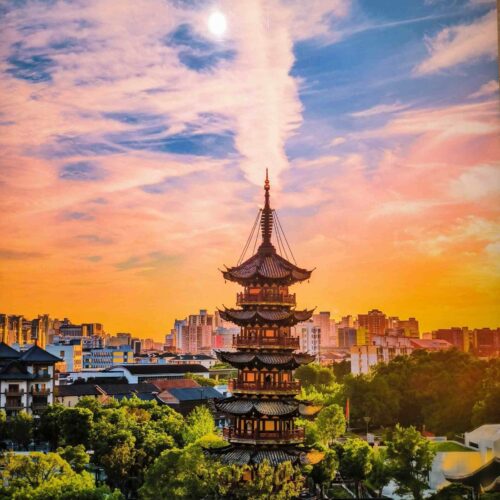
Longhua Temple
Core identity: Shanghai’s oldest and largest ancient temple. Furthermore, it’s famous for Longhua Pagoda, the Longhua Temple Fair, and vegetarian noodles.
Founded: Tradition traces it to the Eastern Wu period (Three Kingdoms). However, most standing structures are Qing reconstructions. The Longhua Pagoda dates to 977 AD.
Three defining features:
- Temple and pagoda have stood together for a millennium.
- The “Longhua Temple Fair” each lunar March is one of Shanghai’s most representative folk events.
- Famous vegetarian cuisine, especially the noodles, attracts locals and visitors.
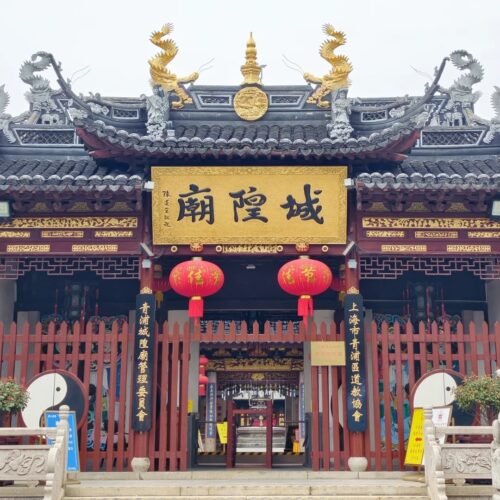
Core identity: Shanghai’s key Taoist temple. Together with Yuyuan Garden, it forms the city’s top folk-culture tourism district.
Founded: Ming Yongle reign (early 15th century). It enshrines Shanghai’s City God Qin Yubo, plus General Huo Guang.
Three defining features:
- “One temple, three City Gods” reflects Shanghai’s immigrant identity.
- Core of the Yuyuan district. Therefore, you can taste Nanxiang xiaolongbao right outside.
- Iconic night-view landmark, especially during festivals.
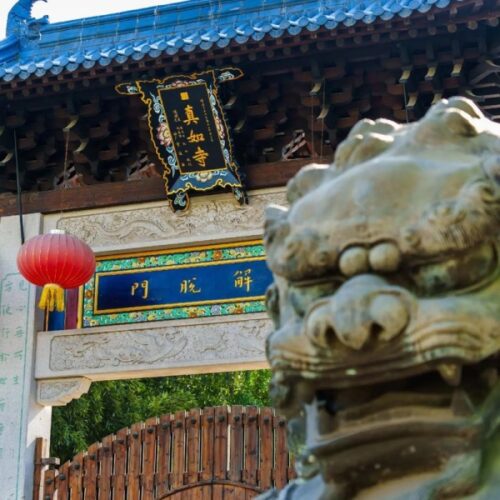
Zhenru Temple
Core identity: Shanghai’s oldest surviving wooden structure. Furthermore, it holds the city’s only Yuan-era timber main hall.
Founded: Southern Song dynasty. Relocated and renamed in 1320. Beam inscriptions reading “Yanyou Seventh Year” make it a true living fossil.
Three defining features:
- The main hall uses Yuan-era open-ceiling technique. Moreover, 10 of 16 columns are Yuan originals.
- A 53-meter Song-style pagoda crypt holds Shakyamuni relics. Furthermore, a 700-year ginkgo glows gold each autumn.
- Quiet retreat with far fewer visitors than the city’s headline temples.
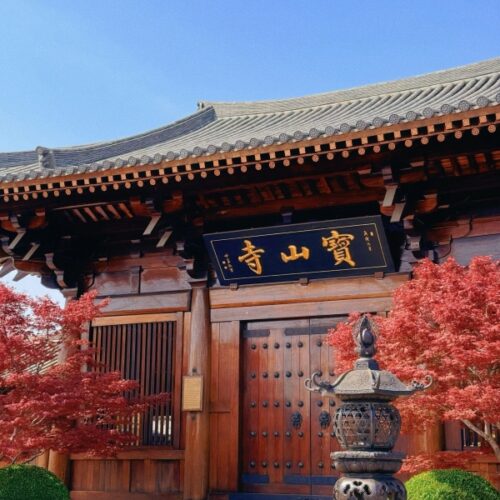
Baoshan Temple
Core identity: Winner of the Luban Prize for its modern late-Tang style timber complex. Therefore, locals call it “Shanghai’s Little Kyoto.”
Founded: The original Ming temple was relocated and rebuilt in 2005. Furthermore, all structures use African redwood with traditional mortise-and-tenon joinery — no nails.
Three defining features:
- Authentic late-Tang aesthetic with grand, archaic feel — entirely distinct from typical Ming-Qing temples.
- Living testament to contemporary mastery of traditional timber joinery.
- The seven-story Tang-style Zhiyuan Golden Pagoda dominates the rear garden.
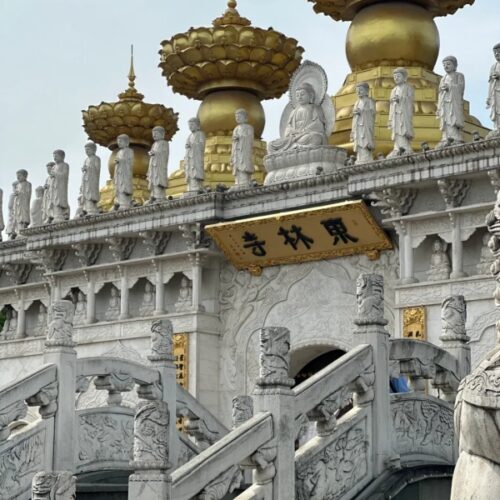
Donglin Temple
Core identity: A remarkable temple fusing traditional Buddhism with bold modern architecture. Furthermore, it holds multiple Guinness World Records.
Founded: 1308 as the Guanyin Hall. However, large-scale 2007 expansion produced the current spectacular blend.
Three defining features:
- Record-breaking superlatives: tallest bronze gate, tallest indoor Guanyin, tallest cloisonné figure.
- Unique mix of Five-Buddha-Crown shapes, elevator-accessed bell towers, and traditional halls.
- Interactive experiences like coin-spinning Shancai Tongzi and rooftop panoramas.
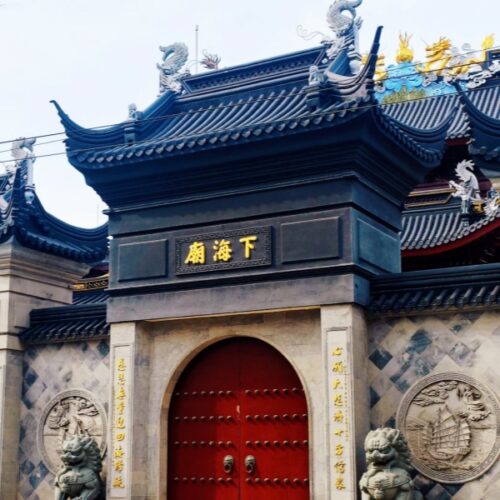
Xiahaimiao Temple
Core identity: Shanghai’s only Buddhist temple housing both monks and nuns. Furthermore, it directly explains the origin of the name “Shanghai.”
Founded: Qing Qianlong reign as a sea-god shrine for fishermen. Therefore, “Xia Hai Pu” gave the temple its name — paired with “Shang Hai Pu” across the water.
Three defining features:
- Living fossil of Shanghai’s place-name origin.
- A bhikkhuni (nun) community offers a distinctive practice atmosphere.
- Intimate neighborhood temple full of local life and street-level warmth.
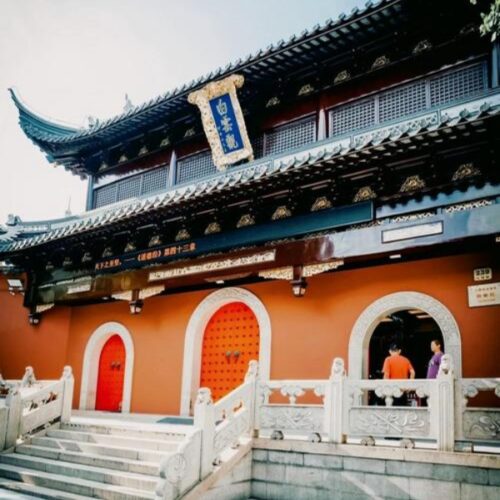
Baiyun Temple Shanghai
Core identity: Headquarters of the Shanghai Taoist Association. Therefore, it’s the most important Taoist temple in the city.
Founded: 1882 by Taoist priest Xu Zhicheng. Originally named “Leizu Hall,” it was renamed after housing a Ming-edition Taoist Canon.
Three defining features:
- Largest Taoist temple in Shanghai with strict, traditional layout.
- Seven Ming-dynasty bronze statues are nationally rare and exceptional in casting quality.
- A genuine quiet sanctuary hidden in the old Chengxiang district.
Chengdu: Living Zen in the Abundant Land
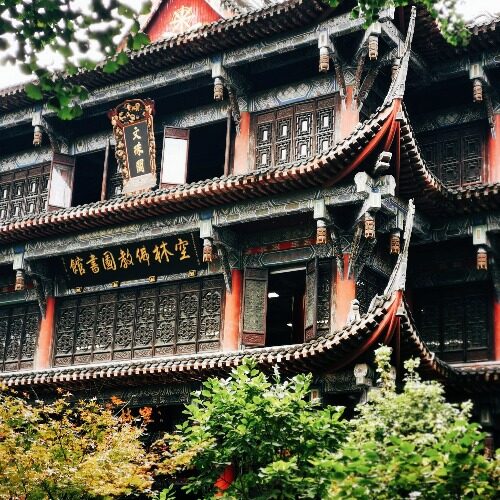
Core identity: Central Chengdu’s best-preserved Zen temple. Furthermore, it shelters a relic of Tang Monk Xuanzang.
Founded: Sui Daye period. Rebuilt in 1697. Named for Manjushri (Wenshu) Bodhisattva. Therefore, it tops the four great Zen monasteries along the Yangtze.
Three features:
- Urban Zen forest with calm bamboo and red walls.
- Twin relics: Buddha sarira and Xuanzang’s skull.
- “Xiangyuan” tea house pairs worship with Chengdu courtyard tea.
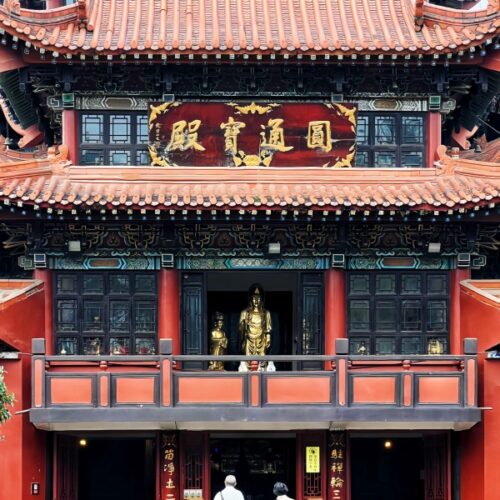
Zhaojue Temple
Core identity: “Number One Zen Forest in West Sichuan.” Therefore, it ranks as Southwest China’s most important historic Buddhist monastery.
Founded: Tang Zhenguan period. Emperor Xuanzong granted the name. Furthermore, Master Zhangxue revived it in the Qing dynasty.
Three features:
- Archaic, expansive monastic grandeur with ancient trees.
- “Tree-swallowing stele” wonder and tame dove flocks.
- Sits beside Chengdu Zoo. Therefore, chanting meets animal calls.
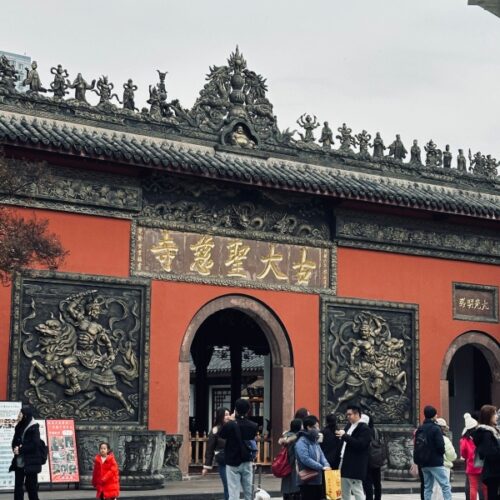
Daci Temple
Core identity: Hidden beside Taikoo Li shopping district. Furthermore, this is where Xuanzang took his ordination.
Founded: Wei-Jin period. Reached its peak in Tang-Song dynasties. Emperor Xuanzong granted the plaque “Imperial Great Merciful Temple.”
Three features:
- Extreme ancient-modern juxtaposition with glass towers outside and red walls inside.
- Start of Xuanzang’s cultural journey.
- Exquisite courtyards with ancient ginkgos that turn gold each autumn.
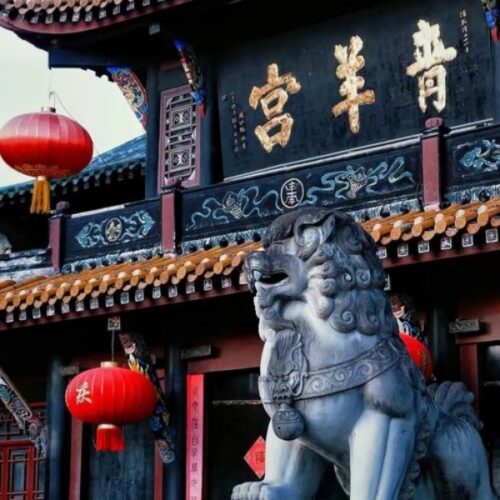
Qingyang Palace
Core identity: West Sichuan’s foremost Taoist temple. Furthermore, it serves as the Quanzhen Longmen ancestral hall.
Founded: Tradition traces it to the Zhou dynasty. However, current buildings are Qing reconstructions. It houses the world’s most complete Taoist Canon wood-block prints.
Three features:
- Architectural jewel: the Bagua Pavilion and Three Purities Hall.
- Two bronze goats. The single-horn one combines all twelve zodiac animals. Therefore, “touch the goat” remains a beloved tradition.
- Quiet urban retreat where locals come for tea and walks.
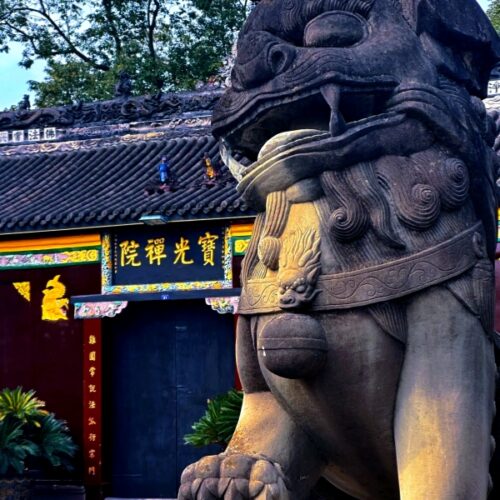
Baoguang Temple
Core identity: Zen monastery in Xindu District. Furthermore, it’s famous for the “Count the Arhats” tradition and a rare Tang-era central-pagoda layout.
Founded: Sui dynasty. Current buildings are Qing reconstructions. The Relic Pagoda dates to the Tang dynasty and leans slightly west. Therefore, it earned the nickname “Eastern Leaning Tower.”
Three features:
- “Count the Arhats” — 577 figures in varied postures. Follow the rules to find your lucky arhat.
- Rare central-pagoda Tang layout (nationally scarce).
- Relic treasures including sariras, palm-leaf scriptures, and a Thousand-Buddha stele.
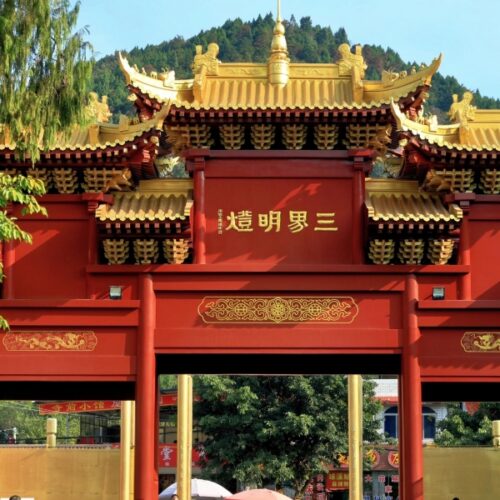
Shijing Temple
Core identity: One of West Sichuan’s five great Buddhist monasteries. Furthermore, it was the first Tibetan Tantric practice site in Han territory.
Founded: Late Eastern Han dynasty as a private family shrine. Later, Ming-dynasty Monk Chushan carved stone scriptures here. Therefore, the temple gained its current name.
Three features:
- Dual-practice site combining Han Buddhist layout with Tibetan halls.
- Locals come here especially for relationship and career blessings.
- Hillside setting with rear mountain tea-trail walks.
Chongqing: Cliffside Faith in the Mountain City
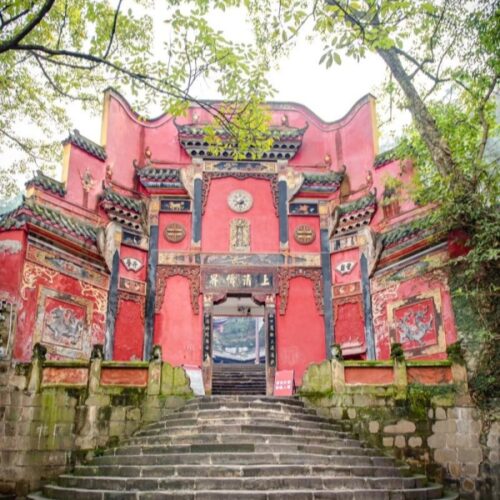
Laojun Cave Taoist Temple
Core identity: Chongqing’s most important Taoist temple, perched on the cliffs of South Mountain (Nanshan).
Founded: Tang dynasty origins as the Taishang Laojun Cave. Later, the temple expanded through the Ming and Qing dynasties.
Three defining features:
- Halls step down the mountainside like Chongqing’s own stilted houses — pure 3D city spirit.
- The terrace rivals Nanshan Yishu for panoramic views of both rivers converging below the city lights.
- Resident priests perform daily rites, and the temple hosts traditional Taoist ceremonies during major festivals.
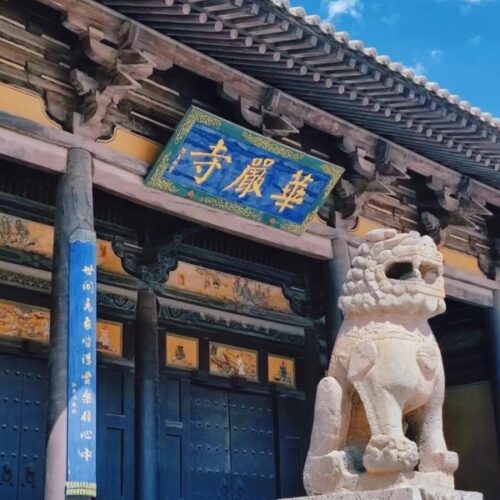
Core identity: Chongqing’s largest Buddhist temple. Therefore, locals call it the “Number One Famous Temple of East Sichuan” and “Holy Land of Ba Mountain.”
Founded: Origins are uncertain. However, Qing Kangxi-era reconstruction brought fame across Sichuan. The complex includes the Main Temple, Huayan Cave, and Huayan Lake.
Three features:
- Grand Zen complex spread across three successive courtyards.
- “Eight Scenic Views” including Heaven Pool Night Moon and Huayan Cave.
- Rich religious art with an Indian jade Buddha and wooden sixteen-arhat reliefs.
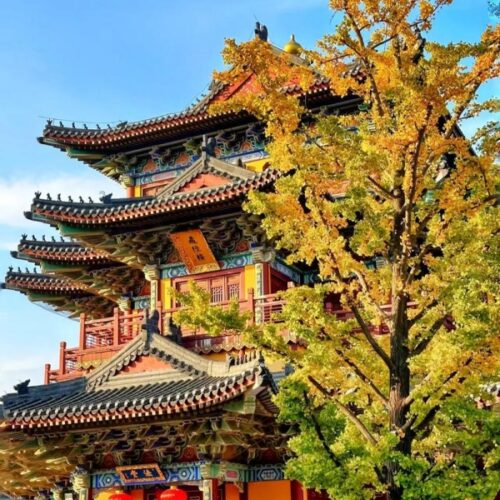
Ciyun Temple
Core identity: China’s only temple housing both monks and nuns. Furthermore, its Chinese-Western hybrid architecture overlooks the Yangtze.
Founded: Tang dynasty. Rebuilt in 1757 as Guanyin Temple. Later, Master Yunyan expanded it in 1927, renaming it Ciyun and pioneering the co-residential model.
Three features:
- Unique co-residential monastic community — unprecedented in Chinese Buddhism.
- Chinese-Western architectural fusion. For instance, the Wangjiang Pavilion uses Western arch windows.
- Exceptional river-view overlook of the Yuzhong Peninsula skyline.
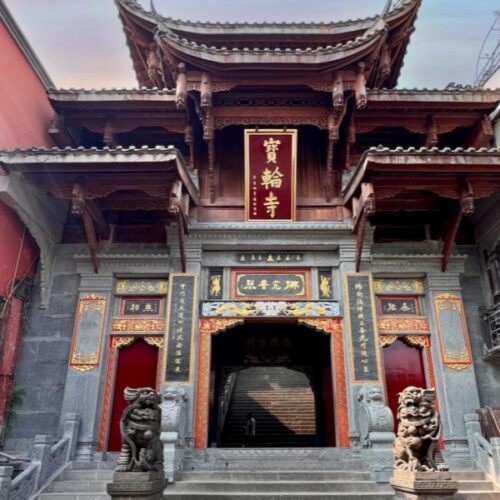
Baolun Temple
Core identity: Millennium sanctuary beside Ciqikou Ancient Town. Furthermore, it’s also called “Dragon’s Lair Temple” because of the legend that Emperor Jianwen hid here.
Founded: The exact date is unknown. However, it’s the only surviving temple of many that once stood in Ciqikou. The Ming Jianwen legend adds mystery.
Three features:
- Tranquil retreat one wall away from Ciqikou’s bustle.
- Excellent ancient timber craftsmanship using rare horse-mulberry wood columns — no nails.
- “Dragon’s Lair” legend and prime feng shui setting draw history seekers.
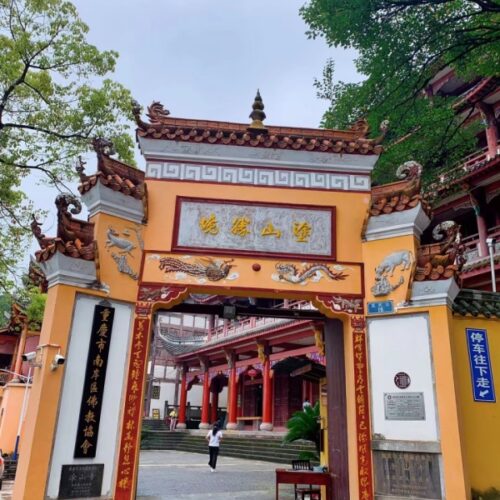
Tushan Temple
Core identity: Chongqing’s oldest temple. Furthermore, it sits atop South Mountain — where you can sip covered-bowl tea while gazing over two rivers.
Founded: Origins trace to the Western Han dynasty. Once a shrine to the Great Yu (the flood-tamer). Tang poet Bai Juyi visited and wrote poetry here.
Three features:
- “Oldest” status connecting to pre-Buddhist local faith in the Great Yu.
- Superb panoramic teahouse where ¥5 buys covered-bowl tea under ancient trees.
- Blend of Buddhism, Taoism, and folk belief.
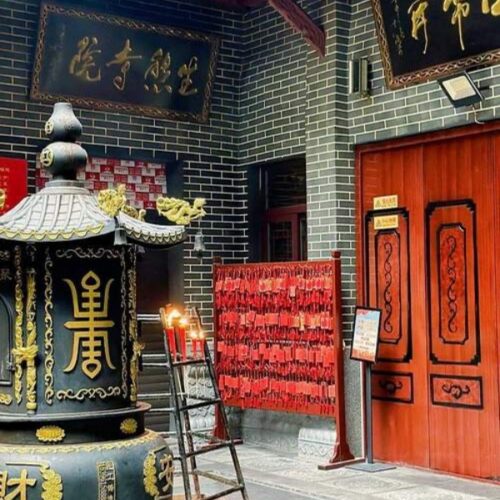
Nengren Temple
Core identity: Chongqing’s only nunnery. Furthermore, it hides deep within the Jiefangbei skyscrapers.
Founded: Ming dynasty as “Three Religions Hall.” Appears on Qing-era maps. Converted in 1926 to a ten-direction monastic complex run by nuns.
Three features:
- Distinctively calm nunnery atmosphere.
- Extreme urban seclusion encircled by apartments and commercial towers.
- Intimate Sichuan-East folk residential architecture, small and compact.
Yunnan: Mosaics of Southwest Ethnic Cultures
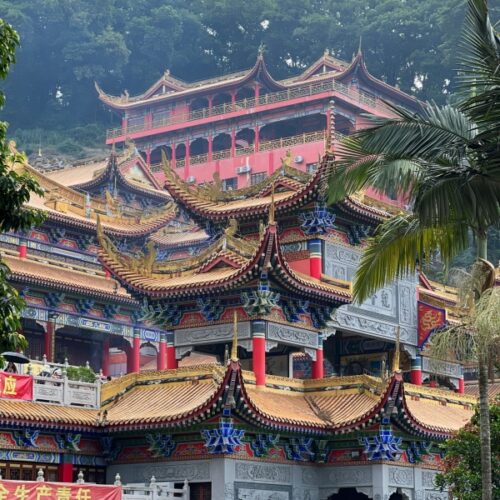
Haikou Guanyin Temple
Core identity: A serene lakeside temple dedicated to Guanyin, standing at the western outlet of Dianchi Lake.
Founded: First built during the Yuan dynasty. Multiple renovations followed through Ming and Qing eras. The temple’s position at Dianchi’s drainage point gives it both geomantic and historical significance.
Three defining features:
- The temple terrace overlooks the western Dianchi shoreline and distant Western Hills.
- Locals flock here on the 19th day of each lunar month for Guanyin celebrations.
- Stone carvings and steles record centuries of Dianchi flood-control efforts.
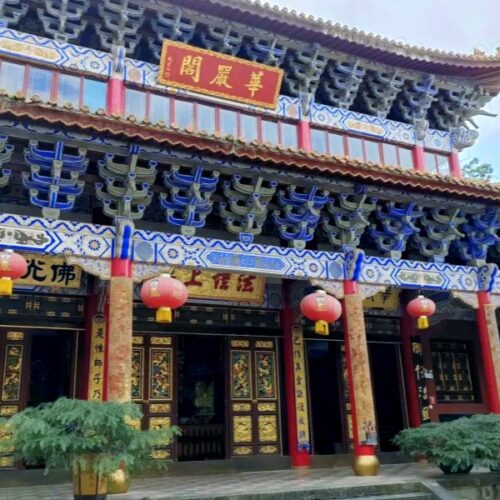
Qiongzhu Temple
Core identity: Yunnan’s first Zen temple. Furthermore, it’s world-famous for the 500-Arhat clay sculptures, called the “Eastern Sculpture Treasury.”
Founded: Tang-Song period. Rebuilt in the early Yuan dynasty. Later, Sichuan folk sculpture master Li Guangxiu and disciples spent seven years creating the 500 Arhats during the Qing Guangxu reign.
Three features:
- “Qiongzhu Arhats” — clay sculpture’s pinnacle. Each figure is unique in expression and posture.
- Serene Zen environment in the hills northwest of Kunming.
- Ancient trees frame the halls beautifully.
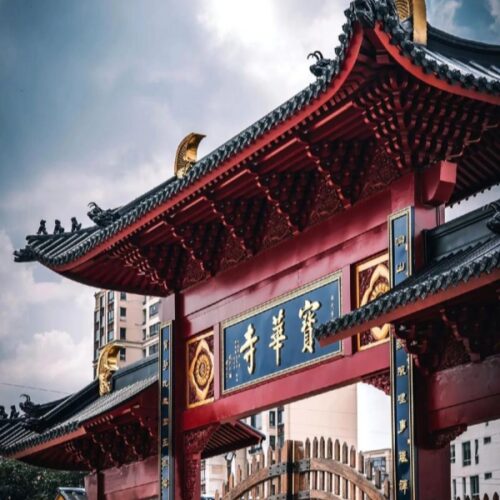
Baohua Temple
Core identity: Grand modern Ming-Qing-style timber complex. Therefore, locals call it “Kunming’s Little Forbidden City.”
Founded: The original Ming temple was founded by Linji-sect monk Jinglun. Current buildings were reconstructed in the early 21st century.
Three features:
- Magnificent modern timber hall with 76 giant red-wood columns using mortise-and-tenon joinery.
- “Sumeru Lecture Hall” seats 5,000+ for major Buddhist events.
- Imperial-scale layout with red walls, yellow tiles, and a Dragon Pool.
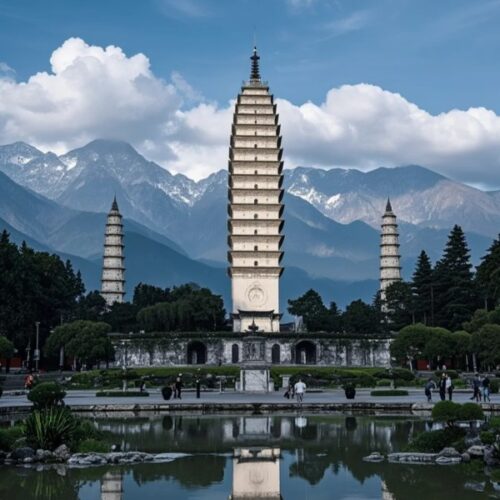
Chongsheng Temple & Three Pagodas
Core identity: Royal temple of the Dali Kingdom. Furthermore, it’s the iconic symbol of Cangshan-Erhai scenery and a 5A national tourism area.
Founded: Built in the Nanzhao period. Reached its peak under the Dali Kingdom when nine kings abdicated to become monks here. The main Qianxun Pagoda dates to the Tang dynasty.
Three features:
- Millennium Three Pagodas in tripod formation. The Tang-era Qianxun Pagoda stands 69.13 m.
- Reconstructed “City of Buddha” rises along its central axis as a living Dali museum.
- Prime vantage point. Wanghai Tower offers the best Cangshan-Erhai panorama.
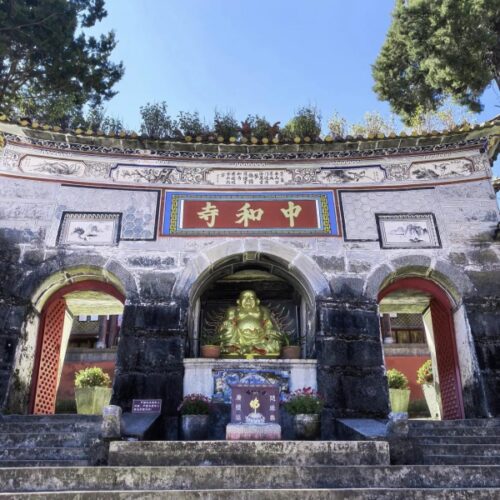
Zhonghe Temple
Core identity: A mountaintop Buddhist temple perched on the Yuju Peak of Cangshan Mountain. Therefore, it commands sweeping panoramic views of Erhai Lake and Dali Ancient Town below.
Founded: Originally established during the Nanzhao Kingdom period. Later rebuilt and maintained through the Ming and Qing dynasties.
Three defining features:
- Cloud-wrapped halls create an atmosphere of genuine otherworldly calm.
- The famous mountain trail connecting multiple Cangshan temples passes directly through here.
- Local Bai minority customs blend with Buddhist practice in unique festival celebrations.
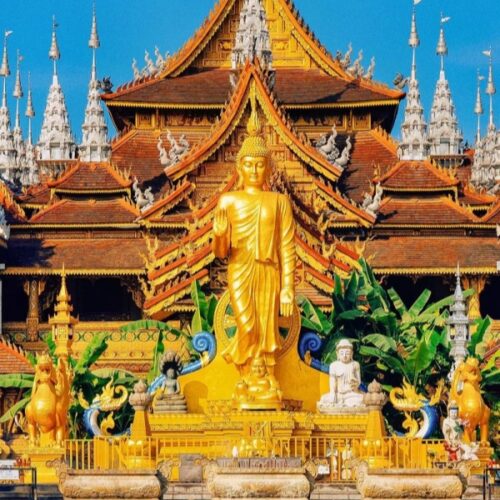
Wat Pajay Vanaram
Core identity: Highest-ranking Buddhist temple in Xishuangbanna. Furthermore, it’s the center of Dai Buddhist culture and a bridge to Southeast Asian Buddhism.
Founded: Long-established. Headquarters of the Xishuangbanna Prefecture Buddhist Association. Closely linked to the former Dai Royal Palace (today’s Manting Park).
Three features:
- Quintessential Dai Buddhist aesthetics with multi-eave roofs and ceramic relief decorations.
- Direct integration with Manting Park royal garden. Therefore, you step from flowers to gold stupas.
- Theravada monastic life with saffron-robed monks chanting in Pali — utterly distinct from Mahayana or Vajrayana traditions.
Hidden Gems: Masterpieces Beyond Major Cities
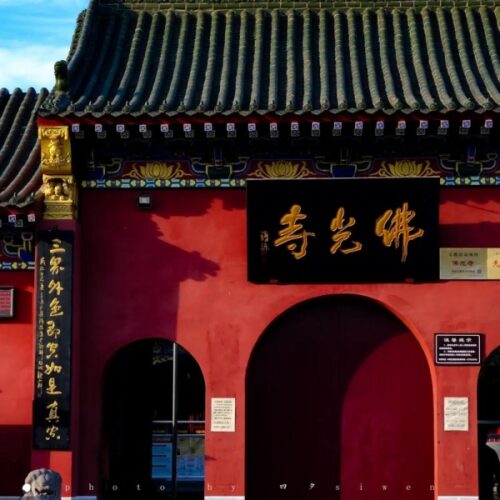
Foguang Temple
Core identity: China’s largest surviving Tang-dynasty timber building. Furthermore, architect Liang Sicheng hailed it as “China’s No. 1 National Treasure.”
Founded: Northern Wei dynasty. Rebuilt in 857 AD. In 1937, Liang Sicheng and Lin Huiyin discovered it using clues from a Dunhuang mural. Therefore, they disproved the Japanese claim that no Tang timber buildings survived in China.
Three features:
- East Main Hall as a Tang living fossil with inverted-V struts and massive brackets.
- “Four Uniques” — Tang architecture, sculptures, murals, and inscriptions — converged.
- Northern Wei hexagonal Ancestral Pagoda is a national singleton. Jin-dynasty Manjushri Hall uses reduced-column technique.
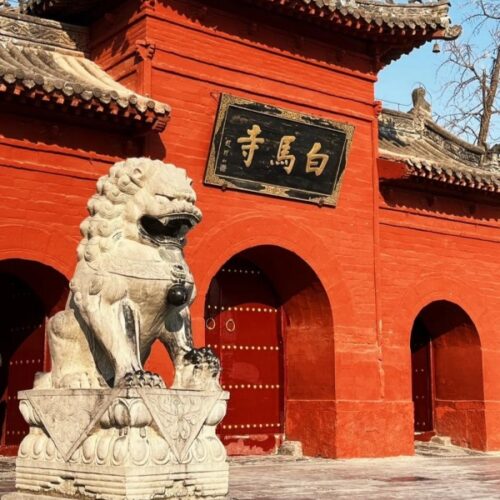
White Horse Temple
Core identity: The first Buddhist temple officially built after Buddhism entered China. Therefore, it’s revered as the “Ancestral Temple” of Chinese Buddhism.
Founded: 68 AD. Named for the legend of “white horses carrying scriptures.” Indian monks Kasyapa-Matanga and Gobharana translated the first Chinese-language sutra here.
Three features:
- “Number One Temple Under Heaven” historical status.
- Unique international zone with Indian, Burmese, and Thai-style halls. Therefore, you “step across four countries” in one walk.
- Qiyun Pagoda is one of China’s earliest surviving pagodas.
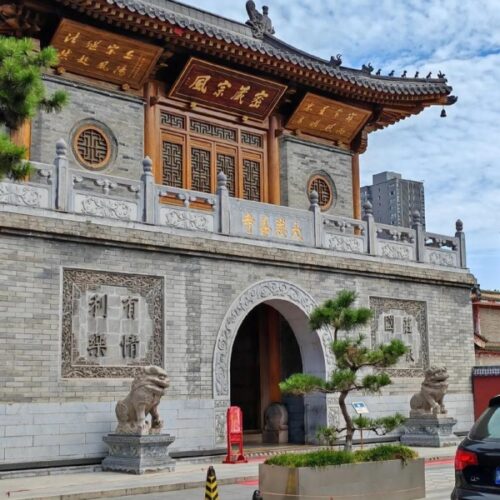
Daxingshan Temple
Core identity: The birthplace of Chinese Esoteric (Tantric) Buddhism. Furthermore, it’s the ancestral temple of Japan’s Shingon sect.
Founded: Jin Wudi period. Emperor Wen of Sui expanded it. In the Tang, three Indian monks founded Chinese Esoteric Buddhism here. Later, the tradition passed to Japan as Shingon.
Three features:
- Thousand-year unbroken Tantric transmission.
- Free sanctuary next to Xiaozhai commercial district.
- Serene garden temple with prayer wheels, wishing wall, and seasonal flowers.
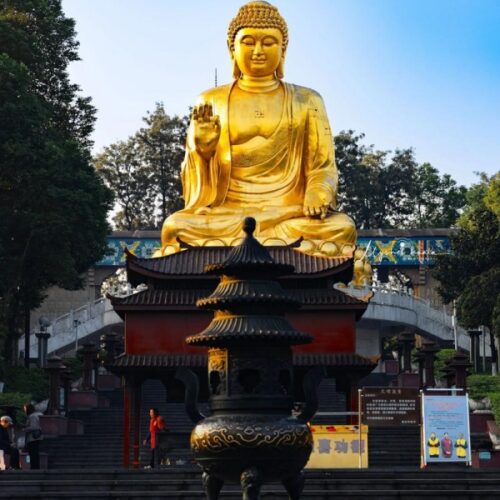
Huayan Temple
Core identity: One of China’s earliest and most intact Liao-Jin temple complexes. Furthermore, its east-facing layout follows Khitan tradition.
Founded: 1038 (Liao Chongxi 7th year). Built according to the Avatamsaka sutra. Destroyed in war, then rebuilt in the Jin dynasty.
Three features:
- East-facing Khitan layout follows the sun-worship tradition.
- The Upper Temple’s Main Hall is China’s largest surviving Liao-Jin hall. The Lower Temple houses the “Oriental Venus” bodhisattva.
- “Nationally unique” Celestial Palace scripture cabinet shows scaled Liao architecture.
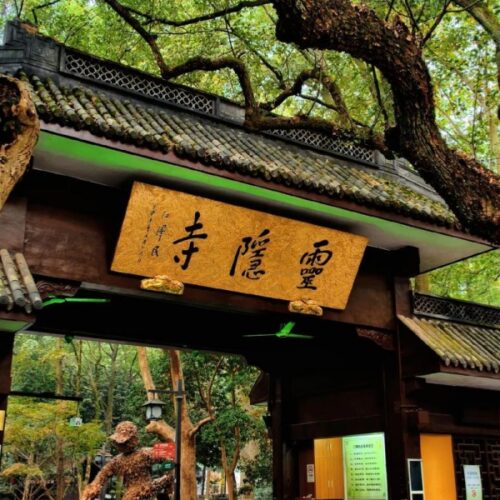
Lingyin Temple
Core identity: Hangzhou’s oldest famous temple. Furthermore, it’s one of China’s ten great ancient Zen monasteries.
Founded: 326 AD by Indian monk Huili. Emperor Kangxi inscribed the plaque “Yunlin Chan Temple.” Therefore, it remains one of Jiangnan’s most celebrated Buddhist sites.
Three features:
- “Spirit hidden in mountain forest” feng shui. Feilai Peak rocks and Lengquan stream create an Indian Vulture Peak setting.
- Feilai Peak grotto sculptures: 300+ stone carvings from the Five Dynasties through Yuan period.
- Legendary home of Crazy Monk Ji Gong. His Ji Gong Hall remains beloved by visitors.
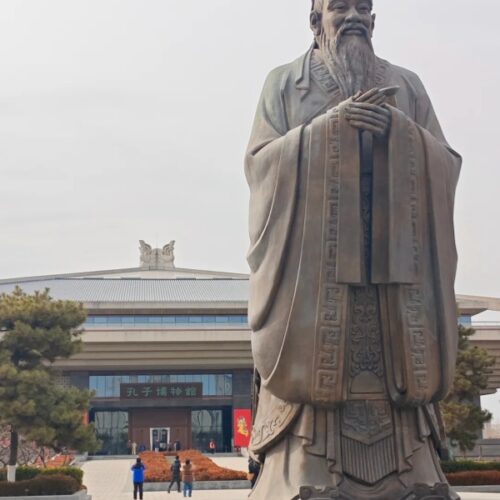
Confucian Temple
Core identity: The temple enshrining Confucius. Furthermore, it ranks with the Forbidden City and Chengde Summer Resort as one of China’s three greatest ancient complexes. UNESCO listed it as a World Heritage Site.
Founded: 478 BC, the year after Confucius died. Every subsequent dynasty expanded it. The complex grew to nine courtyards with 466 rooms.
Three features:
- “Supreme Temple of Learning” standard with symmetrical central axis.
- China’s largest Han-dynasty stele collection.
- Living symbols: Apricot Platform, Confucius’s own-planted cypress, and the Thirteen Stele Pavilions.
Visitor Essentials: Guidelines for Sacred Travel
Temple Etiquette: Respectful Conduct and Dress Codes
Visit the famous Chinese temples in clothes that cover shoulders and knees, and bring a light scarf for stricter Tibetan sites. Keep your voice down inside the halls, avoid eating and smoking, and always check for posted signs before snapping pics—most of the time taking a shot of Buddha statues and murals inside the main hall is strictly off-limits. Step over the wooden threshold instead of on, and walk clockwise in Tibetan Buddhist sites. Address the monks as Shifu. Most famous Chinese temples are handing out free incense at the door, so accept it and pass on the overpriced bundles sold by vendors just outside the gate.
Planning Guidelines: Choosing Temples by Interest Themes
Plan your visits to famous Chinese temples by interest: architecture fans should head to Shanxi for Foguang and Huayan Temples, deep Buddhist culture seekers should explore the Four Sacred Mountains, and temple garden fans will love Wenshu Monastery in Chengdu or Lingyin Temple in Hangzhou. In terms of seasons, spring magnolias will delight at Dajue Temple, summer mountain monasteries on Wutai or Emei will offer guests a cool retreat, golden autumn ginkgos will dazzle in Tanzhe Temple come the harvest moon, and in winter freshly fallen snow will transform Beijing temples into scenes plucked from a Forbidden City painting. Finally, the 1st and 15th of the lunar month will attract heavy crowds of worship, while Buddha’s Birthday and Chinese New Year will see most famous Chinese temples host major ceremonies round the country.
Temple Vocabulary: Key Terms for International Travelers
Navigating famous Chinese temples becomes second nature with some key terms: enter through the Shānmén (山门) with three symbolic doors, into the Tiānwáng Diàn (天王殿) to meet the Heavenly Kings, or head straight into the main heart, the Dàxióng Bǎodiàn (大雄宝殿), the true Main Hall, housing the main statue of the Buddha. The important bell and drum towers are called Zhōnglóu/Gǔlóu (钟楼/鼓楼). Head to the Cángjīng Gé (藏经阁), the scripture library, or visit the life-release pond known as the Fàngshēng Chí (放生池). At the end, you can meet the monks, typically called Fǎshī (法师), and leave your donation in the box called Gōngdé Xiāng (功德箱).
Practical Information: Booking and Transport Essential Tips
Many famous temples require real-name bookings on their WeChat accounts, so be sure to make reservations ahead of time — especially popular sites like Xihuang Temple are sold out to walk-ins several days in advance. Pricing? Very cheap places to temples in scenic areas charge 75 yuan and up. City temples are pretty easy to reach by subways accessed via Amap or Baidu Maps, raring to go for local rural mountain temples you may need to rent a taxi or self-drive. Tickets and souvenirs can usually all be bought via WeChat Pay and Alipay, bring small cash for the merit boxes. Bring your passport for ticket verification, wear comfortable non-slip shoes, and give yourself permission to slow down, this leg of the journey is an inward and less of a photo race.
FAQs: Answering Common Temple Questions
Q: What is the most famous temple in China?
No single temple holds the crown. However, the Temple of Heaven in Beijing tops most lists for its imperial scale and UNESCO status. Furthermore, Shaolin Temple, White Horse Temple, and Lingyin Temple rank among the most famous Chinese temples for their history, martial arts, or scenic beauty.
Q: Is there a dress code for visiting temples?
Yes. Therefore, wear modest, neat clothing covering your shoulders and knees. Avoid tank tops, short shorts, and revealing outfits. For instance, Tibetan Buddhist sites enforce stricter rules than coastal temples. Most famous Chinese temples will turn away visitors in beach attire, especially during major ceremonies and festivals.
Q: Are Chinese temples free to enter?
Many are. For instance, Wenshu Monastery, Daci Temple, and Fayuan Temple charge nothing. However, scenic-area temples like Chongsheng’s Three Pagodas charge 75 yuan or more. Therefore, check official sources before each visit. Most famous Chinese temples in city centers stay affordable, often just 5 to 30 yuan.
Q: What is the difference between a Buddhist and a Taoist temple?
Buddhist temples honor the Buddha, bodhisattvas, and arhats. Taoist temples worship Laozi, the Jade Emperor, and immortals. Furthermore, Buddhist halls show calm seated figures, while Taoist altars feature dynamic deities. Many famous Chinese temples mix both traditions, especially in folk-religion sites like Shanghai’s City God Temple.
Q: Which Chinese temples are UNESCO World Heritage Sites?
Several. For instance, the Temple of Heaven, the Mogao Caves, the Longmen Grottoes, and the Confucian complex at Qufu all carry UNESCO status. Therefore, these sites combine cultural depth with global recognition. Among famous Chinese temples, these heritage listings draw the heaviest international visitor numbers each year.
Q: Can non-religious visitors enter Chinese temples?
Absolutely. Therefore, you do not need to follow any faith to visit. However, dress modestly and respect worshippers performing rituals. Furthermore, photography rules and quiet behavior apply to everyone. Most famous Chinese temples welcome tourists openly, treating the space as both sacred ground and cultural heritage.
Q: How reliable is public transport to reach temples?
Urban temples connect easily through subway lines and city buses. For instance, Yonghegong sits directly above its own metro stop. However, remote mountain temples often need taxis or self-driving. Therefore, plan ahead using Amap or Baidu Maps. Many famous Chinese temples in scenic zones run shuttle services from nearby towns.
Q: Do I need to book in advance?
Increasingly, yes. Therefore, popular sites like Xihuang Temple and Zhihua Temple require WeChat reservations days ahead. For instance, Xihuang only opens weekends with 600 daily slots. Furthermore, peak holidays sell out quickly. Many famous Chinese temples now use real-name booking, so check official accounts before traveling.
Q: What is the best time of year to visit?
Spring and autumn bring the best weather. For instance, April brings lilac blooms at Fayuan and magnolias at Dajue. Furthermore, autumn ginkgos turn Tanzhe Temple golden. However, lunar 1st and 15th draw heavy crowds. Therefore, weekday mornings work best at famous Chinese temples for quiet visits.
Q: Do temples serve vegetarian food?
Many do. For instance, Longhua Temple in Shanghai serves famous vegetarian noodles, and Wenshu Monastery offers full set meals. Therefore, plan lunch around temple visits. Furthermore, prices stay low, usually 10 to 30 yuan per person. Several famous Chinese temples run dedicated dining halls open to the public daily.