City God Temple of Shanghai (Chenghuang Miao)
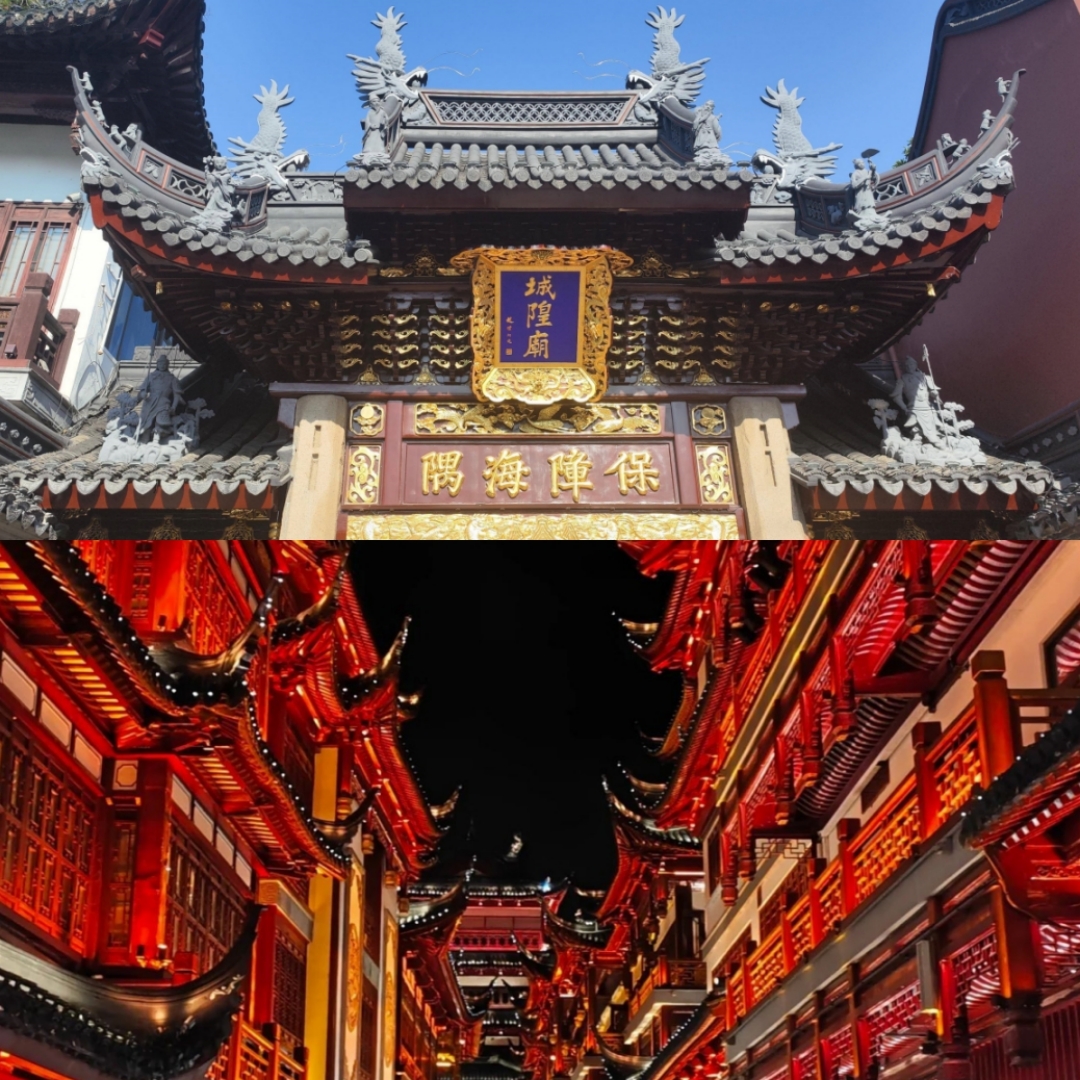
Rain or shine, you can bet the city god temple of shanghai is a bit out of sync with the rest of the city. Leave the glass towers and you find yourself walking under dark wooden eaves curling with incense. An arched stone courtyard lays before you. Just as vendors yell over sizzling pans of dumplings, a deep hush at the heart of the temple. It’s no wonder people linger. From the temple proper to its surrounding houses, a living thing still beats—faith, food, and daily life all entangled like other parts of Shanghai.
Step beyond the gates and the night market begins. Lanterns flicker to life along Nine-Turn Bridge (九曲桥) as the sun goes down. Food stalls come alive; the smell of sesame oil and vinegar drifts through the air. Not sure what else to add to your itinerary? Check out this guide on what to do in Shanghai.
Essential Temple Facts
| 🏷️ Name | City God Temple of Shanghai (Chenghuang Miao · 上海城隍庙) |
| 📍 Address | No. 249, Fangbang Middle Road, Huangpu District (方浜中路249号) |
| ⏰ Opening Hours | Temple halls: 08:30–16:30 daily. Night market & streets: until 22:00–midnight. |
| 🎟️ Entrance Fee | ¥10 (temple interior). Yu Garden: ¥30–40 (separate ticket). |
| 🚇 Getting Here | Metro Line 10 / 14 → Yuyuan Station (豫园站). Exit 3 for the temple; Exit 7 for the bazaar. |
| 🏯 Architecture | Southern Chinese classical style; glazed upturned eaves, red lacquer beams, Mountain Gate (1535). |
| 🌟 Landmarks | Nine-Turn Bridge · Mid-Lake Pavilion Teahouse · City God Hall · Fortune God Hall · Yuyuan Bazaar |
| 🥟 Signature Foods | Nanxiang Xiaolongbao · Pan-Fried Buns · Cream Five-Spice Beans · Crab Shell Pastry |
City God Temple of Shanghai Highlights
Iconic Taoist Architecture and Historic Halls
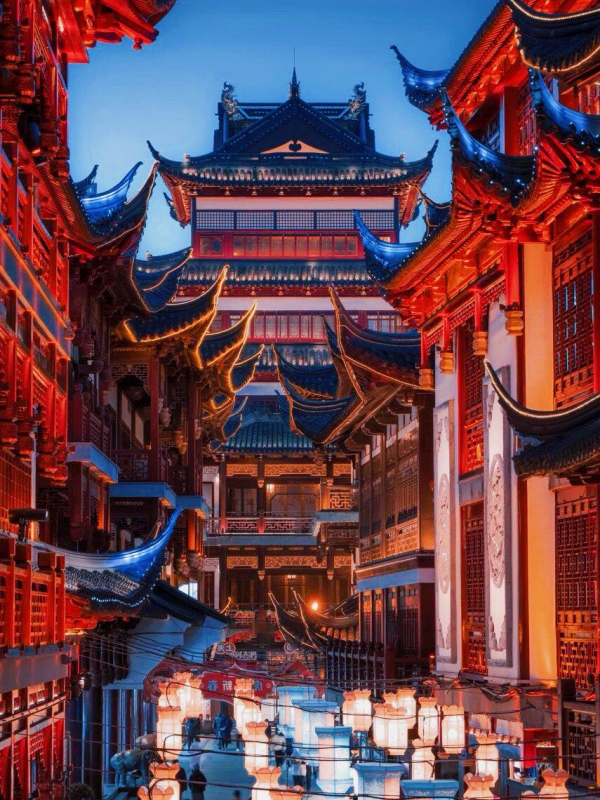
City God Temple of Shanghai
Upon stepping inside the City God Temple in Shanghai you quickly sense the difference from the glass and steel high-rises outside. Glazed roofs rise up like waves frozen mid-crash. Painted beams and pillars glow red, black from centuries of incense. The halls are not airy spaces, but they are weighty - quotidian gods with tarnished gold patinas, floors that creak under the weight of footsteps. You can still smell age, even if some of it has recently been rebuilt.
City God Temple is a gem of southern Chinese classical architecture. The north–south axis and strict bilateral symmetry show that Confucian and Taoist ideals of order and balance matter. Stroll through the gates and a sequence of courts and halls, each dedicated to a different deity and purpose, appears before you.
The Mountain Gate Area:
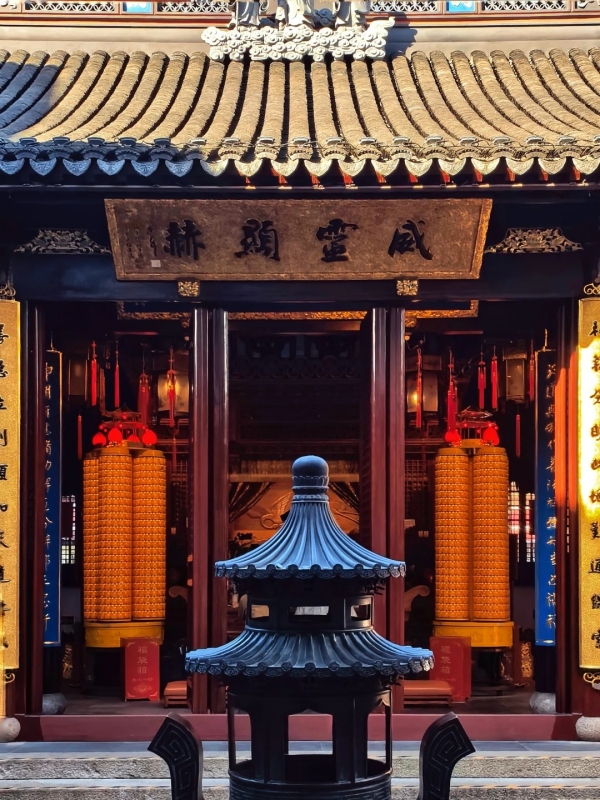
City God Temple Main Hall(with the plaque“Wei Ling Xian He”)
- Architectural Character: Great upturned eaves sweep over the dashing waves of square brackets, and peeping through them are the quaintly carved dougong brackets of the 1535 Mountain Gate — to the Chinese the entrance to that bright part of Heaven where all the visiting pilgrims of China congregate.
- Gate Inscription: The top plaque reads "威灵显赫" (Manifest Power and Prestige) and announces the City God as the judge of the city.
- The Abacus and Its Warning: The second gate features a large hanging abacus. Inscribed within it is the saying "人有千算,天则一算" Fate Is Not Calculated by Man — human machination will not thwart divine will.
The Opera Stage:
- Architectural Style: A three-tier structure of upturned eaves entirely supported by dougong brackets, with no iron iron hardware to ruin the elegance. Reserve all for show.
- Decorative Detail: Four stone columns carrying revealed dragons and phoenixes in deep relief (a special privilege for the highest octants).
- Stage Inscription: An impending plaque gilt on red and black lacquer “One Song of Peace” (一曲升平) —music could be given to the gods, below is offered the prayer.
The Auxiliary Halls:
-
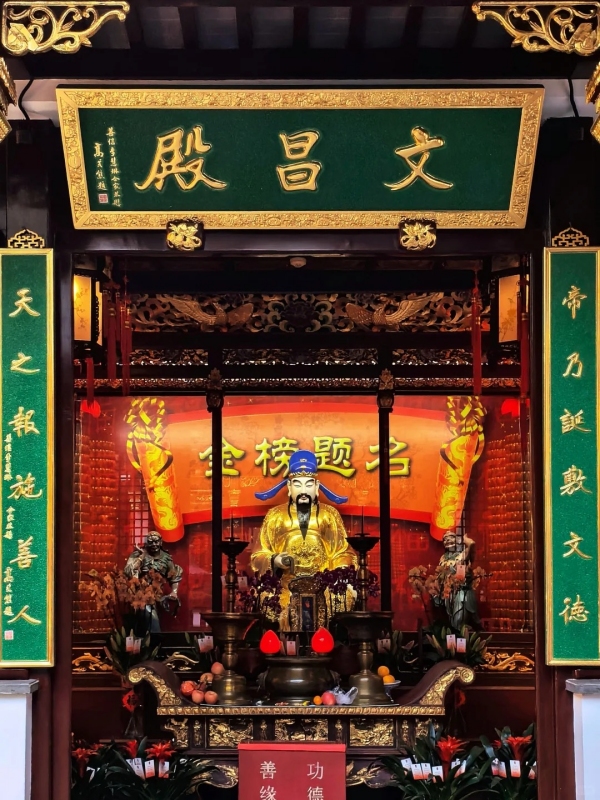

- Wenchang Hall(God of Literature Hall)
-
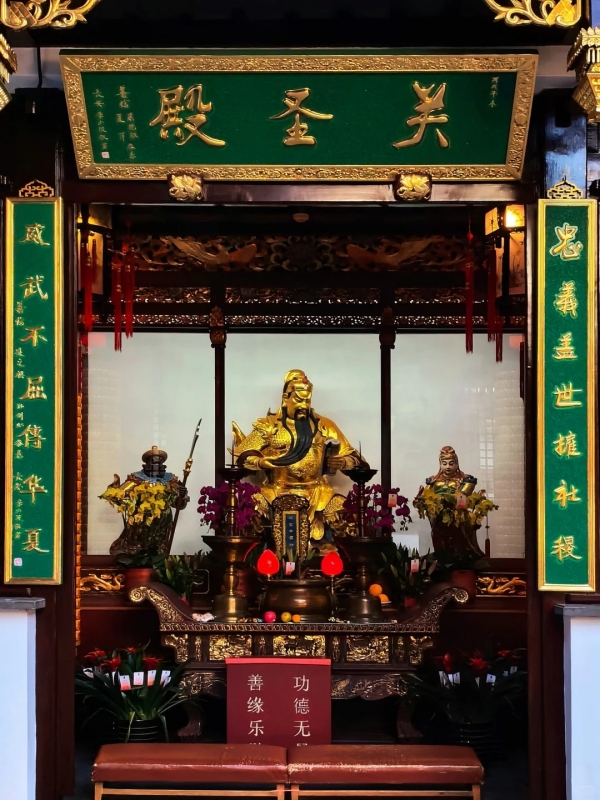
- Guansheng Hall(Hall of Lord Guan)
-
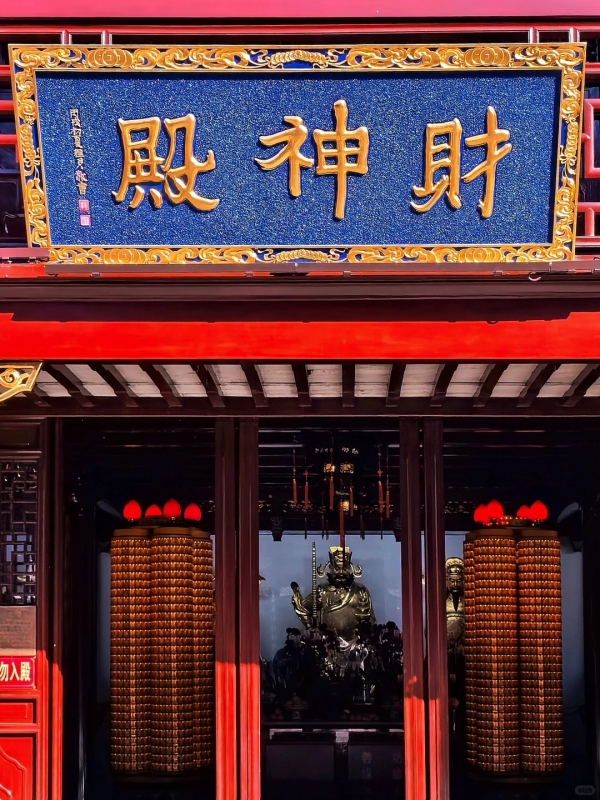
- Caishen Hall(God of Wealth Hall)
The covered galleries connecting the main halls form a series of enclosed courtyards, while the surrounding specialist halls together constitute a comprehensive framework of belief — each devoted to a specific category of earthly need:
- Wenchang Hall (文昌殿) — For Academic Achievement
- Dedicated to the Lord of Culture (文昌帝君); inscriptions like "金榜题名" draw students seeking success in examinations.
- Guansheng Hall (关圣殿) — For Loyalty and Righteousness
- Enshrining General Guan Yu (关羽), venerated as both moral exemplar and god of wealth for merchants and tradespeople.
- Cihang Hall (慈航殿) — For Compassion and Solace
- Dedicated to Guanyin; the hall's quieter, more contemplative atmosphere sets it apart from the rest of the complex.
- Fortune God Hall (财神殿) — For Prosperity and Wealth
- Devoted to the God of Wealth; typically the most lavishly decorated hall in the complex — gilded coins, bat motifs, and cloud scrolls on every surface.
- Yuan Chen Hall (元辰殿) — For Annual Fortune
- Houses sixty Taisui deity niches — one per year of the sexagenary cycle — where worshippers honor their "ruling star" for the year ahead.
- Wenchang Hall (文昌殿) — For Academic Achievement
🏮 City God Temple blends worship with everyday life — read Ancient Temples in Modern Shanghai to see how folk belief shaped the city's soul.
Traditional Prayers and Local Worship Practices
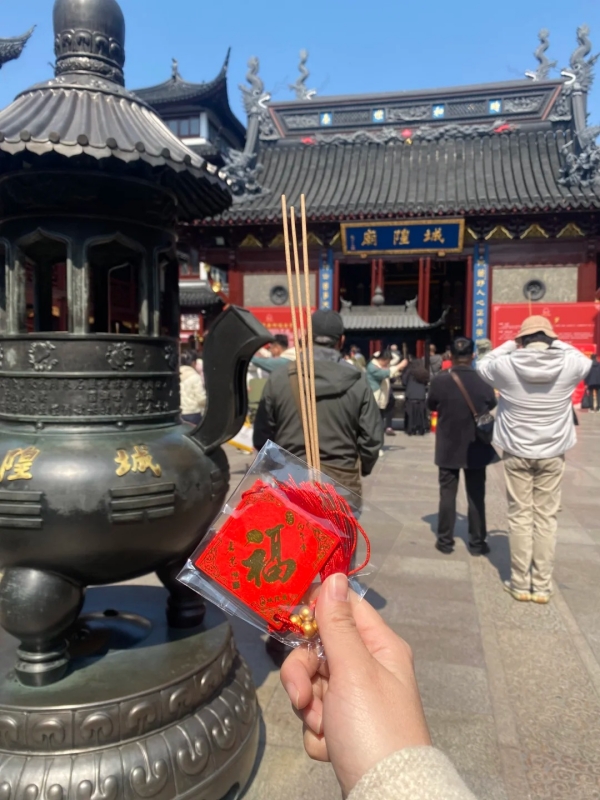
Burning Incense & Praying at the City God Temple
What sets this temple apart? It’s not staged like a museum artifact. On weekday mornings, locals shuffle through its courtyards and bow three times before each hall. But at festival time, during Chinese New Year, for example, the smoke from burning incense wafts so thickly one has to cough to breathe, bells chime above murmurs of prayer. Petitions:
- Business owners: Pray for prosperity and favorable trade at the Fortune God Hall (财神殿)
- Parents and students: Visit Wenchang Hall (文昌殿) ahead of exam season, particularly during Gaokao (May–June)
- Young couples: Light incense for peace at home and a harmonious marriage
- Worshippers in their zodiac year (本命年): Visit Yuan Chen Hall (元辰殿) to seek protection and smooth fortune during their sensitive year
Unlike some tourist temples, this one feels less artificial. The worshippers, after all, are simply continuing family traditions. Incense bundles are sold at the entrance for about ¥10–20.
🏮 Heritage Connection: The City God Temple's Ming Dynasty roots link it to a storied tradition shared by China's most revered Famous Chinese Temples.
History of City God Temple of Shanghai
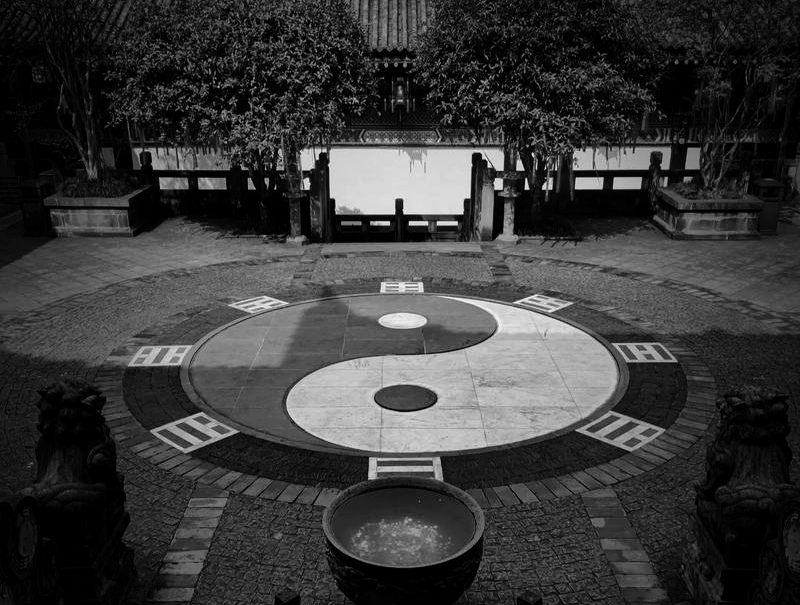
Taoist Taiji Diagram
Origins in the Ming Dynasty
The origins of the City God Temple in Shanghai date back to 1403, when the city was still a small harbor town under the Yongle Emperor. A small shrine to Han-dynasty general Huo Guang became the official City God Temple (金山庙, Jinshan Miao) of Shanghai when local magistrate Zhang Shouyue enshrined the scholar-official Qin Yubo as the city’s designated City God. This, frankly, was exceedingly good logic: a small port Shanghai or not, it rapidly became the religious and commercial center for the entire region.
Today, shades of that function still hang over its pagodas and courtyards. Merchants burned incense prior to setting sail over the river and prayed for safe and lucrative passage. Here, then, is the dual meaning of the temple being for so long adjacent to a bazaar that never fails to bloom, a rhythm that persists in modern Shanghai.
Changes During Qing and Republican Periods
When the City God Temple was first taking shape in Shanghai, it remained dedicated to Taoist ritual, but eventually became an economic engine run by local guilds. In the Republican period, businessmen came here to pray for good fortune and profit. Orienting the gods more toward worldly affairs, the opera performers at the main entrance blurred the line between worship and entertainment. Political turbulence brought damage time and again, and despite wars and fires, the temple remains irreplaceable today.
Restoration and Role in Modern Shanghai
When Shanghai's City God Temple was first getting started, it was still settling into its Taoist ritual shoes, but before long it was run as an economic engine by local guilds, and during the Republican period businessmen came to pray for good fortune and profit. Straightening out the gods for worldly affairs, the opera performers on the main entrance could barely draw the line between worship and entertainment. Political turbulence brought damage time and again, but the wars and fires couldn't destroy the place beyond repair; it's irreplaceable today.
☯️ Discover More Sacred Sites: As you explore how this temple integrated Taoist rituals into the bustling life of Shanghai, you can dive deeper into the spiritual roots and major sanctuaries of this ancient faith in our guide to the Holy Cities of Daoism.
Night Market of the Chenghuang Miao
Lights, Architecture & Atmosphere
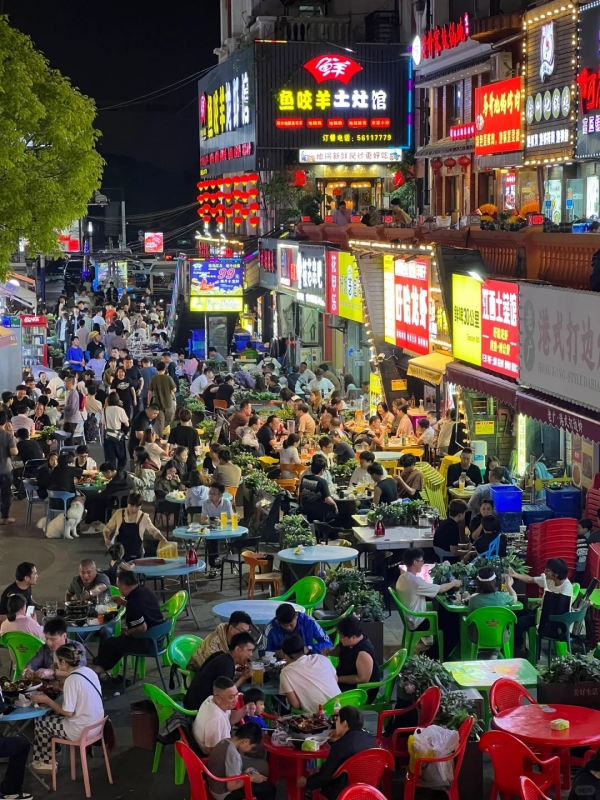
Night Market of the Chenghuang Miao
As the lights come up across the the curved eaves and gilded brackets, the effect is genuinely spectacular. The Nine-Turn Bridge becomes a mirror for a thousand lanterns. The classical rooflines frame the distant glow of Pudong’s towers — two Shanghais, six hundred years apart, visible in the same glance. At 19:30 the temple’s main hall glows gold across the pond; each 10-minute light show adds a dreamy mythological layer. The contrast is, in fact, part of the magic: ¥8 street snacks eaten under golden imperial architecture, amid laughter and the smell of sizzling oil.
| Category | Details |
|---|---|
| ⏰ Night Market Hours | 18:00–23:00 (some stalls until midnight) |
| 💡 Lanterns On | ~18:30 nightly (peak glow 19:00–22:00) |
| 🎟️ Entry | Free (surrounding streets and snack areas) |
| 💰 Average Spend | ¥50–100 per person on food |
| 📸 Best Photo Time | 18:30–19:30 (lanterns on, crowds manageable) |
→ Planning to explore more of Shanghai after dark? See our full guide: Night Markets in Shanghai
Must-Try Snacks at the Night Market
-
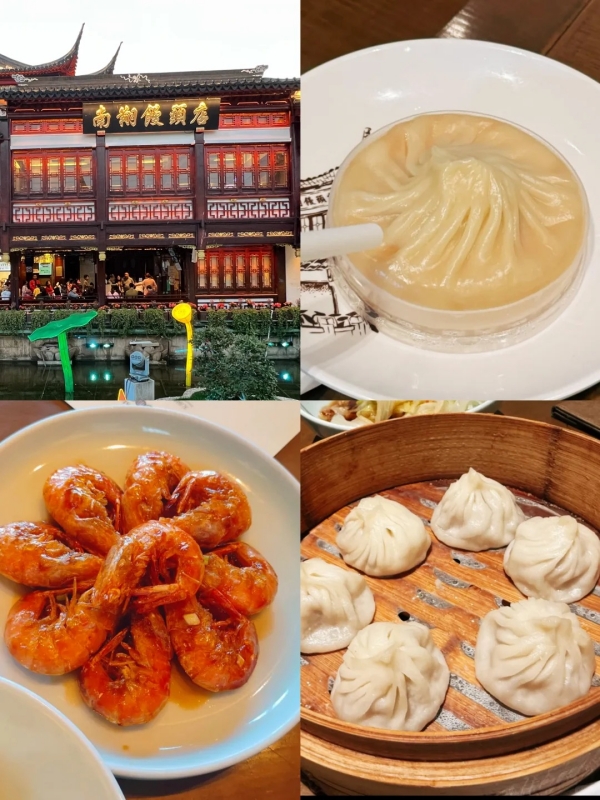
- Nanxiang Steamed Bun Restaurant
-
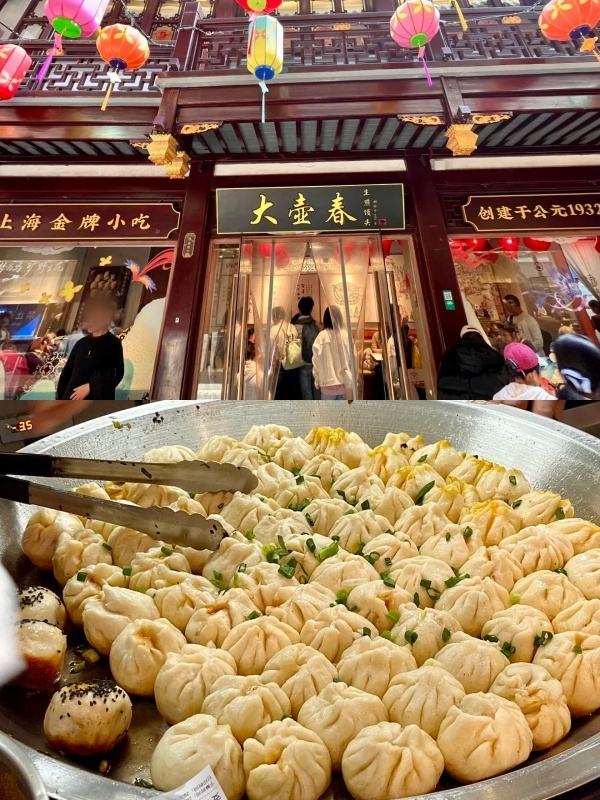
- Da Hu Chun Pan-Fried Buns
-
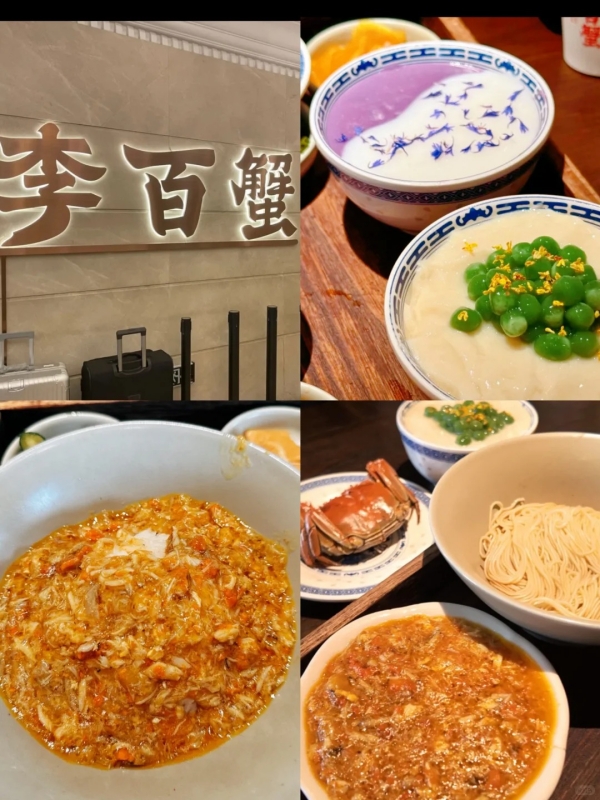
- Li Bai Xie Crab Noodles
- Nanxiang Steamed Bun Restaurant (南翔馒头店)
- Crab roe xiaolongbao at ¥42 per basket
- Queue at ground level or pay slightly more for second-floor table service with Nine-Turn Bridge views
- Da Hu Chun Pan-Fried Buns (大壶春生煎): Thick-bottomed, crispy-shelled, juicy pork at ¥6 for 4 pieces — order with the signature curried beef broth for the full old-Shanghai experience
- Li Bai Xie Crab Noodles (李百蟹蟹黄面): A hidden gem with iconic views. Generous crab roe at a fair price. Savor photogenic desserts paired with the Oriental Pearl Tower vista
- Guangdong Rice Rolls (广东肠粉): Fresh-made to order, silky-smooth rice rolls with fragrant batter — one of the most-queued stalls on the snack street
- Cream Five-Spice Beans (奶油五香豆): The city's most famous edible souvenir — salt-frosted, five-spice dusted, satisfyingly firm. Buy a bag to eat as you walk
- Nanxiang Steamed Bun Restaurant (南翔馒头店)
Popular Night Experiences Beyond Food Stalls
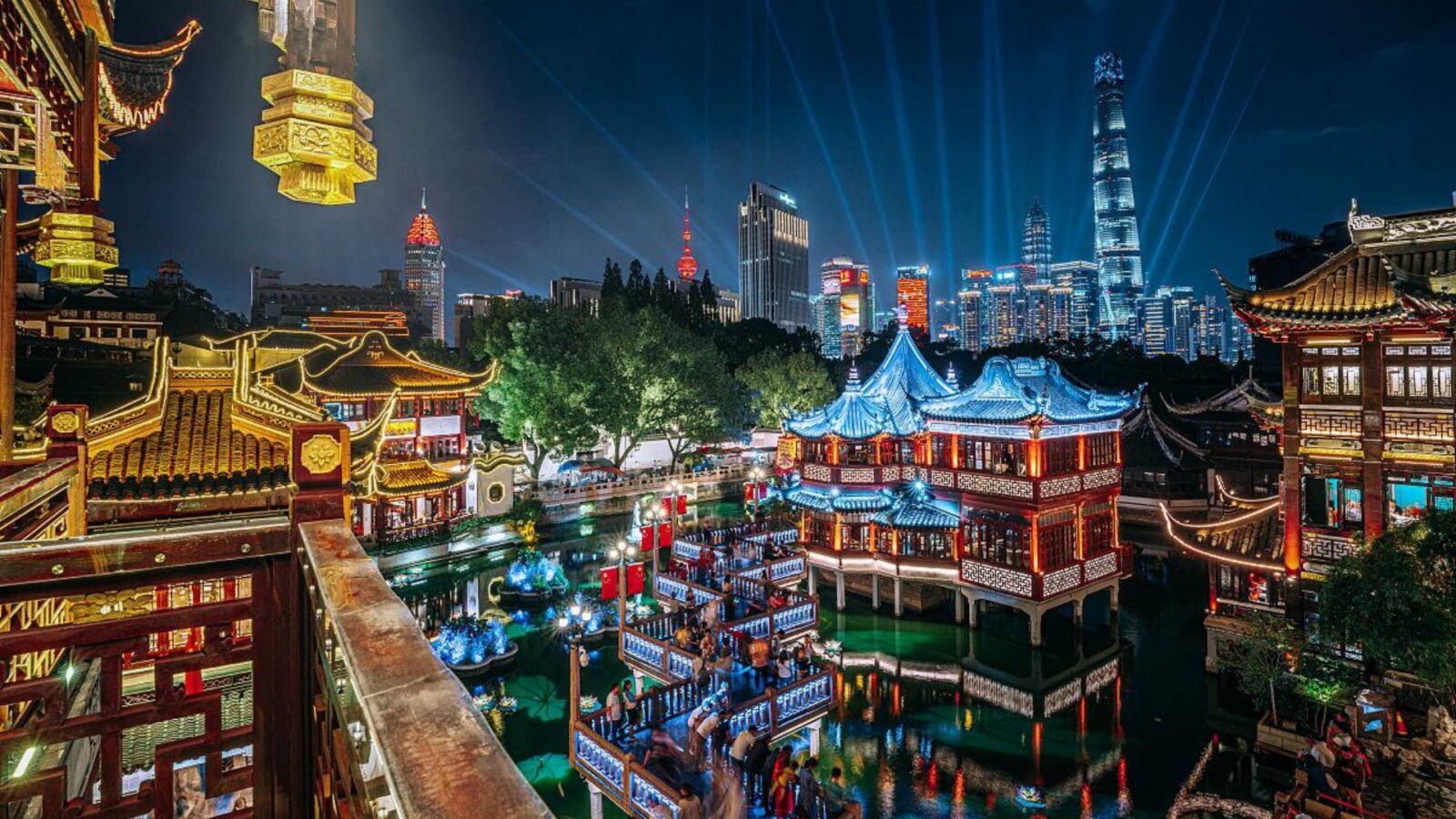
Nine-Turn Bridge of City God Temple
- Nine-Turn Bridge Photography
- Best shooting window: 18:30–19:30 — give the lights 15 minutes to reach full brightness
- Position yourself with the Mid-Lake Pavilion and lantern-lit corridors as backdrop
- Mid-Lake Pavilion Teahouse (湖心亭): Shanghai's oldest teahouse, sitting in the middle of the bridge — order jasmine tea and watch the night crowds flow past below
- Shan Hai Jing Light Show: Projected nightly onto the Yuyuan Bazaar walls — each 10-minute show brings mythical beasts from the Classic of Mountains and Seas (山海经) to life, free to watch from the square
- Market Street Wandering: The snack street opposite Yuyuan Bazaar stays lively until midnight — the further from the main entrance, the more genuine the atmosphere
- Nine-Turn Bridge Photography
Night Market Timing & Practical Tips
- Recommended Route
- Before 17:00 — Visit the temple interior and Yu Garden while crowds are manageable
- 18:30 — Enter Yuyuan Bazaar as lanterns come on; ideal photography window
- 19:00–20:00 — Cross to the snack street; lively but not yet at peak
- After 21:30 — Crowds thin; some stalls run until midnight for a quieter final wander
- Getting Here: Metro Line 10 or Line 14 to Yuyuan Station (豫园站), Exit 7 — closest to the snack street. Driving is strongly discouraged.
- Payment: Alipay (支付宝) and WeChat Pay (微信支付) accepted at most stalls. Carry ¥100–200 cash for cash-only vendors.
- Language Tip: At stalls, point and say "zhège, yī fèn" (这个,一份 — "this one, one portion"). For spice level: "wēi là" (微辣) for mild, "bù là" (不辣) for no spice.
- Footwear: The entire area is cobblestones and stone steps — comfortable flat shoes are essential.
- Recommended Route
🌆 Plan Your Shanghai Itinerary: While experiencing the temple's night markets and historic architecture, check out our time-saving guide to see how to fit the rest of the city's top landmarks into your trip: How Many Days in Shanghai.
Travel Map for the City God Temple
Metro Stations and Walking Directions
Public transport is the easiest way. Yuyuan Garden Station (豫园站) is served by Line 10 and Line 14 and leave through Exit 3; it’s a 5–8 minute walk down Fuyou Road (福佑路) from there, and you can expect souvenir stalls upon your arrival and the smell of fried dumplings in the street corners nearby. A solo metro ticket ticket is ¥3–5 and can be paid for by Alipay, WeChat Pay or a contactless metro card. Otherwise a taxi/drop off by Didi from the Bund would take 15 minutes and cost ¥25–35.
Notable Historic Attractions Near the Temple
-
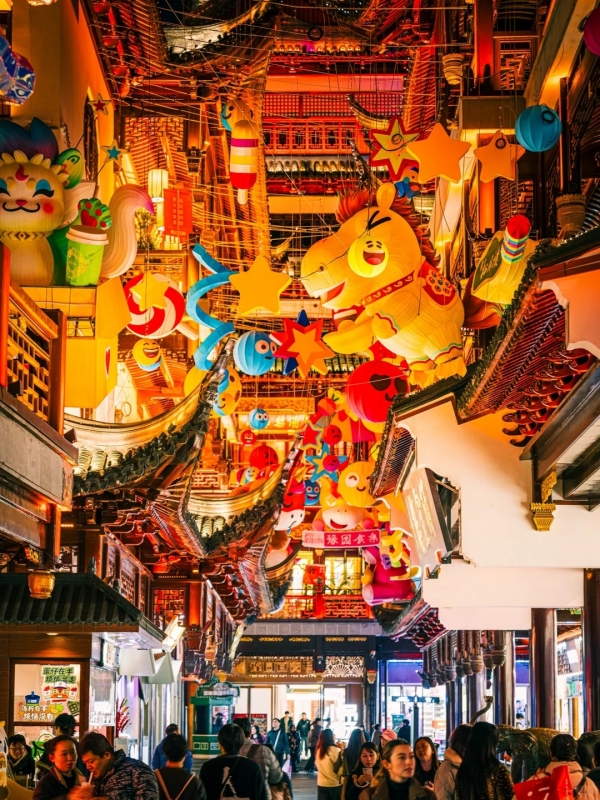
- Yu Garden Lantern Festival
-
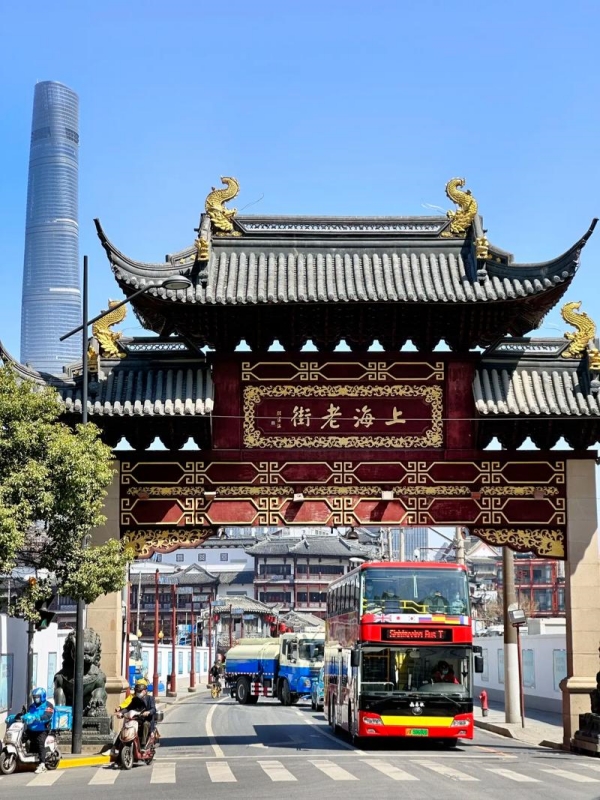
- Shanghai Old Street
-
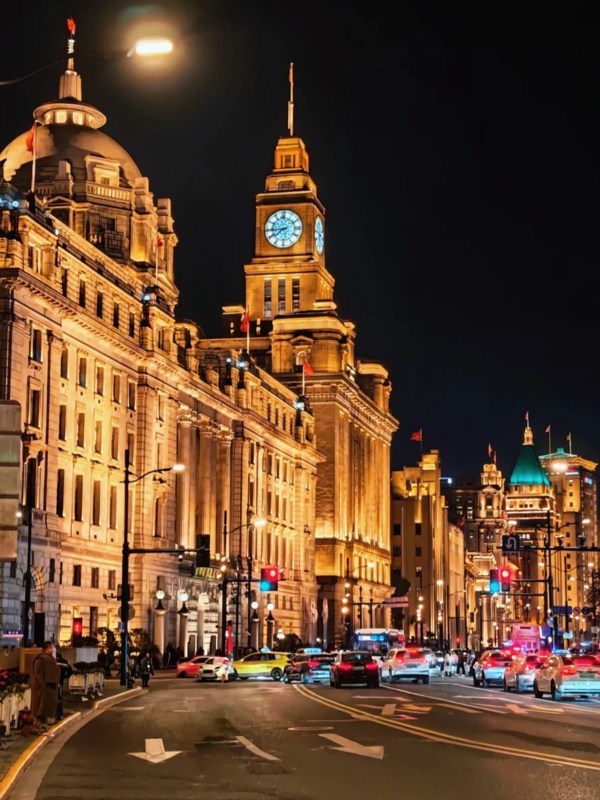
- The Bund
- Yu Garden (豫园) — 2 min walk, ¥30–40 ticket
- The most celebrated classical Chinese garden in Shanghai's downtown
- Don't miss the Exquisite Jade Rock and the Dragon Walls; note that the garden closes on Mondays
- Shanghai Old Street (上海老街) — 5 min walk, free
- Lined with tea shops, calligraphy sellers, and traditional craft stalls
- Best place to find authentic souvenirs at reasonable prices
- The Bund (外滩) — 20 min walk or 1 metro stop, free
- Shanghai's most iconic waterfront; ideal for an evening walk after the temple
- Views of the Pudong skyline across the Huangpu River (黄浦江)
- Yuyuan Bazaar (豫园商城) — on-site, free to enter
- Hundreds of shops in restored Qing-style buildings
- For genuine gifts, seek out Shen Da Cheng (沈大成); avoid the flashy tourist candy stalls near the main entrance
- Yu Garden (豫园) — 2 min walk, ¥30–40 ticket
📍 Planning a walk nearby? Don't miss our full story on Yu Garden in Shanghai.
Recommended Route of City God Temple of Shanghai
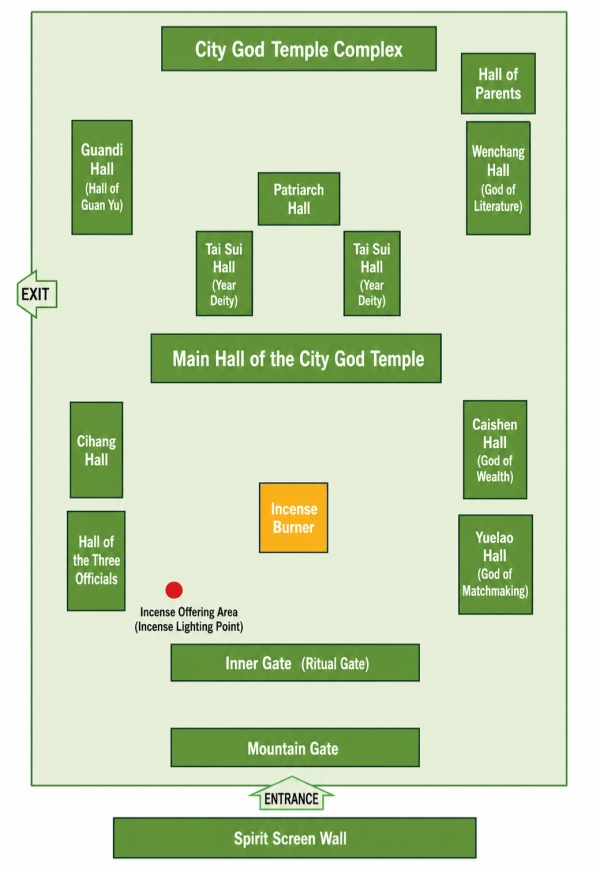
The Map of the Inner Halls of Shanghai City God Temple
Half-Day Itinerary Combining Yu Garden and Bazaar
Enjoying the City God Temple of Shanghai. Do leave at least a half day free to enjoy this. Arrive around nine when the courtyards themselves are still restful and the incense drift lightly upwards. Go slowly through the halls, watch the people as they bow three times or stop for a moment to catch the peal of the bells in your ears. An hour inside and you’ll be in the swing.
It’s a five-minute walk from the temple to Yu Garden (豫园; opens 8:30am; c¥40), best visited early in the day when the ponds and rockeries are still tranquil, before big tour groups arrive. Afterward, head back to the bazaar for lunch. You can taste a basket of Nanxiang Xiaolongbao for c¥25-42, or find zongzi (粽子), the are sticky rice dumplings wrapped in bamboo leaves and steamed for c¥10-15. By midafternoon, half a day is gone but you have seen much.
Suggested Stops for First-Time Visitors
- Temple Interior
- Enter from the Mountain Gate (山门); allow 40–45 minutes
- Pause at the Main Hall, then proceed through Yuan Chen Hall and Fortune God Hall
- Nine-Turn Bridge (九曲桥): Cross to the Mid-Lake Pavilion (湖心亭) for a tea break and views across the lotus pond
- Yu Garden (豫园): Enter from the west gate directly adjacent to the temple; allow 1–1.5 hours for the rockeries, pavilions, and Dragon Walls
- Snack Street and Bazaar: Fuel up on xiaolongbao and five-spice beans, then browse the Qing-style shopping buildings for souvenirs
- Stay for the Night Market (Optional): If timing allows, stay through the 18:30 lantern lighting and experience the evening transformation described above
- Temple Interior
Best Visiting Time for Shanghai's City God Temple
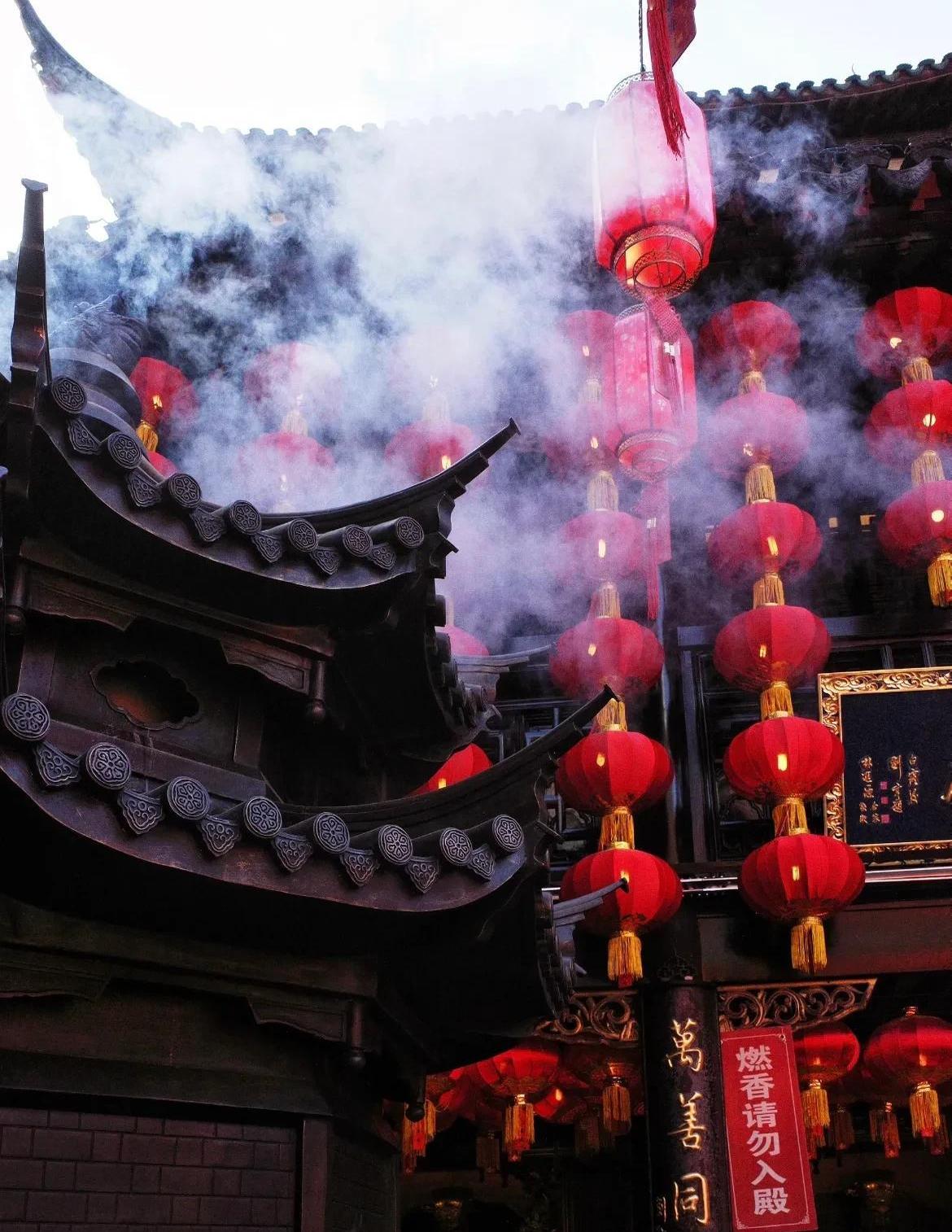
Shanghai City God Temple during Spring Festival
Best Weather Conditions and Ideal Travel Months
If you’re planning a visit to the City God Temple of Shanghai, spring and autumn are by far the most rewarding seasons to go. March to May sees soft fresh breezes and glinting skies, less humidity in the air, and yu garden espouses flowers. September to November indulges you with bracing warm days and sky-blue heavens, ideal for leisurely sauntering. At either season you can enjoy the temple without excessive heat summer dust and glare, or the crowd of high season visitors.
Summer, however, is oppressive — the bazaar is lolling and cloying by noon, and an early morning call is much more enjoyable. Winter is calm, the temple seems more impressive as its spires pierce the grey skies, and the dumplings are more delicious when the chilly wind is blowing through your clothes. The same thing is varied from point of view in every season.
Traditional Festivals and Annual Local Events
- Chinese New Year (Jan/Feb)
- Midnight pilgrimages on New Year's Eve; red lanterns and incense-thick air fill every corner
- Enormously crowded but deeply atmospheric — the most festive the temple ever gets
- Yuyuan Lantern Festival (Feb/Mar)
- Over 1,000 riddle-lanterns in fish, dragon, and contemporary shapes fill the bazaar
- Night food stalls and drummers in the dark alleys — book hotels early for this one
- Qingming Festival (April): A major processional ceremony in which the City God's statue is carried through surrounding streets in an elaborate traditional ritual
- Ghost Festival, 7th Lunar Month (Aug/Sep): Offerings for ancestors; one of the three great annual processions associated with the City God Temple
- 10th Lunar Month, Day 1 (Oct/Nov): The third major processional — traditional performers and devout worshippers fill the surrounding streets
- Chinese New Year (Jan/Feb)
How to Reach the Chenghuang Miao
By Metro
Both Line 10 and Line 14 stop at Yuyuan Garden Station (豫园站). The metro is the fastest option on weekends and holidays, when traffic near the old town can be severe, and you’ll find the longest queue at the station during the 6:00–11:00 AM rush — arriving mid-morning means a much lighter journey.
- Line 10 / Line 14: Alight at Yuyuan Station (豫园站)
- Exit 3: Leads toward the temple main entrance (~5–8 min walk along Fuyou Road)
- Exit 7: Closer to the Yuyuan Bazaar and evening snack street — best for night market visits
- Fare: ¥3–5 within the city; pay via Alipay, WeChat Pay, or a contactless metro card
By Bus
- Routes 932, 267: Alight at Chenghuangmiao Station (城隍庙站)
- Routes 11, 26, 64, 736, 805, 920, 926, 930: Alight at Xinbeimen Station (新北门站), then walk south approximately 10 minutes
- City Sightseeing Bus Lines 1 and 3: Stop directly at the temple area
By Taxi / Didi
The trip from the Bund takes about 15 minutes and will set you back ¥25–35 depending on traffic. Show the driver the Chinese address of the temple—城隍庙 or 方浜中路249号—to cut out the confusion. If you must, do not even think of driving your own car—there’s nowhere to park near the old town, particularly on weekends.
Cultural Etiquette and Practical Visitor Tips
- Threshold Etiquette: Do not step on the high wooden thresholds — step over them. Men traditionally step over with the left foot first, women with the right foot first.
- Volume: Keep voices low inside the halls — this is an active place of worship, not a museum exhibition.
- Crowds: For photos with fewer people, arrive right at opening (8:30 AM) or after 18:00 for the evening atmosphere.
- Shopping Smart
- Those brightly colored "Shanghai specialty" candies near main stalls are often overpriced and generic
- For authentic food gifts, seek out Shen Da Cheng (沈大成) or Lao Da Fang (老大房)
- Payment: Keep your phone ready for Alipay or WeChat Pay QR codes — most vendors prefer digital payment. Carry ¥100–200 cash as backup.
- Valuables: Be mindful of your phone and wallet in the crowds, especially on the Nine-Turn Bridge.
- Footwear: The area is almost entirely cobblestones and stepped alleyways — comfortable, flat walking shoes are strongly recommended.
- Evening Timing: After a day of wandering through centuries of history, past incense smoke and sizzling dumplings, watching the lanterns reflect off the Nine-Turn Bridge — you will understand why this place is unmissable.
FAQs about City God Temple of Shanghai (2026)
Q: Is the City God Temple of Shanghai free to enter?
With regards to the city god temple of shanghai, there is a ¥10 incense donation fee at the gate for the inner temple halls; areas around the surrounds, the Yuyuan Bazaar, and the Nine-Turn Bridge area are free. Yu Garden next door has its own ticket fee of ¥30-40. Plan your budget in advance and you won’t be left disappointed at the gate.
Q: How long should I spend at the City God Temple?
You can spend a good 40-60 minutes just in the city god temple itself, and for most first time visitors that will be preceded or followed by a visit to Yu Garden, the bazaar, and maybe a meal – a half day works out to about 3-4 hours is typical. If you intend to stay on for a taste of the night market, plan an entire afternoon and evening for the most comprehensive experience.
Q: What is the best way to pay at the night market?
At the night market surrounding the city god temple of shanghai, almost all the stalls accept Alipay (支付宝) and WeChat Pay (微信支付). Keep a little cash — ¥100–200 — for the cash-only vendors you might still meet. Foreign tourists can link overseas cards to Alipay directly; check the app setup instructions closest to your visit.
Q: What is the difference between the City God Temple and Yu Garden?
The city god temple of shanghai (Chenghuang Miao) is a working complex of Taoist religious halls, surrounded by bazaars and streets selling snacks. It is right next door to Yu Garden (豫园) a classical private garden built in the Ming Dynasty. Most visitors combine the two into half a day’s visit.
Q: When do the night market lanterns come on?
Across the city god temple of shanghai complex and Yuyuan Bazaar, the lanterns come on around 18:30 each night and reach full brightness by 19:00. The best time window is 18:30-19:30, the lanterns are fully lit but before people start arriving in force. Arrive at 18:30 sharp and you’ll have good light and not too many people on foot.
Q: Can I light incense inside the temple?
Yes, visitors are welcome to light incense inside the city god temple of shanghai. Incense bundles are sold at the entrance for approximately ¥10–20. The practice is not compulsory — many visitors treat it simply as a gesture of respect. However, be careful about smoke in its enclosed halls and use the direction of temple staff at all times.
Q: Is the City God Temple suitable for children?
City god temple of shanghai is generally ok for children, but the narrow paths make stroller pushing challenging in the extremely crowded areas. The night market has a lot that kids love because of the senses overload. Just go in the morning on a weekday to avoid the throngs of humanity. Do watch your young kids by Nine-Turn Bridge!
Q: What should I wear when visiting the temple?
There is no strict dress code at the city god temple of shanghai, though as an active Taoist site, respectful modest attire is preferred. Come prepared to walk, as its surrounds are laid out of cobblestones and stone steps, so avoid anything with precarious heels or sandals that do not grip.
Q: Are there guided tours available at the City God Temple?
Official guided tours of the city god temple of Shanghai itself can sometimes feel a bit… scanty — most of us are left to wander about on our own. Still, most of the longtime purveyors of Shanghai walking tours include the temple and Yuyuan Bazaar on their itineraries for the old town. For a richer experience, a private licensed tour guide who you hire in advance is the best way to get the most of the temple, which offers deep historical and symbolic layers to explore.
Q: What are the most important halls inside the temple?
The pulsating heart at the’city god temple of shanghai is the City God Hall (城隍殿) dedicated to worship of Qin Yubo. For practical purposes, the most popular halls are the Fortune God Hall (财神殿) and Wenchang Hall (文昌殿); and if you are visiting during your Chinese zodiac year, the Yuan Chen Hall (元辰殿) will intrigue you.