Holy Cities of Daoism
Daoism has no single "holy city" the way Jerusalem does for Judaism or Mecca for Islam. The religion's most sacred places form a ring of eleven sites that have anchored Chinese spiritual life for over two thousand years. Five are the Five Great Mountains, peaks recognized by Chinese emperors for their cosmic role. Four more are the Four Famous Daoist Mountains, each tied to a specific Daoist school. And two — Louguan Tai in Shaanxi and Heming Shan in Sichuan — are the literal cradle cities of the religion, where the Daodejing was first transmitted and where the first organized Daoist community was founded. This guide walks through all eleven holy cities of Daoism in the order a foreign visitor needs to plan a pilgrimage.
Quick Facts
What "Holy Cities" Mean in Daoism
Sacred Mountains as Holy Cities
In Daoist practice the mountain peak functions as a city. A complete monastery houses an abbot, resident monks, and lay workers, while seasonal festivals drive a pilgrimage economy that has run for centuries. The Five Great Mountains date to imperial recognition in the Zhou dynasty (1046–256 BC); the Four Famous Daoist Mountains are explicitly religious, each tied to a deity or school. Peaks were understood to sit closest to heaven, the natural training ground for those seeking transcendence. Among the holy cities of Daoism, a single summit can carry twenty or more working temples, an arrangement with no real parallel in Western religion.
Temple Cities and Cradles of the Faith
Two non-mountain sites — Louguan Tai in Shaanxi and Heming Shan in Sichuan — function as the founding cities within the holy cities of Daoism. Louguan Tai is the place where Laozi reportedly dictated the Daodejing to the guardian Yin Xi before departing for the west. Heming Shan is where Zhang Daoling founded the first organized Daoist community, the Way of the Celestial Masters, in 142 CE, a lineage whose ordained priests still officiate in Chinese temples today. Both sites sit at lower elevations than the sacred peaks and welcome visitors on a half-day trip from Xi'an or Chengdu.
The Five Sacred Mountains (五岳) of Daoism
Mount Tai (泰山) — The Holiest Peak
Mount Tai
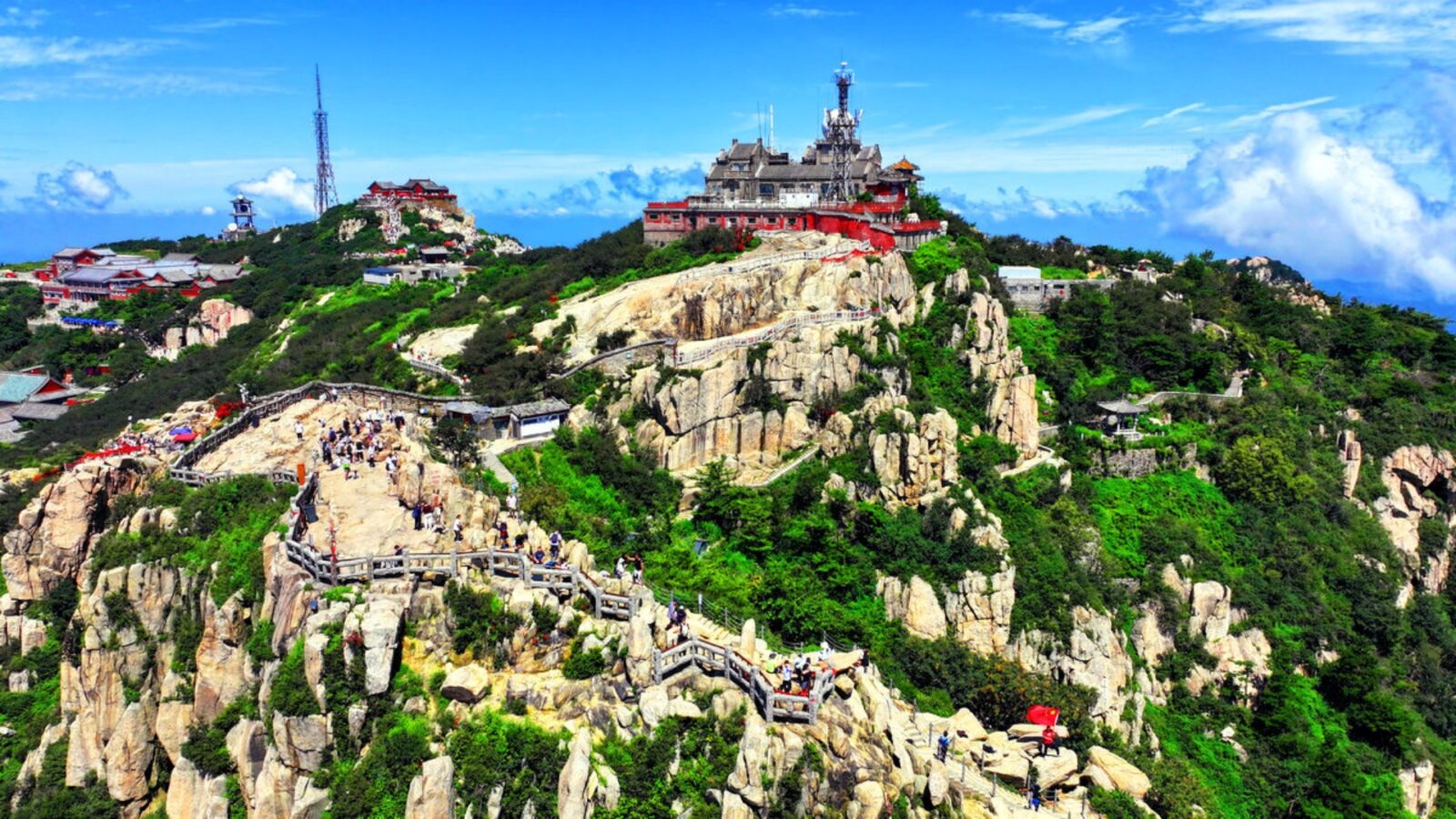
Mount Tai is the senior peak of the holy cities of Daoism. It rises 1,545 m above Tai'an in Shandong and has served as China's holiest summit for three thousand years. Twenty-two temples still survive on its slopes, and UNESCO inscribed the mountain in 1987. Entrance runs from $22 (¥155), and cable cars shorten the climb up the central pilgrimage route. Pilgrims traditionally approach from the east; the Red Gate and Mid-Heaven Gate are the most-used paths today.
Mount Hua (华山) — The Western Sacred Mountain
Mount Hua
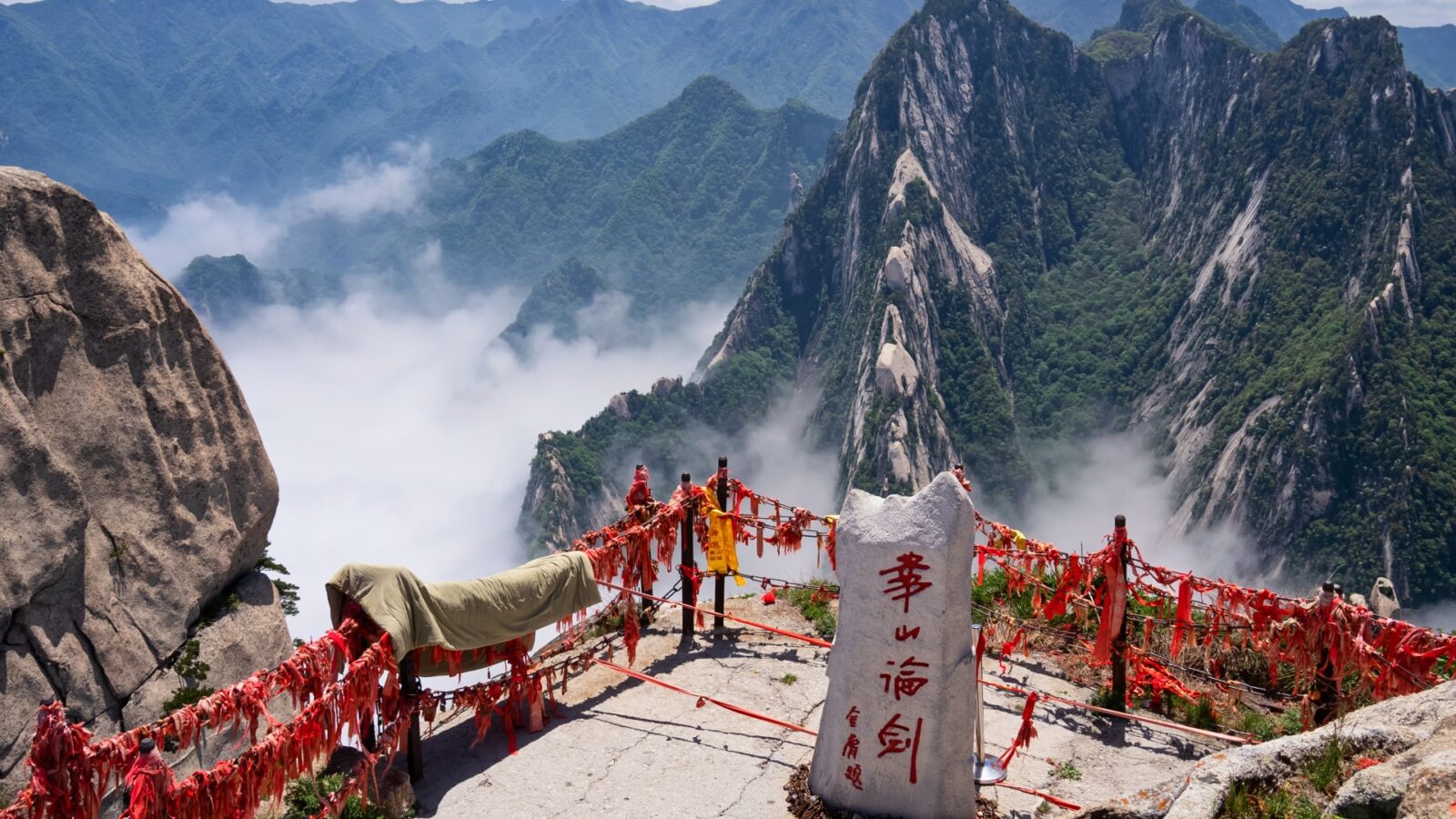
Mount Hua reaches 2,155 m in Shaanxi, just outside Huayin, and is the steepest of the Five Great Mountains. The Plank Walk, a board-path bolted to a vertical cliff near the summit, draws thrill-seekers from across China. Entrance runs from $20 (¥160); the return cable car is about $28 (¥200). The eastern ascent is so steep that older visitors usually take the cable car to the North Peak first.
Mount Heng North (恒山) — The Northern Sacred Mountain
Mount Heng North
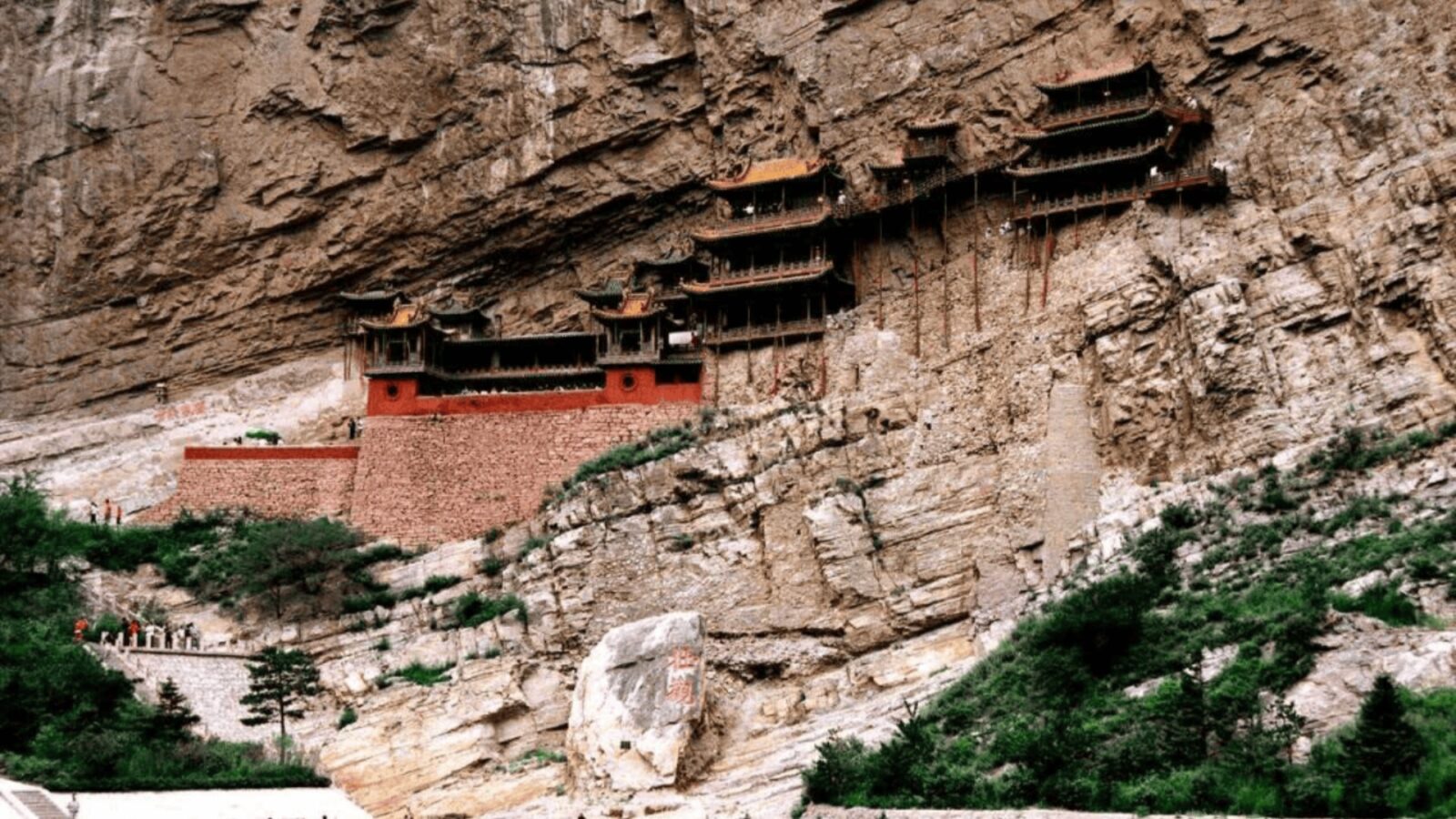
Mount Heng North stands 2,016 m in Shanxi's Hunyuan County. The nearby Hanging Temple (Xuankong Si) is a working monastery built into a cliff face about 75 m above the valley floor. The mountain itself sees a fraction of the crowds of Tai or Hua. Entrance runs from $11 (¥80), and the site usually pairs with a Datong day-trip from Beijing.
Mount Heng South (衡山) — The Southern Sacred Mountain
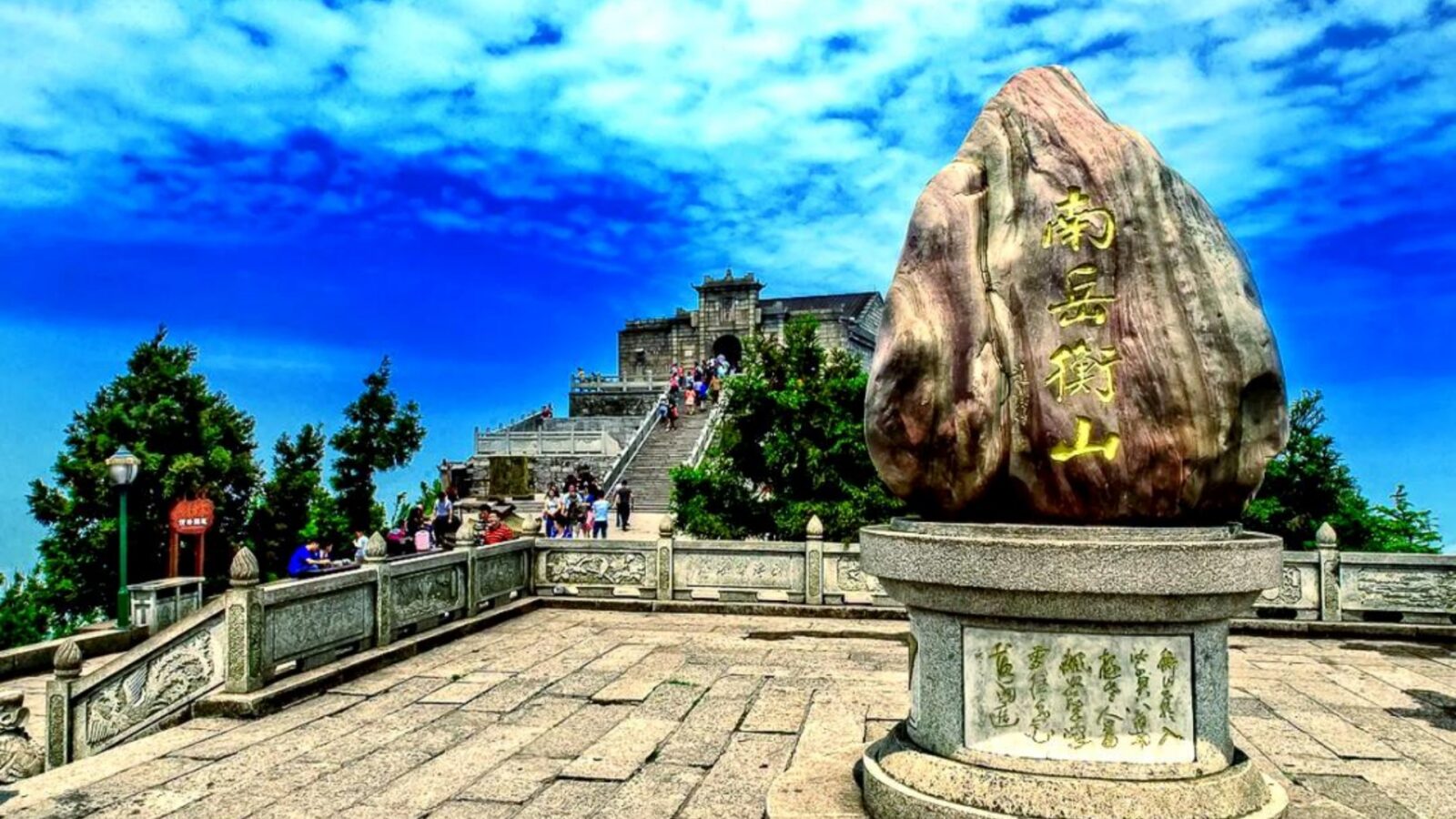
Mount Heng South
Mount Heng South rises 1,300 m in Hunan near Hengyang. The Nanyue Grand Temple at the foot ranks among the largest temple complexes in southern China, with one roofed hall over 80 m long. Entrance runs from $14 (¥95). In winter the summit often carries rime ice that closes the higher trails.
Mount Song (嵩山) — The Central Sacred Mountain
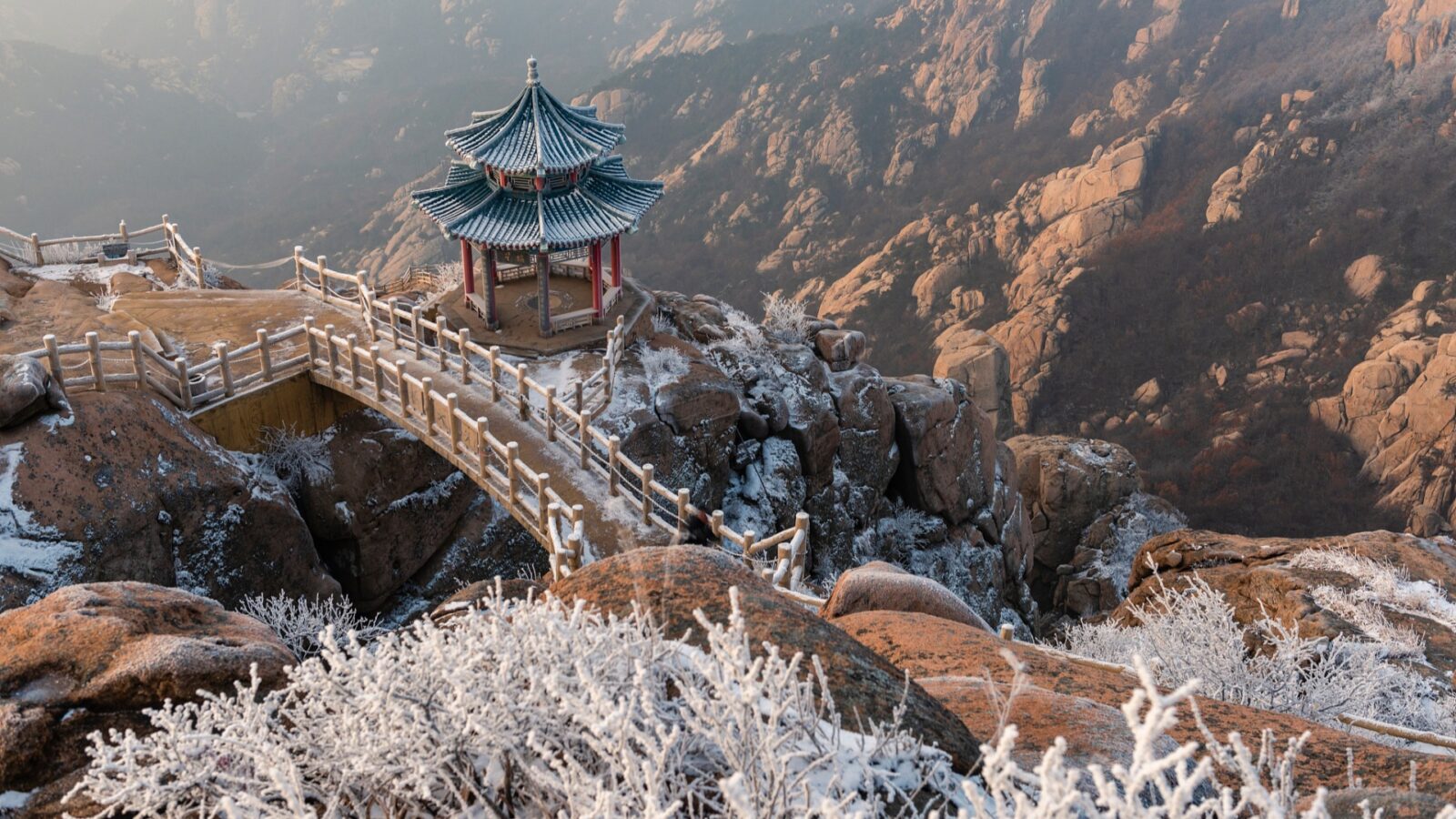
Mount Song
Mount Song, the central peak, sits in Dengfeng, Henan, and hosts both the famous Shaolin Monastery and the Daoist Zhongyue Temple. UNESCO inscribed it in 2010 as part of the "Historic Monuments of Dengfeng." Entrance runs from $10 (¥70); Shaolin tickets are sold separately at its own gate. The two faiths share a mountain but use separate entrances.
The Four Famous Daoist Mountains (四大道教名山)
Wudang Shan (武当山) — Mountain of the Perfect Warrior
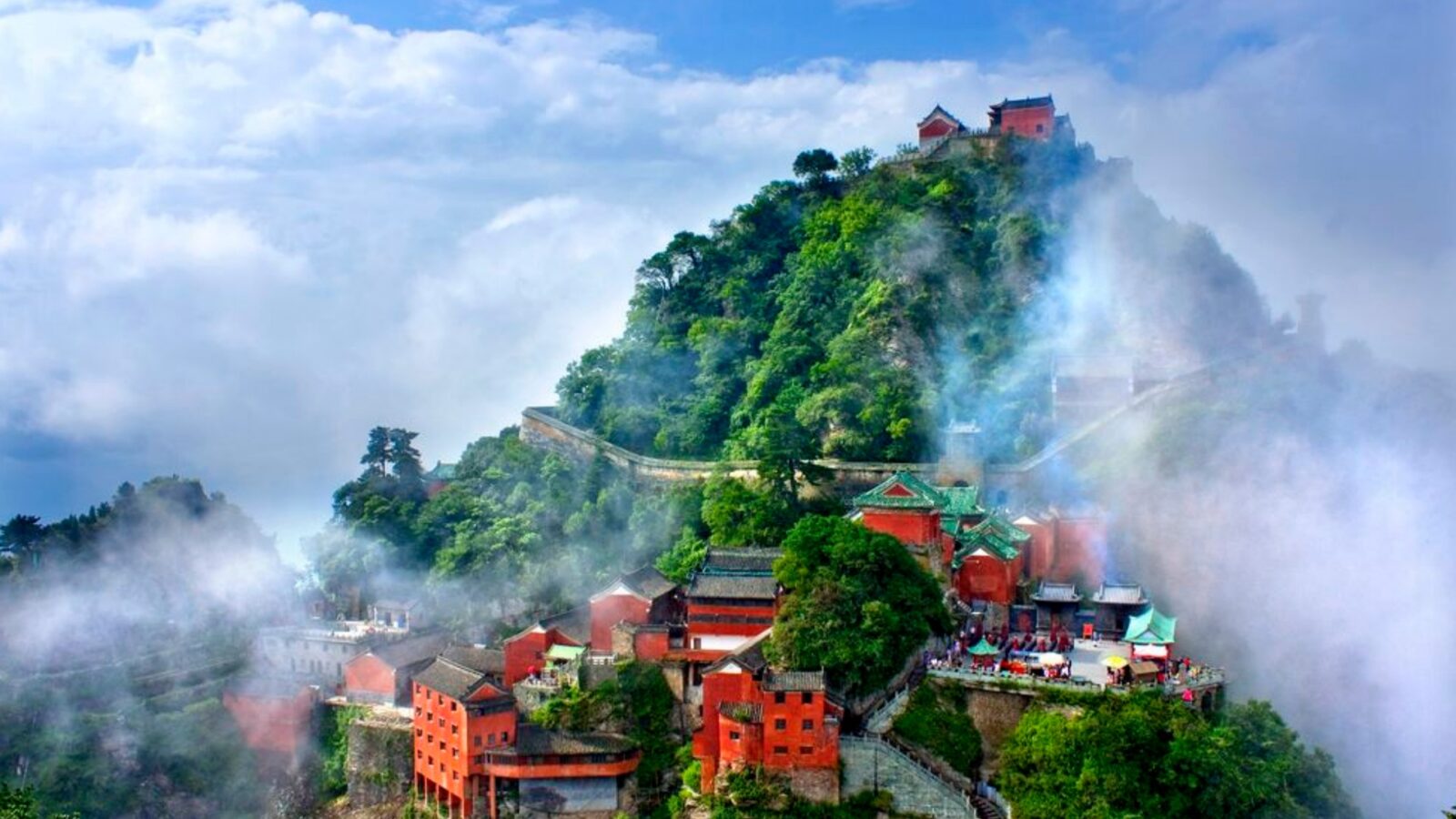
Wudang Shan
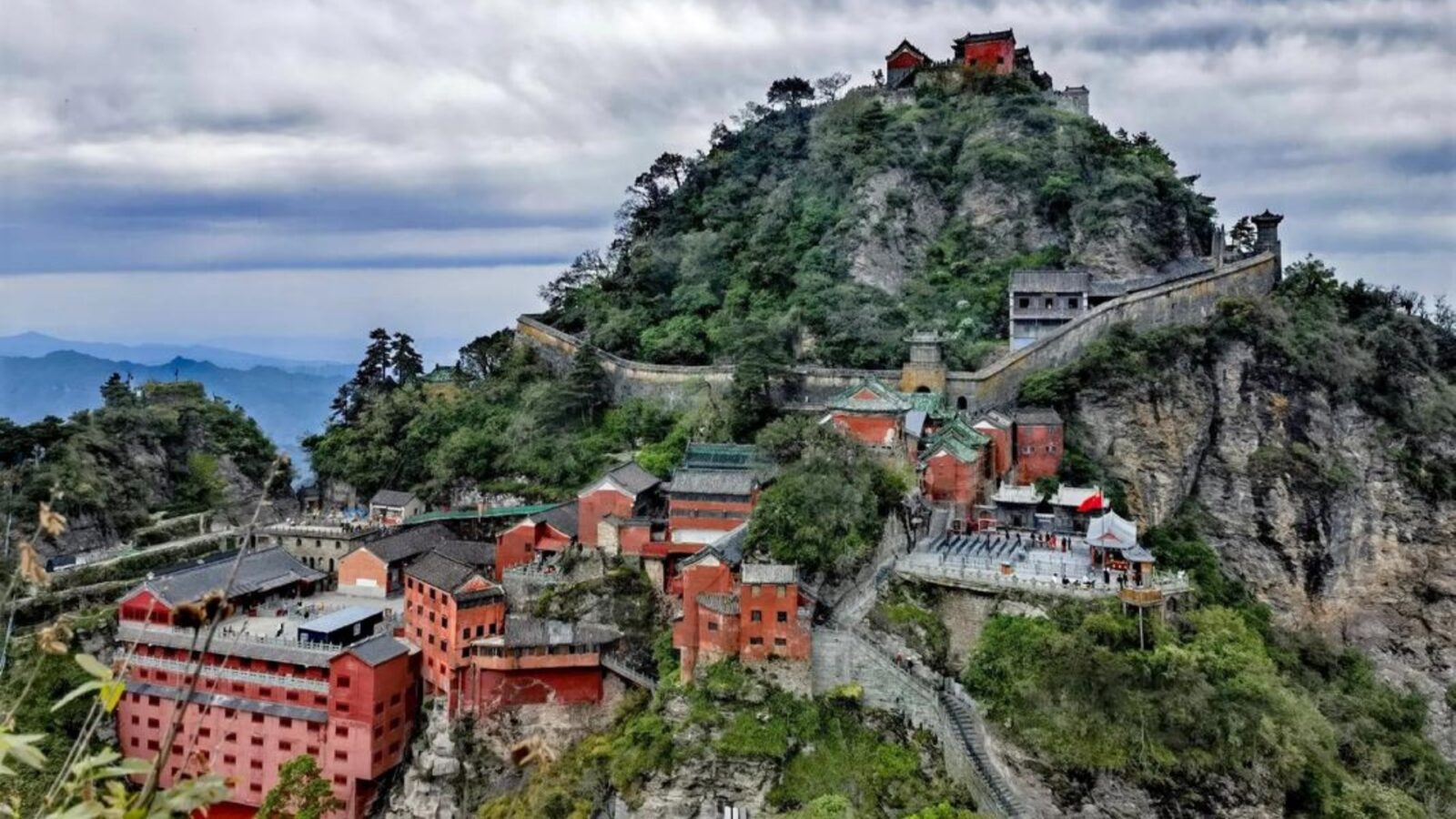
Wudang Shan, in Hubei near Shiyan, rises 1,612 m and is sacred to Zhenwu, the Perfect Warrior deity. It is the most-visited of the four explicitly religious holy cities of Daoism. The Golden Summit temple complex is reached by cable car; UNESCO inscribed it in 1994. Entrance runs from $28 (¥200); the return cable car is about $22 (¥160). The mountain is the home of the wudang martial-arts lineage that shaped tai chi across China.
Qingcheng Shan (青城山) — Birthplace of Celestial Masters Daoism
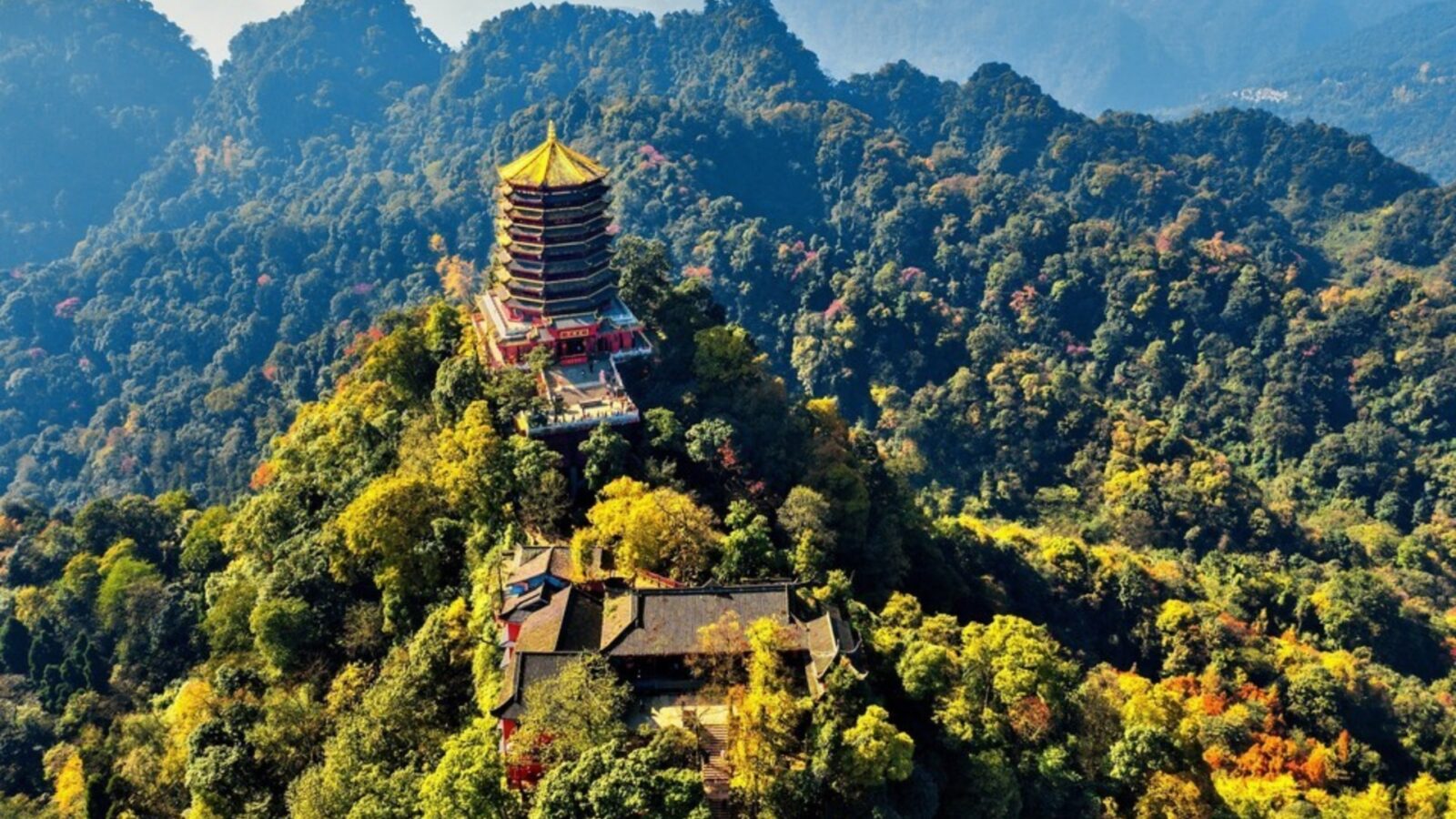
Qingcheng Shan
Qingcheng Shan sits 1,260 m above sea level in Sichuan, roughly 65 km from Chengdu. UNESCO inscribed it jointly with the Dujiangyan irrigation system in 2000. The mountain is the birthplace of the Celestial Masters lineage that Zhang Daoling founded in 142 CE. Many working temples line its forested trails. Entrance runs from $11 (¥80), and the site pairs with Dujiangyan as a single day-trip from Chengdu.
Longhu Shan (龙虎山) — Center of Zhengyi Daoism
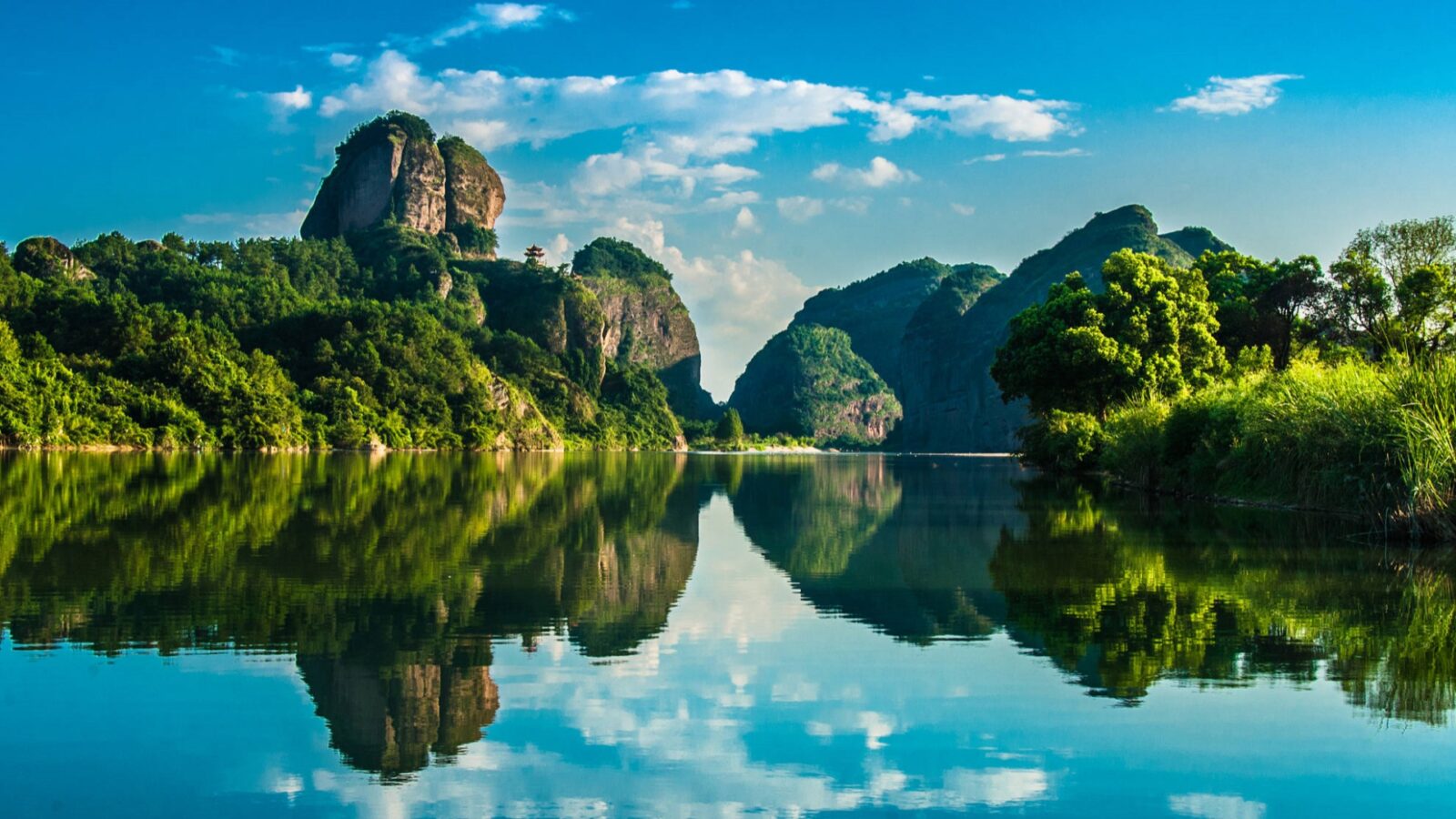
Longhu Shan
Longhu Shan, in Jiangxi near Yingtan, is the seat of the Zhengyi (Orthodox Unity) school, whose priests still lead most modern Chinese Daoist temples. Cliff-face tombs of the Spring and Autumn period line the Luxi River, and the standard ticket includes a boat ride. Tickets run from $28 (¥200). The Zhengyi ordination lineage has run continuously since the second century.
Qiyun Shan (齐云山) — The Lesser-Known Fourth
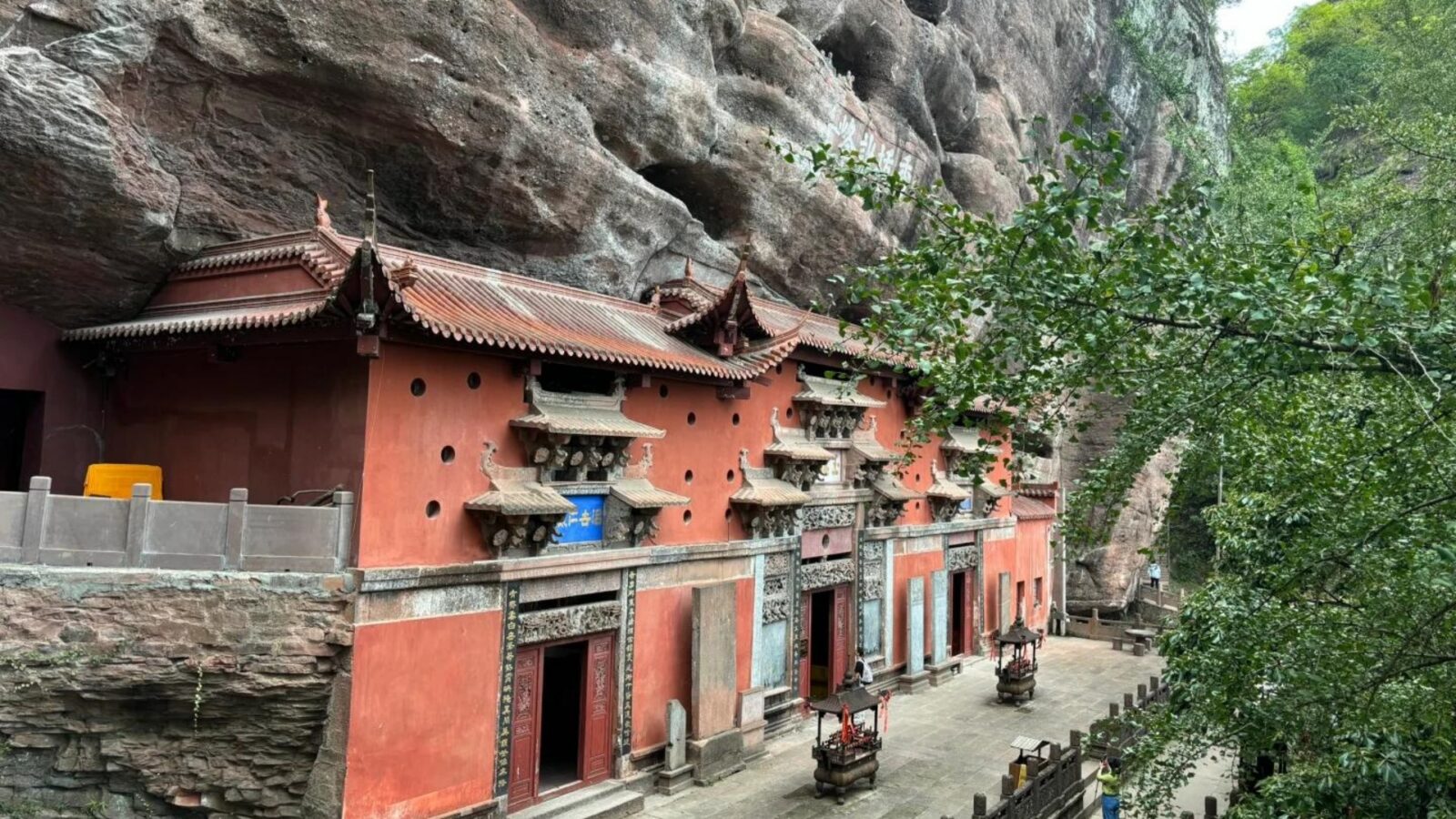
Qiyun Shan
Qiyun Shan, in Anhui near Huangshan, is the shortest of the four at 585 m and the least visited. It shares the Zhenwu dedication with Wudang, and its cliff faces carry some of the best-preserved Taoist rock inscriptions in China. Entrance runs from $14 (¥100). The mountain sits inside a geopark and combines with a Huangshan visit on most travelers' itineraries.
Daoism's Cradles: Louguan and Heming Mountain
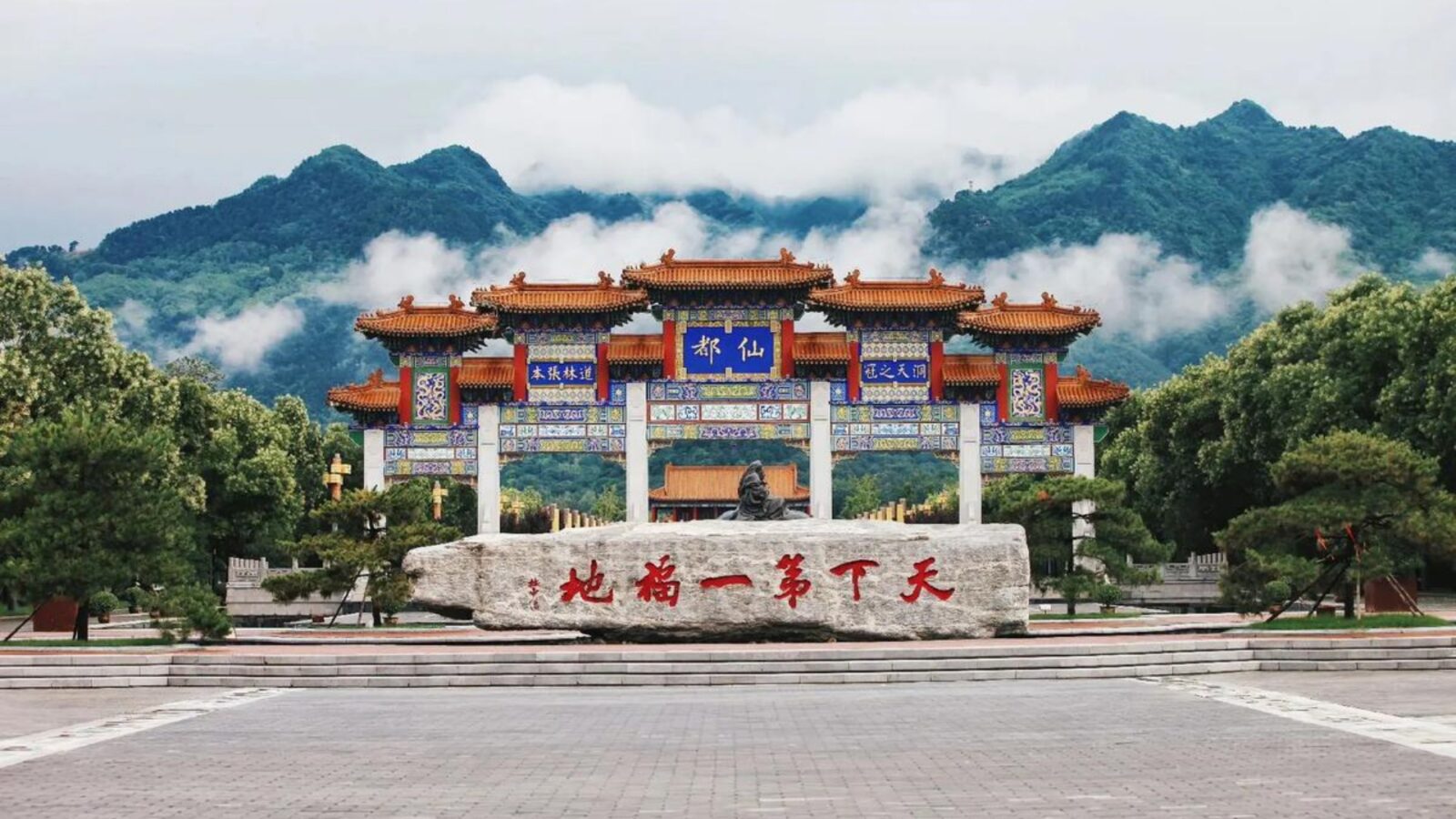
Louguan Tai in Shaanxi
Louguan Tai (楼观台) — Where the Daodejing Was Given
Among the holy cities of Daoism, Louguan Tai sits in the Zhongnan Mountains, roughly 70 km southwest of Xi'an in Shaanxi. Tradition holds that Laozi stopped here on his way out of China and dictated the 5,000-character Daodejing to the guardian Yin Xi, who then became the religion's first disciple. The Speaking Cypress, a tree said to have witnessed the transmission, and a large Laozi stone-carved statue are the two signature objects on site. Louguan Tai is the oldest Daoist temple complex in China still in active use. Entrance is free; the on-site museum charges about $5 (¥35). The site is reachable as a half-day from Xi'an by taxi or hired car, and English signage is limited. A guide hired through Trip.com or a Xi'an hotel concierge is the easiest workaround.
Heming Shan (鹤鸣山) — First Celestial Masters Temple
Heming Shan, or "Crane-Call Mountain," sits in Dayi County about 100 km southwest of Chengdu in Sichuan. In 142 CE, the scholar Zhang Daoling descended from the mountain and founded the first organized Daoist community, the Way of the Celestial Masters, on the plains below. The original altar site on the summit is still marked, and the modern temple complex at the base has been rebuilt in classical style. This is the same lineage that today ordains China's contemporary Daoist priests through the Longhu Shan Zhengyi tradition. Entrance runs from $5 (¥30). The site is reachable as a half-day trip from Chengdu by hired car or intercity bus, and English is rarely spoken on site.
Planning a Pilgrimage to Daoist Sacred Sites
Best Time to Visit
Spring (April to May) and autumn (September to October) are the most comfortable seasons at the holy cities of Daoism, with mild mountain weather and clear views. Avoid the three big Chinese holiday windows at the high-traffic sites: Labour Day (May 1 to 3), National Day (October 1 to 7), and Lunar New Year week. Wudang's summit cable car can be closed by ice in January and February, while Mount Heng North, Mount Song, and Louguan Tai are open year-round but are cold in winter. Qingcheng Shan and Heming Shan stay green and are pleasant outside the height of summer.
Tickets, Transport, and English-Language Access
High-speed rail has put most of the holy cities of Daoism within a half-day of a major Chinese city. Book tickets and guided day-trips through Trip.com or Klook, which accept international credit cards and issue e-vouchers by email.
For English access, large sacred mountains (Tai, Hua, Wudang, Qingcheng) have English signage at ticket gates and on cable-car signs; smaller sites (Qiyun, Longhu, Louguan, Heming Shan) have little to no English. Hiring a local guide through Trip.com or a hotel concierge is the standard workaround. HSR booking opens 15 days in advance, and tickets on the Tai'an and Huayin lines tend to sell out around Chinese holidays.
Frequently Asked Questions
Q: What are the holy cities of Daoism?
Daoism has no single walled holy city the way Jerusalem or Varanasi function for other faiths. The holy cities of Daoism cluster in eleven sites: the Five Great Mountains, the Four Famous Daoist Mountains, and two cradle or temple-city sites — Louguan Tai in Shaanxi and Heming Shan in Sichuan. Together they form the ring of sacred geography that answers the question, with the smaller Grotto-Heavens (洞天福地) sitting inside these larger mountains as a parallel layer of local pilgrimage sites.
Q: Which Daoist sacred mountain is the most important?
Mount Tai is traditionally the holiest of the Daoist sacred mountains; the first known Daoist temple in China was built there in 351 BC and twenty-two temples still survive. Wudang Shan is the most important for martial and ritual Daoist practice, while Louguan Tai and Heming Shan remain the most important for origin history as the two cradle cities within the holy cities of Daoism. In short, the answer depends on whether you rank by imperial ritual, by religious practice, or by founding narrative.
Q: How do I visit Daoist temples as a foreigner?
All nine sacred mountains and both cradle sites welcome foreign visitors with a valid passport. Entry to active temple halls is free; scenic areas charge a ticket. Large sites (Tai, Hua, Wudang, Qingcheng) have English signage at gates and on cable cars, while smaller sites do not. A guide booked through Trip.com or a hotel concierge is the standard workaround, and temple etiquette asks visitors to step over the wooden threshold rather than on it.
Q: Is Louguan Tai open to the public?
Yes. Louguan Tai is open daily in the Zhongnan Mountains about 70 km southwest of Xi'an, roughly 1.5 hours by taxi or hired car. Entrance is free; the on-site museum charges about $5 (¥35). It is among the least-visited of the holy cities of Daoism, so expect minimal English. A guide hired through Trip.com is the easiest workaround, and weekdays are quieter than weekends.
Q: How long do I need to visit Wudang Shan?
One full day covers the cable car to the Golden Summit and the principal temple clusters. Two days lets you walk the older pilgrimage paths along the ridges. From Wuhan by HSR, it is about two hours to Wudang Shan West station; entrance runs from $28 (¥200), cable car about $22 (¥160) return. Spring and autumn are the most comfortable seasons for the summit cable car.
Q: What is the difference between the Five Great Mountains and the Four Famous Daoist Mountains?
The Five Great Mountains are an imperial-cosmology system dating to the Zhou dynasty, each peak tied to a cardinal direction and a color. The Four Famous Daoist Mountains are explicitly religious, each tied to a specific school or deity. Both groups are part of the holy cities of Daoism. Mount Song hosts the Buddhist Shaolin Monastery but counts as a Five Great Mountain, while Wudang belongs only to the Four Famous.
Q: Can I see active Daoist practice at these sites?
Yes. Wudang Shan, Longhu Shan, and Qingcheng Shan have the most active resident Daoist communities, and you will see robed priests performing morning and evening chants, especially around the Qingming and Double Ninth festivals. The Five Great Mountains are mostly heritage and tourist sites with smaller active communities, while the cradle sites hold occasional ceremonies. Photography during chanting is generally discouraged.
Q: Are these sites crowded with tourists?
Yes at Mount Tai, Mount Hua, and Mount Song — Shaolin in particular; moderate at Wudang Shan and Qingcheng Shan; light at Qiyun Shan, Longhu Shan, Louguan Tai, and Heming Shan. The cradle cities within the holy cities of Daoism and Qiyun Shan are uncrowded year-round. Avoid Chinese public holidays (May 1 to 3, October 1 to 7, Lunar New Year week) at the busy sites, and arrive before 9 a.m. to beat the day-trip buses.