Sauna in China
Sauna in Chinese is 桑拿 (sāng ná), but stepping into a mainland Chinese bathhouse is unlike any spa experience most foreign visitors have tried. The 洗浴中心 — a 24-hour bathing-and-leisure complex — bundles dry sauna, Korean-style sweat rooms, herbal steam, scrub-downs, massage, food, and overnight sleep into a single ticket. As a result, the experience is loud, social, and deeply local.
Knowing the right words is half the battle; meanwhile, the right tier and the right city handle the rest. In short, this guide covers the vocabulary, the etiquette, the prices, and the best places to start.
Quick Facts
What "Sauna" Is Called in Chinese
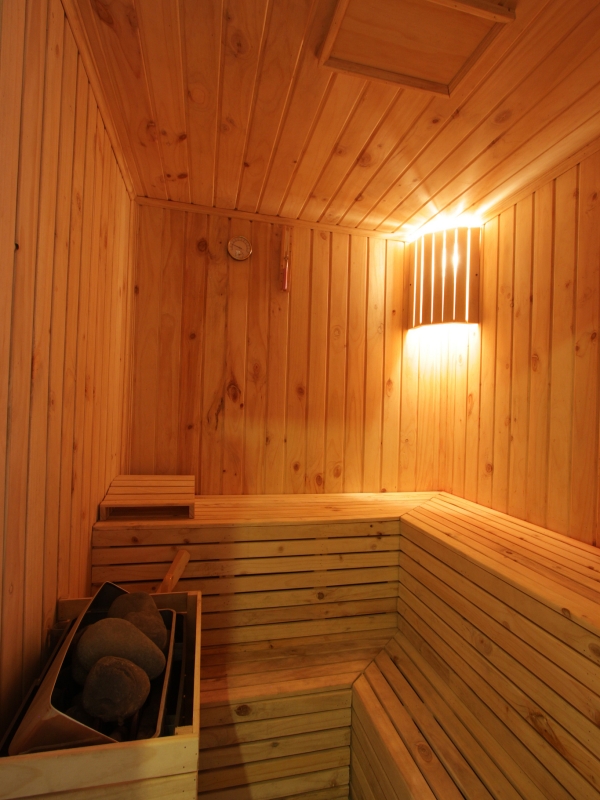
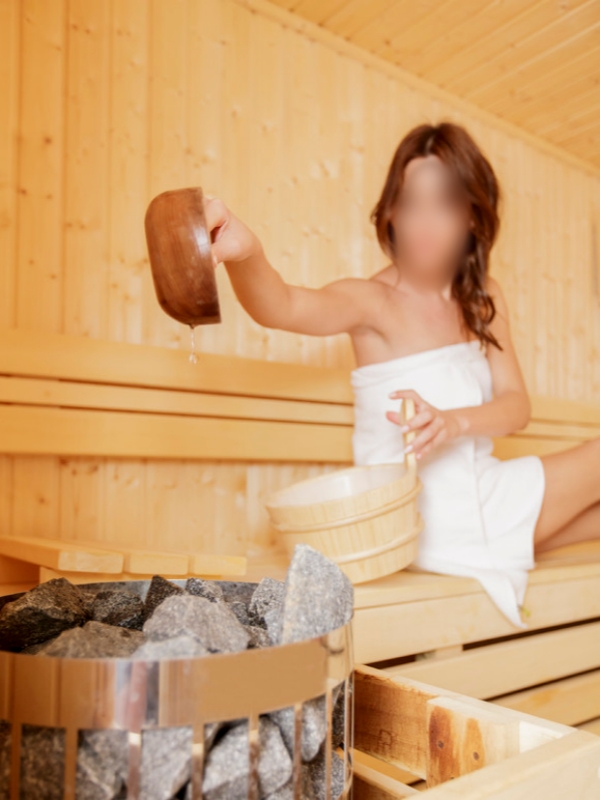
Wood Sauna
Three Chinese terms cover what most foreign visitors will see on bathhouse signs and menus. 桑拿 is the everyday word for sauna; 汗蒸 is the Korean-style sweat room; 药蒸 and 瑶浴 are the herbal-medicine variants. Knowing the difference up front prevents the wrong room and the wrong price.
桑拿 (sāng ná) — The Direct Loanword
桑拿 is the everyday mainland Chinese word for sauna. Pronounce it sāng ná — first tone on 桑, second tone on 拿. The same characters are used in Cantonese and Taiwanese Mandarin. The word entered Chinese from Finnish "sauna" via Hong Kong in the 1980s, with no native Chinese root. As a result, it appears on every bathhouse sign and hotel spa menu across the country today.
汗蒸 (hàn zhēng) — The Korean-Style Sweat Room
汗蒸 means "sweat steam." It refers to a heated room modeled on the Korean jjimjilbang, often lined with yellow clay, jade, or salt blocks. Temperatures sit at 40–50 °C / 104–122 °F — lower than a dry sauna, but humidity runs higher. Almost every modern 洗浴中心 has a 汗蒸房 alongside its 桑拿房, and most visitors rotate between the two.
Other Useful Phrases at a Chinese Bathhouse
A handful of phrases save confusion at the front desk:
- 搓背 (cuō bèi): signature scrub-down service on a heated stone bed, about $7–14 (¥50–100).
- 按摩 (àn mó): massage, available by the hour or as part of a VIP package.
- 足疗 (zú liáo): foot bath or reflexology.
- 更衣室 (gēng yī shì): changing room.
- 休息大厅 (xiū xī dà tīng): rest lounge, with recliners and tea.
- 过夜 (guò yè): overnight stay; many 洗浴中心 let guests sleep on recliners for the entry price.
Chinese Sauna vs Western Sauna
A Chinese sauna visit is a different beast from a Finnish-style session at a Western hotel spa. Here is how the two compare side by side.
Chinese Herbal Medicine Saunas
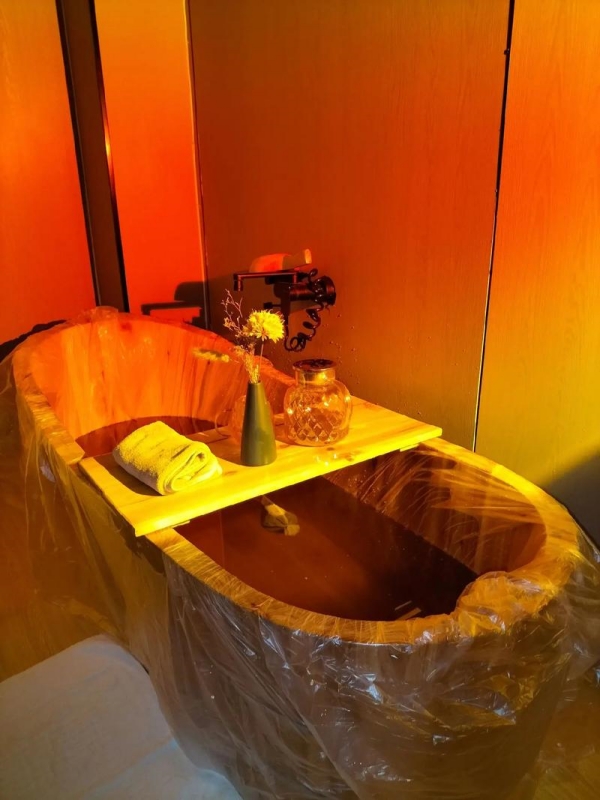
Bathhouse Herbal Bath
Two of the most distinctive sauna variants in China are built on traditional Chinese medicine (TCM) theory rather than Finnish or Korean models. 药蒸 steams the body in boiled herbs; 瑶浴 draws on a Yao-minority bathing tradition. Both are framed in TCM theory as ways to "expel cold and dampness (寒湿)," though the Western medical reading is more cautious.
What 药蒸 and 瑶浴 Actually Are
药蒸 uses a sealed cabin or tent filled with steam from a boiled herbal decoction. A session usually runs 20–40 minutes. 瑶浴 originated with the Yao minority in Guangxi and uses pre-boiled herb sachets added to bath water rather than steam. In TCM tradition, 瑶浴 is closely associated with postpartum recovery; some clinics run dedicated multi-day 瑶浴 programs.
Common Herbs and Their TCM Uses
Who Uses Herbal Saunas and Why
The core audience is older Chinese visitors with chronic joint or "cold-dampness" complaints, and postpartum women doing 瑶浴 recovery. Wellness tourists curious about TCM theory form a growing secondary group. Foreign visitors with respiratory sensitivity should sit well away from the herb-steam vent or skip the 药蒸 room entirely — the herb load can be intense.
Cost runs roughly $24–42 (¥168–298) at TCM clinics and dedicated 药蒸 centers. Meanwhile, some 洗浴中心 bundle 药蒸 access into their VIP packages, so it is worth asking at the front desk.
The Chinese Full-Service Sauna Experience
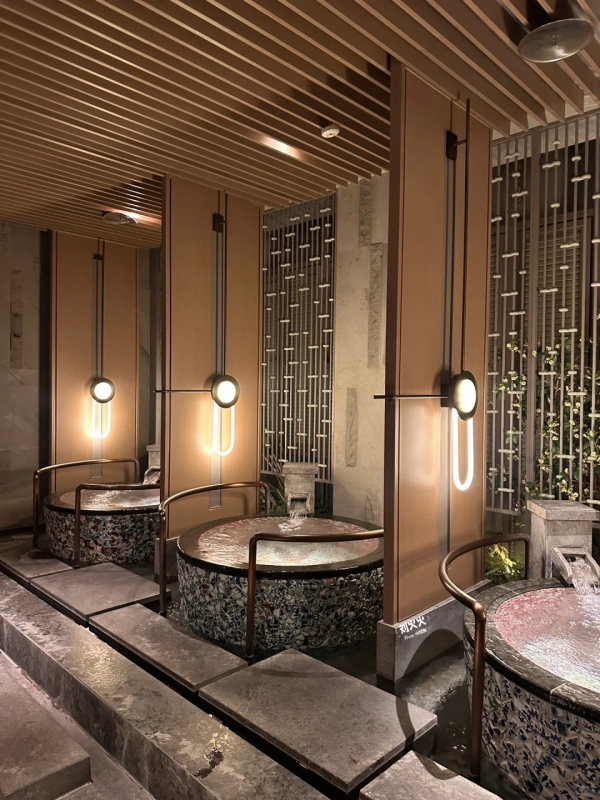
Bathhouse Washing Zone
The 洗浴中心 (xǐ yù zhōng xīn, "bathing center") is the dominant Chinese sauna venue. It is a multi-floor leisure complex unique to mainland China — distinct from the Korean jjimjilbang and the Japanese sentō — that combines bathhouse, sauna, massage, food, and overnight sleep into a single ticket. Most open 24 hours, and entry buys time rather than a fixed list of services.
The 洗浴中心 Bathhouse Model
A 洗浴中心 is built around vertical layering. The ground floor holds gender-separated bathing, hot pools, cold plunge, and sauna rooms. Upper floors house massage rooms, rest lounges with recliners or sleep pods, mahjong rooms, cinema rooms, and restaurants. As a result, a guest can move from a hot plunge to a meal to a nap without leaving the building.
A Typical Visit, Step by Step
Most foreign visitors follow this 2–6 hour sequence:
- Pay at the front desk and receive a wristband and locker key.
- Change in the 更衣室 (changing room); stash outdoor shoes.
- Shower thoroughly before entering any sauna — this is mandatory.
- Rotate between 桑拿 (dry), 汗蒸 (steam), and a cold plunge pool.
- Request a 搓背 scrub on the heated stone bed.
- Move upstairs for 按摩 (massage) and 足疗 (foot bath).
- Rest in the 休息大厅 lounge with tea, fruit, simple meals; optional overnight sleep.
- Settle the final bill at checkout — tips are usually bundled.
What It Costs
Sauna Etiquette and Practical Tips in China
Clothing, gender, tipping, and TCM health beliefs differ sharply between a Chinese 洗浴中心 and a Western hotel spa. Knowing the rules up front prevents an awkward first hour.
For more, see our guide to Chengdu Vs Chongqing.
Clothing, Nudity, and Gender Rules
- Traditional 洗浴中心 bathing zones are gender-separated and usually swimsuit-optional or nude; towels are provided.
- Modern mixed-gender 洗浴中心 require swimsuits in shared pools.
- International hotel spas follow Western norms: mixed, swimsuit required in sauna rooms.
- Always remove outdoor shoes at the entrance lockers; slippers or sandals are provided for wet zones.
Language, Tipping, and Booking
- Walk-in is standard at 洗浴中心 — no booking required.
- Staff at mid- and high-tier venues in Beijing, Shanghai, Chengdu, and Tianjin usually speak enough English for basic service.
- Tipping is not expected; service is bundled into the package price.
- Hotel spas can be booked in advance via Trip.com or the hotel's English-language site.
See also our Shanghai Cost of Living guide.
Health and TCM-Specific Considerations
- TCM tradition advises against sauna during menstruation on the belief that open pores allow "cold" to enter the body — a traditional caution rather than Western medical consensus.
- The same caution applies to postpartum recovery under TCM framing.
- Hydrate: most 洗浴中心 offer free barley tea (大麦茶) in the lounge.
- Skip the 药蒸 room if pregnant or have respiratory sensitivity; the herb load can be intense.
Where to Try Chinese Saunas
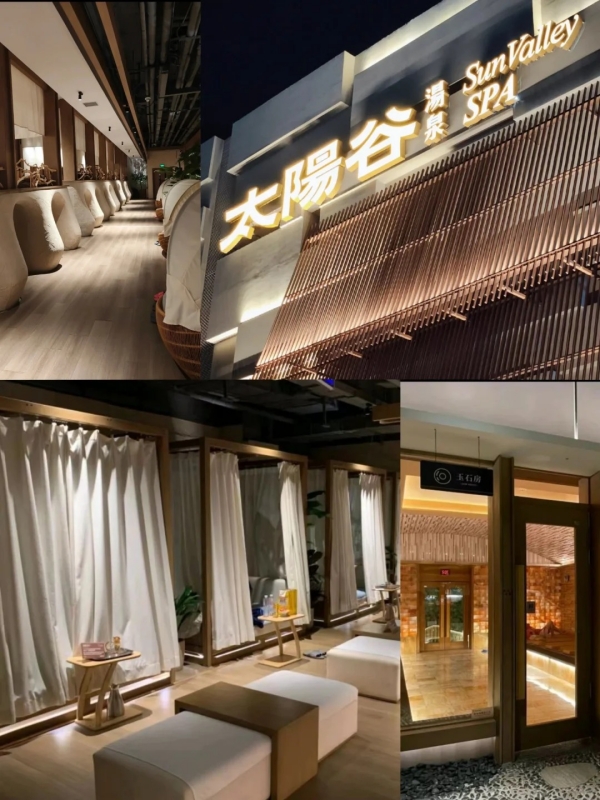
Taiyigu Tangquan
Four practical categories cover most foreign visitors: Beijing, Shanghai, Chengdu and other hot-spring cities, and international hotel spas.
For more, see our guide to Best Time to Visit Guangzhou.
Beijing — Historic Bathhouses and Modern Complexes
Beijing holds both ends of the spectrum. Historic 澡堂 such as those around 清华池 (Qinghua Pool) in Xicheng District carry the original bathhouse culture. Modern luxury 洗浴中心 in Chaoyang District add full-service sauna, massage, and overnight packages. Entry runs $14–28 (¥100–200) for basic access; VIP packages with massage reach $42–70 (¥298–498). Subway Lines 2 and 5 reach most major venues, so a visit slots easily into a sightseeing day.
Shanghai — Hotel Spas and Urban Bathhouses
Shanghai leans modern. Hotel spas at Mandarin Oriental, Peninsula, and Four Seasons offer Western dry sauna bookable on Trip.com from $28–56 (¥200–400). For the full 洗浴中心 experience, the Jing'an and Pudong districts host urban bathhouses with complete VIP packages. Most venues stay open 24 hours and accept walk-ins.
Chengdu and Hot-Spring Cities
Sichuan-style bathhouses combine the Chinese sauna tradition with natural hot-spring water, making them a strong choice for first-time visitors. Entry runs $14–28 (¥100–200). Chongqing, Tengchong in Yunnan, and Conghua near Guangzhou are also strong hot-spring-and-sauna destinations for travelers exploring beyond the major eastern cities.
International Hotel Spas (the Western-style alternative)
Five-star hotels in every major Chinese city operate Western-style dry saunas separate from 洗浴中心 culture. These are the best fit for foreign visitors who want a familiar Finnish-style sauna without committing to the full-service bathhouse experience.
Frequently Asked Questions
Q: How do you say sauna in Chinese?
桑拿 (sāng ná) is the direct Finnish loanword used across mainland China. 桑拿房 means sauna room; 汗蒸房 is the Korean-style sweat steam room common alongside sauna in Chinese bathhouses.
Q: What is a Chinese herbal sauna?
药蒸 (yào zhēng) is a sealed cabin filled with steam from boiled TCM herbs like 艾草 mugwort, 生姜 ginger, and 当归 angelica. About $24–42 (¥168–298) per session at TCM clinics.
Q: What is 汗蒸 (hàn zhēng) and how is it different from 桑拿?
汗蒸 means "sweat steam" — a Korean-style room at 40–50 °C with higher humidity. 桑拿 is a dry sauna at 60–80 °C. Most modern 洗浴中心 have both rooms.
Q: What should I wear in a Chinese sauna?
Traditional 洗浴中心 bathing zones are swimsuit-optional or nude, gender-separated. Mixed-gender modern venues and hotel spas require swimsuits. Outdoor shoes come off at the entrance; slippers are provided.
Q: How much does a Chinese sauna cost for foreign visitors?
Basic 洗浴中心 entry is $14–28 (¥100–200) for 2–6 hours; mid-tier with massage $42–56 (¥298–398); VIP $70–112 (¥498–798). TCM 药蒸 session $24–42 (¥168–298). Hotel spa day pass $28–56 (¥200–400).
Q: Can tourists visit a Chinese bathhouse without speaking Chinese?
Yes. Mid- and high-tier 洗浴中心 in Beijing, Shanghai, Chengdu, and Tianjin have staff with basic English. Carry a translation app for menu and herbal choices. Walk-in is standard; no booking needed.
Q: Is sauna safe during menstruation according to Chinese medicine?
TCM tradition holds that sauna during menstruation is inadvisable — open pores let "cold" enter the body. This is a traditional belief, not Western medical consensus; visitors decide based on comfort.
Q: Is sauna part of traditional Chinese culture?
澡堂 culture has deep roots in northern China, but the modern 桑拿 and full-service 洗浴中心 developed after the 1980s from Korean and Finnish influences. TCM herbal steam (药蒸 / 瑶浴) is the older indigenous layer.