Foreigner Friendly Chinese Bathhouse Full Spa Complex
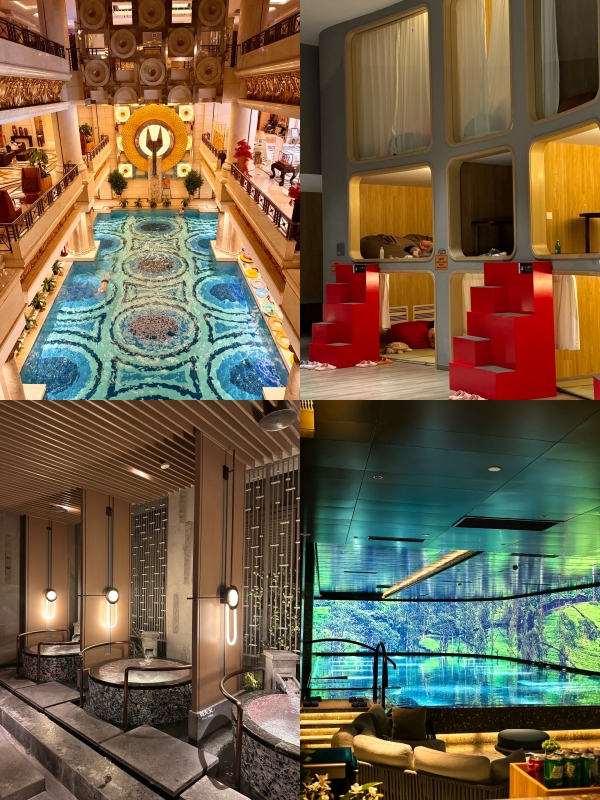
Your first visit feels like entering another world—a cross somewhere between a Turkish hamam, a Japanese onsen, and a jjimjilbang, but with a Chinese twist for a foreigner Chinese bathhouse. But this isn’t a quiet spa retreat with a value system resembling a Japanese onsen: the difference goes deeper than just aesthetics, and communal space distinguishes it from the western spa (no shower caps are involved), as well as from Japanese onsens. This is not just a place to get clean, it’s a flex—the leisure centre only someone who has long since cut the bullshit experiences can enjoy: eating, socialising, leisurely spending half a day or more relaxing. It’s what zǎo-táng (澡堂) literally used to refer to—single-sex public baths (now used for modern 24-hour spa complexes), the xǐ-yù zhōng-xīn (洗浴中心).
This tradition stretches back to the Tang Dynasty, during which public hot baths became common in cities. Now there are around 18,000 licensed bathhouses across the country, more than 60% of them operating as mixed-service leisure spots. The first bathhouse I walked into, steam hit my face before I could even register the shoe-drop ceremony. Within minutes, I was clutching a waterproof wristband in a locker room full of locals disrobing and had no idea what happened next. That ambiguity is exactly what this guide is for.
Quick Facts: Before Walking In
📐 Technical Specs
- Water temp: Hot pool 41–43°C · Cold plunge 15–18°C · Steam room 45°C @ 100% RH
- Scrub: Nylon glove + salt/coffee grounds · 15 min · removes ~30g dead skin
- Hygiene grade: A=sterile · B=standard compliant · C=minor issues — stick to A/B
- FX cap on blue QR: ¥5,000/txn · ¥10,000/day · ~1% FX spread
The '24-Hour' Concept and What It Means for You
It’s not just the hours that make a place “24-hour” - it’s also the price. The entry fee usually means you can sleep in the bathhouse for free (being 12 or 24 hours), so the clever thing to do is to arrive around 9 PM and sleep in the lounge, avoiding the need for hotels altogether. At ¥138 for an overnight pass, it works out much cheaper than budget hotels in most Chinese cities everywhere, all you can eat fruit and entertainment included.
A First Visit, Step by Step
Step 1: Check-in, Shoes Off, and the Magic Wristband
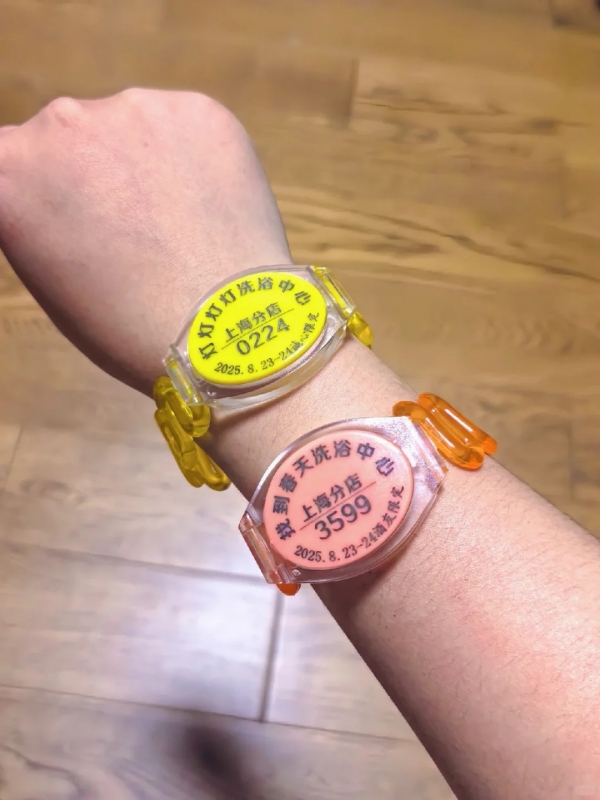
Wrist Band
Here's what happens from the moment you walk through the door:
- Shoes off — You'll be greeted by an attendant who takes your shoes and stores them. You'll wear supplied slippers from this point on.
- Wristband time — You receive a waterproof electronic wristband. This is your locker key, your payment method, and your ID inside the facility. Do not lose it. Everything you order—food, drinks, extra services—gets charged to this band.
- Locker room — Find your numbered locker, undress completely, and store your belongings. Keep only your wristband.
The wristband system is efficient and secure. At checkout, you hand it back and pay for everything in one go.
Step 2: The Gender-Separated Wet Area
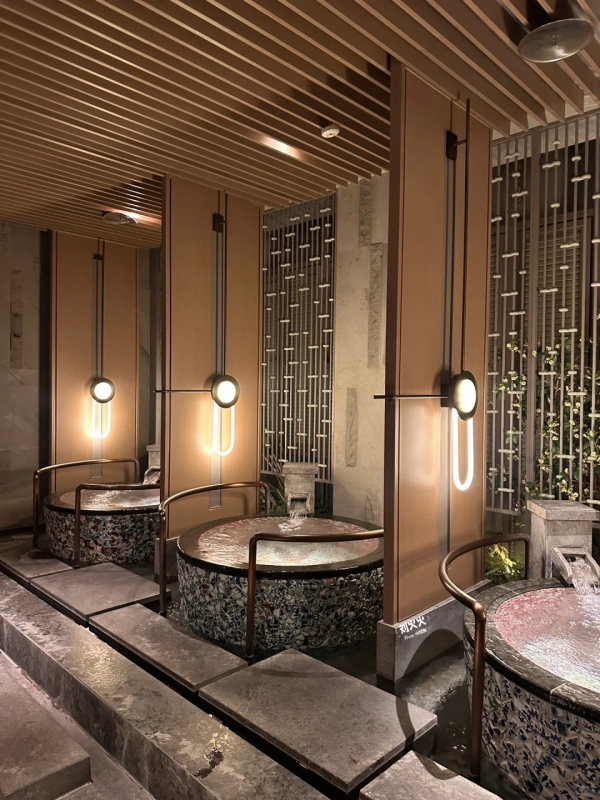
Bathhouse Washing Zone
After the locker room, you enter the wet area—and it's strictly gender-separated. Men go to the men's section; women to the women's. There's no mixing in the pools or saunas.
And yes, completely naked. That is the convention. These areas are not swimming costume zones (unless you’re lucky enough to run across a co-ed swimming hole at the facility—but those are few and far between). If this makes you cringe, you are certainly not alone: every foreigner feels utterly appalled at first. However, the Japanese rationale is this: nakedness is utilitarian in these parts, not personal. No-one gawps, no-one criticizes, age bodytype or cut marks are simply irrelevant.Notice the following - this is what everyone does.
The discomfort usually fades within 5–10 minutes. Focus on the warm water, not on who's around you.
Step 3: Shower First, Then Soak in the Pools
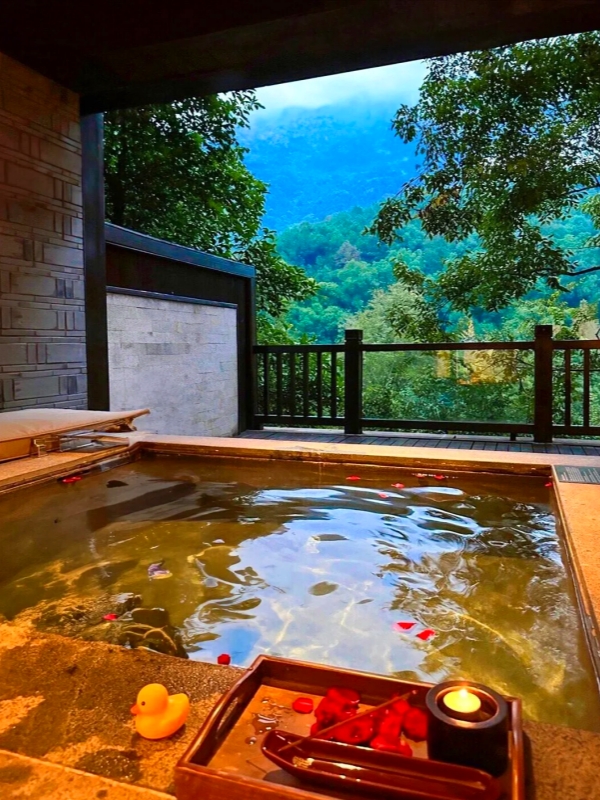
Bathhouse Spring Pool
Golden rule: Shower before you enter any pool. This is non-negotiable. Use the provided body wash and shampoo at the seated or standing showers. Many locals bring their own toiletries—feel free to do the same.
Once clean, you can explore the pools. Most bathhouses offer multiple options:
- Hot pools (38–45°C) — Start here to relax muscles
- Cold plunge (15–18°C) — For the brave; great for circulation
- Steam room (45°C, 100% humidity) — Opens pores and detoxifies
Pro tip: Switch pools frequently. Try 3–5 minutes in the hot pool, then 10 seconds in the cold plunge. Repeat 3 times. Your skin will feel tighter, your blood circulation improves, and you'll leave the water glowing. It's a ritual locals swear by.
Step 4: Optional Services and Add-Ons
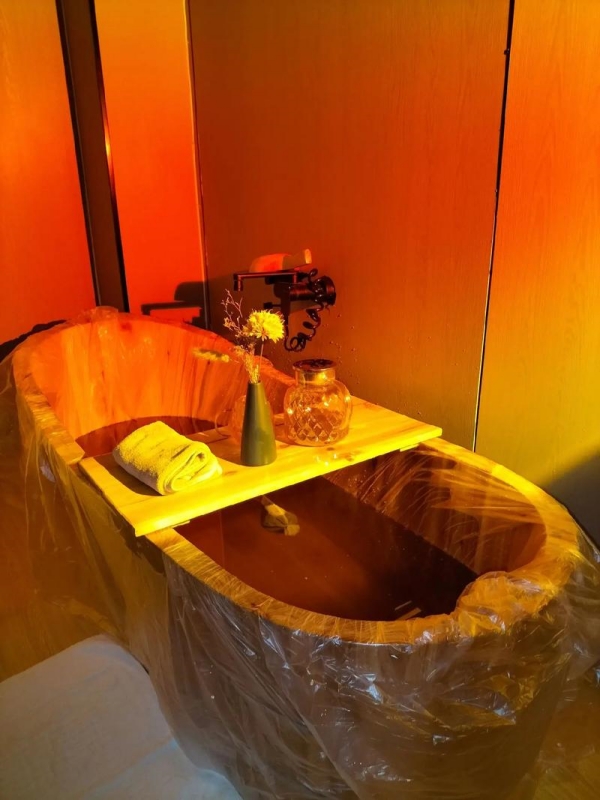
Bathhouse Herbal Bath
Beyond the basic pools, you'll find additional services—all charged to your wristband. Check the price list before you say yes. Common add-ons include:
- Herbal baths — Medicinal soaks with traditional Chinese herbs
- Salt rooms — Halotherapy for respiratory relief
- Massage services — Full-body, foot, or shoulder massages (¥88–300)
- Body scrub (cuo zao) — We'll cover this in detail in the next section
These services are optional. If you just want to soak and snack, no one will pressure you into anything. But if you're curious, the scrub is the one experience most foreigners end up talking about for weeks afterward.
The Body Scrub: What It Is and How It Feels
What Happens During a Body Scrub
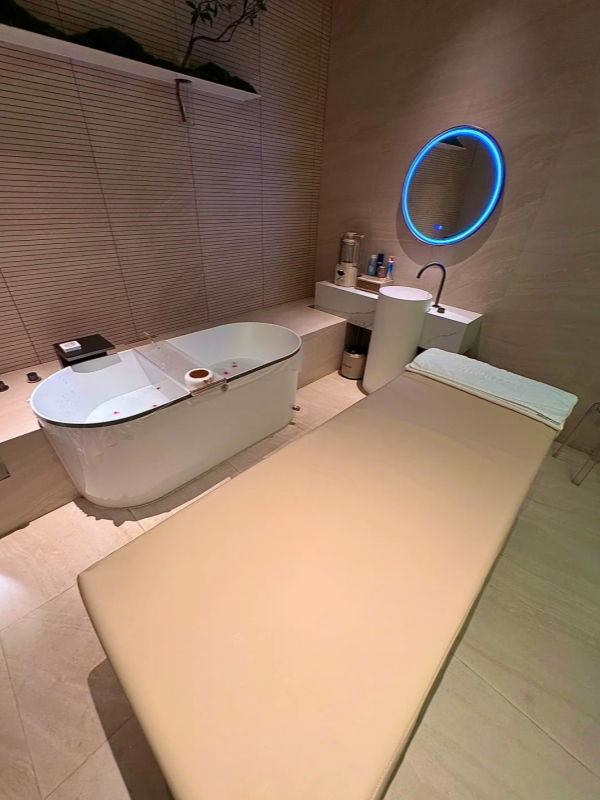
Bathhouse Scrub Station
The body scrub—cuo zao (搓澡) in Chinese—is the signature bathhouse ritual. Here's how it works:
- You lie face-down on a padded leather bed.
- An attendant wearing a scrub mitt (made of nylon or coarse fabric) vigorously rubs your entire body, removing dead skin cells.
- The attendant uses salt or coffee grounds for exfoliation.
- After about 15 minutes, you'll be asked to flip over for the front side.
The process removes about 30 grams of dead skin—you'll actually see the grayish rolls of exfoliated skin on the bed. It sounds gross, but it's incredibly satisfying. Your skin feels brand new afterward: smooth, soft, and glowing.
Does It Hurt? And How to Ask for Lighter Pressure
Does it hurt? Honestly—a little. The pressure is firm, and if you're not used to it, the first few passes can feel intense. But here's the thing: most people find the sensation more invigorating than painful. The aftermath—incredibly smooth skin—makes it worth it.
If it's too much, you have options:
- Say "qīng yì-diǎn" (轻一点) — this means "softer, please."
- Just point to your skin and say "gentle."
- Or skip the scrub entirely and just enjoy the pools.
Most attendants are experienced and will adjust their pressure based on your reactions. Don't be shy about communicating.
Additional Treatments: Milk Baths and Face Masks
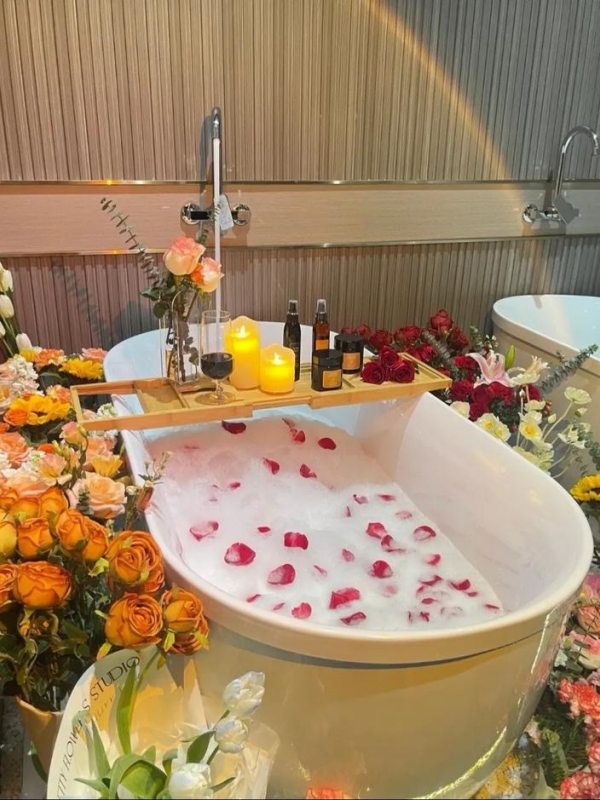
Bathhouse Milk Bath
After the scrub, consider upgrading with:
- Milk bath — Literal milk is poured into your soak. It softens and nourishes the skin.
- Cucumber face mask — Fresh cucumber is ground into a paste right in front of you and slathered onto your face. It's cooling, refreshing, and smells incredible.
Money-saving tip: Many bathhouses offer a salt-scrub + milk soak combo for ¥128, which saves about ¥20 compared to booking them separately. It's a popular choice among locals and a great way to treat yourself without overspending.
Food, Lounges, and Late-Night Movies
Unlimited Fruits, Drinks, and Snacks
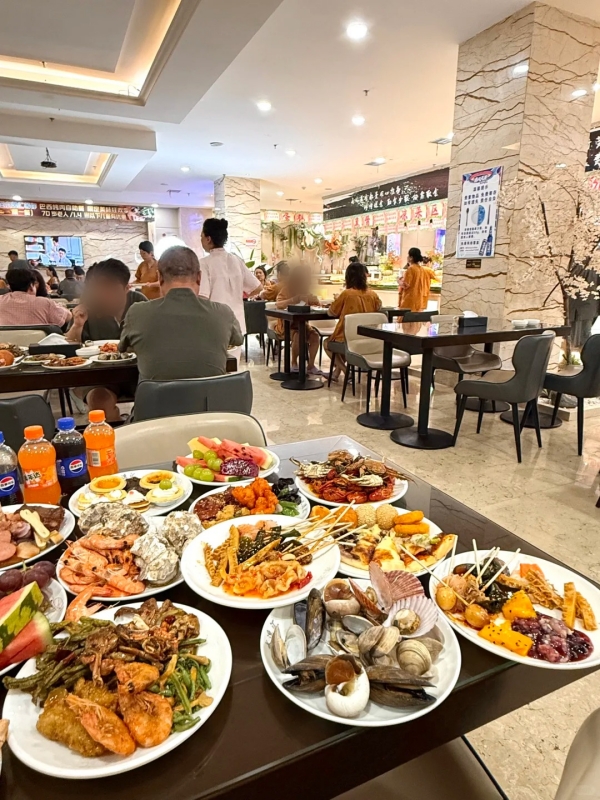
Bathhouse Buffet Hall
When it comes to surprises for foreigners, food is a big one. Many of the mid-range, and all large, bathhouses include unlimited fruits, drinks, and snacks in the entry fee. We’re not talking a bowl of fruit here; there is a full smorgasbord of watermelon, oranges, apples, ice cream, and popcorn. Sometimes you’ll find simple hot dishes like boiled eggs, or porridge.
As one U.S. travel blogger put it: “I was blown away when I walked in. For $20 I had unlimited fruit, and unlimited ice cream, and a place to sleep. This is bizarre.”
The boiled eggs are especially good, following a turn in the steam room, as they replenish electrolytes. Don’t be afraid to take several plates of food, it’s all included and the locals are likely to be doing the same!
Lounging, Sleeping Zones, and Movie Theaters
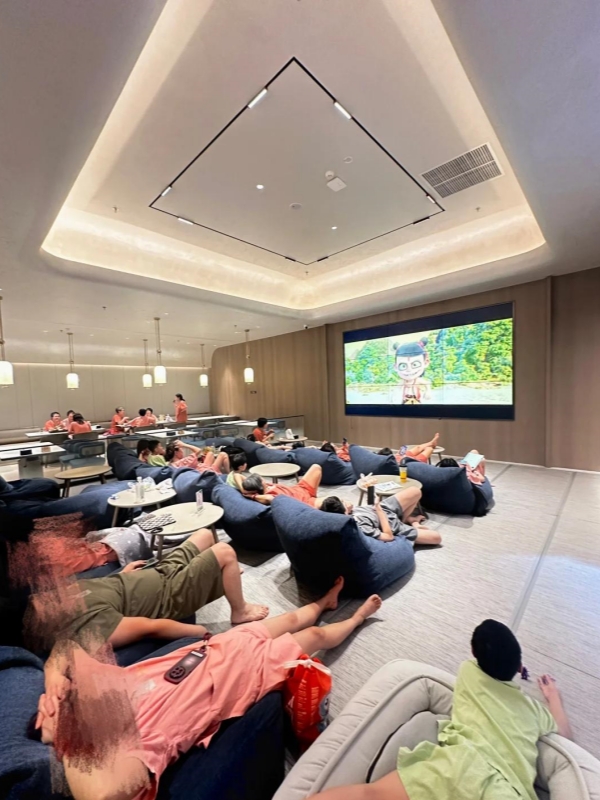
Main Lounge Hall
After you've soaked and scrubbed, change into the supplied cotton pajamas and head to the common lounge. This is where the bathhouse transforms from a spa into a social hub.
You'll find:
- Reclining chairs and sofas — Many with personal TVs
- Quiet sleeping zones — Dimly lit areas with blankets for overnight stays
- Movie theaters — Screening Chinese films or international sports
The ¥138 overnight pass is a traveler's hack: sleep on a recliner, wake up, shower, and catch a morning flight. It's cheaper than a hotel and more comfortable than an airport bench.
Games, Reading Rooms, and Family Spaces
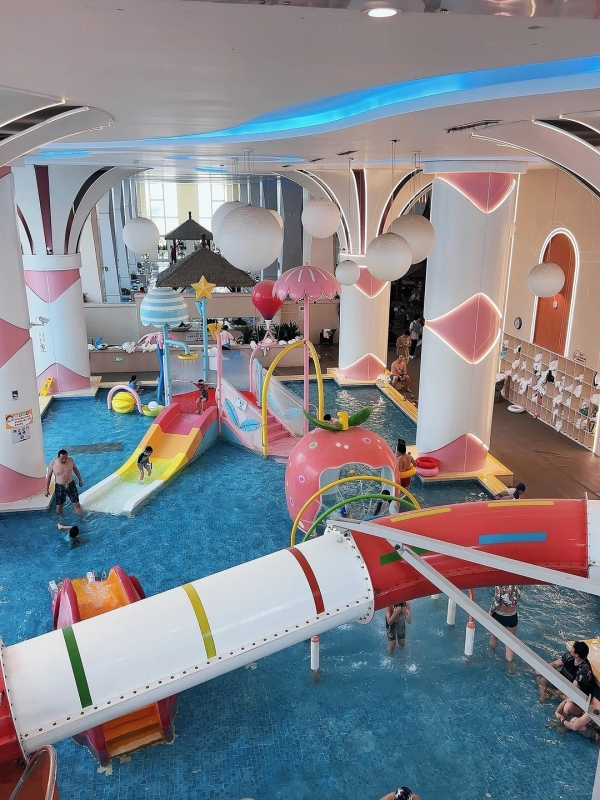
Bathhouse Kids Play Zone
Chinese bathhouses are surprisingly family-friendly. You'll see multi-generational groups—grandparents, parents, and kids—spending entire afternoons together. Common facilities include:
- Children's play areas — Safe, enclosed spaces with toys
- Game rooms — Ping pong, pool tables, arcade games
- Reading rooms — Quiet corners with newspapers and magazines
The atmosphere is relaxed and wholesome. If you're traveling with family, this is a great way to experience local culture in a setting that appeals to all ages. No one is in a hurry—everyone is just... hanging out.
Smart Combo Deals: How Locals Maximize Value
Want to experience the bathhouse like a local? Here are four insider strategies:
The pink pajama trick is a real insider move. It's not advertised, but regulars know that wearing the pink scrub uniform signals you've paid for the premium exfoliation package—and staff often respond with a complimentary yogurt or drink.
Naked Is Normal — Here's Why
To get this level of nakedness you have to get the reason for being naked. It’s pragmatic - the issue is cleanliness, not vanity or posturing. The naked body is just a body. There is no judgment, no comparison, no sex. For a chinese bathhouse foreigner, this is beyond the most useful thing to consider before stepping through the turnstile.
In China the public hot bath has been a normal fixture of urban life for centuries. Wrapped around who knows how many miles of piping are all the naked men and women who steam, shower and scrub within. The tone is one of complete indifference to the body and its scars, warts and tattoos. If you came in with a tattoo or scar, you would scarcely receive a second appraising glance. A chinese bathhouse foreigner learns the hard way how indifferent a chinese person can be to naked bodies. Each person bathes there for the same reason - to unwind in the heat. Appreciate the communal indifference and the experience begins to free one from mental constraints.
Getting Past the First Few Minutes of Discomfort
If you're nervous, here's what helps:
- Remember: everyone else is naked too. You're not the only one. It's the great equalizer.
- Focus on the experience, not the exposure. The warm water, the steam, the relaxation—that's why you're here.
- Move quickly from locker to pool. The initial walk is the most awkward part. Once you're in the water, you'll feel much more comfortable.
Most first-timers report that the discomfort vanishes within 5–10 minutes. By the time you're switching between hot and cold pools, you won't even think about it anymore. I was nervous my first time too—until I realized literally no one was looking at me.
North vs. South: How Bathhouse Culture Varies
Beijing and the Northeast: The Traditional Social Scene
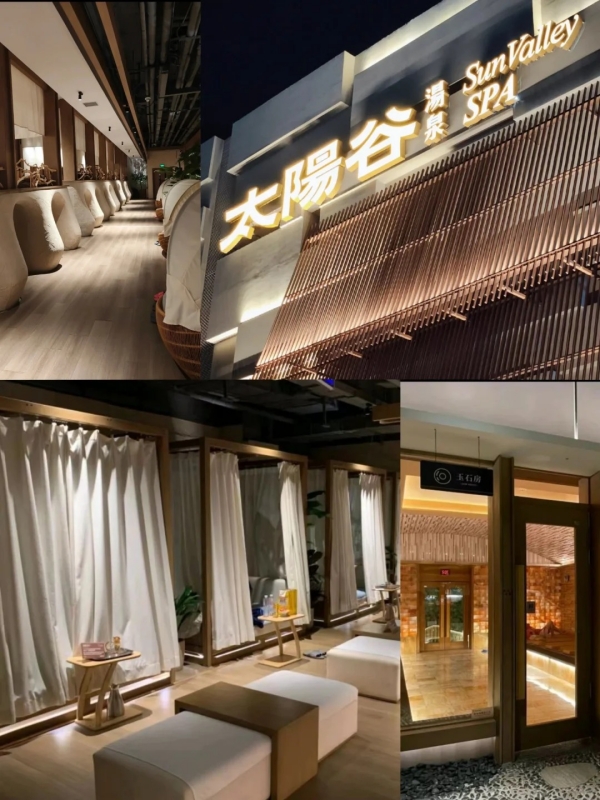
Taiyigu Tangquan
In Beijing and Northeast China (Dongbei), bathhouses are large, traditional and social! Public baths are necessary in China’s long, cold winters- most people didn’t have private bathrooms until recent decades. The bathhouse culture here is second to none.
Shenyang, the capital of Liaoning province, is known for its mega-bathhouses, huge multi-floor complexes with gigantic areas to scrub down in, titanic pools to swim in, and dining halls full of raucous activity. If you want a slice of the “real” experience that people born and bred in China grew up with, come here! Planning a trip to the region? Our Northeast China travel guide covers the Harbin Ice Festival, Changbai Mountain, and complete itineraries to help you explore beyond the bathhouse.
Shanghai and the South: Modern and Spa-Like
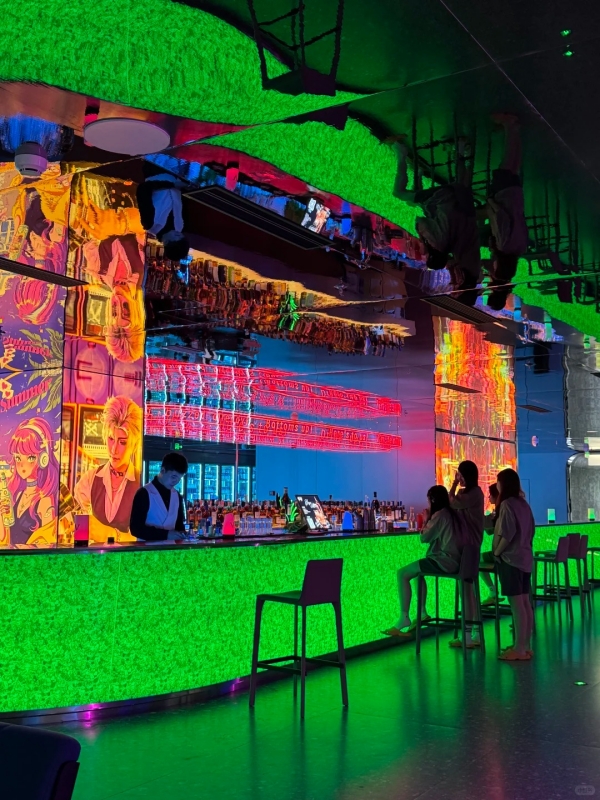
Weilai Tangquan
In Shanghai and southern China, the bathhouse experience is more modern, spa-like, and polished. Facilities here cater to a younger, more design-conscious crowd. Expect chic interiors, curated playlists, matcha lattes instead of plain tea, and services marketed as wellness experiences rather than daily routines.
If you prefer aesthetics over authenticity, this is your scene. The vibe is less about the rough-edged local tradition and more about curated relaxation.
Other Regional Specialties: Yangzhou, Harbin, and Beyond
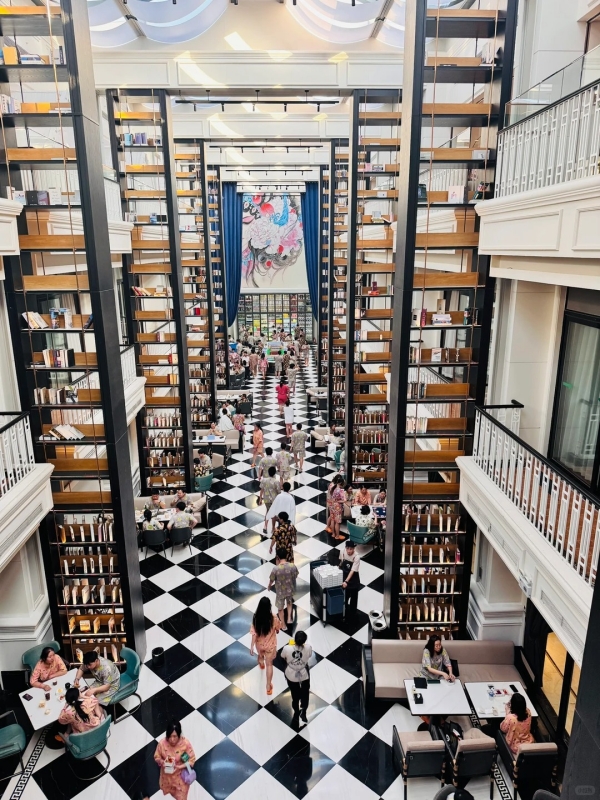
Jiuhao Wenquan
Beyond the north-south divide, regional specialties abound:
- Yangzhou — Known for the saying "morning tea, evening bath," this city has been a bathhouse destination since the Han Dynasty.
- Harbin — In winter, locals pair their soak with frozen fruits and hotpot. Imagine stepping out of a steamy pool to eat ice-cold pears—it's as invigorating as it sounds.
- Chengdu — Home to 24-hour bathhouses that have gone viral on social media for their unbelievable all-inclusive packages.
If you're planning to stay overnight in Chengdu, check out our curated list of boutique hotels in Chengdu that locals secretly recommend — from restored courtyard houses to high-rise design spaces above Chunxi Road.
Understanding these differences helps set expectations when traveling across regions.
Skip the Bathhouse? Try These Instead
Hotel Pool & Sauna: The Western-Style Fallback
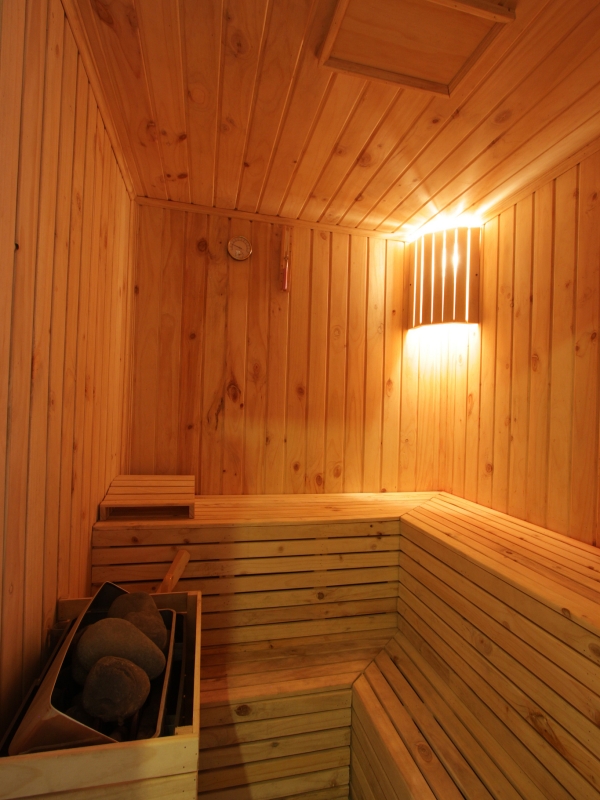
Wood Sauna
If the nudity or communal aspect of a bathhouse feels like too much, consider a hotel pool and sauna day pass. Most international hotels in major cities offer access for ¥150–300.
Pros:
- English-speaking staff
- Familiar, Western-style facilities
- No nudity requirement (swimsuits required)
Cons:
- No scrub service
- Less "local" experience
- Usually no unlimited food included
This is a safe, comfortable alternative that still gets you a relaxing soak.
🧖♂️ Sauna & Steam Culture: To better understand the different temperature zones, heat therapies, and etiquette rules for the dry and wet steam rooms located inside these massive complexes, check out our dedicated guide to the Sauna Chinese experience.
Onsen-Style Hot Springs: Nature Meets Relaxation
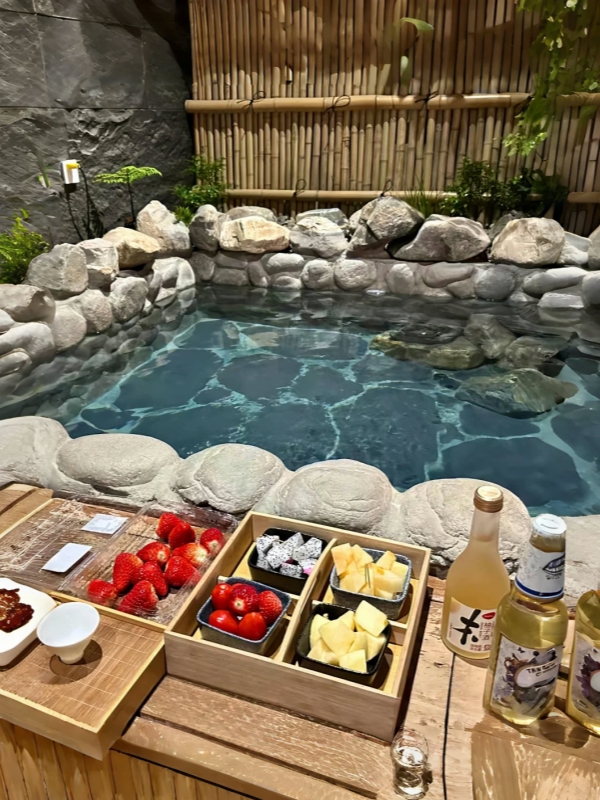
Onsen-style Hot Spring
For a more premium, nature-oriented experience, try an onsen-style hot spring resort. These are outdoor mineral pools fed by natural geothermal springs, often set in scenic mountain or lakeside locations.
- Price: ¥220–580 day-ticket
- Travel time: About a half-day by high-speed train from major cities
- Vibe: High-end, scenic, Instagram-worthy
This is pricier than a bathhouse but offers a completely different experience—think of it as a weekend getaway rather than a casual afternoon outing.
Foot-Massage Houses: Clothed and Affordable
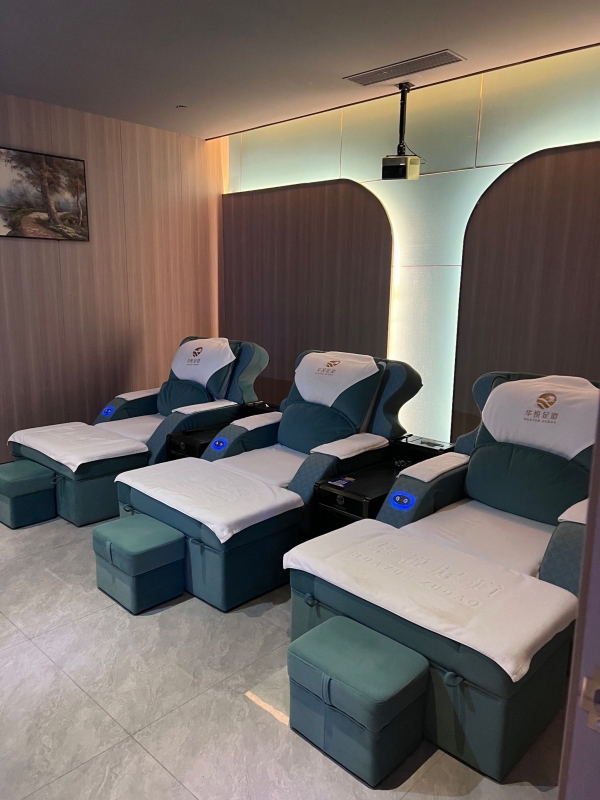
Foot Spa
If you want relaxation without any nudity or water involvement, foot-massage houses are everywhere in Chinese cities. For about ¥88 per hour, you get:
- A comfortable reclining chair
- A foot soak and reflexology massage
- No need to undress or shower
These places are casual, affordable, and highly popular with locals. They're a great alternative if you're short on time or simply not comfortable with bathhouse norms.
Rules Most First-Timers Miss
Always Shower Before Entering Any Pool
This is the #1 rule—and it's non-negotiable. Always shower before entering any pool, sauna, or steam room. Use the provided body wash and shampoo. Rinse thoroughly. This isn't just about personal hygiene; it's about respecting everyone else sharing the water with you. Staff will notice, and locals will appreciate it. Don't be the person who skips this step—you'll stand out for the wrong reasons.
Phone and Camera Rules
Zero phone usage in the wet areas. No photos, no videos, no calls. This is a strict rule to protect everyone's privacy. If you pull out your phone near the pools, a staff member will likely approach you and ask you to put it away. In some cases, you could be asked to leave.
In the lounges, dining areas, and game rooms, phone use is perfectly fine. Just keep it discreet and avoid taking photos that might include other guests without their consent.
Noise Levels and Behavior
The bathhouse is a place of relaxation—so keep your voice down. Loud conversations, shouting across the pool, or boisterous behavior will earn you stares.
Other quick behavior tips:
- Don't enter drunk. Many bathhouses refuse service to intoxicated guests.
- Don't bring towels into the pools. Towels are for drying off after you get out.
- Don't wear swimwear in the wet areas. It's nude-only unless otherwise posted.
Tipping Is Not Expected
Do not tip. Tipping is not part of Chinese bathhouse culture. The service staff are paid salaries, not tips. If you try to tip, you'll likely be politely refused. Just say "xiè-xie" (thank you) and move on. This is one area where Western customs do not apply, and locals will not expect or appreciate gratuity.
Quick Fixes for Common On-Site Problems
Here's what to do when things don't go as expected:
Problem: Only green QR codes at checkout (no foreign card support)
Fix: Ask "有没有商户码? (yǒu méi-yǒu shāng-hù mǎ?)" for the blue merchant QR. If they don't have it, pay with ¥100 cash.
Problem: You walked into the wrong area (mixed-gender confusion)
Fix: Remember—wet zones are single-sex. Lounges and restaurants are co-ed. Wear the supplied PJs for co-ed areas.
Problem: Scrub feels too rough
Fix: Say "轻一点 qīng yì-diǎn" (softer). Or simply skip the scrub and just enjoy the pools.
Problem: Pools feel too hot
Fix: Start with the cold plunge first. Hot pools range 38-45°C—ease in slowly, one leg at a time.
What's Changed Lately (2025–2026)
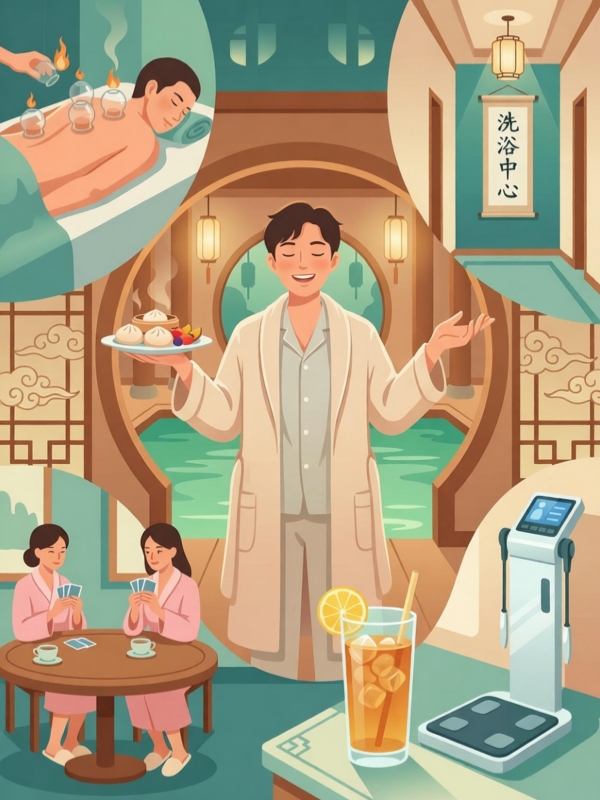
Chinese Bathhouse Zone For All-Day Relax & Fun
Bilingual Hygiene Labels Now at Bathhouse Entrances
Since May 2025, bathhouses in Beijing have been required to display bilingual (Chinese-English) hygiene grade decals at their entrances. The grades are:
- A — Highest standard, sterile environment
- B — Standard compliant, safe for visitors
- C — Minor issues reported; proceed with caution
As a foreign visitor, look for A or B labels. This gives you instant, reliable quality assurance before you even walk through the door. Similar policies are expected to roll out in Shanghai, Chengdu, and other major cities in 2026.
More Chains Accept Foreign Cards via QR Code
January 2025 brought a major update: Qian Xi Spa (千禧) and 42 affiliated locations now support foreign Visa and Mastercard payments through Alipay's Tourist Pay feature. Look for the blue merchant QR code—this indicates international card acceptance.
This is a significant improvement, as cash and local bank transfers were previously the only options. By 2026, more chain brands are expected to follow. Still, keep ¥100–¥200 in cash as a backup—small, independent bathhouses may not have the blue QR set up yet.
Stricter Water Quality Standards Nationwide
In July 2024, new water quality standards (DB11/T 2138-2024) came into effect, setting lower allowable limits for microbial content in public bathing pools. By 2026, these standards are now fully enforced across licensed facilities.
What this means for you: cleaner, safer pool water with better monitoring. The new rules also require more frequent testing and public disclosure of results. If a bathhouse displays its grade A or B at the entrance, you can trust that it meets or exceeds these 2024 standards.
Is It Clean and Safe? The Real Answer
Hygiene Standards in Reputable Bathhouses
Cleanliness is taken seriously at licensed bathhouses. Here's what you can expect:
- Towels and pajamas — Sanitized and individually wrapped or freshly laundered
- Pool water — Continuously filtered and chlorinated; tested regularly
- Staff presence — Attendants monitor the wet areas and clean surfaces throughout the day
Since July 2024, new water quality standards (DB11/T 2138-2024) have set stricter limits on microbial levels in public pools. If a facility displays a hygiene grade of A or B at the entrance, you can be confident it meets or exceeds these standards.
Safety for Solo and Female Travelers
For female travelers: women-only areas are private, well-monitored, and exclusively staffed by female attendants. A chinese bathhouse foreigner visiting alone can feel especially at ease knowing these spaces are designed with privacy and safety in mind. You'll see families, elderly women, and solo female bathers—it's a safe, comfortable environment.
Solo travelers of all genders will find the atmosphere welcoming. Staff are attentive, and the clientele is predominantly local families and regulars. For any chinese bathhouse foreigner who feels uncertain, approaching a staff member is the quickest way to get help—they're trained to assist and ensure guest safety. If you ever feel uncomfortable, don't hesitate to ask.
Sensitive Skin or Medical Conditions? What to Know Beforehand
Before you go, consider these health precautions:
- Sensitive skin — The scrub can be intense. Ask for gentle pressure or skip it entirely. The hot pools may also irritate very sensitive skin—limit your soak time.
- High blood pressure or heart conditions — Avoid extreme temperature contrasts (hot pool to cold plunge). Stay in the warm pools only, and don't stay in the steam room for more than 5-10 minutes.
- Infections or open wounds — Do not enter the pools. This is for your safety and others'.
If you have any concerns, inform the staff at check-in. They can guide you toward safe options.
Practical Tips Before the Visit
Booking and Entry Fees: The 12/24-Hour Stay Explained
Here's how to book your bathhouse experience:
How to find a good one:
- Search "洗浴" (xǐ-yù) + city name on Meituan or Dianping (Chinese review apps)
- Filter for rating ≥ 4.5 stars and look for the "外宾友好" (foreigner-friendly) tag
- Alternatively, book directly through Trip.com or just walk in—most places accept drop-ins
Entry fee structure:
- ¥88–168 for 12–24 hours in tier-1 cities
- ¥25–40 for local, basic bathhouses
- Includes: pool access, towel, pajamas, locker, and basic snacks
- Excludes: scrubs, massages, à la carte food, private rooms
You pay for everything at checkout using your wristband. Keep track of what you order.
What to Bring (and What's Provided)
Provided by the bathhouse:
- Towels (large and small)
- Cotton pajamas / shorts set
- Slippers
- Basic shampoo, body wash, and conditioner
- Locker with electronic key
What you should bring:
Pro tip: Don't forget your passport. Without it, some bathhouses may refuse entry.
For broader travel preparation, understanding local facilities beyond the bathhouse matters too. Read our detailed guide on toilets in China to navigate restrooms confidently across hotels, malls, and tourist sites — it covers the three immutable rules and the five items to keep in your survival kit.
Navigating Language and Payment as a Foreigner
Language:
- Large chains in major cities have English menus and pictogram signs
- For smaller bathhouses, a translation app (Google Translate or Pleco) is your best friend
- Key phrases: "qīng yì-diǎn" (softer), "duō-shǎo qián?" (how much?), "cèsuǒ zài nǎr?" (where's the bathroom?)
Payment:
- Blue merchant QR code → Scan with Alipay/WeChat (foreign cards work)
- Green personal QR code → Chinese bank account only → use cash instead
- FX limit: ¥5,000 per transaction, ~1% FX spread
I've used Alipay with my foreign Visa in Shanghai bathhouses—it works smoothly. But keep ¥100 in your locker just in case.
Choosing the Right Place: Classic vs. Modern Spas
If you're unsure, start with a modern chain. The experience is more standardized, and staff are more used to foreign visitors. Once you're comfortable, try a traditional bathhouse for a more authentic experience.
Best Time to Visit and How Long to Stay
Best time to visit:
- Weekday mornings — Quietest, fewest people, most peaceful
- Weekend evenings — Most social, lively atmosphere, full entertainment options
How long to stay:
- Minimum: 2–3 hours to enjoy pools and a meal
- Recommended: 6–8 hours to experience soaking, scrub, food, and lounging
- Overnight: Arrive after 9 PM, sleep in the lounge, leave by 9 AM
Watch out: Most bathhouses close for deep cleaning on Monday 2:00–5:00 AM. Don't plan an overnight stay that spans this window—you might be asked to leave temporarily.
FAQs: Quick Answers to Common Questions
Q: Do I have to get completely naked in a Chinese bathhouse?
Yes, in the gender-separated wet areas, nudity is the standard. For a chinese bathhouse foreigner, this is often the biggest shock—but it's purely functional, not sexual. Swimsuits are only allowed in specific co-ed pools. Don't worry, everyone is focused on relaxing, not on what others look like.
Q: Can I use my phone to take pictures inside?
Absolutely not in the bathing and sauna areas. This strict privacy rule applies to everyone, especially a chinese bathhouse foreigner who might not know the local norms. You could be asked to leave. Use your phone freely in lounges and dining areas, but always be respectful.
Q: Are tattoos allowed in Chinese bathhouses?
Yes, tattoos are generally accepted now, especially in modern urban bathhouses. A chinese bathhouse foreigner with visible ink won't face issues in big cities like Shanghai or Beijing. In smaller towns, consider covering large body art to avoid unnecessary stares from older patrons.
Q: Is it safe to sleep overnight at a 24-hour bathhouse?
Yes, it is very safe. Reputable bathhouses have separate sleeping zones for men and women. For a chinese bathhouse foreigner on a budget, this is a popular and secure option. Keep your wristband secure and valuables locked. Staff are present throughout the night.
Q: What is the difference between a Chinese and a Korean spa?
Chinese bathhouses are typically larger, more affordable, and emphasize all-inclusive "24-hour" social experiences with unlimited food. A chinese bathhouse foreigner will notice fewer themed hot rooms than in Korean spas (jjimjilbang), but more emphasis on communal soaking and dining.
Q: Can I book a private room for extra privacy?
Yes, many large complexes offer private hotel-style rooms for an extra fee. This is especially useful for a chinese bathhouse foreigner traveling with family or wanting a real bed. Book in advance, especially on weekends, as these rooms fill up quickly.
Q: What is 'cuo zao' and does it hurt?
It's a vigorous full-body exfoliation with a rough mitt. For a chinese bathhouse foreigner, it can be surprisingly intense—honestly, a bit painful at first, but most find it exhilarating. You can always ask for lighter pressure by saying "qīng yì-diǎn". The smooth skin afterward is worth it.
Q: Do I need to speak Chinese to visit a bathhouse?
Not at all. Major city bathhouses are used to foreign guests. A chinese bathhouse foreigner can get by with a smile and pointing. Large chains have English pictograms. Having a translation app handy helps for service menus, but staff are generally patient and helpful.
Q: Which city in China has the best bathhouse culture?
It depends on your preference. For a traditional, social scene, Beijing and the Northeast (like Shenyang) are famous. For a modern, spa-like experience, Shanghai or Chengdu shine. A chinese bathhouse foreigner will find memorable "Chinese moments" in any of these cities—each offers a unique spin on soaking and socializing.
Q: What does the hygiene grade A/B/C mean at the entrance?
Since May 2025, Beijing bathhouses display bilingual A/B/C hygiene decals. A = sterile, B = compliant, C = minor issues. A chinese bathhouse foreigner should always choose A or B for the cleanest experience. More cities are expected to adopt this system in 2026.