Toilet in China
Want to skip the guesswork? The handbook covers exactly what a china toilet looks like, how clean it really is and exactly how to use one at those different kinds of venues you are likely to encounter. From luxurious hotel suites with heated seats to a pit stop in a strange farmhouse, we cover all the bases. You will learn the three immutable rules, the five items to have in your survival kit, and the honest answers to the questions that other travel guides skitter across. Before you are through, the china toilet will cease to be a concern and will become just another part of the trip.
China Toilet Conditions At a Glance
| Venue | Toilet Type | Paper? | Soap? | Cleanliness | Doors? |
|---|---|---|---|---|---|
| Hotel (3★+) | Western sit-down | ✅ Yes | ✅ Yes | ⭐⭐⭐⭐⭐ | ✅ Yes |
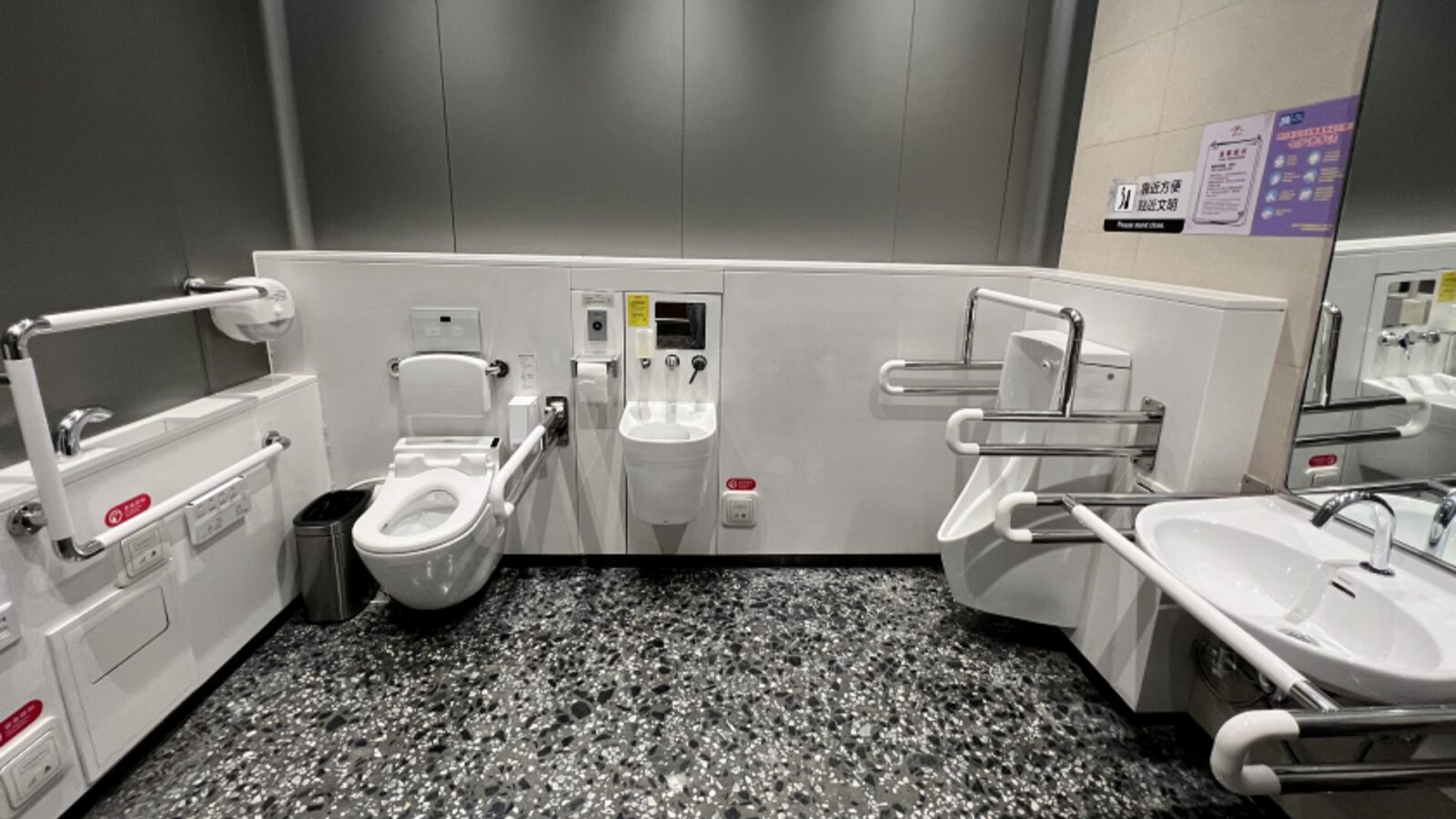
| Airport / Rail | Mix: squat + Western | ✅ Often | ✅ Usually | ⭐⭐⭐⭐ | ✅ Yes |
| Shopping Mall | Mix; luxury: Western | ⚠️ QR dispenser | ⚠️ Premium only | ⭐⭐⭐–⭐⭐⭐⭐⭐ | ✅ Yes |
| Tourist Site (AAAAA) | Mix: improved | ⚠️ Sometimes / QR | ⚠️ Inconsistent | ⭐⭐⭐–⭐⭐⭐⭐ | ✅ Usually |
| Rural Farmhouse | Squat, basic | ❌ No | ❌ No | ⭐⭐ | ⚠️ Not always |
| Pit Toilet (旱厕) | Open pit, no flush | ❌ No | ❌ No | ⭐ | ❌ Often none |
🧻 Solving daily dilemmas: Carrying pocket tissues solves an immediate restroom crisis, but learning how to dine safely, avoid tap water issues, and access emergency medical help are all meticulously detailed in the all-inclusive China Travel Survival Guide.
Visual Guide to Bathrooms across Every Travel Scenario
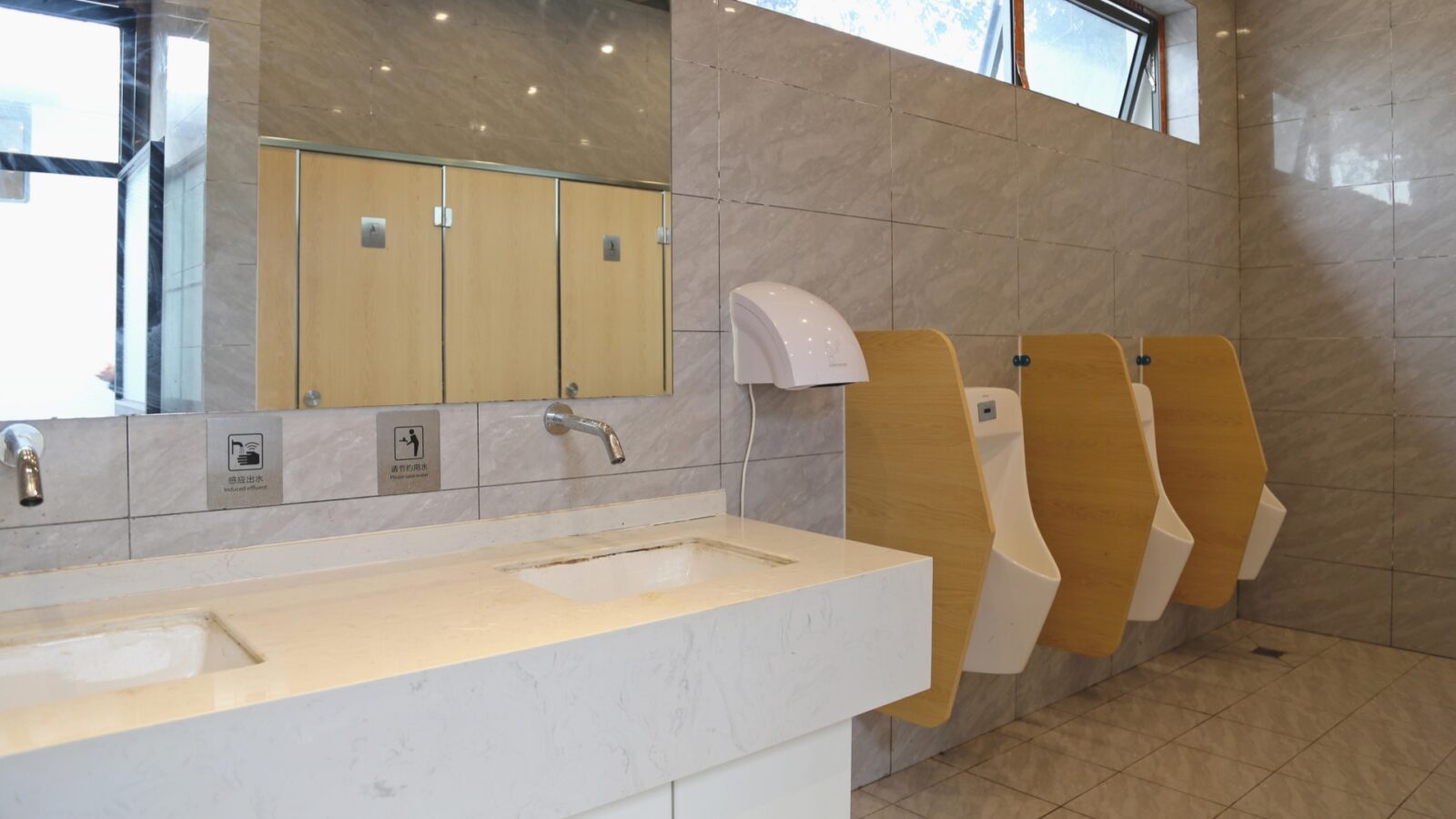
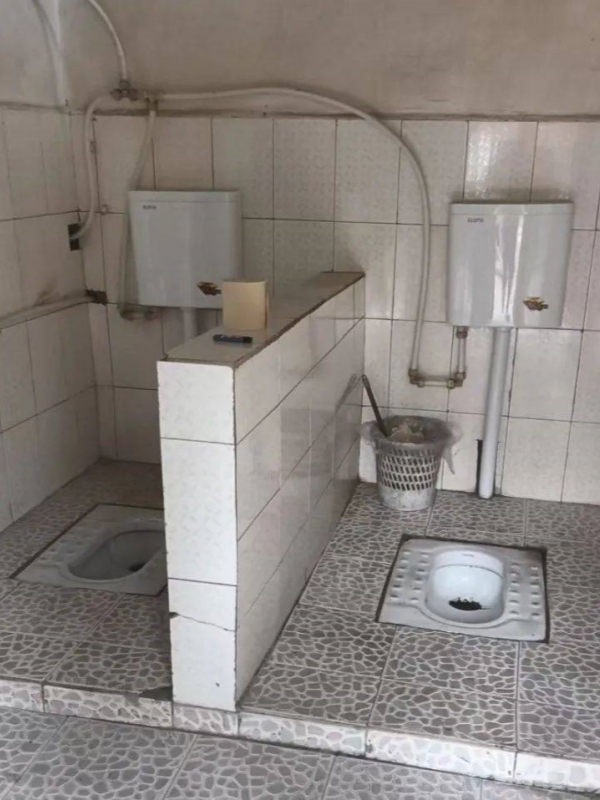
1. Comfortable Hotel Bathrooms with Familiar Fome Standards
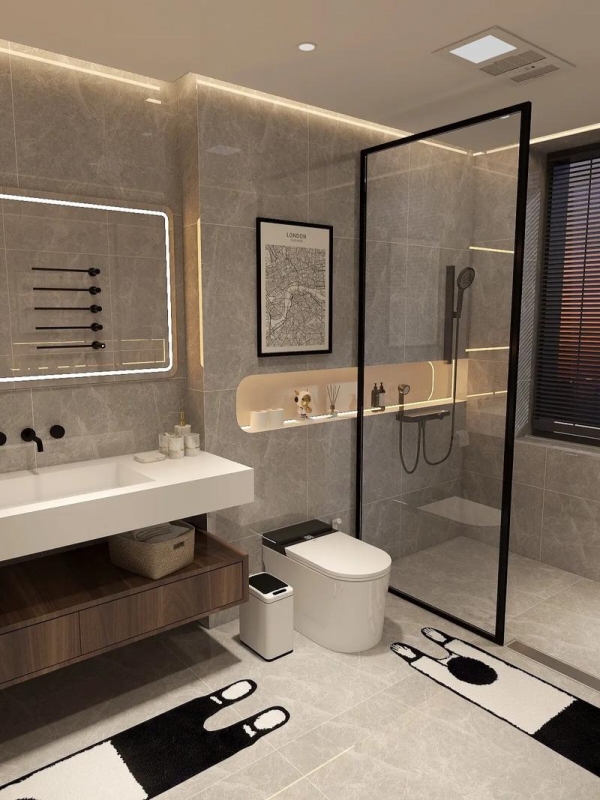
- What does it look like?
- The layout mirrors a standard Western home bathroom featuring a familiar sit-down unit
- These spaces include running hot water alongside provided toilet paper and liquid soap
- How clean is it?
- Dedicated housekeeping staff maintain these private guest bathrooms on a strict daily schedule
- This environment remains the most consistently hygienic facility throughout your entire journey
- How to use it?
- Check the small wall sign to determine if paper goes into the bowl or the bin
- Use this comfortable setup as your primary morning anchor before heading outside
💡 Tip: Save non-urgent bathroom needs for when you return to your hotel. Starting and ending each day at your room reduces the number of public china toilet encounters significantly.
2. Modern Shopping Centers Featuring Premium Lounge Facilities
- What does it look like?
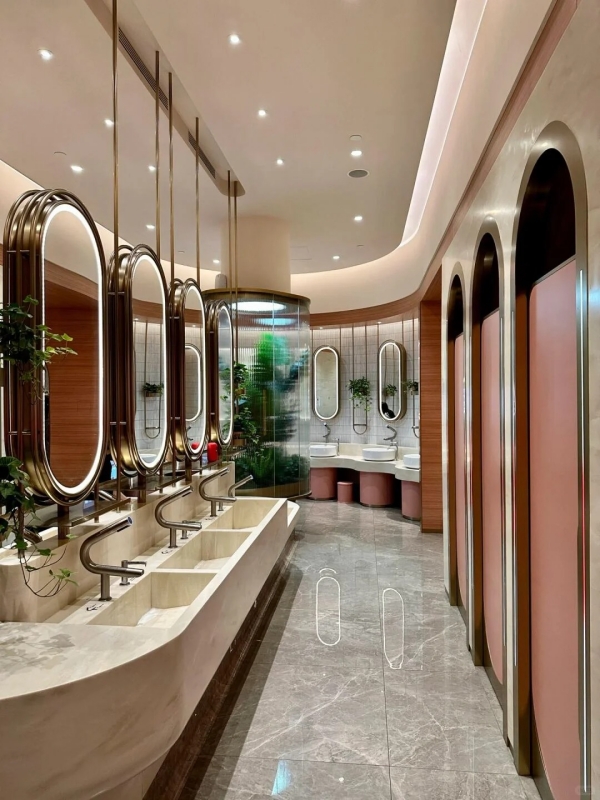
- Mid-range locations provide tiled squat stalls secured by full doors for complete privacy
- Premium centers feature Western stalls flanked by waiting lounges and dedicated nursing rooms
- How clean is it?
- Luxury mall environments maintain immaculate conditions rivaling top international hotel hygiene standards
- Standard malls offer acceptable cleanliness that improves significantly on higher building floors
- How to use it?
- Obtain paper from the wall QR dispenser before entering the individual private stall
- Carry personal tissues always since digital dispensers frequently reject foreign payment applications
3. Improved Facilities at Major National Scenic Areas
- What does it look like?
- Renovated top-tier sites feature modern tiled buildings equipped with clear bilingual English signage
- Lesser-known scenic areas still rely heavily on traditional squat stalls lacking paper provisions
- How clean is it?
- Major attractions employ dedicated rotation attendants to maintain consistently high cleanliness standards
- Sanitary conditions deteriorate progressively at lower-tier sites where daily maintenance remains inconsistent
- How to use it?
- Visit the restroom block immediately upon arrival before joining any popular attraction queues
- Discard all used pocket tissues directly into the designated waste bin beside the toilet
💡 Tip: Visit the toilet block before joining any queue at a popular attraction. Paper availability is unpredictable even at renovated AAAAA sites — your pocket tissues are the only reliable option.
4. Authentic Countryside Experiences off the Beaten Path
- What does it look like?
- Structures typically consist of a basic squat trough inside a small standalone outdoor shed
- Privacy barriers vary widely from solid wooden panels to simple hanging fabric curtains
- How clean is it?
- Overall hygiene depends entirely on the specific host family and their personal cleaning habits
- Floors frequently remain damp while natural cross ventilation struggles to clear strong odors
- How to use it?
- Adopt the standard squatting posture while consciously keeping all clothing well above the floor
- Flush using the provided water bucket and scoop when modern pedal mechanisms are absent
5. Traditional Pit Facilities in Remote Village Locations
- What does it look like?
- The setup features a simple rectangular opening positioned directly over a deep subterranean drop
- These primitive structures lack flush mechanisms completely and often lack basic architectural walls
- How clean is it?
- The environment remains entirely unfiltered with powerful natural odors and basic packed dirt floors
- Sanitation relies completely on natural decomposition rather than active daily human cleaning schedules
- How to use it?
- Position your feet securely on the marked footrests before squatting as low as ergonomically possible
- Apply personal hand sanitizer generously and immediately after safely exiting the basic structure
💡 Tip: If you smell a strong odor before you see the door, that is your advance signal. Mentally prepare, check your kit, and proceed calmly. The whole process takes under two minutes.
High Tech Smart Toilets in Luxury Chinese Hotels
-
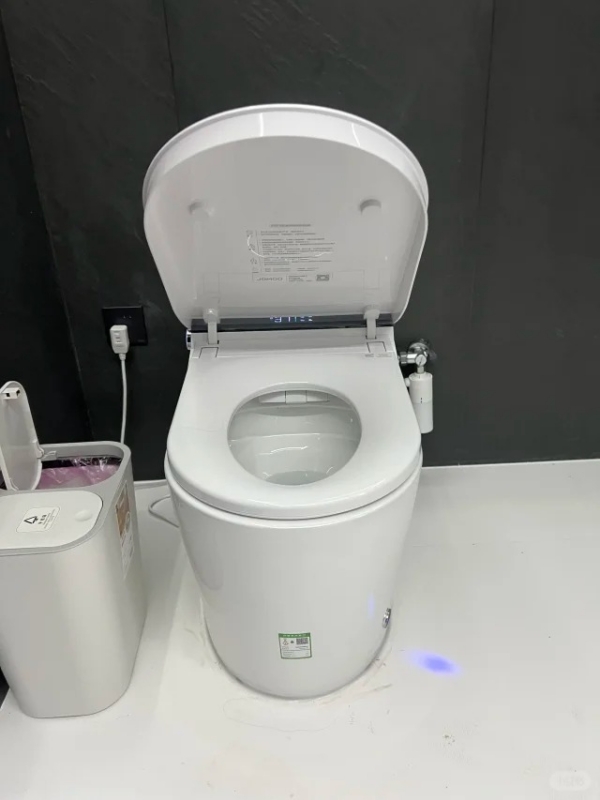

- Smart Toilets
-
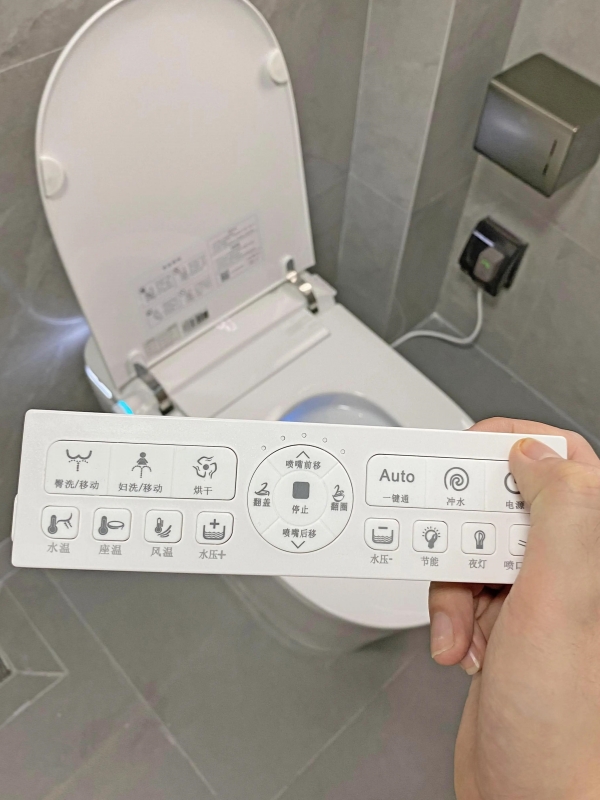
- Smart Toilet Control Panel
Not every china toilet tells a story of minimalism and metal bins. At the premium end, China is one of the world’s leading smart toilet markets — and if you stay in a 4- or 5-star hotel, there is a good chance the bathroom seat has more functions than your TV remote.
Advanced Features of Modern Intelligent Bathroom Seats
At first glance, the smart toilet appears to be a regular Western sit-down toilet, with the exception of a thick seat housing and either a side-panel remote or wall-mounted control unit. Most units automatically open the lid when you get close and shut it when you leave. In heated mode, the seat also warms itself to a toasty relaxed temperature. Using the china toilet experience here is in no way a struggle to get through at all — it’s quite luxurious compared to anything you’ll ever encounter in a public amenity.
💡 Tip: Press the stop button on any smart toilet panel before you explore any other function. Starting with stop builds your confidence and prevents an unexpected burst of cold water at close range.
Simple Guide to Decoding the Control Panel
- 后 / 后冲 (Rear wash): The most-used function. Warm water jet cleans from behind. Start at low pressure and adjust upward.
- 前 / 前冲 (Front wash): Forward-positioned jet for female users. Separate button, usually marked with a figure icon.
- 吸水 / 干燥 (Dry): Warm air function after washing. Takes 20–40 seconds for full effect. Eliminates the need for paper entirely.
- 脱臭 (Deodorise): Internal deodorising function. Usually activates automatically on some models.
- 座温 (Seat temperature): The icon showing a seat with wavy lines controls heated seat level. Three settings: low, medium, high.
- 停止 / STOP (Stop): The most important button. Press it first to halt any active function immediately.
Practical Steps for Mastering the Squat Technique
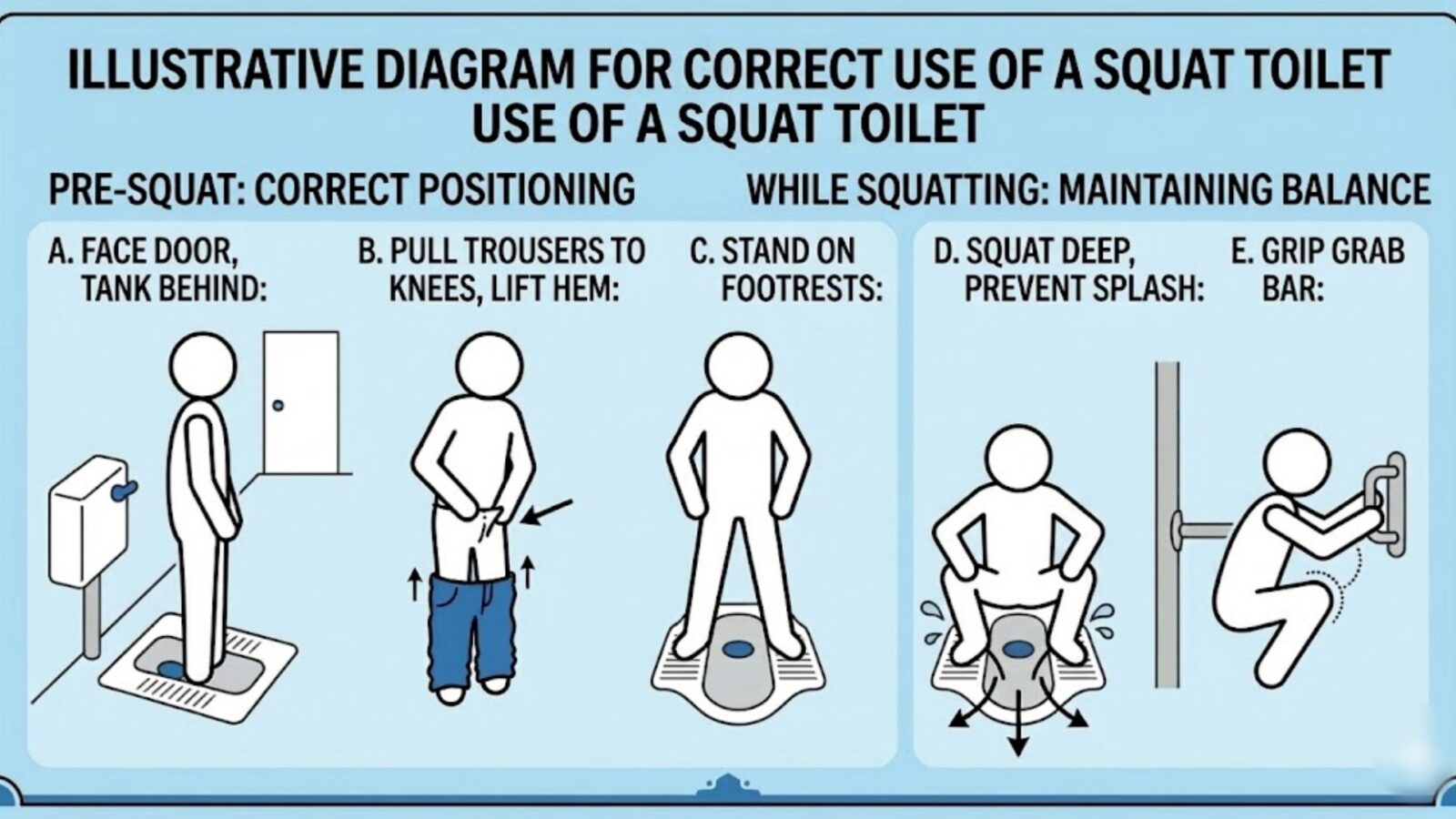
How to Use a China Toilet Squat Style:Step-by-Step
| Feature | Western Toilet (US / Europe) | China Squat Toilet |
|---|---|---|
| Posture | Sit | Ergonomic Squat — Natural and hygienic |
| Toilet Paper | Provided; flushed away | Waste Management — Bins ensure smooth plumbing |
| Door / Privacy | Standard closed stall | Flexible Design — Efficient to fully private |
| Hand Soap | Standard | Modern Hygiene — Soap provided in updated facilities |
| Cleanliness | Generally consistent | Active Maintenance — High-frequency cleaning cycles |
| Cost | Free | High Accessibility — Usually free; minimal fee for premium care |
How to Use a China Toilet Squat Style
Positioning Your Body Correctly Before You Lower:
- Orient yourself by facing the entrance door so the flush mechanism sits naturally behind you from the very beginning
- Pull your trousers to knee height only and consciously hold the front fabric slightly forward to prevent floor contact
- Place both feet firmly onto the raised porcelain footrests flanking the central trough before you start bending your knees
Maintaining Physical Balance During The Active Squat:
- Lower your body as close to the ground as physically comfortable since going low successfully directs everything downward and prevents splashing
- Grip the surrounding wall pipe or door handle to support your quad muscles because relying on external stability is completely normal for first timers
Managing Waste Disposal And Exiting The Stall:
- Drop all used toilet tissue directly into the designated waste basket located beside the porcelain unit instead of the bowl
- Activate the mechanical foot pedal or wall lever to clear the trough completely before stepping away
- Pour water from the provided bucket using the small plastic scoop if you encounter an older traditional stall lacking modern plumbing
Essential Survival Kit and Emergency Finder Strategy
| Item | Why You Need It | Notes |
|---|---|---|
| Pocket tissues (2 packs/day) | Paper is not reliably provided outside hotels and premium venues | Buy locally — approx. 5–10 RMB for 10 packs |
| Hand sanitiser gel (60ml) | Soap is absent or empty in most public bathrooms | Gel > spray; TSA carry-on compliant |
| Wet wipes (small pack) | Emergency surface and hand backup in rural situations | Bin only — not flushable anywhere in China |
| Small coins (1–2 RMB) | Some street and market toilets charge a small entry fee | Keep in an easy-access pocket, not a wallet |
| Offline maps app | Search 公共厕所 (gonggong cesuo) to find the nearest public toilet | Works without a SIM card if downloaded in advance |
The Honest Verdict — What China Toilets Are Actually Like in 2026
Here’s what the 2026 picture actually looks like. In major cities and flagship attractions, Western facilities are plentiful and well-maintained. In mid-range local venues, squat toilets are the norm, but completely doable with the right kit. And in the countryside, it’s more basic — but exploration of rural sites is a conscious choice in the itinerary, not a default routine. Bring the five items in the table above, tissues in every pocket, and gel with you at all times. Millions of foreign tourists do this each year, and find that the first couple of days are the period of acclimatization. After that, the china toilet is just part of the trip.
The 3 Rules That Apply to Every China Toilet
- Discarding All Used Tissues Inside Waste Bins:
- Place all used paper into the small bin beside the porcelain unit because narrow plumbing pipes cannot process tissue
- Follow this universal disposal rule without hesitation since standard Chinese sewer systems require this specific maintenance practice
- Carrying Personal Pocket Tissues At All Times:
- Bring at least two pocket packs every day because most public facilities do not reliably stock any paper
- Avoid relying on digital QR dispensers as these machines frequently fail to process international payment accounts or phone numbers
- Packing Alcohol Hand Sanitizer For Daily Use:
- Keep a compact gel bottle inside your bag since liquid soap is frequently absent from non hotel public bathrooms
- Cleanse your hands immediately after exiting any facility as running water alone may not ensure complete sanitary protection
When You Urgently Need a Western Toilet — Emergency Finder Strategy
- International hotel lobbies (Marriott, Hilton, IHG, Hyatt)
- Walk in confidently and head directly to the lobby-level bathroom.
- No purchase necessary — staff rarely question walk-in guests.
- Western stalls always available; maintained to international standard.
- Western fast food outlets — KFC, McDonald’s, Starbucks
- Present in every city size, including Tier 3 cities.
- Western-style stalls; consistently clean; free to use.
- Premium shopping mall upper floors
- Upper floors have lower foot traffic — reliably cleaner than ground level.
- Western stalls clearly marked; paper often available via dispenser.
- High-speed rail stations
- Both squat and Western options at every major station.
- Use before boarding — facilities inside carriages are far more limited.
Practical Clothing and Hygiene Advice for Women
Clothing choice comes into play on high travel days, as trousers are much easier to wriggle into a squat position in than skirts and dresses. Patting dry with one’s own tissues is the norm, then. For tricky balance spots at the wee, a silicone travel funnel - sold under names like She-Wee and Go Girl - is a handy addition that increasingly appears in the kits of female travellers who know what a bathroom ‘problem’ is. They cost minimal cents, are tiny, and eliminate the worst possible physical wee scenarios.
💡 Tip: Pack a compact silicone travel funnel before departure. It sounds extreme right up until the one moment you need it — and then it becomes the most valuable item in your day bag.
Preparing Children for a Successful Bathroom Experience
- Under 5 years:
- Hold the child over the toilet from behind, supporting their full weight. This works reliably in practice and gives them complete physical security throughout.
- Ages 5 to 10:
- Walk them through the squat process at the hotel bathroom as a trial run. One successful practice session removes the surprise entirely and builds real confidence for the day ahead.
- Ages 10 and above:
- Children in this range adapt very quickly. A single clear demonstration is typically all that is needed before independent use.
💡 Tip: For children under 3 on full-day outings, a compact foldable travel potty earns its bag space. Most major tourist sites now have family stalls marked with a family icon — look for the signage.
Frequently Asked Questions About China Toilet
Q: What exactly is a squat toilet, and why is it so common in China?
A china toilet squat style is a porcelain trough set flush with the floor, with foot rests on each side and no seat. It dominates because Chinese plumbing infrastructure was built around this design over centuries. Additionally, squatting provides genuine digestive health benefits — a physiological advantage that continues to support its widespread everyday use across the country.
Q: Will I find toilet paper in Chinese public bathrooms?
In most public china toilet facilities, paper is not reliably provided. Hotels stock it consistently. Premium malls may offer QR code dispensers, which may not work for foreign payment accounts. The single safest approach is to carry your own pocket tissues every day. Two packs per day handles any situation you will realistically encounter.
Q: Why does toilet paper go in the bin instead of the toilet in China?
China’s older sewer pipes cannot process tissue — this is a plumbing engineering reality, not a cultural preference. Every china toilet provides a bin beside the bowl for exactly this reason. The bin is emptied regularly as part of standard cleaning cycles. In modern hotels, clear signage will confirm when flushing is safe. Always follow the posted sign.
Q: Are squat toilets actually better for your health?
Research in digestive health suggests that squatting widens the anorectal angle more effectively than sitting, which reduces muscular strain. The china toilet squat design therefore carries real physiological advantages. The main practical barrier for Western visitors is quad muscle endurance — something that improves noticeably with a short daily squat practice in the week before travel.
Q: Are public toilets in China free to use?
Since China’s 2015 Toilet Revolution, most tourist-area public china toilet facilities are free of charge. Some street and market toilets still charge between 0.5 and 2 RMB. Carrying a few small coins as backup is sensible, even though most travellers on standard city itineraries rarely need them at major attractions.
Q: What is China’s Toilet Revolution and has it made a real difference?
The Toilet Revolution (cesuo geming) launched in 2015 under a national mandate to build and renovate public china toilet facilities. By 2020, over 68,000 tourist-area toilets had been upgraded. For today’s traveller, the improvement in major cities and AAAAA-rated scenic areas is clearly visible and measurable compared to pre-2015 accounts.
Q: Where can I quickly find a Western toilet in China if I need one urgently?
The fastest china toilet options are international hotel lobbies, KFC and McDonald’s outlets, premium shopping mall upper floors, and high-speed rail stations. These are available in every major and mid-tier city. Save the Chinese search term 公共厕所 (gonggong cesuo) in your offline maps app before you depart.
Q: Why do some public toilets in China have no doors on the stalls?
Older china toilet facilities in hutong neighbourhoods and rural areas were built before full-height stall partitions were standard. This reflects a historical difference in privacy norms rather than an intentional design choice. All facilities built or renovated since the 2015 Toilet Revolution include full-height stall doors as a standard requirement.
Q: Are squat toilets common in Shanghai and Beijing, or mainly in rural China?
In Shanghai and Beijing’s main tourist circuits, Western-style china toilet options now outnumber squat stalls. And, in local restaurants, older neighbourhoods, and street markets, squat toilets remain dominant. In rural areas, squat and pit toilets are the norm. The general rule: the more internationally oriented the venue, the more likely a Western option is available.
Q: What should I pack to be fully prepared for Chinese public toilets?
The five essentials for every china toilet situation are: pocket tissues (two packs per day), hand sanitiser gel (60ml, TSA-compliant), wet wipes (small pack), small coins for occasional paid facilities, and an offline maps app with 公共厕所 saved as a search term. Buy tissues locally on arrival — they are cheap and available at every convenience store.