Shenzhen Art Museum
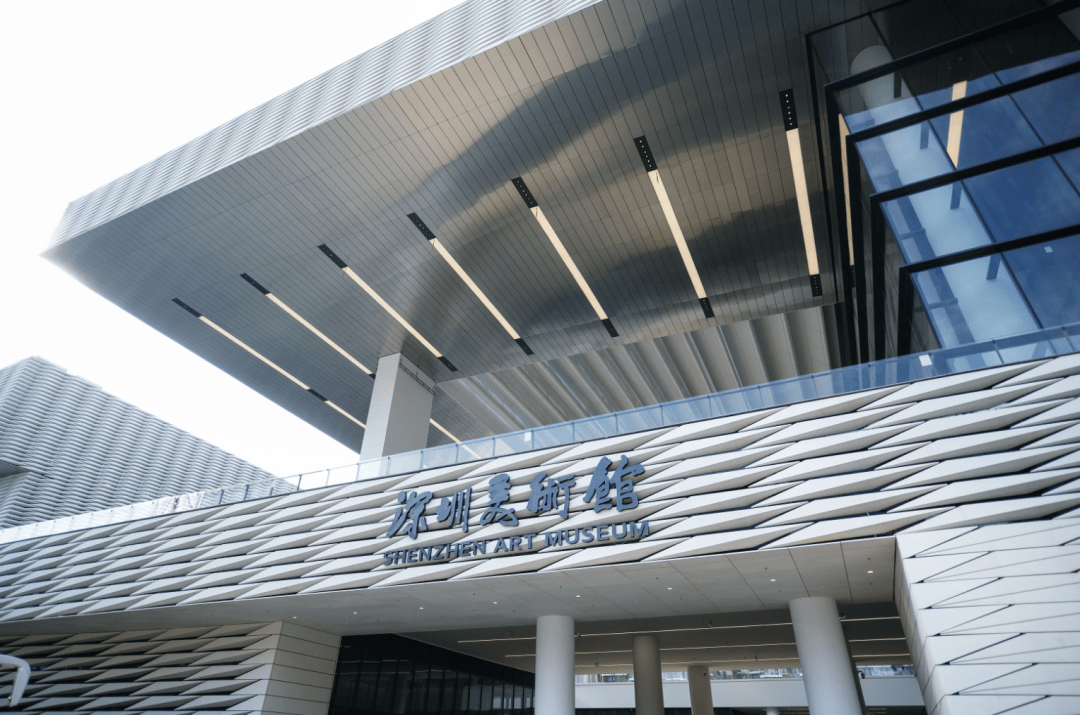
The Shenzhen Art Museum — specifically its striking new venue in Longhua District — is one of the most underrated art destinations in China. Opened in late 2023, this free-to-enter complex spans 66,000 square metres across 18 exhibition halls, rivalling the scale of top-tier institutions in Beijing and Shanghai. Designed by German firm KSP Jürgen Engel Architekten, the building sits on the city's central axis alongside a matching library by the same architects, forming a cultural landmark that most travellers haven't yet discovered.
Shenzhen's reputation as China's Silicon Valley has long overshadowed its growing art scene — but that's changing fast. From a Zaha Hadid-designed science museum to a village that churns out five million paintings a year, the city offers a surprisingly rich gallery circuit. This guide walks you through every key venue, with practical booking steps written specifically for foreign visitors.
Why Shenzhen’s Art Scene Deserves a Visit
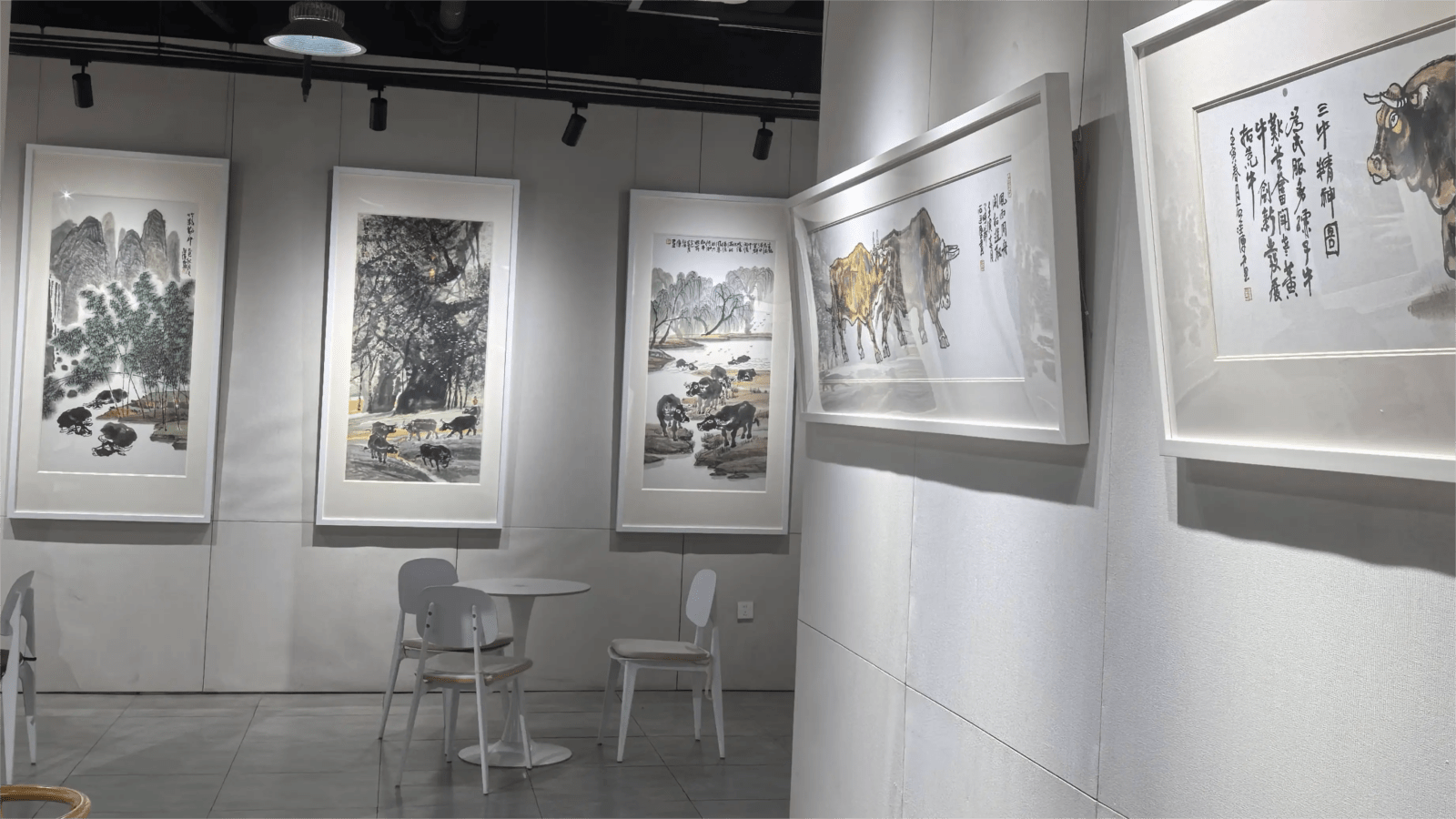
Shenzhen Art Museum
Let's address the obvious question first: is it actually worth the detour? Short answer — yes, and the case is stronger than most visitors expect. The new Shenzhen Art Museum venue alone covers more exhibition space than many national-level galleries, and admission is completely free. That's a rare combination anywhere, let alone in a city still better known for smartphone factories than sculpture halls.
Then there's the architecture angle. KSP Engel's glass-and-steel museum, Zaha Hadid's fluid-form science museum in Guangming, and Dong Gong's bamboo-terraced Pingshan Art Museum give the whole circuit a design-tourism dimension. You're not just looking at art on walls — the buildings themselves demand your attention.
Finally, the value comparison is hard to ignore. Comparable temporary exhibitions in Hong Kong routinely charge HK$150–200. Here, the same calibre of international shows costs nothing. As Artnet put it, Shenzhen is fast becoming China's next art hub — and right now, before the crowds catch on, is the best time to visit.
Shenzhen Art Museum New Venue — Inside the City's Crown Jewel
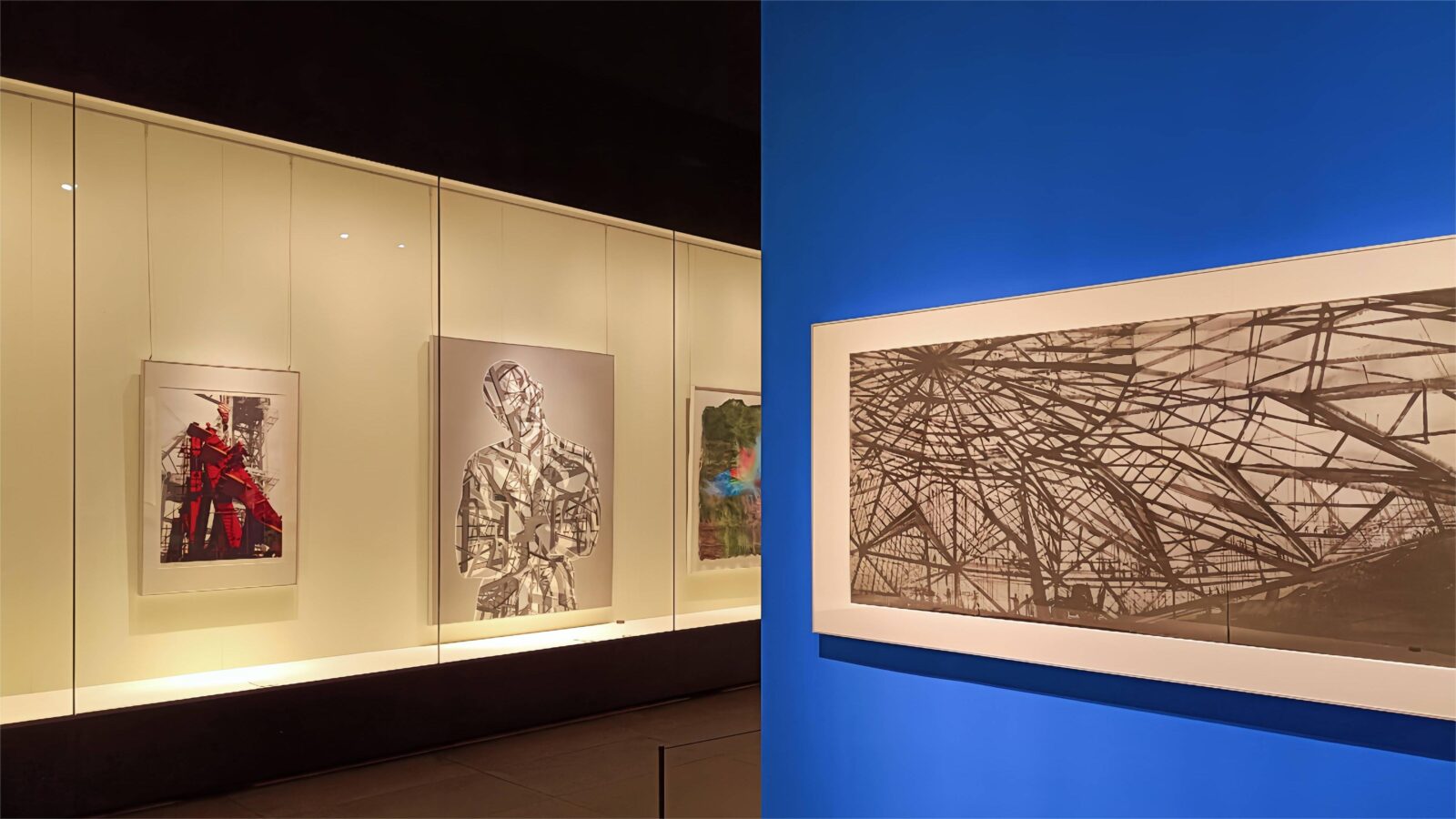
New Venue
The Experience — What You'll Actually See and Feel
Step inside and the scale hits you immediately. The first floor's ceiling climbs to 13.9 metres — tall enough that the hydraulic movable walls feel less like room dividers and more like the prow of a ship. The space adapts to whatever's showing: intimate photography retrospectives one month, sprawling international group shows the next.
Head upstairs and the mood shifts. The second floor opens into a 3,900-square-metre semi-outdoor sculpture terrace where natural light floods in at angles that change by the hour. On the third floor, a professional light-film system recreates diffused daylight — the kind painters have always chased north-facing windows for. The fourth floor is the quietest and most precise: constant-temperature, constant-humidity cases for the museum's most fragile holdings.
| Sensory Experience | Technical Spec | |
|---|---|---|
| 1F | Vast — the ceiling disappears above you | 3.9m height; hydraulic movable walls |
| 2F | Walk into open air — sculpture breathes | 3,900 sqm semi-outdoor sculpture hall |
| 3F | Soft diffused light — paintings seem to glow | Professional light film; natural lighting |
| 4F | Hushed, vault-like — the room protects fragile things | Constant temperature & humidity cases |
Architecture & Design — Built to Impress
KSP Jürgen Engel Architekten built the museum as one half of a cultural pair. Directly opposite, separated by a public square, sits their Shenzhen Library North Venue — same geometric language, mirrored massing, a deliberate conversation between the two buildings. The effect is best appreciated at dusk, when the glass facades take on the warm colour of the sky behind the skyline.
The museum's position on Shenzhen's central urban axis was not accidental. City planners sited it at the heart of Longhua's Shenzhen North Railway Station CBD, connecting it to one of the busiest transport hubs in southern China. Even if you're passing through on a high-speed rail connection, the building is a short metro hop away.
New Venue At a Glance
| Details | |
|---|---|
| Address | 30 Tenglong Road, Longhua District |
| Total Area | 66,000 sqm (Exhibition area: 20,000 sqm) |
| Exhibition Halls | 18 halls + 3,900 sqm semi-outdoor sculpture area |
| Collection | ~4,000 pieces (permanent + rotating temporary shows) |
| Opening Hours | Tue–Sun 10:00–18:00 (last entry 17:30) |
| Closed | Every Monday (except public holidays) |
| Admission | Free — advance booking required |
| Daily Capacity | 6,000 visitors |
| Booking | WeChat: 深圳美术馆 (ID: szam1976) / Mini-programme: 深圳美术馆 |
| Metro | Line 4 or 6 → Hongshan Station, Exit A1 (~5 min walk) |
| Parking | Very limited on weekends — metro strongly recommended |
| Tel | 191-2935-9590 |
| Pro tip: The museum opens at 10:00 (note the 2026 update — the old 9:00 opening no longer applies). Tuesday and Wednesday mornings are the quietest windows; the red-yarn installation queue can stretch 30 minutes on weekend afternoons. |
5 More Art Destinations You Shouldn't Miss
Pingshan Art Museum — Shenzhen's Best-Kept Secret
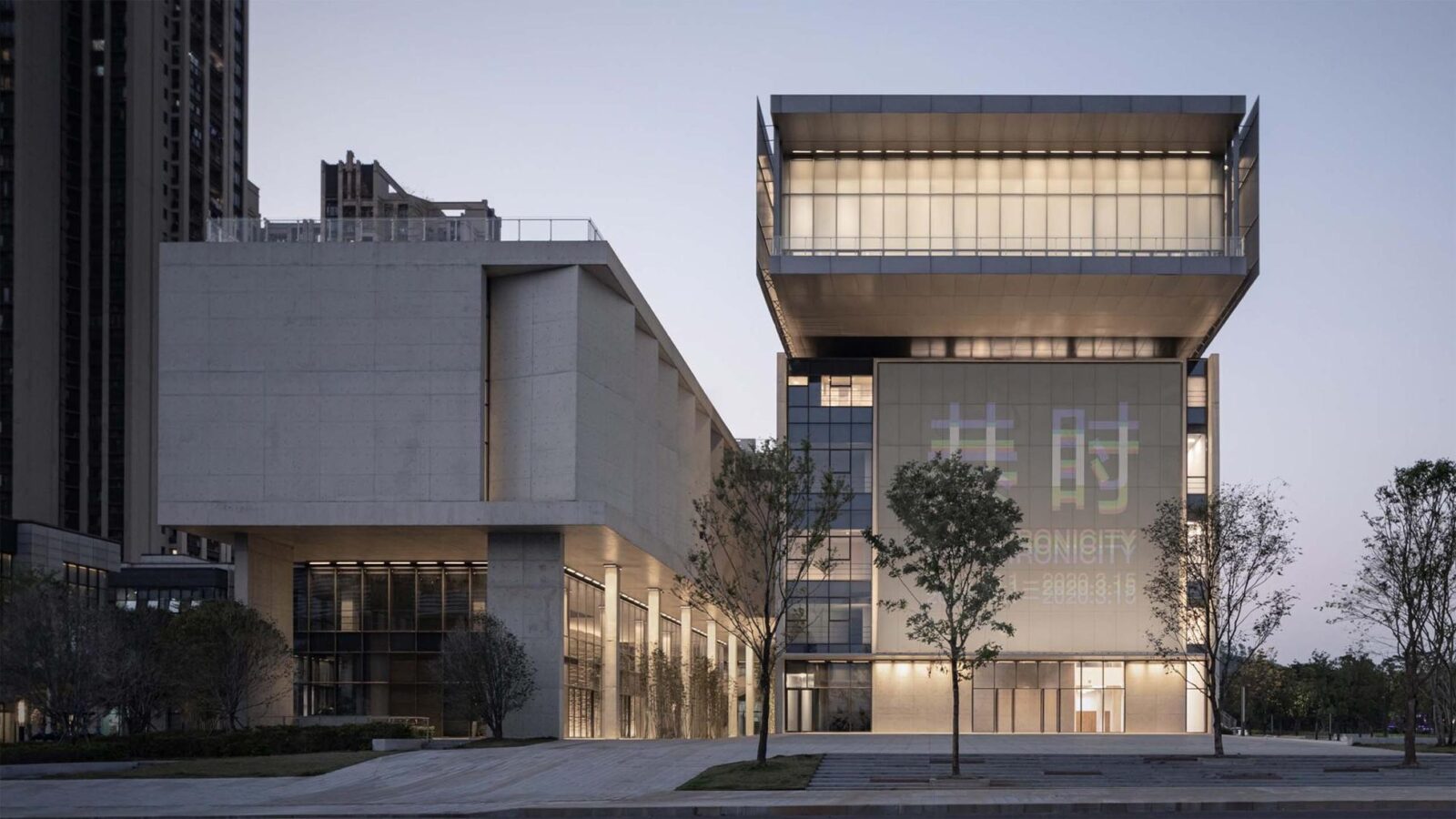
Pingshan Art Museum
Most visitors to the Shenzhen art circuit stop at the headline venues and miss this one entirely — which is exactly why it's worth making the trip. Pingshan Art Museum opened in 2019 as China's first district-level contemporary art museum, a designation that tells you nothing about how good it actually is. Architect Dong Gong of Vector Architects designed a building where the exhibition route flows outward through balconies, bridges, and bamboo-covered terraces, blurring the line between gallery and garden.
No booking required, which is a refreshing change. The programme collaborates with national-level state art museums, so the exhibition quality regularly punches above its weight. If you've already seen the New Venue and want something more architecturally adventurous, this is your afternoon.
MOCAUP — Where Shenzhen Tries to Make Sense of Itself
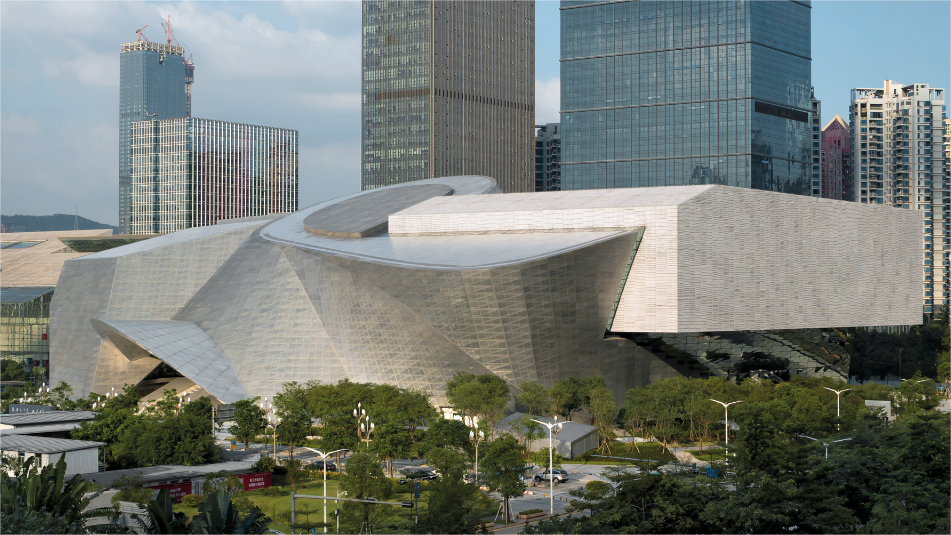
MOCAUP
The Museum of Contemporary Art and Urban Planning is a genuinely strange idea — and it works. Two entirely separate institutions, contemporary art and city planning, share a single Coop Himmelb(l)au superstructure connected by a chrome-cloud corridor with a café and bookshop hanging above the atrium. Only in Shenzhen does this pairing make obvious sense: a city that went from 30,000 people to 18 million in a single generation needs somewhere to look back at itself.
MOCAUP is only the third Chinese public institution with a major focus on contemporary art, following Shanghai's Power Station of Art and Yinchuan's MoCA. Exhibitions tend toward the conceptually ambitious. The active Instagram account (@szmocaup) is genuinely worth checking before you visit — the team posts regularly, and you'll know in advance whether the current show suits you.
Dafen Oil Painting Village — The World's Most Prolific Art Factory
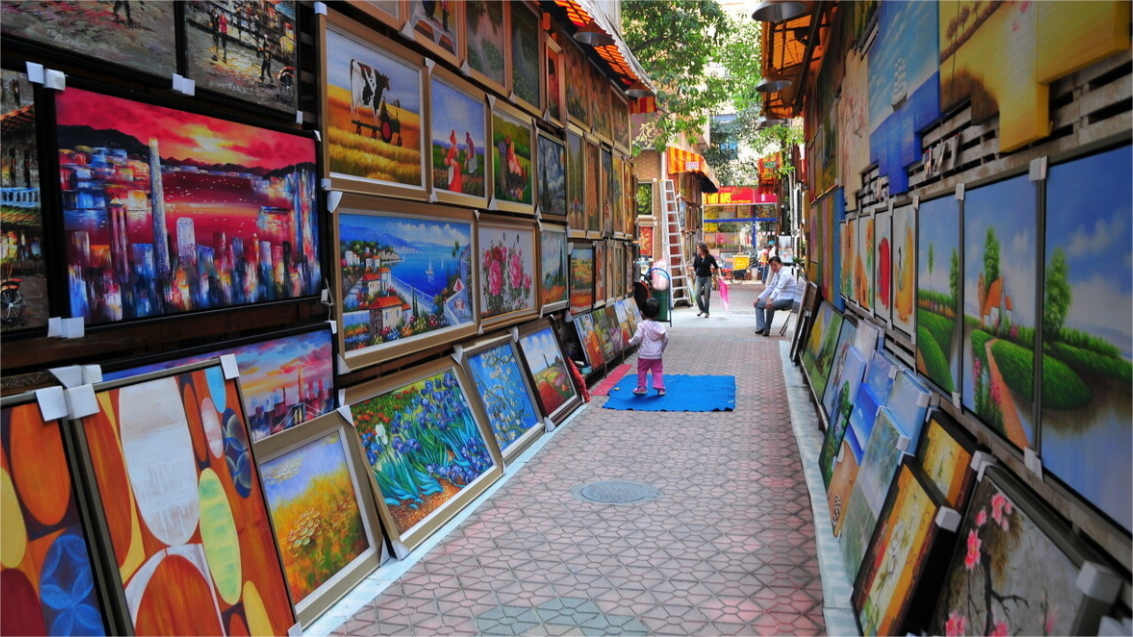
Dafen Oil Painting Village
Dafen is unlike anything else on this list. Around 300 studios and galleries crowd into a few city blocks in Longgang District, collectively producing an estimated five million oil painting replicas per year. Van Gogh, Monet, Zhang Xiaogang, Yue Minjun — if there's a market for it, someone in Dafen is painting it. The experience raises every question about authenticity and craft that a contemporary art museum carefully tries to sidestep.
Spend a couple of hours walking the alleys, watch painters working from iPad references propped against their easels, then stop into the Dafen Art Museum — China's largest village-level museum — before you leave. If you fancy a souvenir with a story, many studios offer custom commissions or DIY workshop sessions for around ¥50.
Shenzhen Science & Technology Museum — Zaha Hadid's Last Gift
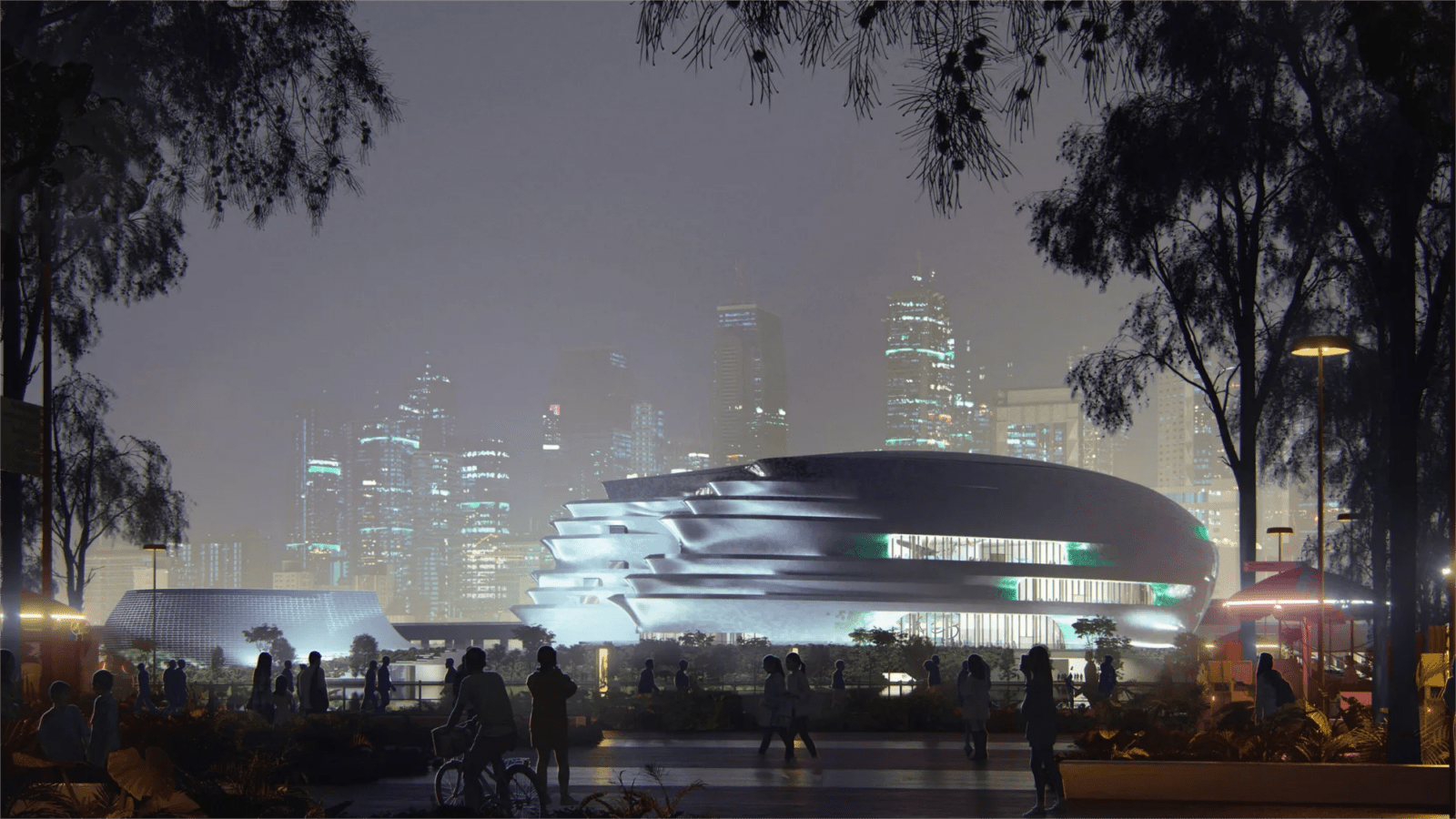
Shenzhen Science & Technology Museum
Opened in May 2025 in the Guangming District, this is the most architecturally dramatic building on the circuit. Zaha Hadid Architects delivered a fluid, biomimetic structure that looks like it arrived from a different century — fittingly, for a museum dedicated to the future. The building alone justifies the 40-minute metro ride from the city centre.
A few things to know before you go: this is the one venue on the list that charges admission (¥50 for adults, ¥32 concession). Booking runs through a separate mini-programme, not the same WeChat account as the art museum — a distinction that catches people out. Foreign passports are accepted for both.
Shenzhen Museum (Old Venue) — Where the City's Story Begins
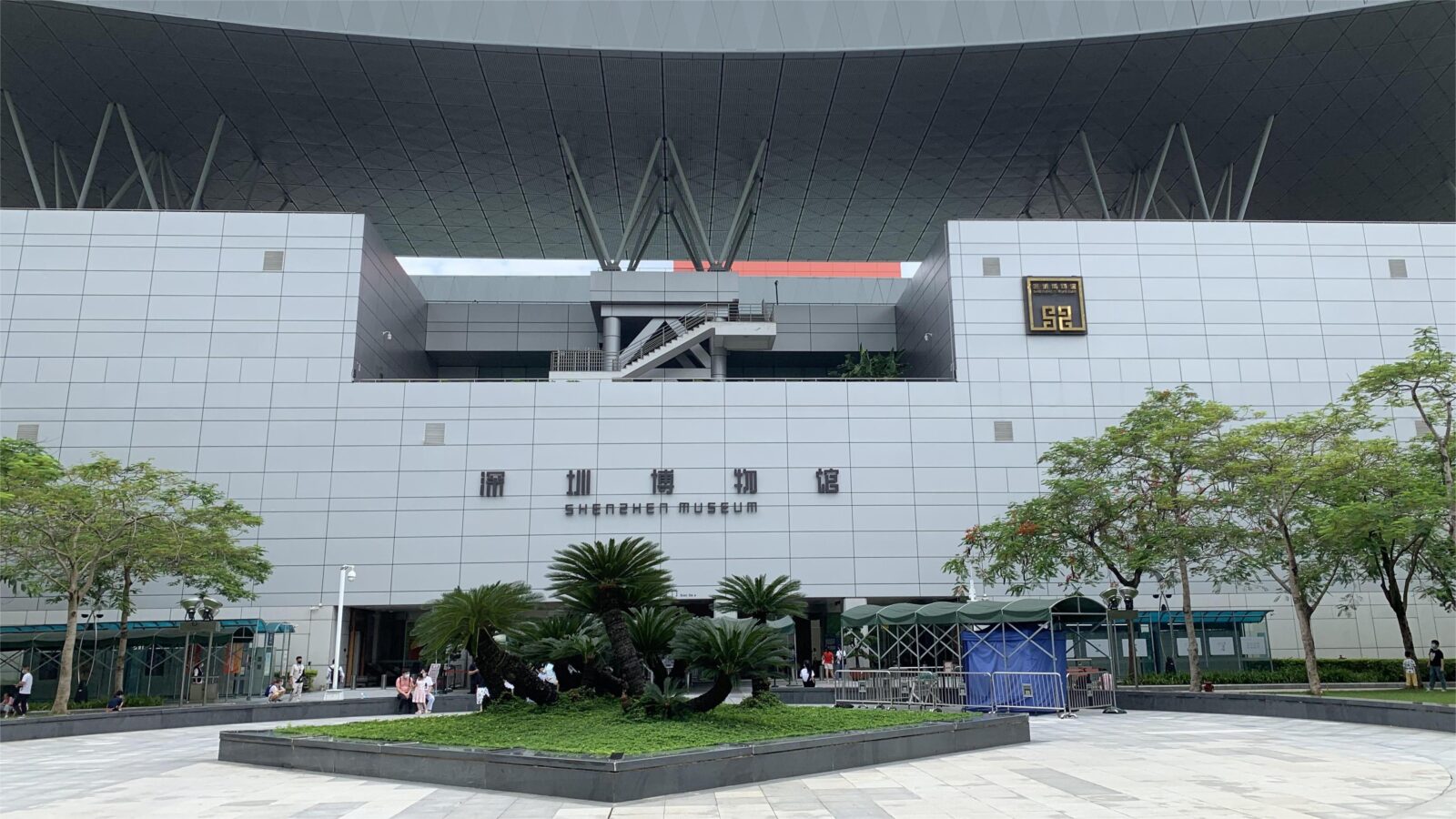
Shenzhen Museum
If you have time for just one historical detour in Shenzhen, choose the original Shenzhen Museum. Established in 1976 as Shenzhen Exhibition Hall, the venue preserves the city’s key archaeological finds and precious Lingnan folk cultural relics, recording Shenzhen’s origins as an ancient coastal settlement long before the special economic zone era. Walking through its exhibits helps visitors grasp the city’s pre-reform local history and traditional customs.
Schedule a same-afternoon visit to MOCAUP for a complete perspective. Focused on contemporary art and urban planning, the museum displays Shenzhen’s rapid urban transformation and future development layouts. Combining the two visits forms a full timeline: you explore where the city started at the old museum, then contemplate its ongoing developmental direction at MOCAUP.
Your Art Day in Shenzhen — Two Itineraries
Half-Day Art Fix (3–4 hours)
This route works well for day-trippers from Hong Kong or visitors who only have a morning to spare. Everything is walkable from a single metro stop, which keeps the logistics simple.
| Time | Stop | Notes |
|---|---|---|
| 09:30 | Metro → Hongshan Station (Line 4 or 6) | Museum opens at 10:00 — no need to rush |
| 10:00 | Shenzhen Art Museum New Venue | Start on floor 2 (sculpture terrace) while energy is high; work down |
| 12:30 | Lunch at Hongshan 6979 | 5-min walk; Southern China's first Kaixin Mahua Theatre complex, good food options |
| 14:00 | Shenzhen Library North Venue | Free. Walk the atrium bookwall and, if pre-booked, tour the underground robotic stacks |
Full-Day Art Immersion (7–8 hours)
For a proper deep-dive, the morning at the new Shenzhen Art Museum gives you a strong foundation — then a directional choice splits the afternoon depending on your interests. Architecture fans should head to Pingshan; anyone who wants something unexpected should choose Dafen.
| Time | Stop | Notes |
|---|---|---|
| 10:00 | Shenzhen Art Museum New Venue | 3 hours | Line 4/6 → Hongshan |
| 13:00 | Lunch at Hongshan 6979 | Recharge before the afternoon leg |
| 14:30 | Option A: Pingshan Art Museum | ~40 min by Line 14 | Architecture + contemporary art |
| 14:30 | Option B: Dafen Oil Painting Village | ~35 min by Line 3 | Eccentric, tactile, genuinely memorable |
| 17:30 | Return to city centre | Dinner in Futian or Nanshan; Mandarin Oriental Shenzhen is well-placed for both |
Beyond the Museum — Two Cultural Neighbours
Shenzhen Library North Venue
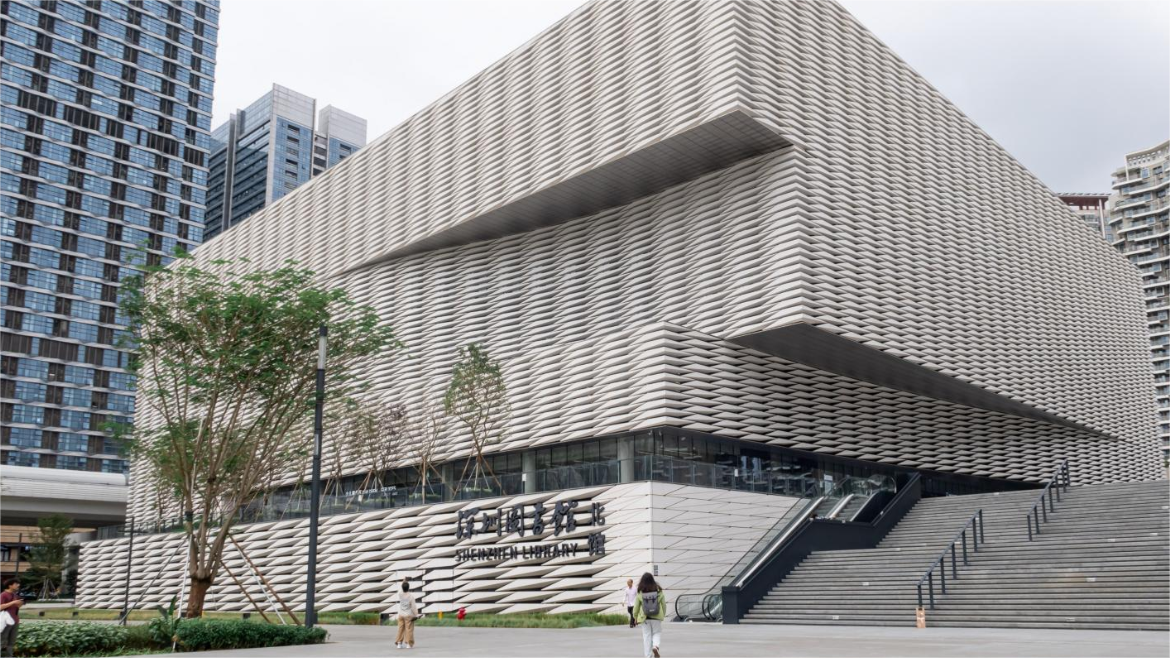
Shenzhen Library North Venue
Directly across the public square from the art museum, the Library North Venue is by the same architects and holds its own as a destination. The main reading floors are open Tuesday through Sunday until 21:00 — a useful fallback if the museum queue is longer than expected.
The highlight is the underground robotic book retrieval system, the largest of its kind in China. Weekend viewing slots are limited to ten people per session and must be booked through the "文旅深圳" WeChat account well in advance. Even without a slot, the towering book atrium that wraps the central void is freely accessible and genuinely dramatic. One more detail: there's an unmanned aerial drone delivery pod outside — worth a photograph if you've never seen one.
| Highlight | Details |
|---|---|
| Underground Stacks | Largest in China; Sat–Sun only, 10 per session, book via "文旅深圳" WeChat |
| Book Atrium | Floor-to-ceiling shelves around a central void — free to visit anytime |
| Opening Hours | Main hall: Tue–Sun 9:00–21:00 |
| Drone Delivery Pod | Outside the entrance — a distinctly Shenzhen photo opportunity |
Hongshan 6979 — Where to Eat After the Museum
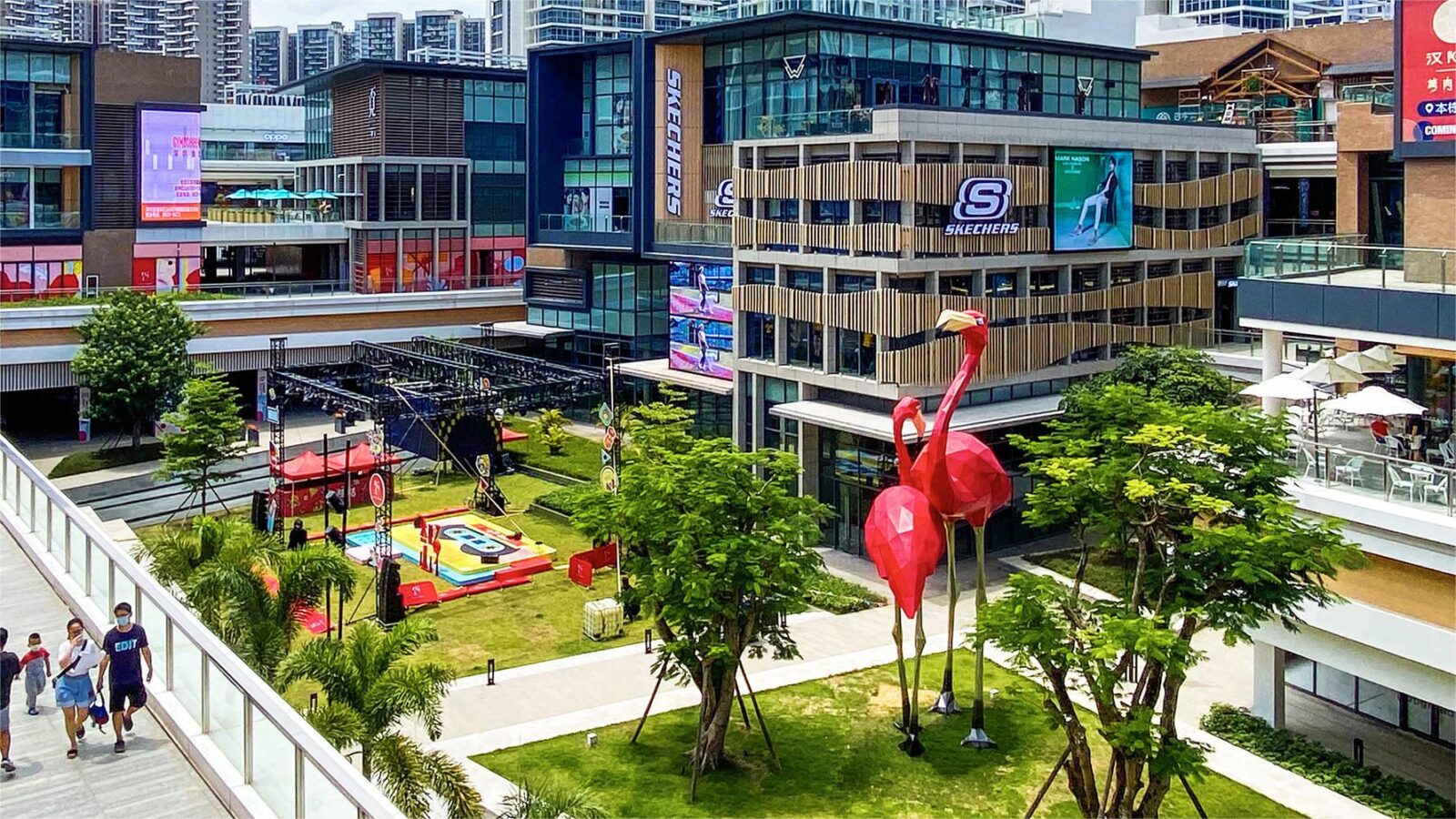
Hongshan 6979
Five minutes on foot from the art museum, Hongshan 6979 is the practical answer to "where do we eat?" It anchors the neighbourhood with a cluster of restaurants and the first Kaixin Mahua Theatre outside of Northern China — an interesting post-lunch option if you're staying into the evening. The plaza hosts regular outdoor performances too, which makes it a pleasant place to linger rather than rush through.
| Category | Details |
|---|---|
| Location | Longhua District — 5 min walk from museum |
| Highlight | Southern China's first Kaixin Mahua Theatre |
| Dining | Multiple restaurants; mid-range pricing |
| Evening | Regular plaza performances; good atmosphere after 19:00 |
The Foreign Visitor's Survival Guide
How to Book Free Tickets (Step-by-Step for Non-Chinese Users)
The WeChat booking process is straightforward once you know the steps. Foreign passports are accepted — this is the part most visitors worry about unnecessarily. Here's exactly what to do:
| Step | Action |
|---|---|
| 1 | Download WeChat (available on the App Store and Google Play in most regions) |
| 2 | Search for official account: 深圳美术馆 — or search the mini-programme by the same name |
| 3 | Tap "预约参观" (Book a Visit) in the account menu |
| 4 | Select your preferred date and entry time slot |
| 5 | Enter your passport number — the form accepts it exactly as it appears in your passport |
| 6 | Screenshot or save the booking confirmation; show it at the museum entrance on arrival |
A few extra notes on availability:
•Weekend slots fill up 2–3 days in advance. Book Thursday evening for Saturday entry.
•Cancellations appear throughout the day — refresh the booking page near opening time if you're trying last minute.
•On quiet weekdays (Tuesday and Wednesday mornings), walk-in entry is sometimes possible, but it's not guaranteed and not worth banking on.
Getting There — Metro Made Simple
Every venue on this list is reachable by metro, which makes the whole circuit genuinely easy to navigate without a car or taxi. The Shenzhen metro accepts international contactless credit cards directly at the gates — no need to top up a local transit card.
| Museum | Line(s) | Station | Exit | Walk |
|---|---|---|---|---|
| Shenzhen Art Museum (New Venue) | Line 4 / 6 | Hongshan | A1 | ~5 min |
| Pingshan Art Museum | Line 14 | Pingshan | B | ~10 min |
| MOCAUP | Line 3 / 4 | Youth Palace | A2 | ~2 min |
| Dafen Oil Painting Village | Line 3 | Dafen | A1 | ~3 min |
| Shenzhen Museum (Old Venue) | Line 1 | Civic Center | B | ~6 min |
| Science & Technology Museum | Line 6 | Guangming | D | ~10 min |
Language, Payment & Pro Tips
English coverage at the main venues is solid. The New Venue and Pingshan Art Museum both offer bilingual exhibition labels and, for major temporary shows, English-language gallery guides. Dafen is the exception — almost nothing there is labelled in English, but context matters less when you're watching someone paint a copy of a Rembrandt from an iPhone photo.
| Topic | What to Expect |
|---|---|
| Exhibition labels | New Venue & Pingshan: high English coverage. Dafen: almost none. |
| Staff English | Basic at most venues — carry DeepL or Google Translate as backup |
| Metro payment | International contactless cards (Visa / Mastercard) accepted at all gates |
| Cafes & shops | Alipay International (Alipay+) supports most foreign debit and credit cards |
| Photography tip | Dark clothing photographs far better against Shiota Chiharu's red-yarn installation |
| Popular installations | Budget 15–30 min queue for the red-yarn work on weekend afternoons |
Frequently Asked Questions (FAQs)
Q: Is the Shenzhen Art Museum worth visiting?
Yes — and it's a more emphatic yes than the city's low profile might suggest. The Shenzhen Art Museum New Venue offers free admission, 18 exhibition halls across 20,000 square metres, and a programme that regularly pulls in internationally significant shows. Comparable exhibitions in Hong Kong cost HK$150–200. The Pingshan Art Museum, also free, is one of the most architecturally interesting gallery buildings in southern China. Unless you specifically dislike contemporary art, there's no reasonable argument against going.
Q: What is the new art museum in Shenzhen?
The new Shenzhen Art Museum (深圳美术馆新馆) opened in November 2023 in the Longhua District. Designed by German firm KSP Jürgen Engel Architekten, it sits on the city's central urban axis and was the first of Shenzhen's ten "New Era" cultural landmarks to open. With a total construction area of 66,000 square metres and 18 exhibition halls, it replaced the city's previous art museum as the flagship venue for contemporary and international shows. Admission is free; advance booking via WeChat is required.
Q: What is Shenzhen best known for?
Shenzhen is globally recognised as China's technology capital — headquarters of Huawei, Tencent, DJI, and BYD, among many others. That reputation is well-earned. But the city has spent the past decade building cultural infrastructure to match, and the art scene is now developing at the same pace the tech sector did in the 1990s. The Shenzhen art museum circuit, the Zaha Hadid science museum, and districts like OCT Loft represent a city that is no longer content to be known for one thing alone. In addition, Shenzhen's cost of living is extremely competitive; housing, transportation, and local dining all offer genuine value relative to peer cities across East and Southeast Asia.
Q: What is inside the Shenzhen Art Museum?
The New Venue holds approximately 4,000 works across 18 exhibition halls, mixing a rotating permanent collection with ambitious temporary shows. The second-floor sculpture terrace is a particular highlight. MOCAUP, nearby in Futian, combines contemporary art with a city planning museum — useful context for anyone trying to understand how Shenzhen grew so fast. The original Shenzhen Museum in the Civic Center focuses on archaeology, history, and folk culture, which gives visitors a different kind of grounding before the contemporary venues.
Q: Do I need to pay to enter the Shenzhen Art Museum?
The Shenzhen Art Museum New Venue is entirely free — no entry fee, no "suggested donation." The same goes for Pingshan Art Museum, MOCAUP, and the original Shenzhen Museum. The one exception on this list is the Shenzhen Science & Technology Museum, which charges ¥50 for adults and ¥32 for concession (students, seniors). All other venues require only a free advance booking via WeChat; your passport number is sufficient for registration.
Q: How do I book tickets as a foreign visitor?
Download WeChat, search for the official account 深圳美术馆 (ID: szam1976), then tap "预约参观." When the form asks for an ID number, enter your passport number — the system accepts it. Screenshot the confirmation and show it at the entrance. For the Shenzhen art museum on busy weekends, booking two to three days ahead is strongly recommended. If you're trying for a last-minute slot, refresh the availability page close to opening time, as cancelled bookings appear throughout the morning.
Q: What is the best time to visit Shenzhen Art Museum?
Tuesday and Wednesday mornings are the quietest periods — arrive at the 10:00 opening and you'll have most of the halls to yourself. Saturday and Sunday afternoons are the busiest: expect 15–30 minute queues for the most popular installations. The museum is fully air-conditioned, which makes it a particularly good destination during Shenzhen's hot and humid summer months (June through September), when outdoor sightseeing becomes uncomfortable by mid-morning.
Q: Is there an English audio guide at the Shenzhen Art Museum?
Exhibition labels throughout the Shenzhen Art Museum New Venue are bilingual (Chinese and English), and major temporary exhibitions often come with printed English-language gallery guides — worth picking up at the entrance desk. For anything not covered, DeepL's camera translation function handles Chinese text reliably and works without a VPN. The Pingshan Art Museum has a similar level of English coverage. Staff at both venues have basic English but will generally appreciate a translation app for anything detailed.
Q: Can I visit multiple art museums in one day?
Two is comfortable; three is possible but tiring. A natural pairing is the Shenzhen Art Museum New Venue in the morning combined with either Pingshan Art Museum (around 40 minutes away by Line 14) or Dafen Oil Painting Village (around 35 minutes by Line 3) in the afternoon. Adding the adjacent Shenzhen Library North Venue costs no extra travel time and extends the morning by an easy 45 minutes. The Zaha Hadid science museum is best saved for a dedicated half-day: Guangming District is 40–45 minutes from the city centre, and the museum alone warrants at least two hours.