Cost of Living in Shenzhen:Affordable Megacity, Smart Urban Living, High Purchasing Power, Expat-Friendly Comfort
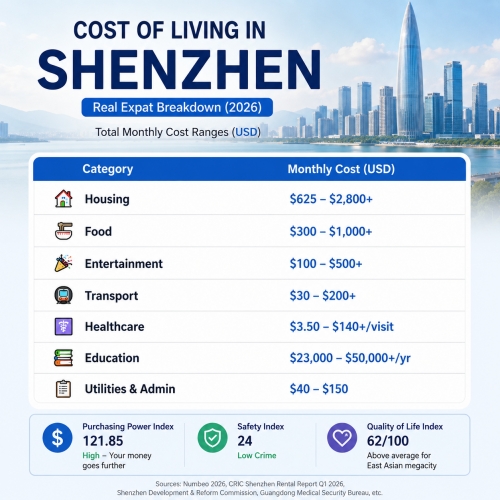
The cost of living will probably shock you if you are new to Shenzhen. Numbeo puts it at 36.2 in 2026 – well below Hong Kong (75.2), Seoul (68.2), Taipei (54.7) and Tokyo (54.2). Among China’s four Tier-1 giants, it also undercuts Shanghai (38.8) and Beijing (38.0). With a purchasing power index of 121.85, your money really goes further here than in most peer cities.
That said, the costs can vary radically. The bare minimum for a single person to get by on (not including rent) is about $595. For a family of four, the figure is likely to be around $2,150. But your choice of district to call home, which housing type you prefer, how frequently you eat out, and what your children can be expected to cost in school fees, all determine the outcome. Here, all categories of cost breakdown with the most recent 2026 figures to help you plan.
Shenzhen Cost of Living Breakdown
| Category | Monthly Cost (USD) | Overview |
|---|---|---|
| 🏠 Housing | $350 – $1,200 / 40–60 sqm standard apartment | 40–60 sqm standard apartment; $350–$600 for 40 sqm 1BR in Longgang/Longhua, $600–$1,200 for 50 sqm 1BR in Nanshan/Futian, suitable for single expats and small couples |
| 🍜 Food | $320 – $600 / person | Daily home cooking or affordable local takeout, 1 weekly mid-range dine-out; no frequent high-end dining, fits most ordinary expats’ daily eating habits |
| 🎉 Entertainment | $120 – $280 / person | Moderate leisure spending: monthly cinema visits, casual outdoor activities, occasional city tours; free public parks as daily leisure options |
| 🚇 Transport | $35 – $80 / person | Daily metro/bus commuting with Shenzhen Tong discount, occasional Didi rides for short trips; no private car consumption |
| ⚕️ Healthcare | $5 – $60 / person | Routine public hospital outpatient visits and basic daily medicines; no frequent private specialist treatment or high-cost physical examinations |
| 📚 Education | $0 / child (if applicable) | Data excludes international school fees, applicable for child-free expats; the core daily cost of living in Shenzhen for ordinary working expats |
| 📋 Utilities & Admin | $45 – $120 / 40–60 sqm apartment | Monthly electricity, water, gas, 50GB mobile plan and home broadband for a standard 40–60 sqm apartment, seasonal fluctuation included |
| 💰 Total Monthly Cost | $875 – $2,340 / person | Realistic total monthly expense of the cost of living in Shenzhen for ordinary expats, covering all daily necessities and moderate leisure spending |
🏨 Housing & Living Spaces
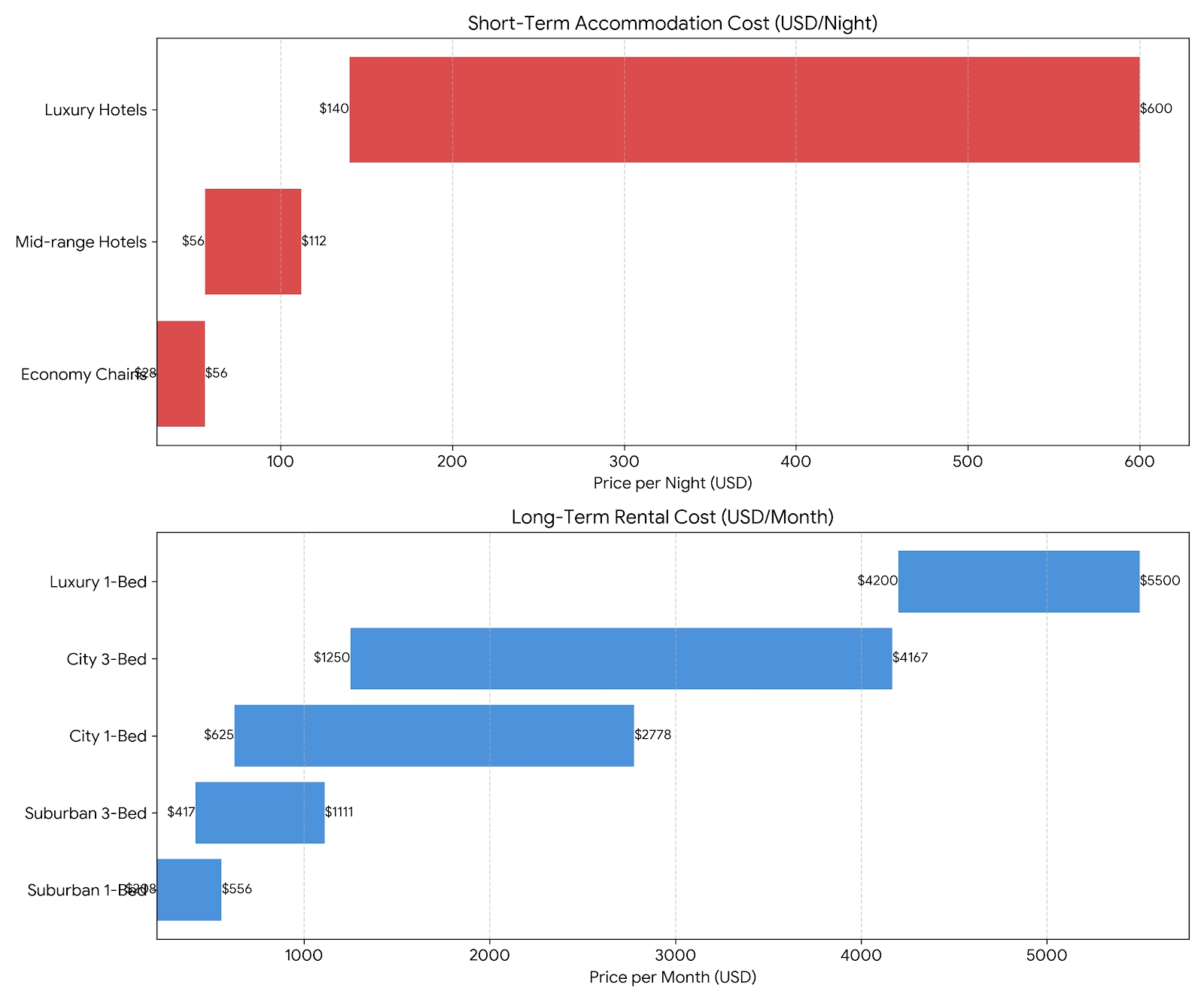
Shenzhen Short-Term Accommodation & Long-Term Rental Cost Analysis
| Type | Price Range (USD / CNY) | Notes |
|---|---|---|
| 🏨 Short-Term Hotel | $28–$140/night (¥200–1,000) | Economy chains to CBD luxury; serviced apartments from $1,400/mo (¥10,000) |
| 🏢 City Center 1BR | $625–$2,778/mo (¥4,500–20,000) | Futian / Nanshan; luxury units exceed $4,200/mo (¥30,000) |
| 🏙️ City Center 3BR | $1,250–$4,167/mo (¥9,000–30,000+) | 90–120 sqm in Nanshan OCT or Futian Xiangmeihu |
| 🏘️ Suburban 1BR | $208–$556/mo (¥1,500–4,000) | Longgang / Bao'an; improved metro connectivity |
| 🏡 Suburban 3BR | $417–$1,111/mo (¥3,000–8,000) | Longhua / Longgang; best value for families |
| 💳 Lease Deposit | $1,250–$5,550+ (¥9,000–40,000) | 2-month deposit + 1st month rent + agent fee = ~3× monthly rent upfront |
The yardstick by which every Shenzhen budget is measured is housing. The city-wide average rental value of a home or apartment was stable at $12.5/sqm/month (¥90.12) in the first quarter of 2026, the latest published data from CRIC shows. Hustle and bustle following the Chinese New Year saw transaction volumes hit the highest seasonal level for eight years, and average rents increased by a small 0.3% year-on-year. Where you choose to live makes a monumental difference.
Short Term Housing Options
Before signing a lease, you need a temporary base — and the transition period costs more than most people expect. Here's what to budget for short-term accommodation and the upfront cash required on move-in day. For a broader checklist of day-one essentials in China, our China survival guide is a practical starting point. Shenzhen has a wide range of short-stay options across every price point. Economy chains suit budget-conscious flat-hunters, while serviced apartments work well for those needing a home-like setup for several weeks.
- Economy chains (Hanting, 7 Days): $28–$56/night (¥200–400) — comfortable and reliable in non-central areas
- Mid-range business hotels (Atour, Ji Hotel): $56–$112/night (¥400–800) — good Wi-Fi and workspace facilities
- Luxury hotels in Futian/Nanshan CBD (Shangri-La, Ritz-Carlton): $140+/night (¥1,000+)
- Serviced apartments (Shama, Ascott): from $1,400/month (¥10,000) — the most practical bridge option while flat-hunting
City Center Apartment Living
These two districts host the majority of multinationals and the largest expat communities. Rents here reflect the prime location — and can climb very quickly at the luxury end.
- 1-bedroom (40–60 sqm) in Futian Chegongmiao or Nanshan Houhai: $625–$2,778/month (¥4,500–20,000)
- Luxury 1-bedroom at Shenzhen Bay One (Nanshan): can exceed $4,200/month (¥30,000)
- 3-bedroom (90–120 sqm) in Nanshan OCT or Futian Xiangmeihu: $1,250–$4,167/month (¥9,000–30,000+)
- Average price per sqm/month — Nanshan: $15.8 (¥113.50); Futian: $15.6 (¥112.58)
Suburban Residential Flat Options
Significant savings are available beyond the core districts. Metro connectivity has improved substantially in these areas over the past three years, making them increasingly practical for daily commuting.
- 1-bedroom in Longgang or Bao'an: $208–$556/month (¥1,500–4,000)
- 3-bedroom in Longhua or Longgang: $417–$1,111/month (¥3,000–8,000)
- Luohu District average: $11.6/sqm/month (¥83.16) — traditional urban area, solid transport links
- Bao'an District average: $8.6/sqm/month (¥61.82) — popular with tech and manufacturing workers
- Guangming District average: $5.5/sqm/month (¥39.62) — one of Shenzhen's most affordable options for families
- Pingshan District average: $5.0/sqm/month (¥36.35) — lowest rent in the city, newer residential stock
District Rental Market Tiers
This at-a-glance table covers all nine main districts, ranked from highest to lowest average monthly rent per sqm. Use it to calibrate your apartment search before committing to a specific area.
| District | Avg. Rent (USD/sqm/mo) | CNY Equivalent | Tier |
|---|---|---|---|
| Nanshan | $15.8 | ¥113.50 | Premium |
| Futian | $15.6 | ¥112.58 | Premium |
| Luohu | $11.6 | ¥83.16 | Mid |
| Bao'an | $8.6 | ¥61.82 | Mid |
| Yantian | $8.0 | ¥57.69 | Mid |
| Longhua | $7.8 | ¥56.13 | Affordable |
| Longgang | $6.8 | ¥48.72 | Affordable |
| Guangming | $5.5 | ¥39.62 | Budget |
| Pingshan | $5.0 | ¥36.35 | Budget |
Lease Deposit Payment Rules
The standard Shenzhen lease follows a "deposit-2, pay-1" structure. That means a large lump-sum payment on signing day — something many first-time renters underestimate.
- Security deposit: 2 months' rent (typically $1,250–$5,556 for a city-center apartment)
- First month's rent: paid upfront at signing
- Agent fee: usually 1 month's rent — shared with the landlord or borne entirely by the tenant
- Total day-one cash outlay: roughly 3× the monthly rent — budget accordingly before arrival
💡 Searching for "转租" (transfer rentals) on Beike (贝壳找房) sometimes eliminates the agent fee entirely, as the outgoing tenant handles the transition directly.
🌐 Utilities & Telecom Infrastructure
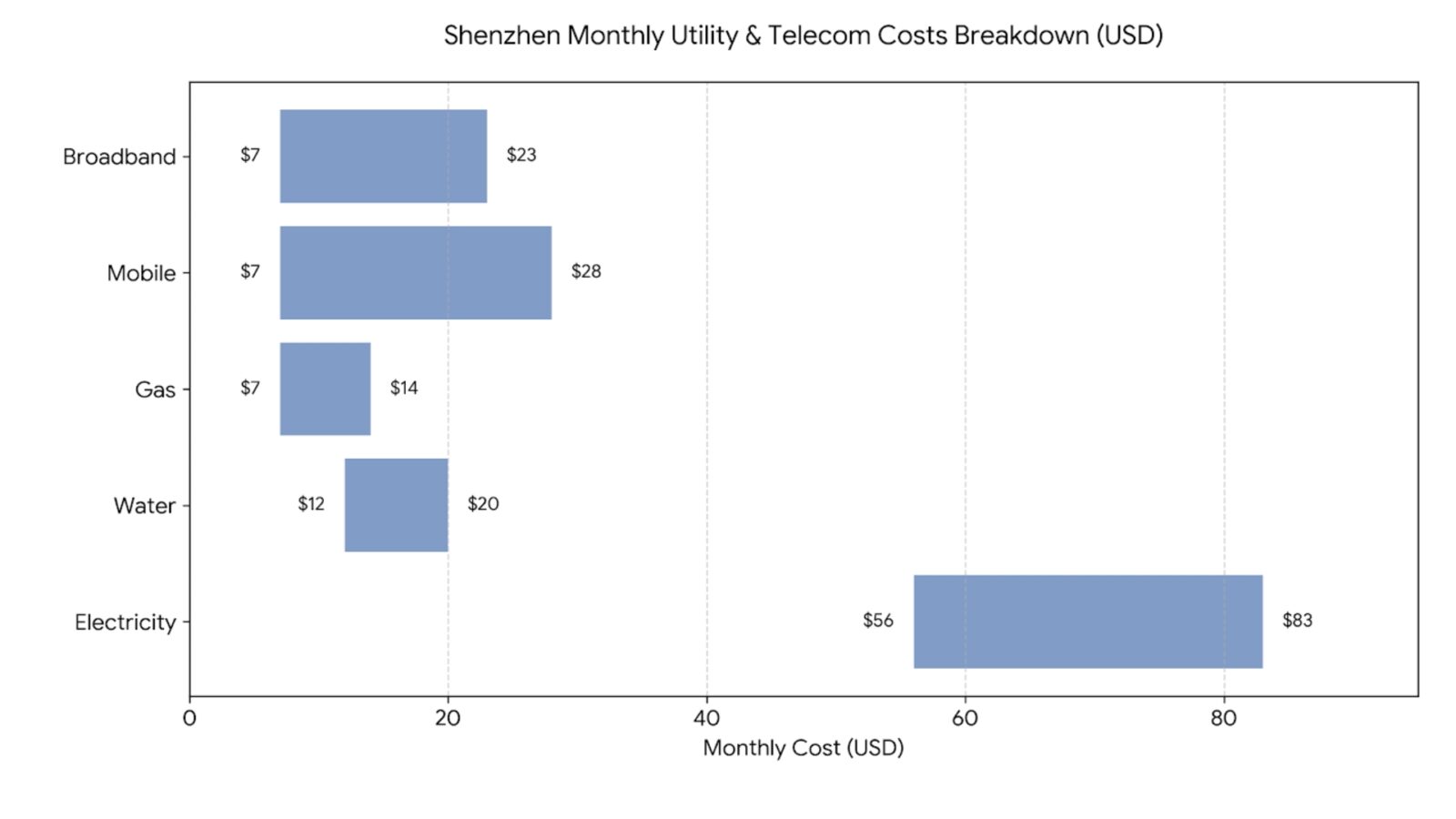
Shenzhen Utilities & Telecom Cost Analysis
| Item | Price Range (USD / CNY) | Notes |
|---|---|---|
| ⚡ Electricity | $0.092–$0.134/kWh (¥0.66–0.96) | 3-tier pricing; summer AC bill can reach $56–$83/mo (¥400–600) |
| 💧 Water | $0.59–$0.68/m³ (¥4.26–4.93) | Family using 20–30 tons/mo pays ~$12–$20 (¥85–140) |
| 🔥 Gas | $0.47/m³ (¥3.41) Tier 1 | Typical monthly cooking bill: $7–$14 (¥50–100) |
| 🏠 Combined Utilities (85 sqm) | $42–$111/mo (¥300–800) | Varies by season and usage intensity |
| 📱 Mobile Plan | $6.90–$28/mo (¥49–200) | 50 GB standard to premium international plans |
| 🌐 Home Broadband | $6.90–$23/mo (¥49–169) | 300 Mbps bundled to 1 Gbps standalone fiber |
Outside of rent, fixed monthly household costs are very manageable here. An entire 85-sqm apartment runs you about $42–$111/month (¥300–800) in total for utilities — much cheaper than the same expenses in most Western cities. Here’s how each item breaks down.
Electricity Water Usage Guidelines
All three utilities use tiered pricing structures. Electricity is the most variable cost — summer air conditioning in a two-person household can double your bill. Before plugging in your appliances, check our guide on China plug adapters to avoid any compatibility issues on arrival.
- Electricity — Tier 1 (0–260 kWh/month): $0.092/kWh (¥0.6628) — covers light use in cooler months
- Electricity — Tier 2 (261–600 kWh/month): $0.099/kWh (¥0.7128) — typical summer usage for a 2-person household
- Electricity — Tier 3 (600+ kWh/month): $0.134/kWh (¥0.9628) — heavy AC use; summer monthly bill can reach $56–$83 (¥400–600)
- Water (per cubic meter): $0.59–$0.68 (¥4.26–4.93); a family using 20–30 tons/month pays roughly $12–$20 (¥85–140)
- Gas — Tier 1 rate: $0.47/cubic meter (¥3.41); typical monthly cooking bill: $7–$14 (¥50–100)
- Combined monthly estimate (85 sqm apartment): $42–$111 (¥300–800) depending on season and usage
Mobile Home Broadband Services
Telecom costs in Shenzhen are some of the most competitive in Asia. Most expats bundle their mobile plan with home broadband for the best value. That said, before buying a local SIM, our guide on whether your phone will work in China is worth reading first — network compatibility varies by handset.
- China Mobile standard plan (50 GB + 300 min calls): $6.90/month (¥49)
- Premium mobile plans (more data + international calling): $14–$28/month (¥100–200)
- Home broadband 300 Mbps (bundled with mobile): $6.90–$11/month (¥49–79)
- Standalone 1 Gbps fiber connection: $19–$23/month (¥138–169)
- Annual broadband-only contract: approximately $50–$64/year (¥360–460)
💡 Compare bundled packages across China Mobile, Unicom, and Telecom — the differences are significant. The best deals appear during 618 and Double 11 promotional seasons.
🍽️ Food & Dining Culture
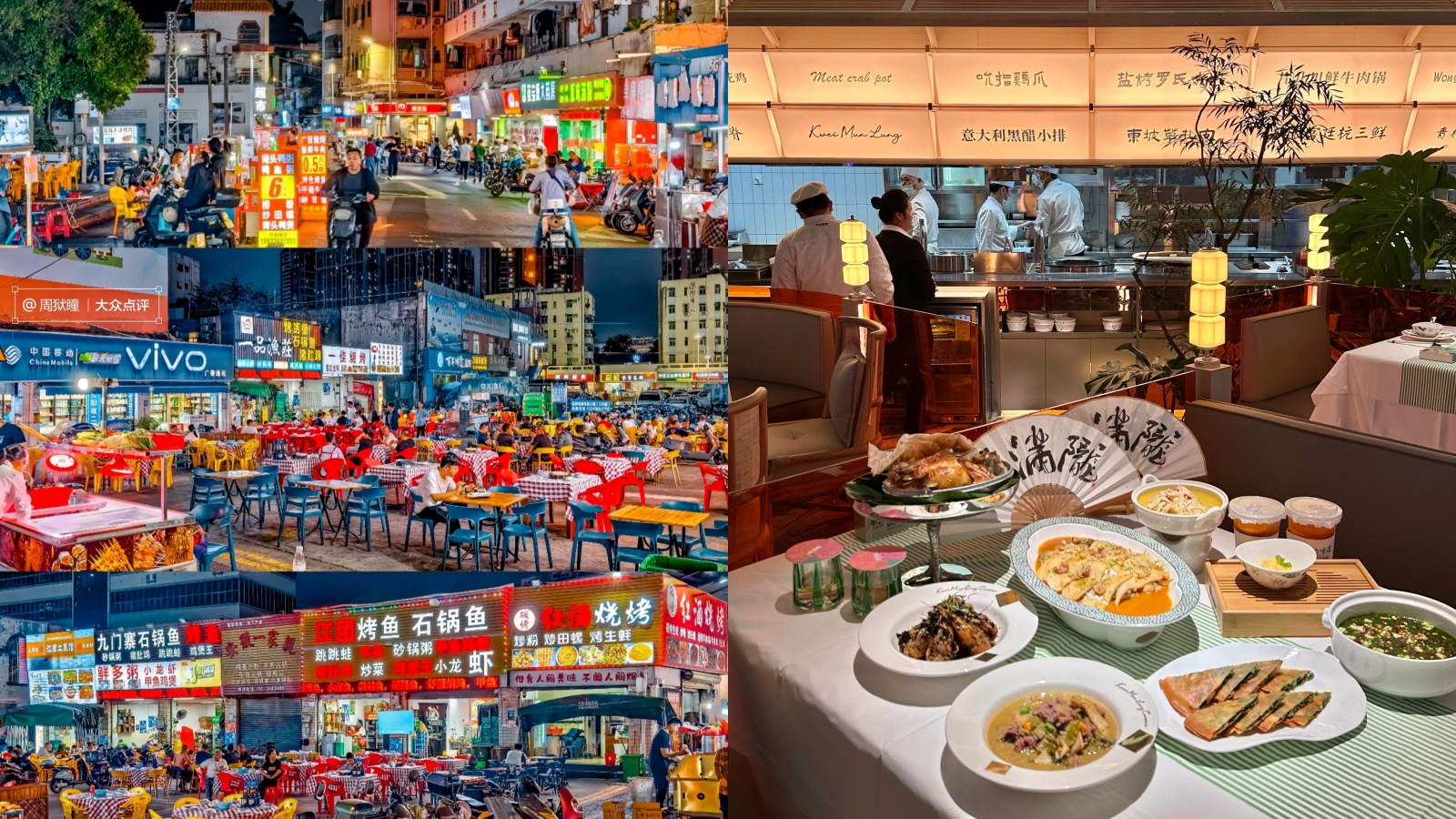
Food & Dining Costs in Shenzhen
| Category | Price Range (USD / CNY) | Notes |
|---|---|---|
| 🛒 Local Groceries (family of 3) | $210–$420/mo (¥1,500–3,000) | Wet markets & apps 20–30% cheaper than supermarkets |
| 🍜 Street Eats / Quick Meals | $1.70–$7/meal (¥12–50) | Lanzhou noodles, rice boxes, food court sets |
| 🍽️ Mid-Range Dining | $14–$28/person (¥100–200) | Chinese chains, Western casual, Japanese/Korean |
| 🥂 Upscale / Fine Dining | $70+/person (¥500+) | High-end Chinese, Japanese, or Western restaurants |
| ☕ Coffee | $2–$8.30/cup (¥15–60) | Luckin ~$2; Starbucks $4.90 (¥35); specialty $5.60–$8.30 |
| 🥩 Key Staples (per 500g) | Rice $0.49 (¥3.53) / Pork $2.62 (¥18.89) | Stable prices; vegetables & eggs trending slightly lower in 2026 |
Food is definitely one of Shenzhen’s highlights; from a ¥15 rice box of pork knuckle to Cantonese fine dining with vertiginous rooftop views, your monthly food bill depends on how often you like to cook/eat out — and where you do it.
Local Fresh Grocery Shopping
Buying local and cooking at home is where Shenzhen's affordability really shines. Wet markets and fresh produce delivery apps price staples well below what most expats expect. Shenzhen's night markets are another budget-smart option — our Shenzhen night market guide shows you the best spots to eat well for less.
- Rice (per 500g): $0.49 (¥3.53) — stable price, no change quarter-on-quarter
- Pork (per 500g): $2.62 (¥18.89) — down 3.3% QoQ as of April 2026
- Vegetables and eggs: both trending slightly lower, down ~3% and ~0.5% respectively
- Monthly grocery bill — family of three (local staples): $210–$280 (¥1,500–2,000)
- Monthly grocery bill — including imported/organic items: $420+ (¥3,000+)
- Fresh produce apps (Meituan Maicai, Dingdong Maicai): typically 20–30% cheaper than supermarkets
Casual Street Meal Options
For daily working lunches and quick meals, Shenzhen's local food options are extraordinarily affordable. Many office workers here eat comfortably under ¥30 per meal, every single day. This is where the city's real cost advantage becomes most tangible. The Chinese New Year period brings its own distinct dining culture — our Shenzhen Chinese New Year dinner 2026 guide is useful if you're planning around the holiday.
- Lanzhou noodles / Longjiang pork rice box: $1.70–$3.50/meal (¥12–25)
- Mall food court set meal: $4.20–$7 (¥30–50) — wide variety, air-conditioned, popular with office workers
- Bao, scallion pancake, or street snacks: $0.42–$1.40 each (¥3–10)
Mid Range Dining Experiences
Shenzhen has a strong selection of casual sit-down restaurants catering to both local tastes and expat preferences. Dining out a few times a week at this level is very manageable on most expat salaries.
- Popular Chinese chains (Green Tea, Tan Fish): $14–$28/person (¥100–200)
- Western casual (pizza, pasta, burgers): $14–$21/person (¥100–150)
- Japanese and Korean chain restaurants: $14–$21/person (¥100–150)
- Monthly estimate — couple dining out twice weekly: approximately $112–$224/month on restaurant meals
Upscale Fine Dining Venues
High-end dining in Shenzhen is genuinely competitive — the city's restaurant scene has matured fast. 🍵 For daily caffeine, a growing number of local coffee chains offer quality at a fraction of Starbucks prices.
- High-end Chinese / Japanese / Western restaurants: $70+/person (¥500+)
- Starbucks grande latte: $4.90 (¥35)
- Specialty pour-over at independent cafés: $5.60–$8.30 (¥40–60)
- Luckin Coffee / Manner daily cup: approximately $2–$3 — a popular choice among Shenzhen professionals
🏖️ Entertainment & Leisure Activities
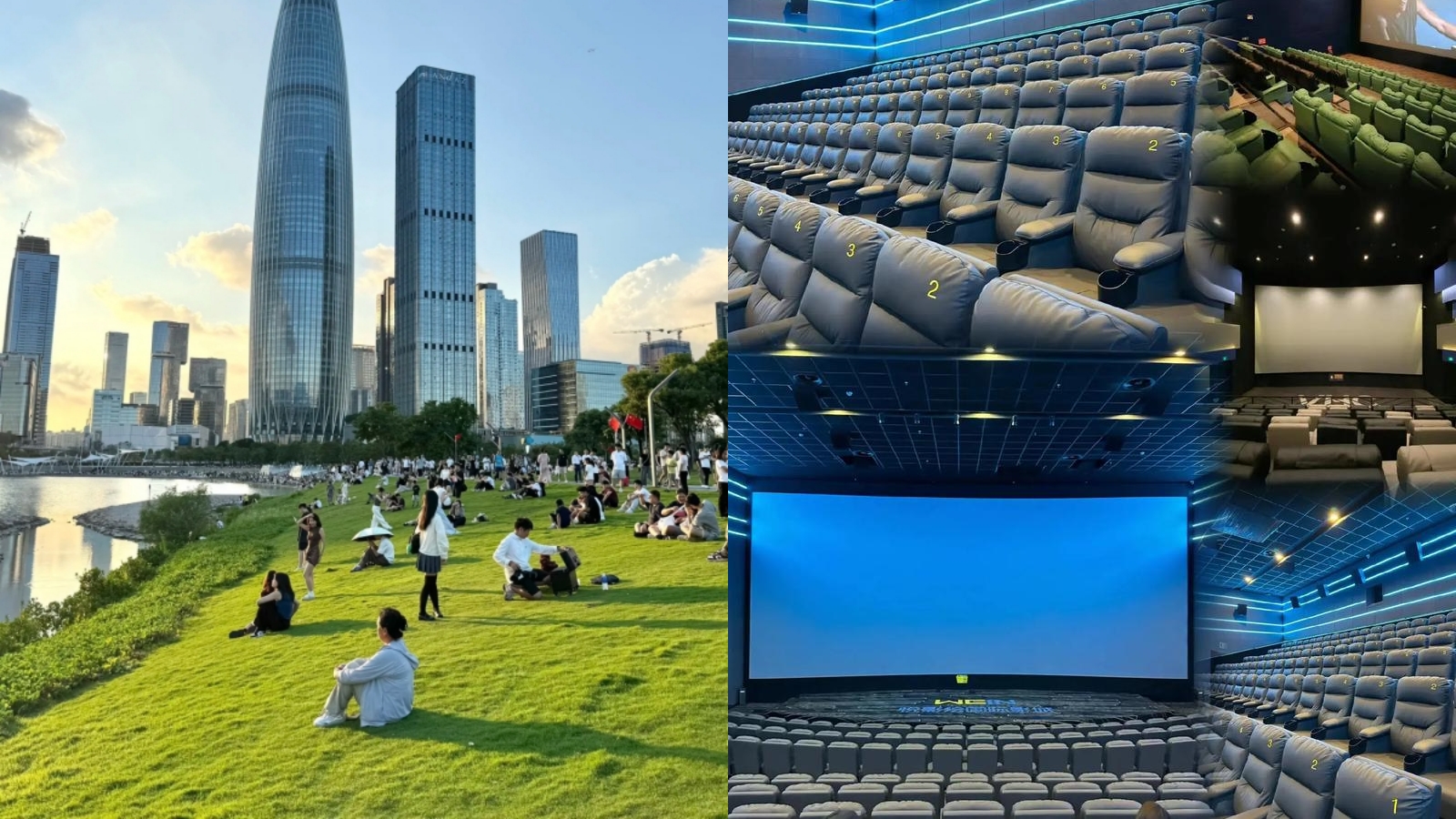
Leisure, Entertainment & Personal Spending in Shenzhen
| 娱乐类型 / Category | Price Range (USD / CNY) | Notes |
|---|---|---|
| 🌿 Public Parks & Museums | Free (¥0) | Talent Park, Shenzhen Bay, Lianhua Hill, city museums — all free |
| 🎢 Theme Parks (per entry) | $35–$56/entry (¥250–400) | Happy Valley, Window of the World, OCT East |
| 🗺️ Hong Kong Day Trip | $70–$140/person (¥500–1,000) | Border + MTR + attractions; HK Disneyland $97 (¥700) |
| 🏖️ Guangzhou / Zhuhai Weekend | $140–$280/person (¥1,000–2,000) | 2 days incl. rail + hotel + attractions |
| 💪 Gym Membership | $28–$139/mo (¥200–1,000) | Local chains to premium (Pure Fitness, Fusion) |
| 🎬 Cinema Ticket | $5.60–$11/ticket (¥40–80) | Standard screenings across major Shenzhen cinemas |
| 🎵 Live Events / Concerts | $14–$700+/ticket (¥100–5,000+) | Small shows to large-scale concerts |
Shenzhen punches well above its weight when it comes to leisure options. The city has ploughed billions into public parks, waterfront promenades and cultural institutions — most of which are free. Paid entertainment is similarly accessible, from theme parks to live music.
Public Parks Culture Access
Some of Shenzhen's best attractions don't cost a cent. The city's free public spaces are genuinely world-class — not an afterthought. Our dedicated Shenzhen Talent Park guide covers what to expect and how to make the most of a visit.
- Shenzhen Talent Park: Free — bay views, city skyline, Wisdom Corridor, nightly light shows; ideal for runs and family outings
- Lianhua Hill Park: Free — one of the most popular parks in Futian, great for weekend picnics
- Shenzhen Bay Park: Free — 15 km waterfront boardwalk, popular with cyclists and joggers
- Dashahe Ecological Corridor: Free — green riverside trail running through Nanshan
- Shenzhen Museum / Museum of Contemporary Art and Urban Planning: Free — advance online reservation required
Theme Park Entry Experiences
For family day trips with paid entry, Shenzhen has several major theme parks — most are within 30–60 minutes of the city center by metro. Annual passes offer noticeably better value for families visiting more than twice a year.
- Happy Valley Shenzhen: ~$42/entry (¥300) — rides, shows, and seasonal events
- Window of the World: ~$35/entry (¥250) — scaled replicas of global landmarks
- OCT East (Adventure Valley + Tea Stream Valley combo): ~$56/entry (¥400) — natural scenery plus thrill rides
- Monthly family estimate (2 paid attraction days): approximately $140–$200
Regional Day Trip Travel
One of Shenzhen's most underrated advantages is its location. Hong Kong is 20 minutes away by metro; Guangzhou is 30 minutes by high-speed rail. Weekend escapes from Shenzhen are both easy and affordable.
- Hong Kong day trip — border crossing + MTR to city: $8–$14 return (¥60–100)
- Hong Kong — Peak Tram: $11/person (¥80)
- Hong Kong Disneyland: $97/person (¥700)
- Total Hong Kong day trip budget (per person): $70–$140 (¥500–1,000)
- Guangzhou weekend (2 days, high-speed rail + hotel + attractions): $140–$280/person (¥1,000–2,000)
- Zhuhai weekend (similar format, incl. Chimelong Ocean Kingdom): $140–$280/person (¥1,000–2,000)
Fitness Cinema Facility Access
Shenzhen's fitness and entertainment scene covers every budget tier — from ¥200 local gym memberships to world-class premium clubs. Shopping ranges from the affordable to the seriously upscale, depending on which mall you walk into.
- Local gym monthly membership: $28–$56/month (¥200–400)
- Premium gym chains (Pure Fitness, Fusion): $84–$139/month (¥600–1,000)
- Cinema ticket: $5.60–$11 (¥40–80)
- Small live events / stand-up comedy shows: $14–$70/ticket (¥100–500)
- Large concerts: $70–$700+/ticket (¥500–5,000+)
- Uniqlo T-shirt: ~$14 (¥100); designer shirt at MixC or Taikoo Li: $280+ (¥2,000+)
🗺️ Shenzhen Attractions Guide: planning which parks and sights to visit first? Check out our full list of things to do in Shenzhen to map out your leisure budget more effectively.
🚇 Transportation & Travel Routes
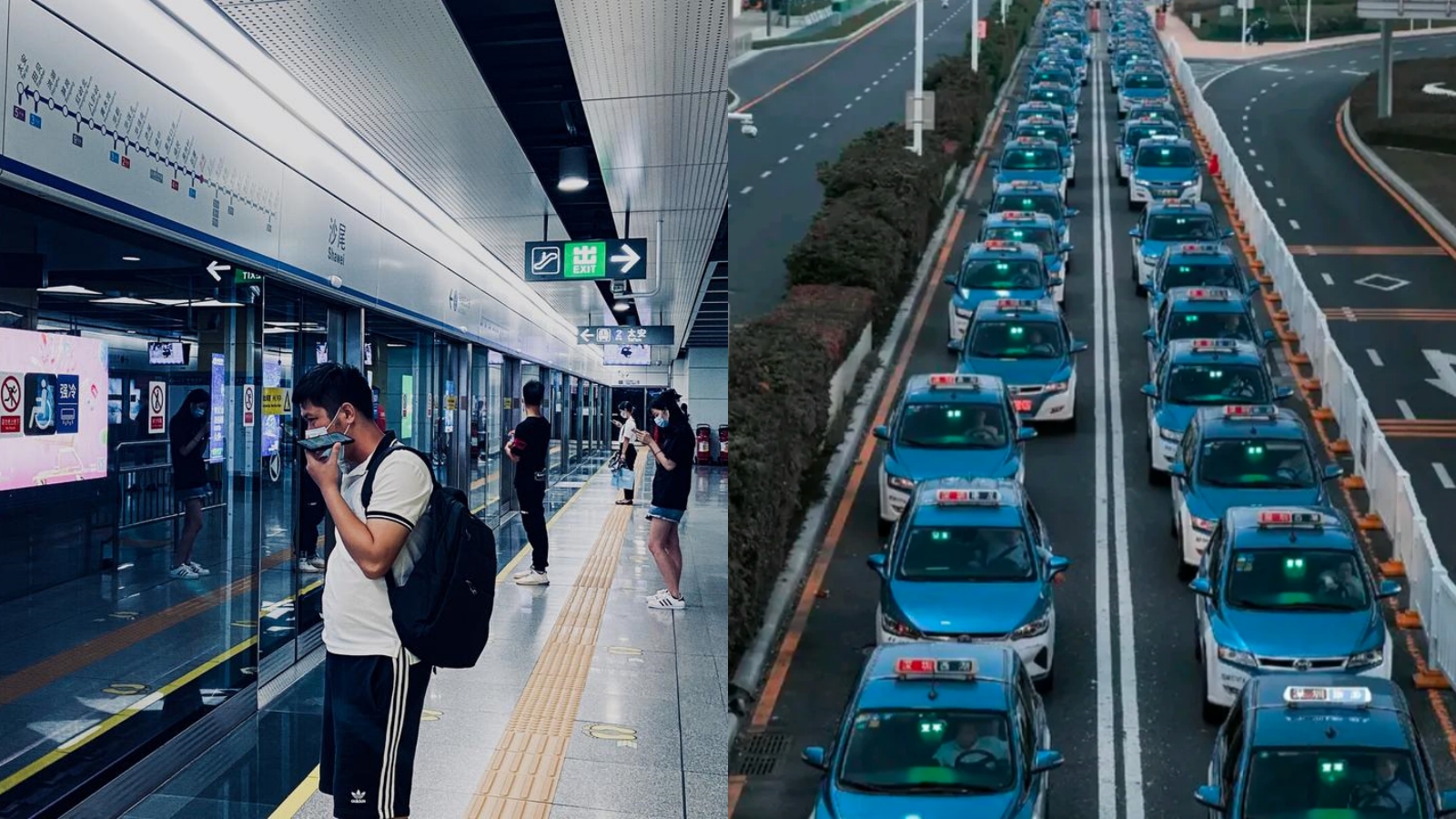
Transportation Costs in Shenzhen
| Mode | Price Range (USD / CNY) | Notes |
|---|---|---|
| 🚇 Metro (per trip) | $0.28–$1.10/trip (¥2–8) | Distance-based; Shenzhen Tong card saves 9.5% |
| 🚌 Bus (per trip) | $0.28–$0.42/trip (¥2–3) | Covers routes not served by metro; card discount applies |
| 🚇 Monthly Commute | $30–$60/mo (¥215–430) | Typical metro commuter monthly total |
| 🚕 Taxi / Didi (15 km) | $8–$10 (¥60–70) | Base fare $1.40 (¥10) + $0.36/km after 2 km; +30% night surcharge |
| 🚄 High-Speed Rail (SZ–GZ) | $10.40 (¥75) / 30 min | Shenzhen North → Guangzhou South, 2nd class |
| 🚄 High-Speed Rail (SZ–HK) | $12.50 (¥90) / <1 hr | To Hong Kong West Kowloon, 2nd class |
| ✈️ Domestic Flights | $70–$140 (¥500–1,000) | SZX to Beijing or Shanghai; HKG also accessible |
Shenzhen metro is fast, cheap, and takes you most places. Most expats can live here happily without a car as long as there’s public transport. If you’re also looking to explore further afield, check out our guide to transport in China.
Metro Bus Transit Systems
The Shenzhen Metro uses a distance-based fare system and is one of the most cost-effective ways to cross the city. Using a Shenzhen Tong transit card adds a meaningful discount on top of already low base fares.
- Base fare — first 4 km: $0.28 (¥2)
- Example fare — Gaoxin Yuan to Futian (~8 km): $0.42 (¥3)
- Longer commute example — Songgang to Keji Yuan: $1.10/trip (¥8)
- Shenzhen Tong card discount: 9.5% off all fares, plus ¥0.40 off a metro transfer within 90 minutes of a bus ride
- Bus fares: $0.28–$0.42 (¥2–3) — covers most routes not served by metro
- Typical monthly metro commute cost: $30–$60 (¥215–430)
Taxi Ride Hailing Services
Taxis and Didi are widely available and competitively priced for occasional use. For foreigners new to ride-hailing in China, our guide on using Didi as a foreigner in China walks through the setup step by step.
- Base fare (daytime): $1.40 (¥10), including the first 2 km
- Per km after 2 km: $0.36 (¥2.60)
- Nighttime surcharge (23:00–06:00): +30% on top of standard fares
- Example fare — Nanshan Tech Park to Luohu (~15 km, daytime): $8–$10 (¥60–70)
- Didi pricing: similar or slightly below standard taxi rates; English interface available
Intercity High Speed Travel
Shenzhen's intercity transport links are outstanding. High-speed rail connects the city to Guangzhou in 30 minutes and Hong Kong in under an hour — making regional travel very practical for weekend trips.
- Shenzhen North → Guangzhou South (high-speed rail, second class): $10.40 (¥75), ~30 minutes
- Shenzhen → Hong Kong West Kowloon (high-speed rail, second class): $12.50 (¥90)
- Domestic flights — SZX to Beijing or Shanghai: typically $70–$140 (¥500–1,000)
- Hong Kong International Airport (HKG): reachable via border crossing; broader international routes than SZX
⚕️ Healthcare & Medical Systems
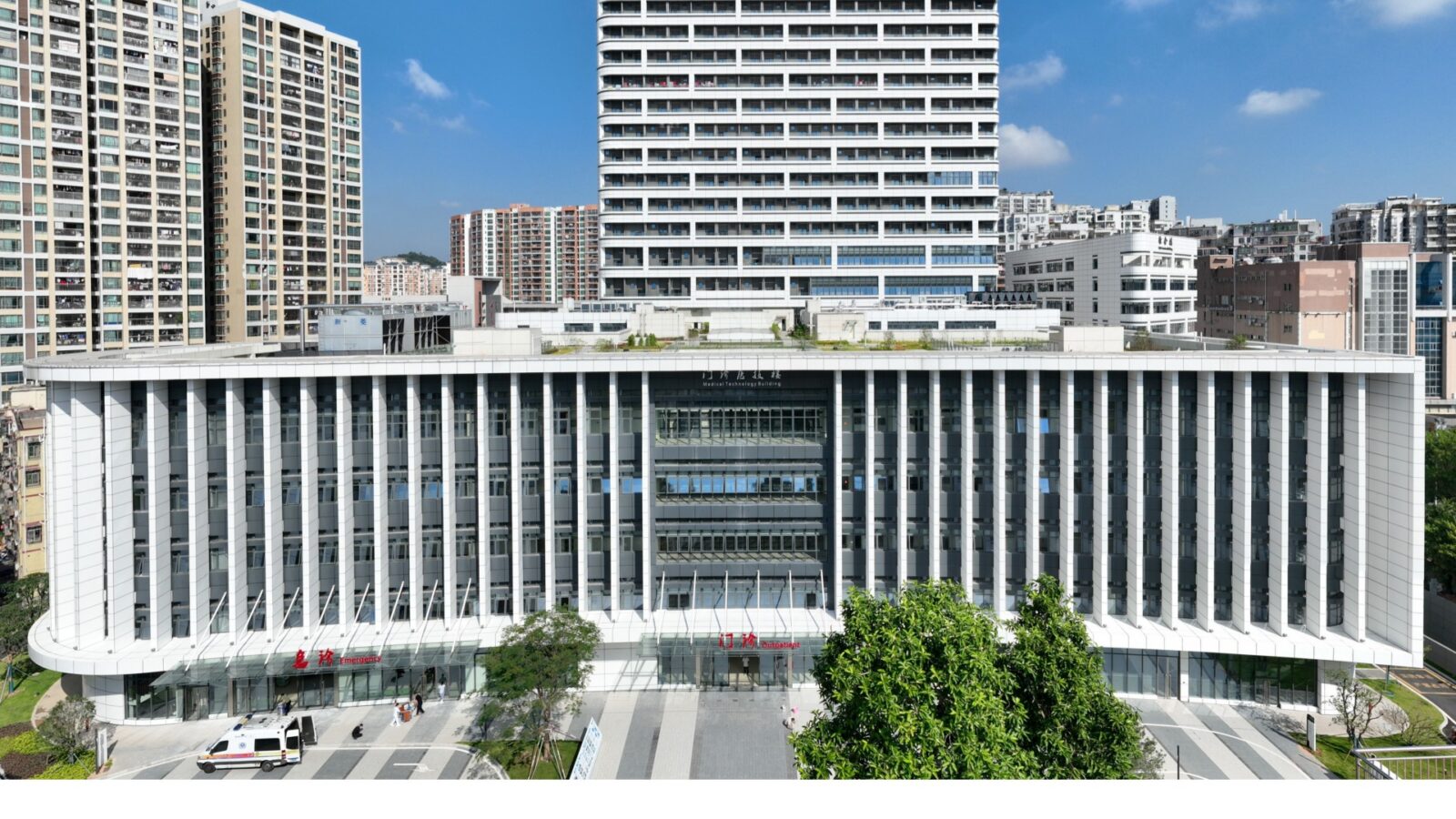
Healthcare Costs in Shenzhen
| Category | Price Range (USD / CNY) | Notes |
|---|---|---|
| 🏥 Public Hospital GP | $3.50–$6.90/visit (¥25–50) | General to chief physician; Class III hospital, updated March 2026 |
| 🚨 Emergency Visit | $6.30/visit (¥45) | Standard ER fee; diagnostics extra |
| 🩺 Diagnostics (blood/ultrasound) | $14–$70 (¥100–500) | Full GP visit for a cold: ~$28–$56 (¥200–400) all-in |
| 🏨 Private Clinic Specialist | $25–$111/visit (¥180–800) | Fuwai, Int'l SOS, Vista SK; English-speaking staff available |
| 🛡️ Int'l Health Insurance (annual) | $2,000–$5,000+/yr (¥14,000–36,000) | Mid-range China plan to comprehensive global plan; age & health vary |
| 💊 Insurance Monthly Equivalent | $167–$417/mo (¥1,200–3,000) | Essential to factor in for families and long-term residents |
Shenzhen has a diverse health system with a variety of price points. Public hospitals are efficient and low-cost for everyday use. For most expats at some point or another, though, they obtain private or international insurance to access services in English and to have shorter wait times.
Public Hospital Care Access
As of March 30, 2026, Guangdong Province public hospitals operate under revised consolidated consultation fee pricing. Costs are low — but navigating the system in English can be challenging. Our guide on how to find English-speaking doctors in China offers practical, verified options for expats.
- General outpatient consultation (Class III hospital): $3.50 (¥25)
- Associate chief physician consultation: $5.40 (¥39)
- Chief physician consultation: $6.90 (¥50)
- Emergency visit fee: $6.30 (¥45)
- Children under 6 years: standard rate + 15% surcharge
- Standard diagnostic tests (blood panel, ultrasound): $14–$70 (¥100–500)
- Full GP visit for a common cold (consult + tests + medicine): total $28–$56 (¥200–400)
Private Medical Clinic Services
Private specialist care costs significantly more than public hospitals — but is still well below equivalent rates in the UK, US, or Australia. International SOS Clinic (Shekou) and Vista SK International Medical Center are both popular with the expat community.
- Fuwai Hospital Shenzhen — associate chief physician (special outpatient): $25 (¥180)
- Fuwai Hospital Shenzhen — chief physician: $38.90 (¥280)
- Top specialists at major private hospitals: $66.70–$111.10 (¥480–800)
- HKU-SZH International Medical Center: comparable or higher than the above — English-speaking staff available
International Health Insurance Plans
The International health insurance is the practical solution for most expats wanting reliable access to private-sector care. Premiums vary significantly by coverage scope and the insured's age and health status.
- Mid-range global plan covering mainland China (healthy adult, age 30): $2,000–$3,000/year
- Comprehensive plan including the US: $5,000+/year
- Monthly budget equivalent: $167–$417/month — essential to factor in for families and long-term residents
📚 Education & Schooling Systems
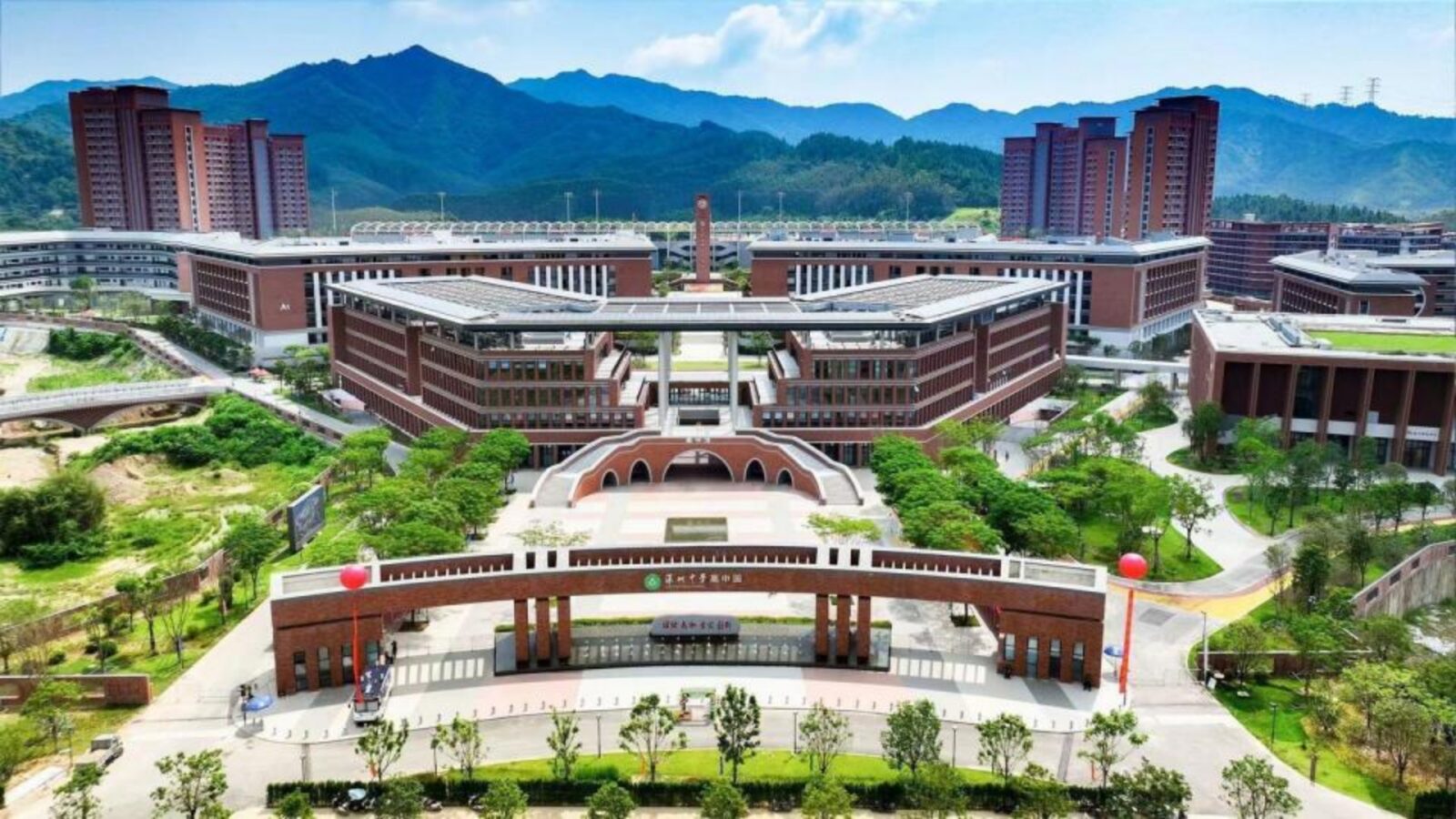
Education & Family Costs in Shenzhen (For Expat Families)
| School Type | Annual Tuition (USD / CNY) | Notes |
|---|---|---|
| 🏫 Top-Tier Int'l Schools | $43,000–$50,042/yr (¥309,800–360,300) | Harrow, BASIS, Avenues, King's College — IB / A-Level / AP curricula |
| 📖 Mid-Tier Int'l Schools | $23,333–$41,389/yr (¥168,000–298,000) | SIS, NAIS, QSI, Huijia, Bona, Orange County — strong curricula at lower cost |
| 🏛️ Public Int'l Departments | ~$157/semester (¥1,131) | e.g. Shenzhen Middle School; admission extremely competitive |
| 🚌 School Bus Service | $1,400–$2,800/yr (¥10,000–20,000) | Additional to tuition; factor in for budget planning |
| 🎒 Extras (uniforms, books, activities) | $1,400–$3,500+/yr (¥10,000–25,000) | Exams, study trips, extracurriculars — total real cost is 25%+ above tuition |
| 📝 Application Fee | $280–$700 (¥2,000–5,000) | Non-refundable; apply at least 1 year in advance |
International school fees are the biggest single expense for expat families in Shenzhen. Fees have skyrocketed in recent years and most top schools in the city have a waiting list of a year or more so plan well in advance and budget realistically beyond the headline tuition cost.
Premium International School Options
Shenzhen's premium international schools are genuinely world-class — offering IB, A-Level, and AP curricula with strong university placement records. The price reflects that.
- Harrow International School Shenzhen (Qianhai) — Grades 9–13: approx. $50,042/year (¥360,300)
- BASIS International School Shenzhen (Shekou) — G9–G12: approx. $45,383/year (¥326,760)
- Avenues World School: approx. $43,611/year (¥314,000)
- King's College School Shenzhen — G11–G12: approx. $43,028/year (¥309,800)
Mid Tier Schooling Choices
Several well-regarded schools offer strong international curricula at a more accessible price point. These are often the first stop for families balancing education quality with overall budget.
- Shekou International School (SIS) — Grades 1–8: approx. $35,000/year (¥252,000)
- Nanshan International School (NAIS) — High school: approx. $35,972/year (¥259,000)
- QSI International School Shenzhen — G9–G12: approx. $41,389/year (¥298,000)
- Huijia School Shenzhen — High school: approx. $39,583/year (¥285,000)
- Bona School Shenzhen (AP track) — Grades 9–12: approx. $31,667/year (¥228,000)
- Orange County American High School: approx. $23,333/year (¥168,000)
- Public school international departments (e.g. Shenzhen Middle School): as low as $157/semester (¥1,131) — but admission is extremely competitive
Extracurricular Activity Support Extras
Published tuition rarely reflects the full annual cost. The real total is consistently higher than the headline figure — often by 25% or more. Budget for all of the following on top of base tuition.
- Application fee (non-refundable): $280–$700 (¥2,000–5,000)
- School bus service: $1,400–$2,800/year (¥10,000–20,000)
- Uniform, textbooks and supplies: $280–$560/year (¥2,000–4,000)
- Extracurricular activities, lunch, AP/IB exam fees: $840–$1,400+/year (¥6,000–10,000+)
- Study trips and international exchange programs: $700–$1,400+/year (¥5,000–10,000+)
- Total real annual cost above listed tuition: typically 25%+ higher; sibling discounts available at some schools — ask directly
📄 Admin & Service Procedures
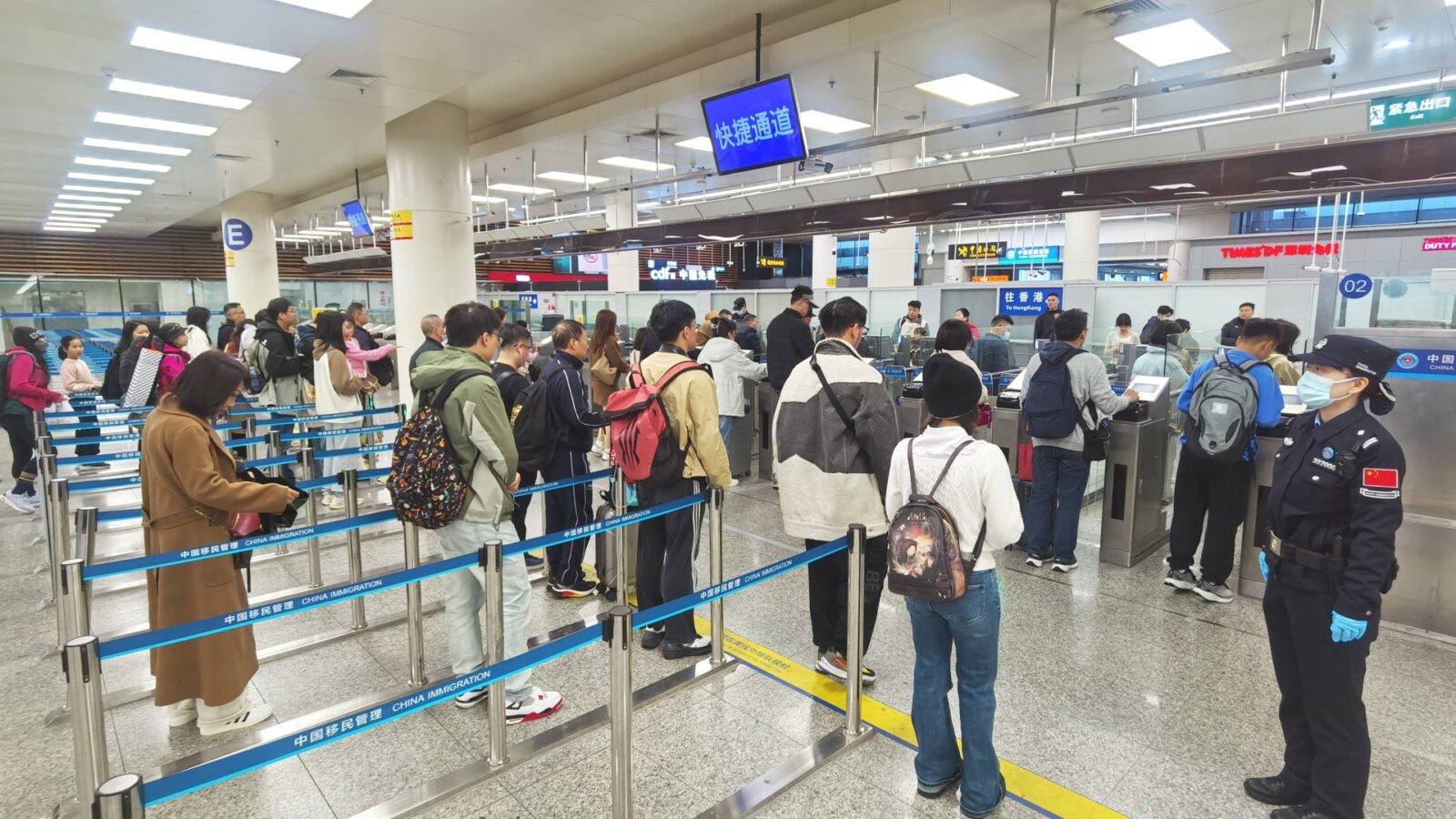
Administrative, Tax & Other Necessary Costs for Expats
| Category | Price Range (USD / CNY) | Notes |
|---|---|---|
| 🛂 Single-Entry Visa | $28.60 (¥206) | Temporary fee reduction policy in effect through Dec 31, 2026 |
| 📄 Multi-Entry Visa (6 mo / 1 yr+) | $57.40–$86.00 (¥413–619) | Best value for frequent travellers in and out of China |
| 🪪 Residence Permit | $55.60–$138.90 (¥400–1,000) | Under 1 year to 3–5 years; essential for long-term expats |
| 💼 Monthly Income Tax | ~$375/mo (¥2,700) on ¥30,000 gross | Expat gets ¥10,000/mo extra deduction; 3%–45% progressive rates |
| 🧹 Part-Time Cleaner | $67–$100/mo (¥480–720) | Weekly 3-hour sessions; $5.60–$8.30/hr (¥40–60) |
| 👩👧 Live-in Ayi (full-time) | $833–$1,389/mo (¥6,000–10,000) | Cooking, cleaning, childcare; common for families with young children |
The administrative side of expat life in Shenzhen requires some upfront investment — particularly around visas, tax registration, and setting up digital payment systems. However, once settled, recurring admin costs stay relatively low. Two apps you'll need immediately: our guides on setting up Alipay and using WeChat Pay without a Chinese bank card make both processes straightforward from day one.
Visa Permit Application Rules
Visa fees in 2026 follow standard rates set by the National Immigration Administration, though a temporary fee reduction policy remains in effect through December 31, 2026 — actual fees at Chinese embassies may be lower than the figures below.
- Single-entry visa: $28.60 (¥206)
- Double-entry visa: $43.50 (¥313)
- 6-month multiple-entry visa: $57.40 (¥413)
- 1-year+ multiple-entry visa: $86.00 (¥619)
- Residence permit — under 1 year: $55.60 (¥400)
- Residence permit — 1 to 3 years: $111.10 (¥800)
- Residence permit — 3 to 5 years: $138.90 (¥1,000)
Monthly Income Tax Filing
China uses a seven-bracket progressive income tax system. Expats receive a meaningful additional monthly deduction that reduces effective rates — but tax planning from day one is still strongly recommended.
- Taxable income threshold: income above $695/month (¥5,000) after standard deductions is subject to tax
- Expat additional monthly deduction: $1,389 (¥10,000) — reduces taxable base significantly
- Progressive rate range: 3% (lowest bracket) to 45% (highest bracket)
- Example — monthly gross $4,167 (¥30,000): estimated monthly tax liability approximately $375 (¥2,700)
- Greater Bay Area IIT subsidy: eligible expats in the GBA may qualify for reduced effective rates — worth consulting a tax advisor
Household Cleaning Service Help
Domestic help is widely available in Shenzhen and reasonably priced. Many dual-income expat couples use part-time cleaning services regularly. Live-in ayi arrangements are common for families with young children.
- Live-in ayi (cooking, cleaning, childcare): $833–$1,389/month (¥6,000–10,000)
- Part-time cleaning service (hourly rate): $5.60–$8.30/hour (¥40–60)
- Weekly 3-hour cleaning session (monthly total): approximately $67–$100/month (¥480–720)
Total Budget Summary Breakdown
Here is how the numbers stack up across four common expat lifestyle profiles in Shenzhen 2026. These ranges assume all key cost categories — housing, food, transport, healthcare, and entertainment — are included.
| Lifestyle | Monthly Budget (USD / CNY) | Key Cost Drivers |
|---|---|---|
| 🎒 Frugal Single | $833–$1,389/mo (¥6,000–10,000) | Shared flat in outer districts, home cooking, metro only |
| 🏙️ Comfortable Single / DINK | $1,667–$3,472/mo (¥12,000–25,000) | Own 1BR in Futian/Nanshan, dining out 2–3×/wk, gym |
| 👨👩👧 Comfortable Family (no intl school) | $2,083–$4,861/mo (¥15,000–35,000) | 3BR suburban flat, part-time ayi, family weekend activities |
| 👨👩👦 Full Expat Package (1 child, intl school) | $5,556–$8,333+/mo (¥40,000–60,000+) | Premium apt, intl school $1,900–$4,200/mo, intl insurance |
Money-Saving Tips 💡
Small choices add up quickly in Shenzhen. These five adjustments make a meaningful difference to your monthly total without sacrificing quality of life.
- Housing: Choosing Longgang, Bao'an, or Longhua saves 30–50% versus Nanshan. Use Beike (贝壳) for direct landlord listings; "转租" transfer deals sometimes bypass agent fees entirely.
- Transit: A Shenzhen Tong card gives 9.5% off all fares. Adding a shared e-bike monthly pass (~$2.80) solves the last-mile problem cheaply.
- Food: Futian Agricultural Market and apps like Meituan Maicai or Dingdong Maicai price fresh produce 20–30% below supermarket levels.
- Telecom: Bundle mobile and broadband with one carrier — the savings versus separate contracts are substantial. Best deals run during 618 and Double 11.
- Education: Apply at least a year early. Explore public school international departments and government-backed international schools for significantly lower tuition. Ask schools directly about sibling discounts.
Key City Indices (2026)
These Numbeo indices provide useful context for comparing Shenzhen against global cities. The combination of high purchasing power and low crime makes it a strong overall destination for expats.
| Index | Score | What It Means |
|---|---|---|
| Purchasing Power | 121.85 | High — money goes further than in the baseline reference city |
| Traffic | 90.92 | High — peak-hour commutes can be significant; metro is strongly recommended |
| Crime | 24 | Low — one of the safest major cities in China |
| Pollution | 55 | Moderate — better than Beijing, slightly worse than Hong Kong |
| Healthcare Quality | 64 | Good — solid public system with strong private-sector options |
| Quality of Life | 62/100 | Above average for an East Asian megacity of this size |
FAQs: Cost of Living in Shenzhen
Q: Is Shenzhen affordable compared to other major Asian cities?
Yes — substantially so. The cost of living in Shenzhen sits at 36.2 on Numbeo's 2026 index, compared to 75.2 for Hong Kong and 54.2 for Tokyo. For expats earning in foreign currencies, purchasing power is strong. Housing, transport, and local dining all offer genuine value relative to peer cities across East and Southeast Asia.
Q: How much does renting an apartment in Shenzhen typically cost?
The cost of living in Shenzhen varies sharply by location. A 1-bedroom in Nanshan or Futian runs $625–$2,800/month. The same size apartment in outer districts like Longgang or Guangming costs $208–$556/month. The city-wide average stands at $12.50/sqm/month as of Q1 2026, with year-on-year rents rising a modest 0.3%.
Q: What is a realistic monthly budget for a single expat in Shenzhen?
The cost of living in Shenzhen for a single expat depends heavily on lifestyle choices. A frugal arrangement — shared flat, home cooking, metro commuting — runs $833–$1,389/month total. A comfortable setup with a private 1-bedroom in a central district, dining out regularly, and a gym membership typically costs $1,667–$3,472/month all-in.
Q: How do international school fees affect the family budget?
The cost of living in Shenzhen rises sharply for families with children in international schools. Top schools charge $43,000–$50,000/year in tuition alone. Hidden extras — transport, uniforms, exams, and activities — push the real total 25% or more above that figure. For most expat families, school fees represent the single largest monthly budget item, often exceeding rent.
Q: Is healthcare reliable for foreigners living in Shenzhen?
Yes. The cost of living in Shenzhen for basic healthcare is remarkably low — a public hospital GP consultation starts at just $3.50. However, language barriers can complicate the experience. Most expats pair public hospital access with an international health insurance plan, starting around $2,000/year, for English-language private clinic access when it matters.
Q: Which district offers the best value for expats in Shenzhen?
The cost of living in Shenzhen is most manageable in Longgang, Longhua, and Guangming Districts. These outer areas offer improving metro connectivity, growing local amenities, and rents 50–70% below Nanshan or Futian. For expats not tied to a specific office location, these districts represent excellent value without sacrificing too much urban convenience.
Q: How does Shenzhen compare to Shanghai and Hong Kong on overall cost?
The cost of living in Shenzhen is notably lower than both. Shanghai's Numbeo index is 38.8; Hong Kong's is 75.2. Housing in Shenzhen is particularly competitive — a comparable Nanshan 1-bedroom would cost two to three times more across the border. For Greater Bay Area professionals, Shenzhen consistently wins on the cost-versus-lifestyle calculation.
Q: What is a realistic monthly budget for expats based on the cost of living in Shenzhen?
The cost of living in Shenzhen covers a wide budget range for expats. Frugal single lifestyles cost $833–$1,389 monthly, while comfortable family and premium expat lifestyles can reach $8,300+ per month, varying by housing, dining, education and leisure choices.
Q: What key factors greatly affect the cost of living in Shenzhen for foreigners?
The cost of living in Shenzhen is heavily shaped by four core factors: residential district and housing type, daily dining habits, transportation choices, and international school fees, with education and housing being the largest expense variables for expats.