
Snow in China
Yes — and no. China spans roughly 50 degrees of latitude, a distance that places tropical beaches and subarctic tundra within the same country's borders. The answer to "does it snow in China" depends almost entirely on where and when you plan to visit. Northern cities like Harbin reliably transform into winter wonderlands from December through February, while Guangzhou and Hong Kong may go a decade without a single stickable flake. For travelers chasing snow scenes, the practical question is not whether China gets snow — it clearly does — but where and when you can count on finding it.
The key to planning a snowy China trip lies in understanding two dividing lines: the Qinling–Huaihe line cuts roughly east to west and separates the snowy north from the largely snow-free south at low elevations, while altitude overrides latitude almost everywhere in the high mountains of the west and center. Plan your visit around these geographic realities, and you will find snow. Ignore them, and you may spend a week in Shanghai in January in nothing but cold rain.
Quick Facts
Short Answer: Does It Snow in China?
Yes, it does — abundantly in some regions and virtually not at all in others. China is the third-largest country by land area, spanning from tropical latitudes near the Vietnamese border to subarctic zones bordering Russia and Mongolia. This extreme latitudinal range, combined with dramatic elevation changes from the low-lying eastern plains to the Tibetan Plateau, creates a snowfall picture that varies more sharply than most travelers expect. Snow falls reliably across roughly the northern third of the country and on virtually every major mountain range, while southern coastal cities from Shanghai southward may experience no measurable snowfall across an entire decade.
The mechanism behind China's winter snow is primarily cold Siberian air masses that sweep eastward across the country from November onward. Northern China, the Tibetan Plateau, and most mountain ranges above 2,000 meters receive dependable snowfall during this period. The Qinling–Huaihe line, a geographic boundary that roughly follows the 0°C January isotherm, marks the practical divider between the reliably snowy north and the largely snow-free south at low elevations. Altitude complicates this rule dramatically — the same mountain that towers above a warm, foggy valley may hold snow from October through April, meaning you can chase snow scenes even from a base in a snow-free city like Chengdu.
For a visitor, the question shifts from "does it snow in China" to "where and when can I reliably see snow." The answer is straightforward: head north in December through February for guaranteed snow in cities, or seek altitude anywhere from late October onward for snow-capped peaks. The rest of this guide maps those patterns in detail so you can plan your trip with confidence.
Where in China Does It Snow? A Regional Breakdown
China's snow patterns follow a clear geographic logic: latitude dominates at low elevations, while altitude overrides latitude across the western mountain belts. Use the table below as your primary planning reference, then read the brief explanations that follow for the nuances that matter on the ground.
Does It Snow in China's Major Cities?
Beijing
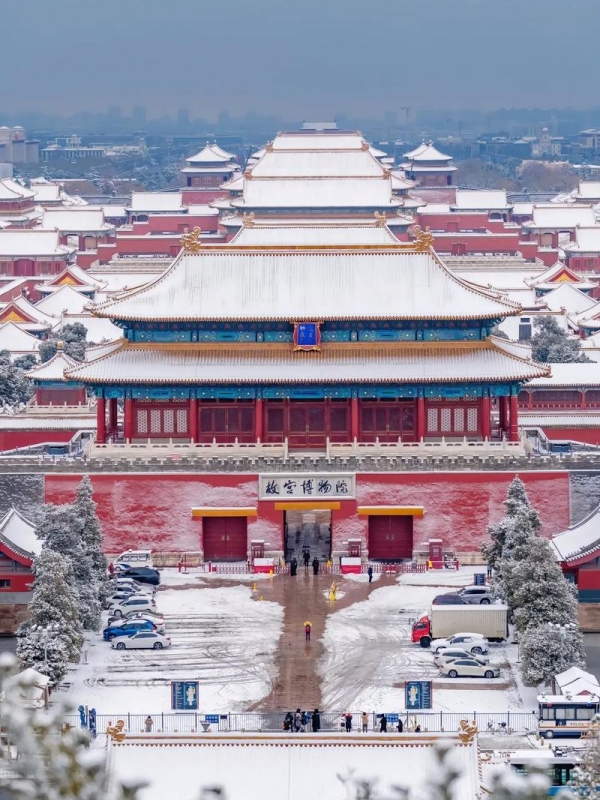
Snow in Beijing
Beijing sits inside the snowy half of China, but its snowfall is modest and unreliable from year to year. Snow days in the capital average around 10–20 per winter season, concentrated in December and January, though the city has recorded flurries as late as March or early April. When snow does fall, it rarely lingers on streets and pavement for more than a day or two, but the city's traditional architecture creates striking photographic opportunities — the Forbidden City's curved rooftops and the Great Wall's stone towers hold snow beautifully and far longer than the ground below.
- Typical snow days: 2–4 measurable snowfalls per winter (some years only 1; occasionally 5+)
- Snowiest months: December and January
- Ground cover: Melts within 1–3 days on streets; lingers 3–7 days on rooftops, walls, and elevated sections of the Great Wall
- Visitor tip: Build a 5–7 day buffer into your January or February trip — a single-week window may catch no snowfall at all in a dry year
Shanghai
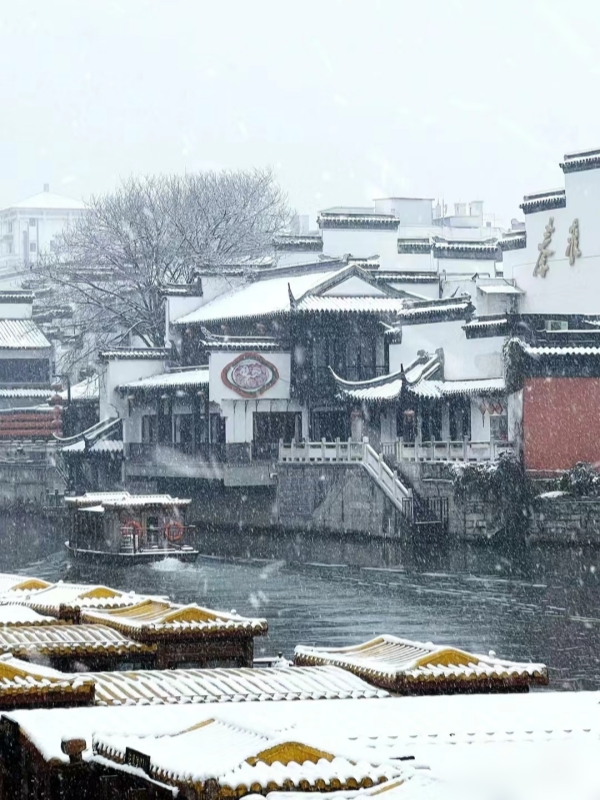
Snow in Shanghai
Shanghai gets snow, technically, but most winters see none and the rare events cause city-wide disruption. Measurable snowfall occurs roughly once every 2–3 years, with the last city-wide notable events recorded in 2008 and 2024. The Yangtze valley's warmth and persistent humidity usually convert any cold precipitation into cold rain, and even when flakes do fall, they melt on contact with the ground in all but the coldest conditions.
- Typical snow days: 0 in most winters; 1–3 in a snowy year
- Snowiest months: January or February (whenever it occurs)
- Ground cover: Never accumulates on streets; extremely rare flurries melt within minutes
- Visitor tip: Expect damp cold (around 1–8°C / 34–46°F) and pack waterproof layers — do not come to Shanghai in winter expecting snow scenes
Chengdu and Chongqing
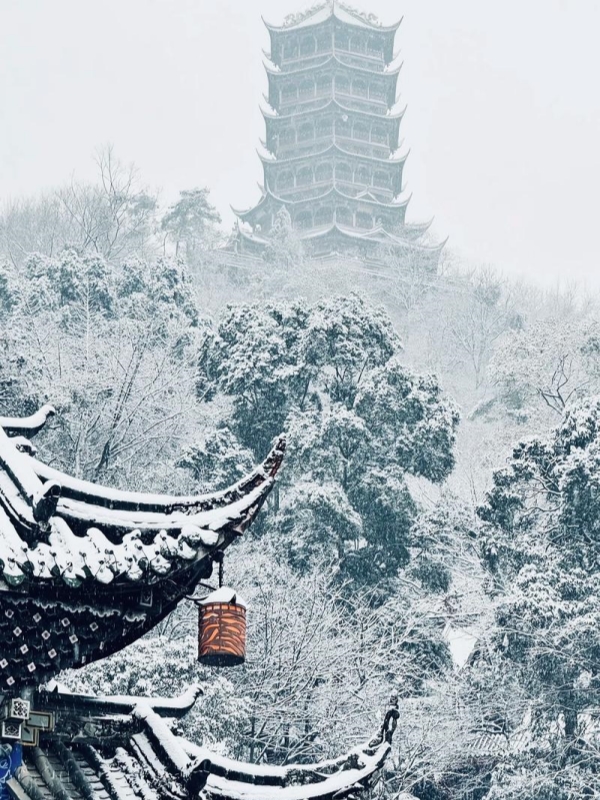
Snow in Chengdu
The Sichuan Basin traps warm air, which is why Chengdu and Chongqing almost never see snow even when the mountains around them are white. Chengdu sits at roughly 500 meters elevation and is hemmed in by mountains that block cold northern air masses. The basin's temperature inversions and persistent fog create a grey, damp winter rather than a snowy one, with temperatures typically ranging from 3–10°C (37–50°F) from December through February.
- Typical snow days: Measurable snow in central Chengdu is a once-in-a-decade event; Chongqing similarly rare
- Surrounding mountains: The Daba Mountains north of Chongqing and Emei Mountain southwest of Chengdu are often snowy while the cities remain wet and foggy
- Ground cover: Snow almost never sticks in the city basin
- Visitor tip: For snow from a Chengdu base, plan a day trip to Emei Mountain, Siguniang Mountain, or the higher elevations of Jiuzhaigou — do not expect it in the city itself
Southern China (Guangzhou, Shenzhen, Hong Kong, Fujian)
South of the Nanling Mountains, snow at low elevation is a true rarity and historically newsworthy when it happens. Guangzhou's last recorded measurable snow in the 20th century came during the unusual February 2008 cold wave, and Shenzhen has never recorded measurable snow in the modern era. Hong Kong last saw stickable snow on its mountain peaks in 2016, with only a handful of events recorded throughout the 20th century. Winter temperatures across the region range from 8–18°C (46–64°F), and visitors should expect rain, fog, and damp conditions rather than any kind of white winter.
- Guangzhou: No measurable snow in modern record; 2008 was the most recent notable event
- Shenzhen: Has never recorded measurable snowfall
- Hong Kong: Snow on mountain peaks in 2016; a handful of historical events in the 20th century
- Fujian coastal: Fuzhou and Xiamen see snow roughly once every 5–10 years
Best Places to See Snow as a Visitor
China's most reliable and visually dramatic snow experiences cluster in three areas: the northeastern snow belt around Harbin, the high mountains of the center and south, and the remote western regions of Sichuan and Xinjiang. Each offers a different snow experience — from the manicured ice sculptures of Harbin to the rime-encrusted peaks of Huangshan — and all are accessible to foreign visitors with proper planning. The key is matching your snow goals to the right destination and season.
Harbin and the Northeast Snow Belt

Snow in Harbin
Harbin is the closest thing China has to a snow capital, with reliable December-to-February snowfall and the country's largest ice festival. The Harbin Ice and Snow World typically opens late December and runs into late February, with standard adult evening tickets around $35–45 (¥230–330) available on Trip.com and Klook. Snow Town (Xuexiang), a 4–5 hour drive from Harbin, offers the deepest natural snowpack in any developed tourist area in China, with snow-covered wooden houses and groomed trails that photograph beautifully against overcast skies.
- Harbin Ice and Snow World: Evening tickets around $35–45 (¥230–330); typically open late December through late February
- Snow Town (Xuexiang): 4–5 hours from Harbin by road; deepest natural snowpack; woodcutter village setting with snow mounds up to 2 meters
- Mohe (Heilongjiang): China's "Arctic" village — the country's coldest inhabited place; snow possible from October through April; -30°C (-22°F) temperatures in January are common
- Getting there: Fly into Harbin Taiping International Airport; onward by high-speed rail or tourist bus to Snow Town; flights to Mohe require a connection through Harbin or the smaller Mohe Gulian Airport
Snowy Mountains: Huangshan, Zhangjiajie, and Emei
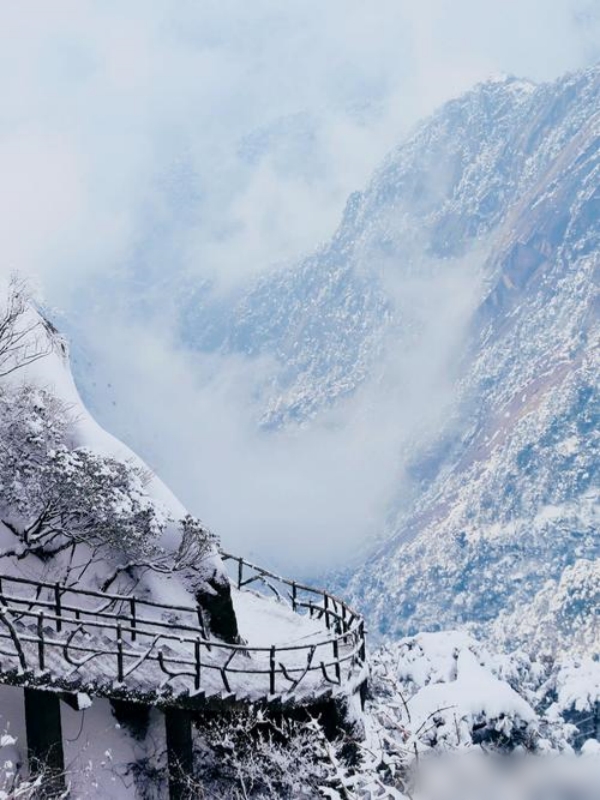
Snow in Huangshan
Three of China's most famous mountain ranges hold snow reliably from December through February, while their lowland base cities stay clear. Huangshan (Yellow Mountain) drops to its winter admission rate of around $25 (¥190) in the off-season, with cable car access to the snowline and rime-ice forests that coat the upper peaks in white. Zhangjiajie National Forest Park stays snowy through February, with the park's avatar-style sandstone pillars dusted in white and cable cars operating normally. Emei Mountain near Chengdu offers a winter snow route up to Jinding Peak, accessible by high-speed rail from Chengdu followed by a short bus transfer.
- Huangshan: Winter admission around $25 (¥190); cable cars operate to the snowline; rime ice on upper trails December through February
- Zhangjiajie: Snow falls on the avatar pillars through February; cable cars and boardwalks remain open; park admission separate from cable car fees
- Emei Mountain: Winter route to Jinding Peak accessible from Chengdu via high-speed rail to Leshan or Emei, then bus; temples at the base remain snow-free
- Winter gear note: Pack traction cleats for icy steps on all three — winter visitors consistently underestimate the ice on stone staircases above 1,500 meters
Western China: Jiuzhaigou and Kanas
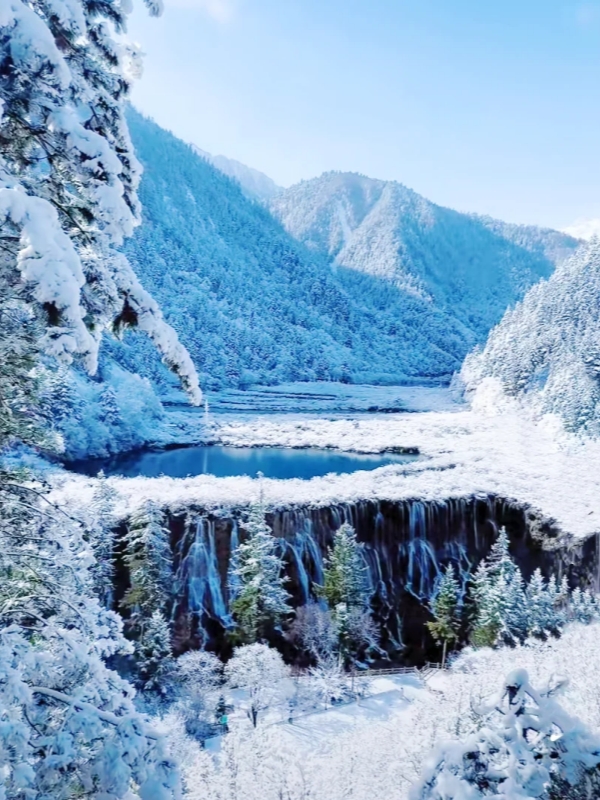
Snow in Jiuzhaigou
Western Sichuan and northern Xinjiang hold China's deepest and longest-lasting natural snow, well outside the main tourist corridor but increasingly accessible with domestic flight connections. Jiuzhaigou Valley in winter is open and noticeably cheaper than peak season, with frozen waterfalls and snow-laden forest creating a stark, photogenic landscape that contrasts sharply with the colorful lakes of summer. Kanas Lake in northern Xinjiang sees snow from October into April and is best reached via Urumqi with a connecting flight to Altay or an onward drive to Burqin.
- Jiuzhaigou Valley: Winter admission typically around $30–40 (¥220–280); frozen Five-Color Pool and Nuorilang Waterfall; fewer crowds than peak season
- Kanas Lake: Snow from October through April; -25°C (-13°F) temperatures in January; best reached via Urumqi flight to Altay, then 3-hour drive
- Yabuli Ski Resort: Heilongjiang's largest ski terrain; full-day lift tickets around $55–80 (¥380–580); suitable for intermediate and advanced skiers
- Cold weather note: Extra layers are essential at Kanas and Yabuli — temperatures drop well below -20°C (-4°F) and wind chill on exposed ridges can push readings much lower
When Does It Snow? The Monthly Snow Calendar
China's snow year runs from November through February in most regions, with high mountains starting a month earlier and holding snow well into March or April. The chart below gives you a month-by-month picture of what to expect at three different elevation zones — northern lowlands, high mountains above 2,000 meters, and southern lowlands. If your trip falls between December and February and you are in the right latitude, snow is almost guaranteed. Outside those months, plan for altitude.
❄️ Winter Travel & Climate: Plan for freezing temperatures, festival weather, and winter packing with our guide to Weather in China in February.
Frequently Asked Questions
Q: Does it snow in China in December?
Yes in the north and mountains. Northern lowlands like Beijing and Harbin begin their snow season in December, with Harbin already seeing regular and sometimes heavy snowfall by mid-month. High mountains including Huangshan, Emei, and Changbai are snow-covered by early December. South of the Yangtze River, December is wet and grey rather than white — snow is possible but rare in most years.
Q: Does it snow in China in January?
January is the snowiest month across China. Harbin and Mohe in Heilongjiang are at their coldest and deepest snow conditions. Beijing and the North China Plain see reliable snowfall. The Harbin Ice and Snow World typically opens in early January, making it one of the best months to visit the northeast for guaranteed snow scenes and the ice festival's freshly carved sculptures.
Q: Does it snow in China in February?
February remains peak snow season across the north. Beijing and Harbin typically hold snow on the ground throughout the month, and the Harbin Ice Festival continues through mid-to-late February. South of the Yangtze, February is actually the most likely month for any rare snowfall in the valley — it is the coldest month in that region and the one where conditions occasionally align for flurries.
Q: Does it snow everywhere in China?
No. China spans tropical to subarctic climate zones, so snowfall is far from universal. Snow falls reliably only north of the Qinling–Huaihe line and on the high mountains scattered across the west and center. Southern coastal cities including Guangzhou, Hong Kong, and Shenzhen may go a decade or longer without a single stickable flake, experiencing instead cool, wet winters with temperatures that rarely drop below 5°C (41°F).
Q: Does it snow in southern China?
Very rarely. Measurable snow in Guangzhou, Shenzhen, or Hong Kong is a once-a-decade-or-longer event. The most recent notable Yangtze-valley snowfall in the south occurred in February 2024, with the previous city-wide event in 2008. Most southern winters are cool and damp rather than white, with temperatures ranging from 8–18°C (46–64°F) and persistent overcast skies.
Q: How often does it snow in China?
It depends entirely on latitude and altitude. Harbin averages around 70 or more snow days per year. Beijing sees roughly 10–20 snow days annually. Shanghai experiences effectively zero snow in most years and 1–3 snow days in a particularly snowy winter. Guangzhou and Hong Kong are near zero across a multi-year window — a decade without measurable snow is not unusual for either city.
Q: When does it start snowing in China?
First snows arrive on the highest Tibetan and Tianshan peaks as early as late September. Northern lowlands see their first measurable snow in mid-to-late November. Beijing and the North China Plain typically open their snow season in December, with the first reliable flurries arriving around mid-month in most years.
Q: Does it snow in China and Japan?
Yes, both countries receive substantial winter snowfall, but the geography differs significantly. Japan's snow belt along the Sea of Japan coast — Tohoku, Hokkaido, and the Japanese Alps — is among the snowiest populated region on Earth at this latitude, regularly receiving 5–10 meters of snowfall per season. China's snowiest populated region is the northeast, centered on Heilongjiang and Jilin, where Harbin and Mohe receive reliable but lighter snowfall. The Changbai Mountains on the China–North Korea border and the Japanese Alps are direct climatic cousins, sharing the same moisture source from the Sea of Japan — but China's side of the range sees considerably less snow accumulation due to the rain shadow effect.