Chinese Family Travel
Chinese family travel rewards families who match the right city to the right age. Toddlers do best in flat, walkable places like Shanghai's Bund and Hangzhou's West Lake. School-age kids light up at the Terracotta Warriors in Xi'an and the giant pandas in Chengdu. Teens handle the hiking, the river boats, and the long high-speed rail days between cities that make China such an efficient country to cover. This guide pairs each age group with the cities that suit them, then sorts out the transport connections — high-speed rail, metro, DiDi, and the stroller logistics — that decide whether a Chinese family trip runs smoothly or falls apart at the first transfer.
Quick Facts
Planning by Age: Matching Kids to the Right Cities
Age determines what your family gets out of China. A toddler needs flat promenades and easy transport. A school-age child can engage with history and wildlife. A teen can handle long travel days and physical activities. This framework assigns each age group to the cities that serve them best.
- 0–2 years (infants and toddlers): Hangzhou and Shanghai are the practical choices. Both have flat riverside walks, English signage in tourist areas, hotels with stroller loans, and shopping malls with Western food courts. Skip the Great Wall's unrestored sections, mountain staircases, and the long side-hall corridors of the Forbidden City.
- 3–6 years (preschool): Shanghai Disneyland, the Chengdu Panda Base, a Beijing Aquarium visit, and a Hangzhou West Lake boat ride work well for this age. Avoid full-day Terracotta Warriors tours and busy bargaining markets — the payoff does not match the fatigue.
- 7–12 years (school age): This is the widest window. Kids can walk the Forbidden City, climb Mutianyu, spend three hours at the Terracotta Warriors, ride a bike along Xi'an's City Wall, and sit through a Li River cruise without the trip collapsing. Nearly every major draw is open.
- 13+ years (teens): Guilin and Yangshuo bamboo rafting, Huangshan hiking trails, hutong street-food crawls in Beijing, and the Shanghai Tower sky deck. Teens can also handle the long high-speed rail days and overnight trains that make cross-country itineraries efficient.
Beijing and Shanghai: The Easy-Logistics Tier
Beijing and Shanghai form the backbone of most Chinese family travel itineraries. Both cities have international airports, extensive metro networks, English signage in tourist zones, and DiDi ride-hailing with an English interface. The high-speed rail link between them takes 4.5 to 6 hours — manageable for kids who can sit through a long movie.
Beijing with Kids: Forbidden City, Great Wall, and Aquariums
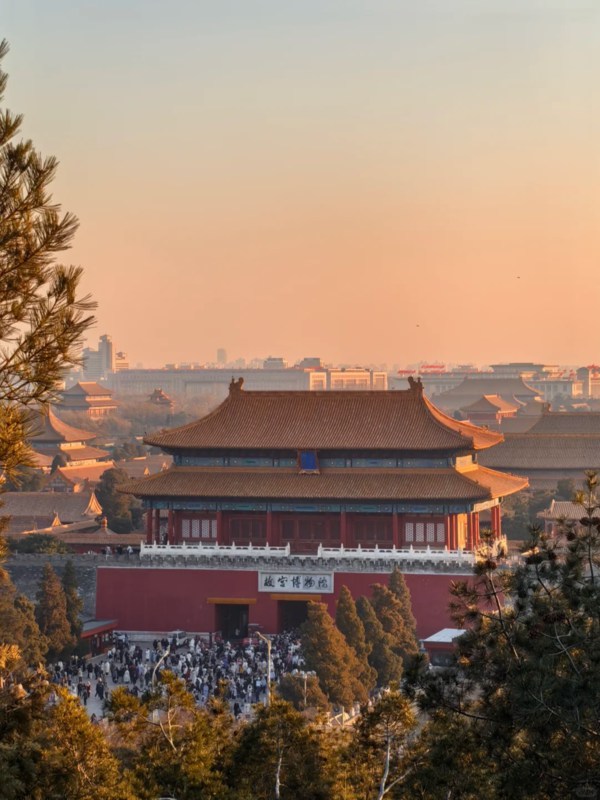
Forbidden City
The Forbidden City rewards families who plan around the crowds and the heat. The palace complex works best with school-age children who can walk the north–south axis, but toddlers in umbrella strollers manage the central route without trouble. Side halls branch off with steps and narrow passages, so those detours are best skipped. Book tickets through the official site or Trip.com in English. Peak-season admission runs about $11 (¥80), dropping to $8 (¥60) in the low season. Children under 1.2 metres or under 6 years enter free with a paying adult. Avoid weekends and any Chinese public holiday — the Forbidden City becomes genuinely dangerous for small children in those crowds.
The Mutianyu section of the Great Wall suits families far better than the central Juyongguan stretch. A cable car plus toboggan combo costs about $25 (¥180) and books easily on Trip.com. The toboggan ride down is a highlight for children aged 4 to 12. Juyongguan requires an open-stair climb that wears out under-7s quickly. The Beijing Aquarium sits next to the Olympic Park, charges about $5 (¥35), and provides indoor, air-conditioned stroller-friendly space for ages 3 to 10. The best base for families: Qianmen or Wangfujing, both on Metro Line 1 and within walking distance of Tiananmen Square.
- Forbidden City: Book ahead via official site or Trip.com; peak $11 (¥80), low $8 (¥60); children under 1.2 m or under 6 free; central axis stroller-friendly, side halls not.
- Mutianyu Great Wall: Cable car + toboggan combo ~$25 (¥180) via Trip.com; cable-car queues have shade; skip Juyongguan with under-7s.
- Beijing Aquarium: ~$5 (¥35); indoor, air-conditioned, stroller-friendly; works for ages 3–10.
- Best base: Qianmen or Wangfujing — Metro Line 1 access and walking distance to Tiananmen.
Shanghai and Hangzhou: Bund, Disney, and West Lake
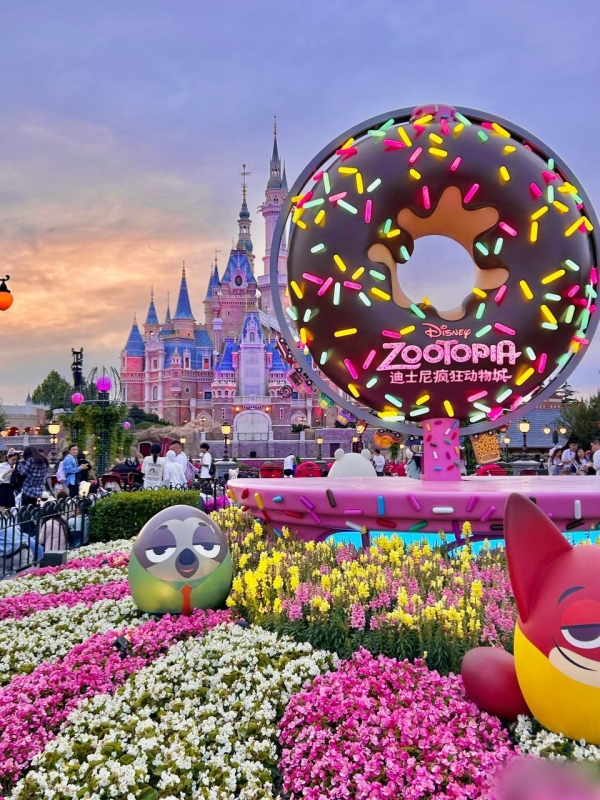
Shanghai Disneyland
Shanghai Disneyland draws families from across China, and for good reason. Book the 1-day ticket on Klook — prices run $60–70 (¥435–499) depending on the date. Arrive 30 minutes before rope drop. The single-rider line is a tactical tool for older siblings who want to ride Tron Lightcycle Power Run or Soaring Over the Horizon without the family queueing together.
The Bund provides a free, flat riverside promenade that works at any age. Strollers roll easily along the waterfront, and the evening light show on the Huangpu River is genuinely memorable for children who can stay up past dark. A 45-minute high-speed rail run from Shanghai Hongqiao Station brings families to Hangzhou, where a West Lake boat ride costs about $5 (¥40) per adult and fills a calm half-day for children aged 0 to 10. Lingyin Temple, by contrast, has steep steps and narrow lanes — skip it with strollers. The best Shanghai base: Jing'an or the French Concession, both with strong metro links and cafés that cater to foreign palates.
- Shanghai Disneyland: Klook 1-day ticket $60–70 (¥435–499); arrive 30 min before rope drop; single-rider line useful for older kids on Tron and Soaring.
- The Bund: Free; flat riverside promenade; magical night view for any age; stroller-friendly.
- Hangzhou West Lake: 45 min by HSR from Shanghai Hongqiao; boat ride ~$5 (¥40) per adult; Lingyin Temple skip with strollers.
- Best base: Jing'an or French Concession in Shanghai — metro access and Western dining options.
Chengdu, Xi'an, and Guilin: The Engagement Tier
The engagement tier targets school-age children and teens who can walk longer days and connect with history, wildlife, and landscape. English signage is thinner in these cities, so some pre-trip preparation — downloading offline maps, printing ticket confirmations — pays off. These three cities reward kids who can stay engaged.
Chengdu: Pandas and a Slower Pace
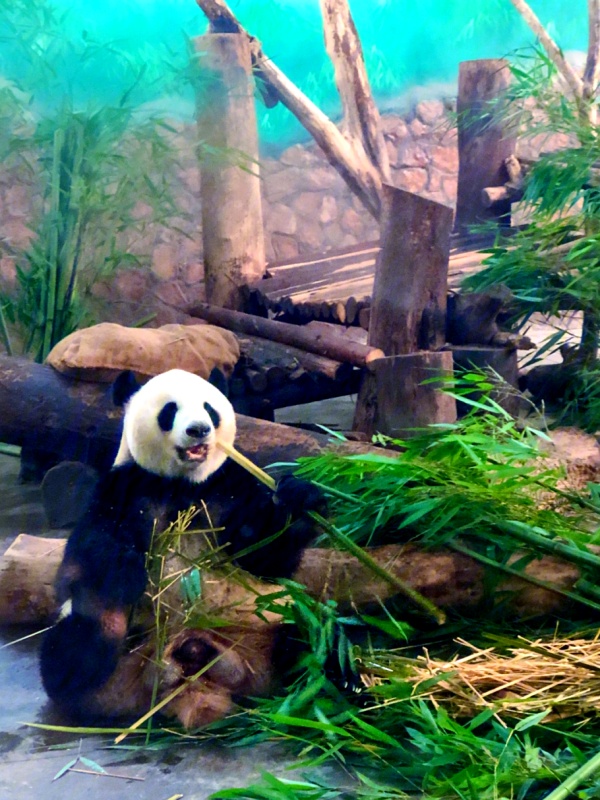
Map of Panda in China
The Chengdu Research Base of Giant Panda Breeding draws children into conservation in a way no textbook can. Admission costs about $7 (¥55). The pandas are most active in the early morning, so arrive at the 7:30 am opening before they retreat indoors to nap. Dujiangyan, 30 minutes by high-speed rail from Chengdu, offers a panda volunteering program for about $170 (¥1,200) booked ahead through the official site — a full-day commitment that school-age children find genuinely meaningful.
Jinli Street near the city centre is stroller-friendly for under-7s but draws heavy late-afternoon crowds. Chengdu's slower pace is itself a feature of the trip — plan fewer sights per day than you would in Shanghai. The best base: Chunxi Road, central and well-served by metro and DiDi.
- Chengdu Panda Base: ~$7 (¥55); gates open 7:30 am; arrive at opening for best panda activity.
- Dujiangyan: 30 min by HSR; panda volunteer program ~$170+ (¥1,200+); book via official site.
- Jinli Street: Stroller-friendly for under-7s; crowds pick up after 4 pm — visit earlier.
- Best base: Chunxi Road — metro and DiDi access, central location.
Xi'an: Terracotta Warriors and City Walls
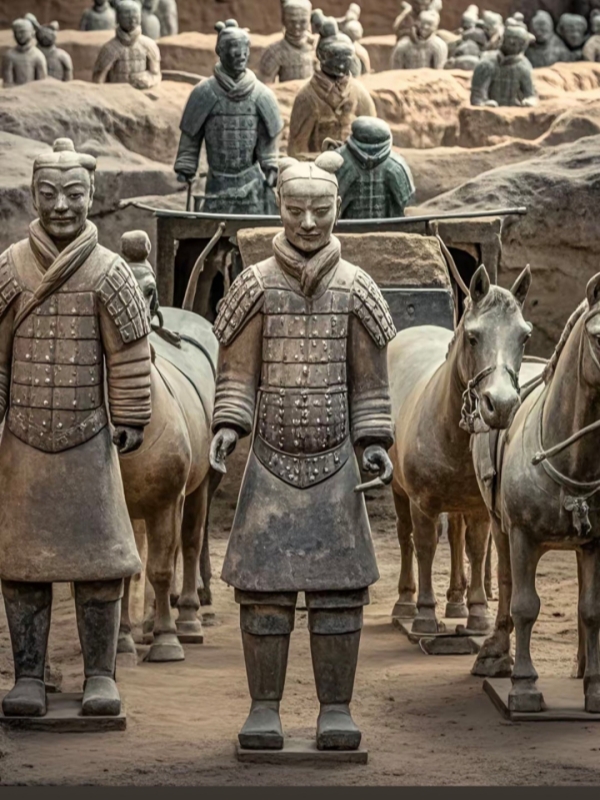
Terracotta Warriors
The Terracotta Warriors and Hua Xu Cultural Museum occupies a site that rewards a deliberate visit. Admission runs about $14 (¥100), and the walk from the entrance gate to the pits is longer than it looks — consider the buggy shuttle inside the site for younger children who flag halfway through. Budget three to four hours on site.
Xi'an's ancient City Wall circles 14 kilometres and can be cycled in under two hours on a rental bike. Child-share bikes are available for older kids at roughly $5 (¥40) per hour. The south gate provides the most stroller-friendly access. The Muslim Quarter food street satisfies children aged 7 and older who are willing to try roujiamo (Chinese hamburger) and biangbiang noodles. The best base: inside the wall near the Bell Tower, walking distance to both the City Wall and the Muslim Quarter.
- Terracotta Warriors: ~$14 (¥100); allow 3–4 hours; buggy shuttle available inside for younger children.
- Xi'an City Wall: 14 km circumference; bike rental ~$5 (¥40)/hr; south gate most stroller-friendly.
- Muslim Quarter: Best for ages 7+; try roujiamo and biangbiang noodles — ask for "bù là" (not spicy).
- Best base: Bell Tower area inside the wall — walking distance to most sights.
Guilin and Yangshuo: River Country for Older Kids
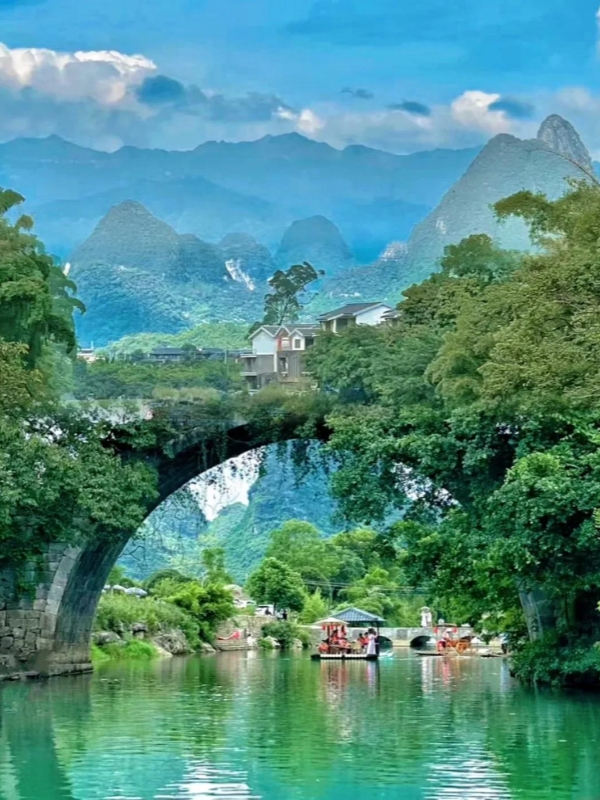
Li River Cruise
Guilin and Yangshuo suit families with children aged 10 and older who can appreciate karst scenery and handle a full day on the water. The Li River cruise from Guilin to Yangshuo takes four hours and costs about $42 (¥300), booked through Trip.com. April, May, September, and October offer the clearest views — river mist in the other months can obscure the peaks that make the journey famous.
Yangshuo's countryside rewards families who rent electric bikes for roughly $7 (¥50) per day. The Yulong River bamboo rafting runs shallow, safe water suitable for children aged 6 and older at about $17 (¥120) per two-person raft. West Street in Yangshuo provides the practical base — restaurants, bike shops, and travel agents cluster here. Skip Guilin city itself unless you need it as a transport hub; the scenery you came for is all in Yangshuo county.
- Li River cruise: ~$42 (¥300) for 4-hour Guilin–Yangshuo boat; book via Trip.com; best visibility April–May and September–October.
- Yangshuo electric bikes: ~$7 (¥50)/day; teens handle these easily; under-12s need supervision on busier roads.
- Yulong River bamboo rafting: ~$17 (¥120) per two-person raft; safe for ages 6+; shallow, calm water.
- Best base: Yangshuo West Street — walking access to restaurants, bike shops, and tour agents.
Getting Around China with Kids: Transport Connections
Two transport decisions shape every Chinese family travel itinerary: which cities to connect by high-speed rail versus domestic flight, and how to move within each city without losing a morning to logistics. Get those right and the trip runs smoothly.
High-Speed Rail Between Cities
High-speed rail is the default choice for city pairs under six hours apart. Children under 1.2 metres ride free; those between 1.2 and 1.5 metres pay half fare on second class. Book through Trip.com or Klook for English e-tickets and clear seat assignments. For routes over six hours — Shanghai to Xi'an or Shanghai to Chengdu — families with young children often prefer the two-hour domestic flight, even at higher cost.
Within Cities: Metro, DiDi, and Taxis
Tier-1 cities run clean metro systems with English signage on the main lines. Strollers use the wide gate at staffed entrances. Elevators exist at every modern station but staff may need to unlock the gate — ask at the platform. DiDi, China's dominant ride-hailing app, offers an English-language interface in settings. The child-seat option exists but availability varies by city and time of day; request 30 minutes ahead to improve your chances. Taxis run on the meter — a short cross-city trip costs $3–7 (¥20–50). Flag one from a hotel queue or hail through the DiDi app.
- Metro: English signage on lines 1–14 in tier-1 cities; strollers use the wide gate at staffed entrances; elevators exist but staff may need to unlock the access gate.
- DiDi: English interface available in settings; child-seat option exists but availability varies — request 30 minutes ahead.
- Taxis: Meter always used; short cross-city ride $3–7 (¥20–50); flag from hotel queue or hail via DiDi app.
- Walking: Central Shanghai, Beijing, and Hangzhou are flat; Xi'an's walled old city is bike-friendly; Chengdu is metro-first.
Strollers, Luggage, and Long-Distance Logistics
An umbrella stroller outperforms a full-size model at Mutianyu Great Wall cable-car queues and in high-speed rail vestibules where space is tight. If you travel with both, gate-check the full-size stroller at airports and retrieve it on arrival. The high-speed rail luggage limit runs 20 kilograms per adult and 10 kilograms per child — oversized bags sit on the end-of-car luggage rack at no extra charge. DiDi XL, a seven-seater vehicle, accommodates two adults, two children, and a folded stroller for roughly $15–25 (¥100–180) on cross-city trips.
Arrive at the station 60 minutes before departure. Security and passport checks apply to all children, including infants who have no ticket of their own. Pack snacks before long rail journeys — station food is limited and overpriced. Children under 5 eat free at most high-speed rail dining cars when a parent orders a set meal.
- Stroller choice: Umbrella stroller beats full-size at cable-car queues and HSR vestibules; gate-check full-size at airports if you bring both.
- HSR luggage: 20 kg per adult, 10 kg per child; oversized bags go on the end-of-car luggage rack.
- DiDi XL: 7-seater; fits two adults, two kids, and a folded stroller for ~$15–25 (¥100–180) on cross-city runs.
- Station arrival: 60 minutes before departure for security and child passport checks — required even for infants.
- Snacks: Pack before rail journeys; station food is limited and pricey; kids under 5 eat free at HSR dining cars with a purchased adult meal.
Family Tickets, Food, and Health Basics
Five practical details sort out the trip-prep stage. Get these right and you eliminate the surprises that disrupt a family itinerary on the ground.
- Family ticket policy: Most Chinese attractions apply half-price child tickets by height (1.2–1.5 m) or age (6–18). Children under 1.2 m or under 6 enter free with a paying adult. Always carry the child's passport for ID checks.
- Food: Noodles, dumplings, rice dishes, and Western chains (McDonald's, KFC, Pizza Hut, Starbucks) are everywhere in tier-1 cities. Bakery chains like BreadTalk and Paris Baguette work for picky eaters. For toddlers, bring UHT milk cartons or buy at City Shop or Sam's Club.
- Health: Tap water is not drinkable. Bottled water costs $0.30–1 (¥2–7) per 500 ml. Pack a small first-aid kit; pharmacies in cities stock Western basics. Pediatric clinics exist in Beijing and Shanghai.
- Connectivity: An eSIM via Airalo or Nomad activates on arrival. WeChat Pay can be linked to a foreign card via the in-app Tour Pass — confirm functionality before relying on it for payments.
- Maps: Google Maps is unreliable inside mainland China. Download offline maps on Maps.me or Apple Maps before reaching each city.
Frequently Asked Questions
Q: Is China safe and welcoming for families with young children?
Major tourist cities are very safe for families. Violent crime against tourists is rare in Beijing, Shanghai, Hangzhou, Xi'an, Chengdu, and Guilin. Petty theft — primarily pickpocketing — occurs at crowded sites like the Forbidden City and Yu Garden. Carry a paper backup of every passport.
Q: What is the best age to take kids to China?
The practical window opens around ages 5–6, when children can walk long museum days and stay engaged with history and wildlife. Below 5, the trip works but demands a slower pace and a Shanghai/Hangzhou focus rather than a full cross-country itinerary with multiple high-speed rail legs.
Q: Can you bring a stroller on Chinese high-speed trains?
Yes. Fold the stroller for boarding, store it at the end-of-car luggage rack or in the vestibule. Stations have elevators at all major high-speed rail stops, but you may need to ask staff to open the access gate on the platform side.
Q: Are there Western or kid-friendly food options in China?
Yes. Every tier-1 city has KFC, McDonald's, Pizza Hut, and Starbucks, plus bakery chains like BreadTalk and Paris Baguette. Noodles and dumplings are generally mild enough for most children — ask for "bù là" (not spicy) to be sure.
Q: Do we need a visa to travel to China as a family?
Visa policy changes frequently — confirm current requirements with the nearest Chinese consulate or your visa service before booking. Some nationalities qualify for 144-hour transit visa exemptions in select cities, which can work for a short family trip.
Q: What is the best season to visit China with kids?
April–May and September–October are the sweet spots: mild temperatures in Beijing and Xi'an, lower humidity in Shanghai and Hangzhou. Avoid National Day Golden Week (October 1–7) and Chinese New Year (late January or early February) — sites are packed and high-speed rail tickets sell out weeks ahead.
Q: How do stroller days work at the Great Wall and Forbidden City?
Forbidden City: strollers handle the main north–south axis well. Side halls have steps and crowd pressure — skip them. Great Wall at Mutianyu: the cable car plus a short walk is manageable with an umbrella stroller. Avoid steep unrestored sections like Jiankou with toddlers.
Q: How do we handle the language barrier traveling as a family?
Translation apps handle most menus and signs. Google Translate with an offline Chinese language pack and Pleco for character recognition cover written Chinese. Hotel concierges in tier-1 cities speak conversational English. Older children can navigate DiDi independently — the app has an English interface once you switch the language setting.