When Is Summer in China
Summer in China is not a single date but a four-month stretch that rolls across the country at different speeds. Astronomically it runs from the June solstice (~June 21) to the September equinox (~Sept 22); meteorologically, China's official summer is June, July, and August. In practice, the season feels very different depending on where you stand — and for foreign travelers, the right month and the right city matter more than the calendar. From Shanghai's humid 梅雨 (plum-rain season) to Beijing's dry 38 °C July and Kunming's year-round 22 °C, China's warm season spans tropical, temperate, and alpine conditions on a single ticket. This guide covers the official dates, the regional weather you should expect, and the destinations where summer is actually the best (or the coolest) time to visit.
Quick Facts
When Does Summer Officially Begin and End in China?
When Is Summer in China
Two definitions of summer operate in parallel across China. The astronomical version marks the summer solstice as its start, around June 21, and the autumnal equinox as its end, around September 22. This system follows the sun's position and gives roughly 93 days of astronomical summer. Meanwhile, China's meteorological agencies define summer as the fixed calendar months of June, July, and August — three equal months that make 30-year climate averages clean and comparable. Both definitions are correct for different purposes. The meteorological window is what tourism boards and scenic areas use when setting peak-season pricing; many parks shift their rates from April 1 through November 1, which covers nearly the entire warm half of the year.
Astronomical vs. Meteorological Summer
Astronomical summer runs from the June solstice to the September equinox. The solstice marks the moment the Northern Hemisphere tilts most directly toward the sun, producing the longest daylight of the year. The equinox marks when day and night are equal length again. Meteorological summer, by contrast, ignores these precise solar moments. It splits the year into four equal three-month seasons: summer is simply June, July, and August. Weather agencies worldwide use this system because it produces stable, averaged climate data — a July in 1990 is directly comparable to a July in 2025. For travel planning, the meteorological definition is what most hotels, attractions, and transport schedules actually use.
Why China's "Summer" Varies So Much by Region
China spans roughly 50 degrees of latitude and more than 5,000 meters of elevation change. Summer arrives in Hainan as early as March or April, when Beijing is still in its cold season. By late May, the heat reaches Beijing and the North China Plain. The Tibetan Plateau, meanwhile, never fully escapes cool nights even in July. The Yangtze Delta sits in a humid subtropical band where summer doubles as the rainy season. The inland northwest (Xinjiang, Gansu) is bone-dry but can hit 40 °C in the Turpan Depression. This is why the question "when is summer in China" has no single answer — it depends entirely on which climate zone your itinerary touches.
School Holidays and the Tourist Calendar
Chinese primary and secondary school summer holidays typically run from early July through late August, with start dates varying by province (usually July 1 or July 8 through August 31 or September 1). This domestic travel surge is the single biggest driver of July–August crowding at major attractions. The Dragon Boat Festival (端午节), a 3-day public holiday, usually falls in late May or June — it falls within the broader summer window but is not a peak crowding event on the scale of Golden Weeks. Peak crowding concentrates in the first two weeks of August and during the May 1 and October 1 Golden Weeks, which fall outside the meteorological summer window. The best warm-weather window without domestic school crowds is the first week of September, after schools resume.
🗓️ Seasonal Traditions: Discover early summer customs, traditional foods, and folk rituals in our overview of the Lixia Festival.
Best Cool Summer Destinations in China
For travelers who want warm weather without being cooked alive, China offers a surprising range of cool summer escapes. The sweet spots cluster in four zones: the southwestern cool capitals, the classic mountain retreats, the northern coastal cities with sea-breeze relief, and the high-altitude plateau. Each offers temperatures 5–20 °C lower than the Yangtze Valley furnaces, with landscapes that are at their most vivid in the warm season.
Cool Capitals of the Southwest: Kunming, Guiyang, and Liupanshui
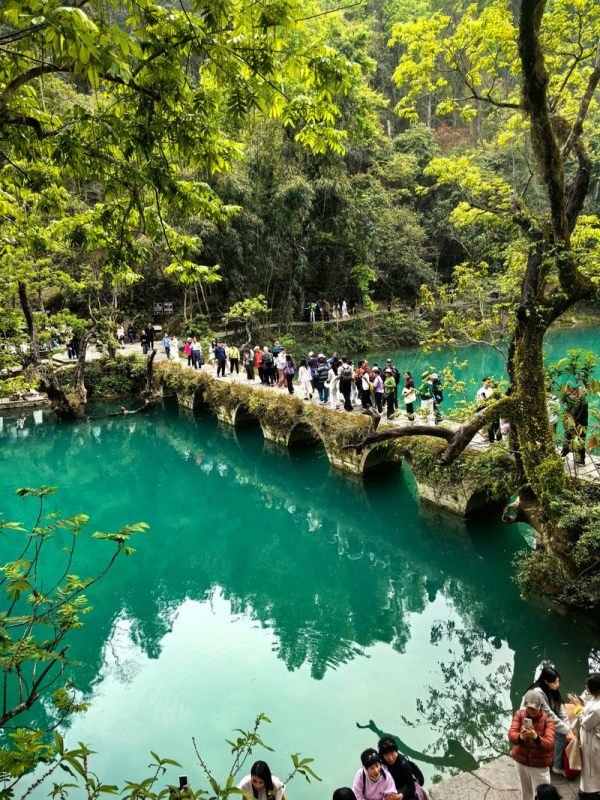
Guiyang Libo Xiaoqikong
China's southwest holds a cluster of large cities that have built their tourism identity around summer coolness. Kunming, the "Spring City," maintains a July average of 22 °C and serves as the gateway to Dali and Lijiang. Guiyang, officially designated "Summer Capital of China" by the Guizhou municipal government, averages 24 °C and sits within easy reach of Huangguoshu Waterfall. Liupanshui carries the "Cool City" designation with summer averages of 19–22 °C and access to the Wumeng Grassland.
- Kunming: "Spring City," avg. 22 °C year-round; Stone Forest entrance about $18 (¥130); gateway to Dali and Lijiang.
- Guiyang: "Summer Capital of China," avg. 24 °C in July; Huangguoshu Waterfall nearby.
- Liupanshui: "Cool City" designation; avg. 19–22 °C summer; Wumeng Grassland access.
- Qujing: Lower-profile alternative; Luoping rapeseed fields (late winter bloom); karst summer hiking.
Mountain Retreats: Huangshan, Zhangjiajie, Emei Shan, and Lushan
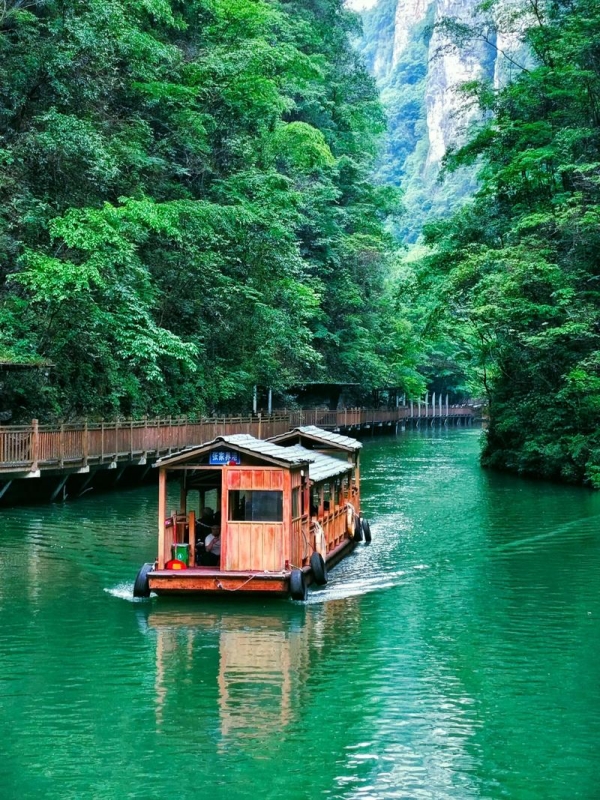
Zhangjiajie
China's mountains drop temperatures noticeably once you climb above 600–1,500 meters. Bases at elevation feel 5–10 °C cooler than nearby lowland cities, and summit temperatures drop further still. Summer is peak season at most mountain parks because the cloud seas, pine forests, and waterfalls are most dramatic under warm, moist air. Huangshan (Yellow Mountain) in Anhui is the most famous — its granite peaks rise above the sea of clouds that form when warm air hits the summit.
- Huangshan: Anhui; entrance about $27 (¥190) peak; summit avg. 17–22 °C July; cable car extra.
- Zhangjiajie: Hunan; 3-day pass about $32 (¥225); sandstone pillars and cloud seas; summer peak season.
- Emei Shan: Sichuan; entrance about $23 (¥160); Buddhist summit temples; cool cloud forests and resident monkeys.
- Lushan: Jiangxi; entrance about $23 (¥160); "Poet's Mountain" south of the Yangtze; historic villas.
- Moganshan: Zhejiang; free trail access; 19th-century international villa retreat near Shanghai/Hangzhou.
Coastal Escapes: Qingdao, Dalian, and Beidaihe
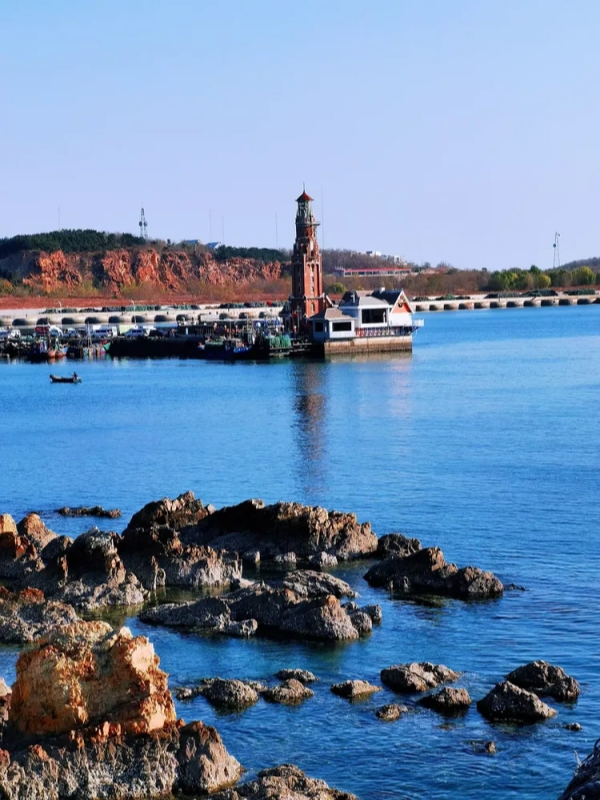
Tiger Beach Ocean Park
The sea-breeze cities of northern and eastern China offer a straightforward escape from inland heat. July and August bring highs of 25–28 °C — warm enough for the beach but 8–12 °C cooler than Shanghai or Wuhan on the same dates. Qingdao and Dalian combine urban sightseeing with beach access and international history. Beidaihe has been the preferred summer retreat for Beijing's diplomatic community since the 1920s.
- Qingdao: Shandong; avg. high 25–28 °C July; free public beaches; Laoshan scenic area about $13 (¥90); Tsingtao Beer Festival in August.
- Dalian: Liaoning; avg. 24–27 °C July; free beaches; Tiger Beach Ocean Park about $8–14 (¥55–100).
- Beidaihe: Hebei; historic Beijing retreat; free beaches; avg. 25–28 °C summer; near Shanhaiguan (end of the Great Wall).
- Weihai / Yantai: Shandong; lower-key Qingdao alternative; free beaches; seafood focus.
Tibetan Plateau and Northwest: Lhasa, Shangri-La, and Xining

Everest from Tibet
The high-altitude window from June through September is when Tibet and the eastern plateau are most accessible and most visually striking. Rainfall peaks in July and August, but temperatures remain cool and the landscapes are green and vivid. This is the warmest and clearest weather window for the roof of the world — the rest of the year brings freezing nights and, in Tibet's case, unreliable road access. The plateau demands acclimatization: altitude sickness is a real risk above 3,000 meters, and pace should be slow for the first 48 hours.
- Lhasa: Tibet Autonomous Region; July avg. high 18–22 °C; Potala Palace about $28 (¥200); passport required; advance booking mandatory.
- Shangri-La (Zhongdian): Yunnan; July avg. 15–18 °C; Pudacuo National Park about $14 (¥100); Tibetan monasteries.
- Xining: Qinghai; July avg. 17–20 °C; gateway to Qinghai Lake and Tongren regong monasteries.
- Daocheng / Yading: Sichuan; July avg. 12–16 °C; "last Shangri-La" alpine reserve; requires altitude acclimatization.
🏔️ Refreshing Mountain & Lake Escapes: Explore high-altitude retreats, forest reserves, and coastal sea breezes in Cool Summer Destinations China.
China Summer Weather by Region
Northern China: Beijing, Xi'an, and the Yellow River Basin
Northern China summers are hot but predominantly dry. July and August bring daytime highs of 32–36 °C to Beijing and Xi'an, with brief but intense thunderstorms punctuating otherwise sunny stretches. The air feels sharper than the Yangtze Valley's steam-bath humidity. Nights cool noticeably — Beijing drops to 20–23 °C after sunset, making evenings comfortable for sightseeing. This contrasts sharply with the bone-chilling winter stereotype. However, museums, malls, and restaurants run air conditioning aggressively at 18–22 °C. Visitors arriving sweaty from 35 °C outside can find these interiors surprisingly cold. Layering is the practical solution.
Eastern and Central China: Shanghai, Hangzhou, and the Yangtze Valley
This is the "real China summer" most visitors picture — oppressive heat combined with humidity that makes the air feel heavier than the thermometer suggests. Shanghai and Hangzhou regularly hit 33–37 °C in July–August, with the heat index often crossing 40 °C. Nanjing, Wuhan, and Chongqing historically rank as China's "Three Furnaces" (三大火炉) for this reason. The 梅雨 plum-rain season arrives first, bringing persistent drizzle and overcast skies from mid-June through mid-July. Once it breaks, the subtropical high pressure settles in and the dry, relentless heat of August follows. Travelers on a Beijing–Xi'an–Shanghai itinerary should target May or September for comfort.
Southern China: Guangzhou, Hong Kong, and the South Coast
In Guangzhou, Hong Kong, and much of the south coast, "summer" runs from April through October with little seasonal relief. July averages around 31 °C with 80% relative humidity. Afternoon thunderstorms are common, driven by the East Asian monsoon. The typhoon season runs roughly July through September, with tropical storms occasionally grounding flights and ferry services for one to three days. Hainan Island (Sanya) sits at the same latitude as Hawaii and maintains 28–32 °C year-round, but the sea breeze keeps it from feeling as oppressive as inland Guangzhou. Sanya is the hot-but-breathable exception to the south coast rule.
Western Highlands: Yunnan, Guizhou, Sichuan, and Tibet
The western highlands are the cool exception that makes summer the best time to visit this region. Kunming, known as the "Spring City," averages 22 °C year-round — July feels like a mild northern autumn. Guiyang holds the municipal designation "Summer Capital of China" and sits at 24 °C in July. Lhasa in Tibet reaches 18–22 °C, while Shangri-La (Zhongdian) in Yunnan holds at 15–18 °C. The trade-off is rain: July and August bring regular afternoon showers to Yunnan, Guizhou, and the Tibetan plateau. The rain is rarely a washout, but a light rain jacket is essential. Nights everywhere above 2,000 meters drop below 10 °C even in midsummer.
🍦 Beat the Heat: Find practical travel hacks, shaded urban routes, and cooling treats with Cool Off Summer in China.
What to Pack and Prepare for a China Summer Trip
China's summer climates range from tropical humidity to alpine chill, so packing strategy depends entirely on your route. A Beijing–Xi'an circuit demands different layers than a Yunnan–Tibet itinerary. Below is the universal kit that serves most summer visitors regardless of destination.
- Light breathable fabrics: Cotton or linen shirts and trousers; avoid synthetic materials that trap heat and odor.
- Compact umbrella or light rain jacket: Essential for 梅雨 in the Yangtze Valley, afternoon showers on the plateau, and sudden typhoon squalls on the south coast.
- Sunscreen SPF 30+ and sunglasses: UV is intense on the plateau and at altitude even when the air feels cool at 18 °C.
- Refillable water bottle: Heat and humidity accelerate dehydration; tap water is not potable — use bottled water or your hotel kettle to refill.
- Heat-appropriate footwear: Broken-in sandals or mesh shoes; avoid new hiking boots that will blister in high humidity.
- Layer for air conditioning: Museums, malls, HSR carriages, and restaurants typically run at 18–22 °C; a light cardigan or jacket prevents shivers.
- Mosquito repellent: Necessary for southern evenings and plateau regions in summer.
- VPN installed before arrival: Google, Instagram, WhatsApp, and many news sites are blocked in China; a pre-installed VPN is essential for most travelers.
- Sleep mask: Sunset arrives after 19:00 across most of China in summer and after 20:00 in the north; useful for blocking light in hotels.
🌬️ Indoor Comfort & AC Tips: Learn how to navigate aggressive indoor air conditioning, high-speed rail temperatures, and heat safety in Summer in China with AC.
Crowds, Holidays, and Booking Tips for Summer Travel
July and August are China's peak domestic tourist season. School holidays release more than 200 million students into the travel system, and the crowds at major attractions reflect that volume. Advance planning is the difference between a smooth visit and hours wasted in queues. The following practical steps apply to any summer itinerary.
- Book HSR tickets 2 weeks ahead: Peak-season trains (Beijing–Shanghai, Shanghai–Hangzhou, Beijing–Xi'an) sell out fast; ticket windows open 15 days before departure.
- Reserve high-demand attractions 1–7 days out: The Potala Palace, Forbidden City, Terracotta Army, and Jiuzhaigou cap daily visitors and require advance booking with passport details.
- Avoid Dragon Boat Festival weekend: The 3-day public holiday typically falls in late May or June; domestic travel spikes at major sites during this window.
- Target the first week of September: After schools resume and before National Day Golden Week (October 1–7), this is the quietest warm-weather window of the year.
- Book cool-destination hotels early: Kunming, Guiyang, Lhasa, and Qingdao hotels roughly double in price from low season to July–August peak; reserve at least 2–3 weeks ahead.
- Use Trip.com or Klook for foreign passports: These platforms accept international payment methods and display prices in USD; domestic-only channels (Meituan, Dianping, WeChat mini-programs) require mainland phone numbers and local payment.
- Carry your passport at all times: Hotels, high-speed trains, and all ticketed attractions require passport verification on entry.
Frequently Asked Questions
Q: What is the hottest month in China?
July is the hottest month nationally, with inland cities like Chongqing, Wuhan, Nanjing, Xi'an, and Zhengzhou regularly hitting 35–40 °C. The Yangtze Valley holds extreme heat into August. Hainan and the deep south are hot year-round with minimal seasonal swing. For warm weather without extreme heat, May, June, and September are milder alternatives to the July–August peak.
Q: Where is the coolest place in China during summer?
Among major cities, Kunming (avg. 22 °C in July) and Guiyang (avg. 24 °C, officially designated "Summer Capital of China" by the municipal government) are the best-known cool-city options. For alpine cool, Shangri-La (avg. 15–18 °C), Lhasa (18–22 °C), and Daocheng/Yading (12–16 °C) are noticeably cold at night even in July. Coastal cities Qingdao, Dalian, and Beidaihe average 25–28 °C thanks to sea breezes.
Q: Does China have a rainy season, and when does it hit?
Yes. The Yangtze Delta and central China experience 梅雨 (plum rain) from roughly mid-June to mid-July, marked by persistent drizzle, overcast skies, and high humidity. The south coast's main rainy season falls in May–June. The northwest is dry year-round. Plateau regions (Yunnan, Tibet, Qinghai) see afternoon showers in July–August, which are short and often occur in the late afternoon.
Q: When is typhoon season in China?
Typhoon season runs roughly July through September, peaking in August and September. The south coast (Guangdong, Fujian, Zhejiang, Hainan, Hong Kong, Macau) is most exposed. During typhoon landfalls, flights and ferries to and from islands (Hainan, Zhoushan, Sanya, Hong Kong outlying islands) can be canceled for one to three days. Build a buffer day into any island itinerary during this window.
Q: Is summer a good time to visit China?
It depends entirely on where you go. Summer is the best season for western highlands (Yunnan, Guizhou, Tibet, Qinghai), northern grasslands (Inner Mongolia, Hulunbuir), and mountain retreats (Huangshan, Zhangjiajie, Emei Shan). It is the worst season for Yangtze Valley lowlands (Shanghai, Wuhan, Chongqing), where extreme heat and humidity make sightseeing unpleasant. If your itinerary is Beijing–Xi'an–Shanghai, shoulder seasons (May, September, October) are more comfortable.
Q: What should I wear in China in summer?
Light, breathable fabrics (cotton, linen) work across most of the country. Bring a compact umbrella or light rain jacket for plum rain, typhoon squalls, and plateau afternoon showers. Pack one warm layer for air-conditioned interiors — museums, high-speed trains, and malls typically run at 18–22 °C. On the plateau, add a fleece even in July; Lhasa and Shangri-La nights drop below 10 °C. Sunscreen and sunglasses are essential on the plateau and at altitude, even when the air feels cool.
Q: When is the best time to avoid crowds in China?
The first week of September, after schools return and before National Day Golden Week (October 1–7), is the quietest warm-weather window. Late May, after the May 1 Golden Week and before the Dragon Boat Festival, is the other shoulder-season sweet spot. Within summer proper, weekdays beat weekends at major sites. Arrive at the Forbidden City, Terracotta Army, and West Lake before 09:00 to beat tour-group peaks.
Q: Are there any Chinese holidays in summer?
There are no summer Golden Weeks. Two holidays fall partly within the warm travel window: Dragon Boat Festival (端午节), a 3-day public holiday typically in late May or June (lunar calendar date varies each year), and Mid-Autumn Festival (中秋节), a 3-day public holiday in September or early October — usually outside the meteorological summer but still within the broader warm-season window. Both holidays spike domestic crowds at major sites.