Cool Summer Destinations China:20°C Nights, ¥5 Ice Cream, and a Light Jacket
Most travelers think China in July adds up to 40℃ heat, dripping humidity. It doesn’t have to. A narrow strip of China, from Harbin clear up north all the way to Shangri-La on the very edge of the Tibetan plateau, rests comfortably between 15/20℃ and 25/30℃ all summer. You’ll want a light jacket. This guide runs through nine cool summer destinations across China stretching east to west, starting with the Northeast domination before swooping left to highland cities, right to junks of karst landscapes, bottoming out to grasslands and wandering through local alleyways where you will see real prices and common Chinese getting entry by 2026 visa-free.
Quick Facts: Five Cool Havens at a Glance
The five main stops all stay under 25°C in July, and European passport holders can enter China visa-free in 2026. Use the table below to compare before reading the detailed entries.
Northeast China at 20°C in July
If a European said to me they were off to China in July, my first question would be “are you crazy?” After three summer trips to the Northeast, the answer is clear: Northeast China in the summer is one of the mist underrated cool summer destinations in China. The reason is the same myth that puts Harbin on the winter list. It belongs on the summer too. Here are the three stops that ground it.
NO 1. Harbin: Yellow Houses, Back Alleys, and 18°C River Breezes
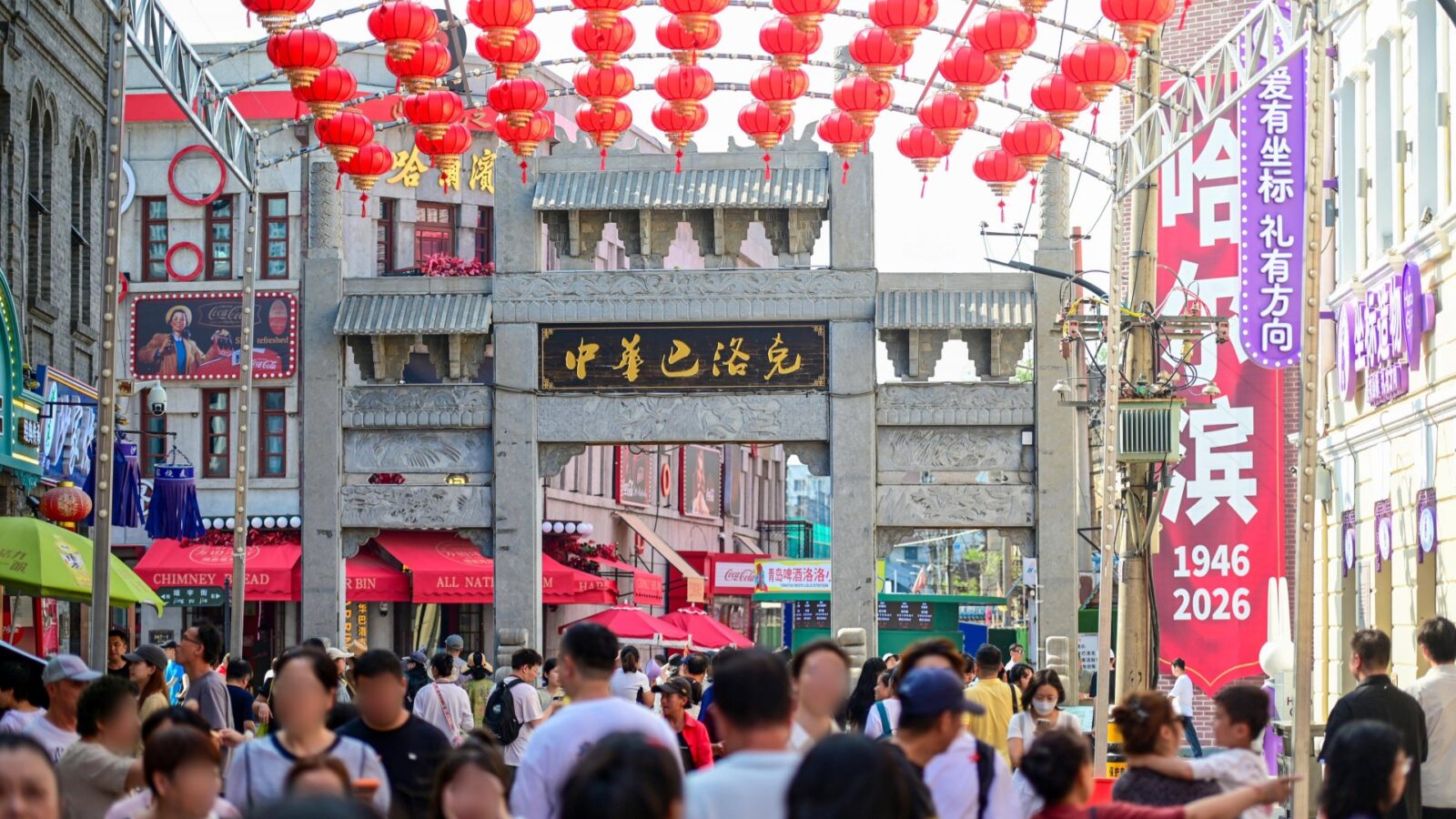
Chinese Baroque Historic and Cultural Block in Harbin
Most visitors walk Harbin's Central Street and call it done. Locals do the opposite. In July and August, the temperature sits between 22°C and 25°C during the day and drops to 16-19°C at night. The cooling is not just the air — it is the river breeze and the old elm canopy along the Songhua.
- Climate feel: The north end of Stalin Park (locally called Laotouwan) sits 3°C below the main flood-control monument stretch because of the old elm density.
- Local experience: Walk Huayuan Street's century-old Chinese Eastern Railway yellow houses (free, no tourists) for afternoon light, then thread Daowai's back-alley Baroque courtyards off Nan 2nd to Nan 4th lanes for old wooden stairs and leather workshops. Most days the alleys are empty before lunch.
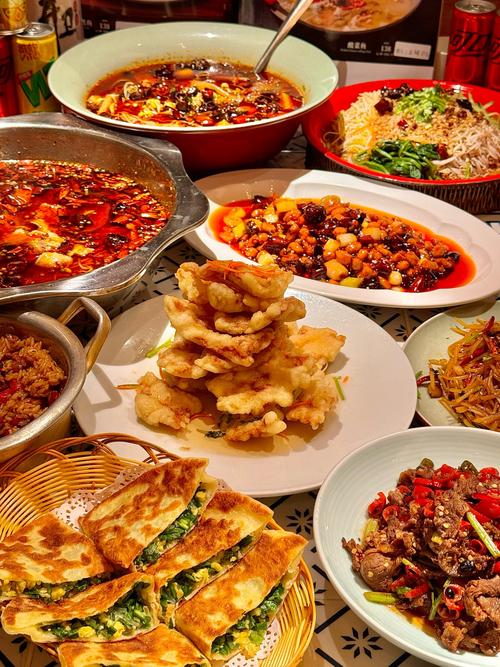
- Price reality: Red Zhuan Street morning market's Yin Pangzi fried cakes (¥3 each, rose-bean paste); Anjing Street night market full meal ¥25; Daowai Shui Xian Baozi 6 for ¥12; Madieer ice cream bar ¥5 in the yellow wrapper.
- What to skip: The central stretch of Central Street, the Saint Sophia interior queue, and the flood-control monument sunset crowd.
Plan on three nights, zipping around under the elms on shared bikes to hit Huayuan Street (in the late afternoon), walk the back lanes of Daowai at 9 AM (before the crush for lunch), and end each day at Laotouwan among the elms flinging breadcrumbs for all the gulls coming to sip from the river. I’d keep only a night to the Madieer bar on Central Street. That diamond among the (elm)leaves? Fair warning: it’s also mosquito Alaska in the month of July, so pack some repellent for evenings by the river.
NO 2. Changbaishan: Slow Town Evenings, Forest Hot Springs, and 15°C Ridge Walks
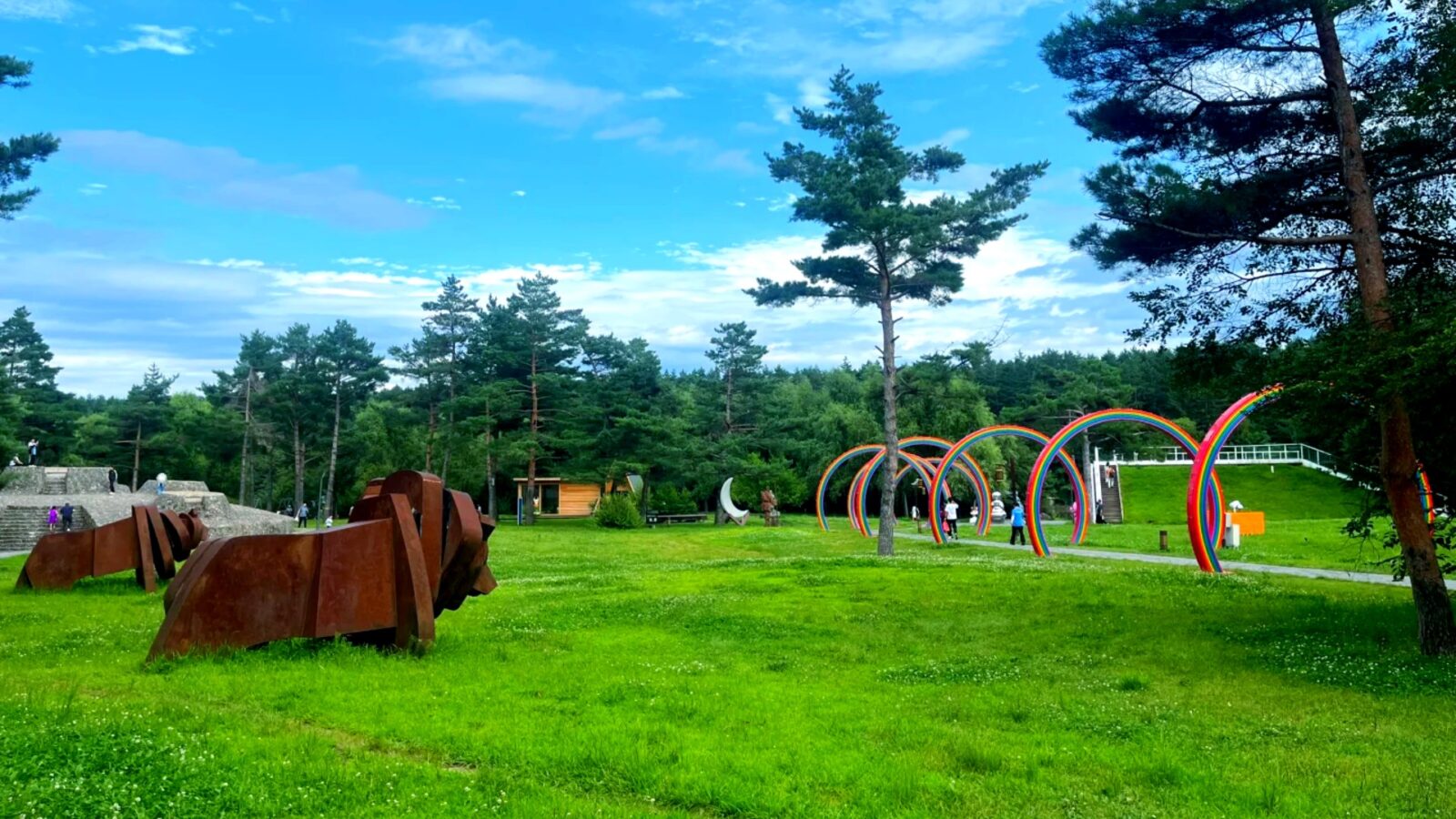
Changbaishan Beauty Pine International Sculpture Park
Most tourists treat Erdao Baihe as a transit base and rush up the North Slope. Locals stay in town, soak in forest hot springs, and save the mountain for one slow morning. The town sits at 720 meters and holds 22°C in July, with nights cold enough for a blanket.
- Climate feel: Town stays 22°C, ridge tops drop to 15°C; the West Slope's 1,442 steps cut crowd density by half compared to the North Slope and add alpine wildflower blooms (iris, golden lotus, lily) in June and July.
- Local experience: Soak at Zhihe Resort's open-air forest hot springs (¥200+, 22°C air meeting 60°C water under birch canopy); walk Meirensong廊桥 park at dawn; cycle town on shared bikes at ¥1 per 30 minutes.
- Price reality: West Slope ticket ¥190; Natural History Museum ¥40 for a quick grounding; town homestays ¥150-300 per night; Zhihe hot springs beat Alpine equivalents at one-eighth the price (€150 vs ¥200).
- What to skip: The North Slope main-entrance queue and the Heaven Lake "visible one day in three" gamble — the town itself is the summer.
Book 2 nights in town plus 1 night on the mountain if budget allows. Enter the West Slope between 6:30 and 7 AM for the wildflower meadows in soft light, and return to town by 3 PM for a soak before dinner. The Jinjiang Grand Canyon is the half-day the buses skip — volcanic rock walls with full forest shade.
NO 3. Yanji: Hot Soup, Cold Noodles, and the Three-Step Cool-Down
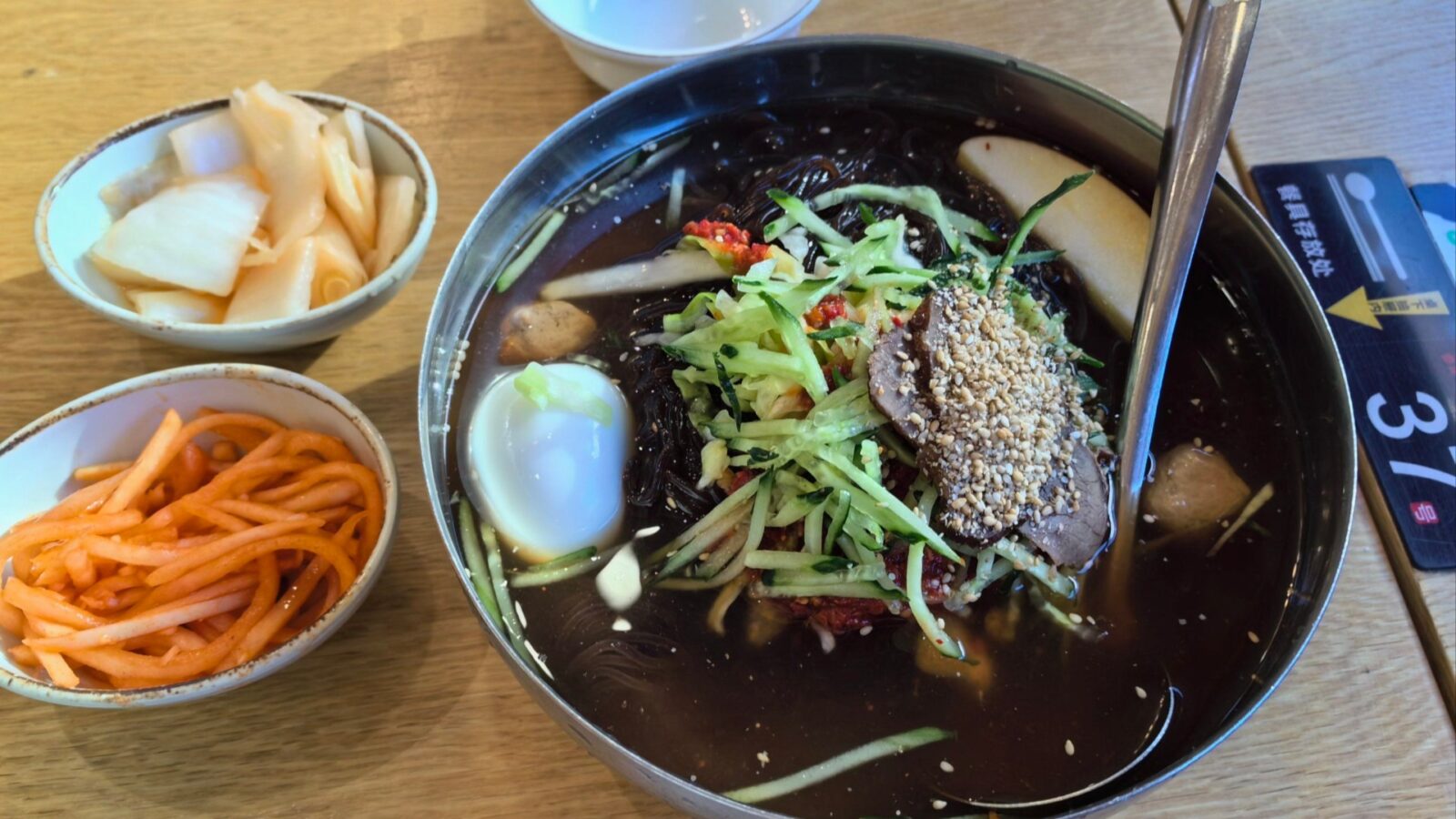
Yanji Cold Noodles
Most visitors photograph the Korean-language wall and queue at the Fuwu Dalou cold-noodle shop. Locals do not eat cold noodles before 10 AM, and they treat the bowl as a finisher, not a starter. The three-step cool-down — hot soup, cold noodles, ice beer — is how Yanji's 24°C summer actually feels like 18°C.
- Climate feel: Days 20-24°C, nights 14-17°C; one of the driest Northeast cities in summer.
- Local experience: Walk the South Henan Street unmarked stalls — order myeongtae (pollock) hot soup first, the owner will ask if you want cold noodles after; Park Road alley grill houses with iron griddles and 20-year family spots; Shuishang morning market (5:00-8:30 AM) for potato dumplings and jiangmi ji (glutinous rice chicken).
- Price reality: Myeongtae hot soup ¥25-35 per pot; cold noodles ¥20-28; Bingchuan beer ¥5; alley grill ¥60-80 per person; Shuishang dumplings ¥10 per plate.
- What to skip: The Korean-language wall selfie queue, the tourist branch of Fengmao Chuancheng, and ordering your own grill cuts — let the house choose.
Sequence the meal this way and the temperature drop is real:
Highland Cities Cooled by Altitude
Kunming and Guiyang enjoy a few degrees’ advantage over the surrounding lowlands simply because of altitude, a benefit that costs the price of being a much larger, busier place with more of a tourist mentality than the Northeast. The local play is not to fight the city but give in, timing your life around altitude instead.
NO 4. Kunming: Morning Markets, Afternoon Shade, and the Night Flower Auction
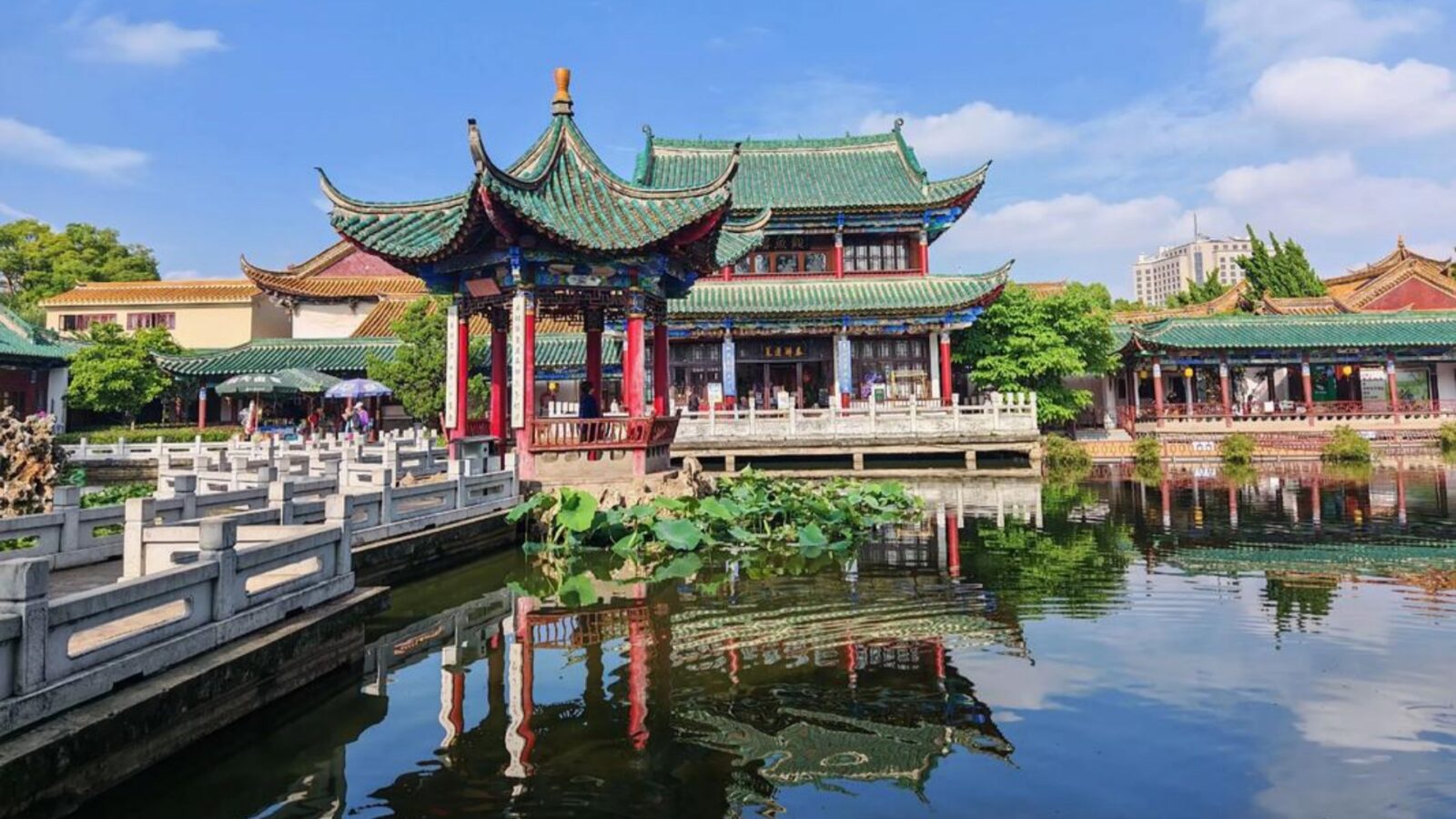
The Green Lake Park
Skip the Stone Forest ticket (¥130) and the Dianchi wind-swept sea wall. Kunming's 20-25°C July works best on a slow three-beat day: the 7 AM market for breakfast, the early afternoon under Yunnan University's tree canopy, and the 8:30 PM flower auction in Dounan. The cool comes from altitude and timing, not from any single sight.
The true introduction is at Cuixin Market at dawn, Chen Shaosong’s sweet rice wine (¥8 a bowl, original or osmanthus), the spicy Douhua rice noodle stall with vegetarian Douhua plus papaya water (¥10, which is gone by mid-morning), Yang’s Mangshi cold rolls (¥10), fresh-fried potato chips dusted with chili and seaweed (¥5 a bag). After the market, taxi to Southwest Associated University (now Yunnan Normal University, reserve a few days in advance, get there by 10:30, at latest): eat at Wenhua Lane or the second-floor cafeteria of Yunnan University (¥12-18 per meal). The afternoon can be spent at the old campus of Yunda, Lin Huiyin’s Yingqiu courtyard, Xiong Qinglai’s old residence, and the crape myrtle trees that shade Cuihu Lake.
End the day at Dounan Flower Market after 8:30 PM for the night auction — roses ¥10 for 20 stems, lilies ¥15 a bundle. Take a taxi back; the cool down peaks between 9 and 10 PM when the flower trucks roll in. The 15°C you feel in town at night is real, and the flowers are cheaper than a coffee.
NO 5. Guiyang: Back-Hill Streams, Old-Town Cafes, and Escaping the District
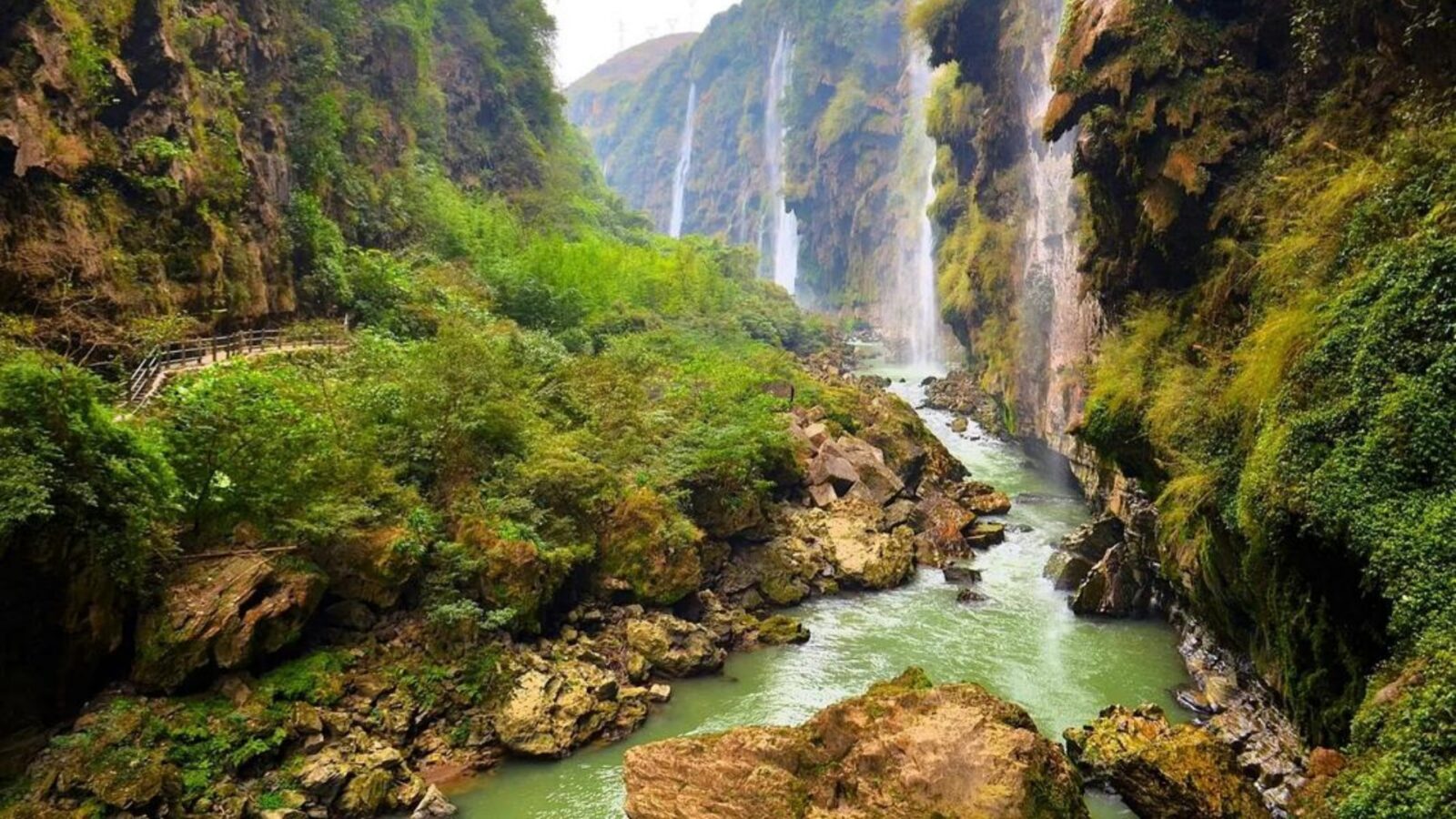
Maling River Canyon
Guiyang's 23-26°C July works without leaving the city — or even leaving the district. Most visitors queue at Jiaxiu Tower for sunset, but the local escape route runs west to the back hills of Qianling and south to the Maling Buyi streams. The 0.7-hour ride to the back of Qianling Mountain drops you into a free, ticket-free creek valley that locals use on weekends.
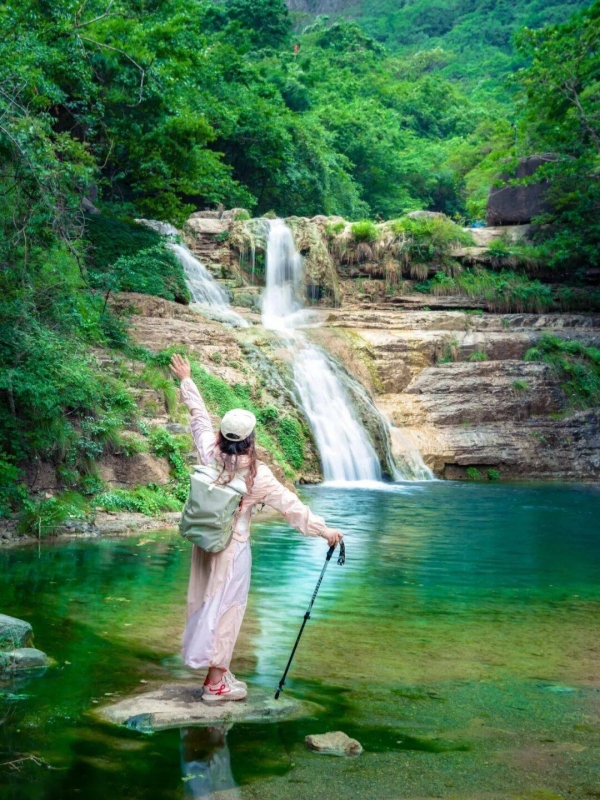
Qianling’s back-hill streaming (Wudang District, free) is sheltered by a tight grove of bamboo and shallow enough in parts to wade; in May to July the level is pleasant to dip feet and sit all over air, which nips at an lower dewpoint 3-5°C than in the downtown. Maling Buyi township (1 hour by car) is even mellower, strollable creek beds of stone for random picnics. Skip the main gate to Qianling (¥5 but throngs kill the cool) and skip Qingyan Ancient Town (entirely over-commercialized). An alternative ‘old town’ is Wenchangge where ancient scholar trees charm little cafes starting at ¥30-50 per person and draws a thinner river crowd than Jiaxiu.
For dinner, head to Erqi Road or Xiaohe Roundabout night markets — not Qingyun Road, which is now overrun. Erqi Road grilled fish runs ¥45 per fish, and the Wenchangge cafes stay open until midnight. The 18°C creek reading is real; bring water shoes for the back-hill stream.
Mountains and Water as Air Conditioning
The karst regions of Guizhou and the canyon country of Zhangjiajie both act as natural air conditioners — the deeper into a valley or cave you go, the more degrees you drop. The two stops below sit in completely different provinces but share the same logic.
NO 6. Guizhou's Karst (Anshun-Guanling-Libo Line): Glacial Potholes, Cave Rafting, and Empty Boardwalks
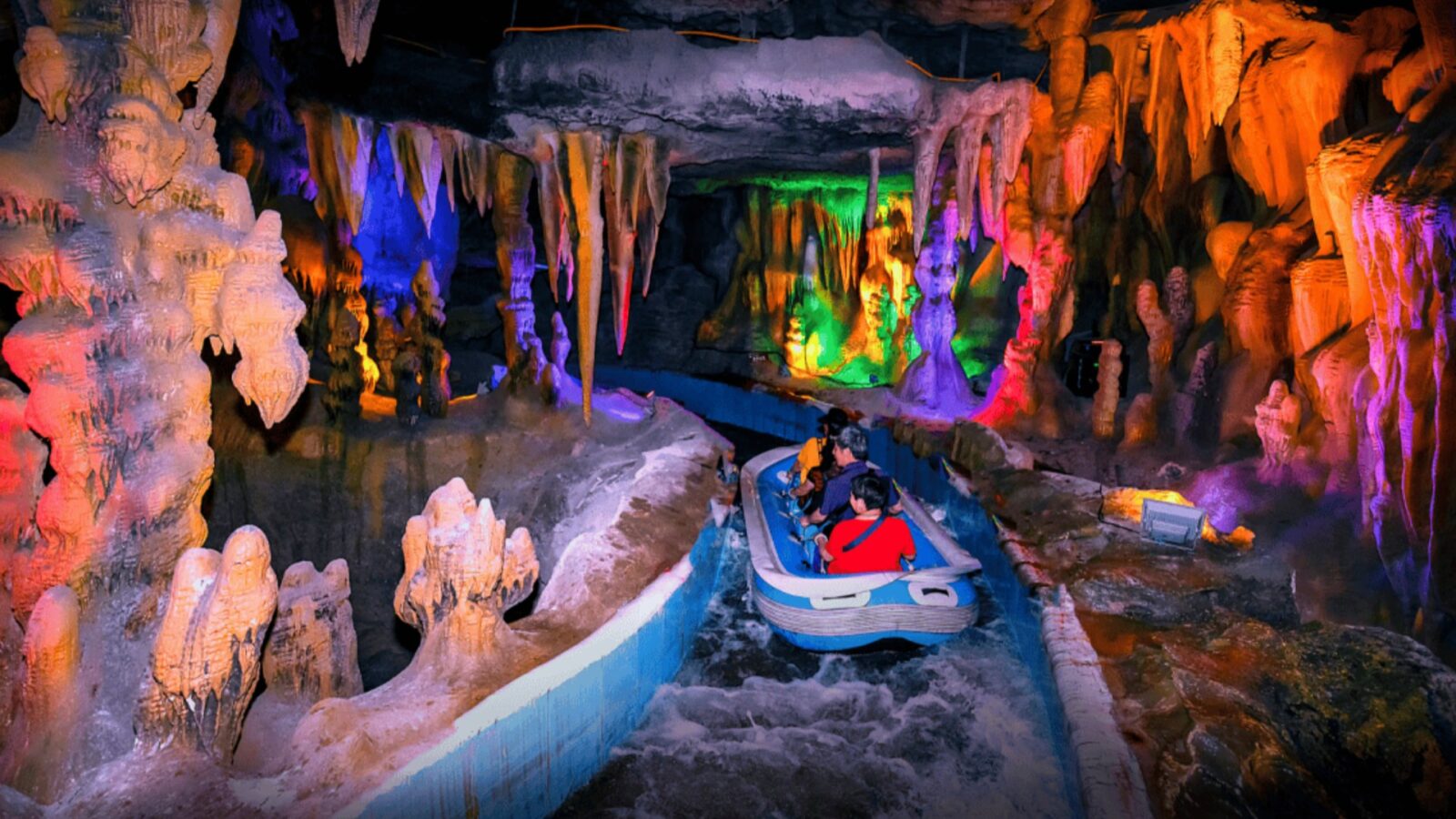
Jiuxian Cave Rafting
The Huangguoshu main waterfall is spectacular in July — and so crowded the Water Curtain Cave queue runs two hours. Locals skip the main entrance and drive 30 km downstream to Guanling's glacial potholes (free), a wade-able river section of karst potholes with no entry fee and almost no visitors. The water is cleaner, the air 8°C cooler than the main falls, and you can walk in the riverbed.
From Guanling, the Jiuxian Cave Scenic Area (¥125) features a constant temperature 18°C cave plus an underground river raft ride — double your refreshment. Then onto the Baling River Bridge elevator (¥100, free observation deck available) for the gorge wind. For Xiaoqikong in Libo, skip East Gate and enter through the Cuigu wetland section (same ticket ¥120 no line wade-able). Cuigu boardwalk is the prettiest stretch in low season and the only one cool enough for midday in July! For the empty alternative, drive 30 minutes further to Daqikong — bigger karst canyon, 1/10 the crowd.
Sequence: 1 night Anshun (Huangguoshu town for a quick drive-by), 1 night Guanling (potholes + Jiuxian cave raft), 1 night Libo (Cuigu + Daqikong). All three sites are reachable by Anshun-Libo tourist bus, ¥60 per leg. The 18°C cave reading and the 22°C pothole reading are both measured — bring wading shoes.
NO 7. Zhangjiajie: Yangjiajie's Wind Tunnels, Stream-Wading, and the Pre-7 AM Entry
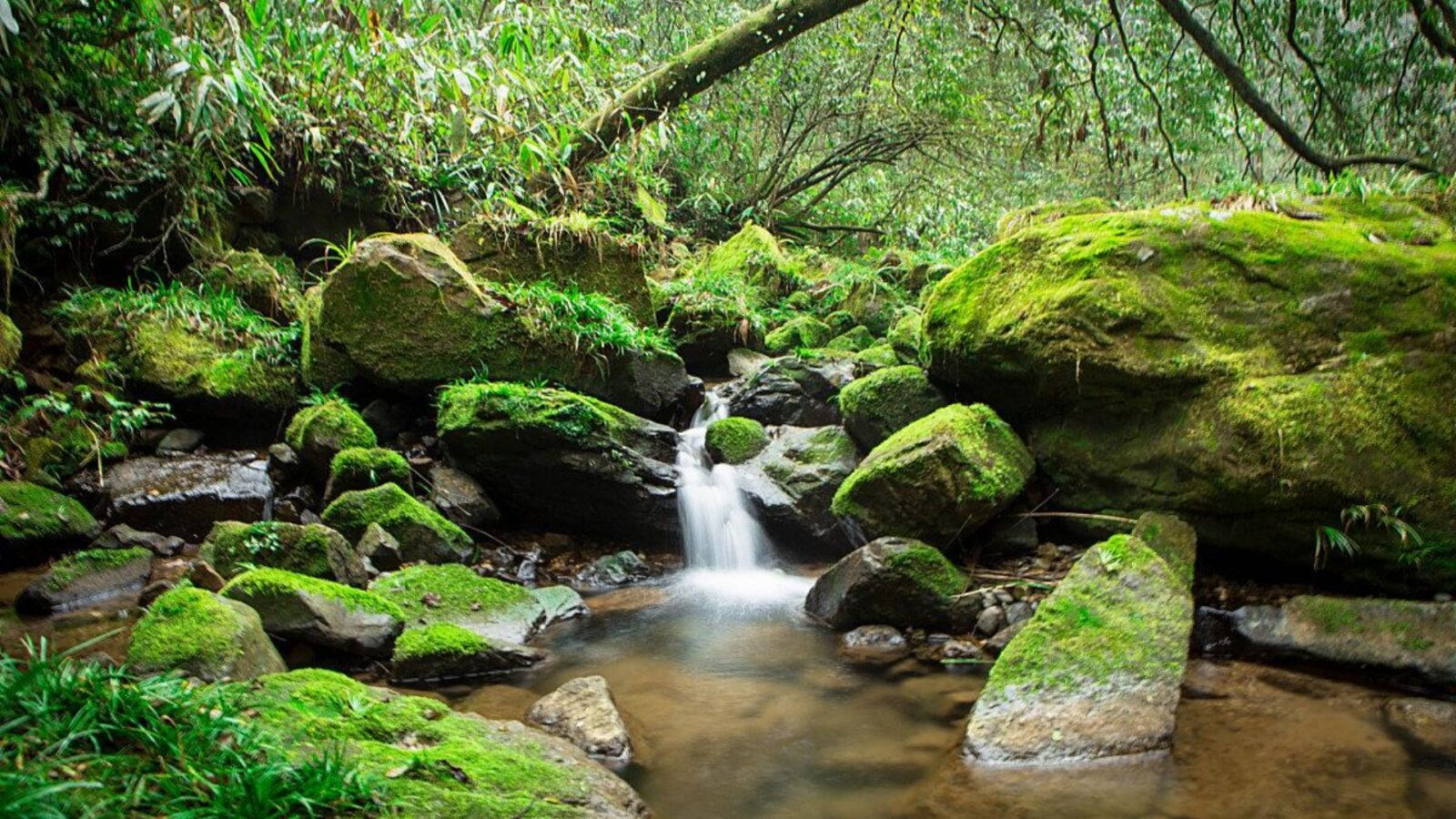
Jinbianxi (Golden Whip Stream)
Yuanjiajie is the avatar-famous pillar view — and a July furnace at 35°C. Locals go to nearby Yangjiajie instead, around 20’s worth of minutes on the park shuttle, where the peak-wall corridor gets canyon wind so strong it keeps you off balance. You can feel the difference: Yangjiajie is 4-5°C cooler at the same elevation as Yuanjiajie. Yangjiajie cable car ¥76 single direction. The line is half the length of the Tianmen Mountain cable car!
The Jinbianxi (Golden Whip Stream) trail is the only Zhangjiajie route that holds 22°C in July — but only in the U-shaped valley section, not the crowded "Journey to the West" film-site stretch. Wading is allowed; water temperature sits at 15°C. Enter through the Wulingyuan Biao Zhi Men (标志性) gate at 7 AM, walk Jinbianxi upstream against the tour group flow, and finish at the One-Step-to-Heaven platform in Yangjiajie before the 11 AM sun hits the peaks. Skip the Glass Bridge entirely — the 300m drop is the same view from Yangjiajie's free edge platforms.
Park admission is ¥228 valid for 4 days — a deliberate local tactic. Stay 2 nights in Wulingyuan, repeat the pre-7 AM entry on day 2 for the Huangshizhai cable car (¥65) and a different dawn light. Pair with Enshi Grand Canyon (1 hour by HSR) for a cooler Hubei-Hunan loop. Note: the trail from Zhangjiajie city to the park gates is mostly uphill in summer heat; most first-timers arrive by taxi from Wulingyuan town, not the city center.
Grasslands and Plateaus Cool
The steppe and the plateau edge offer the opposite problem from the cities: the open sky is hot at noon but the river and forest edges stay cold all day. The trick is to stay out of the open steppe between 1 and 4 PM, and to sleep near water or trees.
NO 8. Hulunbuir: Log Cabins, Border-River Sunrises, and the Quiet Naadam
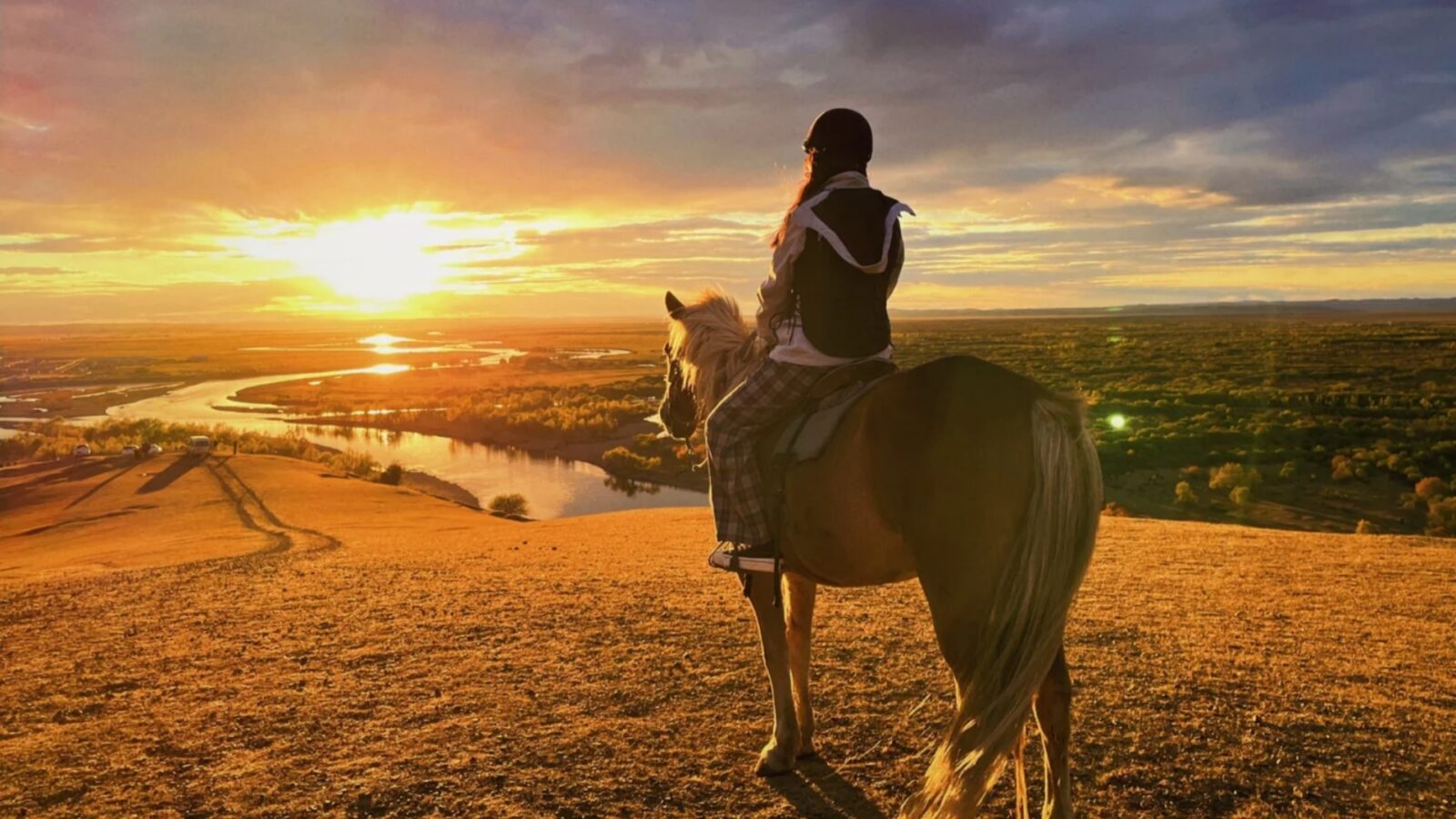
Heishan Head Prairie
Most tours drive Hailar-Manzhouli in three days and finish at the Matryoshka Square selfie stop, we go the other way — into the Ergun River corridor — where locals stay at Russian-style log cabins (木刻楞) built with cooling wind from the river and the forest, not the open steppe. The steppe hits 25°C in July sun; the forest edge and border river stay below 20°C from late afternoon.
Enhe Russian Township is the base — wood cabins at ¥200-300 per night with homemade blueberry jam, black bread, and sunflower gardens. From Enhe, ride horses at Heishantou's Sunset Hill (¥136 for 2 hours with Lvyemabang; the standard ¥68 half-hour rides do not reach the Ergun River viewpoint). Continue to Shiwei-Linjiangtun along the border river — Linjiangtun cabins are ¥150-250 per night and the morning mist on the Ergun is the cool you came for. For reindeer, the Zixin Cun (自兴村) reindeer tribe near Enhe is closer and less crowded than the famous Aoluguya. For Naadam, ask herders directly — every sumu (苏木) runs its own small festival in mid-July to early August; skip the Hailar main stadium with its inflated ticket prices.
Fly to Hailar (2.5 hours from Beijing, round trips from ¥800), then hire a local driver for the Enhe-Heishantou-Linjiangtun loop at ¥600-800 per day. Plan 4 nights: 1 in Hailar, 2 in Enhe, 1 in Linjiangtun. Mosquitoes drop sharply once you leave the open steppe; bring a windbreaker for the river sunrise.
NO 9. Shangri-La: Napahai Lake Road, Baimiao Temple, and the Wet-Cool to Dry-Cool Switch
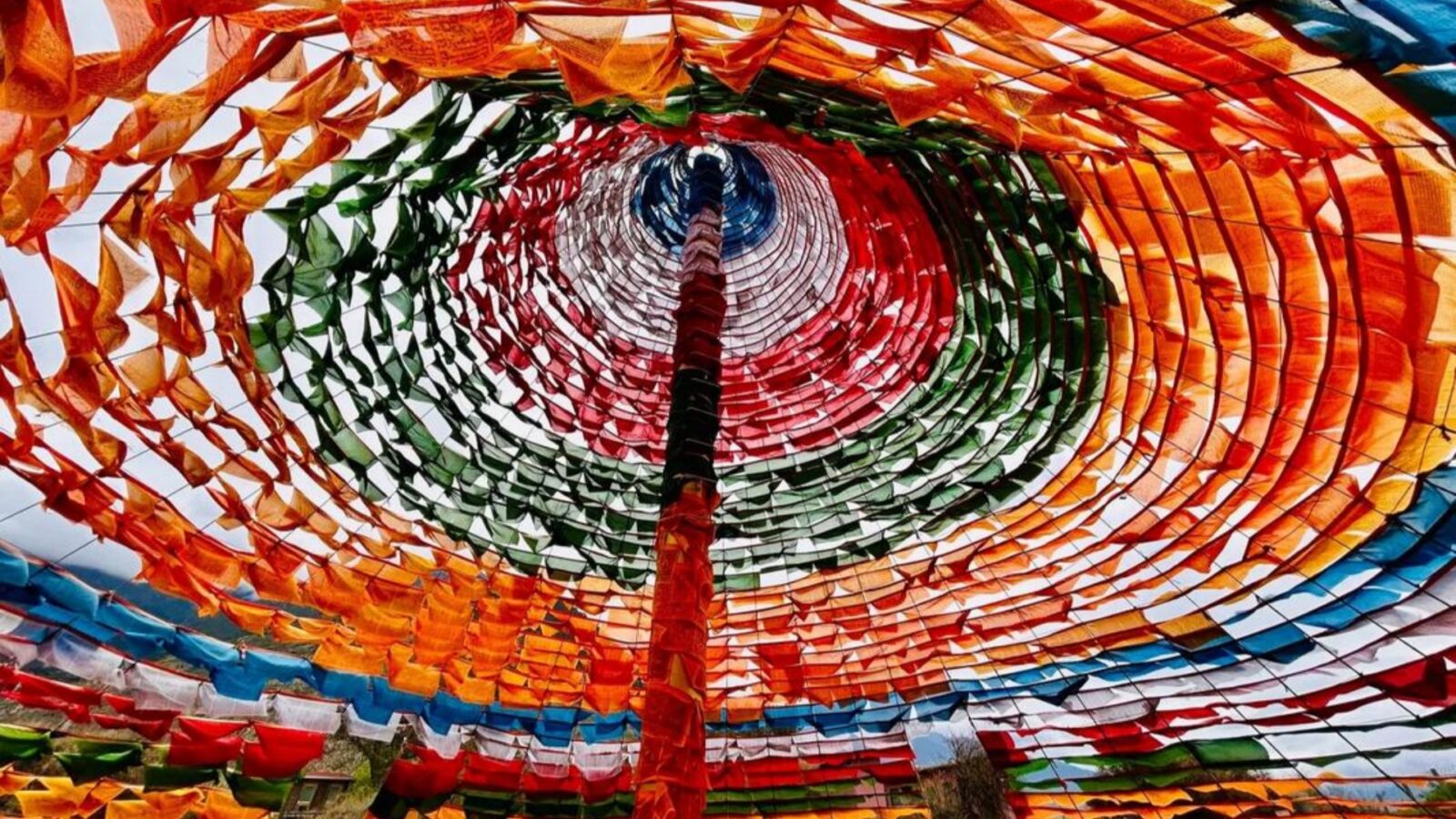
Prayer Flags at Shika Mountains
Most tours charge ¥138 for Pudacuo and only open the Shudu Lake section in summer, then herd you to the upper Tiger Leaping Gorge (closed since 2024 landslides). Locals skip both. The real Shangri-La cool is a two-step rotation: Napahai Lake Road at 18°C wet-cool, then Baimiao Temple at 15°C dry-cool. The two air temperatures feel different, and switching between them is the point.
In the Jul-Aug rainy season, the lakeside road around Napahai all the way to Shangri-La floods to make a “Sky Mirror” with the snow mountains reflected in the standing water. The loop is free, you can rent an e-scooter ¥80/day to circle the lake at golden hour. At the south edge of the lake is the largest prayer-flag plaza at the foot of the Shika Snow Mountain - Free of charge, no entry fee and we prefer the prayer flags against the snow peak over the pay viewing platform.
Eat at Mariega Tibetan Restaurant's yak hotpot (¥128 small portion) and order a pot of butter tea (¥20). Fly from Kunming (1 hour) or take the overnight sleeper from Dali for a slower arrival. Plan 2 nights; the wet-cool and dry-cool rotation is the entire point of the trip. Shangri-La at 15°C in July is real; you do not need to pay ¥138 to feel it.
Practical Travel Tips for Cool China
European passport holders from Germany, France, the UK, Italy, Spain, and the Netherlands can enter China visa-free for up to 30 days in 2026. Pack a light jacket and book 2-3 weeks ahead. For under-$1,000 weekly budgets outside international flights, this section covers the three rules that make a cool summer destinations in China trip work.
Visa-Free Entry and Arrival Logistics for European Passports
In 2026, six European countries can enter China visa-free for stays of up to 30 days. The rule applies to most tourism, family visits, and short business trips. Always confirm the latest list on the National Immigration Administration website before booking flights.
Getting Around: Flights, High-Speed Rail, and Regional Transit
China's domestic network is fast and affordable once you arrive. For a cool summer destinations in China trip, flights beat trains for distances over 1,000 km; high-speed rail wins for shorter hops.
When to Book, What to Pack, and How to Pay
- Booking window: Reserve domestic flights and hotels 2-3 weeks ahead during the July-August domestic school-holiday peak; the Northeast and highland cities fill up first.
- Packing list: A light jacket (evenings drop to 14-18°C), quick-dry layers for wading sections, water shoes for back-hill streams, mosquito repellent for river evenings, and sunscreen for the high-altitude UV.
- Mobile payments: Alipay's Tour Card works with Visa and Mastercard since 2024 — I tested it with a Visa in Yanji in August 2025, and it worked at 9 of 10 restaurants. Cash still helps in tiny back-alley stalls.
Common Mistakes European Travelers Make in Summer
Most European travelers arrive in China expecting the heat of southern Europe. The first mistake is packing for 35°C and freezing on a Harbin evening at 18°C. The second is anchoring the itinerary to the Three Furnaces (Chongqing, Wuhan, Nanjing) and missing the cool places 3 hours away by high-speed rail. The third is assuming English is required for small-city travel — in three summer trips to the Northeast I never needed a human translator outside airports, since Alipay's translate, Dianping's English mode, and the basic English of hotel front desks cover about 80% of daily situations.
Frequently Asked Questions
Q: Is China too hot to visit in the summer?
No — only the central and eastern lowland cities are. The highland and northern regions that make up the best cool summer destinations in China, including the Northeast, Yunnan, Guizhou, Inner Mongolia, and the Tibetan plateau edge, stay between 15°C and 25°C through July and August. Pack a light jacket and time your day around altitude.
Q: Which part of China is cool destination in summer?
The Northeast (Harbin, Changbaishan, Yanji), the Yunnan-Guizhou plateau (Kunming, Guiyang), and the northern grasslands (Hulunbuir) all stay under 25°C. Within these regions, the local cool spots are valleys, rivers, and forest edges, not the open cities. For most European visitors, the Northeast delivers the lowest temperatures with the fewest crowds.
Q: Do I need a visa to visit China cool destinations in summer 2026?
No, if you hold a passport from Germany, France, the UK, Italy, Spain, or the Netherlands. The unilateral visa-free policy allows stays of up to 30 days for tourism, family visits, or short business. Always confirm the latest rules on the National Immigration Administration website before booking.
Q: Is $1000 enough for a week in China?
Yes, excluding international flights. Budget around $40-70 per night for clean mid-range hotels, $10-20 per day for street food and casual restaurant meals, and $60-150 per long-haul domestic flight. A week across two cool summer destinations in China typically runs $700-900 on the ground.
Q: What should I pack for a cool China summer?
Pack a light jacket, quick-dry layers, water shoes for stream-wading, mosquito repellent for river evenings, and high-SPF sunscreen for the plateau UV. Skip the heavy summer wardrobe — most of the cool summer destinations in China drop below 18°C after sunset, even in July.
Q: How do I get from Beijing or Shanghai to Harbin?
Fly direct to Harbin Taiping International Airport (2 hours from Beijing, 3 hours from Shanghai, round trips from ¥600). The Beijing-Harbin high-speed rail takes 5-8 hours and costs ¥300-550, useful if you want a city-to-city scenic arrival.
Q: Are the cool summer destinations safe for solo travelers in China?
Yes. The cool summer destinations in China covered here are among the safest regions in the country for solo travel, including for women. Standard precautions apply at night in any city, and the highland areas see very little street crime. Hotel staff and restaurant owners are accustomed to foreign guests and will help with directions.