Lixia Festival:Starting Point, Vibrant Greenness, Flourishing Growth, Grand Vitality
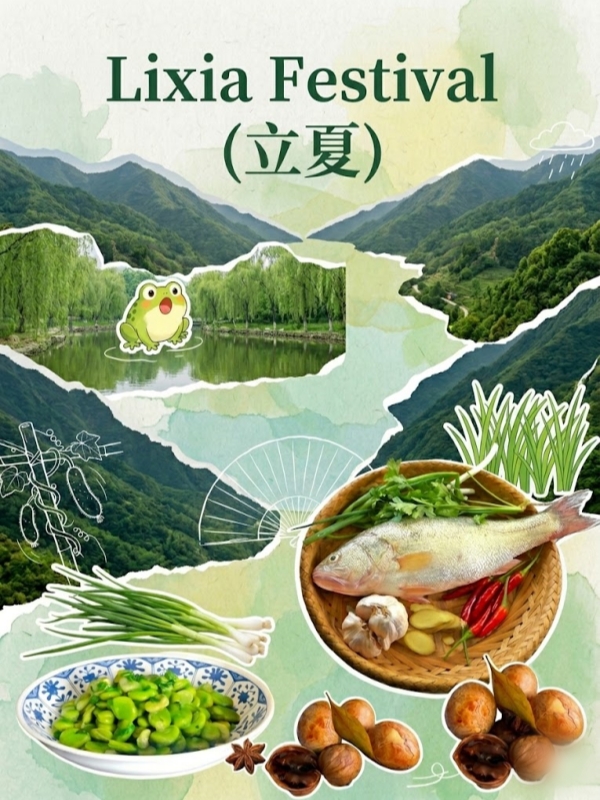
Almost upon the very day that we mark in the West for change, something occurs in China. It things. (The days grow hotter.) The air ripens, the days stretch and the fields deepen. It is Lixia (立夏) — the seventh of China’s 24 solar terms and the official start of summer. The lixia festival celebrates a major threshold: spring is officially over and the summer begins. Lixia even goes by an older, romantic name — “the day spring ends,” chūnjìn rì (春尽日).
Our ancient almanac, Lìshū (历书), says of this moment: "When the Dipper handle points to the southeast it is Lixia...all things have by this time become large, hence the name." By here, the sun has reached a solar longitude of 45°. Nature responds. The fields fill out. The insects awaken. The vines climb.
This moment in time welcomes the insects and the vines. But it is not only an celestial consolidation. For centuries, the day has served as an occasion to reflect on the cycle of things — the planting of the spring and the reaping of the summer. It carries all the old Chinese respect for the ways of the environment, and old confidence in the selection of good harvests and good health. If you are a foreign visitor curious about the country, you may glimpse something of the “real” China in Lixia.
What Lixia Means in Chinese Culture
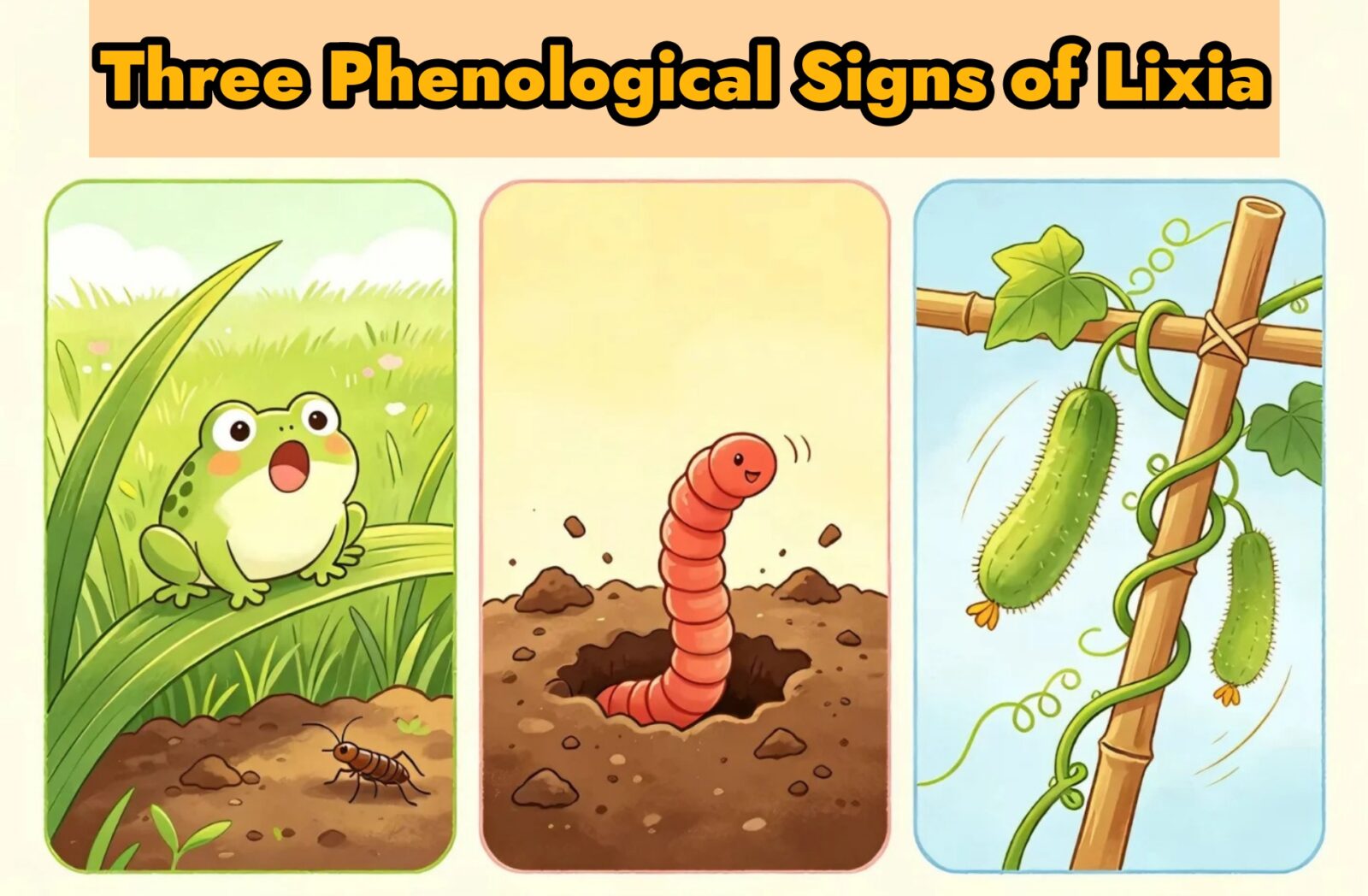
Three Phenological Signs of Lixia
Breaking Down the Two Characters
Understanding Lixia begins with its two characters. In classical Chinese, solar term names were not chosen arbitrarily. Each character carries layered meaning that describes the season with precision.
立 (lì) — start, establish, inaugurate. In oracle-bone script, 立 depicts a person standing upright on the ground. This character generally means "to stand", "to establish", "to found", "to begin". When used in solar terms, 立 indicates an opening — the point at which one season gives way to another. It appears in Lìchūn (Start of Spring), Lìqiū (Start of Autumn), and Lìdōng (Start of Winter).
夏 (xià) — summer, greatness, abundance. In early bronze inscriptions, 夏 was drawn as an entire figure head, torso, hands, feet and symbolizing wholeness. The classical dictionary Shuōwén Jiězì (说文解字) defined it as "the people of the Central Plains" plus the indication "great large." In the context of the solar term, moreover, 夏 is not only summer but everything in large that makes summer our summer luxuriant exuberance, great vitality the world most alive.
Together, 立夏 means "the inauguration of summer" — capturing in two characters the complete truth of this seasonal moment: spring departs, summer arrives, and all living things flourish.
☀️ Holiday Hierarchy — While Lixia marks the seasons, Spring Festival outweighs all as China's most important holiday in terms of national celebration.
The Three Phenological Signs of Lixia
Traditional Chinese nature observation divides the period following each solar term into three five-day phases. Each phase is defined by a specific natural sign. These are called the sān hòu (三候 — three signs). For Lixia, they are:
- 🐸 First sign — 一候蝼蝈鸣 (Days 1–5): Mole crickets and frogs begin calling in the paddies and fields. Their voices are the soundtrack of early summer — the land is warm enough now for cold-blooded creatures to stir.
- 🪱 Second sign — 二候蚯蚓出 (Days 6–10): Earthworms push up through the soil. Traditional Chinese thought understood this as a response to rising yang energy warming the earth from above — the soil itself is alive.
- 🌱 Third sign — 三候王瓜生 (Days 11–15): Wild cucumber vines grow rapidly and their fruits begin to ripen. The climbing plants of summer are on the move.
These three signs gave farmers and villagers a fine-grained way to read the season — not by the calendar alone, but by what was happening in the fields and ponds around them.
☀️ Seasonal Transition Note — As spring officially ends at Lixia, it's a great time to master the full four-season vocabulary — see our guide to seasons in Chinese for pinyin, characters, and usage.
What to Eat for Summer Vitality
Eating by the solar terms does not have the connotation of superstition in Chinese traditional culture, but refers to long accumulated habits of selecting food for the seasons based on centuries of wisdom of nutrition. At Lixia, such food will enliven the body for the hot days ahead and welcome the debut of early summer fresh fruits.
🖤 Black Glutinous Rice (乌米饭)
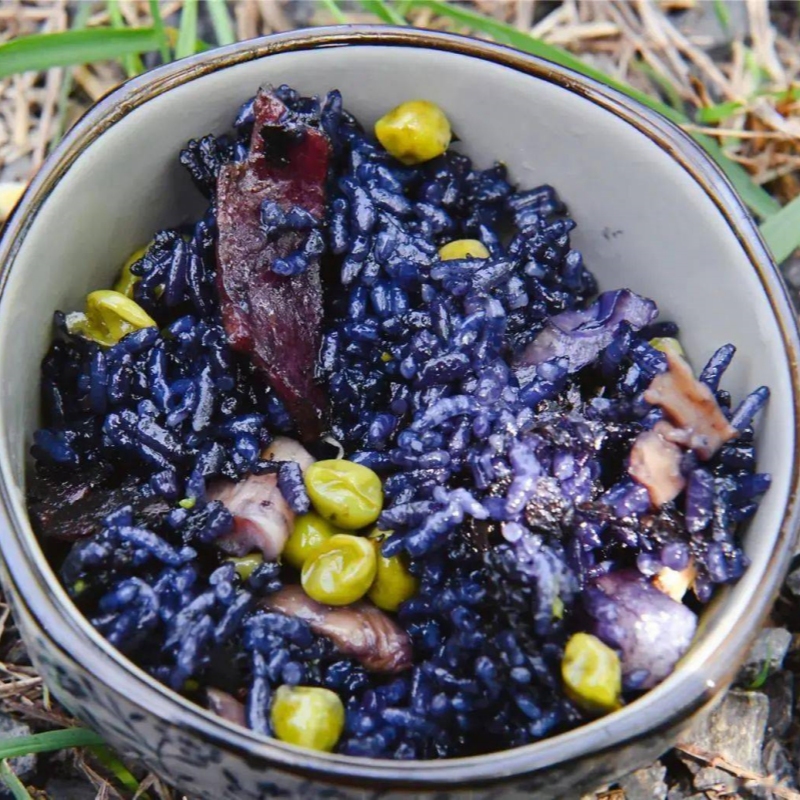
Black Glutinous Rice
A speciality of Jiangsu and Zhejiang, the glutinous rice is soaked in juice of Vaccinium leaves (南烛叶, nán zhú yè) and steamed until purple black. Traditionally this is prophylactic food to boost the summer constitution. The rice colour is beautiful — a colourant surpassing anything in the West.
🌈 Five-Colour Rice (立夏饭 / 五色饭)
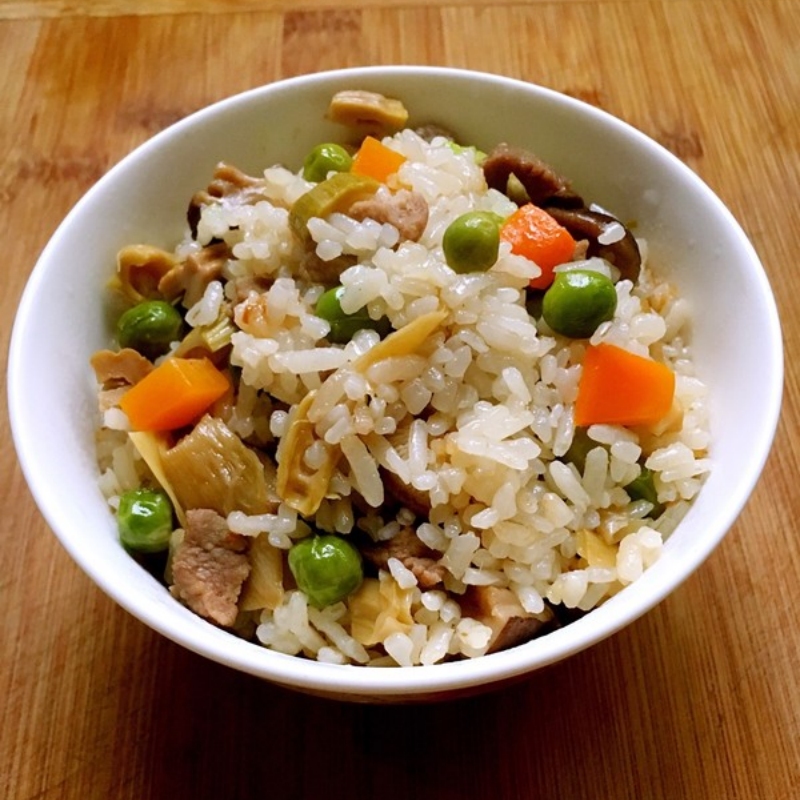
Five-Colour Rice
Known variously as shāo xiàxia fàn (烧下下饭), or Five-Colour Rice (五色饭), the dish is made with red beans, yellow soybeans, black beans, green soybeans, and mung beans — five kinds of coloured beans — cooked together with rice. The five colours represent plentiful crops and colourful, rich, and abundant life. In most of Jiangnan, it is customary to eat rice mixed with five or five kinds of beans — called Liqia rice (立夏饭) — on this day. The five varieties of beans may also be cooked to make pea rice (豌豆饭), fava bean rice (蚕豆饭), or simply made into a full five-bean mix (五豆伴).
🥚 Lixia Eggs (立夏蛋)
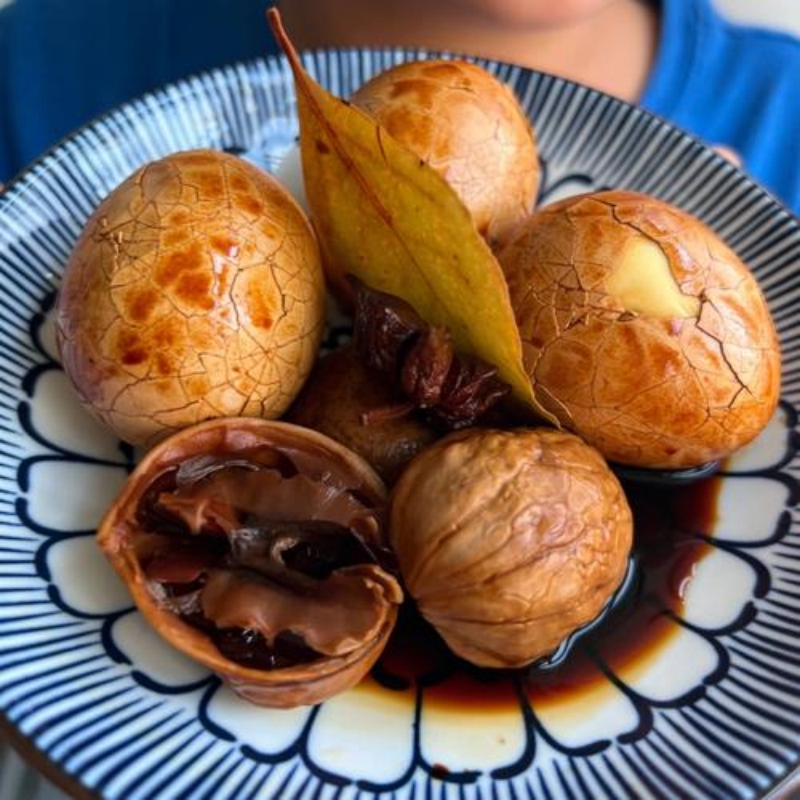
Lixia Eggs
The most classic food of Lixia is boiled chicken eggs or salted duck eggs, eaten whole in the shell. The folk saying goes that “by eating a Lixia egg you can crush a stone with your foot”. The egg symbolizes vitality and wholeness — and is also indispensable for children’s games on this day.
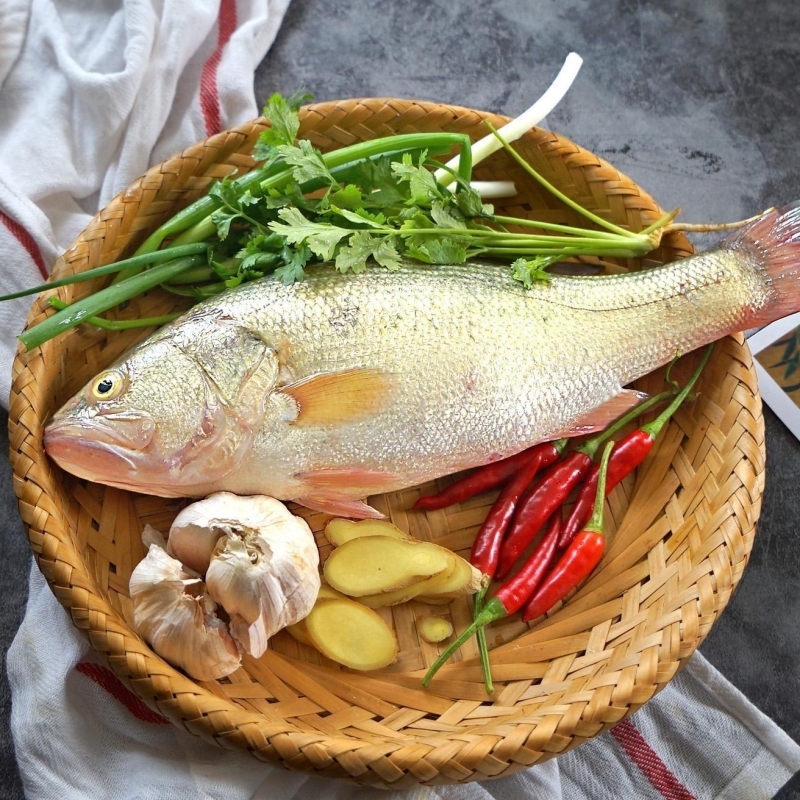
🌿 Tasting the Three Freshest (尝三鲜)
Tasting the Three Freshest
One of the most distinctive Lixia food customs involves eating the freshest ingredients of the season, grouped by source. Different regions follow different versions, but the three categories remain consistent:
| Category | Chinese | Typical Ingredients |
|---|---|---|
| From the earth | 地三鲜 | Fava beans, amaranth, cucumber (some regions: amaranth, fava beans, garlic shoots) |
| From the trees | 树三鲜 | Cherries, loquats, apricots (some regions: green plums, apricots, cherries) |
| From the water | 水三鲜 | River snails (螺蛳), river shrimp (河虾), hilsa herring (鲥鱼) |
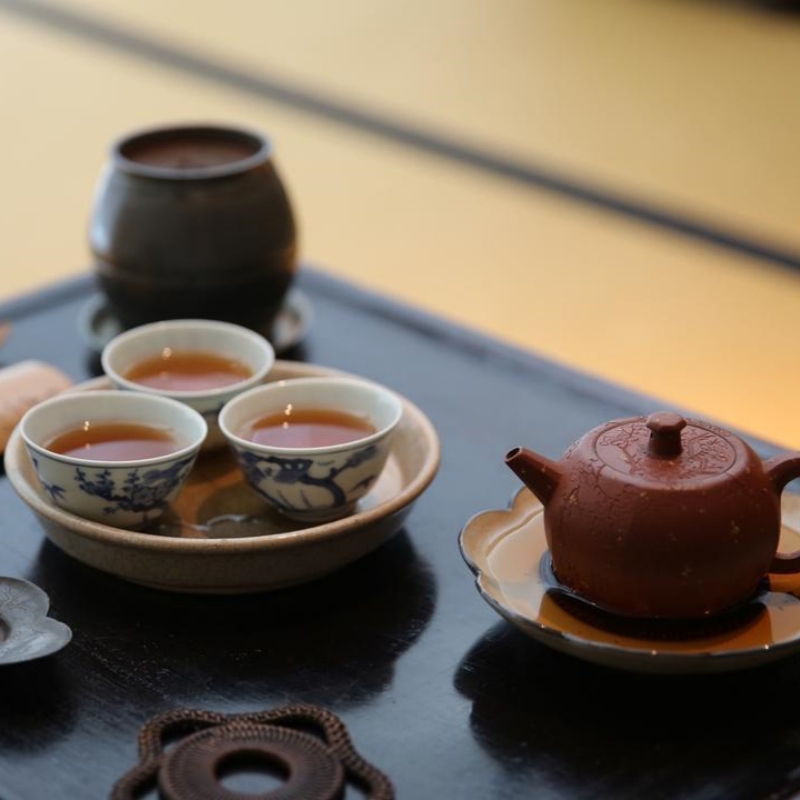
🍵 Lixia Tea (立夏茶)
Lixia Tea
In Jiangxi province, it is a custom to drink tea during Lixia. The folk saying declares: "Without a drop of Lixia tea, the whole summer is bitter." This ritual associates Lixia with a larger pantheon of Chinese celebrations tied to 'seasonal porridge'+.
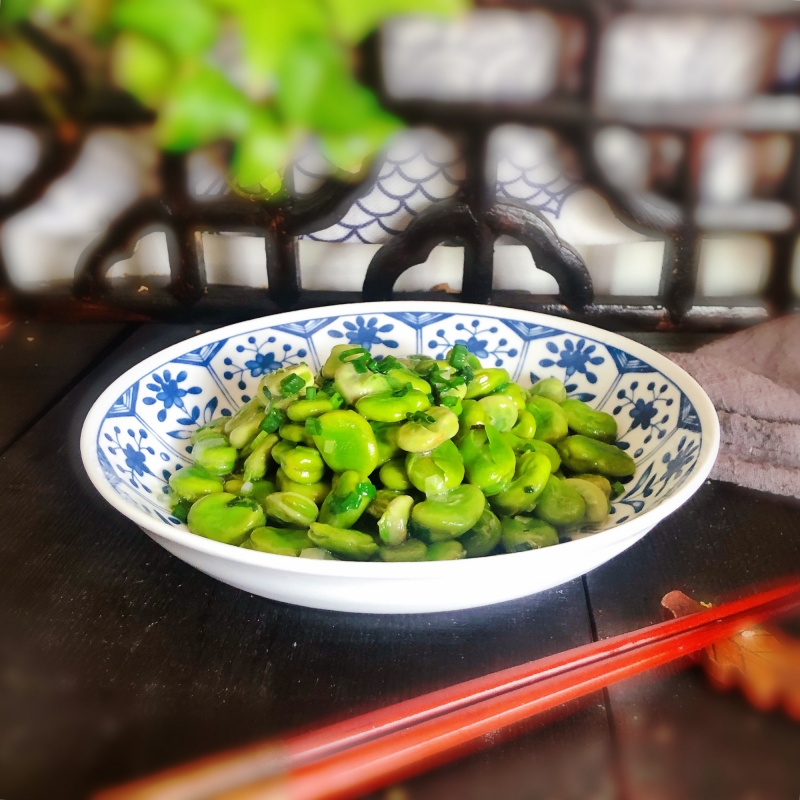
🫘 Fresh Fava Beans (嫩蚕豆)
Fresh Fava Beans
In the water towns of Jiangnan, cooking and eating fresh young fava beans at Lixia is a quiet but consistent seasonal custom. Picked young and cooked simply, they rank among the first vegetables to embody early summer's flavour.
Traditional Customs for Welcoming the Summer
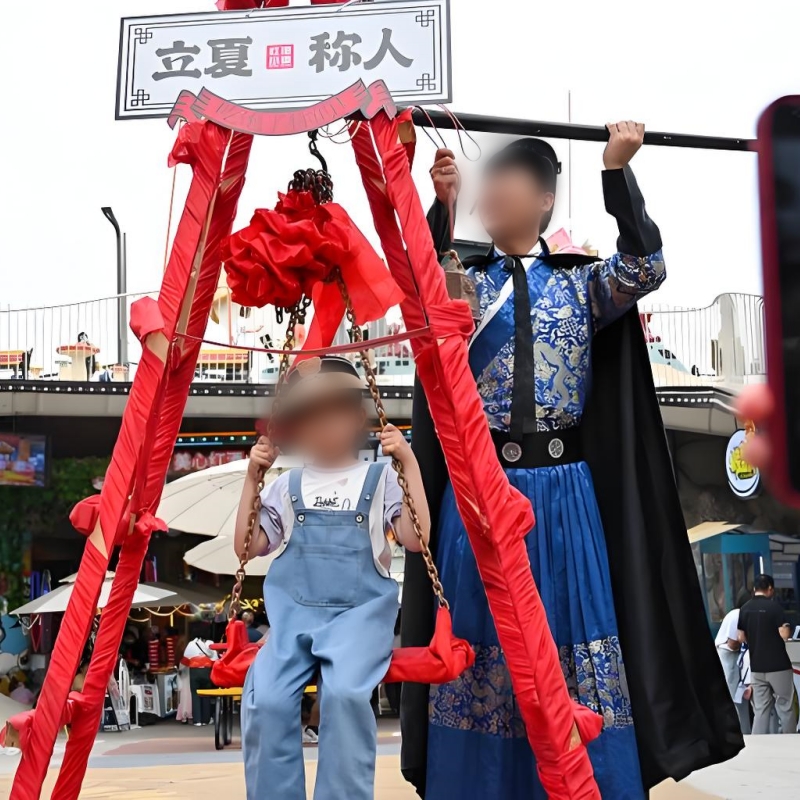
The Weighing Ceremony (称人祈福)
The Weighing Ceremony
Of all Lixia customs, none is more visually striking than the weighing ceremony. A large wooden steelyard hangs from a beam at the village entrance or courtyard gate. A bench is suspended from the hook. One by one, villagers sit on the bench to be weighed — children first, then adults. The weight is called out, the crowd laughs, and the numbers are recorded.
"On Lixia, weigh yourself to know your measure — the scale hangs from the beam as laughter fills the courtyard."
— Traditional folk verse (立夏称人轻重数,秤悬梁上笑喧闺)
The purpose is both practical and symbolic: to wish for health through the coming summer and to guard against zhù xià (疰夏) — the seasonal fatigue, loss of appetite, and weight loss that summer heat was believed to bring. By recording one's weight at summer's start, moreover, the hope was to end the season no lighter than one began it.
Welcoming Summer (迎夏)
In imperial China, Lixia was a formal state occasion. The emperor would lead his court in ceremony to welcome the season, dressed in crimson—the colour of summer and of the fire element. One of the high court privileges at Lixia was being given a present of ice by the emperor: it was customary for Tang and Song royalty to distribute precious ice to their highest ranking officials on this day. To commoners, who had no mere access to the ice stores of the palace, the "cool and cold" drinking of beverage took on civilian importance as a token of the same passage of seasons, modest and easily shared as it was.
The Egg-Tapping Game (斗蛋)
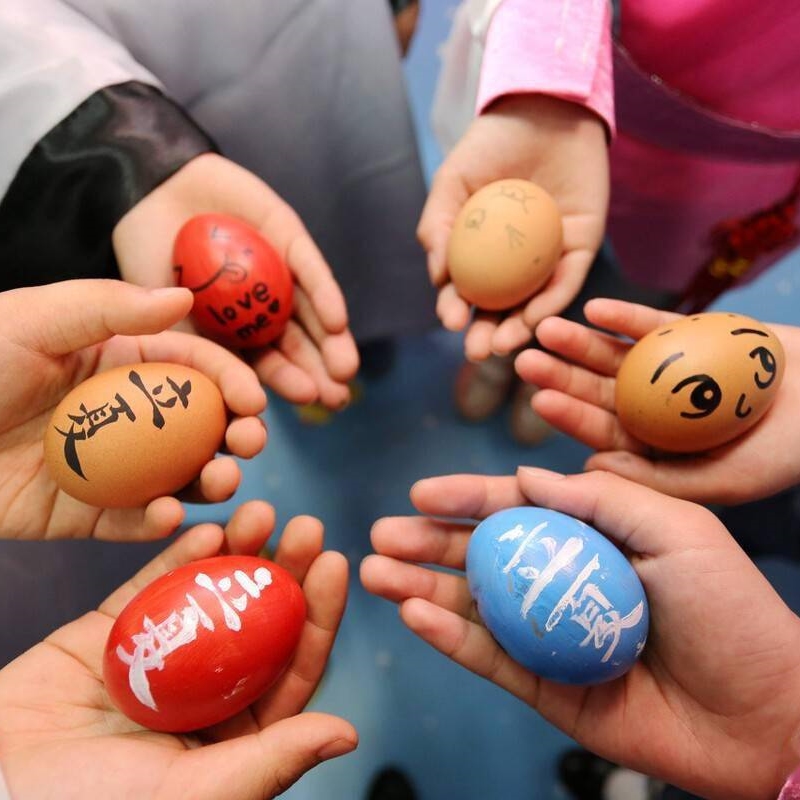
The Egg-Tapping Game
The Lixia egg is indulged in not only as food, but as an object of play. On the morning of Lixia the children of eastern China put hard-boiled eggs into small mesh bags woven of coloured silks or wool threads and suspend them round their necks, and the game begins.
Two children tap the tip of one egg against the tip of another. The egg whose shell cracks first loses. The winner moves on to the next challenger. The folk saying captures the scene vividly: "Lixia eggs are tossed all through the streets" (立夏蛋,满街甩). Behind the game, moreover, sits a folk belief: "Wear an egg on your chest at Lixia, and children won't suffer summer wasting" (立夏胸挂蛋,孩子不疰夏). The egg, round and whole, symbolises vitality and completeness.
Welcoming Summer, Tasting the New (迎夏尝新)
The custom of tasting the Three Freshest comes closest to the intersection of food and ritual traditions. It’s not just about eating well — it’s about eating at the right moment. The ingredients of the Three Freshest (discussed in the food section above) are at their best for a very short period of time. To eat them at Lixia is thus to eat in full accordance to the season — a means of attunement to our surroundings that underlies how the 24 solar terms have always been lived through rather than merely observed first hand.
When Lixia Arrives in the Calendar
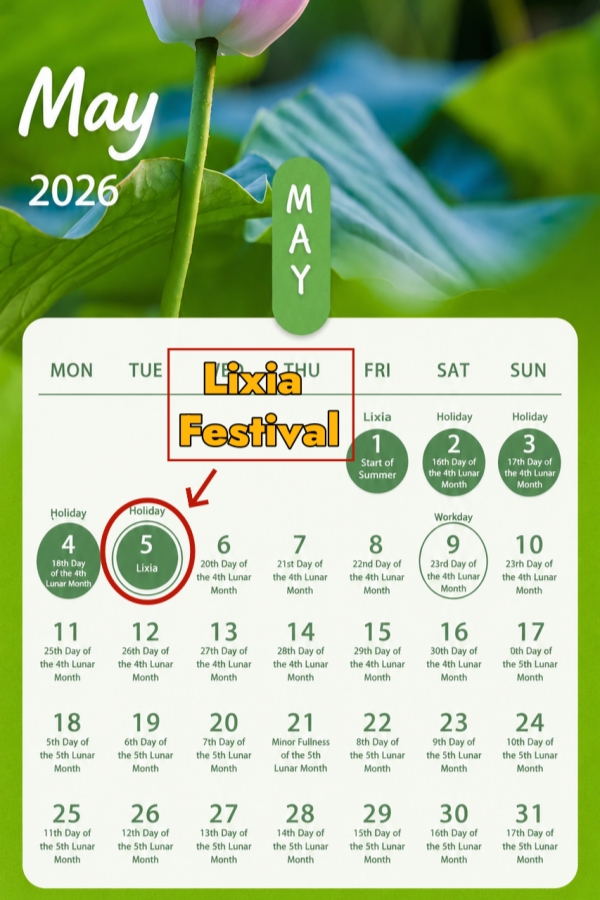
2026 Lixia Festival Date
Exact Dates
Lixia falls between 5 and 7 May in the Gregorian calendar each year — specifically when the sun reaches a solar longitude of 45° and the handle of the Big Dipper points to the southeast. It is the seventh of the 24 solar terms in the Chinese lunisolar calendar.
| Year | Gregorian Date | Local Time | Lunar Date | Day |
|---|---|---|---|---|
| 2023 | 6 May | 02:18 | 3rd month, 18th day | Saturday |
| 2024 | 5 May | 08:09 | 3rd month, 27th day | Sunday |
| 2025 | 5 May | 13:56 | 4th month, 8th day | Monday |
| 2026 | 5 May | 19:48 | 3rd month, 19th day | Tuesday |
| 2027 | 6 May | 01:24 | 4th month, 1st day | Thursday |
| 2028 | 5 May | 07:11 | 4th month, 11th day | Friday |
What the Weather Is Like
After Lixia, the change is perceptible. The days gradually lengthen, the temperature rises higher, and thunder-storms become more violent and more frequent. For the cultivator this is the busy season—food crops are at the stage of most active progress, and there is field work without end. For the tourist, it means hot weather, with storms in the afternoon and a green countryside.
The Agricultural Rhythm
In southern China the transplanting season for early rice begins with Lixia, and the warning message in an old farmer’s proverb indicates clearly the need for early activity: “Better to transplant the seedlings a month old than to weed for the full month” (能插满月秧,不薅满月草).
Where Lixia Fits Among Solar Terms
Lixia does not stand alone. It forms the seventh link in an unbroken chain of 24 solar terms that together describe a full year of seasonal change in China. Understanding its neighbours helps place it in context — and opens the door to exploring the wider world of the Chinese lunisolar calendar.
Qingming 清明 — Solar Term No. 5, approximately 5 April
Qingming arrives when the sun reaches a solar longitude of 15°. It is the solar term of warming and renewal: temperatures turn mild across China, and all things begin to stir with fresh energy. In the south, overcast and rainy weather is typical; in the north, temperatures rise quickly and strong winds are common. In the fields, Qingming signals the start of spring ploughing and sowing in earnest — rice seedlings in the south, maize, millet, and cotton in the north. For a closer look at this solar term, see our related article on Qingming.
Guyu 谷雨 — Solar Term No. 6, approximately 20 April
Guyu — "Grain Rain" — is the last solar term of spring, occurring at solar longitude 30°. Its name comes from the classical observation that spring rain at this moment nourishes the hundred grains. Temperatures rise more rapidly and rainfall increases noticeably; the last cold fronts of spring retreat. Traditional customs in the Guyu period include drinking Guyu tea — the finest spring tea harvest, picked in this narrow window — eating young Chinese toon (香椿) shoots, and appreciating peonies at peak bloom. Agriculturally, it is the moment for soaking rice seeds and setting seedlings, for wheat to head and flower, and for spring-planted crops to push through the soil. For more on this solar term, see our related article on Guyu.
Xiaoman 小满 — Solar Term No. 8, approximately 21 May
Xiaoman — "Grain Buds" or "Small Fullness" — arrives at solar longitude 60°, roughly a fortnight after Lixia. The classical text Yuèlìng Qīshí'èr Hòu Jíjiě explains the name: "In the fourth month, at Xiaoman, things have by now become a little full." From Xiaoman onwards, all regions of China progressively move into summer — the temperature gap between north and south narrows, and rainfall continues to increase. Folk customs include rituals for the water-wheel deity (祭车神), silkworm-raising prayers (祈蚕节), and watching the wheat heads turn gold (看麦梢黄). For farmers, Xiaoman launches the full summer harvest cycle: reaping, sowing, and field management begin together. The proverb says it simply: "Xiaoman, Xiaoman — the grain is slowly filling out" (小满小满,麦粒渐满).
Frequently Asked Questions About the Festival
Q: What does "Lixia" mean in English?
Lixia (立夏, Lìxià) translates as "Start of Summer" or "Inauguration of Summer." 立 means "to begin" and 夏 means "summer." The lixia festival marks the seventh solar term in China's 24-term lunisolar system. It signals the formal opening of the summer season and reflects centuries of Chinese astronomical and agricultural observation.
Q: When does Lixia fall each year?
The lixia festival falls between 5 and 7 May in the Gregorian calendar, when the sun reaches a solar longitude of 45°. In 2026, Lixia falls on 5 May at 19:48 local time. The precise date shifts slightly each year based on the sun's position in the sky.
Q: Is Lixia a public holiday in China?
No. Lixia is a solar term (节气) — an astronomical and agricultural marker — not a statutory public holiday in China. However, the lixia festival draws widespread cultural observance. Community gatherings, traditional food customs, and seasonal rituals take place around this date in many parts of the country.
Q: What is the most iconic food of Lixia?
The Lixia egg (立夏蛋) stands as the most iconic food of the lixia festival. It is a hard-boiled chicken or salted duck egg, eaten whole. The folk saying declares: "Eat a Lixia egg and you can crush a stone with your foot." Eggs symbolise vitality and wholeness at summer's start.
Q: What is the egg-tapping game (斗蛋) played at Lixia?
At the lixia festival, children hang hard-boiled eggs in small mesh bags around their necks. They tap egg against egg — the uncracked egg wins. The game is a beloved Lixia street tradition. It also carries a folk belief that wearing an egg guards children against summer fatigue.
Q: What are the Three Freshest foods of Lixia?
The Three Freshest is a key food custom of the lixia festival. It groups seasonal ingredients into three categories: from the earth (fava beans, amaranth, cucumber), from the trees (cherries, loquats, apricots), and from the water (river snails, river shrimp, hilsa herring). Exact ingredients vary by region across China.
Q: Why do people get weighed at Lixia?
The weighing ceremony (称人) is a lixia festival ritual for good health. It guards against zhù xià (疰夏) — the seasonal fatigue and weight loss associated with summer heat. Recording one's weight at summer's start expresses the hope to remain strong and well throughout the season.
Q: What were the imperial customs at Lixia?
In ancient China, the emperor formally welcomed summer on Lixia day. The lixia festival held strong ceremonial significance at court. During the Tang and Song dynasties, distributing ice to officials was a royal privilege on this day. Ordinary people observed a parallel custom of drinking cool beverages to mark the seasonal transition.
Q: Which solar terms come directly before and after Lixia?
Before the lixia festival come Qingming (清明, solar term no. 5, approximately 5 April) and Guyu (谷雨, Grain Rain, solar term no. 6, approximately 20 April). After Lixia comes Xiaoman (小满, Grain Buds, solar term no. 8, approximately 21 May). Together, these terms map the transition from spring to summer.
Q: Are the 24 solar terms recognised by UNESCO?
Yes. In 2016, UNESCO inscribed China's system of 24 solar terms on its Representative List of Intangible Cultural Heritage of Humanity. The lixia festival, as the seventh solar term, is included in this recognition. The listing acknowledges the system's scientific, cultural, and agricultural significance across Chinese history.