Chinese Zodiac Sign
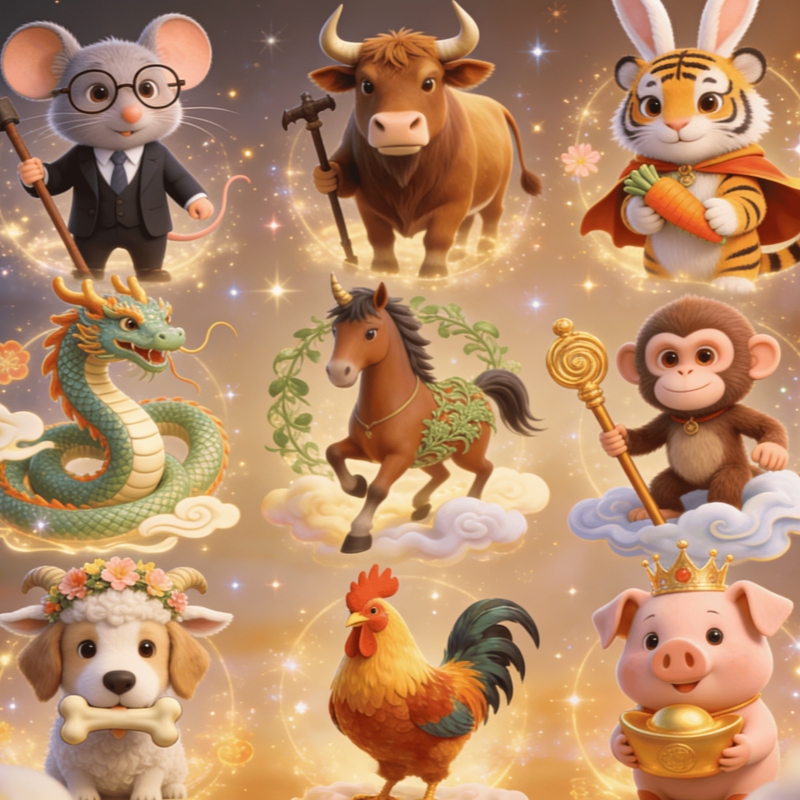
Twelve animals rotate through the Chinese zodiac in a repeating twelve-year cycle, each one tied to a birth year on the lunar calendar. The system, formalized in ancient China, links every year to a specific creature — rat, ox, tiger, rabbit, dragon, snake, horse, goat, monkey, rooster, dog, and pig — and assigns it a set of personality traits, lucky elements, and compatibility patterns. A separate five-element layer (wood, fire, earth, metal, water) compounds on top, creating a sixty-year cycle. Together, the animal and element form the working definition of a Chinese zodiac sign, the answer to "what is my Chinese zodiac sign" for any birth year. This guide covers how to find the correct sign by birth year, walks through the twelve animals and their meanings, and covers the element layer most lookups skip.
Quick Facts
🔮 Look Ahead to the Next Sign: If you want to see how this rotating cycle moves forward from the current year to the next lunar transition, you can explore the characteristics, fortune forecasts, and cultural symbolism waiting in the near future. Check out our guide to the Chinese New Year 2027 Animal.
Birth-Year Lookup and the Lunar Boundary
The Chinese zodiac cycles through all twelve animals in strict order, year after year, with no exceptions. Knowing your sign is a matter of matching your birth year to the correct animal in the sequence. However, one critical rule trips up many people: the zodiac year does not start on January 1. Instead, it begins on Chinese New Year, which falls somewhere between January 21 and February 20 on the Gregorian calendar. This means anyone born in January or early February may belong to the previous year's animal, even if their Gregorian birthday is days away from January 1.
The Lunar New Year Boundary Rule
Chinese New Year shifts each year because it follows the lunar calendar, tied to the new moon. In practice, this creates a narrow window at the start of each Gregorian year where the zodiac year technically belongs to the previous cycle. For example, Chinese New Year 2026 falls on February 17, 2026. If you were born on January 15, 2026, you are still in the Year of the Snake — not yet in the Year of the Horse. The rule is straightforward: if your birthday falls before Chinese New Year in a given Gregorian year, use the previous calendar year's animal.
Year-by-Year Lookup Table
Use this table to find the zodiac animal for any year from 1936 to 2031. If your birth year falls outside this range, subtract or add multiples of 12 — the cycle repeats indefinitely.
🏮 The Zodiac in Holiday Traditions: This rich twelve-year cycle takes center stage during the country's most important annual holiday, when cities transform with artistic lanterns and decorations celebrating the year's animal. Experience how these traditions come alive by Exploring the Cultural Charm of the Best Spring Festivals in China.
The 12 Animals and Their Meanings
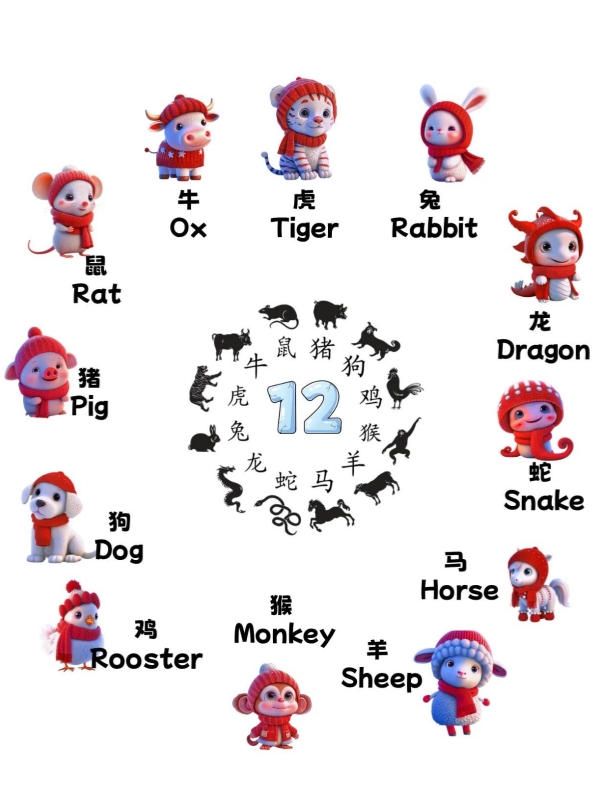
Chinese Zodiac Sign
Each zodiac animal carries a distinct set of personality associations, lucky colors, and numbers. These traits have been passed down through generations and form the basis for fortune-telling, business decisions, and personal compatibility checks across East Asia. Below is a concise profile of each animal in the cycle.
Rat, Ox, Tiger and Rabbit
The Rat is quick-witted and resourceful, thriving in challenging situations through adaptability rather than brute strength. Its lucky colors are blue, gold, and green, while the numbers 2 and 3 are considered most favorable. The Rat clashes most notably with the Horse. The Ox follows the Rat in the cycle, bringing diligence, reliability, and methodical patience to everything it undertakes. People born under this sign favor white, yellow, and green, and their lucky numbers include 1 and 9 — but the Ox is traditionally considered incompatible with the Goat.
The Tiger enters the cycle as a symbol of confidence, competitive spirit, and leadership. Its lucky colors are orange, gray, and blue, with numbers 1, 3, and 4 carrying particular significance. The Tiger's natural opposition is the Monkey. Finally, the Rabbit represents elegance, kindness, and a preference for harmony over conflict. Those born under this sign are drawn to red, pink, purple, and blue, and the numbers 3, 4, and 9 tend to appear in their fortunes. The Rabbit clashes with the Rooster.
Dragon, Snake, Horse and Goat
The Dragon stands out in the zodiac as a symbol of ambition, charisma, and high achievement. People born under this sign are often seen as natural leaders, drawn to gold, silver, and white. Their lucky numbers are 1, 6, and 7, and they are traditionally advised to avoid close association with the Dog. The Snake brings wisdom and strategic thinking to the cycle, preferring calculation over impulsiveness. Its lucky colors are black, red, and yellow, and the numbers 2, 8, and 9 are considered favorable.
The Snake clashes with the Pig. The Horse represents energy, independence, and a love of freedom. Those born in Horse years are associated with yellow and green, and the numbers 2, 3, and 7 carry particular weight. Its opposing sign is the Rat. The Goat (sometimes called the Sheep) rounds out this group with creativity, gentleness, and a meditative disposition. Lucky colors include brown, red, and purple, with 2 and 7 as the favored numbers. The Goat clashes with the Ox.
🧧 Zodiac Celebrations & Symbolism: Discover the traditions, spiritual meaning, and festive customs surrounding this gentle sign in our guide to Chinese Sheep New Year.
Monkey, Rooster, Dog and Pig
The Monkey is witty, curious, and exceptionally adaptable, often using intelligence to navigate social situations with ease. Its lucky colors are white, blue, and gold, while 1 and 8 are considered fortuitous numbers. The Monkey clashes with the Tiger. The Rooster follows, known for being observant, honest, and direct in communication. Rooster natives are drawn to gold, brown, and yellow, and the numbers 5, 7, and 8 carry significance. Their opposing sign is the Rabbit.
The Dog brings loyalty, integrity, and a strong sense of justice to the zodiac cycle. People born under this sign favor red, green, and purple, and their lucky numbers include 3, 4, and 9. The Dog's traditional clash is with the Dragon. The Pig closes the twelve-year cycle with generosity, optimism, and a grounded approach to life. Pigs are associated with yellow, gray, brown, and gold, and the numbers 2, 5, and 8 are considered especially lucky. The Pig clashes with the Snake.
🐒 An Example of Animal and Element Fusion: To see exactly how an animal combines with a specific element to create a unique profile, look at how the 1992 lunar year shapes personality traits, career choices, and relationship compatibility. Read our detailed profile on the Water Monkey Chinese Zodiac 1992.
The Five Elements That Shape Your Sign
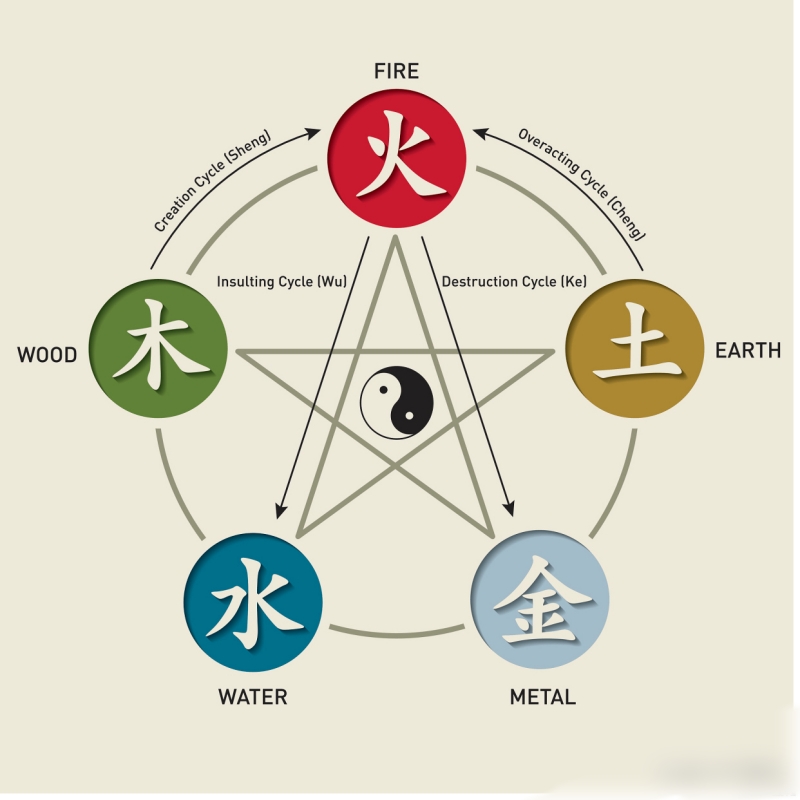
Five Elements
Beyond the twelve animals, the Chinese zodiac incorporates a second dimension: the five elements. Wood, fire, earth, metal, and water each leave their imprint on every zodiac year, adding nuance to personality traits and shifting compatibility patterns. Together, the animal and its element form the complete picture that Chinese astrologers refer to as the working definition of a zodiac sign.
How Elements Cycle Through the 12 Years
The five elements cycle in a fixed order — wood, fire, earth, metal, water — every two years within the broader twelve-year animal cycle. This creates a sixty-year cycle before the exact same animal-element pairing repeats. A handy mental shortcut links each element to the last digit of the year. Years ending in 4 or 5 are Wood years; those ending in 6 or 7 are Fire years; 8 or 9 are Earth years; 0 or 1 are Metal years; and 2 or 3 are Water years.
What Each Element Adds
Each element acts as a modifier, layering additional characteristics onto the base personality of the zodiac animal. Wood brings growth, creativity, and flexibility — it tends to amplify the animal's outward energy. Fire injects passion, charisma, and intensity, often sharpening ambition and social presence. Earth provides stability, patience, and a grounded quality that tempers impulsive tendencies. Metal adds determination, precision, and discipline, lending structure to the animal's drive. Water introduces adaptability, wisdom, and sensitivity, smoothing over rough edges and opening space for intuition. When you ask "what is my Chinese zodiac sign," the element is the second half of the answer — and for rare combinations like the Fire Horse, it carries particular cultural weight.
⛰️ Understand the Core Elements: To truly master the sixty-year cycle, it helps to dive deeper into the individual elements that modify each animal's traits, such as the qualities of resilience, structure, and determination. Unpack this foundational layer in our explainer on the Metal Wuxing.
Compatibility, Trines and Clashes
Chinese astrology groups the twelve animals into four compatibility clusters called trines, where three animals separated by four positions in the cycle share harmonious energy. Within each trine, relationships, friendships, and business partnerships are generally considered well-matched. Between trines, the energy is neutral or requires more effort to align.
In contrast, six pairs of animals sit directly opposite each other in the twelve-year cycle, six years apart. These are the clashes, traditionally considered challenging combinations in love, business, or friendship. The six clashes are Rat and Horse, Ox and Goat, Tiger and Monkey, Rabbit and Rooster, Dragon and Dog, and Snake and Pig. Understanding your trine membership and potential clashes gives context for relationships and self-awareness in decision-making.
One special case deserves attention: your ben ming nian is the year when your own zodiac animal returns, happening every twelve years. In Chinese tradition, this is not a cause for celebration — it is considered a year of heightened risk, superstitious taboo, and potential misfortune. People in their ben ming nian are advised to wear red, carry red envelopes, or visit temples to ward off bad luck. The idea dates back centuries and remains widely observed in Chinese communities globally.
Origin Legend and Cultural Role Today
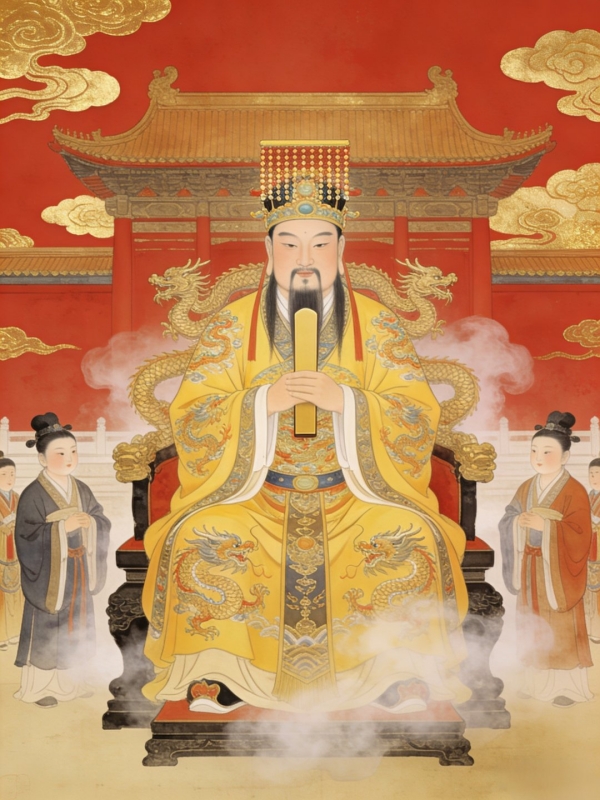
Jade Emperor
The most widely told origin story for the Chinese zodiac involves the Jade Emperor, a central figure in Chinese mythology. According to legend, the Emperor invited all animals to a great race to determine which twelve would serve as his palace guards. The Rat finished first by hitching a ride on the Ox's head and leaping ahead at the last moment. The Ox came second, followed by the Tiger, Rabbit, Dragon, Snake, Horse, Goat, Monkey, Rooster, Dog, and Pig — the pig arrived last because it stopped to eat along the way. This race order became the sequence of the zodiac cycle, and the story has been retold for over two thousand years.
Historians generally trace the zodiac system to the Han dynasty, roughly two thousand years ago, when it became formalized alongside other calendrical and astronomical practices in ancient China. Over time, the zodiac moved beyond court astrology into everyday life. Today, Chinese New Year decorations feature the year's animal prominently, businesses schedule major decisions around favorable zodiac alignments, and the zodiac appears on everything from restaurant menus to luxury brand collaborations.
The cultural reach now extends far beyond China. Lunar New Year is widely reported to be celebrated by around 2 billion people globally, encompassing not only Chinese communities but also Vietnamese, Korean, Tibetan, and other East Asian populations that follow variations of the lunar calendar. For foreign visitors encountering zodiac-themed events or decorations, understanding the basic cycle — and knowing how to find their own sign — adds a meaningful layer of cultural context to the experience.
Frequently Asked Questions
Q: How do I find my Chinese zodiac sign by date of birth?
Locate your birth year in the year-by-year lookup table above. If your birthday falls in January or early February, check whether it comes before Chinese New Year for that year — if so, use the previous year's animal instead. The zodiac sign is the animal paired with your adjusted birth year.
Q: What is the 2026 Chinese zodiac animal?
2026 is the Year of the Horse. Chinese New Year 2026 begins February 17, 2026. In the sexagenary cycle, it is specifically the Fire Horse year. The last Fire Horse year was 1966, and the next will not arrive until 2086.
Q: What is my Chinese zodiac sign and element?
Every zodiac year carries one of five elements — wood, fire, earth, metal, or water. The full animal-plus-element cycle repeats every 60 years. To find your element, look at the last digit of your birth year: 4 or 5 is wood, 6 or 7 is fire, 8 or 9 is earth, 0 or 1 is metal, and 2 or 3 is water.
Q: How do I say my zodiac animal in Chinese?
Each animal has a one-character Chinese name and its pinyin reading: rat 鼠 (shǔ), ox 牛 (niú), tiger 虎 (hǔ), rabbit 兔 (tù), dragon 龙 (lóng), snake 蛇 (shé), horse 马 (mǎ), goat 羊 (yáng), monkey 猴 (hóu), rooster 鸡 (jī), dog 狗 (gǒu), pig 猪 (zhū).
Q: If I was born in January or early February, which year's animal do I use?
Use the previous year's animal. Chinese New Year falls between January 21 and February 20 on the Gregorian calendar, so any birthday before that date belongs to the prior year's zodiac sign, even if your Gregorian birth year is the same number.
Q: What are the luckiest Chinese zodiac sign combinations?
Animals within the same trine — Rat/Dragon/Monkey, Ox/Snake/Rooster, Tiger/Horse/Dog, and Rabbit/Goat/Pig — are considered the most compatible pairings for relationships and partnerships. Animals six years apart in the cycle are traditionally considered clashes and require more care to harmonize.
Q: Are Chinese zodiac signs the same as Western astrology?
No. Chinese zodiac assigns one animal per birth year and cycles through all twelve over twelve years. Western astrology assigns one of twelve constellations based on birth month, with a rotation period of roughly one month. The two systems developed independently and measure time differently.
Q: What does it mean to be in your ben ming nian (zodiac year)?
Ben ming nian is the year when your own zodiac animal returns, occurring every twelve years. It is traditionally regarded as a year of heightened challenge and potential misfortune. Common mitigations include wearing red clothing, carrying red envelopes, and visiting temples for blessings.