Metal Wuxing
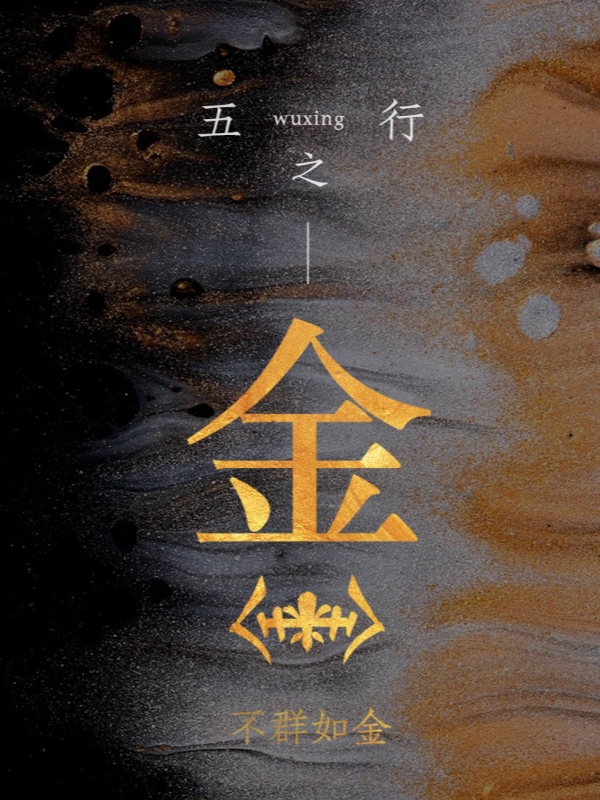
Metal wuxing (金 jīn) is the metal phase of an ancient Chinese cosmological framework used to classify change. The framework is called wu hsing in Wade-Giles and is read in English as the Five Phases. Within this system, change is grouped into five fundamental phases: wood, fire, earth, metal, and water. As the fourth phase in the standard sequence, metal carries associations ranging from the West and autumn to the Lungs and the color white.
This guide maps those associations clearly. First, it walks through metal's correlations in the five-phase table and its position in the generating and overcoming cycles. Next, it covers metal's use in traditional Chinese medicine, feng shui, and naming customs. Finally, it resolves the most common confusions — why earth and metal stay separate, and whether wind belongs to metal or wood.
Quick Facts
What Is Metal in Wuxing?
Origin and Early Use
The five-phase system existed as a moral classification tied to Zisi, the grandson of Confucius, and to Mencius, before Zou Yan's cosmological reformulation in the 3rd century BCE. The term wuxing has been linked to dynastic-history theory since the Warring States period. Zou Yan's school systematized the model as a cosmology, and it dominated Han-dynasty thought from 206 BCE to 220 CE.
Later, Song-dynasty neo-Confucianism (960–1279 CE) re-read the five phases as the Five Virtues: benevolence, righteousness, reverence, wisdom, and sincerity. Metal was mapped to righteousness. That reading sat alongside the cosmological model rather than replacing it.
The Character 金 (Jīn) and Its Meaning
The character 金 is the same glyph used for the metal phase of wuxing, for the chemical element gold, and as a semantic radical in compound characters. The Wade-Giles reading is chin or kin; the pinyin is jīn. The simplified radical form 钅 appears on the left side of metal-related characters, and the same jīn pronunciation is shared with the unrelated character 今 (now).
- 金: jīn — metal, gold, and the metal phase of wuxing
- 钅: jīn — the simplified left-side radical form used in compounds
- 銅 / 铜: tóng — copper
- 鐵 / 铁: tiě — iron
- 銀 / 银: yín — silver
- 鋼 / 钢: gāng — steel
⚪ Explore Metal in the Zodiac: To see how the Metal element shapes personal birth years, character traits, and zodiac compatibility, read our guide on Chinese Astrology Metal.
Metal's Correlations in the Five Phases
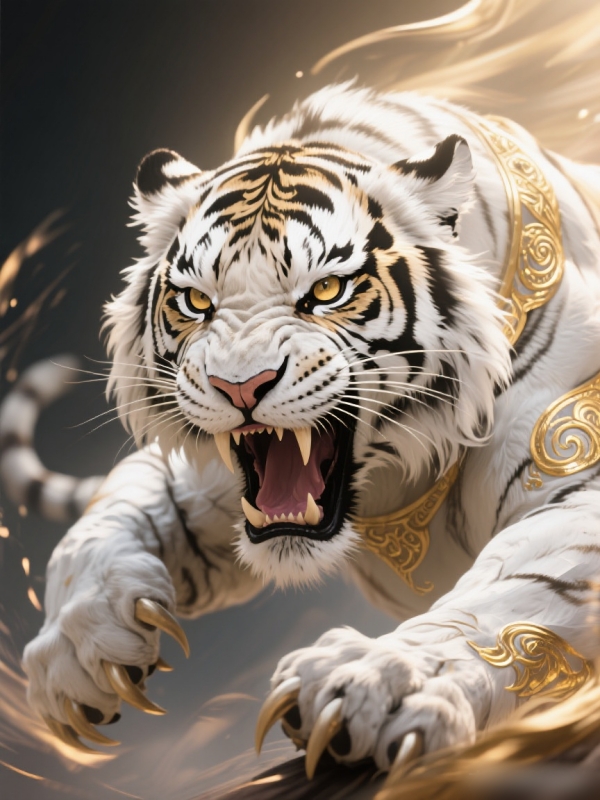
White Tiger of the West
Within the five-phase framework, metal is correlated with a dense set of attributes drawn from directions, seasons, climate, color, organs, tastes, sounds, planets, animals, and zodiac signs. The reference tables below group the most commonly cited correspondences so they can be read at a glance.
Direction, Season, Climate, and Color
Organs, Tissues, and the Body
Taste, Sound, Planet, and Heavenly Animal
Metal in the Generating and Overcoming Cycles
The Five Phases are linked by two interlocking cycles: the generating cycle (相生 xiāng shēng) and the overcoming cycle (相剋 xiāng kè). Metal sits in a specific position in each. The tables below show the full order with metal's role marked.
How Metal Generates and Is Generated
In the generating cycle, metal is generated by earth — "earth bears metal," an image of ore forming within the ground. Metal in turn generates water — "metal collects water," referring to condensation forming on cold metal surfaces. The mnemonic is "tǔ shēng jīn, jīn shēng shuǐ."
How Metal Overcomes and Is Overcome
In the overcoming cycle, metal overcomes wood — "metal chops wood," the axe against the tree. Metal is itself overcome by fire — "fire melts metal." The mnemonic is "jīn kè mù, huǒ kè jīn."
Metal in Medicine, Feng Shui, and Daily Life
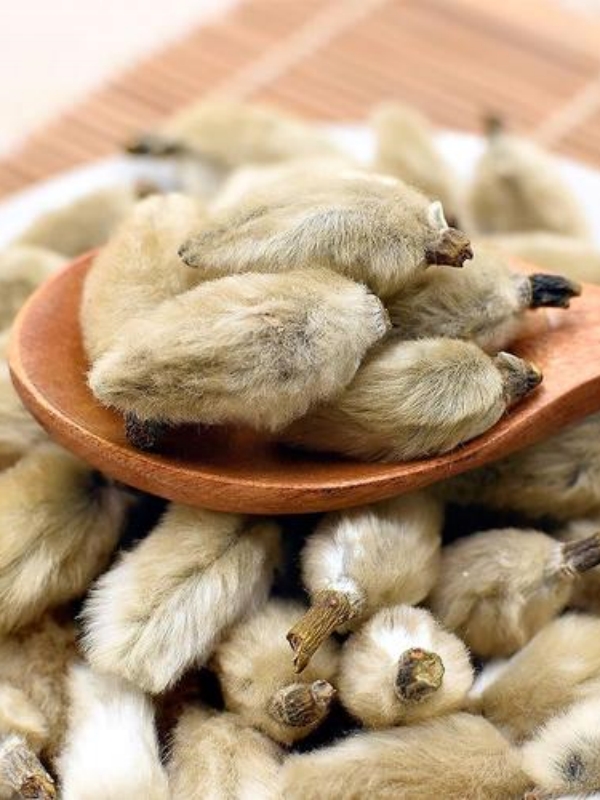
Magnolia Flower
Metal wuxing extends well beyond cosmology. It shapes diagnostic categories in Traditional Chinese Medicine, the orientation of cures in Feng Shui, and the way Chinese parents choose name characters to balance a child's birth chart.
Metal in Traditional Chinese Medicine
In TCM, the metal phase governs the Lungs (fèi 肺) and the Large Intestine (dà cháng 大腸). The Lung opens into the nose, governs qi and respiration, and houses the po (魄) soul; the Large Intestine is paired with the Lung. Patterns labelled as metal imbalance include Lung-qi deficiency and Large-Intestine dryness.
- Excess metal: treated with sour-flavored or wood-phase herbs to "chop" back
- Deficient metal: supplemented with pungent-flavored or earth-phase substances to "feed" it
- Common patterns: Lung-qi deficiency, Large-Intestine dryness
- Representative herbs: 辛夷 (xīnyí, magnolia flower), 麻黃 (máhuáng, ephedra), 桔梗 (jiégěng, platycodon)
Metal in Feng Shui and Naming Practices
In Feng Shui (堪輿 kānyú), the West sector of a home or room is the metal sector in the Later Heaven (後天) Ba Gua. Metal shapes are round or domed; common cures include brass objects, crystal spheres, and white stones. Together these elements are used to balance or strengthen the metal aspect of a space.
In Chinese onomastics, parents sometimes add a 金, 木, 水, 火, or 土 component to a child's given name to balance the wuxing profile of the four pillars (八字 bāzì) of the birth chart. Children whose chart is judged to lack metal may receive a name character containing the 金 radical — for example 鑫, 鈞, or 銘.
Metal Manipulation and Wuxing Folklore
"Wuxing metal manipulation" is the literal English rendering of 五行屬金 — that is, the practice of working with one's wuxing-metal nature. In modern wuxing folklore, people with strong metal charts are described as organized, principled, and firm. In martial-arts fiction and cultivation novels, metal-aspect cultivators favour weapons, autumn qi, and West-facing practice.
Wind, Earth, and Metal: Resolving Common Confusions
Three recurring confusions surface when readers first meet metal wuxing. The first concerns the relationship between earth and metal, the second the place of wind, and the third the exact list of phenomena that fall under metal.
Earth and metal are kept deliberately separate. The five phases form a fixed five-fold set; merging earth and metal would erase the generating-cycle slot that metal occupies and would fold the West, autumn, and Lung correlations onto earth. Historically, the Five Powers (五德 wǔ dé) theory of dynastic virtue briefly grouped earth and metal together, but that reading belongs to a different theoretical layer — dynastic succession — and never replaced the cosmological five-phase model.
Wind is a phenomenon correlated with wood, not metal. Wood is the phase of spring, growth, and movement; wind is wood's climatic correlate. Some later alchemical and medical extensions place wind under metal because of metal's "gathering" quality, but this attribution is non-standard. The mainstream cosmological framework keeps wind with wood.
The phenomena grouped under metal are the standard set: West, autumn, white, dryness, the White Tiger of the West, Venus, the Lungs and Large Intestine, the nose, the skin, the taste pungent, the sound shāng, the emotion grief, the virtue righteousness, and the zodiac signs Monkey and Rooster. Holding to that list keeps the system internally consistent across cosmology, medicine, and feng shui.
Frequently Asked Questions
Q: Why are earth and metal separate in wuxing?
The Five Phases are a fixed five-fold set. Merging earth and metal would erase the generating-cycle step metal occupies and collapse the West, autumn, and Lung correlations onto earth. The wǔ dé "Five Virtues" reading does pair them, but it reflects a different theoretical layer — dynastic virtue — and both models coexisted in Chinese thought.
Q: Is wind attributed to metal or wood in wuxing?
In the standard framework, wind belongs to wood. Wood is the phase of spring, growth, and movement, and wind is wood's climatic correlate. Some later alchemical and medical extensions place wind under metal because of metal's gathering quality, but the mainstream cosmological model keeps wind with wood.
Q: What elements or phenomena fall under metal in wuxing?
In the standard wuxing framework, metal covers a wide set: the West, autumn, the color white, dryness, the White Tiger of the West, Venus, the Lungs and Large Intestine, the nose, the skin, the taste pungent, the sound shāng, the emotion grief, the virtue righteousness, and the zodiac signs Monkey and Rooster.
Q: How does metal interact with wood in wuxing?
In the generating cycle wood feeds fire, not metal. In the overcoming cycle metal chops wood, so metal is the controller of wood — concretely, an axe (metal) cuts a tree (wood). In practice, a metal-dominant person is said to temper or restrain a wood-dominant partner.
Q: What does metal manipulation mean in wuxing?
"Wuxing metal manipulation" is a literal translation of the phrase for working with the metal aspect of one's chart — adjusting diet (pungent flavors), environment (West-facing rooms, white or metallic objects), or name characters to strengthen or weaken metal. It is not a martial-arts ability in standard wuxing philosophy.
Q: What is the Chinese character for metal in wuxing?
The character is 金 (jīn). The radical form 钅 is used on the left side of compound characters for metals and metal objects, such as 銅 (copper), 鐵 (iron), 銀 (silver), and 鋼 (steel). It is the same glyph as the chemical element gold.
Q: What season and direction does metal represent in wuxing?
Autumn and West. The solar-term window runs roughly from 7 September (立秋 lìqiū) to 8 November (霜降 shuāngjiàng), covering the late-harvest period leading into the first frost. This window places metal between late summer's fire-leaning energy and winter's water.
Q: How is metal used in traditional Chinese medicine?
In TCM, the metal phase governs the Lung and Large Intestine meridians. Pungent flavors enter the Lung. Common metal-class herbs include 辛夷 (xīnyí, magnolia flower), 麻黃 (máhuáng, ephedra), and 桔梗 (jiégěng, platycodon). Patterns of metal imbalance include Lung-qi deficiency and Large-Intestine dryness.