Qingming Customs: Honor Ancestors, Enjoy Nature and Taste Qingtuan
What brings an entire nation back to their ancestors’ graves each spring? Qingming Festival—Tomb-Sweeping Day in English—is one of China’s oldest holidays, falling each year around April 4 to 6. Most visitors experience it without knowing what they're seeing. From its 2,700 years of history to the rituals today at grave sites, and the foods of the season to the practical advice every traveller should know, we’re here to help.
Understanding the Meaning of Qingming
Meaning of Qingming
To appreciate qingming fully, start with its name. Two characters hold the entire philosophy of the festival.
Natural Clarity and the Two Characters
🏛️ Qingming (清明) means “Pure Brightness.” It is the fifth of China’s 24 traditional solar terms — an ancient system that divides the year by the sun’s orbital position. Therefore, it always falls on a consistent Gregorian date: April 4, 5, or 6. In 2006, China’s State Council formally designated qingming as a national Intangible Cultural Heritage. Today, more than 1.4 billion people observe it each spring.
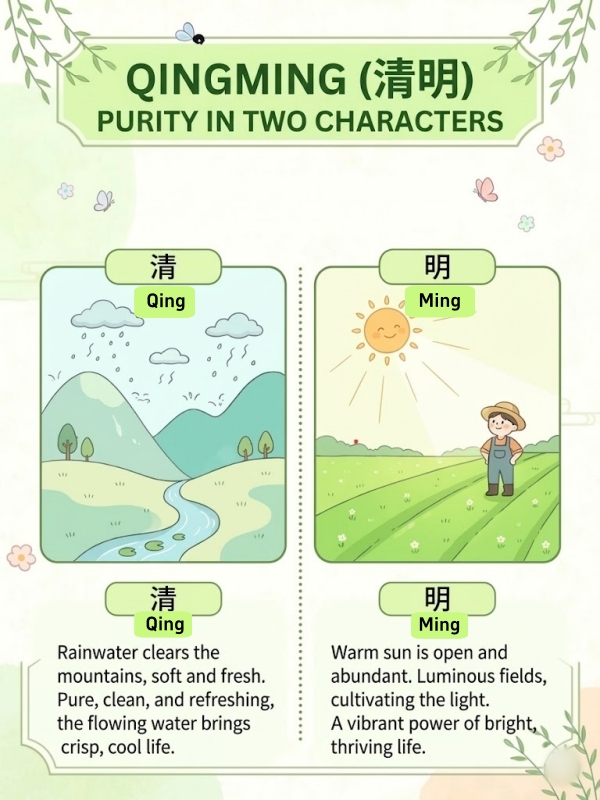
The name implies its own philosophy. 清 (Qīng) means pure or clear — the quality of mountain air after April rain. 明 (Míng) means bright or luminous — the quality of morning light over open fields. Together they describe an interval of natural illumination. Our ancient farmers chose for their time to sow Spring this special moment. For pronunciation: Qīng Míng in Mandarin, about being expressed in English for purposes: “CHING-MING.” You will also see “Ching Ming” in English, the Cantonese romanization current in Hong Kong and among overseas Chinese.
Solar Terms and the Farming Calendar
Many visitors assume qingming follows China’s lunar calendar. However, this is a common misconception. Qingming is a solar term — fixed to the earth’s orbital position, always 15 degrees after the Spring Equinox. As a result, it lands on the same narrow date range every year. This distinguishes it sharply from festivals like Chinese New Year or Yuan Xiao Jie, which shift by weeks depending on the lunar cycle. For travelers, this consistency is genuinely useful: qingming is predictable years in advance.
| Festival | Calendar Type | Typical Date | Core Purpose |
|---|---|---|---|
| Qingming | Solar term (fixed) | April 4–6 every year | Ancestor remembrance + spring |
| Yuan Xiao Jie | Lunar calendar (shifts) | Late Jan – mid Feb | Reunion + lanterns |
| Chinese New Year | Lunar calendar (shifts) | Late Jan – mid Feb | New year celebration |
| Día de los Muertos | Gregorian (fixed) | November 1–2 | Ancestor remembrance |
🗓️ Solar Term Language Note — Qingming is rooted in the spring season; complement your understanding of the solar terms with a look at seasons in Chinese and their key vocabulary.
🌸 Seasonal Perspective — Unlike these fixed solar terms, the lunar-based Spring Festival stands apart as China's most important holiday in the cultural calendar.
How the Festival Began Long Ago
Understanding qingming’s present requires knowing its past. The festival did not emerge from a single moment. Instead, it grew across three distinct historical layers.
Legend of the Cold Food Tradition
Origin of Qiingming
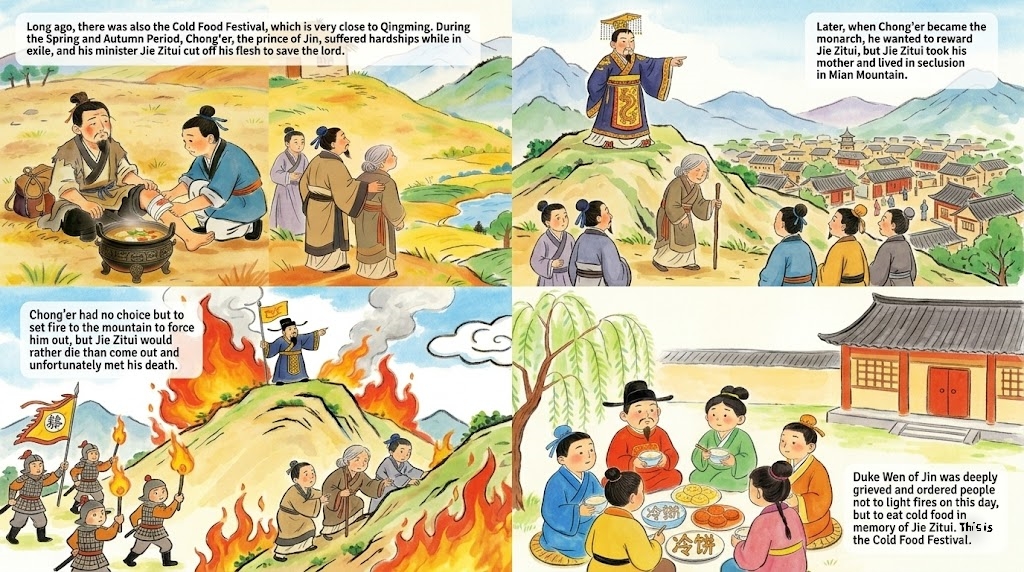
🔥 The story begins around 636 BCE. A prince named Chong’er has been exiled from Jin for nineteen years. His loyal attendant, Jie Zhitui, cuts flesh from his own thigh to feed the starving prince during their long wandering. Years later, Chong’er returns as Duke Wen of Jin and offers every loyal follower a reward. Jie Zhitui quietly refuses. He retreats to a mountain with his elderly mother and disappears into the forest. The duke, desperate to bring him back, orders the mountain set ablaze. However, Jie never emerges. He dies embracing a willow tree. In grief, Duke Wen bans all cooking fires for three days — so every family eats only cold food. This becomes the Cold Food Festival. Qingming carries its spirit to this day.
It is a legend — recognized in the culture as a narrative about the past rather than an actual representation of a historical event. And yet its power is palpable. What the Cold Food Festival compressed into folktale was three things that define qingming: the custom of cold offerings at tomb sites, the willow as a symbol of remembrance, and the custom of visiting mountain graves at a set time each year in spring. Plus, it gave emotion to the event — loyalty recognized too late, grief turned to annual return.
Old Rules from the Tang Dynasty
By the Tang Dynasty (618–907 CE), two observances had grown so intertwined that separating them became impractical. The Cold Food Festival fell just one day before the solar term qingming. Families visited graves on Cold Food Day, then remained outdoors for qingming. Therefore, in 732 CE, Emperor Xuanzong issued an imperial decree: tomb-sweeping on qingming became an official state ritual. This single act transformed a folk custom into a national institution. Moreover, it merged the cold food tradition’s solemnity with qingming’s natural brightness — giving the festival its dual character: solemn at the grave, joyful in the spring fields.
A useful insight from cultural historians: this merger explains why qingming feels both heavy and light on the same day. The grief traces to Jie Zhitui and the Cold Food tradition. The kite-flying and spring picnics trace to qingming’s agricultural solar-term roots. Neither is a later addition. Both belong to the festival’s original character.
— Cultural context note, synthesized from scholarship on Tang-dynasty ritual codification
Qingming Custom 1: Ancestor Rituals and Tomb Sweeping
-

- Lay out Offerings
-
- Light Incense
-
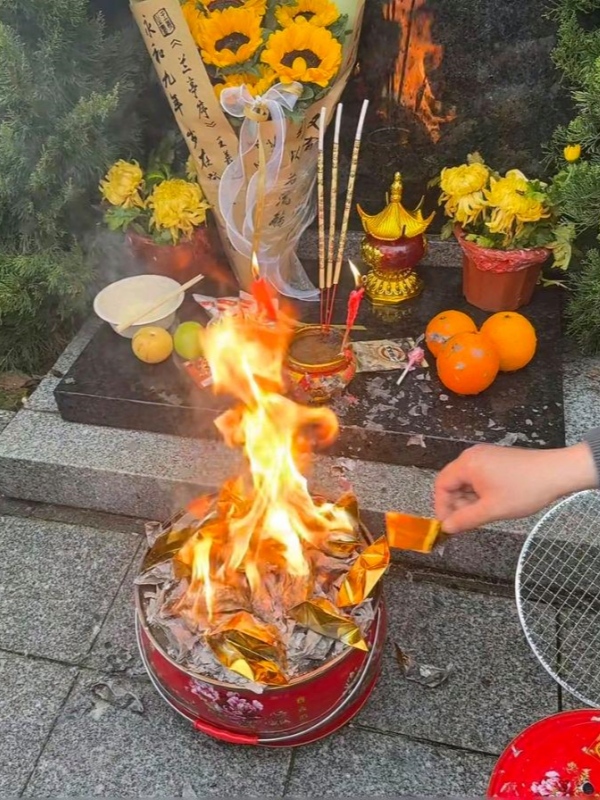
- Burn Ceremonial Paper
-
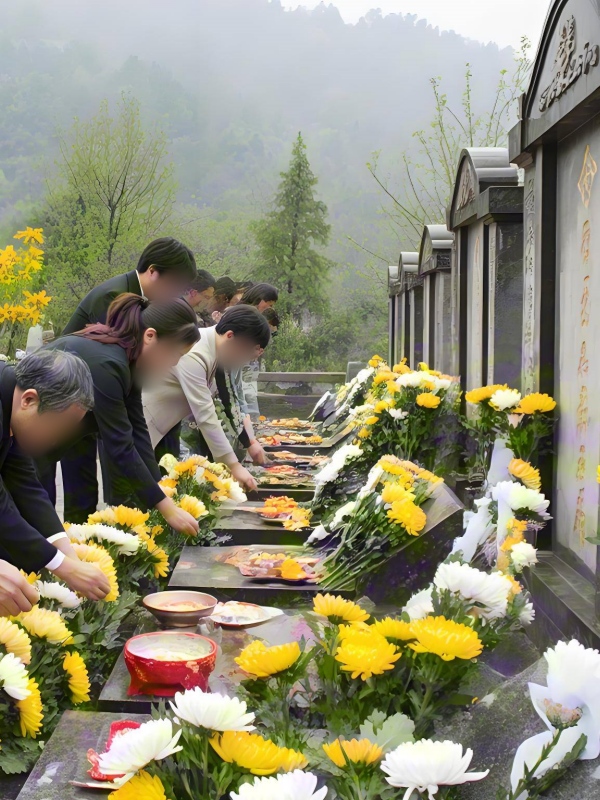
- Perform the Ceremony
- •Step 1. Arrive and clean the tomb:
- •Families reach the grave before noon; the atmosphere is quiet and purposeful from the first moment
- •Pull weeds, wipe the headstone, replace wilted flowers — “sweeping” means full physical cleaning
- •Step 2. Lay out offerings and light incense (摆供上香):
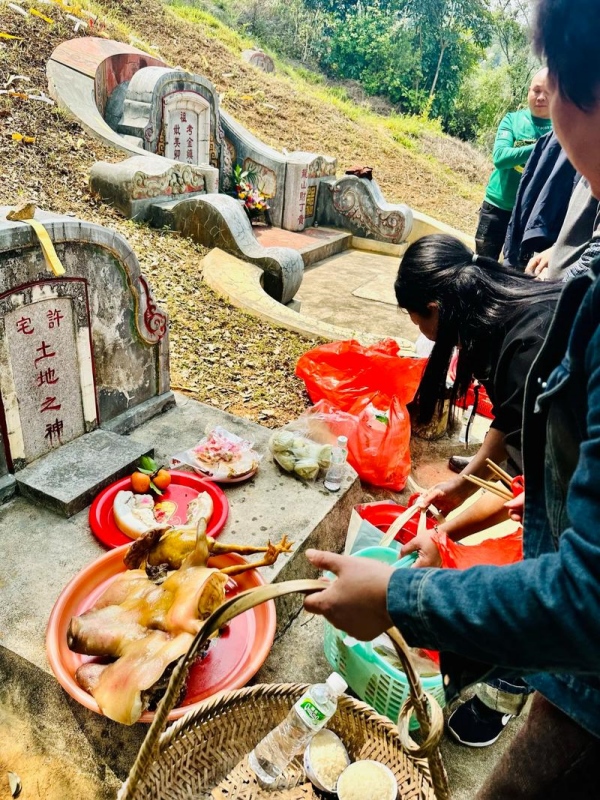
- •Spread a cloth before the stone; arrange steamed chicken, roast pork, fruit, and dim sum, with three sets of chopsticks facing the stone
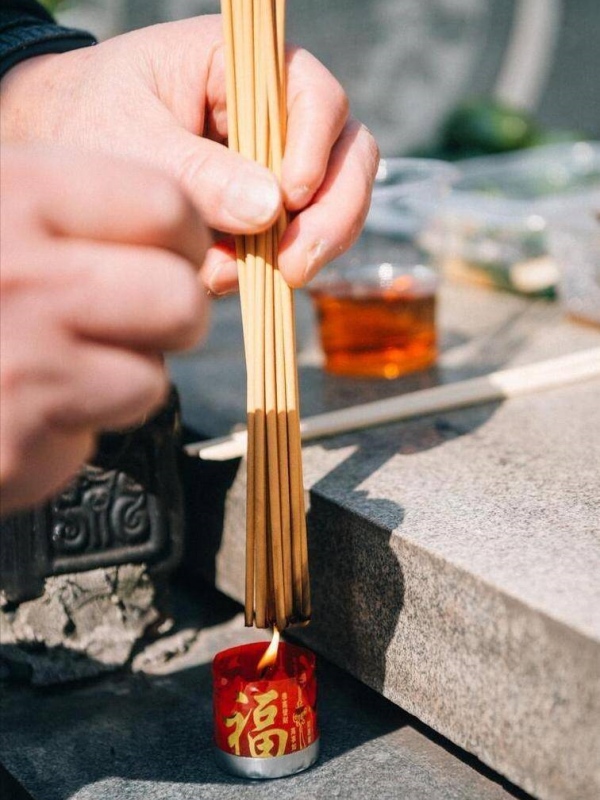
- •Plant three incense sticks upright in the earth — the rising smoke carries the family’s presence to the ancestor
- •Step 3. Perform the ceremony (行礼祭拜):
- •The eldest pours rice wine onto the ground three times — a deliberate invitation for the ancestor to receive the offerings
- •Each family member bows three times in sequence, right fist cupped in the left hand at chest height. Ceremonial paper is burned, sending spirit money and everyday objects to the ancestor in the afterlife
- •Step 4. Share the meal and depart (共食离场):
- •Some families eat the offered food at the graveside — a shared meal across the boundary of the living and the dead
- •The family departs in the same order they arrived; conversation resumes only after leaving the grave area
👁️ What strikes a first-time witness is the silence between actions. No one hurries. Each bow holds its full duration. The pouring of wine is slow enough to feel entirely deliberate. The ceremony is not performative — it is private, even when performed in a public cemetery surrounded by dozens of other families moving through the same careful sequence.
New Digital Memorials and Green Choices
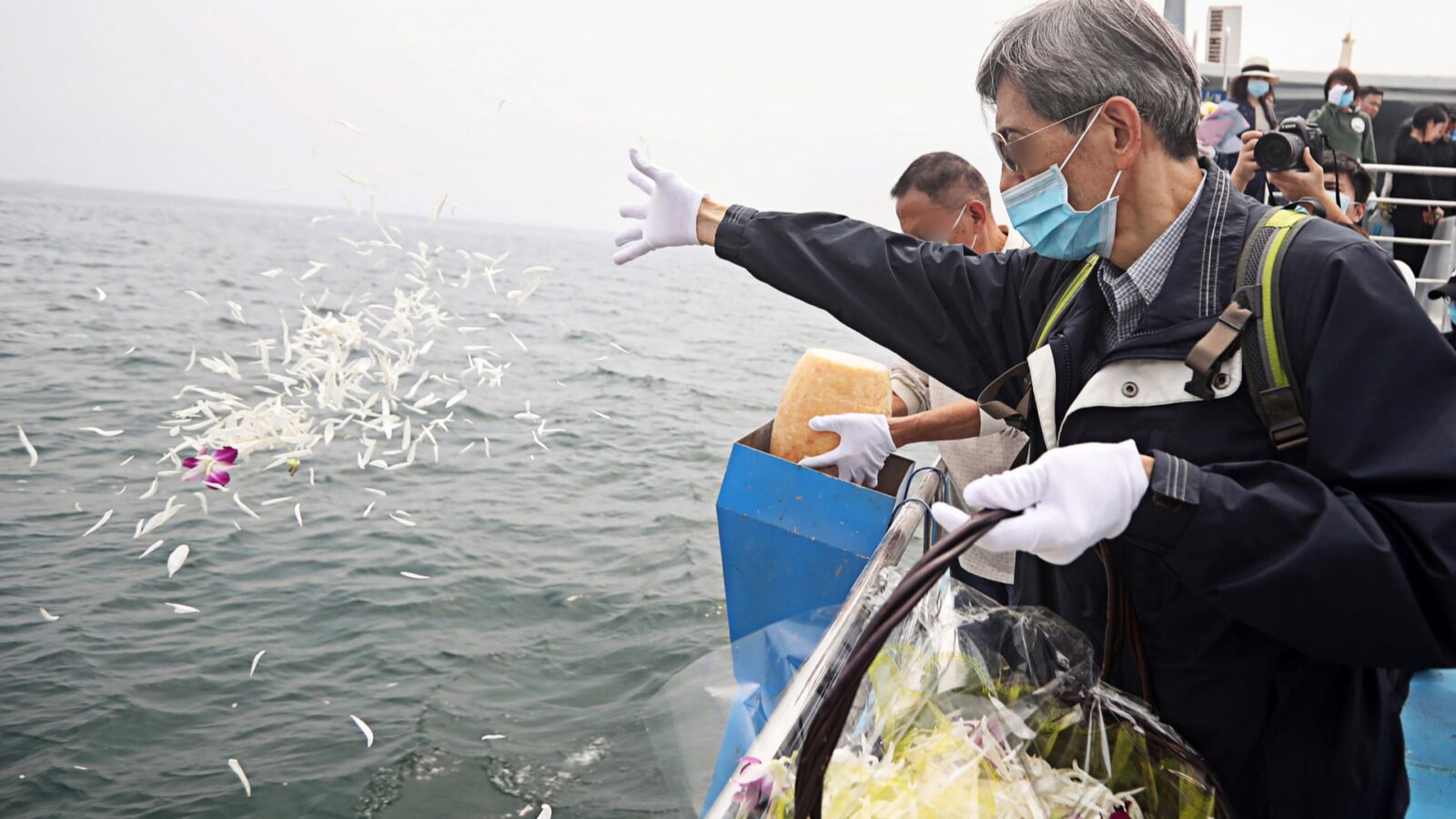

Sea Burial Ceremonies
Qingming adapts. In Beijing and other large cities, environmental regulations and urbanization have quietly transformed some customs. However, the spirit remains identical. What changes is the form.
- •Eco-friendly sacrifices:
- •Traditional paper burning is increasingly replaced by flower sacrifices (鲜花祭扫) — chrysanthemums or the deceased’s favorite blooms
- •Beijing’s strict air-quality regulations have accelerated this shift
- •Cloud memorial services:
- •Online memorial platforms allow families to light virtual incense or write digital elegies
- •Widely adopted since 2020, particularly among younger urban families
- •Sea burial ceremonies:
- •Collective sea burials — ashes scattered at sea — are increasingly common as urban space tightens
- •Accompanied by solemn shipboard ceremonies; growing in coastal cities like Shanghai and Qingdao
“I stood at the edge of a hillside cemetery in Suzhou while a grandfather and his granddaughter flew a swallow-shaped kite above the grave of his wife. When she asked why they cut the string, he said: we send the bad luck away with it. She cheered as the kite disappeared into the afternoon haze. Qingming holds both weights at once — and the kite belongs to the lighter one.”
— Traveler account, Suzhou, April 2023
🌸 China’s festival calendar holds many such moments of cultural depth. For a broader view of spring celebrations across the country, explore the best spring festivals in China — a guide that places qingming in the company of its seasonal companions.
- •Step 1. Arrive and clean the tomb:
Qingming Custom 2: Spring Outings with Kites and Willows
-
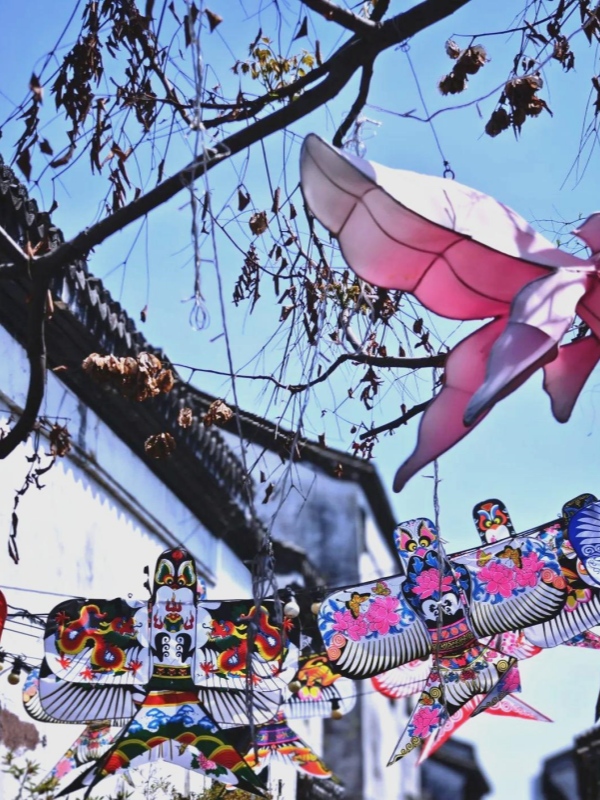
- Kite flying
-
- Willow Branch Customs
-
- Cuju
Not every qingming custom revolves around grave sites. The festival also embodies the spirit of the season. Taqing (踏青, tàqīng) — the spring outing — is nearly as old as the tomb-sweeping itself. Families leave the graveyard and step into the fields, parks, and hills to experience the warmth of early April. In Beijing, that means the paths of the Summer Palace or the Temple of Heaven. In Suzhou or Hangzhou, canal-side walks and tea houses near the blossoming hillsides.
- •Kite flying (放风筝):
- •One of the most photographed qingming activities, popular across all regions
- •In some areas, families cut the string at dusk — releasing accumulated worry into the spring sky
- •Especially vibrant in Beijing’s open parks like Chaoyang Park and Badachu
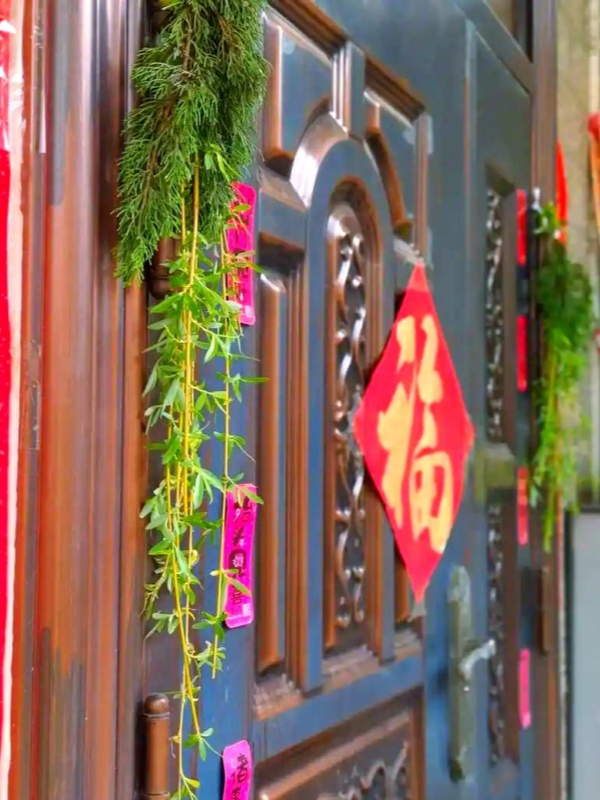
- •Willow branch customs (插柳):
- •Willow cuttings are planted near grave markers or hung above doorways to ward off misfortune
- •The willow traces back to the legend: Jie Zhitui died embracing one; Duke Wen planted willows in his memory
- •Today most visible in rural northern China; rarely observed in major cities
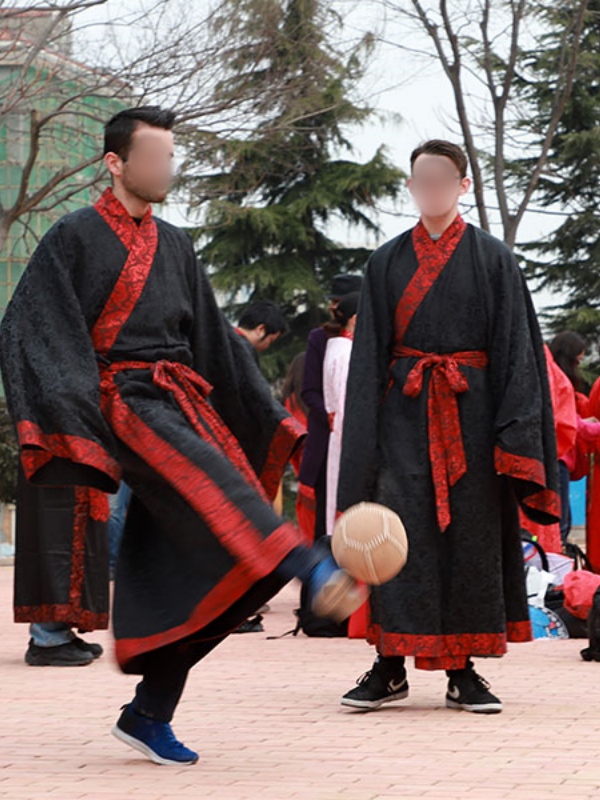
- •Traditional games revived:
- •Cuju (蹴鞠) — ancient football originating in the Spring and Autumn period — is reenacted at cultural parks
- •Swing contests and archery events appear at heritage sites during the festival weekend
- •Kite flying (放风筝):
Qingming Custom 3: Seasonal Flavors of Qingtuan and Sanzi
Food is central to qingming — both as offering and as shared experience. Two principles govern everything on the table: it must be served cold (the Cold Food inheritance), and it must capture the essence of spring. Here is the culinary map of the season.
Green Rice Balls and Herbal Snacks
Qingtuan (青团)
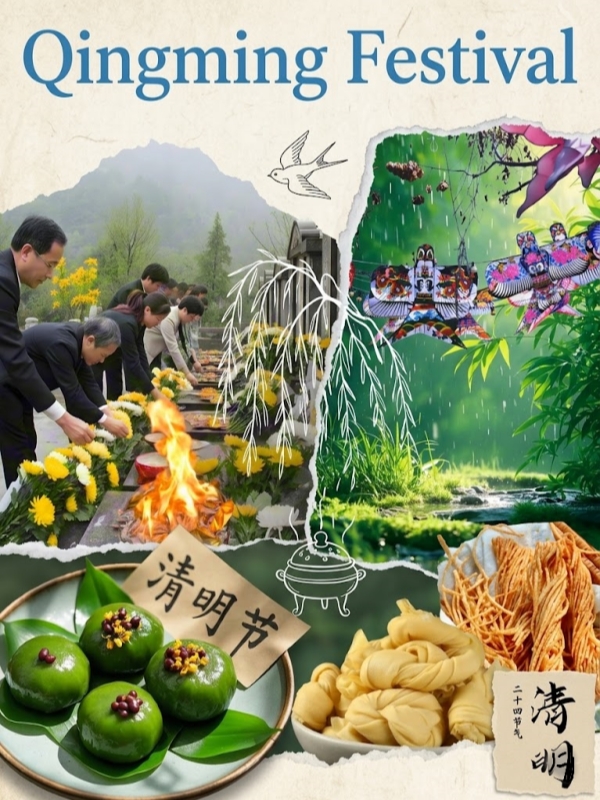
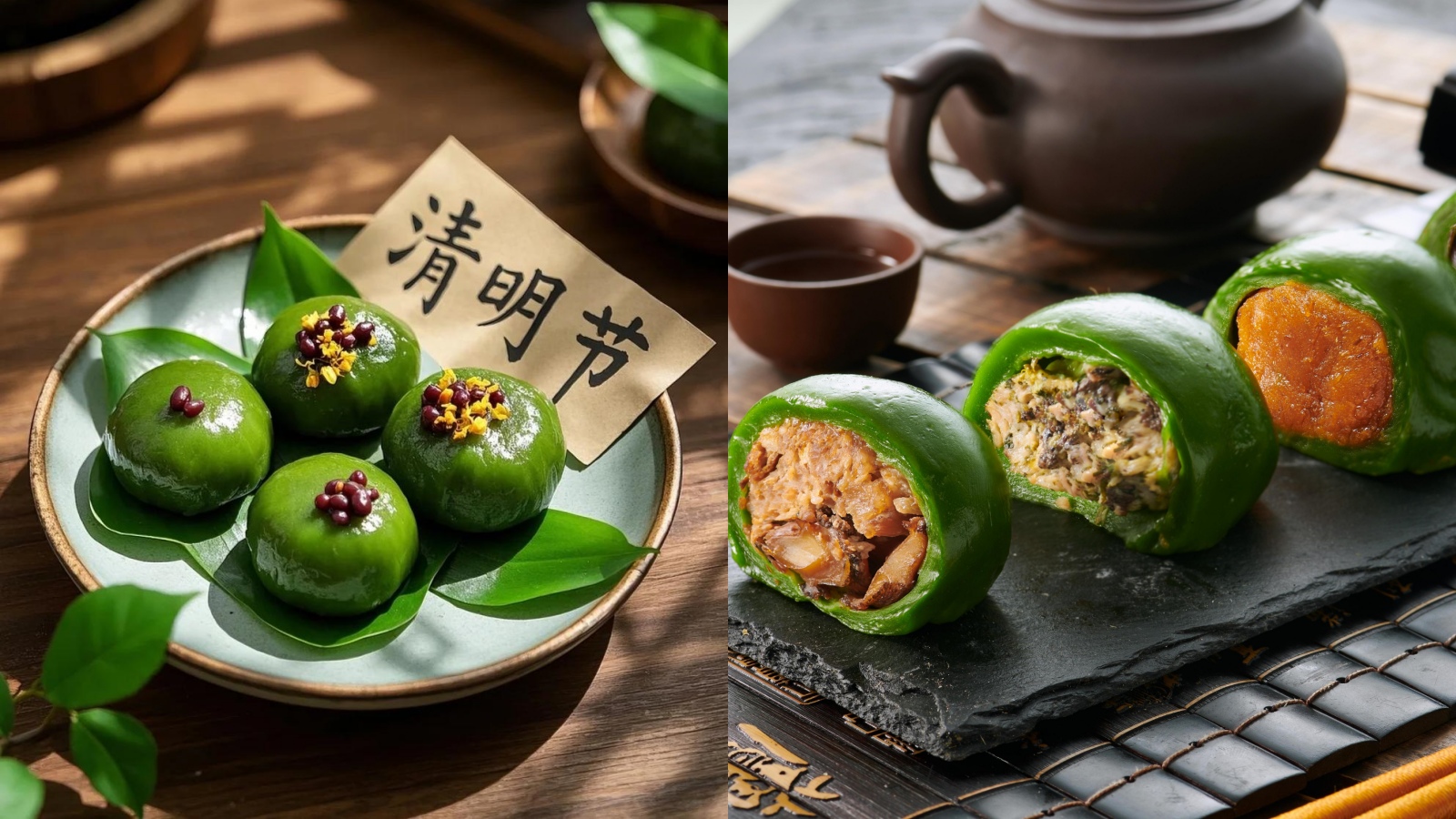
🌿 Qingtuan (青团) is the undisputed ambassador of qingming. Pick one up and the first thing you notice is its color — a deep, earthy jade green. The exterior is smooth and faintly sticky. Bite in and the skin yields immediately: chewy, cool at room temperature, with a faint herbal note that is grassy and slightly medicinal. The green comes from mugwort (艾草, ài cǎo) or barley grass juice mixed directly into the glutinous rice dough. This is not matcha. It tastes earthier, more rooted. They are served cold by tradition — a direct inheritance from the Cold Food Festival’s ban on cooking fires.
The qingtuan tradition aside, cold-food custom dictates the entire qingming table. Region by region, all dishes are made the day before and laid out at room temperature—a ritual requirement in the longstanding tradition stretching back over 2,700 years. Food presented at the grave will later be partaken of by the living: in one gentle act the feast negotiates the line between memory and sustenance.
Regional Dishes from North to South
-
- Marinated Tofu-skin Knots (百叶结)
-
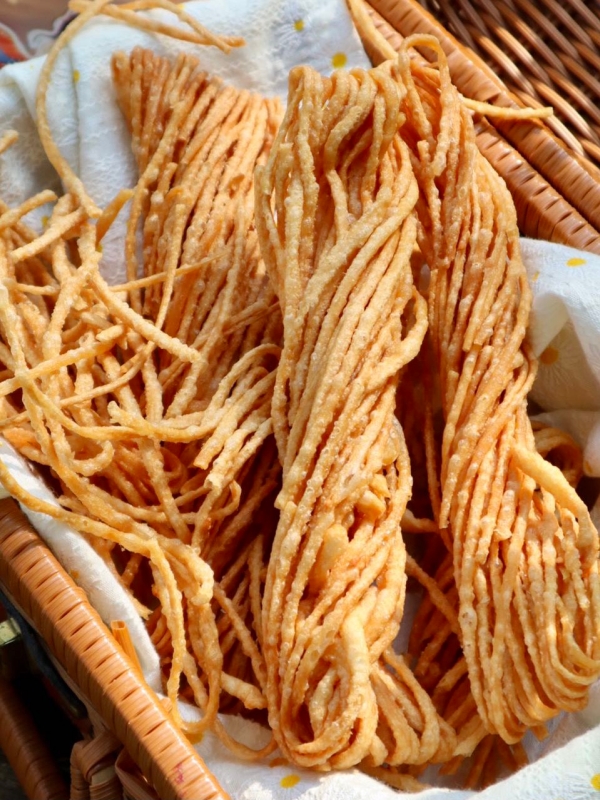
- Sanzi (馓子)
-
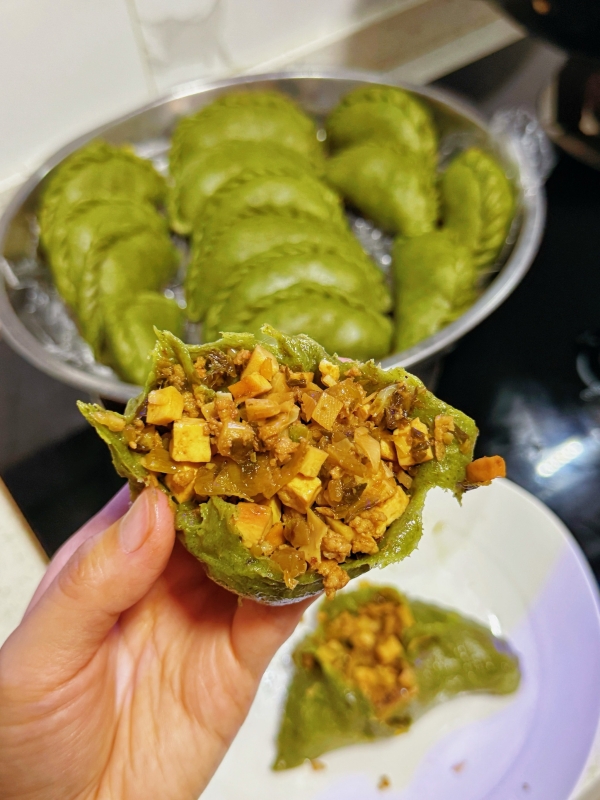
- Ai Ban (艾粄)
China’s regional food cultures diverge sharply at qingming. The south emphasizes herbal freshness and sticky textures. The north favors wheat, crunch, and savoriness. Both traditions are equally ancient.
- •Eastern China (Jiangsu, Zhejiang):
- •Qingtuan — glutinous rice with mugwort, filled with sweet red bean paste, sesame, or in 2026 Beijing cafés, salted egg yolk and pork floss
- •Smoked fish (爱频) — soy-marinated, served chilled
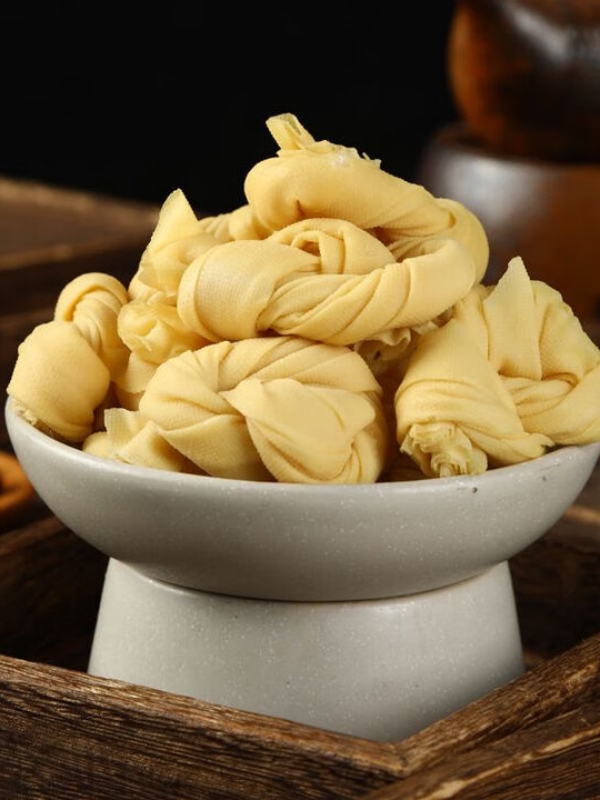
- •Marinated tofu-skin knots (百叶结) — a quiet staple of the Jiangnan cold table
- •Northern China (Beijing, Shanxi, Shandong):
- •Sanzi (馓子) — crispy golden fried dough twists, prepared before the fire-ban period and eaten cold; their texture symbolizes resilience
- •Zitui Buns (子推馍) — steamed buns shaped like swallows or snakes, named directly after Jie Zhitui; a Shanxi specialty
- •Cold noodles dressed with sesame paste and vinegar — a staple across northern households
- •Southern China (Guangdong, Hakka areas):
- •Ai ban (艾粄) — sticky rice cakes made with mugwort, savory-filled; the Hakka equivalent of qingtuan
- •Spring rolls — thin-skinned, vegetable-forward, served at room temperature
- •Sichuan:
- •Cold buckwheat noodles dressed with chili oil and sesame
- •Marinated cold rabbit — a local specialty rarely found outside the region
Fresh Wild Herbs of the Season
-
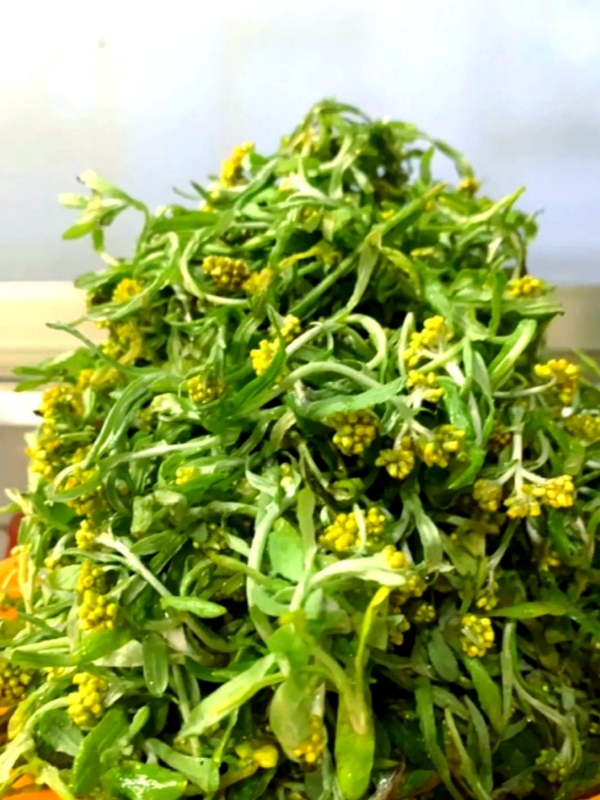
- Mugwort (艾草)
-
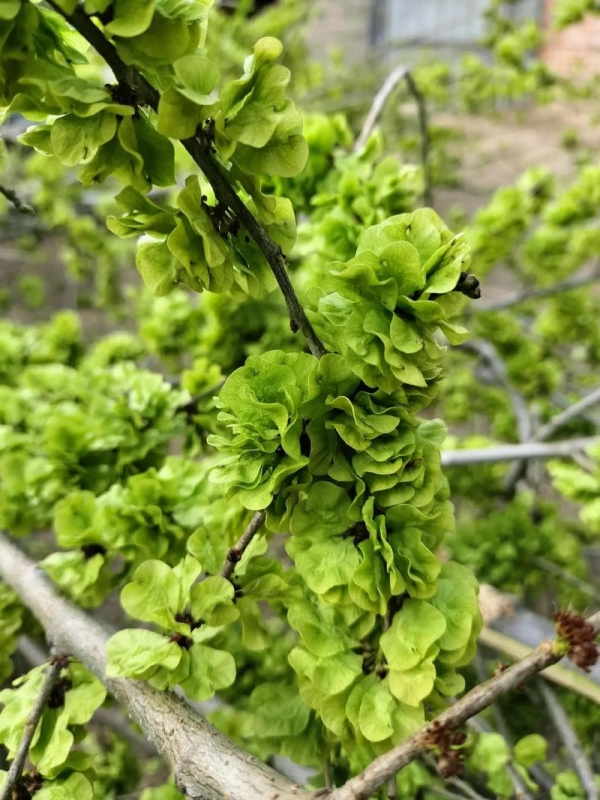
- Yuqian (榆钱)
-
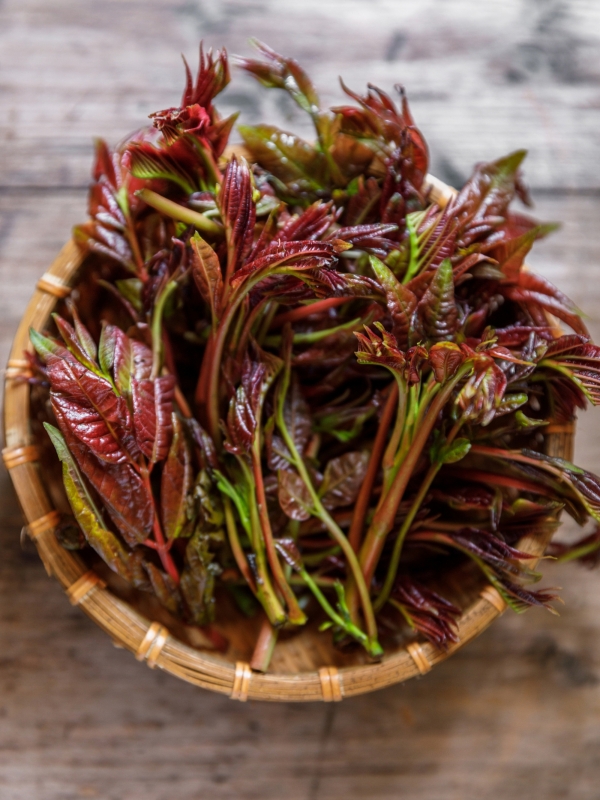
- Xiangchun (香椿)
Qingming is the high point of China’s foraging season, the time when the philosophy of bùshíbùshí — eat only what’s in season — comes into its own in early April. Wild herbs and spring vegetables have particular import: to eat of the earth at this precise moment is to be truly within the season rather than to linger by it as a spectator.
- •What to forage in the south:
- •Shepherd’s Purse (荠菜, jìcài) — picked from fields and used fresh in dumplings and soups
- •Mugwort (艾草) — the defining herb of the season; gathered and folded into qingtuan on the same afternoon
- •What to look for in Beijing and the north:
- •Yuqian (榆钱) — elm flower clusters, eaten raw or steamed with cornmeal; subtle, faintly sweet
- •Xiangchun (香椿) — toona sinensis shoots with a distinctive peppery-savory flavor; tossed with tofu or eggs
- •Preserved and marinated staples:
- •Smoked fish and marinated tofu appear on nearly every Beijing household table during qingming — prepared in advance, served cold
- •These do double duty: they satisfy the cold-food tradition and serve as grave offerings
-
- •Eastern China (Jiangsu, Zhejiang):
✦ Visitor Tip
For first-time visitors: start with qingtuan from a convenience store (Family Mart and Lawson stock them from mid-March). Then seek a dim sum hall or local bakery for quality. Ask specifically for qīng tuán (青团) or point to the green items in the display case. Dietary note: qingtuan are vegetarian when filled with red bean or sesame — check for egg-yolk versions if avoiding eggs.
🍑 If planning your spring travel around qingming, the practical details around dates and holiday schedules matter. Shanghai’s 2026 holiday calendar offers a complete overview of public holidays and travel periods for one of qingming’s most food-rich cities.
How Ancient Festival Life Reflect in Art
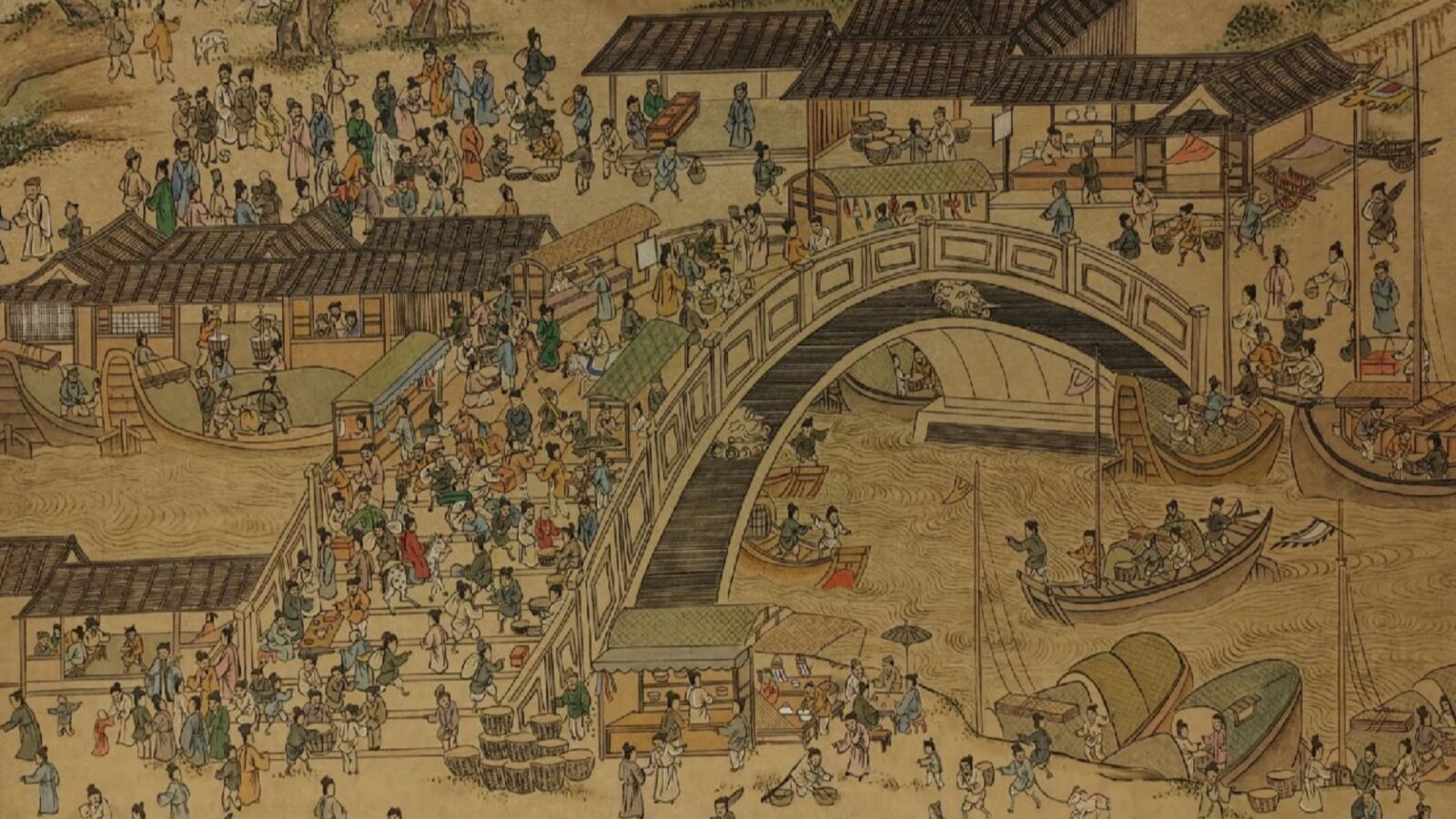
Along the River During the Qingming Festival(清明上河图)
Around 1085–1145 CE, a painter named Zhang Zeduan completed the most celebrated handscroll in Chinese art history. His work — 《清明上河图》, “Along the River During the Qingming Festival” — stretches 5.25 meters. It depicts a single qingming day along the Bian River in the Northern Song Dynasty capital. Inside, approximately 800 figures move through the city: merchants, boatmen, children, street vendors, and festival crowds. Today, the original scroll is held at the Palace Museum (故宫) in Beijing. It remains the single most detailed visual record of qingming life before the modern era.
✦ Visitor Tip
If you plan to visit Beijing in early April, check the Palace Museum’s official website at least three weeks in advance. The museum sometimes holds special qingming-themed exhibitions. Timed entry tickets sell out weeks ahead — book early to avoid missing them entirely.
When Is Qingming Festival
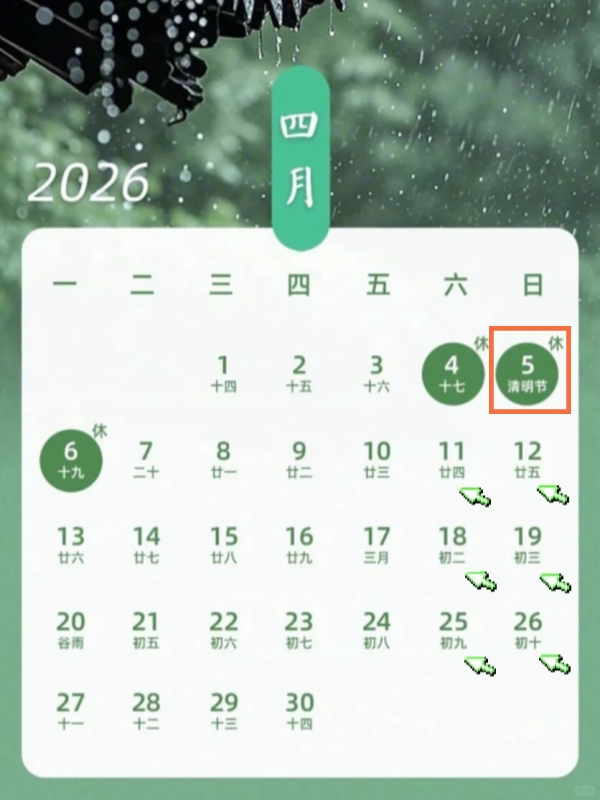

2026 Qingming Festival Date
Knowing qingming’s character is one thing. Planning around it requires specific information. Here are the practical details every visitor needs.
Festival Dates at a Glance: 2024–2028
Year Date Day China Public Holiday Travel Note 2024 April 4 Thursday April 4–6 (3 days) Long weekend; high domestic travel volume 2025 April 4 Friday April 4–6 (3 days) Extends into weekend; consistently busy 2026 April 5 Sunday April 4–6 (3 days) Peak travel demand; book 3–4 weeks ahead 2027 April 5 Monday April 4–6 (3 days) Monday start; full-week travel disruption likely 2028 April 4 Tuesday April 4–6 (3 days) Mid-week placement; shorter travel rush Since 2008, qingming has been a public holiday in mainland China for 3 days. Banks and government offices close. Restaurants, shops and tourist sites stay open - and are busier than usual. Taiwan also celebrates qingming with these customs. In Hong Kong, Ching Ming is a one-day public holiday. As for Singapore and Malaysia, qingming is widely celebrated in these two countries by their Chinese communities, although it is not a public holiday.
-
- 🌿 Solar Term Transition: As the rituals of Qingming conclude, the spring cycle moves toward its final stage in Guyu (谷雨): A Spring Solar Term of Renewing Rains and Fresh Tea in China, marking the arrival of vital rains and the season's last tea harvest.
Qingming Weather in Different Regions
🌴️ April is China’s most weather-variable month by region. The south is warm and humid. The north can still be cold and dusty. The Yangtze Delta — where qingming food culture is richest — is characteristically grey and drizzly. For instance, in Shanghai, the April rain is not an inconvenience. It gives the festival its proper atmosphere: mist on the water, ink-wash skies, and the smell of incense carried sideways in the wind. Pack layers, not a single jacket.
Region April Temp Weather Character What to Pack Beijing / North 8–18°C (46–64°F) Dry, windy, occasional late cold snap Windbreaker, layers, sunscreen Shanghai / Yangtze Delta 12–20°C (54–68°F) Overcast, drizzly — classic spring rain Waterproof jacket, compact umbrella Chengdu / Sichuan 14–21°C (57–70°F) Cloudy, humid, frequent light rain Light layers and umbrella Guangzhou / South 18–26°C (64–79°F) Warm, humid, occasional showers Light summer clothes, rain layer Xi’an / Northwest 10–19°C (50–66°F) Sunny and dry, moderate winds Light jacket, sunscreen Kunming / Yunnan 14–22°C (57–72°F) Sunny “Spring City” conditions Light layers — pleasant all day Useful Etiquette for Foreign Visitor
- •Book transport early:
- •Qingming is among China’s five busiest domestic travel periods of the year
- •High-speed train tickets to Hangzhou, Suzhou, Guilin, and Chengdu sell out 2–3 weeks ahead
- •Cemetery access and etiquette:
- •Most public cemeteries are open — quiet observation from a respectful distance is acceptable
- •Do not photograph individual families without clear, explicit permission
- •Do not point at grave markers or step on grave mounds
- •Road and site congestion:
- •Arrive before 8 AM or after 2 PM near cemetery-adjacent tourist sites
- •Hangzhou’s Lingyin Temple and Nanjing’s Purple Mountain are particularly affected
- •Air quality near burning areas:
- •Ceremonial paper burning can noticeably affect air quality in cemetery areas
- •Visitors with respiratory sensitivities should carry a mask
- •Social etiquette:
- •Quiet, unhurried observation is generally accepted — families are not secretive about the ceremony
- •If offered food by a family at the graveside, a small, polite bow while declining is appropriate
✦ Visitor Tip
For a richer qingming experience as a foreign visitor, consider Suzhou or Hangzhou over Beijing or Shanghai. Both cities have hillside cemeteries with quieter atmospheres, shorter queues, and qingming food culture woven into local bakeries and canal-side tea houses. The April scenery — West Lake, cherry blossoms, stone canal towns — makes the spring dimension of the festival feel genuinely alive rather than incidental.
Faqs: Quick Answers About Qingming
Q: What is Tomb Sweeping Day and is it the same as Qingming?
Yes — “Tomb Sweeping Day” is the standard English translation of qingming’s most visible ritual. Both names describe the same festival. In Chinese, the full name is 清明节 (Qīngmíng Jié). “Ching Ming” is the Cantonese romanization used in Hong Kong and by overseas Chinese communities. All three terms refer to the same traditional observance, held each spring around April 4 to 6.
Q: When exactly is Qingming Festival in 2026?
In 2026, qingming falls on Sunday, April 5. China’s official public holiday runs April 4–6, giving workers a 3-day break. Therefore, if you are traveling to China during this period, book high-speed train tickets and hotels at least 3 to 4 weeks in advance. This is one of the year’s peak domestic travel weekends, and popular routes sell out quickly.
Q: Is Qingming a public holiday in China?
Yes. Since 2008, qingming has been an official 3-day national public holiday in mainland China. Banks and government offices close. However, restaurants, shops, and tourist attractions remain open — and in most cities they are busier than usual. Taiwan recognizes qingming as a public holiday. In Hong Kong, Ching Ming is observed as a one-day public holiday.
Q: What do Chinese people eat during Qingming Festival?
The most distinctive qingming food is qingtuan — jade-green glutinous rice balls made with mugwort, filled with sweet bean paste or sesame. Additionally, the cold-food tradition means families eat smoked fish, marinated vegetables, and regional rice cakes. Food offerings placed at graves — whole chicken, roast pork, fruit, dim sum — are frequently shared as a meal at the graveside afterward.
Q: Can foreign visitors participate in Qingming activities?
Yes, respectfully. Public parks hosting kite-flying and spring outings are completely open and welcoming to visitors. Cemetery observation from a respectful distance is acceptable. However, photographing individual families without explicit permission is not appropriate. Many cities also host public qingming cultural events — exhibitions and educational displays — where foreign visitors are actively welcomed.
Q: Why do people burn paper during Qingming?
Burning ceremonial paper at qingming is a traditional practice for sending material goods — money, clothing, household items — to ancestors in the spirit world. The fire transforms the physical into the spiritual. In modern practice, families also burn paper replicas of everyday technology. This is a sincere cultural tradition; visitors should treat it with the same respectful distance they would give any memorial act.
Q: Is Qingming related to the Day of the Dead?
Qingming and Día de los Muertos developed independently, on opposite sides of the world, with no historical connection. However, both involve living families returning to ancestors’ graves to offer food and maintain the relationship across death. Both received UNESCO Intangible Cultural Heritage recognition — qingming in 2006, Día de los Muertos in 2008. The instinct behind them is the same; the expression is entirely different.
Q: What is the significance of willow branches at Qingming?
Willow branches at qingming connect to the festival’s founding legend — Jie Zhitui died embracing a willow tree, and Duke Wen planted one in his memory. Additionally, folk tradition held that willow — which stays green through cold winters — carried protective qualities. Today, willow-planting customs survive most visibly in rural northern China. In major cities, this tradition is rarely observed.
Q: How is Qingming observed outside mainland China?
Qingming is widely observed across the Chinese diaspora. In Hong Kong, it is a public holiday with large-scale grave-visiting in the New Territories. In Taiwan, similar tomb-sweeping customs apply and qingtuan is widely available.Chinese communities observe it with local adaptations in Singapore and Malaysia. And in Vietnam, the equivalent festival — Tết Thanh Minh — is observed by both ethnic Chinese communities and, in some areas, Vietnamese families as well.
Q: How do you pronounce “Qingming”?
Qingming is pronounced Qīng Míng in Mandarin. Break it down: Qīng sounds like “ching” (flat, high first tone). Míng sounds like “ming” with a rising inflection (second tone, like a question). Together: CHING-MING. The Cantonese version — “Ching Ming” — sounds nearly identical. Staff in tourist areas across China recognize both immediately when you ask about qingming.
- •Book transport early: