Guyu (Grain Rain):Vibrant Peony Blooms, Fragrant Pre-Rain Tea, Tender Toon Shoots, and Nourishing Seasonal Rainfall
Guyu is not a public holiday but a solar term. It is the 6th of China’s 24 traditional solar terms or seasonal markers. The sun arrives at 30° of celestial longitude between April 19-21 each year, so the date is both predictable and constant. In 2016, UNESCO included the 24 solar terms on the List of Intangible Cultural Heritage. Therefore, guyu has international cultural significance now. The last solar term of spring, guyu marks an increase in rainfall and rising temperatures. It’s an important stage in the growing season for crops throughout China. Here is a guide to guyu’s origin, customs, and what to look out for in travel.
What Is Guyu? China's Final Solar Term of Spring
What Is Guyu?China's Final Solar Term of Spring
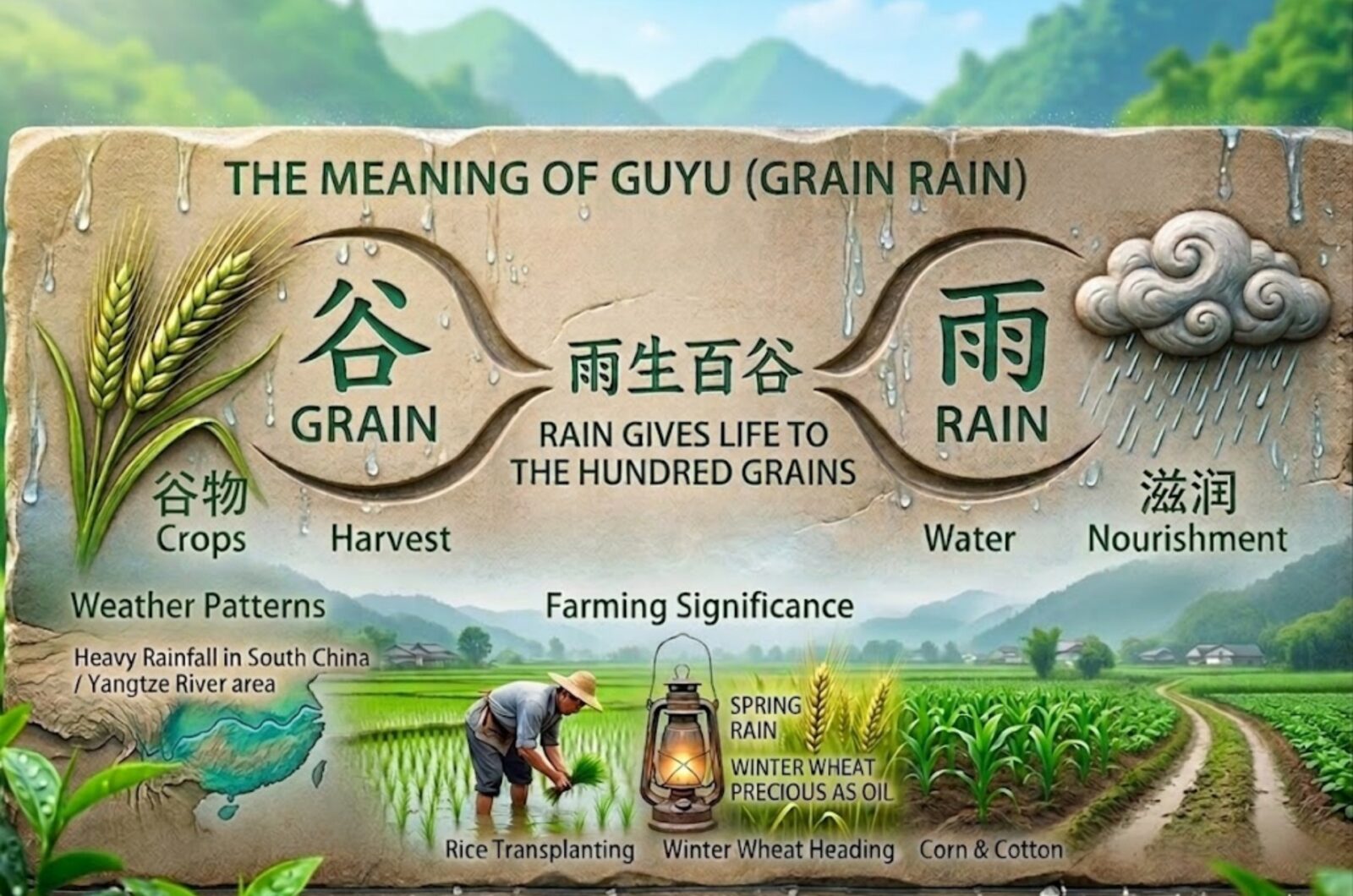
The Meaning of Guyu
The name derives from the two characters "grain" (谷) and "rain" (雨) together referring to the saying "rain gives life to the hundred grains" (雨生百谷). In other words, it is when the steady rainfall returns to waking crops over the hills and plains; nature's green light for the farmer to start growing. And that opening story we started with? Familiar? It ought to be. Cangjie asked the heavens for this.
Weather Patterns During Guyu
Grain Rain (穀雨) has the virtuous faithfulness of spring rains (春雨綿綿). The tiles are warm, rains notice in some parts, and humid air covers most of the country. South China and the Yangtze basin suffer the heaviest downpour, and it is a common experience here to be drenched in a succession of rainy days. Those who are going to the southern province of China late in April should carry a gum coat. Farmers, however, will glean the benefit of this season moisture of the land.
🌱 Spring Vocabulary Tip — As spring's final solar term, guyu is the perfect moment to revisit the full cycle and learn all seasons in Chinese before summer takes over.
Farming Significance of Guyu
During this solar term, farmers are also busy transplanting rice seedling valleys and sowing new crops. It is also the stage of heading and flowering winter wheat, while corn and cotton are also in their early seedling stage. We have a saying "Spring rain is as precious as oil" (春雨贵如油), so these rains are the impetus for the entire spring planting process etc. Thus the seasonal customs are imbued with such meaning.
🌿 While Guyu is purely an agricultural seasonal marker, what makes the preceding solar term uniquely double as a major public holiday? Explore the profound history of Qingming, widely celebrated as a traditional festival of ancestor rituals and seasonal qingtuan in China.
🌾 Festival Context — Guyu guides the growing season, but it's Spring Festival that holds the title of China's most important holiday for people.
Custom 1. Drinking Guyu Tea
-
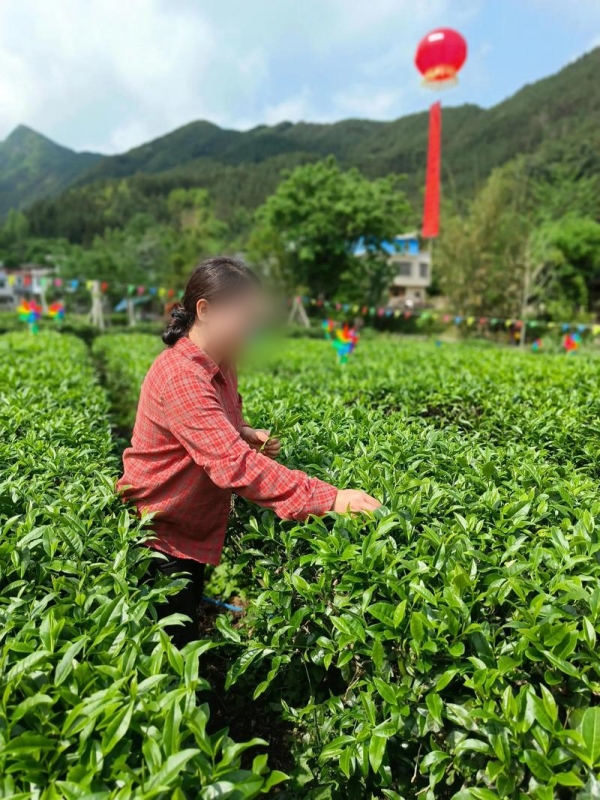

- Pick Tea in the Rain
-
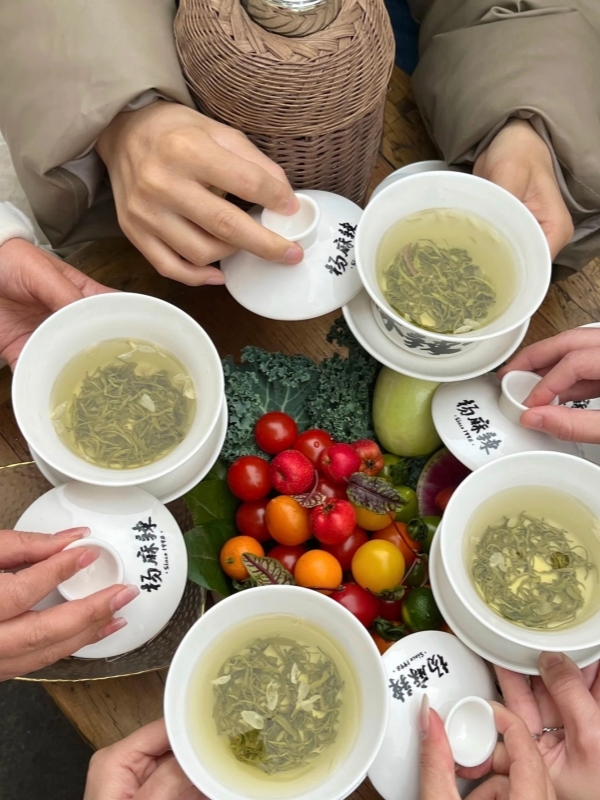
- Drinking Guyu Tea
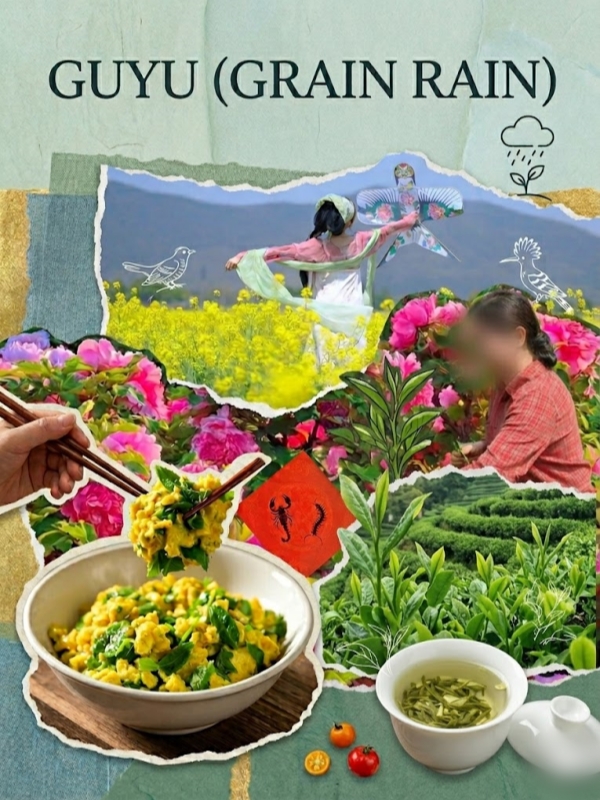
The folk saying goes: "Grain Rain, Grain Rain, pick tea in the rain" (谷雨谷雨,采茶对雨). Leaves plucked on the very day of the solar term are called "pre-rain tea" (雨前茶), which contain the richest spring vitality, that is, they carry more vitamins and the most pronounced bean fragrance. Also, according to folk belief, drinking this tea "subdues the ugly heat inside", "sharpens up inflammatory eyes" and "impurities cannot come at all, avoiding misadventure." Traveling on? Anhua County in Hunan and West Lake in Zhejiang are your spots. Of course, all tea selections stop in the end of Apr. at tea-gardens. Pre-rain tea being the second place only to pre-Qingming tea (明前茶), and the narrower the harvest, the more admired.
Custom 2. Appreciating Peonies
-
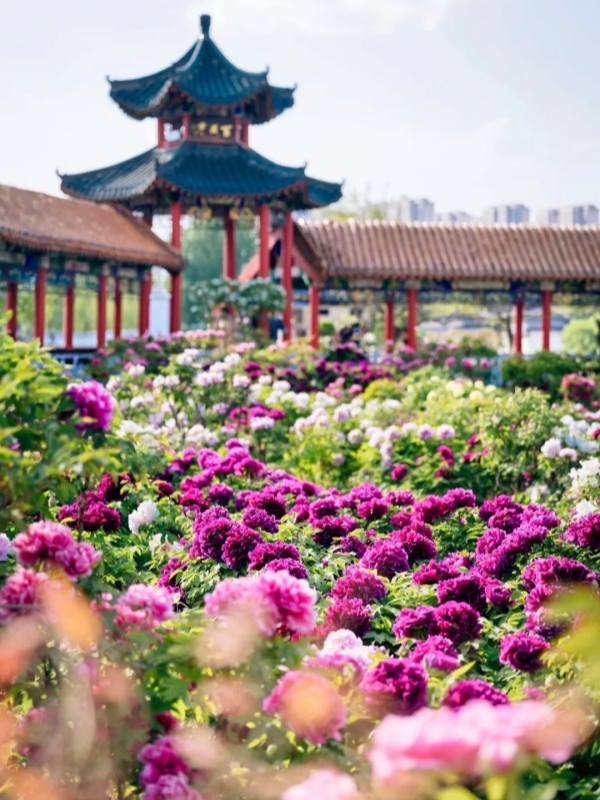
- See Peonies at Heze Peony Festival (Shandong)
-
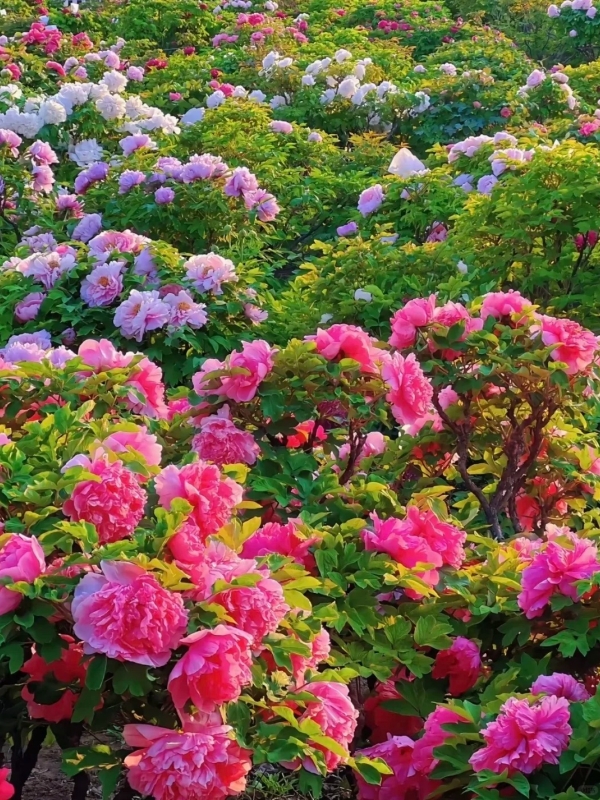
- See Peonies at Heze Peony Festival
There’s even a saying for it: “See peonies three days into Grain Rain (谷雨三朝看牡丹)”. The peony has the nickname “Grain Rain flower (谷雨花)” — its bloom window just about coincides. Late April is when you find peak season for peony viewing in China, and the two largest events are the Luoyang Peony Festival (Henan) and the Heze Peony Festival (Shandong). These festivals alone draw millions every April. Miss the window, and you wait a whole year again, so this is maybe the most time-sensitive travel highlight of the spring calendar.
Custom 3. Eating Chinese Toon
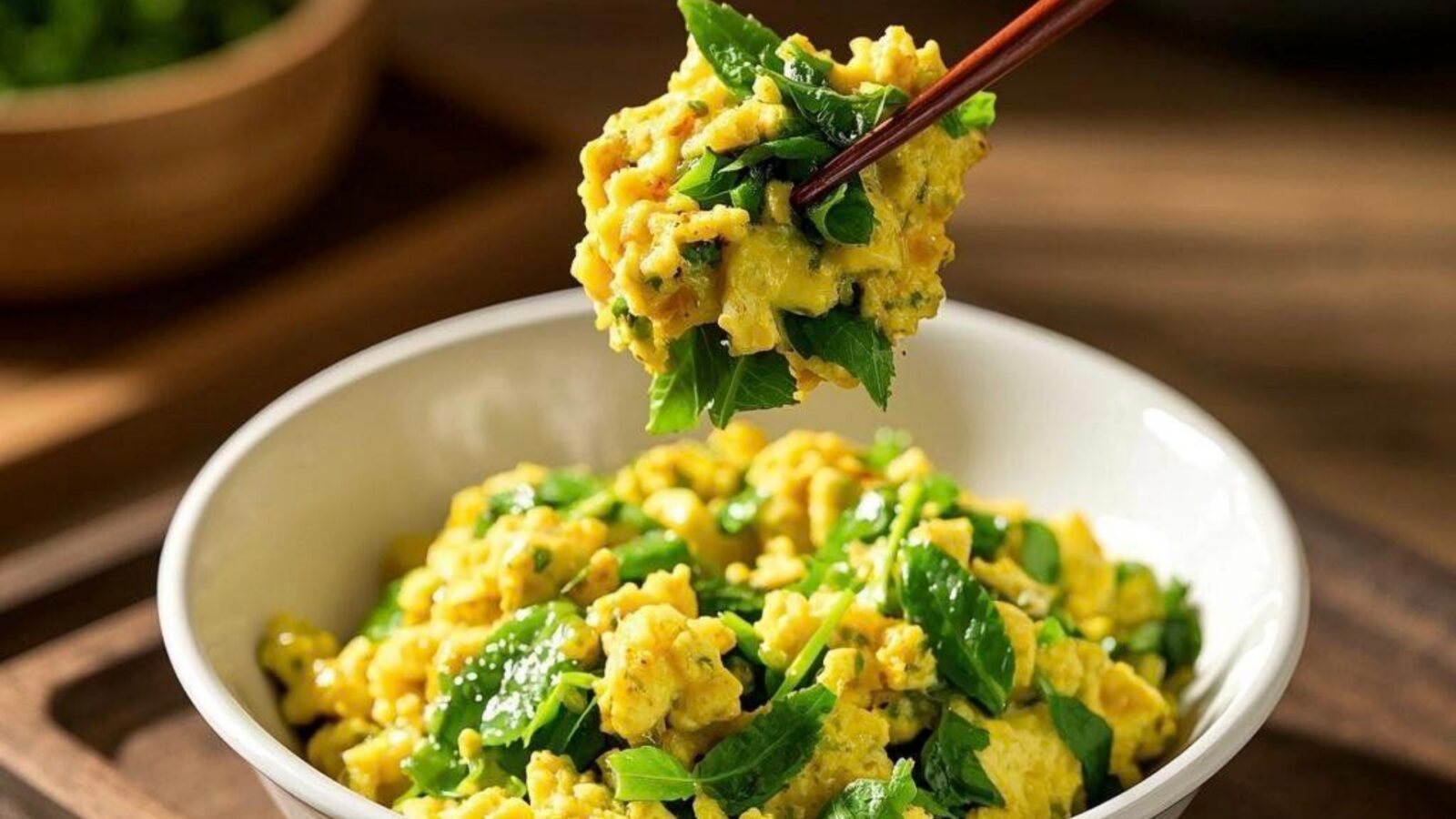
Eating Chinese Toon
It’s an old folk saying, “Toon before the rain is tender as silk”(雨前香椿嫩如丝). Chinese toon shoots (香椿, Toona sinensis) are at their tenderest around Grain Rain. However, when the rains are already heavy, the shoots grow bitter and fibrous. The harvesting window thus lasts but a fortnight or so. In China, cooks prepare toon shoots in two classic ways: stir-fried toon with egg (香椿炒蛋) or cold toon with tofu (香椿拌豆腐). Both appear frequently in restaurants throughout China in late April. Chinese dietary tradition holds high the nutritional value of toon, for its content is rich in vitamins, protein, etc. For food travelers, this is one of the seasonal delicacies you do not want to miss!
Custom 4. Venerating Cangjie
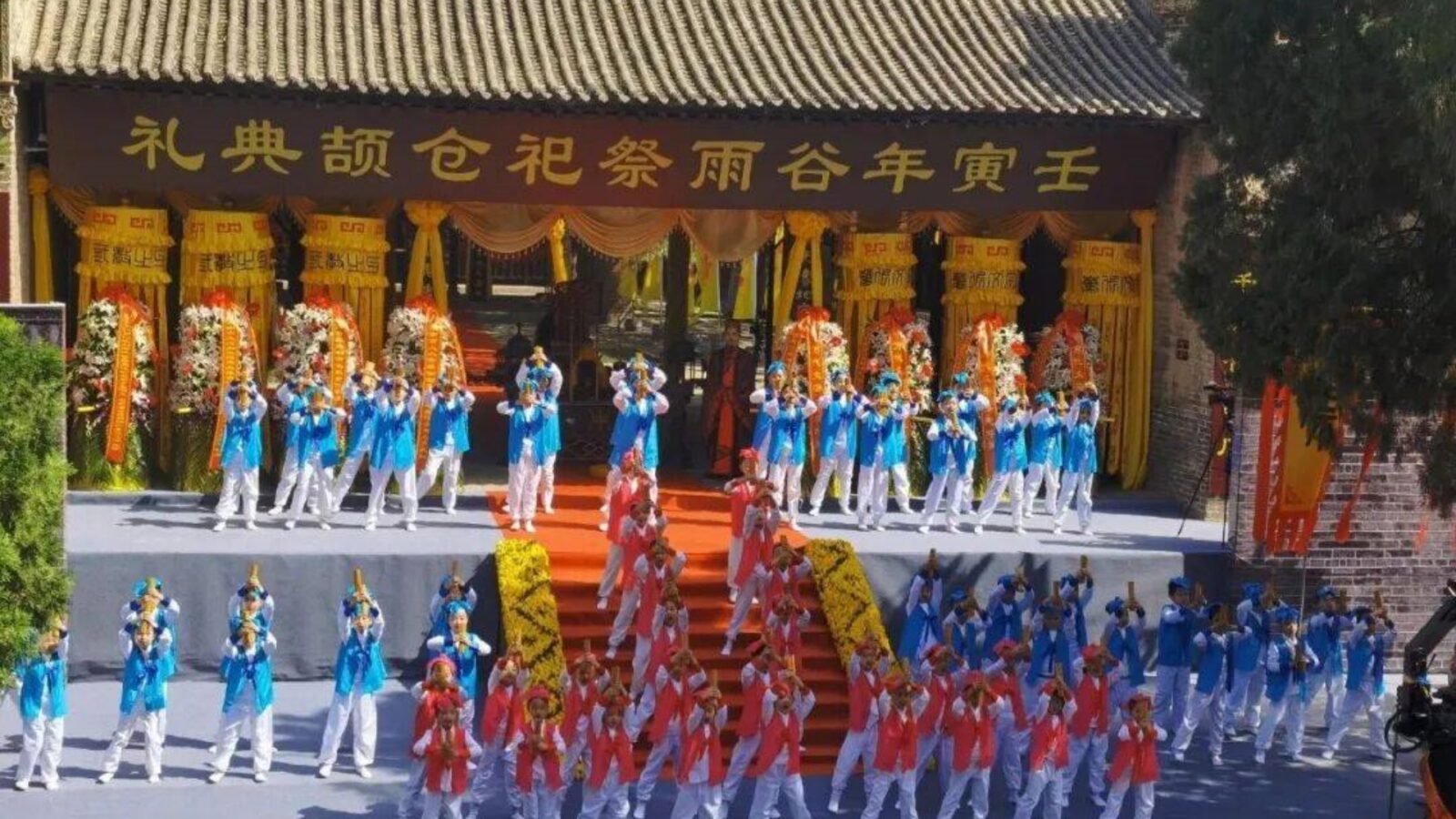
Venerating Cangjie during Guyu
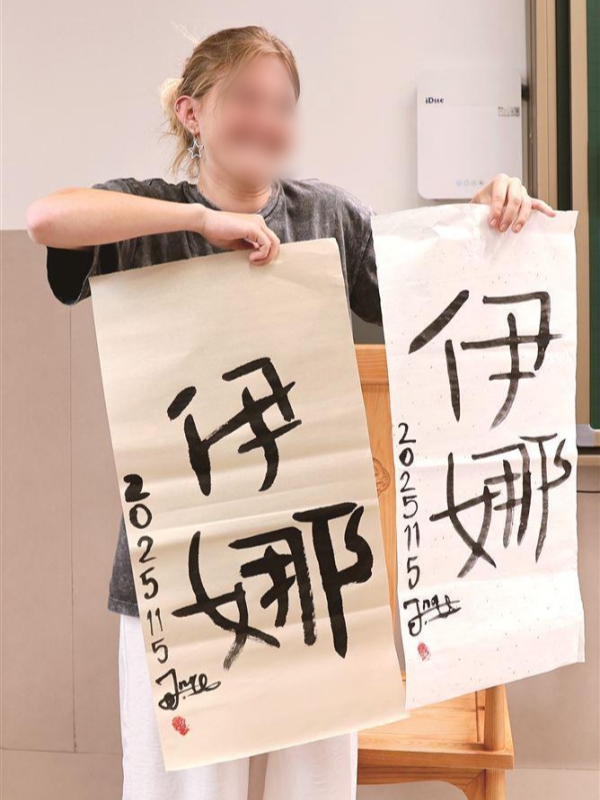
This custom ties back into the opening legend. In Baishui County, Shaanxi Province, a 5,000 year-old Cangjie Temple survives where people hold an annual Grain Rain ceremony in honor of Cangjie, who they believe created Chinese characters and, with it, made civilization possible. This solar term is thus an earthly response to that gift from the heavens. Another folk practice “revering written paper” (敬字纸) expands on this ethic into everyday life—any paper with writing on it should be treated with respect. For travelers with a cultural bent, there’s a chance to get off the well-beaten path in Baishui County, with natural links into larger Shaanxi and Xi’an travel loops.
Custom 5. Walking Guyu
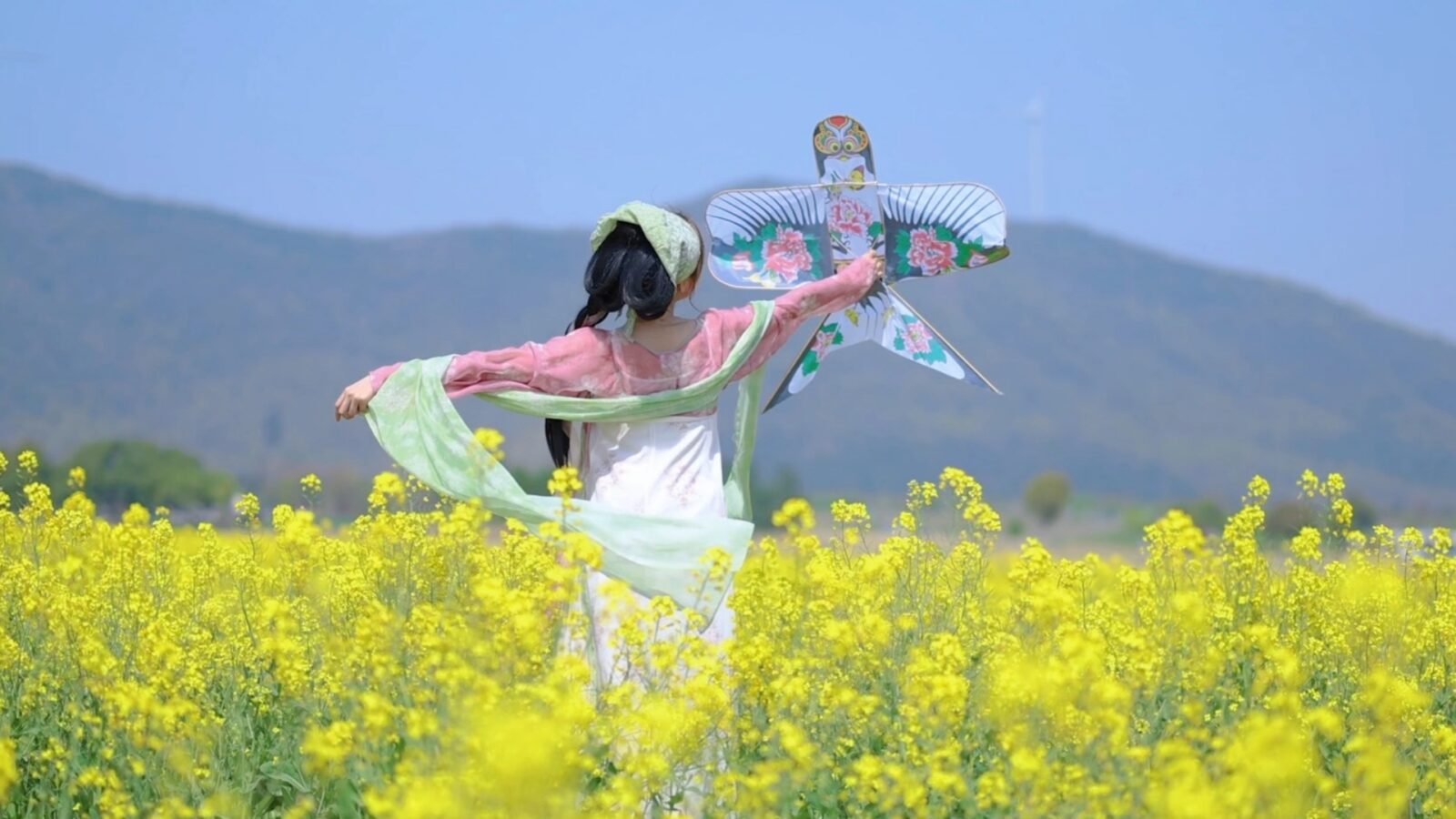
Walking Guyu
"Walking Grain Rain" (走谷雨, zǒu gǔyǔ) has been a folk custom of long standing. Villagers walk the empty paths between villages, out into the country. It is traditionally believed that ladies, especially young women, were most likely to observe all the formalities. The idea is twofold - to “join nature” and to shake off winter's stagnant energy. Also, to call to fresh seasonal energy. This idea has proponents in traditional Chinese medicine, which tells us the season's upward heat is accompanied by dampness, and that therefore gentle exercise aids in circulation and health overall. Whereas the Qingming was a festival of remembrance, this is a celebration of movement, and free for any visitor to join.
Custom 6. Posting Guyu Stickers
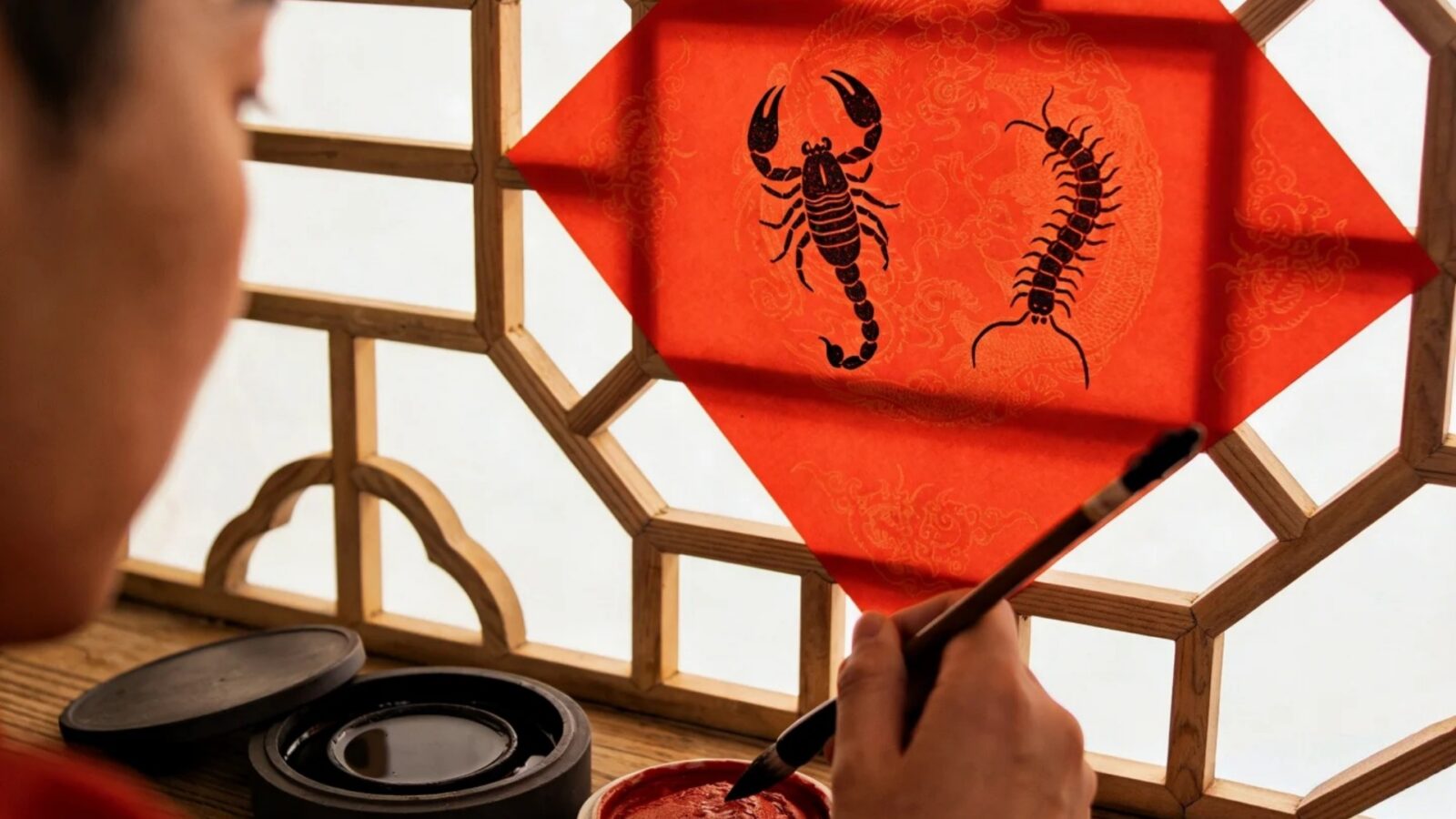
Posting Guyu Stickers
“Grain Rain door stickers” (贴谷雨贴) are folk woodblock prints—a type of New Year picture (年画)—pasted on doorways at that time. This tradition is most actively observed in northern Chinese villages. They typically feature the imagery of a divine rooster seizing a scorpion, or the Heavenly Master banishing the five venomous ones (五毒): scorpion, centipede, snake, toad, and spider. All of these become active as temperatures rise during Grain Rain, so the sticker serves both as a seasonal pest-control metaphor, as well as a message of hope for a bountiful and healthy growing season. These prints are still collectible folk art; galleries still operate in Hebei, Tianjin, and Shaanxi.
When Is Guyu? Between April 19 and 21
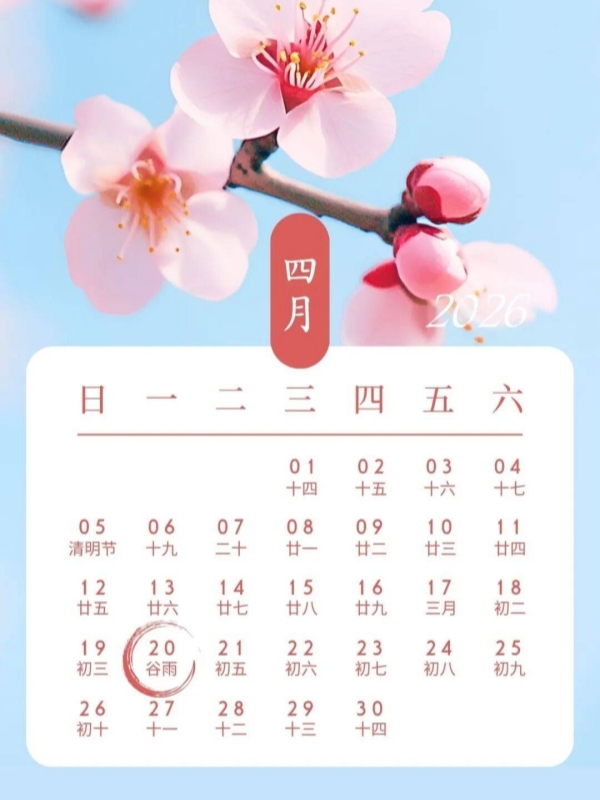
2026 Guyu Date
Guyu is a solar term, not a public holiday — no official days off are designated. The sun reaches 30° of celestial longitude each year between April 19 and 21, placing guyu on a consistent, predictable date. Late April is therefore always the right window for guyu tea harvests, peony festivals, and seasonal countryside walks.
Guyu Dates 2024–2028
| Year | Date | Day | China Public Holiday | Travel Note |
|---|---|---|---|---|
| 2024 | April 19 | Friday | No | Late spring: rain in south, dusty winds in north. Ideal for peony viewing and tasting new tea. |
| 2025 | April 20 | Sunday | No | The last solar term of spring. Temperatures rise rapidly nationwide, marking the start of the busy farming season. |
| 2026 | April 20 | Monday | No | "Rain produces grains." Precipitation increases. Southern China enters its pre-flood season. Pack rain gear. |
| 2027 | April 20 | Tuesday | No | Frequent clashes of cold and warm air masses can cause severe convective weather. Monitor local forecasts. |
| 2028 | April 19 | Wednesday | No | Spring ends, summer approaches. Beware of strong winds and dust in the north, and persistent rain in the south. |
🌸 Spring Heritage: Guyu signals the end of spring, occurring just fifteen days after Qingming (清明): A Traditional Festival of Ancestor Rituals and Seasonal Qingtuan in China, a term that balances solemn ancestral respect with the peak of spring's rebirth.
Weather Across China During Guyu
Temperatures rise noticeably across most of China in late April, but regional character varies sharply. Use this table to plan your packing list.
| Region | April Temp (Typical) | Weather Character | What to Pack |
|---|---|---|---|
| Beijing / North | 10–22°C (50–72°F) | Warm and dry, windy, prone to dust weather. | Light jacket, sunscreen, dust mask or scarf. |
| Shanghai / Yangtze Delta | 15–23°C (59–73°F) | Warm and humid, more overcast/rainy days, occasional thunderstorms. | Wind/water-resistant jacket, umbrella, layers. |
| Guangzhou / South | 22–28°C (72–82°F) | Hot and humid, entering the pre-flood season with frequent thunderstorms. | Summer clothes, rain gear, guard against heat and humidity. |
| Chengdu / Sichuan | 16–24°C (61–75°F) | Warm and comfortable, precipitation increases significantly, often overcast/rainy. | Light long/short sleeves, a thin jacket, and rain gear. |
| Xi'an / Northwest | 12–24°C (54–75°F) | Sunny and dry, large daily temperature swings, little precipitation. | Light jacket or sweater (easy to layer), sunscreen, stay hydrated. |
| Kunming / Yunnan | 18–25°C (64–77°F) | Pleasantly warm, plenty of sun, strong UV, occasional showers, relatively windy. | Light long sleeves, sunscreen, hat, sunglasses, and a windproof jacket. |
🌱 Seasonal Shift: As the rains of Guyu nurture the final crops of spring, the calendar soon transitions into Lixia Festival (立夏): A Summer Solar Term of Vitality Rituals and Seasonal Foods in China, marking the official arrival of summer's energy and heat.
Frequently Asked Questions About Guyu
Q: What is guyu in Chinese culture?
Guyu is the 6th of China's 24 traditional solar terms, carrying the meaning "Grain Rain." It falls around April 19–21 each year. Therefore, it marks the final stretch of spring and the start of the seasonal rainy period. Unlike Chinese New Year or Qingming, guyu is a seasonal marker, not a public holiday. Communities observe it through customs, foods, and local cultural events.
Q: When does guyu fall each year?
Guyu occurs annually between April 19 and 21, when the sun reaches 30° of celestial longitude. Because this date follows a solar — not lunar — calendar, it stays consistent every year. Therefore, travelers can plan around it reliably. Specifically, late April is the optimal window for experiencing guyu customs, tea harvests, and peony festivals across China.
Q: What does "Grain Rain" mean?
"Grain Rain" translates the Chinese term guyu. The phrase derives from an old saying — "rain gives life to the hundred grains" (雨生百谷). Therefore, this solar term reflects the agricultural importance of timely rainfall for crops including rice, wheat, corn, and cotton. Furthermore, the name connects to the Cangjie legend, in which grain fell from the sky as a divine reward for the gift of writing.
Q: What are the traditional customs of guyu?
Six major customs define guyu season. People drink freshly picked Grain Rain tea. They also appreciate peony blossoms at peak bloom. Families eat Chinese toon shoots (香椿) before the harvest window closes. Communities hold ceremonies to honor Cangjie, the inventor of Chinese writing. People walk in nature for health and renewal. Additionally, northern villages post protective folk-art stickers on doorways.
Q: What is guyu tea, and why is it special?
Guyu tea refers to leaves harvested on or just before this solar term. Tea producers prize these leaves for their rich vitamin content and fresh fragrance. This harvest is the season's final opportunity for top-grade spring tea. Therefore, the narrow window drives strong cultural and commercial interest. However, guyu tea ranks second in prestige only to pre-Qingming tea (明前茶).
Q: Where can I see peony flowers during guyu in China?
Luoyang in Henan Province and Heze in Shandong Province host China's top peony festivals. Both events take place in late April during guyu season. Therefore, this window offers the best viewing opportunity. Public gardens and park displays attract large visitor numbers. However, missing this window means waiting another full year. Consequently, early planning for guyu travel is strongly recommended.
Q: Is guyu a public holiday in China?
No. Guyu is a solar term — one of 24 seasonal markers in China's traditional agricultural calendar. The government does not designate it as a public holiday. Therefore, no mandated days off apply. However, communities across China observe the season through foods, cultural ceremonies, and local events. For travelers, this means guyu activities require specific advance planning.
Q: Who is Cangjie, and what is his connection to guyu?
Cangjie is a legendary figure from the era of the Yellow Emperor. Tradition credits him with inventing Chinese writing. According to folk belief, the Jade Emperor rained down grain to reward this cultural gift. Therefore, that miraculous rain became the mythological origin of guyu. Today, Baishui County in Shaanxi Province holds an annual guyu ceremony honoring Cangjie each spring.
Q: What foods are traditionally eaten during guyu?
Chinese toon shoots (香椿) are the defining guyu food. Cooks prepare them stir-fried with egg or cold with tofu during their brief tender window. Therefore, late April is the best time to seek out this ingredient. Additionally, traditional Chinese medicine recommends foods that address guyu's rising dampness, including barley, red beans, and fresh ginger.
Q: What are the "three pentads" (三候) of guyu?
Ancient Chinese naturalists divided each solar term into three five-day periods called pentads. During guyu, duckweed appears on ponds in the first pentad. Next, cuckoos begin to sing and signal sowing time in the second pentad. Finally, hoopoe birds arrive in mulberry trees in the third pentad. Therefore, these natural cues guided guyu farmers across centuries.