Most Important Holiday in China:A Vibrant, Structured Mosaic of Ancient Traditions and Modern National Celebrations.
What is the biggest holiday in China? While it’s undoubtedly Spring Festival, understanding the entire holiday calendar is vital for trip planning. In addition to the seven statutory public holidays, traditional holidays such as the Lantern Festival underpin daily life and mass travel for over 1 billion people. Despite being rooted more in agriculture and family ethics than religion, most Chinese holidays are based on the lunar calendar – while Christmas is just a day like any other, Spring Festival, Mid-Autumn, National Day etc. see the whole country coming to a spectacular standstill.
However, the same holidays that make China so captivating also create real challenges for travelers. They trigger the world's largest annual human migration. Prices surge, trains sell out months in advance, and iconic sites become impossibly crowded. Worth noting: China's scheduling works differently from the West — the government uses a date-shifting mechanism called tiaoxiu (调休) to extend breaks into longer consecutive windows, so the real travel impact often stretches well beyond the listed dates. This guide explores both sides — so you can plan with confidence and experience holiday in China at its brilliant best. 🌏
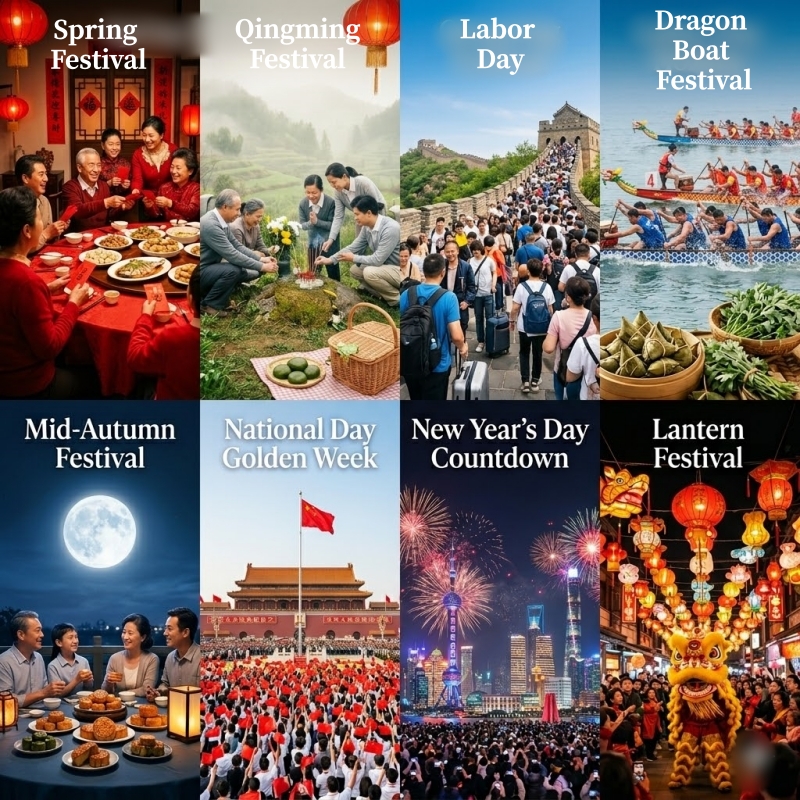
The Key Festivals: Culture, Customs, and Your Itinerary
Below, we approach each festival through two lenses: cultural storyteller and travel adviser. Each section follows the same structure — what it is, when it happens, how people celebrate, where you should go, and how it will specifically affect your plans.
1. Spring Festival: China's Grandest Family Reunion
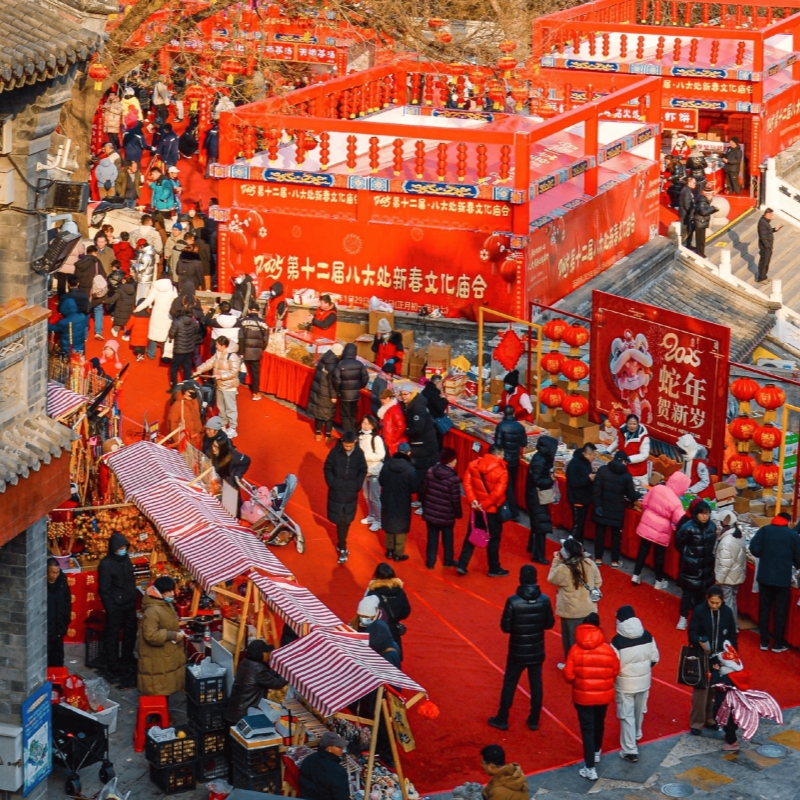
Beijing's Traditional Spring Festival Temple Fair
No celebration blends so many moments as Spring Festival. Imagine Christmas, Thanksgiving, and New Year’s Eve, all rolled into one. And what is the common ingredient? Reunion. Families under all corners of heaven in China, and indeed the world, travel thousands of miles to be at the same table on New Year’s Eve.
Red is the theme. Spring couplets are pasted on doors. Children receive red envelopes (hongbao) with lucky money within. Firecrackers blaze into the night. And days later temple fairs assemble communities for folk performing arts, street food and traditional crafts.
| Year | Spring Festival Date |
|---|---|
| 2026 | February 17 |
| 2027 | February 6 |
| 2028 | January 26 |
| 2029 | February 13 |
| 2030 | February 3 |
| When | Lunar New Year's Day — usually late January to mid-February |
| Official Holiday | ~7 days; social celebrations continue for nearly a month |
-
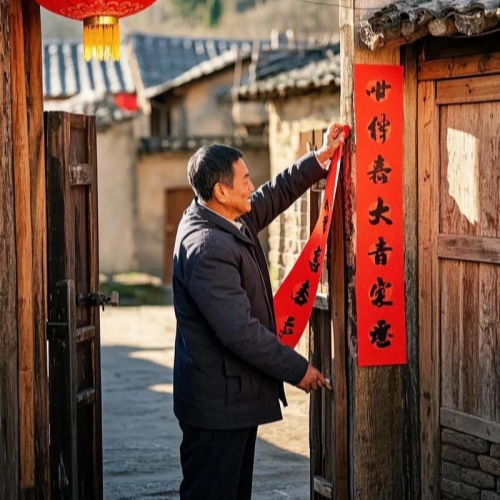

- Red Spring Couplets on Wooden Door
-
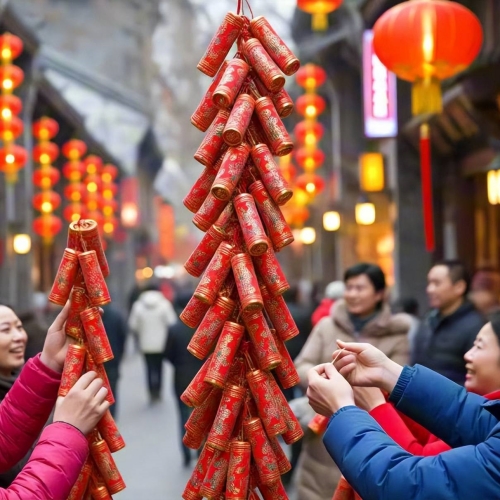
- Festive Firecracker Display for Chinese New Year
Best places to experience it:
- 📍 Beijing's Ditan & Longtan Temple Fairs: The most quintessentially Beijing New Year experience — traditional performances, antique crafts, and street snacks in one vibrant space.
- 📍 Xi'an City Wall Lantern Festival: Stroll along the ancient wall as thousands of themed lanterns stretch for kilometers. It evokes the Tang dynasty at its most luminous.
- 📍 Harbin Ice and Snow World: Witness massive castles sculpted from ice in sub-zero air. The northeastern "ice-and-fire" Spring Festival feeling is unlike anything else in China.
- 📍 Minnan / Chaoshan Villages (Fujian & Guangdong): Ancient procession rituals and Yingge dance performances preserved for centuries. This is where the old China truly lives.
For a wider regional perspective, our guide to the cultural charm of China's best spring festivals offers a fascinating comparison across different provinces.
⚠️ Travel Impact: Critical — Please read carefully
- Chunyun (Spring Migration): In the ~40 days surrounding the holiday, China's transport network hits its absolute limit. Train tickets sell out months in advance at several times the normal price. Book any inter-city travel at least 3–6 months ahead.
- Cities go quiet, then explode: From New Year's Eve through the 5th day, most restaurants, small shops, and local markets close. Many museums also adjust their hours. First-tier cities temporarily empty — which can be magical for exploring ancient sites undisturbed.
- The golden opportunity: If a Chinese friend invites you home for the holiday, say yes immediately. That experience is worth more than any itinerary you could plan.
2. Qingming: Remembrance Under Spring Skies
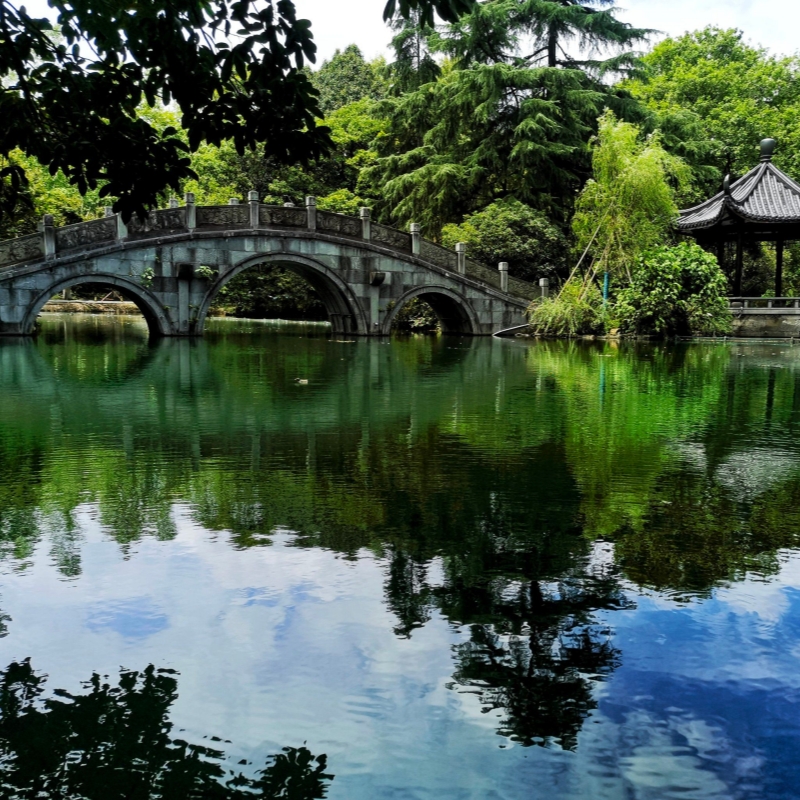
Qingming at West Lake
Picture it: a day, Qingming, with mingled sorrow and verdant passion in its hands. Families flock to ancestral graves, to scrub tombstones, to furnish with the smell of incense; outside the world is bursting into flower, kite-flying, picnicking, feasting with the steam-stained green camphor cake of qingtuan.
| Year | Qingming Festival Date |
|---|---|
| 2026 | April 5 |
| 2027 | April 5 |
| 2028 | April 4 |
| 2029 | April 4 |
| 2030 | April 5 |
| When | April 4th or 5th (fixed solar calendar date) |
| Official Holiday | 3 days |
-
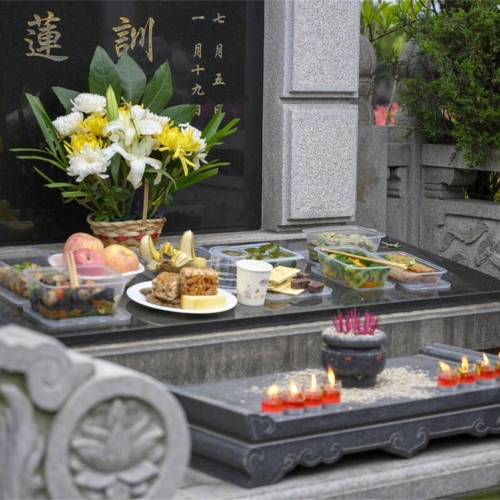
- Tomb Sweeping Ritual in China
-
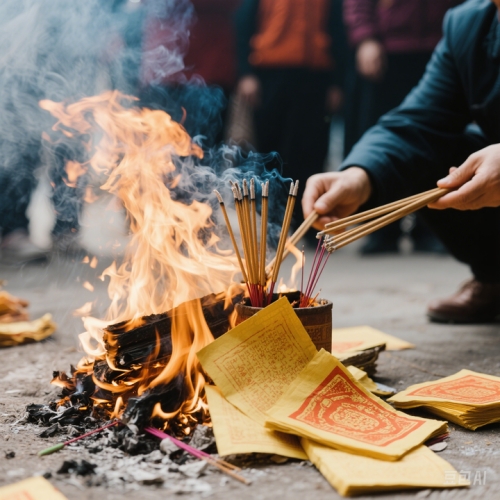
- Tomb Sweeping Incense Burning Ritual
Best places to experience it:
- 📍 West Lake & Su Causeway, Hangzhou: The classic Qingming image — misty rains, pink willows, and spring water as far as the eye can see. Few sights match this in early April.
- 📍 Huangshan & Hongcun Village, Anhui: Ancient whitewashed villages framed by rapeseed fields and cloud-wrapped peaks. Unmissable for photographers and painters alike.
- 📍 Yellow Emperor Mausoleum, Shaanxi: Attend — or simply witness — the grand national ceremony honoring the mythical ancestor of all Chinese people. Deeply moving and historically significant.
- 📍 Yangzhou: At its most beautiful in early April. Slender West Lake, Huaiyang cuisine, and an old canal town in full spring color — effortlessly elegant.
For a full overview of local customs and travel logistics, our dedicated guide to Qingming Festival traditions covers every detail. Additionally, as spring deepens toward May, the Lixia Festival marks the seasonal transition into summer — a particularly lovely time to be outdoors anywhere in eastern China.
⚠️ Travel Impact: Moderate to High
- Short-trip surges: Roads from major cities to nearby countryside destinations become heavily congested — especially on the holiday itself. High-speed rail tickets also tighten up quickly.
- Plan around the date: If you want a day trip from Shanghai to Suzhou, or from Beijing to the Great Wall, add at least an extra hour of buffer on each leg. Avoid traveling on Qingming Day itself whenever possible.
3. Labor Day: The Great Travel Surge
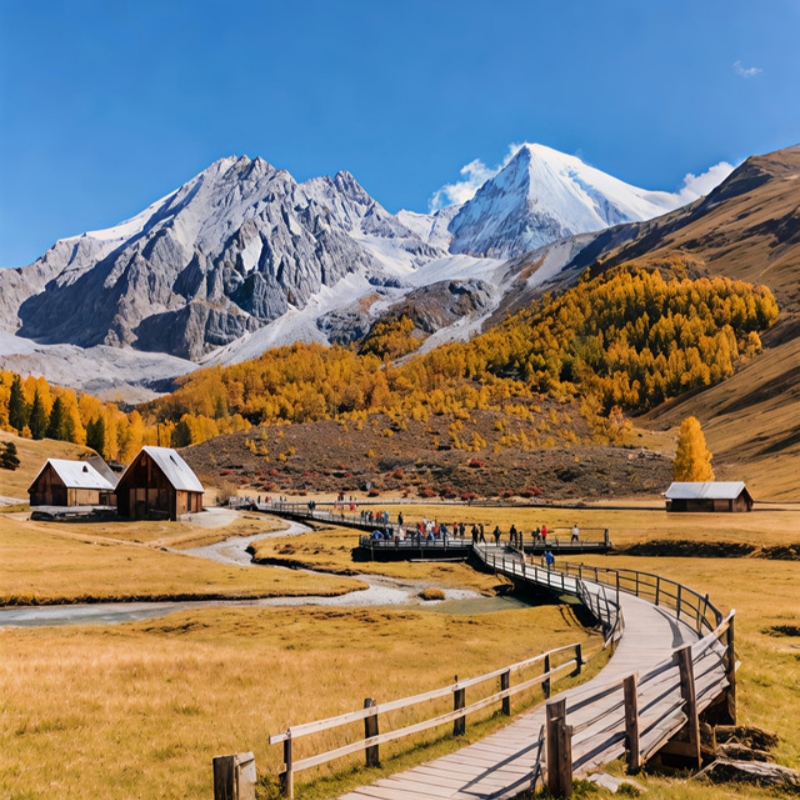
Daocheng Yading in May
Labor Day, or May Day, has evolved into something quite different from its origins. Today, it is simply a five-day national vacation — China's second major travel peak of the year. Cultural content is minimal. Travel energy, however, is at maximum.
| Year | Labor Day Date |
|---|---|
| 2026 | May 1 |
| 2027 | May 1 |
| 2028 | May 1 |
| 2029 | May 1 |
| 2030 | May 1 |
| When | May 1st, adjusted via tiaoxiu to a 5-day break |
| Official Holiday | 5 days (extended via weekend shifts) |
Best places to experience it:
- 📍 Off-the-radar historic cities: Skip the obvious choices. Instead, head to Quanzhou (the ancient Maritime Silk Road hub), Shaoxing (a writer's watertown), or Taiyuan (a treasury of ancient architecture rarely on tourist trails).
- 📍 City arts festivals: Many cities host music festivals and contemporary theater during this window. Events like Shanghai's Jing'an Modern Theatre Festival offer a genuine look into China's thriving arts scene. For a full seasonal breakdown, Shanghai's holiday calendar for 2026 is an excellent planning resource.
- 📍 Less-visited natural parks: Consider Shennongjia (Hubei), Daocheng Yading (Sichuan, just waking up in May), or Yuberng Village (Yunnan) for landscapes that feel genuinely untouched.
For a comprehensive understanding of what this holiday in China means and how it's observed, our full guide to Chinese Labor Day covers the history and travel landscape in detail.
⚠️ Travel Impact: High
- Peak domestic tourism: Every well-known site — the Forbidden City, the Great Wall, West Lake, the Bund — will be jammed beyond comfort. Multi-hour queues are the norm, not the exception.
- Prices at peak: Budget accommodation sells out fastest. Airline and hotel prices spike significantly across all categories.
- Our strong recommendation: International visitors should seriously consider avoiding this window entirely. If already in China during Labor Day, explore city parks, smaller museums, neighborhood markets, or local tea houses instead.
4. Dragon Boat Festival: Drums on the Water
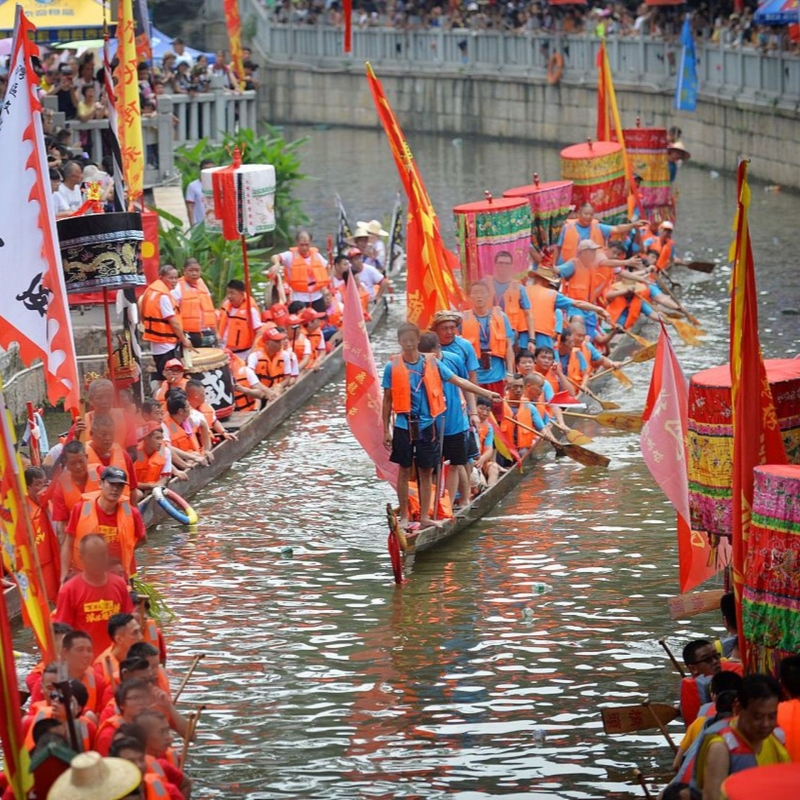
Dragon Boat Race in Suzhou
There are festivals you appreciate with your mind; then there are others, like the Dragon Boat Festival, that you appreciate with your gut, like the moment you hear the drums reverberating off the water as a 25m dragon boat beheads the river as it races to the finish line. It was drowned in honour of the patriotic poet Qu Yuan who, more than 2,300 years ago, threw himself into a stream to protest.
| Year | Dragon Boat Festival Date |
|---|---|
| 2026 | June 19 |
| 2027 | June 9 |
| 2028 | May 28 |
| 2029 | June 16 |
| 2030 | June 5 |
| When | 5th day of the 5th lunar month — usually late May or June |
| Official Holiday | 3 days |
-
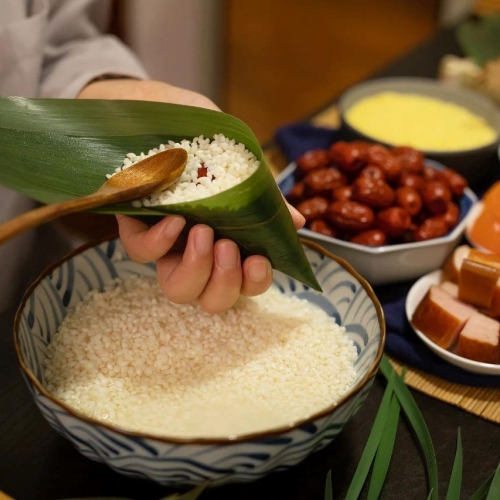
- Handmade Zongzi with Glutinous Rice
-
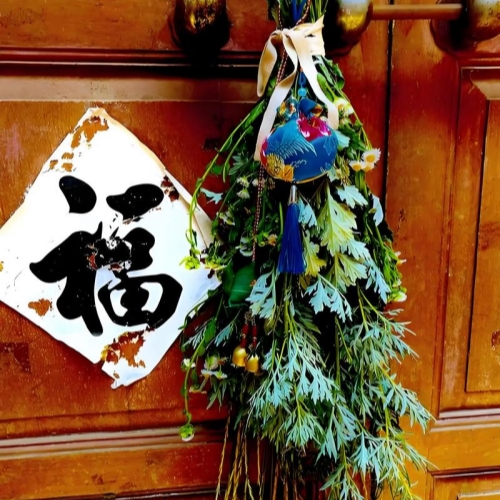
- Hanging Wormwood for Duanwu Festival
Best places to experience it:
- 📍 Miluo, Hunan: Qu Yuan's legendary resting place. The dragon boat races here carry the deepest ritual meaning — solemn, electric, and utterly unforgettable.
- 📍 Xixi Wetlands, Hangzhou: Dragon boats weaving through interconnected waterways in a distinctly Jiangnan water-country setting. Graceful and atmospheric.
- 📍 Dieqiao, Foshan, Guangdong: The legendary "drifting dragon boat" races in narrow winding channels — jaw-dropping for photographers and adrenaline seekers alike.
- 📍 Zigui, Hubei: Qu Yuan's actual hometown. Races, poetry readings, and communal zongzi-making all happen here with authentic local flavor and deep cultural pride.
Curious about the traditional foods tied to this festival? Our guide to Dragon Boat Festival food walks you through every dish and its cultural significance — from zongzi varieties to realgar wine.
⚠️ Travel Impact: Moderate
- Localized hotspots: If you're in a city with a major dragon boat tradition — Hunan, Guangdong, Zhejiang — expect animated crowds and tighter accommodation near race venues. However, it is not a nationwide travel surge.
- Worth planning around: For culture-focused travelers, this festival absolutely justifies a dedicated trip. Book accommodation near the race venue well in advance. The live atmosphere is beyond anything staged.
5. Mid-Autumn Festival: Moonlit Tables and Mooncakes
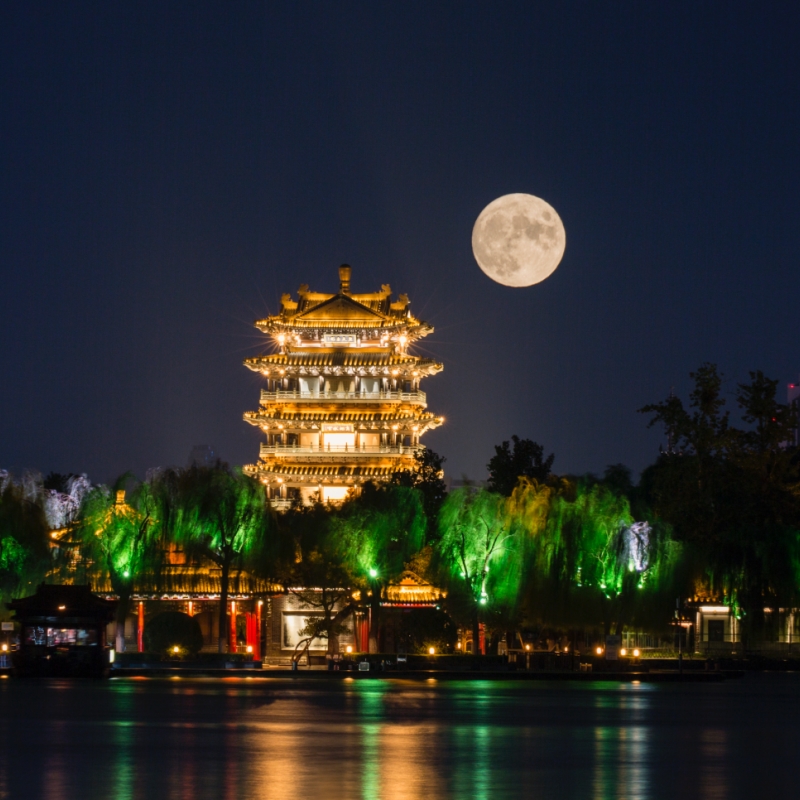
Mid-Autumn Moon Gazing at Hangzhou West Lake
If Spring Festival is Christmas, so Mid-Autumn Festival is Thanksgiving, a quieter, more reflective occasion, but nonetheless inextricably linked to the moon. Families sit down to dinner together in the evening, eat mooncake and, if nothing else, go out to contemplate the heavens. Children walk the streets carrying glowing lanterns. It is all very mild and very sweet, very human.
| Year | Mid-Autumn Festival Date |
|---|---|
| 2026 | September 25 |
| 2027 | September 15 |
| 2028 | October 3 |
| 2029 | September 22 |
| 2030 | September 12 |
| When | 15th day of the 8th lunar month — usually September to early October |
| Official Holiday | 3 days |
-
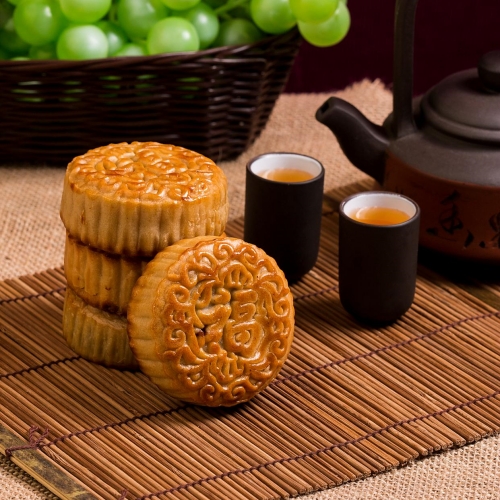
- Mid-Autumn Festival Mooncake Tradition
-
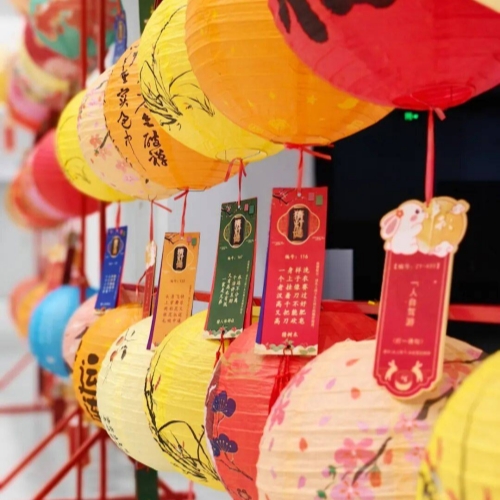
- Colorful Mid-Autumn Lanterns with Riddles
Best places to experience it:
- 📍 Pinghu Qiuyue, West Lake, Hangzhou: China's definitive moon-gazing destination. Evening concerts, still water, and the full moon overhead create a meditative calm unlike anywhere else.
- 📍 Li River, Guilin: A night cruise with mountain shadows and moonlight shimmering in clear water. It is, without exaggeration, poetic.
- 📍 Mingsha Mountain & Crescent Moon Spring, Dunhuang: A full moon rising over desert dunes above an ancient spring — haunting, majestic, unforgettable.
- 📍 Qinhuai River, Nanjing: Lantern markets, riverside mooncake stalls, and traditional river performances along the ancient waterway. Romantic and lively in equal measure.
⚠️ Travel Impact: High — Watch the calendar closely
- Travel surge: Families traveling home create a transportation mini-peak in the days immediately before the festival.
- The overlap risk: Mid-Autumn sometimes falls immediately before — or within — National Day Golden Week, as in 2025. When that happens, the combined break can stretch to 8 days. Treat any such overlap year as a maximum-alert period and adjust all plans accordingly.
- When it stands alone: This is a warm, gentle holiday in China. Pick up a mooncake, find a park with a good view of the sky, and join the locals in simply looking up. Sometimes the best travel moments cost nothing at all.
6. National Day: Golden Week's Glory and Gridlock

Autumn in Kanas, Xinjiang
National Day is the other Golden Week in China — and from a traveler's perspective, it is the hardest period of the year, without exception. The date marks the founding of the People's Republic of China in 1949, and for citizens, it is the largest period of leisure travel through the year. For visitors, it requires earnest preparation or an honest desire to avoid travel altogether during this week.
| Year | National Day Date |
|---|---|
| 2026 | October 1 |
| 2027 | October 1 |
| 2028 | October 1 |
| 2029 | October 1 |
| 2030 | October 1 |
| When | October 1–7 (fixed public holiday) |
| Official Holiday | 7 days; often extended to 8 via tiaoxiu when Mid-Autumn overlaps |
-
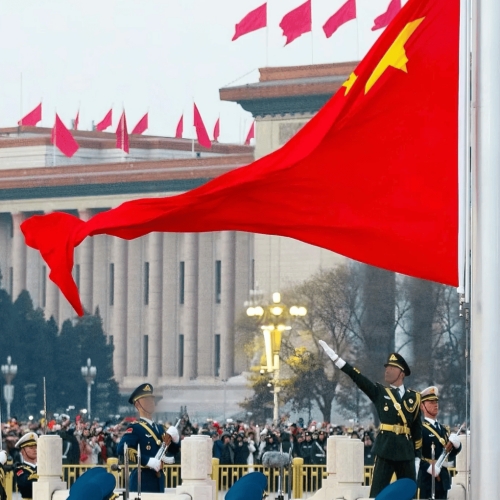
- Flag Raising Ritual for China’s National Day
-
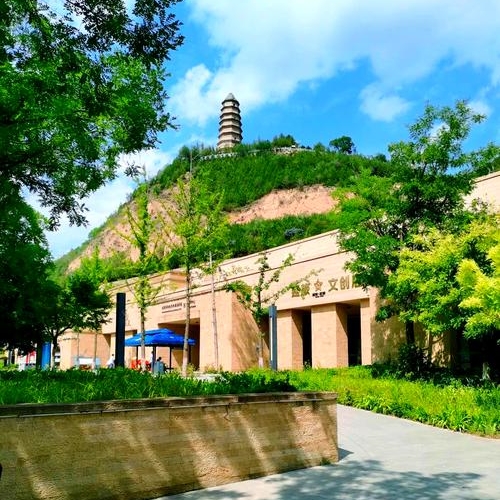
- Yan’an Baotashan National Day Scenery
Best places to experience it:
- 📍 Tiananmen Square, Beijing — Flag-Raising Ceremony: If you can tolerate the crowds, attending the dawn flag-raising on October 1st is a genuinely powerful experience. Allow ample extra time for security queues — arrive very early.
- 📍 Red Heritage Sites: Use the week to visit Yan'an in Shaanxi or Jinggangshan in Jiangxi — places that shaped modern China's founding story and are deeply meaningful to Chinese visitors.
- 📍 Remote natural landscapes: Head to Arxan in Inner Mongolia (peak autumn foliage), Kanas in Xinjiang (crowd levels ease after mid-October), or Qizanggou in Sichuan — far from the eastern tourist rush.
- 📍 Urban cultural immersion: Stay in one city and visit national museum special exhibitions, independent art galleries, or live music performances that tour groups never reach.
⚠️ Travel Impact: Critical — The Highest Priority Warning
- Total national saturation: This is the single most challenging travel period in all of China. Over 700 million domestic trips happen simultaneously across one week.
- Everything is affected: Every landmark becomes a wall of people rather than a view. Flights and trains are sold out months in advance at peak prices. Hotel rates double, and service quality strains under the load.
- The golden rule: Unless you have a very high tolerance for crowds and a planning horizon of 6+ months, avoid National Day Golden Week entirely. This advice matters most for first-time visitors to China.
7 & 8. New Year's Day & Lantern Festival
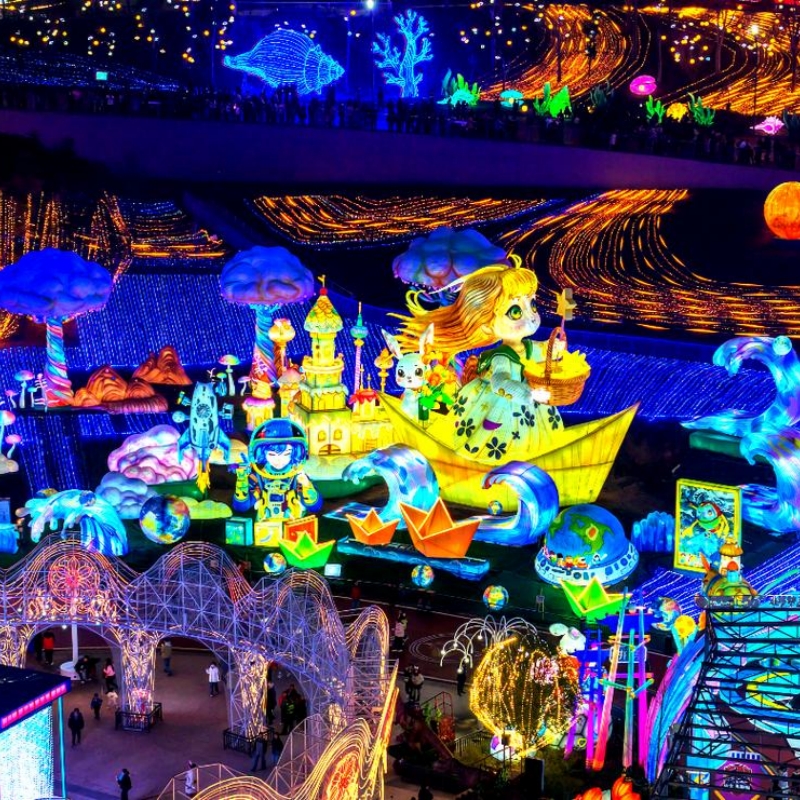
Lantern Festival in Zigong
Beyond the major holidays above, two more dates are worth knowing — especially if your trip overlaps with them.
| Year | New Year's Day (元旦) | Lantern Festival (元宵节) |
|---|---|---|
| 2026 | January 1 | March 3 |
| 2027 | January 1 | February 20 |
| 2028 | January 1 | February 9 |
| 2029 | January 1 | February 27 |
| 2030 | January 1 | February 17 |
| Impact Level | Low | Moderate |
| Best Activities | Countdown events at Shanghai's Bund or Guangzhou Tower; Harbin Ice Festival opening season | Xi'an's Datang Everbright City, Nanjing Confucius Temple lantern fair, Zigong Dinosaur Lantern Festival |
-
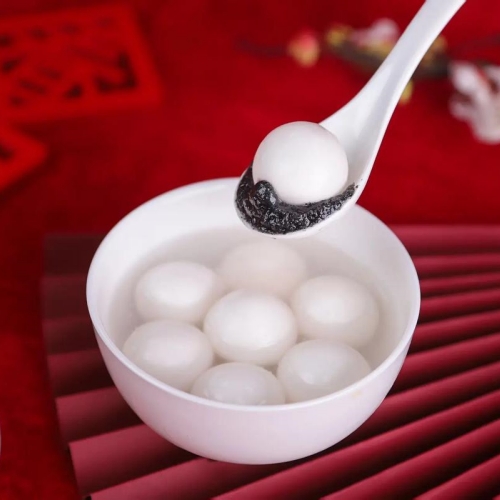
- Traditional Yuanxiao for Lantern Festival
-
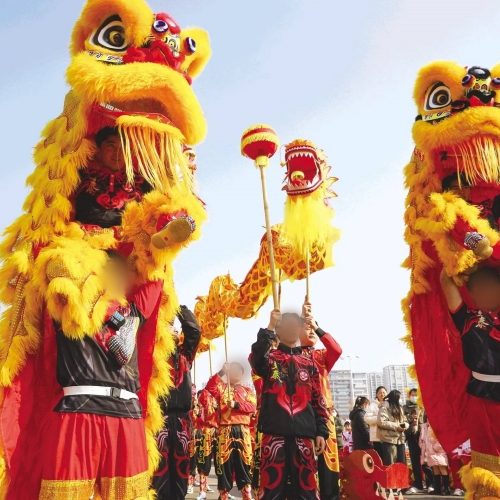
- Lantern Festival Lion and Dragon Parade
The last of the big festivals in the Spring Festival season, check out our intro article on the Meaning of Yuanxiao Jie if you are dying to know what all it’s really about beyond pretty lights.
Additionally, spring in China brings several quieter solar term observances that reward the curious traveler. The Grain Rain (Guyu) season, for instance, marks spring's final farewell — a beautiful, crowd-light moment when nature and local culture feel most alive. These smaller observances are often where the most authentic experiences hide.
Golden Weeks: Spring Festival vs. National Day
China has two "Golden Week" (黄金周) periods — and understanding the difference between them is essential for anyone planning a holiday in China. They share similar logistics challenges but serve completely different cultural purposes.
Culture and Logistics Differences
What they share: Both are week-long national holidays that trigger the most intensive domestic travel of the year. Both require accommodation and transport booked months in advance. Both cause significant congestion at popular attractions.
| Feature | Spring Festival Golden Week | National Day Golden Week |
|---|---|---|
| When | Late January – mid-February | October 1–7 |
| Cultural root | Lunar New Year; family reunion | National founding; leisure travel |
| Travel direction | Cities → hometowns (rural areas) | Everywhere → tourist destinations |
| Cities during holiday | Major cities go quiet; shops close | Businesses open; economy at full speed |
| Cultural immersion | Unmatched — temple fairs, lion dances, fireworks | Limited; mainly sightseeing and consumption |
| Visitor experience | Chaotic but culturally extraordinary | Maximum crowds; strongly advised to avoid |
For foreign travelers, the takeaway is simple. Spring Festival offers the most authentic window into Chinese culture — if you can handle the logistics. National Day, however, is the most challenging holiday in China for international visitors, with over 700 million domestic trips in a single week. Unless attending specific National Day events in Beijing, most experienced travelers recommend avoiding it entirely.
2026 Calendar: Official Public Holiday Schedule Overview
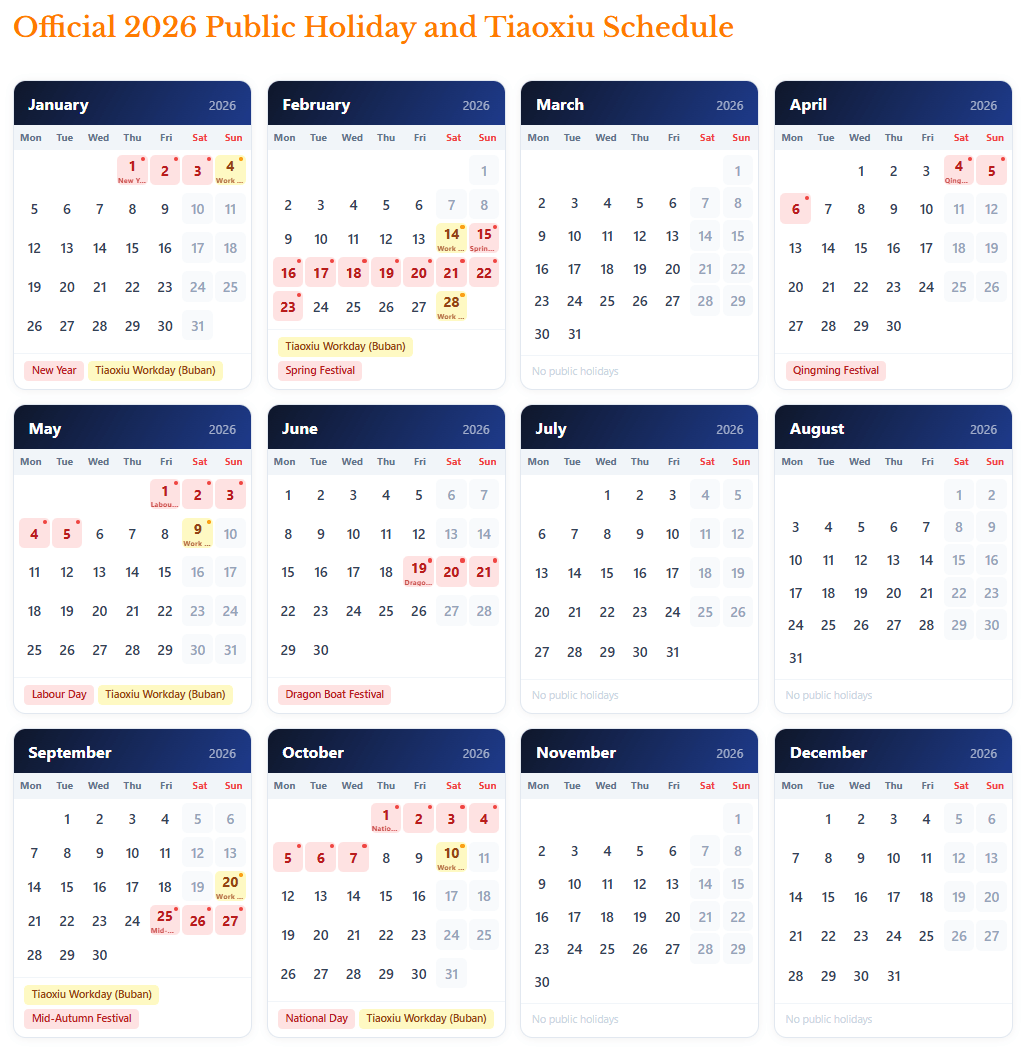
2026 Statutory Holidays and Tiaoxiu Working Days Calendar
So, you’re planning a holiday in China? Get the official dates right first. Here are all the public holiday dates for 2026, including the make-up workday (调休 tiáoxiū) arrangements that so often catch foreign visitors out. Remember: China’s government tinkers with surrounding weekends to create longer, more desirable ‘blocks’ of holidays — so the effect always goes beyond what’s really stated. And do double-check gov.cn for the very latest.
Important Dates and Make-Up Workdays
| Holiday | 2026 Official Dates | Duration | Make-Up Workday(s) | Travel Impact |
|---|---|---|---|---|
| New Year's Day (元旦) | Jan 1–3 | 3 days | Jan 4 (Sun) | Low |
| Spring Festival (春节) | Feb 15–23 | 9 days (historically longest) | Feb 14, Feb 28 | Extreme |
| Qingming Festival (清明节) | Apr 4–6 | 3 days | — | Moderate–High |
| Labor Day (劳动节) | May 1–5 | 5 days | May 9 | High |
| Dragon Boat Festival (端午节) | Jun 19–21 | 3 days | — | Moderate |
| Mid-Autumn Festival (中秋节) | Sep 25–27 | 3 days | Sep 20 | High |
| National Day Golden Week (国庆节) | Oct 1–7 | 7 days | Oct 10 | Extreme |
Source: Based on China's State Council Office official holiday arrangement notices. Dates are confirmed for 2026. Note: the 9-day Spring Festival break in 2026 is historically the longest ever granted — a unique travel planning consideration.
For city-specific event programming around these dates, Shanghai's 2026 holiday calendar is an excellent resource — particularly useful for planning around the May and October peaks.
Travel Impact: Best and Worst Visiting Windows
Knowing the dates is only half the picture. Understanding how each holiday in China actually affects the traveler experience — transport, accommodation, crowd density, and service availability — is what turns knowledge into a smart itinerary.
Systemic Challenges: Crowds, Costs, and Culture Paradox
1. Resource Competition:
Transport and accommodation stop being commodities and become scarce prizes. Train tickets sell out within seconds of their release window. Budget hotel prices can triple overnight. Therefore, any peak-season trip must be built around one principle: book early, book everything, and then book your backup.
2. Diluted Experience Quality:
Travel quality scales inversely with crowd size. At the Terracotta Warriors or the Forbidden City during a major holiday in China, you spend more time looking at the backs of other visitors' heads than at the artifacts. Queuing, waiting, and pushing consume hours of every day. Moreover, the emotional experience of these sacred spaces is fundamentally diminished by sheer volume.
3. Service Uncertainty:
Your favorite neighborhood restaurant may simply be closed — the owner went home for the holiday. Bank branches and post offices take days off. Public service windows slow down. As a result, your itinerary needs significantly more flexibility than usual, along with solid backup options for every major plan.
4. The Cultural Paradox:
You came to experience China's festivals. However, extreme crowds can make genuine cultural immersion nearly impossible. Choosing between a famous temple fair with 200,000 people and a quiet village ceremony with 2,000 is a real and meaningful decision. There is no wrong answer — but there is a right one for your style of travel.
Smart Timing: Optimal Windows for China Travel
Best times to visit China:
- Spring — April (avoiding Qingming and Labor Day): Pleasant climate across most of China, relatively low visitor numbers, stable prices. One of the most underrated windows for holiday in China travel.
- Autumn — Late September or October–November (avoiding National Day): Arguably China's finest travel season — clear skies, comfortable temperatures, and post-peak pricing across the board.
Times to approach with preparation:
- Dragon Boat Festival and Qingming: Moderate impact, highly rewarding cultural experiences if you plan specifically around the festival activity and book early.
- Spring Festival: Extreme logistical challenge, but also the most culturally immersive experience China offers. Worth planning for if cultural depth is your priority — requires 3–6 months of advance preparation.
Times to avoid for comfort-focused travel:
- National Day Golden Week (Oct 1–7): The highest-impact, most predictable travel challenge in China. The single period most recommended to avoid unless specifically attending National Day events in Beijing.
- Labor Day Golden Week (May 1–5): Second tier in terms of pressure — all major tourist destinations are at or near capacity. Not the ideal window for a first visit.
Practical Steps: Planning Around the Holiday Peaks
Step 1 — Define your travel priority:
Am I seeking maximum cultural immersion — accepting the crowds and cost, planning meticulously? Or comfortable, wide-ranging exploration — avoiding peak periods and prioritizing shoulder season? Your honest answer shapes everything that follows.
Step 2 — Check the official calendar:
Search "China State Council [year] holiday schedule" or check gov.cn for the official announcement. Dates shift each year due to the lunar calendar and make-up workday arrangements. Never rely on last year's schedule.
Step 3 — Build a smart itinerary:
During busy holiday periods in China, weight your schedule toward city deep dives, lesser-known museums, galleries, parks, design districts, and cultural workshops. Reserve marquee attractions for non-holiday mornings at first opening time.
Step 4 — Always have a backup plan:
Identify an alternative restaurant for every must-eat; identify an alternative attraction for every must-see. Holiday China rewards flexibility and punishes rigidity. The best moments often come from unexpected detours.
FAQs: Most Important Holidays in China
Q: Is Chinese New Year the most important holiday in China?
Yes — without question. Spring Festival, also known as Chinese New Year or Lunar New Year, is the most important holiday in China in every dimension: cultural depth, emotional significance, scale of celebration, and societal impact. It has been observed for over 3,000 years and triggers Chunyun — the world's largest annual human migration — as hundreds of millions travel home. Every other holiday exists in its shadow.
Q: Why is Spring Festival the most important holiday in China?
Three converging reasons explain its unmatched status. First, cultural depth: rooted in over three millennia of tradition centered on family reunion, ancestor acknowledgment, and new-year renewal. Second, societal scale: the Chunyun migration — over three billion trips in 40 days — has no parallel on earth. Third, emotional universality: for Chinese people regardless of region or background, Spring Festival as the most important holiday in China represents "home" — the one time of year when the entire nation orients around the same shared moment.
Q: What are the top 3 most important Chinese holidays?
Ranked by cultural importance and national significance: first, Spring Festival — the undisputed number one and most important holiday in China; second, National Day Golden Week — the most significant modern holiday and the largest domestic travel event; third, Mid-Autumn Festival — the second most important traditional family holiday, carrying deep cultural resonance around reunion and the full moon. Some cultural frameworks replace National Day with Qingming or Dragon Boat Festival when focusing on traditional rather than modern observance.
Q: What are China's four major traditional festivals?
China's four major traditional festivals — all tied to the lunar calendar and recognized as statutory public holidays — are: Spring Festival (Chinese New Year), Qingming Festival (Tomb Sweeping Day), Dragon Boat Festival (Duanwu), and Mid-Autumn Festival. These four are distinguished from the three modern public holidays — New Year's Day, Labor Day, and National Day — by their roots in thousands of years of Chinese civilization. Any holiday in China from this group carries deep cultural and emotional weight.
Q: What are the two major Golden Week holidays in China?
China has two "Golden Week" (黄金周 Huángjīn Zhōu) periods: Spring Festival Golden Week in late January or February, and National Day Golden Week from October 1–7. Both are characterized by week-long public holidays and massive surges in domestic travel and consumption. They represent the two busiest and most logistically demanding periods for anyone experiencing a holiday in China as an international visitor.
Q: Is there a holiday in China today?
Refer to the 2026 China Public Holiday Calendar table in this article for the complete official schedule. China's public holidays are announced annually by the State Council Office; the dates in this guide reflect the official 2026 schedule. For real-time verification of any current holiday in China, check gov.cn or the official calendar of the year you are traveling, as make-up workday arrangements can affect surrounding weekends.
Q: When is the best time to visit China to avoid crowds?
The clearest windows are: April (avoiding Qingming and early May), late September (avoiding National Day), and October–November after the Golden Week surge dissipates. These shoulder seasons offer comfortable weather across most of China, significantly lower visitor density at major sites, and more stable pricing for flights and accommodation. For anyone spending a holiday in China for the first time, these windows deliver the most rewarding experience.
Q: What happens in China during Spring Festival if you are a tourist?
Two contrasting experiences are possible. If you stay in a major city, you will find it unusually quiet — residents have returned to their hometowns — while temple fairs, lantern displays, and street decorations fill the public spaces. Many restaurants and local shops close for the first several days. However, if you are invited to a Chinese family's hometown, you will experience the most important holiday in China from the inside — the New Year's Eve dinner, red envelopes, and fireworks — in a way no tourist itinerary could ever replicate.
Q: What is the most important holiday in China for family reunions?
Spring Festival is the preeminent family reunion holiday — its emotional core is the New Year's Eve dinner shared by family members who may have been apart for an entire year. As the most important holiday in China, it carries a quality of longing and homecoming that no other occasion matches. Mid-Autumn Festival is the second family reunion occasion, symbolized by the full moon as an image of completeness and togetherness — tender, poetic, and deeply felt across generations.
Q: How are Chinese holidays different from Western holidays?
Several fundamental differences shape the experience. Calendar basis: most major Chinese holidays follow the lunar calendar, meaning their Gregorian dates shift each year. Cultural origin: they are rooted in agricultural civilization, family ethics, and historical legend — not in religion, as many Western holidays are. Scale of movement: the Chunyun mass migration around the most important holiday in China, Spring Festival, is the largest regular human movement on earth. Statutory structure: China's government announces specific holiday schedules with make-up workday arrangements each year — a managed system unlike the region-by-region variation common elsewhere.