Torch Festival
The Torch Festival is one of the biggest summer events in Yunnan, mainly celebrated by the Yi people in places like Chuxiong, Liangshan, and around Lijiang. It usually takes place in late July or early August, but the exact date changes by region, which can confuse first-time visitors planning a trip.
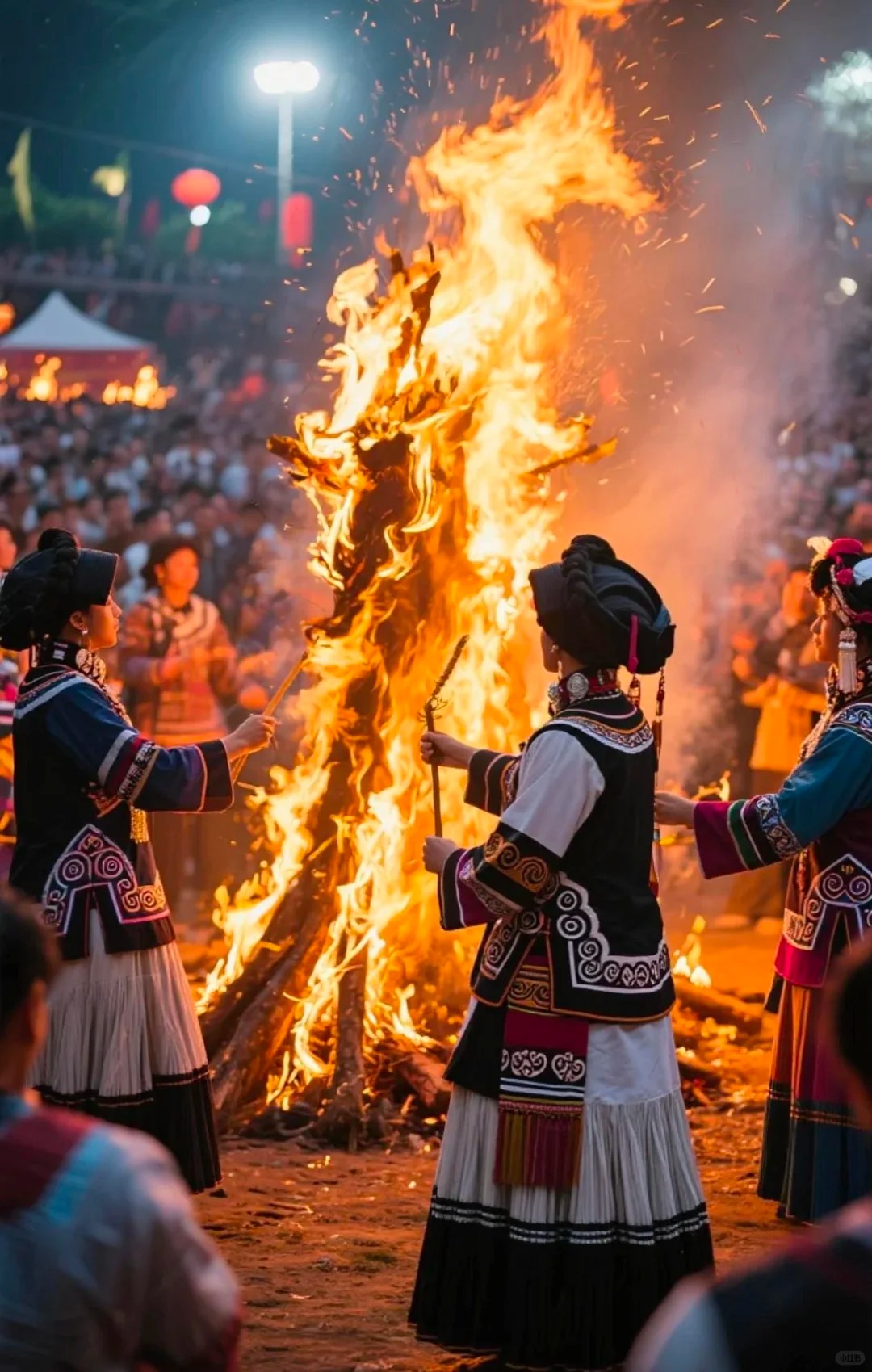
During the festival, streets and village squares fill with people carrying torches, lighting large bonfires, and gathering for music and dance that goes on into the night. It is not a quiet cultural show but a very active public celebration. Travelers usually come for the night fire scenes, though crowds and smoke can get heavier than expected in popular areas like Chuxiong.
Quick Facts about Torch Festival
| Item / Details | Specific Content |
|---|---|
| 🕯️ Festival Name | Torch Festival (火把节 / torch festival) |
| 📍 Main Regions | Chuxiong (Yunnan), Liangshan (Sichuan), Lijiang outskirts |
| 📅 Time | Late July – early August (varies by Yi calendar) |
| ⏳ Duration | 2–3 days (peak night is main highlight) |
| 🔥 Core Activity | Torch lighting, bonfire dancing, street parade |
| 👥 Ethnic Group | Yi people (彝族) |
| 🎟️ Entry Fee | Mostly free public events (some staged shows ¥30–120) |
| 🚆 Best Access | Kunming → Chuxiong (train/bus 1.5–2h) |
| 📸 Best Time for Photos | Sunset to midnight |
| ⚠️ Travel Note | Heavy crowds + smoke at peak night |
Origins Of The Torch Festival
Yi People Fire Ritual Legend
Yi People Fire Ritual Legend
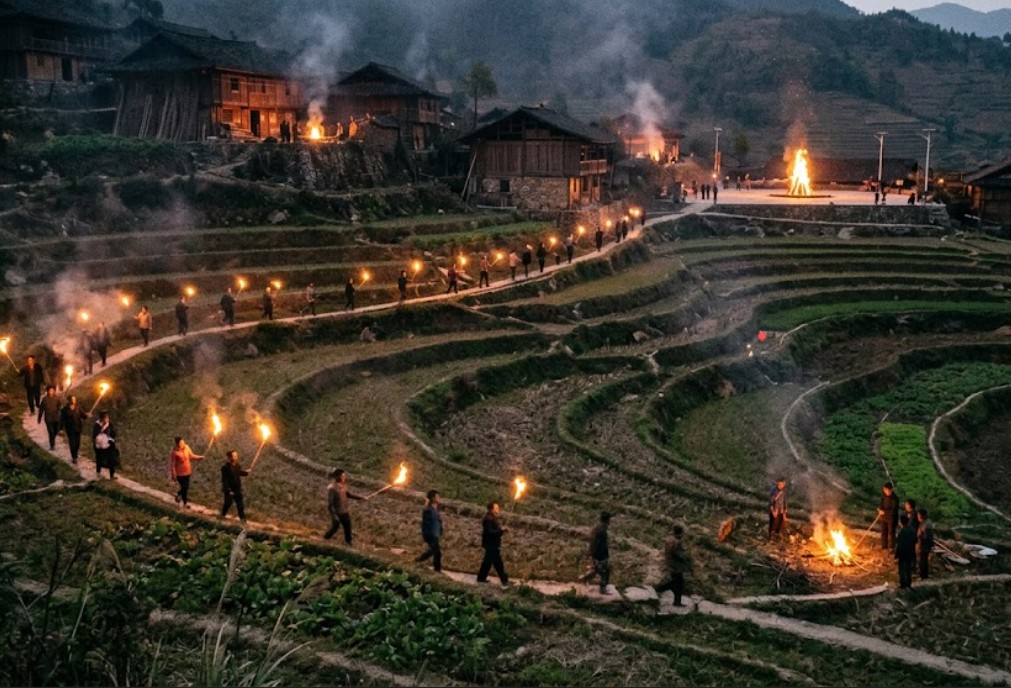
The origin of the Torch Festival is usually linked to early Yi agricultural life in mountain regions of Yunnan. Fire was used in rituals to protect crops and drive away pests, and this practical need slowly turned into a symbolic tradition. In many villages, elders still explain it in a simple way: fire stands for protection, while darkness represents uncertainty.
Fire Symbolism: protection vs darkness
Fire was not only for lighting fields at night, but also a way to mark safe space in farming cycles.
- Crop protection: burning torches around farmland to reduce insects
- Seasonal ritual: linked with planting and harvest periods
- Symbol meaning: light seen as safety, darkness as risk
Rural practice: still visible today
Some remote villages still keep the older form of the ritual. You may see small groups walking around fields with handmade bamboo torches, especially outside major tourist zones. It is not staged, and it usually happens in a quiet, almost routine way rather than a performance.
One local guide in Chuxiong once mentioned that the phrase “fire circling the field” is still used in daily speech, even when people are not talking about the festival itself. It shows how deeply the practice stayed in rural memory.
How The Festival Became A Public Celebration
How The Festival Became A Public Celebration
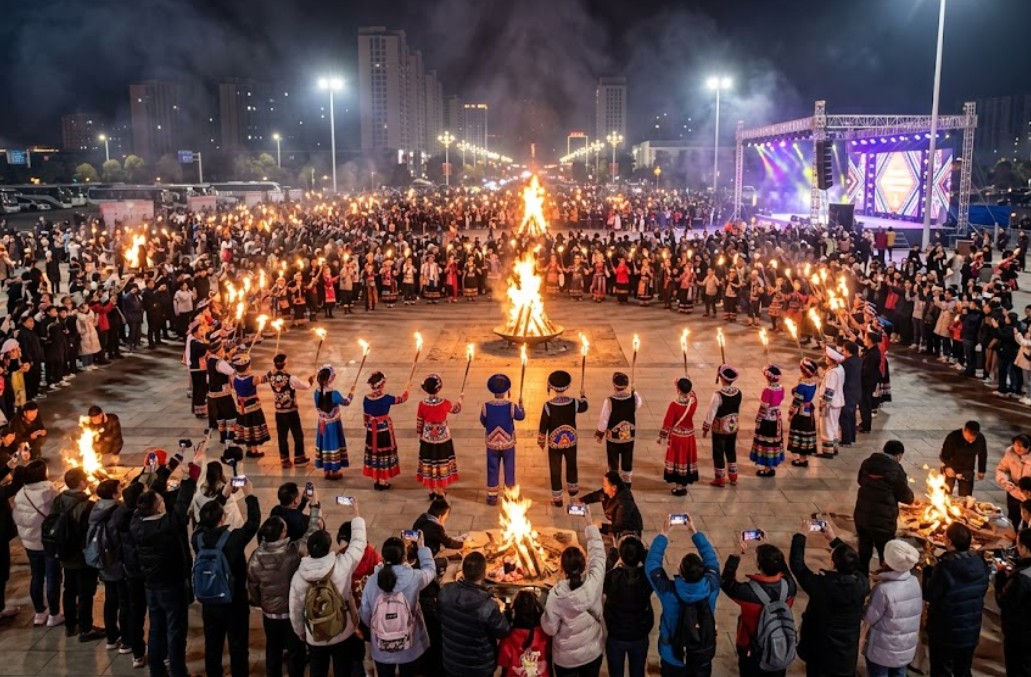
Over time, the Torch Festival evolved from a local ritual into a large public event, especially in cities like Chuxiong. What used to be a small community-based activity is now organized with stages, public squares, and tourism planning. The core meaning stayed, but the format changed a lot.
Transition: ritual to public festival
- Early stage: village-level religious practice only
- Mid stage: shared across nearby Yi communities
- Modern stage: open public festival with tourism promotion
In recent decades, local governments in Yunnan actively promoted the festival as part of cultural tourism. Chuxiong gradually became the main host city because of its strong Yi population and open urban layout, which allows large crowds to gather safely in central squares.
Why Chuxiong matters: centralization of events
- Location advantage: large open squares for fire events
- Cultural base: high concentration of Yi communities
- Infrastructure: easier access for tourists and buses
- Event scale: supports synchronized fire lighting ceremonies
At night, you will often see a mix that feels slightly unusual at first: local residents performing traditional dances next to tourists holding phones, trying to record everything at once. It is not perfectly organized, and that is part of the experience.
Blended participation: locals + visitors
- Locals: performing dances, leading fire rituals
- Tourists: watching, photographing, joining outer circles
- Atmosphere: less “show,” more shared public space
Some visitors expect a clean cultural performance, but what they actually get is closer to a crowded public gathering with structure but not full control. And that difference is exactly what defines the modern Torch Festival experience.
Festival Dates And Schedule
Time Chart
Why Torch Festival Has No Fixed Date
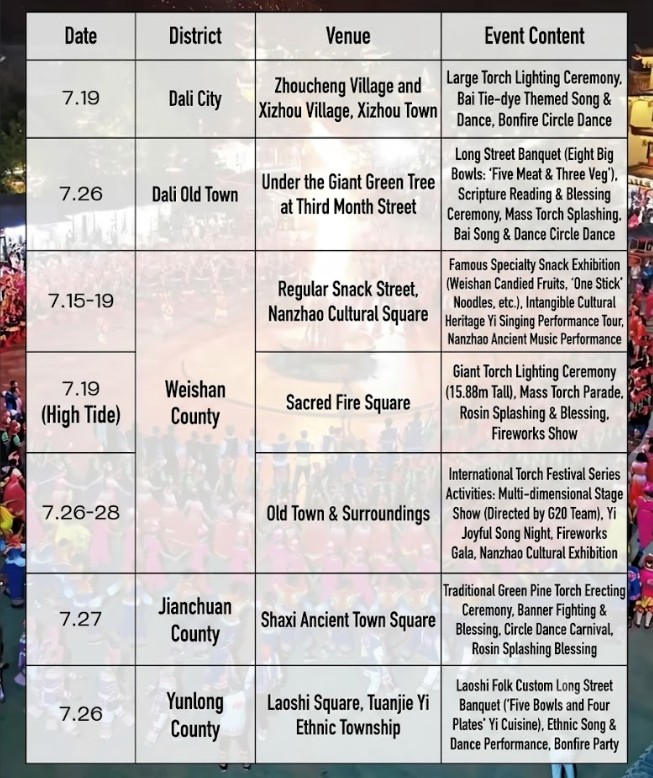
The torch festival date is not fixed across China because it follows different Yi community calendars instead of a single national schedule. In practice, each region adjusts timing based on local traditions and agricultural cycles, which makes planning slightly confusing for travelers.
Calendar differences: Yi subgroups
- Yi regions: Different Yi branches use slightly different lunar calculations
- Local rule: Village elders often decide the exact day
- Result: Nearby towns may celebrate on different nights
Timing system: lunar-based tradition
Most areas still rely on a traditional lunar calendar rather than the official public holiday system. This is why online travel guides sometimes show conflicting dates for the same year.
- Main period: Usually late July to early August
- Variation range: Can shift by several days or even 2–3 weeks
- Peak night: Each region selects its own “main fire night”
Traveler confusion: inconsistent information online
One issue many visitors mention on TripAdvisor is that festival dates listed on travel platforms do not always match reality. Some travelers arrive one day too early or too late, especially in smaller counties where updates are not widely published.
Key point:
“There is no single Torch Festival night in China—there are multiple overlapping celebrations depending on where you go.”
What Happens During The Three Days
The torch festival schedule is usually structured around a loose three-day cycle, although the exact program can vary by location. Chuxiong and Liangshan tend to follow the clearest format, while smaller villages keep things more flexible.
Day 1: preparation and local rituals
- Morning: preparation work → villagers make bamboo torches and set up decorations
- Afternoon: ritual activities → small ceremonies in temples or village squares
- Evening: rehearsal atmosphere → music practice and early gatherings begin
This first day feels relatively calm. You can still walk around normally, and most activities are not crowded yet.
Day 2: daytime performances and sports events
- Morning: traditional sports → wrestling, bull-related performances in some areas
- Midday: cultural shows → Yi dance and costume exhibitions in public squares
- Afternoon: food markets → street stalls become active, especially in Chuxiong
Some visitors note that prices for snacks increase slightly during this period, for example grilled skewers going from around ¥10–15 to ¥15–20 depending on the crowd density.
Important observation:
“Daytime feels like a normal local fair, but people are clearly waiting for the night event.”
Day 3: main torch night (peak event)
This is the core moment of the entire festival.
- Ignition moment: central bonfire is lit in public squares
- Parade flow: people move through streets carrying torches
- Crowd behavior: high-density gathering, limited movement space
- Sound level: drums, shouting, and loud music in open areas
At peak time, entire streets can become slow-moving fire corridors. Some travelers on Ctrip mention waiting 20–40 minutes just to exit central square areas after the event.
Night experience: full cycle intensity
The night is where the festival reaches its limit.
- Start: controlled lighting ceremony
- Middle: full fire parade across streets
- End: gradual fading of bonfires after midnight
Final note:
“If you only plan for daytime activities, you miss almost the entire meaning of the Torch Festival.”
Where To Experience It
Chuxiong City Celebrations
Chuxiong City Celebrations
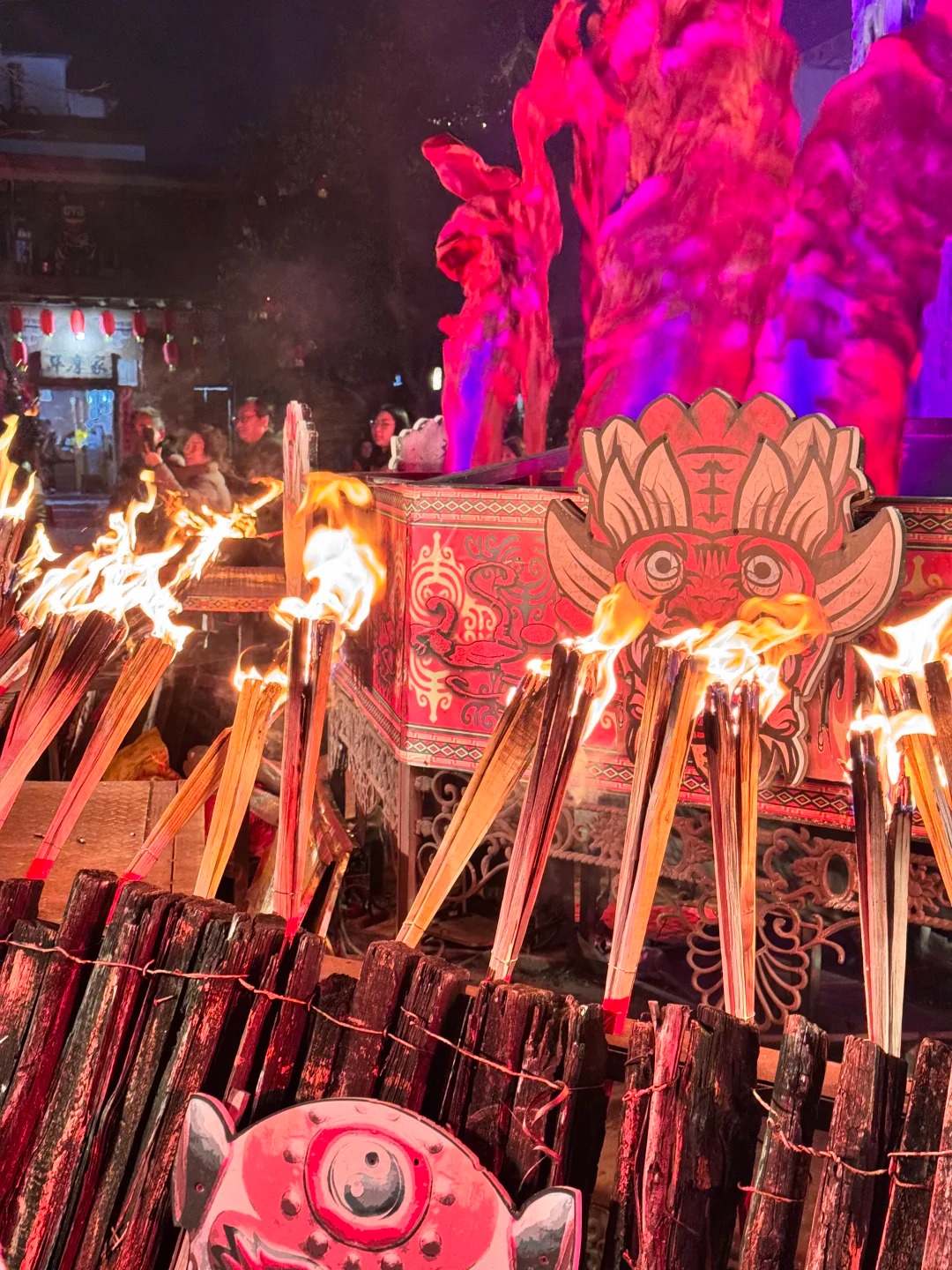
Chuxiong is the main gathering point for the torch festival Yunnan, and in many years it hosts the largest public version of the event. The city is built with wide squares, and during the peak night these spaces quickly turn into dense fire zones filled with thousands of people. The scale is the first thing you notice, not the details.
The atmosphere here is highly structured but also overwhelming. Stage performances run in parallel with spontaneous fire circles forming just a few meters away. It creates a strange contrast between organized programming and uncontrolled crowd movement. Some travelers describe it as a “festival overload” where everything happens at once and it becomes hard to know where to stand or look.
Commercial activity is very visible as well. Street vendors sell food, drinks, and torches, often at slightly higher prices during peak hours. A simple snack that normally costs around ¥10–15 can go up to ¥20–30 depending on location and demand. The whole city feels like it switches into event mode.
“Chuxiong shows the biggest version of the Torch Festival, but also the least calm one.”
Liangshan Traditional Version
Liangshan Traditional Version
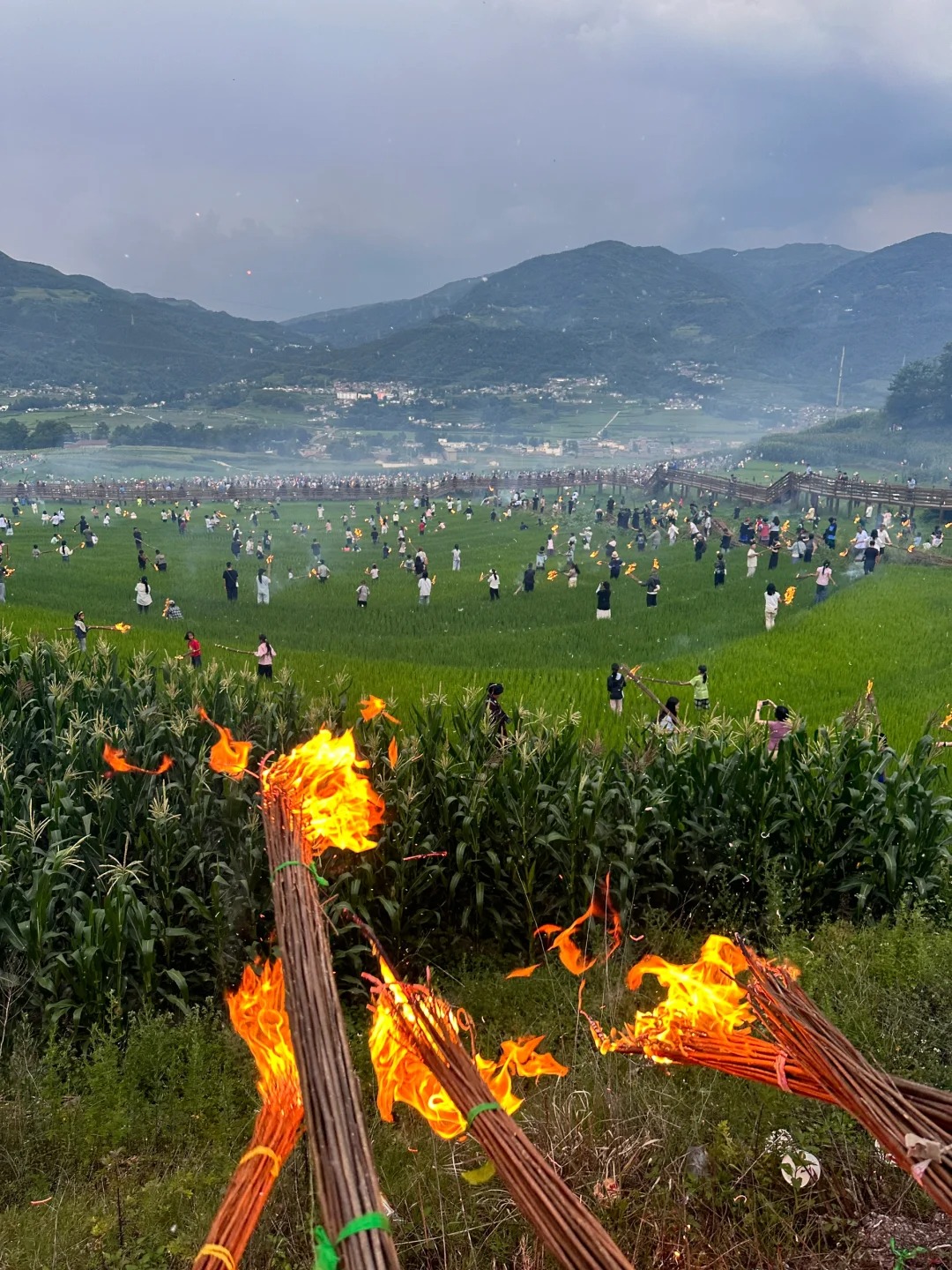
In Liangshan, Sichuan, the Torch Festival feels much closer to its original form. Instead of large urban squares, celebrations take place in mountain villages and small town open spaces. The rhythm is slower, and the structure is looser, which makes it feel less like a planned event and more like a community gathering that naturally grows around fire.
Here, torch processions move through village paths without strict timing. People gather around bonfires in open fields, and participation feels more direct. Locals lead most activities, while visitors usually observe from the side or join in casually without needing formal seating or stages.
Crowds are smaller compared to Chuxiong, and the overall experience feels less commercial. You will notice fewer stalls and less organized staging, but more informal interaction between residents. It is not designed for tourism in the same way, which is exactly why some travelers find it more authentic.
“Liangshan feels less like an event and more like something the community simply continues to do every year.”
Lijiang Area Experience
Lijiang Area Experience
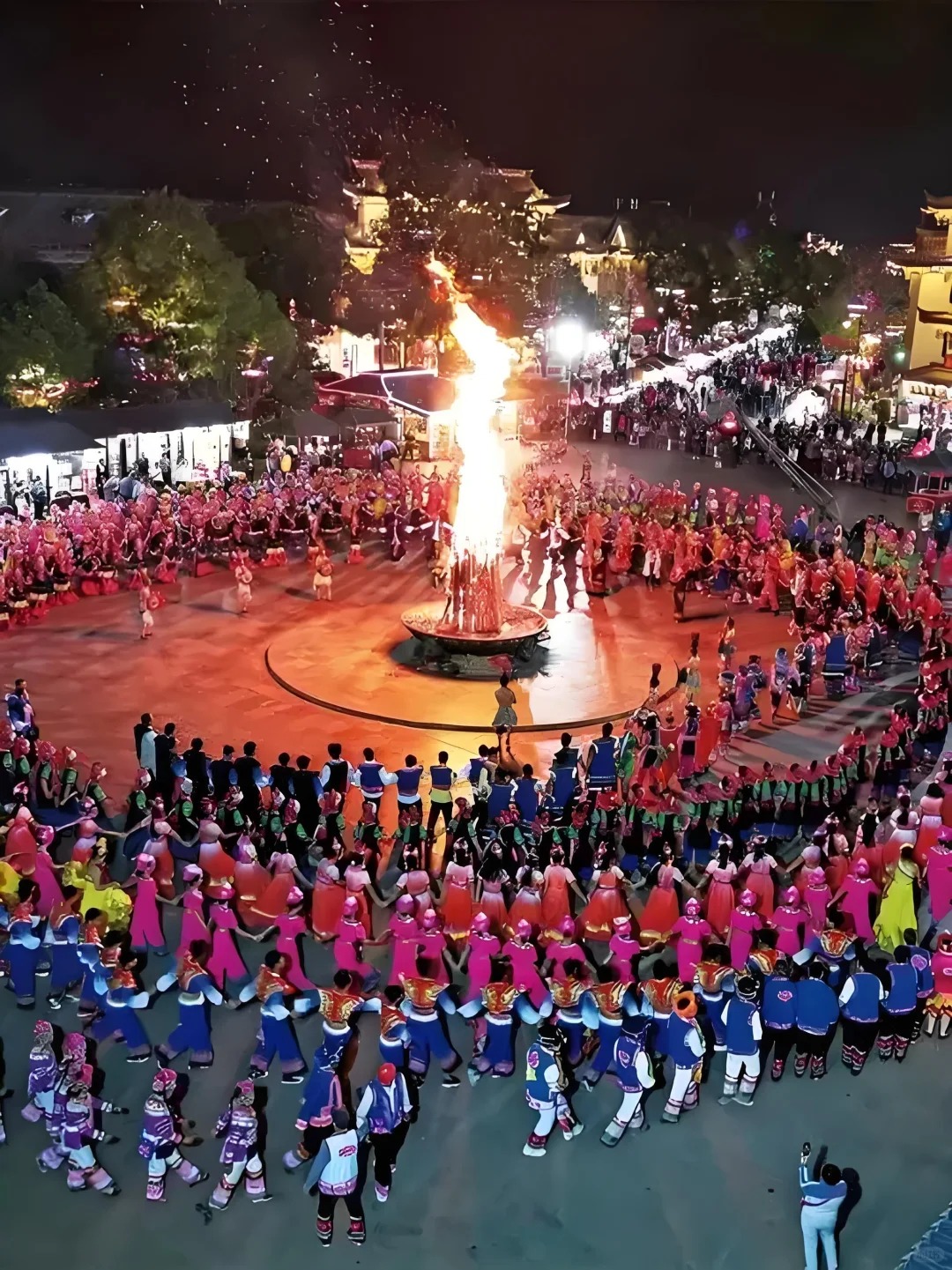
Around Lijiang, the torch festival Yunnan experience is easier to access and more structured for visitors. Events usually take place near Lijiang Old Town or nearby villages where tourism infrastructure is already well developed. This makes it a practical choice for first-time travelers who want a controlled introduction to the festival.
The format here is more curated. Instead of spontaneous street-wide fire movement, you are more likely to see scheduled performances, organized torch lighting shows, and designated viewing areas. It is easier to follow, and movement is less chaotic compared to Chuxiong or Liangshan.
At the same time, the experience feels more “tourism-ready.” Safety is higher, transport is more convenient, and English-speaking guides are more common. However, this also means the festival feels less unpredictable and less intense, with a clearer separation between performers and audience.
“Lijiang is the most accessible way to experience the Torch Festival, but also the most controlled version of it.”
Night Fire Parade Experience
Before The Fire Starts
Before The Fire Starts
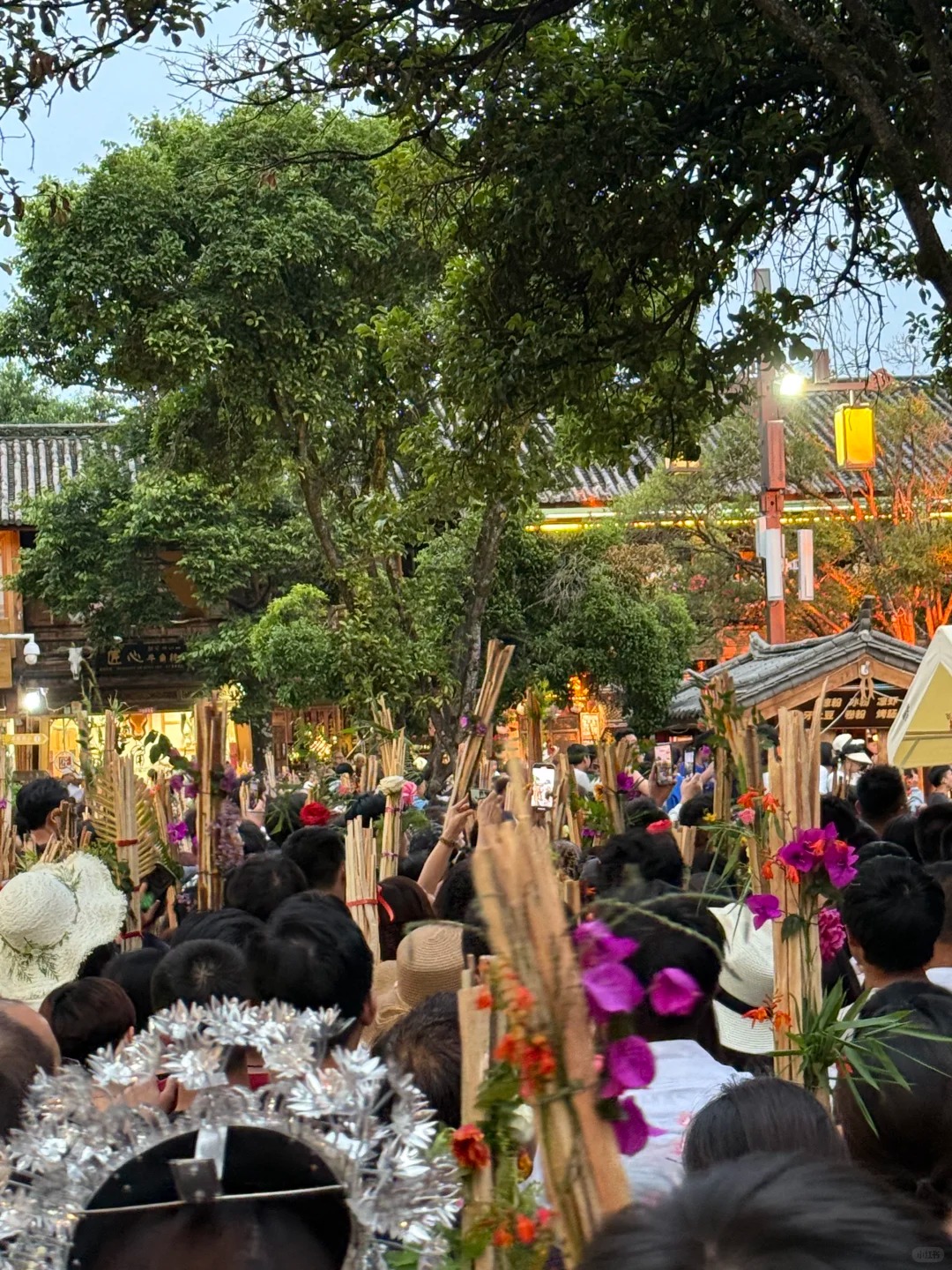
As the sun goes down, the torch festival night begins to shift the city’s rhythm. People start moving toward squares and open streets earlier than expected, even before anything official starts. In places like Chuxiong, it does not feel like waiting for an event anymore, but more like being carried into a growing crowd.
Small markets appear quickly around key areas. Vendors line up along roads selling bamboo torches, snacks, and drinks. Prices are usually normal at first, but they start rising slightly closer to peak time, with items like bottled water going from around ¥3–5 to ¥5–8 depending on location. The smell of grilled food mixes with light smoke in the air, and visibility slowly becomes hazy.
People also begin to choose standing spots early. Some stand near barriers, others move toward slightly higher ground. There is no strict rule, but everyone seems to understand that once the fire starts, movement will become difficult.
“The strange part is not the fire itself, but the waiting before it starts.”
Main Fire Lighting Moment
Main Fire Lighting Moment
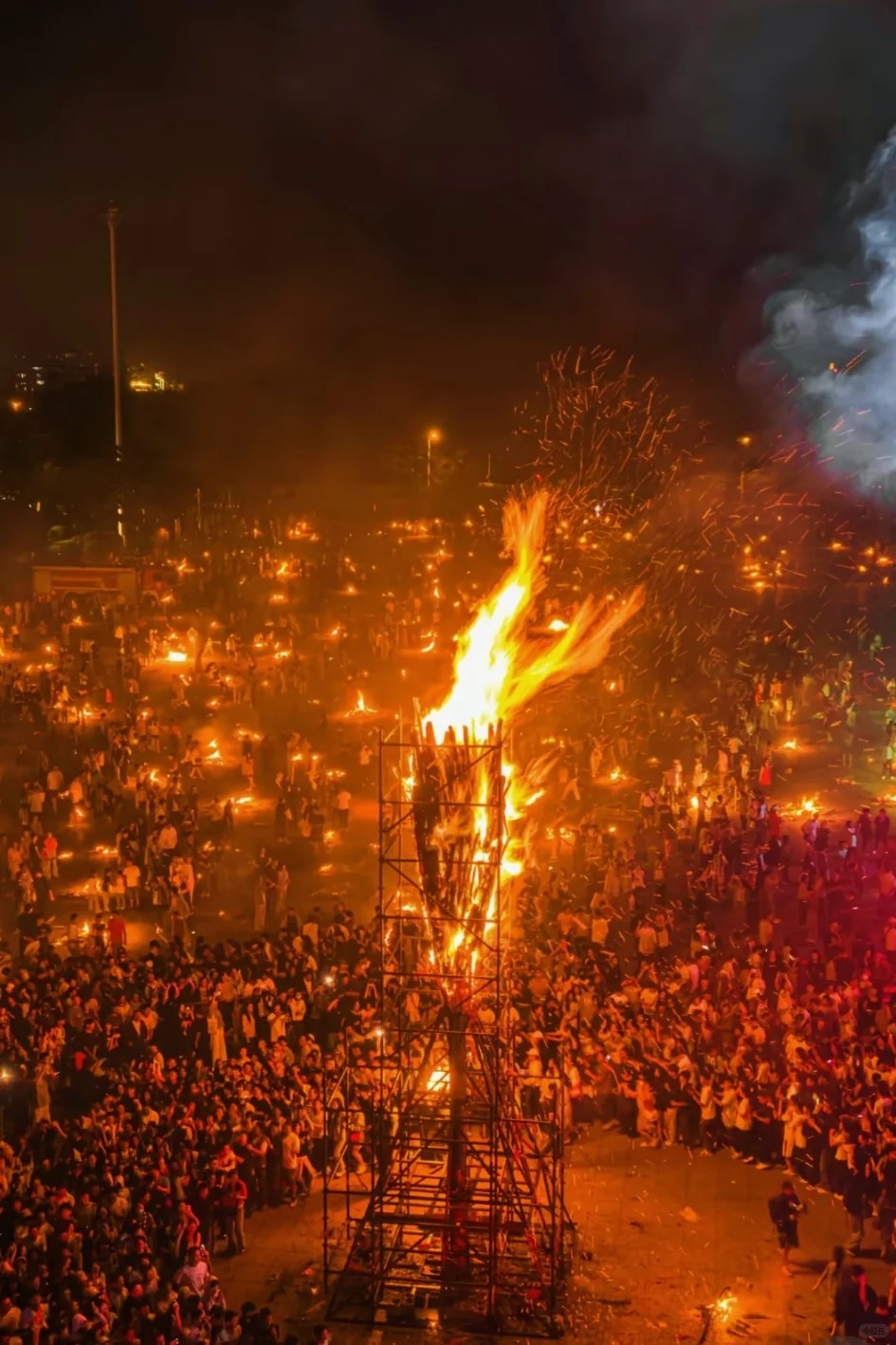
When the torch festival fire parade begins, the change is almost immediate. A central signal fire is lit first, and within seconds, torches across different groups are ignited one after another. It does not feel gradual; it feels synchronized but slightly uncontrolled at the edges.
Street lighting becomes irrelevant as the flames take over visibility. Entire sections of the square turn orange, then red, then flickering gold. People start moving almost instinctively—some walking, some dancing, some just trying to follow the flow of the crowd without getting stuck.
Sound becomes part of the structure. Drums from stage areas mix with shouting, whistles, and loud music from portable speakers. The result is not organized noise, but layered sound that changes depending on where you stand.
“At one point, the whole street feels like it is moving instead of the people.”
After The Crowd Peaks
After The Crowd Peaks
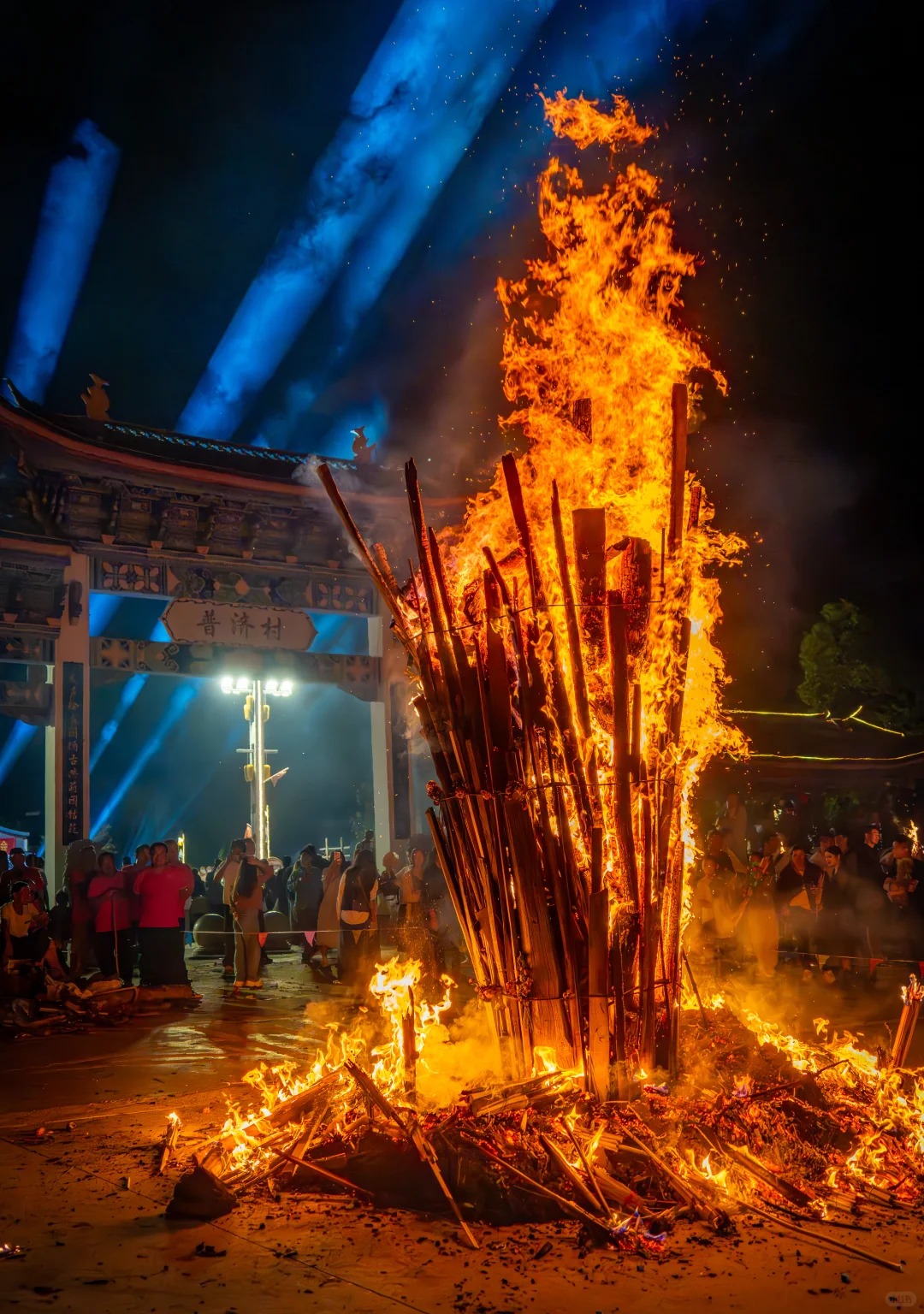
After the peak intensity passes, the fire begins to weaken slowly. Torches burn down to shorter flames, and bonfires start collapsing into glowing embers. The energy does not disappear instantly, but it becomes less coordinated and more scattered.
Crowds begin to split in different directions. Some people leave early to avoid traffic, while others stay sitting near the remaining fire spots. Transport becomes one of the hardest parts of the night. In Chuxiong especially, it is common to see long queues for taxis or buses, sometimes taking 20–30 minutes just to move a short distance.
Smoke stays in the air longer than the fire itself. It spreads across streets and low areas, creating a visible haze under streetlights. Eventually, the noise fades, vendors pack up, and the city slowly returns to normal movement.
“The fire ends faster than the crowd disappears, and that gap is where the real exhaustion shows.”
Travel Tips And Viewing Advice
Best Viewing Positions
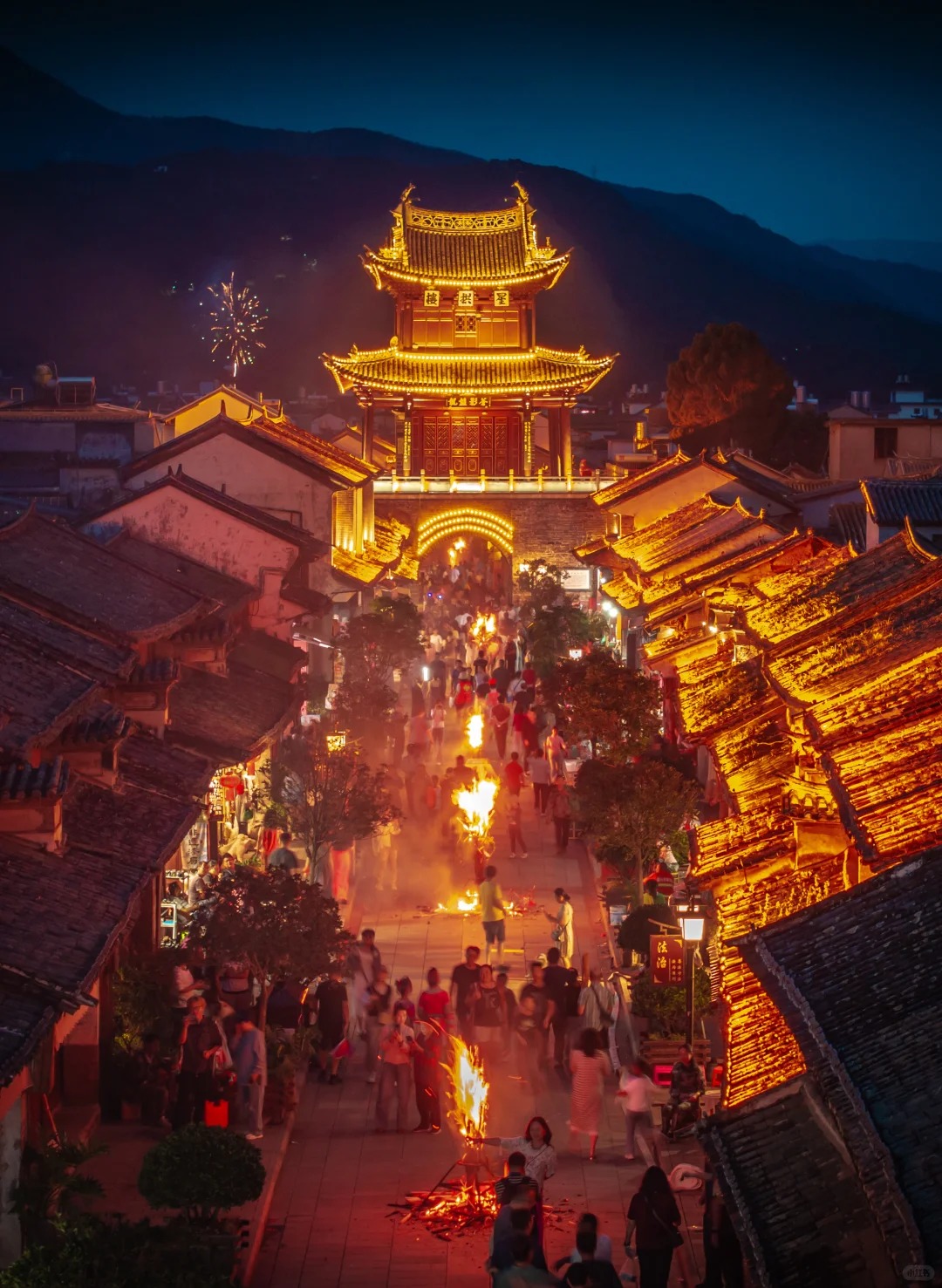
Best Viewing Positions
When it comes to torch festival travel tips, where to stand usually decides how the night feels. In places like Chuxiong, the crowd builds quickly, and once the fire parade starts, it becomes difficult to move freely.
Most people end up at the edges of the main square, which is usually the most practical choice. You still see the full fire circle, but you avoid being pushed by constant movement inside the crowd. Elevated spots like staircases, small platforms, or even building steps also work better because you can look down instead of being inside the flow.
“Being close to the fire sounds exciting, but the view is often worse than from a distance.” Old town rooftops, where accessible, are also used for torch festival photography, especially for wide shots of the fire lighting across streets. The key is to follow crowd movement instead of fighting against it, because the direction changes constantly once the parade expands.
Common Tourist Mistakes
A common mistake is underestimating how dense the crowd becomes. The torch festival Yunnan night is not a staged show with fixed seating—it is a moving public gathering, and space disappears much faster than people expect. Many first-time visitors also arrive without hotel booking, only to find prices doubled or rooms fully sold out in central areas like Chuxiong.
Smoke is another issue that is often ignored. Once bonfires are fully burning, visibility can drop and the air becomes heavy, especially if you stay close to the center. Clothing choice also matters more than expected. Light synthetic fabrics or long flowing clothes are not ideal near open fire zones, and battery life becomes a real concern because phones are used constantly for navigation and recording. If you want to understand basic travel etiquette before attending crowded festivals, check this guide on Chinese etiquette.
“Most problems during the night don’t come from the festival itself, but from not planning for the small details.”
Cost And Logistics
The torch festival Yunnan experience is mostly free in public areas, especially street parades and bonfire gatherings. There is usually no entry fee for watching the main fire events, which is also why crowds become so large in cities like Chuxiong.
Some organized performances or reserved viewing zones may charge small fees, often around ¥30–120, but these are optional and mainly for better seating or staged shows. Hotels are where costs change most noticeably. During peak nights, rooms that normally cost around ¥200–300 can rise to ¥500–800, especially near city centers or main celebration areas.
Transport becomes another challenge after the main fire events end. Roads near squares often get congested, and waiting for taxis or ride-hailing services can take a long time. In some cases, walking part of the route is actually faster than staying in the queue.
“The festival itself is free, but getting in and out of it is where time and money quietly disappear.”
FAQ About Torch Festival
Q: When is the Torch Festival celebrated in China?
The Torch Festival is usually held between late July and early August, but the exact timing changes by region. There is no single national date because different Yi communities follow their own traditional calendars. In practice, this means one town may celebrate earlier while another nearby village holds the main fire night days later. Travelers should always check local updates instead of relying on fixed online schedules.
Q: Where is the best place to experience the Torch Festival?
Chuxiong in Yunnan is often considered the most intense and large-scale version, with massive crowds and organized city events. Liangshan in Sichuan feels more traditional and less commercial, while areas around Lijiang offer a more accessible but simplified version. Each location gives a different balance between authenticity, comfort, and crowd size, so the “best” place really depends on what kind of experience you want.
Q: Is the Torch Festival safe for tourists?
Overall, the festival is generally safe, but the main risk comes from crowd density rather than the fire itself. During peak night events, movement in central areas can become difficult, especially in Chuxiong. Staying near edges, following crowd flow, and avoiding fire circles are the main safety practices. Local authorities are usually present to manage major areas, but personal awareness still matters.
Q: Do I need tickets to attend the Torch Festival?
Most street events, torch parades, and bonfire gatherings are free to attend. You can simply walk into public squares and join the crowd. However, some staged cultural performances or reserved seating areas may require tickets, usually ranging from around ¥30 to ¥120 depending on the city and setup. These paid options are optional and mainly offer more comfort or structured viewing.
Q: What should I wear to the Torch Festival?
Clothing choice matters more than many visitors expect. Lightweight and breathable clothes are fine, but it is better to avoid long flowing fabrics due to fire exposure in crowded areas. Closed shoes are strongly recommended because streets can be packed and uneven. Some people also bring light masks or scarves because smoke levels can increase significantly during the main fire events.
Q: How crowded does the Torch Festival get?
In major locations like Chuxiong, the crowd can become extremely dense during the main night. Movement in central squares may slow down significantly, and it can take time just to enter or exit key viewing areas. Smaller towns or villages are usually less crowded, but even there, peak fire moments still attract large local gatherings. Arriving early is the only reliable way to secure a good position.
Q: Can I take photos during the Torch Festival?
Yes, photography is one of the main reasons many travelers attend. However, night conditions can be challenging because of smoke, moving crowds, and low light. The best results usually come from elevated positions or edges of squares rather than the center. Wide-angle shots work better than close-ups because the fire and crowd movement change quickly.
Q: Is the Torch Festival suitable for families with children?
It can be suitable, especially during daytime events where crowds are lighter and activities are more structured. However, nighttime fire parades can become very crowded and noisy, which may not be comfortable for younger children. Families usually prefer staying at the edges of viewing areas or choosing less crowded towns instead of the main Chuxiong square events.
Q: What makes the Torch Festival different from other Chinese festivals?
Unlike many traditional festivals that are more symbolic or staged, the Torch Festival is highly physical and interactive. Fire is not just decoration but the central element that shapes movement, sound, and crowd behavior. It feels less like watching a performance and more like being inside a large-scale public event that evolves in real time, especially during the night fire parade.