China Children's Day:Colorful Performances, Sweet Memories, Heartfelt Gifts & Community Joy
Every June 1, China becomes a children’s world. That’s the annual date of China Children’s Day (六一儿童节, Liù Yī Értóng Jié), the nation’s largest children’s festival, and it originated in the 1925 Geneva World Conference on Child Welfare. After the new People’s Republic was established in 1949, the government officially declared June 1 the property of children just one year later in 1950. 🎉
China Children’s Day has evolved into far more than a school holiday. Schools put on large school performances. Families exchange gifts and spend time together. Museums, parks and public venues have special openings and discounts to reflect this children’s theme. This guide summarizes the celebrations, cultural significance and practical tips for attending or acknowledging this holiday when you’re in China, or abroad.
Cultural Roots: Exploring China's Festive Heritage
Cultural Metaphors: Envisioning Poetic Visions of Tomorrow
In Chinese speak children are described as "祖国的花朵 (zǔguó de huāduò)" — literally, "the flowers of the motherland." This is not an idle decoration; it expresses the belief that the children of any society represent its future, so how that society cares for its children is evidently indicative of what it is. This metaphor actively manifests itself in the spirit of Children's Day from official ceremonies to private family decisions.
Children's Day holds a unique emotional place among Chinese celebrations. For broader context on where June 1st sits within the Chinese festive calendar, our guide to China's most important national holidays offers a helpful overview.
Rights Advocacy: Promoting Annual Platforms for Reflection
But more than just a celebration, Children’s Day is also a important annual reminder of children’s rights—the four rights defined in the UN Convention on the Rights of the Child: the right to survival, the right to development, the right to protection and the right to participation are at stake. Public service campaigns on this day feature issues of importance in child welfare, campaigning for vulnerable children in rural and poor areas.
Stress Relief: Escaping Intense Academic Pressures Safely
Academic competition starts early in China. Children already have a heavy study load in primary school. For this reason, June 1st is very special. Schools and families deliberately park all forms of “learning with an agenda”, and just let children be children. 🌸 Many school events also infuse the traditional, from Peking Opera (京剧), martial arts (武术), to ethnic folk dances and traditional costumes. Children’s Day becomes thus not only a celebration but also a living textbook for cultural transmission.
Holiday Guide: Date and Celebration Principles
Date of Children’s Day in China: June 1st
When is Children's Day Celebrated
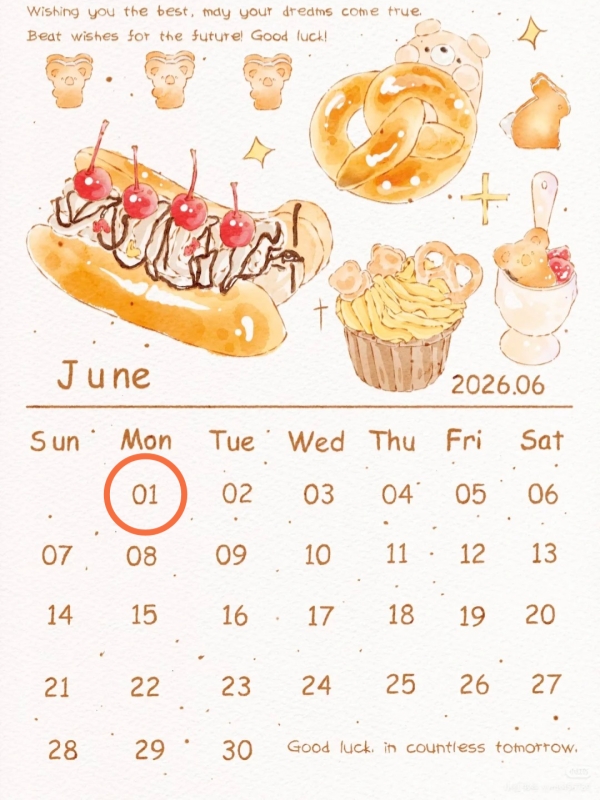
China Children's Day falls on June 1st every year without exception. Planning a trip around the holiday? Here is a quick reference for upcoming years:
| Year | Date | Day of Week |
|---|---|---|
| 2026 | June 1 | Monday |
| 2027 | June 1 | Tuesday |
| 2028 | June 1 | Thursday |
| 2029 | June 1 | Friday |
| 2030 | June 1 | Saturday |
| 2031 | June 1 | Sunday |
| 2032 | June 1 | Tuesday |
* When June 1st falls on a weekend, celebration events and public benefit activities are commonly adjusted to the nearest working day.
June 1st arrives just weeks after China's busy May holiday season. If you're planning a broader trip, our guide to Chinese Labor Day covers everything about that spring holiday period — a useful companion to your Children's Day plans.
Core Principles: Embracing Child-Centred Celebration Experiences
Inspired by China Children's Day? Here are three guiding principles to keep in mind:
- Child-centred (以孩子为中心): All activities revolve around making the child feel valued and joyful — not satisfying adult expectations.
- Experience over material (重体验轻物质): Shared memories outlast expensive gifts. "High-quality companionship" and a special outing are often far more treasured.
- Cultural element (融入文化元素): Try paper cutting (剪纸 jiǎnzhǐ), learn a Chinese children's song (儿歌 érgē), or cook a simple Chinese dish together.
Activity Ideas: Inspiring Overseas Family Celebration Methods
China Children's Day belongs to every family, wherever they are. Overseas families can draw real inspiration from Chinese traditions. Below are three practical ideas:
| Activity | How It Works | Cultural Connection |
|---|---|---|
| Family Arts & Talent Day | Hold a small home talent show where every family member performs for the child | Mirrors the school arts performance tradition that anchors Chinese Children's Day |
| "Chinese Culture" Discovery Day | Visit a local Chinese museum; try calligraphy or paper cutting; cook a Chinese meal together | Brings the cultural-learning dimension of China Children's Day into an overseas context |
| Community Kindness Action | Guide children to donate toys or books; share the holiday's joy with the local community | Reflects the inclusive social welfare spirit that defines China's Children's Day |
Global Perspectives: Comparing International Children's Day
Date Differences: Contrasting National and Global Purposes
This kind of thing is worth considering, in part, because of a conflation that we tend to have regarding different observances. China celebrates Children's Day on June 1st—a dedicated day of boosterism and joy. By contrast, the UN and UNESCO-championed Universal Children's Day (yes, there's another) falls on November 20th. That date focuses on national and global advocacy of children’s rights, invoking the UN Convention on the Rights of the Child. It is not a public holiday anywhere. They serve different purposes.
Celebration Styles: Exploring Diverse International Holiday Customs
China's model of whole-society mobilisation stands out globally. Schools, families, public venues and government welfare programmes all participate simultaneously. However, some countries keep celebrations within school settings. Others treat the day as a private family affair. The comparison below celebrates cultural diversity rather than ranking any one approach:
| Country | Date | Key Focus | Celebration Style |
|---|---|---|---|
| China | June 1 | Joy, family care, child welfare | Whole-society mobilisation — schools, families, public venues and government all participate |
| India | November 14 | Nehru's love of children; national education | School events, cultural programmes, government-led educational initiatives |
| Japan | May 5 (Kodomo no Hi) | Children's happiness & personality | Family celebrations; koinobori carp streamers; traditional foods; national public holiday |
| South Korea | May 5 | Children's rights and joy | National public holiday; theme park visits, family gifts |
| International (UNESCO) | November 20 | Global children's rights advocacy | Awareness campaigns; not a public holiday in most countries |
School Events: Vibrant Performances and Campus Joy
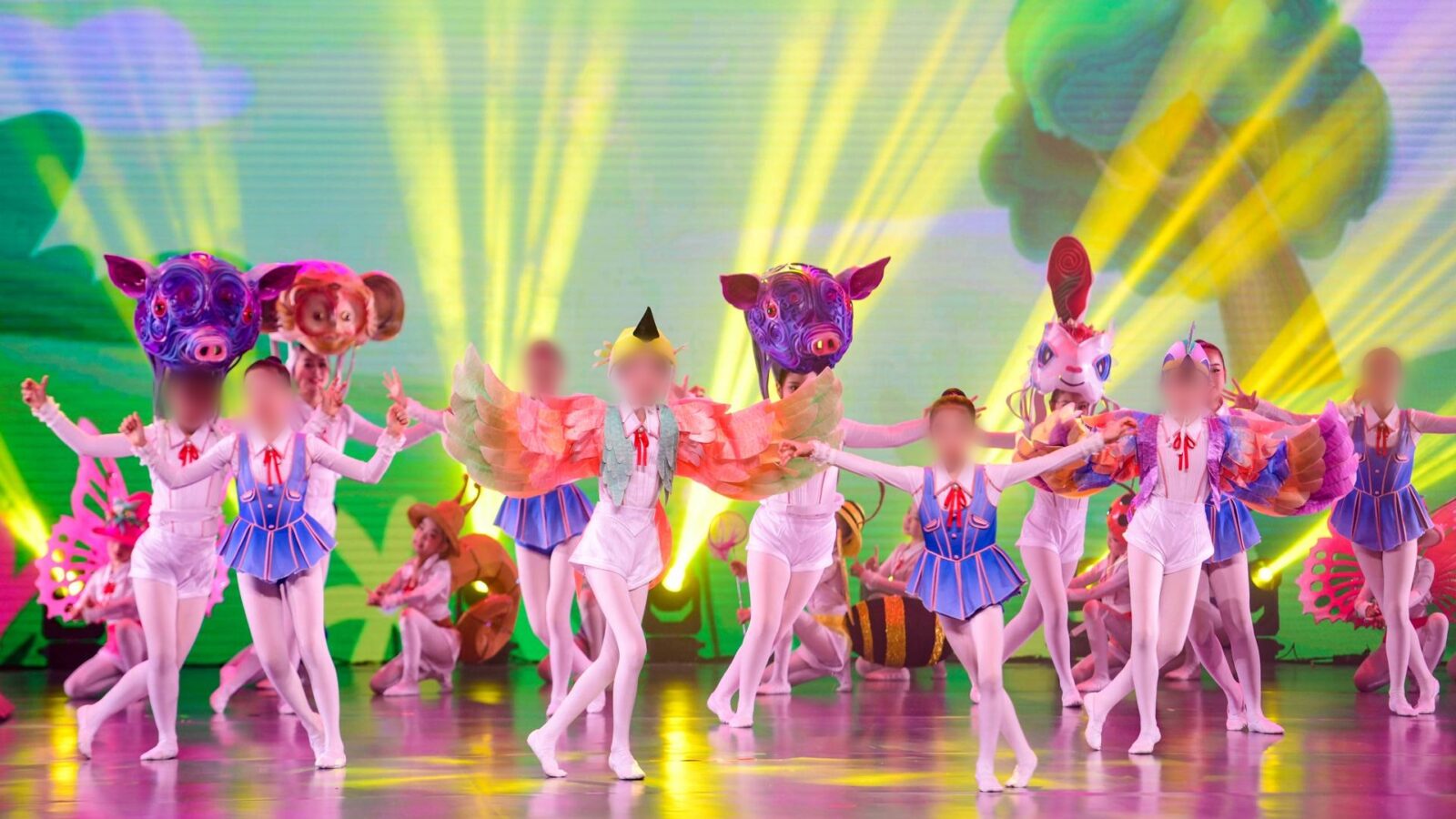
Colorful School Children's Day Celebration with Student Performances
School Day: Enjoying Full Days of Celebration
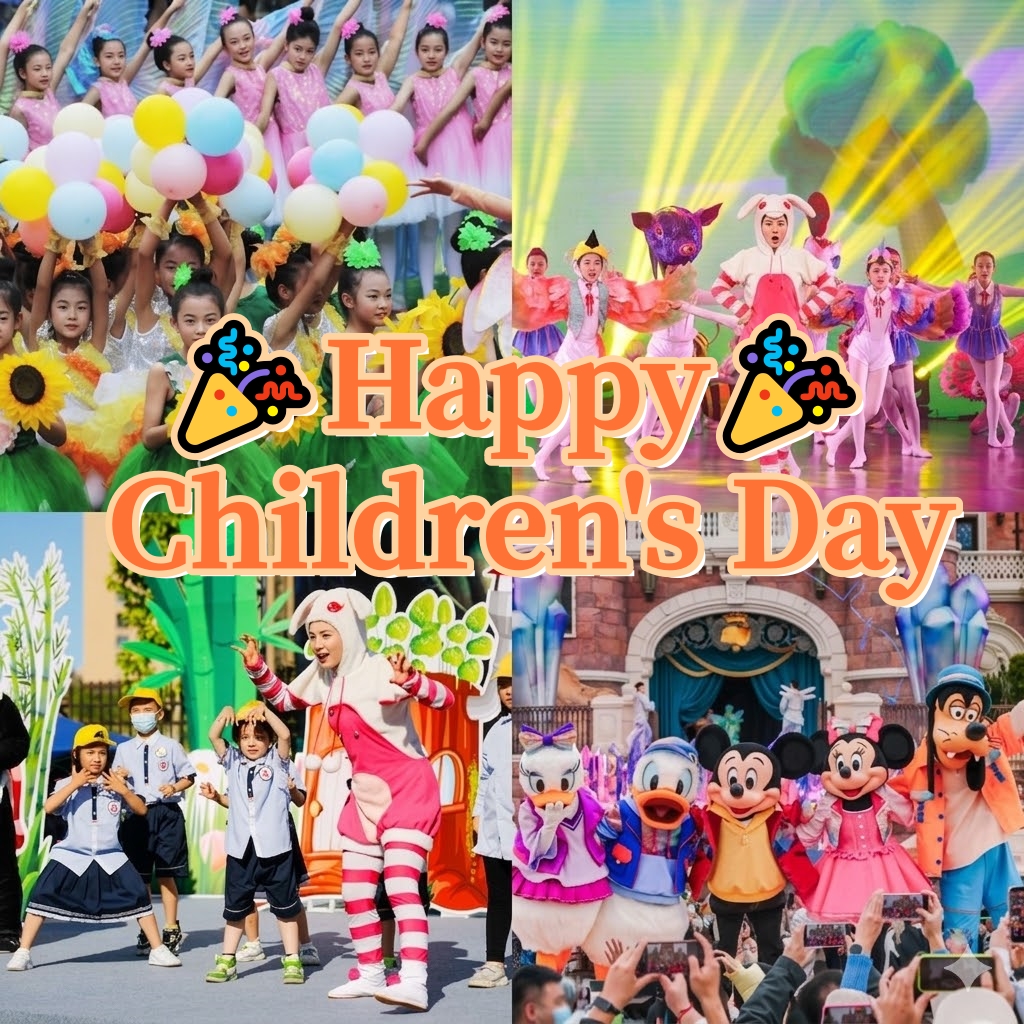
June 1st changes everything at Chinese primary schools. Most schools cancel regular lessons entirely. Instead, the day fills with performances, games and ceremonies. For children, it feels less like school and more like a joyful festival. 🎒
Arts Performances: Showcasing Culture and Student Talent
The focus of the event is school arts performances, the pride of every school and the centrepiece of Children's Day. 🎭 The kids practise for weeks in advance. Then, on June 1st, they take the stage. Choirs. Folk dances. Theatrical sketches. Instrument recitals. Martial arts. The Beijing No. 12 Middle School Affiliated Primary staged a Huangmei Opera (黄梅戏)-themed arts festival, a riot of sound and colour celebrating traditional culture. Schools in Yingshan County, Sichuan, put on stage dramas with ethnic unity themes, and there are big colourful costumed parades. Not small home-grown affairs; bursts of artistry celebrating culture.
Garden Fairs: Experiencing Interactive Games and Prizes
Beyond performances, many schools set up lively garden fairs. Activity stalls include tug-of-war, ring toss, craft workshops and science experiment stations. Children move freely between stalls and collect small prizes along the way. Therefore, the school ground becomes a miniature carnival — full of laughter and movement.
Honour Ceremonies: Attending Young Pioneers Induction Moments
For Grade 1 students, June 1st carries particular significance. Children's Day is often the date for the formal induction ceremony into the Young Pioneers (中国少年先锋队). The red neckerchief is tied for the very first time. Additionally, outstanding students receive public recognition and commendation. These ceremonies add a layer of solemnity to an otherwise joyful day.
Educational Outings: Exploring Museums and Nature Parks
Beyond in-school activities, many schools organise educational day trips. Common destinations include science museums, historical sites and nature parks. Below are some popular choices:
| Venue Type | Examples | What Children Experience |
|---|---|---|
| Science & Technology Museums | China Science and Technology Museum (Beijing); Shanghai Science and Technology Museum | Interactive science exhibitions that spark curiosity and a love of exploration |
| Historical & Cultural Sites | Palace Museum (故宫博物院); Emperor Qin's Terracotta Warriors Museum | Vivid guided introductions to Chinese history and cultural heritage |
| Nature Parks & Zoos | Beijing Zoo; Shanghai Wild Animal Park (上海野生动物园) | Close encounters with animals and nature; outdoor learning experiences |
Family Celebrations: Heartfelt Gifts and Quality Time
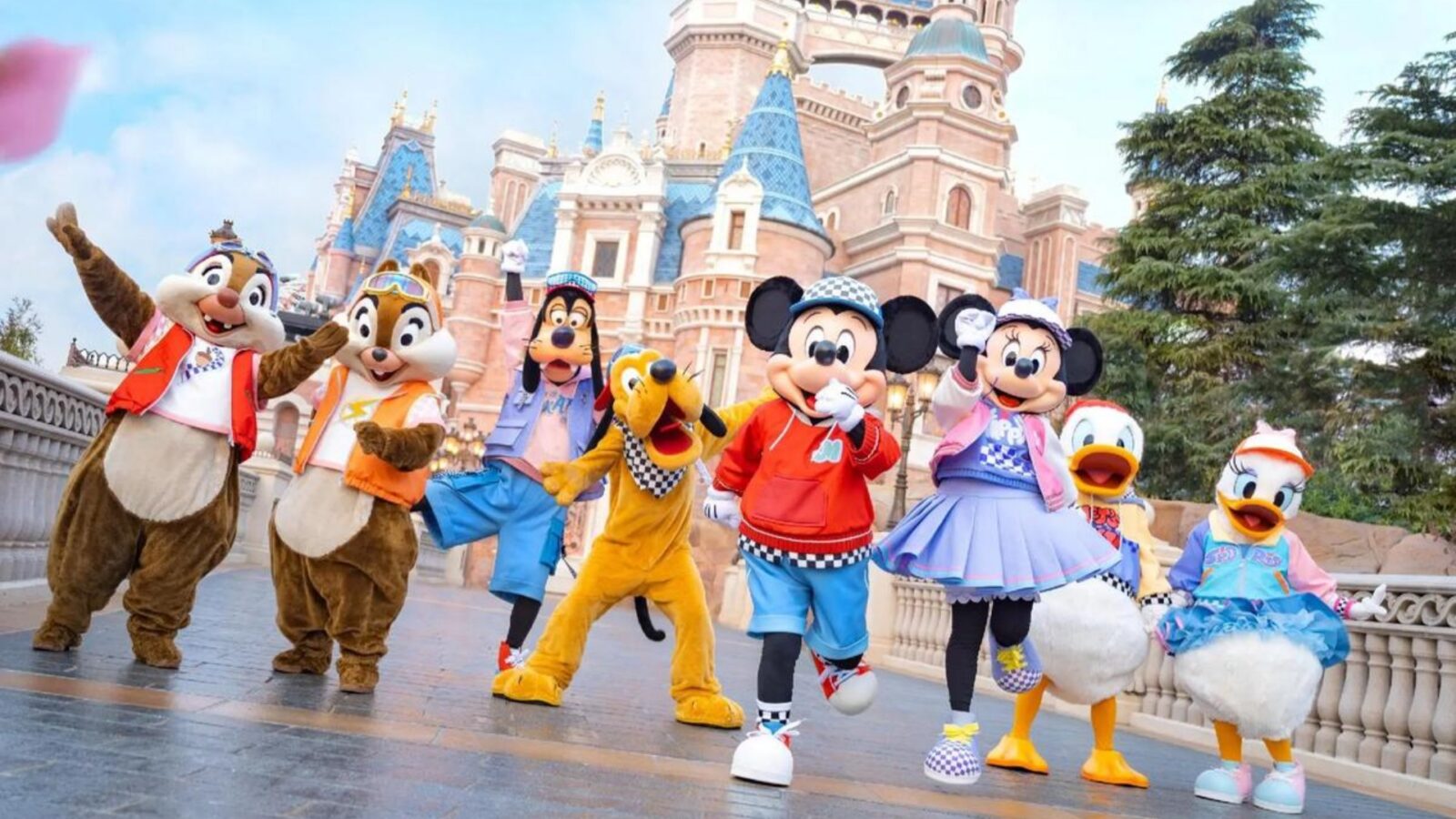
Lively Family Outing to Shanghai Disney Resort on Children's Day
Gift-Giving: Valuing Thoughtfulness Over Material Expenses
On China Children's Day, parents carefully choose gifts for their children. Popular choices include toys, books, new clothing and 国潮 (guó cháo — national-trend cultural merchandise). 🎁 However, the prevailing philosophy is clear: thoughtfulness matters far more than price. A heartfelt, well-chosen gift carries far greater meaning than an expensive one ever could.
Festive Feasts: Empowering Children with Menu Choices
Food plays a warm, central role in family celebrations. Cakes, ice cream, sweets and themed restaurant meals are seasonal favourites. 🎂 Many families go one step further, however — they let the child decide the entire day's menu. It is a small gesture. Yet it carries a powerful message: today, you are in charge.
Quality Time: Sharing Joyful Family Companionship Moments
Increasingly, Chinese families embrace shared experiences as the true heart of Children's Day. The phrase "陪伴是最好的礼物" — "companionship is the best gift" — captures this spirit perfectly. Families choose from a wide range of activities together:
- 🏛️ Cultural experiences: museum visits, science centres, art galleries
- 🌿 Outdoor adventures: park picnics, zoo trips, suburban hiking
- 🎨 Family projects: cooking together, playing sports, completing handcraft projects
Family Outings: Visiting Theme Parks and Nature
For families heading out for a full day, options abound. Families with young kids tend to favour somewhere like Shanghai Disney Resort, or other high-octane spots such as Guangzhou Chimelong Happy World, or huge indoor play centres like Meland Club, Nai Er Bao Family Centre (奈尔宝) etc. On the outskirts of the bigger cities you have your choice of forest parks or eco-farm…is a lovely day spent hiking, fruit picking or just chilling out in nature.
| Destination Type | Examples | Character |
|---|---|---|
| Theme Parks | Shanghai Disney Resort; Guangzhou Chimelong Happy World | Full-day immersive entertainment — magical, high-energy family experiences |
| Large Indoor Play Centres | Meland Club; Nai Er Bao Family Centre (奈尔宝) | Safe, age-appropriate environments for children of all ages to explore freely |
| Suburban Nature Areas | Forest parks; eco-farms on the city outskirts | Day hikes, fruit picking, camping — unhurried time away from the city |
Social Participation: Free Admissions and Community Care
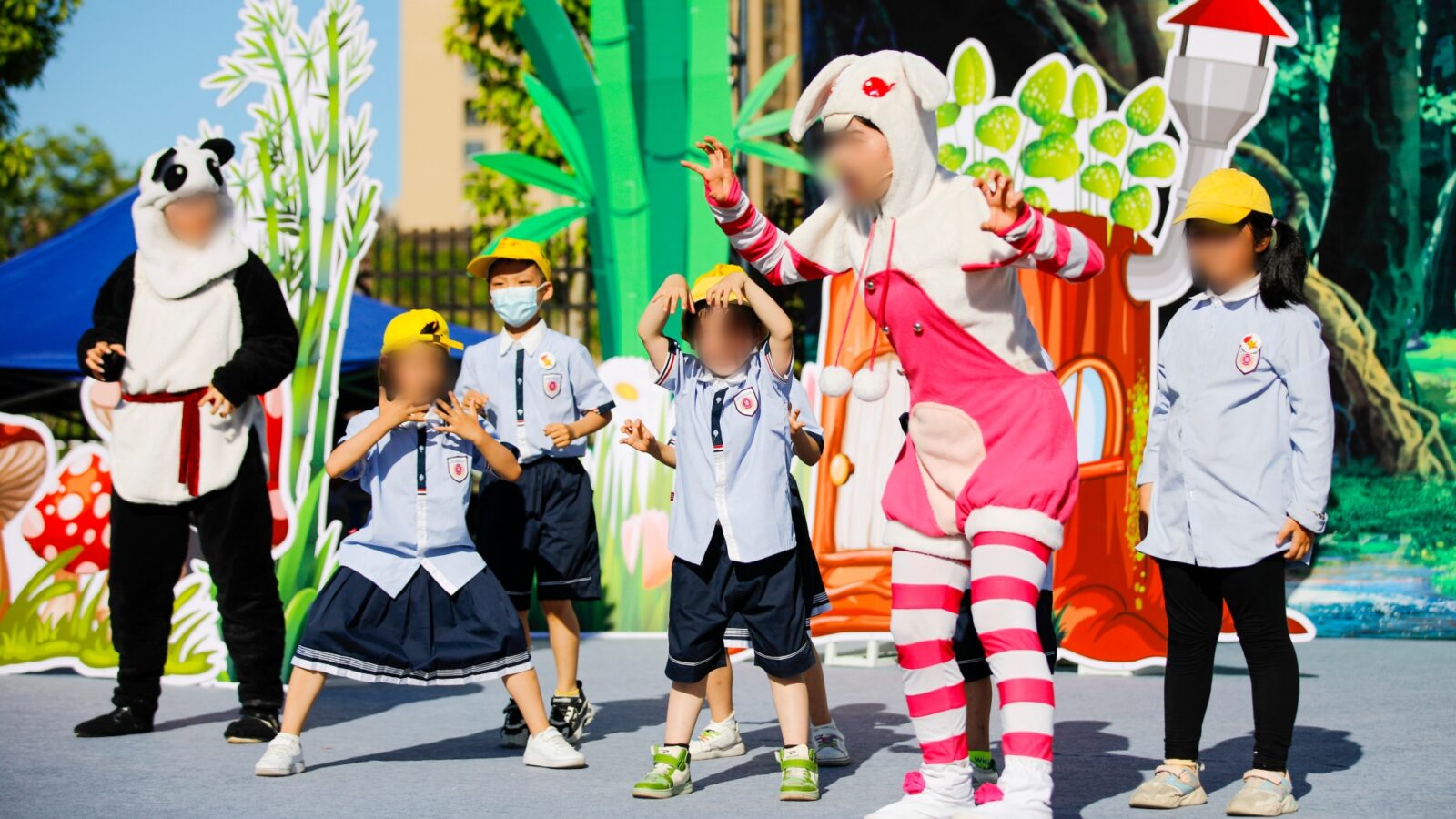
Community Public Welfare Event for Children's Day Entertainment
Free Admissions: Touring Museums and Public Parks
One of the most well-known aspects of China Children's Day is the nationwide response. 🏛️ Across the land, many museums, science centres and parks offer gratis or discounted entry for children around Children’s Day (which falls on , June 1st every year), typically placing “Children First” for the day with priority entry lines and special programming. For example, the National Museum of Natural History will offer free admission for children under 14 and special guided sessions for Children’s Day. Shanghai Natural History Museum also offers under-14s free admission as well as a special Children’s Day Programme.
Community Events: Participating in Joyful Neighborhood Workshops
The festive spirit goes beyond school gates and houses. Shopping malls, bookshops, neighbourhoods - all come alive with DIY workshops and story-telling, arts performances and garden parties, and the entire city is netted in merriness, from neighbourhood square to largest commercial centre.
Welfare Outreach: Bringing Joy to Every Child
However, China Children’s Day is not only for privileged children. Government departments and social organisations arrange special visits and activities for left-behind children (留守儿童), children with disabilities and children in orphanages. This dimension gives the holiday a deeper, more inclusive meaning. The celebration belongs to every child, not just the fortunate ones. 🌸
Venue Promos: Enjoying Exciting Commercial Brand Celebrations
In addition to general free admissions, a wider assortment of familiar venues have specialized activities on or around June 1st. Commercial brands get in on the act, too; every year KFC and LEGO team up for a limited run of children’s meal toys—custom built LEGO sets that then become valued collectibles for many families. A broader overview of venues:
| Venue | Location | Children's Day Offering |
|---|---|---|
| Chimelong Safari Park (长隆野生动物世界) | Guangzhou | Special family packages and themed activities around June 1st |
| OCT Happy Valley (华侨城欢乐谷) | Shenzhen | Special promotions and themed events for children and families |
| Provincial Museums (省级博物馆) | Major cities nationwide | Themed exhibitions, science shows, free craft classes for children |
| Youth Palaces (青少年宫) | Major cities nationwide | Open-day events: themed exhibitions, science shows, free craft workshops |
FAQs: Answering Common Questions About June 1st
Q: Is Children's Day a public holiday in China?
Yes — China Children's Day on June 1st is a full-day public holiday specifically for children under 14, as defined by China's national holiday regulations (《全国年节及纪念日放假办法》). However, it is not a universal day off for all workers. Notably, Youth Day (青年节) on May 4th grants a separate half-day holiday to young people aged 14–28.
Q: What age is Children's Day for in China?
China Children's Day primarily celebrates children under 14, who receive a full-day holiday. Young people aged 14–28 are recognised separately on Youth Day (May 4th) with a half-day off. That said, many adults embrace China Children's Day nostalgically — and actively as parents — making it a genuinely cross-generational occasion.
Q: How do Chinese children celebrate Children's Day?
Celebrating China Children's Day happens on three levels. First, schools host performances, ceremonies and garden fairs. Second, families organise special outings, exchange gifts and enjoy the child's chosen food. Third, public venues such as museums and parks offer free admissions and special events. Together, these create a rich, memorable experience for every child.
Q: What gifts are given on Children's Day in China?
On China Children's Day, popular gifts include toys, books, new clothing, 国潮 cultural merchandise and red envelopes (红包 hóngbāo). However, the cultural emphasis is firmly on meaning over price. A thoughtfully chosen gift — even a simple book or a handmade item — carries far more significance than an expensive one.
Q: Which countries celebrate Children's Day on June 1st?
China is the most prominent country celebrating Children's Day on June 1st. However, many other nations in Asia, Eastern Europe and Africa share this date. Russia, Vietnam, Cuba and several former Soviet-bloc countries all observe June 1st. For a full country comparison, see the global perspective section in this China Children's Day guide above.
Q: What is the difference between China Children's Day (June 1) and International Children's Day (November 20)?
China Children's Day on June 1st is a nationally celebrated holiday — joyful, school-focused and socially mobilised across the whole country. In contrast, Universal Children's Day on November 20th is a UNESCO-designated global awareness day focused on advocating children's rights. It is not a public holiday in most countries and serves a very different purpose.
Q: Why does China celebrate Children's Day on June 1st?
The date connects to the 1925 Geneva World Conference on Child Welfare, which first promoted international recognition of children's rights. After the People's Republic of China was founded in 1949, the government formally chose June 1st as China Children's Day in 1950. Notably, before 1949, China observed a separate Children's Day on April 4th during the Republic era.
Q: Are museums and attractions free for children on June 1st in China?
Yes — many venues across China offer free or discounted entry for children under 14 during China Children's Day. The National Museum of Natural History and Shanghai Natural History Museum are well-known examples. However, availability varies by venue. It is always advisable to check specific admission policies in advance, as promotions change each year.
Q: How does China's Children's Day compare to Japan's Children's Day?
Japan celebrates Kodomo no Hi on May 5th, with strong traditional symbols — carp streamers (koinobori) and kashiwa mochi rice cakes. China's June 1st, by contrast, involves broader social participation: schools, public venues and government welfare programmes all engage simultaneously. Both are national public holidays, yet they reflect distinct cultural expressions unique to each country's China Children's Day traditions.
Q: Can foreign visitors experience China Children's Day?
Absolutely — China Children's Day is highly accessible to foreign visitors. Public museum events, decorated commercial areas and street-level celebrations are all open to everyone. Arriving early at a major museum or science centre on June 1st is ideal. A simple greeting — "儿童节快乐! (Értóng Jié kuàilè!)" — will always earn a warm smile from locals. 😊