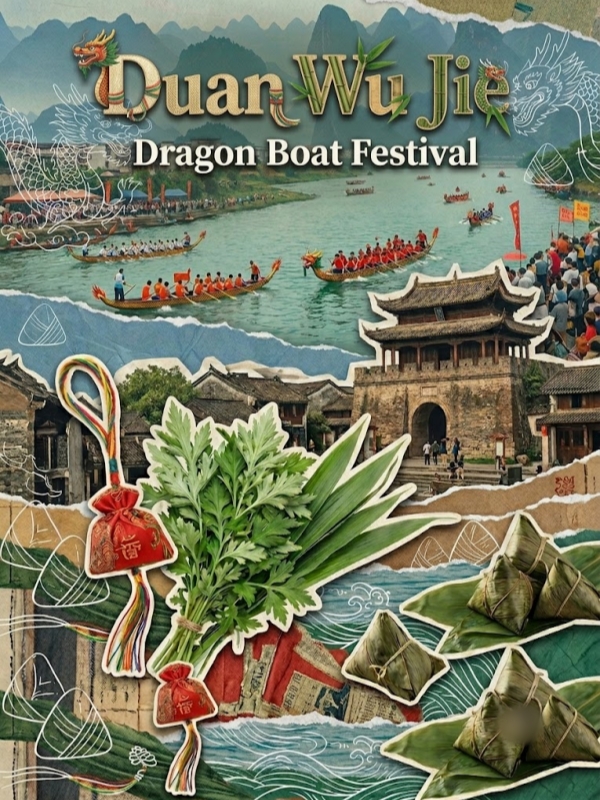
Duan Wu Jie:A Timeless Celebration of River Racing, Sticky Rice Delicacies, And Protective Summer Charms
Dragon boat festival (Duan Wu Jie), one of the oldest and most cherished of Chinese celebrations, occurs on the fifth day of the fifth lunar month — typically sometime between late May and mid-June on the Gregorian calendar. For over 2,000 years, dragon boat races, sticky rice dumplings and age-old rites steeped in themes of loyalty, sacrifice and seasonal turning, have unified the nation. In 2009 the festival became the first Chinese holiday to be added to UNESCO's list of Intangible Cultural Heritage of Humanity.
Whether you're planning a trip to China during the holiday, trying to understand what your Chinese friends are celebrating, or simply curious about one of Asia's most dramatic festivals, this guide covers everything. From the exact 2026 dates to the stories that started it all, you'll leave with a real feel for the festival. Let's get into it.
Festival Basics : The Name and the Calendar
Date of Duan Wu Jie:The 5th Day of the 5th Lunar Month
The Words : Understanding What the Name Means
The name "Duan Wu Jie" doesn't translate into English the way you'd expect. Break it down and it starts to make sense:
- 端 (Duān): means "start" or "beginning"
- 午 (Wǔ): refers to the fifth position in the traditional Chinese zodiac cycle, and sounds identical to 五 (wǔ), meaning "five"
- 节 (Jié): means "festival" or "holiday"
Put it together and you get "the festival at the start of the fifth month." The phonetic overlap between 午 and 五 locked the holiday to the fifth day of the fifth lunar month — a date loaded with symbolic weight.
Pronunciation throws people off guard. Say: DWAN-woo-JYEH: first syllable, level and rapid, second dips and then rises, third gently rising. Caught you, didn’t I? In Cantonese, as spoken in Hong Kong, it’s Tuen Ng, entirely different sound but it’s the same day. The Mainland writes 端午节 (simplified), and Taiwan and Hong Kong 端午節 (traditional).
The Dates : Checking the Holiday Schedule for 2026
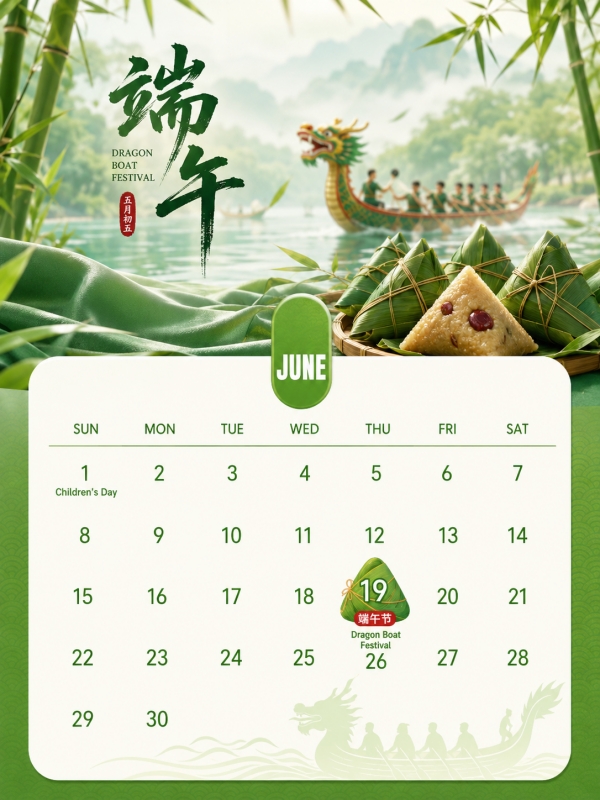
The Dragon Boat Festival doesn't fall on the same date every year — it follows the lunar calendar. In 2026, Duan Wu Jie falls on Friday, June 19, with three days off through June 21. That Friday start connects naturally to the weekend, giving travelers a potential five-day window.
| Year | Gregorian Date | Day | Holiday Period | Notes |
|---|---|---|---|---|
| 2025 | June 2 | Monday | June 2–4 | Monday start creates a clean 3-day break |
| 2026 | June 19 | Friday | June 19–21 | Friday start; pairs well with the weekend |
| 2027 | June 9 | Wednesday | June 9–11 | Midweek; book travel early |
| 2028 | May 28 | Sunday | May 28–30 | Rare May date due to early lunar calendar |
| 2029 | June 16 | Saturday | June 16–18 | Weekend start; minimal disruption |
| 2030 | June 5 | Wednesday | June 5–7 | Falls near the Grain in Ear solar term |
💡 Worth knowing: Duan Wu Jie became a national public holiday in China again in 2008, after decades without official recognition. UNESCO added it to the global intangible heritage list in 2009. It's now celebrated across Hong Kong, Macau, Taiwan, Singapore, Malaysia, Vietnam, Japan, and Korea — each with their own local twist.
Fun Traditions : What People Do for the Festival
Dragon Boat Races : Watching the Boats Dash on Water
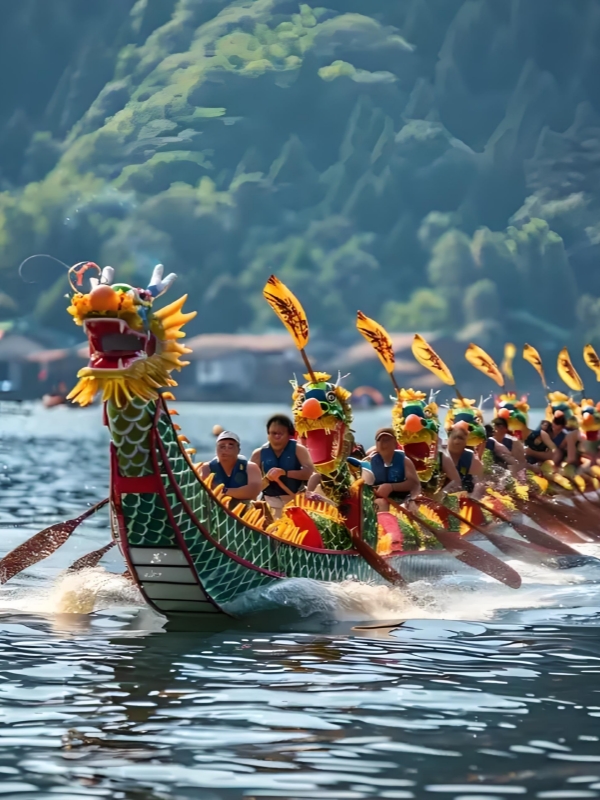
Dragon Boat Racing
Dragon boat racing is every bit as thrilling as it looks. Long wooden boats, carved and painted like dragons, zip across the water, 20-30 paddlers dipping in unison as a drummer pounds a beat at the front. The races run 200-500m (roughly 650-1600ft)—over within minutes but the build-up lasts longer.
In 2026, two events stand out:
- "Haikou Cup" International Dragon Boat Invitational: June 14–21 near the Cloud Library in Haikou, Hainan. Includes open public divisions — foreign visitors can register and actually race. A Dragon Boat Culture Experience Week runs alongside it.
- Chinese Dragon Boat Grand Prix, Bazhong Enyang (Sichuan): June 18–19, with 2 million RMB in total prize money. Elite-level racing — better for watching than participating, but spectacular.
Outside China, the sport spans 60+ countries. Boston, New York, Vancouver, London, and Sydney all host major races. Search "Dragon Boat Club" plus your city — most clubs welcome complete beginners.
Hanging Herbs : Using Mugwort to Keep Bugs Away
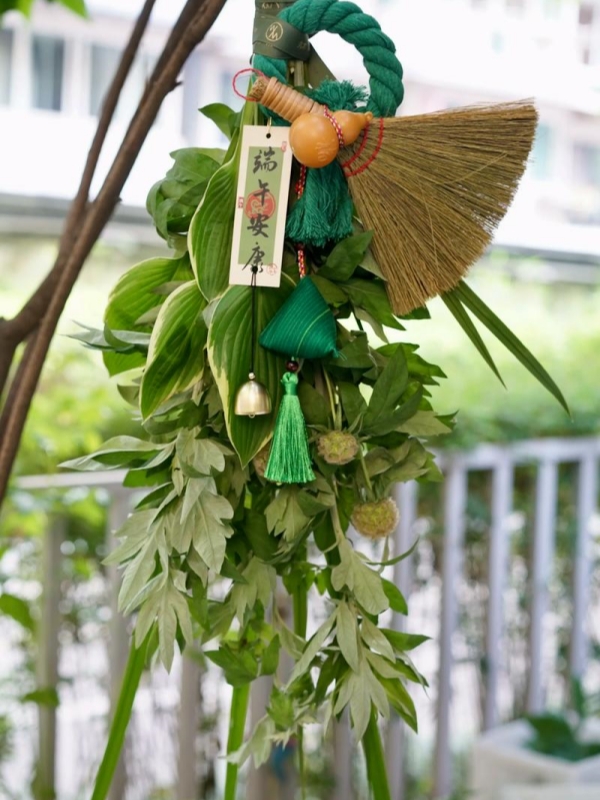
Hanging Fresh Mugwort & Calamus
The morning of the festival walk through any Chinese ghetto will be aromatic with a pungent smell: the perfume of mugwort (艾草) hanging above the doorway. The fifth month of the moon was India’s poison month when snakes and scorpions, centipedes did the most damage. Hanging up mugwort and calamus (菖蒲) at the door kept them away. Quite a sensible proceeding, mugwort does repel mosquitoes, calamus is a good anti germicide.
In 2026, this tradition has gone modern. In Chengdu, mugwort is now sold in artfully arranged bundles via short-video livestreams, with some bases moving 300,000 bundles daily. Young people buy them as decorative door hangings — keeping the ritual alive while making it look good on social media. For visitors, it's an affordable and tactile way to participate. 🌿
Spice Bags : Carrying Little Pouches for Good Health
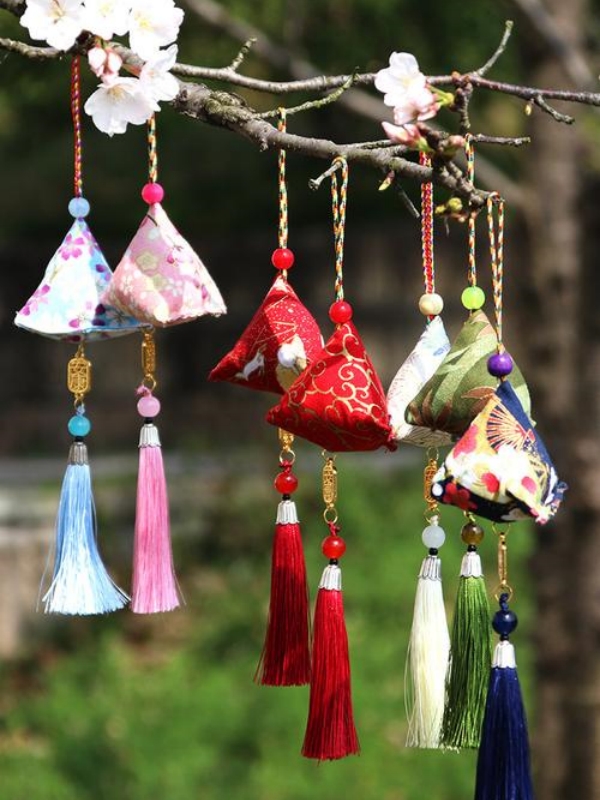
Mugwort Duanwu Sachets
Around the neck, or attached to bags, the strong smell of the spice bags (香包, xiāngbāo), hand sewn from silk or embroidered cotton and filled with dried medicinal herbs — realgar, mugwort, atractylodes, etc. — is supposed to ward off insects and illness. Traditionally, parents made these for children; now there is an abundance of them at craft markets, with prices ranging from just a few yuan to artisanal versions costing hundreds, and many festival places will run hands-on workshops where visitors can sew their own. No matter how you acquire one, it will be the most portable of festival souvenirs.
Realgar Wine : The Bright Yellow Drink Used in Rituals
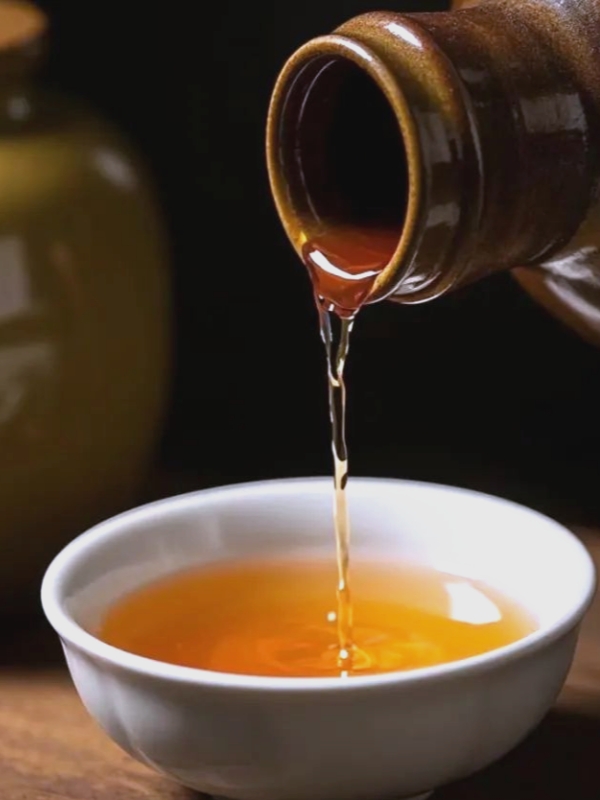
Realgar Wine
Realgar wine (雄黄酒). This rice wine is flavored with the powdered mineral realgar, giving it a bright orange hue. It used to be regarded as an antidote against snake poison and summer disease; it was patted onto children’s foreheads and ears to chase away the five poisons. Mind you: realgar is a compound of arsenic sulfide, and modern medicine advises against drinking it. Most contemporary families simply put it out as a symbolic gesture, or plump for a bottle of yellow rice wine or chrysanthemum wine. It’s really more interesting to know about this that to drink it — if you want some insight into the workings of ancient Chinese family life and how they approached the problems of the seasons.
Playful Customs : Balancing Eggs and Making Silk Threads
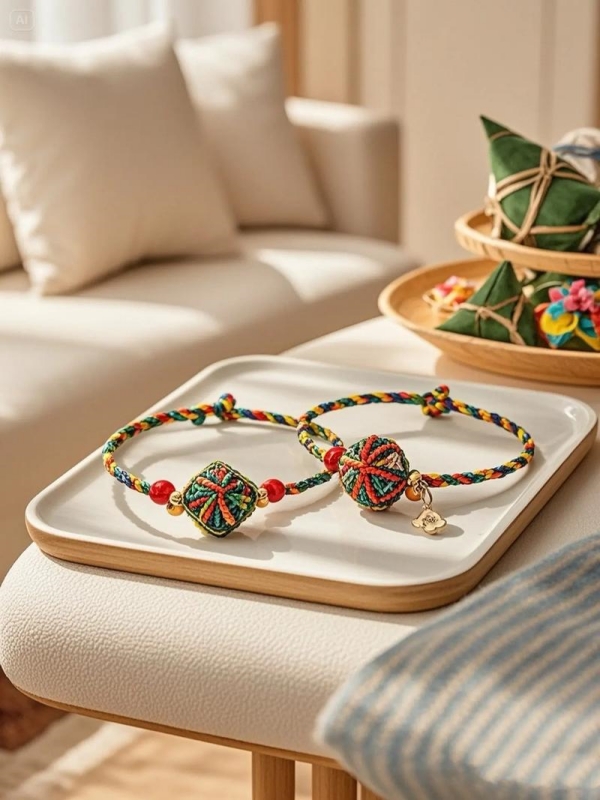
Five-Colored Duanwu Silk Bracelets
Two of the festival's lighter traditions are worth trying firsthand:
- Noon egg-standing: At solar noon, yang energy is believed to peak — making it possible to balance a raw egg upright on a flat surface. It works more often than you'd expect, and success supposedly brings good luck for the year. In 2026, Taipei's city government turned this into a competitive event: the "Dragon Boat Flying Car Egg Race" at Dajia Riverside Park had participants build wheeled vehicles to carry eggs down a ramp without breaking them.
- Five-color silk thread bracelets: Blue, red, yellow, white, and black threads — representing the five elements — braided into a bracelet worn on the wrist for protection. Kits cost almost nothing at festival markets. Kids love them. Adults do too.
Other customs worth noting:
- Zhong Kui door posters: Images of the mythical demon-slayer hung on doors in traditional households
- Herbal baths: Southern families boil mugwort and calamus in water and bathe in it — a practical summer health ritual
Festive Food : The Best Things to Eat
Zongzi : Sticky Rice Dumplings Wrapped in Leaves
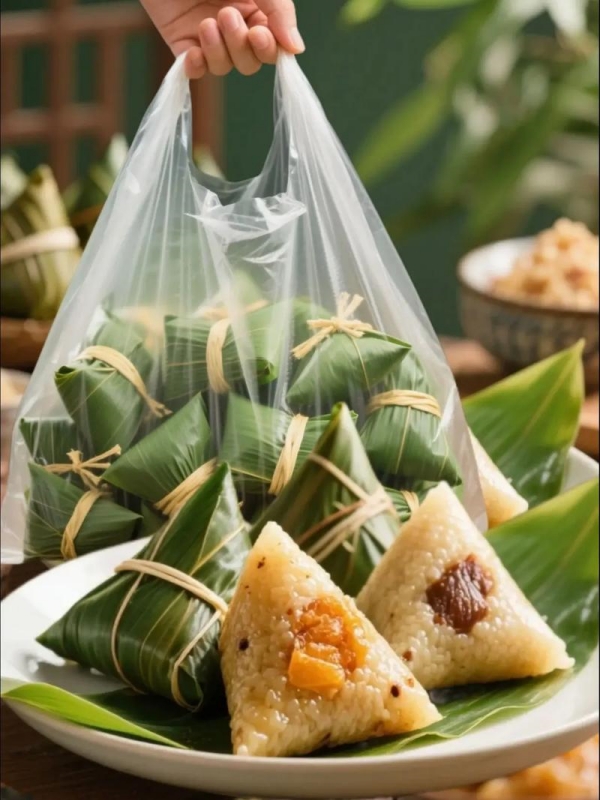
Zongzi
If you eat one thing during Duan Wu Jie, make it zongzi (粽子). Glutinous rice packed with filling, wrapped in bamboo or reed leaves, then steamed or boiled until dense, sticky, and faintly green from the leaves. The variety is wider than most visitors expect:
| Type | Region | Main Filling | Flavor Profile |
|---|---|---|---|
| Savory pork (咸肉粽) | Southern China / Guangdong | Pork belly, salted egg yolk, mushroom, peanut | Rich, savory, deeply satisfying |
| Batsang (肉粽) | Taiwan | Pork, chestnut, mushroom, egg yolk | Layered, complex — Taiwan's signature style |
| Red bean paste (红豆沙粽) | Nationwide | Sweet red bean paste | Smooth, gently sweet, popular with kids |
| Alkaline (碱粽) | Taiwan / Fujian | None — lye water only | Chewy, mild; eaten cold, dipped in sugar |
| Five-nut (五仁粽) | Northern China | Walnuts, peanuts, pine nuts, sesame, melon seeds | Sweet, nutty, distinctly northern |
The savory-versus-sweet divide is real and passionate — southern families lean toward meat, northern families toward sweet. That boundary has blurred in recent years. For more on the full range of Dragon Boat Festival foods, the regional breakdown goes even deeper.
Making Zongzi : Following the Steps to Wrap and Cook
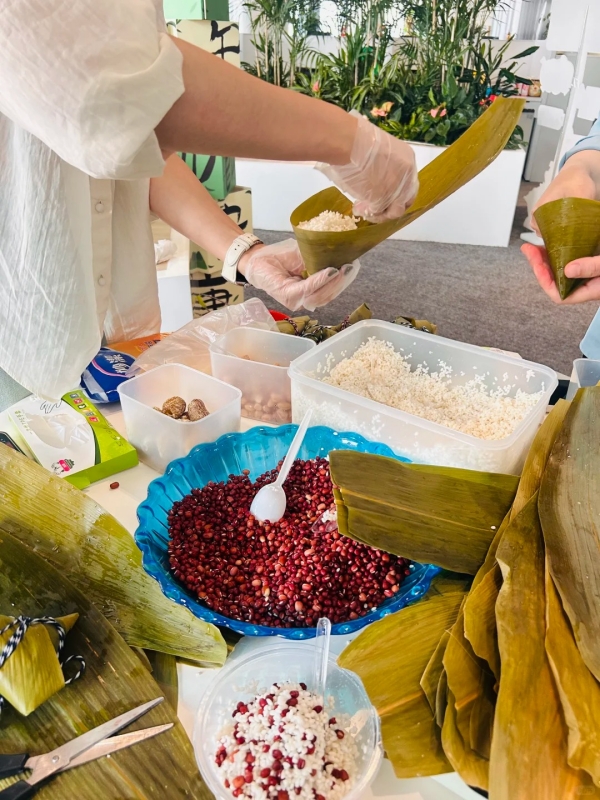
How to Make Zongzi
Making zongzi is an event in itself — most families spend an afternoon before the holiday gathered in the kitchen, everyone with a role. The process takes 6–24 hours depending on soaking time:
- Step 1 — Prepare the leaves: Simmer bamboo or reed leaves in water with a splash of vinegar. Soak in cold water for 1–7 days, changing daily. Skipping this causes cracking during wrapping.
- Step 2 — Soak the rice: Cover glutinous rice in cold water for 4–8 hours until swollen. This step determines final texture.
- Step 3 — Assemble: Fold two leaves into a cone. Add a layer of rice, your filling, then more rice. Fold the leaves over firmly to seal.
- Step 4 — Tie: Wrap tightly with kitchen twine. A loose knot means the rice expands and bursts during cooking.
- Step 5 — Cook: Boil or steam for 2–4 hours. Eat savory ones hot; refrigerate sweet or alkaline ones and serve cold.
The bamboo leaf scent that infuses the rice during cooking is impossible to replicate any other way. That smell is the holiday for millions of Chinese families.
Other Bites : Tasty Snacks Beyond the Zongzi
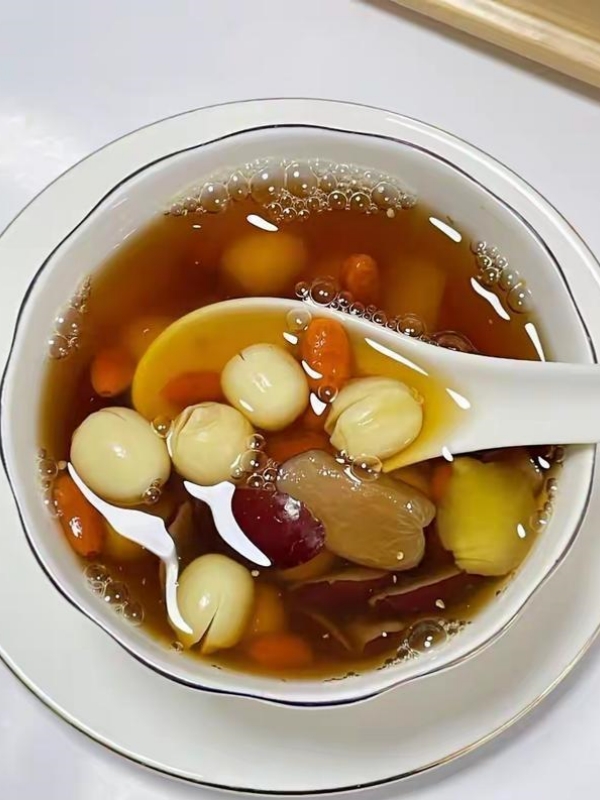
Five-Bean Duanwu Drink
Zongzi gets the attention, but regional food traditions run deeper — often grouped around the number five:
- Five Yellows (五黄) — Jiangsu, Zhejiang, Anhui: Yellow croaker fish, cucumber, eel, salted duck egg yolk, and realgar wine. A full meal concept built on the logic of fighting five poisons with five yellows.
- Five-Bean Porridge (五豆粥) — Guangdong and Hong Kong: Yellow soybeans, mung beans, red beans, black beans, and cowpeas in a mild, gently sweet congee. Light and nourishing on a hot day.
- Mugwort rice cakes (艾草糍粑) — Hunan and Guangxi: Fresh mugwort juice pressed into glutinous rice for earthy, chewy green cakes. Eaten on-site — they don't travel well.
- Korean-style rice cakes (打糕) — Northeastern China: Chinese Korean communities make their own festival cakes, reflecting how the holiday absorbed different ethnic traditions as it spread.
The Qingming Festival shares some of these seasonal food traditions — particularly the emphasis on fresh, simple ingredients tied to the agricultural calendar.
Finding Food : Hunting Down the Most Authentic Bites
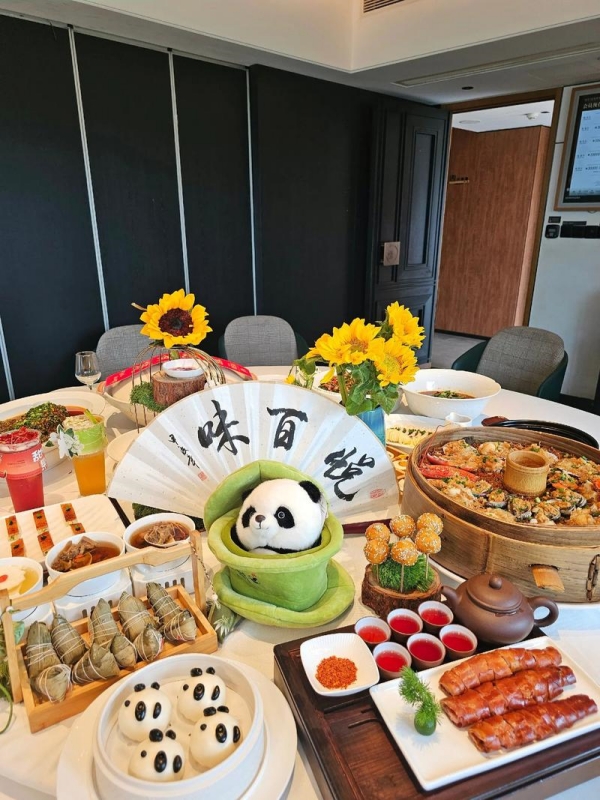
Duan Wu Jie Festival Feast Set
The best zongzi won't come from a chain store. Here's where to actually look:
- Morning markets and wet markets ⭐⭐⭐⭐⭐: Vendors wrap to order. You watch the process, try before you commit, pay very little. Freshness is unbeatable. This is the move.
- Brand supermarkets: Wu Fang Zhai (五芳斋) and Zhen Zhen Lao Lao (真真老老) are the most trusted national names. In 2026, Wu Fang Zhai's 50-gram "one-bite" mini zongzi (啊呜一口) sold out repeatedly — small, portable, genuinely good.
- Pre-festival restaurant specials: Most mid-range restaurants run a limited Dragon Boat Festival menu the week before the holiday. More ceremonial than street food, but good for atmosphere.
- Jiaxing, Zhejiang — the pilgrimage destination: China's self-proclaimed zongzi capital. In 2026, the Xingtang Old Street hosted a "Thousand People Tasting" event drawing tens of thousands of visitors. Local producers are pushing innovation — "original broth zongzi" (原汤粽), made with rice soaked in stock from old hen and cured ham, became a breakout hit. The broader market trend is toward smaller, fresher, shorter shelf-life products.
Talking : How to Greet Everyone
Best Wishes : Why "Ankang" is Better Than "Happy"
Most holidays, you say "Happy [holiday name]." For Dragon Boat Festival, that's not quite right — and knowing the difference makes an impression. The holiday is fundamentally about remembrance, ritual protection, and warding off illness. Its tone is closer to Qingming than to Chinese New Year. Read more about that comparison in our guide to Qingming traditions.
Saying 端午快乐 (Duānwǔ kuàilè—“Happy Dragon Boat Festival”) isn’t rude, just a little off. Actually you want to wish someone 端午安康 (Duānwǔ ānkāng)—“wishing you health and peace” (so apt for the holiday spirit), which is not a greeting actually used in Taiwan and/or amongst younger Chinese people and in Southeast Asia “Happy Dragon Boat Festival” is perfectly nice. If in doubt, use 安康. It’s universal.
Simple Phrases : Quick Words for Casual Chats
A few well-placed Chinese phrases go a long way during the festival. These six cover almost every situation you'll actually encounter:
| Chinese | Pinyin | English Meaning | When to Use It |
|---|---|---|---|
| 端午安康 | Duānwǔ ānkāng | Wishing you health and peace | Universal greeting — safe in any context |
| 端午快乐 | Duānwǔ kuàilè | Happy Dragon Boat Festival | Casual, works well with younger people |
| 粽子好吃吗? | Zòngzi hào chī ma? | Is the zongzi good? | Perfect opener at any food stall |
| 在哪里看龙舟? | Zài nǎlǐ kàn lóngzhōu? | Where can I watch dragon boat races? | Ask locals; they'll point you right |
| 我可以试试吗? | Wǒ kěyǐ shìshi ma? | Can I give it a try? | Joining in on egg-standing, spice bags, etc. |
| 这是什么节日? | Zhè shì shénme jiérì? | What festival is this? | Great conversation starter with locals |
Memorize the first two. The rest are bonuses.
The Stories : Legends That Built the Festival
Qu Yuan : The Famous Poet Who Started the Story
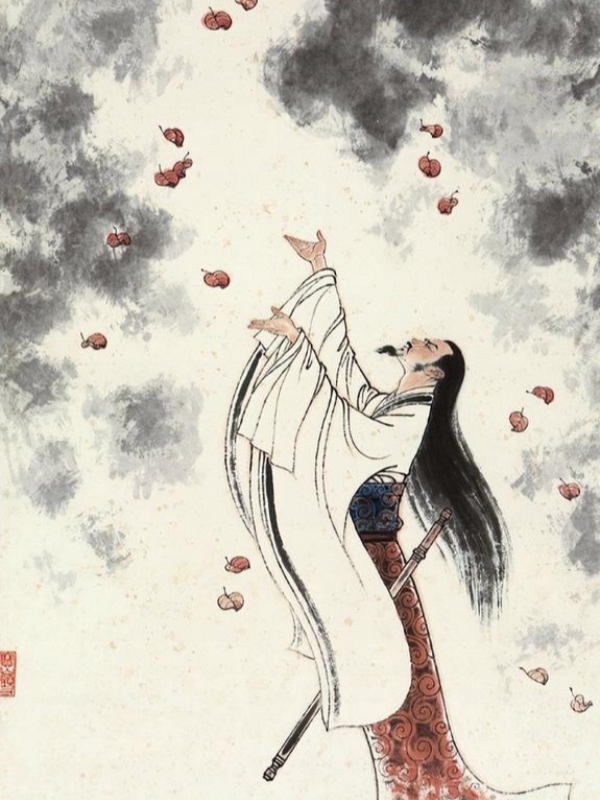
Qu Yuan’s Riverside Martyrdom
Over 2,300 years ago in the Warring States period, Qu Yuan, a high official of Chu and China’s first named poet, immortalised his unquestioning loyalty to his country in his own poems. Despite his patriotism, for standing in the way of a disastrous alliance with the enemy state of Qin, he was defamed by political rivals and spent 18 years in exile. In despair, he composed the Li Sao and other masterpieces, turning his ideals and passion into literature and creating the eternal model of the principled Chinese scholar-official.
In 278 BC, upon learning that the Qin army had conquered his homeland's capital, a devastated Qu Yuan chose to walk into the Miluo River on the fifth day of the fifth lunar month as a final act of protest. Hearing the news, local people raced boats into the river to search for his body while beating drums to ward off fish, and they threw sticky rice into the water to feed them, later wrapping it in bamboo leaves to prevent river dragons from stealing the offering. These two solemn actions evolved over centuries into the iconic modern traditions of dragon boat racing and eating zongzi.
Different Myths : Other Tales About the Festival
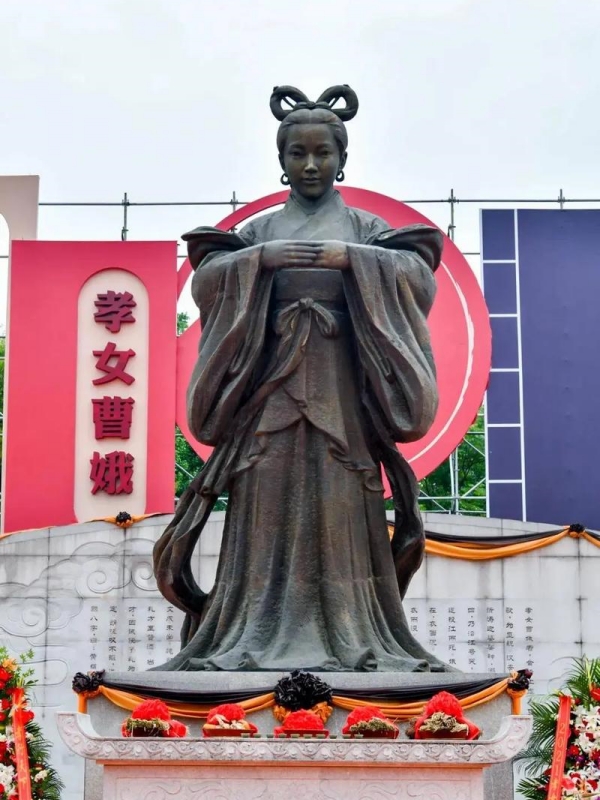
Filial Daughter Cao E
Qu Yuan's story is the most famous, but historians have identified several competing origin theories — some predating him entirely:
- Wu-Yue dragon totem theory (oldest): The Wu and Yue peoples of ancient Jiangsu and Zhejiang worshipped dragon deities centuries before Qu Yuan. Dragon boat racing may have begun as a rain ritual, not a memorial.
- Wu Zixu: Around Suzhou, the fifth day honors Wu Zixu, a loyal minister executed and thrown into a river in 484 BC. In parts of Jiangsu, he is the festival's central figure.
- Cao E: In Shaoxing and Ningbo, people honor Cao E, a young girl who drowned searching for her father's body in 130 AD. A river and temple were named after her.
- Agricultural sacrifice theory: Some academics argue the holiday originated as a midsummer harvest ritual in southern rice-farming communities, with the Qu Yuan story layered on later by Confucian scholars.
China is big, and regional cultures kept their own traditions. The festival absorbed them all.
Modern Life : How People Celebrate Today
Keeping Up : Changing from River Banks to Screens
The festival has changed — and that's how traditions survive. Dragon boat racing has scaled from community rituals into televised national spectacles with corporate sponsors and live-stream coverage. Zongzi-making at home has largely shifted to store-bought, though in many multi-generational households grandmothers still teach grandchildren to wrap. What's genuinely new is the cultural economy around the holiday: young people in hanfu taking festival photos, non-profit spice-bag workshops, and short-video content turning mugwort bundles into lifestyle products. Destinations like Miluo River, Jiaxing, and Wuhou Shrine in Chengdu see visitor numbers spike sharply across the three-day break. The Tiao Xiu tradition shows a similar pattern — old practices finding new expressions in modern China.
Holiday Back : Bringing the Public Holiday Return
Before 2008, Dragon Boat Festival wasn't a day off. After 1949, the new government removed it from the official holiday calendar. Families still ate zongzi and communities still raced boats — but without official recognition. In 2008, Beijing reinstated Duan Wu Jie alongside Qingming and Mid-Autumn Festival, each receiving three days off.
The timing had context: just 2 years earlier, South Korea had registered its Gangneung Danoje festival (with the same ancient origins) with UNESCO, a move that raised questions around cultural preservation throughout China and put pressure on the Chinese authorities. The domestic implementation of the policy followed soon thereafter. A year after its reinstatement, in 2010, China’s application to UNESCO was successful. The timing is indicative: 2005 Korean registration, 2008 Chinese public holiday, 2009 UNESCO recognition; a blend of cultural competition, national identity, and who owns tradition.
Around the World : Celebrations Far and Near
Regional Styles : Local Twists in HK, Macau, and Taiwan
Hong Kong
Hong Kong calls the festival Tuen Ng. Its dragon boat racing scene is internationally famous, and 2026 is a landmark year: the Hong Kong International Dragon Boat Races celebrate their 50th anniversary, running June 19 to July 1 at the East Tsim Sha Tsui waterfront. Over 220 teams from 16 countries compete across 13 days, with non-racing activities including heritage workshops, VR dragon boat simulators, and a street food festival. If you can only attend one dragon boat event in your life, this is the one.
Macau
Macau keeps the festival quieter — public holiday, community events, zongzi in every bakery — but at a more intimate scale. It's a good option for visitors who want to experience Duan Wu Jie without massive crowds, set against a backdrop of Portuguese colonial architecture and Chinese street life.
Taiwan
Taiwan's signature contribution to zongzi culture is batsang (肉粽) — pork, chestnut, mushroom, and salted egg yolk wrapped together, more complex in flavor than most mainland versions. The alkaline zongzi (碱粽) eaten cold with sugar is another Taiwanese specialty: pale, chewy, distinctively mild. Egg-standing is taken seriously here — TV stations cover it live. In 2026, Taipei organized the "Dragon Boat Flying Car Egg Race" at Dajia Riverside Park, where participants built wheeled vehicles to carry eggs down a ramp unbroken. Traditional practice meets creative engineering.
Asian Roots : Shared Customs in Other Countries
Duan Wu Jie traveled with Chinese communities across Asia and evolved as it went:
- Singapore and Malaysia: Called Peh Cun in local Hokkien. Not an official holiday, but Chinese communities organize it vigorously, with different dialect groups — Hokkien, Cantonese, Teochew — each bringing distinct zongzi recipes.
- Vietnam: Tết Đoan Ngọ focuses on eating fermented glutinous rice with alcohol to cleanse the body of parasites — a practical interpretation of the "poison month" concept, with zongzi and dragon boats far less central.
- Korea: Dano shares the same ancient origin but looks completely different: women swing on swings, men wrestle, and shamanic rituals are performed. Korea registered its Gangneung Danoje with UNESCO in 2005 — four years before China. The cultural debate that followed still echoes.
- Japan: Tango no Sekku on May 5 (also Children's Day) involves hanging carp-shaped streamers (鯉のぼり) and displaying samurai armor. Dragon boats and rice dumplings barely feature. The holiday has transformed almost entirely into Japanese cultural form.
💡 Both China's and Korea's UNESCO registrations are valid and separate. The debate about what the festival "belongs to" has driven real policy decisions in both countries.
Joining In : Racing with Boat Teams Overseas
You don't need to travel to China to participate. Dragon boat racing has spread to 60+ countries, and most major cities have a club:
- United States: Boston Dragon Boat Festival (bostondragonboat.org) is among the most established. New York's Hong Kong Dragon Boat Festival in Flushing draws Taiwanese-American professional teams and welcomes new paddlers. Seattle Flying Dragons (seattleflyingdragons.org) explicitly recruits beginners.
- Canada: Vancouver International Dragon Boat Festival — one of North America's largest, with both competitive and recreational divisions.
- United Kingdom: London Dragon Boat Festival on the Thames, typically late June or early July.
- Australia: Sydney Dragon Boat Festival, the anchor event for Chinese-Australian communities.
Clubs almost universally welcome people with no experience — just reasonable fitness and the ability to follow a rhythm. Search "Dragon Boat Club" plus your city. Training usually starts 6–8 weeks before major races. The Yuan Xiao Jie guide covers another major Chinese festival where overseas communities organize large public celebrations — the cross-cultural energy is similar.
Quick Answers : Everything Asked Most Often
Q: What is the meaning of Duan Wu Jie?
Duan Wu Jie means "the festival at the beginning of the fifth month" in Mandarin Chinese. It's a traditional holiday with over 2,000 years of history, observed on the fifth day of the fifth lunar month. The holiday honors the patriotic poet Qu Yuan and centers on dragon boat racing, eating zongzi, and rituals for warding off summer illness. UNESCO recognized duan wu jie as an Intangible Cultural Heritage of Humanity in 2009.
Q: When is Duan Wu Jie 2026?
Duan Wu Jie in 2026 falls on Friday, June 19. The official public holiday in mainland China runs three days — June 19 through June 21. Because the festival follows the lunar calendar, the date shifts every year on the Gregorian calendar. Duan wu jie typically lands somewhere between late May and mid-June, but always on the fifth day of the fifth lunar month.
Q: What is the story of Dragon Boat Festival?
The most widely told story centers on Qu Yuan, a loyal minister and poet of the Chu kingdom during the Warring States Period. Falsely accused of treason and exiled for nearly two decades, he threw himself into the Miluo River in 278 BC after his kingdom fell to Qin forces. The duan wu jie traditions of dragon boat racing and eating zongzi both trace back to how local people responded to his death — racing to find his body and throwing rice into the river to protect it from fish.
Q: Is it okay to say "Happy Dragon Boat Festival"?
You can say it — most people will understand and appreciate the gesture. But the more culturally precise greeting is 端午安康 (Duānwǔ ānkāng), which wishes someone health and peace rather than happiness. Duan wu jie has roots in memorial and ritual protection, so "peace and health" fits the spirit better than "happy." Among younger Chinese and in Taiwan, "Happy Dragon Boat Festival" is perfectly normal.
Q: What do people eat during Dragon Boat Festival?
Zongzi are the undisputed centerpiece — glutinous rice packed with savory or sweet fillings and wrapped in bamboo leaves, then boiled or steamed. Beyond zongzi, duan wu jie foods vary by region: Jiangsu and Zhejiang eat "five yellows," while Guangdong families make five-bean porridge. In 2026, the market trend has shifted toward smaller, fresher zongzi with creative fillings like taro, custard, and even durian.
Q: Why is China so obsessed with dragons?
Chinese dragons are fundamentally different from their Western counterparts — they're divine beings associated with water, rain, prosperity, and imperial authority, not villains. The dragon in duan wu jie racing connects to ancient Wu-Yue peoples who worshipped dragon totems long before the Qu Yuan story existed. Racing on dragon-shaped boats was originally a ritual to invoke the dragon god's blessing for good rains and harvests.
Q: Can foreigners participate in Dragon Boat Festival activities?
Absolutely. Dragon boat racing is open to everyone — clubs across North America, Europe, and Australia actively recruit new paddlers with no experience needed. In China during duan wu jie, major events like the 2026 Haikou Cup include open public divisions specifically for non-competitive participants. Zongzi-making workshops, spice bag embroidery classes, and festival markets welcome foreign visitors without any cultural barrier.
Q: What is the difference between Duan Wu Jie and the Dragon Boat Festival?
They're the same holiday. "Dragon Boat Festival" is the official English translation used by the People's Republic of China, chosen to highlight the event's most visually dramatic feature. "Duan Wu Jie" is the Mandarin phonetic name, which carries more of the holiday's full cultural meaning — the seasonal timing, the ritual significance, the memorial dimension. Outside China, duan wu jie is less commonly used, but in Chinese communities worldwide it remains the preferred term.
Q: Is Dragon Boat Festival a public holiday in China?
Yes. Duan Wu Jie has been an official national public holiday in mainland China since 2008, when it was reinstated alongside Qingming and Mid-Autumn Festival. Workers receive three consecutive days off. Hong Kong, Macau, and Taiwan also observe duan wu jie as a public holiday. For travelers, note that the holiday period brings heavy tourist traffic — popular destinations book up fast, hotel prices spike before the break, and southern China often sees heavy rain.