Yuan Xiao Jie
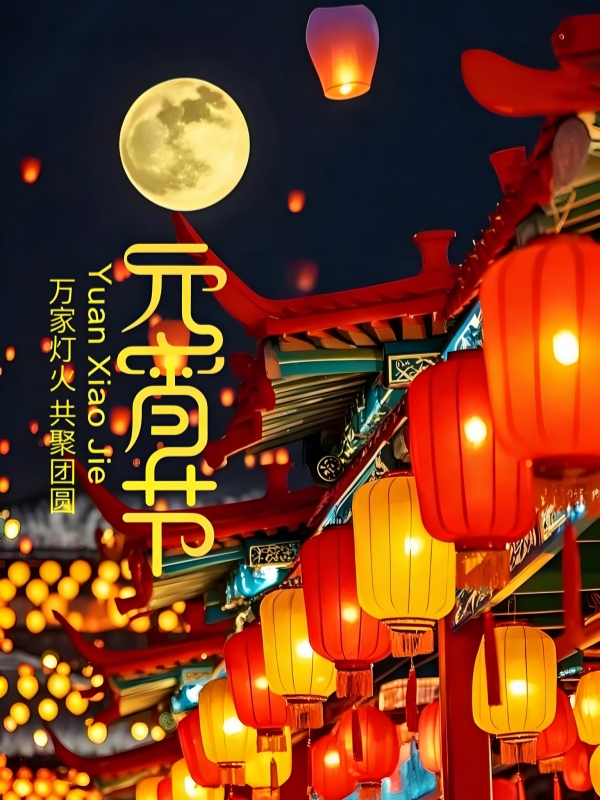
The nighttime was granted its identity through edict of the Emperor and has been associated with a total of over 2,000 years worth of meaning. Yuan Xiao Jie can be translated as the "First Night Festival"; it occurs annually on the 15th day of the first month according to the lunar calendar (the lunar year) and has become synonymous with the first full Moon of the Year. In addition to being a historical reference, the name embodies family togetherness, the shared lighting of lanterns, and a relationship between the lunar calendar and the Universe through binomial expansion — each month of the lunar year begins with a new moon and ends with a full moon. The design will be fulfilled in 2026 with March 3 and will serve as the 15th Day after the prior year's departure from the lunar calendar.
🏮 Ready to see these traditions come to life? Explore our [Lantern Festival Beijing 2026 Guide] to find the 9 best events where the 2,000-year glow still shines brightest!
Yuan Xiao Jie at a Glance
| Feature | Details |
|---|---|
| 🗓️ 2026 Date | March 3, 2026 |
| 📅 Calendar Position | 15th day of the 1st lunar month |
| 🌕 Astronomical Link | First full moon of the Chinese New Year |
| 🏮 English Name | Lantern Festival |
| 🍡 Festival Food | Yuanxiao (元宵) in the north / Tangyuan (汤圆) in the south |
| 📜 Recorded History | 2,000+ years, confirmed from the Han Dynasty (206 BC – 220 AD) |
| 🌍 UNESCO Status | Part of Spring Festival, inscribed on Intangible Heritage list in 2025 |
| ❤️ Cultural Nickname | Chinese Valentine's Day |
| 🎆 Key Customs | Lantern viewing, riddle-guessing, dragon dances, fireworks |
| 🔥 Unique Tradition | Fire ball swinging (耍火球, shua huoqiu) in Sichuan and Fujian |
The "Yuan Xiao Jie" Says in Three Characters What "Lantern Festival" Cannot
Yuan (元), Xiao (宵), Jie (节): The Three Characters That Define the Entire Festival
- Yuan (元): The first, the origin, the beginning. This same character names the Yuan Dynasty and marks primordial energy in Chinese philosophy. Here, it signals the inaugural event of a new lunar year.
- Xiao (宵): The deep hours of night — specifically from approximately 9 PM to 3 AM in ancient Chinese timekeeping. Not simply "evening." These are the lamp-lit, still hours.
- Jie (节): A seasonal node — a point where the rhythm of time pauses to be marked. Together, the three characters read: The Festival of the First Night.
The Han Dynasty character dictionary Shuowen Jiezi records xiao (宵) as "the dark portion of night" — placing this meaning over two thousand years ago.
The Word 'Yuanxiao' Is Also the Name of the Festival Food — and That's Not a Coincidence
Yuanxiao (元宵) — the round glutinous rice dumpling eaten on this night — takes its name directly from the festival. And the festival, as the legend tells it, takes its name from a real person: a palace maid named Yuan-Xiao. Her story gave birth to both the food and the tradition. That story follows in the next section.
- Same word, three meanings: The festival night itself, the food eaten on that night, and the name of the woman at the heart of the origin legend.
- Why this matters: When you eat yuanxiao on the 15th, you are not only following a custom. You are, in a sense, speaking the festival's own name aloud with every bite.
💡 Tip: In northern China, the food is called yuanxiao (元宵). In the south, it is tangyuan (汤圆). Both are round. Both carry sweetness inside. They are the same prayer spoken in two dialects.
🍴 Master the Tradition: > Now that you know the name's sacred origin, learn how to prepare these symbolic treats yourself with our guide on [Eating & Making Yuanxiao in 2026]!
Yuan Xiao Jie in the Calendar: Which Night It Falls and When
Because the lunisolar calendar places the new moon at the first of each month, the fifteenth always arrives at the full moon with astronomical precision. Yuan Xiao Jie therefore never drifts. It does not need to be scheduled. The calendar builds the date in, year after year, the same way it always has.
In 2026, that night falls on March 3. Step outside that evening and look up. The moon overhead is the same moon Han Dynasty poets wrote about — on this exact night, two thousand years ago.
| Year | Gregorian Date | Chinese Zodiac |
|---|---|---|
| 2023 | February 5 | 🐇 Year of the Rabbit (兔年) |
| 2024 | February 24 | 🐉 Year of the Dragon (龙年) |
| 2025 | February 12 | 🐍 Year of the Snake (蛇年) |
| 2026 | March 3 | 🐎 Year of the Horse (马年) |
| 2027 | February 20 | 🐐 Year of the Goat (羊年) |
| 2028 | February 9 | 🐒 Year of the Monkey (猴年) |
🌕 Festival Sequence — Yuan Xiao Jie marks the finale of the season that begins with [the most important holiday in China], Spring Festival.
A Maid, a Fire God, and a Night of Lanterns: How Yuan Xiao Jie Was Born
-
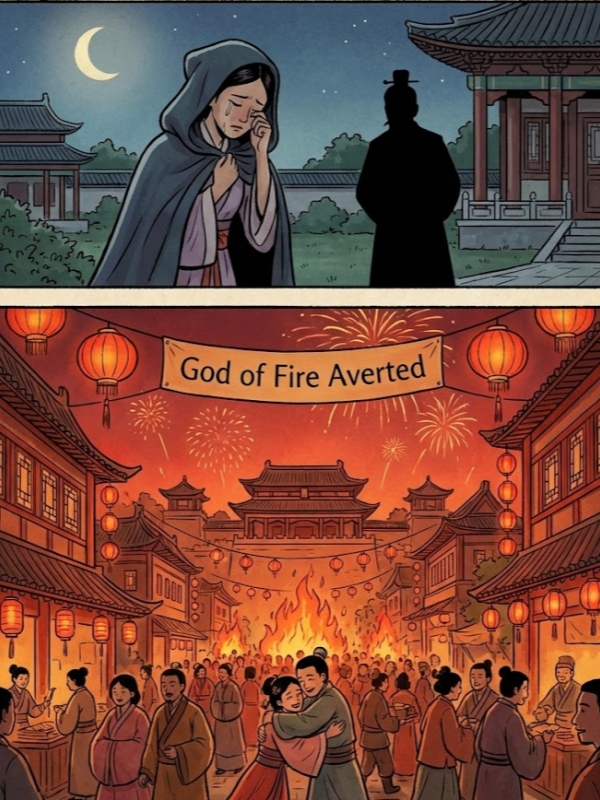

- The Maid Yuan-Xiao’s Story
-
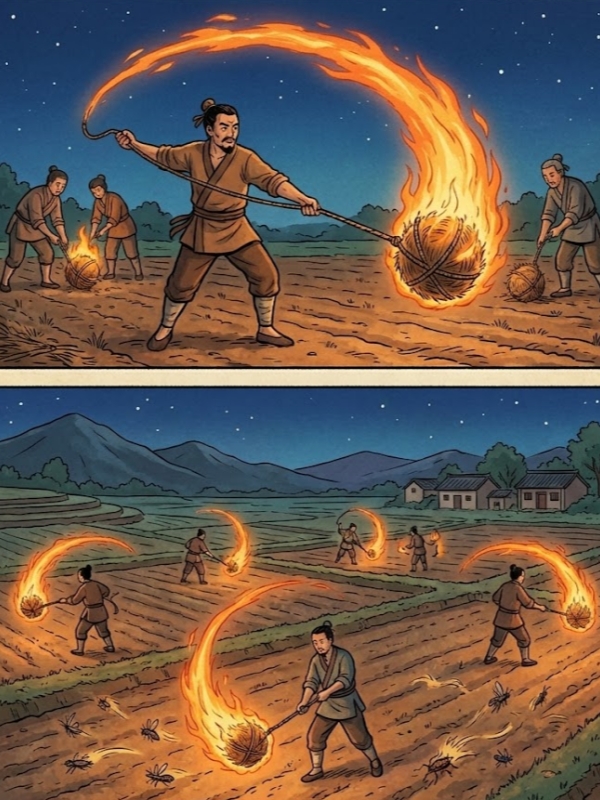
- Pre-Han Fire Ritual of Yuan Xiao Jie
-
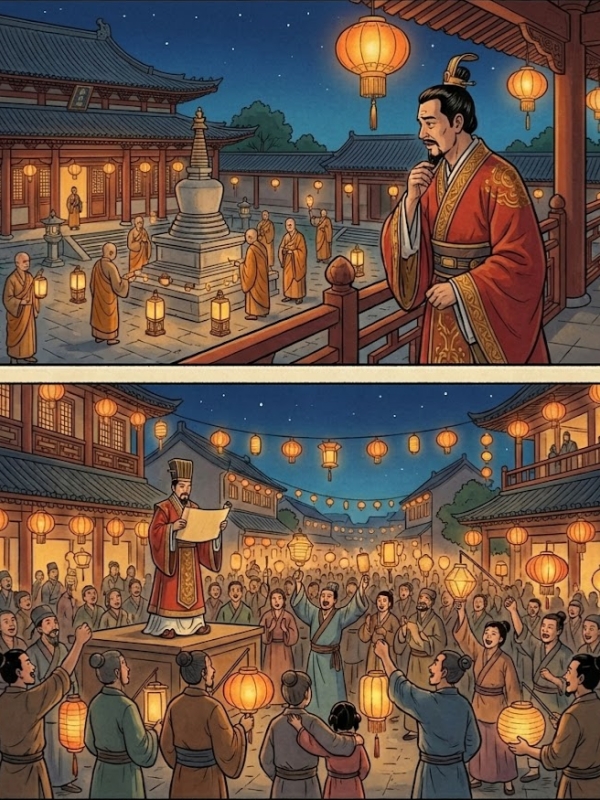
- Emperor Ming’s Lantern Decree
Legend 1: The Maid Named Yuan-Xiao and the Story Behind the Festival's Name
📖 This is one of the most beloved mythological origin stories of Yuan Xiao Jie, widely retold in Chinese folk tradition. Early texts preserve the spirit of this tale, though historians treat it as a cherished legend rather than a confirmed fact.
In the Han Dynasty palace, a maid named Yuan-Xiao wept alone in the garden one winter night, despairing because she had not seen her family for years. When the emperor’s witty adviser, Dongfang Shuo, overheard her cries, he immediately devised a brilliant plan to save her. He spread a dire prophecy throughout the city, claiming the God of Fire would descend on the fifteenth night to burn Chang'an to ash. To deceive heaven and avert disaster, he convinced the citizens to fill every street with flames—lanterns, fireworks, and red light—until the entire city blazed with artificial fire. This clever ruse fooled the gods, and in the joyous chaos of the glowing streets, Yuan-Xiao finally reunited with her family.
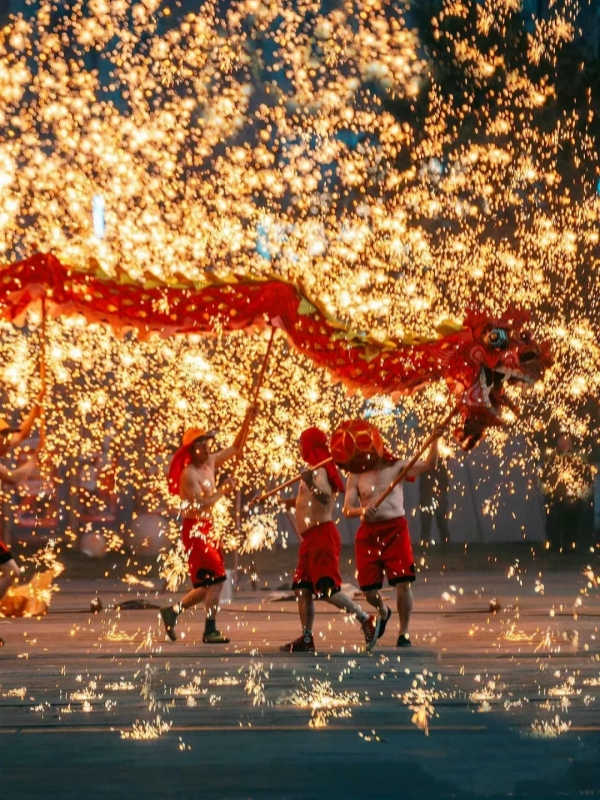
Heritage 2: The Ancient Fire Ball Tradition—A Ritual That Pre-dates the Legend
Fire preceded the palace maid, outlasted the emperors, and burned long before the Han Dynasty even claimed its first dawn.
- Origin: Pre-Han agricultural communities, predating Buddhist or imperial influence
- Purpose: Ritual purification of farmland at the year's first full moon, a practical request to begin the growing season clean
- Where it survives: Sichuan, Guizhou, and parts of Fujian — performed alongside dragon dances at county-level fairs
- What it looked like: Circles of fire spinning against cold dark air, hands moving fast, the smell of pine resin and earth
The fire performed a labor, not a spectacle. It scoured the fields of pests and drove away insects before the first green of spring broke the soil. In every spark, the community commanded the year to begin without blemish.
💡 Tip: If you visit Sichuan during Yuan Xiao Jie, search for fire performance events in rural county towns rather than city centres. This tradition is rarely staged for tourists — but it is unforgettable when you find it.
Legacy 3: Emperor Ming of Han and the Evolution of a 2,000-Year National Tradition
Emperor Ming of the Eastern Han (57–75 AD) observed a Buddhist custom. Monks lit lanterns in their temples each year on the fifteenth. He was moved by what he saw. He issued a mandate: all households and the imperial palace would do the same. This single command brought a private ritual into every public square in China. By the Tang Dynasty (618–907), the festival had expanded to three full nights. Curfews were formally lifted. The streets belonged to everyone equally. From this point forward, Yuan Xiao Jie was no longer a local custom — it was a shared national experience.
In 2025, UNESCO inscribed the Chinese Spring Festival (春节) — with Yuan Xiao Jie as its closing ceremony — on the Intangible Cultural Heritage list. The original decree is two thousand years old. The flame has not gone out.
Beyond the Lanterns: Riddle-solving, Luminous Dances, and the Spirit of Ancient Night
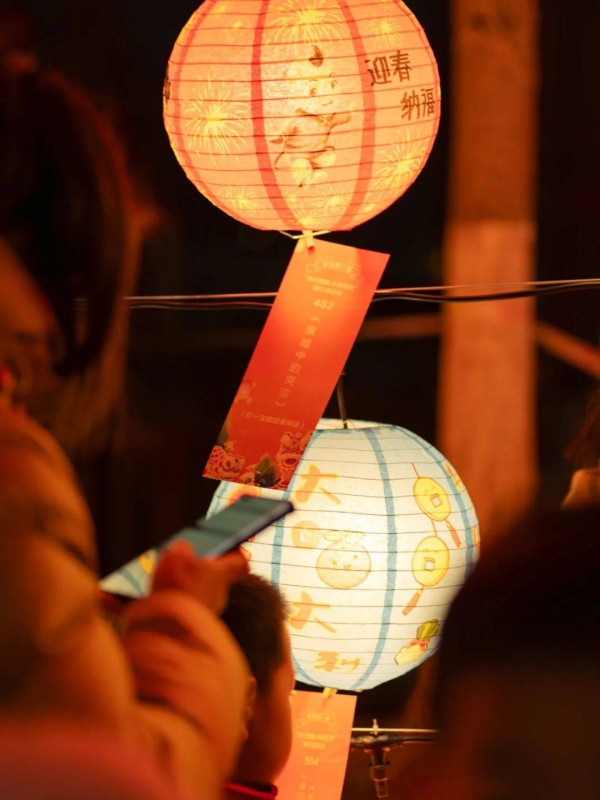
Lantern Riddles (猜灯谜, Cai Deng Mi): The Original Intellectual Speed-Dating
Since the Song Dynasty (960–1279), the ritual has been the same. A riddle is written on a slip of paper. It is tied to a lantern. A scholar pauses beneath a glowing silk frame. You scan the cryptic ink, untangling the hidden meanings until the answer sparks like the flame above you. And if you solve it, you win a small prize — and a perfectly reasonable excuse to linger a little longer.
In a society where unmarried men and women rarely shared public space after dark, the lantern riddle created a legitimate reason to pause beside a stranger's light. The puzzle gave permission to linger. Riddle structure typically involves character decomposition or wordplay. A well-known example: "A person stands beside a tree." Answer: 休 (xiū, rest) — because 人 (person) + 木 (tree) form 休 together.
💡 Tip: Even without Chinese language ability, lantern riddle booths are worth joining. Point, gesture, and guess — the format is visual. The laughter that follows is entirely universal.
Dragon and Lion Dances, Fire Performances, and the Street That Comes Alive
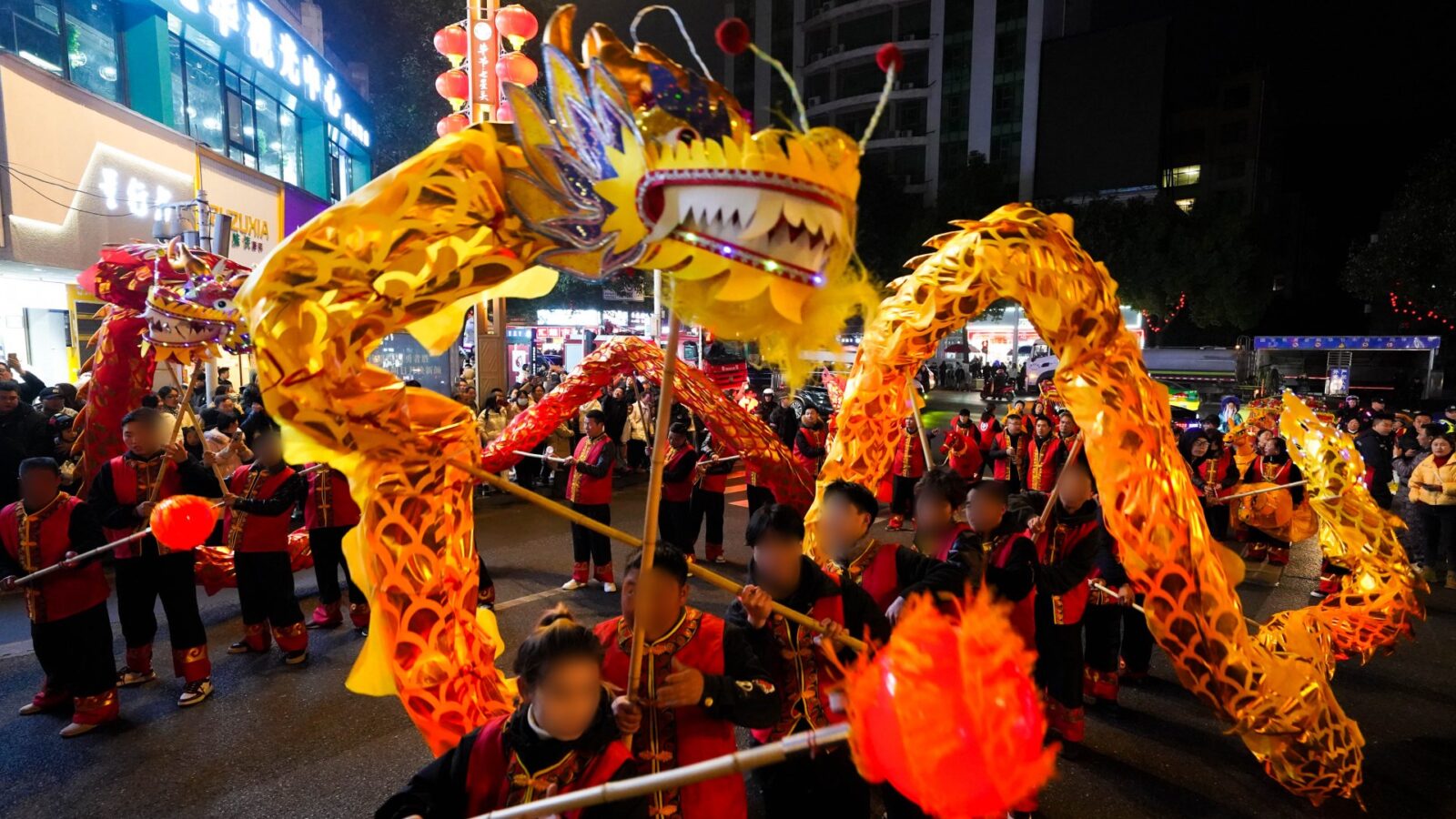
- Dragon dance (舞龙): A team of 8 to 15 performers carries a long illuminated dragon through the crowd. It moves in sinuous, sweeping waves. The longer the dragon, the more powerful the luck it carries. Some festival dragons reach 100 metres in length.
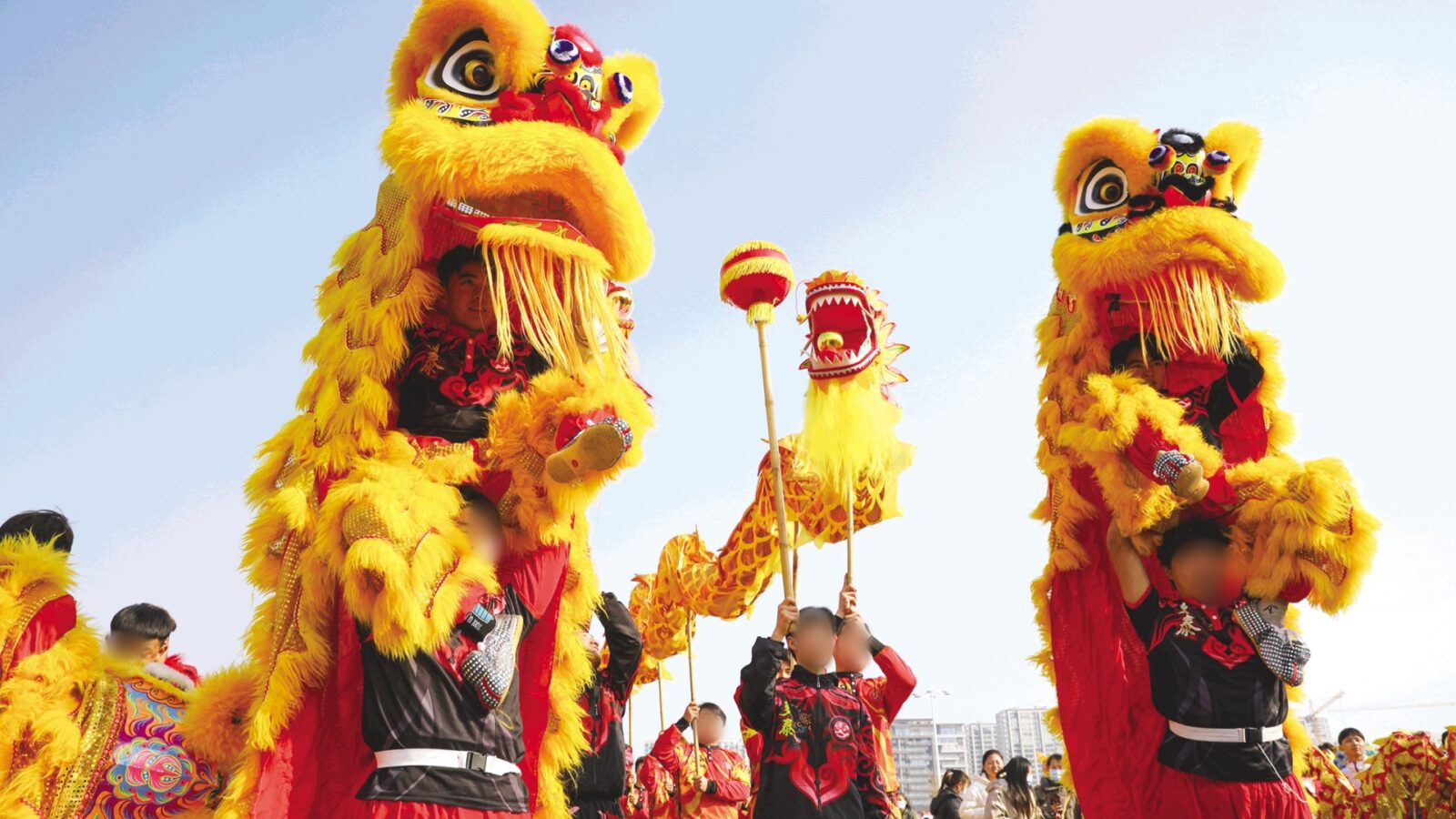
- Lion dance (舞狮): Two performers share a single lion costume, moving to the beat of live drums and cymbals. The lion visits doorways and businesses along the route. Everywhere it bows, good fortune is understood to follow.
- Fire performances: In Guizhou, Sichuan, and parts of Fujian, fire-walking and fire-ball swinging still take place on this night — direct descendants of the pre-Han purification ritual described above.
Chengdu's Culture Park lantern fair centres on a dragon pole lantern standing 38 metres tall, lit from base to crown. Standing beneath it feels less like watching a festival and more like standing inside one.
💡 Tip: Best cities for Yuan Xiao Jie — Nanjing (Qinhuai Lantern Fair), Shanghai (Yuyuan Garden), Chengdu (Culture Park), Xi'an (Giant Wild Goose Pagoda area). Arrive by 6 PM. Main displays peak between 7 and 9 PM.
Moonlit Trysts: The Forbidden Romance and the Social Freedom of the Night
In imperial China, unmarried women from respected households rarely appeared in public after dark — or at all. Yuan Xiao Jie was a sanctioned exception. The lifted curfew, the lanterns, the crowd — together they created a brief window of genuine social freedom. A young woman could choose whose lantern to stand beside. A young man could find a reason to walk the same street twice.
The Song Dynasty poet Ouyang Xiu captured this in a poem still widely read today. He describes the same festival night, two years in a row — first with his beloved beside him, then alone. His sleeve is wet with what he does not name. The lanterns are identical both years. The person is gone. The poem's final lines say nothing about lanterns at all.
The meaning of Yuan Xiao Jie, at its deepest layer, is this: a night when the rules of ordinary life briefly gave way — and the light showed people to each other.
What to Eat for Yuan Xiao Jie: The Dumpling That Is Both a Pun and a Prayer
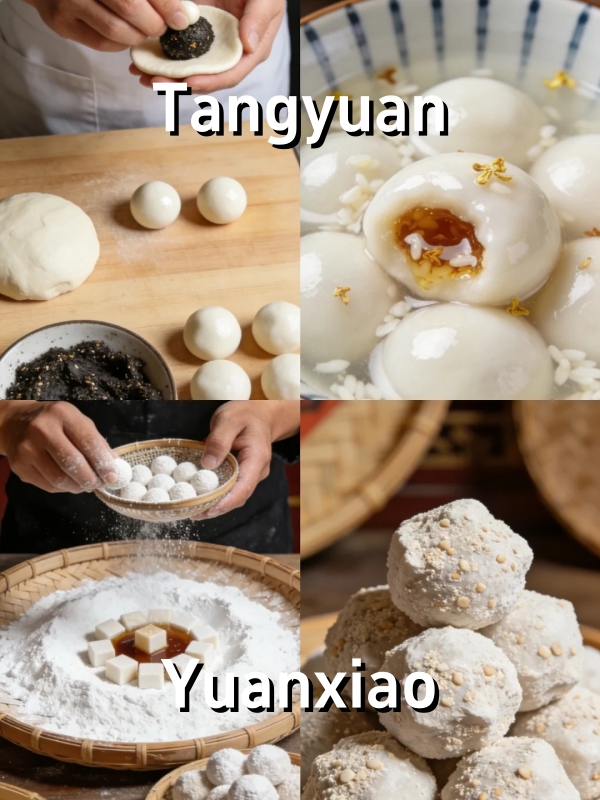
Tangyuan (汤圆) and Yuanxiao (元宵)
Tangyuan (汤圆) and Yuanxiao (元宵): the Same Round Shape, Two Different Personalities
Both tangyuan and yuanxiao are round glutinous rice dumplings. They share the same occasion and the same basic ingredients. But they are made by different hands, in different ways — and that difference tells you immediately where in China you are.
- Tangyuan (汤圆) — Southern style: The dough is kneaded outward from a centre of filling, like shaping pasta from the inside. The skin becomes smooth and silky. It can carry sweet or savoury fillings — in Shanghai, pork and preserved vegetable versions are common.
- Yuanxiao (元宵) — Northern style: The filling is placed in a basket of dry rice flour and shaken, layer by layer, until it builds a rough, porous coat. It absorbs the cooking broth as it boils. The result is denser, chewier, more starchy.
- The simplest comparison: Tangyuan is silk. Yuanxiao is flannel. Both are warm. Both are meant to be shared at a table.
💡 Tip: In Beijing supermarkets, fresh yuanxiao arrives in round bamboo trays each February and March. In Chengdu and Guangzhou, look for tangyuan. The frozen versions from brands 思念 (Sinian) and 三全 (Sanquan) are both widely trusted for home preparation.
Why the Round Shape Is a Prayer, Not Just an Aesthetic
The Chinese word for reunion, tuányuán (团圆), reinforces this devotion to wholeness, as both characters carry the element 圆, signifying a circle or completeness. This linguistic choice proves that the language itself expresses a core cultural value rather than a mere coincidence of sound. On the night of the first full moon, the celebration manifests this geometry as you eat a round dumpling from a round bowl beneath a round moon. These three circles symbolize a singular, profound wish: that everyone you love resides exactly where they should be—together.
The Song Dynasty poet Su Dongpo wrote of missing his brother during this festival. He described the yuanxiao's sweetness as a reminder of distance — not just a taste, but a direction: toward home.
Common Fillings and Regional Variations Worth Knowing
China's regions each bring their own voice to the same round shape. The filling changes the meaning slightly — not in philosophy, but in feeling.
| Region | Traditional Filling | Flavour Profile |
|---|---|---|
| North China (Beijing) | Black sesame paste (黑芝麻) | Intensely fragrant; runs when bitten |
| South China (Guangzhou, Shanghai) | Red bean paste (红豆沙) | Earthy, gentle sweetness |
| Fujian / Taiwan / Southeast Asia | Peanut and sugar (花生糖) | Nutty, grainy, lightly sweet |
| Hangzhou / Suzhou | Osmanthus and brown sugar (桂花糖) | Floral, delicate, faintly perfumed |
- Black sesame: The most dramatic filling. It is jet-black inside. When it runs, it is warm and heady — a flavour that stays with you.
- Red bean: The most traditional. It grounds the sweetness in something earthy and familiar, common across generations.
- Osmanthus: The most poetic. Hangzhou's version carries the scent of autumn blossoms into a winter bowl.
💡 Tip: If you are in China during Yuan Xiao Jie, watch for street vendors frying yuanxiao in a wok. The crispy-shelled version — 炸元宵 (zhá yuánxiāo) — is golden outside and molten inside. It is one of the festival's best-kept local secrets.
FAQs: Everything You Still Want to Know About Yuan Xiao Jie
Q: What does yuan xiao jie literally mean in English?
Literally translated, Yuan Xiao Jie (元宵节) means "The Festival of the First Night," where Yuan (元) signifies the first or originating energy, xiao (宵) names the deep, dark hours of the night, and jie (节) marks a seasonal node or festival. Because these characters define a precise cosmological moment rather than just an activity, the meaning of Yuan Xiao Jie goes well beyond the common English nickname "Lantern Festival." By naming the year’s first full moon, the title carries two thousand years of cultural weight, weaving together themes of family reunion, historical memory, and the triumph of light over the winter dark.
Q: What day is Yuan Xiao Jie in 2026?
In 2026, Yuan Xiao Jie falls on March 3, consistently landing on the 15th day of the first lunar month—a date that the lunisolar calendar’s design guarantees will coincide with the year’s first full moon. Because this celestial alignment dictates the festival's timing, the meaning of Yuan Xiao Jie in 2026 remains the same as it has for centuries: it marks the "first night" and the "first light." On March 3, millions across China and the global diaspora will look up at that same moon, sharing a luminous moment that bridges the ancient past with the present year.
Q: What is the difference between yuanxiao (元宵) and tangyuan (汤圆)?
Both are round glutinous rice dumplings — but their preparation tells you which part of China you are in. What is the meaning of yuan xiao jie through its food? Yuanxiao (northern style) is built by rolling filling in dry rice flour, giving it a chewy, porous skin. Tangyuan (southern style) is hand-kneaded with a smooth, silky surface. Same round shape. Two different expressions of the same wish.
Q: Why is Yuan Xiao Jie called the Lantern Festival?
For two thousand years, lighting and carrying paper lanterns was the defining public activity of this night. The English name describes what people visibly do. But what is the meaning of yuan xiao jie reaches further — the Chinese name describes when and why: the first night of the year, lit in memory of victory, reunion, and the rare freedom to be together under an open sky.
Q: Is Yuan Xiao Jie a public holiday in China?
Yuan Xiao Jie is not an official public holiday in mainland China. However, what is the meaning of yuan xiao jie in terms of daily life means knowing this: it closes the Spring Festival (春节) holiday window. Most people are still off work. Schools adjust schedules informally. The fifteenth night is broadly celebrated — the joy does not wait for an official stamp of approval.
Q: What is the origin story of Yuan Xiao Jie?
Multiple stories converge to reveal the meaning of the festival's origins. First, the most widely accepted historical account links the night to Emperor Wen of Han, who commemorated the defeat of the Lü clan on the fifteenth night. Meanwhile, a beloved folk legend involves the palace maid Yuan-Xiao and a false prophecy of fire. Finally, a third tradition traces the fire rituals back even further to pre-Han agricultural communities. Ultimately, all three threads entwine on the same night, under the same light.
Q: Why is Yuan Xiao Jie considered Chinese Valentine's Day?
In imperial China, Yuan Xiao Jie was one of the only nights when unmarried women from respectable households could appear in public spaces freely. What is the meaning of yuan xiao jie romantically is this: for a thousand years, this was the one sanctioned night when a young woman could choose whose lantern to walk toward. Ouyang Xiu's poem captures what happened when that choice was no longer possible.
Q: What do people do on Yuan Xiao Jie?
To define the lived experience of Yuan Xiao Jie, five core activities anchor the celebration: viewing lantern displays at parks, solving intellectual riddles (猜灯谜), and sharing yuanxiao or tangyuan with family. Meanwhile, watching vibrant dragon and lion dances and setting off fireworks transform the streets into a stage of light. In Sichuan and Fujian, ancient traditions like fire-ball swinging and floating river lanterns add an older, quieter layer of spiritual devotion beneath this bright, modern surface.
Q: How is Yuan Xiao Jie different from the Mid-Autumn Festival?
Both involve full moons and lanterns — the confusion is understandable. But what is the meaning of yuan xiao jie sets it clearly apart: it falls in early spring (January–March) and closes Chinese New Year, carrying themes of reunion and new beginning. The Mid-Autumn Festival (中秋节) falls in autumn (September–October), centres on the harvest moon and mooncakes, and carries themes of longing and separation across distance.
Q: Can foreigners celebrate Yuan Xiao Jie in China, and how?
Yuan Xiao Jie rewards visitors deeply. To experience the meaning of the night in person, start by arriving at a major city park or temple fair by 6 PM on the 15th. Next, buy a bowl of tangyuan or yuanxiao from a street vendor; then, attempt a lantern riddle booth, even without Chinese. While top venues include Nanjing's Qinhuai Lantern Fair, Shanghai's Yuyuan Garden, Chengdu's Culture Park, and Xi'an, the festival ultimately needs no translation to be felt.