Do the Chinese Celebrate Easter
Do the Chinese Celebrate Easter? Easter is not a public holiday nor a widely observed household occasion across mainland China. The average Chinese person has little exposure to the holiday beyond chocolate eggs and the Easter Bunny seen in foreign films or first-tier city shopping centers. However, visitors do not need to skip the holiday altogether. Easter in China lives in three narrow lanes — historic Christian communities, English-speaking expatriate congregations, and the Easter programming of international hotels in major cities — and this article maps each lane so travelers can plan around the date.
Quick Facts
Do Chinese People Celebrate Easter?
Do the Chinese Celebrate Easter
Do the Chinese Celebrate Easter? The short answer is no — Easter is not a mainstream holiday in China and is not designated as a public holiday. Most Han Chinese grow up with no exposure to Easter. Awareness is usually limited to chocolate eggs and the Easter Bunny seen in foreign films, television, or shopping-center decorations in first-tier cities. Eggs happen to overlap with a native Chinese symbol of fertility and renewal, which gives Easter a faint cultural foothold, but no domestic tradition exists around it. The people who observe Easter are concentrated in Christian communities, university towns, and major cities with international populations.
What Most Chinese People Know About Easter
For the average Chinese person, Easter registers as a Western holiday with no household equivalent. The public sees the word on imported chocolate packaging and occasionally in shopping malls during the Easter season, but no local tradition fills the space that Christmas has slowly carved out in first-tier cities. In smaller cities and rural areas, awareness drops further. The overlap between Easter timing and the Qingming (Tomb-Sweeping) period, which also centers on renewal and ancestors, is coincidental rather than connected.
How Many Christians Live in China
Christians — Catholic and Protestant combined — are commonly reported at roughly 1% of China's population, with some published figures going higher when unregistered house churches are included. Catholic and Protestant numbers are roughly comparable. Both communities are concentrated in Henan, Anhui, Zhejiang, and Fujian provinces, as well as in major metropolitan areas. The scale is significant in absolute terms — even 1% represents millions of people — but the distribution is uneven, which is why Easter visibility varies sharply by city.
🛠️ Spring Public Holidays: Discover how major spring workplace breaks compare to working days across the country by reading our guide to Chinese Labor Day.
Where Foreign Visitors Can Experience Easter in China
Easter visibility in China scales sharply with three factors: international population density, historic Christian heritage, and five-star hotel concentration. Shanghai leads on all three, followed by Beijing and Guangzhou. Because Easter falls on a regular working day for most Chinese, visitors can use the day for sightseeing alongside any Easter activities, without contending with closed businesses or public shutdowns.
Cities With the Most Visible Easter Scene
When Easter Falls and Whether It's a Public Holiday
Easter Sunday is calculated as the first Sunday after the first full moon on or after the spring equinox, using the Western Christian computus. Dates typically fall between March 22 and April 25. In mainland China, Easter is not a public holiday — banks, government offices, and most shops operate normally. Good Friday and Easter Monday are also ordinary working days. The only nearby public holiday is Qingming (Tomb-Sweeping Day), which moves on the lunar calendar and can fall within a few weeks of Easter. During that period, domestic travel peaks and hotel demand rises sharply, which affects pricing and availability for Easter visitors as well.
🎈 Youth & Family Celebrations: Explore how seasonal observances focus on family activities and school events in our full overview of China Childrens Day.
Easter Church Services Tourists Can Attend
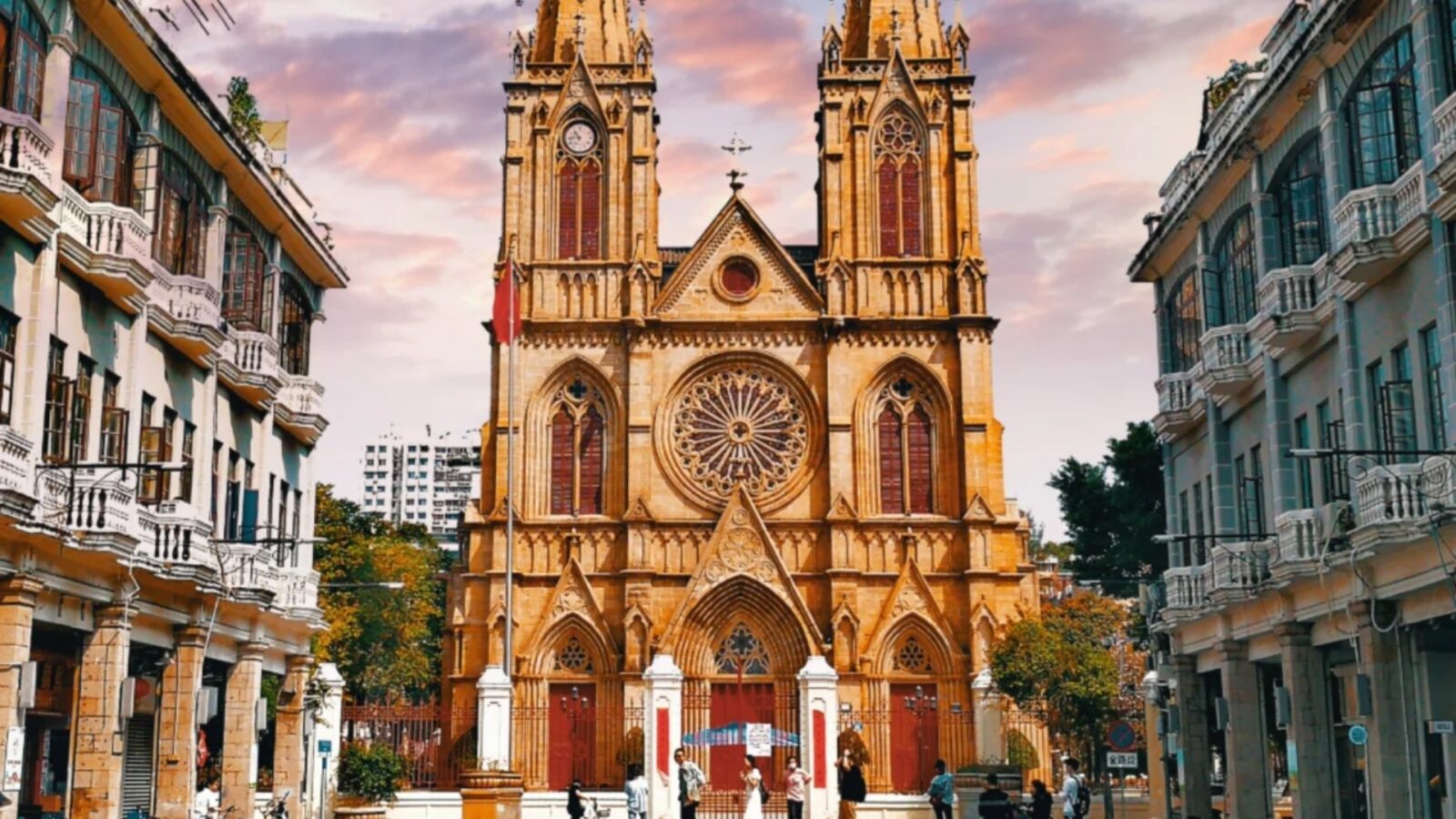
Sacred Heart Cathedral (Shishi), Guangzhou
Most historic cathedrals in major cities welcome foreign visitors for Easter services. International congregations run fully English services. No ticket is required for worship, but modest dress and quiet behavior are expected during Mass. Large flags and tourist photography during services are not appropriate. Here are the key venues for non-Chinese-speaking visitors.
Historic Catholic Cathedrals Open to Visitors
- St. Ignatius Cathedral, Shanghai (徐家汇天主堂): Located in the Xujiahui district, built in the early 20th century, this is the most photographed Catholic cathedral in Shanghai. Easter Sunday congregations are large, and the Gothic Revival architecture draws visitors year-round.
- Sacred Heart Cathedral (Shishi), Guangzhou: An old Catholic cathedral in the Yuexiu District with a Gothic twin-spire facade. It is one of four all-stone Gothic cathedrals in the world, making it architecturally significant beyond its religious function.
- St. Joseph's Church (Dongjiaomin Lane), Beijing: A historic Catholic church in the former Legation Quarter. Easter Sunday Mass is conducted in Mandarin, but English speakers are typically seated in a designated area and welcomed.
- St. Michael's Cathedral (Shengli Lu), Qingdao: A 1930s-built Catholic cathedral featuring German stained glass. The Easter turnout is smaller than in Shanghai or Beijing, but the setting is distinctive.
International and English-Speaking Congregations
- Shanghai: The Shanghai Community Church and similar international Protestant congregations run English-language Easter services with mixed expat and local attendance. Non-denominational, family-friendly; some organize an Easter egg hunt on the church lawn.
- Beijing: International congregations attached to the embassy district, including Anglican, Lutheran, and interdenominational groups. All run Easter services in English.
- Guangzhou: International Christian fellowships with Easter services in English. Smaller turnout than Shanghai or Beijing.
- Other cities (Chengdu, Shenzhen, Xi'an): Small but active international Christian communities with English Easter services. Venues change year to year; confirm via international hotel concierge before Easter.
Easter Dining, Buffets, and Seasonal Treats in China
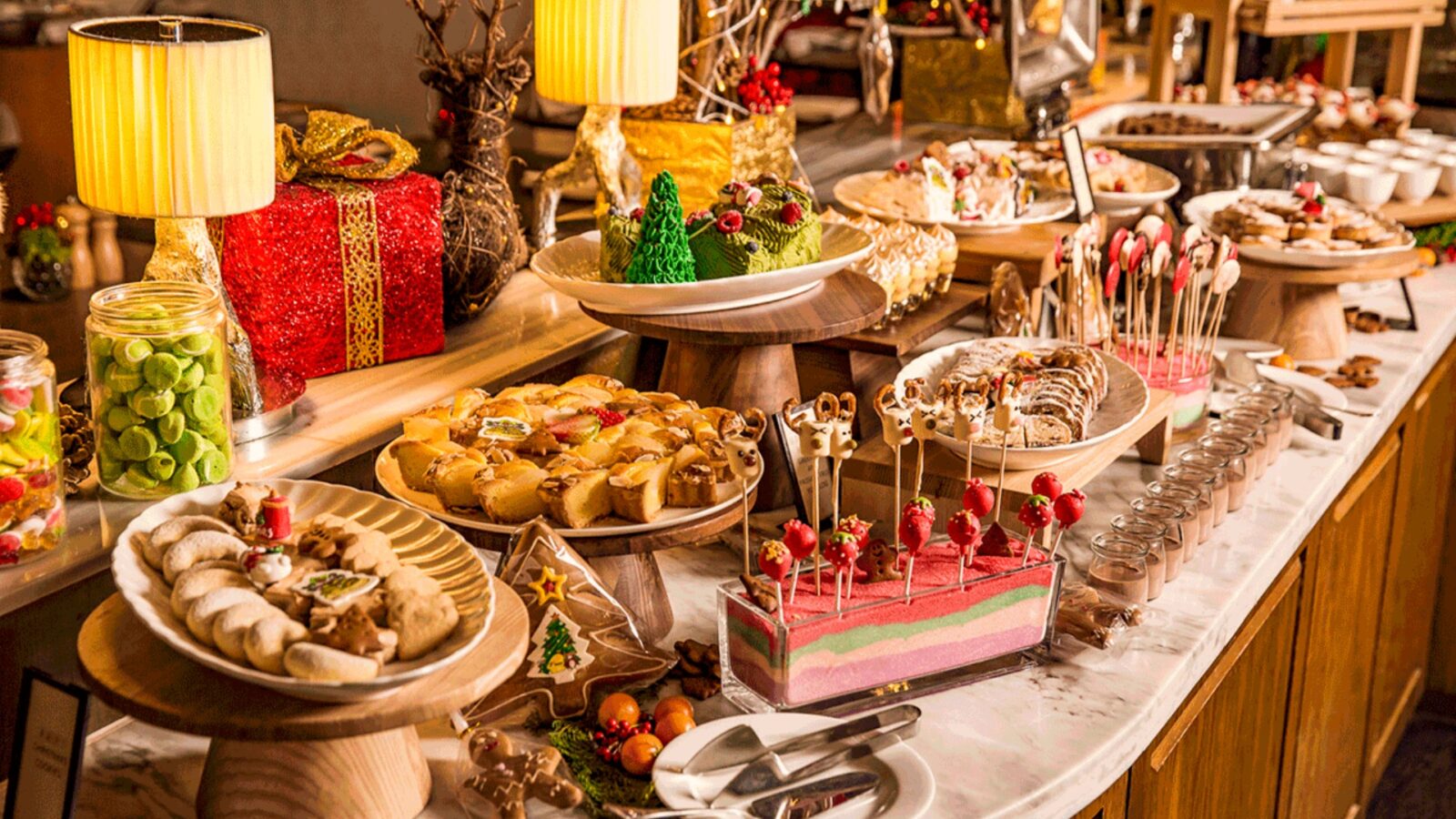
Hotel Easter Brunches and Dinners
International hotels in first-tier cities run Easter-themed brunches and dinners from roughly Good Friday through Easter Sunday. These are bookable on Trip.com, Klook, and hotel websites. International bakeries and chocolatiers sell Easter eggs, hot-cross-bun-style items, and themed cake boxes during the same window. Domestic Chinese restaurants and local bakeries do not run Easter menus.
Hotel Easter Brunches and Dinners
- Shanghai: Top five-star hotels in Pudong and Puxi typically run Easter Sunday brunches at about $70–110 (¥500–800) per adult, about $35–55 (¥250–400) per child. Bookings open several weeks ahead; Klook and Trip.com list available options.
- Beijing: Similar Easter Sunday buffets at about $55–95 (¥400–680) per adult. CBD and embassy-district hotels are most active during the Easter season.
- Guangzhou and Shenzhen: Slightly lower pricing at about $45–85 (¥320–600) per adult. Seating is smaller and fills faster due to limited capacity.
- Easter Saturday family dinners: Common in Shanghai and Beijing family-oriented hotels. A la carte menus typically run about $25–55 (¥180–400) per adult.
- Booking tips: Reserve at least 2–3 weeks ahead. Easter falls during China's Qingming-peak hotel demand, so prices are higher than off-peak periods.
Easter-Themed Bakeries and Chocolates
- International-hotel pastry counters: Easter egg chocolates, bunny cakes, and hot-cross-bun-style items at about $7–14 (¥50–100) per piece. Available from a few days before Easter Sunday.
- Foreign-brand chocolatiers: Godiva, Lindar regional counters, and similar shops offer Easter egg gift boxes at about $14–35 (¥100–250). Prominent in Shanghai and Beijing shopping malls.
- Korean- and Japanese-style bakeries: Paris Baguette, Tous Les Jours, and similar chains carry seasonal Easter pastries and cake boxes at about $5–12 (¥35–85) per item. Found in first-tier cities.
- Local Chinese bakeries: Do not run Easter programs. Domestic consumers associate Easter only with chocolate imports.
- Supermarkets: City Shop, Ole', Sam's Club, and similar outlets carry imported Easter chocolate gift boxes at about $10–25 (¥70–180) during the two weeks before Easter Sunday.
👔 Modern Family Traditions: Learn how commercial venues and restaurants host secular Western gift-giving occasions by visiting our breakdown of Fathers Day In China.
Easter's Place in Chinese Culture and Religion
Easter sits inside a Christian subculture in China rather than as a mainstream cultural event. The State recognizes five major religions: Buddhism, Taoism, Islam, Catholicism, and Protestantism. Chinese Christians mark the religious calendar — Christmas, Easter, Good Friday — inside that framework. The secular calendar instead anchors on Qingming and the Lunar New Year. For most Chinese, Easter falls in a quiet window, even as domestic travel peaks around Qingming and hotel demand rises broadly.
Christianity in Modern China
Recognized Christian bodies operate under state-sanctioned umbrella organizations: the Chinese Catholic Patriotic Association and the Three-Self Patriotic Movement for Protestants. Both run registered churches in major cities. Unregistered house churches also exist across the country. Christianity arrived via Catholic missions in the Tang and Yuan dynasties and expanded significantly under Jesuit activity in the late Ming and Qing periods. The historic Christian neighborhoods in Shanghai's Xujiahui district and Beijing's former Legation Quarter reflect that long arc.
How Chinese Christians Mark Easter
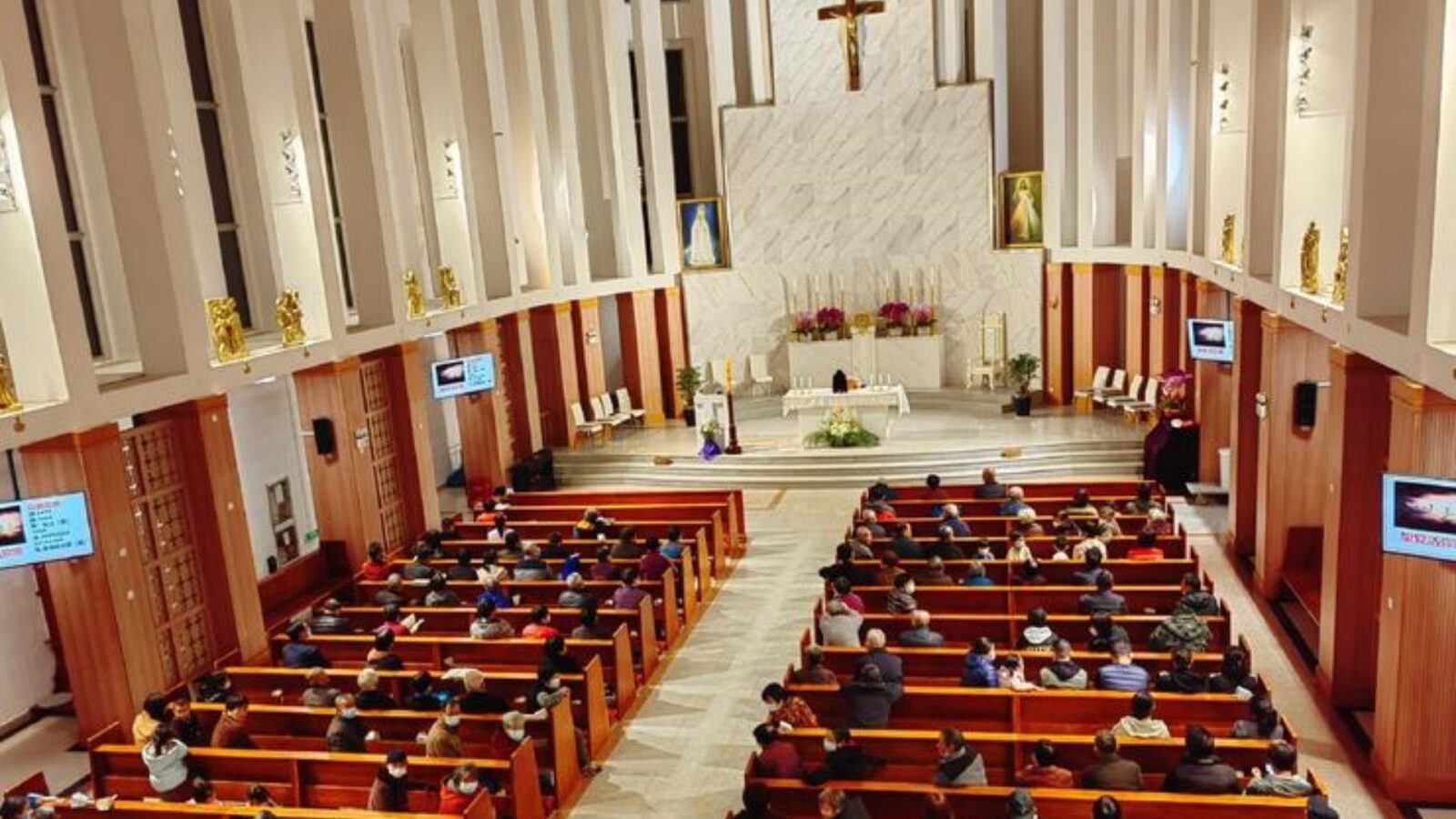
Registered congregations observe Palm Sunday, Maundy Thursday, Good Friday services, and Easter Sunday Mass or worship. Easter Sunday often sees the largest attendance of the year — sometimes several times a normal Sunday — with baptisms and confirmations scheduled to the date. Cathedrals in older Christian neighborhoods, such as around Shanghai's Xujiahui or Beijing's Dongjiaomin Lane, draw overflow crowds. The atmosphere is reverent and well-attended, but the events are religious services rather than public celebrations.
Frequently Asked Questions
Q: Is Easter a public holiday in China?
No. Easter Sunday, Good Friday, Holy Saturday, and Easter Monday are ordinary working days in mainland China. The only nearby public holiday is Qingming (Tomb-Sweeping Day), which moves on the lunar calendar and can fall within a few weeks of Easter. Schools, banks, and government offices run normally on Easter.
Q: What is Easter called in Chinese?
Easter is 复活节 (Fùhuójié), literally "resurrection festival." The Chinese term is used in religious settings, on imported Easter-product packaging, and on international-hotel signage. Mainland Chinese consumers mostly know it by the English word "Easter" in commercial contexts.
Q: How do Chinese Christians celebrate Easter?
Registered Catholic and Protestant congregations attend Palm Sunday, Maundy Thursday, Good Friday, and Easter Sunday services. Easter Sunday is the largest attendance day of the year, often with baptisms and confirmations scheduled to the date. Cathedrals in older Christian neighborhoods in Shanghai, Beijing, Guangzhou, and Harbin draw overflow crowds.
Q: Where can tourists attend Easter church services in China?
Historic Catholic cathedrals such as St. Ignatius Cathedral in Shanghai, Sacred Heart Cathedral in Guangzhou, and St. Joseph's Church in Beijing welcome visitors for Easter services. International and English-speaking congregations run fully English Easter services in Shanghai, Beijing, Guangzhou, Chengdu, Shenzhen, and Xi'an. Confirm the venue through the international hotel concierge before Easter.
Q: Do hotels in China offer Easter brunch?
Yes. International five-star hotels in Shanghai, Beijing, Guangzhou, and Shenzhen run Easter Sunday brunches and dinners, typically priced about $70–110 (¥500–800) per adult in Shanghai and about $55–95 (¥400–680) in Beijing. Bookings open on Trip.com, Klook, and hotel websites, usually 2–3 weeks ahead. Domestic Chinese hotels do not run Easter programs.
Q: Are there Easter egg hunts in China?
Easter egg hunts exist but only inside English-speaking congregations and the family programming of large international hotels in first-tier cities, mainly Shanghai and Beijing. There is no public, outdoor Easter egg hunt in mainland China on the Anglo-American model. Hong Kong holds some open community events, but that is the SAR, not the mainland.
Q: Is Good Friday a holiday in China?
No. Good Friday is an ordinary working day in mainland China. The only Christian-related days observed by some registered Catholic and Protestant congregations are the Easter services themselves. They are not State holidays.
Q: Which city in China has the most visible Easter celebration?
Shanghai is the most visible on the mainland because it combines historic Catholic heritage, the largest expat community, and the densest cluster of international hotels running Easter programming. Beijing is second. Greater China's most openly celebrated Easter is in the Hong Kong SAR, where Good Friday through Easter Monday are public holidays — note that is not mainland China.