Cost of Living in Shanghai:International Cosmopolitan Hub, Moderate Tier-1 Expenses, Flexible Budget Tiers for All Expat Lifestyles
Shanghai, China's financial capital on the east coast, operates in CNY/RMB at a rate of around 1 USD = 7.2 RMB (as of June 2026), speaks mandarin with some English in Xuhui and Pudong, and has again started allowing visitors from 55 countries to visit visa-free for 144-240 hours under the Yangtze Delta linkage. Preferred travel window: March-May then September-November. For the foreigner looking for a weekend trip, a few weeks of remote work, or a multi-year posting, a sense of the real shanghai cost of living prevails over any brochure your read. The analysis breaks down rent, food, transport, utilities, education, and 5 lifestyle levels based on 2025-2026 data.
Shanghai Cost of Living Breakdown
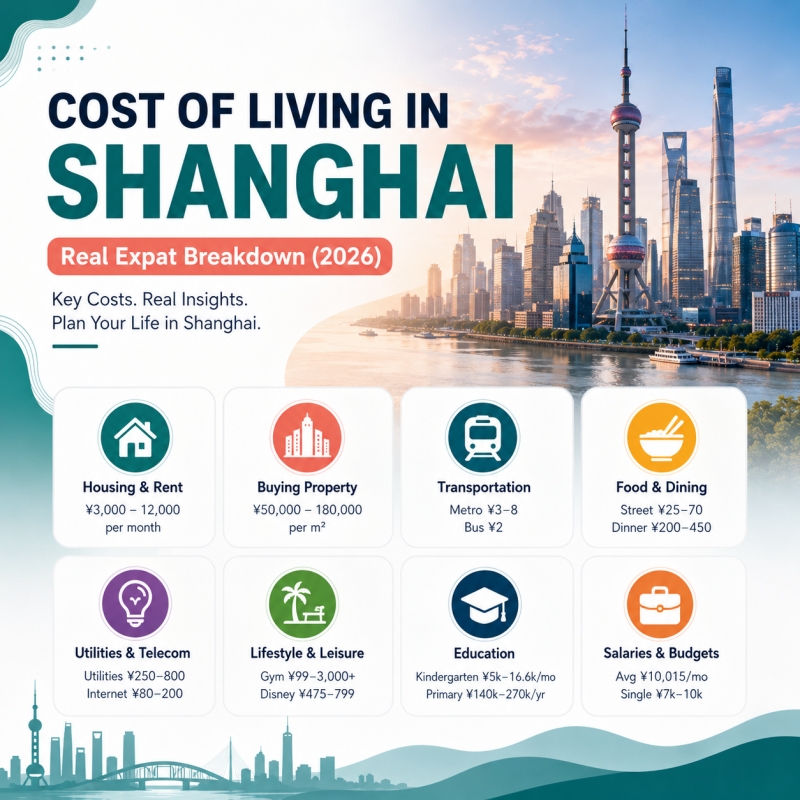
Shanghai cost of living breaks down across eight everyday spending categories. The picture has shifted since 2020: central rents climbed 8–12%, while metro tap-to-pay and delivery apps have cut friction across daily transactions. The verified walkthrough below draws on 2026 Q1 data and on-the-ground expat feedback.
🏠 Housing & Rent Across Shanghai Districts
-

- Verified 2026 Rental Prices
-
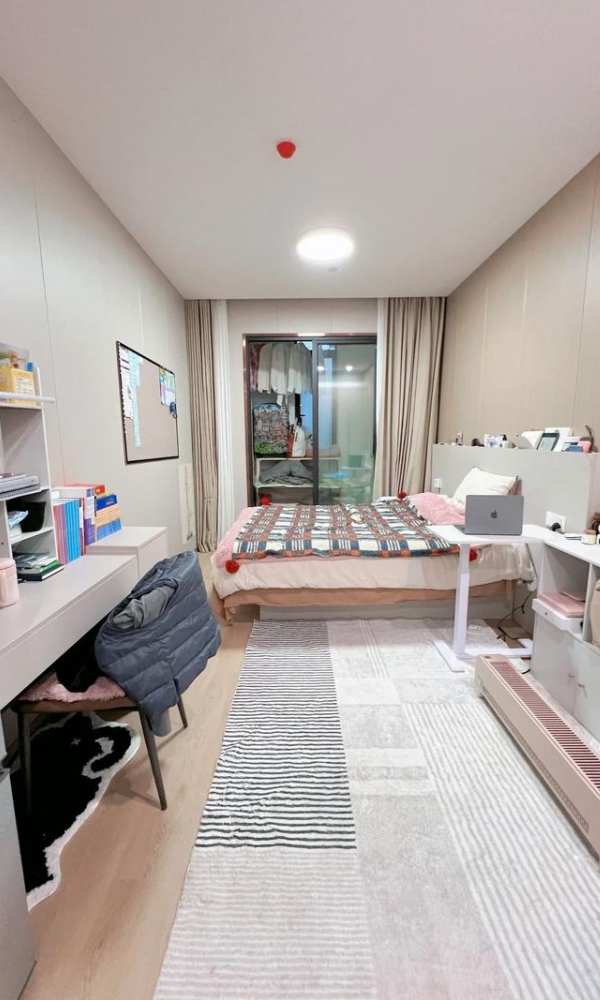
- 1-Bedroom Apartment Layout
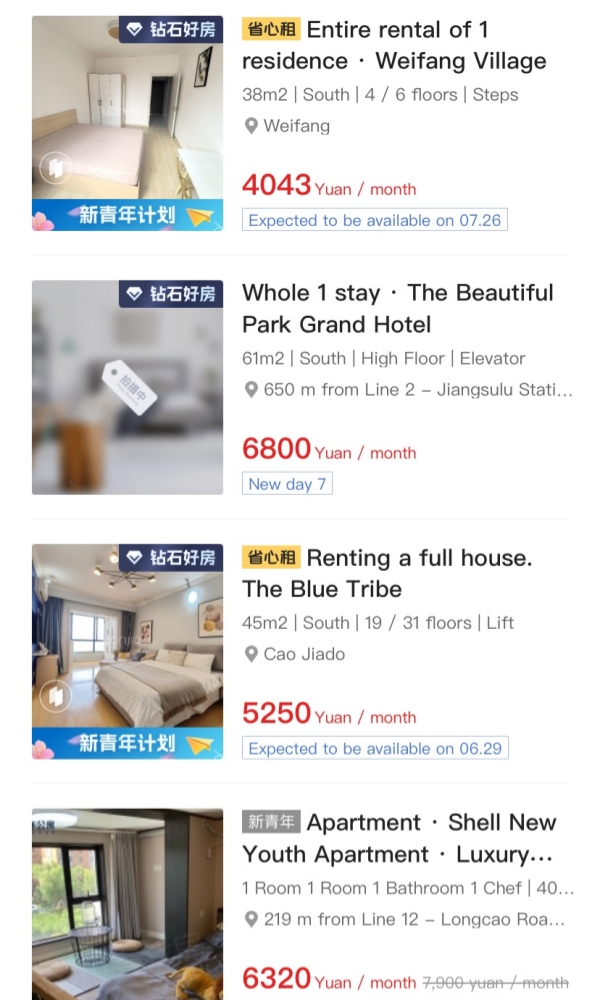
Rent is the biggest line item , the cost of living in shanghai will likely include. And verified listings for June 2026 show just how stretched the rental market is: a 68 m² outer-ring two-bed at RMB 3,900 (USD 540), a 97 m² three-bed in Pudong at RMB 11,000 (USD 1,530), and a 134 m² three-bed in a secondary-central at RMB 9,000 (USD 1,250).
Two scams most trafficked foreign tenants, both in Shanghai, are withholding deposits in small, byzantine contracts fostered by small-time agencies. The other is a rash of fake full-apartment listings on Xiaohongshu and WeChat that ask for pre-viewing deposits or WeChat transfers.
- Central Districts 1BR (Huangpu, Jing'an, Xuhui): RMB 5,000–12,000 / month (USD 695–1,670)
- Central Districts 3BR: RMB 15,000–32,000 / month (USD 2,085–4,445)
- Outer Districts 1BR: RMB 3,000–6,250 / month (USD 415–870)
- Outer Districts 3BR: RMB 6,500–16,000 / month (USD 905–2,225)
- Premium Pockets: The Bund · Pudong Lujiazui · Former French Concession · Gubei Korean district
- Agent Commission: 30% of one month's rent
- Deposit Range: Pay-one-deposit-one through pay-one-deposit-three, negotiable down to deposit-one-pay-one via licensed platforms
- Long-Stay Platforms for Foreigners: Ziroom · Vanke Port Apartment · Wellcee
For monthly rent benchmarks in neighboring tier-1 cities, the verified cost of living in Shenzhen breakdown offers a useful side-by-side.
🏢 Buying Property in Shanghai as a Foreigner
-
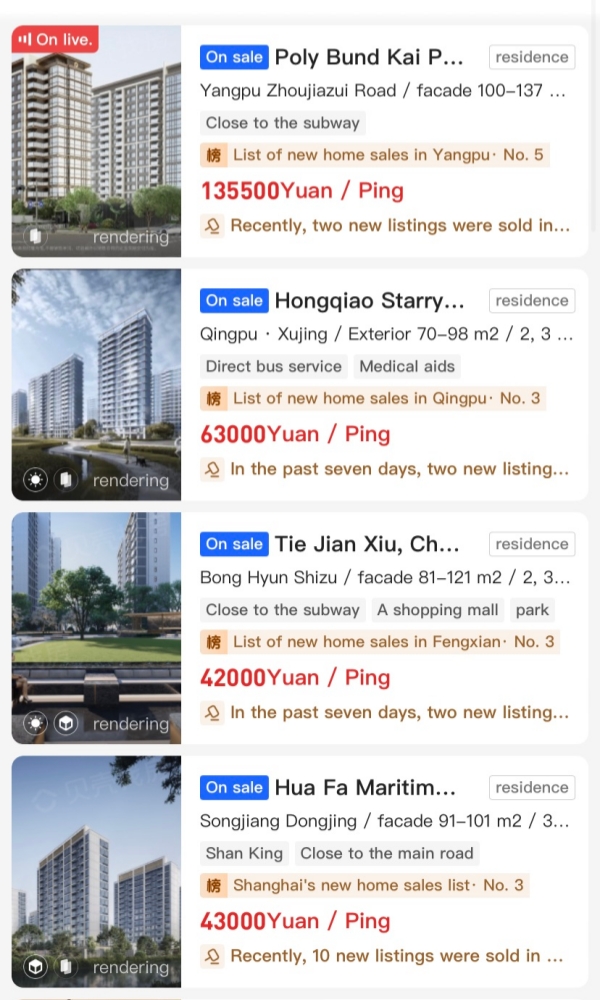
- Shanghai Property Price Reference
-
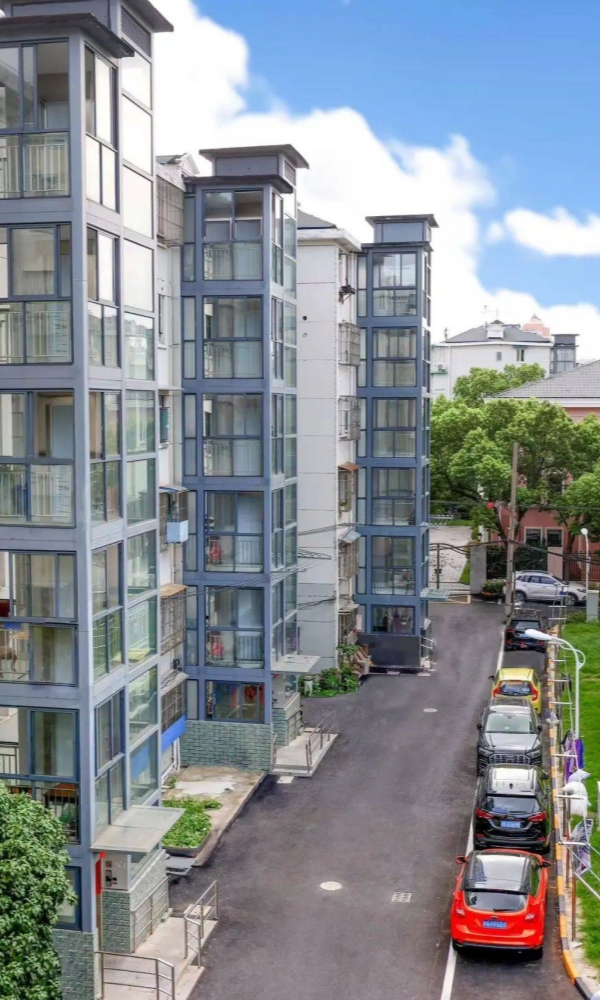
- Basic Neighborhood Amenities
Buying in Shanghai works but is 180 degrees different from renting in the larger shanghai cost of living scheme. The buyer needs one year of continuous Shanghai work and matching individual tax and is limited in the number of units they can buy (one).
One point on the narrower tax stack-of-cards, foreign self-occupiers do not pay Shanghai’s local-resident property tax pilot, nor do they usually pay the urban land-use tax, since it's considered included in the property management (service) fees.
- Central-District Price: RMB 100,000–180,000 per m²
- Outer-Ring Price: RMB 50,000–90,000 per m²
- Land Use Rights (Residential): 70 years, automatic renewal under national law
- Deed Tax: 1% (first home under 90 m²) · 1.5% (first home 90 m²+) · 3% (second home, but foreign buyers limited to one unit)
- Transaction Friction Costs: Agent fees + notary fees + loan charges = RMB 10,000–30,000
- Cross-Border Requirement: Funds must enter through compliant remittance channels
- Sample Total: 100 m² central apartment ≈ RMB 14,000,000 (~USD 1,945,000), 30% down payment
- Legal/Tax Disclaimer: Not legal or tax advice; consult a licensed attorney and tax advisor before signing
For foreign buyers weighing tier-2 alternatives, the verified cost of living in Chongqing guide details pricing in a far more affordable market.
-
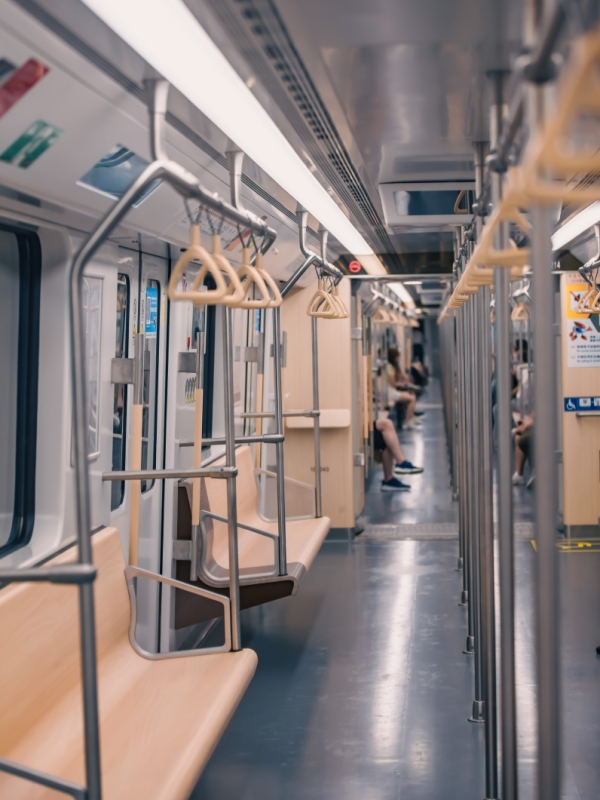

- Modern Shanghai Metro Carriage
-
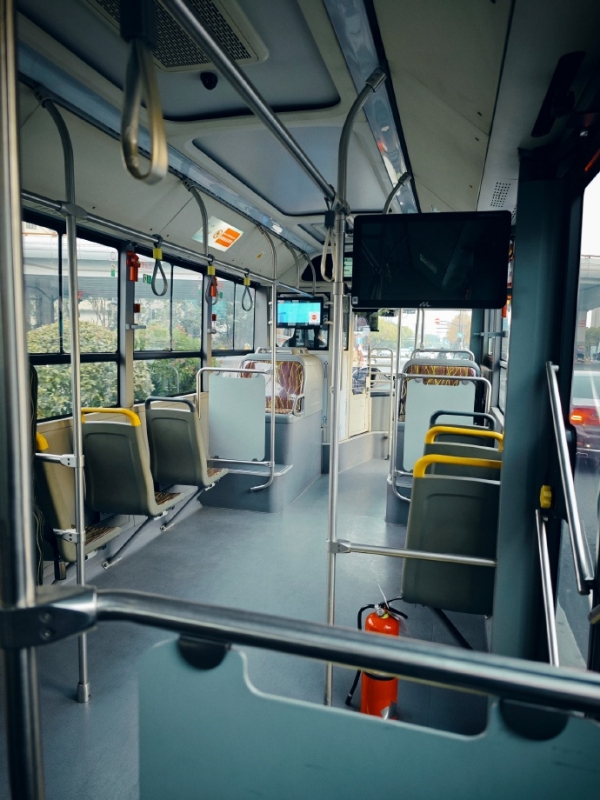
- Shanghai Public Bus
Shanghai’s transit is fast, dense, and now genuinely foreigner-friendly, and a major shanghai cost of living shift has arrived with it. The 2025-06-28 update removes the biggest timetouch of payment friction: every metro gate accepts Visa, Mastercard, Amex, and JCB contactless (including phone pay), so a foreigner can tap a card to ride before downloading a single app.
The taxi market splits between traditional cars running on fossil fuel and the pure-electric fleet, which dominate. DiDi accepts international cards via Alipay but surges 1.5-2× during rush hour, keeping street-hailed cabs competitive.
- Metro Base Fare: RMB 3 (first 6 km) · +RMB 1 per additional 10 km · Max ~RMB 8
- Tap-to-Pay Update (2025-06-28): Visa / Mastercard / Amex / JCB contactless + digital RMB wallet at every gate
- Bus Flat Fare: RMB 2 (AC routes included)
- Taxi Flag-Fall (Fuel): RMB 14 / 3 km
- Taxi Flag-Fall (Electric, dominant): RMB 16 / 3 km
- Taxi Per-Km: RMB 2.70 (3–15 km) · RMB 4.05 (15 km+, +50%)
- Night Surcharge (23:00–05:00): 30% uplift · Spring Festival +RMB 10/trip
- Transfer Discount: 120-min bus↔metro saves RMB 1
- Monthly Discount: Cumulative metro spend above RMB 70 earns 10% off
- Shared Bikes: RMB 12–25 monthly or RMB 1–2 per 15-min ride
- Gasoline: RMB 7–9.50 per liter; foreign licenses must be exchanged
🍽️ Food, Groceries & Eating Out
-
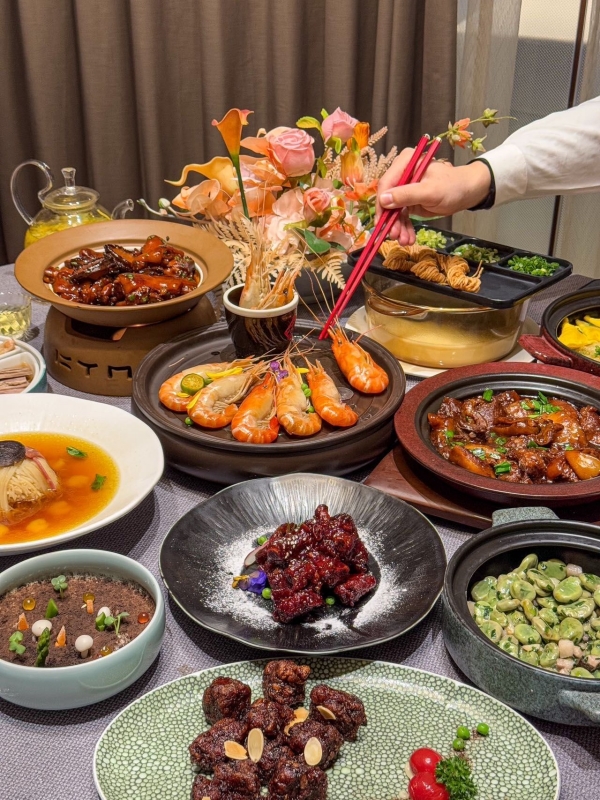
- Shanghai Local Cuisine Restaurant
-
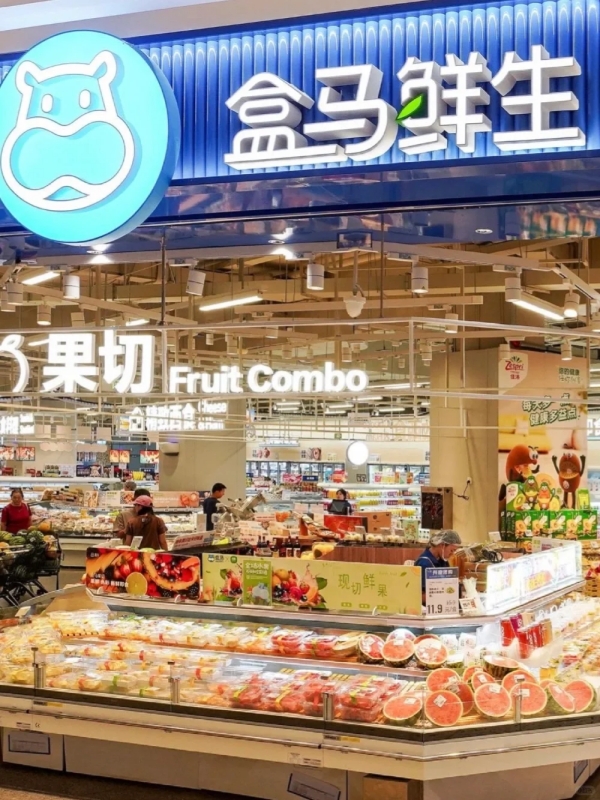
- Hema Supermarket
Eating in Shanghai literally runs the gamut from RMB 10 street dumplings to RMB 800 tasting menu, and food is the first place newbies experience shanghai cost of living pinch points. The 2026 grocery hierarchy starts with delivery apps: Hema is the density leader, ALDI owns value on imported staples, and City Shop now plays in premium-boutique.
Combining Taobao or JD International with Hema or Chownow, versus City Shop alone, cuts imported-grocery spend by 30–40%. Attaining cooking-at-home, lunchtime M-F lunch sets can bring total spend down to below RMB 1,500 monthly.
- Cheap Neighborhood Diners: RMB 25–70 per head
- Mid-Range Dinner for Two: RMB 200–450
- Fast Food (McDonald's, KFC, Subway): RMB 35–50 per meal
- Western (Element Fresh salad): RMB 100+
- Craft Beer (Boxing Cat): RMB 50 per pint
- Bund Fine Dining (M on the Bund): RMB 400–800 per person
- Local Market Prices: Milk 1L RMB 10–25 · Chicken 1kg RMB 20–53 · Beef 1kg RMB 60–150 · Rice 1kg RMB 5–15 · Tomato 1kg RMB 4–20
- Grocery Hierarchy 2026: Hema (density + delivery) · ALDI (value) · Sam's Club (bulk) · Chownow (fresh produce) · City Shop (premium)
- Drinks: Domestic beer RMB 5–33 · Imported beer RMB 15–50 · Starbucks cappuccino RMB 36 · Coke RMB 3–6 · Water RMB 2–5
💡 Utilities, Internet & Mobile Plans
Utilities are cheaper than in most Western cities, but still deserve a line in the budget. For an 85 m² apartment, expect to pay around RMB 250–800 per month combined water, electricity, gas, and waste fees, with winter heating pushing the price to the top end of that range.
The real friction for foreigners on arrival day is activation of a SIM: a passport is all that’s needed at the three main operators, but many branches also ask for the hotel temporary residence registration form that most short-stay have not yet received. The workaround is to buy a tourist SIM from a Pudong Airport counter for the first 24–48 hours.
- Combined Utilities (85 m²): RMB 250–800 / month
- Broadband 100 Mbps: RMB 80–200 / month
- Broadband 300 Mbps+: RMB 150–280 / month
- Installation Fee: RMB 100–200 one-time
- Mobile Plans 30 GB+ 5G: RMB 50–100 / month
- Cheap Mobile Plans: RMB 30–50 / month
- SIM Activation: Passport sufficient; hotel residence registration often requested
- Day-One SIM: Tourist SIM / eSIM from Pudong Airport (Airalo, Roamingman, China Unicom)
- eSIM Short-Stay: Airalo / Holafly at USD 5–20 per week
- Alipay International: Visa / Mastercard binding nationwide since 2025
🎡 Lifestyle, Entertainment & Leisure Costs
-
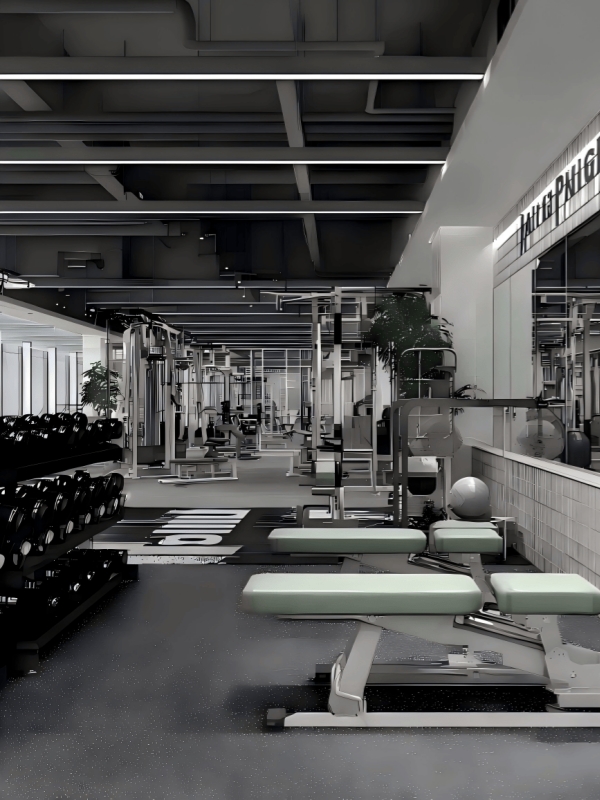
- Shanghai Fitness Gym
-
- Shanghai Cinema
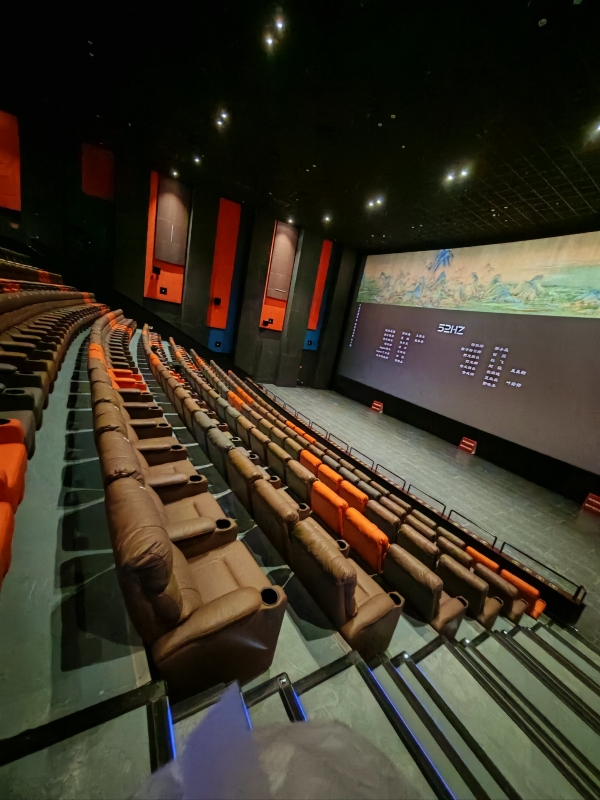
Shanghai delivers culture, nightlife, and family attractions at every price point, which is also where discretionary shanghai cost of living can swing wildly. The 2026 landscape has changed in two ways: the fitness market consolidated around Lefit, Supermonkey, DP Fitness, and One Zhaoweide after Will’s and Comfort Zone wound down between 2024 and mid 2025, and EPSON’s teamLab Borderless closed on 2024-02-29 with no reopening through mid-2026.
Disney operates a dynamic six tier calendar which is published 30 days ahead, and four active museums (MAP, Shanghai Museum East, West Bund Museum, PSA) fill in the cultural gap where teamLab has receded. Free outdoor sights remain the same at the Bund, Wukang Road, Tianzifang, Yu Garden, and the 1933 Old Millfun.
- Active Gym Brands (2026): Lefit RMB 99–199/mo (no lock-in) · Supermonkey RMB 69–139/class · DP Fitness mid-market · One兆韦德 RMB 3,000+/mo
- Hotel Gym Day Pass: RMB 100–200 (Ritz-Carlton, JW Marriott)
- Cinema: 2D RMB 49–80 · IMAX RMB 100–150 · KTV RMB 30–80/hour
- Disney One-Day Ticket: RMB 475 (quiet) · 539/599/659/719 mid · 799 (peak holidays)
- Disney Children (3–11) and Seniors (60+): ~75% of adult · Under-3 free
- Disney Premier Access: RMB several hundred to over a thousand
- Active Museum Substitutes: MAP RMB 60–100 · Shanghai Museum East free · West Bund RMB 60–80 · PSA RMB 30–60
- Nightlife (M1NT, Bar Rouge): RMB 300–800 per person · Shanghai Grand Theatre RMB 100–1,500
🎓 Education & International School Fees
For expat families, international school tuition often dwarfs every other line in the shanghai cost of living equation. Eligibility is strict: international schools admit only foreign-passport households, and public schools set a near-impossible bar for non-resident children.
Anchor institutions include Shanghai American School, Dulwich College Shanghai, Wellington College International, and Singapore International School. Education alone consumes roughly RMB 23,000 per month once annualized.
- Preschool / Kindergarten: RMB 5,000–16,600 / month
- International Primary School: RMB 140,000–270,000 / year
- International Secondary School: RMB 180,000–350,000 / year
- Anchor Institutions: SAS · Dulwich · Wellington · Singapore International School
- Application Fees: RMB 2,000–5,000 per school
- School Bus: RMB 8,000–15,000 / year
- Uniforms: RMB 2,000–5,000 / year
- Education Allocation: ~RMB 23,000 / month when annualized
💰 Salaries & Sample Monthly Budgets by Lifestyle
The average net monthly salary in Shanghai sits at RMB 10,015 (USD 1,390), while senior expatriate packages range from RMB 30,000 to over RMB 80,000. Five lifestyle tiers translate shanghai living cost per month into plans a newcomer can budget against.
Education is the dominant variable for families: any corporate package that bundles housing and international schooling materially changes the math. Globally, Shanghai runs at roughly 60% of New York, 70% of Hong Kong, 75% of Singapore, and 65% of London on 2026 indices.
- Tier 1 — Bare Survival (Salary RMB 5,000–8,000): Rent 2,000 + Food 1,400 + Transport 300 + Misc 500 ≈ RMB 4,200–5,000
- Tier 2 — Student / Graduate (Salary RMB 4,000–6,000): Dorm 1,500 + Food 1,000 + Transport 200 + Study/Entertainment 500 ≈ RMB 3,500–4,500
- Tier 3 — Single Professional (Salary RMB 10,000–20,000): Apartment 5,000 + Food 2,000 + Transport 500 + Social 1,000 + Shopping 1,000 ≈ RMB 7,000–10,000 — a clean reference for cost of living in shanghai single person
- Tier 4 — Expatriate Senior (Salary RMB 30,000+): Central 2BR 15,000 + Dining 4,000 + Transport 2,000 + Fitness/Entertainment 2,000 + School allocation 23,000 ≈ RMB 35,000–50,000
- Tier 5 — Family of Four (Annual Budget RMB 180,000+): Apartment 12,000 + Dining 6,000 + Transport 2,000 + School 23,000/month + Social 6,000 ≈ RMB 50,000–60,000 — the working baseline for cost of living in shanghai for family of 4
- Global Comparison vs Shanghai: New York 167% · Hong Kong 143% · Singapore 133% · London 154%
- Tier-1 Alternative: Shenzhen
- Tier-2 Alternative: Chongqing — meaningfully cheaper rent and schooling
Practical Tips, Payment & Money-Saving Hacks
Two final sections tie every shanghai cost of living line item into one decision-ready view: what each traveler profile should actually budget, and how to move through the city without overpaying.
Cost Breakdown by Traveler Profile
Four common traveler profiles anchor the planning question for anyone evaluating shanghai cost of living across a 1-day layover, a 1-week trip, or a multi-year posting.
- Short-Term Visitor Daily Mix: Hotel 300–600 + Meals 200–400 + Transport 50–100 + Attractions 100–200
- Business Traveler Daily Mix: Four-star hotel 800–1,500 + Dining 400–800 + Transport 200–400
- Digital Nomad Monthly Mix: Long-stay rental 4,000–8,000 + Cooking 2,000 + Transport 500 + Leisure 1,000
- Expat Family Monthly Mix: Corporate housing 25,000–45,000 + School 23,000 + Living 10,000–15,000
- Cost-Trimming Levers: Weekday lunch sets RMB 30–50 · ALDI private label · Hema markdowns after 20:00
Transport & Payment Tips for Foreigners
For first-time arrivals, the most important shanghai cost of living shortcut is the metro's tap-to-pay upgrade. The three-step payment stack below lands visitors on their feet from landing day.
Across the wider stack, Alipay International and WeChat Pay International cover roughly 90% of QR-code scenes, from convenience stores to taxi apps. Three friction points deserve flags: avoid unmarked private cars at the airport, always verify merchant QR codes, and expect RMB 30–50 per ATM cross-border withdrawal.
- Landing-Day Tap-to-Pay: Tap a Visa, Mastercard, Amex, or JCB contactless card on any metro gate reader, no app and no deposit required
- Stay-Long App Setup: Download Metro Daduhui or Suishenxing, bind Alipay or WeChat Pay, generate a乘车码
- Cash / Card Fallback: Carry RMB 500–1,000 in cash; keep a credit card for high-end hotels
- Metro Fare Optimization: Cumulative spend above RMB 70 in a month earns 10% off
- Transfer Discount: 120-min bus-to-metro transfer saves RMB 1
- DiDi vs Street-Hail: DiDi supports international cards via Alipay but surges 1.5–2× at rush hour
- Essential App Stack: Metro Daduhui · Suishenxing · Amap · DiDi · Meituan · Dianping
Frequently Asked Questions
Q: Is it expensive to live in Shanghai in 2026?
Shanghai runs roughly 8–10% pricier than Beijing and about 70% the cost of Hong Kong or 75% of Singapore, with a single person averaging RMB 7,000–10,000 per month and a family of four around RMB 50,000–60,000. Expat packages that bundle housing and education can materially reduce the actual out-of-pocket shanghai cost of living for relocated staff, often by 40–60%.
Q: What salary do I need to live comfortably in Shanghai?
A single expat typically needs RMB 20,000 or more, a domestic professional lives well on RMB 12,000–15,000, and a family of three should budget RMB 40,000+ once international school fees enter. An RMB 15,000+ housing allowance covers comfortable daily life, while Shanghai's top income tax rate sits at 45% with separate social insurance contributions.
Q: Is $100 a lot to live on in Shanghai?
At 1 USD ≈ 7.2 RMB, USD 100 equals roughly RMB 720, enough for one night in a budget hotel, two restaurant meals, and two metro rides across the city. That purchasing power sits well above central Beijing or Chengdu benchmarks, and it functions as a clean reference point for a 3–5 day visitor's daily accommodation spend.
Q: Is Shanghai foreigner-friendly for long-term stays?
Shanghai remains China's most international city, where work-residence permit holders can settle long term and high-talent applicants qualify for 5–10 year permits or permanent residence. US, Canada, UK, Australia, and New Zealand citizens can secure 10-year L visas for short stays, while 55 eligible countries enjoy 144–240 hour visa-free transit under the Yangtze Delta linkage.