Cost of Living in Chongqing:Low-Cost Mountain City, Vibrant Nightlife, Riverside Urban Energy, Budget-Friendly Expat Living
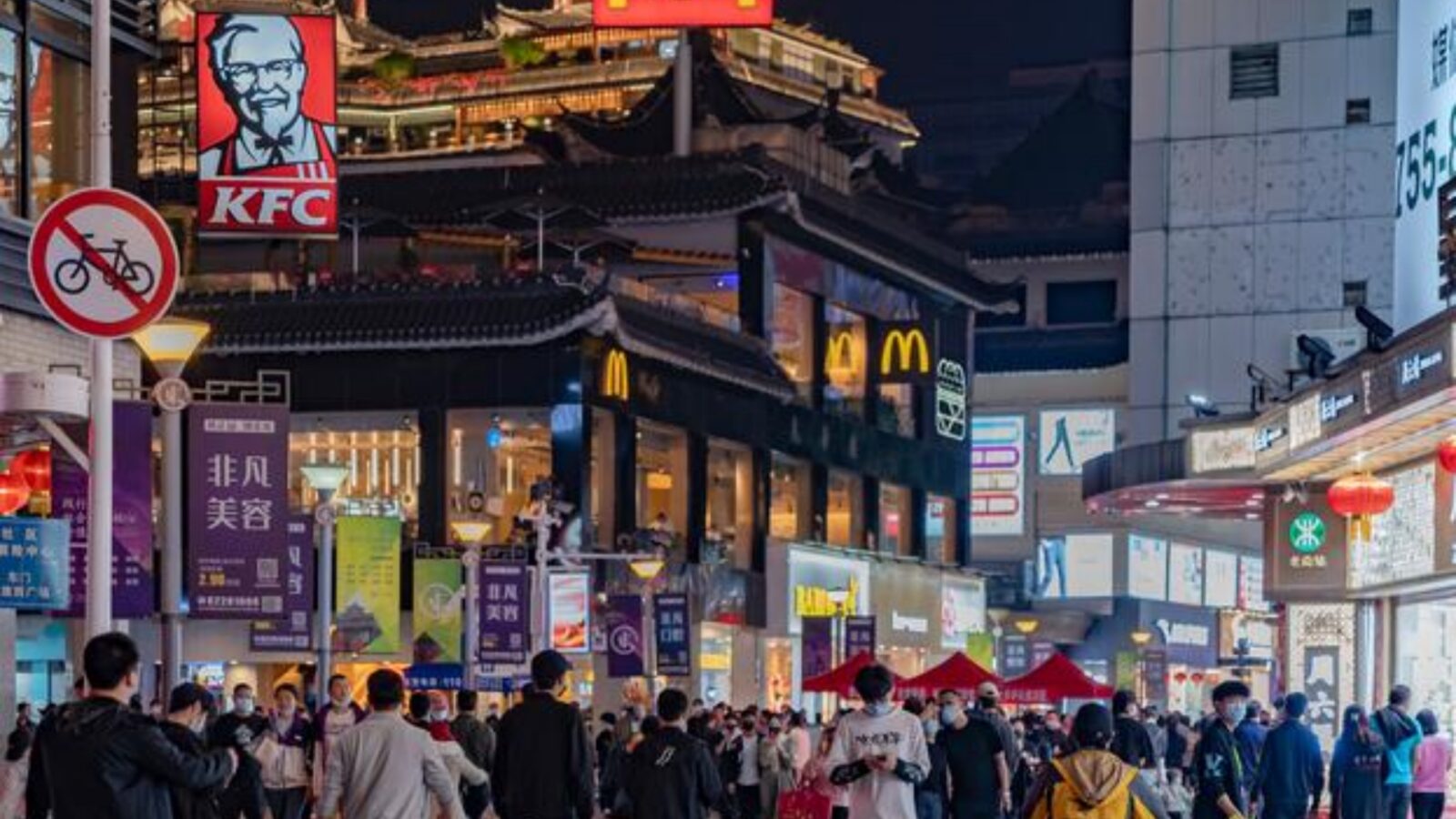
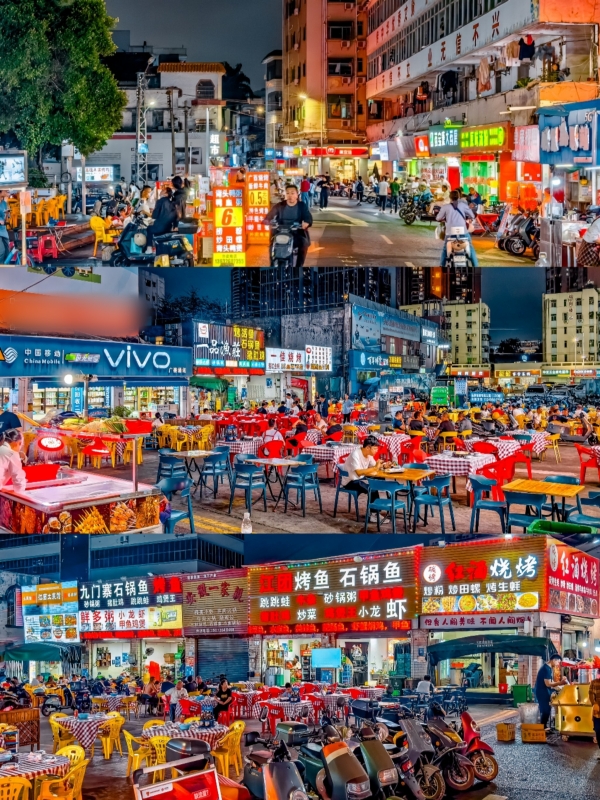
Chongqing is rapidly becoming a hub of Westerners, digital nomads, young “zhaizhers”; and contrasted with the “international-ness” of Shanghai or Shenzhen, there is the cheapness (it’s more crowded, it’s more humid, it’s more vertical) and the realness (the light rail elements live among the tower blocks, Hongyadong [the building that resembles the ancient buildings in Fengdu, known for its neon], the fuming 2AM hotpot scenes). Instead of being simply an awkward city, it’s a gigantic 24 hour “mountain metropolis,” made of viscerals.
All that being said, Chongqing isn’t for everyone. The oppressive summers and struggle to get around the hillside city with strong dialect speakers present their challenges long term. Getting along requires an acceptance of life on local terms. For the conveniences of a big city from malls to subways and modern nightlife, but with even lower rents than smaller second-tier cities, budget from $550 for a modest lifestyle to as much as $1,500 if you require more luxurious day-to-day living. Is affordable, modern mountain city just right for you? Read on.
💰 Monthly Budget & Snapshot
Chongqing is cheaper than China’s first-tier cities. However, your lifestyle matters. Therefore, use this table as a working budget, not a fixed rule.
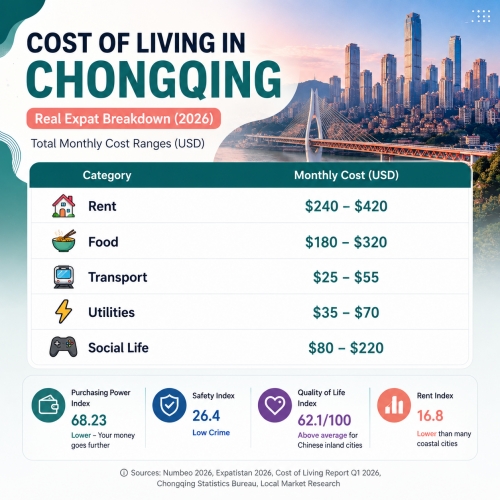
Solo Monthly Budget: $550–$1,500
A careful single person can live near $550 with a simple room and local meals. Meanwhile, a comfortable foreigner budget often reaches $900–$1,200. If you choose river-view rent, frequent taxis, and imported groceries, the total may pass $1,500.
| Expense Category | Monthly Cost | RMB Reference | Notes |
|---|---|---|---|
| 🏠 Rent | $240–$420 | ¥1,700–¥3,000 | A normal studio or one-bedroom outside prime areas. |
| 🍜 Food | $180–$320 | ¥1,300–¥2,300 | Local meals are cheap, but hotpot adds up. |
| 🚇 Transport | $25–$55 | ¥180–¥400 | Metro is cheap; taxis rise with hill fatigue. |
| ⚡ Utilities | $35–$70 | ¥250–¥500 | Summer air conditioning can change the bill. |
| 🎮 Social Life | $80–$220 | ¥600–¥1,600 | Nightlife, coffee, cinemas, and river walks. |
| 🏥 Healthcare | $20–$80 | ¥150–¥600 | Basic care is affordable; English support is limited. |
| 📚 Learning | $15–$120 | ¥100–¥850 | Chinese classes or skill courses vary widely. |
| 🧻 Essentials | $40–$120 | ¥300–¥850 | Toiletries, basic clothes, and cleaning goods. |
| 📱 Phone | $10–$40 | ¥70–¥300 | Mobile plans are usually good value. |
| ✈️ City Trips | $40–$180 | ¥300–¥1,300 | Weekend sightseeing and short-distance outings. |
| 🛒 Imported groceries | $35–$120 | ¥250–¥850 | Depends heavily on Western food habits. |
| ☕ Coffee lifestyle | $25–$95 | ¥180–¥680 | Daily cafés quietly increase monthly spending. |
| ❄️ Summer electricity | $18–$60 | ¥130–¥430 | Air conditioning becomes essential in humid months. |
Budget Balance: Lower Costs With Lifestyle Risks
✅ Main Advantages
- Lower monthly pressure: Chongqing remains noticeably cheaper than Shanghai or Shenzhen for rent, metro use, and local dining.
- Flexible daily spending: Cheap local restaurants, metro fares, and delivery apps make budget control easier for students and remote workers.
- Affordable long stays: Many foreigners can maintain a comfortable lifestyle without needing a high international salary.
⚠️ Main Disadvantages
- Imported lifestyle costs: Coffee chains, imported groceries, nightlife, and Western products quickly increase monthly spending.
- Seasonal utility pressure: Summer electricity bills rise sharply because air conditioning becomes necessary during humid months.
- Hidden convenience spending: Frequent taxis, food delivery, and small entertainment purchases quietly reshape the budget.
Practical note: Before you compare budgets, set up the payment tools first. For daily spending, this Alipay setup guide explains the payment system many travelers use in China.
🏠 Rent & Facilities
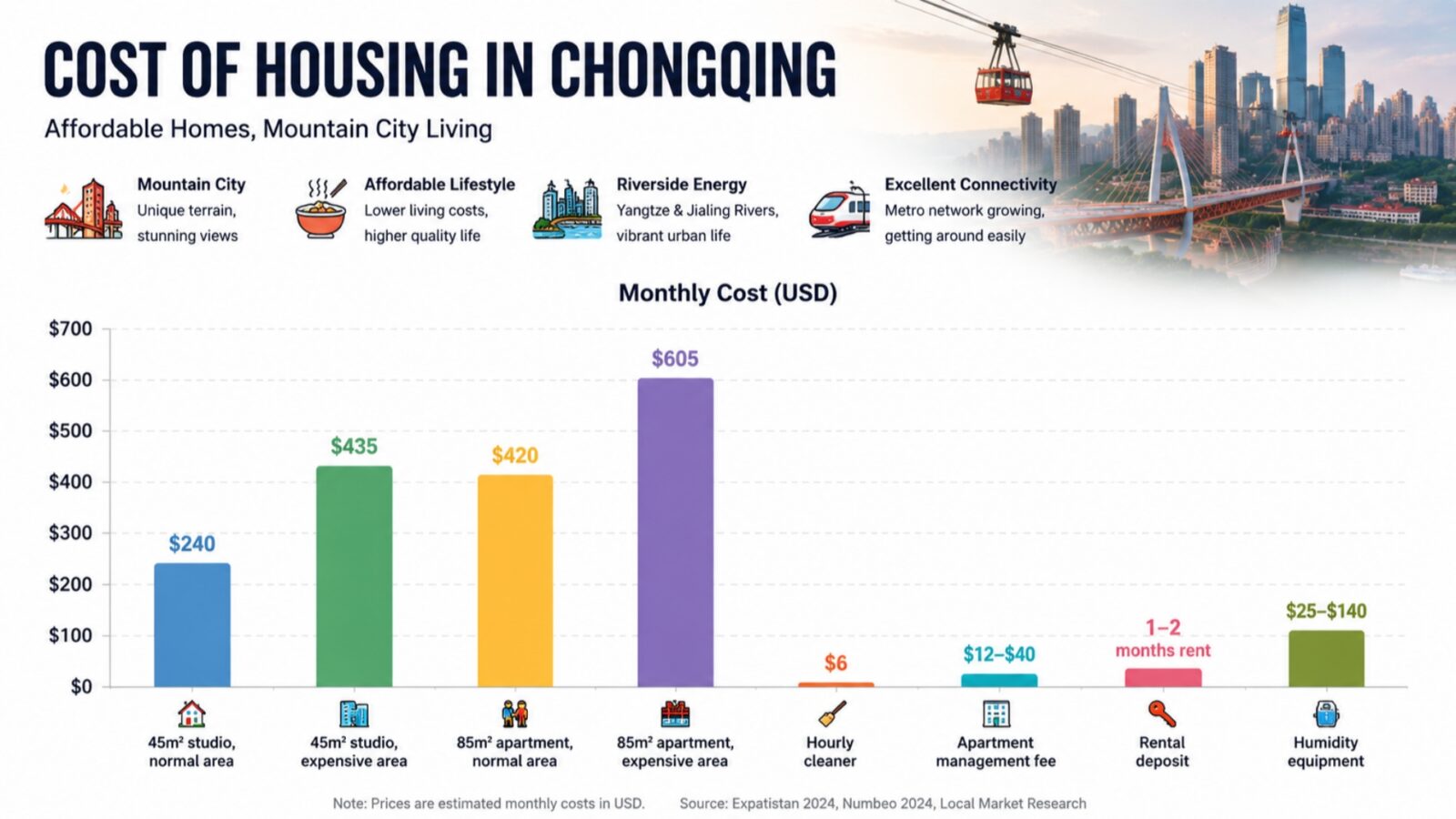
Monthly Rent and Living Expenses in Chongqing (USD)
Rent is the biggest fixed cost in Chongqing. Still, it is far lower than Shanghai or Shenzhen. Yet terrain, elevators, dampness, and metro access matter as much as rent.
Studio Apartment: $240–$435
A small furnished studio is often the easiest option for a new arrival. However, do not judge the apartment by distance alone. In Chongqing, a “500-meter walk” may include stairs, slopes, and pedestrian bridges.
| Housing Type | Monthly Cost | RMB Reference | Notes |
|---|---|---|---|
| 🏠 45㎡ studio, normal area | $240 | ¥1,707 | Common solo choice outside expensive districts. |
| 🏙️ 45㎡ studio, expensive area | $435 | ¥3,114 | Likely near Jiefangbei, Jiangbei, or river views. |
| 👫 85㎡ apartment, normal area | $420 | ¥3,018 | Good for couples or small families. |
| 🌉 85㎡ apartment, expensive area | $605 | ¥4,334 | Better location, stronger view, higher demand. |
| 🧹 Hourly cleaner | $6 | ¥44 | Useful before moving in or after humid months. |
| 🏢 Apartment management fee | $12–$40 | ¥90–¥300 | Modern compounds usually charge monthly fees. |
| 🔑 Rental deposit | 1–2 months rent | Varies | Common requirement for long-term contracts. |
| 🪟 Humidity equipment | $25–$140 | ¥180–¥1,000 | Dehumidifiers are common in summer. |
Best fit: Jiefangbei suits short stays and skyline lovers. Jiangbei works well for nightlife. Meanwhile, Yubei feels calmer for families and remote workers.
Apartment Reality: Bigger Spaces With Terrain Trade-Offs
✅ Main Advantages
- Bigger apartments: Chongqing apartments are usually larger and cheaper than homes in Beijing, Shanghai, or Shenzhen.
- District variety: Areas like Yubei, Nan'an, and Jiangbei provide very different lifestyles and rental experiences.
- Good value for couples: Many remote workers and couples can rent modern apartments without extreme monthly pressure.
⚠️ Main Disadvantages
- Humidity problems: Mold, weak insulation, and damp walls become real comfort issues during summer.
- Terrain challenges: Cheap apartments may include difficult stair-heavy access or long uphill walks from metro stations.
- Older building risks: Some lower-cost apartments have elevator problems, weaker maintenance, or outdated interiors.
Real-life detail: Many newcomers pick a cheaper flat first. Later, they move closer to a metro exit because summer walks are harder than expected.
🍜 Dining & Groceries
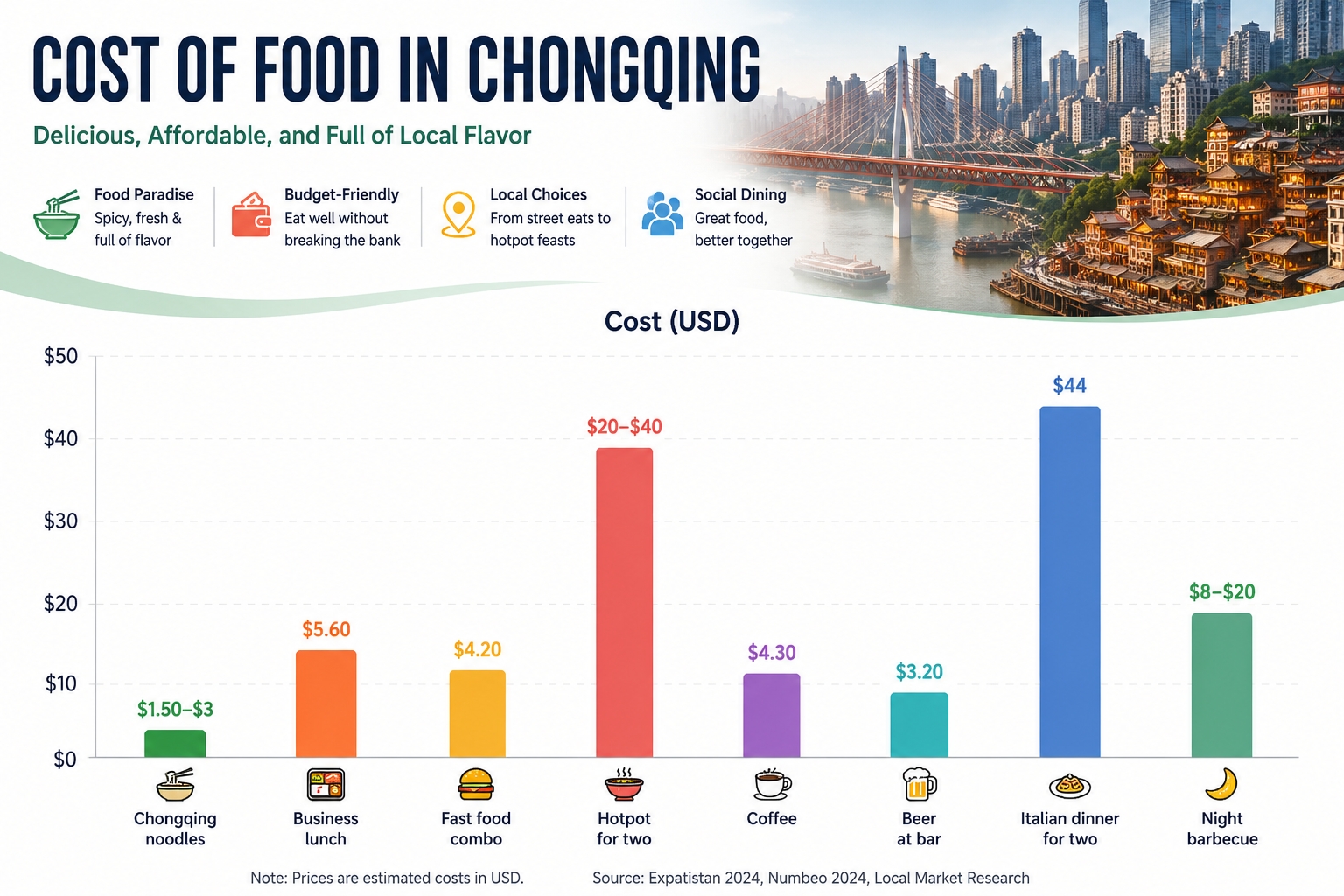
Food and Dining Expenses in Chongqing (USD)
Food is one of Chongqing’s strongest advantages. Local meals are affordable. However, hotpot, late-night barbecue, coffee, and Western food can lift your monthly bill.
Eating Out: $1.50–$44
A bowl of Chongqing noodles can cost only a few dollars. Meanwhile, a foreign-style dinner costs far more. If food is your main reason to visit, start with this Chongqing food guide before setting your weekly meal budget.
| Food Item | Cost | RMB Reference | Notes |
|---|---|---|---|
| 🍜 Chongqing noodles | $1.50–$3 | ¥10–¥20 | A common breakfast or quick lunch. |
| 🍱 Business lunch | $5.60 | ¥40 | Typical weekday meal with a drink. |
| 🍔 Fast food combo | $4.20 | ¥30 | McDonald’s-style meal. |
| 🍲 Hotpot for two | $20–$40 | ¥150–¥300 | Frequency matters more than single price. |
| ☕ Coffee | $4.30 | ¥31 | Surprisingly close to global chain prices. |
| 🍺 Beer at bar | $3.20 | ¥23 | Cheaper than big coastal cities. |
| 🍝 Italian dinner for two | $44 | ¥313 | Western meals cost more than local food. |
| 🌙 Night barbecue | $8–$20 | ¥60–¥150 | Easy to repeat several nights a week. |
Groceries at Home: $0.70–$17
Cooking at home lowers costs if you use local produce. However, cheese, wine, imported snacks, and Western breakfast items raise the bill fast.
| Grocery Item | Cost | RMB Reference | Notes |
|---|---|---|---|
| 🥛 Milk, 1L | $1.80 | ¥13 | Imported brands cost more. |
| 🥚 Eggs, 12 | $2.20 | ¥16 | Stable daily item. |
| 🍗 Chicken breast, 500g | $2.50 | ¥18 | Useful for fitness meals. |
| 🍎 Apples, 1kg | $1.50 | ¥11 | Seasonal prices move. |
| 🥔 Potatoes, 1kg | $0.70 | ¥5 | Local staples are cheap. |
| 🧀 Cheese, 500g | $6.30 | ¥45 | A clear imported-food premium. |
| 🍷 Table wine | $17 | ¥124 | Imported habits raise grocery costs. |
Eating Habits: Cheap Local Meals Expensive Imports
✅ Main Advantages
- Affordable local meals: Noodles, rice dishes, dumplings, and barbecue remain inexpensive across most districts.
- Flexible dining options: Food courts, delivery apps, and small restaurants make daily eating convenient and budget-friendly.
- Strong street-food culture: Even late-night meals stay reasonably priced compared with larger coastal cities.
⚠️ Main Disadvantages
- Imported food premiums: Cheese, wine, cereal, and coffee often cost close to European prices.
- Social dining pressure: Frequent hotpot dinners and late-night gatherings slowly increase the monthly budget.
- Western café habits: Daily coffee routines can become surprisingly expensive over longer stays.
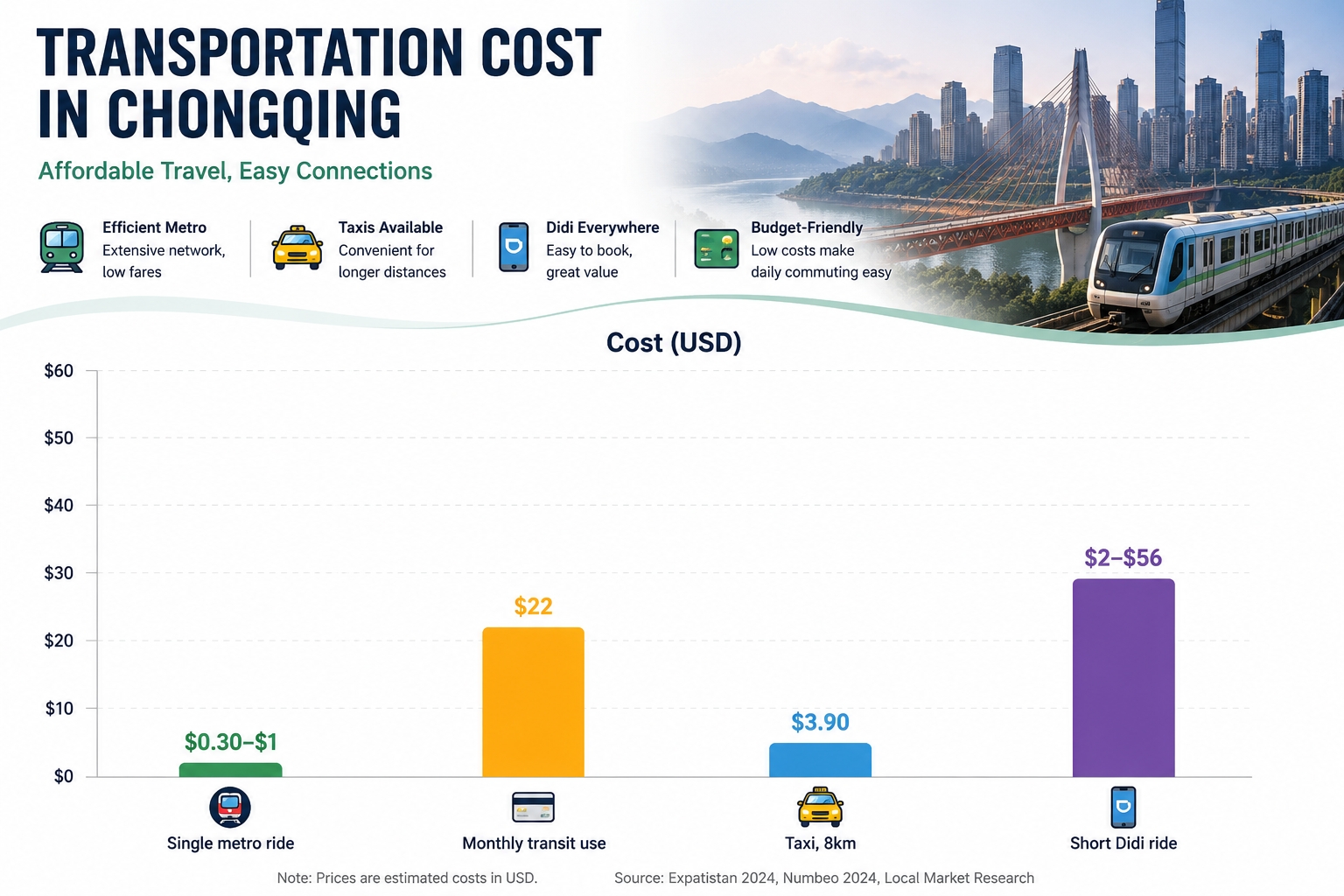
Public and Private Transport Expenses in Chongqing (USD)
Transport prices are low. However, Chongqing’s hills change daily life. Therefore, transport budgeting should include both metro fares and “I cannot climb today” taxi rides.
Metro and Taxis: $0.30–$55
The metro is practical and cheap. Still, transfers, bridges, and steep station exits can surprise new arrivals. For citywide planning, this transportation in China guide helps explain common travel systems.
| Transport Item | Cost | RMB Reference | Notes |
|---|---|---|---|
| 🚇 Single metro ride | $0.30–$1 | ¥2–¥7 | Distance-based fare. |
| 🎫 Monthly transit use | $22 | ¥158 | Enough for many regular commuters. |
| 🚕 Taxi, 8km | $3.90 | ¥28 | Good value during heat or late nights. |
| 📱 Short Didi ride | $2–$6 | ¥15–¥40 | Often used after hills or nightlife. |
| ⛽ Gasoline, 1L | $1 | ¥7 | Relevant for drivers, not most visitors. |
Moving Around: Low Fares But Physical City Layout
✅ Main Advantages
- Cheap daily transport: Metro fares, buses, and taxis cost far less than in many international cities.
- Strong metro coverage: Most major districts connect well through Chongqing’s expanding rail system.
- Reliable ride-hailing: Didi rides are widely available and usually affordable during evenings or rainy weather.
⚠️ Main Disadvantages
- Physically tiring layout: Hills, bridges, and stair-heavy stations make daily walking more exhausting than expected.
- Taxi dependence: Many residents rely on taxis more often during humid summer periods.
- Complex navigation: Multi-level roads and layered transport systems confuse many first-time visitors.
Practical note: If you plan to use ride-hailing, save this Didi ride-hailing app guide. It is useful when hills, heat, or late-night meals make walking less attractive.
🎮 Entertainment & Nightlife
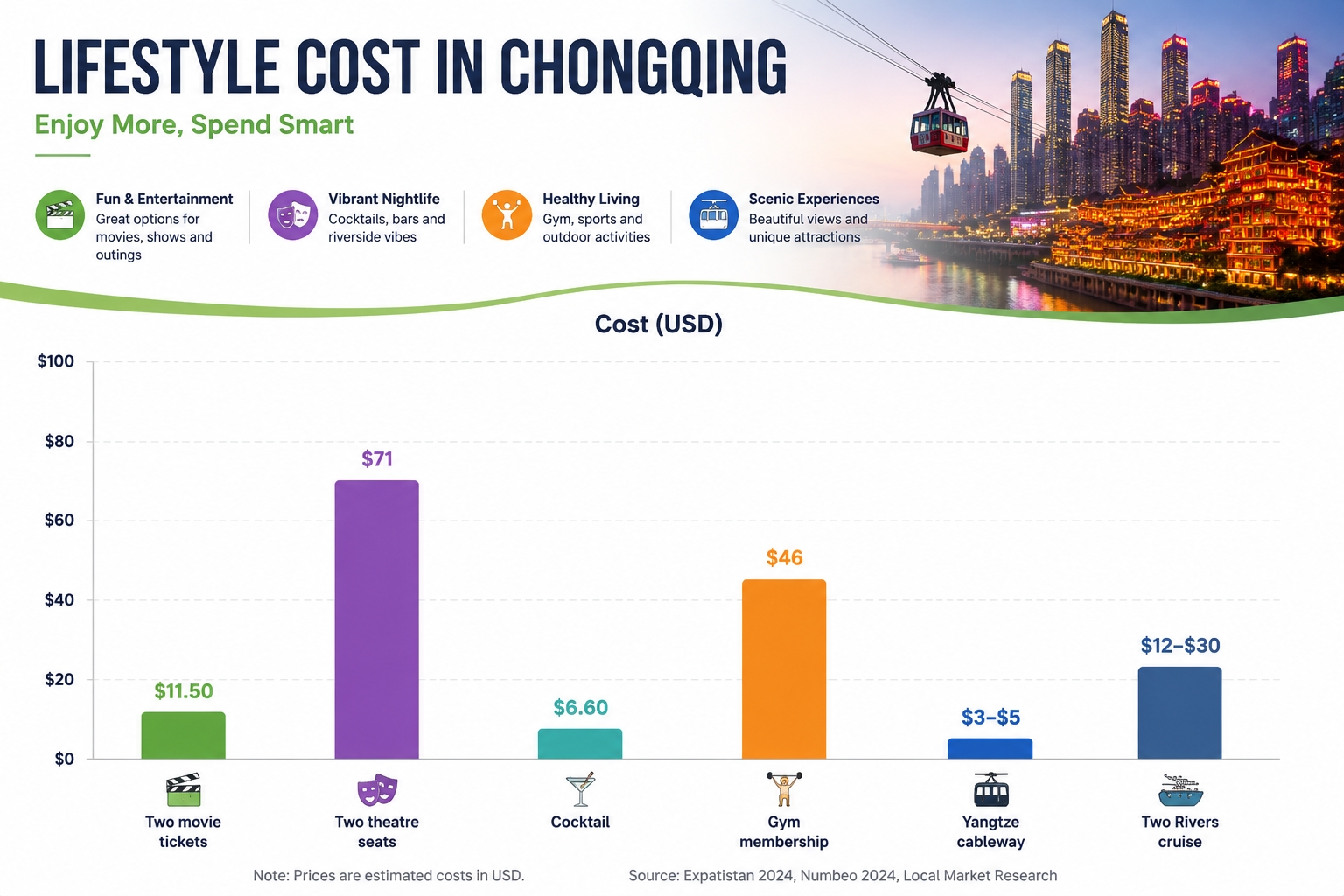
Lifestyle and Entertainment Costs in Chongqing (USD)
Chongqing’s nightlife is a major attraction. However, that is also why entertainment costs grow quietly. One cheap evening is easy. Four nights a week changes the budget.
Nightlife and Attractions: $3–$71
Many city views are free. Yet paid experiences, drinks, rides, and late-night food add layers. If you want to compare evening activities, this Chongqing nightlife guide is a useful next read.
| Lifestyle Item | Cost | RMB Reference | Notes |
|---|---|---|---|
| 🎬 Two movie tickets | $11.50 | ¥82 | Affordable indoor option in summer. |
| 🎭 Two theatre seats | $71 | ¥510 | Premium cultural night out. |
| 🍸 Cocktail | $6.60 | ¥47 | Central bars cost more. |
| 🏋️ Gym membership | $46 | ¥332 | Business districts are pricier. |
| 🚠 Yangtze cableway | $3–$5 | ¥20–¥35 | Classic city experience. |
| 🌃 Two Rivers cruise | $12–$30 | ¥90–¥220 | Tourist-friendly but not essential. |
City Entertainment: Cheap Views But Costly Habits
✅ Main Advantages
- Low-cost attractions: River walks, skyline viewpoints, and night markets are affordable or completely free.
- Strong nightlife atmosphere: Chongqing stays lively late into the night with food streets and social districts.
- Affordable local entertainment: Many local bars and casual venues remain cheaper than Shanghai nightlife.
⚠️ Main Disadvantages
- Weekend spending growth: Cocktails, karaoke, and cafés gradually increase monthly entertainment costs.
- Tourist-area pricing: Riverfront districts and popular bars charge noticeably higher prices.
- Late-night habits: Frequent delivery orders and nightlife routines quietly reshape long-term budgets.
Local angle: Night markets can be cheaper than bars and more social. For food-focused evenings, see this Chongqing night market guide.
🏥 Healthcare & Medicine
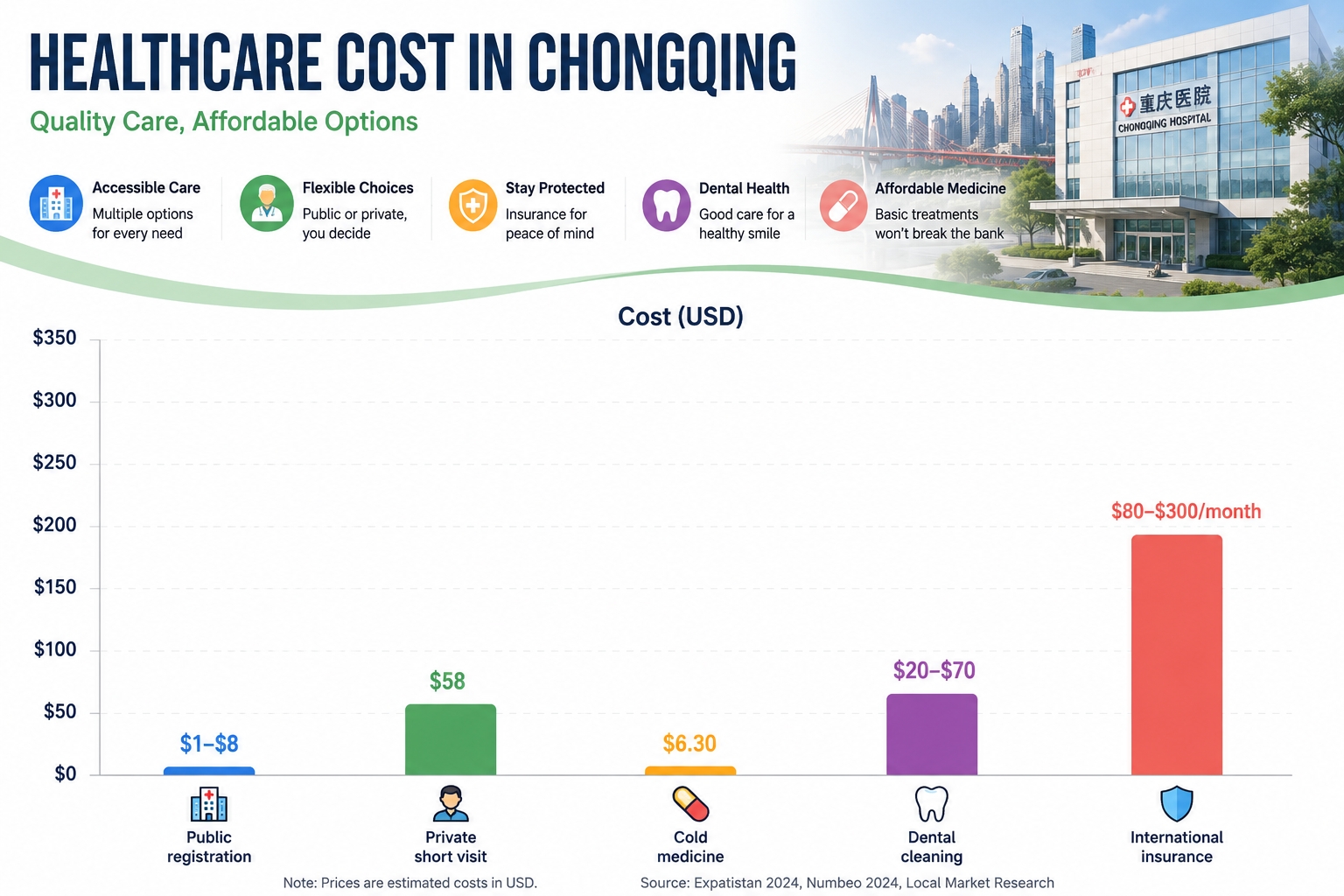
Healthcare and Medical Costs in Chongqing (USD)
Basic healthcare is affordable in Chongqing. However, the system can feel confusing for foreigners. Language support, hospital flow, and insurance matter more than small medicine prices.
Clinics and Medicine: $1–$300
Public hospitals can be low cost. However, English-speaking support is not guaranteed. If medical access matters to you, this guide to English-speaking doctors in China helps you prepare before you need care.
| Healthcare Item | Cost | RMB Reference | Notes |
|---|---|---|---|
| 🏥 Public registration | $1–$8 | ¥10–¥60 | Cheap, but language may be difficult. |
| 👨⚕️ Private short visit | $58 | ¥414 | More convenient but more expensive. |
| 💊 Cold medicine | $6.30 | ¥45 | Common pharmacy item. |
| 🦷 Dental cleaning | $20–$70 | ¥150–¥500 | Private clinics vary a lot. |
| 🛡️ International insurance | $80–$300/month | ¥600–¥2,200 | Common for long-stay foreigners. |
Medical Access: Affordable Care With Language Limits
✅ Main Advantages
- Affordable public healthcare: Routine doctor visits and pharmacy purchases cost much less than in many Western countries.
- Easy medicine access: Pharmacies are common across the city and basic medicine is usually inexpensive.
- Low routine treatment costs: Small medical issues rarely create major financial pressure.
⚠️ Main Disadvantages
- Limited English support: English-speaking doctors remain uncommon outside international clinics.
- Insurance costs: International medical insurance quickly becomes expensive for long-term residents.
- Complex hospital systems: Registration processes and hospital navigation can feel stressful without Chinese language skills.
📚 Education & Language
Chongqing is not as English-friendly as Shanghai. Therefore, even basic Mandarin can reduce stress in hospitals, housing offices, delivery apps, and taxis.
Chinese Lessons: $12–$150
| Learning Item | Cost | RMB Reference | Notes |
|---|---|---|---|
| 📘 Chinese group class | $70–$150/month | ¥500–¥1,100 | Good for routine study. |
| 🧑🏫 Private Chinese tutor | $12–$35/hour | ¥90–¥250 | Better for survival phrases. |
| 🏫 International school | $5,000–$20,000/year | ¥36,000–¥145,000 | Major family budget factor. |
Language Learning: Useful Skills With Extra Costs
✅ Main Advantages
- Better daily communication: Basic Mandarin improves restaurant orders, transport use, and shopping experiences.
- More independence: Simple survival phrases reduce reliance on translation apps and outside help.
- Lower daily stress: Language skills make housing, hospital visits, and delivery apps easier to manage.
⚠️ Main Disadvantages
- International education costs: International schools and private tutors become expensive for families.
- Communication barriers: Foreigners without Chinese often struggle with contracts and local services.
- Long-term learning pressure: Daily life becomes tiring when every small task requires translation support.
Practical note: For first-week basics, this China survival guide pairs well with language planning.
🧻 Necessities & Shopping
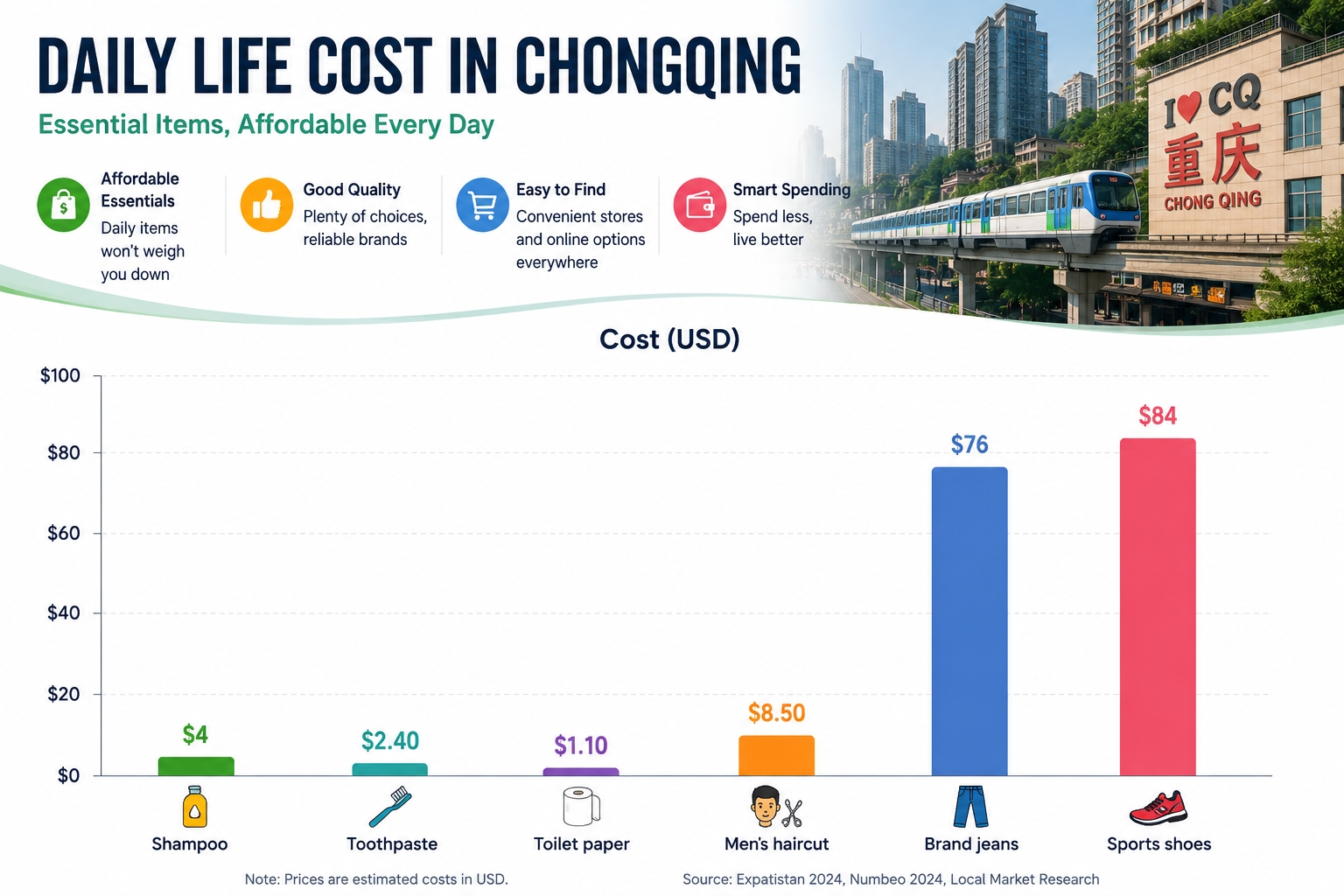
Daily Essentials and Life Costs in Chongqing (USD)
Daily goods are affordable when you buy local items. However, Western brands, electronics, sports shoes, and imported personal care can raise the average.
Toiletries and Clothing: $1–$84
For practical buying habits, this shopping in Chongqing guide can help you compare malls, markets, and everyday stores.
| Daily Item | Cost | RMB Reference | Notes |
|---|---|---|---|
| 🧴 Shampoo | $4 | ¥29 | Common supermarket price. |
| 🪥 Toothpaste | $2.40 | ¥17 | Easy to find locally. |
| 🧻 Toilet paper | $1.10 | ¥8 | Low daily cost. |
| 💇 Men’s haircut | $8.50 | ¥61 | Business districts can cost more. |
| 👖 Brand jeans | $76 | ¥547 | Brand clothing is not especially cheap. |
| 👟 Sports shoes | $84 | ¥605 | Nike or Adidas-level pricing. |
Everyday Shopping: Cheap Basics Premium Brands
✅ Main Advantages
- Affordable local essentials: Cleaning products, toiletries, and daily household goods remain budget-friendly.
- Strong local market culture: Traditional markets usually offer cheaper produce and basic supplies.
- Easy shopping access: Convenience stores and supermarkets are available almost everywhere.
⚠️ Main Disadvantages
- Imported brand pricing: Foreign cosmetics, electronics, and sportswear often cost near-global prices.
- Lifestyle inflation: International shopping habits quickly increase everyday spending.
- Premium mall costs: Modern shopping districts are far more expensive than local neighborhood stores.
Device note: If you bring electronics, check voltage and plugs first. This China plug adapter guide helps avoid last-minute purchases.
📱 Connectivity & Payments
China is very mobile-payment driven. Therefore, phone access and payment apps are not optional extras. They shape your daily cost and convenience.
Phone and Payments: $10–$40
| Setup Item | Cost | RMB Reference | Notes |
|---|---|---|---|
| 📱 Mobile plan | $10–$40/month | ¥70–¥300 | Depends on data and carrier. |
| 💬 WeChat Pay | Usually free | Usually free | Vital for food, taxis, and local payments. |
| 💳 Alipay | Usually free | Usually free | Useful for metro, shops, and deliveries. |
| 🌐 Home internet | $11.50/month | ¥83 | Often cheap, but setup may need Chinese help. |
Digital Setup: Efficient Apps With Foreign Limits
✅ Main Advantages
- Fast mobile payments: WeChat Pay and Alipay make transport, shopping, and dining extremely convenient.
- Efficient delivery systems: Food delivery and ride-hailing apps reduce daily effort and save time.
- Strong digital convenience: Most daily services work directly through mobile apps.
⚠️ Main Disadvantages
- Foreign card issues: International bank cards sometimes fail during payment verification.
- Phone compatibility problems: Some foreign devices and apps need additional setup inside China.
- Chinese-language barriers: Many services still require local phone numbers or Chinese-language navigation.
Useful setup: Before arrival, check whether your phone will work in China. Also, this WeChat Pay guide for foreigners can reduce payment stress.
🌆 Cities & Comparisons
Many travelers compare Chongqing with Chengdu. Both are cheaper than Shanghai. Still, their lifestyles are different. Chongqing feels steeper, louder, and more dramatic. Chengdu feels flatter, slower, and easier.
Chongqing vs Chengdu: $600–$1,200
| Comparison Point | Chongqing | Chengdu | Notes |
|---|---|---|---|
| 🏠 Rent | Low to mid | Low to mid | Both are easier than coastal megacities. |
| 🚶 Daily movement | Hilly and tiring | Flatter and easier | A major lifestyle difference. |
| 🌃 Night feel | Dramatic and bright | Relaxed and social | Choose by energy level. |
| 🍜 Food culture | Hotpot and noodles | Teahouses and Sichuan dishes | Both are strong food cities. |
Choosing a Base: Energy Versus Long-Term Comfort
✅ Main Advantages
- Dramatic city atmosphere: Chongqing offers layered skylines, river views, and a unique mountain-city feeling.
- Lower entertainment costs: Nightlife and evening activities are often cheaper than in larger coastal cities.
- Strong urban energy: The city feels active, visually impressive, and culturally distinct.
⚠️ Main Disadvantages
- Physically demanding layout: Hills, humidity, and stair-heavy roads create long-term walking fatigue.
- Summer discomfort: Heat and moisture become difficult for some long-term residents.
- Less relaxed pace: Chengdu often feels easier for slower routines and family-oriented living.
Planning note: If you are deciding between the two, this Chengdu vs Chongqing travel comparison gives useful context beyond cost alone.
📈 Value & Affordability: To compare how Chongqing's incredibly budget-friendly expenses translate into daily comforts and happiness compared to other tier-1 hubs, check out the Quality of Living in China.
Faqs: Cost of Living in Chongqing
Q: Is Chongqing cheaper than Shanghai?
Yes. It’s cheaper in Chongqing generally compared to Shanghai especially for rent and local meals but imported stuff, coffee, nights out, etc can be expensive. Cheaper, not cheap.
Q: How much money do I need to live comfortably in Chongqing?
A single person can get by on around $900-1200/month. With a simple lifestyle, the cost of living in Chongqing could theoretically get down to around $550. However, if you want river view rent, taxis and hotpot nights every week, life can push the budget higher!
Q: Can foreigners live cheaply in Chongqing?
Yes, foreigners can live cheaply if they choose local food, public transport, and a normal apartment. The cost of living in Chongqing gets pricey if foreigners insist on Western restaurants, international clinics, imported groceries, and taxis. It’s local habits that make the biggest difference.
Q: What is the biggest monthly expense in Chongqing?
Rent tends to be the biggest fixed cost, but food and nightlife often bring the biggest surprises. The cost of living in Chongqing is manageable as long as you forego hotpot, cafés, bars, and short taxi rides; it’s amazing how quickly those little fuzzy costs add up!
Q: Is food expensive in Chongqing?
Local food is by no means expensive. Noodles, street food, and casual restaurants give very good value. However, the price of living in Chongqing does go up if you eat hotpot too often or fancy Western food. Imported cheese, wine, coffee, and brands start to hurt your wallet.
Q: Is Chongqing good for digital nomads?
Chongqing works for digital nomads seeking low rent, vibrant food culture, and big-city vibes. Payoff, the cost of living in Chongqing looks juicy, just don't expect any real English support, Payment apps and a bit of translation and Mandarin go a long way.
Q: Can you survive in Chongqing without speaking Chinese?
You can survive, but daily life is easier with basic Chinese. The cost of living in Chongqing may even rise without Chinese, because you may rely more on taxis, international services, and help from others. Translation apps help, yet they do not solve everything.
Q: Which area of Chongqing is best for foreigners?
Jiefangbei is best for short stays, Jiangbei for nightlife, and Yubei for calmer long-term living. The cost of living in Chongqing changes by district. Therefore, choose your area by metro access, slope, building quality, and daily routine, not only by rent.
Q: Is healthcare good in Chongqing?
Basic healthcare is affordable, and public hospitals cover most needs. However, English-speaking care is more limited than in Shanghai. The cost of living in Chongqing remains lower for routine care, but long-stay foreigners should consider insurance or identify English-friendly clinics early.
Q: What is the biggest downside of living in Chongqing?
The biggest downside is the combination of heat, humidity, hills, and limited English. The cost of living in Chongqing is attractive, but daily comfort depends on weather tolerance, housing quality, and transport habits. Therefore, visit in summer before committing long term.