Zhoucheng
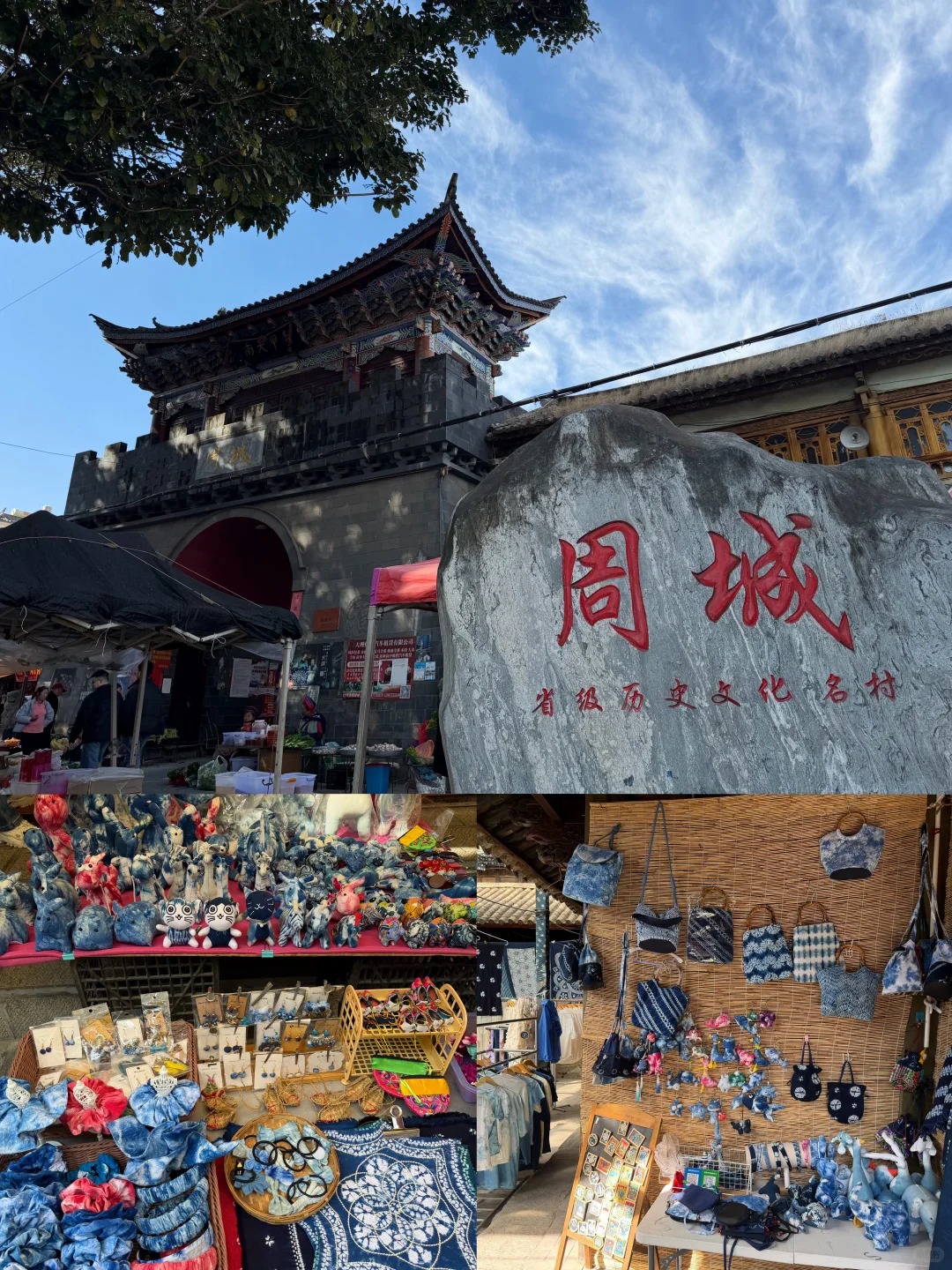
Zhoucheng sits about half an hour from Dali, but it feels like a different place altogether. Most people come here for Zhoucheng tie dye, and yeah, you’ll see plenty of it—blue fabric hanging across courtyards, hands stained with dye, small workshops tucked behind plain doors. It’s not polished, and that’s kind of the point. Some shops feel a bit touristy, others still look like someone’s home. If you’re curious about other must-see spots and experiences in Dali, check out this guide for things to do in Dali.
From what I’ve seen, Zhoucheng works best if you slow down a little. Walk past the first row of stores, take a few turns, and things start to feel more real. Miss that, and the whole place can feel a bit underwhelming.
Quick Facts About Zhoucheng Village
| 📍 Location | Zhoucheng Village, 20km north of Dali Old Town, near Erhai Lake |
| 🧭 Region | Dali Bai Autonomous Prefecture, Yunnan |
| 🎨 Famous for | Bai ethnic tie-dye (Zhoucheng tie dye) |
| 🏡 Village type | Traditional Bai minority village with courtyard houses |
| ⏳ Suggested visit time | 2–4 hours (half-day trip works best) |
| 💰 Entry fee | Free to enter village |
| 🧵 Tie-dye experience | 30–100 RMB depending on size and shop |
| 🚗 Transport | Taxi (~40–80 RMB), Didi, or local bus from Dali |
| 📸 Best photo time | 9–11 AM or 4–6 PM (soft light + fewer crowds) |
| 🛍️ What to buy | Handmade indigo fabrics, scarves, tablecloths |
| ⚠️ Things to watch | Tourist pricing in some shops |
| 🌍 Traveler feedback | Loved for authenticity, but less “polished” than Dali Old Town |
Bai Culture and the Roots of Zhoucheng Village
Who the Bai People Are
Bai People
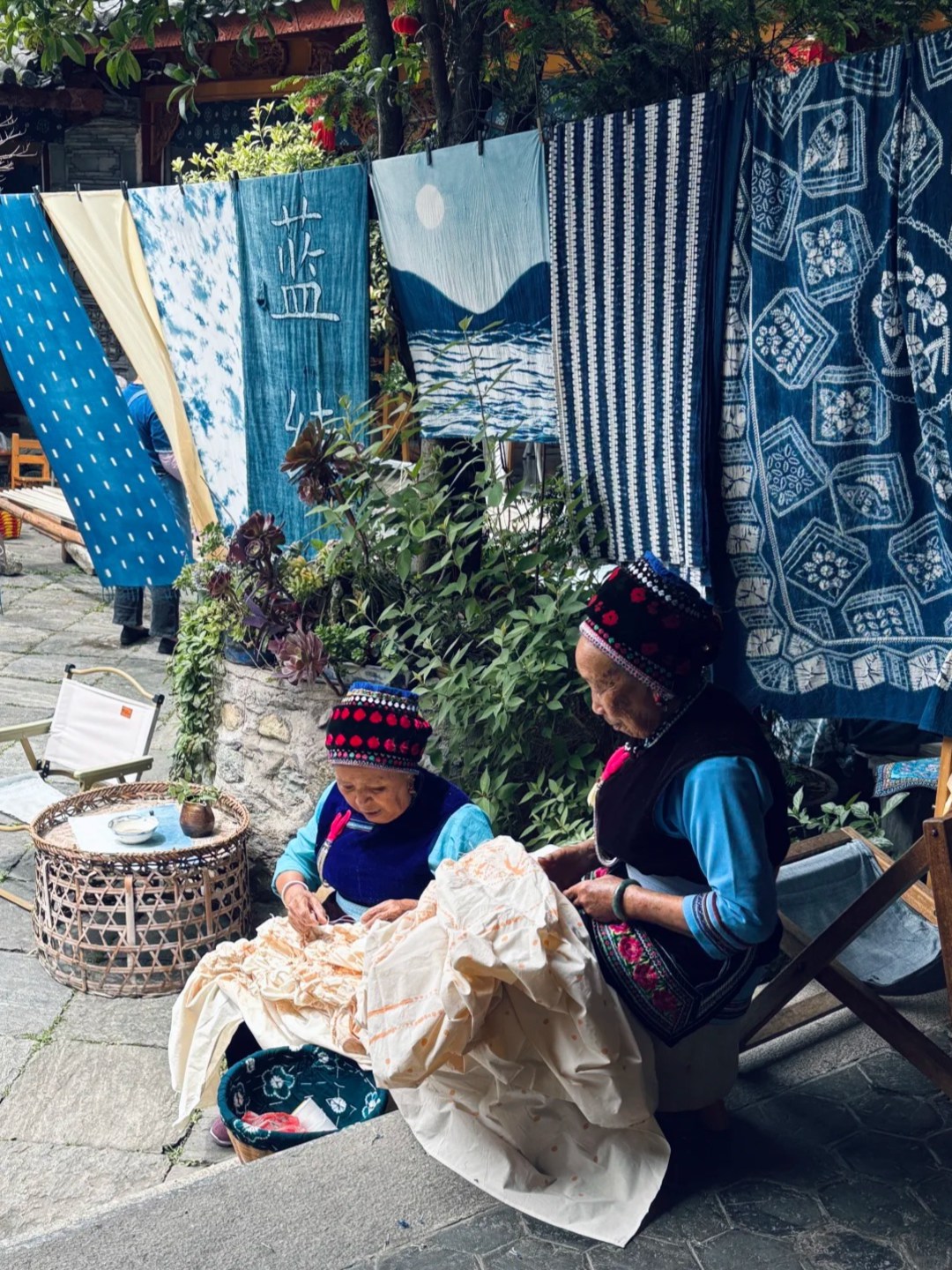
If you spend a bit of time in Zhoucheng village, you’ll notice it doesn’t feel like a staged “ethnic attraction.” That mostly comes down to the Bai people themselves—they’re not performing culture here, they’re just living it.
- Ethnic group: The Bai are one of Yunnan’s main minority groups, officially recognized in China, with a long history tied closely to the Dali region.
- Main area: Most Bai communities are concentrated around Dali and Erhai Lake, which is why places like zhoucheng dali still feel culturally intact.
- Daily life: Farming and handicrafts go hand in hand. You’ll see people working fields in the morning and handling textile work later in the day.
- Clothing: Traditional Bai outfits often use white and indigo tones—practical, but also tied to their dyeing tradition. Older residents still wear them daily.
- Architecture: Typical Bai houses follow the “three courtyards and one screen wall” layout. White walls, grey tiles, and painted details stand out immediately.
What makes Zhoucheng different is that these elements aren’t packaged for display. You walk past someone’s doorway, and there’s fabric drying or tools lying around. It feels functional, not decorative—and that’s where most travelers start to pay more attention.
🎨 Bai tie-dye has become the cultural calling card of Zhoucheng, and many Chinese towns build their identity through ethnic culture—This Full Recommendation Guide for China’s Ancient Towns lets you rediscover these unique places through the lens of ethnic heritage.
Why Zhoucheng Became the Center of Tie-Dye
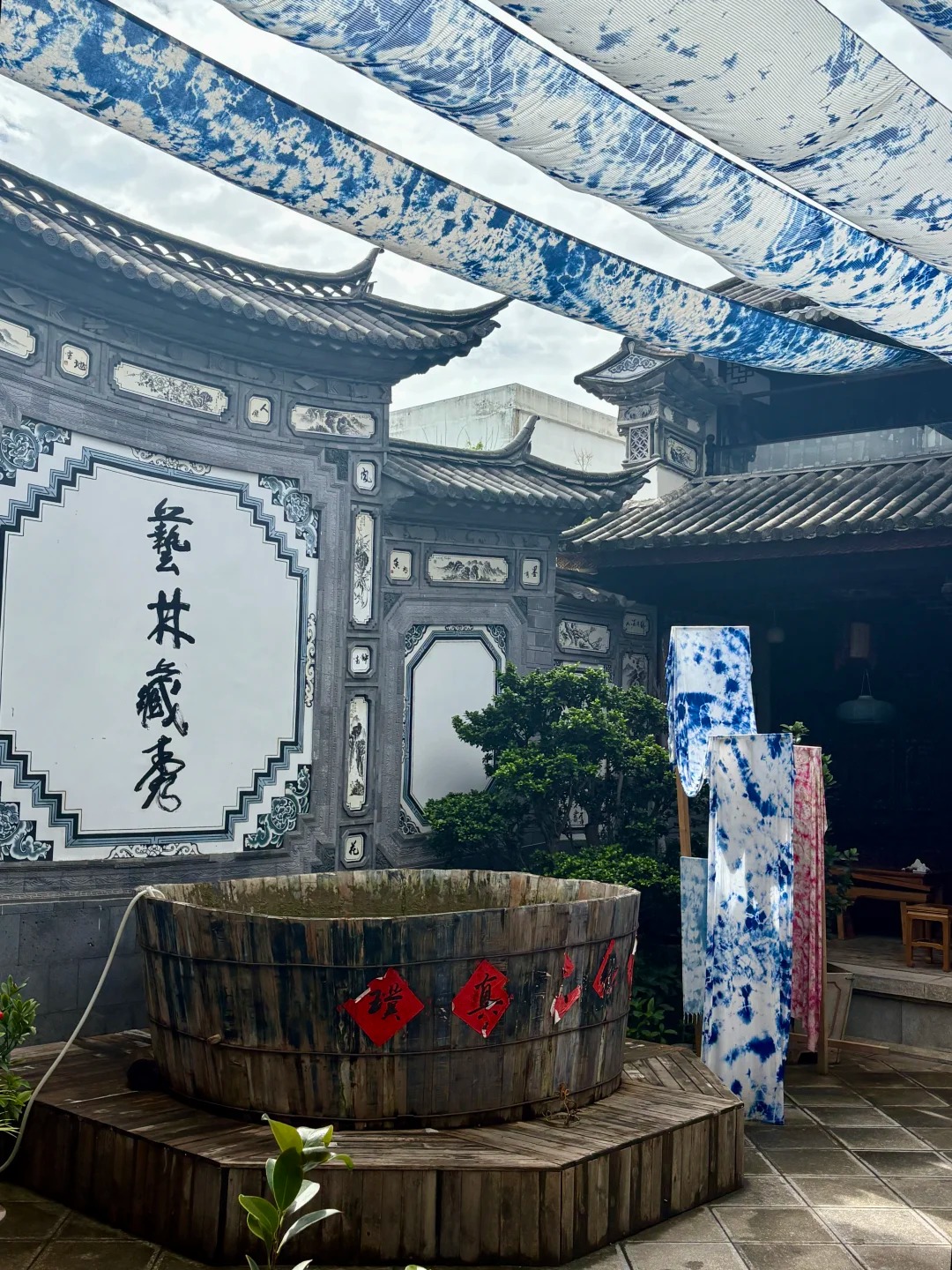
Tie-Dye
There’s a reason Zhoucheng tie dye didn’t just survive here—it stayed part of everyday life. It’s not random; a few practical factors made it work.
- Geography: The village sits near water sources around Erhai Lake. Dyeing fabric needs constant rinsing, and clean water makes a difference.
- Climate: Mild temperatures and steady sunlight help with drying dyed cloth, especially the repeated indigo processes.
- History: Tie-dye in this area goes back several hundred years. It wasn’t a niche craft—it was part of daily clothing production.
- Production style: Most workshops are still family-run. You’ll often see older generations working with younger ones, not factory lines.
- Non-industrial pace: Large-scale industrialization never really took over here. That’s why patterns still look slightly uneven—small flaws, but more character.
Compared to other places where crafts are demonstrated on schedule, Zhoucheng feels less organized, sometimes even a bit messy. But that’s also why it doesn’t come across as a performance.
Local Beliefs and Benzhu Temples in Zhoucheng Village
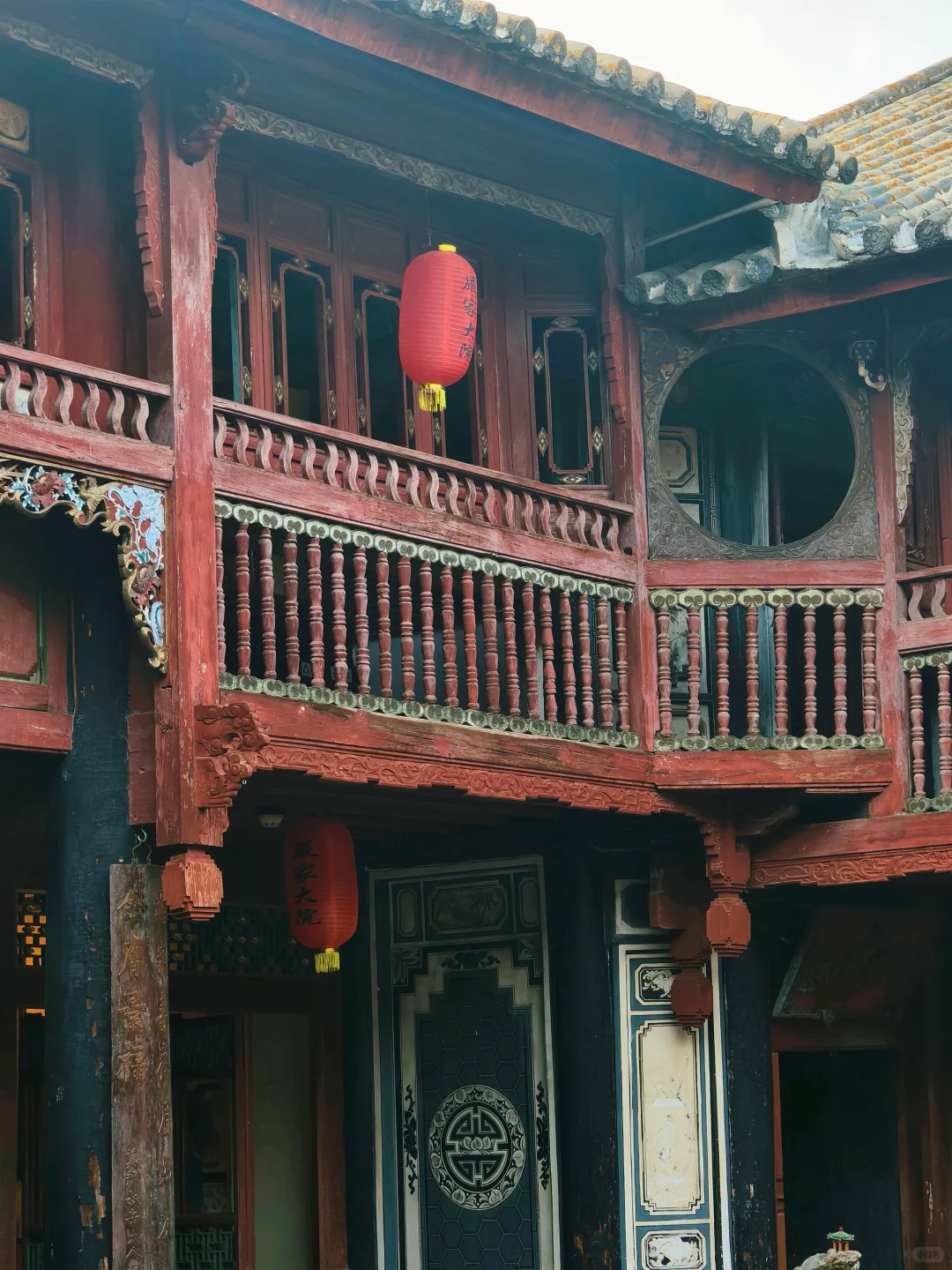
Bai Architecture
Religion in Zhoucheng village is quiet but still very present in daily life. The Bai people here traditionally follow a mix of Benzhu belief, ancestor worship, Buddhism, and some Daoist influence. Among these, Benzhu religion is the most distinctive—it centers on local protector gods, with each Bai village usually honoring its own guardian deity.
In Zhoucheng, small Benzhu temples can still be found near older residential lanes, sometimes easy to miss unless you look carefully. They are usually modest buildings, with incense burners at the entrance, red ribbons tied near shrine gates, and stone tablets carrying old inscriptions. These are not staged cultural exhibits. Local families still come to pray during festivals, before weddings, or at seasonal farming times.
Unlike large Buddhist temples in Dali that attract organized tour groups, these village shrines feel more personal and woven into ordinary life. If you visit during a Bai festival period, you may hear firecrackers, see offerings placed outside temple doors, or notice villagers gathering quietly in traditional dress. That living connection between belief and everyday routine is part of what makes Zhoucheng feel culturally intact rather than performative.
Zhoucheng Tie-Dye Experience You Should Not Miss
-
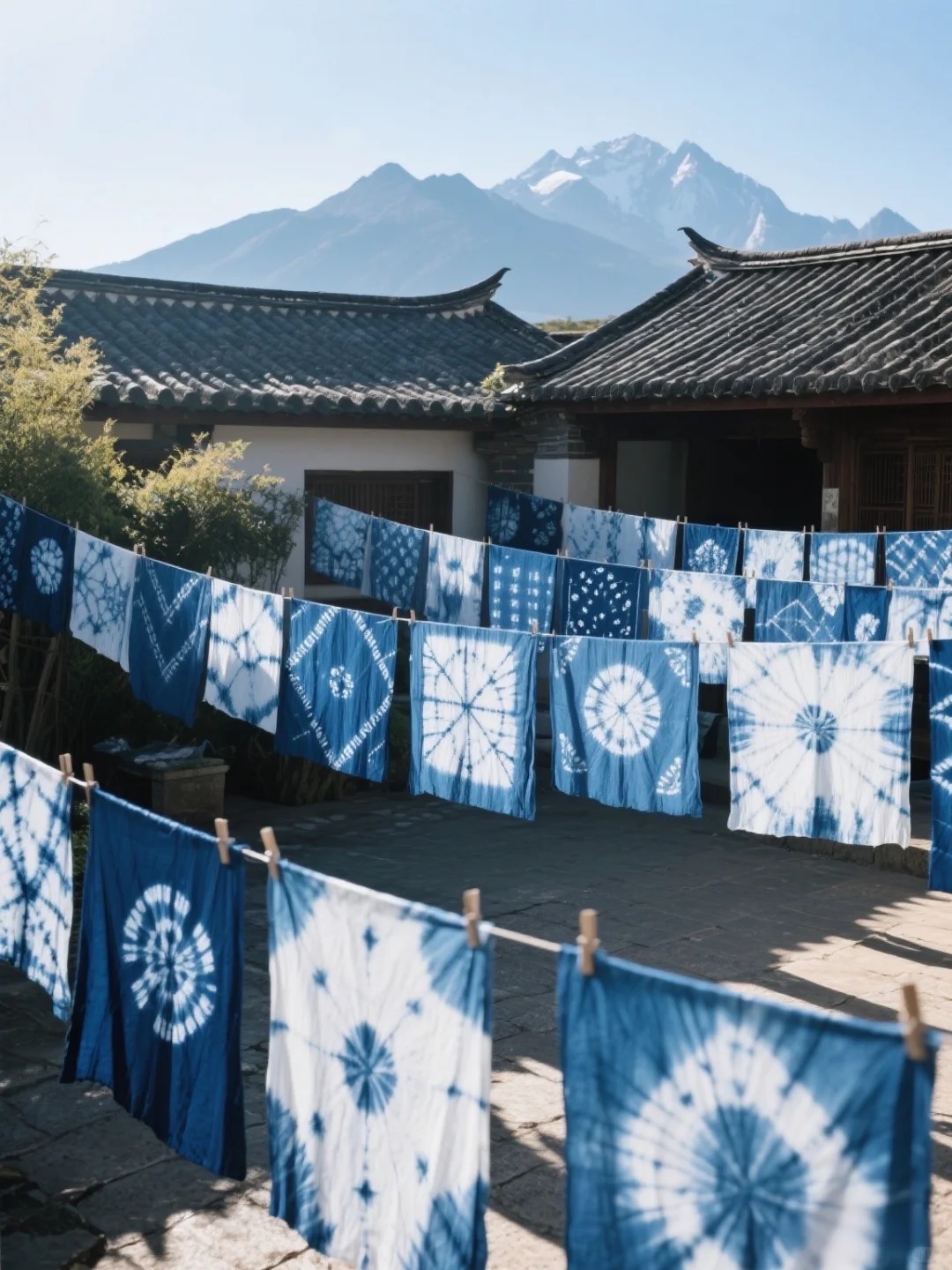

- Dyed Fabric Product
-
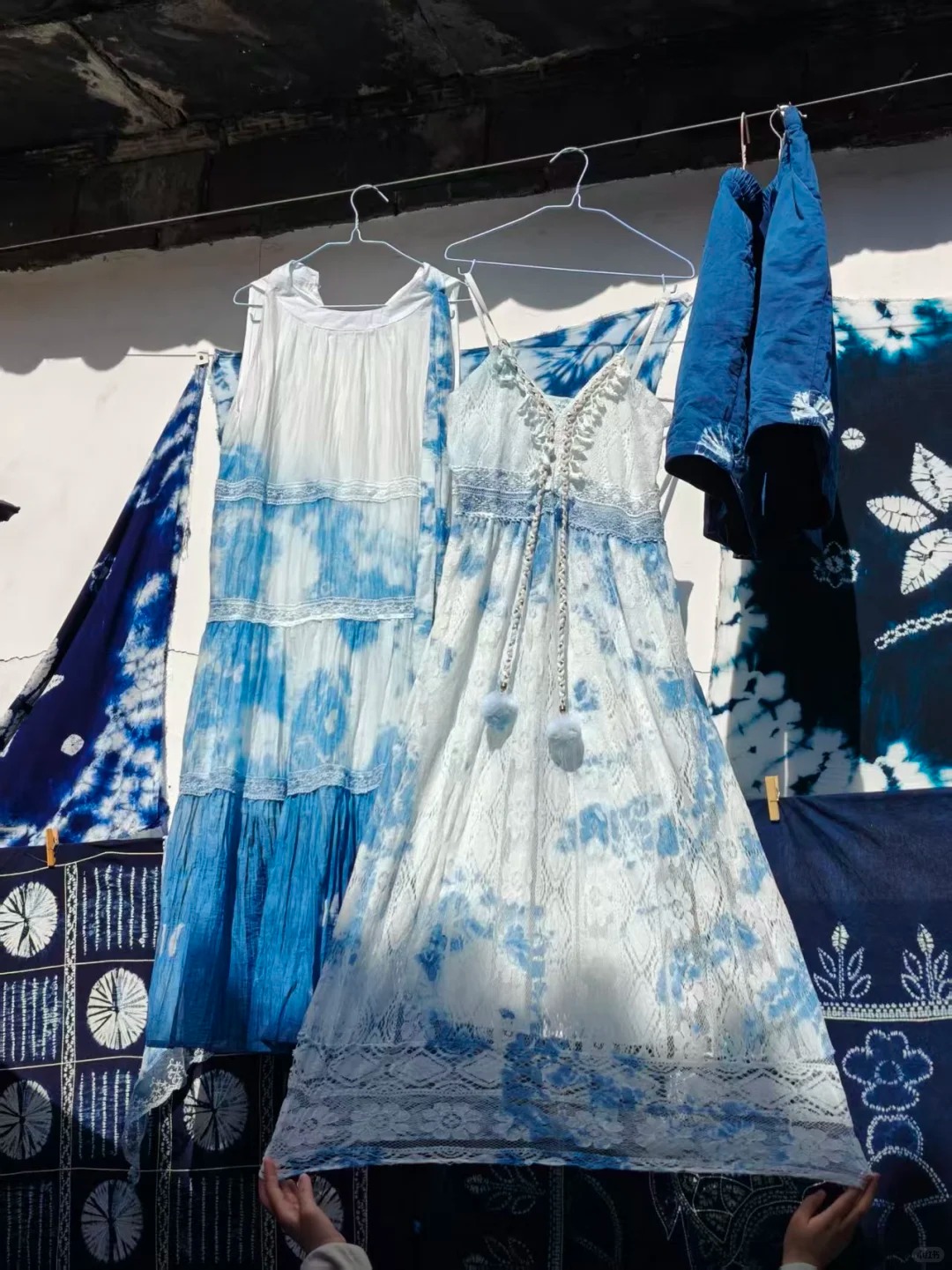

- Tie-dyed Dress
-
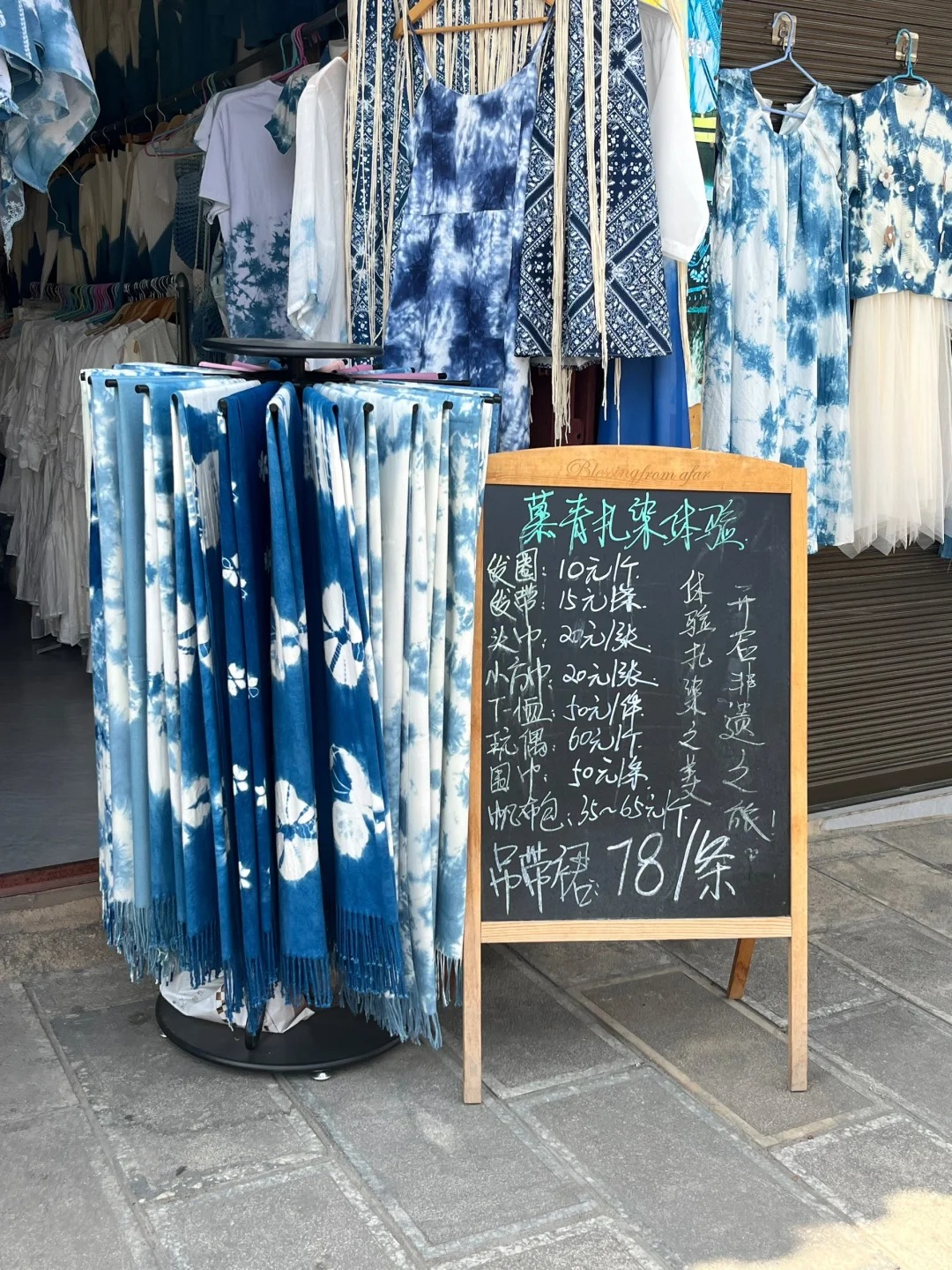
- How Much It Costs
How Zhoucheng Tie-Dye Is Made
Watching zhoucheng tie dye being made is probably the easiest way to understand why people still come here instead of just buying something online. The process isn’t hidden behind glass or turned into a performance. You’ll usually see it happening in small courtyards or right outside someone’s house.
It starts with plain white cloth. Someone folds it, then ties it tightly with thin threads—sometimes quickly, sometimes very carefully depending on the pattern. After that, the fabric goes into large buckets of indigo dye. The color doesn’t appear instantly. It comes out looking green at first, then slowly turns blue as it reacts with the air.
This dipping part gets repeated several times. I stood there for a while and lost count, maybe five or six rounds. Between each dip, the cloth gets wrung out and left to rest. Finally, everything is hung up to dry. Long strips of blue fabric stretch across wooden poles, sometimes dripping onto the stone ground below.
Nothing looks perfectly controlled. Patterns shift slightly, colors vary a bit. That’s probably the point—every piece of zhoucheng tie dye ends up a little different, even if they start the same.
Where to Try Tie-Dye in Zhoucheng Village
Trying it yourself in zhoucheng village is straightforward, maybe even more casual than expected. You don’t really “book” an experience the way you would in other tourist towns. You just walk in.
Most of the tie-dye spots sit along the main paths, but the better ones are usually a bit further in. If you see locals actually working—hands busy, not just standing at the door—that’s usually a good sign. Some places feel more like shops with a quick activity attached, others feel closer to small family workshops.
Communication can be a bit patchy. A few places have basic English signs, but most rely on simple instructions, gestures, or translation apps. Still, the process itself is easy to follow. Someone shows you how to tie the cloth, checks your knots, then guides you through the dyeing.
It’s not a polished class. No long explanations, no strict steps. But that’s also why it works—it feels closer to how things are actually done here.
How Much It Costs and What You Get
Pricing for zhoucheng tie dye is one of those things that looks inconsistent at first, but after asking around a bit, it falls into a fairly narrow range.
- Base price: Most simple experiences cost around ¥30–50 for a small piece. I remember one shop quoting ¥40, another ¥35 just a few doors down.
- Mid-range items: Scarves or slightly larger fabrics usually sit around ¥60–80, depending on thickness and size.
- Larger pieces: Tablecloth-style items or more detailed patterns can go up to ¥90–120, though that sometimes includes extra help from the staff.
What you actually get is pretty simple, but still satisfying:
- Process included: You handle the tying part yourself, which is the most important step. Dyeing is partly guided, sometimes staff step in to speed things up.
- Time needed: Expect around 30–60 minutes, depending on how careful you are. If it’s busy, it might take a bit longer.
- Final product: You take your piece with you. Some shops rinse and partially dry it on the spot, others hand it over slightly damp in a plastic bag.
One small thing I didn’t expect—your hands might stay slightly blue for a few hours. Not a big deal, but worth knowing if you have plans right after.
Compared to other hands-on activities in Dali, the price is actually pretty reasonable. It’s not a deep workshop, but for under ¥100, it gives you something tangible—and a better sense of how zhoucheng tie dye actually works.
Common Tourist Traps When Buying Tie-Dye
Not everything sold as zhoucheng tie dye is made the same way, and this is where things can get a bit confusing if you’re just walking through quickly.
- Product type:
- Handmade pieces usually have slight irregularities
- Factory-made ones look too perfect, patterns repeat exactly
- Visual check:
- Identical designs in bulk = likely machine-made
- Slight variation = more likely handmade
- Pricing pattern:
- Some front दुक shops quote higher prices first
- Deeper داخل the village, prices tend to drop a bit
- Simple strategy:
- Compare at least 2–3 दुक shops before buying
- Don’t rush the first one you see
It’s not aggressive selling, but it’s easy to overpay if you don’t pause for a minute. If you want more practical tips for traveling around Yunnan and avoiding common pitfalls, take a look at this Yunnan travel guide.
Best Things to Do in Zhoucheng Village
-
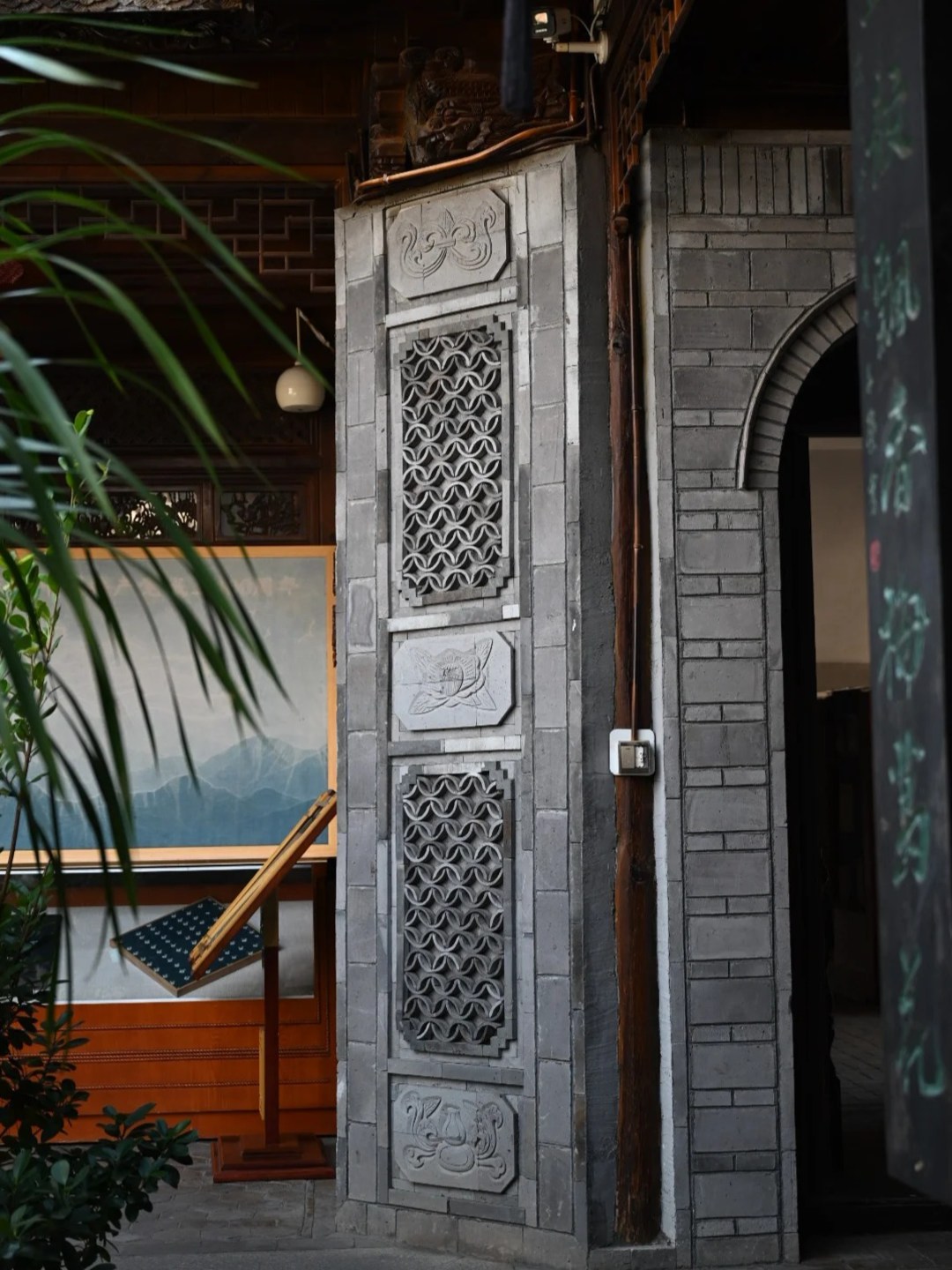
- Traditional Bai Courtyard Houses
-
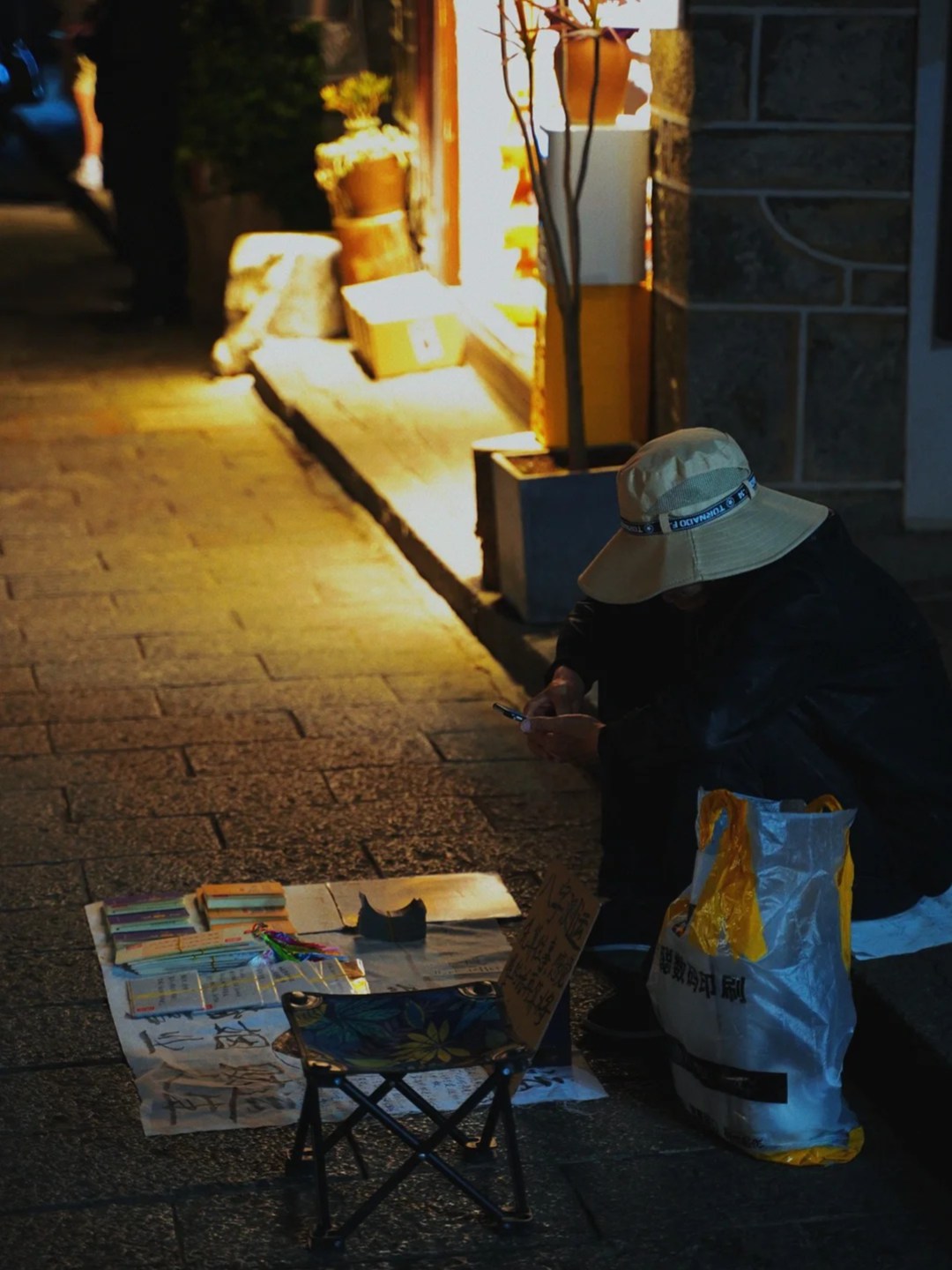
- Zhoucheng Local Markets and Shops
-
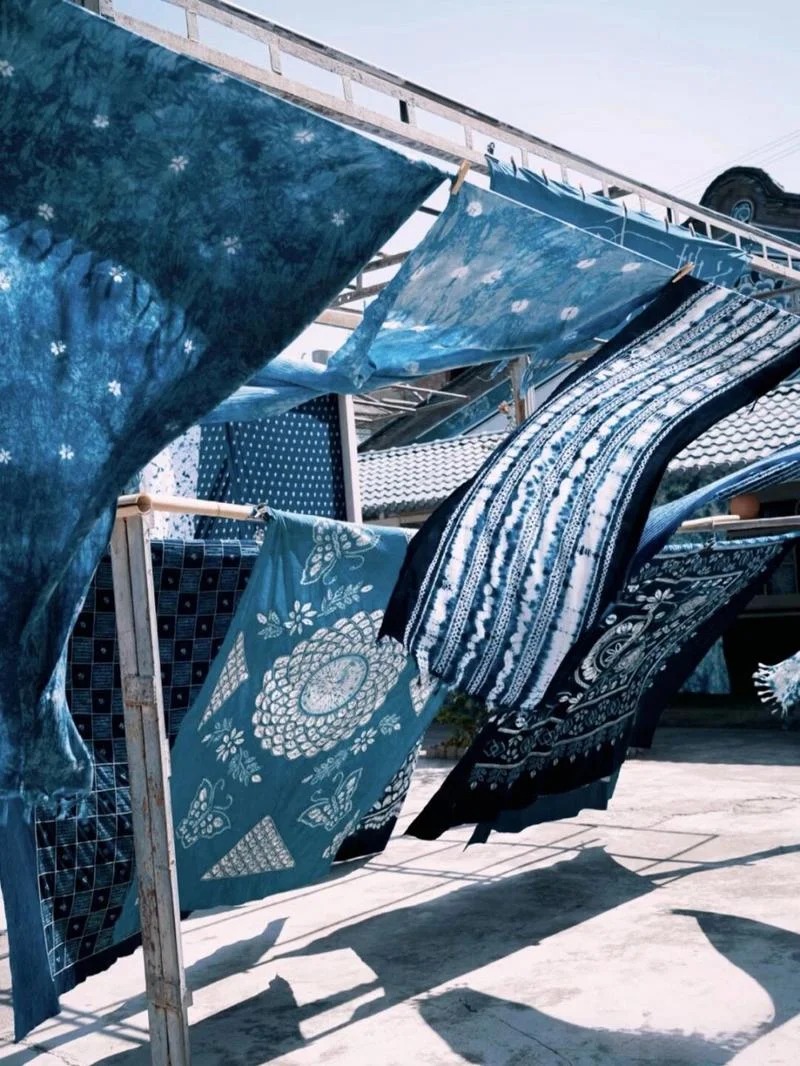

- Watch Everyday Life in Zhoucheng
Walk Through Traditional Bai Courtyard Houses
Walking through the older parts of zhoucheng village, the layout starts to feel very different from what you see in Dali Old Town. Houses here follow a traditional Bai structure called “three courtyards and one screen wall.” It sounds technical, but in practice it just means a series of connected spaces built around an open center, often with a decorated wall facing the entrance.
The walls are mostly white, with grey tiled roofs and occasional painted details—flowers, birds, sometimes faded calligraphy. It’s not overly restored. Some houses look well maintained, others show wear, which actually makes the whole place feel more lived-in. Doors are often open, and you might catch a glimpse of daily life inside—laundry hanging, tools stacked in corners, or someone working quietly.
Compared to Dali Old Town, which leans more toward cafés and guesthouses, this part of Zhoucheng feels less commercial. There are no signs telling you where to go. You just walk, turn into narrower lanes, and figure things out as you go. That slight lack of structure is part of what makes it interesting.
Explore Zhoucheng Local Markets and Shops
The small shops and market-style setups in zhoucheng village are easy to miss if you stay on the main path. Most of them are not formal “markets” in the usual sense—more like clusters of stalls or family-run storefronts selling whatever they produce.
You’ll see a mix of items: indigo-dyed fabrics, simple clothing, handmade bags, and sometimes everyday goods like vegetables or household items. Some shops feel clearly aimed at visitors, but others seem to serve locals first. That difference is usually obvious once you step inside.
Prices aren’t always fixed. In some places, especially smaller stalls, you can try a bit of bargaining. Nothing aggressive—just a small back-and-forth. I’ve seen prices drop slightly just by asking once or twice. That said, the price gap isn’t huge, so it’s more about getting a fair deal than a big discount.
It’s not a shopping destination in the polished sense, but if you take your time, you’ll find things that feel less mass-produced than what’s sold in central Dali.
Watch Everyday Life in Zhoucheng Streets
What stands out most in zhoucheng village isn’t a specific attraction, but how normal everything feels once you move away from the busier sections. Streets are quiet, sometimes almost too quiet, until you notice small details.
Older residents sit outside sorting or folding fabric, often dyed in that deep blue color the village is known for. In some corners, cloth is laid out to dry on the ground or hung across poles. You might hear water being poured, or the sound of fabric being wrung out. Nothing dramatic, just repetitive daily work.
The pace is noticeably slower than Dali Old Town. People don’t seem in a rush. If you pause, someone might look up, maybe nod, sometimes even say a few words. It’s not overly interactive, but it doesn’t feel closed off either.
This part isn’t something you “do” in a structured way. It’s more about noticing what’s happening around you, which can feel a bit subtle at first.
Walk Toward the Fields Outside the Village
If you keep walking past the main residential area of zhoucheng village, the streets gradually open up into farmland. Fewer people, fewer shops, and noticeably less noise. It doesn’t take long—maybe 10 to 15 minutes on foot.
The fields are simple, mostly small farming plots with low vegetation, depending on the season. Beyond that, you’ll see hills in the distance, sometimes slightly hazy. It’s not a dramatic landscape, but it creates space, which feels different after the narrow village lanes.
Very few visitors come out this far. Most stay near the tie-dye workshops and main streets. That makes this area quieter, sometimes completely empty except for a few locals working nearby.
If the central part of Zhoucheng feels a bit crowded when you arrive, walking out toward the fields changes the pace quickly. It’s a simple shift, but probably one of the easier ways to see a less filtered side of the place.
How Much Time You Need for Zhoucheng Village
-
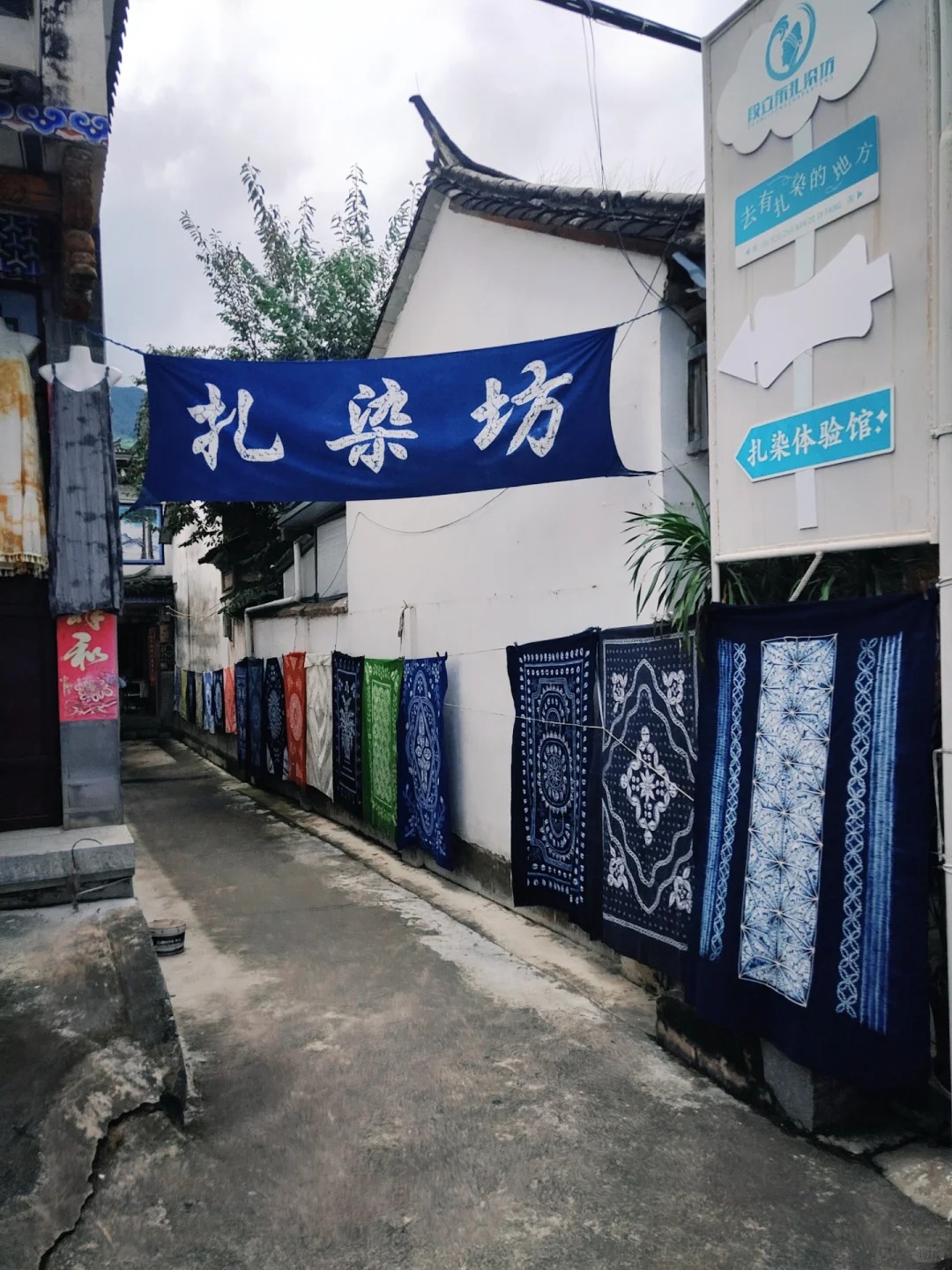
- Tie-dye Workshop
-
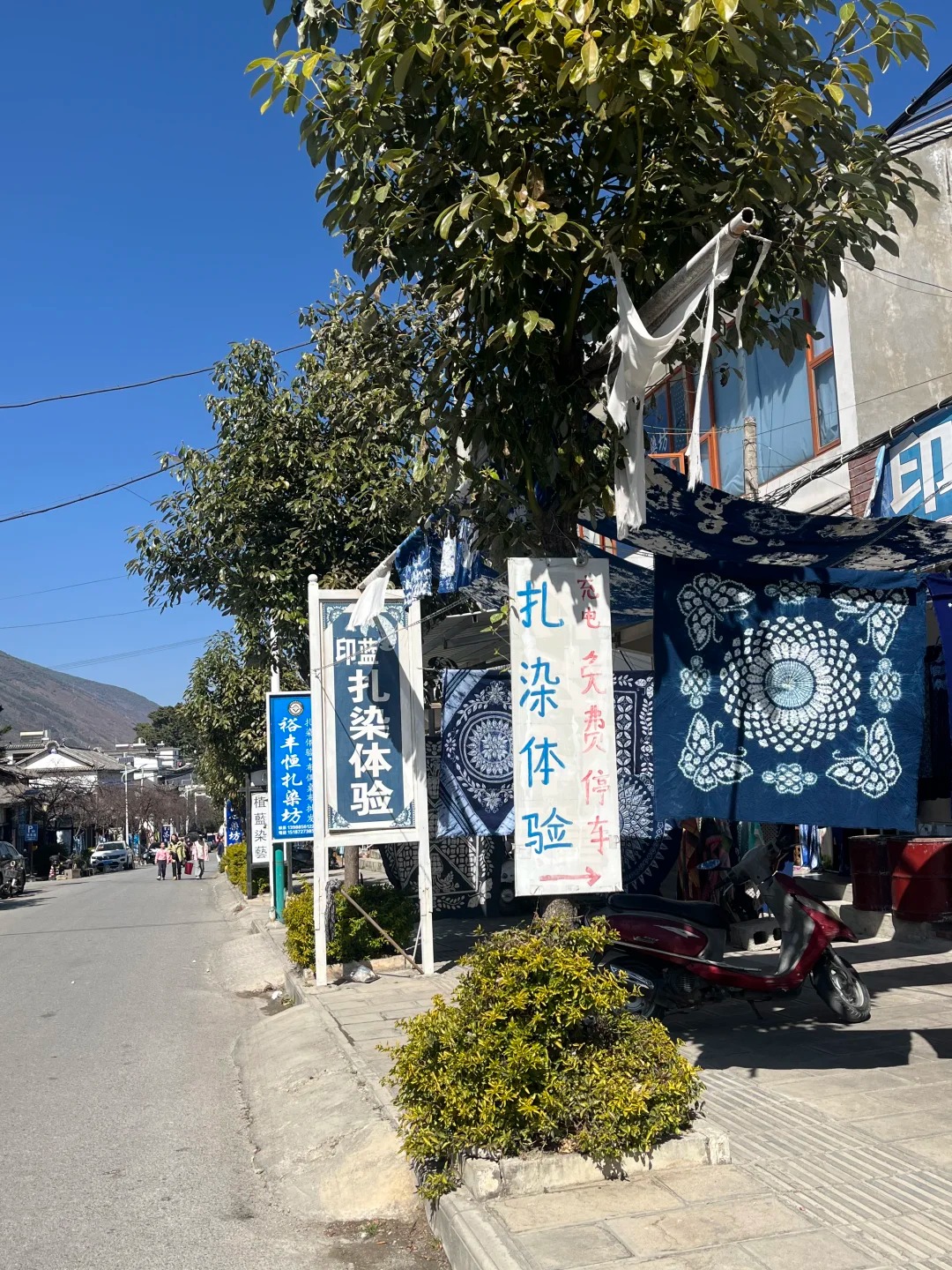
- Zhoucheng Street
-
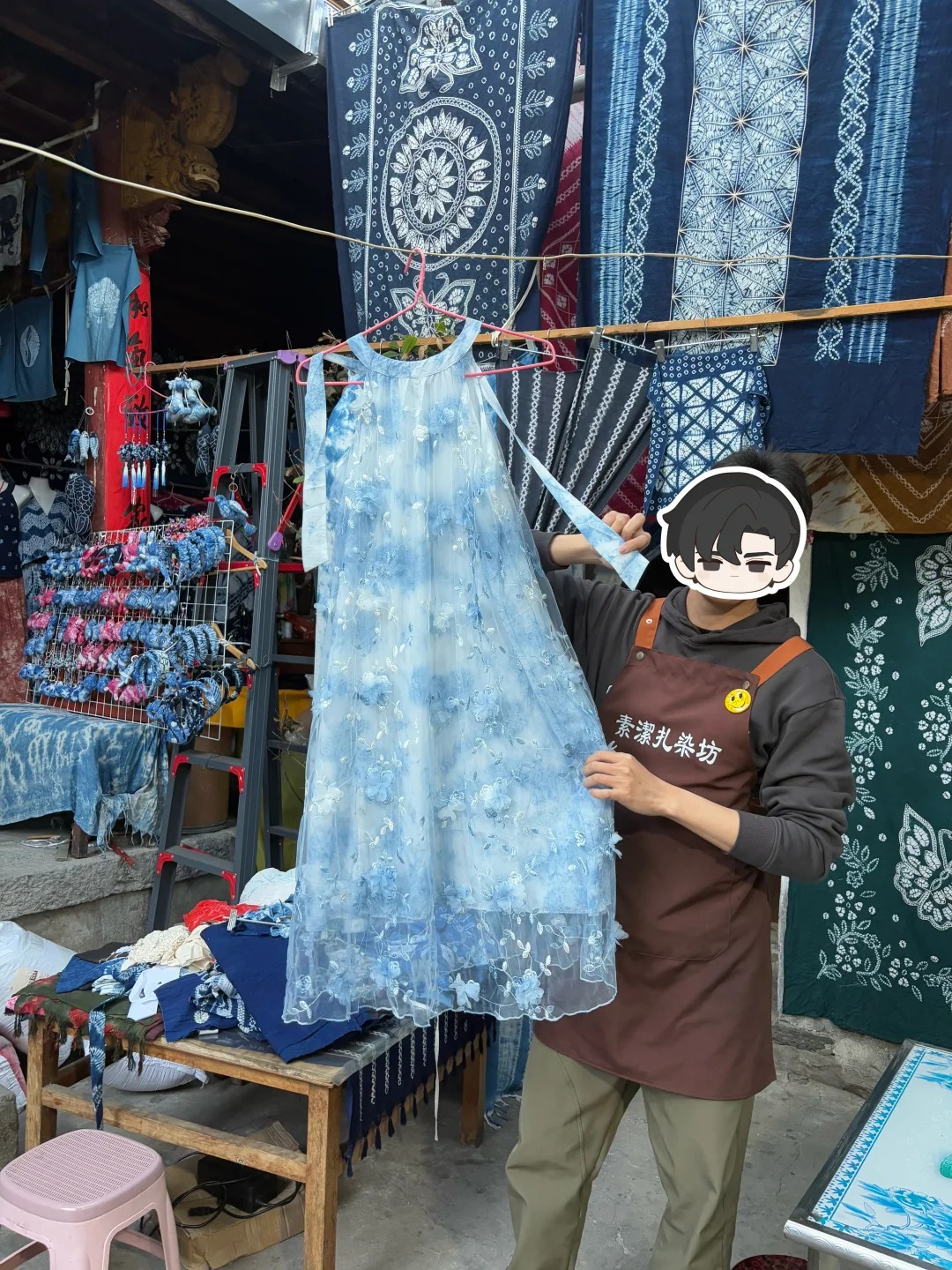
- Where to Try Tie-Dye
Is Half a Day Enough for Zhoucheng
For most visitors, 2 to 4 hours is enough to explore zhoucheng dali, especially if your focus is walking the main streets, checking out a few workshops, and peeking into local homes. A tie-dye experience can take up to an hour depending on how involved you get, but simple demonstrations are faster. If you’re pressed for time, you can do a quick walk through the village and still catch the main highlights. For those who want a more immersive visit, spending closer to 4 hours allows you to wander the quieter lanes, observe local routines, and linger at shops without rushing. Half a day can feel comfortable if you plan the pace carefully.
Can You Combine Zhoucheng With Xizhou or Shuanglang
Zhoucheng is conveniently located near other Dali-area villages. It’s quite feasible to combine a visit with Xizhou or Shuanglang in a single day if you start early. Most visitors choose Xizhou first to explore its well-preserved Bai architecture and morning market, then head to Zhoucheng for tie-dye and local streets, and finally finish in Shuanglang for lakeside views and art shops. Between these stops, travel is generally 15–30 minutes by car or e-bike. If you have to pick only one pairing, Xizhou usually makes the smoother combination due to shorter transfer time and complementary experiences.
A Simple Route That Works Well
A practical route starts in Dali Old Town in the morning, allowing for breakfast or coffee before heading out. From there, drive or bike roughly 15 minutes to Xizhou, spend about 1–1.5 hours at the market and courtyards, then continue another 10–15 minutes to zhoucheng dali. Allocate 2–3 hours here for walking, shopping, and a tie-dye workshop. If time allows, finish the day in Shuanglang along Erhai Lake, enjoying the quieter lakefront streets. This route balances sightseeing, cultural immersion, and travel time without feeling rushed.
How to Get to Zhoucheng from Dali
Taxi or Didi to Zhoucheng
Taxi or Didi rides from Dali to zhoucheng dali are the fastest option. The trip usually takes around 30–40 minutes, depending on traffic. Fares can range from ¥40 to ¥80, slightly higher if you use a Didi during peak hours or weekends. The convenience is obvious: door-to-door service, no schedule worries, and you can negotiate stops along the way if needed. Some travelers prefer this method even for short visits because it saves the hassle of coordinating public transport and walking. It’s reliable, simple, and worth the cost if you want a smooth start to your Zhoucheng visit.
Taking a Bus to Zhoucheng Village
Public buses exist but aren’t ideal for tourists. There is no direct line to zhoucheng, so you typically need to change buses in Xizhou or nearby villages. Travel time can easily stretch to 1–1.5 hours, and signage is mostly in Chinese, making it tricky for first-time visitors. Bus schedules are limited, especially in the afternoon, and overcrowding can happen during local market days. While technically possible, this option is more suitable for budget travelers familiar with local routes rather than first-time visitors aiming for convenience.
Should You Hire a Driver
Hiring a private driver offers a middle ground between taxis and buses. This is ideal if you plan a full-day tour covering multiple spots like Xizhou, zhoucheng, and Shuanglang. Costs vary but generally range from ¥300–500 for the day, which is reasonable when shared among 2–4 people. Flexibility is the biggest advantage: you set your own schedule, stop wherever you like, and avoid waiting for public transport. For travelers wanting comfort, flexibility, and multiple stops, a hired driver often offers the best value and experience.
FAQ About Zhoucheng Village
Q: How long should I spend in Zhoucheng Village?
Most travelers find that 2–4 hours is enough for a standard visit, especially if you just want to walk the village streets, see traditional Bai houses, and try a tie-dye workshop. If you plan to explore more slowly, interact with locals, or take photos in surrounding fields, half a day is safer. Combining Zhoucheng with nearby Xizhou or Shuanglang can fill a full day without feeling rushed. Planning your route and timing is key to avoid midday crowds.
Q: What’s the best way to get to Zhoucheng from Dali?
Taxi or Didi is the fastest and most convenient, taking 30–40 minutes and costing roughly ¥40–80. Buses exist but usually require transfers and aren’t ideal for first-time visitors. Hiring a private driver works well if you plan a full-day trip covering multiple villages like Xizhou, Zhoucheng, and Shuanglang, offering flexibility and the ability to stop whenever you want. Public transport is budget-friendly but less convenient.
Q: Is Zhoucheng Village suitable for first-time travelers to Dali?
Absolutely, especially if you enjoy cultural immersion. Unlike the busy Dali Old Town, Zhoucheng village offers authentic Bai life, small markets, and family-run tie-dye workshops. It’s easy to navigate on foot, and English signage is limited but manageable. For those who prefer highly touristic spots, it may feel quiet, but it’s perfect for travelers wanting slower pace and genuine interactions with locals.
Q: Can I do a tie-dye workshop without booking in advance?
Most local shops allow walk-ins, though weekends are busier. If you want a longer or more personalized experience, booking ahead is safer. Workshops usually take 30–60 minutes, and you can bring your finished item home. Look for shops run by local families rather than commercial outlets, as they offer the most authentic experience and guidance.
Q: Are there any language barriers in Zhoucheng?
English is not widely spoken, so basic Mandarin phrases help. Signs in Pinyin or limited English appear in some tourist shops. Most shopkeepers are patient, especially in tie-dye workshops. Using gestures, showing product pictures, or apps like Google Translate can make transactions smoother. Visitors who try to communicate respectfully generally have no major issues.
Q: When is the best time to visit Zhoucheng Village?
Spring and autumn are ideal due to mild weather and clearer skies. Summer can be hot, and rainy season may make walking around streets and fields less pleasant. Morning visits are quieter, with fewer tourists in tie-dye workshops and markets. Visiting early also improves lighting for photography, and locals are more active, giving a more vivid cultural experience.
Q: Are there accommodations near Zhoucheng Village?
Yes, but most stay in Dali Old Town or Xizhou. Some guesthouses in Zhoucheng accept foreign travelers, offering simple rooms and close proximity to village activities. Staying nearby allows for an early start to workshops or photography walks, and you can return to Dali for dinner or evening leisure. Booking ahead is recommended during peak season.
Q: What should I watch out for when buying tie-dye souvenirs?
Avoid overly uniform or mass-produced items; authentic Zhoucheng tie-dye is irregular and unique. Prices typically range from ¥30–100 depending on size and complexity. Compare a few shops before buying and ask about the process—it helps distinguish hand-made pieces from factory-produced ones. Being patient and observant ensures you get a genuine and high-quality souvenir.
Practical China Travel Tools, Policy & App Guides
Stay updated and travel smart in China with these essential how‑to guides and policy explainers:
- Alipay for Foreigners in China: Step-by-Step Setup Guide 2025
- How to Use WeChat QR Code in China
- Didi Ride‑Hailing App in China: How to Easily Use It as a Foreigner (2025)
- Trip.com China Guide — Registration, Booking & Local Tips
- Will My Phone Work in China? Guide to SIM, Apps, and Connectivity
- Best SIM Card Options for China Travel
- China Power Bank Ban 2025 — Xiaomi & 3C Travel Guide
- Top 3C‑Certified Power Banks to Buy in 2025 — Travel‑Ready & Globally Approved
- China Tax Refund — Everything You Need to Know