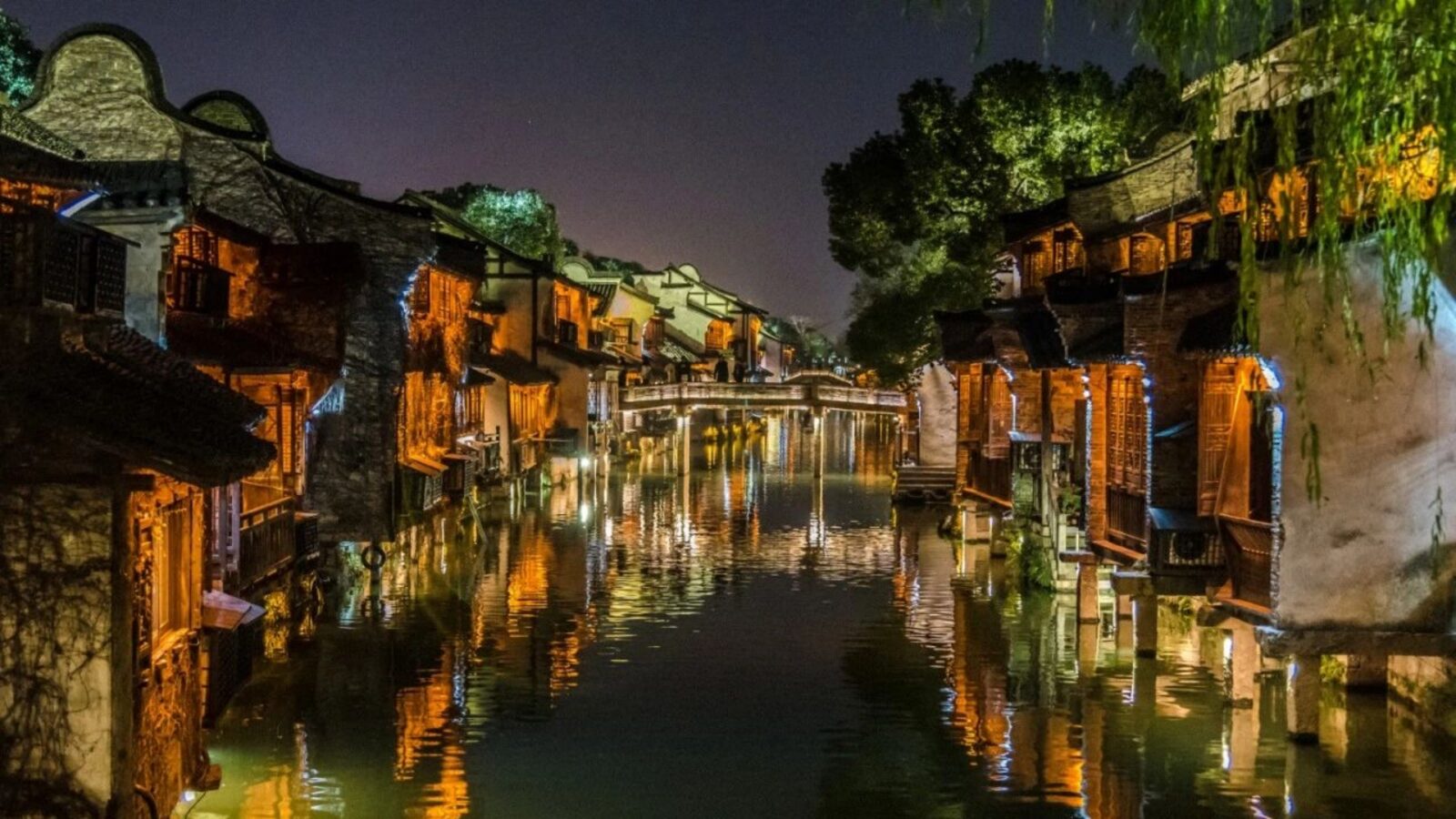
Chinese Villages
China holds more ancient villages than any country still in existence. Scattered across river valleys, mountain folds, and southern coastlines, Chinese villages preserve wooden bridges, stilt houses, drum towers, and stone lanes that date back 600 to 2,500 years. Most sit within a half-day's drive or a single bullet-train hop from a major hub, and many welcome day-trippers as easily as multi-day explorers. This guide selects ten of the most visually distinctive and culturally intact villages, then covers the folk traditions, architecture, and practical planning detail behind each.
Quick Facts
Architecture and Layout of Traditional Chinese Villages
Each village form reflects the ethnicity, climate, and social organization of its builders. The dominant architectural types across the ten villages are:
- Huizhou Courtyard: Four buildings surrounding a central hall; "four waters returning to the hall" drainage design channels rainwater inward. Found at Hongcun, Xidi, and Wuyuan.
- Dong Drum Tower: Multi-tiered wooden pagoda-style tower; no nails in the frame; functions as council chamber, rehearsal hall, and village landmark. Chengyang has eight of them.
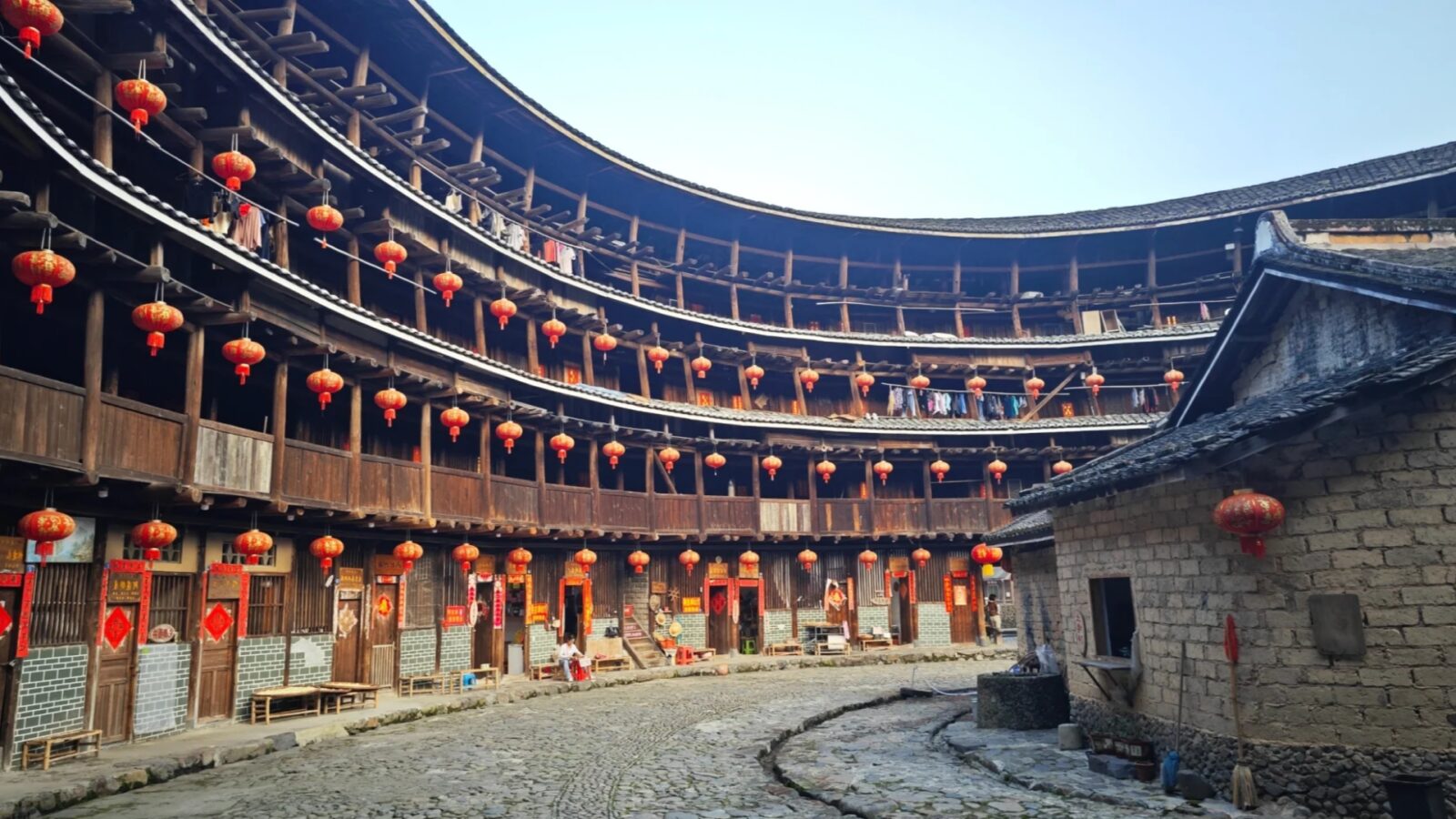
- Hakka Tulou: Rammed-earth ring or square building; 3–4 storeys; central courtyard; single fortified entrance. Fujian Hakka tulou settlements are the defining example.
- Miao/Tujia Diaojiaolou: Stilted wooden house on piloti; ground floor open or used for storage. Xijiang Miao Village and Fenghuang's riverside houses follow this plan.
- Water-Town Langpeng: Covered wooden walkway built over canal water; protects pedestrians and goods from rain. Xitang's 9 canals are lined with langpengs.
- Fortified City Walls and Tower Gates: Ming-Qing brick walls with watchtowers at corners and gates along each axis. Pingyao's 6-km wall is the most complete surviving example.
Siting followed fengshui principles. Hongcun's ox-shaped layout was designed to align with nearby hills and watercourses. Xitang's canal grid grew from the canal system's function as both drainage and trade route.
🏮 Discover Traditional Countryside Life: Planning an itinerary around heritage architecture and quiet rural landscapes? Browse travel highlights, transport tips, and regional guides in China Villages.
Top 10 Most Beautiful Chinese Villages
Chengyang Dong Village
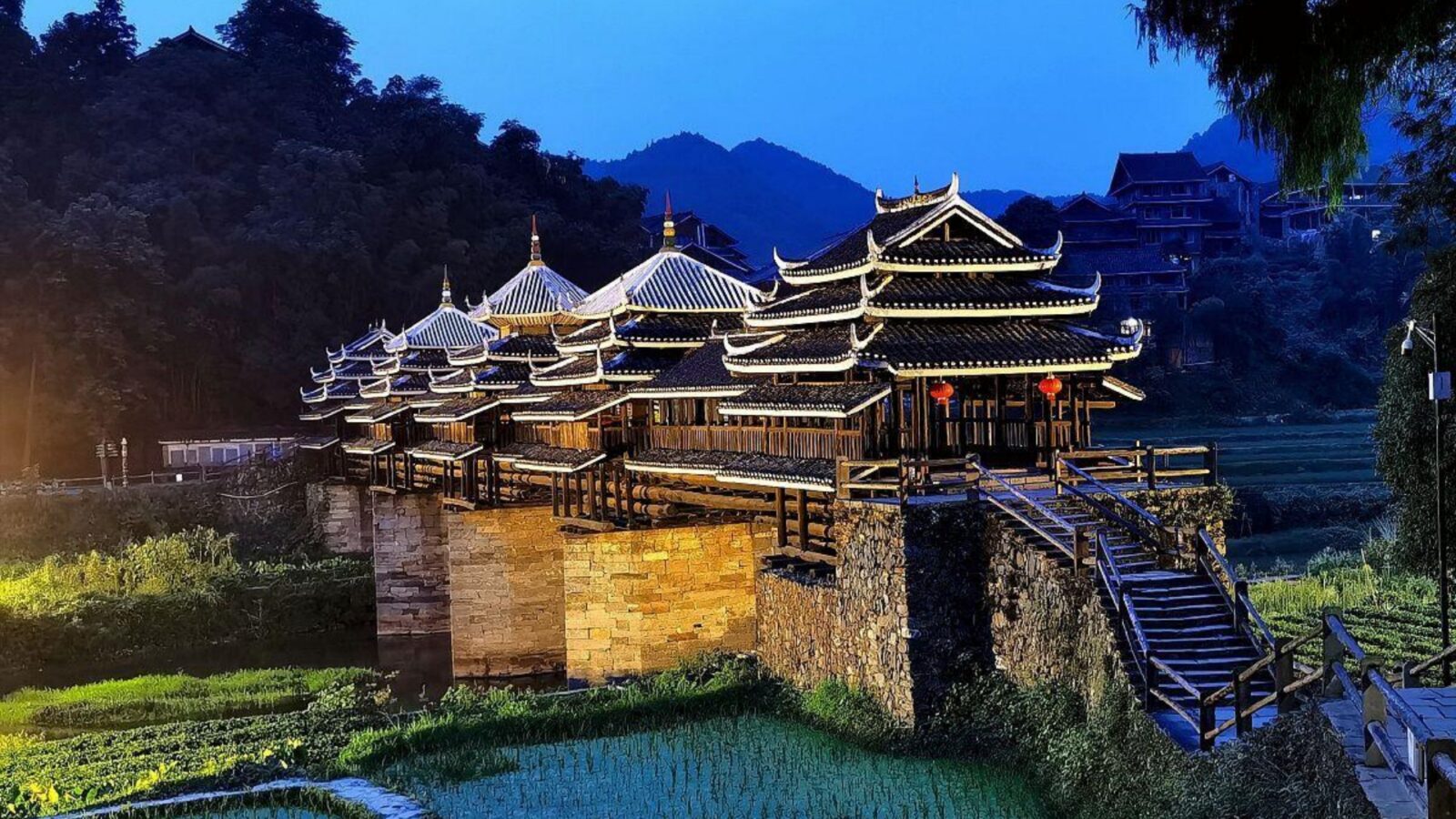
The Chengyang Dong Village
Chengyang Dong Village sits in Sanjiang Dong Autonomous County, Guangxi, roughly 96 km from Guilin. The Dong-minority settlement is more than 1,000 years old. Its centerpiece is the Yongji Bridge, a covered Wind and Rain Bridge measuring 79 m (260 ft) and built in 1912. Eight drum towers and stilted wooden houses (diaojiaolou) complete the village fabric. Dong song-and-dance performances run daily for visitors. Arrive by bullet train to Sanjiang South station, then a 25-minute taxi. Tickets cost about $13 (¥95).
- Wind-Rain Bridge: 79 m covered walkway across the river; built 1912; the village's defining landmark.
- Drum Towers: Eight wooden pagoda-style towers serving as civic gathering points and rehearsal spaces for Dong choirs.
- Diaojiaolou Houses: Stilted wooden homes raised on piloti; the ground floor stores farm tools and grain.
- Dong Performances: Large-group male-and-female songs performed daily near the drum towers; no ticket surcharge.
Xitang Water Town

The Xitang Water Town
Xitang lies in Zhejiang Province, about 80 km southeast of downtown Shanghai. The water town dates back roughly 2,500 years. Visitors find 122 stone-paved laneways, 104 ancient stone bridges, and 9 interconnected canals. The lanpengs — covered walkways lining the canals — shade pedestrians year-round. A shared rowboat ride lasts 30 minutes and costs about $15 (¥105) per person. Arrive by taxi or ride-hail from Shanghai; HSR to Jiashan followed by a transfer is the budget alternative.
- Laneways: 122 stone lanes weave between whitewashed walls; most are narrow enough for single-file foot traffic.
- Lanpengs: Covered walkways built over the canal water; some sections date to the Ming dynasty.
- Rowboat Canals: Nine canals total; shared boats depart from the main dock every 20–30 minutes.
Hongcun
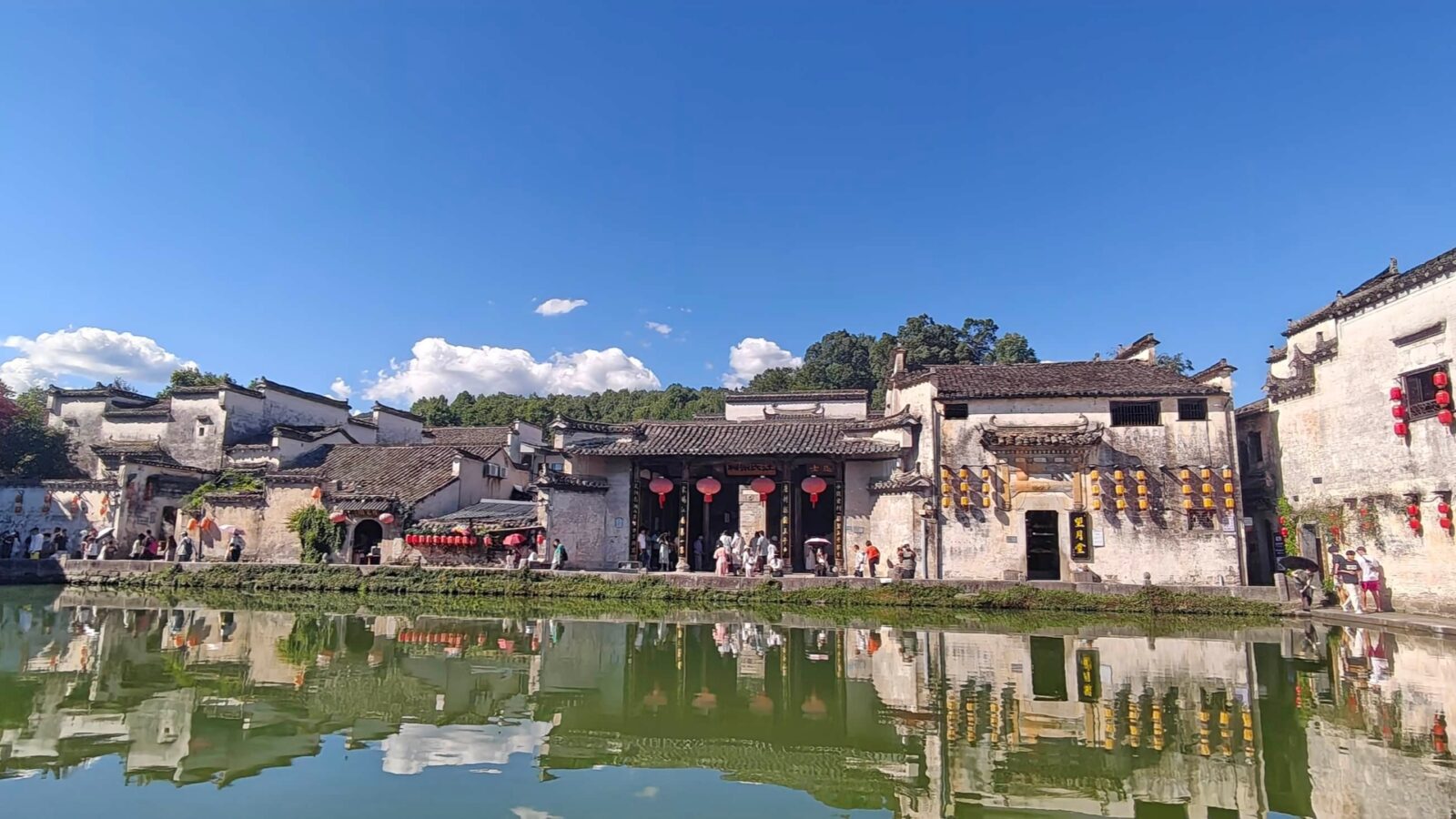
The Hongcun
Hongcun occupies Yi County in Anhui Province, within the Huangshan mountain region. UNESCO listed it as a World Heritage Site in 2000 alongside Xidi. The village is roughly 700 years old and laid out in the shape of an ox — a layout local lore ties to fengshui. South Lake and Moon Pond anchor the eastern and western ends of the ox form. Chengzhi Hall, a merchant residence with intricate wood carvings, featured in the film Crouching Tiger, Hidden Dragon. A joint ticket with Xidi covers both villages for about $26 (¥185).
Most visitors approach from Huangshan North station (HSR), then take a 40-minute bus to Yi County. The ox-shaped layout is best appreciated from the bridges spanning South Lake — the water reflects the surrounding courtyard facades in early morning. The village's low walls and narrow alleys mean crowds concentrate near the lake; quieter lanes run north toward Chengzhi Hall.
Xidi
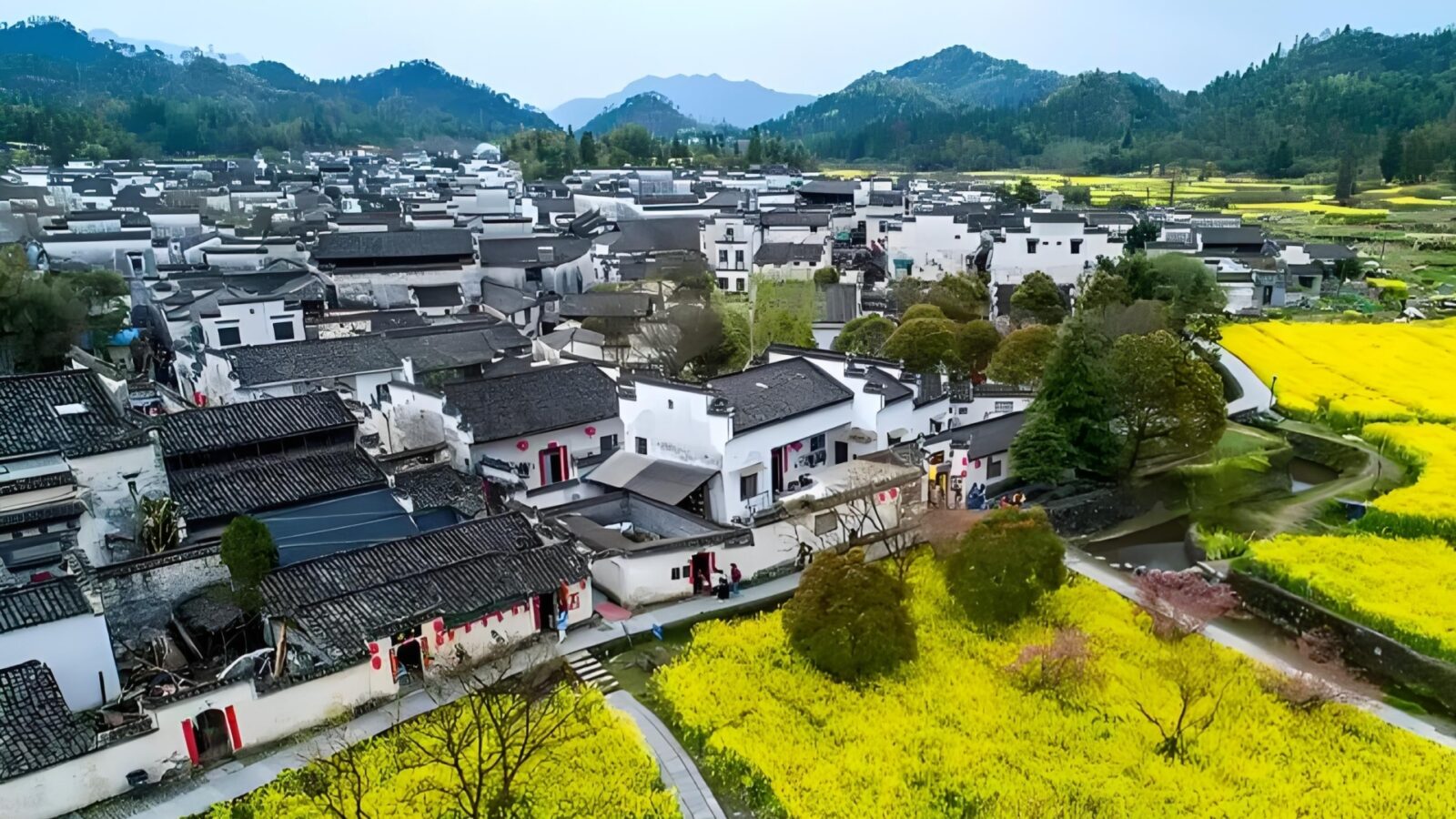
The Xidi
Xidi sits next to Hongcun in Yi County, Anhui, and shares its UNESCO World Heritage designation (inscribed 2000). The village is roughly 960 years old, with origins in the Song dynasty. Its 124 preserved Ming-Qing residential courtyards display carved stone doorways and distinctive horse-head gables — markers of Huizhou merchant wealth. The architectural style is more uniform than Hongcun, with most structures arranged along three main axial streets. Xidi's smaller scale makes it easier to explore in half a day, particularly the Fengxi Hall and the Kuiwen Gate along the eastern approach.
Most visitors pair Xidi with Hongcun on a single trip. The two villages lie 10 km apart and share a combined scenic ticket. Morning light catches the courtyard carvings best; afternoon crowds thin after 3 pm. A walking path connects both villages through farmland — about 90 minutes on foot.
Wuyuan
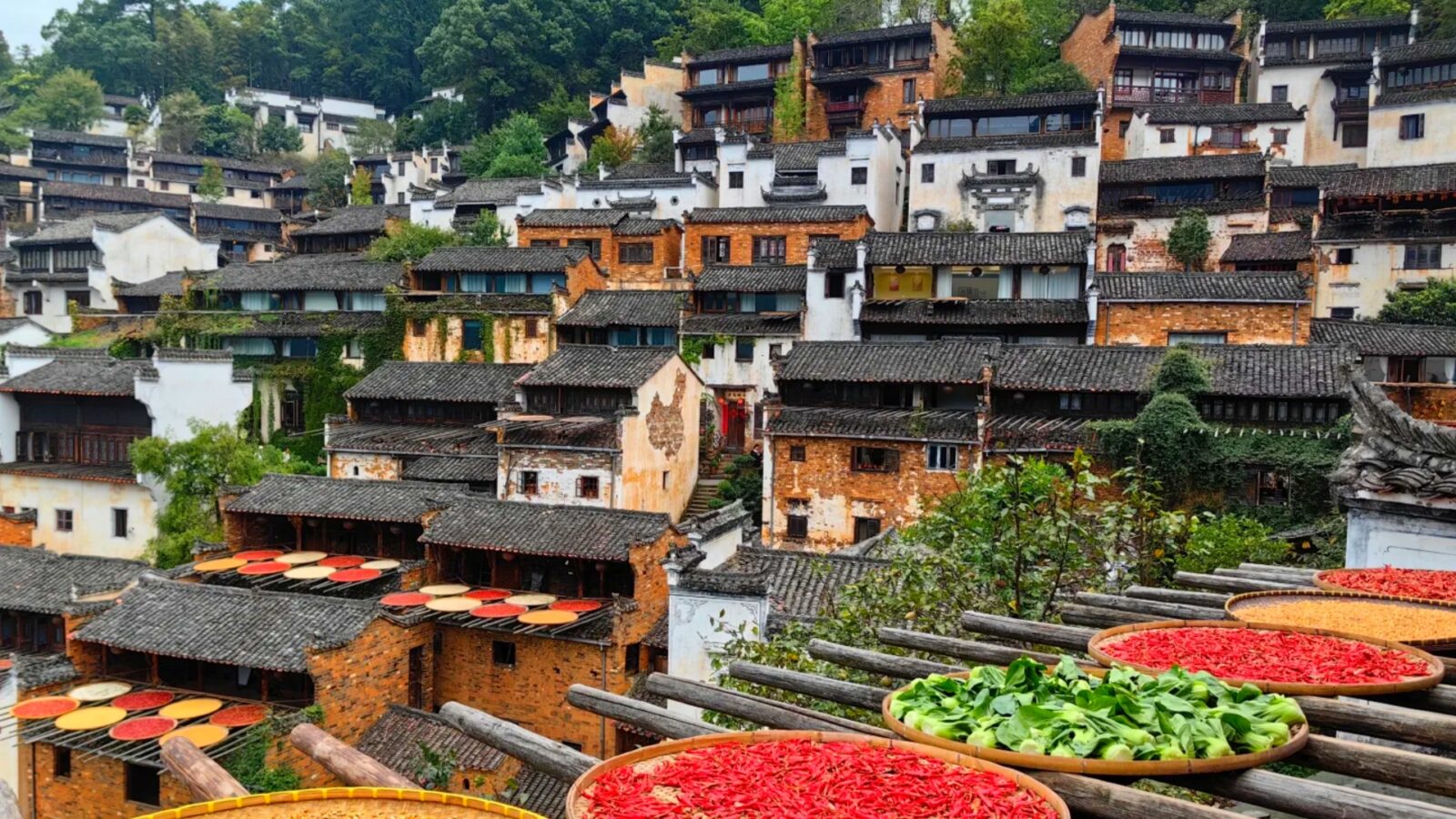
The Wuyuan
Wuyuan occupies northeastern Jiangxi Province and is often described as China's most beautiful countryside in official tourism materials. The Jujing round village exemplifies the region's distinctive circular layout. Beyond the single iconic village, the broader Wuyuan scenic area encompasses 12 villages connected by walking trails. Spring brings rapeseed flower fields across the valley floors; autumn paints the hillsides in red maple. Ancient Huizhou-style houses with white walls and black tiled roofs line the approach roads. The 5-day multi-village pass costs about $25 (¥180).
- Rapeseed Spring: March–April brings bright yellow fields that frame the round village of Jujing; peak season draws heavy weekend crowds.
- Red-Maple Autumn: October–November turns the surrounding hillsides crimson; hiking trails between villages are clearest in this period.
- Huizhou Houses: Whitewashed walls and horse-head gables follow the same merchant-courtyard plan seen in Anhui's UNESCO villages.
Anren Ancient Town
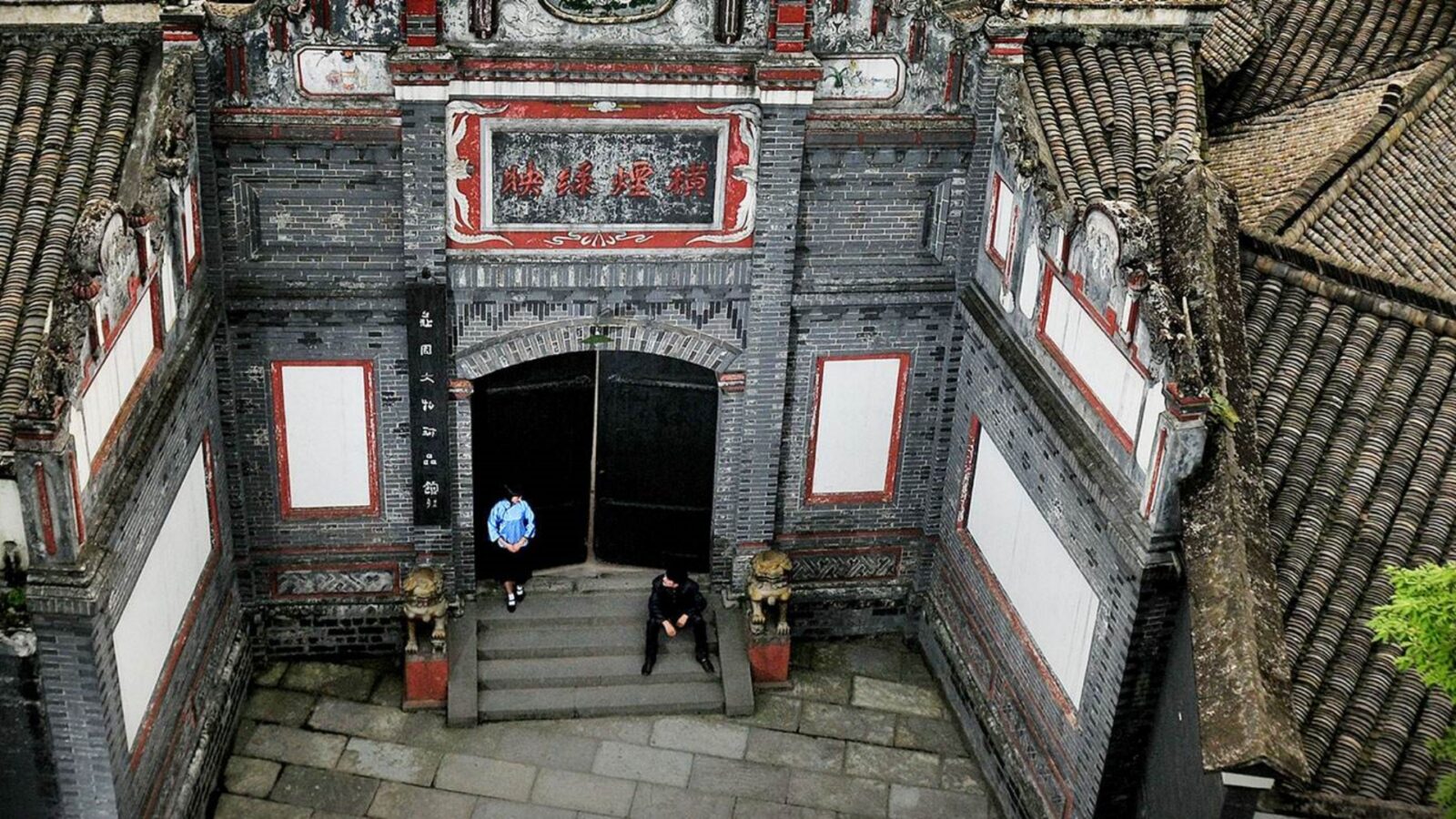
The Anren Ancient Town
Anren Ancient Town lies in Dayi County, Sichuan, roughly 64 km west of Chengdu — about one hour by taxi (around $30 / ¥215). The town dates back 1,400 years. Its defining character comes from 27 mansions built by the warlord Liu Wenhui in the early 1900s, blending European stonework with traditional Chinese courtyard layouts. Three preserved streets — Yumin, Shuren, and Hongxing — run parallel to the main avenue. The former Liu family homes now house museums covering local history and wartime governance. Most mansions charge a small museum fee; the streets themselves are free to walk.
Anren works well as a day trip from Chengdu. The European-Chinese architectural fusion is most visible on Shuren Street, where arched windows and stone balustrades appear alongside carved wooden screens. Morning visits catch the street vendors setting up; the town quiets after 5 pm.
Pingyao Ancient City

Pingyao Ancient City
Pingyao occupies central Shanxi Province and is UNESCO-listed since 1997. The walled Ming-Qing city is roughly 2,800 years old. Six kilometers of intact city walls encircle the old town. Inside, the Rishengchang (founded 1823) functioned as China's first bank and draft exchange — now a museum complex near the east gate. The Confucian Temple occupies the northwest corner, its courtyards planted with ancient cypress trees. High-speed rail from Beijing takes about 3.5 hours (around $45 / ¥320). The combined ticket covering walls, Rishengchang, and the temple costs about $18 (¥130).
- City Walls: 6 km of Ming-era ramparts with watchtowers at each corner; circuit walk takes roughly 90 minutes.
- Rishengchang: First Chinese bank, founded 1823; preserved ledgers and counter desks inside the original shop.
- Confucian Temple: Song-dynasty origins; quieter than the main commercial streets; cypress trees in the courtyard are more than 500 years old.
Fenghuang Ancient Town
-
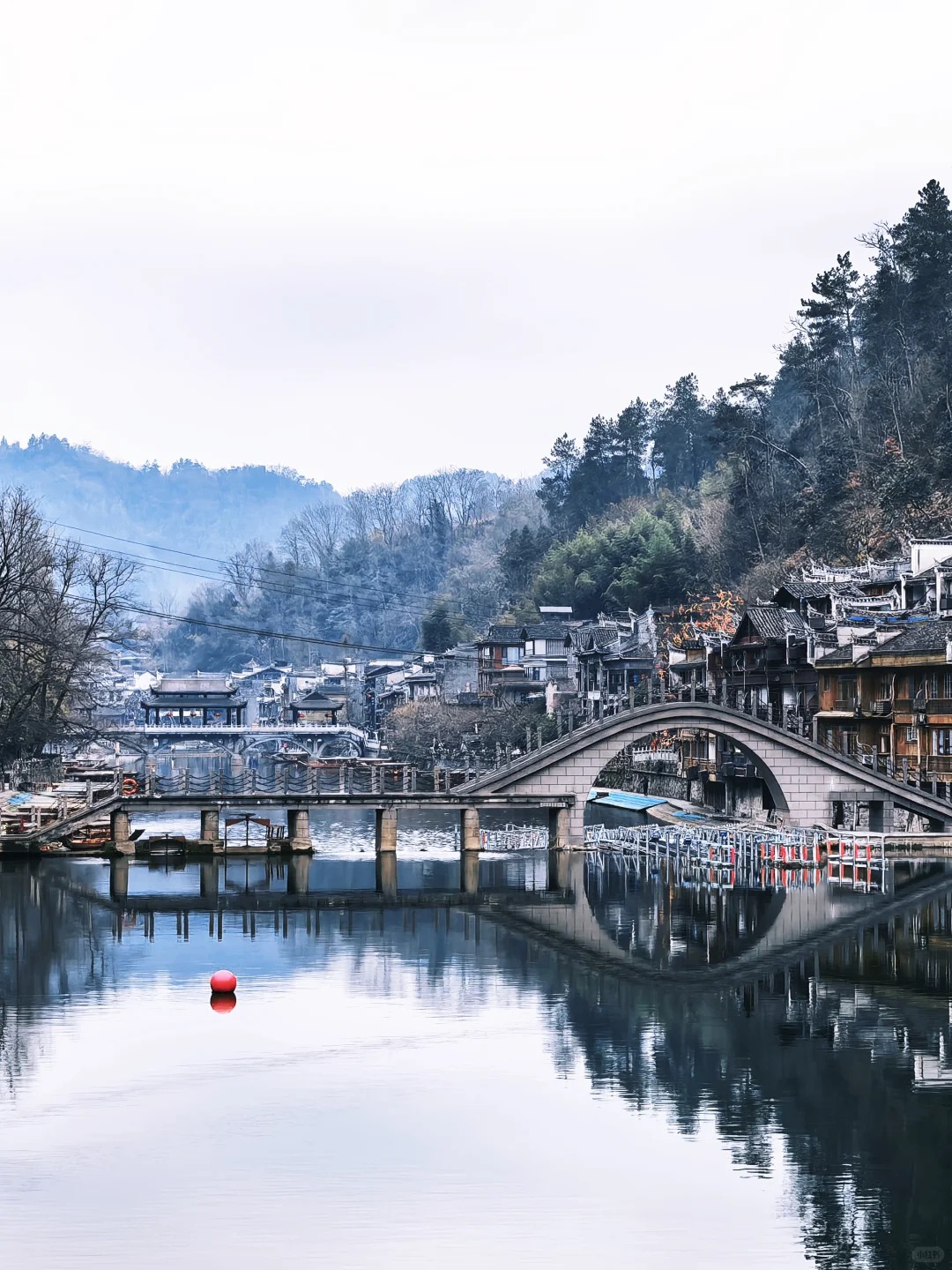

- Fenghuang Ancient Town
-
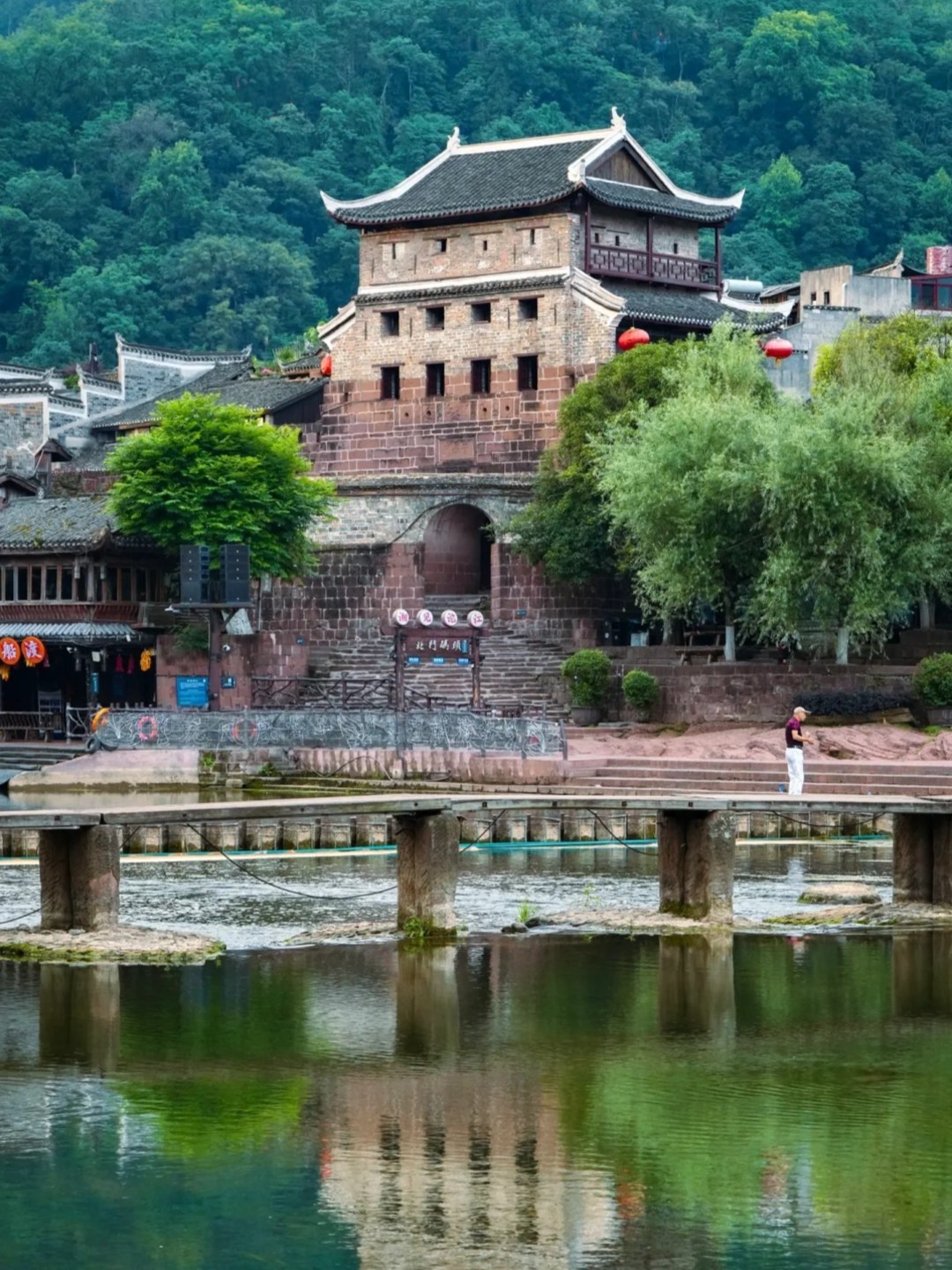
- Entering Fenghuang Ancient Town from the North Gate
Fenghuang Ancient Town sits in western Hunan Province on the Tuojiang River. The Miao and Tujia ethnic minorities have lived here for centuries. Riverside stilted houses rise directly from the water on wooden piloti; their reflection doubles the visual impact at dawn and dusk. Hong Bridge (Hóngqiáo) arches the river near the town center. The former residence of writer Shen Congwen opens as a museum on the north bank. A combined ticket covering the river corridor, bridges, and major museums costs about $21 (¥148). High-speed rail from Changsha reaches Fenghuang Ancient Town Station in 2–3 hours (around $40 / ¥285).
- Tuojiang Stilt Houses: Wooden homes raised on piloti over the river; most date to the Qing dynasty; night lighting creates a lantern-glow effect.
- Hong Bridge: Stone arch bridge near the town center; camera position on the north bank captures the full span against the water.
- Shen Congwen Residence: Former home of the early-20th-century novelist; bilingual panels cover his life in Fenghuang and his literary legacy.
Fujian Hakka Tulou
Fujian Hakka Tulou
The Hakka tulou clusters spread across Nanjing and Yongding counties in Fujian Province. UNESCO inscribed the site in 2008. These rammed-earth ring or square buildings house entire clans — sometimes several hundred residents — under a single roof. Each tulou rises 3–4 storeys with a central courtyard and one shared entrance. Key clusters include Tianluokeng (the "four dishes one soup" grouping of five buildings), Chengqi Lou at Yongding, and the Hekeng cluster. Tianluokeng admission costs about $14 (¥90). Self-drive or a private driver is the practical way to visit multiple clusters — public transport between the remote county roads is limited.
- Tianluokeng Cluster: Five tulou buildings arranged like dishes around a central valley; aerial view is the standard photograph.
- Chengqi Lou: The largest round tulou at Yongding; residents still occupy some rooms; staircases on the perimeter allow upper-floor access.
- Hekeng Cluster: A cluster of square and round tulou buildings spread across two villages; less visited than Tianluokeng.
Xijiang Qianhu Miao Village
Xijiang Qianhu Miao Village
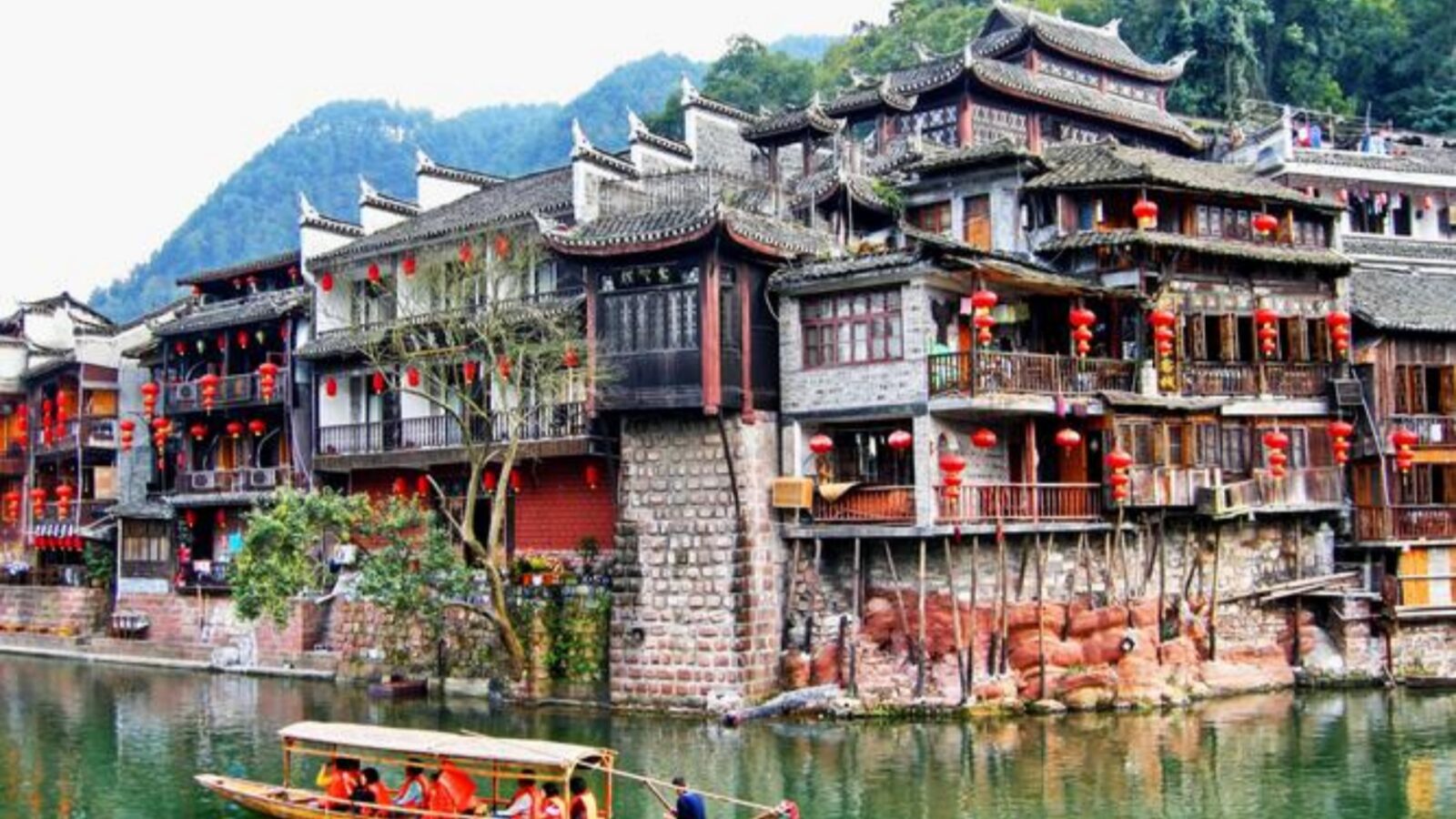
Xijiang Qianhu Miao Village lies in Leishan County, Qiandongnan, Guizhou Province. The village is the largest Miao settlement in China, with more than 1,000 households cascading down a hillside. Stilted wooden houses cluster along the contour lines; terraced rice paddies step down to the valley floor. Miao silver headdresses and back-embroidered textiles appear in the village shops. Long-table banquets run during festival periods; evening ethnic performances begin after dark. A bus from Kaili or Guiyang takes roughly 4 hours and costs about $8 (¥55). Combined village ticket plus sightseeing bus comes to about $17 (¥120).
- Stilt Houses: Wooden three-story homes on piloti; the ground floor shelters livestock; upper floors hold living quarters and a fire pit.
- Terraced Paddies: Rice terraces descend the hillside behind the village; best viewed from the northern viewing platform at sunrise.
- Miao Silver and Performance: Silver ornaments forged in the village smithies; long-table banquets on festival days; evening dance performances nightly.
Folk Culture and Living Traditions in Chinese Villages
Chinese villages preserve living traditions that urban China has largely set aside. Unlike museum towns, these settlements host daily customs tied to clan, season, and ethnicity.
Ethnic Minority Village Life
- Dong Villages: Large male-and-female song choirs rehearse at drum towers; the tower also functions as the civic council chamber. Ancestor rituals run through the agricultural calendar, with shared meals at the clan hall after harvest.
- Miao Villages: Silver headdresses weigh several kilograms and signal the wearer's clan and marital status. Back-embroidered textiles take months to complete; the "hundred-family nail" custom at village gates marks the number of households that helped build or repair the entrance.
- Hakka Tulou: Patrilineal clan organization places a shared ancestral hall at the central axis of each tulou. All surnames within one tulou are identical; marriage outside the building is the norm.
Village Festivals and Folk Performances
- Spring Festival Temple Fairs: Most villages hold temple fairs during the Lunar New Year period (January–February); lantern processions, folk opera, and food stalls fill the main lanes.
- Dong Grand Song: UNESCO Intangible Cultural Heritage; polyphonic choral singing performed without a conductor or instrumental accompaniment. Chengyang's drum tower is a regular performance venue.
- Miao Lusheng Festival: Autumn celebration featuring the lusheng — a bronze-pipe instrument played in paired dancing lines. Xijiang and surrounding Miao villages host the largest gatherings.
- Dragon Boat Races: Held on the Tuojiang River at Fenghuang during the fifth lunar month (usually June); teams represent village lanes; races run over two days.
Local Crafts and Home Cooking
- Huizhou Wood Carving: Intricate lattice screens and ceiling panels in Hongcun and Xidi courtyards took master carvers years to complete; look for the detail on door lintels.
- Miao Silver and Batik: Silver headdresses and belts forged in Xijiang and Fenghuang markets; wax-resist batik cloth is a Miao textile tradition sold on the main street.
- Dong Sour-Fish Hot Pot: Fermented rice and river fish cooked in a clay pot; a signature dish at Chengyang guest houses.
- Hakka Stuffed Tofu and Salt-Baked Chicken: Common in the Fujian tulou region; stuffed tofu (dàfǔ gān) and wrapped chicken (yán bǎojī) appear on most village menus.
- Shanxi Noodles: Pingyao sits in the wheat belt; kaolao noodles and hand-cut knife noodles dominate local eateries near the city walls.
- Sichuan Pepper Dishes: Anren's proximity to the Sichuan basin means heavy use of Sichuan peppercorns;Mapo-style dishes and peppery cold noodles appear at street stalls.
How to Plan a Trip to Chinese Villages
Getting to most villages involves a high-speed rail leg plus a short local transfer. The table below covers typical transport from major hubs.
Getting There
Best Time of Year
- Spring (March–May): Wuyuan's rapeseed flower fields peak in March–April. Hongcun and Xidi enjoy mild temperatures and thinner crowds than summer. Cherry blossoms appear along canal streets in Xitang during April.
- Autumn (September–November): Wuyuan's red-maple season runs October–November. Hakka tulou skies are clearest in this window. Pingyao's comfortable temperatures make wall-circuit walks pleasant. Fenghuang's evening lantern light is softer than summer.
- Summer (June–August): Miao and Tujia festival season brings Lusheng performances and Dragon Boat races. Humidity is high, especially in southern villages. Weekend crowds peak at Hongcun and Xitang. Consider arriving early morning to beat congestion.
- Winter (December–February): Northern villages (Pingyao) see sub-zero temperatures; some facilities reduce hours. Southern villages (Xijiang, Chengyang) remain mild. Spring Festival temple fairs run across all villages in late January–February.
Tickets and Where to Book
- Book via Trip.com, Klook, or TripAdvisor's partners: Domestic-only platforms (Meituan, Dianping, official WeChat mini-programs) require a mainland phone number and WeChat Pay or Alipay. International channels list tickets in English with credit-card checkout.
- Carry your passport and email voucher: ID-linked tickets at Xitang, Pingyao, and the Wuyuan multi-village pass require passport verification at the gate. Save a screenshot of your voucher before entering low-connectivity areas.
- Some villages are free: Anren charges no entrance fee; only the museum mansions inside carry a separate ticket. Many side alleys in Xidi and smaller Miao hamlets around Xijiang remain free to walk. Check the ticket list in the Quick Facts table before departing.
Frequently Asked Questions
Q: How old are the oldest Chinese villages?
Neolithic settlements such as Banpo near Xi'an date to roughly 6,000 years ago, but the term "village" applies more accurately to historic walled or clan-based settlements from 1,500–2,500 years ago. Of the ten villages in this guide, Xitang and Pingyao are among the oldest — both listed at approximately 2,500–2,800 years old per official cultural-heritage records. UNESCO-listed Huizhou villages (Hongcun, Xidi) date to the Song dynasty, roughly 700–960 years old.
Q: How were ancient Chinese villages organized?
Villages centered on clan halls (宗族祠堂) headed by the senior male lineage, with shared property and land. Patrilineal Hakka tulou housed entire clans under one rammed-earth roof. Dong villages used drum-tower councils as the civic decision-making body. Water towns such as Xitang organized around canal-front guild halls for merchants and craftsmen. Each model reflects the economic base — farming, clan kinship, or river trade.
Q: What does "village" mean in Chinese?
The standard word for village is 村 (cūn). Compound forms include 乡村 (xiāngcūn, "countryside" or "rural"), 村庄 (cūnzhuāng, "village-settlement"), and 古村 (gǔcūn, "ancient village"). The Hakka term for an enclosed earthen settlement is 土楼 (tǔlóu, literally "earth building"). In spoken Mandarin, 村 also appears as a surname in southern China.
Q: What is a Chinese lineage village?
A lineage village is organized around a single extended patrilineal clan sharing an ancestral hall and surname. The Hakka tulou of Fujian house the whole clan under one earthen roof. Huizhou villages in Anhui and Jiangxi are typically single-surname settlements — one surname such as Wang, Li, or Cheng dominates the entire village. Lineage villages still hold periodic clan gatherings and ancestral rites, sometimes called 祭祖 (jìzǔ) or 回乡 (huíxiāng).
Q: Do you need a tour group to visit Chinese villages?
No. All ten villages here are reachable independently by high-speed rail, taxi, and ride-hailing apps. For remote sites such as Xijiang and Chengyang, a private transfer is more reliable than public buses. Trip.com and Klook both list English-language drivers and small-group tours for villages where direct bus routes are weak. A Mandarin-speaking guide is helpful but not required — most major sights display bilingual signage.
Q: Are Chinese villages accessible without speaking Mandarin?
High-traffic ancient towns — Pingyao, Xitang, Wuyuan, Fenghuang — have partial English signage and museum panels at major sights. Less-visited villages (Chengyang, Xijiang, Tianluokeng tulou) are largely Mandarin-only outside the ticket hall. A translation app on your phone is recommended for rural areas. Taxi drivers may not speak English; pre-arrange a driver through your booking platform or ask your hotel to write the destination in Chinese characters (中文地址).
Q: What is the difference between Chinese villages and ancient towns?
Chinese villages (村, cūn) traditionally refer to rural agricultural or clan-based settlements of a few hundred households. Ancient towns (古镇, gǔzhèn) are a tourism designation for walled or canal-front market towns that served as larger administrative centers during the Ming-Qing dynasties, usually with several thousand residents and merchant guilds. Pingyao, Fenghuang, and Xitang are technically 古镇. Chengyang, Wuyuan villages, and the Tianluokeng tulou cluster are 村. Ancient towns typically charge a combined entrance ticket; villages often allow free access to the streets, with fees applying only to museums or scenic areas.