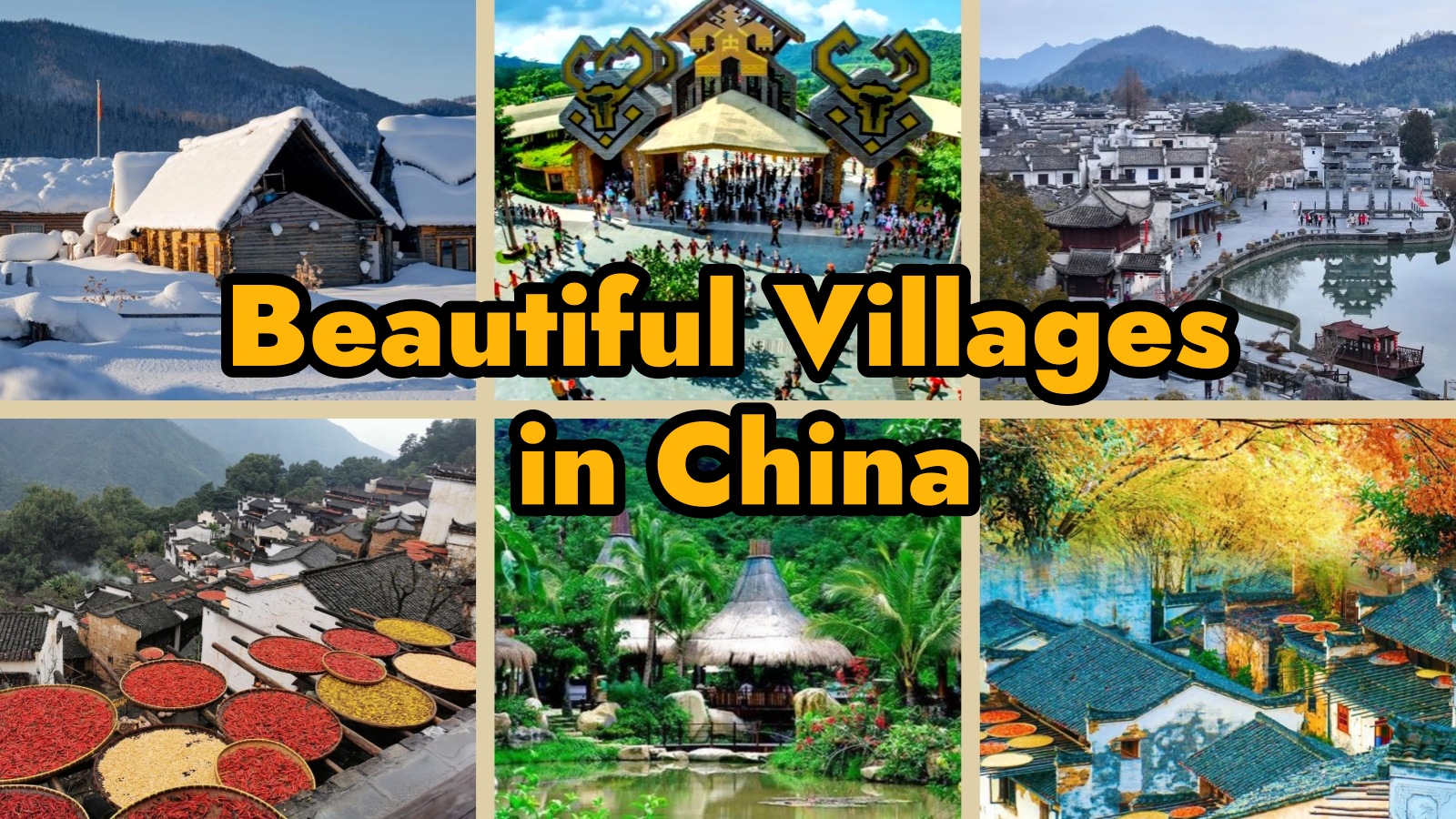
Beautiful Villages in China:Idyllic Rural Landscapes,Ancient Ethnic Settlements,Traditional Cultural Heritage
Have you ever wondered where in China the most sublime countryside is? Right here in these 25 china villages, anywhere in fact you can smell the fragrance of highland tea or breathe the air laden with bamboo. Anji County in Zhejiang reports air quality above 90% year round, Hemu Village in Xinjiang serves up autumn mornings golden with birch that might prove unreal. Ancient courtyards on UNESCO’s list, minority-culture festivals, karst sinkhole parks, all await you in this handbook — one guide, all of rural China.
🌾 Plan Your Countryside Escape: Want to wander through historic courtyards, tea plantations, and scenic hamlets? Read our full guide to Chinese Villages.
1. Wuyuan Village, Jiangxi
Where ink-wash painting never dried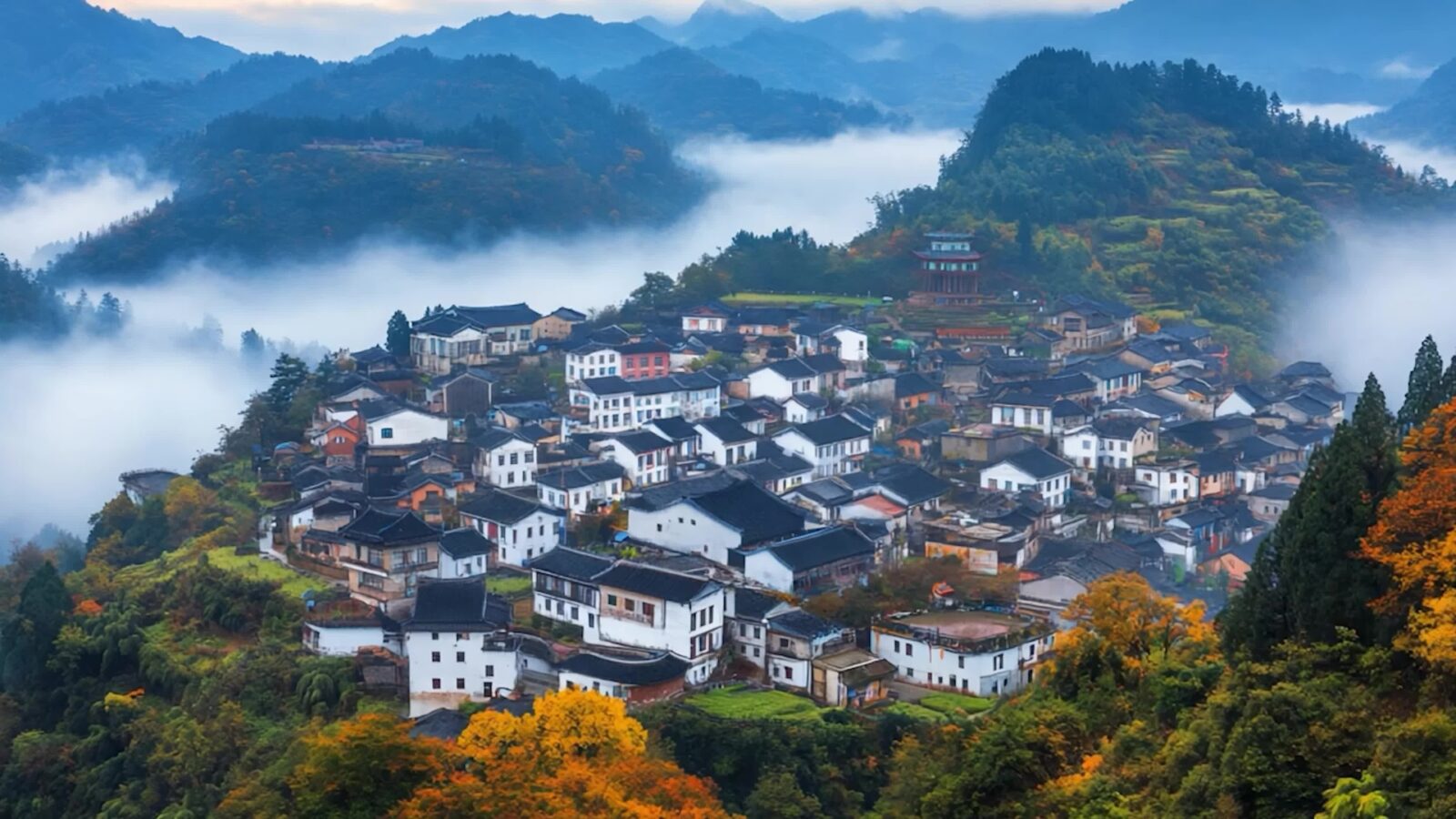
Wuyuan Village, Jiangxi
Acclaimed as "China's Most Beautiful Village," Wuyuan Village is one of the most important birthplaces of ancient Huizhou (徽州) culture. Its signature white-walled, black-roofed vernacular architecture, ever-changing pastoral scenery, and deep scholarly-farming heritage have made it the benchmark by which all other Chinese rural landscapes are measured.
Key Data & Practical Info
🌳 Forest coverage rate: over 82%
🌤️ Air quality excellent rate: consistently above 95% year-round
🌡️ Annual average temperature: 16–18°C
💧 Annual average humidity: approx. 78%
📅 Best travel season: March–April (rapeseed flower sea); November–December (autumn harvest sunning)
🗺️ Location: Northeast Jiangxi, at the junction of Jiangxi, Zhejiang and Anhui provinces
Signature Landscapes & Experiences</h4>
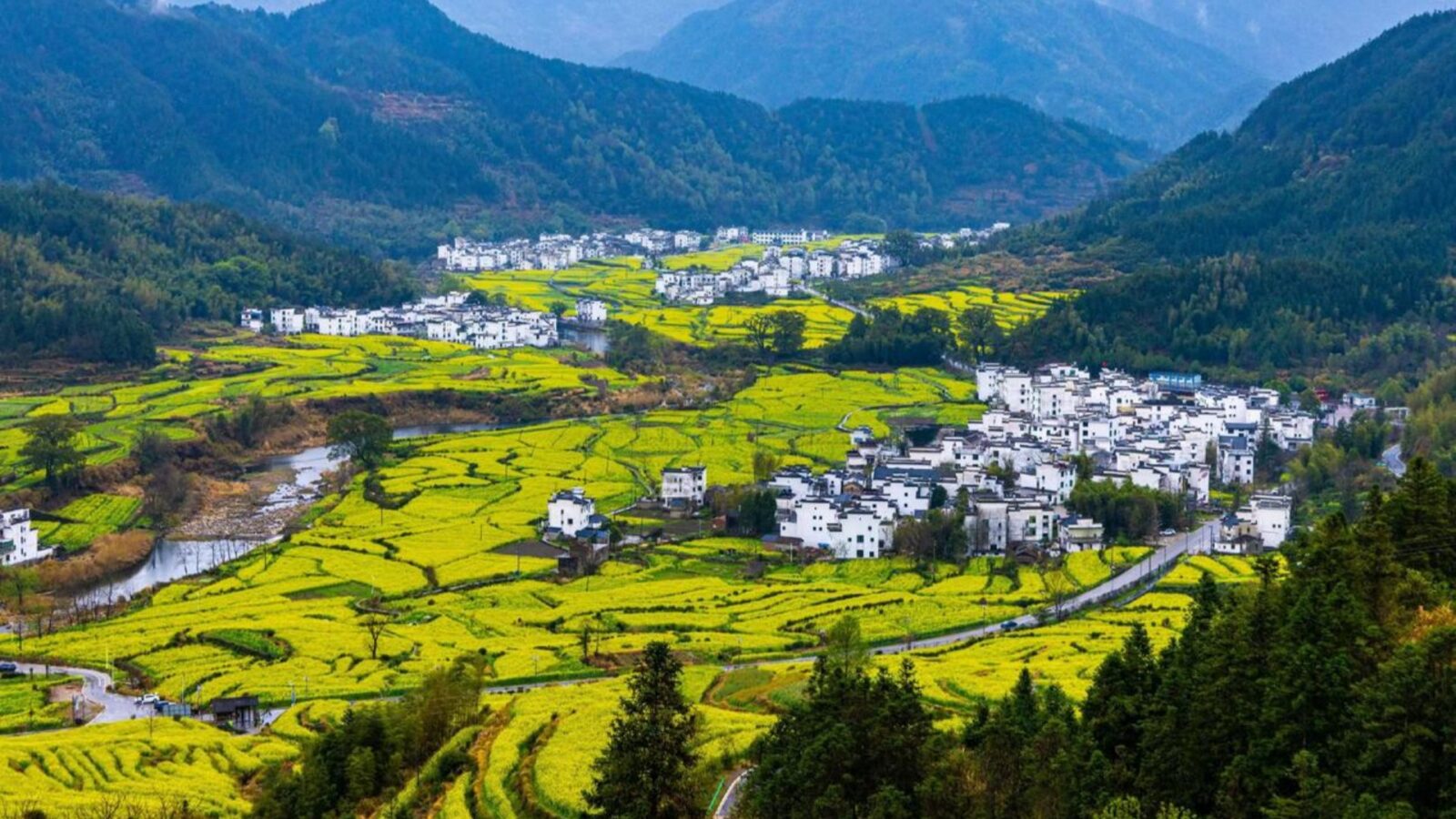
Jiangling Terraced Rapeseed Fields, Wuyuan
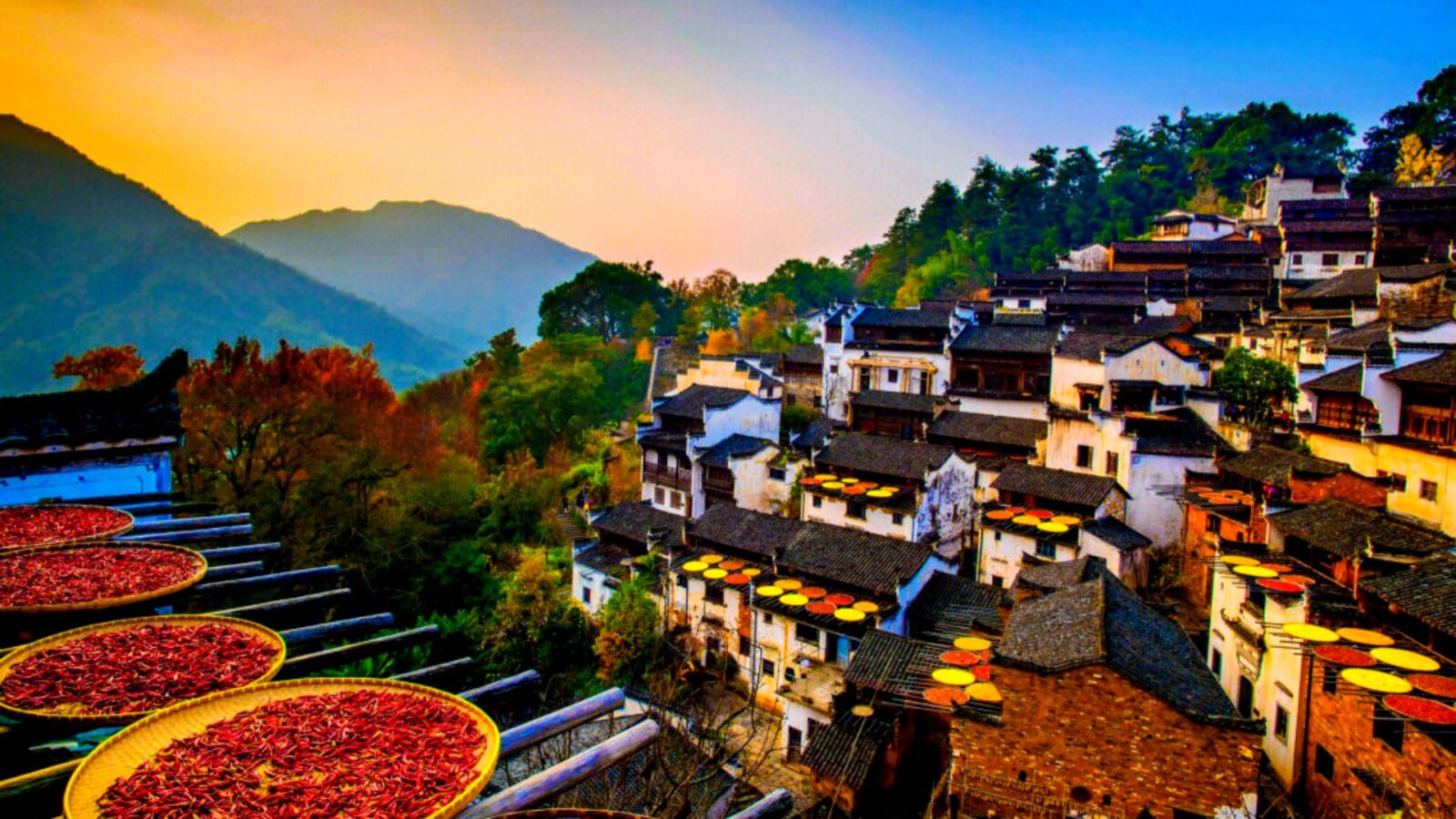
Wuyuan Huangling Ancient Village
Jiangling & Huangling Terrace Flower Sea: In spring, more than 100,000 mu of rapeseed interspersed with Huizhou villages, form a magnificent “paradise on earth” to unfurl before our eyes; in autumn “sunning harvest”(晒秋) customs, rooftops decorate a colorful view of crops.
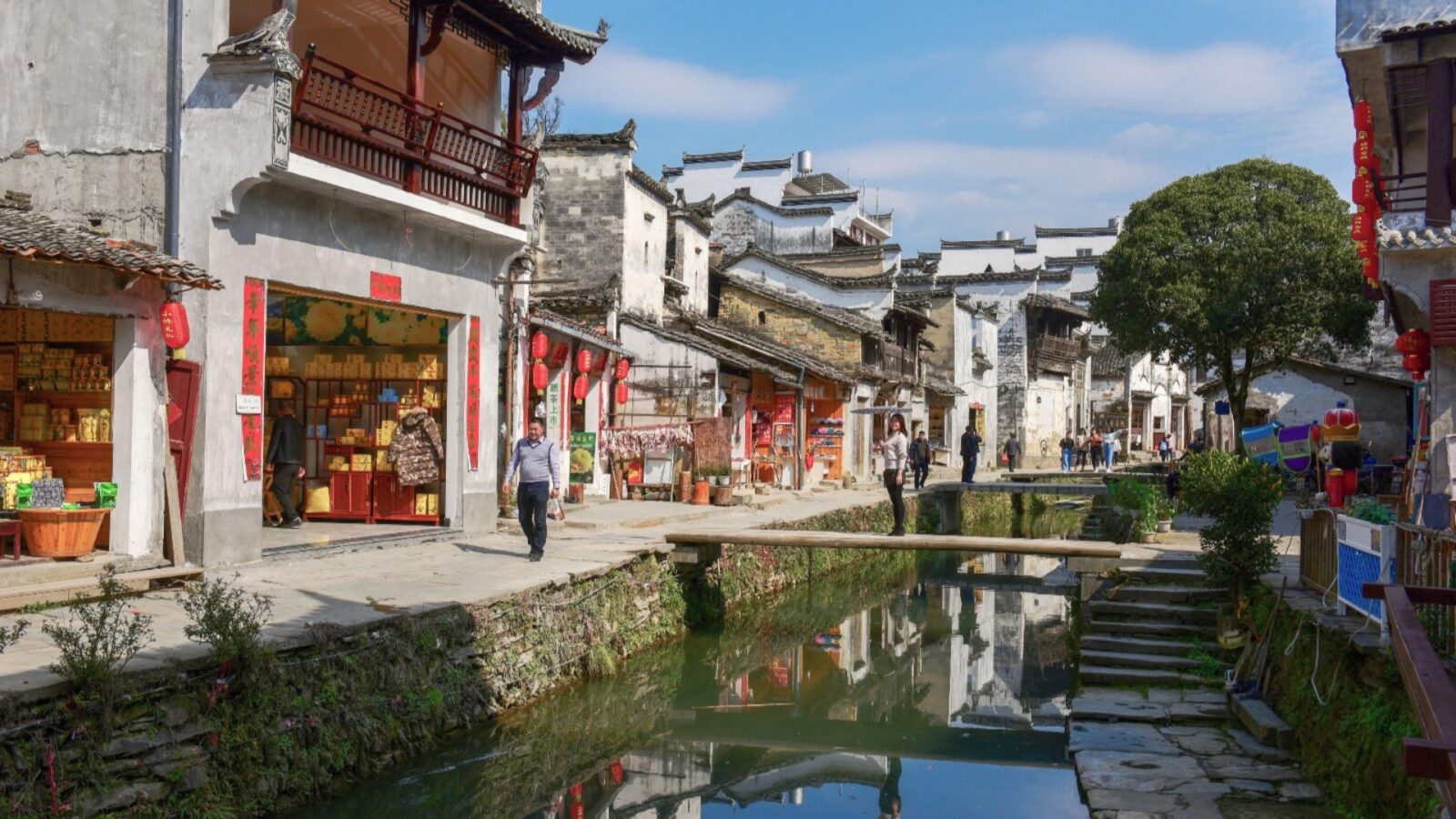
Likeng (Li Keng) in Wuyuan
Likeng, Wangkou & Other Ancient Villages: Walk beside clean streams that have whitewash horse heads reflected in them. This open-air museum has the best Huizhou examples of Three Forms of Huizhou Carvings (wood, stone and brick).
Shicheng(Cheng Village)
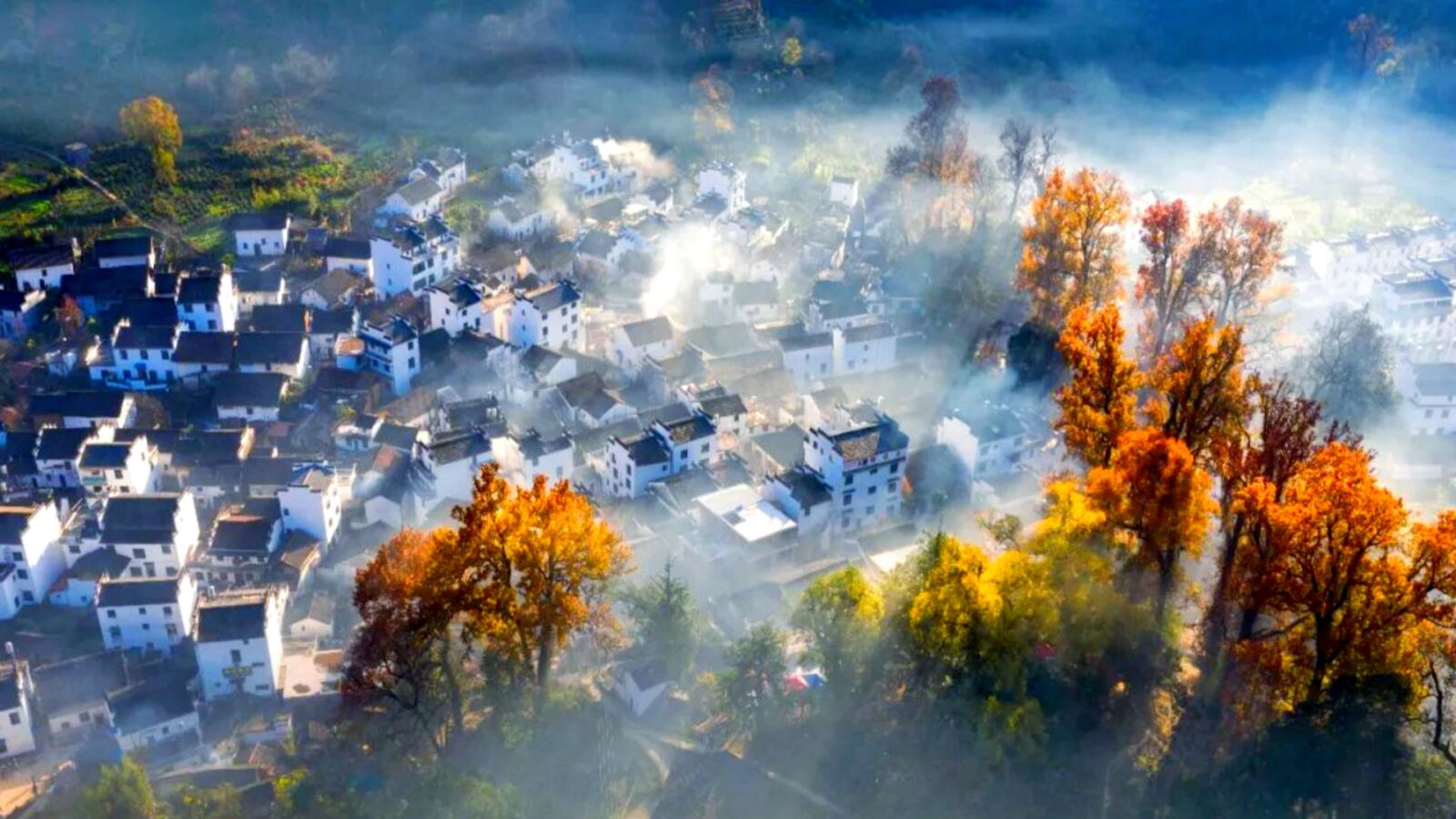
Shicheng & Changxi Autumn Maples: In deep autumn it is always the hundred-year-old sweet gum trees that lap embrace the village, through the morning mist and thatched roof smoke; the combination of red leaves, white walls, and black tiles is the “dream of an opium eater” in the eyes of photographers who love light and shade.
Every breath here carries the mingled fragrance of tea and flowers, and every glance feels like opening a page of Song dynasty verse. Escape the noise — come to Wuyuan and immerse yourself in a slow life saturated with ink-was
h beauty.
2. Anji Village, Zhejiang
The valley where the "Two Mountains" theory was born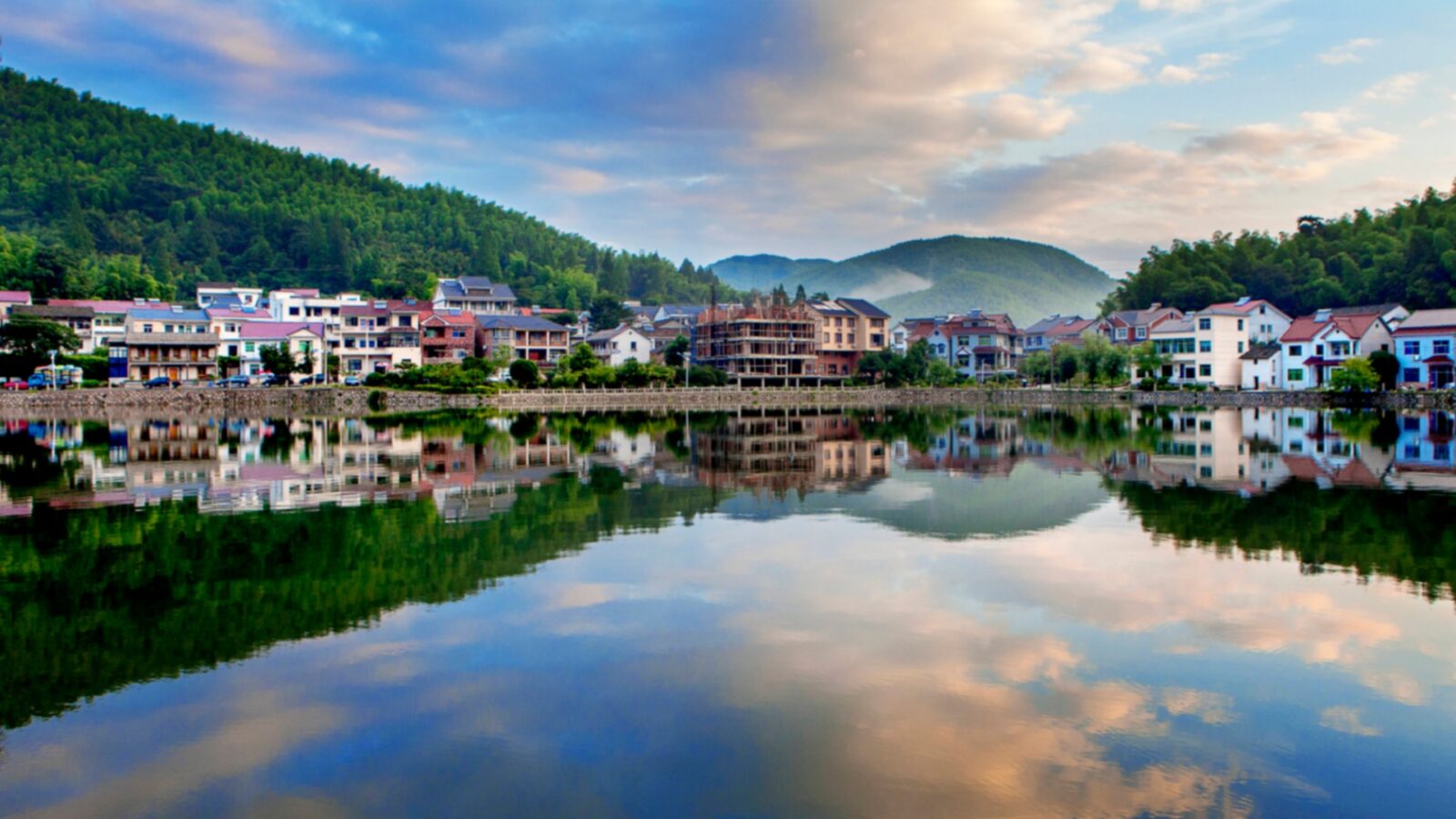
Anji Village, Zhejiang
Anji is the "Hometown of Chinese Bamboo," but more importantly, it is a place where the idea that "clear waters and green mountains are invaluable assets" originates. Its million-mu bamboo forest that has not been cut off and its ecological environment that is in all aspects excellent make Anji the No. 1 Green Town in China.
Key Data & Practical Info
🌳 Forest and vegetation coverage: over 70%; bamboo forest alone exceeds one million mu
🌤️ Air quality excellent rate: consistently above 90% year-round
🌡️ Annual average temperature: 15–17°C
💧 Annual average humidity: approx. 76%
📅 Best travel season: all four seasons — summer for cooling, winter for snow scenery
🗺️ Location: Northwest Zhejiang, northern foothills of Tianmu Mountain
Signature Landscapes & Experiences</strong>
China Grand Bamboo Sea
China Grand Bamboo Sea
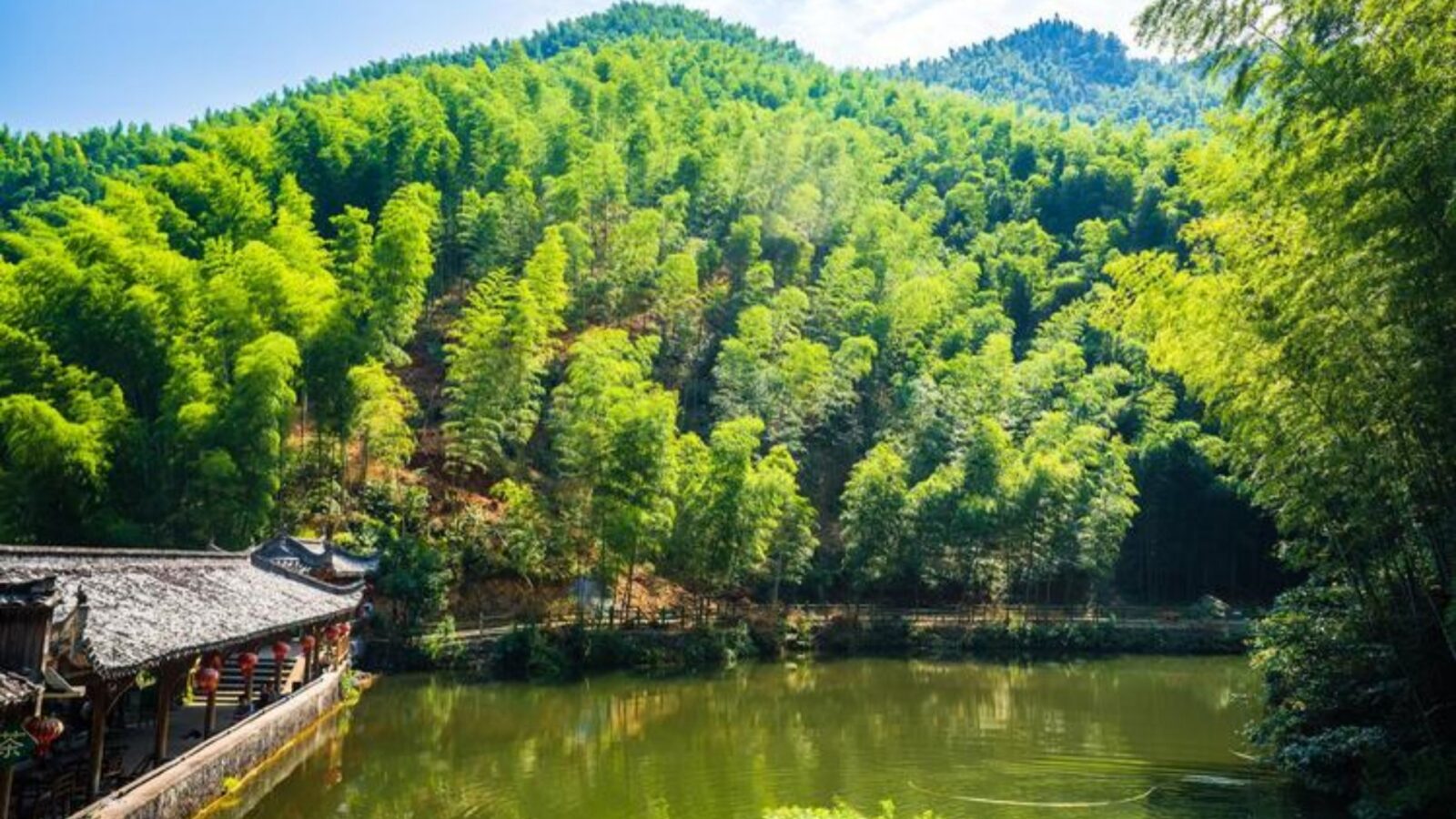
China Grand Bamboo Sea (中国大竹海): Walk through the filming location of Crouching Tiger, Hidden Dragon, immersed in a boundless ocean of bamboo. Listen to the rustling of wind through the canopy and feel absolute serenity and coolness.
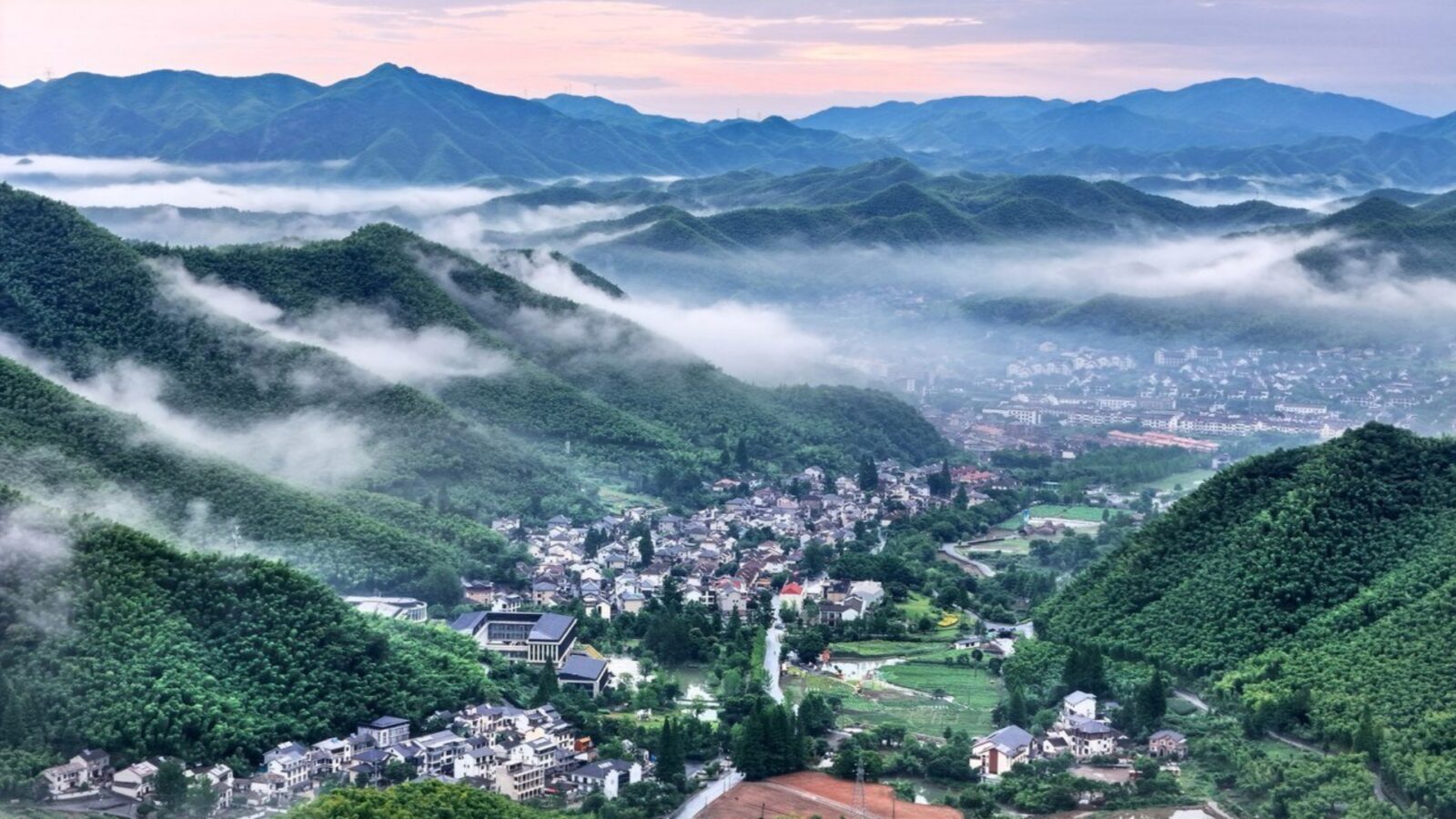
Yucun Village
Yucun Village (余村): Visit the origin site of the "Two Mountains" philosophy. Witness the vivid transformation from a former quarry to a model beautiful village — a living demonstration of green development in action.
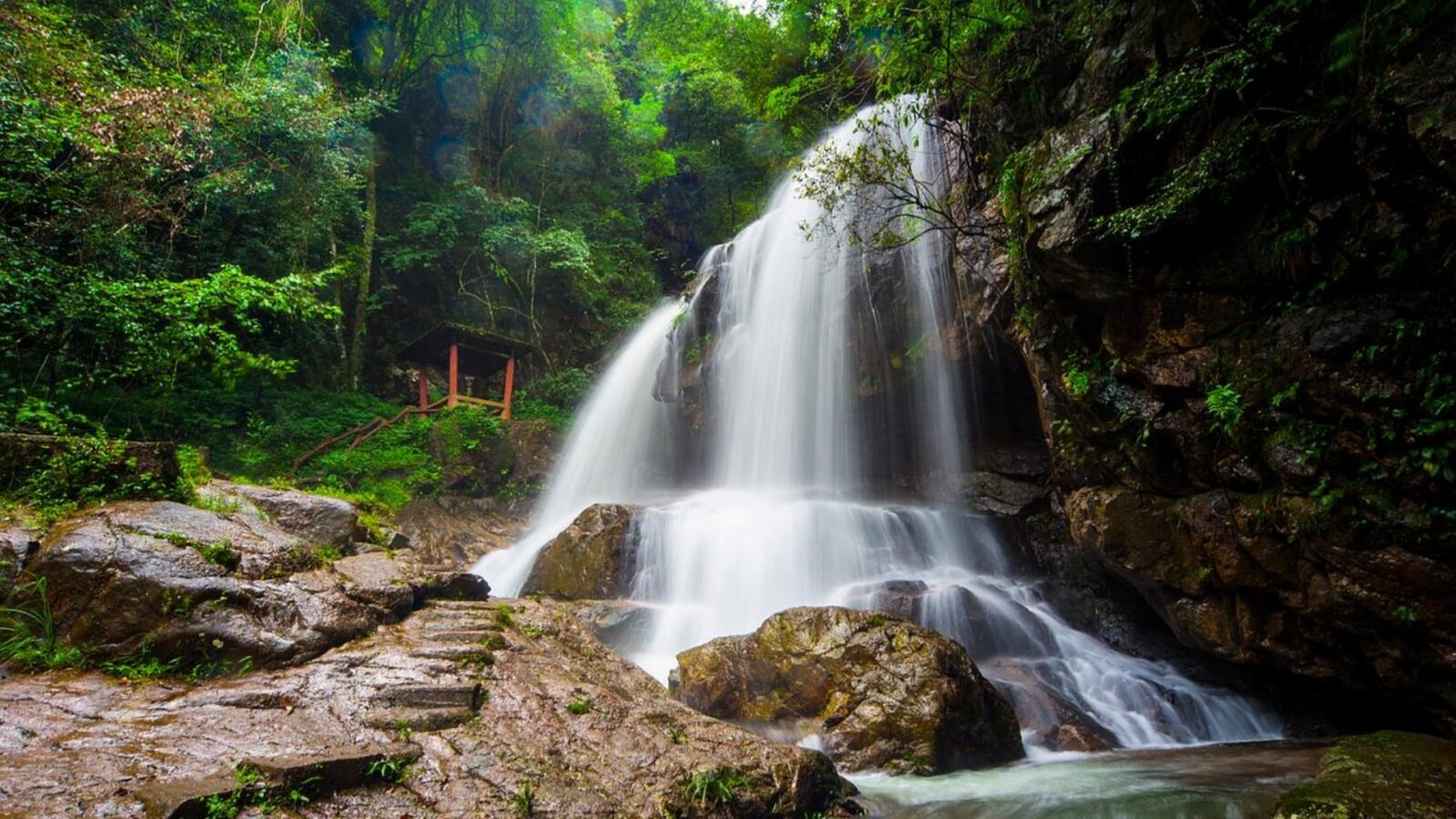
Canglong Hundred Waterfalls
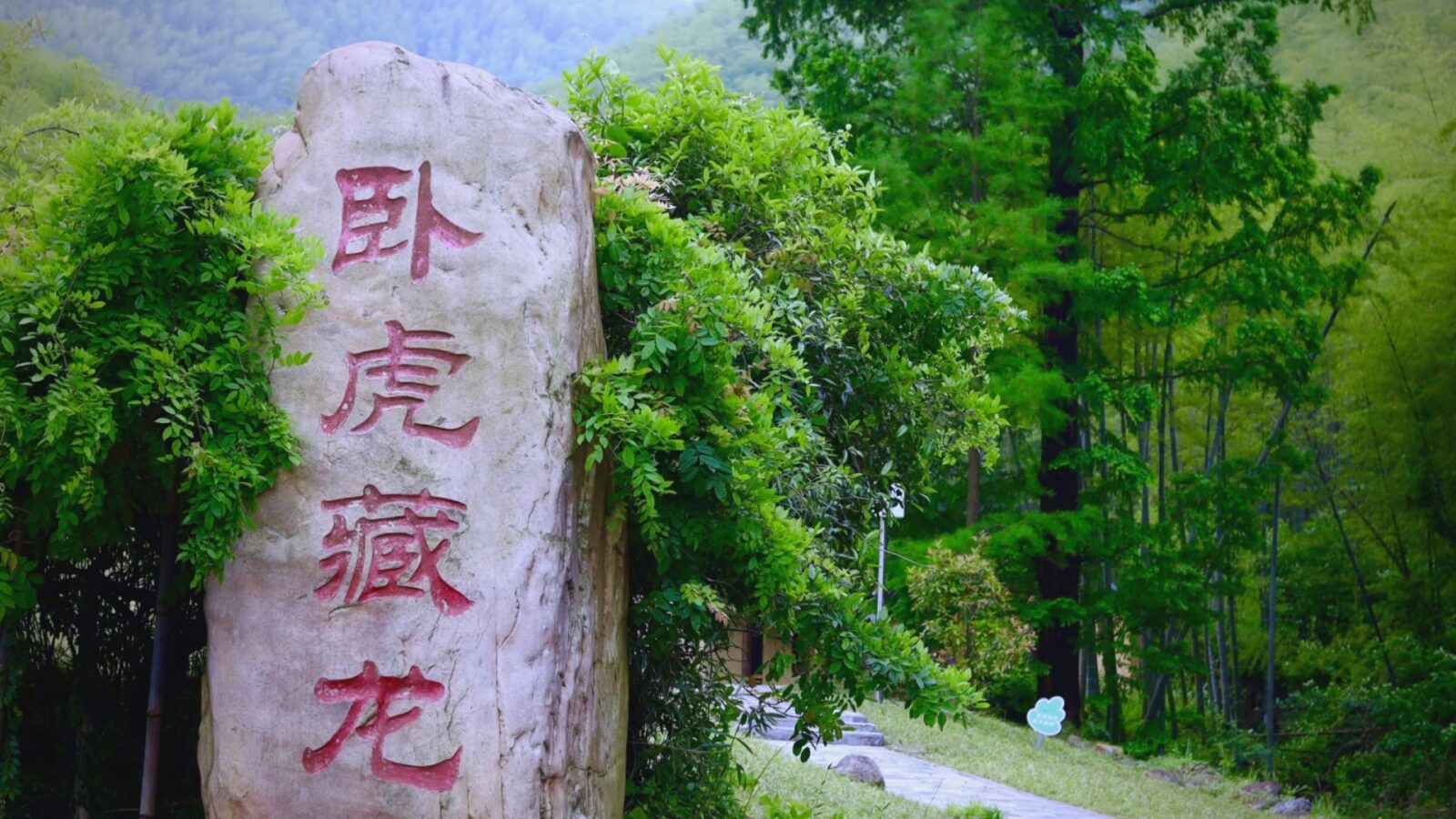
Jiangnan Tianchi & Canglong Hundred Waterfalls (藏龙百瀑): Gaze at stars beside a highland lake; bathe in the negative-ion mist of a waterfall cluster. Experience the vibrant fusion of mountain and water.
From a bamboo forest to a guiding philosophy, Anji has defined what "the life we aspire to" truly means with a landscape of pure green. Come here, breathe deeply, and feel the surging vitality of sustainable development.
3. Taining Village, Fujian
Where scarlet cliffs slip into jade-green water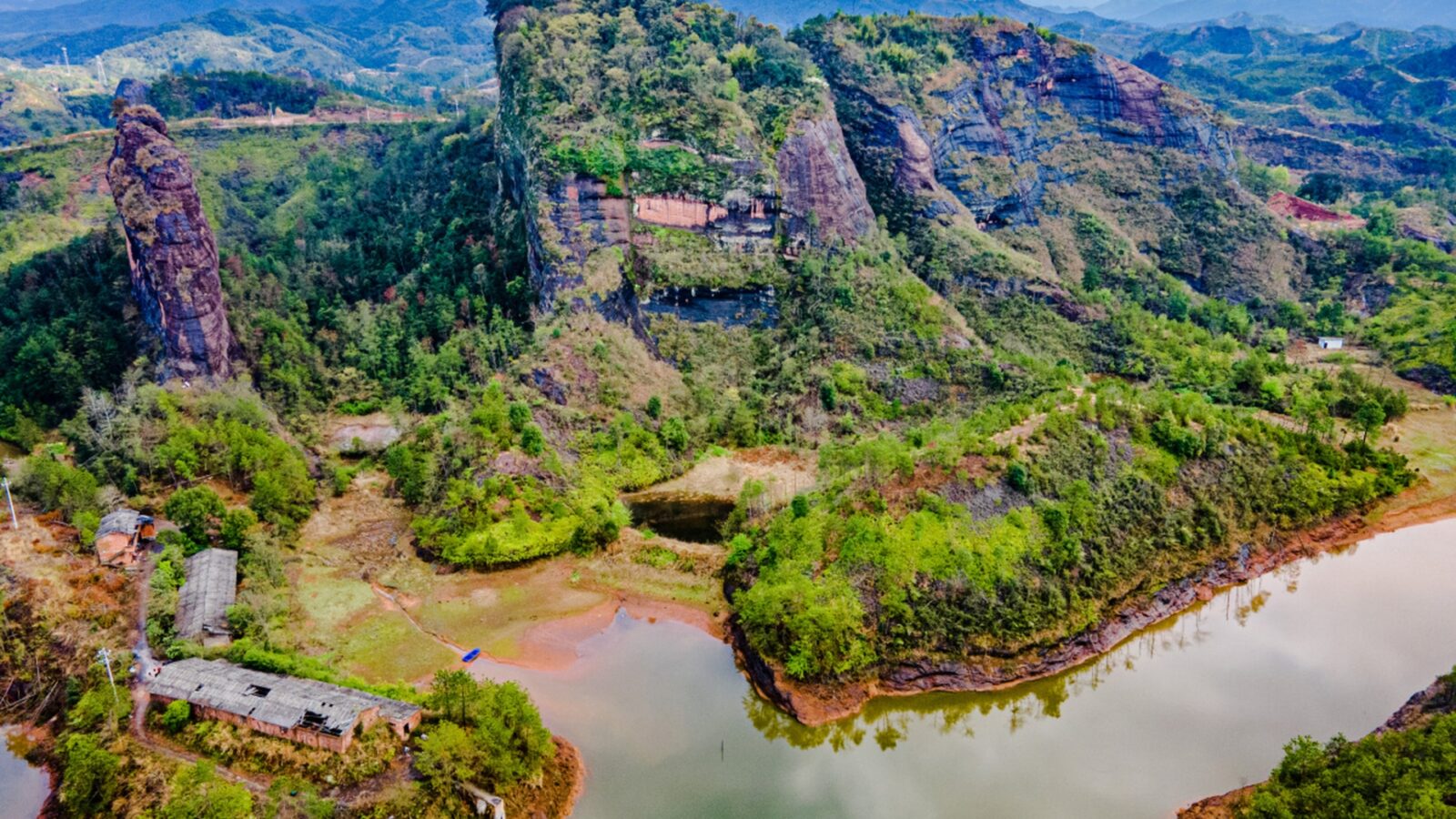
Taining Village, Fujian
As part of a UNESCO World Geopark and World Natural Heritage Site, Taining is celebrated for its one-of-a-kind water Danxia landforms, rich cave-dwelling culture, and the scholarly legacy of its "state examination champion" hometown.
Key Data & Practical Info
🌳 Forest coverage rate: over 80%
🌤️ Air quality: rated "Excellent" year-round
🌡️ Annual average temperature: 17–19°C
💧 Annual average humidity: approx. 80%
📅 Best travel season: spring, summer and autumn — especially after rain for cloud and mist views
🗺️ Location: Northwest Fujian, central section of the Wuyi Mountain range
<strong>Signature Landscapes & Experiences
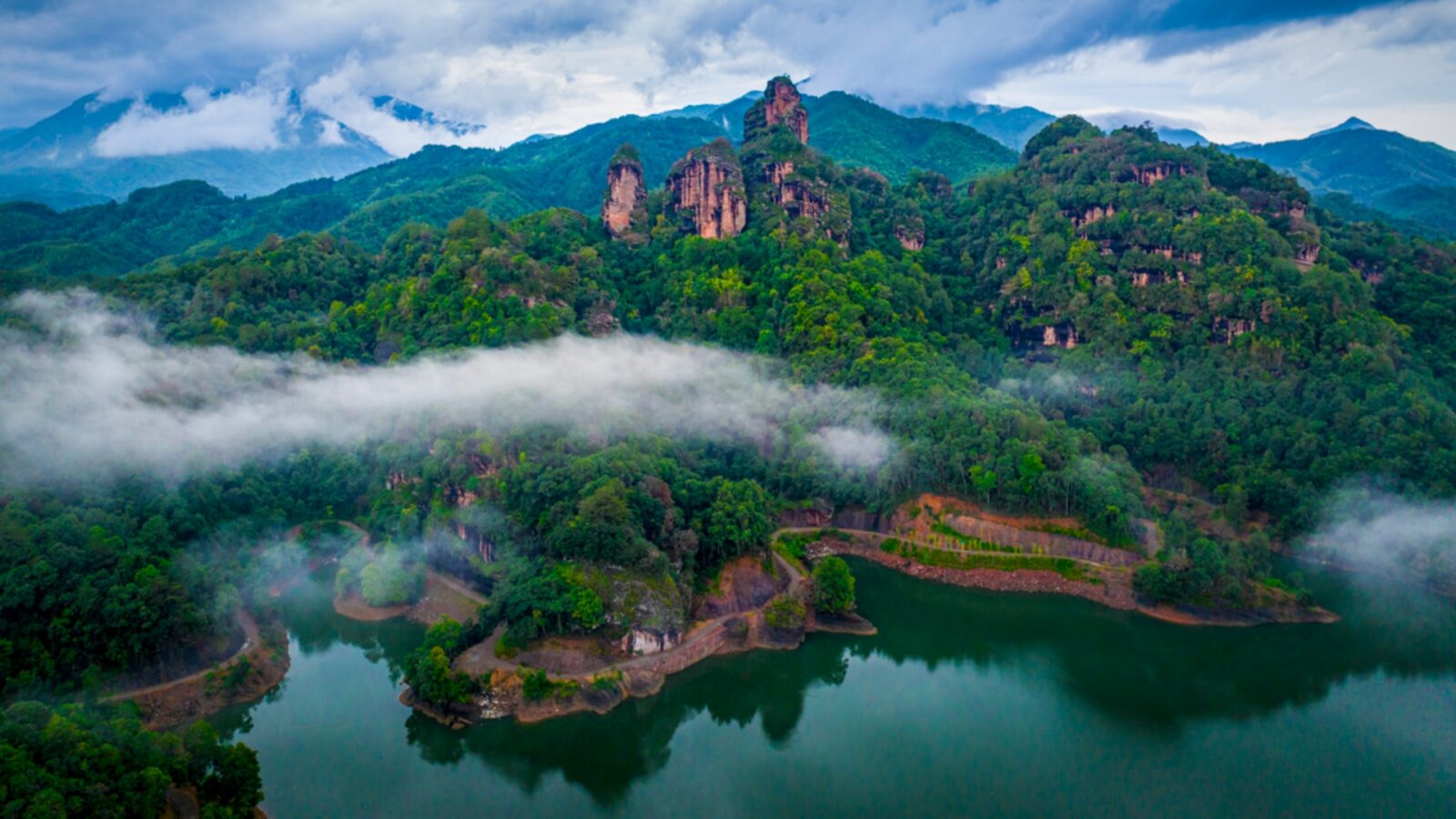
Dajin Lake
Dajin Lake (大金湖): Cruise by boat and watch scarlet cliffs and canyon walls wind through their own reflections in turquoise water — poetry made geology.
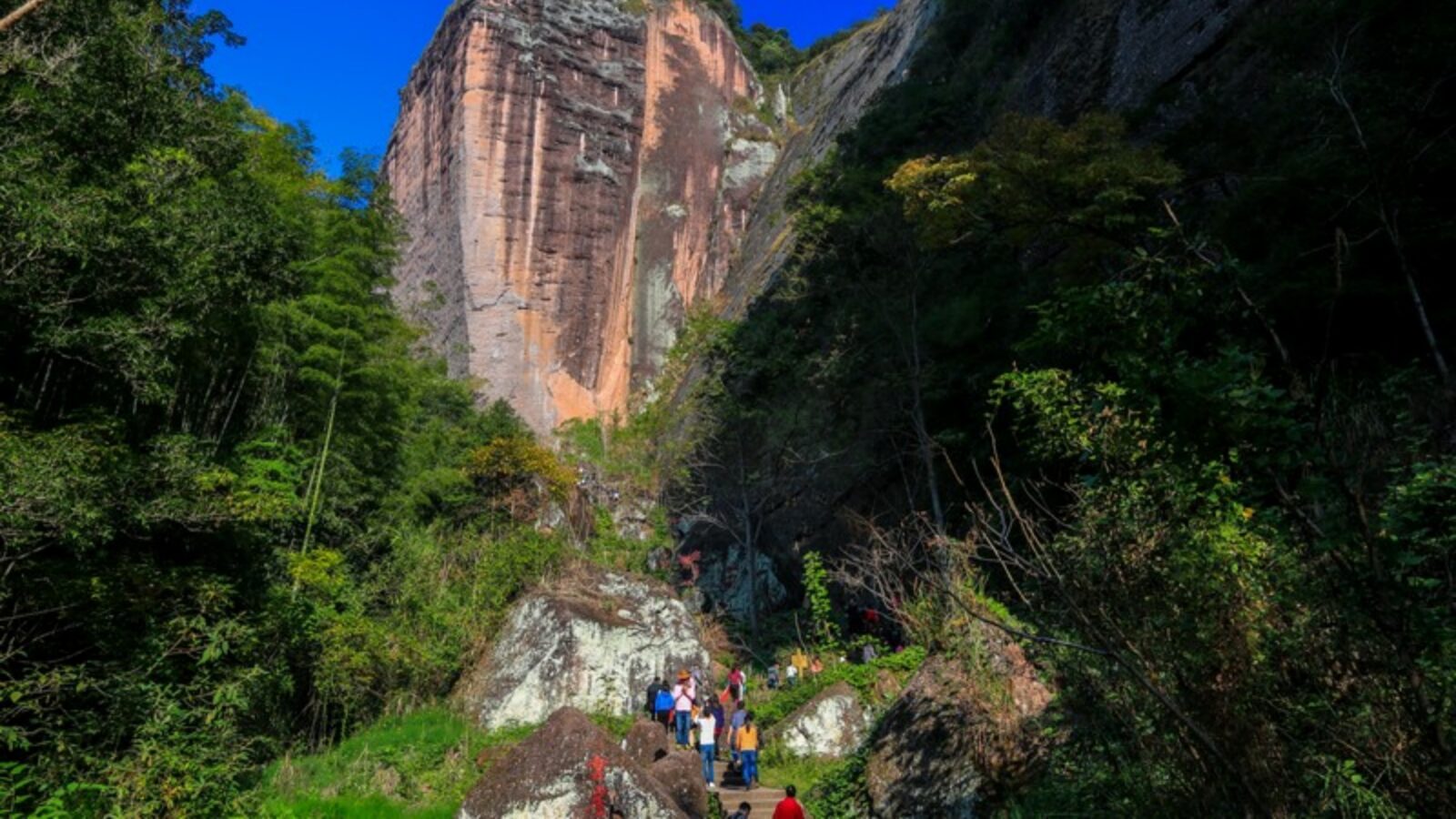
Zhaixia Grand Canyon
Zhaixia Grand Canyon (寨下大峡谷): Pass through a "time tunnel" formed by three valleys joined end-to-end, directly experiencing geological strata from different eras.
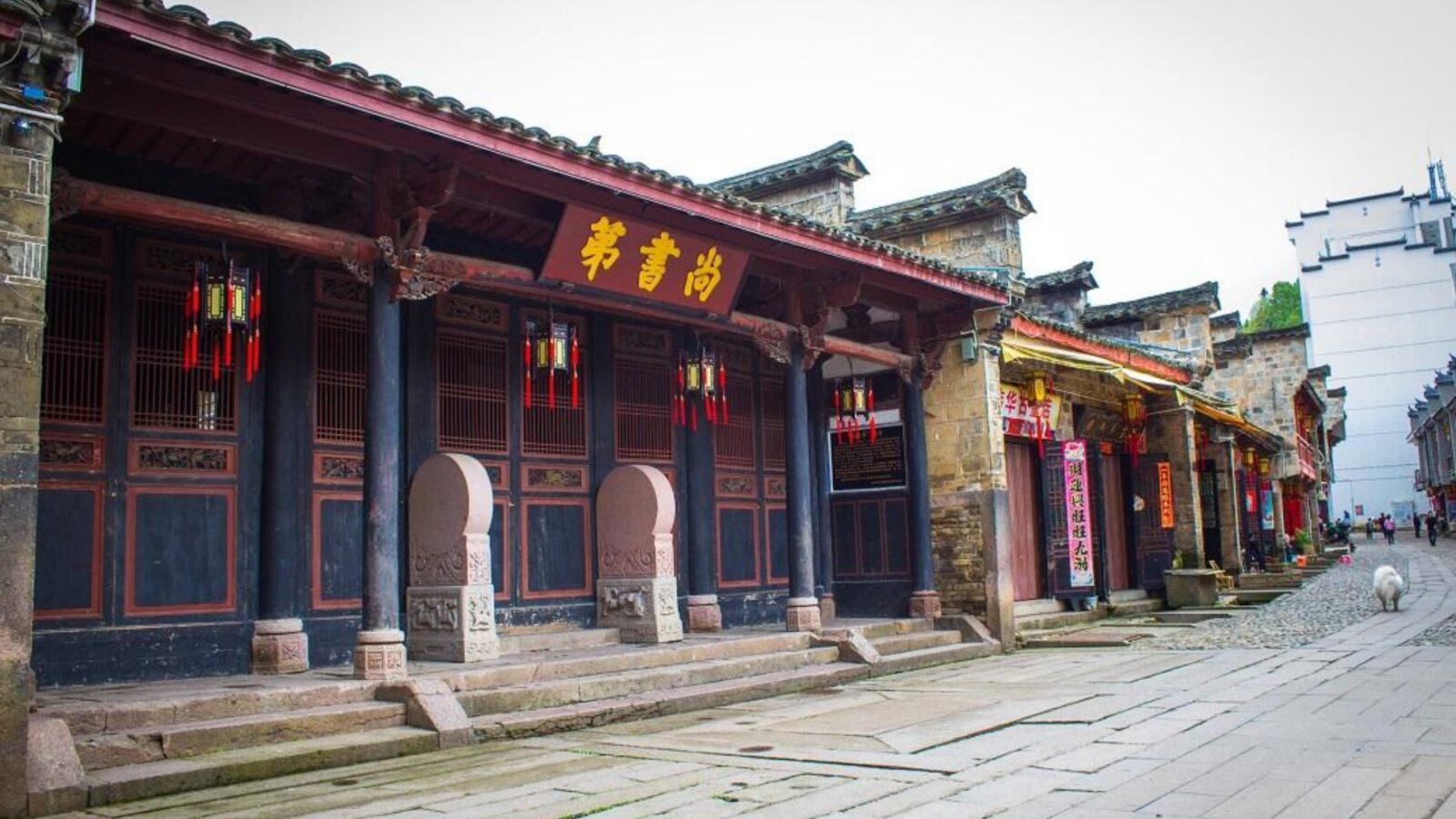
Shangshu Mansion Complex
Shangshu Mansion Complex (尚书第建筑群): Explore the grand residence of Ming Dynasty Minister of War Li Chunye — regarded as the "finest private residence in Jiangnan" — and appreciate its architectural grandeur.
Taining's landscape is both a three-dimensional geological epic and a living ink-wash scroll. Come here — witness the red mountains and jade waters, listen to the echoes of ancient caves, and sense the sublime beauty of heaven and earth.
🏯 Cultural Heritage: After exploring these rustic rural escapes, dive into China’s grander historical narratives with the 16 Most Beautiful Ancient Towns in China (World Heritage & Living History), where well-preserved architecture meets centuries of living history.
4. Xidi Village, Anhui
Living inside a poem by Tao Yuanming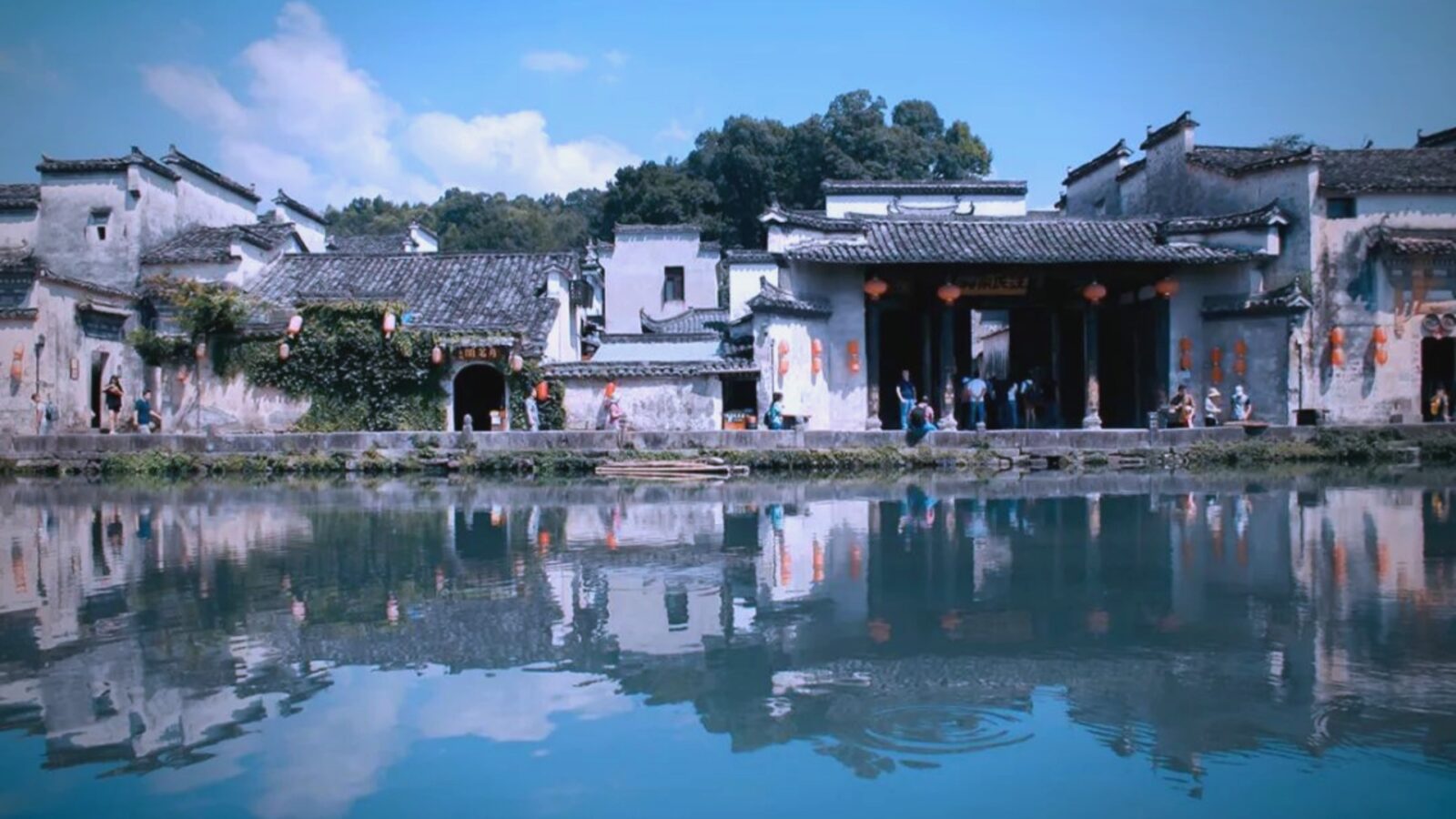
Xidi Village, Anhui
Xidi Village, a UNESCO World Cultural Heritage site, is praised as a “Home in the Peach Blossom Spring”, ”Chiina’s Museum of Ming-Qing Vernacular Dwellings”and is the concentrated embodiment of Huizhou village planning, architecture and humanistic spirit.
Key Data & Practical Info
🏘️ Core conservation area: approx. 13 hectares
🌤️ Environment: located on the southern slopes of Mt. Huangshan, fresh air throughout
🌡️ Annual average temperature: approx. 16°C
💧 Annual average humidity: relatively high, approx. 78%
📅 Best travel season: spring and autumn; avoid rainy season and midsummer heat
🗺️ Location: Southeast Yixian County, Huangshan City, Anhui Province
Signature Landscapes & Experiences
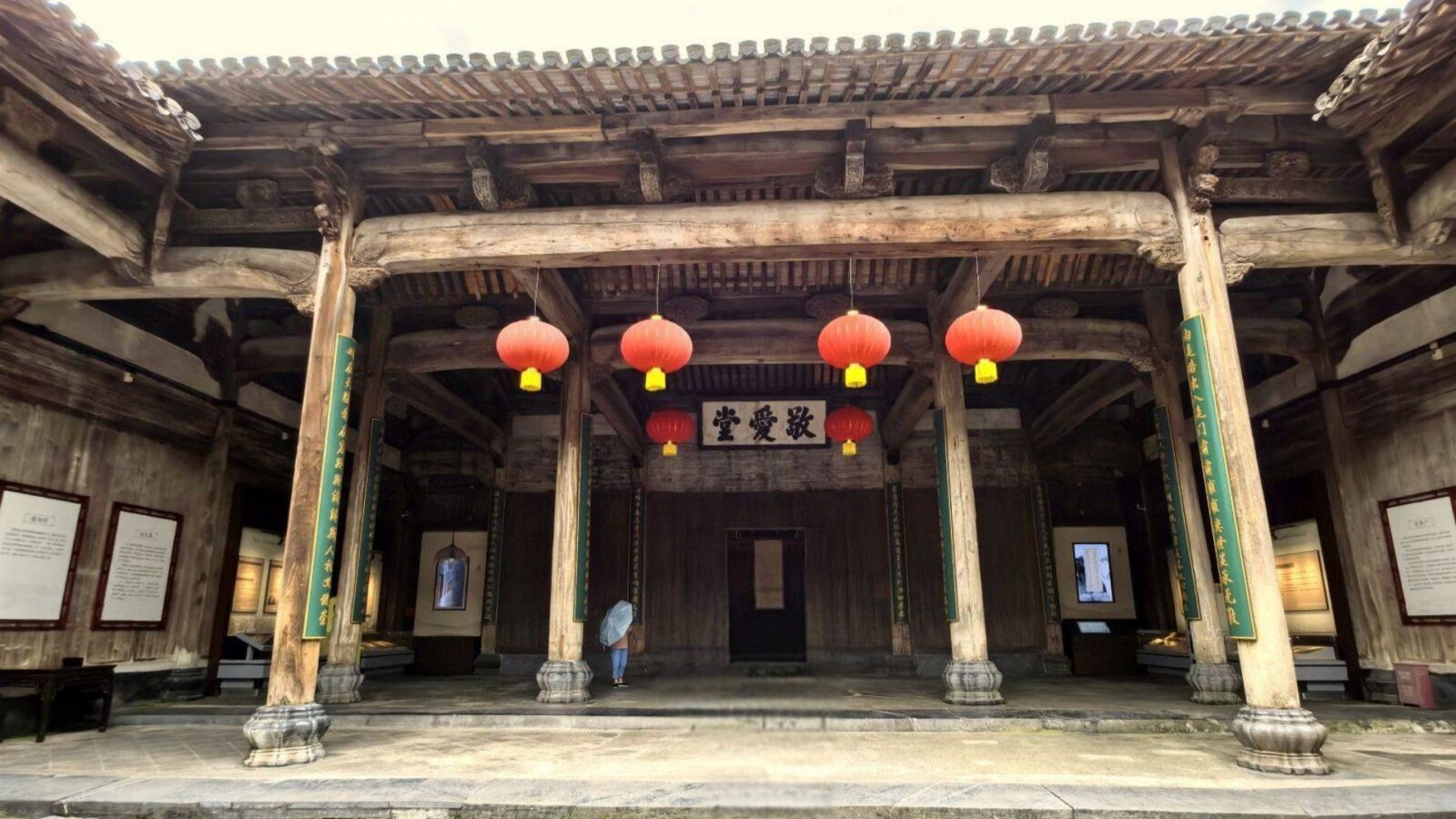
Hu Wenguang Memorial Archway & Jing'ai Hall
Hu Wenguang Memorial Archway & Jing'ai Hall (胡文光刺史坊与敬爱堂): Begin at the Ming Dynasty stone-carved ceremonial archway at the village entrance, then step into the ancestral hall to feel the solemnity of Huizhou clan governance and the merchant-scholar tradition.
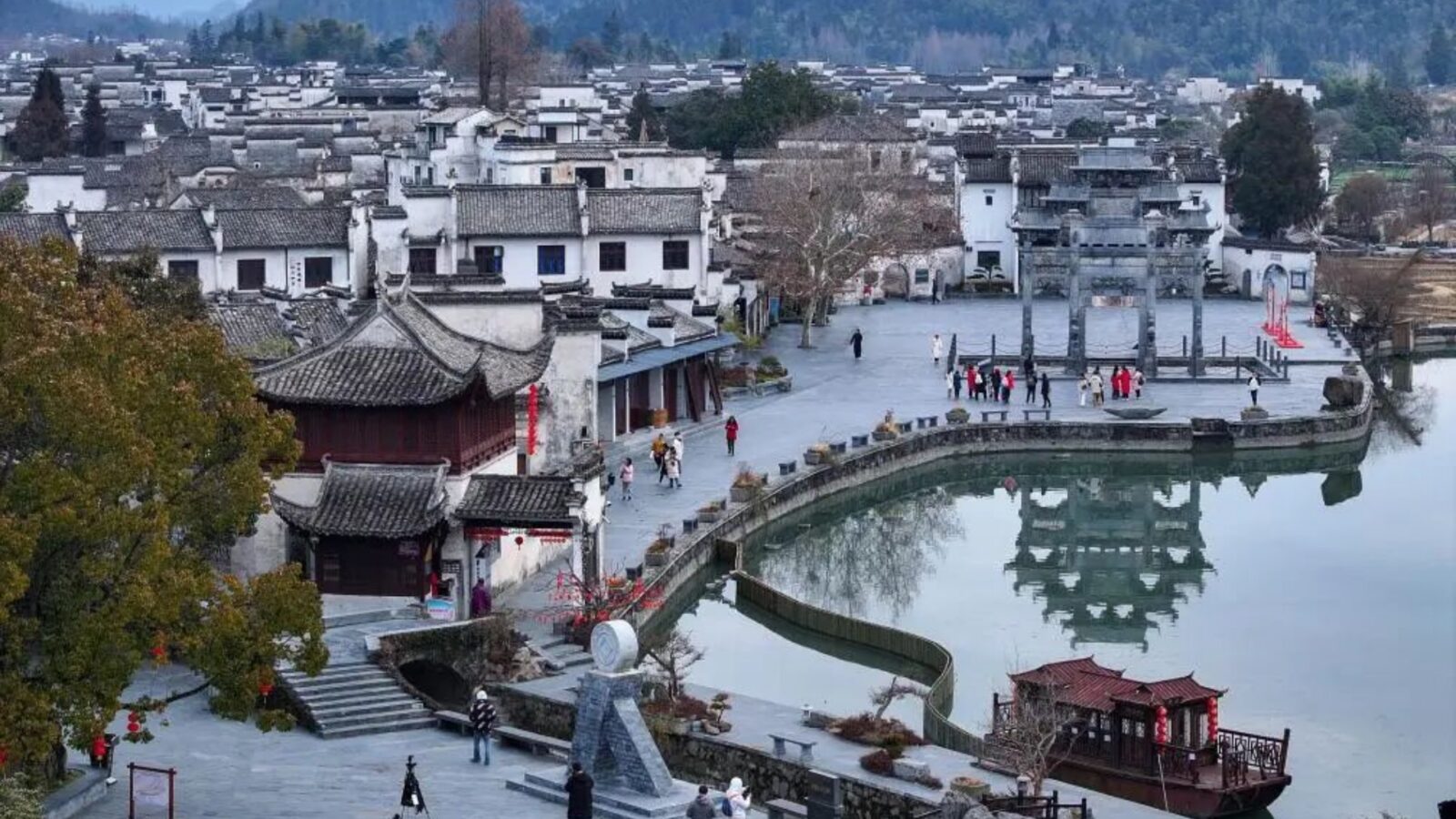
Huizhou-Style Street Lanes
Huizhou-Style Street Lanes: Walk on bluestone paths flanked by staggered horse-head walls, admiring exquisite brick, wood and stone carvings. Every door hides a family's centuries-old story.
Village Feng Shui Layout: View the entire village from above and observe its boat-shaped layout merging seamlessly with surrounding mountains and water — a profound embodiment of "harmony between heaven and humanity."
Xidi is not merely a village — it is a living history. Walking through its high-walled deep lanes, you can almost hear the footsteps of Huizhou merchants returning in glory centuries ago, and the sound of children reading aloud.
5. Wufeng Tujia Village, Hubei
Three thousand peaks, one cup of high-mountain tea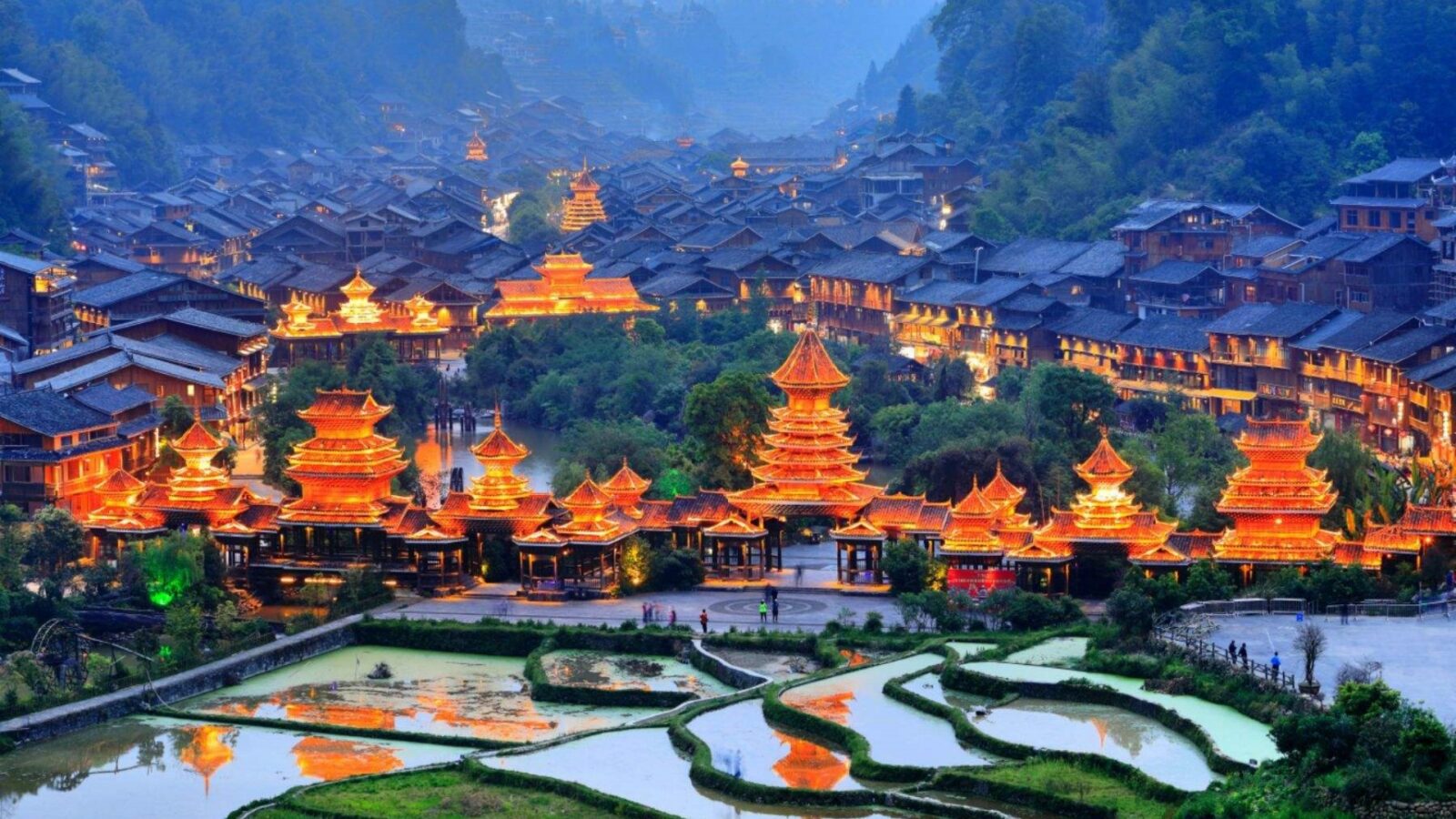
Wufeng Tujia Village, Hubei
‘Hometown of Famous Chinese Tea’ Wufeng has the astonishing karst peak-forest landform of the Wuling Mountains, with sheer gorges, high-altitude tea gardens and the densely-woven living culture of the Tujia (土家族) ethnic minority.
Key Data & Practical Info
🌳 Forest coverage rate: as high as 81%
🌤️ Air quality excellent rate: consistently ranks among the top in Hubei Province
🌡️ Annual average temperature: 13–15°C (mountain area is pleasantly cool)
💧 Annual average humidity: approx. 80%
📅 Best travel season: April–October; spring for tea picking, summer for cooling, autumn for ridge hiking
🗺️ Location: Southwest Hubei, a branch of the Wuling Mountains
Signature Landscapes & Experiences
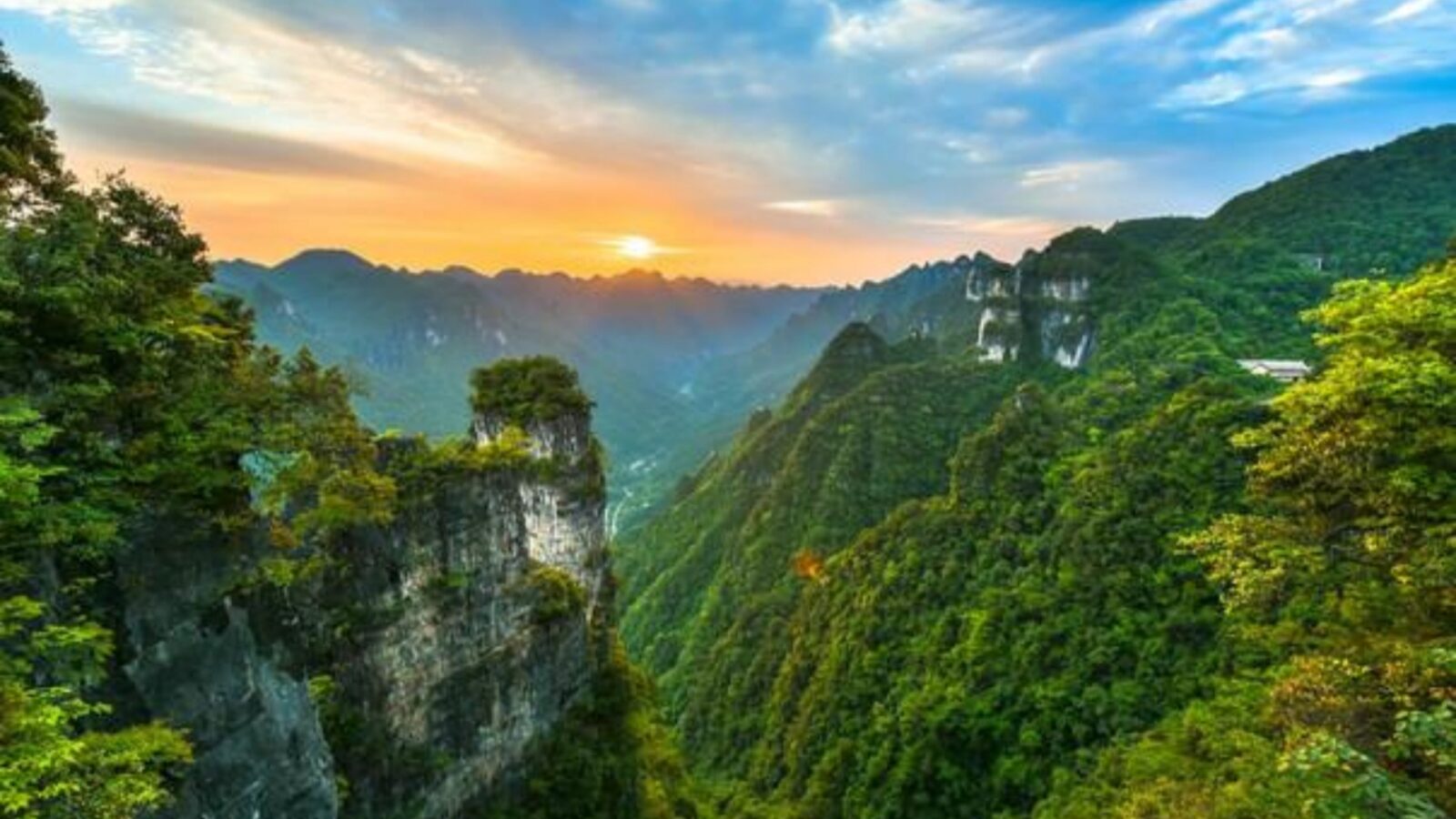
Chaibuxi Grand Canyon
Chaibuxi Grand Canyon (柴埠溪大峡谷): Experience the magnificence of "a hundred-li secluded gorge with three thousand strange peaks." Walk along the cliff boardwalk, look down into the deep valley below, and feel nature's masterful craftsmanship.
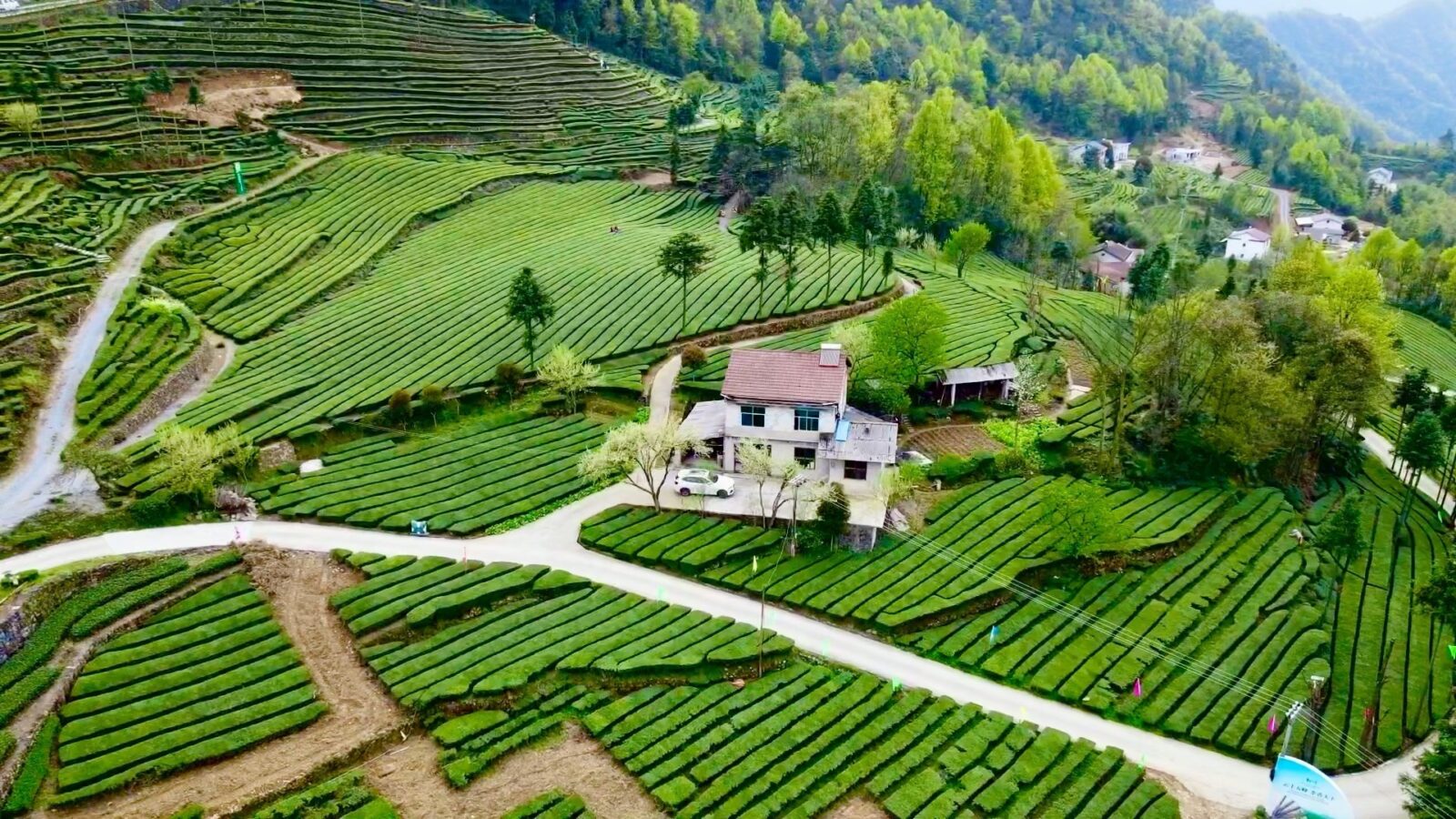
Qinggangling Tea Gardens
Qinggangling Tea Gardens (青岗岭茶园): Stroll through undulating tea hills, experience picking and processing tea, sip a cup of fragrant highland selenium-rich tea, and watch a sea of clouds rolling beneath you.
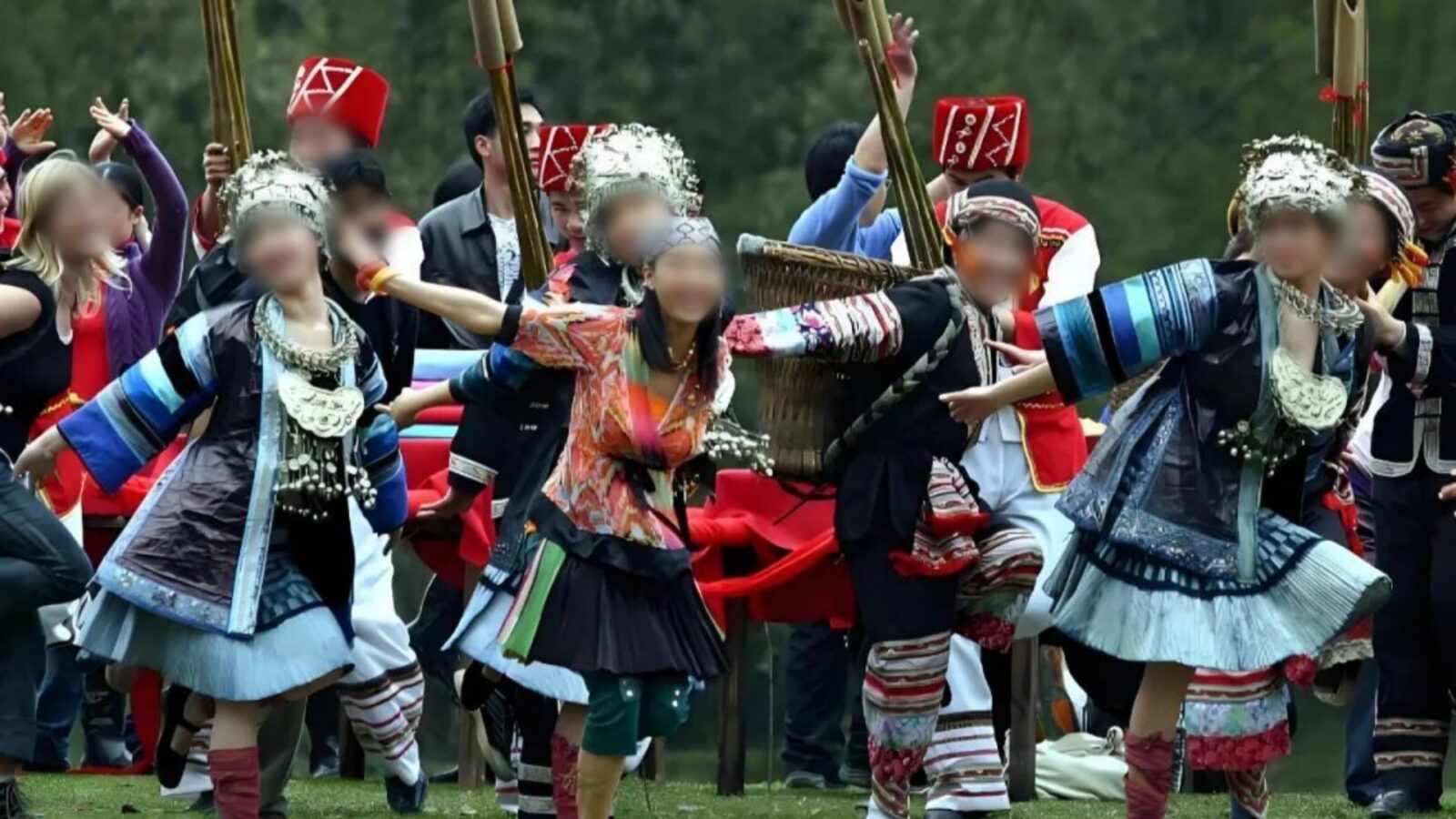
Tujia Folk Culture
Tujia Folk Culture: Listen to the melodious Tujia mountain ballad "Wufeng Nanqu" (五峰南曲), taste authentic Tujia "steamed meat in a wooden frame," and experience the warm, unpretentious minority culture firsthand.
In Wufeng, every strange peak tells a story and every wisp of tea fragrance carries the freshness of the mountain wild. This is an ideal hidden retreat to escape summer heat and cleanse the soul.
6. Shibadong Village, Hunan
From forgotten mountain hamlet to national role model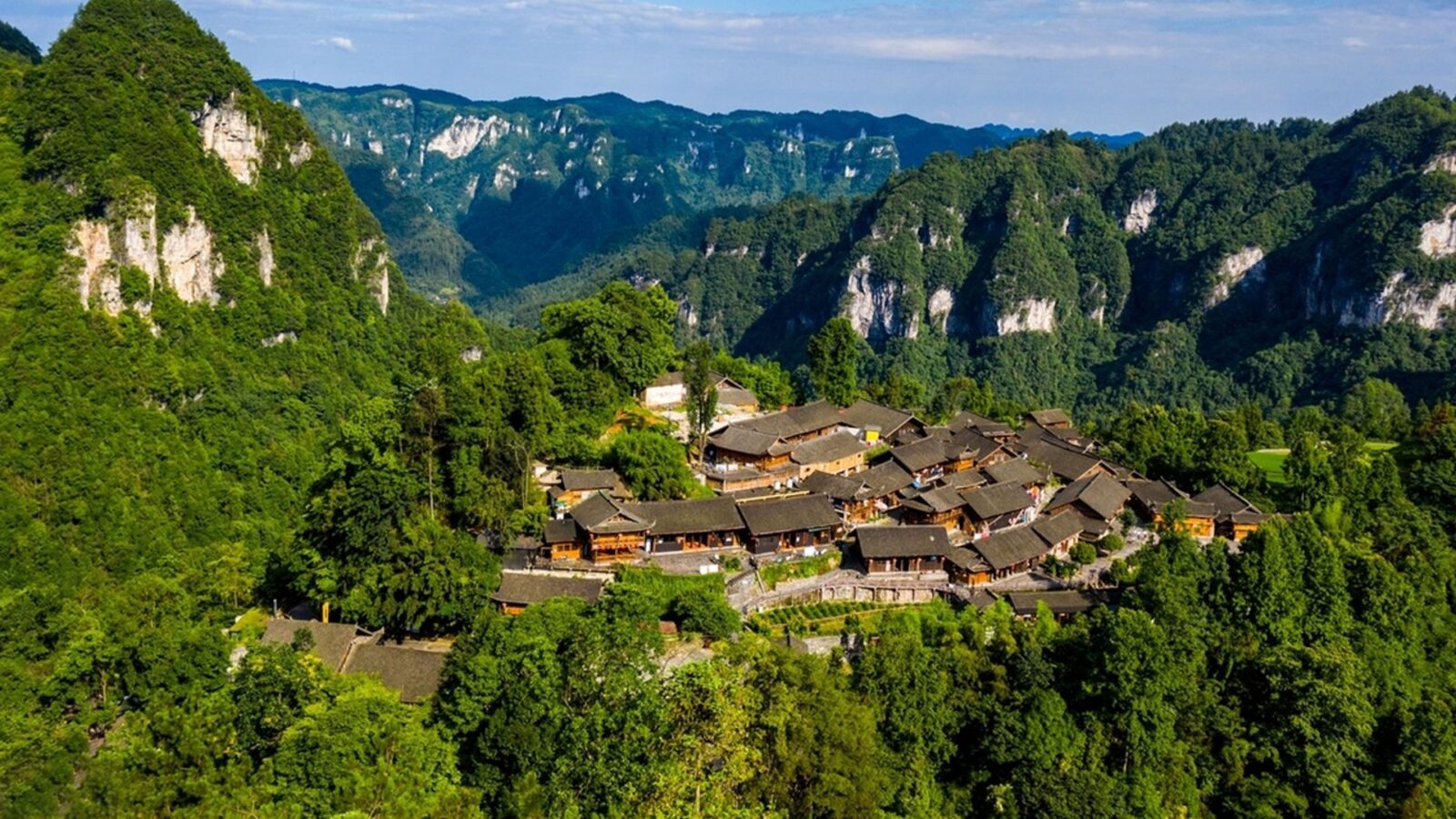
Shibadong Village, Hunan
Shibadong Village (十八洞村) came up with the innovative concept of “targeted poverty alleviation”. It has become a national model for rural rejuvenation from a nondescript and poor Miao (苗族) village in the deep Wuling Mountains.
🗂 Key Data & Practical Info
🏔️ Average elevation: approx. 700 meters
🌤️ Ecological environment: mountain air is fresh, water sources are clean
🌡️ Annual average temperature: approx. 15°C
💧 Climate: mild winters, cool summers
📅 Best travel season: year-round; spring and autumn are most comfortable
🗺️ Location: Huayuan County, Xiangxi Tujia and Miao Autonomous Prefecture, Hunan
Signature Landscapes & Experiences
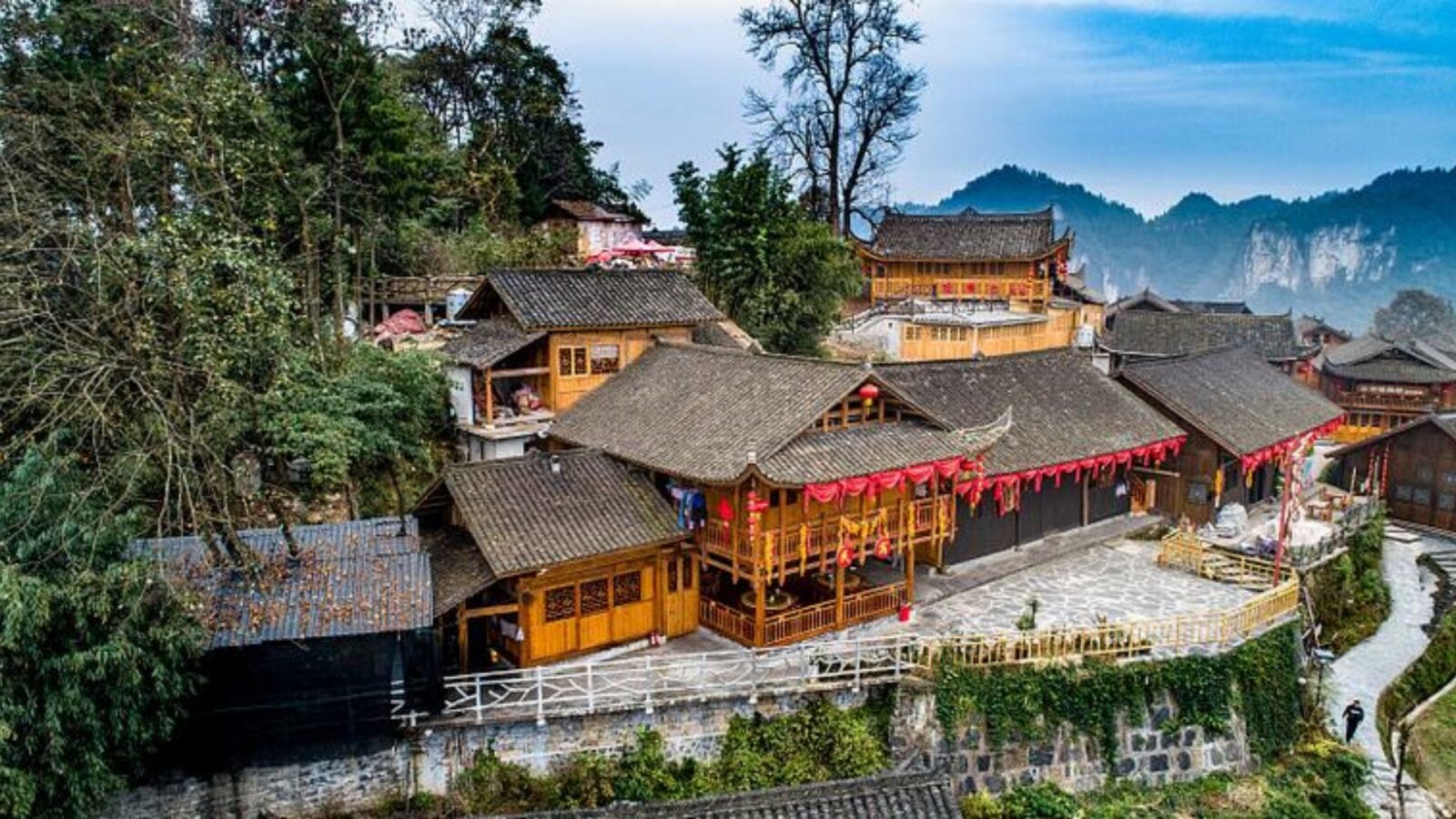
Lizhai Sub-village
Lizhai Sub-village & Targeted Poverty Alleviation Exhibition Hall: Visit the source where the "targeted poverty alleviation" concept was first articulated. Through the exhibition, understand the village's profound transformation and feel its inspirational spirit.
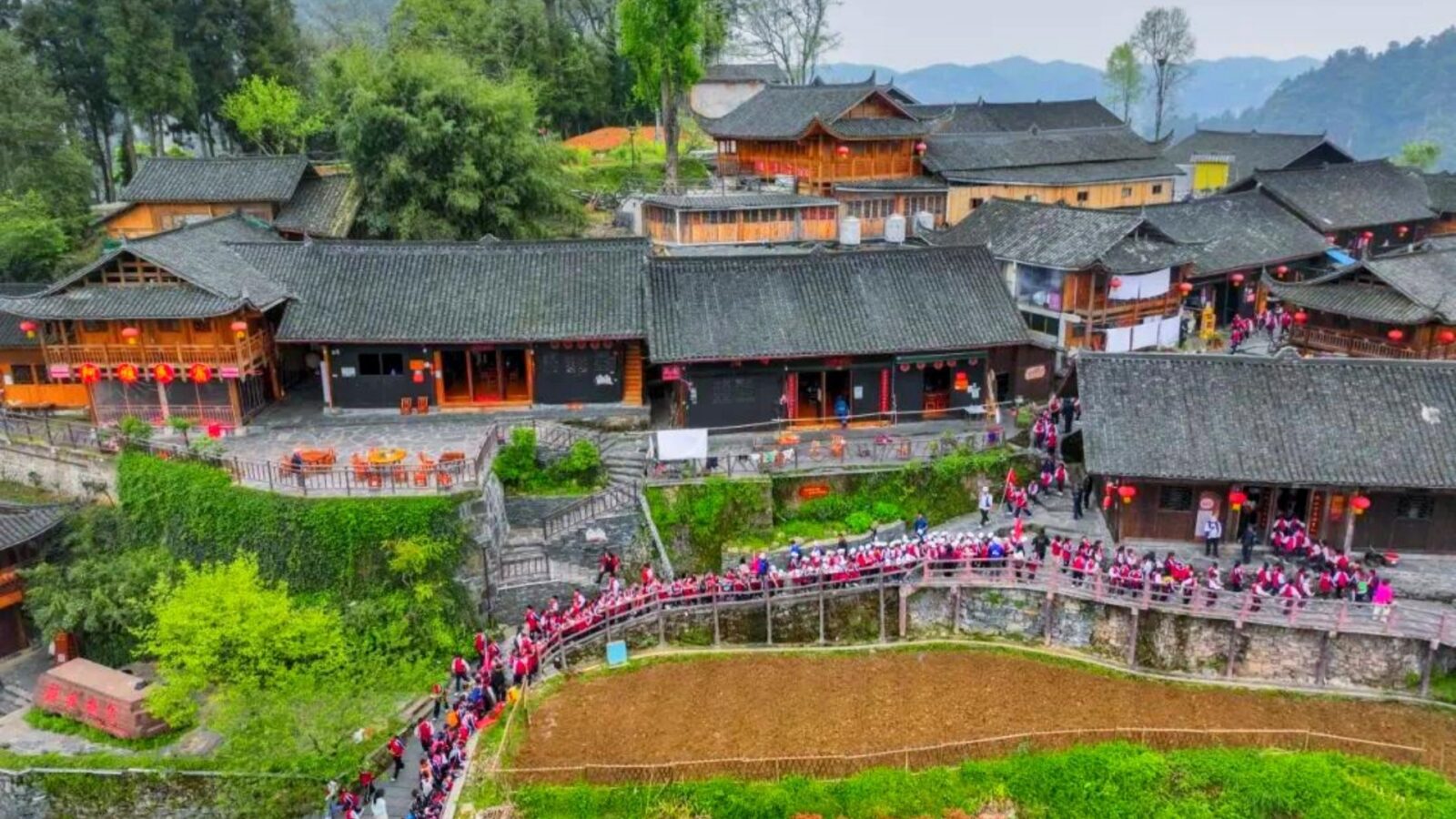
Traditional Miao Village
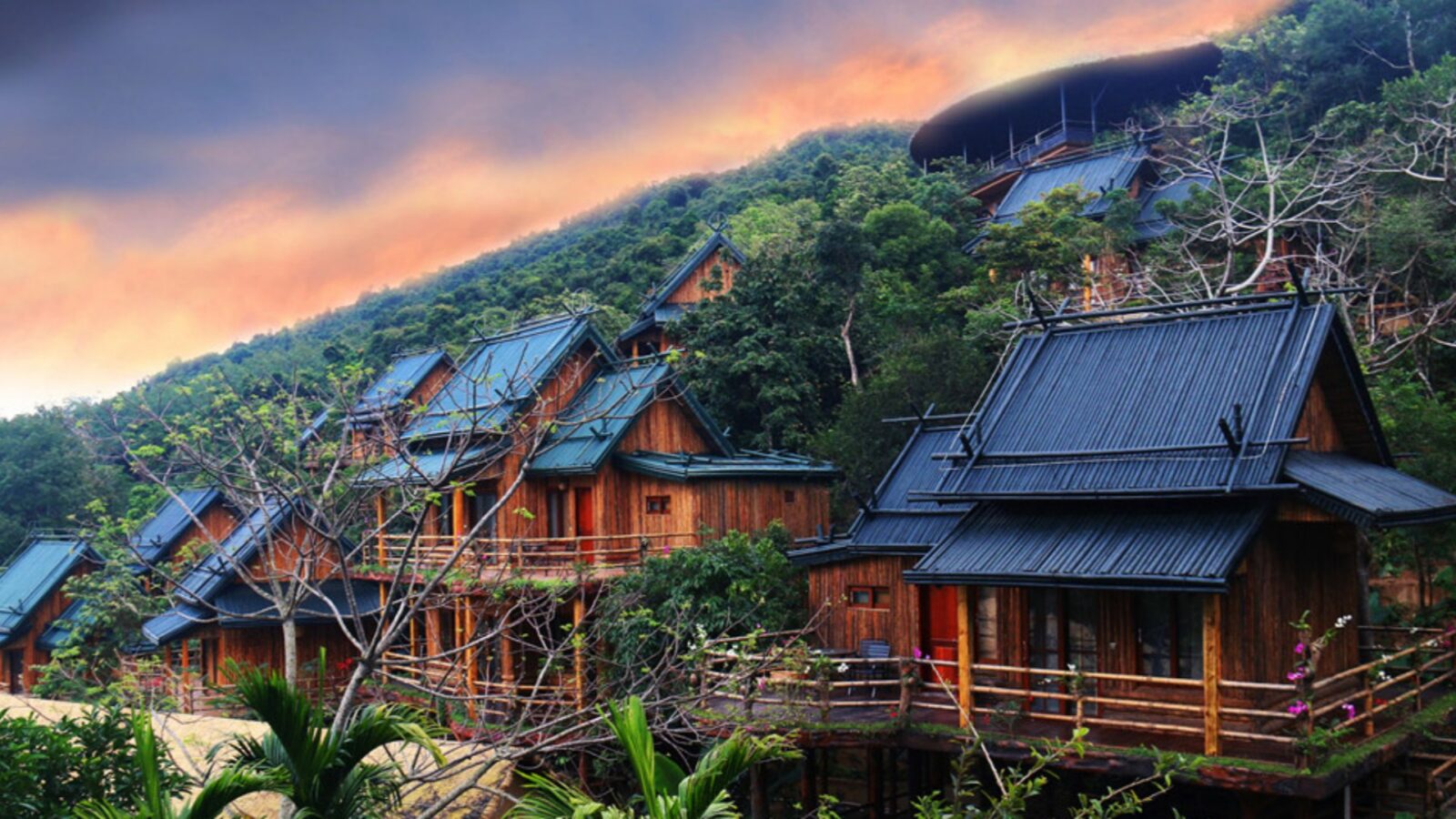
Traditional Miao Village
Traditional Miao Village: Explore well-preserved Miao wooden stilt houses and stone-paved paths, appreciate exquisite Miao embroidery (苗绣), and sense the original ecological Miao architectural and lifestyle aesthetics.
High-Mountain Ecological Industries: Visit kiwifruit, yellow peach and other specialty industry parks. Experience the integrated "tourism + agriculture" development model and taste fresh, green local produce.
Shibadong Village's story is a microcosm of China's rural revitalization. Come here not only to appreciate the Miao mountain scenery, but also to witness the spirit and strength of an era.
7. Yidoushui Village, Henan
A village written in stone, a thousand years of Taihang silence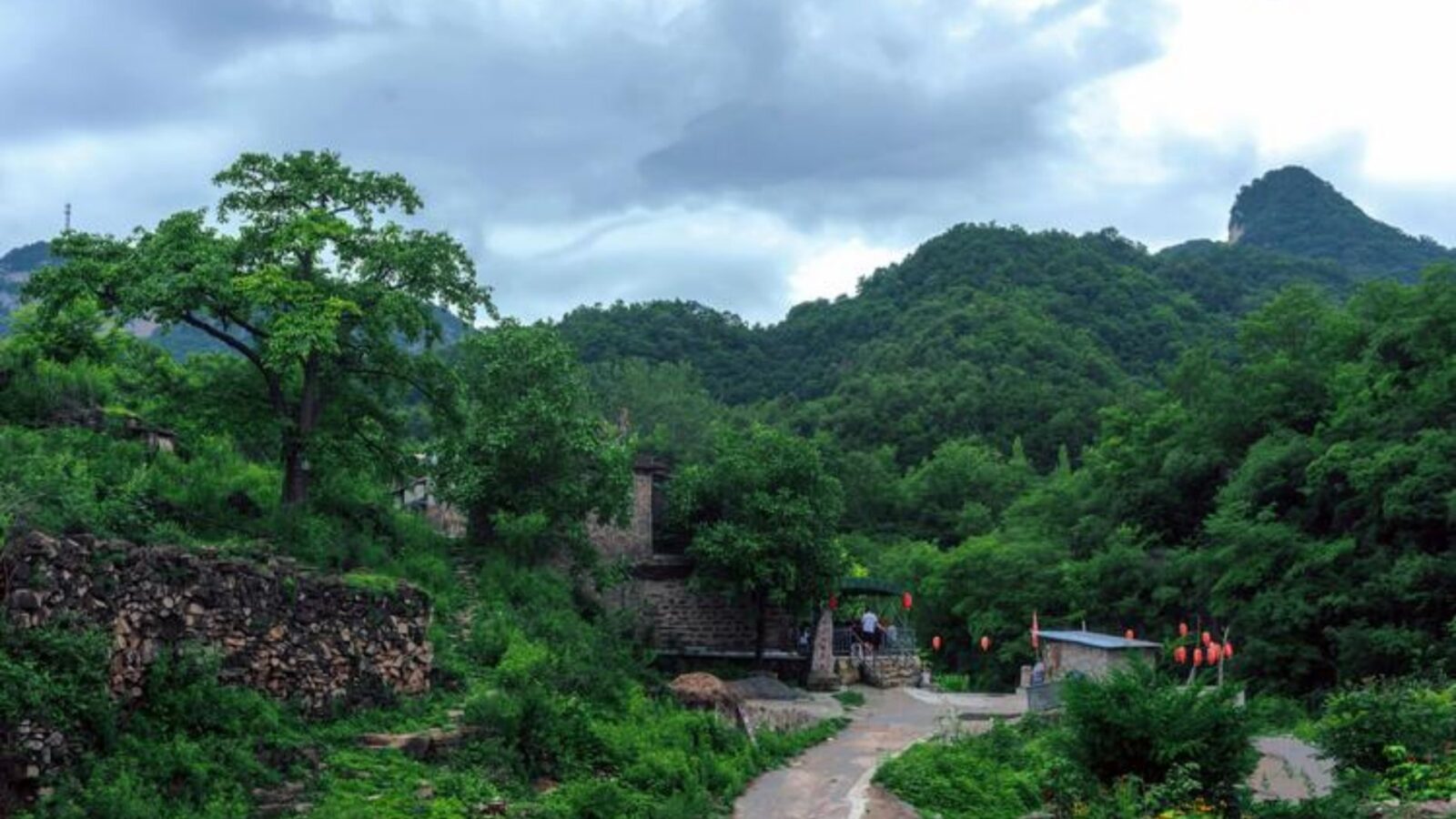
Yidoushui Village, Henan
Yidoushui Village (一斗水村) In the depths of the South Taihang Mountains, beside an ancient well with a history of thousand years, the water level is only one dou (about 1.75 liter) full. Built in Ming and Qing Dynasties, remnants of the Jin-Yu merchant road. Famous for being "a village built of stones".
🗂 Key Data & Practical Info
🏔️ Elevation: approx. 1,100 meters
🌤️ Air and water: superb mountain air, well water is clear and sweet
🌡️ Summer average temperature: approx. 22°C — a natural cool retreat
❄️ Winter: cold, with snow scenery and ice formations
📅 Best travel season: May–October; summer for cooling, autumn for colorful forest
🗺️ Location: Deep within Yuntai Mountain, Xiuwu County, Jiaozuo City, Henan Province
Signature Landscapes & Experiences
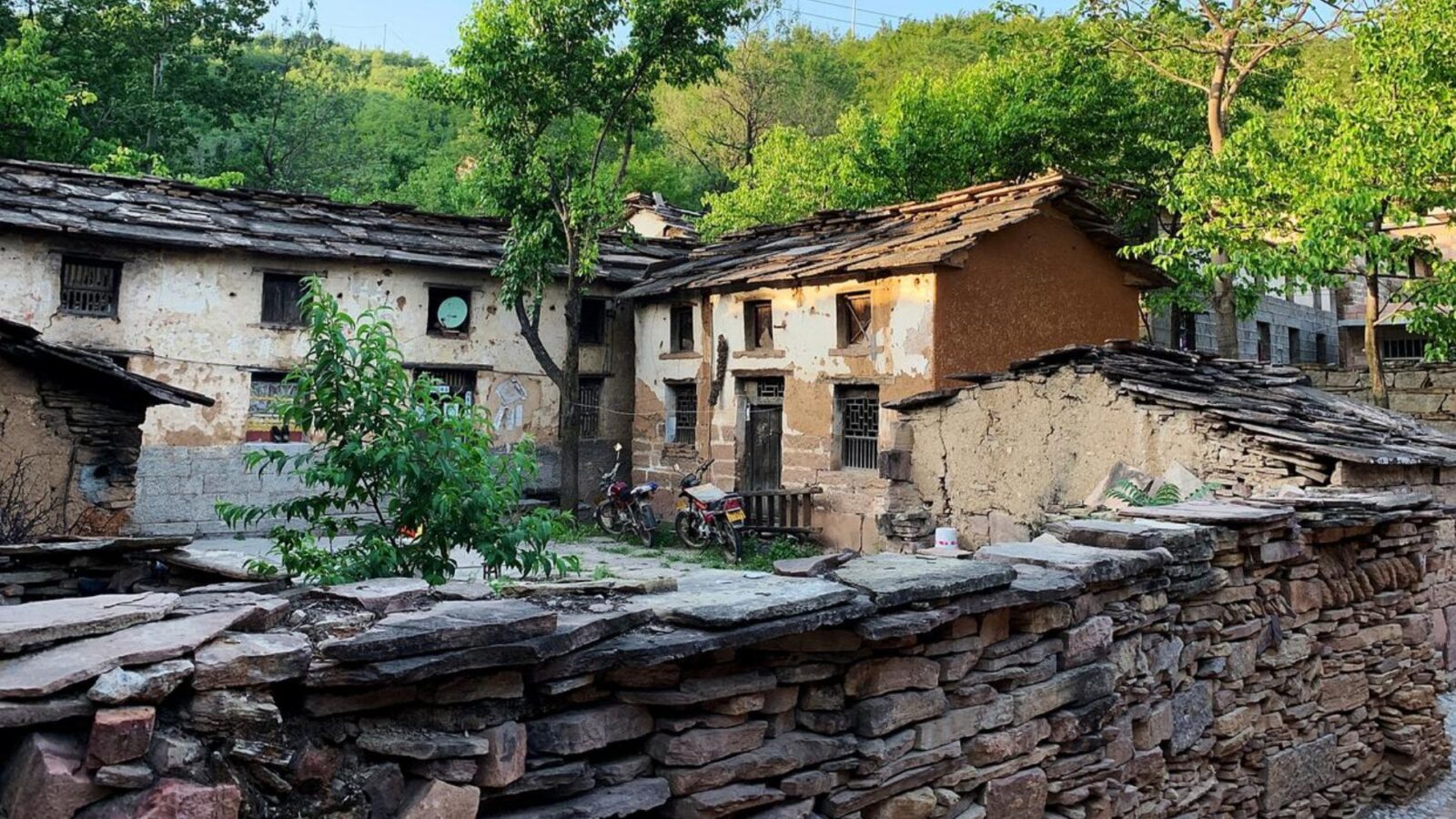
Ancient Stone Dwellings
Ancient Stone Dwellings: Every building, road and bridge in the entire village is constructed from blue-grey stone. Having weathered hundreds of years of wind and rain, the village stands as an open-air museum of Taihang stone culture.
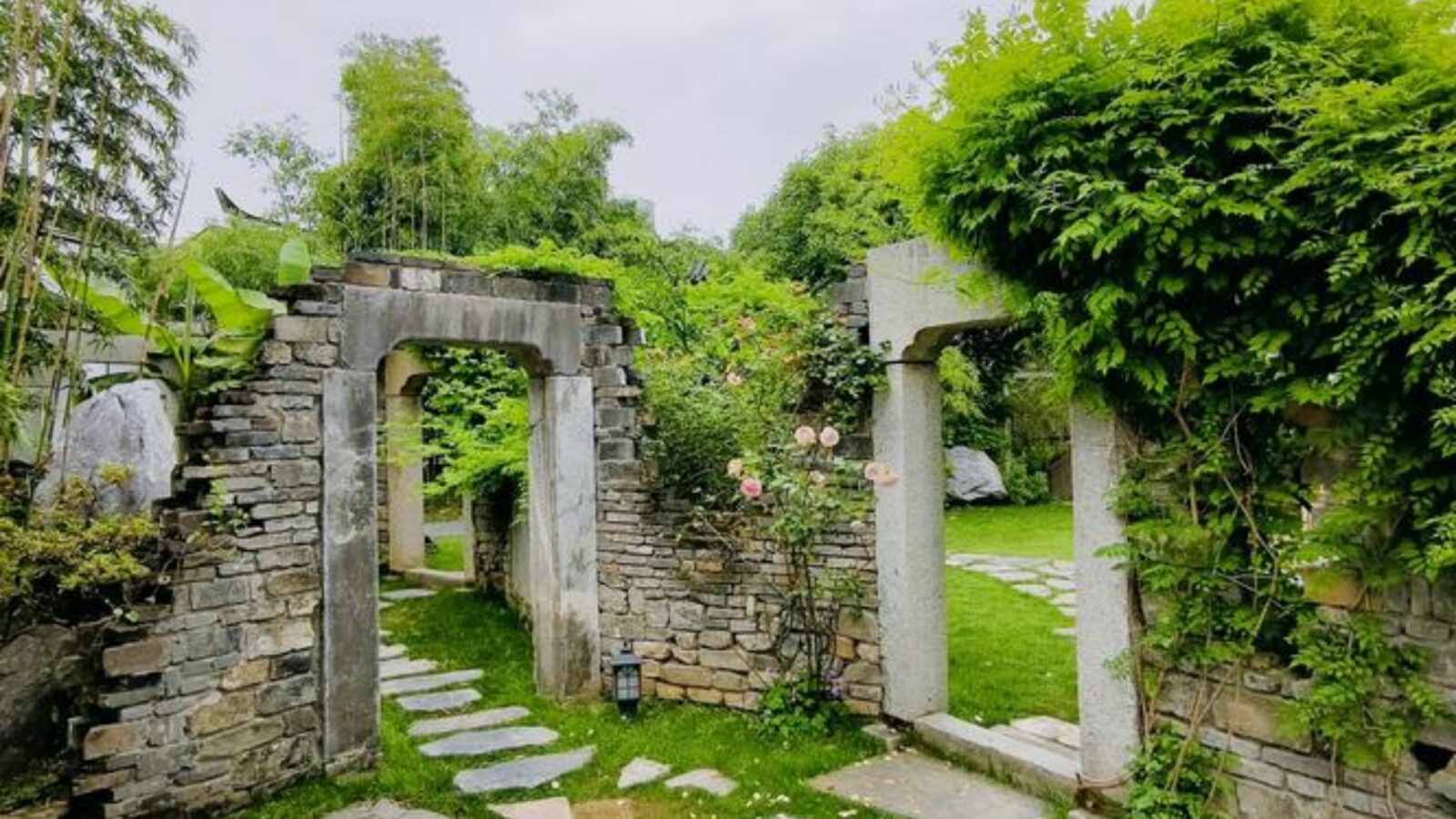
Ancient Merchant Road
Millennium Ancient Well & Ancient Merchant Road: Explore the miraculous ancient well that yields only a dou of water, then hike along the winding remnants of the ancient trade road, imagining the distant jingle of Shanxi merchant caravans.
Taihang Mountain Scenery: The village is embraced by majestic Taihang peaks. Nearby gorges and waterfalls are easily accessible for an experience of driving through colored clouds and touring inside a painting.
Yidoushui Village is a silent epic written by the Taihang Mountains in stone. Come here — touch the warmth of history, listen to stories the stones tell, and feel the most authentic tranquility and resilience of Taihang.
8. Yumu Village, Hubei
A fortress hanging between the cliffs and the clouds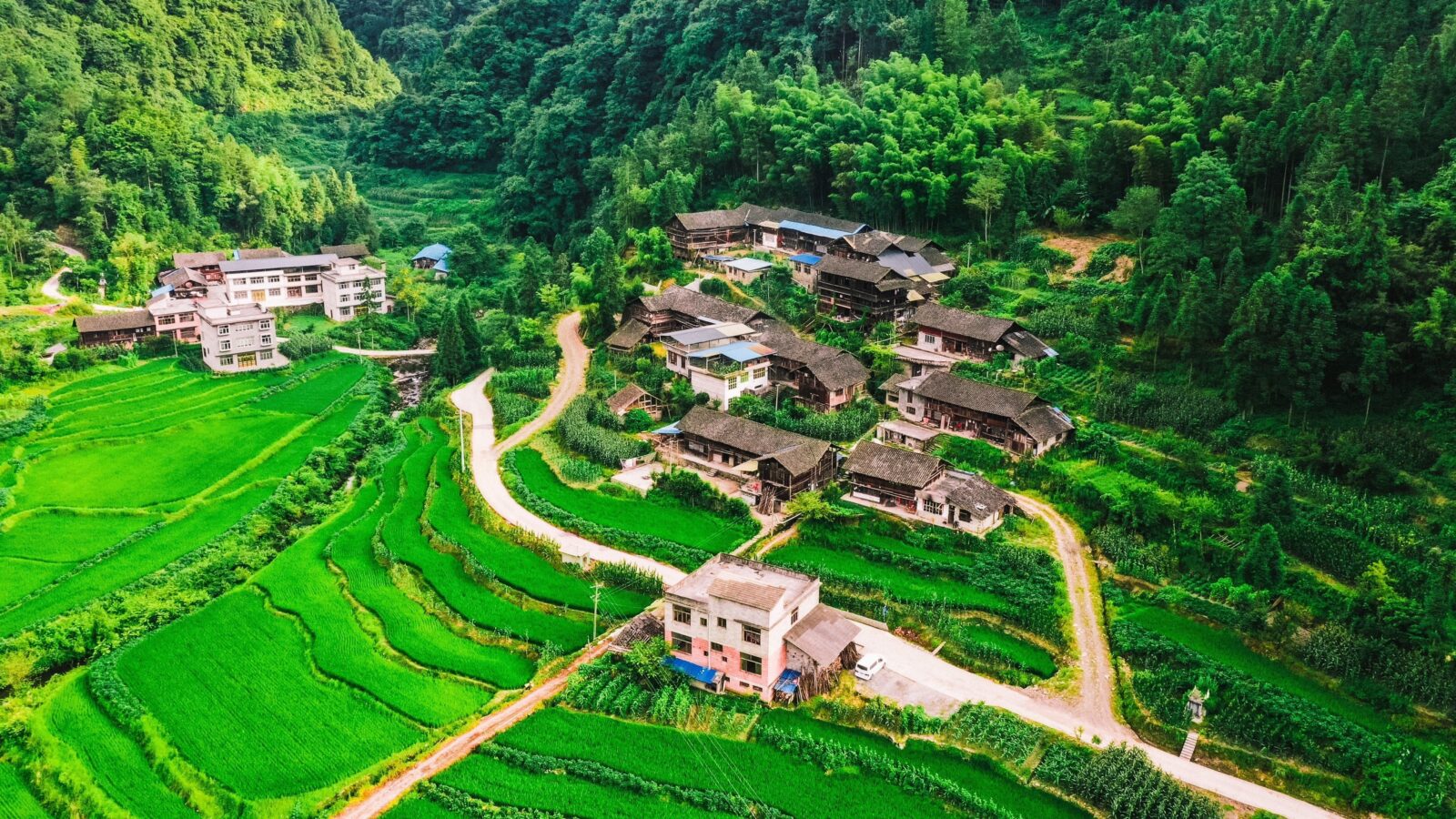
Yumu Village, Hubei
Set atop an isolated mountain ridge among the peaks of Lichuan, and with sheer cliffs on three sides, is the well-known Yumu Village (鱼木村), the site of a massive and sophisticated defensive system of Tujia stilt-house architecture, hailed as the "First Tujia Mountain Stockade."
Key Data & Practical Info
🏔️ Elevation: approx. 1,000 meters
🌤️ Environment: lofty terrain, permanently wreathed in cloud and mist
🌡️ Annual average temperature: approx. 12°C; cool in summer
💧 Humidity: relatively high
📅 Best travel season: spring, summer and autumn; cloud seas appear readily after rain clears
🗺️ Location: Lichuan City, Enshi Tujia and Miao Autonomous Prefecture, Hubei Province
Signature Landscapes & Experiences
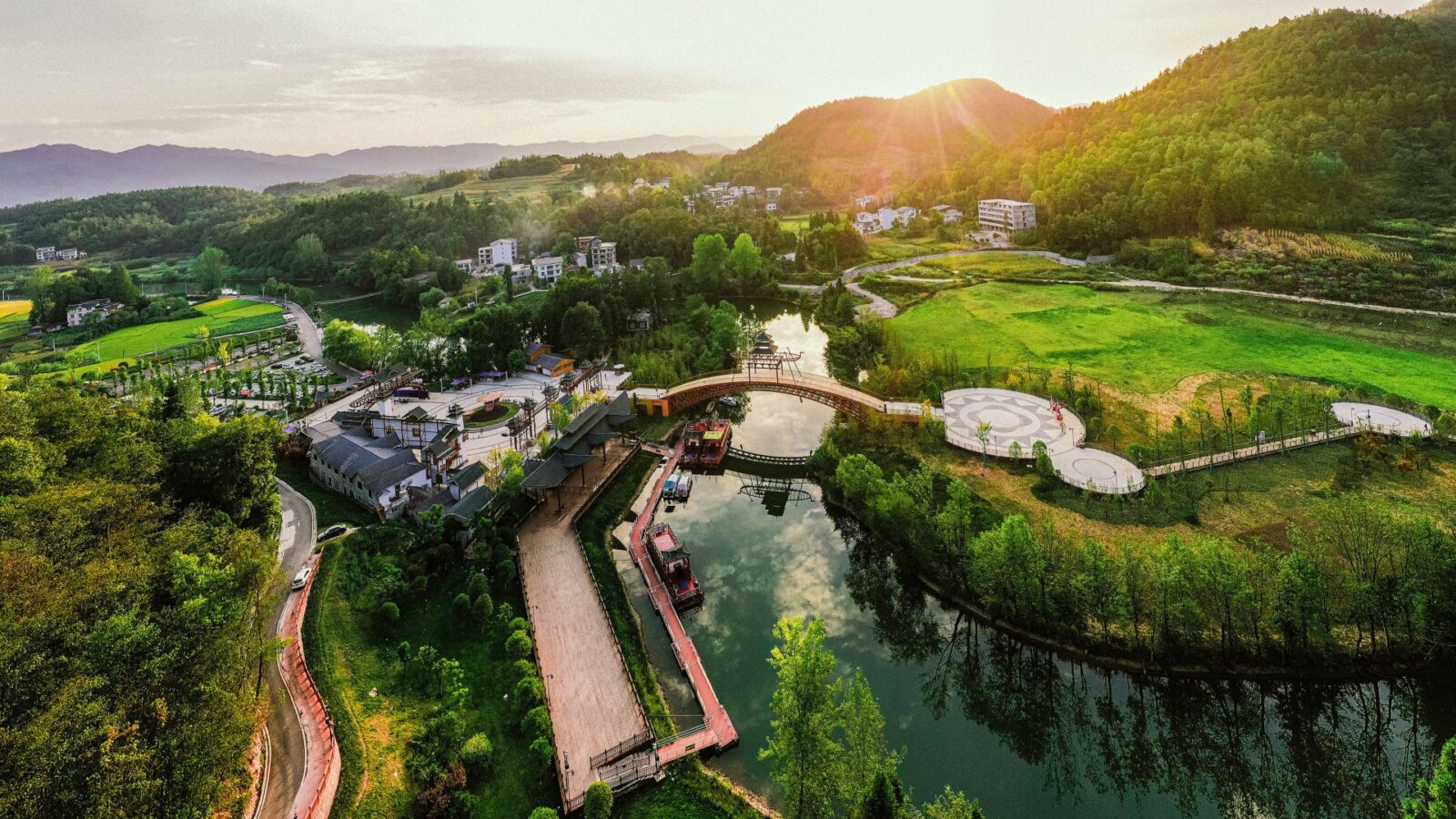
Precipitous Mountain Stockade Layout
Precipitous Mountain Stockade Layout: Enter through the only approach road to the stockade gate, look down upon surrounding cliff-sided valleys, and appreciate the "one man guards the pass, ten thousand cannot force it" strategic terrain and the survival wisdom of the ancients.
Tujia Stilt-House Complex (土家吊脚楼群): Tour the tiered dry-column architecture built to follow the mountain terrain, and learn about its unique functions for moisture prevention, defense and architectural aesthetics.
Tujia Customs & Culture: Feel the original-ecology Tujia living atmosphere and learn about intangible cultural heritage including the Baishou Dance (摆手舞) and Xilanka Pu (西兰卡普, brocade weaving).
Yumu Village is a human miracle suspended in the clouds. It is not just an architectural marvel — it is a spiritual totem of a people's tenacious survival and fierce protection of home against all odds. Come here for a breathtaking cloud-top rendezvous.
9. Baoting Li-Miao Village, Hainan
Where tropical rainforest meets ancient living culture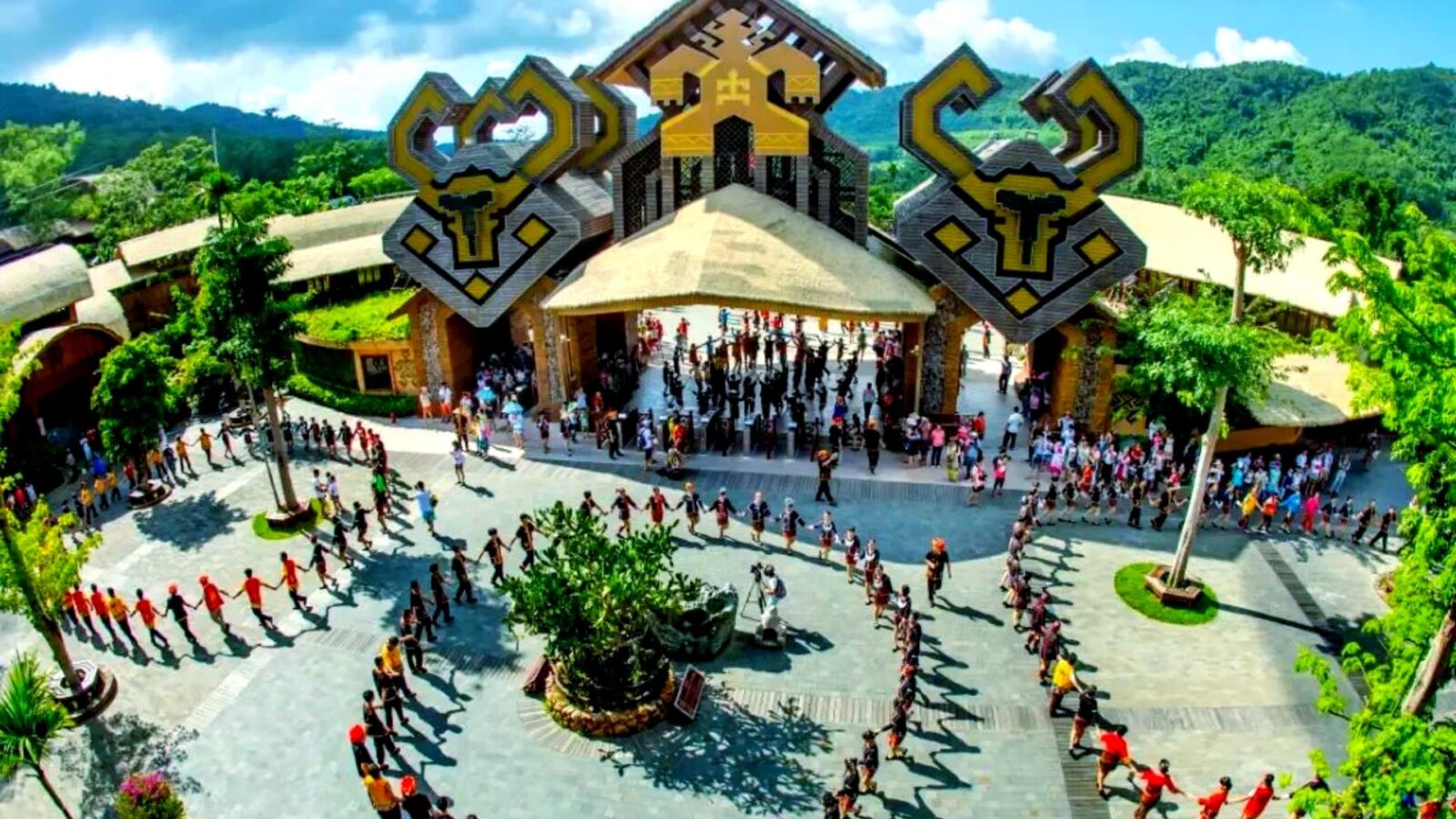
Baoting Li-Miao Village, Hainan
Baoting, nestled in the tropical rain forest zone of Hainan Island's central region, is where the cultural tourism areas of Yanoda and Binglang Valley are located, making it a perfect place to enjoy tropical rain forest and natural hot springs, and also visit the residence of Li(黎族)and Miao(苗族)people.
Key Data & Practical Info
🌳 Forest coverage rate: over 85% (tropical rainforest)
🌤️ Air quality: excellent, with extremely high negative ion concentration
🌡️ Annual average temperature: 20.7–24.5°C, warm year-round
💧 Annual average humidity: relatively high
📅 Best travel season: November to April of the following year (dry season, comfortable climate)
🗺️ Location: Central Hainan Province, adjacent to Sanya
Signature Landscapes & Experiences
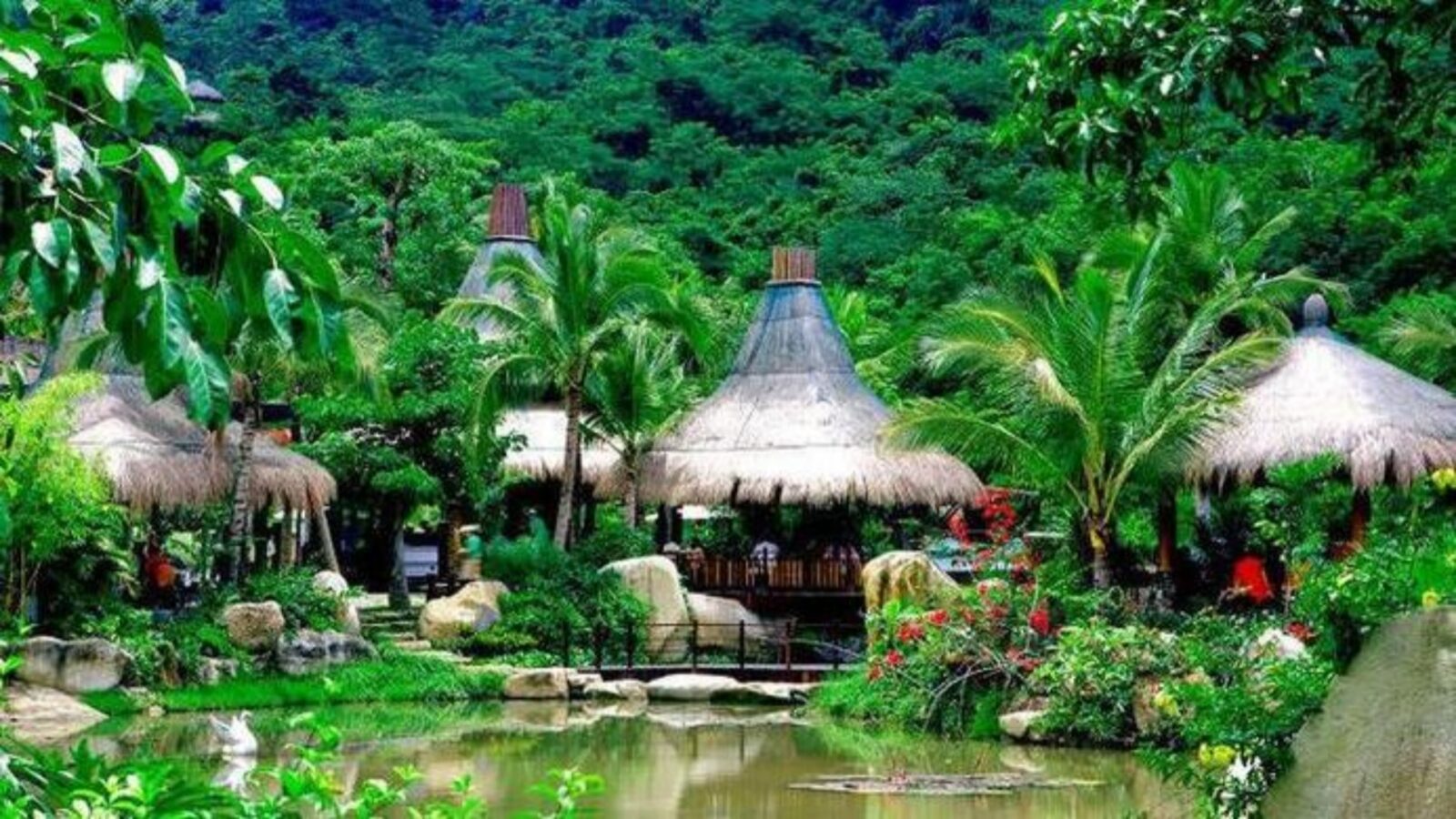
Yanoda Rainforest Cultural Tourism Area
Yanoda Rainforest Cultural Tourism Area (呀诺达雨林文化旅游区): Explore one of the world's last remaining northern-edge tropical rainforests. Experience canyon waterfalls and high-altitude zip lines, and discover the bizarre diversity of tropical flora and fauna.
Binglang Valley Li-Miao Cultural Tourism Area (槟榔谷黎苗文化旅游区): Immerse yourself in the culture of Hainan's indigenous Li and Miao peoples. Watch large-scale outdoor performances and learn about ancient traditions such as Li brocade weaving and traditional tattooing.
Qixian Ridge Hot Springs (七仙岭温泉): Soak in natural wild-stream hot springs rising from underground, cradled in the embrace of tropical rainforest — washing away every trace of fatigue.
In Baoting, breathing is sweet and living is slow. This is a tender paradise between mountain and sea — a tropical haven for escaping the cold and healing body and mind.
10. Dazhai Village (Longji), Guangxi
The most beautiful curves on the face of the Earth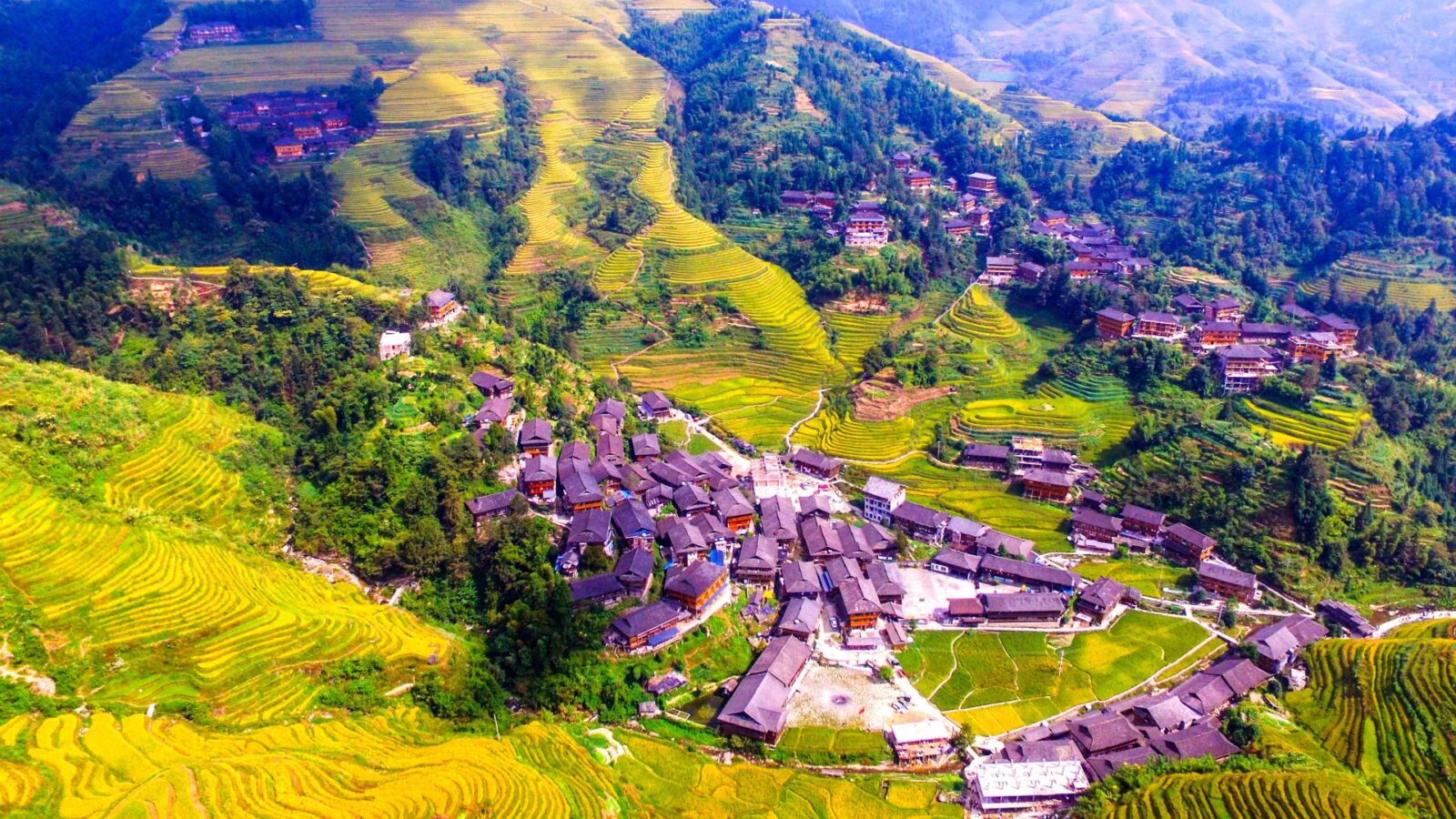
Dazhai Village (Longji), Guangxi
Dazhai Village (大寨村), the base of the Jinkeng Terraces (金坑梯田), is considered the core area of the Longji Terrace, carved by the Red Yao (红瑶) people in hundreds of years. Known as “the scenery hanging at the edge of heaven” and “the most beautiful curves on Earth”.
Key Data & Practical Info
🏔️ Elevation range: 300–1,100 meters
🌤️ Climate: mountain climate, changeable; cool in summer
🌡️ Annual average temperature: approx. 17°C
💧 Humidity: high, frequently misty
📅 Best travel season: May–June (flooded mirror surface); July–September (green rippling rice); late September–October (golden harvest)
🗺️ Location: Heping Township, Longsheng All-Nationalities Autonomous County, Guilin, Guangxi
Signature Landscapes & Experiences
"Xishanshao Music," "Thousand-Layer Sky Ladder" & "Golden Buddha Summit" Viewpoints: Admire the magnificent curving terraces and shifting light from three different angles. Sunrise and sunset are the most awe-inspiring moments of all.
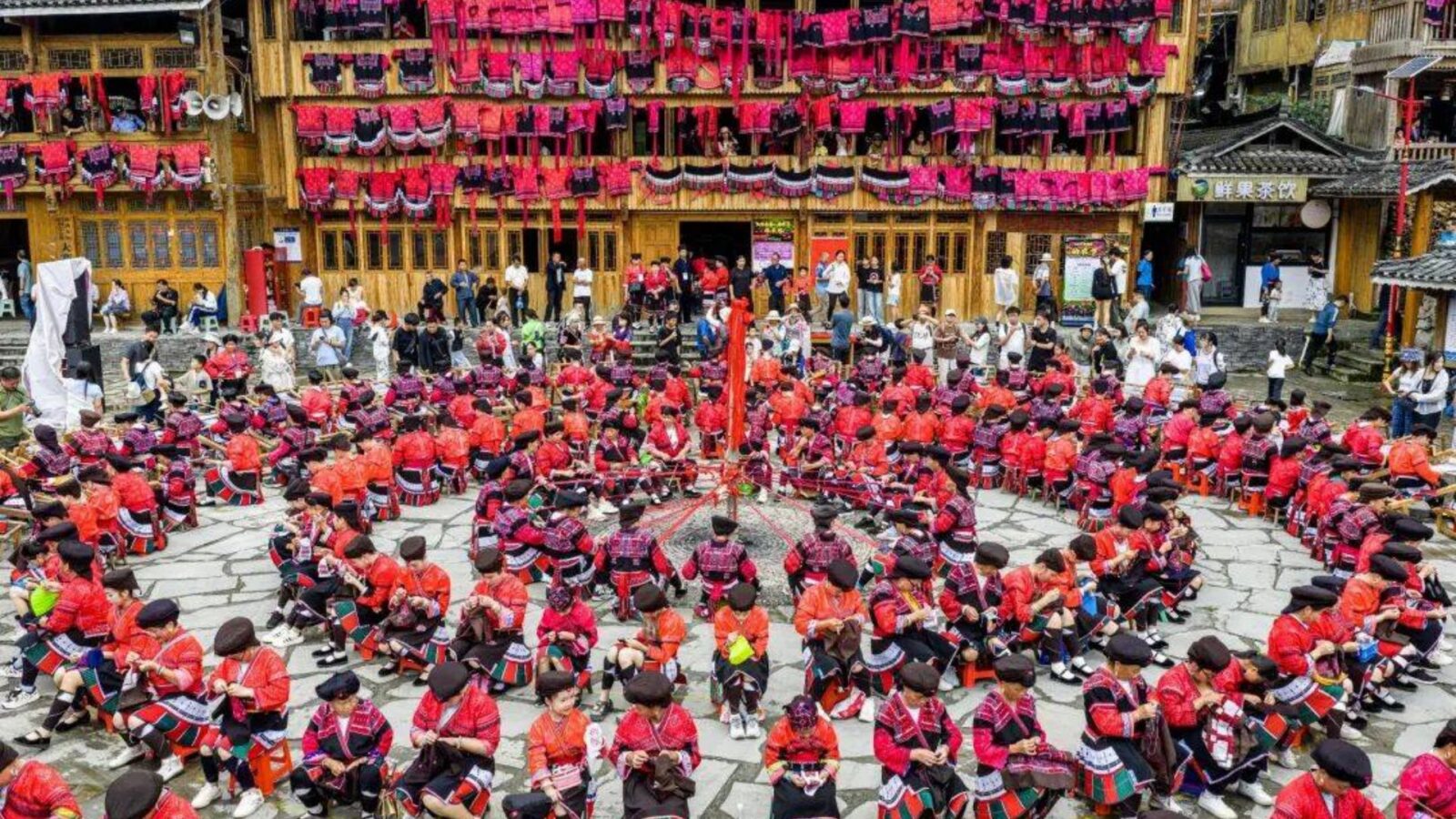
Red Yao Culture
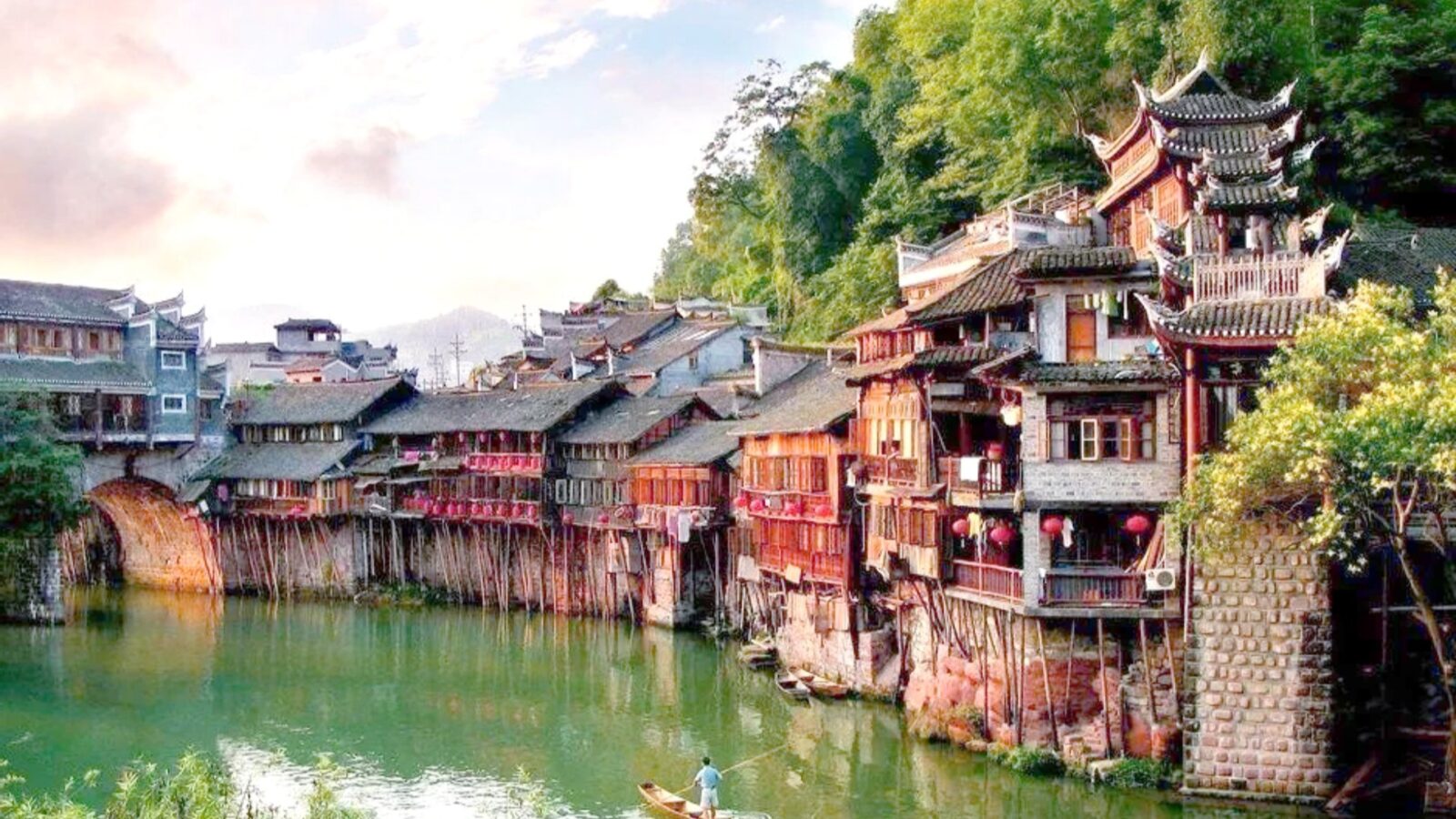
Stilt Houses
Red Yao Culture & Stilt Houses: Stay in a Yao stilt house halfway up the mountain. Experience the Red Yao women's renowned long-hair customs, exquisite embroidery crafts and warm hospitality traditions.
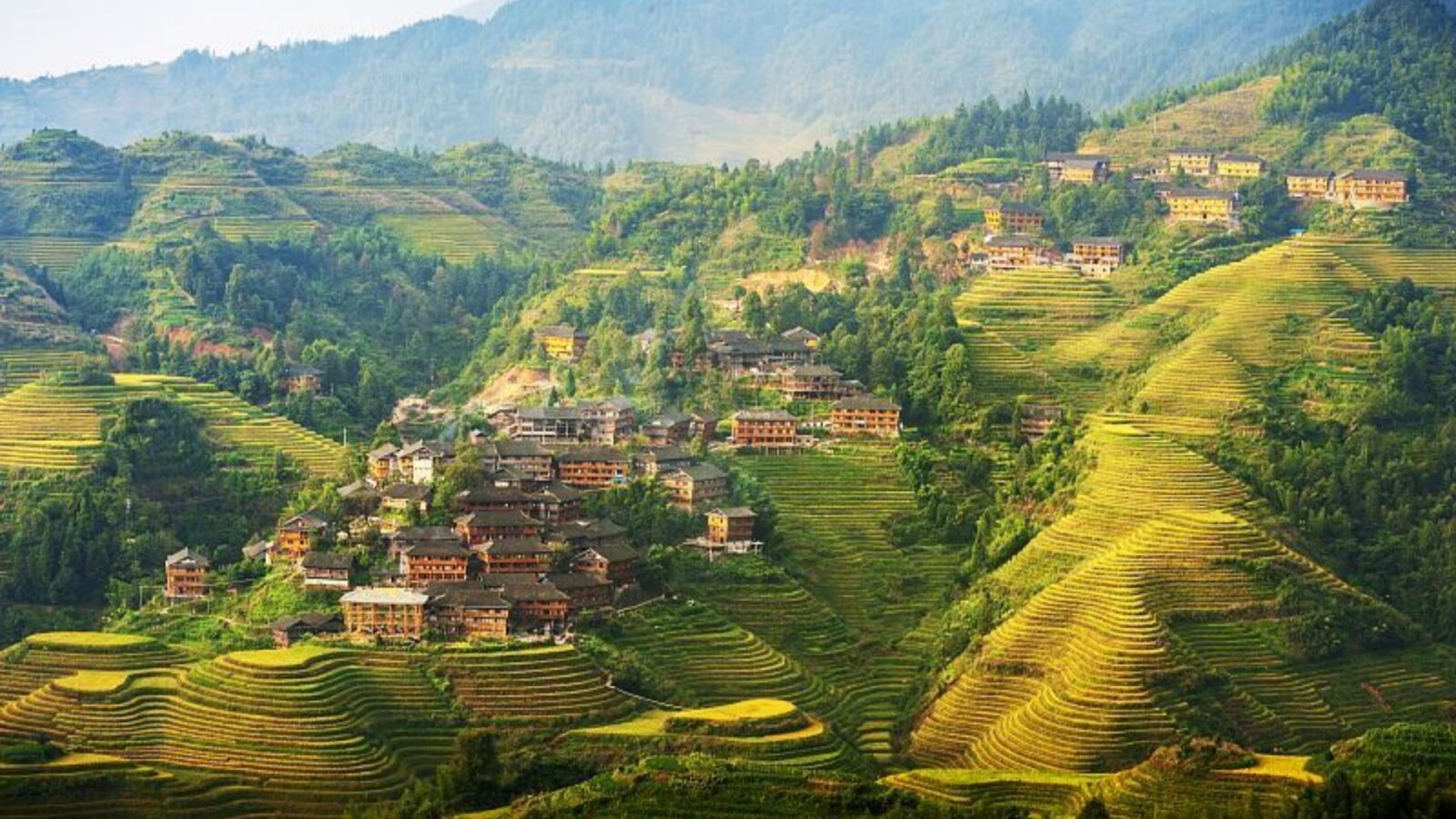
Trekking Through the Terraces
Trekking Through the Terraces: Hike along the narrow paddy-field paths, feel the texture and agricultural wisdom of the terraces at close range, listen to the murmur of flowing water, as if walking inside a three-dimensional pastoral painting.
Dazhai's terraces are an agricultural epic jointly composed by human will and natural terrain. Come here — watch clouds roll and unfurl, enjoy farming scenery through four seasons, and feel the millennium wisdom of the Yao people dancing with the mountain.
11. Baihou Town, Guangdong
Where Confucian walls embrace Western arches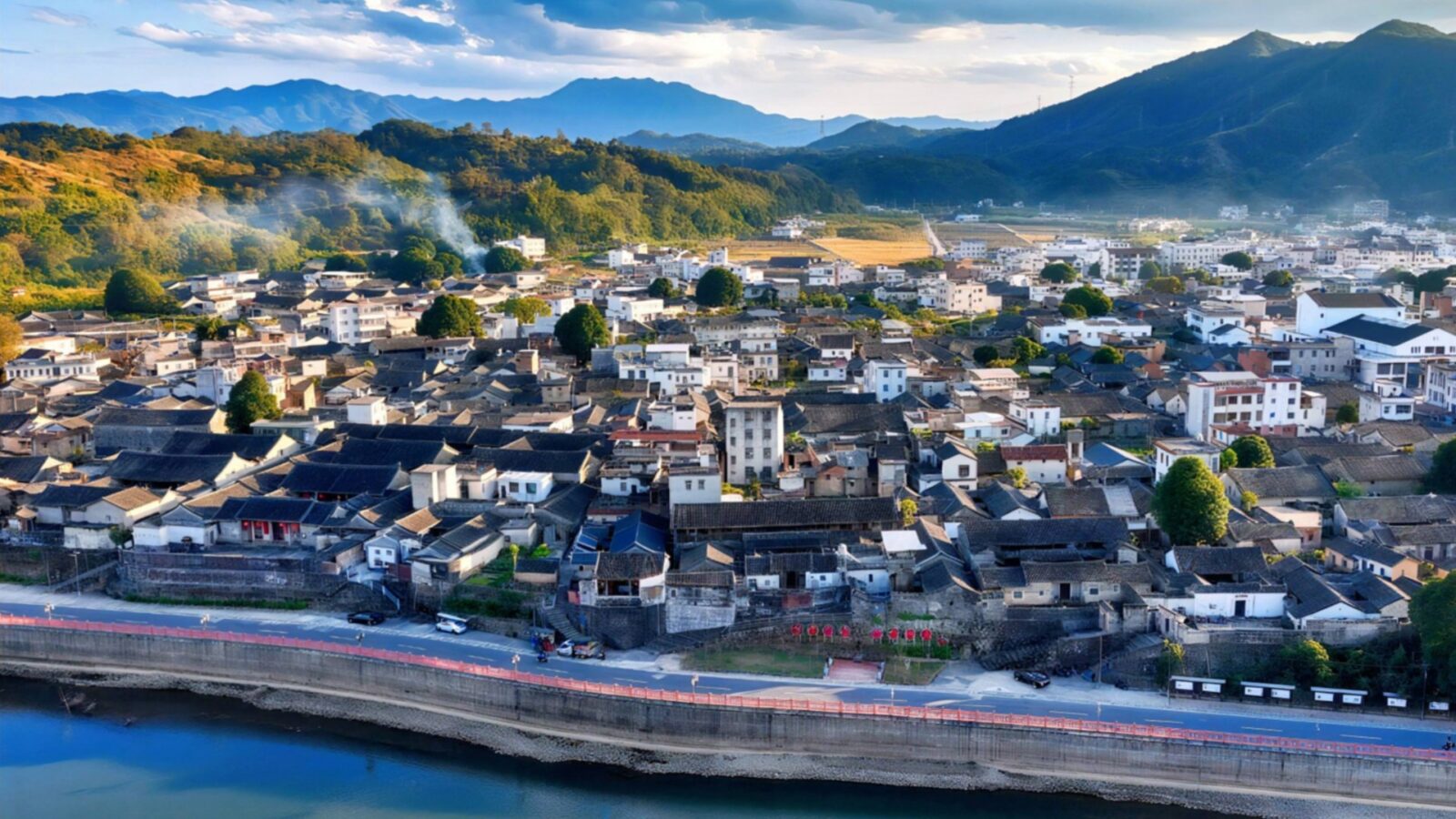
Baihou Town, Guangdong
Baihou Town (百侯镇), a “National Historic and Cultural Town”, also known as the ‘Grand Garden of Hakka (客家) Folk Architecture’, has in addition to its vast number of preserved large Ming-Qing Hakka walled-compound houses, unique beautiful East-meets-West arcade-style streets which bear witness to the glorious history of Hakka overseas Chinese.
Key Data & Practical Info
🏘️ Historic buildings: over 120 well-preserved Ming-Qing ancient residences
🌤️ Environment: surrounded by green mountains, with the Meitan River winding through
🌡️ Annual average temperature: approx. 21°C
💧 Climate: subtropical monsoon, warm and humid
📅 Best travel season: suitable year-round; especially beautiful in spring
🗺️ Location: West of Dapu County, Meizhou City, Guangdong Province
Signature Landscapes & Experiences
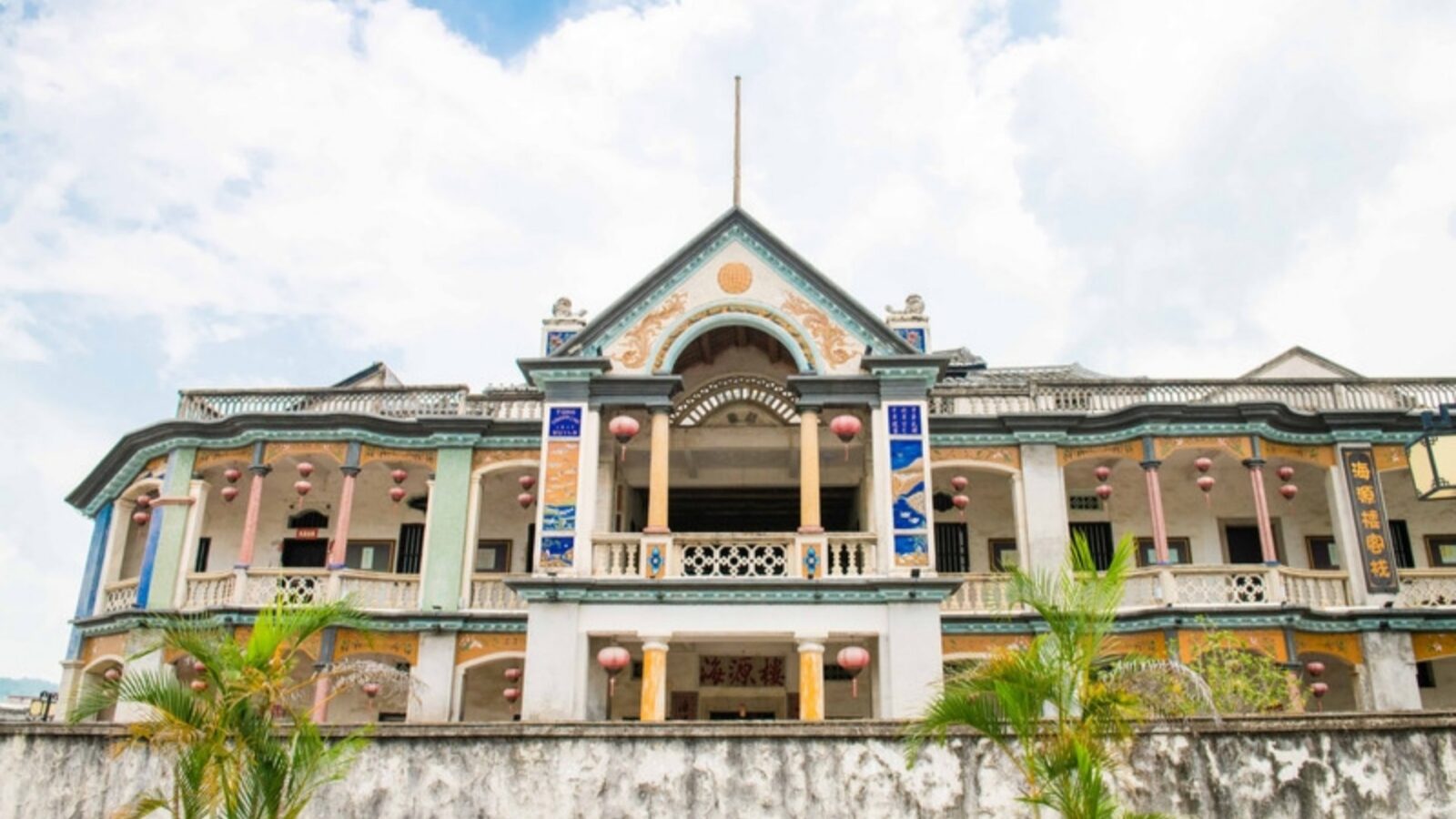
East-West Fusion Architecture
Zhaoqing Hall, Haiyuan Building & Other East-West Fusion Architecture (肇庆堂、海源楼): Admire buildings that perfectly blend Hakka traditional architecture with Western columns, arches and stained glass — a testament to the open-minded philosophy of "Chinese learning as the substance, Western learning for practical use."
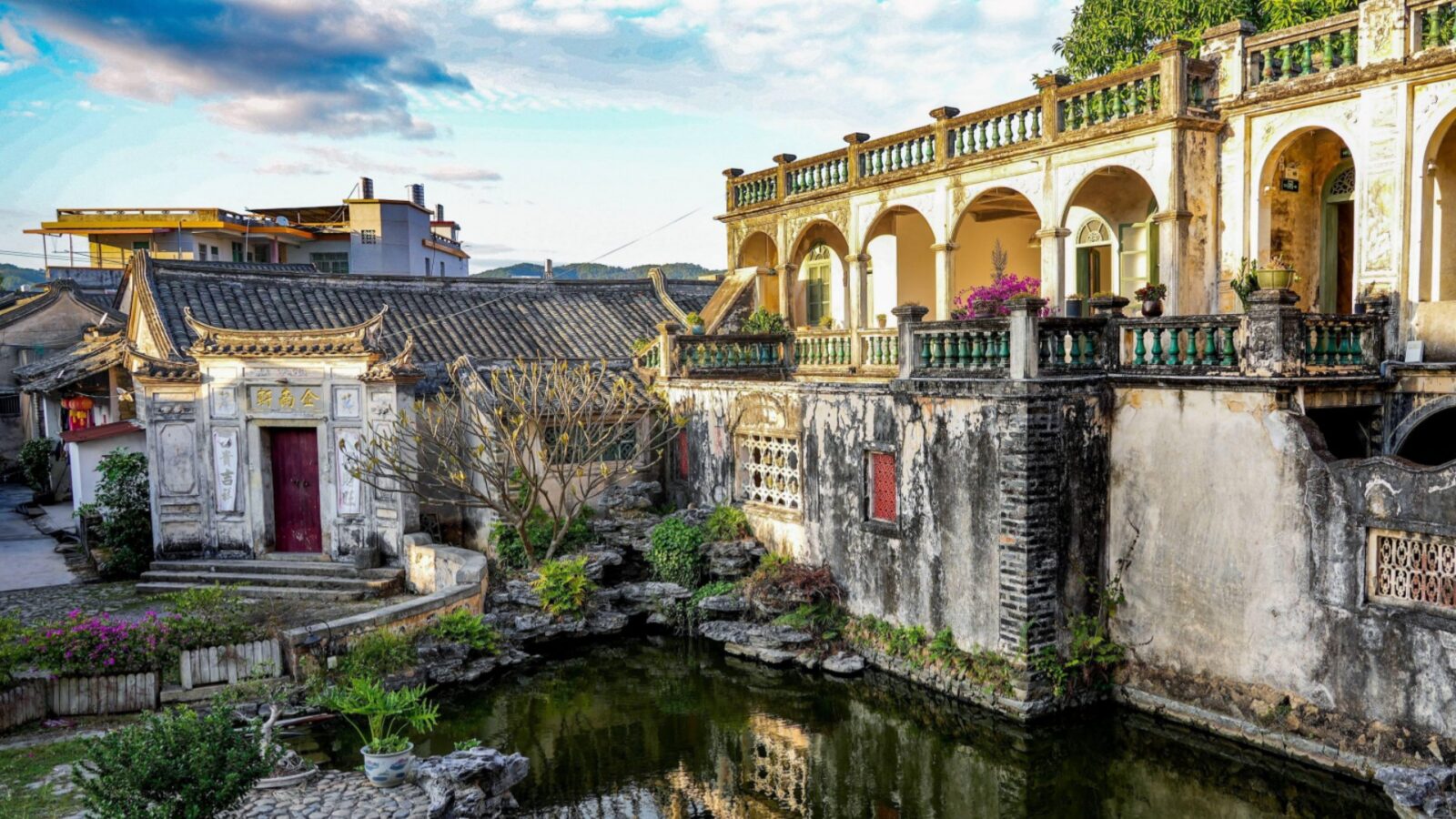
Thirty-Six Lane Ancient Residential Complex
Thirty-Six Lane Ancient Residential Complex (三十六巷古民居群): Weave through a labyrinthine alley network, exploring grand mansions including Tongyidafu Mansion and Taishou Mansion. Savor exquisite wood carvings, lime-plaster sculptures and couplet culture.
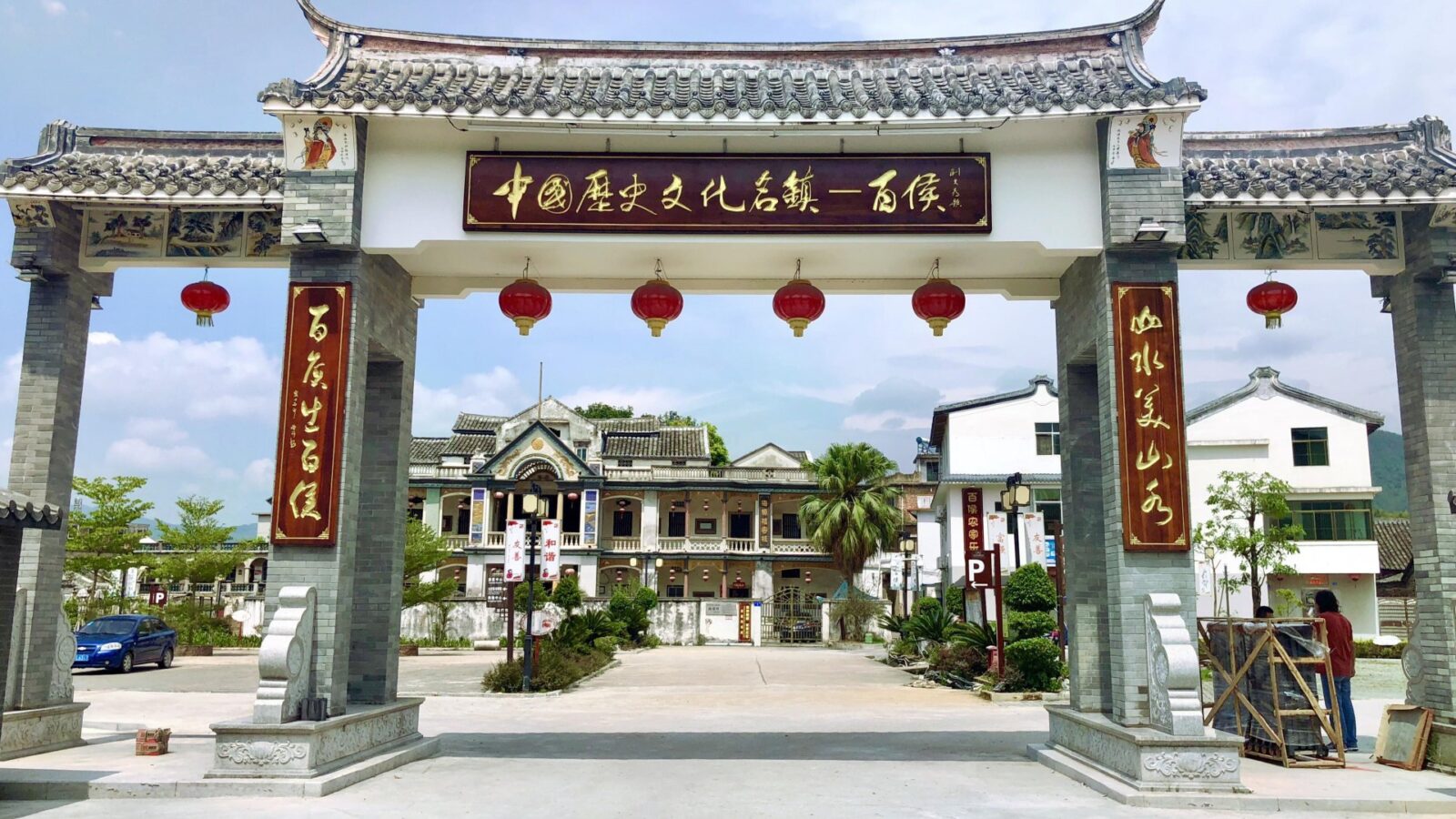
Baihou Old Street
Baihou Old Street & Culinary Culture: Stroll through the arcade old street, taste authentic Hakka snacks including abacus seeds (算盘子), bamboo-shoot cakes (笋粄) and stuffed tofu (酿豆腐), and experience the leisurely market life of an ancient town.
Baihou is a living Hakka overseas Chinese history book. Here, classical and Western in dialogue, architecture and humanities intertwined — quietly recounting the past glory of a "hometown of culture and talent."
12. Xingyi City, Guizhou
Where peaks outnumber clouds in the Karst sky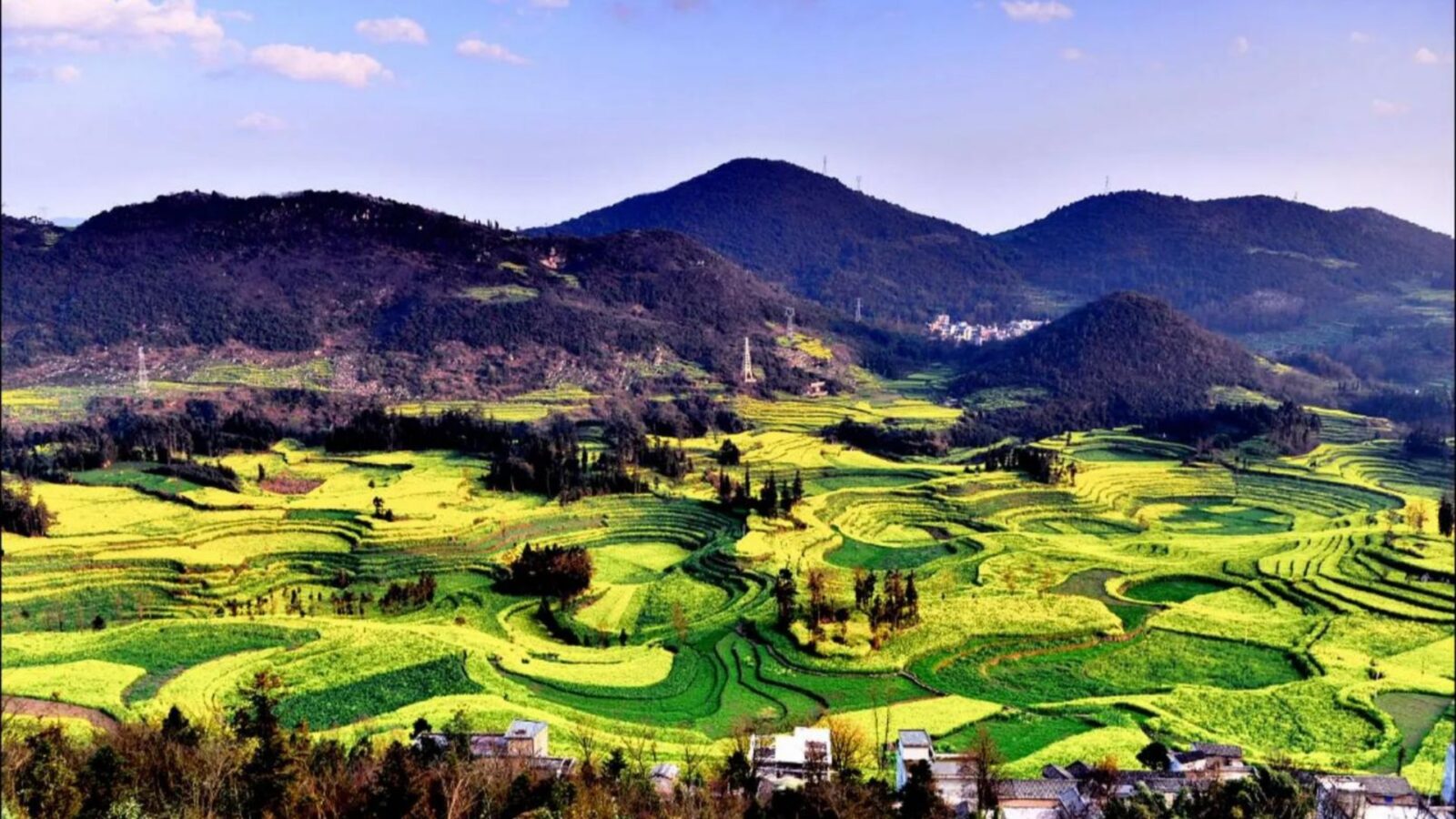
Xingyi City, Guizhou
Xingyi boasts the breathtaking Wanfenglin (万峰林, Forest of Ten Thousand Peaks), the magnificent Maling River Canyon(马岭河峡谷) and the magnificent Wanfeng Lake, the most beautiful of all. It is the essence of Karst and is known as "a long scroll of mountain-and-water landscapes, ink-wash Jinzhou."
Key Data & Practical Info
🌳 Ecology: typical Karst landform zone with unique ecosystem
🌤️ Climate: subtropical monsoon, warm winters and cool summers
🌡️ Annual average temperature: 16–18°C, known as a "Little Spring City"
💧 Annual average humidity: approx. 78%
📅 Best travel season: suitable year-round; summer cooling is the most popular season
🗺️ Location: Southwest Guizhou Province, junction of Yunnan, Guizhou and Guangxi
Signature Landscapes & Experiences
Wanfenglin (万峰林): Ride a sightseeing vehicle or cycle through, looking down upon thousands of cone-shaped peaks. Amidst "Bagua Fields" and "Fuzi Fields" land-art patterns, feel the harmonious coexistence of humanity and nature.
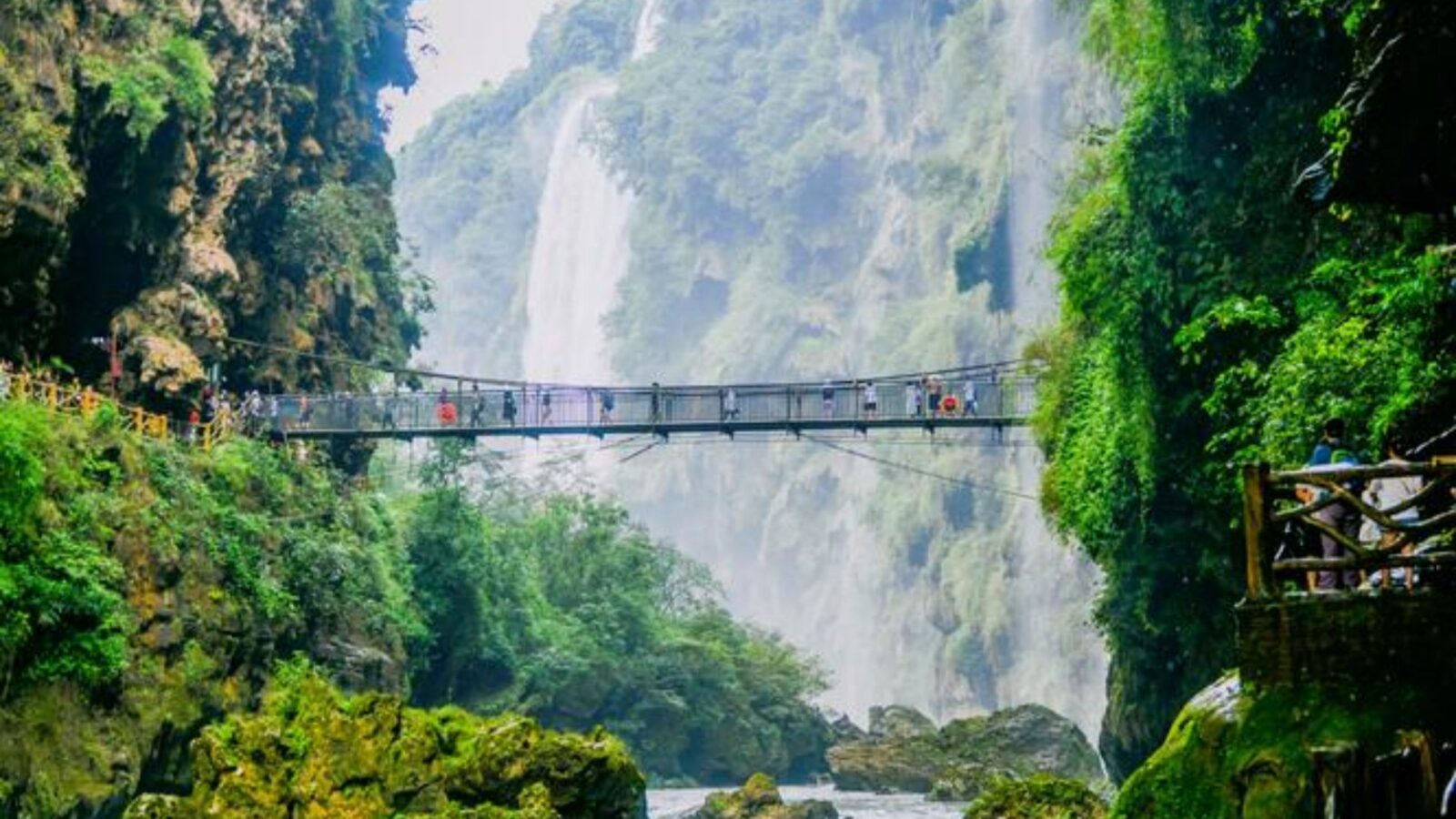
Maling River Canyon
Maling River Canyon (马岭河峡谷): Walk along canyon boardwalks and watch waterfalls cascading from hundred-meter cliffs. Experience what has been called "a beautiful scar carved across the face of the Earth."
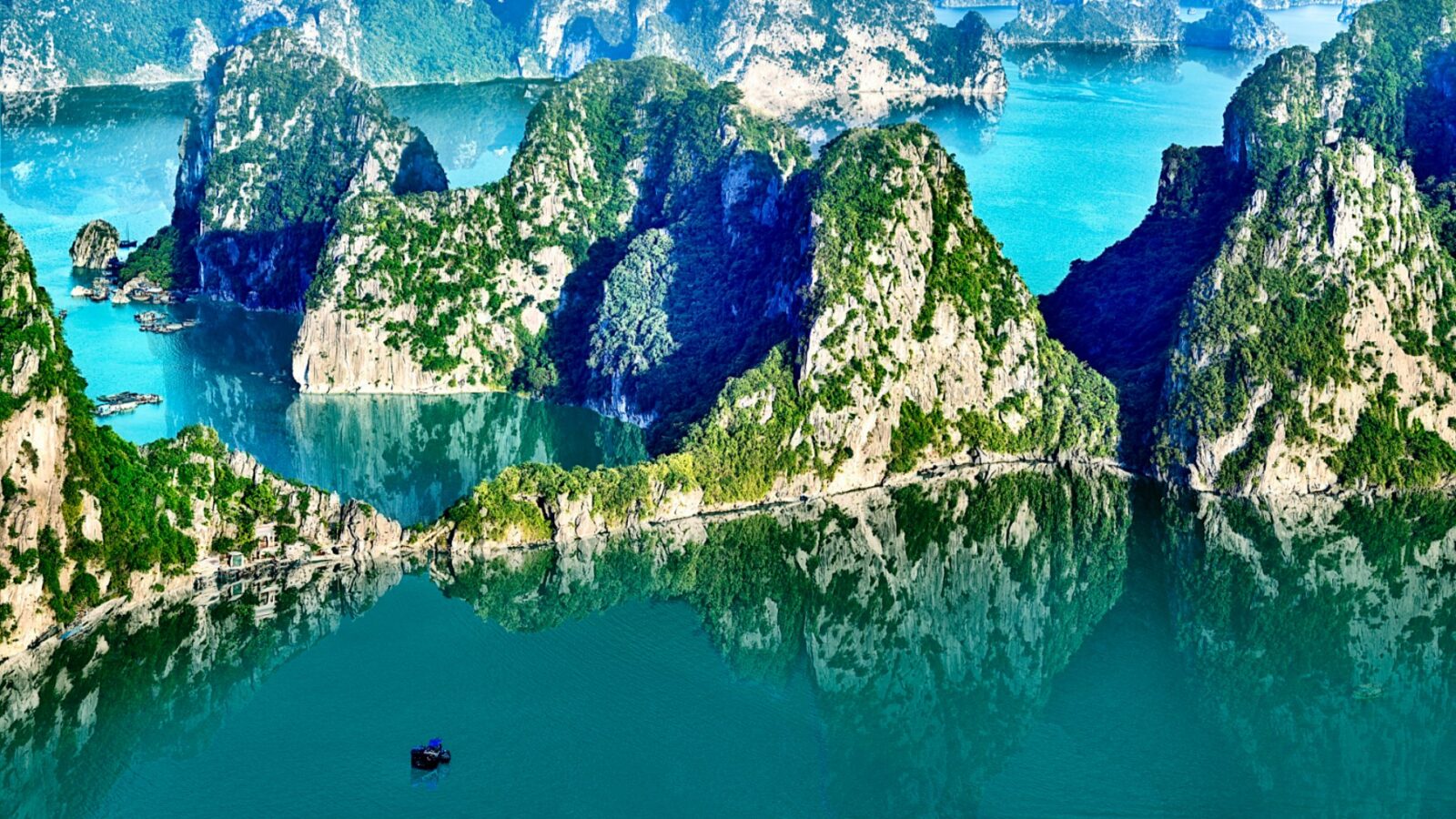
Wanfeng Lake
Wanfeng Lake (万峰湖): Cruise on the lake where lake light and mountain color reflect each other, and enjoy fishing and fresh fish cuisine, as if immersed in a mountain-lake landscape gallery.
In Xingyi, the boldness of mountains and the spirituality of water are perfectly united. This is China's Karst museum and a paradise for photographers and outdoor enthusiasts alike.
13. Cangyuan Wa Village, Yunnan
At the edge of maps, where ancient rhythms still pulse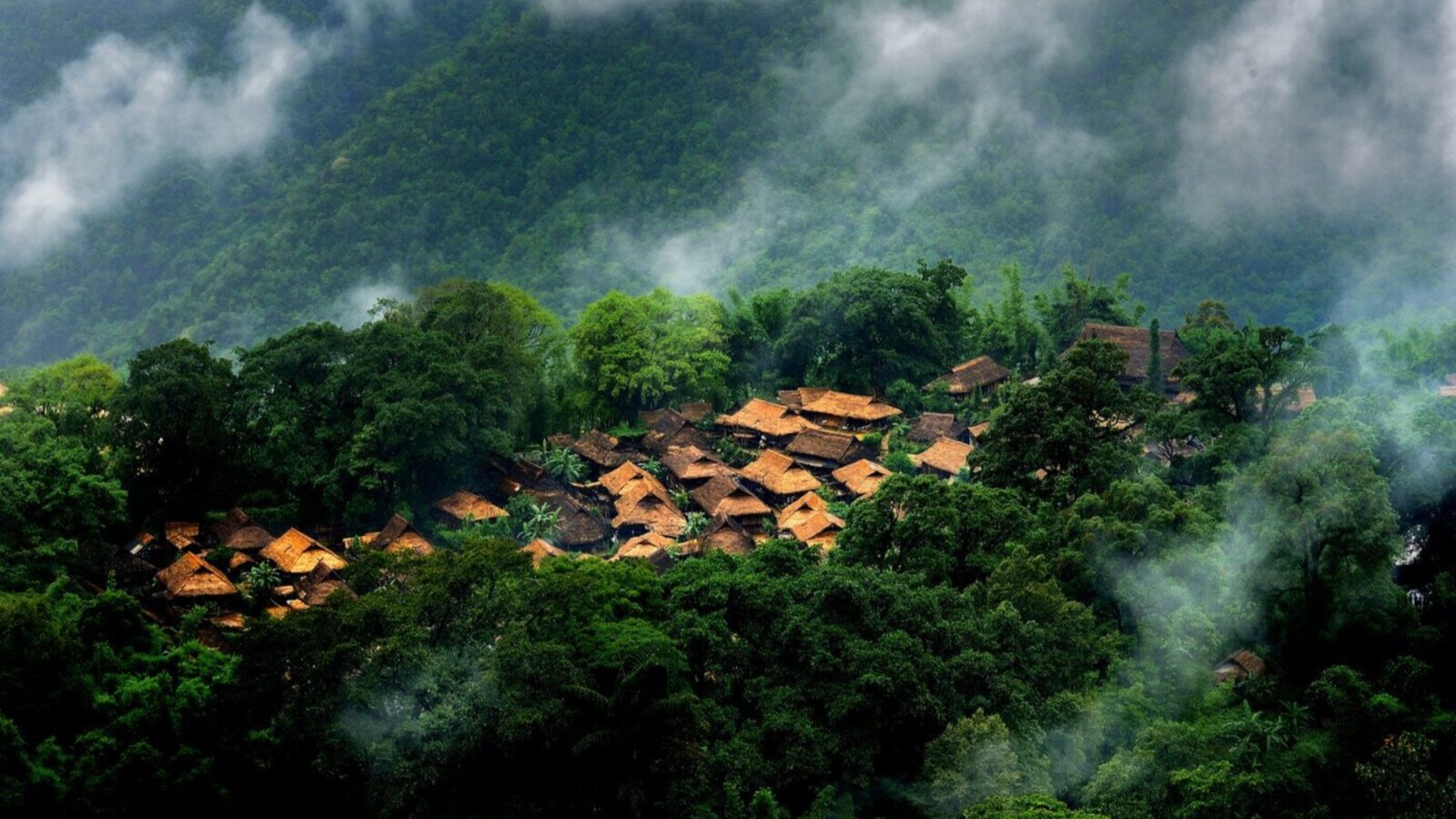
Cangyuan Wa Village, Yunnan
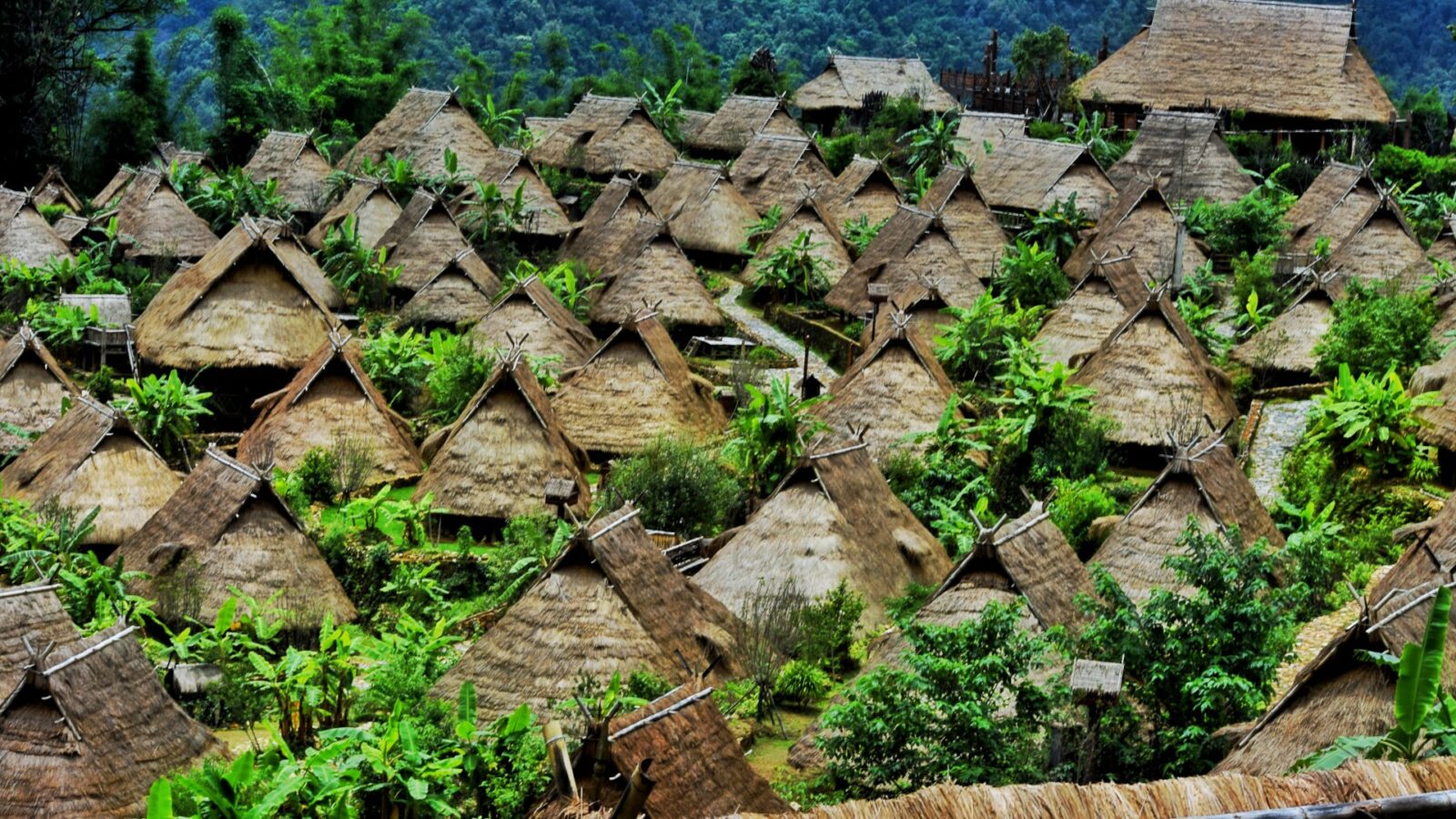
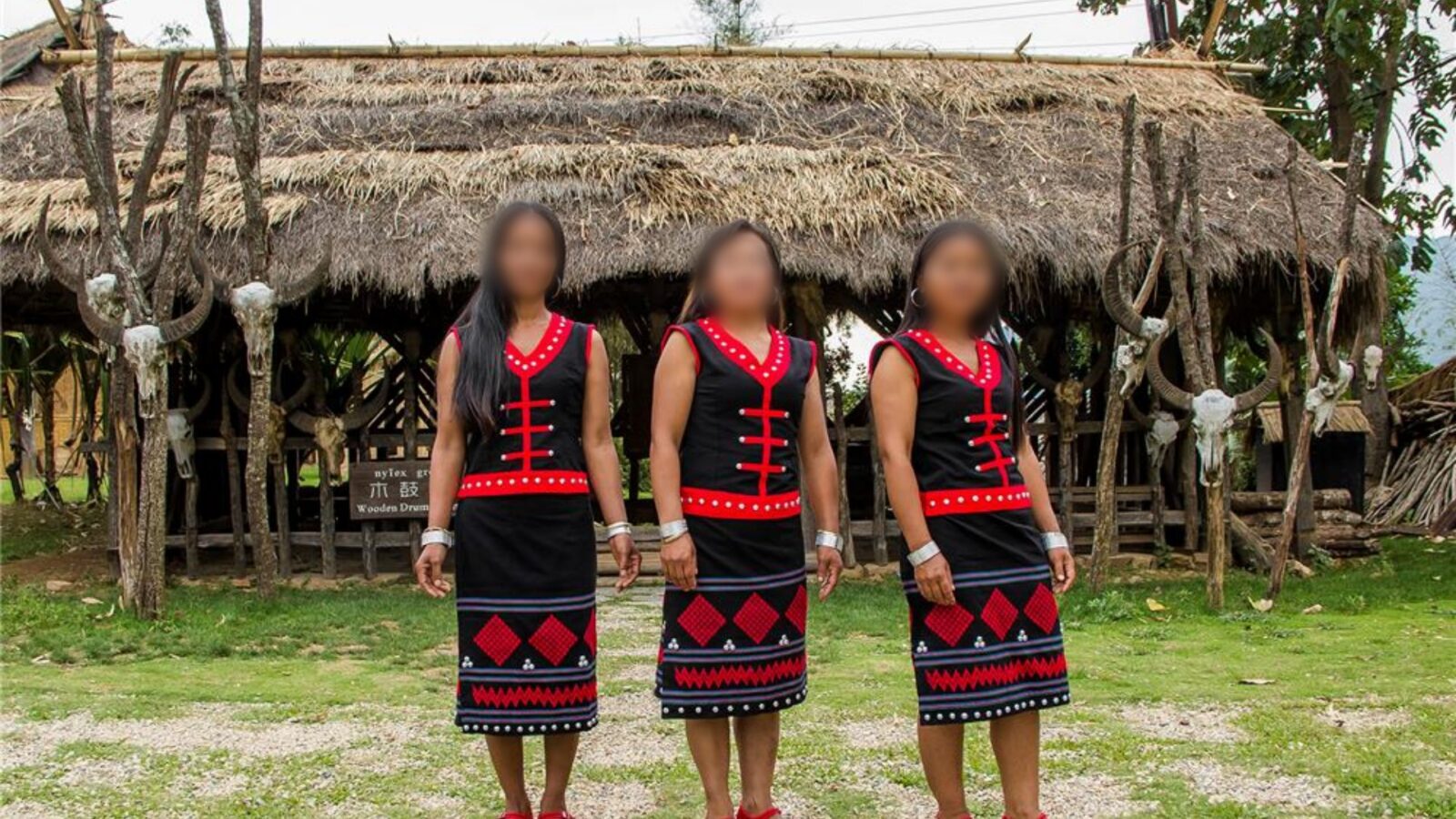
Cangyuan (沧源) - home to the largest Wa ethnic community village in China, bordering Myanmar, this mysterious land preserves Wa’s original culture and the Cangyuan cliff paintings - “the Wa people’s creation epic”, it is also the secret borderland city for experiencing another carnival “Moni Hei”.
Key Data & Practical Info
🌳 Forest coverage rate: approx. 75%
🌤️ Air quality: excellent, with superb ecological environment
🌡️ Annual average temperature: approx. 17°C
💧 Climate: subtropical monsoon, with distinct dry and wet seasons
📅 Best travel season: October to April of the following year (dry season)
🗺️ Location: Southwest Yunnan Province, China-Myanmar border
Signature Landscapes & Experiences
Wengding Original Tribal Village
Wengding Original Tribal Village
Wengding Original Tribal Village (翁丁原始部落) (Note: old village was lost; a new cultural heritage village has been rebuilt): Learn about traditional Wa cultural symbols including "village totems," "wooden drum pulling" and "ritual houses." Experience the original tribal character through the cultural inheritance new village.
Cangyuan Cliff Paintings (沧源崖画): Explore mysterious cliff paintings over 3,000 years old. View red pictograms recording scenes of Wa ancestors hunting, dancing and performing rituals — touching the pulse of prehistoric civilization.
“Moni Hei”Carnival
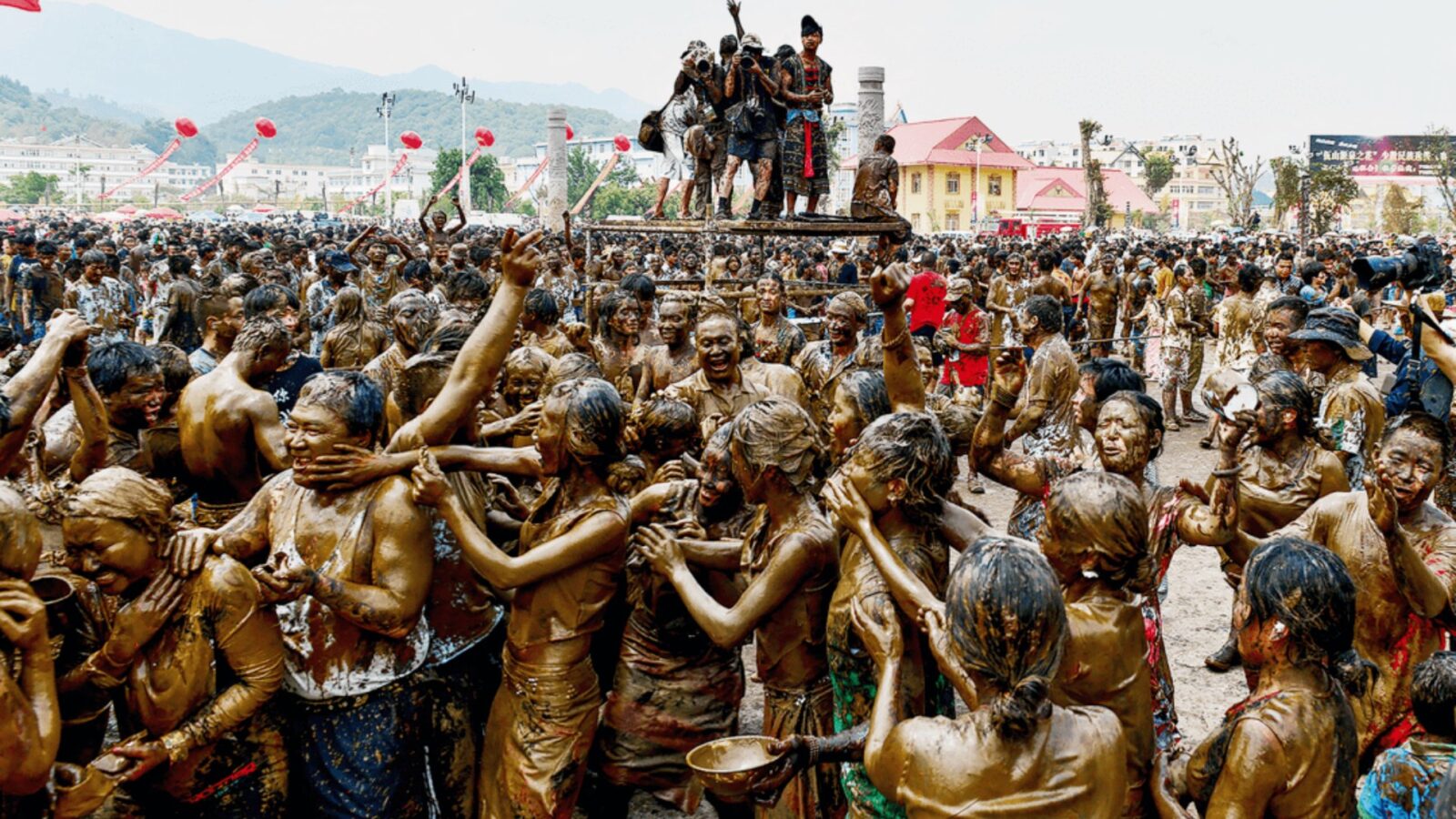
"Moni Hei" Carnival (摸你黑狂欢节): If visiting around May Day, participate in the grand carnival where pure plant-based "Nangbuluo" mud is smeared on each other as a blessing — experiencing the Wa people's reverence for life and health.
Cangyuan is the land where the song "Wa People Sing the New Song" was born — a place that still retains the primal life force of ancient times. Come here to feel the simplicity, warmth and awe-inspiring ancient faith of this borderland secret realm.
14. Taoping Qiang Village, Sichuan
A living labyrinth carved a thousand years before GPS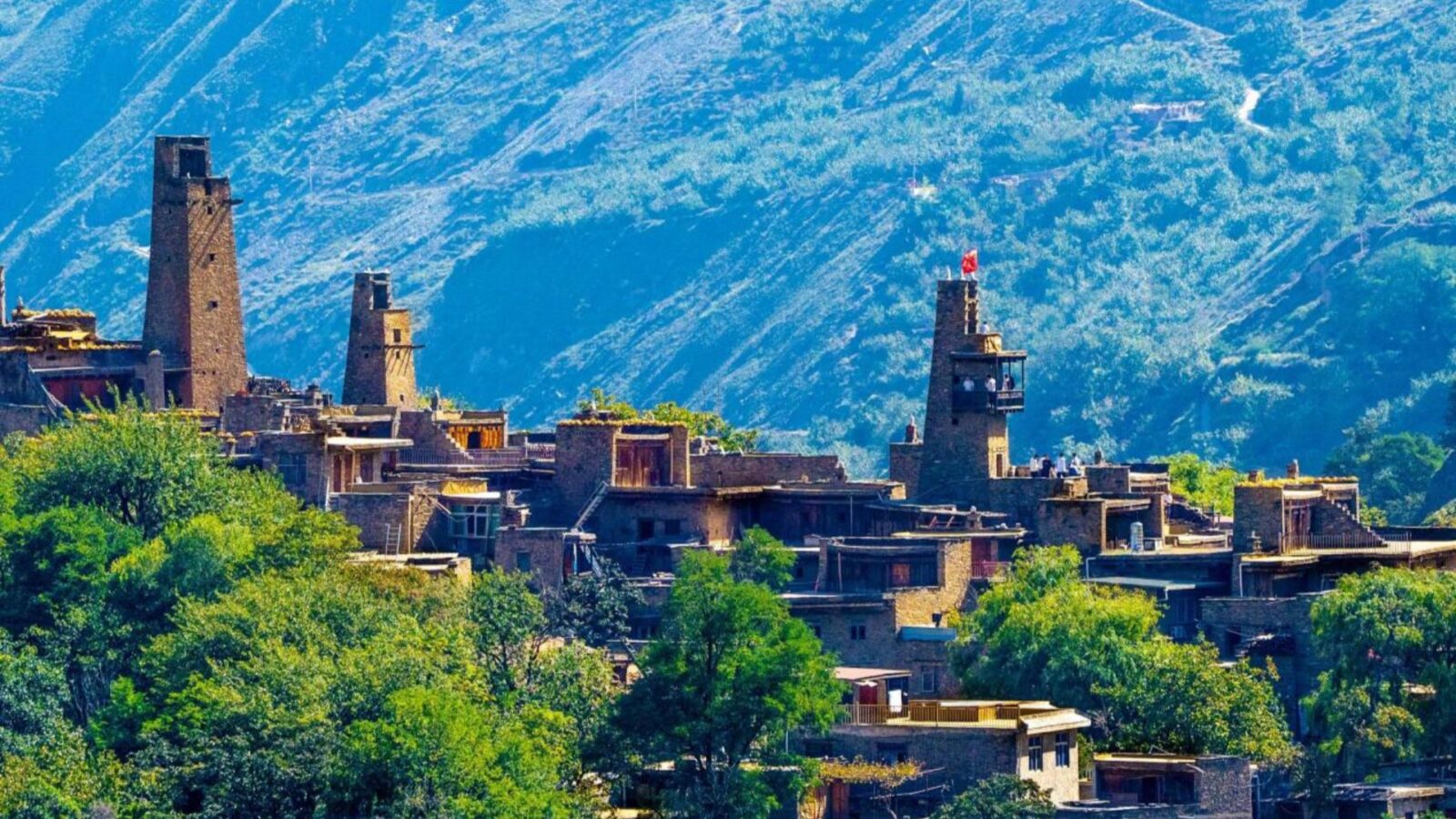
Taoping Qiang Village, Sichuan
Taoping Qiang Village (桃坪羌寨) is the most well-preserved "living fossil" of Qiang (羌族) ethnic building cultural arts. With its cyclopean watchtower lanes, complicated underground water supply system and a long history of the Qiang nation, it is known as the "Mysterious Eastern Ancient Fortress".
Key Data & Practical Info
🏔️ Elevation: approx. 1,500 meters
🌤️ Environment: dry river valley climate with abundant sunshine
🌡️ Annual average temperature: approx. 11°C
💧 Humidity: relatively low
📅 Best travel season: May–October; autumn has the most stable weather
🗺️ Location: Zagunao River, Lixian County, Aba Tibetan and Qiang Autonomous Prefecture, Sichuan Province
Signature Landscapes & Experiences
Watchtowers & Labyrinth Lanes: Climb the Qiang village watchtowers to overlook the entire stone fortress. Navigate through interconnected lanes — light and shadow alternating — to experience the ancient Qiang people's sophisticated defensive system.
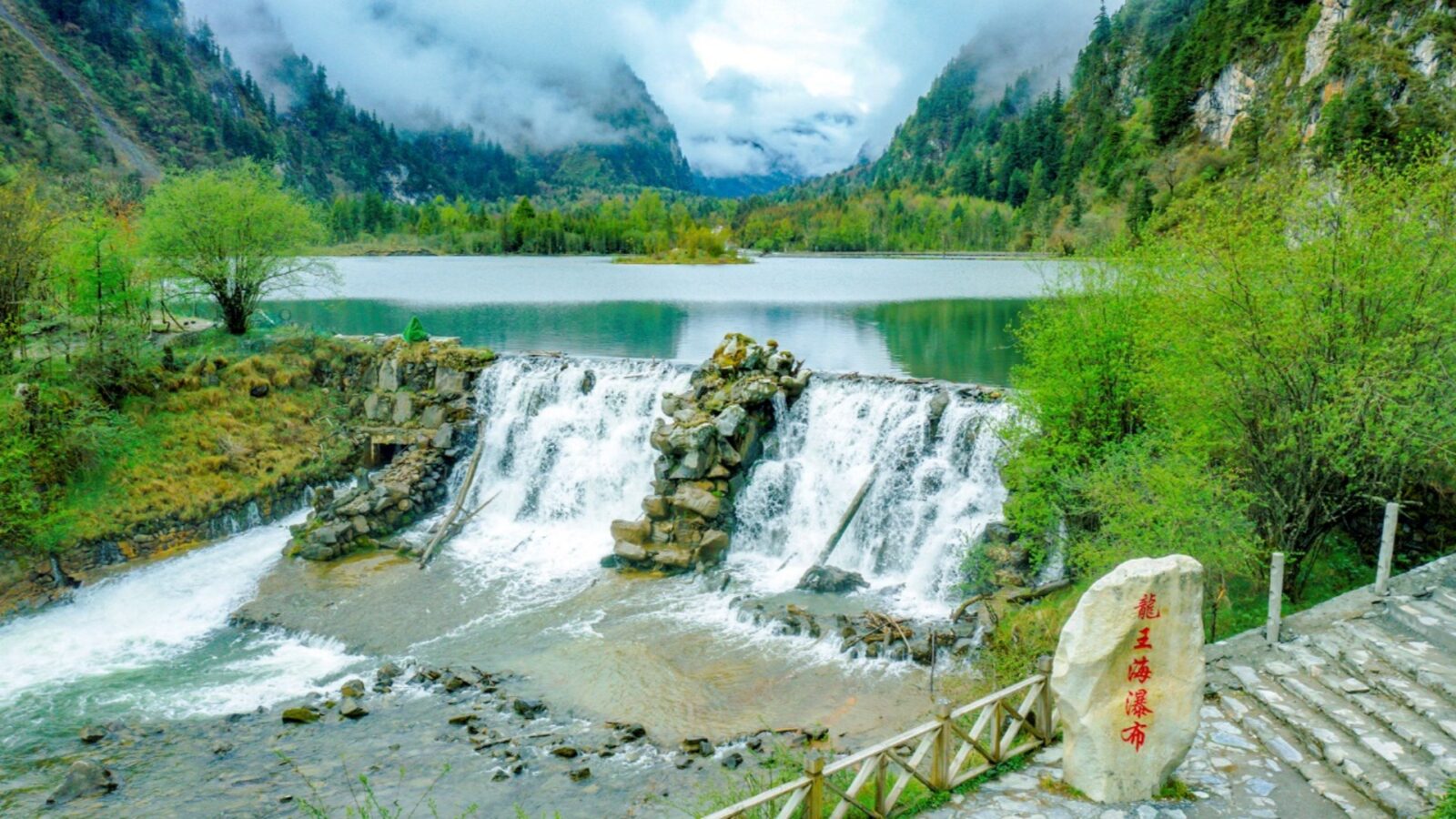
Mysterious Underground Water Network
Mysterious Underground Water Network: Explore the millennium-old hidden channels flowing beneath the village, and learn about this ingenious engineering system that serves simultaneously for water supply, fire prevention, temperature regulation and wartime passage.
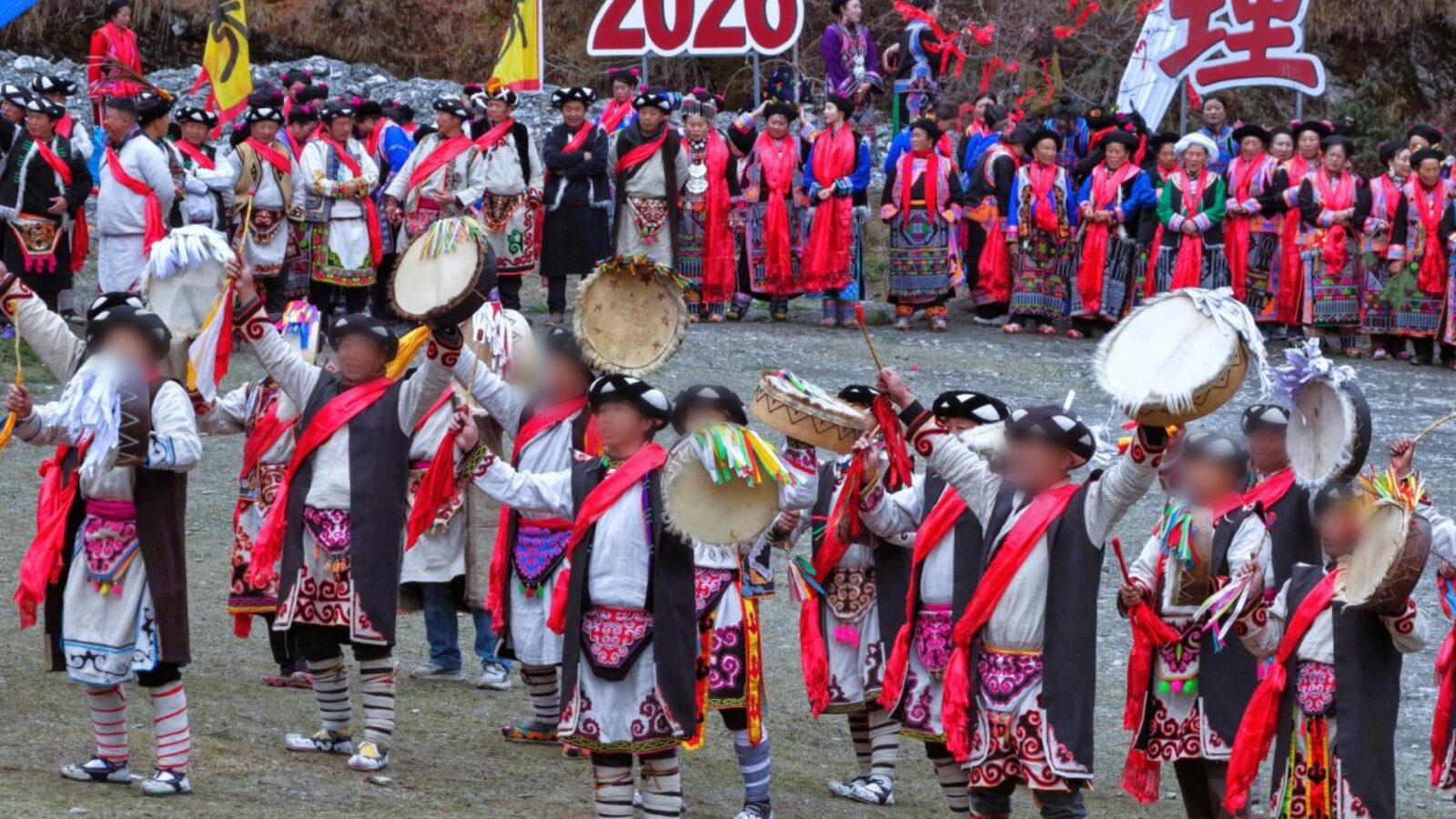
Qiang Culture
Qiang Culture & Shibi Ritual Masters (释比): Visit Qiang folk residences and learn about white-stone worship. If fortunate, listen to a Qiang "Shibi" (shaman-priest) recounting ancient myths and epics.
Taoping Qiang Village is a wordless history book written in stone. Every stone holds condensed wisdom; every lane conceals a hidden story. Come here — decode the survival cipher of an ancient people.
🏔️ Hidden Gem: For those seeking a more rugged and untouched frontier beyond these famous sites, explore our e="110">Xinlong County Travel Guide for a Quiet and Raw Western Sichuan Experience to discover one of the most authentic Tibetan landscapes in the highlands.
15. Jingzhu Village, Wulong, Chongqing
Where the earth opens up and simplicity waits inside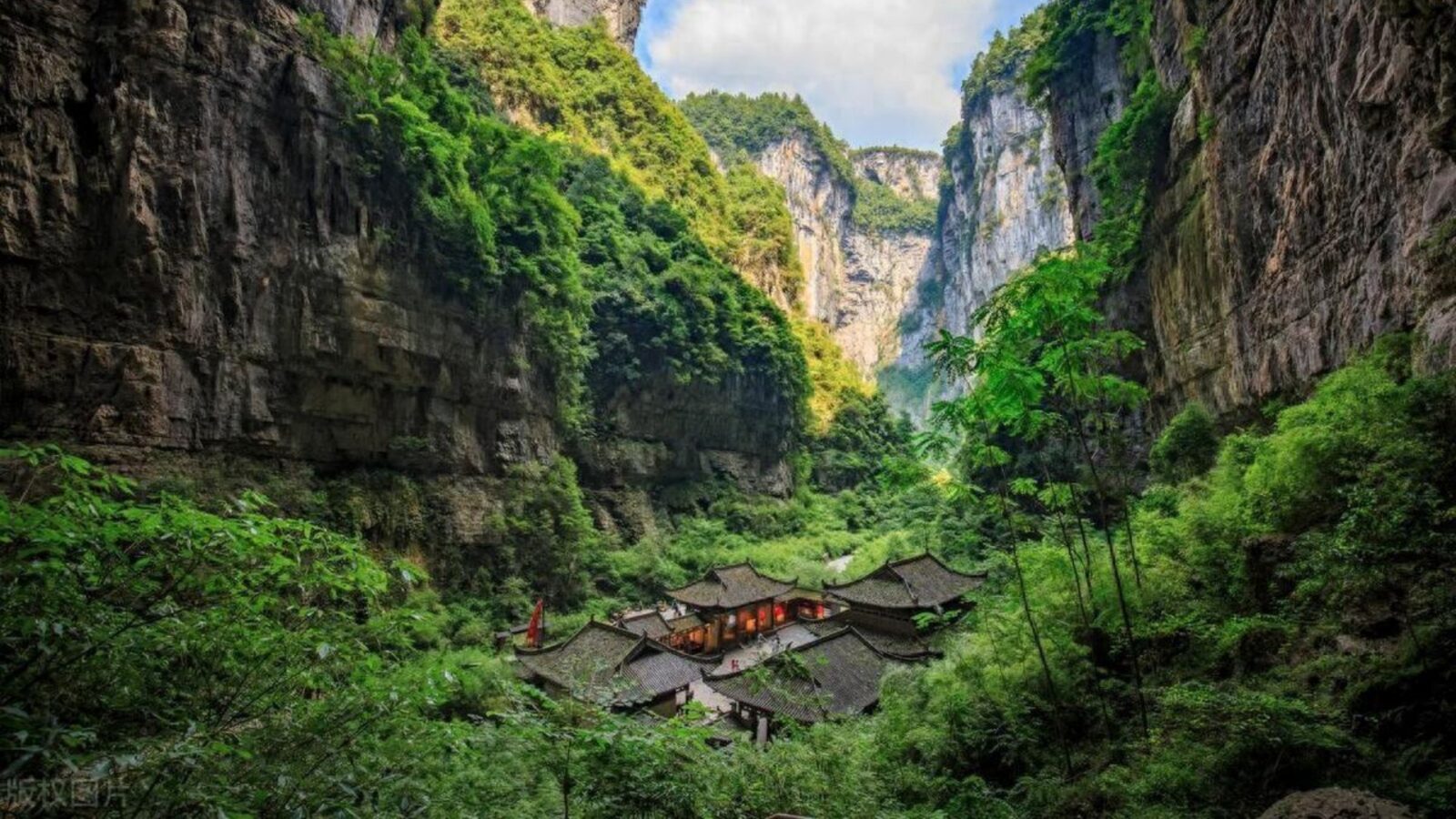
Jingzhu Village, Wulong, Chongqing
Jingzhu Village (荆竹村), located in the heart of the Wulong Karst UNESCO World Natural Heritage Site, features extraordinary natural wonders such as Tianseng Three Bridges (天生三桥) and Longshui Gorge (龙水峡地缝), and is now becoming an eco-art pastoral complex centered on the theme of "returning to origins".
Key Data & Practical Info
🏔️ Terrain: typical Karst landforms with numerous sinkholes and gorges
🌤️ Air: fresh, with high negative ion concentration
🌡️ Annual average temperature: 15–18°C, cool in summer
💧 Humidity: relatively high
📅 Best travel season: April–October
🗺️ Location: Xianü Mountain Street, Wulong District, Chongqing
Signature Landscapes & Experiences
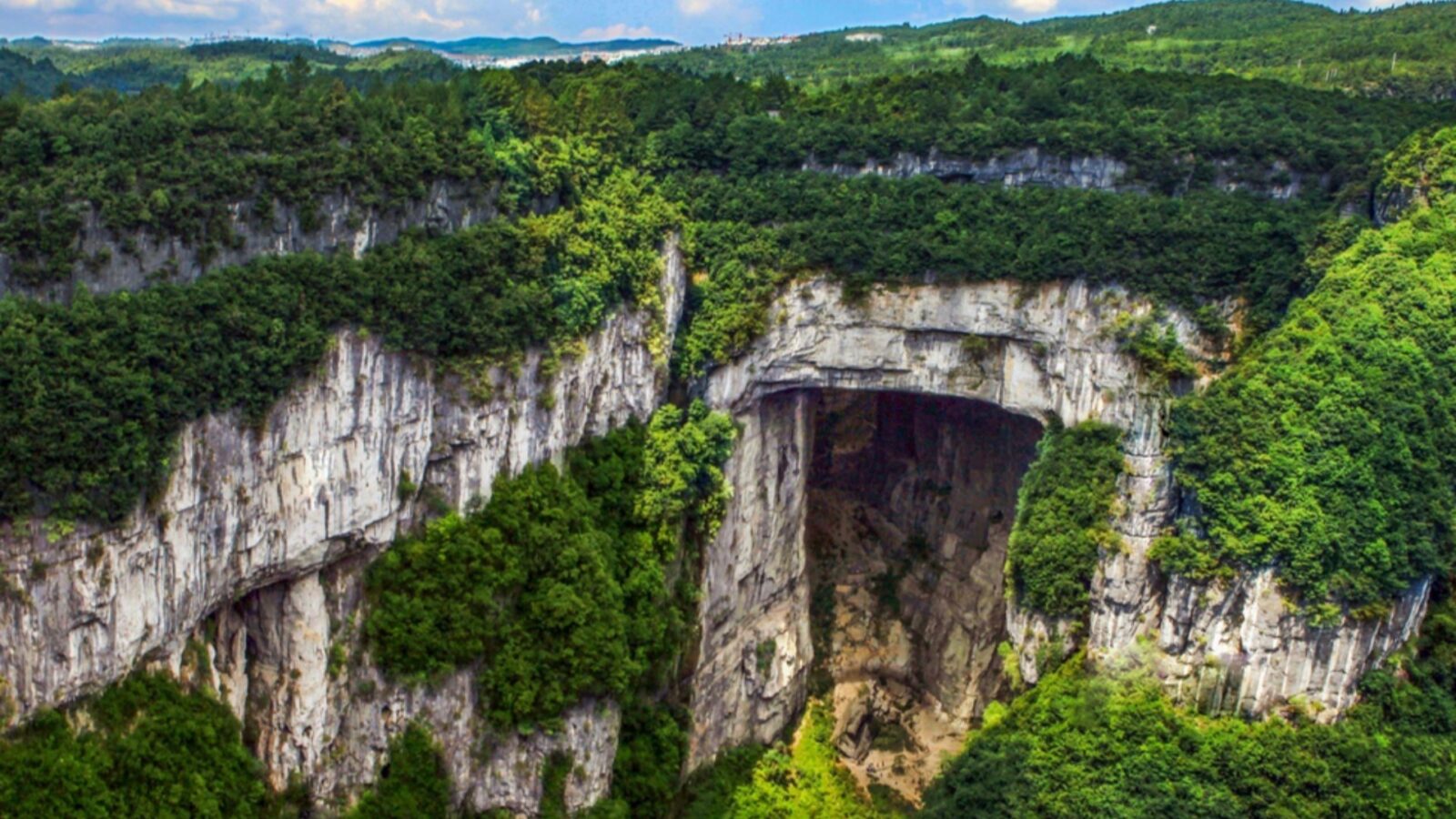
Tianseng Three Bridges
Tianseng Three Bridges (天生三桥): Walk into the filming location of Transformers 4 and Curse of the Golden Flower. Look up at three naturally formed giant stone bridges spanning the canyon — feel billions of years of geological creation.
Longshui Gorge (龙水峡地缝): Descend along cliff boardwalks deep into an earth fissure, watching waterfalls and springs cascade while experiencing the deep mystery of "one thread of sky."
Guiyuan Village (归原小镇): In the renovated traditional village, experience rural inns, teahouses and libraries that fuse contemporary design with rural memory — and enjoy the tranquility and artistic atmosphere of mountain living.
In Jingzhu, natural spectacle and modern poetry coexist. From the shock of sinkholes and gorges to the ease of the Guiyuan village, this is a complete journey from geological adventure to spiritual homecoming.
16. Liangdang Village, Gansu
The Qinling's quietest, greenest kept secret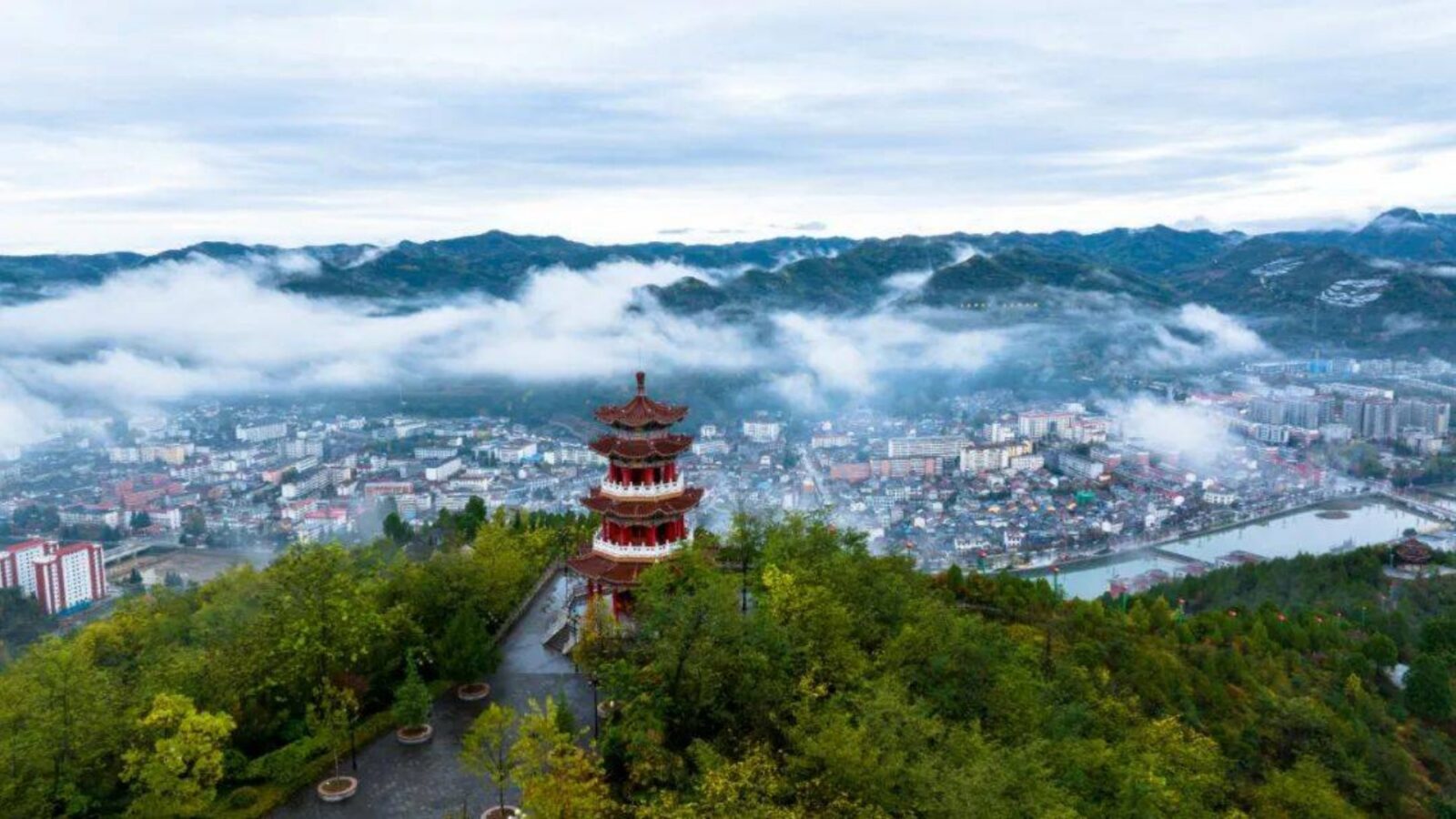
Liangdang Village, Gansu
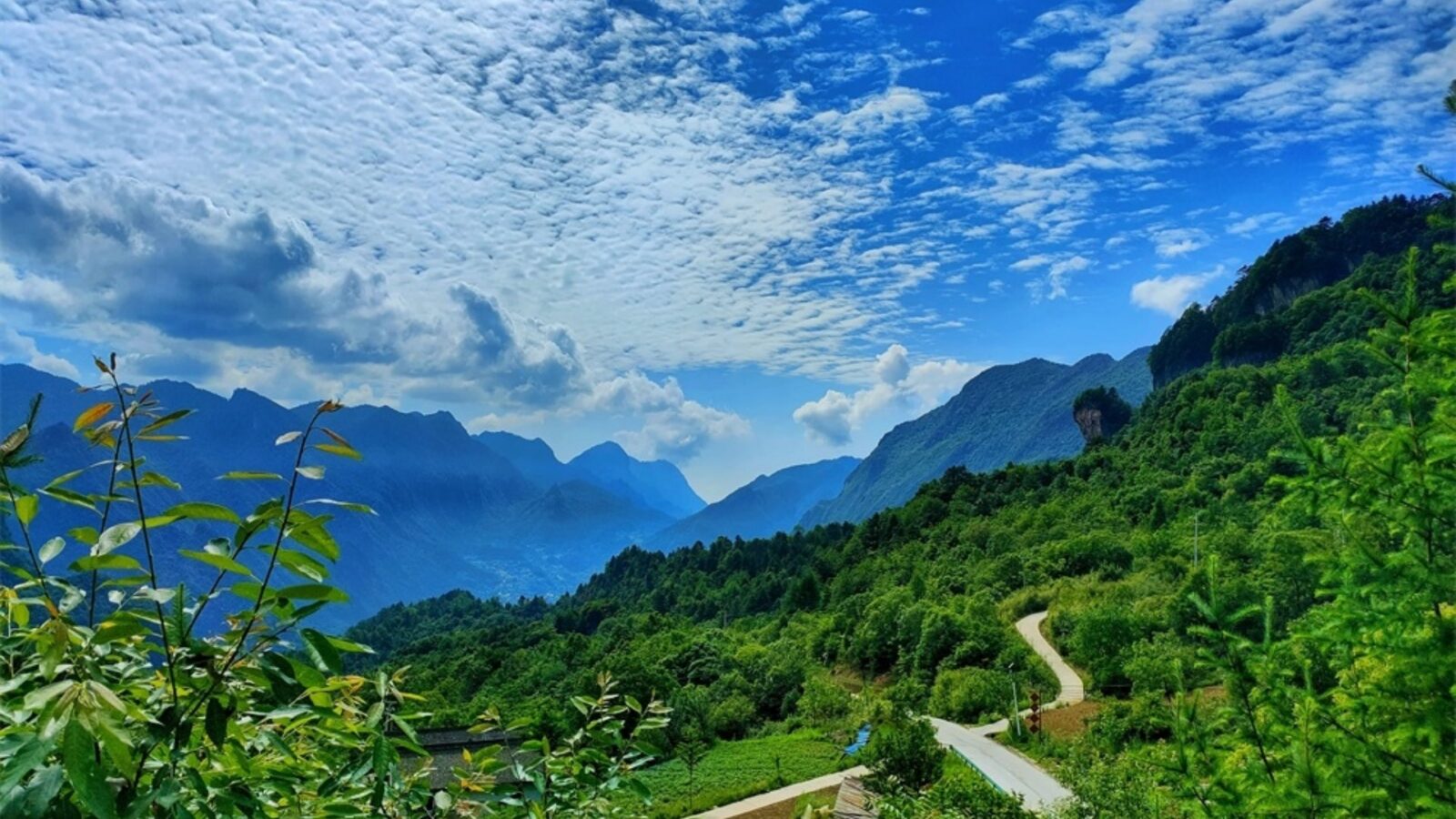
Liangdang (两当) is nestled in the southern foothills of the Qinling Mountains, famous for the "Yunping Three Gorges". Characterized by high mountains and s deep valleys, lush forests, and flanked by the highest peaks of the “the roof of Shaanxi & Gansu”, it has become the green barrier of the upper reaches of the Yangtze River to form a “natural oxygen bar” and “Longevity township” far from the noisy city.
Key Data & Practical Info
🌳 Forest coverage rate: as high as 74% or above
🌤️ Air quality: superb, with high negative ion concentration
🌡️ Annual average temperature: approx. 11°C
💧 Annual average humidity: moderate
📅 Best travel season: May–October; summer for cooling, autumn for colorful forests
🗺️ Location: Southeast Gansu Province, at the junction of Shaanxi, Gansu and Sichuan
Signature Landscapes & Experiences
Yunping Three Gorges
Yunping Three Gorges (云屏三峡): Drive or hike through Changlingxia, Jinkudong Gorge and Heishui Gorge. Feel towering cliffs on both banks with streams babbling through the canyon floor — the sensation of "mountain upon mountain, surprise after surprise."
Alpine Meadows & Pastures: At higher elevations, encounter open alpine meadows and leisurely cattle and sheep. Experience the unique pastoral scenery deep within the Qinling Mountains.
Red Cultural Heritage & Zhang Guolao Cave (张果老洞): Visit the Liangdang Mutiny Memorial and feel the red historical memory. Also seek out the legendary cave where Zhang Guolao is said to have practiced cultivation, adding a touch of mythological color to the journey.
The beauty of Liangdang lies in its raw, uncarved wilderness and quietude. Cloud-wrapped gorges are the gentlest interior of the Qinling, waiting for travelers in search of stillness.
17. Hemu Village, Xinjiang
The village where seasons perform their most perfect acts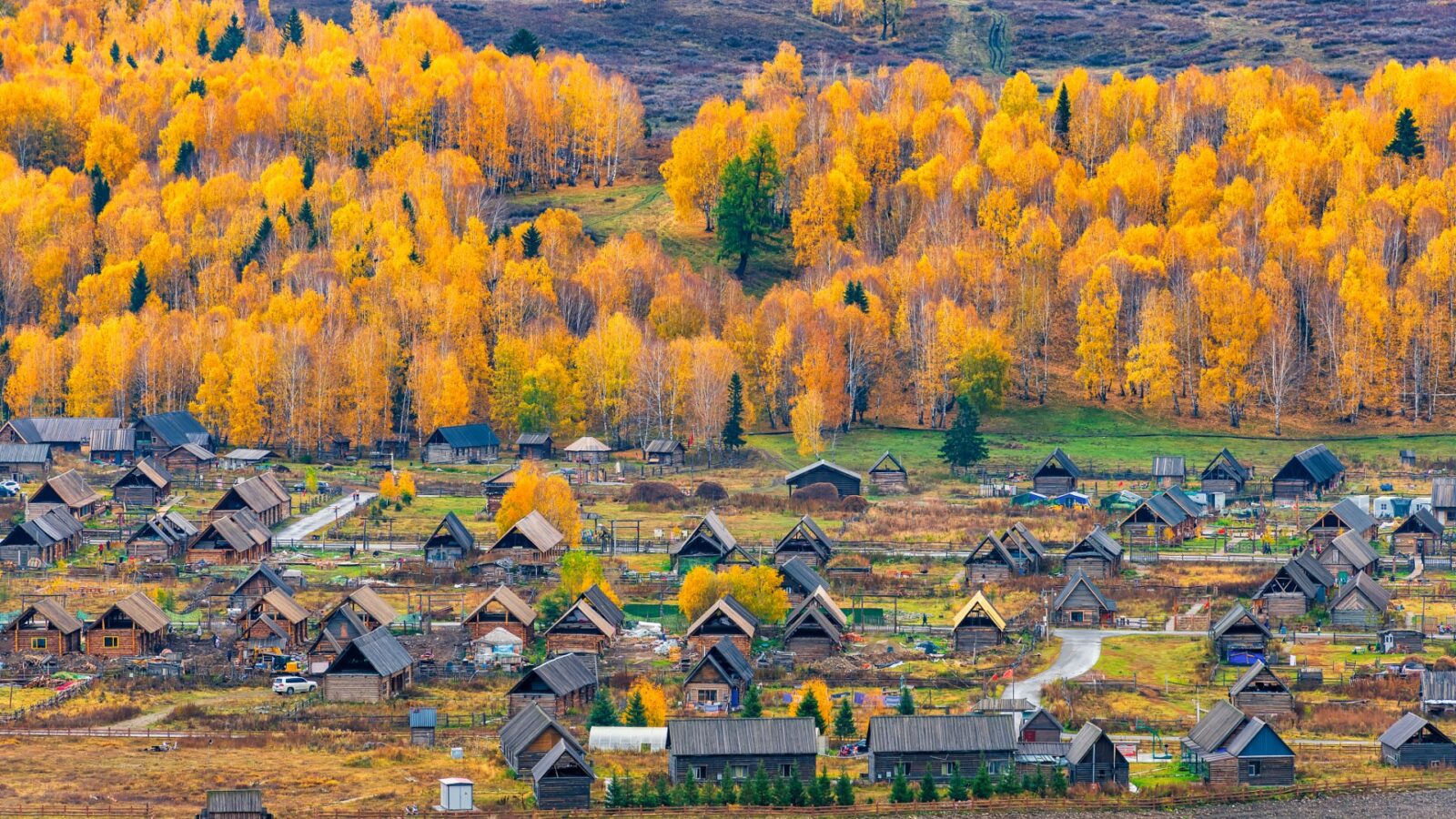
Hemu Village, Xinjiang
Hemu Village (禾木村) is an ancient village of Tuva (图瓦)’s ancestral Antarctic people located beside Kanas Lake. Its autumn log cabins, kaleidoscopic trees, morning mists and winter “snow mushroom” log cabins under the stars are a dreamy pure land of beauty, fondly called “the back garden of the gods.”
Key Data & Practical Info
🏔️ Elevation: approx. 1,200 meters
❄️ Climate: cold temperate highland mountain climate; long and cold winters
🌡️ Annual average temperature: -4°C to 4°C
💧 Characteristic: large day-night temperature variation
📅 Best travel season: June–September (summer cooling); late September–early October (golden autumn fairy tale); December–February (winter snow kingdom)
🗺️ Location: Kanas Scenic Area, Burqin County, Altay Prefecture, Xinjiang
Signature Landscapes & Experiences
Hemu Autumn Colors & Morning Mist: Climb Hadeng Platform (哈登平台) and look down at the small log-cabin village surrounded by golden, gleaming birch and larch forests. Morning mist flows like milk through the river valley — a scene of pure enchantment.
Tuvan Log Cabins & Daily Life
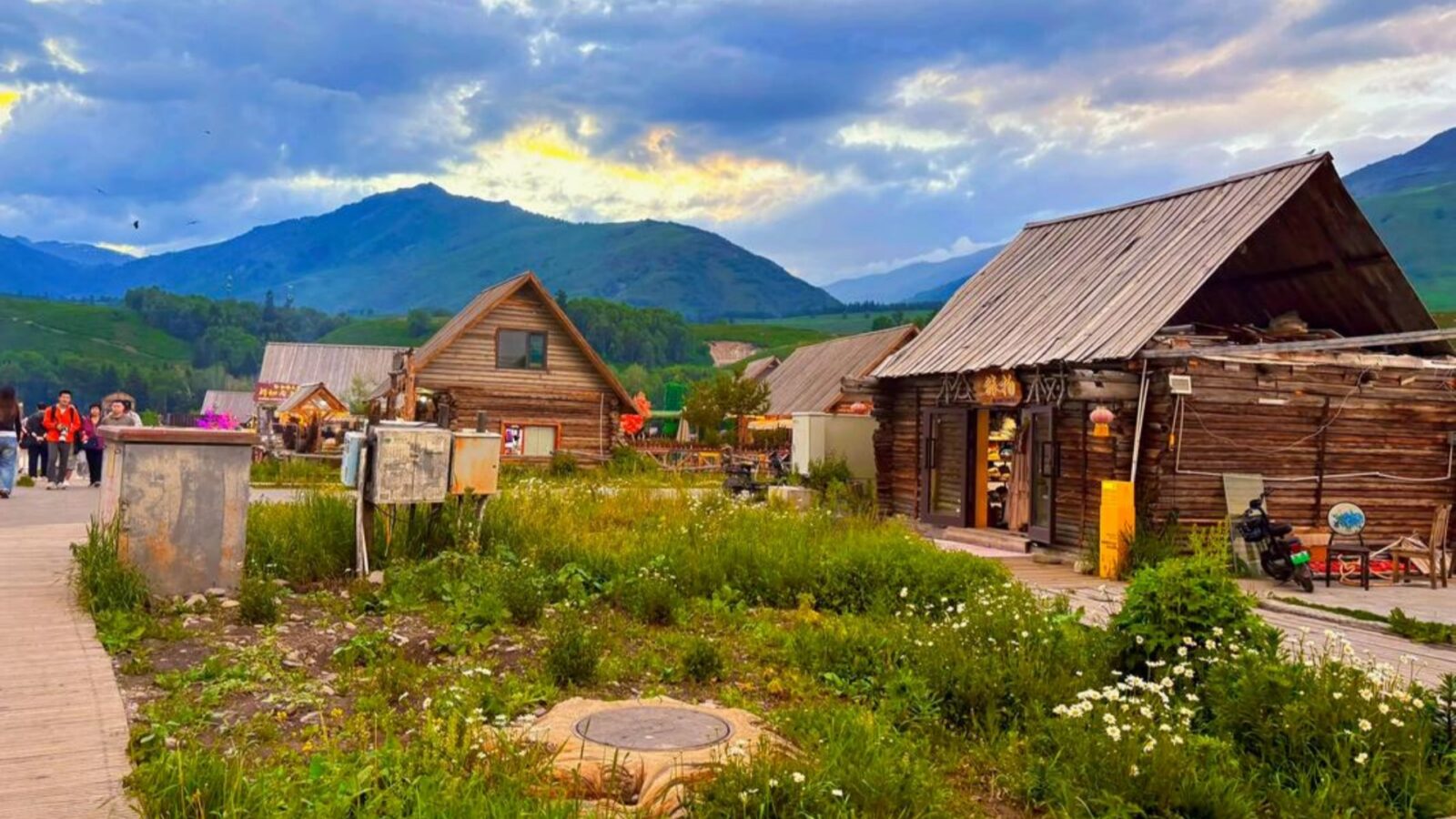
Tuvan Log Cabins & Daily Life: Stay in a log cabin, taste milk tea and Baursak (包尔萨克), and listen to an elderly local Tuvan play a "sur" (grass flute, 苏尔) melody — experiencing unique ethnic culture firsthand.
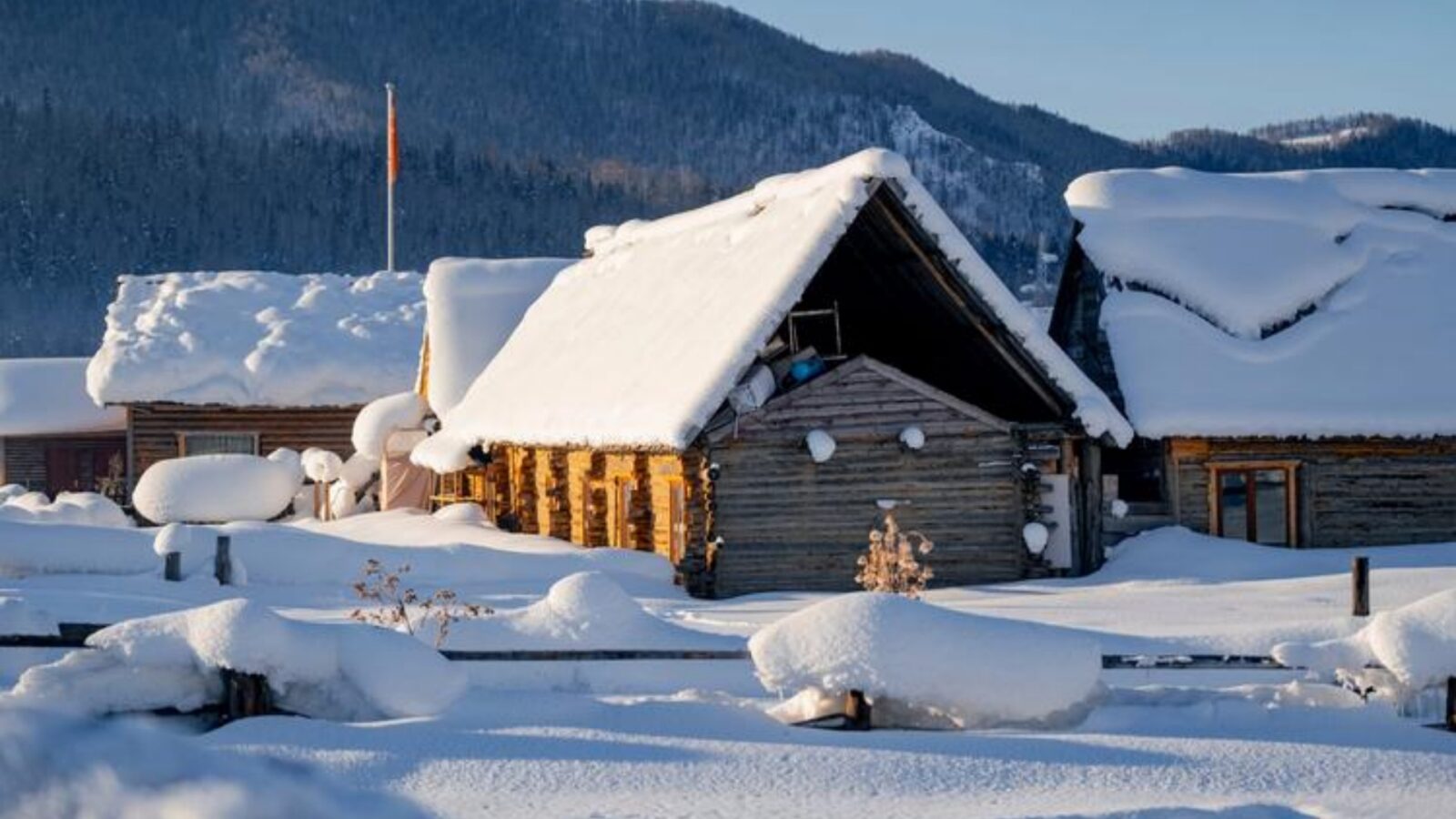
Hemu Winter
Hemu Winter: Experience horse-drawn sleigh rides, frolic in knee-deep powder snow, watch "snow mushrooms" growing on log cabin rooftops, and gaze at a brilliant Milky Way in minus-thirty-degree silence at night.
The beauty of Hemu is an extreme and pure beauty. Whether the brilliance of autumn or the serenity of winter, it is like a distant shepherd's song that soothes every restless city heart that arrives here.
18. Maji Village, Huzhu Village, Qinghai
A plateau village painted in every color of celebration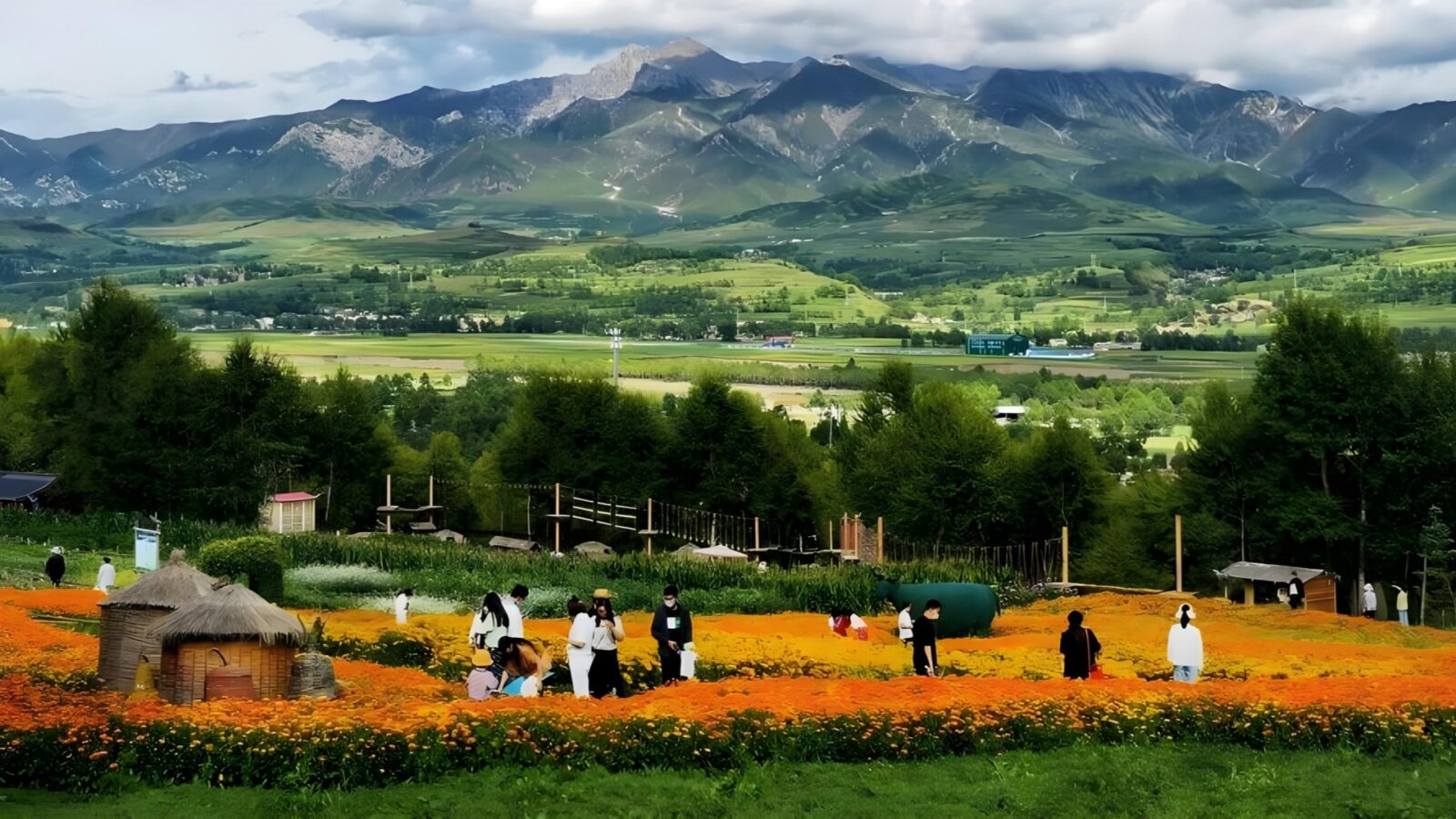
Maji Village, Huzhu Village, Qinghai
The Huzhu Village (互助县) where Maji Village is located is the "Hometown of Chinese Tu People (土族)," preserving the most complete Tu ethnic traditional culture. Vivid folk costumes, the joyful "Anzhao Dance" (安昭舞) and the thrilling "Wheel Swing" (轮子秋) together compose a seven-colored Tu ethnic cultural tableau.
Key Data & Practical Info
🏔️ Elevation: approx. 2,500 meters
🌤️ Climate: highland continental climate with strong sunlight
🌡️ Annual average temperature: 3–5°C
💧 Characteristic: large temperature variation; cool summers
📅 Best travel season: June–September; pleasant climate and many festival activities
🗺️ <strong>Location: Northeast Qinghai Province, Huzhu Tu Autonomous County
Signature Landscapes & Experiences
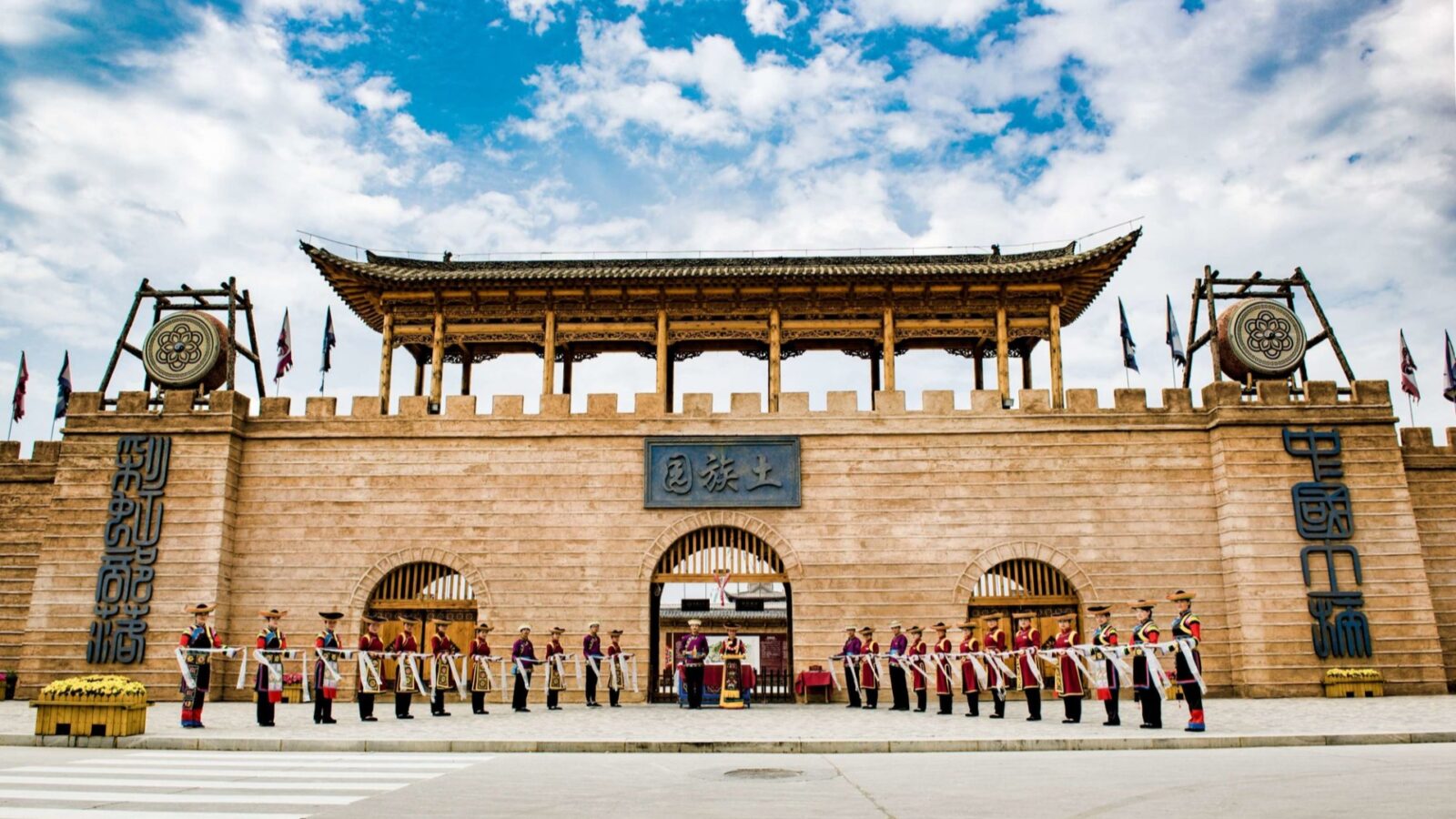
Tu Ethnic Garden
Tu Ethnic Garden & Folk Performances (土族园与民俗表演): In the Tu Ethnic Garden, watch a Tu ethnic wedding performance hailed as "the world's longest carnival," and observe the high-difficulty "Wheel Swing" and graceful "Anzhao Dance."
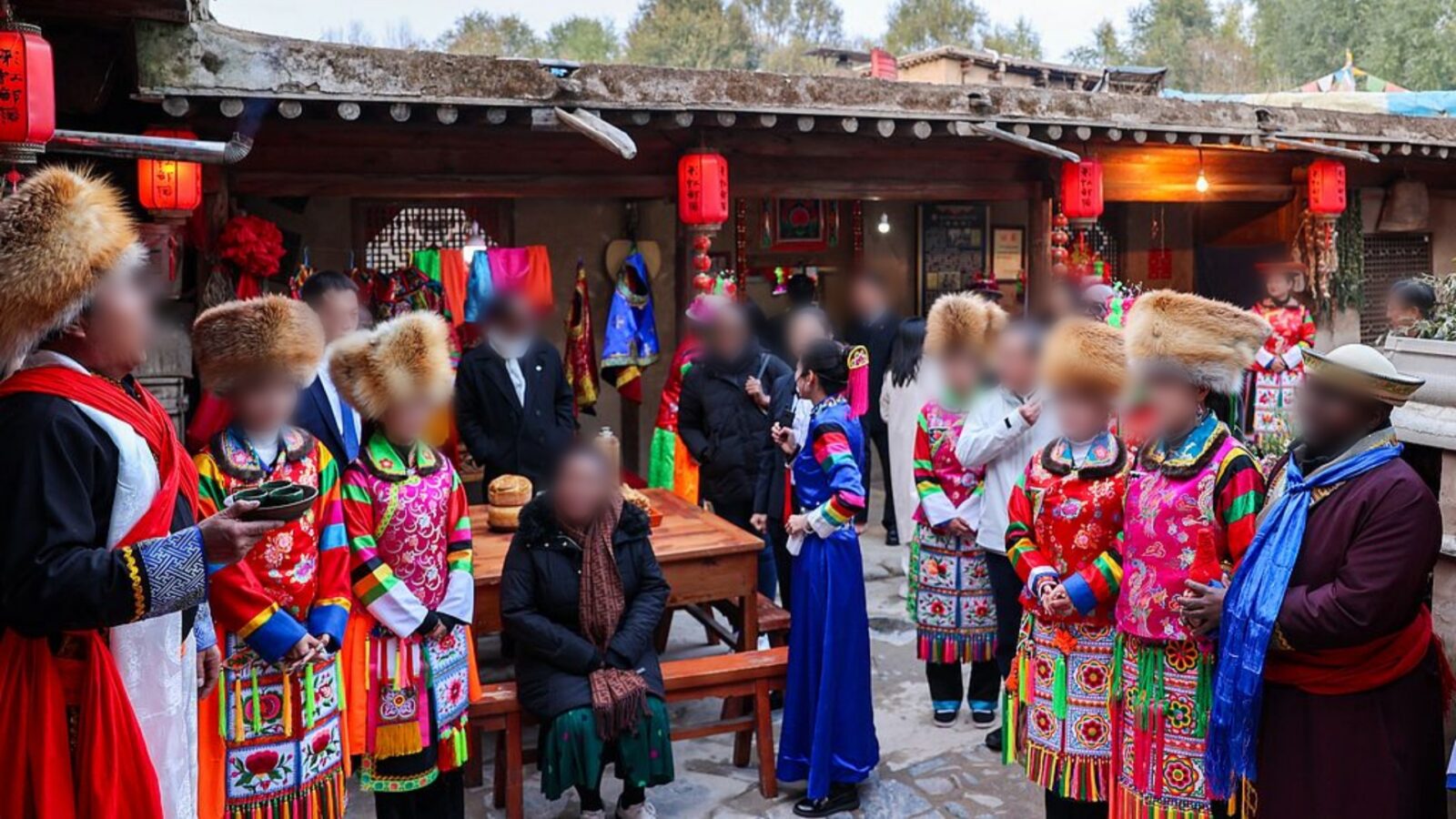
Tu Ethnic Costumes
Tu Ethnic Costumes & Pan Embroidery (土族盘绣): Admire up close the vivid, exquisitely embroidered "flower-sleeve shirts" (花袖衫, seven-color sleeves) worn by Tu women, and learn about the superb skills of the national intangible cultural heritage "Tu Pan Embroidery."
Qingke Liquor & Family Banquet: Taste the mellow Huzhu Qingke (highland barley) liquor (青稞酒), and experience the traditional Tu "Three-Course Meal" family banquet — feel the enthusiasm of being warmly hosted.
The Huzhu area where Maji Village is located is the place where rainbows linger. The joy here is as brilliant as seven-color sleeves; the folk songs here are as mellow as highland barley liquor. Come here — spend a day as a happy Tu person.
19. Xinglong Village, Hebei
A Qing-era imperial forest preserve, now open to all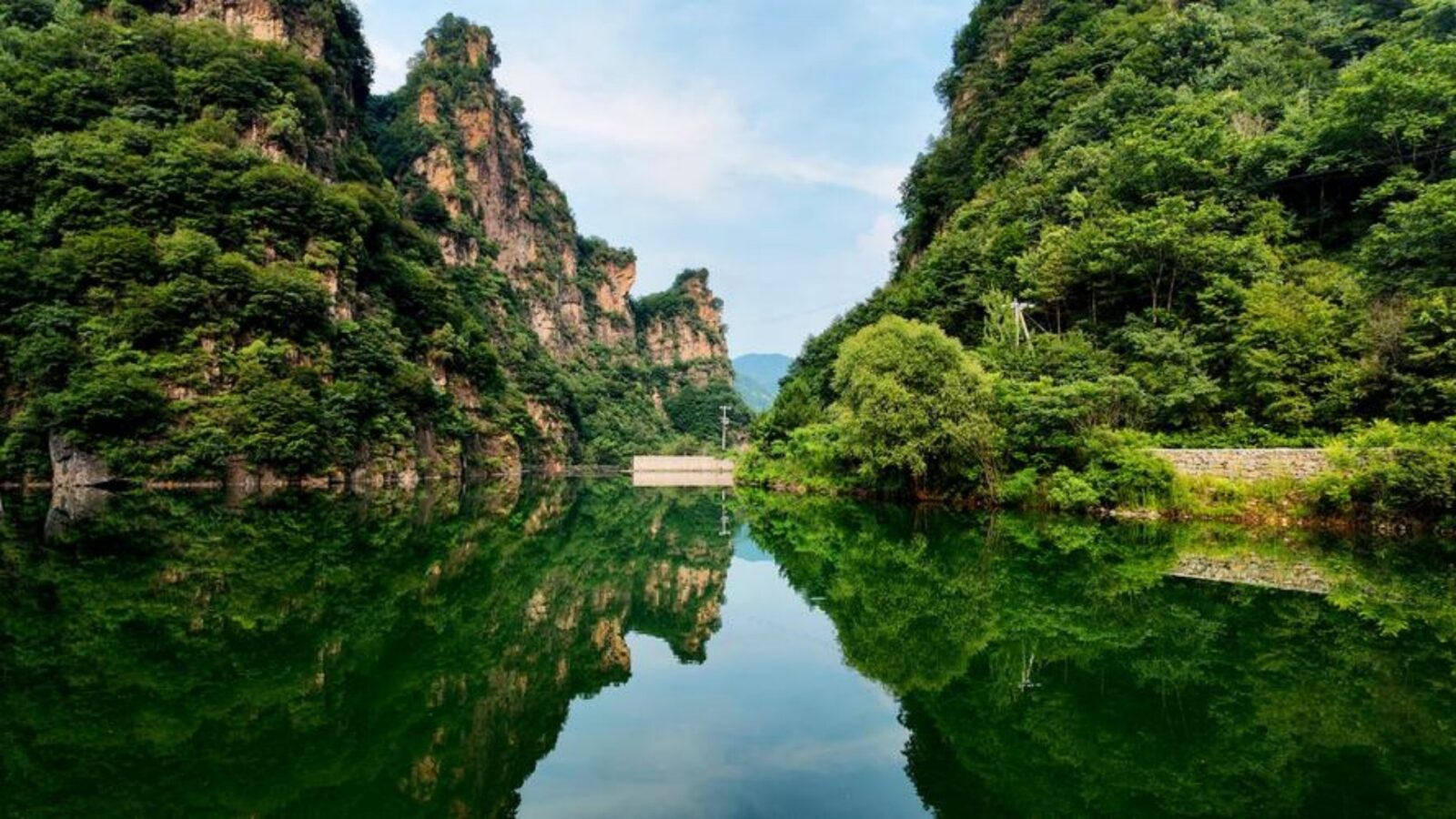
Xinglong Village, Hebei
Xinglong (兴隆县) is situated deep in the Yanshan mountain range. It was designated as a Qing Dynasty “Rear Dragon Feng Shui Forbidden Ground” and for 254 years was sealed off by imperial edict, creating the pristine ecological environment it is today famous for being — a rare “natural oxygen bar” and summer retreat.
Key Data & Practical Info
🌳 Forest coverage rate: 71.2%
🌤️ Air quality: number of excellent-quality days consistently ranks among the top in North China
🌡️ Summer average temperature: approx. 22°C, pleasantly cool
💧 Annual average humidity: moderate
📅 Best travel season: April–October; summer for cooling, autumn for red leaf viewing
🗺️ Location: Northeast Hebei Province, adjacent to Beijing and Tianjin
Signature Landscapes & Experiences
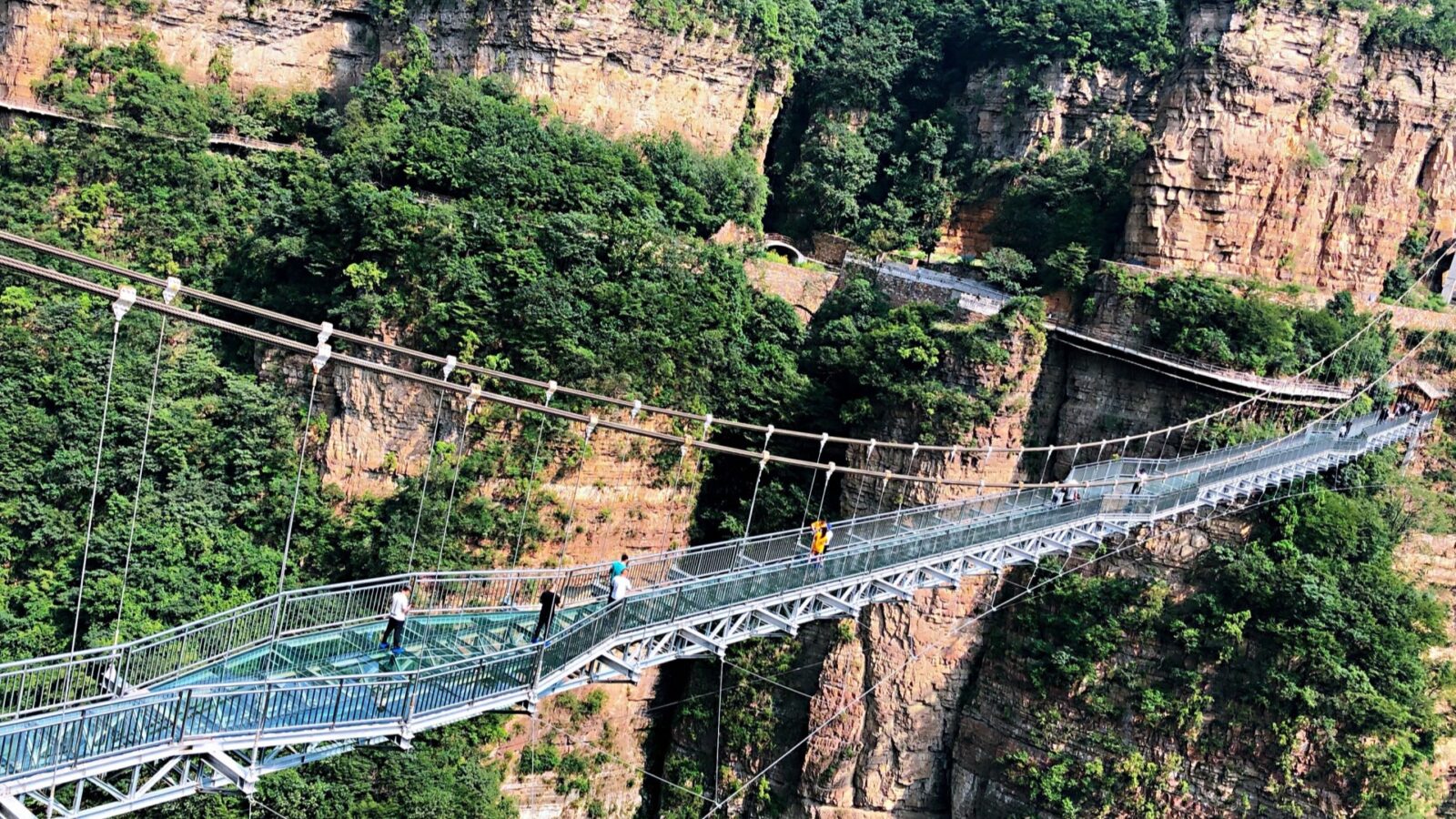
Wuling Mountain National Nature Reserve
Wuling Mountain National Nature Reserve (雾灵山国家级自然保护区): Ascend to the main peak of Yanshan, watch the sea of clouds at sunrise, observe the vertical forest belt spectrum, and explore natural wonders including Xianren Tower and Dragon Pond Waterfall.
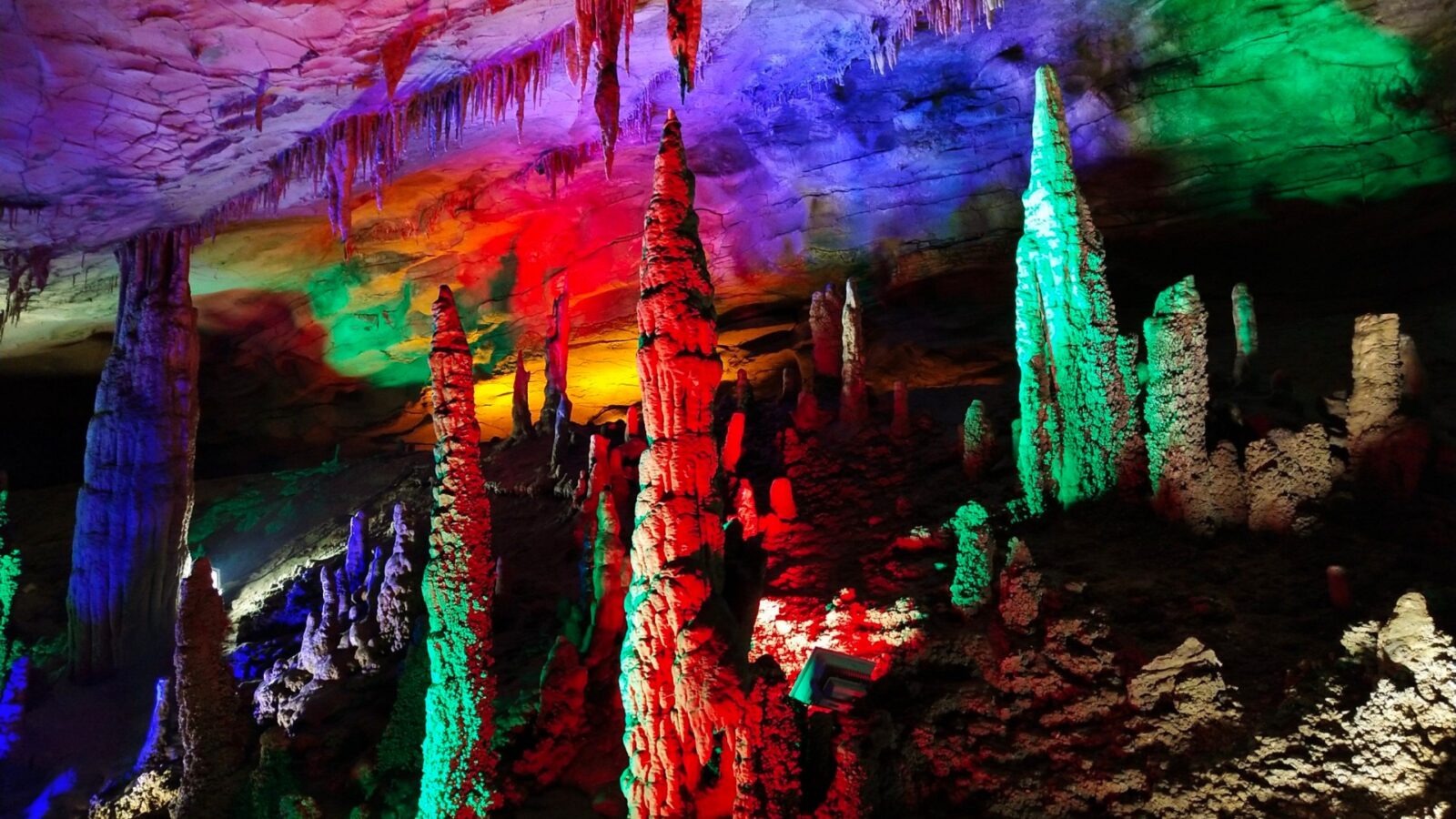
Xinglong Limestone Cave
Xinglong Limestone Cave (兴隆溶洞): Tour the largest limestone cave in the Yanshan range, admire bizarre calcium carbonate formations, and feel "warm winters and cool summers" in the constant-temperature cave interior.
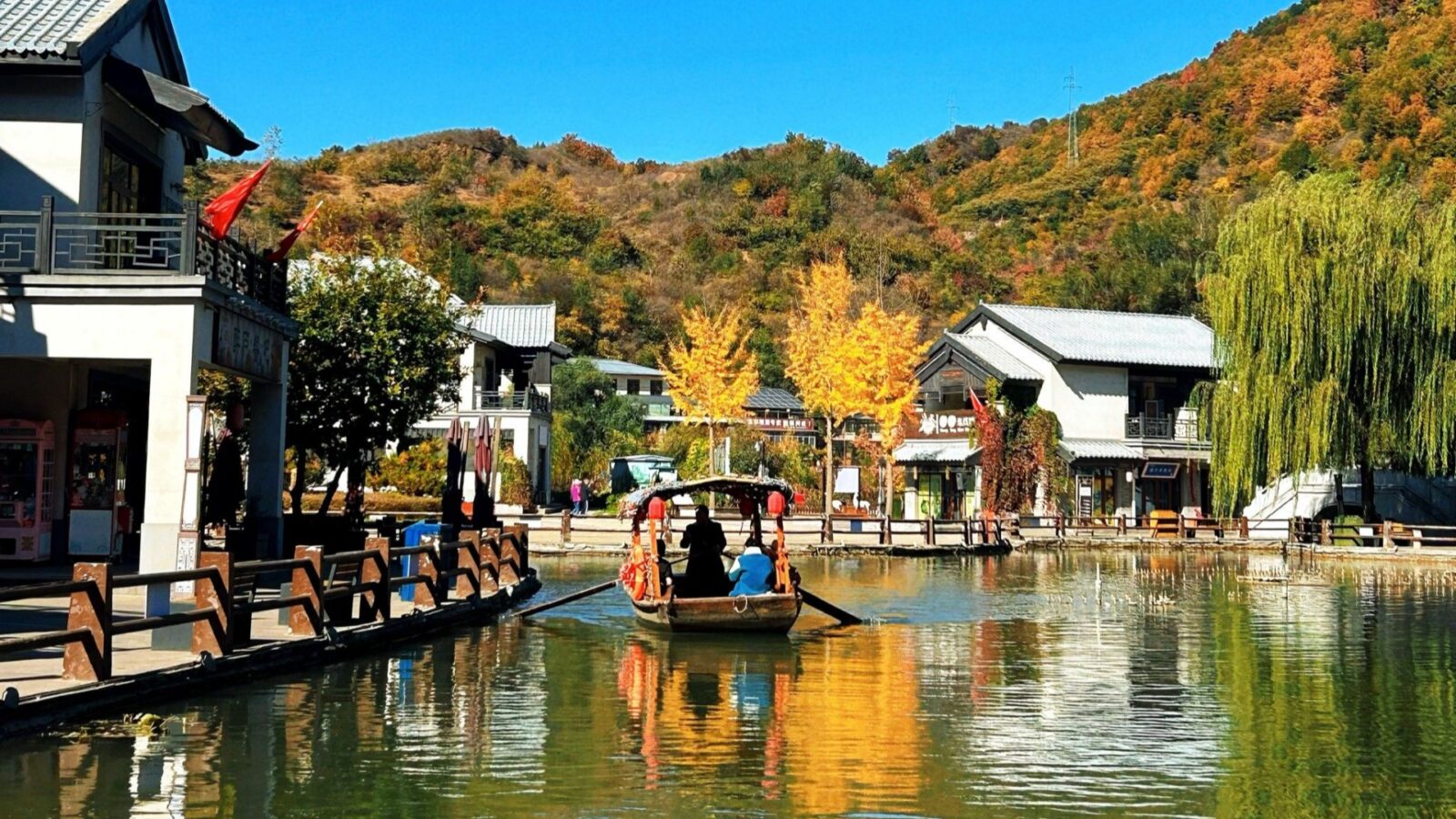
Beyond-the-Pass Jiangnan Water Town
Beyond-the-Pass Jiangnan Water Town (塞外江南水镇): In the Qingsongling Canyon, experience a water town that fuses northern mountain scenery with the spirit of southern China — stroll covered bridges and enjoy coolness and leisure.
Xinglong is an unpolished jade gem in the back garden of Beijing and Tianjin. There are no imperial palace crowds here — only the silent generosity of great mountains. Come and enjoy a cool summer of 22 degrees.
20. Ergun City, Inner Mongolia
Left forest, right steppe, ahead a river of nations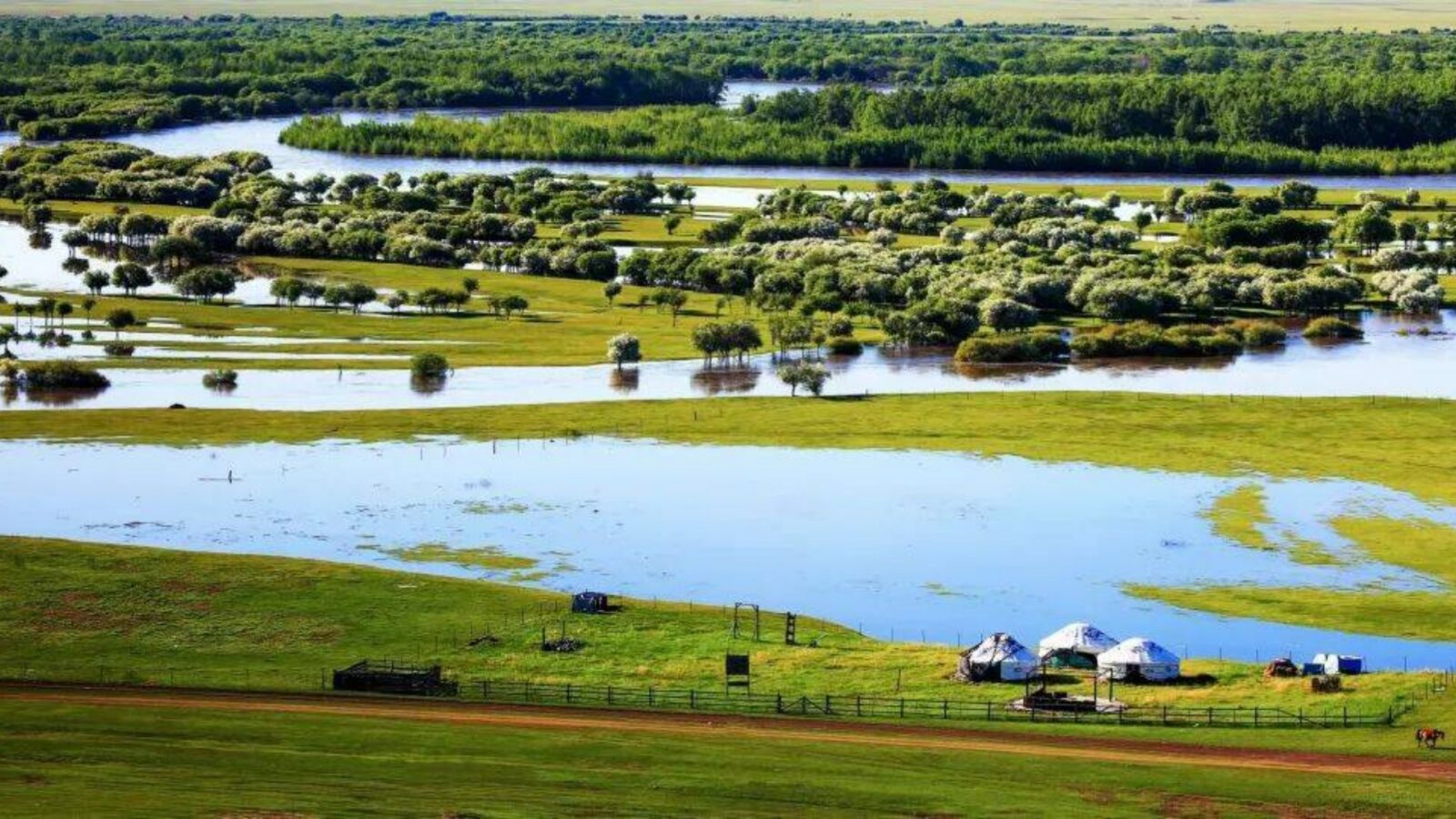
Ergun City, Inner Mongolia
Ergun (额尔古纳), from which the river drew its name, is not only the patrie of the Mongol race but the site of the only Russian township in China, which is a settlement on territory occupied by the Rossifi. In the combination of forest, steppe, lake and river, and the association of the Mongol, Russian and Chinese, particularly the religious cell of the Hui, it is indeed a representative "corner of the north."
Key Data & Practical Info
🌿 Ecological type: transition zone from Greater Khingan Forest to Hulunbuir Steppe
🌤️ Climate: cold temperate continental climate; long and severely cold winters
🌡️ Annual average temperature: -3°C to 2°C
📅 Best travel season: June–September (summer, green grasslands and yellow flowers); mid-to-late September (autumn, forests ablaze with color)
🗺️ Location: Northeast Inner Mongolia Autonomous Region, China-Russia border
Signature Landscapes & Experiences
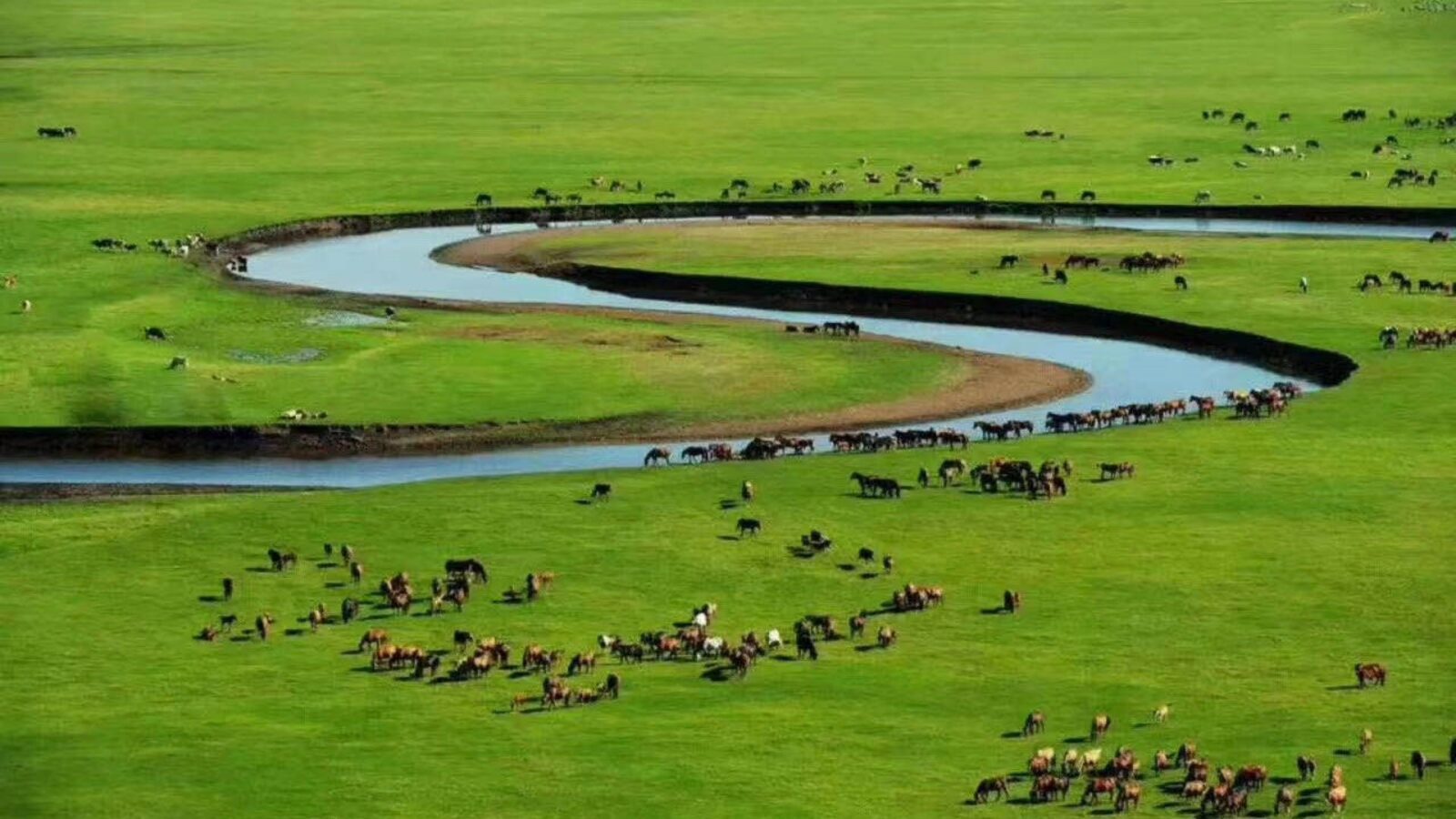
Ergun Wetlands
Ergun Wetlands (额尔古纳湿地): Climb to a high viewpoint and overlook "Asia's No. 1 Wetland" — the Genhe River winding like a silk ribbon across the vast steppe, creating extraordinary biodiversity.
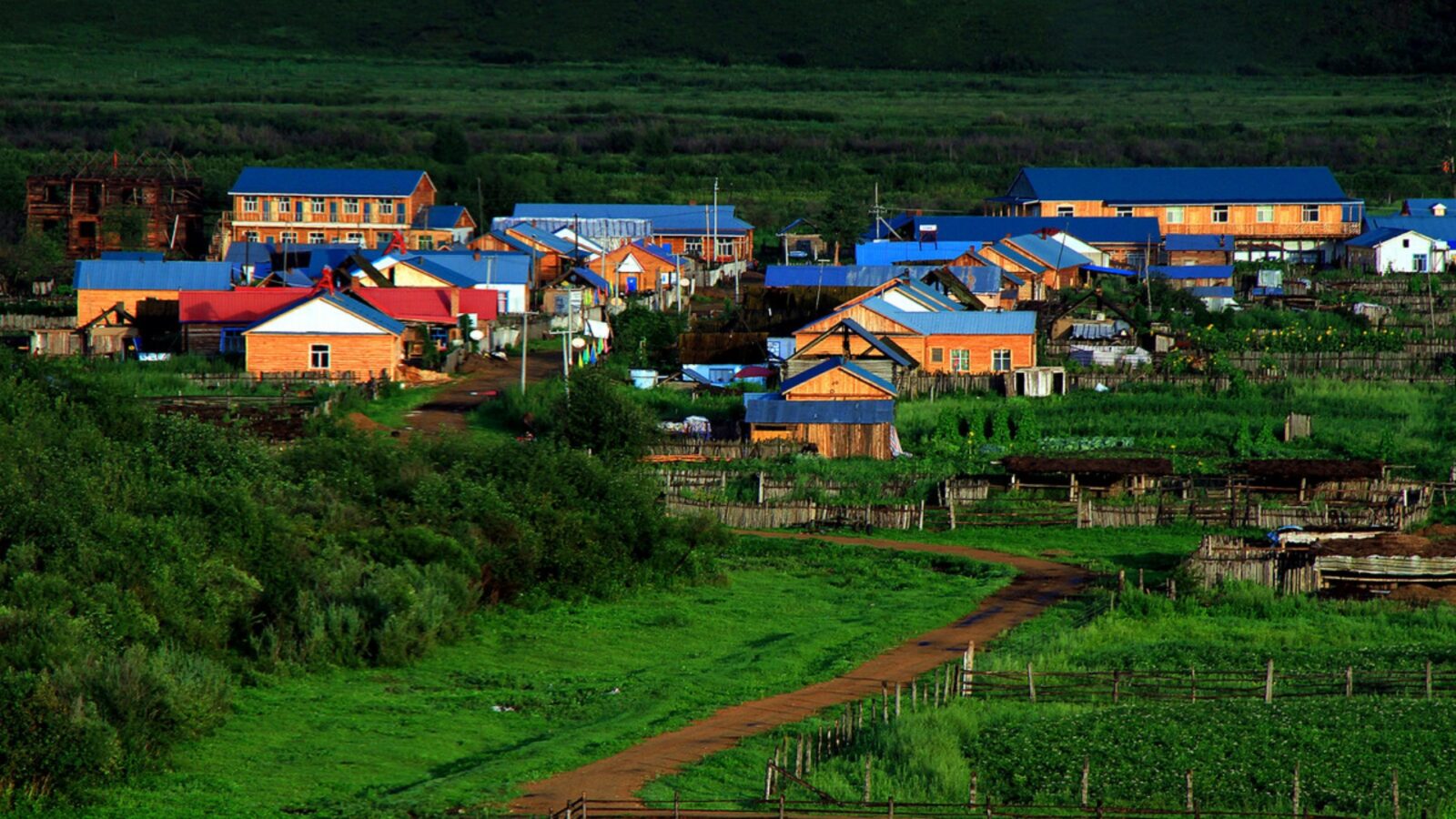
Shiwei、Enhe Russian Ethnic Township
Shiwei/Enhe Russian Ethnic Township (室韦/恩和俄罗斯族民族乡): Stay in carved wooden log houses, taste Leiba bread and blueberry jam, and listen to descendants of Sino-Russian heritage singing Russian folk songs in a Northeast Chinese accent — experiencing a unique exotic atmosphere.
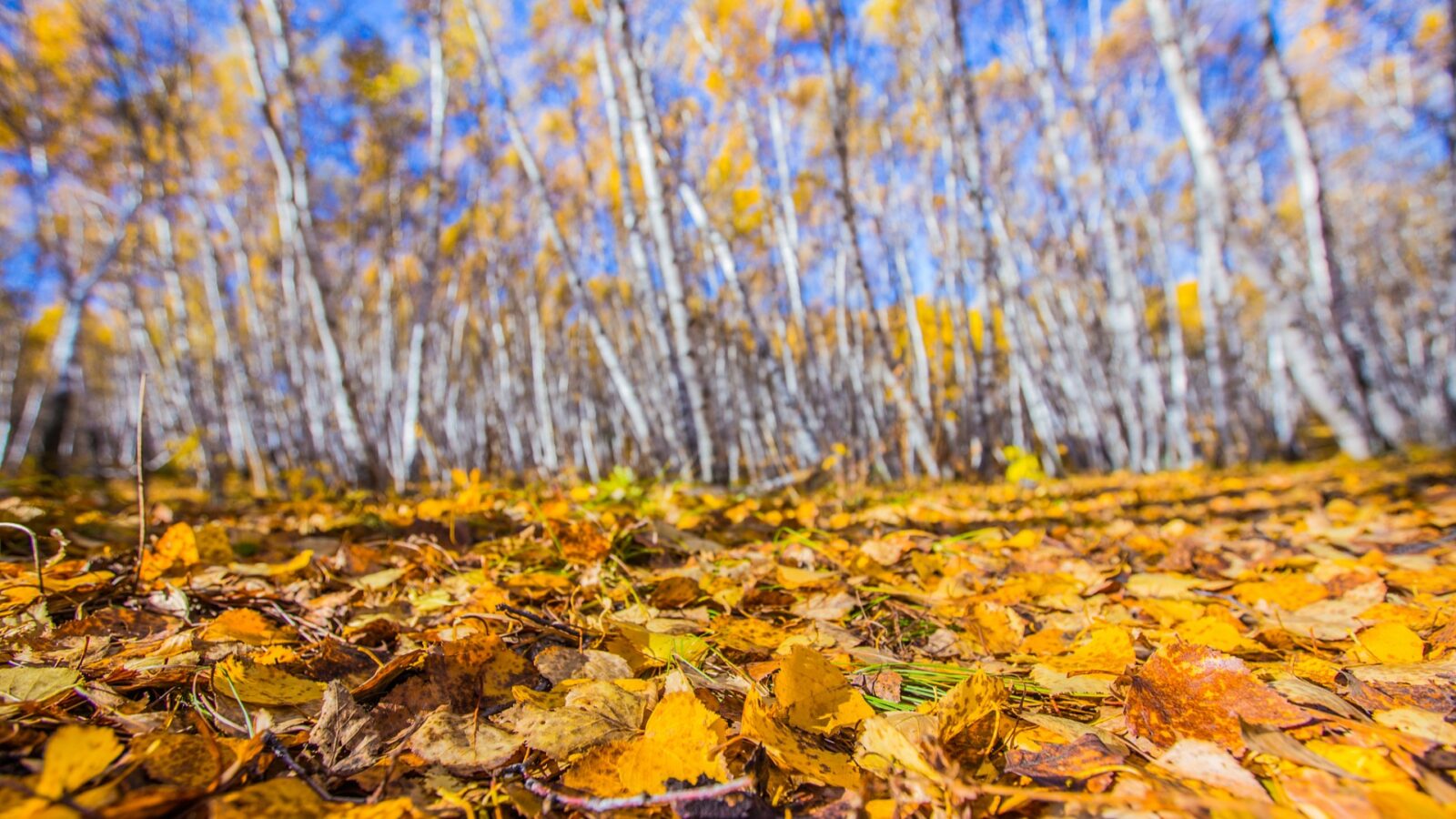
Birch Forests
Birch Forests & Steppe Pastures: Wander through golden birch forests in autumn, or visit nomadic herders on the summer steppe. Experience equestrian riding and milking cattle as pastoral life.
In Ergun — forest on the left, steppe on the right, and ahead the winding boundary river. This is a land full of epic grandeur and exotic romance, fulfilling every romantic imagination of the north.
21. Liang Village, Pingyao, Shanxi
The quieter, truer Pingyao the tourists never find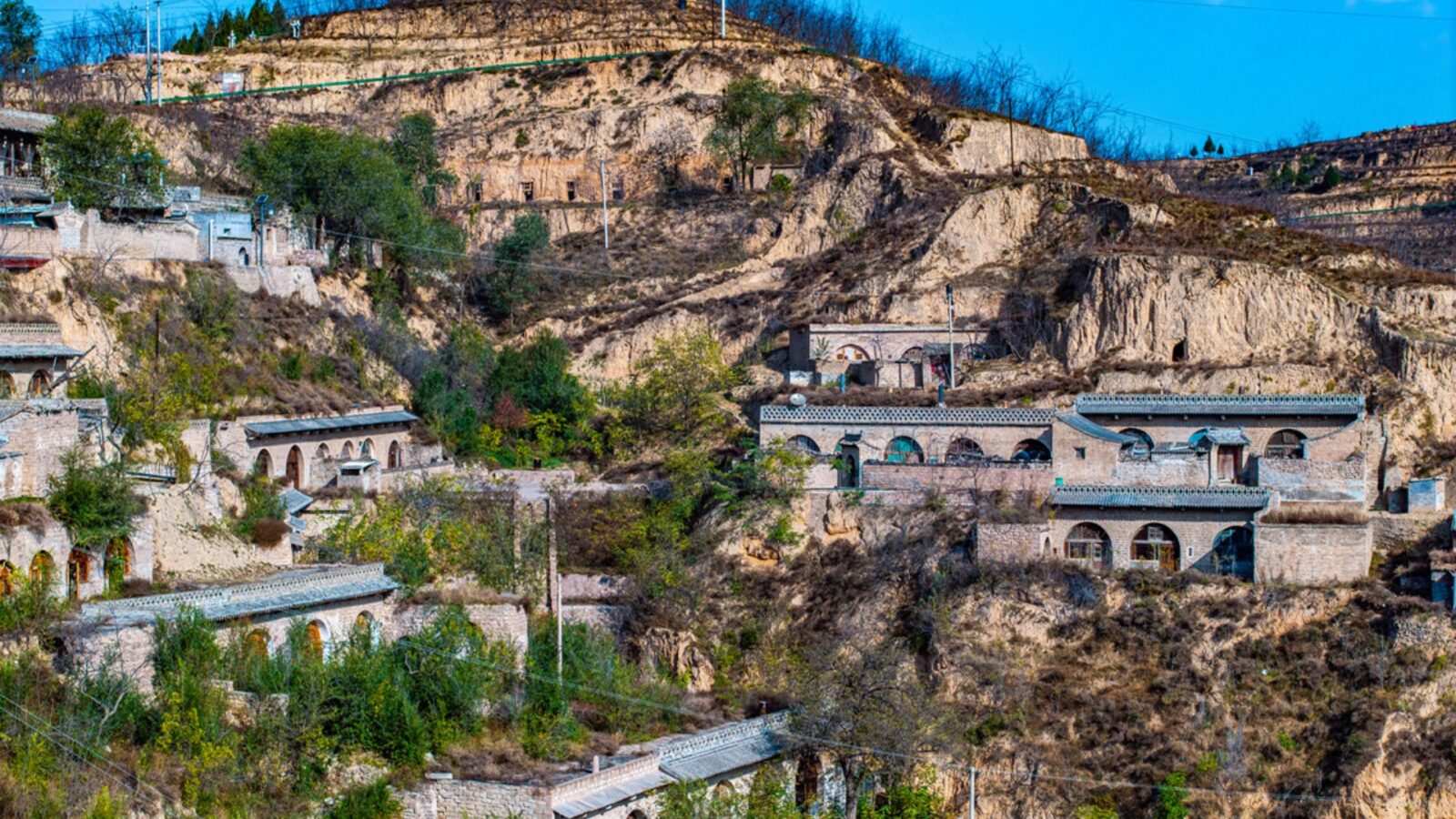
Liang Village, Pingyao, Shanxi
Liang Village (梁村): Located next door to Pingyao Ancient City, Liang Village is comprised of five fortresses in the shape of an outstretched phoenix, which served as the rural estate and warehouse of Shanxi merchant magnates, with an intact cluster of fortresses and lovely Ming-Qing residences to explore. It is known as "a complement to the culture of Pingyao Ancient City."
Key Data & Practical Info
🏘️ Ancient buildings: dozens of well-preserved Ming-Qing courtyard houses
🌤️ Environment: Loess Plateau climate, relatively dry
🌡️ Annual average temperature: approx. 10°C
📅 Best travel season:</strong> April–October
🗺️ Location: Yuebi Township, Pingyao County, Jinzhong City, Shanxi Province
Signature Landscapes & Experiences
"One Phoenix, Five Fortresses" Layout (一凤五堡): Overlook or wander through the five ancient fortresses including "Hexun Fortress" (和薰堡) and "Changtai Fortress" (昌泰堡), appreciating their "phoenix in flight" village layout and tight defensive system.
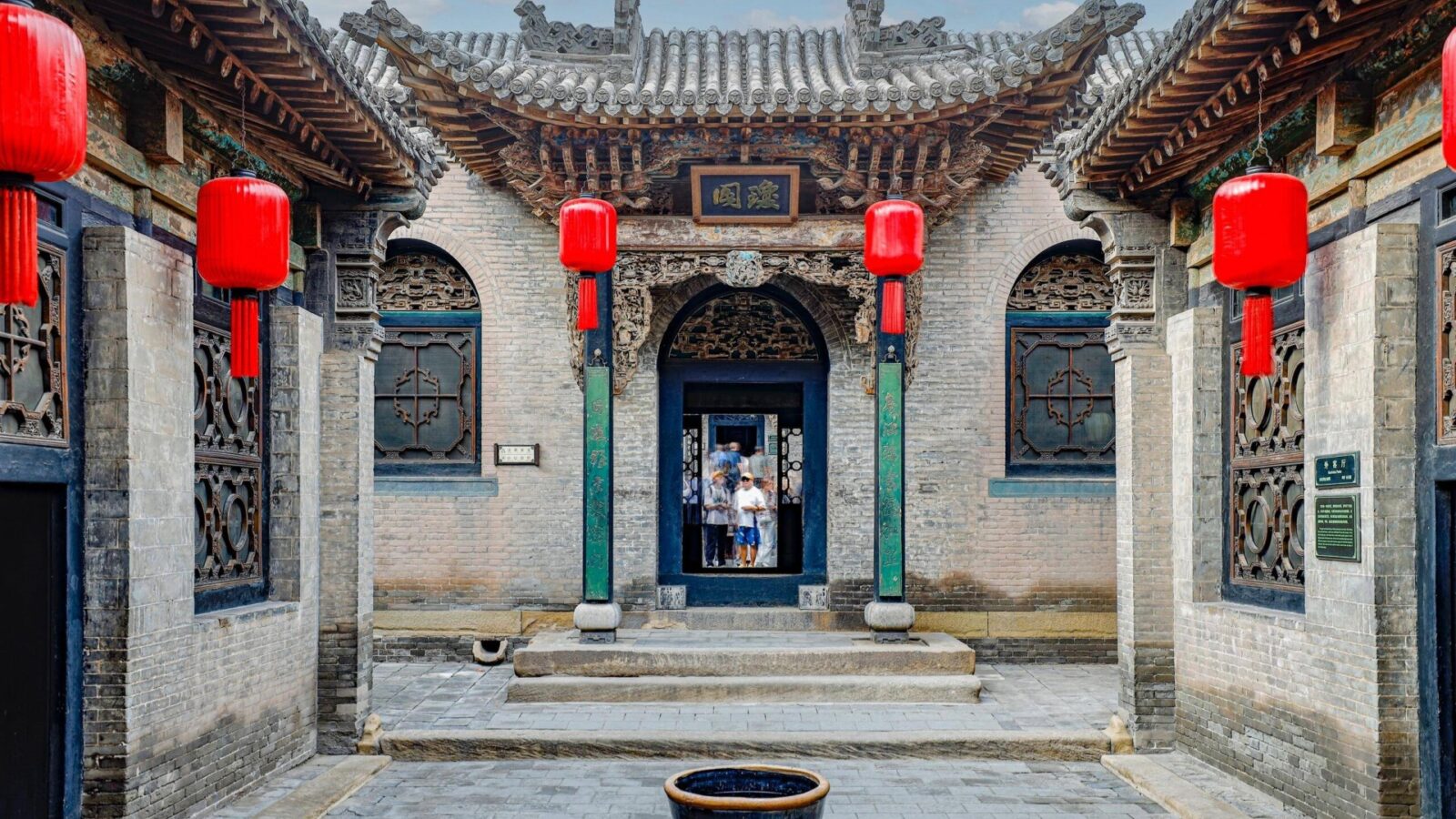
Shanxi Merchant Mansion Courtyards
Shanxi Merchant Mansion Courtyards: Visit the Ji family ancestral mansion, Ji clan ancestral hall and similar sites. Through brick carvings, wood carvings and inscribed plaques, glimpse the Shanxi merchant wisdom of "concealing wealth among the people" and profound clan culture.
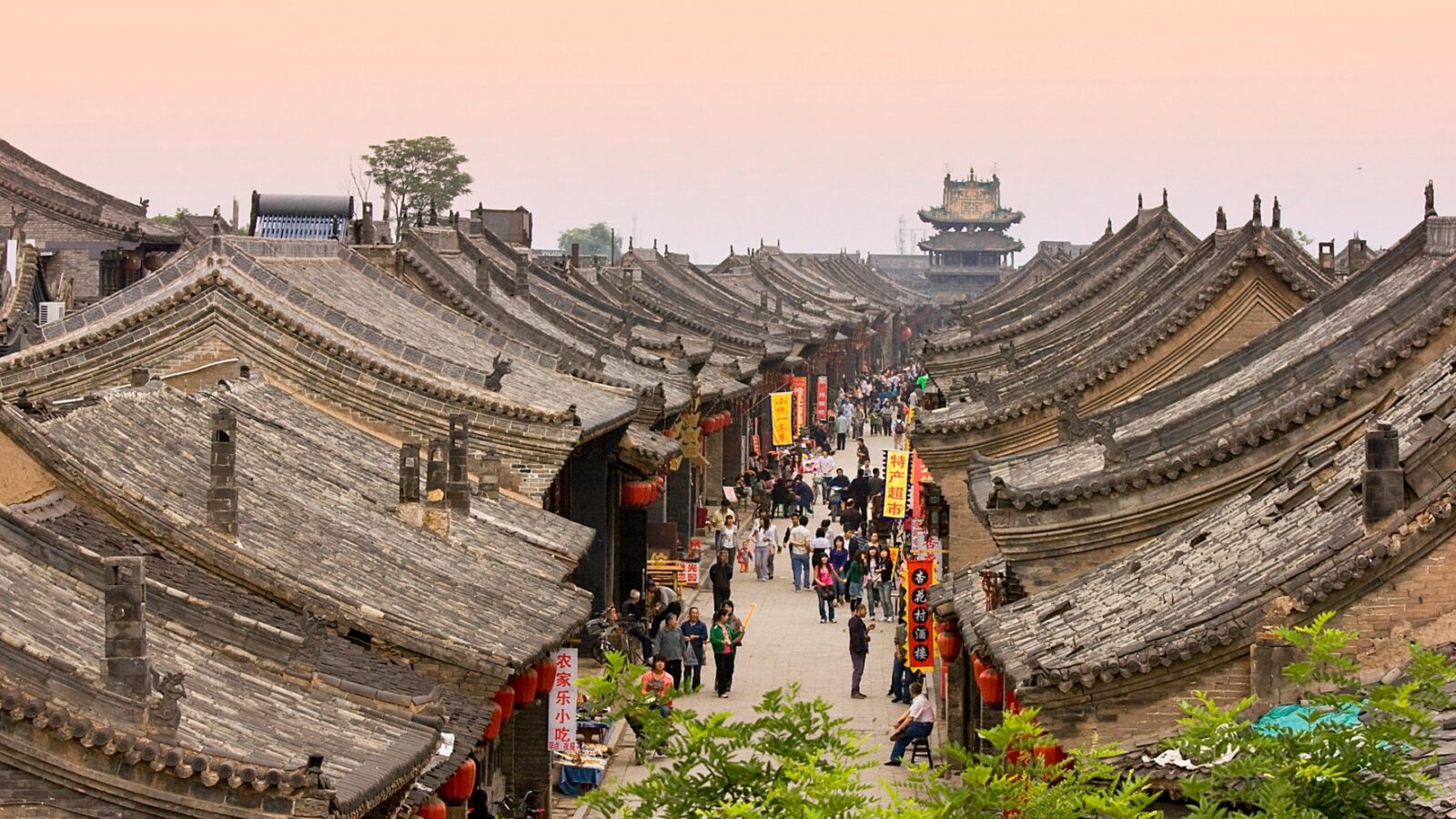
Pingyao Ancient City
Quiet Ancient City Outskirts: Compared to the commercial clamor of Pingyao Ancient City, Liang Village is more tranquil and unspoiled. Staying here allows a deeper appreciation of the original, authentic rural life atmosphere of central Shanxi.
Liang Village is a low-profile pearl beneath the glare of Pingyao's fame. It lacks the commercial noise of the ancient city, yet possesses a more complete village form and more authentic historical texture — the perfect quiet destination for deeply understanding Shanxi merchant culture.
22. Cuandixia Village, Beijing
One tunnel and you step five centuries back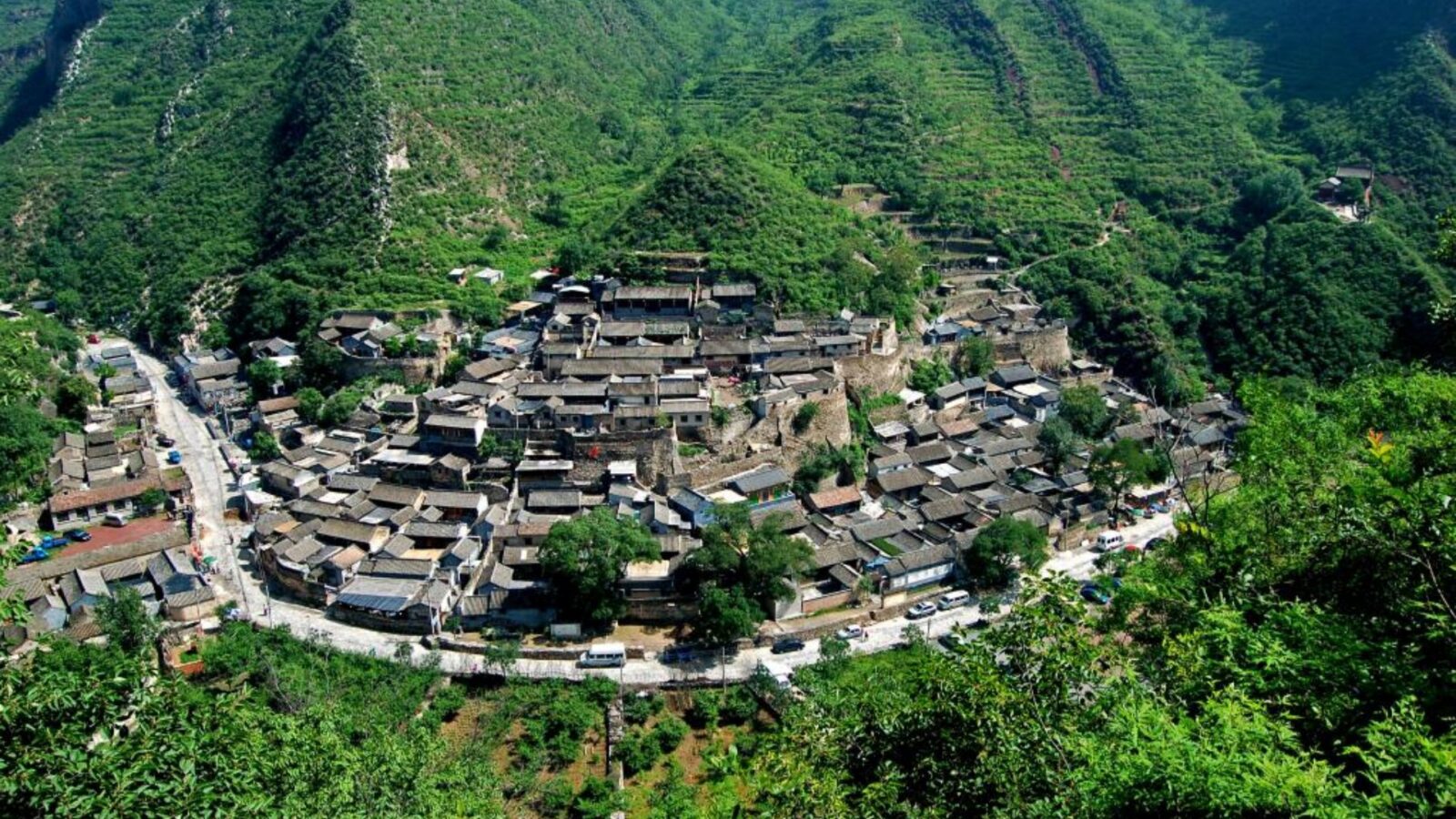
Cuandixia Village, Beijing
Cuandixia (爨底下村), the best preserved cluster of Ming-Qing courtyards (siheyuan, 四合院) in the suburbs of Beijing. Built against the mountainside and shaped like an ingot, the village was an important stopping-point for travelling merchants and travelers along the ancient postal road – dubbed the “Most Beautiful Village of Beijing,” it was a “treasure of classical architecture”.
Key Data & Practical Info
🏔️ Elevation: approx. 650 meters
🌤️ Environment: mountain climate, cooler than the urban core
🌡️ Summer average temperature: 3–5°C lower than central Beijing
📅 Best travel season: April–November; spring mountain flowers, autumn red leaves
🗺️ Location: Zhaitan Town, Mentougou District, Beijing
Signature Landscapes & Experiences
Mountain Siheyuan Architectural Cluster: Stroll on lanes paved with grey-blue and purple stone, admiring tiered courtyards that rise with the mountain. Feel the ingenious rainwater drainage system cleverly designed so "not a drop of water drains to outsiders."
"Cuan" Character Culture & Village Layout (爨字文化): Learn about the unique "Cuan" character culture; ascend Golden Toad Mountain (金蟾山) or Dragon Head Mountain (龙头山) to overlook the entire village's "ingot-shaped" feng shui layout.
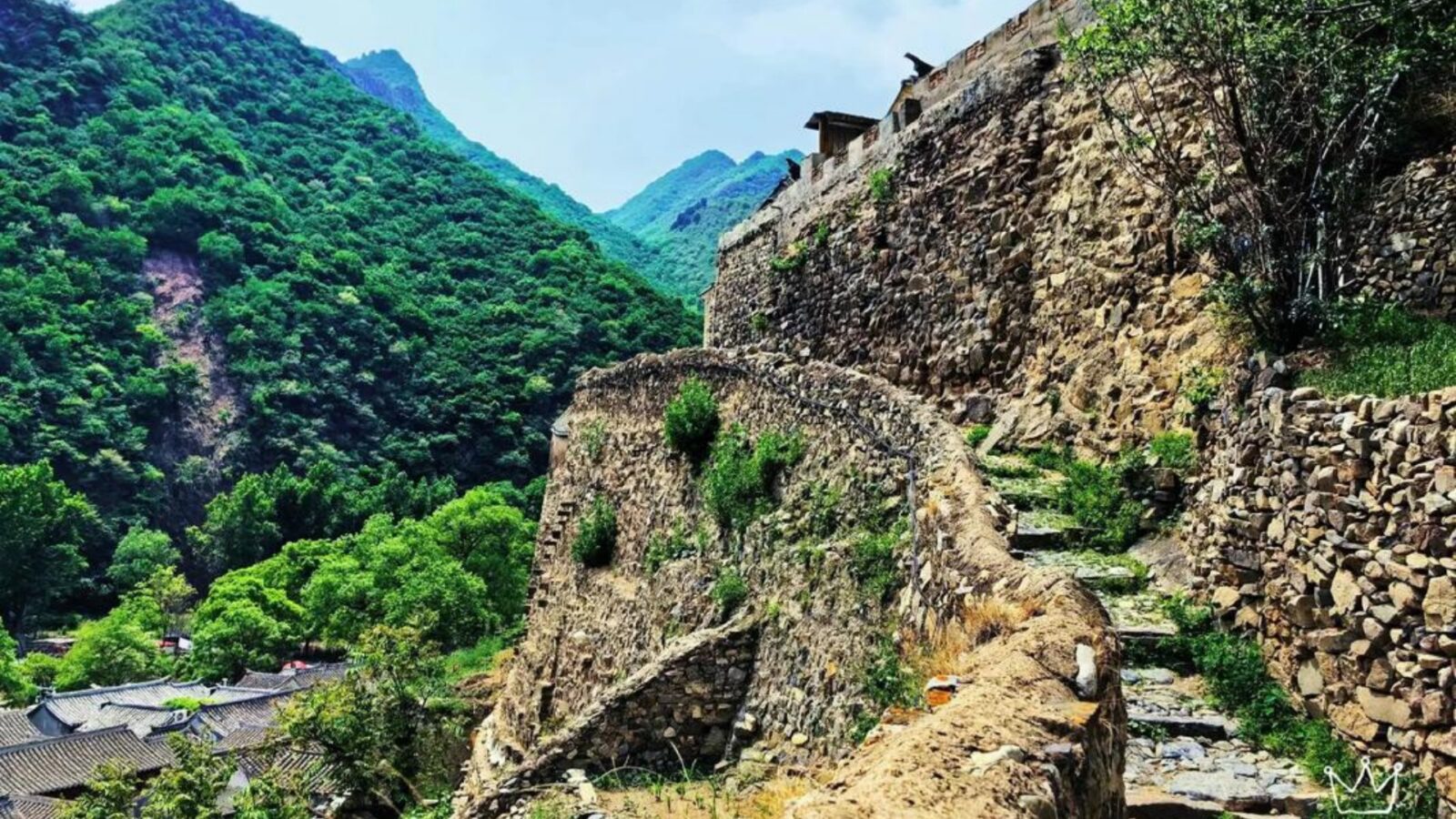
Ancient Postal Road
Ancient Postal Road & Guan Di Temple (古驿道与关帝庙): Walk the once-busy ancient western Beijing road, visit the Guan Di Temple at the village entrance, and imagine the prosperous scene of past caravans passing endlessly.
Cuandixia is the closest "old time" to Beijing. Pass through the tunnel and instantly travel from the modern metropolis to a Ming-Qing ancient town. The perfect destination to experience western Beijing historical culture and architectural aesthetics.
23. Linjiang City, Jilin
Changbai's deepest heart, a river away from another world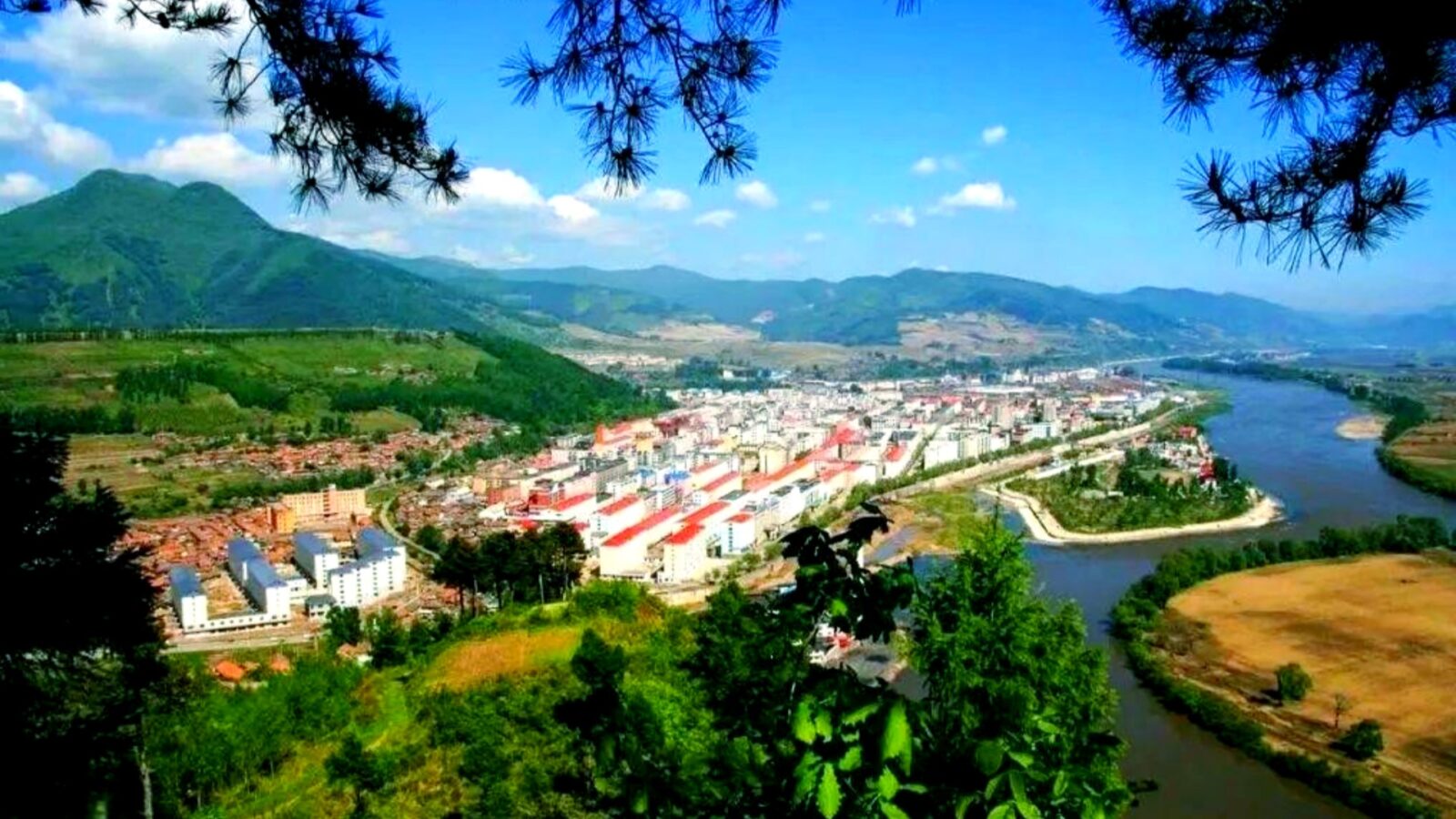
Linjiang City, Jilin
Linjiang (临江市) is located deep in the heart of land dominated by Changbai Mountain, sitting on the banks of the Yalu River (鸭绿江) which separates us from Korea across the water. With its boundless forests, natural resources, its significance as an ecological barrier, its fame as a “longevity township”, and in the blood of rich history that is coursing through its streets, it is little wonder it should be deemed worth visiting.
Key Data & Practical Info
🌳 Forest coverage rate: as high as 83% or above
🌤️ Air quality: superb, a natural oxygen bar
🌡️ Annual average temperature: approx. 4°C
💧 Characteristic: cool summers, long snow season in winter
📅 Best travel season: June–September (summer cooling); December–February (snow appreciation and snow activities)
🗺️ Location: Southeast Jilin Province, western slopes of Changbai Mountain
Signature Landscapes & Experiences
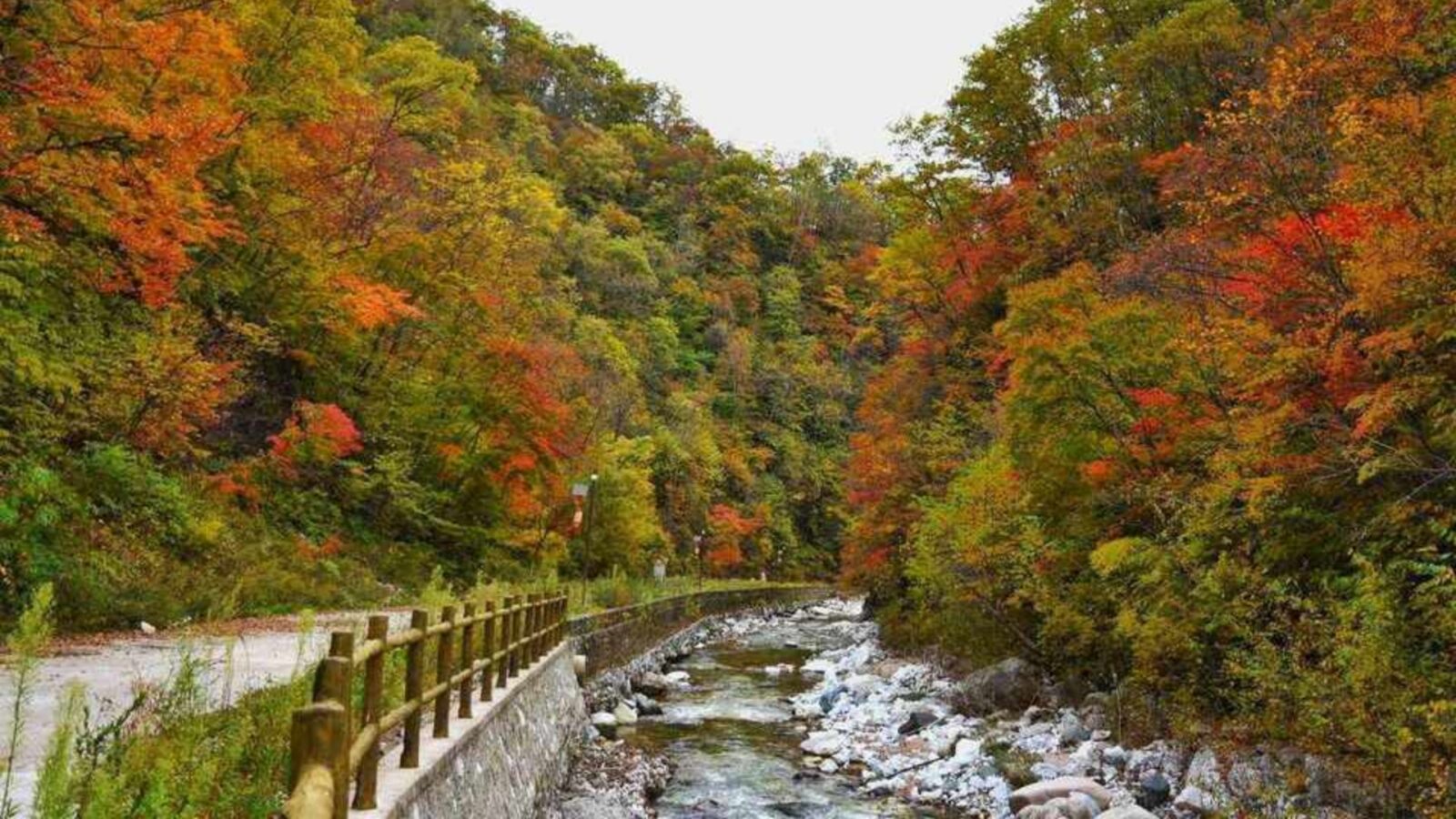
Jinyinxia Gorge
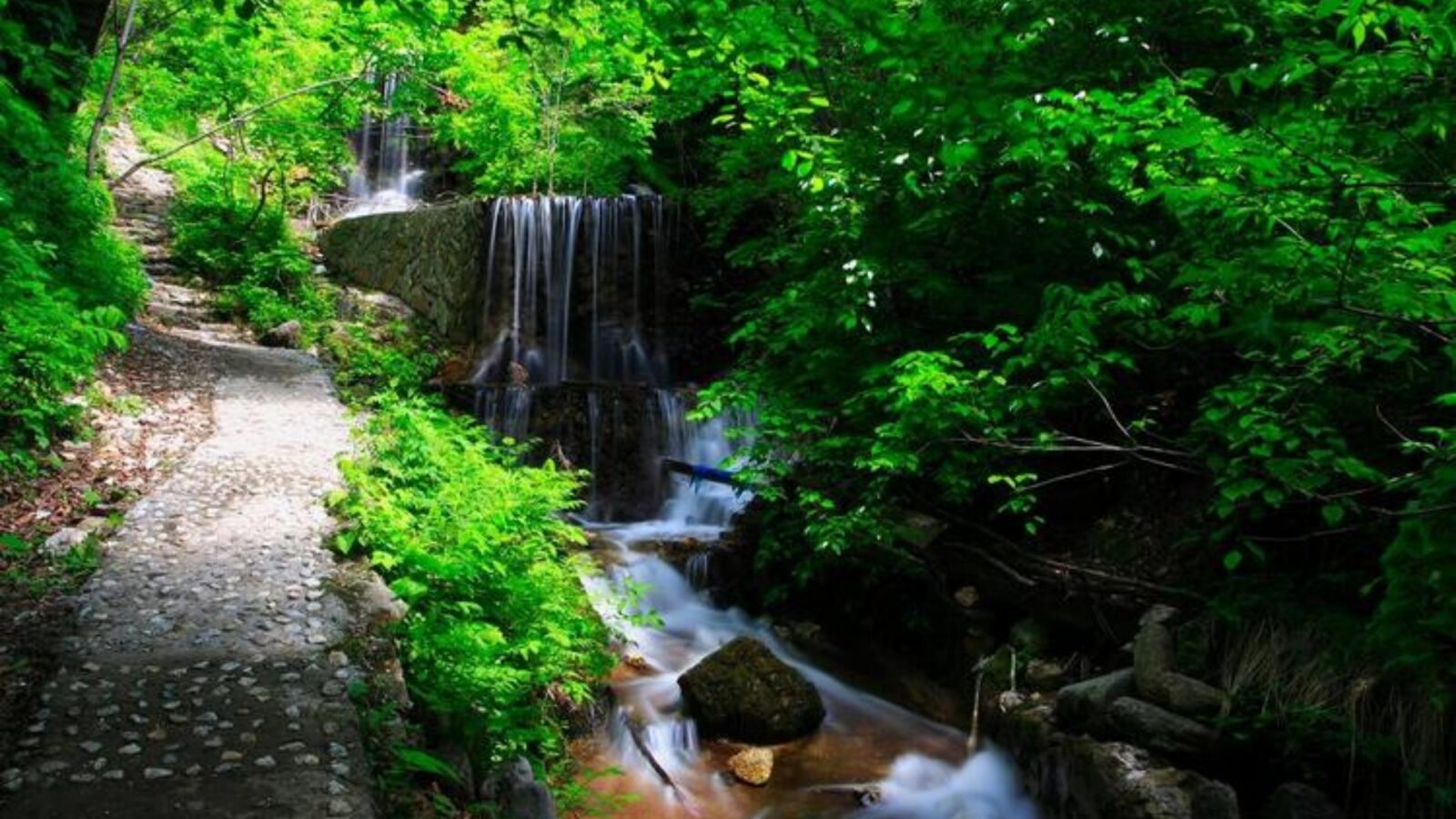
Jinyinxia Gorge
Jinyinxia Gorge (金银峡): Cruise the Yalu River canyon, watching jade-green river water wind between towering peaks on both banks — feeling the magnificent rivers and mountains of the China-Korea border.
Valleys & Forest Wellness: Head to Pokou, Songling Snow Village (松岭雪村) and similar areas. Enjoy forest bathing in summer; experience pure Lin Hai Xue Yuan (林海雪原, forest sea and snow plains) and snow village scenery in winter.
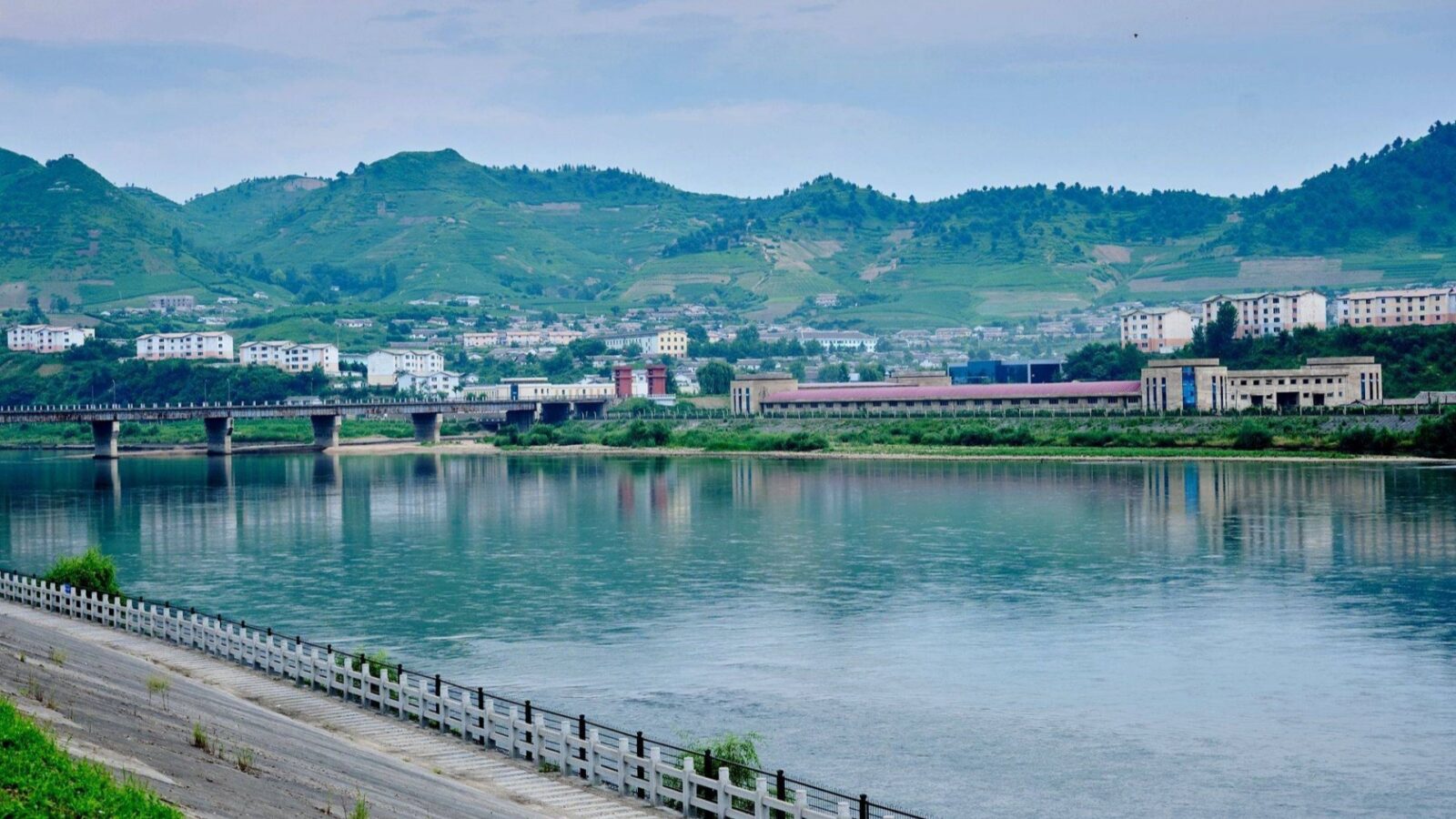
Yalu River
Chen Yun Former Residence & "Four Defenses of Linjiang" (四保临江): Visit Comrade Chen Yun's former residence and the "Four Defenses of Linjiang" battle memorial, and understand this important chapter of revolutionary history during the Liberation War period.
The beauty of Linjiang lies in its unpolished simplicity and abundance. It is the green treasure house gifted by Changbai Mountain and a serene pearl on the Yalu River shore — ideal for travelers seeking peace and deep oxygen immersion.
24. Hongxinglong Administration Bureau, Heilongjiang
Where geometry becomes agriculture and agriculture becomes art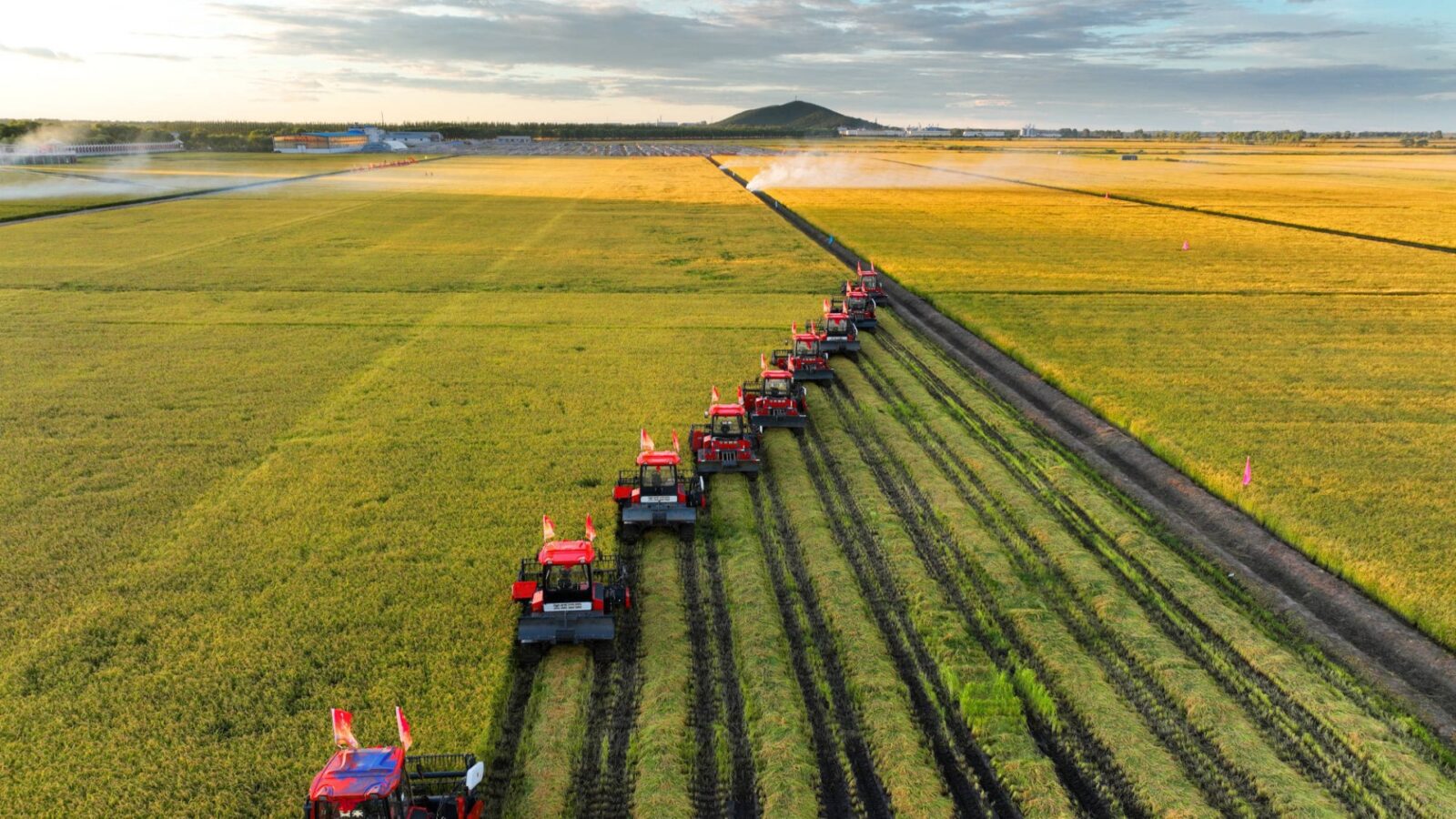
Hongxinglong Administration Bureau, Heilongjiang
Hongxinglong Administration Bureau (红兴隆管理局), the heartland of China's "North Great Wilderness" (北大荒). Home to the world's most advanced large-scale modern agriculture, there are no old villages here, just the most beautiful farmlands in the world, spreading a jigsaw of Chinese food security heroism.
🗂 Key Data & Practical Info
🌾 Core resource: one of the world's three major black-soil belts; vast cultivated land area
🌤️ Climate: cold temperate continental monsoon climate
🌡️ Annual average temperature: 2–4°C
📅 Best viewing season: May–June (black soil tilling, geometric beauty); July–September (green ocean, harvest in sight); late September–October (golden wheat waves, harvest season)
🗺️ Location: Northeast Heilongjiang Province, hinterland of the Sanjiang Plain
Signature Landscapes & Experiences
Ten-Thousand-Mu Grand Farm Fields (万亩大地号): Stand on an observation platform and look down upon endless geometric fields cultivated by the world's top agricultural machinery — feel the extreme order and geometric beauty brought by modern agriculture.
Modern Agricultural Machinery Demonstrations: During appropriate seasons, watch the spectacular sight of large tractors, combine harvesters and aerial chemical application operations. Witness the technological power of "smart agriculture."
North Great Wilderness Spirit Study Tour (北大荒精神研学): Visit the North Great Wilderness Development and Construction Memorial Museum, understand the epic history of transformation from "North Great Wilderness" to "North Great Granary," and feel the "North Great Wilderness Spirit" of hard work and pioneering.
Hongxinglong represents the pinnacle expression of modern industrial civilization applied to agriculture. The scenery here is a grand narrative about human survival, technology and the land. Come here and witness the spine and strength of Chinese agriculture.
25. Lüjiang Village, Dandong, Liaoning
A wetland pastoral where borders dissolve into rapeseed and river[/su_highlight]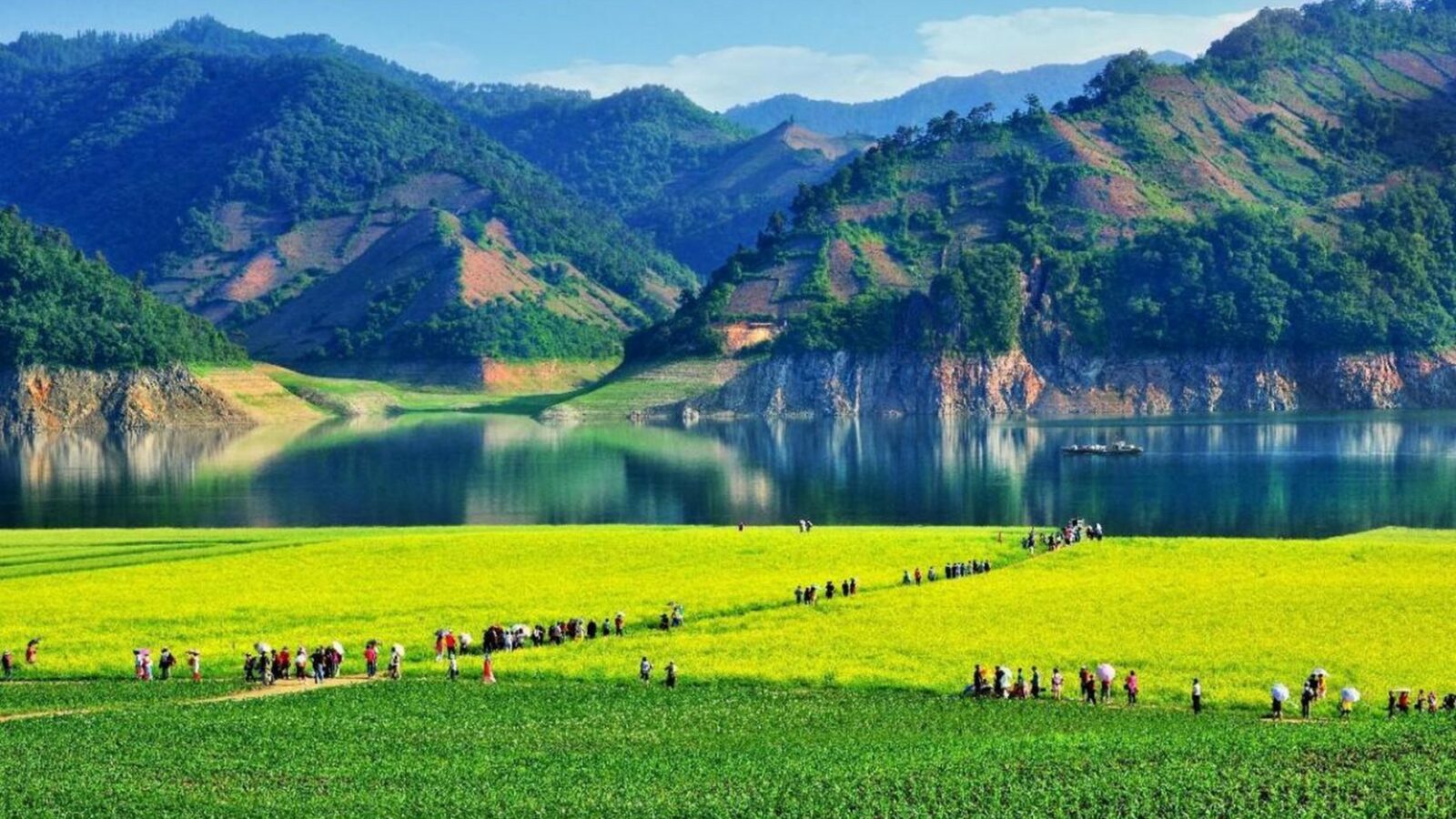
Lüjiang Village, Dandong, Liaoning
Lüjiang Village (绿江村) is located on the China-DPRK border where the Yalu River and Hun River (浑江) converge. Because of fluctuating water levels, large wetlands and "submerged land" landscapes form here. Spring rapeseed flowers, summer green wilderness and autumn tidal flats create endlessly transforming scenery through all four seasons — earning it the title "Northern Shangri-La."
Key Data & Practical Info
🏞️ Landscape type: rivers, tidal flats, wetlands and farmlands interwoven
🌤️ Climate: temperate humid monsoon climate
🌡️ Annual average temperature: 6–8°C
📅 Best travel season: May–June (rapeseed flower sea, submerged lands); September–October (autumn colors, tidal flats)
🗺️ Location: East of Kuandian Manchu Autonomous County, Dandong City, Liaoning Province, China-DPRK border
Signature Landscapes & Experiences
Hun River Grand Bend & Rapeseed Flower Sea (浑江大拐弯与油菜花海): In spring, climb to a viewpoint and overlook the giant "Ω"-shaped bend the Hun River forms before the village, with golden rapeseed flowers and jade-green river water reflecting each other magnificently.
The "Submerged Land" Spectacle (水没地奇观): In spring and summer when river water rises, farmland and trees become half-submerged, creating dreamlike "forests in water" and "fields in water" landscapes, with fishermen rowing small boats through them as if in a painting.
Fishing Culture & Border Scenery: Experience local fishermen casting nets, taste fresh Yalu River fish. Gaze across the river at North Korean scenery and feel the unique border atmosphere.
<p>The beauty of Lüjiang Village lies in its unadorned wildness and the surprise of four seasons in rotation. It is less refined than the Jiangnan water towns, but possesses a grand, naturally formed beauty of its own — a paradise for photographers and road-trip enthusiasts.
Frequently Asked Questions About China Villages
Q: What makes china villages different from famous ancient towns like Lijiang or Zhouzhuang?
Famous ancient towns like Lijiang prioritize tourist commerce over authentic community life. However, china villages in this guide maintain living cultural heritage. For instance, Shibadong and Liang Village remain active, evolving communities. Therefore, china villages deliver genuine immersion that heavily commercialized destinations cannot replicate.
Q: Which china villages are best for first-time visitors to rural China?
First-time visitors find china villages like Wuyuan, Anji, and Cuandixia highly accessible. For instance, Cuandixia sits just two hours from central Beijing. However, travelers seeking minority culture should consider Dazhai or Taoping instead. Therefore, china villages across multiple regions serve newcomers at varied experience levels.
Q: When is the best time of year to visit china villages, and does timing vary by region?
Timing varies significantly across china villages by region and landscape type. For instance, East China villages peak in spring for rapeseed flowers and autumn for harvest color. However, Northwest china villages like Hemu draw visitors in late September for golden birch. Therefore, travelers should plan each visit around the destination's dominant seasonal feature.
Q: Are china villages accessible without a private car?
Accessibility varies widely among china villages covered in this guide. Well-known destinations like Wuyuan and Cuandixia offer regular tourist bus and train connections. However, remote china villages like Yidoushui and Yumu require chartered vehicles for the final approach. Therefore, travelers should confirm local transport options before departure.
Q: Which china villages are best suited for photography?
Wuyuan County offers unmatched spring morning mist scenes among china villages. For instance, its rapeseed terraces attract landscape photographers from across the world. However, Hemu Village in Xinjiang stands apart for its golden-autumn birch scenery. Therefore, photographers visiting china villages should plan itineraries around each location's peak seasonal window.
Q: What is the significance of visiting Shibadong Village, and how does tourism support the community?
Shibadong Village is the verified birthplace of China's targeted poverty alleviation policy. Therefore, tourism there directly funds local homestays and community cooperatives. However, unlike polished tourist sites, china villages like Shibadong offer raw, deeply meaningful cultural encounters. Visitors to china villages should purchase goods directly from cooperatives to maximize local benefit.
Q: Are there china villages focused specifically on minority ethnic cultures?
China villages across the Southwest cover Tujia, Qiang, and Wa ethnic cultures. For instance, Taoping hosts living Qiang traditions, while Cangyuan preserves Wa heritage. However, Northwest china villages add Tu and Tuvan experiences at Maji and Hemu. Therefore, travelers find rich minority-culture options across all seven geographic regions in this guide.
Q: How do China's eco-villages differ from standard nature tourism destinations?
Eco-villages like Anji maintain forest coverage above 70% alongside sustained high air quality ratings. However, china villages of this type also carry significant policy importance. For instance, Anji is the birthplace of China's "green mountains are golden mountains" doctrine. Therefore, china villages with ecological focus deliver intellectual depth that standard nature parks cannot offer.
Q: Can china villages be combined into multi-destination itineraries?
Several regional clusters allow travelers to combine china villages into efficient multi-destination itineraries. For instance, Wuyuan, Xidi, and Anji form a natural East China circuit. However, Southwest china villages linking Xingyi, Wulong, and Taoping require longer road travel. Therefore, travelers should allocate at least five to seven days per regional cluster.
Q: What should responsible travelers keep in mind when visiting traditional china villages?
Responsible travel in china villages centers on supporting local accommodation and food providers. However, travelers must also respect photography boundaries near minority communities and religious sites. For instance, many china villages post clear behavioral guidelines at their entrances. Therefore, following those guidelines ensures communities continue to thrive for future visitors.