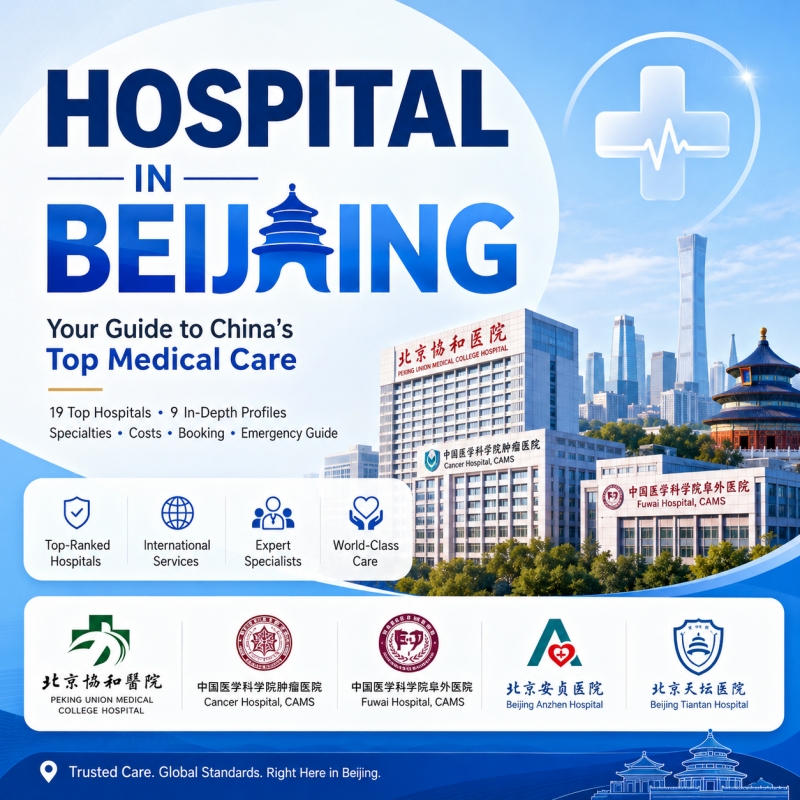
Healthcare costs continue to climb in the West. Waiting lists extend year upon year. Medical tourism in China is a real, tangible, and feasible alternative for overseas patients seeking quality treatment at affordable prices. In 2025 China welcomed 1.28 million international patients – a 73.6% rise over 3 years. Hainan’s Boao Lecheng zone alone hosted over 865,000 visitors, double year-on-year. The Economist asked recently: “Is China becoming a medical tourism hotspot?” For many patients, it already is. In this guide, we share 2026 data, real cost breakdowns, new visa regulations and detailed step-by-step planning to help you decide.
Core Advantages: Low Costs, Advanced Tech, and Friendly Policies
China has a lot more to offer than price alone. Increasingly international patients are opting for access to superior technologies, surgical volumes and levels of clinical outcomes. China’s top hospitals are handling 5-10 times the case volumes of their Western counterparts, improving the likelihood of surgeon skill and quality of outcomes.
Healthcare Costs Drop by 50% to 80%
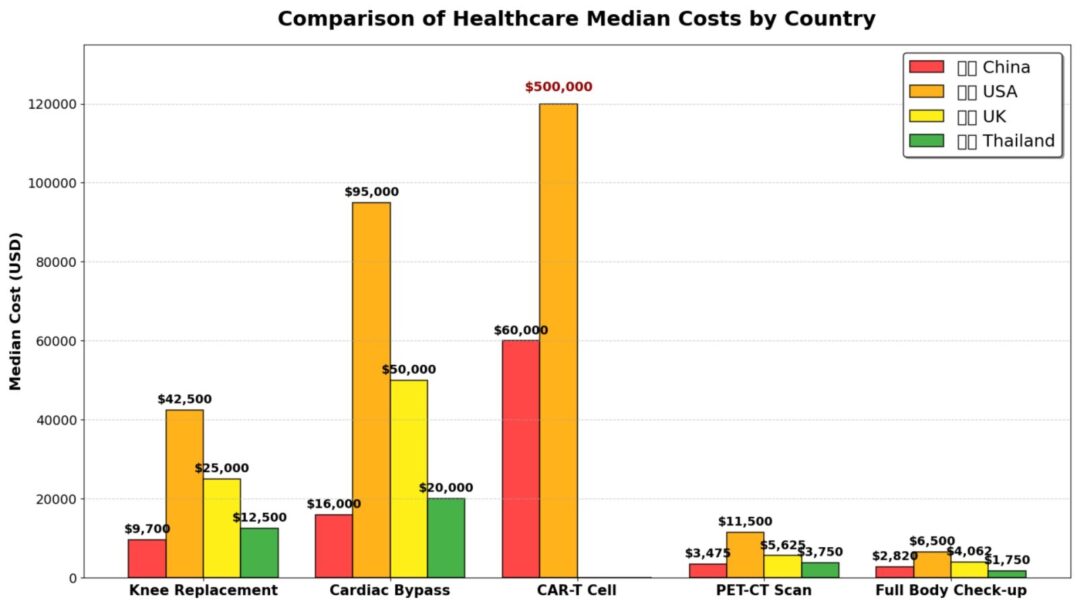
Medical care in China costs between 50-80% less than in the US or UK. A knee replacement that runs $45,000 in Boston costs roughly $8,000 – $12,000 in Beijing. However, the savings aren’t at the expense of quality—higher surgical volumes often produce better outcomes than lower-volume Western centres. The table below shows the key prices for comparison at a glance.
| Procedure | China (USD est.) | USA | UK | Thailand |
|---|---|---|---|---|
| Knee Replacement | $7,600–$11,800 | $35,000–$50,000 | £15,000–£25,000 | $10,000–$15,000 |
| Cardiac Bypass (CABG) | $11,800–$20,200 | $70,000–$120,000 | £30,000–£50,000 | $15,000–$25,000 |
| CAR-T Cell Therapy | $40,000–$80,000 | $400,000–$600,000 | Not widely available | Not available |
| PET-CT Scan | $1,350–$5,600 | $8,000–$15,000 | £3,000–£6,000 | $2,500–$5,000 |
| Full Body Check-up | $140–$5,500 | $3,000–$10,000 | £1,500–£5,000 | $500–$3,000 |
Grade 3A Hospitals Guarantee Quality Clinical Outcome
China’s top-tier hospitals carry a Grade 3A rating — the nation’s highest accreditation standard. Additionally, the best hospitals for foreign patients run dedicated International Medical Services (IMS) departments. These units provide English-language care, insurance coordination, and streamlined admissions. For a curated starting point, see our guide to the best hospitals in China for international patients.
Furthermore, surgical volume drives outcome quality directly. China’s leading cardiac and orthopedic surgeons perform 5–10 times more procedures annually than Western counterparts. That experience builds genuine expertise.
Modern Tech Integrates with Traditional Chinese Medicine
China is also the world leader for CAR-T cell immunotherapy, and for proton or heavy-ion treatment of cancer. They are also far more available than in the West, and much cheaper — a keratoprosthesis operation costs ¥100,000 (~$14,000) in China vs $98,000 in the US.
Traditional Chinese Medicine (TCM) adds a layer of value no other medical destination offers. Furthermore, TCM supports post-surgical recovery and chronic disease management alongside Western treatment. You can explore Shanghai Chinese medicine clinic options to see what integrated care looks like in practice.
Medical Visa Systems Facilitate Easy International Entry
China has designed its medical visa framework specifically to support international patients — making the entry process one of the most patient-forward in Asia. The dedicated S2 visa is tailored for short-term treatment stays, enabling patients to arrive with a hospital-issued invitation letter and begin care without delay. For extended or phased treatment courses, the S1 visa provides longer-term residence under medical supervision — a flexibility that no standard tourist visa can offer. Hainan’s Boao Lecheng zone goes even further: 59 nationalities enter completely visa-free for up to 30 days, purpose-designed for medical purposes, removing pre-travel administrative barriers entirely. Patients transiting through Beijing or Shanghai benefit from the 144-hour transit visa, which is sufficient for a full diagnostic check-up without any separate visa application. Taken together, these purpose-built entry options ensure that international patients can reach China’s leading medical institutions efficiently and without bureaucratic delay. For full requirements, see our dedicated guide on China medical visa requirements.
China Maintains High Global Medical Tourism Competitiveness
China ranked 33rd in the Medical Tourism Index 2020–2021 with a score of 63.47. Thailand, India and Turkey still lead in overall number of international patients. Where China excels is in specific product categories. Therefore, this table shows where China leads – and where it’s still behind.
| Criteria | China | Thailand | India | Turkey |
|---|---|---|---|---|
| Cost Savings vs. West | 50–80% | 50–75% | 60–80% | 50–70% |
| CAR-T / Advanced Oncology | ✅ Global leader | ❌ Limited | ⚠ Growing | ❌ Limited |
| English Language Support | ⚠ IMS depts only | ✅ Widespread | ✅ Widespread | ⚠ Variable |
| Visa Ease | ⚠ S-visa required (Hainan: 59-nation visa-free) | ✅ Visa-on-arrival | ✅ e-Visa | ✅ e-Visa |
| TCM / Integrative Medicine | ✅ Unique advantage | ❌ | ⚠ Ayurveda only | ❌ |
| Intl. Patient Volume | ⚠ Growing fast | ✅ Established | ✅ Established | ✅ Strong |
China’s strongest position is in cutting-edge treatment access and cost-to-quality ratio. However, for ease of navigation and English-language service, Thailand and India currently hold the edge. For broader context, see our comparison of top medical tourism countries and global health tourism destinations.
How to Choose: High Success Specialized Medical Projects
Of course not every treatment is going to work well in China but for many categories of procedures, China can provide an unrivalled combination of clinical excellence, cost and access to unavailable procedures. Use the sections below to determine whether your specific treatment is a good fit for China.
Comprehensive Checkup Packages Offer Exceptional Financial Value
Preventive health check-ups and diagnostic imaging are among the treatments most ideally suited to China. No appointment backlog, same-day PET-CT scheduling, AI-assisted cancer screening, and comprehensive full-body imaging — all delivered at 70–90% below Western equivalents. Patients who would wait months for an MRI or PET-CT at home can access the same technology within days at a Grade 3A hospital in Beijing or Shanghai. A PET-CT scan that costs $8,000–$15,000 at Mayo Clinic runs ¥9,680–¥40,000 in China. For patients seeking early-detection screening or second-opinion diagnostics, China removes both the cost barrier and the waiting-time barrier simultaneously. Explore your medical check-up options in China, or learn how to book a medical check-up in China step by step.
Cardiac and Orthopedic Surgeries Yield Substantial Savings
| Procedure | China (RMB) | China (USD est.) | Typical USA Cost |
|---|---|---|---|
| Knee Replacement | ¥55,000–¥85,000 | $7,600–$11,800 | $35,000–$50,000 |
| Cardiac Bypass (CABG) | ¥85,000–¥145,000 | $11,800–$20,200 | $70,000–$120,000 |
| Pancreatic Surgery (spleen-preserving) | ~¥160,000 | ~$22,300 | $80,000–$150,000 |
| CAR-T Cell Therapy | ¥290,000–¥580,000 | $40,000–$80,000 | $400,000–$600,000 |
| Keratoprosthesis (Eye) | ~¥100,000 | ~$14,000 | ~$98,000 |
For high-complexity, high-cost surgeries, China offers the clearest suitability advantage. Cardiac surgery, orthopaedic procedures, and oncological operations fit well with China due to the high volume of surgeries combined with dramatically lower costs — few other destinations can compete with that combination. Even more importantly, China is one of the very few places in the world where CAR-T cell immunotherapy is both clinically and financially accessible — generally priced at roughly a tenth of the US price. For patients who find their procedure unavailable or unaffordable in their home countries, China offers not only a cheaper option but often the only viable option.
Traditional Medicine and Dental Care Remain Affordable
Three specialist treatment categories are particularly well-suited to China by virtue of unique structural advantages. Dental care combines internationally competitive implant materials and techniques with prices 70–80% below US rates — a single implant costs ¥3,000–¥8,000 versus $3,000–$6,000 in the United States, making China one of the world’s most compelling dental tourism destinations. Traditional Chinese Medicine is only authentically available in China: acupuncture, herbal therapy, and integrative rehabilitation are seamlessly delivered alongside Western treatment at Grade 3A hospitals — a combination impossible to replicate elsewhere. IVF and fertility treatment is well-suited to China’s top Shanghai clinics, which offer advanced reproductive care at ¥30,000–¥80,000 per cycle, compared to $15,000–$30,000 in the United States, with some of Asia’s highest clinical success rates.
Related: Traditional Chinese Medicine
How to Select: Specialty Strengths and Recommended Hospitals
Choosing the right hospital is as important as choosing the right treatment. China is not homogeneous — each major city, each leading institution has its wings and talons of specialty strength. Choose the right hub, align your condition to the right hospital.
China’s Major Medical Hubs: City & Specialty at a Glance
| City / Region | Specialty Focus | Key Hospitals | Entry Notes | Best For |
|---|---|---|---|---|
| Beijing | Complex surgery, cardiology, rare & difficult diseases | PUMCH, Fuwai Hospital, Beijing University Third Hospital, Beijing United Family Hospital | S1/S2 visa; 144-hr transit for check-ups | High-stakes and undiagnosed conditions |
| Shanghai | Oncology, haematology, CAR-T, neurology, multi-specialty | Ruijin Hospital, Huashan Hospital, 22 international pilot hospitals | S1/S2 visa; 144-hr transit available | Cancer, blood disorders, neurological cases |
| Hainan Boao Lecheng | Experimental drugs & devices, frontier treatments | Boao Super Hospital, Hainan Boao Cancer Hospital | Visa-free (59 nations, 30 days) | Drugs/devices unavailable elsewhere in China |
| Shenzhen / Guangzhou | Diagnostics, premium specialist care, oncology | Multiple Grade 3A hospitals | S1/S2 visa; adjacent to Hong Kong | Hong Kong-based patients; cost-effective premium care |
| Kunming | General surgery, internal medicine, diagnostics | Yunnan No.1 People's Hospital and regional Grade 3A hospitals | S1/S2 visa; close proximity to South/SE Asia | South & Southeast Asian patients; budget-conscious travellers |
China’s medical geography is purposefully diversified. Beijing concentrates the nation’s most prestigious national-level institutions, handling complex referral cases and rare diseases. Shanghai leads internationally, with 22 hospitals running pilot programmes for overseas patients. Hainan’s Boao Lecheng zone offers unique policy advantages — including access to over 525 overseas-approved drugs unavailable on the mainland and a 59-nation visa-free entry policy. For South and Southeast Asian patients, Kunming offers the lowest cost point of entry, with strong regional connectivity and established patient pathways from countries including Bangladesh and Myanmar.
Related: Explore More Destinations
Peking Union Medical College Hospital
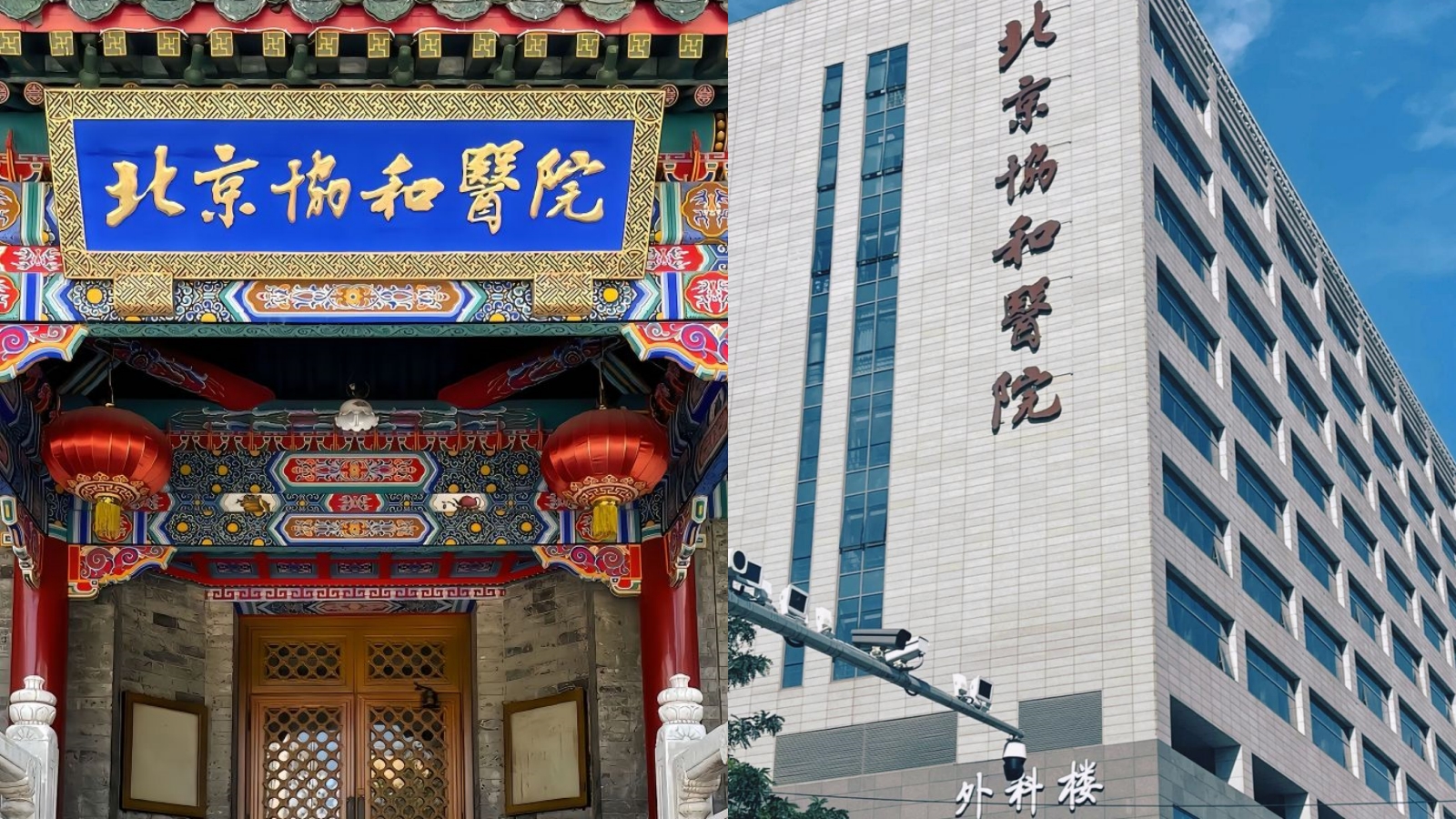
The Peking Union Medical College Hospital (北京协和医院, PUMCH) is regarded as the top medical institution in China, where the most complex and difficult to diagnose and rare disease cases are sent as the referral centre for the country and beyond. PUMCH’s clinical strengths lie in rare disease diagnosis, endocrinology and internal medicine disciplines, haematology, complex multi-system conditions – where it cannot be matched by any other institution in China.
For international patients, PUMCH’s International Medical Services (IMS) department provides English-language consultation, priority case coordination, and structured admission support. Patients who have received inconclusive diagnoses at home — or those managing rare conditions — benefit specifically from PUMCH’s unrivalled depth of specialist expertise and access to China’s largest clinical research network. For detailed guidance on appointments and international patient services, visit our full profile of Peking Union Medical College Hospital.
Beijing United Family Hospital
Beijing United Family Hospital (北京和睦家医院) is the first choice for international patients who need a fully English-language, Western-style hospital in China. Unlike the vast majority of public Grade 3A hospitals, Beijing United Family operates by international private hospital norms — with English speaking doctors across all departments, patient-centred billing, and direct insurance work with major international companies like Cigna, Bupa, and AXA.
The hospital covers a broad range of specialties including paediatrics, obstetrics, surgery, internal medicine, and preventive health check-ups. For patients arriving without Chinese language support, or for those who prefer the familiarity of an international hospital environment, Beijing United Family Hospital removes language and administrative barriers entirely — from first consultation through to discharge and follow-up care. See our dedicated guide to Beijing United Family Hospital for full service details and booking information.
Huashan Hospital Shanghai
Huashan Hospital (华山医院) is nationally recognised as a leader in neurology, and indeed in infectious disease as well. The neurosurgery and neurology departments take care of some of the most advanced neurological cases in the Asia-Pacific region, attracting overseas patients who need discovery and specialisation that is just not available or adequately developed closer to home. Epilepsy, brain tumours, cerebrovascular disease, and complex conditions of the spine are the spearhead of the Huashan neuroscience teams.
Huashan is also China’s pre-eminent institution for infectious disease consultation, with decades of experience handling complex viral, bacterial, parasitic, and emerging infectious conditions — a capability that has placed it at the centre of China’s national infectious disease response infrastructure. The hospital’s international patient department provides structured support for overseas arrivals, including English-language triage, specialist access, and multi-department coordination. For patients requiring neurological expertise or complex infectious disease management, Huashan Hospital Shanghai is the definitive choice. Full patient information is available at Huashan Hospital Shanghai.
Ruijin Hospital Shanghai
Ruijin Hospital (上海瑞金医院) is world-renowned for its oncology and haematology treatments. China’s first clinical treatment using CAR-T cell immunotherapy was conducted at Ruijin Hospital, and the institute continues to play a leading role globally in research and application of this new approach, not least to help patients within Asia… patients sometimes fly to Ruijin from countries where CAR-T cannot be accessed or is too expensive to afford back home to receive treatment at a fraction of the price that they would pay in the West.
Beyond its oncology leadership, Ruijin is consistently ranked among China’s top five hospitals for haematology, gastroenterology, and minimally invasive surgery. The hospital’s international medical department provides structured treatment pathways for overseas patients, including multi-language case coordination, treatment planning support, and dedicated after-care. For patients with haematological cancers, lymphoma, or solid tumours, Ruijin Hospital Shanghai represents one of the most clinically advanced — and most cost-effective — treatment options available anywhere in the world. Read the full hospital profile and booking guidance at Ruijin Hospital Shanghai.
How to Proceed: Step by Step Medical Journey Interpretation
Apply for Medical Visas or Use Hainan Exemption
China offers specific visa categories designed for medical travel. The S2 visa covers short-term treatment stays. The S1 visa applies to longer treatment requiring extended residence. Your hospital’s IMS department issues the official invitation letter required for both. However, patients going to Hainan benefit from a major shortcut: 59 nationalities enter visa-free for up to 30 days. Additionally, a 144-hour transit visa works well for quick check-ups during layovers in Beijing or Shanghai. For full requirements, see our dedicated guide on China medical visa requirements.
Follow Structured Phases from Consultation to Recovery
Before You Travel: Translate and certify all medical records in advance. Then request a remote second opinion from your target hospital’s IMS team. This step saves significant time and avoids surprises on arrival.
On the Ground: IMS departments provide English-speaking staff for most major procedures. However, for highly technical terminology, bring a certified medical interpreter. To find English-speaking doctors in China, your hospital’s IMS department is the most reliable starting point.
After Treatment: Chinese customs allows reasonable quantities of personal-use medications when you depart. Furthermore, Hainan’s Boao Lecheng zone specifically permits patients to take up to 12 weeks of specially approved prescriptions home upon discharge.
Related: Medicine & Insurance in China
Check Regional Playbooks to Plan Optimal Routes
Your home country determines the best Chinese medical hub for you. Therefore, use this quick-reference guide to find the most practical route.
- 🇧🇩Bangladesh patients → Kunming (Yunnan No.1 People's Hospital and regional peers; lowest cost entry point)
- 🇬🇧🇳🇿UK / New Zealand patients → Beijing or Shanghai (bypass NHS wait times; access top-tier oncology and complex surgery)
- 🇮🇩🇲🇾Indonesia / Malaysia patients → Hainan Boao Lecheng (30-day visa-free; access to premium drugs unavailable at home)
- 🌐Russian-speaking patients → Hainan Boao Lecheng or major northern hospitals (established Russian-language support networks)
Real Success: Patient Stories and Growth Trends
Case Studies Document Massive Patient Cost Savings
Real patients are choosing China for serious medical needs — not just routine check-ups. Consider these documented examples.
- Amie (UK): Travelled to China for a gastroscopic polyp removal. Total cost: ¥2,800 over 12 days. In contrast, equivalent private treatment in the UK would have cost several times more.
- Chalupsky (New Zealand): Flew to Ruijin Hospital in Shanghai for CAR-T cancer therapy. The same treatment was simply unavailable in New Zealand. As a result, China was his only viable option.
- Canadian doctor’s daughter: Underwent a spleen-preserving pancreatic surgery at Ruijin Hospital. Total cost: approximately ¥160,000 — a fraction of comparable Canadian private rates.
Reverse Medical Tourism Emerges as Rapid Trend
The Economist “Drum Tower” podcast and Yicai Global also point to this trend of “reverse medical tourism,” although experts caution that patients travelling specifically to China are still a fraction compared to those going to Thailand or India. So think of China as a fast emerging player – not ‘yet’ mainstream. But for certain conditions and budget profiles, it already has a very strong offer.
Final Preparation: Next Steps for Medical Trips
Medical tourism in China in 2026 offers three clear advantages: access to world-class medical expertise, consistent cost savings of 50–80%, and a steadily improving international patient experience. However, preparation makes the difference. Use Grade 3A hospitals. Work through their IMS departments. Verify your visa category well before you travel.
Ready to take the next step?
Use the resources below to move from research to planning.
FAQs: International Patient Planning Answers
Q: Where is the best place for medical tourism in China?
Your condition determines the right city. Medical tourism in China works best when matched to a hub’s specialty strength. Beijing suits complex surgery and cardiology. Shanghai leads in oncology and haematology. Hainan’s Boao Lecheng is ideal for specialty drugs and devices. Start with your treatment type, then choose your hub.
Q: How much does a full body check-up cost in China?
A basic check-up starts at ¥999 (around $140). Premium packages with full imaging reach ¥40,000 (around $5,500). For medical tourism in China, diagnostic packages deliver exceptional value per dollar spent. Book through the hospital’s IMS department for transparent, itemised pricing and English-language service throughout.
Q: Which country has the highest medical tourism volume?
Thailand and India currently lead in total international patient numbers. However, medical tourism in China is growing faster than any competing destination. China welcomed 1.28 million international patients in 2025 alone. Therefore, China is closing the gap — particularly in advanced oncology and complex cardiac surgery.
Q: Do people actually go to China specifically for medical treatment?
Yes — and numbers are rising steadily. Medical tourism in China now attracts patients for CAR-T therapy, cardiac surgery, orthopaedics, and comprehensive check-ups. UK, New Zealand, and Southeast Asian patients increasingly choose China. The cost-and-quality combination is difficult to match anywhere else at this level.
Q: Is it safe without JCI accreditation?
JCI officially exited China in 2023. However, medical tourism in China remains very safe at Grade 3A hospitals — the nation’s highest standard. Institutions like Peking Union Medical College Hospital and Fuwai Hospital operate at world-class levels. Always choose a hospital with a dedicated International Medical Services department.
Q: How do I pay if Alipay has transaction limits?
Alipay and WeChat Pay cap foreign-card payments at roughly ¥6,000–¥14,000 per transaction. For medical tourism in China, large hospital bills are best settled via international bank wire transfer to the hospital’s corporate account. Confirm payment options directly with the IMS team well before your departure date.
Q: How do I find a reputable medical tourism agent?
Choose agents registered with Chinese health authorities or directly affiliated with a hospital’s IMS department. For medical tourism in China, the safest approach is to contact the hospital’s IMS team directly. Avoid any intermediary unable to provide verifiable hospital partnerships and documented patient references.