How to Buy Medicine in China:Retail Pharmacy, E-Health Platform, and International Medical Services
You wake up in Shanghai, feverish with a pounding headache. You need to buy medicine in China, but the names of drugs often differ wildly from what you know well at home; even the active ingredient doesn’t always bear a close resemblance. You have no idea how to find what you need. But don’t panic — it’s less intimidating than it looks. China has a clean, well-ordered pharmacy system and, once in the loop, you’ll know how to get what you need — safely, legally, and without any hassle. We’ve written this guide for every channel: physical pharmacies and online pharmacies, as well as your hospital’s pharmacy — and, for emergencies where standard, civilized access fails, a battery of backup measures to keep you safe. At last you’re equipped for every medication situation you’re likely to find in China.
Essential Overview to Buy Medicine in China
Before you walk into any pharmacy or tap "buy" on an app, it helps to understand the basic rules. China divides medicines into two main categories. Knowing which category your medicine falls into tells you exactly where to go and what to bring.
Differences Between Prescription and OTC Drugs
Prescription drugs (Rx) may be obtained only through a written prescription from a licensed doctor, so all these come through hospitals principally. Over-the-counter drugs (OTC) do not come with that handicap. Users may desired to buy from their local outfit or from a virtual retailer site of a properly licensed pharmacy.
| Category | Where to Buy | Documents Needed | Examples |
|---|---|---|---|
| Prescription (Rx) | Hospital pharmacy only | Doctor's prescription + passport | Antibiotics, insulin, antihypertensives |
| Over-the-Counter (OTC) | Physical pharmacies, licensed online platforms | None required | Ibuprofen, cold medicine, antacids, antihistamines |
Choices Among Hospitals, Pharmacies, and Apps
| Channel | Best For | Speed | Rx Required? | Key Tip |
|---|---|---|---|---|
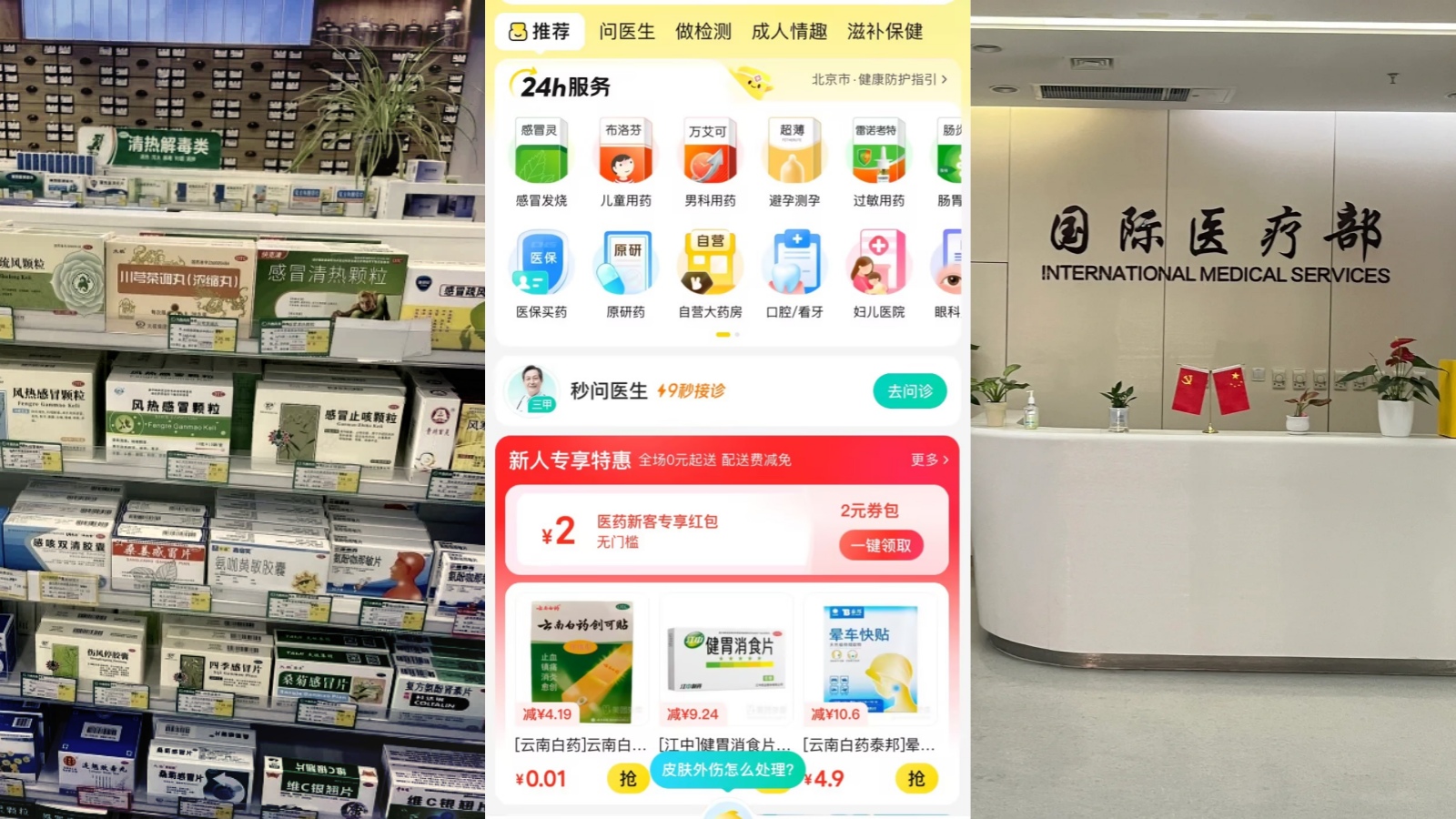
| ① Physical Pharmacy | Common OTC needs — cold, fever, stomach | Immediate | No | Look for the green cross (绿十字) sign |
| ② Online Platform | OTC medicine delivered to your door | 30–60 min | No | Use Meituan / Ele.me "买药" feature |
| ③ Hospital Pharmacy | Prescription drugs, serious or chronic conditions | Same day | Yes | Go to the International Medical Department (国际医疗部) |
| ④ Emergency Backup | When all standard channels have failed | Varies | Varies | Embassy referral → international clinic → courier shipping |
Each venue serves a different purpose. Choose a hospital for serious symptoms, chronic conditions, or prescription drugs. Use a physical pharmacy for common minor issues like colds, headaches, or stomach problems. For instance, online delivery apps are perfect when you cannot leave your accommodation.
How to identify a legitimate physical pharmacy:
- Look for the green cross sign (绿十字) on the storefront.
- Check that the shop displays a valid Pharmaceutical Business License (药品经营许可证).
- Stick to large chain pharmacies such as Laobaixing (老百姓) or DaShenLin (大参林) for the most reliable experience.
For online platforms: Only use stores that display their official Internet Drug Transaction Service Qualification Certificate (互联网药品交易服务资格证书). Avoid unlicensed individual sellers at all times.
⚠ Special note on antibiotics: China now strictly requires prescriptions for all antibiotics. Additionally, some drugs that are OTC in your home country may require a prescription here — or vice versa. Always check with a pharmacist or doctor before taking anything new.
How to Buy OTC Medicine at a Physical Pharmacy (Fast Local Access)
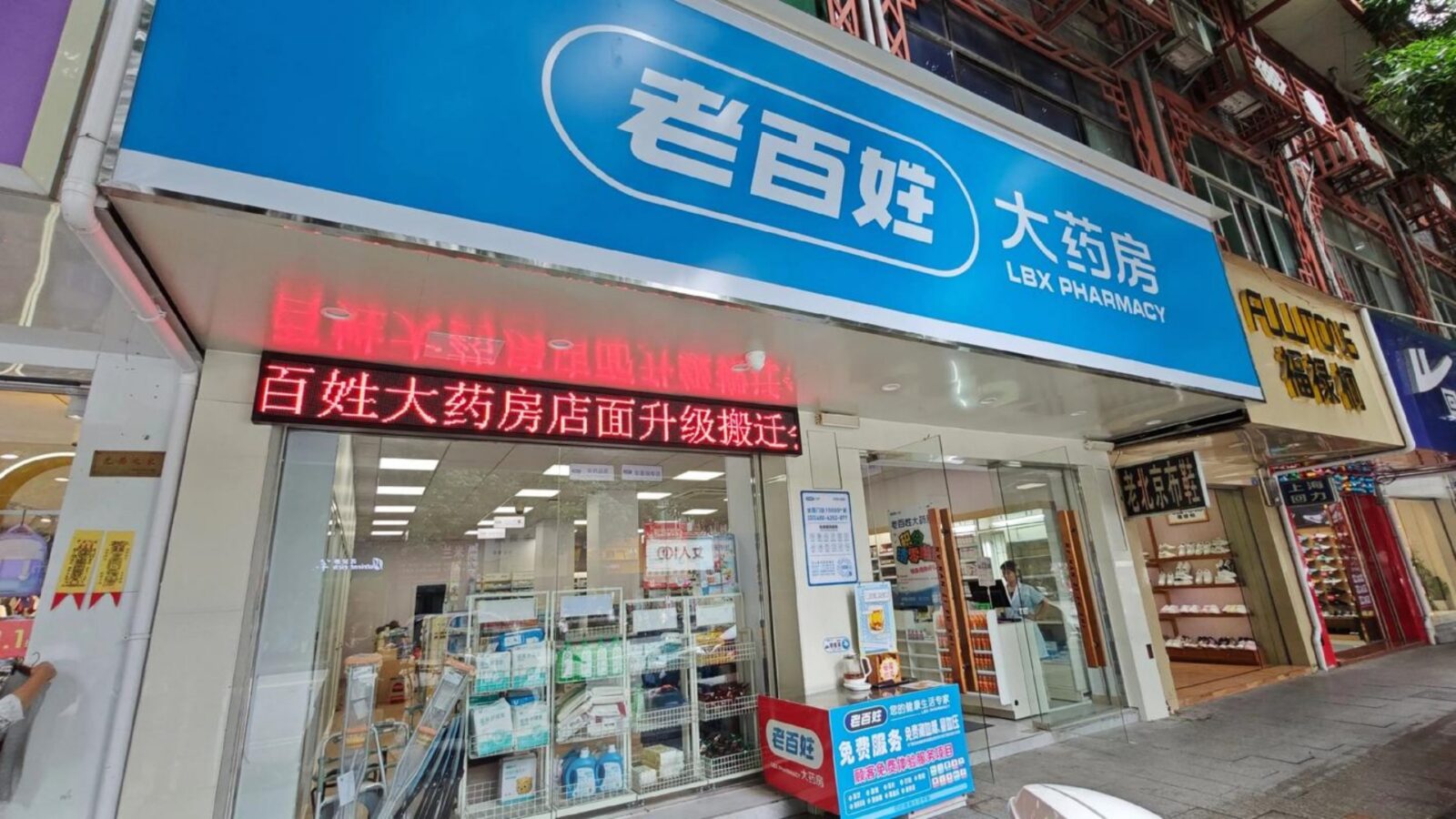
Laobaixing Pharmacy
Physical pharmacies are the fastest and easiest option for common minor illnesses. For instance, fever, headache, colds, stomach upsets, and allergy symptoms are all simple to handle here. Follow these three steps.
Step 1: Directions to Legitimate Local Pharmacies
Open the map app on your phone. Gaode Maps (高德地图) and Baidu Maps (百度地图) are the best options for navigating in China. Search for “药店” (pharmacy) or “24小时药店” (24-hour pharmacy). When you arrive, look for the green cross sign and the characters “大药房” or “药店” on the shopfront to confirm it’s the right place before entering.
Step 2: Communication Tools for the Pharmacist
Language is rarely an obstacle if you use the right approach. The most effective method is to show the pharmacist the Chinese generic name of the medicine directly on your phone screen. For example, show "布洛芬" for ibuprofen. This takes under three seconds and works every time.
However, if you don't know the Chinese name yet, try pointing to the affected body part and saying a symptom keyword. For instance, point to your throat and say "嗓子痛" (Sǎngzi tòng — sore throat). You can also show a photo of the medicine you used before, or switch your translation app to conversation mode for live back-and-forth help.
📍 Scenario: Buying fever medicine at Laobaixing Pharmacy (老百姓大药房)
- Enter the store and walk directly to the counter.
- Show this text on your phone screen: "我需要布洛芬,用于退烧和止痛。" (I need ibuprofen for fever and pain relief.) Alternatively, just say "布洛芬" (Bùluòfēn).
- Answer the quantity question: The staff may ask "要几盒?" (How many boxes?). Hold up one finger or say "一盒" (Yī hé — one box).
- Confirm the product: Check that the packaging clearly shows "布洛芬" before paying.
Step 3: Dosage Confirmation and Payment Checkout
Once you have the medicine in hand, use a translation app to scan the "用法用量" (dosage instructions) section on the packaging. Next, use hand gestures to confirm with the pharmacist. For example, hold up two fingers and point to the package to ask "twice a day?" Most pharmacies accept Alipay, WeChat Pay, or cash. Always keep your receipt in case of any follow-up questions.
👓 Vision Care: If you need to restock on vision products rather than general medication, you can navigate the local healthcare and retail networks using our guide on 4 Channels to Buy Contact Lenses in China.
How to Buy OTC Medicine Online in China (Fastest Home Delivery)
-
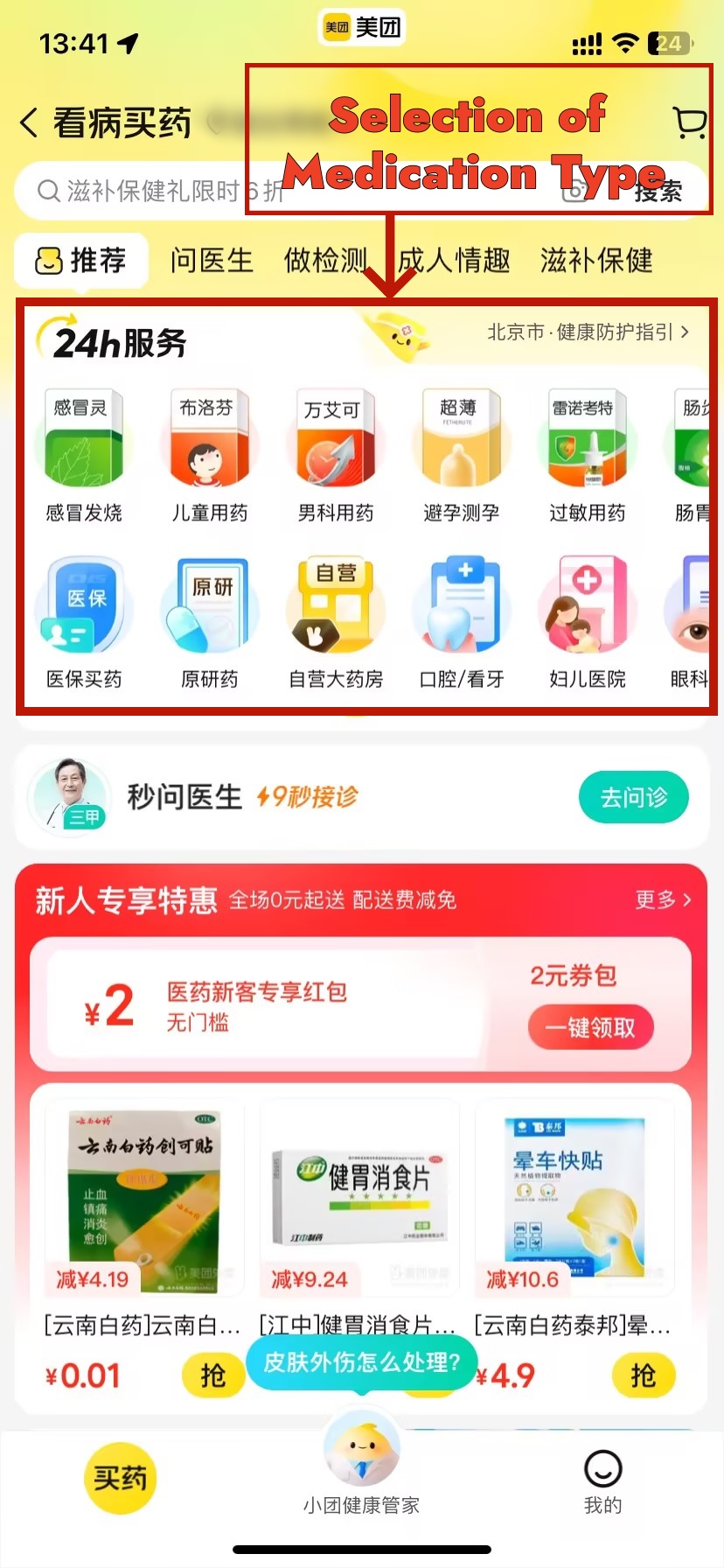

- Online Medicine Purchase via Meituan App (Step 1)
-
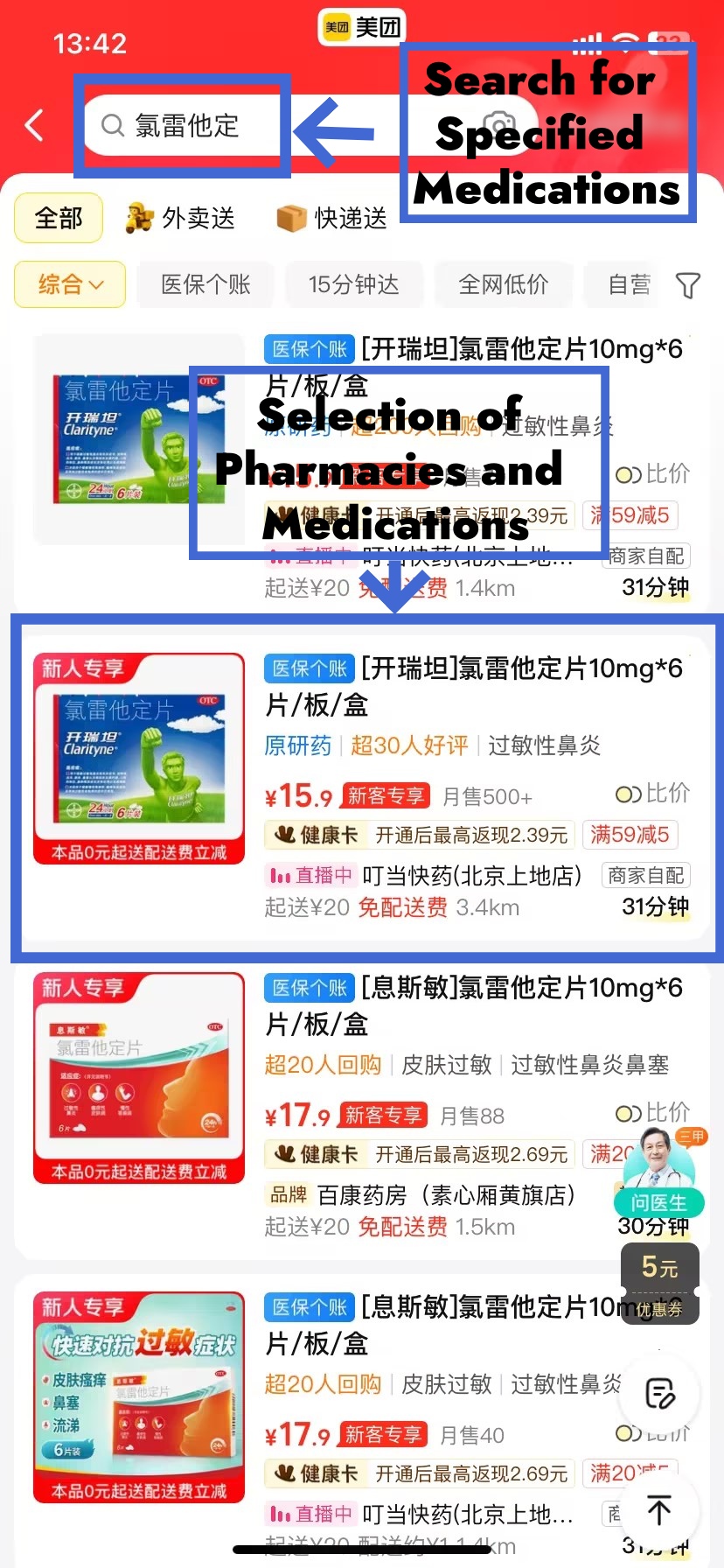
- Online Medicine Purchase via Meituan App (Step 2)
-
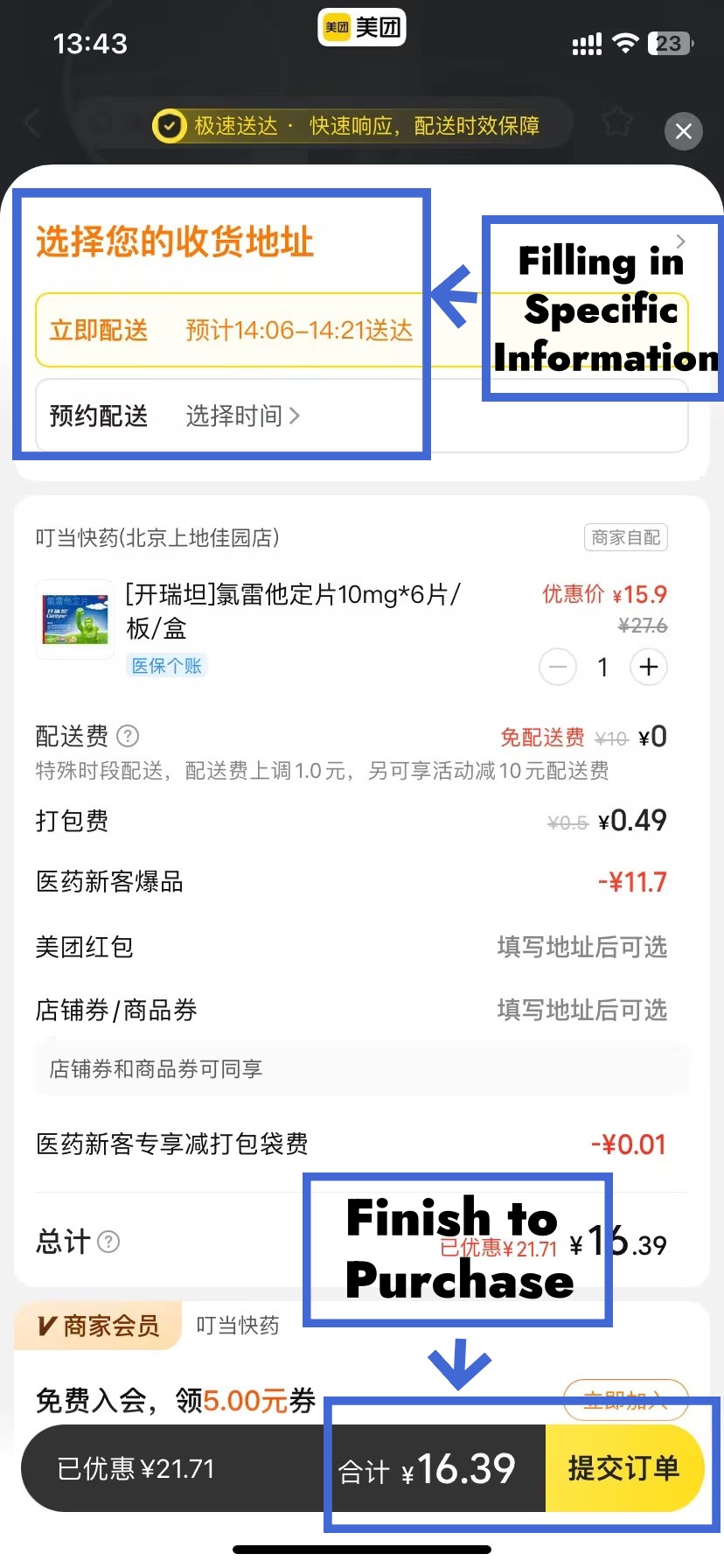
- Online Medicine Purchase via Meituan App (Step 3)
Online platforms are ideal when you cannot leave your hotel. They are also useful for stocking up on medicine before a long journey. Follow these three steps to order safely.
💡 Tip: The apps below are in Chinese only and may be difficult to navigate without Mandarin. If you are staying at a hotel, consider asking a hotel staff member to help you place the order on your behalf — most front-desk staff are happy to assist and can confirm your delivery address in Chinese.
Step 1: App Choices for Safe Delivery
Stick to well-known platforms with verifiable official licensing. JD Health (京东健康) and Ali Health (阿里健康) are well-known and trustworthy. For the quickest delivery, use the “buy medicine” (买药) feature on Meituan (美团) or Ele.me (饿了么)—those apps often deliver to your door within half an hour to an hour. The pharmacy on the platform should clearly show its official certification before you order.
Step 2: Search Terms for the Right Medicine
Type the exact Chinese generic name of the medicine into the search bar. For instance, search "氯雷他定" (loratadine) rather than the English name. Then use the filter to select "非处方药(OTC)" to narrow results to non-prescription options only.
📱 Scenario: Ordering cold medicine via the Meituan App
- Open the Meituan app and tap "看病买药" or "买药" on the homepage.
- Search for your medicine: Enter "感冒灵" (cold granules) or "对乙酰氨基酚" (paracetamol / acetaminophen) in the search bar.
- Select a pharmacy: Browse nearby pharmacies in the results. Therefore, prioritize stores showing "24小时营业" (24-hour open) or high customer ratings.
- Check out: Add the item to your cart and enter your delivery address. International credit cards linked to Alipay or WeChat Pay are accepted at checkout.
Step 3: Checkout and Delivery Box Checks
Give your delivery address some thought. Most hotel front desks will accept packages on your behalf. Once your package arrives, inspect it for damage. Check the medicine name and the production and expiry date on the box. Does it match what you ordered? If anything looks off, refuse to accept, and call their Customer Service hotline.
How to Get Prescription Medicine at a Chinese Hospital (Safe Professional Care)
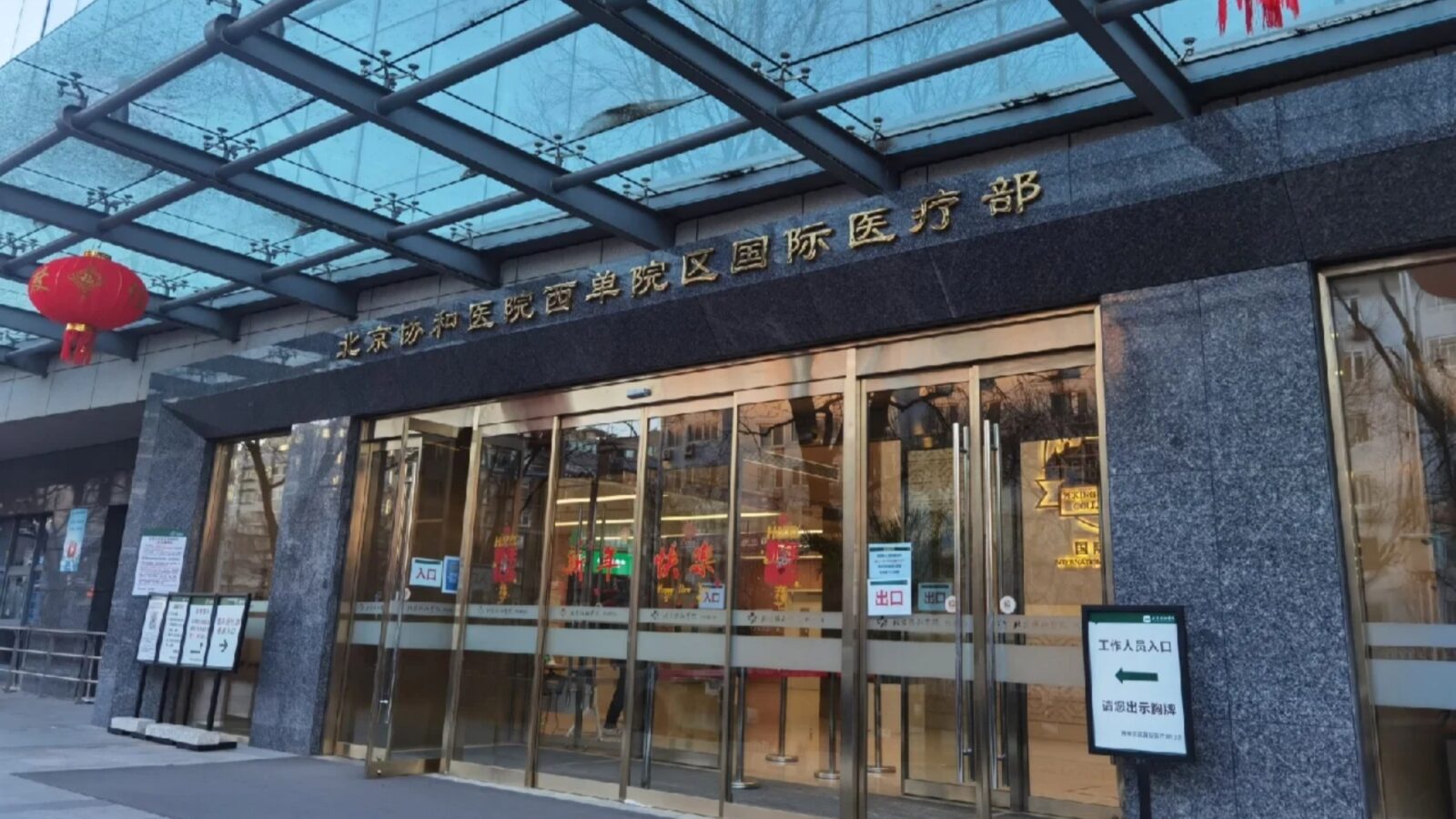
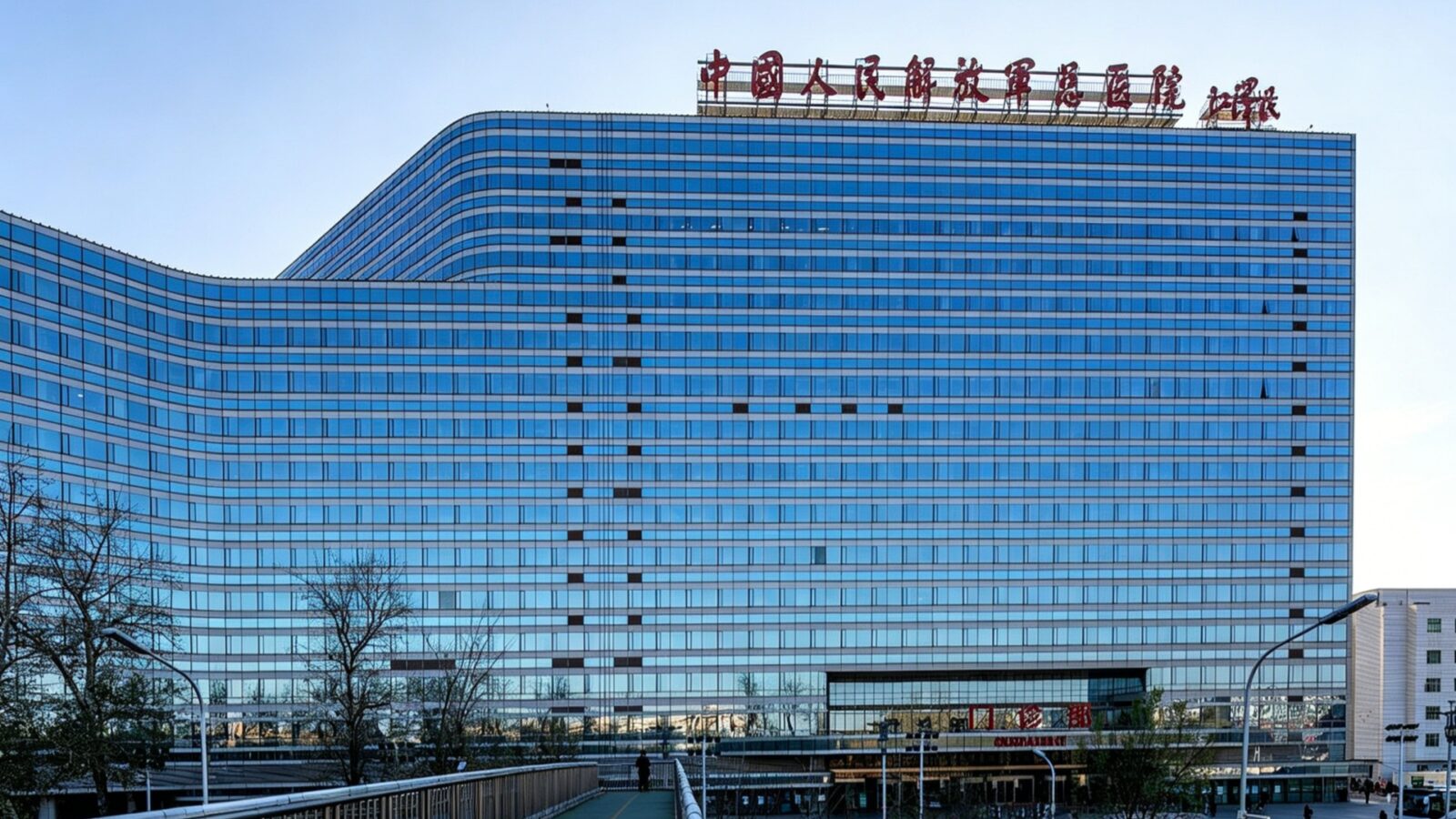
International Medical Department at the Dongdan Campus
Visit a hospital when your symptoms are serious, when you have a chronic condition that requires medication, or when you specifically need a prescription drug. The process has three clear stages.
Step 1: Registration Desk Rules for Foreigners
First, choose a large hospital with an International Medical Department (国际医疗部) or a Foreign Patient Clinic (外宾门诊). These departments have English-speaking staff and are built to assist foreign visitors. Bring your passport. You will fill in a registration form, receive a hospital card, and make a prepayment deposit before seeing the doctor.
If you need help locating a suitable doctor, our guide on finding English-speaking doctors in China lists verified options across major cities.
🏥 Scenario: Visiting Peking Union Medical College Hospital (PUMCH)
- Arrive and register: Go to the International Medical Department at the Dongdan Campus. Show your passport at the registration window and describe your symptoms in English — for example, "I have a severe throat infection and need to see a doctor." Staff will register you and guide you to deposit a prepayment (typically around 2,000 RMB).
- Wait and see the doctor: Wait in the waiting area until your name is called. Then describe your condition clearly to the doctor. Doctors at international departments are usually fluent in English or have a translator on hand.
- Pay and collect your medicine: After the doctor issues a prescription, take the payment slip to the billing counter. Next, bring your paid receipt to the hospital pharmacy window (药房) to collect your medicine.
Step 2: Doctor Visits and Prescription Papers
Describe your symptoms clearly to the doctor. Use a translation app or bring a companion to help if needed. Note one important rule: Chinese hospital prescriptions are valid only on the same day at the same hospital. Therefore, you must pay the fee and collect your medicine before leaving the building.
Step 3: Medicine Pickup at the Pharmacy Window
Go to the pharmacy window (药房 / 取药窗口) with your paid prescription slip and take your place in line. Have the pharmacist explain the dosage or use of the drug using a translation app if in doubt. Most hospitals pharmacists are used to helping foreign patients this way.
🏥 Accessing hospital pharmacies is just the beginning — China's healthcare system has far more to offer international visitors, as explored in our comprehensive guide to Medical Tourism in China.
Other Reliable Options for Medication Shortages (Secure Emergency Plans)
If all standard options have failed, use these three backup plans in order. Each one gets progressively more involved, so start from the top.
Option 1: Embassy Contacts for Medical Help
Your embassy or consulate maintains a list of recommended English-language medical services in major Chinese cities. Therefore, this is the first call to make when you are stuck. They can direct you to a trusted clinic, hospital, or specialist without delay.
Option 2: Appointments at Private International Clinics
International clinics charge higher fees than public hospitals. However, they offer fully English-language consultations, in-house pharmacies, and direct insurance billing. For complex medical or medication problems, this is the fastest and most straightforward solution. Major cities like Beijing, Shanghai, and Guangzhou all have well-established international clinics.
Option 3: Shipping Options for Overseas Prescriptions
In extreme situations you might arrange to have prescription medicines shipped to you from your home pharmacy via an international courier such as DHL, but it’s complicated: you need a prescription, a certificate confirming your diagnosis, and the correct importing documents. Contact your courier in advance; allow several days for shipment. Use this as a last-ditch alternative.
The Essential Language and Communication Toolkit
Language is often the biggest obstacle at a Chinese pharmacy. However, a small set of targeted words and phrases eliminates most of that barrier. Use this section as your quick-reference toolkit — screenshot the tables and keep them on your phone.
Key Vocabulary for Common Symptoms
You do not need to speak Mandarin to describe your symptoms. Simply find the right word in the table below and show it to the pharmacist on your phone screen.
| English | Chinese | Pinyin |
|---|---|---|
| Fever | 发烧 | Fāshāo |
| Cough | 咳嗽 | Késou |
| Headache | 头疼 | Tóuténg |
| Stomachache | 胃痛 | Wèitòng |
| Diarrhea | 腹泻 | Fùxiè |
| Allergy | 过敏 | Guòmǐn |
| Itching / Rash | 瘙痒 | Sàoyǎng |
| Sore throat | 嗓子痛 | Sǎngzi tòng |
| Runny nose | 流鼻涕 | Liú bítì |
| Nausea / Vomiting | 恶心 / 呕吐 | Ěxīn / Ǒutù |
Translation Guide for Common Medicines
This table is your most important purchasing tool. Screenshot it and keep it on your phone. Use the Chinese generic name when searching at any pharmacy or online platform.
| Category | International Name | Chinese Generic Name | Pinyin | Common Brand |
|---|---|---|---|---|
| Fever / Pain | Ibuprofen | 布洛芬 | Bùluòfēn | 芬必得 (Fenbid) |
| Paracetamol / Acetaminophen | 对乙酰氨基酚 | Duì yǐxiān ānjī fēn | 泰诺 (Tylenol) | |
| Cold / Cough | Cold granules (Chinese herbal) | 感冒灵 | Gǎnmào líng | 999感冒灵 |
| Ambroxol (expectorant) | 氨溴索 | Ān xuǒ suǒ | 沐舒坦 (Mucosolvan) | |
| Stomach | Loperamide (anti-diarrhea) | 洛哌丁胺 | Luòpèi dīng àn | 易蒙停 (Imodium) |
| Domperidone (nausea) | 多潘立酮 | Duō pān lì tóng | 吗丁啉 (Motilium) | |
| Allergy | Loratadine | 氯雷他定 | Lǜléitādìng | 开瑞坦 (Clarityn) |
| Cetirizine | 西替利嗪 | Xī tì lì qín | 仙特明 (Zyrtec) | |
| Topical | Mupirocin (antibiotic ointment) | 莫匹罗星 | Mò pǐ luó xīng | 百多邦 (Bactroban) |
| Hydrocortisone cream | 氢化可的松 | Qīng huà kě de sōng | 皮炎平 |
Details on Chinese Medicine Boxes
You do not need to read Chinese to understand a medicine label. Instead, focus on these key fields. Use a translation app to photograph and translate the text if needed.
Key fields on a Chinese medicine box:
- 有效期至 (Yǒuxiào qī zhì) — Expiry date
- 用法用量 (Yòngfǎ yòngliàng) — Dosage instructions
- 口服 (Kǒufú) — Take orally
- 外用 (Wàiyòng) — For external use only
- 不良反应 (Bùliáng fǎnyìng) — Adverse effects
Useful phrases to ask the pharmacist:
- "一天几次?" — How many times per day?
- "一次几片?" — How many tablets per dose?
- "饭前还是饭后吃?" — Before or after meals?
Management of Chronic Conditions and Specialty Medicine
If you take regular medications for diabetes, hypertension, mental health, etc., limit yourself to a measured supply while you are away. The safest plan is to take enough medicine with you to cover your trip, plus a healthy backup, and always carry the medicines you take in their original packaging and a letter from your doctor.
For a full overview of customs rules and allowable quantities, our guide on bringing medicine into China covers everything you need before departure.
Local Supplies of Insulin and Biologics
Insulin and other biologics are generally only available at hospital pharmacies with a valid prescription. Therefore, bring your original packaging or an empty box from home. This allows the doctor to identify and match the correct product for you in China.
Generic Substitutes for Common Chronic Diseases
Some medicines have domestic Chinese generic versions that are widely available and affordable. However, you need to know the active ingredient's Chinese generic name before your hospital visit. For example, atorvastatin calcium is called "阿托伐他汀钙" in Chinese. Ask your doctor during the consultation whether a local generic version can be prescribed.
Strict Rules for Psychiatric and Controlled Medicine
⛔ Critical Warning: Read This Before You Travel
- Many psychiatric medications — including Adderall and Ritalin — are completely banned in China.
- For permitted personal-use medications, you must carry your original home-country prescription, the original packaging, and a certified Chinese-English translation. Notarization may be required.
- Never attempt to purchase controlled or psychiatric medications through Chinese pharmacies, private sellers, or online channels. This is a serious criminal offence in China.
Important Red Lines and Safety Rules
Most medicine purchases in China are completely safe and straightforward. However, a few rules are non-negotiable. Follow these hard limits and the safety checklist every time you buy.
Common Traps and Dangerous Mistakes
- Never buy from unlicensed sources. Street stalls, personal WeChat sellers, and unverified websites all carry serious risks of counterfeit products.
- Never self-purchase and self-use prescription drugs. This applies especially to antibiotics and injectable medicines. Always see a licensed doctor first.
- Never bring undeclared narcotics or psychotropic drugs above personal-use limits into China. This is a criminal offence with severe legal penalties.
Safety Checks Before Any Purchase
- Check credentials: Only buy from the official channels listed in this guide. Verify the pharmacy licence is displayed in-store or on the platform page.
- Check the packaging: Confirm the drug approval number, manufacturer name, batch number, and expiry date. Refuse any product with damaged or blurry packaging.
- Keep your receipts: Save all purchase records and receipts. These protect you if any issue arises later.
Basic Rules for Traditional Chinese Medicine
TCM is widely available, and if you have kids who seem to catch every viral bug going around, TCM can work well on minor health problems like mild colds, insomnia, fatigue, etc. Just remember to always tell your TCM practitioner about any Western medications you’re taking in order to avoid drug interactions. For serious, medically diagnosed conditions, especially if you are pregnant, stick with Western medicine for your primary treatment and TCM for backup!
FAQs: Safely Purchasing Medication in China
Q: Can foreigners buy prescription medicine in China without seeing a doctor?
No. To buy medicine in China that requires a prescription, you must first visit a licensed doctor. Go to a hospital with an International Medical Department. Doctors there can issue a valid prescription. You then use it to collect your medicine from the hospital pharmacy on the same day.
Q: Which online platforms are safe to buy medicine in China as a foreigner?
To safely buy medicine in China online, use JD Health (京东健康) or Ali Health (阿里健康). For faster delivery, use Meituan or Ele.me's "买药" feature. However, always confirm the pharmacy's official certification is displayed on the platform before you place your order.
Q: Is it legal to bring my own medication into China?
Personal-use amounts are generally permitted when you buy medicine in China or bring it from abroad. However, narcotics or psychotropic drugs must be declared at customs, and you must carry your original prescription with a certified translation. Some drugs are completely banned. Therefore, check the rules before you travel. Our guide on bringing medicine into China has the full details.
Q: How do I communicate with a Chinese pharmacist if I don't speak Mandarin?
Show the pharmacist the Chinese generic name on your phone screen. For instance, show "布洛芬" for ibuprofen. Additionally, point to the body part and say a symptom keyword. A translation app in conversation mode is also highly effective when you buy medicine in China at any pharmacy.
Q: Are antibiotics available over-the-counter in China?
No. China requires a prescription for all antibiotics. Therefore, do not attempt to buy medicine in China — specifically antibiotics — without one. Self-medicating with antibiotics carries real health risks and can result in legal penalties under Chinese pharmaceutical law.
Q: What does the green cross sign mean on Chinese pharmacies?
The green cross (绿十字) is the official symbol for licensed pharmacies in China. It is similar to the green cross used in European pharmacies. When you buy medicine in China, always look for this sign to confirm the store is legally registered and properly regulated.
Q: How can I find an English-speaking doctor in China to get a prescription?
Go to the International Medical Department of a large public hospital, or visit a private international clinic. You can also contact your embassy for a referral list. Our guide on finding English-speaking doctors in China offers a city-by-city breakdown. When you buy medicine in China via prescription, an English-speaking doctor makes the whole process far smoother.
Q: How do I read a Chinese medicine box or dosage instructions?
Find the "用法用量" field on the packaging — this has all dosage information. Next, use a translation app to scan and translate the text. The Communication Toolkit section above also provides a full key-fields reference. Always check dosage carefully before you buy medicine in China and take any new medication.
Q: Can I get my chronic disease medication refilled in China?
Yes, but you must visit a hospital and obtain a prescription first. Therefore, bring your original packaging and ingredient list to help the doctor match your medicine. Some drugs have Chinese generic substitutes available. When you buy medicine in China for a chronic condition, these generics are often practical and affordable alternatives.
Q: What should I do in a medical emergency if I can't buy the medicine I need in China?
Follow three steps in order. First, contact your embassy for medical referrals. Next, visit an international clinic for full English support. Finally, if still unresolved, arrange international courier shipping from your home country pharmacy. When every normal attempt to buy medicine in China has failed, these three backup plans are your safety net.