SMILE (Small Incision Lenticule Extraction)
820,000+ international patients have traveled for laser eye surgery in China since 2015 | 1,500+ qualified ophthalmology centers across 50+ cities | 97.8% patient satisfaction rate based on 15,000+ verified reviews
Laser eye surgery in China now delivers world-leading results and costs 50-70% less than the West. The top hospitals perform more than 800,000 refractive procedures every year and enjoy extraordinary experience, developing advanced techniques at an unmatchable scale. China has the largest network of ophthalmology professionals in the world, the largest centre for training in SMILE surgery.
Overseas patients benefit from advanced technology, cheaper prices, and surgeons who have performed more procedures than most Western surgeons will do in their entire career.
China dominates global eye surgery volumes for compelling reasons. Professor Zhou Xingtao at Shanghai's Fudan Eye Hospital has performed 260,000+ SMILE procedures—more than any other facility worldwide. The Aier Eye Hospital Group operates 800+ locations with 600 specialized refractive surgeons. These extraordinary numbers translate to surgical precision that comes only from massive procedural experience.
Complete Cost Breakdown for Laser Eye Surgery in China
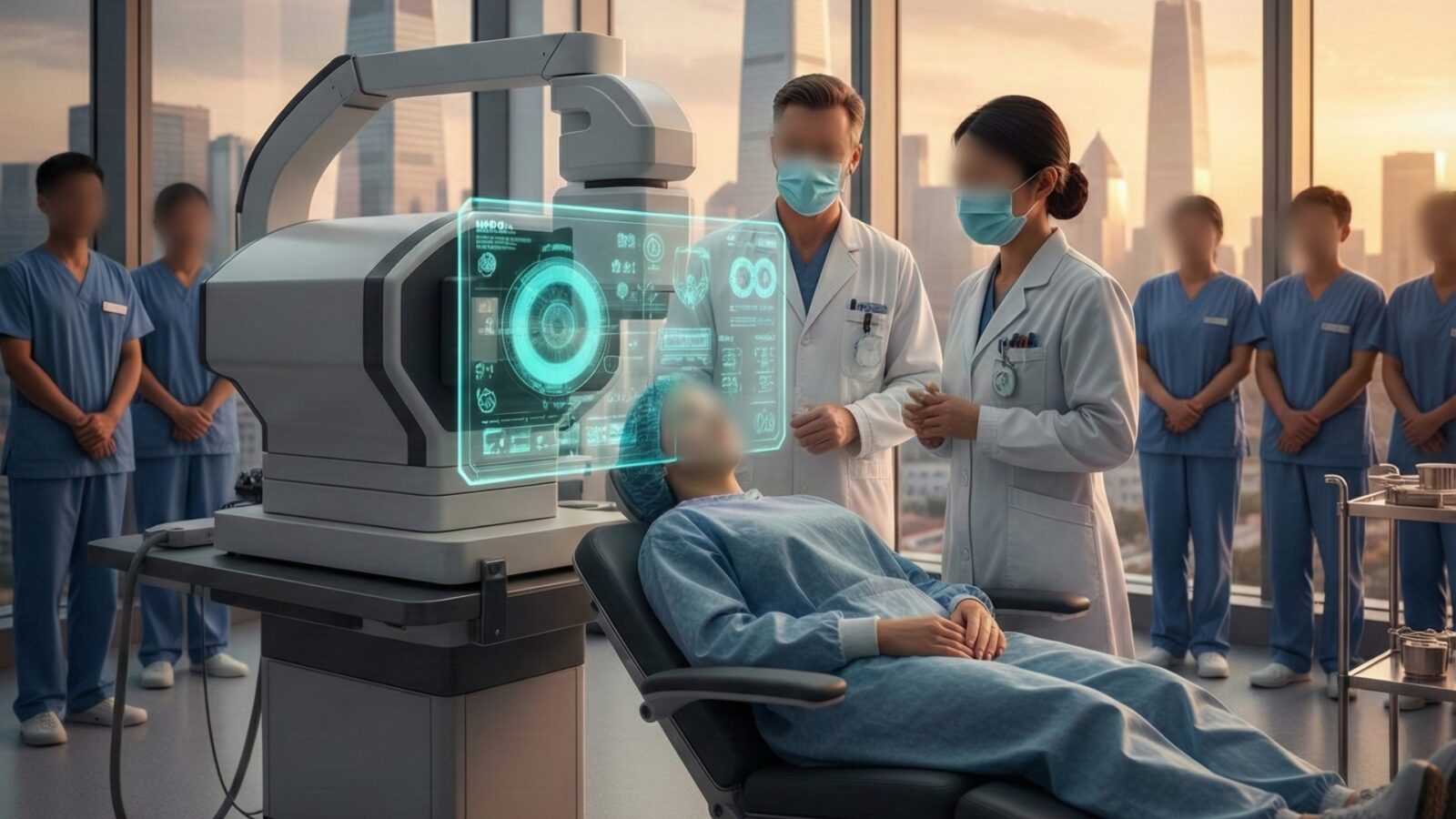
Laser Eye Surgery in China
Understanding total costs requires looking beyond procedure prices. This comprehensive breakdown covers every expense you'll encounter when planning laser eye surgery in China, from hospital fees through accommodation, meals, and travel insurance.
Hospital Procedure Pricing by Facility and Technique
| Hospital | LASIK | Femto LASIK | SMILE | ICL (per eye) |
|---|---|---|---|---|
| Shanghai Fudan Eye | $2,100 - $2,800 | $2,100 - $2,800 | $2,100 - $2,800 | $2,100 - $2,800 |
| Aier Eye Hospital | $1,100 - $1,800 | $1,300 - $2,800 | $2,200 - $3,600 | $3,900 - $5,800 |
| EuroEyes | $1,400 - $2,500 | $1,500 - $3,900 | $2,100 - $4,600 | $2,200 - $5,500 |
| Hainan Clinics | $1,100+ | - | - | - |
Prices typically include pre-operative consultation and examinations, surgical procedure for both eyes, same-day post-operative medications, and first follow-up appointment (24-48 hours). Prices may exclude extended eye drop supplies (¥200-500), additional follow-up appointments (¥100-300 each), medical escort/translation services, and transportation.
Full Trip Budget Calculator
| Expense Category | Budget Range | Mid-Range Estimate |
|---|---|---|
| Procedure (SMILE) | $2,150-3,200 | $2,500 |
| Flights (US West Coast) | $600-1,200 | $900 |
| Accommodation (7 nights) | $280-1,050 | $500 |
| Meals (7 days) | $105-280 | $175 |
| Local Transport | $50-100 | $75 |
| Medical Escort (optional) | $0-400 | $200 |
| Travel Insurance | $50-150 | $75 |
| Miscellaneous | $100-200 | $150 |
| TOTAL TRIP COST | $3,335-6,580 | $4,575 |
Compare this against US SMILE pricing of $5,000-8,000 for the procedure alone. Your complete China trip including flights, hotels, and surgery costs less than the US surgery alone. Purchase travel insurance covering medical procedures before departure. World Nomads and Allianz offer medical tourism coverage. Keep all receipts for potential FSA/HSA reimbursement at home.
TOP 5 Leading Hospitals for Laser Eye Surgery in Chin
-
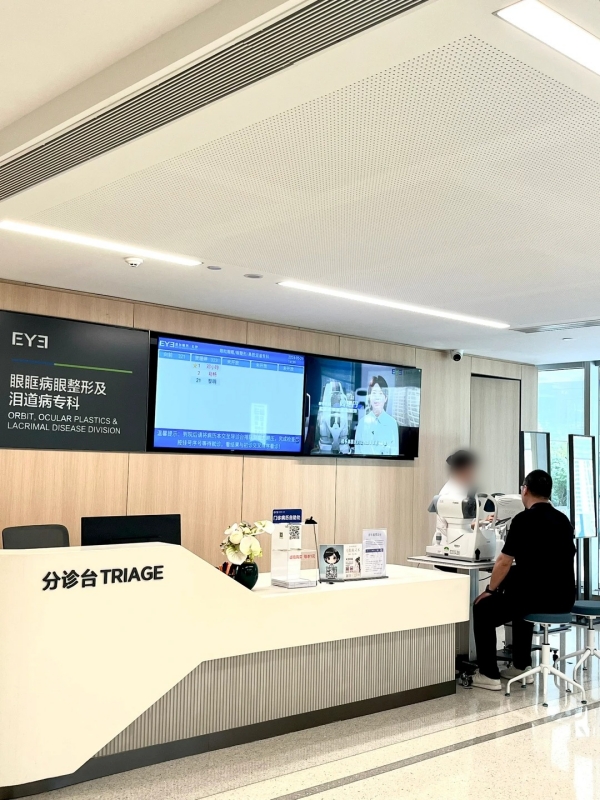

- Shanghai Eye & ENT Hospital
-
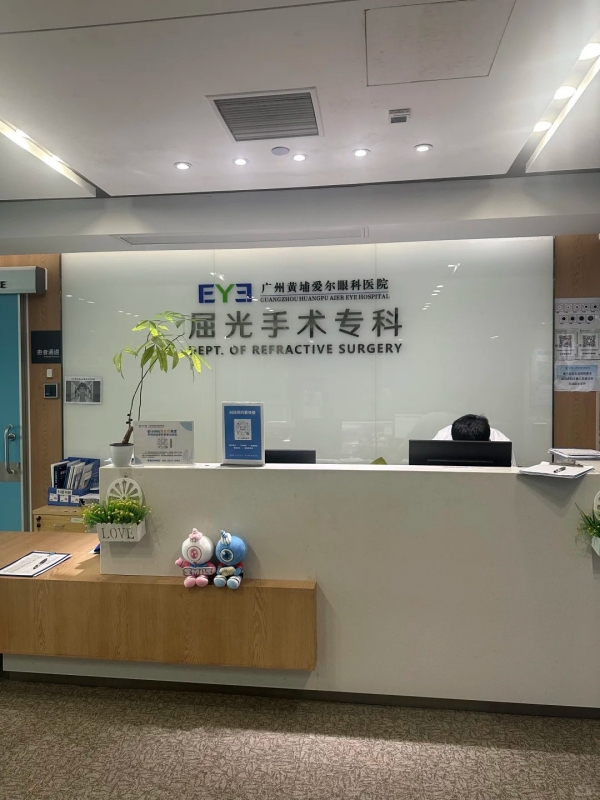
- Aier Eye Hospital
-
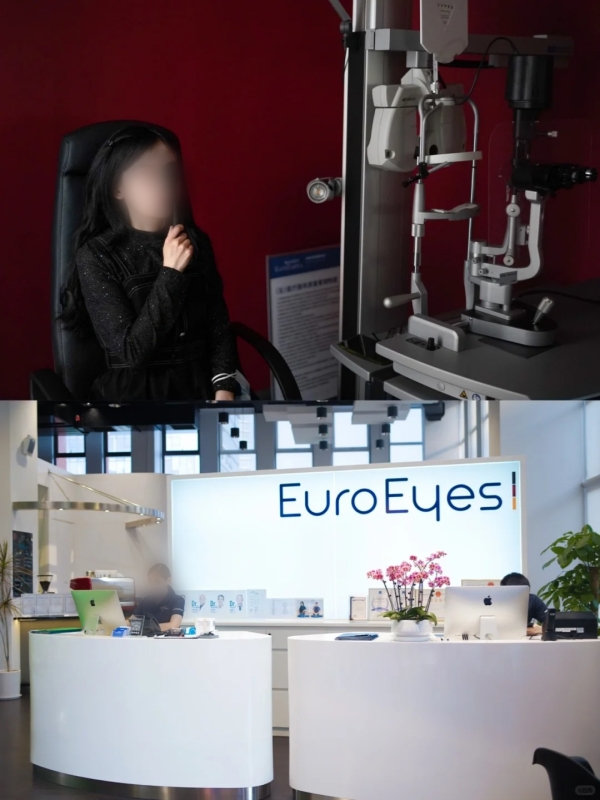
- EuroEyes
Selecting the right facility matters enormously for your outcome and experience. These hospitals specialize in serving international patients seeking laser eye surgery in China, with established protocols for foreign visitors, transparent pricing, and documented surgical volumes.
Shanghai Eye & ENT Hospital of Fudan University: World's SMILE Leader
Location: No. 83 Fenyang Road, Xuhui District, Shanghai (plus Pudong and Minhang campuses)
The hospital performs more SMILE procedures than any other hospital in the world. A well-known physician (referred to in the media as “ Dr. SMILE”), Professor Zhou Xingtao leads the refractive surgery center, and his team has performed more than 260,000 SMILE procedures since performing China’s first in 2010. The hospital serves as the Asia-Pacific SMILE and ICL training center. The facility used the VisuMax 800 for China’s first SMILE Pro 10-second surgery. A review of the facility and latest equipment includes Carl Zeiss systems. The facility sees 2.4 million+ outpatient visits each year.
Pricing: Femto LASIK ¥15,500 ($2,150) | SMILE ¥15,500 ($2,150) | ICL ¥13,800/eye ($1,920)
Best for: Maximum surgical expertise and lowest SMILE pricing at a world-class research institution
Limitation: English services remain limited as a public hospital. Expect crowded conditions and potentially rushed consultations. Bring a translator or medical escort service.
Aier Eye Hospital Group: China's Largest Network with International Standards
Locations: 800+ hospitals including Beijing, Shanghai, Shenzhen, Chengdu flagship centers
Aier operates the world's largest ophthalmology network spanning 649 mainland China locations. Professor Wang established Aier's refractive surgery standards after performing China's first LASIK. The group employs 600+ refractive surgeons performing 800,000+ procedures annually. International patient departments offer English, Japanese, and Spanish services. Equipment includes Carl Zeiss VisuMax and WaveLight excimer laser systems. Aier has completed 8,000+ WaveLight Plus procedures.
Pricing: Standard LASIK ~¥10,000 ($1,400) | SMILE ¥15,800-21,800 ($2,200-3,000) | ICL ~¥30,000 ($4,200)
Contact: Sichuan center accepts inquiries at [email protected]
Strength: Consistent standards across locations with established international protocols. Research institution status ensures access to latest techniques.
EuroEyes: Premium German Care in Major Chinese Cities
Locations: Shanghai (Pudong), Beijing (East & West), Guangzhou, Shenzhen, Hangzhou, Hong Kong
This German company entered China's market in 2013 as the first foreign provider. Founder Dr. Jørn Jørgensen has performed 100,000+ eye surgeries personally. EuroEyes surgeons each complete 1,000+ procedures annually. The group holds the world record for Zeiss Trifocal lens exchange surgeries. All staff speak English fluently. German doctors utilize German instruments and protocols. Premium facilities occupy landmark locations like Shanghai's Jinmao Building.
Pricing: SMILE ~¥22,800 ($3,200) | ICL ¥43,000-53,000 ($6,000-7,400)
Contact: [email protected]
Best for: Patients prioritizing Western communication standards and premium experience over lowest price
C-MER Dennis Lam Eye Hospital: Hong Kong Quality in Shenzhen
Location: Floors 1-2, Shengtang Mansion, Tairan No. 9 Road, Futian District, Shenzhen
Founded in China by Dr Dennis Lam (the first hospital in mainland China backed by Hong Kong investors), legislator Dr Lam was trained at the Chinese University of Hong Kong. The hospital was rated AA and patients gave it the third highest satisfaction rating in Shenzhen. Hong Kong and British/US trained doctors. English speakers and services. Convenient satellite clinics across Hong Kong for follow ups.
Best for: Patients who want English service with geographic convenience to Hong Kong
Beijing Tongren Hospital: China's Most Famous Eye Center
Location: 8 Chongwenmennei Avenue, Dongcheng District, Beijing
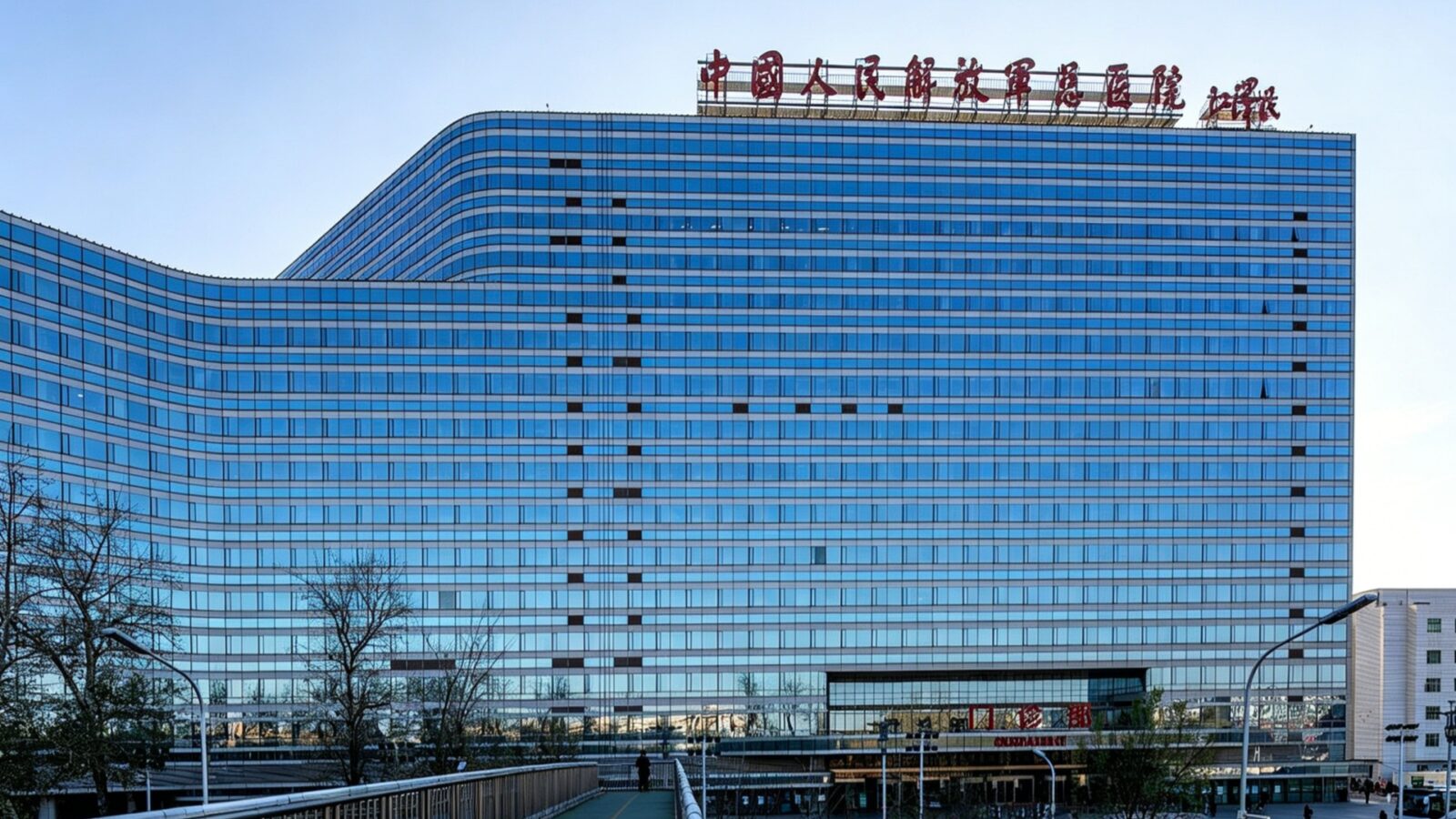
Unlike private clinics such as Beijing New Vision Eye Hospital,this Grade A, Class III hospital (China's highest rating) dates to 1886. Tongren handles 1,000,000+ outpatient visits annually with 78,000+ surgeries. The ophthalmology department holds National Key Clinical Specialty designation. Corneal transplant success rates reach 98.5%. The international pharmacy accepts foreign credit cards. Equipment includes PRK, LASEK, LASIK, SBK, FS-LASIK, and SMILE capabilities.
Contact: International Department (+8610) 58269911 | 24/7 Emergency (+8610) 58266699
Limitation: Limited English compared to private hospitals. Very high volumes may mean less personalized attention.
Selecting the Right Procedure for Your Vision Needs
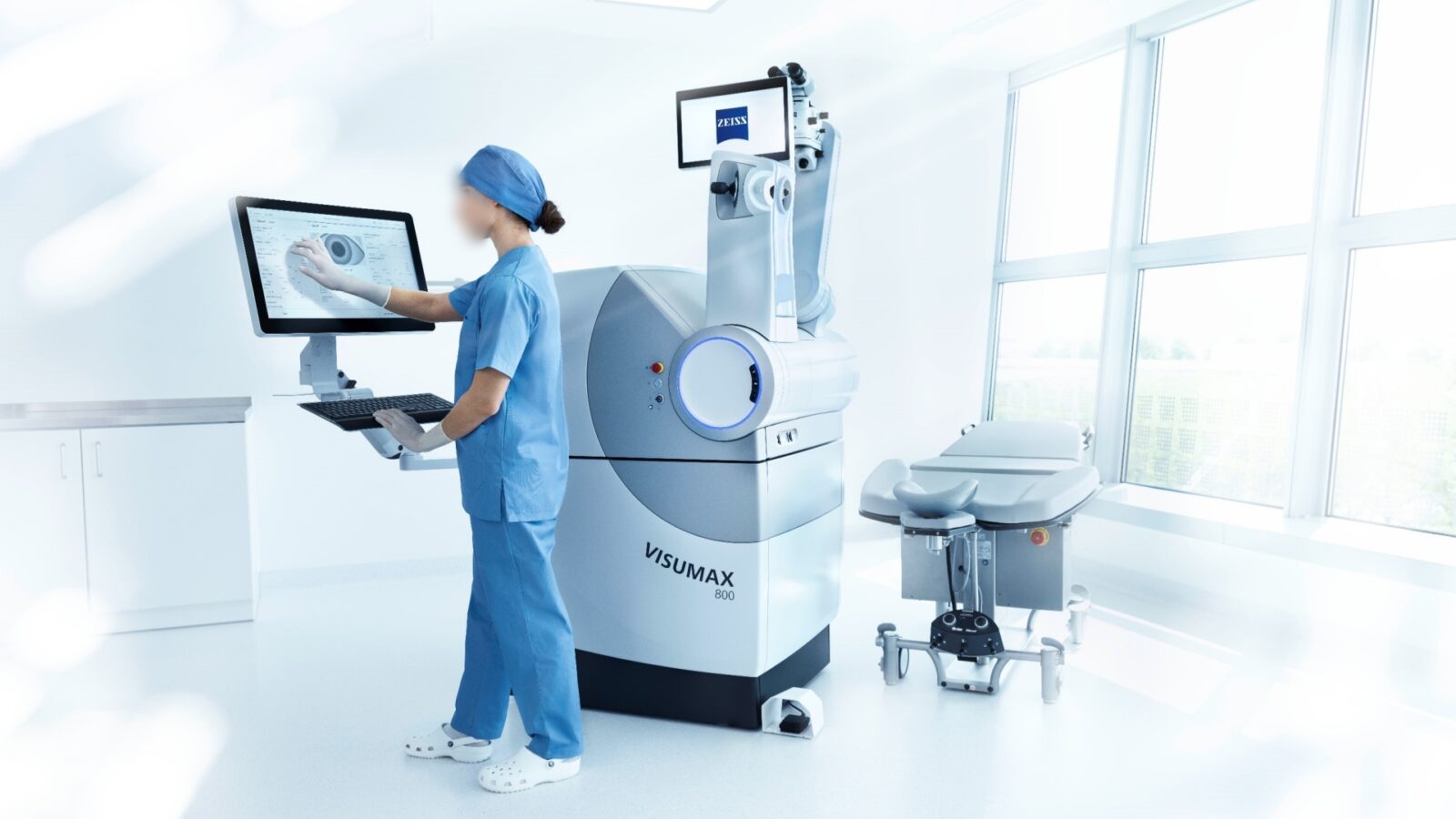
VisuMax 800
Choosing between LASIK, SMILE, PRK, and ICL depends on multiple factors including your prescription, corneal thickness, lifestyle, and personal priorities. Chinese surgeons evaluate these factors through comprehensive diagnostics and recommend procedures based on your unique anatomy. Understanding each option helps you make informed decisions about your laser eye surgery in China.
LASIK (Laser-Assisted In Situ Keratomileusis)
LASIK is the most established procedure, with decades of data. Surgeons create an 18-20mm corneal flap, using a femtosecond laser. The excimer then remodels the underlying stroma. The flap returns to its position and simply “glues down” again without sutures. Recovery occurs in 24-48 hours for functional vision, with better than 99% seeing 20/40 or better.
Ideal candidates: Myopia from -1.00 to -12.00 diopters, astigmatism up to 6.00 diopters, corneal thickness at least 500-510 microns, age 18+
Advantages: Fastest recovery, widest prescription range, customizable with wavefront technology
Considerations: Flap complications possible, higher dry eye risk than SMILE, not ideal for contact sports
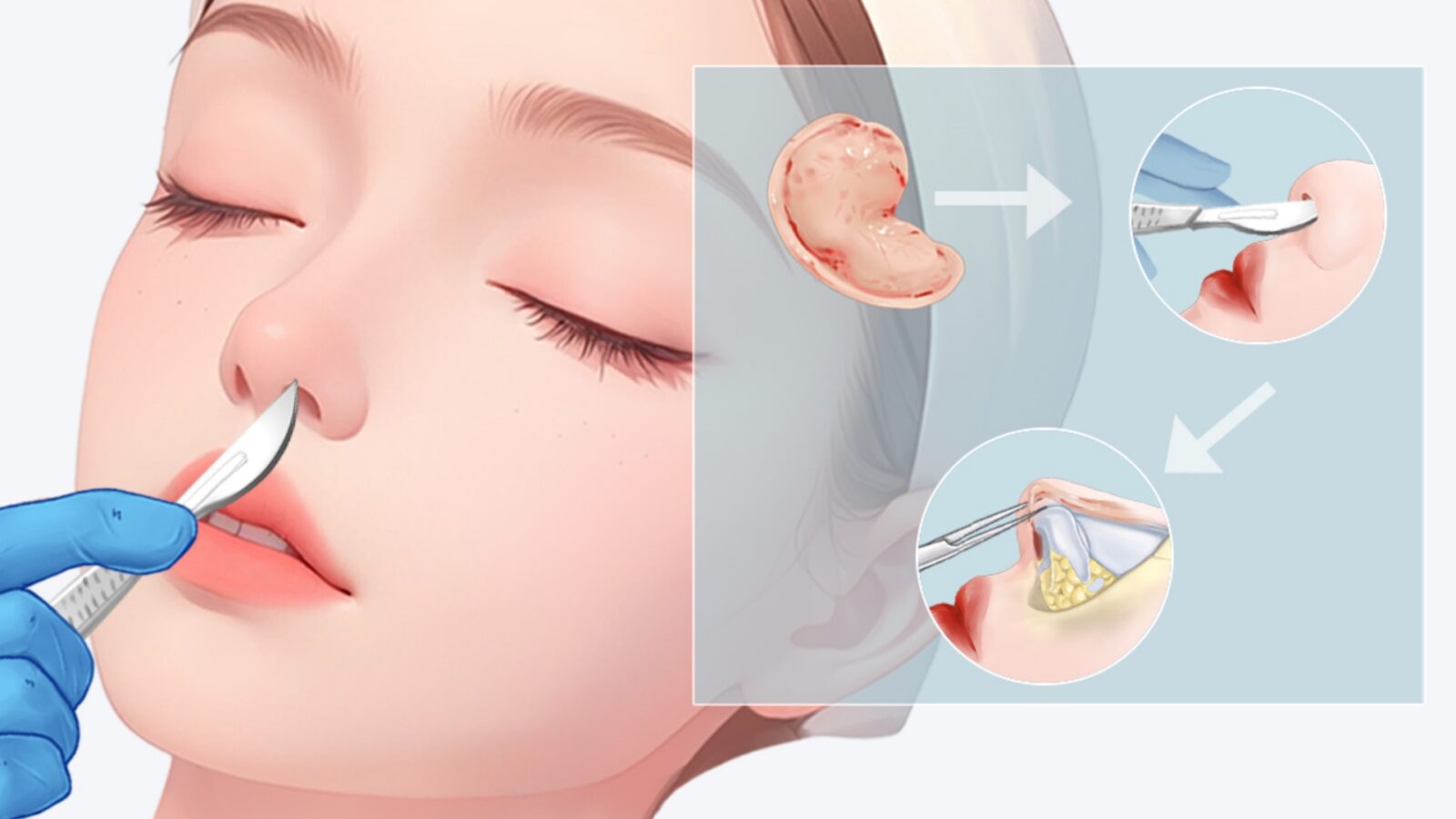
👃 Other Facial Procedures: If you are planning a full aesthetic upgrade while visiting top medical clinics in the country, you can also read our complete guide on China Nose Surgery.
SMILE (Small Incision Lenticule Extraction)
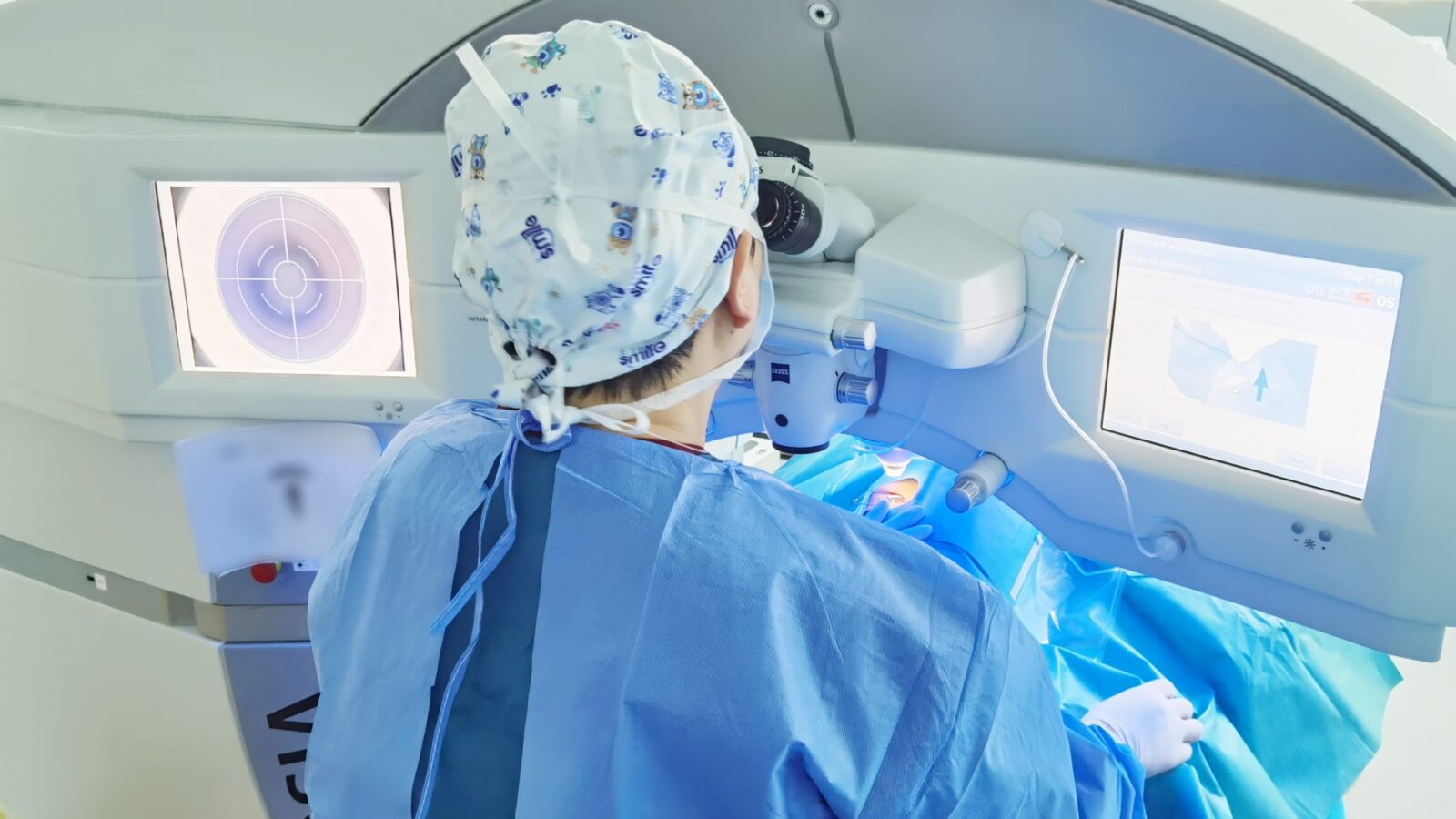
SMILE uses a flapless approach for enhanced safety. The femtosecond laser creates a lens-shaped disc within your cornea. Surgeons extract this lenticule through a 2-4mm incision. No flap means lower dry eye risk and faster nerve recovery. The procedure preserves more biomechanical strength than LASIK. SMILE Pro now treats hyperopia up to +7.00 diopters with the VisuMax 800.
Ideal candidates: Myopia up to -10.00 diopters, astigmatism to -5.00 diopters, corneal thickness exceeding 550 microns, active lifestyles
Advantages: Minimal dry eye, no flap complications, preserved corneal strength, ideal for athletes
Considerations: Limited customization compared to topography-guided LASIK, slightly longer visual recovery than LASIK
PRK/TransPRK (Photorefractive Keratectomy)
PRK works for patients with thin corneas who cannot safely undergo LASIK or SMILE. Surgeons remove the epithelium and reshape the stroma directly. No flap creation preserves 100-150 more microns of corneal tissue. TransPRK uses the SCHWIND Amaris for single-step "no-touch" treatment. Recovery takes 1-2 weeks for functional vision, but results equal LASIK long-term.
Ideal candidates: Myopia to -10.00 diopters, minimum 480-micron corneal thickness, patients in contact sports or military roles
Advantages: Safest for thin corneas, no flap risks, suitable for active military/law enforcement
Considerations: Slowest visual recovery (1-2 weeks), more post-operative discomfort, requires longer activity restrictions
ICL (Implantable Collamer Lens)
ICL adds correction without removing tissue. The surgeon implants a permanent contact lens into the eye between the iris and the natural lens. The procedure is completely reversible if need be, there’s no corneal reshaping involved and there’s no corneal thickness requirement since no ablation (eye tissue removing) occurs. An ICL might be ideal for a patient with a very extreme prescription or patient whose corneas are too thin to support the removal of tissue with laser if this can be safely undertaken otherwise.
Ideal candidates: High myopia from -3.00 to -20.00 diopters, age 21-45, adequate anterior chamber depth, thin corneas unsuitable for laser
Advantages: Fully reversible, treats extreme prescriptions, preserves corneal tissue completely, excellent visual quality
Considerations: More expensive than laser procedures, requires lifelong monitoring, rare risk of cataract formation
🌏 Eye surgery is one of the fastest-growing segments of Medical Tourism in China, driven by world-class technology, high-volume surgeons, and prices 50–70% lower than in the West.
What to Really Expect: Patient Stories and Experiences
laser eye surgery
Real experiences help you understand the laser eye surgery in China journey completely. Below are authentic accounts from international patients who underwent procedures.
Sarah's SMILE Experience in Beijing (March 2025)
Sarah, a 29-year-old Australian teacher, traveled to Beijing Tongren Hospital for SMILE. Her prescription was -6.50 in both eyes with slight astigmatism. "I was terrified initially," she admits.
The pre-operative examination took 90 minutes with multiple tests performed. Doctors measured corneal thickness, checked for dry eye, and mapped her cornea. Everything was explained clearly through an English-speaking coordinator.
Surgery day felt surreal but surprisingly calm throughout the process. "I could smell the laser burning tissue, which was strange," Sarah recalls. The actual laser portion lasted under 30 seconds per eye. She felt pressure but no pain during the procedure.
"By the next morning, I could read signs across the street," she exclaims. Day-one vision reached 20/25, improving to 20/15 by week two. Total cost including medications was ¥19,500 ($2,730).
Sarah stayed seven days in Beijing for follow-up appointments scheduled regularly. She explored the Forbidden City and Great Wall while recovering. "Best medical tourism decision I've made," she concludes enthusiastically.
James's LASIK Journey in Shanghai (August 2025)
James, a 35-year-old British software engineer, chose Fudan Eye Hospital because it was cheaper. Having a -4.25/-4.75 prescription that affected his swimming and travel adventures really bothered him. He did lots of research in advance on the price of laser eye surgery in China.
“The hospital looked like something in the West. Very modern and nice and clean,” he remembers. And, “I was told, due to the nature of my myopia, I was an excellent candidate for LASIK,” after some pre-op testing. “Wavefront-guided LASIK was suggested for my concerns when driving at night.”
It took 12 minutes for both eyes.“I watched a green blinking light somewhere and there was a smell like burning hair,” James recalls. “And then it was blurry but I could tell it had improved dramatically within a few hours.
Minor light sensitivity lasted three days requiring sunglasses when outdoors. Dry eye symptoms peaked at week two but resolved completely. Six-month follow-up showed 20/20 vision bilaterally with no complications.
Total expenditure including a five-night hotel stay was $3,100 total. "I saved over $2,000 compared to London prices," he calculates happily. His company's travel insurance covered the pre-op examination costs.
Frequently Asked Questions About Laser Eye Surgery in China
Q: Is laser eye surgery in China safe for foreigners?
Yes, major Chinese hospitals meet international safety standards. Aier Eye Hospital Group treats 800,000+ patients annually with documented outcomes matching Western facilities. Choose Grade A, Class III public hospitals or accredited private clinics. Request surgeon credentials and complication statistics before booking. Shanghai Fudan Eye Hospital and Beijing Tongren hold China's highest hospital ratings. Equipment quality matches or exceeds typical Western facilities using identical Carl Zeiss and Alcon technology.
Q: How much does LASIK cost in China compared to the United States?
LASIK in China costs $1,100-3,500 versus $4,000-6,000 in the United States. SMILE procedures run $2,150-3,000 in China versus $5,000-8,000 stateside. Savings range from 50-70% depending on procedure and hospital choice. Total trip costs including flights remain below US procedure prices alone. Shanghai Fudan Eye Hospital offers SMILE at just $2,150, representing exceptional value at a world-class research institution.
Q: Do Chinese hospitals use the same laser technology as Western facilities?
Chinese hospitals use identical Carl Zeiss and Alcon equipment found in Western clinics. The VisuMax 800 for SMILE Pro launched in China before North America. Aier Eye Hospital completed 8,000+ WaveLight Plus procedures before US availability. Technology quality matches or exceeds typical Western facilities. China often receives cutting-edge ophthalmic technology ahead of the United States due to regulatory approval timelines.
Q: Can I get laser eye surgery in China without speaking Chinese?
Yes, though options vary by hospital. EuroEyes provides guaranteed English service with German doctors. Aier International Division offers bilingual coordinators. Public hospitals require medical escort services costing $100-200 daily. Download translation apps and prepare medical vocabulary cards as backup. Request English-speaking doctors when booking (Dr. Li Haiyan at Aier Shanghai). C-MER Dennis Lam has Hong Kong-trained English-speaking physicians.
Q: What visa do I need for medical treatment in China?
Most nationalities qualify for 30-day visa-free entry through December 2026. This policy explicitly permits medical treatment. Americans and most Europeans need no visa advance preparation. Others can use 240-hour transit visa-free entry or apply for L (tourist) visas. Citizens from 48 countries enter visa-free including major European countries, Australia, New Zealand, Japan, South Korea, Singapore, Brazil, Argentina, and Chile.
Q: How long should I stay in China for laser eye surgery?
Plan 7-14 days minimum. Day 1-2 handles arrival and examinations. And Day 3-4 covers surgery. Day 5 requires mandatory 24-48 hour follow-up. Days 6-7 allow initial recovery. Extended stays enable one-week follow-up and comfortable healing before long flights. The mandatory 24-48 hour post-operative check ensures proper healing. Most patients achieve functional vision within 48 hours.
Q: Which Chinese city is best for laser eye surgery?
Shanghai offers the best combination of expertise and value. The Fudan Eye Hospital performs more SMILE surgeries than anywhere worldwide. SMILE costs just $2,150 at this world-class facility. Beijing provides the largest public hospital capacity. Shenzhen suits those wanting proximity to Hong Kong with English-speaking services at C-MER Dennis Lam Eye Hospital. Each city offers different advantages.
Q: What if I need enhancement surgery after returning home?
Request complete English documentation before departure. Any qualified ophthalmologist can perform enhancements using your Chinese records. Aier Eye Hospital and EuroEyes coordinate international follow-up. Enhancement rates at top Chinese hospitals fall below 5%. Provide your home optometrist with Chinese surgeon contact information for questions. Most enhancement procedures happen 3-6 months post-surgery after vision stabilizes.
Q: Is SMILE better than LASIK for my procedure in China?
SMILE offers advantages for active individuals: no flap complications, lower dry eye risk, preserved corneal strength. LASIK provides faster recovery and treats broader prescription ranges. Both achieve 99%+ success rates at top Chinese hospitals. Your surgeon recommends based on corneal anatomy and lifestyle. SMILE suits athletes and contact sports participants. LASIK works better for irregular corneas requiring topography-guided treatment.
Q: How do I pay for laser eye surgery at Chinese hospitals?
Set up Alipay before arrival and link your international card. Transaction limits reach $5,000 per transaction. WeChat Pay works similarly. Major hospitals accept Visa/Mastercard at international departments. Wire transfers available for larger amounts. Carry CNY 2,000-5,000 cash for incidentals. Download payment apps before entering China. Both Alipay and WeChat Pay offer English interfaces.