Shaanxi History Museum in Xian
China's first large-scale modern national museum opened its doors in 1991, occupying a Tang-dynasty-inspired complex northwest of the Big Wild Goose Pagoda. The Shaanxi History Museum in Xian holds over 1.71 million artifacts spanning more than a million years of Chinese civilization, with approximately 370,000 pieces on display at any given time. The collection moves chronologically from the Paleolithic through the Qin, Han, Sui, Tang, and into the Ming dynasty — a geographic arc shaped entirely by Shaanxi's role as the political and cultural heart of imperial China.
The practical draw is straightforward: basic admission to the three permanent halls is free, though a same-day ticket is impossible. A daily cap of 6,000 visitors makes advance reservation mandatory, and two underground special exhibitions — the Tang Murals gallery at ¥270 and the Tang Treasures hall at ¥30 — require separate paid entry. This guide covers everything from booking without a mainland phone number to the CAAC power-bank limits now enforced on all flights landing at Xi'an Xianyang Airport.
Quick Facts
Layout & Exhibition Halls
The museum's Tang-dynasty architectural design centers on one main hall flanked by four corner pavilions, giving the exterior a deliberate palace-court symmetry. Inside, the layout runs chronologically across three permanent exhibition halls. Hall 1 occupies the ground floor; Hall 2 and Hall 3 sit on the second floor. The two paid special exhibitions — Tang Treasures and Tang Murals — are both on the underground level, making them easy to add to a single visit.
Each hall moves through a defined era, connecting Shaanxi's geography directly to the rise and fall of imperial capitals. The progression from Banpo Neolithic artifacts through to Ming dynasty porcelain gives visitors a clear timeline of Chinese civilization without backtracking.
No. 1 Hall — Ancient Shaanxi Civilization
Shaanxi History Museum in Xian
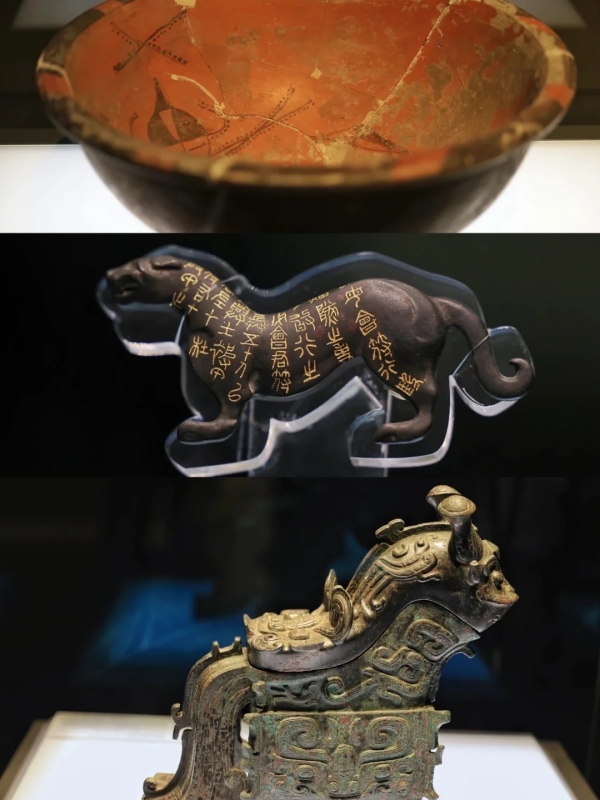
The first hall opens with Paleolithic stone tools — evidence of Lantian Man dating to approximately 1.63 million years ago — then moves through the Neolithic Banpo matriarchal clan culture. Western Zhou bronze ritual vessels from the Shaanxi capital region form the hall's strongest section. Qin dynasty material is limited to fragments and military relics, as the most celebrated terracotta warriors belong to the Emperor Qinshihuang Mausoleum Site Museum. Visitors expecting the Terracotta Army should head directly to Lintong instead.
No. 2 Hall — Han Dynasty Legacy
Shaanxi History Museum in Xian
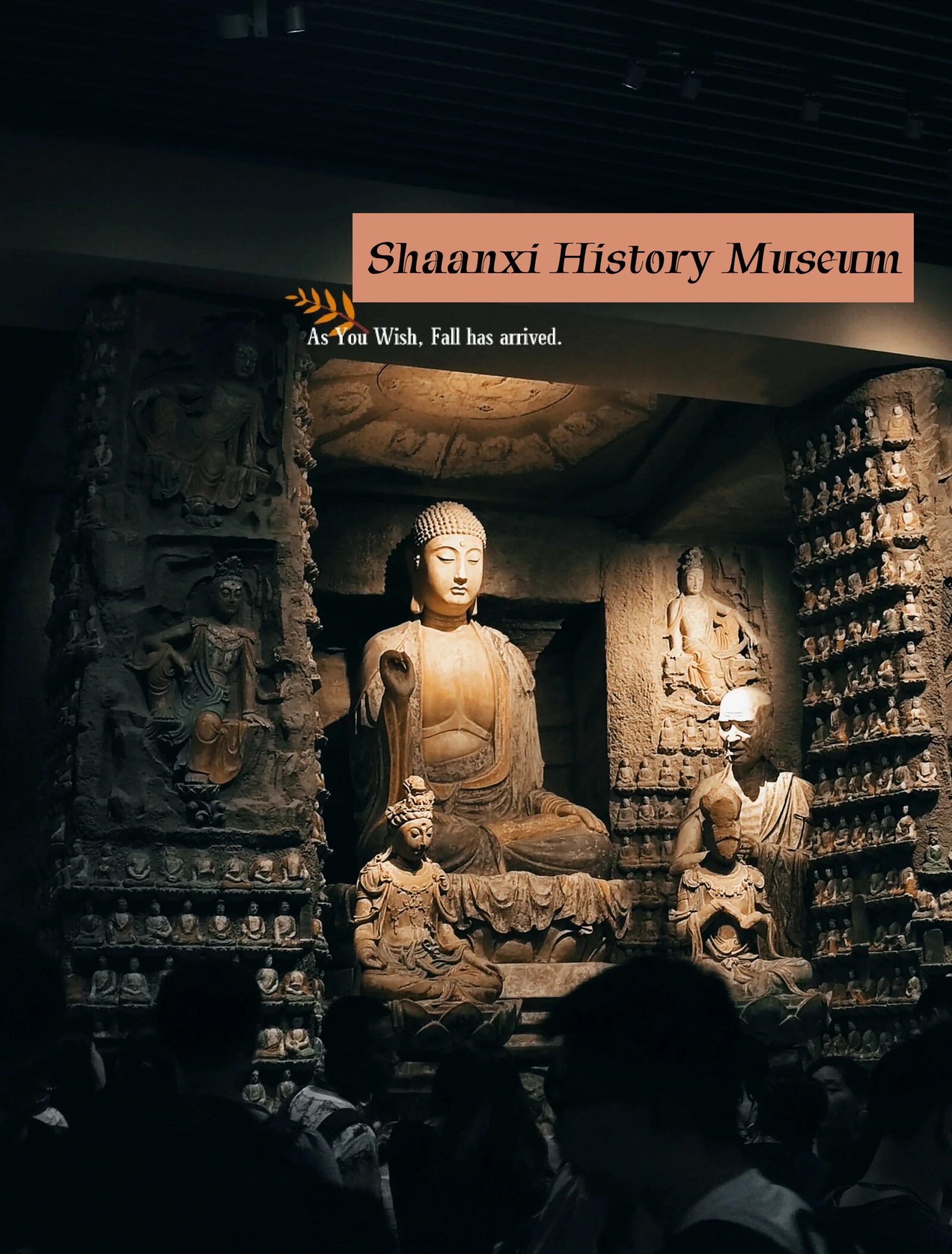
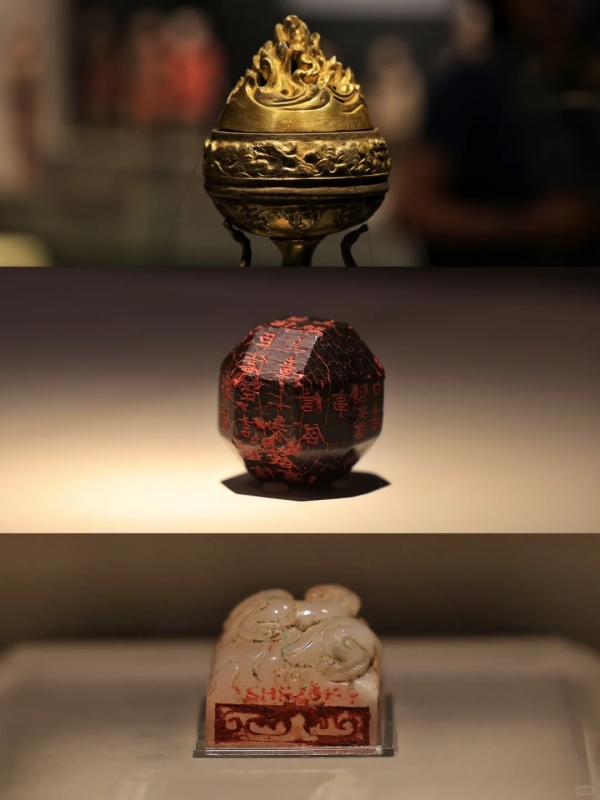
Hall 2 covers the Western Han through the Wei–Jin and Northern & Southern Dynasties, a span of roughly 800 years. Chang'an during the Western Han served as the eastern terminus of the Silk Road, and the material culture reflects that cosmopolitan position. A gilded silver bamboo-joint copper incense burner, a gilded bronze silkworm, and a jade seal of empress represent the era's luxury goods. The later dynasties section shifts focus to cultural fusion along the Silk Road: painted figurines of ethnic warriors, Buddhist sculptures, and a gold monster piece show nomadic and Han artistic traditions merging. This hall requires careful attention to labels — most English panels are present but selective rather than exhaustive.
No. 3 Hall — Prosperous Tang Dynasty
Shaanxi History Museum in Xian
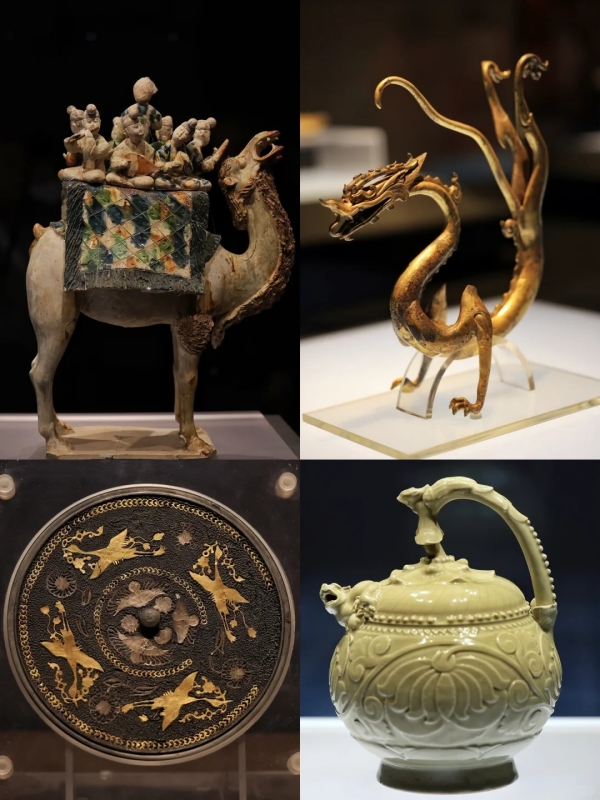
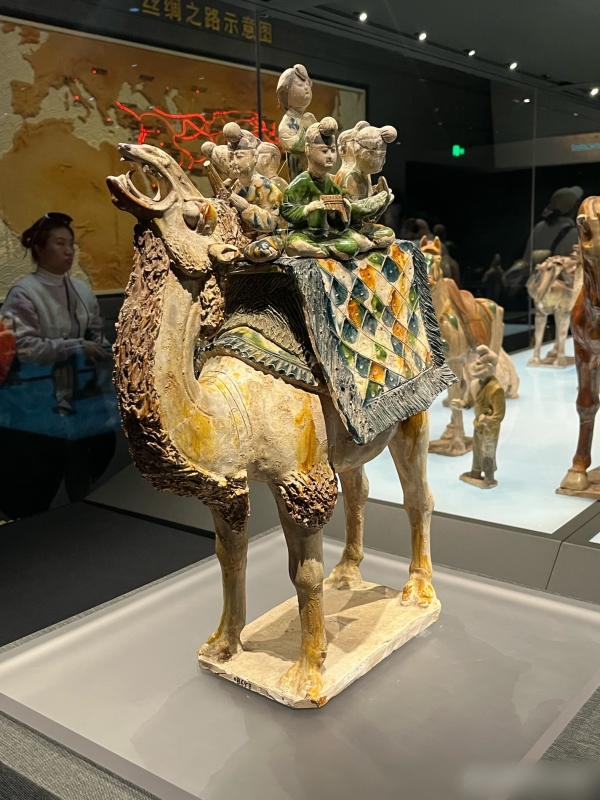
Sui and Tang dynasty material dominates the third hall, reflecting Chang'an's role as the world's largest city during the seventh and eighth centuries. Tri-color glazed ceramics in the characteristic sancai palette — amber, green, and white — are the most photographed objects. Gold and silverwares from elite Tang burials illustrate the court's wealth and its Central Asian artistic influences. The post-Tang section includes Yaozhou porcelains and Ming dynasty famille-rose honor-guard figurines, providing a brief but visually striking conclusion. No. 3 Hall consistently draws the largest crowds, partly because the Tang dynasty's cultural cachet draws more general visitors, and partly because the glazed ceramics photograph well in the available lighting.
📊 Learn About Modern Xi'an: Curious how centuries of dynastic history and modern industrial expansion shaped the city's current demographic profile? Read our breakdown of Xi'an China Population.
Top Exhibits: Tang Dynasty Murals & Tang Treasures
Shaanxi History Museum in Xian
Two underground halls offer a deeper dive into Tang material culture beyond what the permanent halls present. These are not extensions of the chronological layout — they are focused exhibitions with their own ticketing, requiring separate admission. Both are genuinely worth the additional cost, particularly the mural gallery, which preserves color and detail that no photograph can fully convey.
The museum's official count designates 97 of the roughly 600 murals as the most valuable pieces in the collection. These come from more than 20 Tang dynasty tombs spanning the seventh and eighth centuries, covering a combined display area of over 1,000 square meters. The subjects range from court ceremonial to secular leisure, offering an unusually intimate window into Tang elite life that text-based history cannot provide.
- Prince Zhanghuai's tomb envoys: foreign dignitaries depicted in formal procession, among the earliest and most detailed visual records of Silk Road ambassadors at the Tang court
- Polo scenes: mounted figures playing polo, a sport imported from Persia that became a court favorite under Emperor Xuanzong
- Hunting trips: mounted archers pursuing game — a direct visual reference to the martial culture of the Tang military aristocracy
- Honor guards: armed ceremonial guards flanking tomb passages, rendered in vivid pigments that remain visible today
- Princess Yongtai palace maids: female attendants in detailed court dress, providing rare evidence of women's material culture in the upper Tang household
Gallery of Mural Treasures of Tang Dynasty
The underground mural gallery displays approximately 600 fine murals sourced from over 20 Tang dynasty tombs, covering more than 1,000 square meters of wall space. The museum's official designation places 97 of these in the highest-value category. Beyond the named subjects, the gallery displays copies of famous Tang paintings alongside the murals, allowing visitors to trace the relationship between tomb decoration and established court art. The lighting in this hall is controlled to protect the pigments, which means photographs will appear darker than expected. Plan to spend time looking directly at the walls rather than through a camera lens.
Treasures of Great Tang Dynasty
The Hejia Village hoard forms the backbone of this exhibition. Workers discovered it accidentally in October 1970 while digging a foundation; an archaeological team subsequently expanded the find to more than 1,000 pieces total. The museum displays approximately 300 of these objects, including gold and silver wares, jade ornaments, precious medicines, and both Chinese and foreign coins — a cross-section of Tang-era wealth that reflects the commercial reach of Chang'an as an international capital.
- Agate cup: carved in a beast-head motif, representing the finest level of Tang luxury craftsmanship in semiprecious materials
- Jade armbands: inlaid with gold, a hybrid technique blending Han jade-working traditions with Central Asian metalwork aesthetics
- Gold bowl: decorated with mandarin duck and lotus-petal motifs, reflecting the Tang preference for naturalistic goldsmithing
- Chinese and foreign coins: side-by-side display illustrating Tang currency's international circulation along Silk Road trade routes
The identity of the original owners and the purpose of the burial remain unconfirmed — a mystery the museum acknowledges directly rather than hedging with speculative attribution.
🐫 Ancient Trade Routes & Historic Hubs: Explore ancient caravan routes, Buddhist grottoes, desert oases, and key historical stops in our guide to Silk Road Xi'an.
Tickets, Booking & the Foreign-Visitor Reservation Reality
The basic permanent exhibition is free, but a free ticket still requires a reservation. The museum's official booking system — its WeChat mini-program and official website — mandates a mainland Chinese phone number and either WeChat Pay or Alipay to complete the transaction. Visitors booking from outside mainland China face a practical barrier: most cannot satisfy these payment requirements without a local contact or a mainland bank account.
Third-party platforms solve this problem. Trip.com and Klook both handle the basic free reservation and issue dated entry tickets for the two paid special halls. Using these platforms does not bypass the daily 6,000-visitor cap, but it does allow visitors without WeChat Pay to secure a slot before arrival. We recommend reserving through a third-party platform at least one week ahead for standard travel periods, and two weeks ahead during Golden Week or summer weekends.
Getting to the Museum from Xi'an
The museum sits at No. 91, Xiaozhai East Road, Yanta District, northwest of the Big Wild Goose Pagoda. Two metro stations offer practical access, with Xiaozhai Station being the closer option. The walk from either station takes under 10 minutes and is straightforward — Xiaozhai's Exit E faces east toward the museum along a pedestrianized road.
For more, see our guide to Giant Wild Goose Pagoda.
Metro to Xiaozhai or Dayanta Station
Two metro options serve the museum. Xiaozhai Station on Lines 2 and 3, Exit E, places visitors approximately 700 meters east of the entrance — a 7-to-8-minute walk along a straight, pedestrian-friendly road. Dayanta Station on Lines 3 and 4, Exit A, sits roughly 800 meters west and works well if you plan to combine the museum with the Big Wild Goose Pagoda in a single outing. The pagoda is southeast of the museum, making Dayanta a logical endpoint rather than a starting point for the museum visit itself.
City Buses and Tourist Buses
More than a dozen city bus lines stop at or near the museum gate: 5, 19, 24, 26, 27, 30, 34, 271, 400, 401, 521, 527, 701, and 713. Tourist Bus 8 and Route 610 cover the same general stop. For visitors arriving from Xi'an Xianyang Airport, the Airport Shuttle Bus branded the "Shaanxi History Museum Line" runs direct — the most cost-effective airport option if your timing aligns with its schedule. Buses are most practical for visitors staying outside the metro corridor, particularly in Yanta District's western residential areas.
See also our Xian in guide.
Taxi, DiDi and from Xi'an Xianyang Airport
DiDi is the standard ride-hailing app in Xi'an and offers an English-language interface with foreign credit card acceptance — a significant advantage for visitors without Alipay. A taxi or DiDi from central Xi'an to the museum costs approximately ¥15–25 ($2–4) depending on exact pickup point. From Xi'an Xianyang International Airport, expect ¥150–200 ($22–28) and 45 to 60 minutes of travel time. Weekday rush hours between 17:00 and 19:00 routinely add 20–30 minutes to airport runs. We recommend building this buffer into your schedule if you have a same-day flight or a timed museum reservation.
For more, see our guide to Xian China Silk Road.
Flying to Xi'an with Power Banks: CAAC Rules & Wh Formula
Power banks are subject to China's Civil Aviation Administration restrictions on all flights arriving at Xi'an Xianyang International Airport. The regulation is based on watt-hours (Wh), not milliamp-hours (mAh) — a distinction that trips up many international travelers who expect the mAh rating printed on their device to be sufficient. The conversion is straightforward: Wh equals mAh multiplied by voltage (V) and divided by 1,000. Most standard power banks operate at 5V, so a 20,000 mAh unit delivers 100 Wh — sitting right at the first regulatory threshold.
- ≤100 Wh: allowed in carry-on cabin baggage with no airline approval needed
- >100 Wh and ≤160 Wh: allowed in carry-on only, requires airline approval at check-in (typically a signed declaration; requirements vary by carrier)
- >160 Wh: strictly prohibited — cannot be carried on board or checked as baggage
- Carry-on only: all power banks must be in cabin baggage, never in checked luggage, regardless of capacity
- Labeled clearly: the Wh or mAh + V rating must be visible on the device casing; unlabeled power banks may be confiscated at security
- No charging in flight: portable chargers cannot be used or recharged during the flight
- Approval for 100–160 Wh: contact your airline before departure to confirm the declaration process — some carriers require the form submitted 24 hours in advance
Spare loose lithium batteries follow the same Wh thresholds. High-capacity laptops with non-removable batteries above 160 Wh are also prohibited from air travel entirely. For travelers carrying multiple devices, a 10,000 mAh power bank (50 Wh at 5V) covers most phone-charging needs without triggering any paperwork.
Tips for Foreign Visitors
The museum accommodates international visitors, but preparation closes the gap between a frustrating visit and a rewarding one. Several factors — the reservation bottleneck, language coverage, and queue management — require foreknowledge rather than improvisation on-site.
- Reserve 1–2 weeks ahead: peak season (Golden Week, summer weekends) fills the 6,000-visitor cap before noon; book the earliest morning slot available
- Bring your passport: required at security and for the free-reservation identity check at the gate
- Book English guides early: the museum's on-site desk rarely has English-speaking guides on short notice; arrange through Trip.com, Klook, or a travel agency before arrival
- Rent audio guides at the entrance: available in English and Chinese, covering the permanent halls; budget an extra 30–45 minutes if you plan to use them fully
- Arrive at opening: the museum has no real off-season — queues form before 8:30 even on weekdays
- Turn off flash: photography for personal non-commercial use is permitted, but flash damages the murals and pigments; dim lighting is controlled for conservation
- Sip water at the door: security checks at the gate prohibit outside food and drink; bottled water is allowed if you take a sip upon entry
- No eating or drinking inside: this applies to the exhibition halls — keep snacks in your bag until you exit
- Check for rotating displays: some collections move between halls; grab the floor plan at the entrance on the day of your visit
English Panels, Audio Guides & Tour Guides
English text panels appear throughout the three permanent halls, but they cover the collection selectively rather than providing line-by-line translation. Audio guides in English and Chinese are rentable at the entrance desk and offer a more complete narrative across all three halls. English-speaking tour guides require advance booking — the museum's on-site guide desk frequently runs out of English-capable staff on busy days, so reserving through Trip.com or Klook before your visit is the reliable path.
Photography, Security & Practical Etiquette
Flash photography is prohibited throughout the museum, including in the underground mural gallery. The low-light conditions inside many halls are intentional — they protect the pigments on the murals and minimize UV exposure to bronze and textile artifacts. Visitors who over-photograph tend to slow their own progress through the galleries. We recommend limiting yourself to two or three photographs per hall and spending the remaining time actually looking at the objects. The security check at the entrance prohibits metal knives, lighters, and outside food or drinks; bottled water is permitted provided you drink a small amount at the threshold checkpoint. Eating and drinking inside the exhibition halls is not allowed.
Nearby Places to Pair with Your Visit
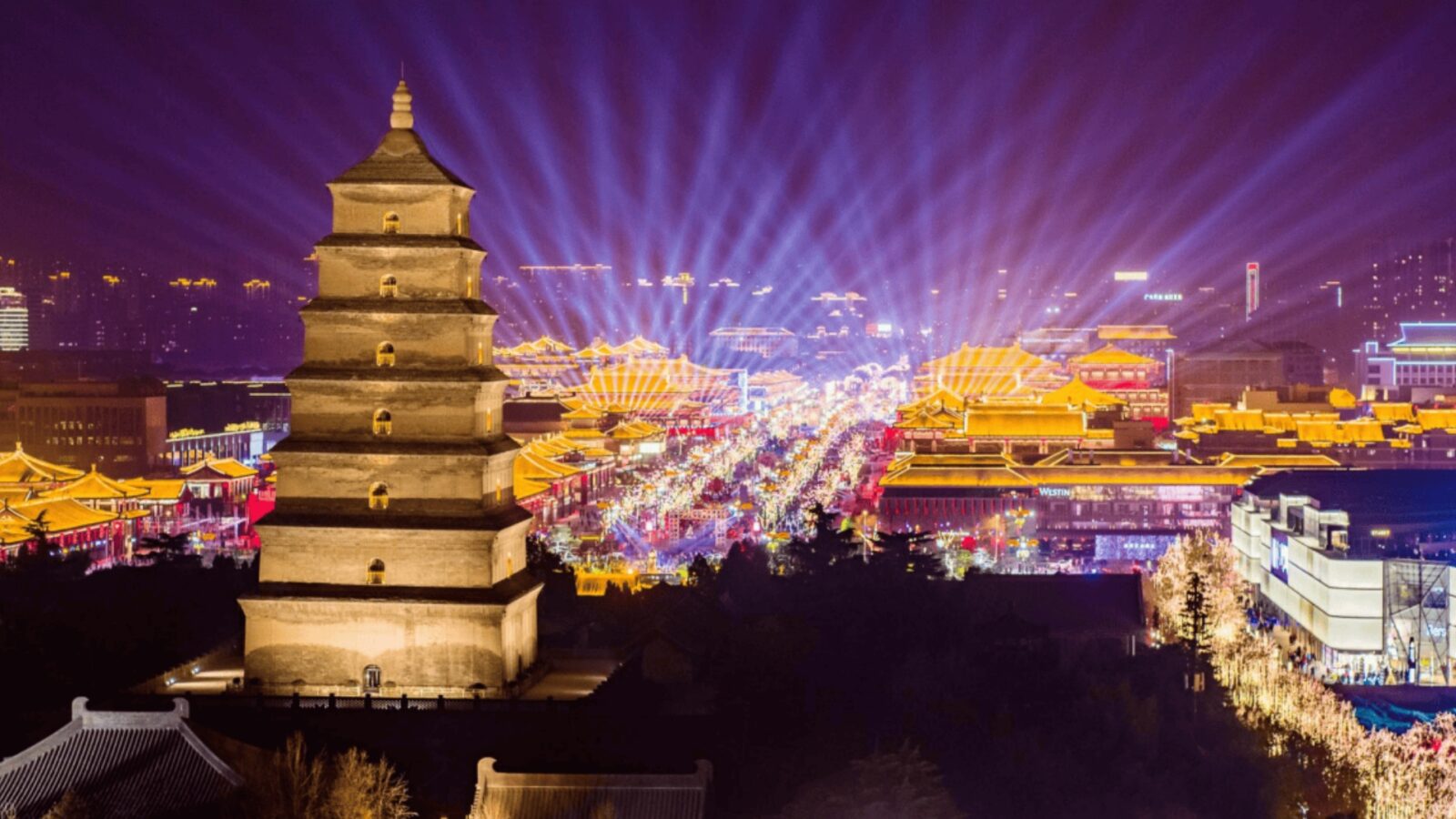
The Big Wild Goose Pagoda lies southeast of the museum, roughly 800 meters away. Built in 652 AD as a Tang Buddhist repository for scriptures brought from India, it shares the Tang-era context of the museum's strongest collection. A combined half-day plan works well: museum in the morning, pagoda grounds in the early afternoon. The Great Tang All Day Mall sits south of the pagoda, a Tang-themed pedestrian shopping street with evening light shows. The Xi'an City Wall, built during the Ming dynasty, runs approximately 6 kilometers south of the museum and is walkable or bikeable for panoramic city views. Daxingshan Temple — one of Xi'an's oldest, originally established between 265 and 289 AD — sits about 1 kilometer west and offers a quieter contrast to the museum's foot traffic.
Frequently Asked Questions
Q: Is the Shaanxi History Museum in Xian the same as Xi'an Museum?
No — they are two separate institutions. The Shaanxi History Museum (陕西省历史博物馆) is the large national-level museum northwest of the Big Wild Goose Pagoda covered in this article. Xi'an Museum (西安博物院) is a municipal museum at the Small Wild Goose Pagoda in southern downtown Xi'an, focused on the local history of the city as a capital.
Q: Do I need to book in advance of Shaanxi History Museum in Xian?
Yes. The basic permanent exhibition requires a free advance reservation, and the daily cap of 6,000 visitors means same-day tickets are effectively unavailable during peak season. The two paid special exhibitions (Tang Treasures at ¥30 and Tang Murals at ¥270) require separate paid advance tickets. Visitors without a mainland phone number or WeChat Pay should use Trip.com or Klook.
Q: Can I visit Shaanxi History Museum in Xian on a Monday?
Generally no. The museum is closed every Monday except when a legal Chinese public holiday falls on that day. Before planning your trip, check the holiday calendar — holiday Mondays operate on the standard weekday schedule.
Q: How long does a visit take in Shaanxi History Museum in Xian?
The three permanent halls take 3–4 hours to move through at a moderate pace. Adding the Treasures of Great Tang Dynasty hall requires another 1–1.5 hours, and the Gallery of Mural Treasures adds a further 1–1.5 hours. A full visit covering all five exhibitions is realistically a half-day commitment, or approximately 5–7 hours.
Q: Is admission free of Shaanxi History Museum in Xian?
The three permanent halls are free with a reservation. The Treasures of Great Tang Dynasty exhibition costs about $4 (¥30), and the Gallery of Mural Treasures of Tang Dynasty costs about $38 (¥270). Tour-guide fees and audio-guide rental are charged separately.
Q: Can I take photos in Shaanxi History Museum in Xian?
Yes, for personal non-commercial use, but flash photography is prohibited throughout the museum. Interior lighting is deliberately dim to protect artifacts, so photographs will appear darker than you might expect. Over-photographing is a common visitor mistake that significantly slows progress through the halls — we recommend limiting yourself to a small number of representative shots per gallery.
Q: How do I get to Shaanxi History Museum in Xian from the airport?
Xi'an Xianyang International Airport is served by the Airport Shuttle Bus on the "Shaanxi History Museum Line," which runs direct to the museum. A taxi or DiDi costs about $22–28 (¥150–200) and takes 45–60 minutes, longer during weekday rush hours between 17:00 and 19:00.
Q: How strict is the daily visitor cap in Shaanxi History Museum in Xian?
The 6,000-visitor daily cap is enforced at the ticket reservation level, not at the door. During Golden Week and summer weekends, the cap is regularly reached before noon. The practical implication is straightforward: book the earliest morning time slot available and reserve at least 1–2 weeks ahead during peak periods. Walk-in visitors without a reservation are turned away when the cap is reached.