Giant Wild Goose Pagoda
Chang'an — modern Xi'an, China — was the eastern anchor of the Silk Road when Emperor Wu of Han formally opened the overland corridor in 130 BC. Bactrian camels loaded with silk, tea, and porcelain set out from the city gates into roughly 4,000 miles of desert, oasis, and mountain pass, eventually reaching Persia, Rome, and the markets of the Mediterranean.
Today, the old capital is a working Chinese city of 13 million people and an open-air archive of that trade network. Below we trace the Silk Road's Xi'an origins, the heritage sites still standing, the modern train corridor that shadows the route to Urumqi, and the practical details for planning a visit.
Quick Facts
The Silk Road's Xi'an Origins
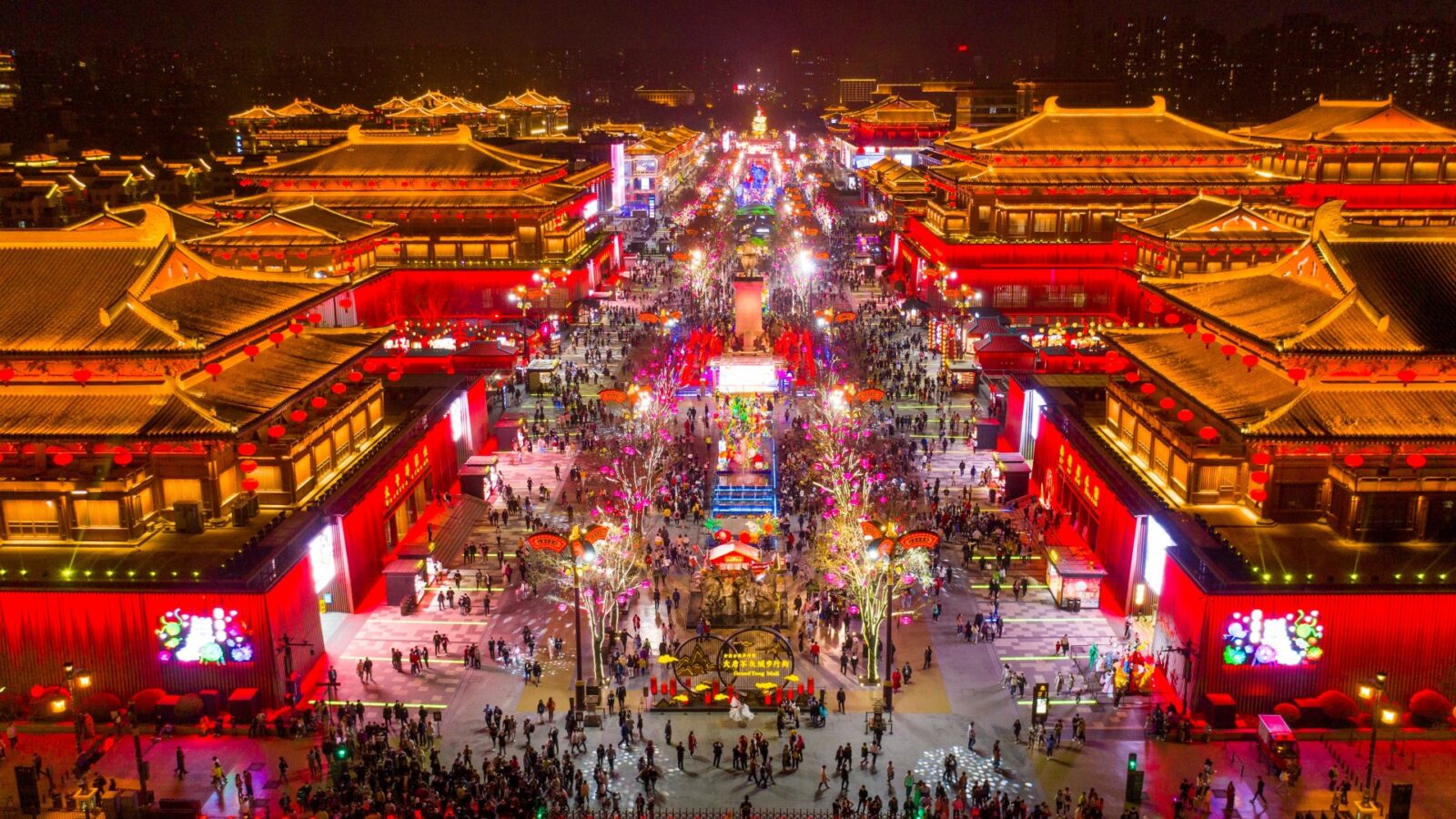
Tang Paradise Night City
The Han Dynasty Trade Network
Emperor Wu of Han sent the envoy Zhang Qian westward in the 2nd century BC on diplomatic missions to the Yuezhi. Those missions carved out the geographic and political knowledge that made a formal trade corridor possible. As a result, in 130 BC the Han court designated Chang'an as the imperial starting point of the western route, and the overland Silk Road was open for business.
Silk, Caravans, and Cultural Exchange
Bactrian camels — two-humped and cold-hardy — carried the caravans, with each animal hauling around 400 pounds of cargo. Silk moved west; wool, gold, horses, and glassware moved east. The route also carried ideas. Buddhism traveled into China along this network, and the monk Xuanzang's 7th-century pilgrimage to India brought back the Sanskrit scriptures later housed inside the Big Wild Goose Pagoda.
The Decline and Legacy
Maritime trade rose through the Song and Yuan dynasties, and Ottoman control of the eastern Mediterranean in the 15th century is widely cited as the closing chapter for the overland route. The term "Silk Road" was coined in 1877 by the German geographer Ferdinand von Richthofen. Today, a modern highway and the Lan-Xin railway still follow parts of the corridor through Xinjiang and on toward Central Asia.
Silk Road Heritage Sites in Xi'an
-
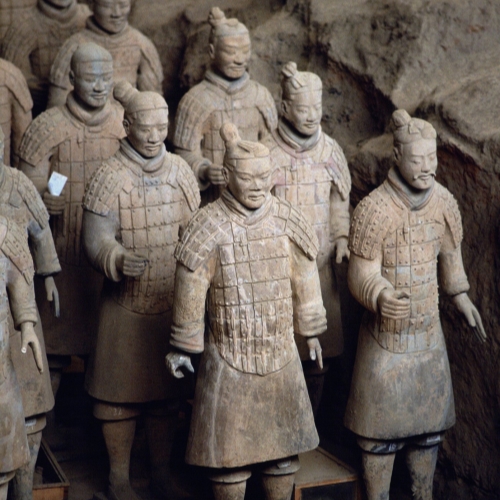

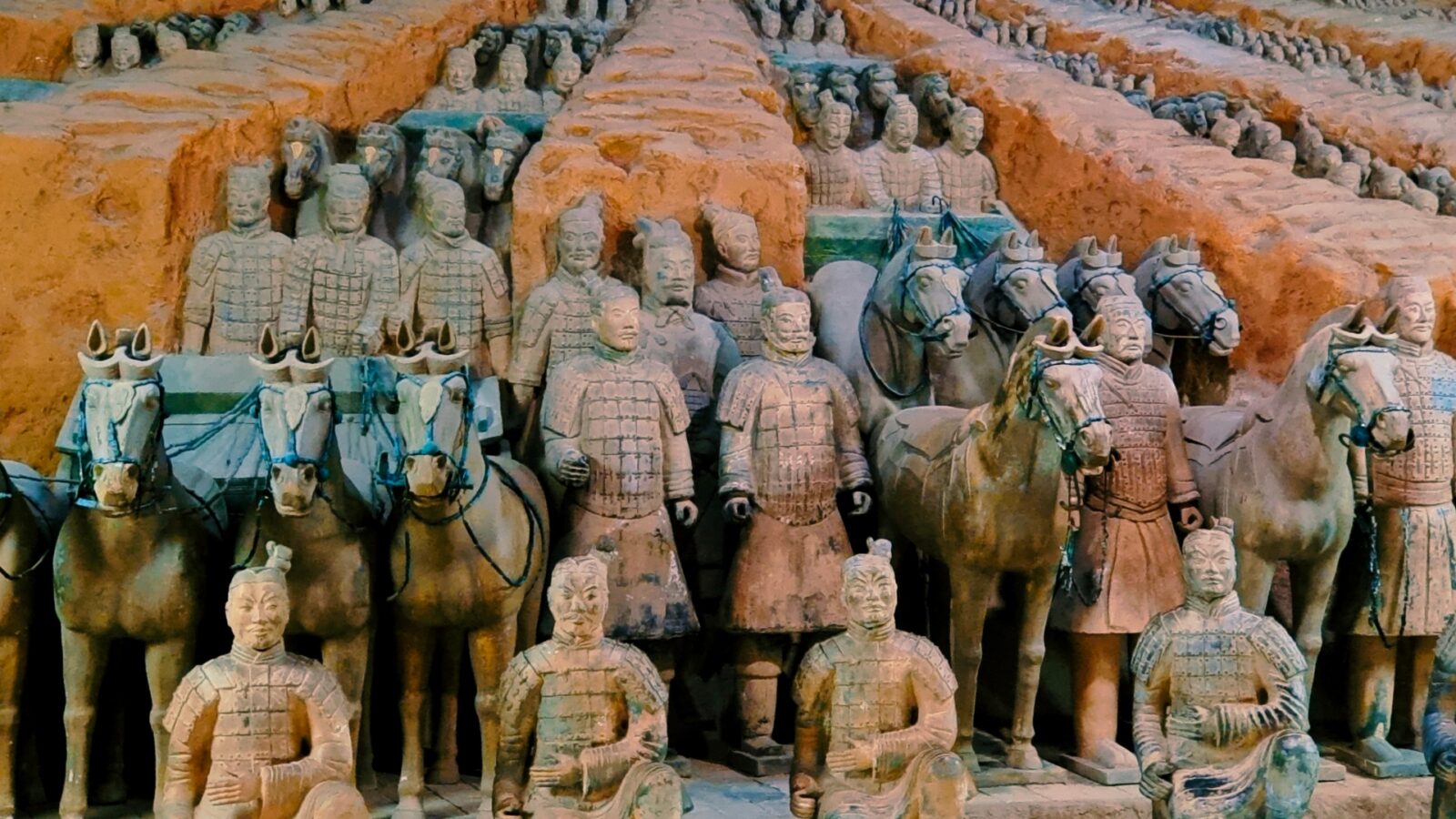
- Terracotta Warriors in Formation
-
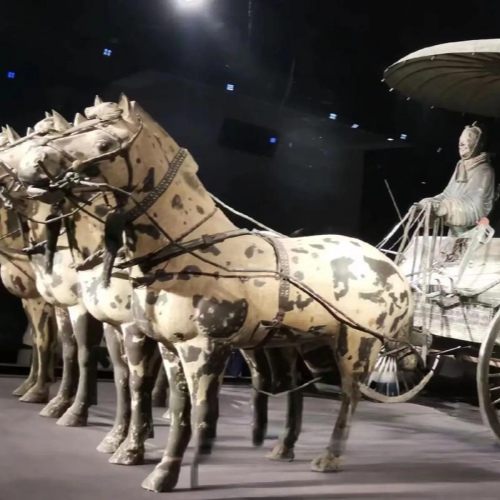
- Bronze Chariot No.1
-
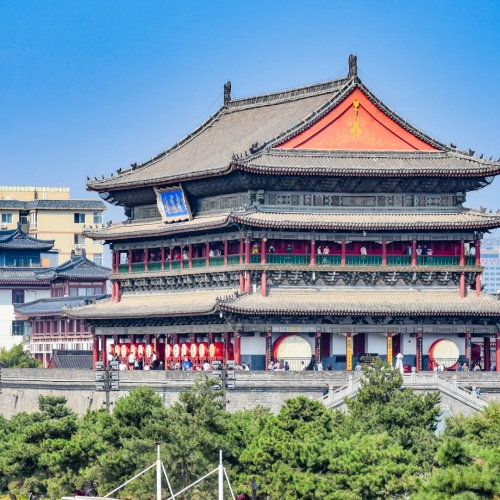
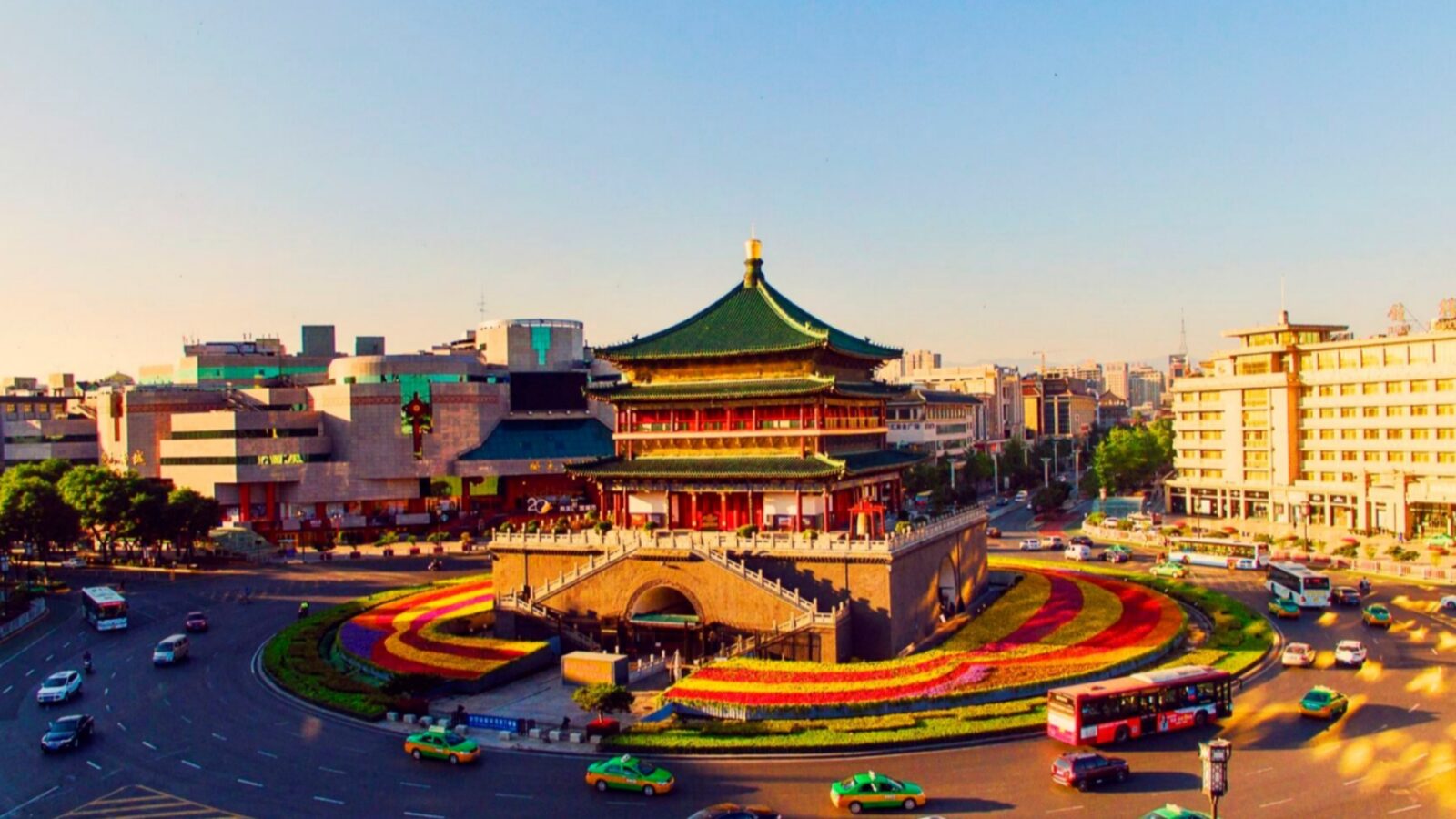
- Bell Tower
-
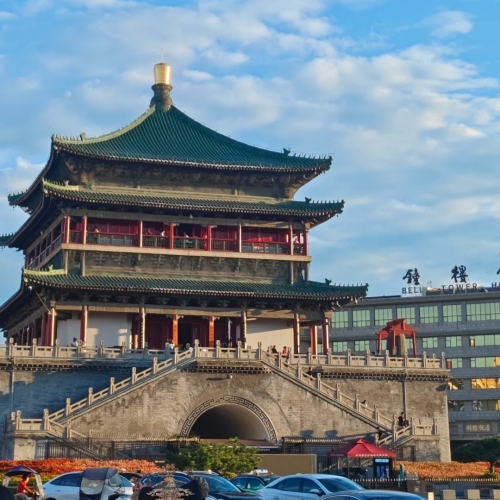
- Drum Tower
Five sites anchor Xi'an's Silk Road story. The table below compares them at a glance, with more detail in the sections that follow.
The Terracotta Army
Built around 210 BC in Lintong District, ~40 km east of central Xi'an, the army guards the tomb of Qin Shi Huang, China's first emperor. The site holds roughly 8,000 unique life-sized figures and was inscribed as a UNESCO World Heritage Site in 1987. Adult admission is about $17 (¥120); allow half a day for all three pits.
The Ancient City Wall
The 14-km Ming circuit, built atop Tang walls, encloses the old city. Entry costs about $5 (¥38), and bike rental runs roughly $5 (¥40) for two hours. The South Gate (Yongningmen) is the most popular access; a full loop at a relaxed pace takes about two hours.
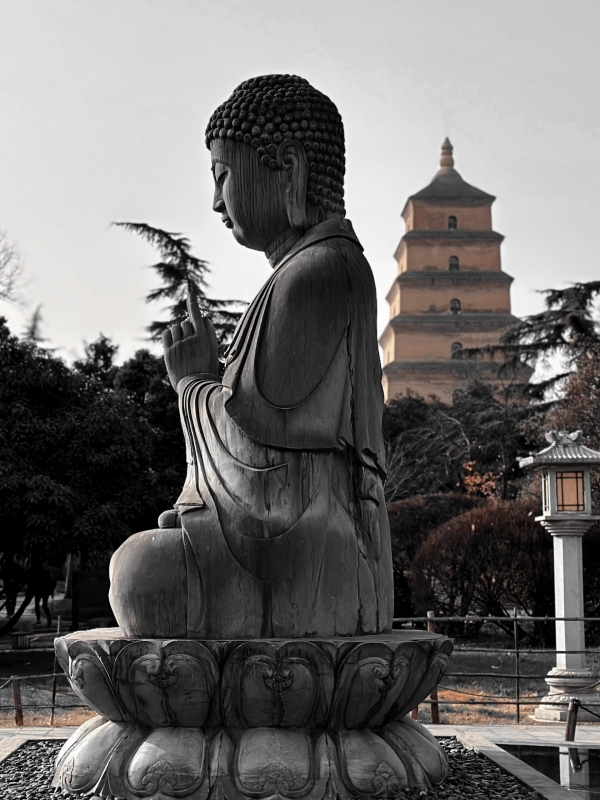
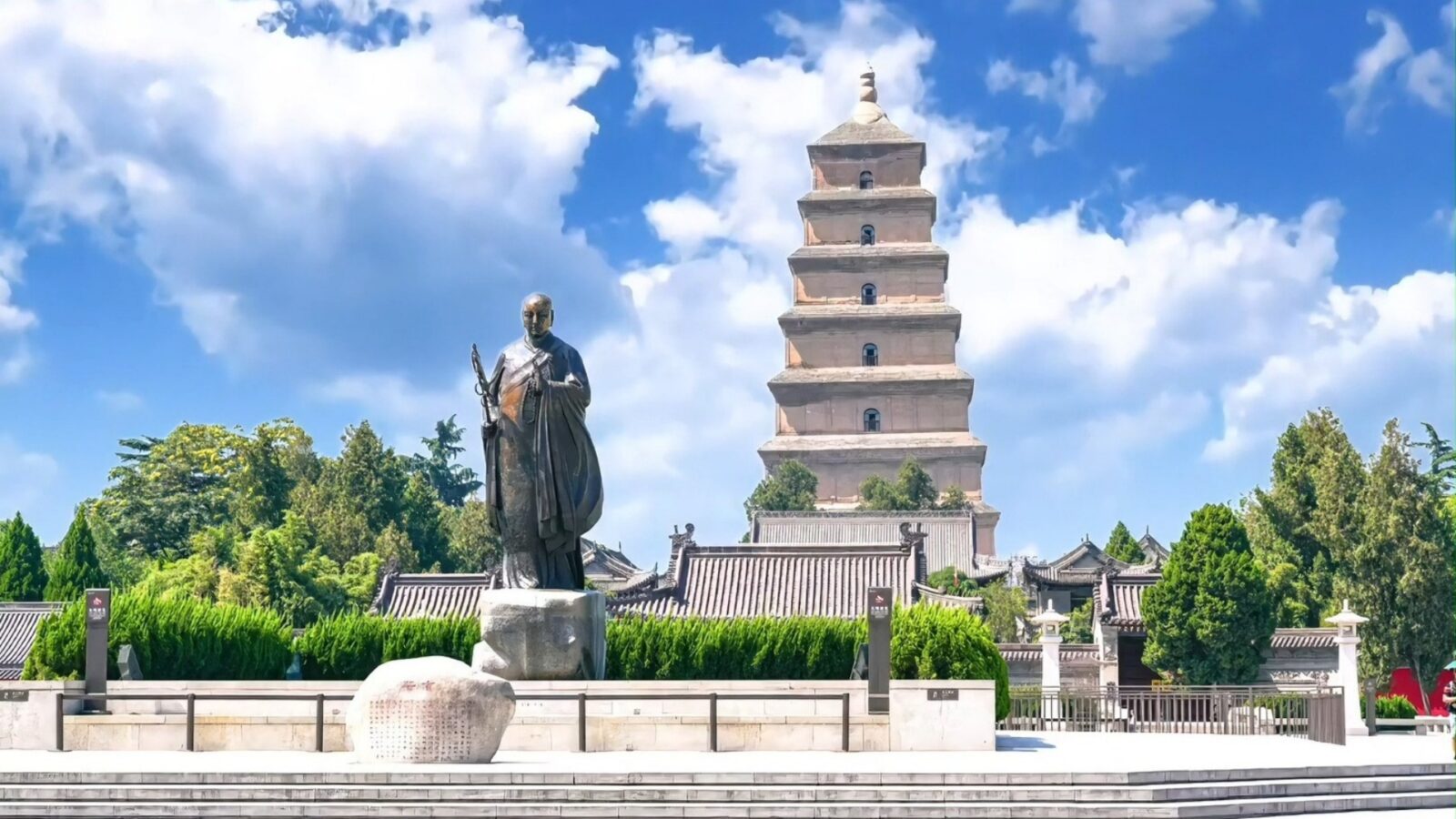
Big Wild Goose Pagoda
Built in 652 AD to house the Buddhist scriptures the monk Xuanzang carried back from India, the pagoda is one of the Tang dynasty's most recognizable monuments. The surrounding square is free; climbing the pagoda costs about $5 (¥35). The evening fountain show in the square is included at no extra charge.
The Muslim Quarter
Wrapped around the Drum Tower and Bell Tower inside the city wall, the Muslim Quarter is home to descendants of Persian and Central Asian Silk Road traders. The Great Mosque dates to 742 AD and is one of the oldest in China. Food and shopping fill the lanes; evenings are the busiest stretch.
Shaanxi History Museum
This national-level Shaanxi history museum near the Big Wild Goose Pagoda houses a dedicated Silk Road gallery covering Han-to-Tang gold, silver, and trade goods. Entry is free with a reservation booked through the museum's official site. The museum is closed on Mondays.
The Xi'an to Urumqi Train Journey
Railways still follow the Silk Road westward from Xi'an. From Xi'an Station or Xi'an North, overnight Z-series sleeper trains and the Lan-Xin high-speed line connect the city to Lanzhou, then onward to Dunhuang, Turpan, and Urumqi. A direct Xi'an-to-Urumqi sleeper takes about 14–22 hours; the high-speed option via a transfer at Lanzhou runs roughly 13–14 hours.
Trains pass through the Hexi Corridor — the same narrow plain Silk Road caravans used — and stop at Jiayuguan, the western end of the Ming Great Wall, and at Dunhuang, home of the Mogao Caves. Most riders break the journey with overnight stops in Dunhuang or Turpan rather than completing it in one stretch.
Xi'an's Silk Road Cuisine
-
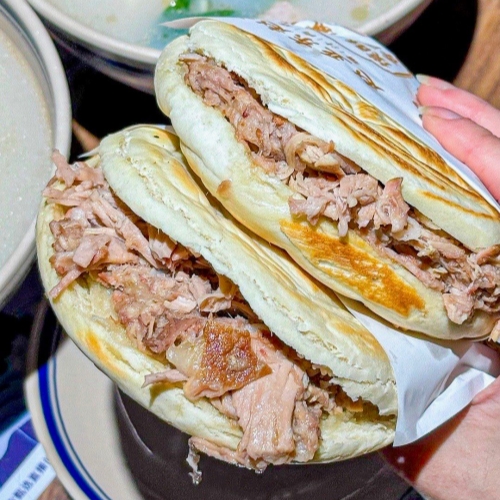
- Roujiamo
-
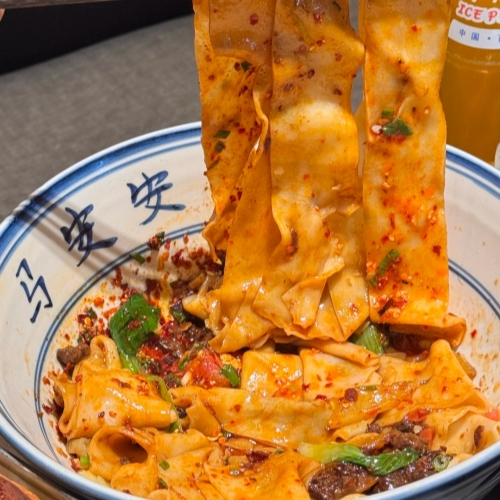
- Biangbiang noodles
-
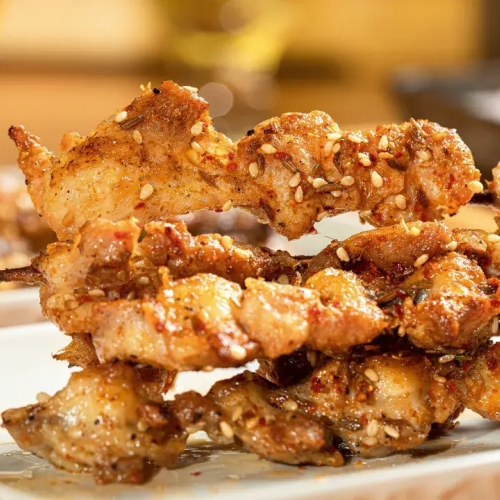
- Lamb skewers
-
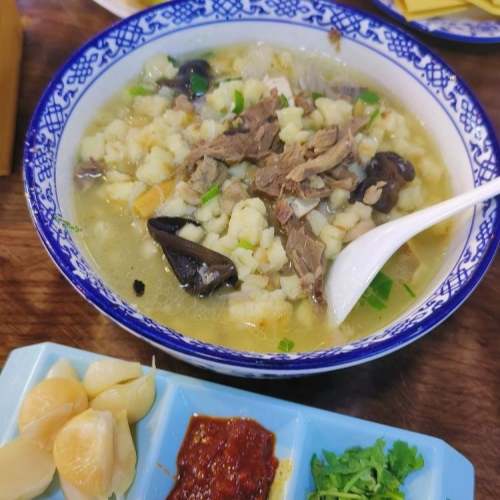
- Lamb soup with bread (Yangrou Paomo)
Xi'an's food is itself a Silk Road artifact. The most iconic local dishes — hand-pulled biang biang noodles, rou jia mo (meat tucked into a flatbread, often called the Chinese hamburger), liangpi (cold wheat noodles in chili oil), and lamb skewers from the Muslim Quarter — all trace back to the wheat-growing regions of Central Asia and the lamb-and-flatbread traditions of Hui and Central Asian Muslim traders who settled along the route.
A Muslim Quarter meal for one runs about $3–8 (¥20–60), while a sit-down Shaanxi restaurant in the city center costs roughly $8–20 (¥60–150) per person. Some venues also stage a short biang biang noodle-pulling show, a quick way to see how the long strands are stretched and slapped against the board.
Planning a Xi'an Visit
Getting to Xi'an is straightforward by air or high-speed rail, and the city's two metro lines cover most major sights. The transport table below summarizes the main options, and the sections that follow cover timing and local movement.
Best Time to Visit
March, April, May, September, and October are the mildest months. July and August run hot, often above 35°C. January and February are cold but quiet, except during the Chinese New Year rush in late January or early February — book hotels and transport months ahead.
Getting to Xi'an
Xi'an Xianyang International Airport (XIY) is ~40 km northwest of downtown; metro line 14 reaches the city in ~45 minutes for about $2 (¥15). High-speed rail from Beijing takes about 4.5–6 hours; from Shanghai, 6–7 hours. Most major Chinese cities have direct HSR service to Xi'an North.
Getting Around Xi'an
Metro lines 1 and 2 cover the city wall, the Bell and Drum Towers, and both train stations. Metered taxis start at about $2 (¥14), and ride-hailing apps work in Xi'an for most foreign travelers. The city wall is best explored by rented bike.
Frequently Asked Questions
Q: Where exactly did the Silk Road start in China?
Chang'an, modern-day Xi'an, served as the eastern starting point of the overland route from 130 BC onward. The term "Silk Road" was coined in 1877 by the German geographer Ferdinand von Richthofen to describe this trans-Eurasian trade network.
Q: How many days do I need in Xi'an?
Two full days cover the City Wall, the Muslim Quarter, the Big Wild Goose Pagoda, and the Shaanxi History Museum. Add a third day for the Terracotta Army in the morning and an evening train onward.
Q: Can I take a train from Xi'an to Urumqi?
Yes. Direct Z-series sleeper trains cover the distance in roughly 14–22 hours. A high-speed route via a transfer at Lanzhou takes about 13–14 hours. Both options follow the old Hexi Corridor that Silk Road caravans once used.
Q: What is the Xi'an Silk Road International Expo?
A recurring government-backed trade and cultural fair held in Xi'an since the mid-2010s, focused on Belt and Road cooperation. Tickets, dates, and the venue are published on the official event site closer to each edition.
Q: What is the best time of year to visit Xi'an?
March through May and September through November bring mild, dry weather. July and August are hot, often above 35°C. January and February are cold but quiet, aside from the Chinese New Year rush in late January or early February.
Q: Is Xi'an safe for foreign tourists?
Xi'an is generally considered safe for visitors. Standard precautions apply in crowded night markets. Carry your passport at all times — hotels, ticketed sites, and train stations require it for entry and ID checks.
Q: Do people in Xi'an speak English?
English is limited outside hotels, major museums, and tourist-oriented restaurants. The airport, train station, and Terracotta Army site have English-speaking staff. A translation app is useful in the Muslim Quarter and smaller shops.
Q: What food should I try in Xi'an?
Start with biang biang noodles, rou jia mo (meat in a flatbread), liangpi (cold noodles), yangrou paomo (lamb broth with crumbled flatbread), and lamb skewers from the Muslim Quarter. Most dishes cost under $5 (¥35) at street stalls.
Q: How much does a trip to Xi'an cost?
Budget travelers manage on about $45–60 per day; mid-range travelers spend roughly $70–120. The Terracotta Army and City Wall together cost under $25. Mid-range hotel rooms in the city center run $50–100 per night.