Giant Wild Goose Pagoda in Xi'an
Giant Wild Goose Pagoda Xian China rises seven stories above the southern city, a 64-metre brick tower that has watched China's ancient capital change for nearly 1,400 years. Da Ci'en Temple, the pagoda's home, was built in 648 AD for Empress Wu by her son, the future Emperor Gaozong. The pagoda followed five years later to hold the Buddhist sutras that the monk Xuanzang carried back from a 17-year pilgrimage across Central Asia. Today the temple-pagoda complex draws visitors by day while the North Square musical fountain — one of Asia's largest — turns the evenings into a free light-and-water spectacle. This guide covers tickets, the climb, the night show, and the Tang-era sites clustered within a short walk.
Quick Facts
🗺️ Planning your broader itinerary across China's ancient capital? Explore our comprehensive guide to Top Tourist Places in Xi'an to discover must-see landmarks, imperial tombs, and vibrant cultural quarters.
Inside Da Ci'en Temple & Climbing the Pagoda
-
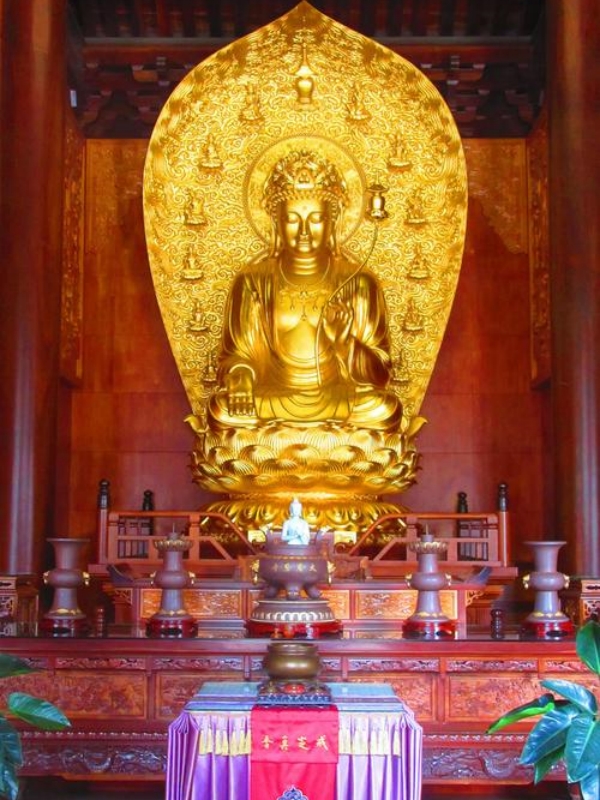

- Inside Da Ci’en Temple
-
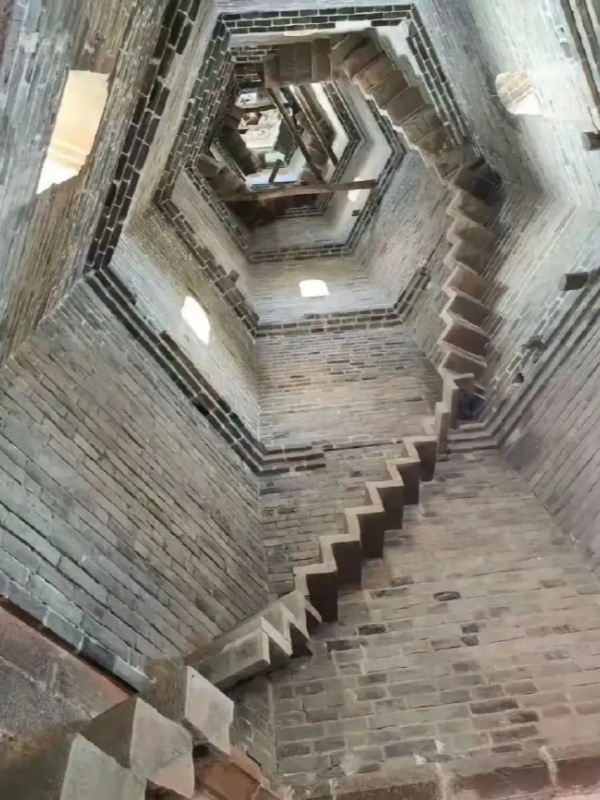
- Inside Da Ci’en Temple
-
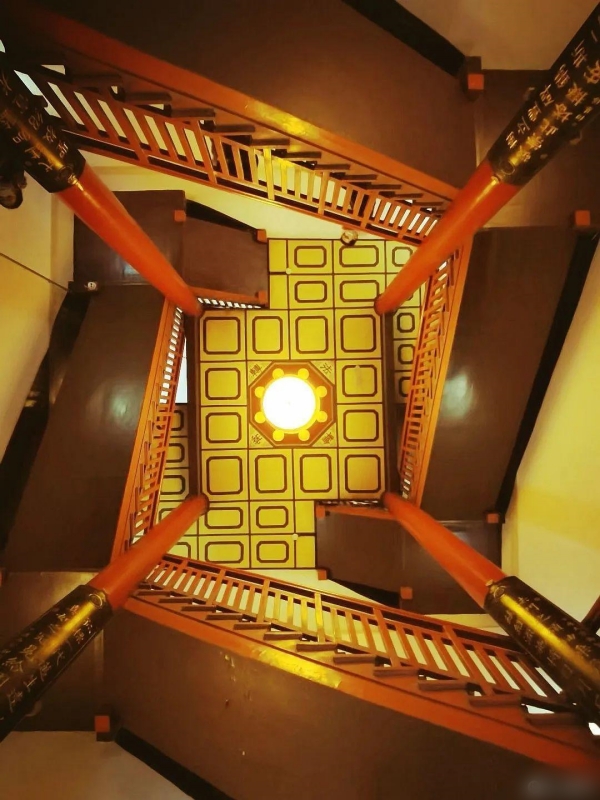
- Inside Da Ci’en Temple
Da Ci'en Temple was commissioned in 648 AD by Crown Prince Li Zhi — later Emperor Gaozong — for his mother, Empress Wu Zetian. The pagoda followed in 652 AD as a repository for the Buddhist sutras that the monk Xuanzang带回 from his 17-year journey to India. Originally five stories tall, the structure was rebuilt and raised to seven stories in 704 AD. That square brick-and-earth frame still stands today, a hollow interior with stone stairs winding upward through each level.
Da Ci'en Temple Complex
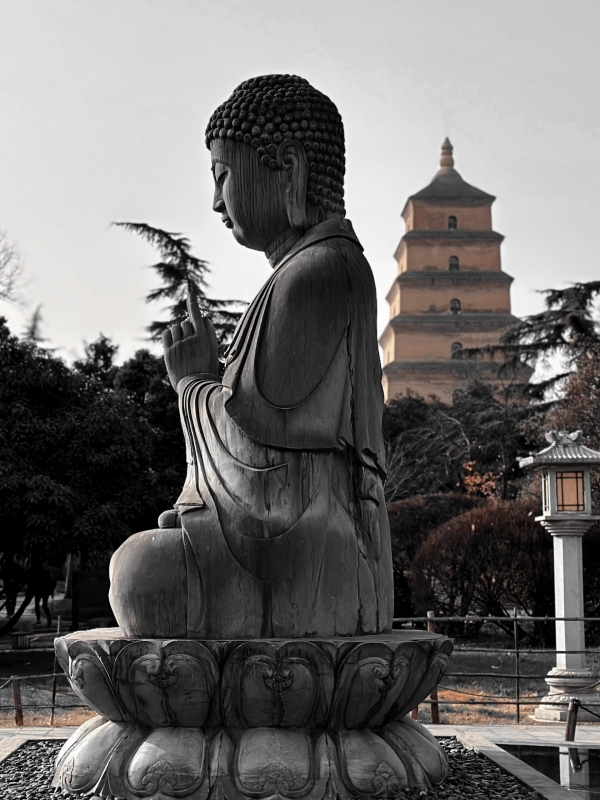
The temple grounds follow a traditional north-south layout. Visitors enter through the south gate and pass several halls before reaching the pagoda at the northern end of the axis. Key stops include the Mahavira Hall, where large Buddha statues occupy the main chamber; the scripture library, which holds reproductions of texts Xuanzang translated; and a small museum dedicated to his life and travels. English signage is limited outside the major halls, so a translation app is useful for the detailed placards inside.
Climbing the Pagoda
The climb begins inside the pagoda base and follows a narrow brick staircase upward. Each level has small window openings facing outward; Tang-era stone steles are displayed on some landings. The upper platforms are unrailed, so visitors should move carefully at the top. Confirm any height or age restrictions at the entrance on the day — these can change during maintenance or busy periods. Total climb and viewing time runs roughly thirty to forty-five minutes, depending on how long visitors pause at each floor.
The Musical Fountain Show & Night Visit
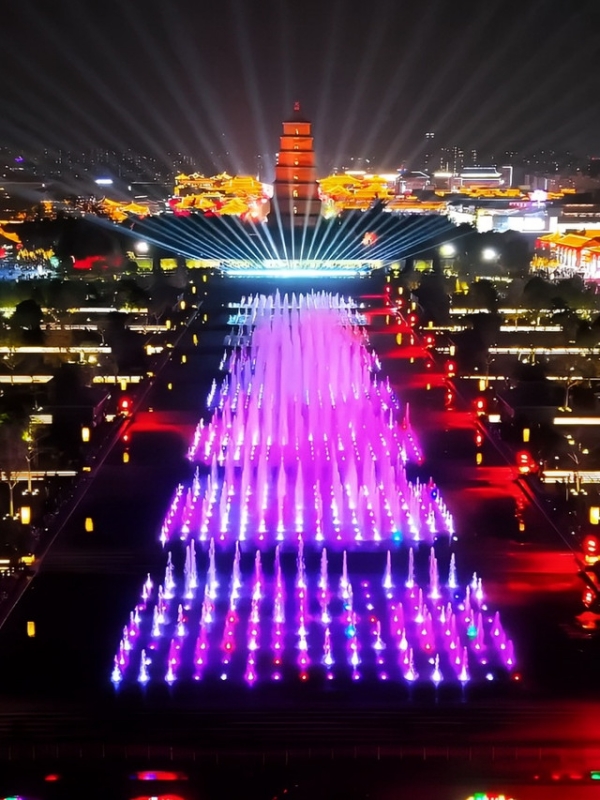
Musical Fountain Show & Night Visit
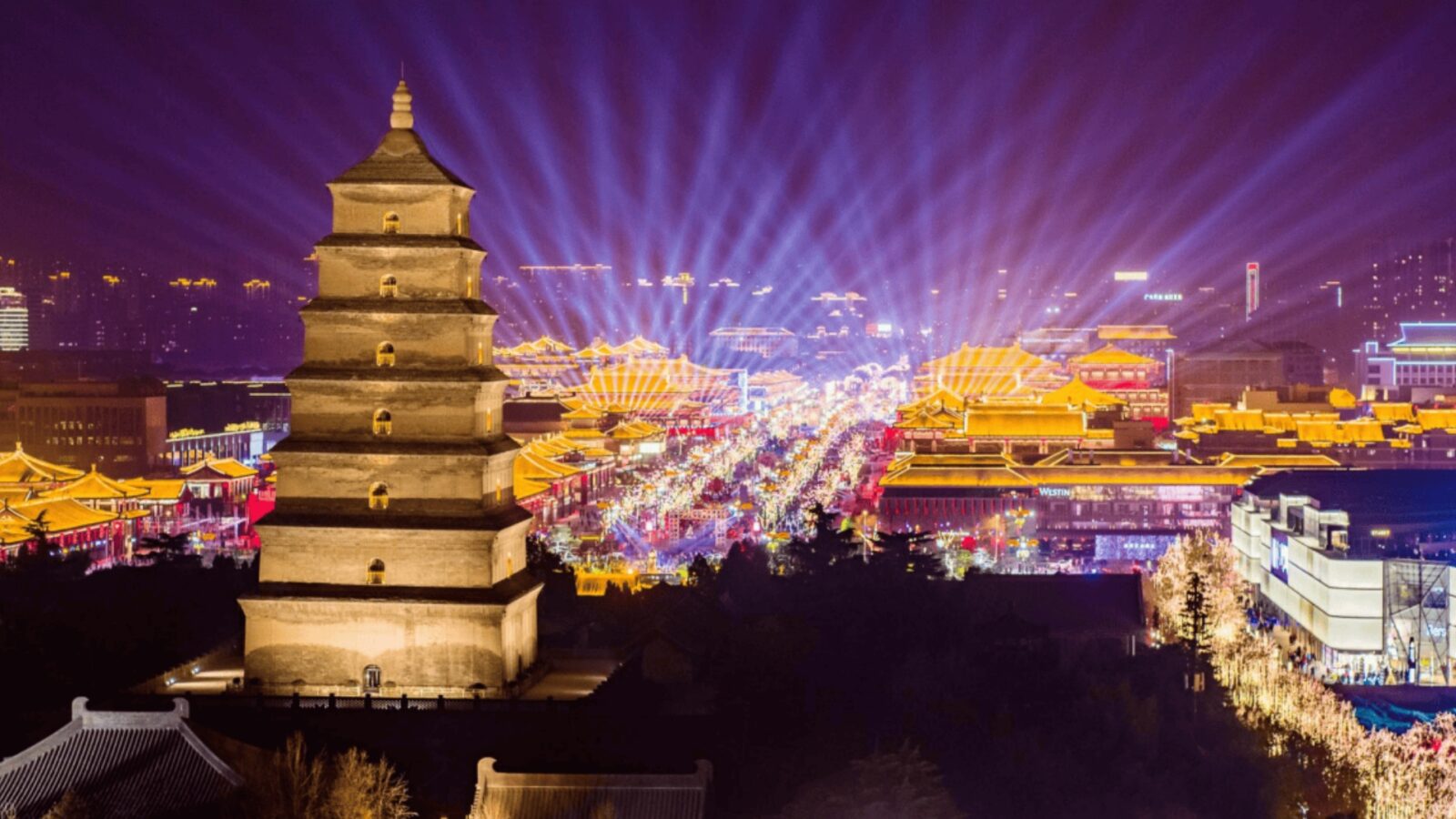
The North Square of the Giant Wild Goose Pagoda holds one of Asia's largest musical fountains, and the evening show draws crowds every night of the year. The pagoda is illuminated against the water jets and coloured lights; the best views are free from the tiered steps on the opposite side of the square. We recommend arriving thirty minutes before the main 20:30 slot to secure a front-row standing position — the spray from the tallest jets can soak the first few rows.
Winter brings shorter evenings, so the fountain typically runs just one or two afternoon shows instead of the full evening schedule. Before planning an October-to-March visit, check the current daily slots posted at the North Square entrance or ask at the temple ticket office. The fountain runs for approximately twenty minutes per show; the song rotation mixes Chinese pop, classical pieces, and Tang Dynasty-themed scores.
Show Schedule & Song List
Three daytime and evening slots run on most days: approximately 12:00, 16:00, and 20:30. The 20:30 evening slot is the most popular and the most crowded. Each show lasts about twenty minutes. The playlist rotates between contemporary Chinese pop, instrumental classical music, and Tang-themed compositions — the specific order changes weekly. In winter, the schedule is typically reduced to one or two slots per day, so visitors should reconfirm the current times on site.
Best Spots to Stand & Photography
The free viewing area fills the wide steps on the north side of the square, directly facing the pagoda. Those standing at the front rail get the fullest spray effect — and some of the wettest clothes. Slightly higher ground on the east and west wings of the square offers drier footing and a cleaner frame: the pagoda rises behind the fountains without any foreground obstruction. A phone or compact camera handles the low-light conditions well; a tripod is impractical in the crowd. The South Square also has an illuminated Wanxiang Pagoda sculpture with its own smaller water feature, though it rarely draws the same numbers as the North Square show.
🎁 Looking to build an unforgettable city itinerary? Check out our curated recommendations on Best Things to Do in Xi'an for immersive cultural experiences, food tours, and evening activities.
Tang Dynasty Sites Nearby: A Half-Day Route
The pagoda sits inside a dense Tang-era heritage zone in southern Xi'an. Several major sites lie within a short walk, making it easy to string together a half-day circuit. We suggest entering Da Ci'en Temple in the late morning, climbing the pagoda, then breaking for lunch near the North Square before heading south on foot.
Walking-Radius Sites (0–15 min)
- Qujiang Pool Ruins Park: 5-minute walk south of Da Ci'en Temple; free entry; landscaped lake, shaded walkways, and Tang-poet inscriptions along the shoreline; ideal for a post-temple unwind.
- Datang Furong Garden: 10-minute walk southeast; ticketed Tang-themed park with traditional architecture, garden paths, and evening performances including the popular 梦回大唐 (Dream Back to Tang) show.
- Tang West Market Museum: 45-minute walk or short taxi ride northwest; recreated Tang-era market street, Silk Road trade exhibits, and historical artefacts from the original western market of Chang'an.
- Shaanxi History Museum: short taxi from the pagoda; one of China's largest provincial museums with a vast collection of Tang Dynasty artefacts; free entry but timed tickets required — book online in advance.
- Tang Dynasty Performance Venue: several theatres within a 10-minute radius offer evening stage shows; the 梦回大唐 production at Datang Furong Garden is the best-known option.
Suggested Order & Walking Route
- Late morning: enter Da Ci'en Temple through the south gate; visit the Mahavira Hall and Xuanzang museum before climbing the pagoda.
- Midday: lunch at one of the food courts on or near Yanta Road, directly north of the temple.
- Early afternoon: walk south to Qujiang Pool Ruins Park (5 min); stroll the lakeside path and read the poet inscriptions.
- Late afternoon: continue southeast to Datang Furong Garden (10 min from the park) for the gardens and an evening performance.
- Evening: return to the North Square by 20:00 and find a spot for the 20:30 fountain show; visitors on an evening-only itinerary can skip the climb and head straight to the square.
🌸 Eager to dive deeper into the treasures of the Silk Road? Plan your visit to the city's premier museum with our complete guide to Shaanxi History Museum Visitor Guide to secure timed entry tickets and view rare Tang Dynasty artefacts.
Tickets, Hours & How to Book
The pagoda sits inside Da Ci'en Temple, so visitors choose between the temple grounds alone or a combined ticket that includes the interior climb. For most first-time visitors, the combo ticket offers the best value. All tickets are available on the door, though booking online avoids the queue at peak hours.
Three booking channels work for foreign visitors without a mainland phone number. Trip.com and Klook both issue QR-code e-tickets that scan directly at the entrance gate — no Chinese SIM required. The on-site ticket window at the south gate sells the same tiers in cash or card. Students with a valid international ID often qualify for a reduced rate; confirm the current discount on the day.
Day Ticket vs Pagoda-Climb Ticket
- Temple grounds only: $5–6 (¥40) — covers the courtyards, Mahavira Hall, Xuanzang memorial hall, and an exterior view of the pagoda from the ground.
- Climb ticket add-on: $4 (¥30) — grants access to the narrow interior staircase leading to the seventh floor; sold as an add-on to the temple ticket.
- Combo ticket: approximately $7–9 (¥50–65) — the standard day-entry option; temple + climb combined at a modest saving over buying each separately.
- Evening fountain show: free — the North Square musical fountain requires no ticket; simply arrive and find a viewing spot.
Booking Channels & ID Requirements
- Trip.com: English e-voucher with QR scan at the south gate; no Chinese phone needed; card payment accepted.
- Klook: similar e-voucher flow; popular with English-speaking visitors; instant confirmation.
- On-site window: south gate of Da Ci'en Temple; passport required for the climb ticket (not for temple grounds alone); card and cash accepted.
- Student tickets: a valid student ID may unlock a lower tier — confirm current pricing at the window before joining the standard queue.
📊 Curious about the scale and demographic makeup of this bustling megacity? Read our detailed analysis on Xi'an Population and Demographics to understand how modernity and ancient heritage coexist in Northwest China.
Getting There: Metro, Taxi & Walking
Best Time to Visit & Practical Tips
The pagoda and its square are at their best in April, May, September, and October. Temperatures are moderate, skies are generally clear, and the evening fountain shows run their full schedule. Summer evenings stay warm enough for the outdoor fountain, though daytime heat inside the temple can be intense. Winter brings reduced fountain timings and earlier closing hours — visitors arriving between November and February should check the day's show schedule before heading to the North Square.
- Arrive early for the evening fountain: thirty minutes before the 20:30 slot puts you in the front rows — be prepared for heavy spray from the tallest jets.
- The pagoda climb is steep: the interior staircase is narrow and physically demanding; not suitable for visitors who cannot manage steep steps or those with significant mobility limitations.
- Bring a light layer for evenings: even in spring and autumn, the North Square can feel cool after sunset, particularly when standing still for the full show.
- Wheelchair access is partial: the main temple courtyard paths are accessible, but the pagoda interior has no elevator and upper levels are not wheelchair-friendly.
- Cash is rarely needed: the on-site ticket window accepts cards, and all food vendors nearby support mobile payments; a small amount of cash is useful only for the smallest street vendors.
- English signage is limited: major halls carry bilingual placards, but smaller exhibits and garden areas rely on Chinese text — a translation app helps fill the gap.
Frequently Asked Questions
Q: How much does it cost to enter the Giant Wild Goose Pagoda?
Da Ci'en Temple grounds cost $5–6 (¥40). Adding the pagoda climb costs $4 (¥30) more. A combined day ticket typically runs $7–9 (¥50–65). The North Square musical fountain is free and requires no ticket.
Q: Do you need a separate ticket for the evening fountain show?
No — the North Square musical fountain is free and open to the public. The show runs several times a day, with the 20:30 evening slot the most popular.
Q: What time does the musical fountain start, and how long is it?
The typical schedule runs at approximately 12:00, 16:00, and 20:30, with each show lasting about twenty minutes. Winter schedules are reduced to one or two daily slots — confirm the current times on site before visiting.
Q: How long does a visit to the Giant Wild Goose Pagoda take?
Allow two to three hours for a daytime visit that includes the temple halls and the pagoda climb. An evening visit focused on the fountain show takes one to two hours.
Q: Is the pagoda accessible without speaking Chinese?
Yes — Trip.com and Klook both issue English-language e-vouchers that scan at the gate. On-site English signage is limited inside the temple halls, so a translation app is helpful for detailed placards.
Q: What is the nearest metro station to the Giant Wild Goose Pagoda?
Line 3 Dayanta station (exits A or D) is the closest to the south gate of Da Ci'en Temple. Line 4 Dayanta North Square station puts you directly at the fountain square.
Q: Can visitors climb to the top of the pagoda?
Yes — the climb ticket ($4 / ¥30) grants access to the interior staircase leading to the seventh floor. The stairs are narrow and steep; confirm any height or age restrictions at the entrance on the day.