Xi'an Population
Population Xian stood at 12,952,907 at the 2020 national census, making it the most populous city in Northwest China and the third largest in Western China after Chongqing and Chengdu. Stretching back more than three thousand years to its time as Chang'an, when it was one of the largest cities on earth, the population of Xi'an has reshaped itself with every dynasty, war, and industrial wave that passed through the Guanzhong Plain. This page collects the headline population numbers, the district-by-district breakdown, the historical record from imperial Chang'an to the present, and the ethnic composition that together describe the demographic profile of modern Xi'an.
Quick Facts
Xi'an Population: Key Numbers and Recent Census Data
Xi'an Population
The 2020 national census recorded 12,952,907 permanent residents within Xi'an's city jurisdiction. Of this total, 11,904,805 lived in urban areas and 12,283,922 fell within the broader metro boundary. These figures mark Xi'an as the most populous city in all of Northwest China and the third-largest in Western China, trailing only Chongqing and Chengdu.
However, census numbers do not tell the whole story. Many residents hold hukou (household registration) in one district while living in another. The hukou-registered population is lower than the permanent-resident count across most districts, indicating significant internal migration within the city.
2020 Census Headline Figures
The 2020 census total of 12,952,907 represents a dramatic increase from the 2010 baseline of approximately 8,467,837. Over that single decade, Xi'an's population grew by roughly 53 percent. The city-wide density stands at 1,203.58 persons per square kilometer, while the urban core density is notably higher at 2,049.51/km² and metro density reaches 2,504.93/km².
How Xi'an Compares Within China
Xi'an holds a sub-provincial city designation and ranks third in Western China by population. The comparison with rival cities reveals a distinct growth story.
- vs. Chongqing: Chongqing's population exceeds 32 million, placing it far ahead as the largest city in Western China and one of the largest globally.
- vs. Chengdu: Chengdu's jurisdiction population surpasses 21 million, making it the second-largest city in the western region.
- vs. Other Northwest Cities: Xi'an outpaces all other cities in the northwest, including Lanzhou (roughly 4 million) and Xining (roughly 2.5 million), by a wide margin.
📍 Top Sights & Itinerary Highlights: Planning a visit around Xi'an's historic districts and surrounding heritage sites? Explore transportation advice, tickets, and highlights in Xi'an Tourist Places.
Population by District and County
Xi'an administers 11 districts and 2 counties, each with distinct population sizes and hukou profiles. The figures below come from 2020 census permanent-resident counts, with hukou numbers provided for comparison.
District Population Snapshot
Density and Distribution Patterns
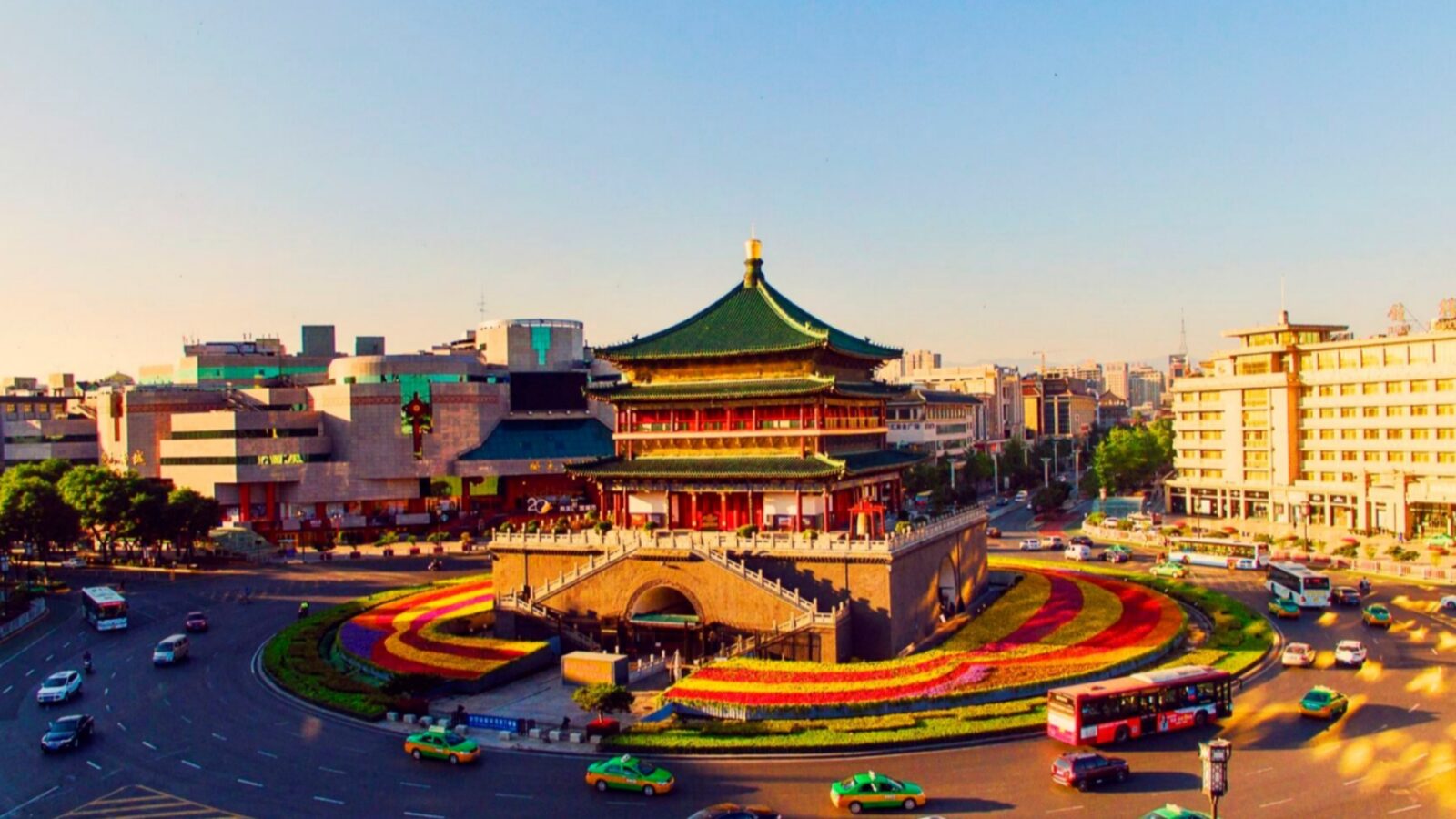
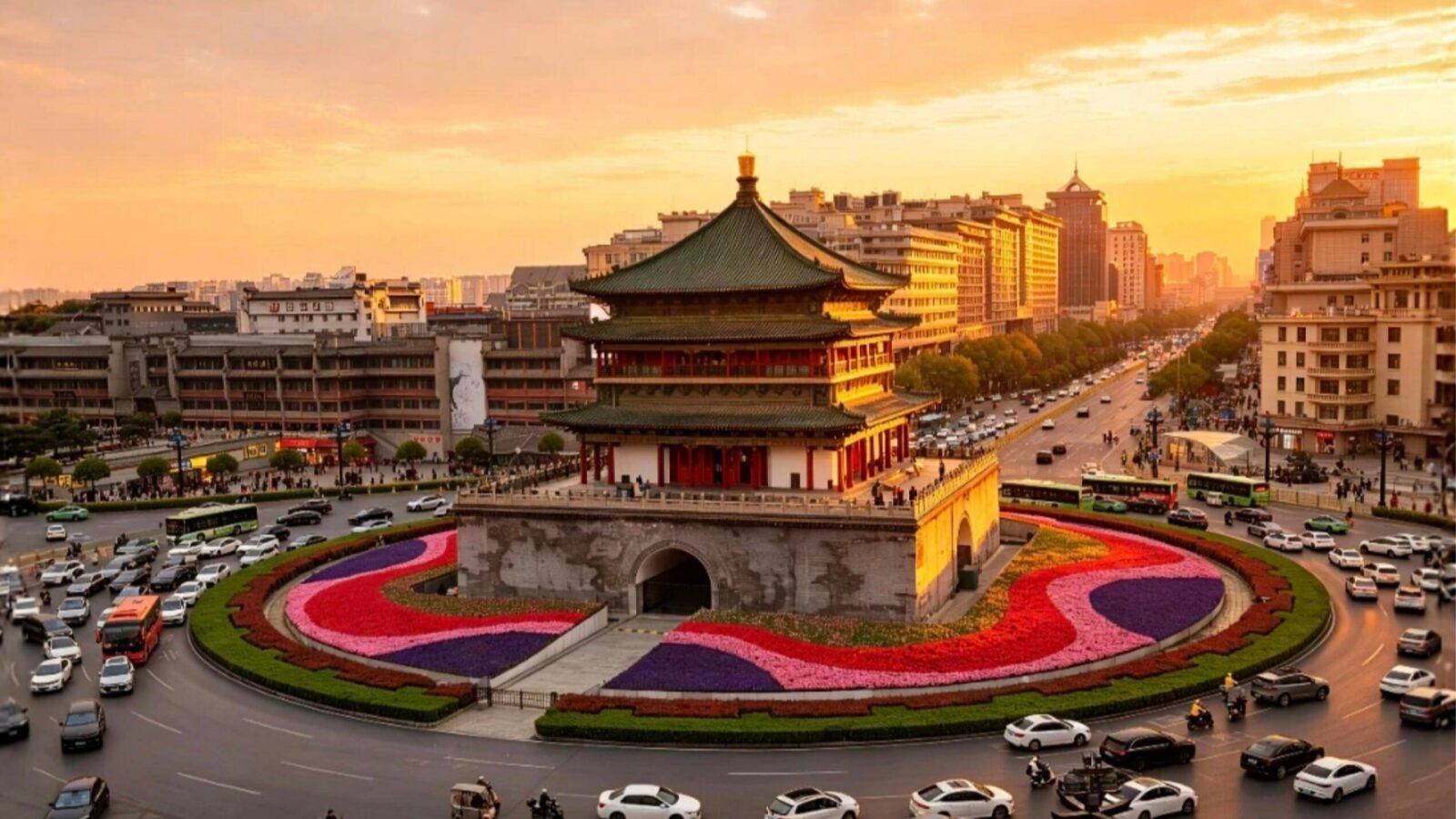
Beilin District, the historic urban core where the Bell Tower and Muslim Quarter sit, is the densest area with approximately 26,298 persons per square kilometer. By contrast, Yanliang District and Lantian County have the lowest densities, reflecting their semi-rural character on the city's periphery. The most populous districts form a southern arc around the city center: Yanta, Chang'an, and Weiyang together account for nearly a quarter of the city's permanent residents. Meanwhile, roughly half of Xi'an's total population lives in outer districts and counties, indicating significant suburban spread.
🏺 Discover Ancient Silk Road Treasures: Learn how to secure reservation tickets, navigate key exhibition halls, and view rare Tang dynasty gold and murals in our complete guide to the Shaanxi History Museum Xi'an.
Historical Population: From Chang'an to Modern Xi'an
Xi'an Population
The population trajectory of Xi'an spans extraordinary highs and lows across three millennia. From a Tang-era metropolis of roughly one million residents to a mid-20th century city of about one million, the city has experienced both imperial grandeur and post-war recovery. The 2010 to 2020 decade delivered the fastest growth phase in the city's modern history, adding roughly 4.5 million residents in ten years.
Chang'an: The Million-People Imperial Capital
Tang-dynasty Chang'an covered approximately 84 square kilometers within its walls, making it larger than any contemporary European or Middle Eastern city. Historical estimates place the metropolitan area population at around one million residents, with several hundred thousand living inside the walled city itself. This figure made Chang'an the most populous city on earth during the 7th and 8th centuries. The Sui dynasty had preceded it with the city of Daxing, planned on an equally grand scale before it was renamed Chang'an under the Tang.
After the late Tang destruction in 904 AD and the subsequent shift of political weight to Luoyang and the south under the Song dynasty, the city's permanent population collapsed sharply. Recovery was slow through the Yuan, Ming, and Qing periods.
20th-Century Population Shifts
By the early Republic era, Xi'an had stabilized around one to 1.5 million residents. The establishment of the People's Republic in 1949 initiated gradual growth, but the city remained below three million through the 1970s. Industrial relocation and university expansion drove modest mid-century gains. Growth accelerated into the 1980s, when estimates suggest around three million residents.
- 1949: Approximately 1 million residents
- 1980s: Approximately 3 million residents
- 2004: Approximately 7.4 million residents
- 2011: Approximately 8.5 million residents
21st-Century Growth and Migration
The 2010 census recorded 8,467,837 residents. By 2020, that figure had jumped to 12,952,907 — a 53 percent increase in a single decade. Several forces drove this surge. The Hi-Tech Industries Development Zone and Xi'an Software Park attracted tech-sector employment. The aerospace industry, including satellite manufacturing, created high-skill jobs. University enrollment expanded, drawing students from across China. Government inland-relocation policies encouraged migration from crowded coastal provinces. Rural-to-urban movement within Shaanxi added further residents to the urban periphery.
Ethnic and Religious Demographics
Xi'an Population
Han Chinese form the overwhelming majority of Xi'an's population, comprising approximately 99 percent of residents according to general demographic reporting. The Hui Muslim community, concentrated in the historic Muslim Quarter, represents the most visible ethnic and religious minority. Beyond the Hui, Xi'an's history is layered with traces of Buddhism, Taoism, Christianity, and the Manchu presence left by the Qing dynasty.
The Hui Muslim Population
Approximately 50,000 Hui Muslims live in Xi'an, mostly centered in the Muslim Quarter near the Drum Tower and the Great Mosque of Xi'an. Their origins trace to Silk Road merchant communities that arrived during the Tang dynasty and settled permanently over subsequent centuries. The halal food stalls, craft workshops, and active mosques visible throughout the quarter today reflect a community that maintains distinct traditions while fully participating in city life.
- Estimated population: Roughly 50,000 Hui Muslims
- Location: Muslim Quarter near Drum Tower and Great Mosque
- Historical origins: Tang-dynasty Silk Road merchants
- Key sites: Great Mosque of Xi'an, numerous neighborhood mosques
Other Ethnic Groups and Beliefs
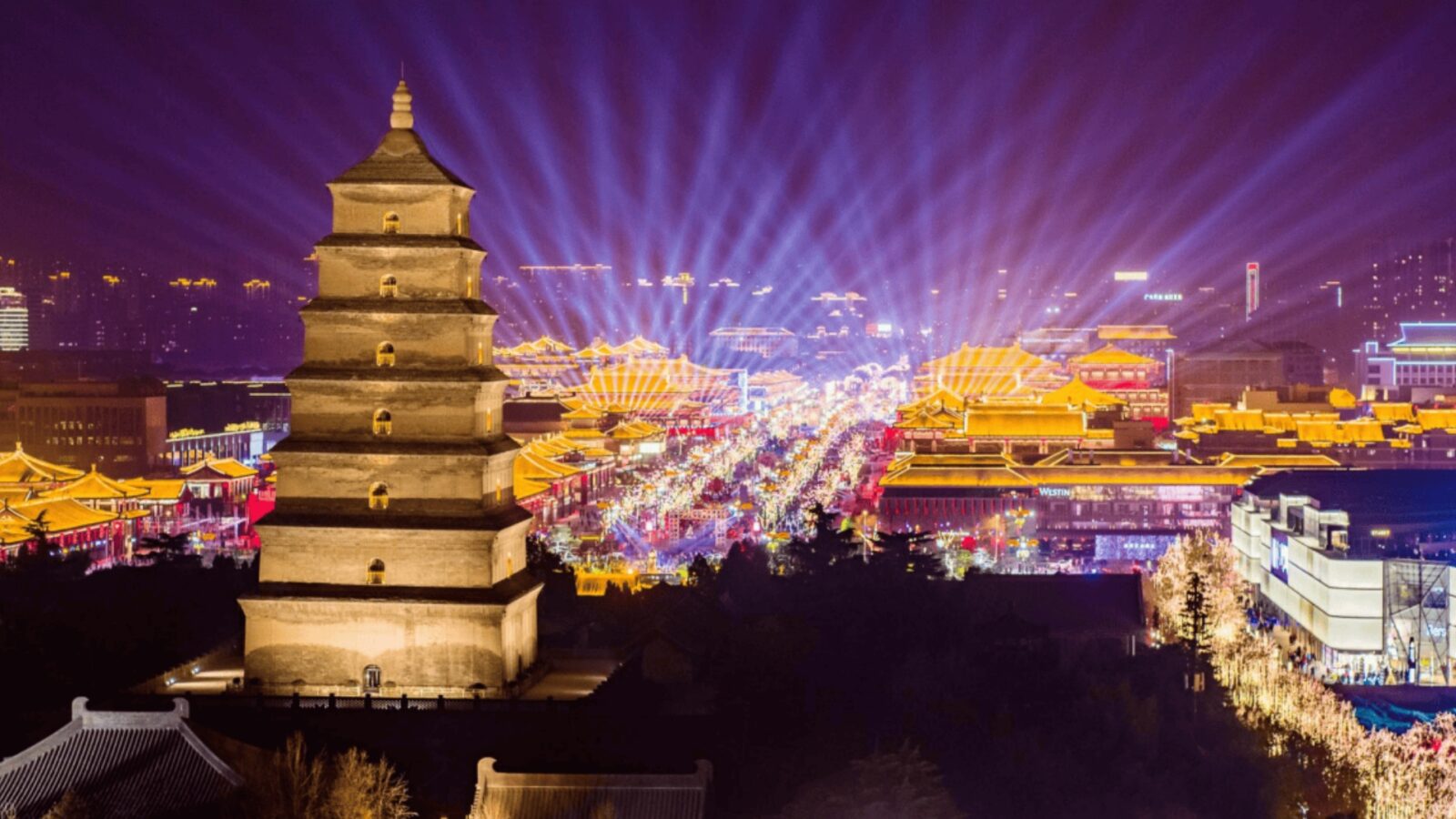
Smaller populations of Manchu, Mongolian, and other ethnic groups are present, many stemming from Qing dynasty military garrisons and administrative settlements. Xi'an also holds a documented Christian history dating to 635 AD, when the monk Alopen arrived from Persia. The Nestorian Stele of 781 AD, discovered in the 1620s near the Great Wild Goose Pagoda, records this early Christian presence and remains a major artifact in the city's museums.
- Taoism: City God Temple in the city center; Mount Hua hosts Taoist temples and pilgrimage routes
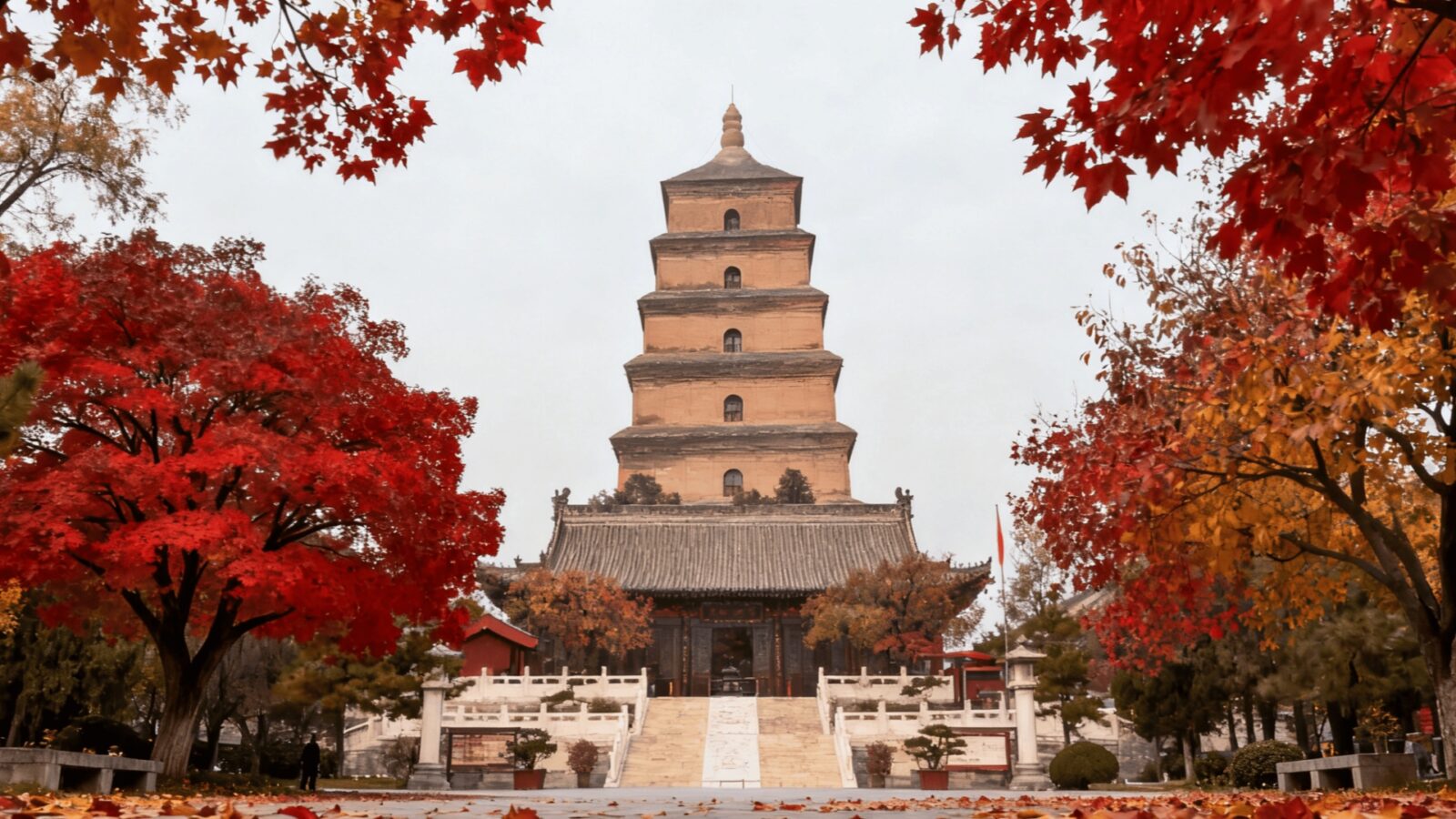
- Buddhism: Giant Wild Goose Pagoda and Small Wild Goose Pagoda remain active religious sites; Famen Temple in Baoji prefecture is served administratively from Xi'an
- Christianity: Nestorian Stele (781 AD), modern congregations
- Manchu legacy: Post-Qing settlement traces visible in district names and administrative records
Population, Economy, and Urban Growth
Xi'an's GDP stands at CN¥ 1.201 trillion (about $168 billion), with a per-capita figure of CN¥ 98,205 (about $13,700). The city holds a Beta-classification on the Global City Index, reflecting its growing role in global trade and finance. Tourism is a major pillar: over 300 million tourist visits were recorded in 2019 alone. The urban area covers 5,808.6 square kilometers, the metro area 4,903.9 square kilometers, while the full city jurisdiction spans 10,762 square kilometers.
Population Density and Urbanization
City-wide density is approximately 1,204 persons per square kilometer. The urban core averages 2,050/km², while metro density reaches 2,505/km². Notably, roughly half of Xi'an's residents live in outer districts and counties rather than the central urban core. The 2010 to 2020 decade absorbed approximately 4.5 million net new residents, the bulk of whom settled in the southern expansion zones of Yanta, Chang'an, and Lintong districts. This pattern reflects both new housing development and the relocation of population away from the dense historic center.
Xi'an's Role in Northwest China
As the most populous city in Northwest China and a Beta-classification global city, Xi'an anchors the region's economy and culture. Several sectors drive employment growth and attract migrants.
- Hi-Tech Industries Development Zone: Major employer in electronics, manufacturing, and R&D
- Aerospace and satellite manufacturing: State-owned enterprises and research institutes
- Xi'an Software Park: Hub for IT services and software development
- University ecosystem: Sixty institutions including Xi'an Jiaotong University, Northwestern Polytechnical University, and Xidian University feed talent pipelines
Frequently Asked Questions
Q: What is the population of Xian?
The 2020 national census recorded 12,952,907 permanent residents within the city jurisdiction. The urban population was 11,904,805 and the metro population 12,283,922. Approximately half of residents live in outer districts and counties.
Q: What is the population of Xian in 2025?
The most recent official census data comes from 2020. Published estimates commonly place Xi'an's population at approximately 13 million by 2025, but no official 2025 census figure has been released. Treat any single 2025 projection as an estimate.
Q: What was the population of Xian in ancient times?
Imperial Chang'an in the Tang dynasty held an estimated one million residents in its metropolitan area, making it the largest city on earth at the time. After the late Tang destruction in 904 AD, the population fell sharply and recovered only gradually through the Song, Yuan, Ming, and Qing periods.
Q: What is the Muslim population in Xian?
Approximately 50,000 Hui Muslims live in Xi'an according to published demographic data. Most are concentrated in the Muslim Quarter around the Drum Tower and the Great Mosque of Xi'an.
Q: How has Xian's population changed over time?
The trajectory runs from a Tang-era peak of roughly one million, through post-Tang decline, to approximately one million in the mid-20th century. Estimates show roughly seven million by 2004, 8.5 million in 2011, 8.47 million at the 2010 census, and 12.95 million at the 2020 census — a 53 percent decade-over-decade increase.
Q: What is the population density of Xian?
The city-wide density is approximately 1,204 persons per square kilometer. Urban-area density is roughly 2,050/km² and metro density about 2,505/km². Beilin District is the densest at approximately 26,298/km².
Q: What is the most popular dish in Xian?
Yangrou paomo (flatbread soaked in lamb soup) is the signature dish. Biangbiang mian (hand-pulled wide noodles), roujiamo (meat-filled buns, sometimes called the Chinese hamburger), and liangpi (cold rice noodles) are the next-tier staples. All are widely available in the Muslim Quarter.
Q: Why is Xian'er a popular name?
Xian'er (贤二) is a cartoon Buddhist monk character created by Longquan Temple near Beijing, known in Chinese-speaking internet culture as a gentle, wise figure. The name's popularity is cultural rather than demographic and is not specific to Xi'an the city.